Marine Drouan – Kritzkom

1. Favourite knob/fader/switch on a piece of gear and why?

I love the even VCO main knob from Befaco’s Eurorack module. It’s beautiful, and I
like the feeling when you turn it. And I like to use it (it changes the octave) mostly if
it’s plugged on a reverb.
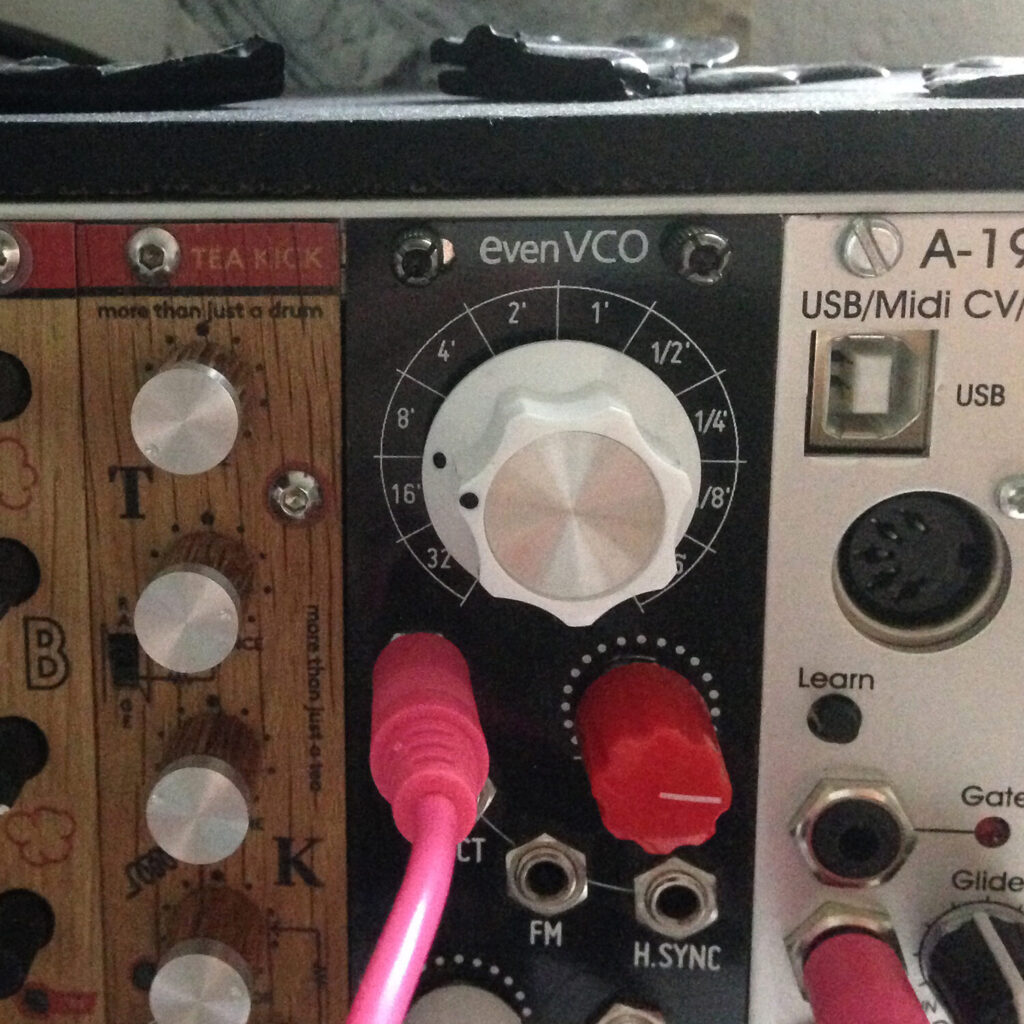
Befaco VCO

2. Do you have an ‘almost’ perfect bit of kit? What would you change?

The Octatrack is for me almost perfect. A kind of similar software like the Overbridge for the other Elektron machines would be perfect. Of course a possibility to record the 8 tracks separately, but simultaneously. Add it a simple synthesizer and it would be totally perfect.

Elektron Octatrack

3. What setup do you bring on holiday/tour/commute etc.?

On holiday, I take a small battery powered devices because I like to be outside. It can
vary from a sampler (MicroGrany for Bastl Instruments or SPS-404) or the Teenage
Engineering PO-35, or the iPad. I almost always take a recorder (Zoom) to do field
recording.

Bastl Microgranny
Portable samplers

If I am on the train or plane I love to work on the computer, either exploring some Max for live patches I never tried or some other little software that I usually don’t use.

Zoom sampling on a boat

It is interesting how having fewer devices force us to explore other ways to do music.
When I perform I always take my Machinedrum, often the MicroKorg XL and if not
other small synths. Now that I have one, I would also take the Octatrack. I also take a
few MIDI controllers like the Novation Lauchpad and the my old Korg NanoControl,
they are small and are practical.

Zoom recorder and various input devices

4. What software do you wish was hardware and vice versa?

Borderlands (the iOS app) as a hardware could be interesting to imagine, although I
have no idea how it could look. Probably this is also the reason I like this kind of app, which really use the touch screen and couldn’t have exist as a hardware. On the other side I have the feeling most of the hardware now exists as a software. I find modular synthesizers as software pretty nice, even if it never can replace it. It is perfect to try some modules, learn to use it, or if you cannot afford it.

Borderlands iOS

5. Is there anything you regret selling… or regret buying?

My first machine was an MC-303, but at this time I had nothing else. It was interesting to learn, but alone it was a bit limited. I was a teenager I had no access to any studio or couldn’t buy more machines. I sold it to buy a MIDI keyboard which was at the time the best for me. If I see one I get a bit of nostalgic and I sometimes regret I sold it.

6. What gear has inspired you to produce the most music?

The Electron Monomachine, it was my first proper sequencer and it made a huge
difference in my way of doing music. Having a sequencer improved so much the way
to use synths. But then it is the Machinedrum which inspired me the most and for a long time.

Elektron MonoMachine

7. If you had to start over, what would you get first?

I should have get the Elektron Machinedrum as soon as it got released.

Elektron Machinedrum

8. What’s the most annoying piece of gear you have, that you just can’t live without?

Only an old M-audio firewire sound card which is very small and has midi in/out + 2
stereo audio outputs and one stereo input, so everything you need all the time. I took
it everywhere, it worked forever, the most stable I ever had. Unfortunately it now
doesn’t work on the new OS. I still have a hard disk partition with an older system on
my mac to use it. But because of this I use it less and less… Only because of the
driver is not updated.

9. Most surprising tip/trick/technique that you’ve discovered about a bit of gear?

Nothing really crazy for a user of modular synthesizers. But as I am still in the discovering phase, I enjoy this little self-discoveries, and find it funny to trigger the steps of a sequencer (In my case: Pop Corn from Bastl Instruments) just by touching the cable. Of course, it is doing an electric impulse which makes it goes to the next step.


Artist or Band name?

Kritzkom

Genre?

Electronic music of many kinds from ambiant, experimental, to slow techno with a touch of house sometimes.

Selfie?

Marine Drouan

Where are you from?

Nantes in the west of France.

How did you get into music?

I started to learn play the piano which is an instrument I like a lot, but I stopped after 2 years. I wanted to play my own tunes, still it was the first keyboard experience. I guess, it was listening to techno music late in the night on the radio as teenager, that I really started to really love music and wanted to do some.

What still drives you to make music?

Life in general, but more nature than humans. I guess I need music and often I have
something in mind I want to express. What I work on is sometimes the only thing that I want to listen to. Like an infinite exploration. The nature and listening to its subtle sounds, is definitely the most inspiring to me.

How do you most often start a new track?

By experimenting with and making sounds, textures or loops most of the time, but it can really always be different. The only sure thing, I never start with a structure.

How do you know when a track is finished?

I can be hard to know. If I don’t know, I stop to working on it and let it be, so that I can listen to it with more distance a few days later, then it’s much easier. It can either be very simple and intuitive or be super hard. It can happen that I do 30 different versions and it makes it harder to choose. Sometimes it can also mean that it’s not worth it to finish this track.

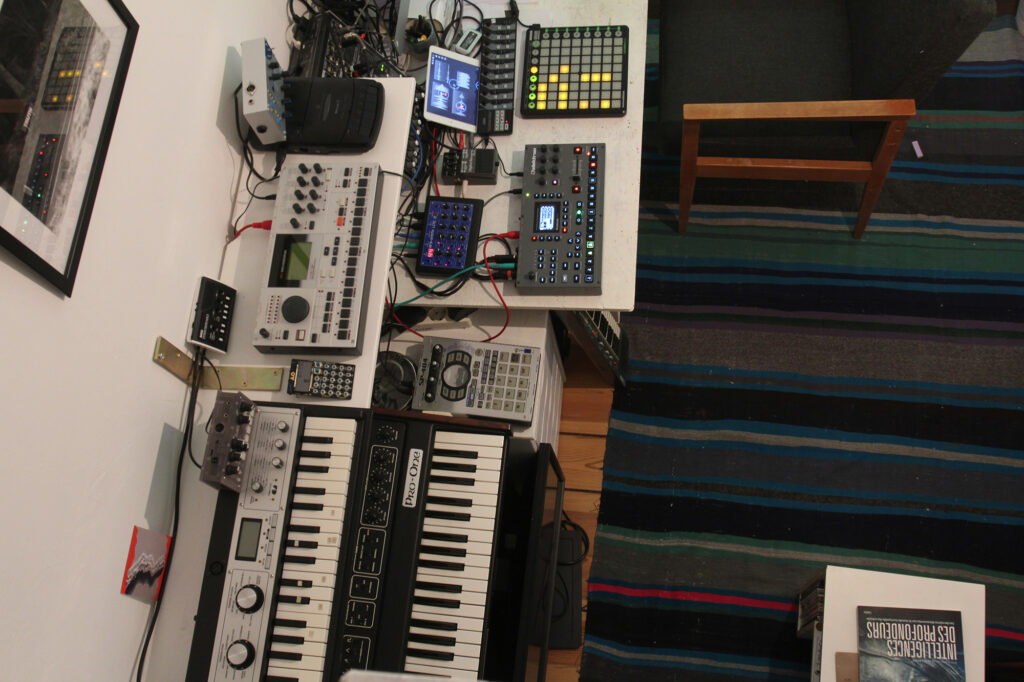
Show us your current studio

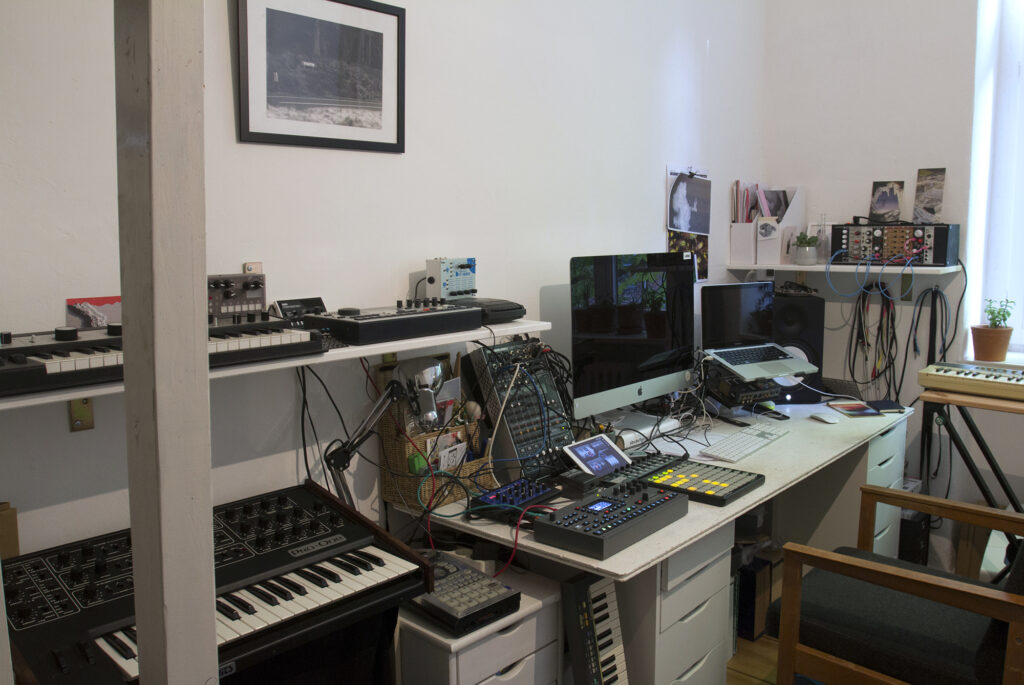
It is hard to do in one only one picture, as the room i have, is long there is not so much place to take a photo. I also have a cupboard where some gear is resting quietly and safe from the dust before I feel like using them again.
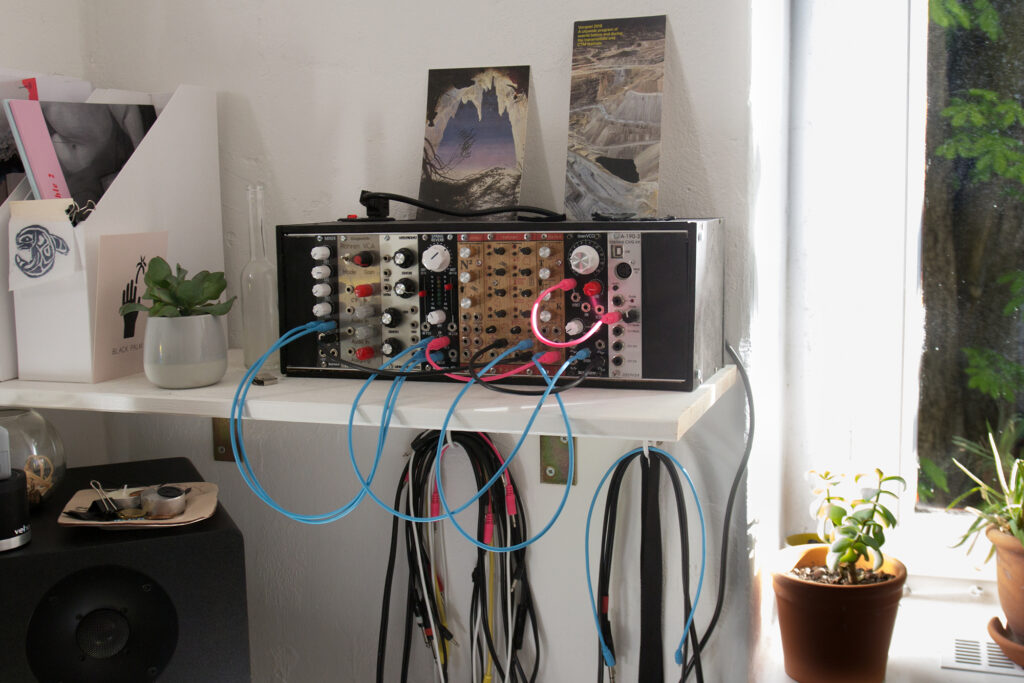
Eurorack on the rack
Studio
Home studio from above

Best creative advice that you’ve ever heard?

Trust your ears.

Promote your latest thing… Go ahead, throw us a link.

My last album “Melt Map”:
https://disorientation.bandcamp.com/album/melt-map

A new track “Infinite” on the compilation Kedi 2 on Baumusik:
https://baumusik.bandcamp.com/album/kedi-2-2

[Editor: Do you have any tips or tricks with any of the gear in this interview? Leave a comment below]


[Editor: Do you have a favorite tip, trick or way of working with any of the gear from this interview?
Then throw a comment below…
]


Julie Østengaard – RealTime Samplist

1. Favourite knob/fader/switch on a piece of gear and why?

I like the MORPH on Make Noise Morphagene because magical sounds appear from playing with that knob and getting gene overlapping, random pitch shifting and stereo panning.

2. Do you have an ‘almost’ perfect bit of kit? What would you change?

At the moment I’m very pleased with Make Noise Morphagene. I like the way it expands on classic tape machine splicing techniques in a complex and real-time way. I would like to be able to replace the buffer continuously while being modulated, I love when live sampling another instrument, how the sampling shifts along with the instrument when changing it.

3. What setup do you bring on holiday/tour/commute etc.?

A nice compact set-up would be my Zoom H2N and Aquarian Audio H2a hydrophone, Razer laptop and Elektron Octatrack – Then I have the opportunity to both record some new sounds and play around with them, and the computer for Max patching.

4. What software do you wish was hardware and vice versa?

I would love to run Max/Msp patches on embedded SBC hardware for creating custom abstract musical instruments and self-running sound installations. It has been attempted with ex. Lattepanda that can run Windows, but if Max/Msp would be compatible with Linux for starters, it would be easier. Another way would be to turn to Pure Data -Max’ open source sibling, which has more options on this front.

5. Is there anything you regret selling… or regret buying?

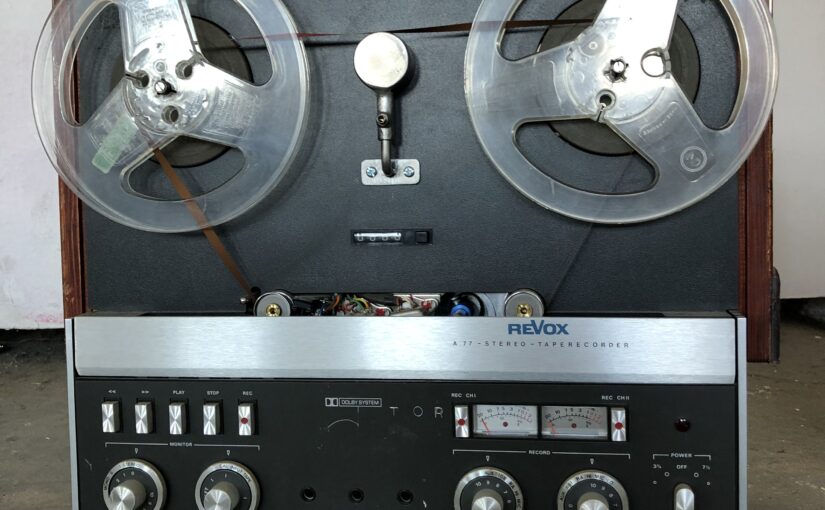
Not really, but I do sometimes regret hacking my Revox A-77. I got it for free a long time ago, because it didn’t work. I fixed it and decided to create a new instrument from it where the motor pulling the reel is dynamically controlled by a Max/Msp sequencer so it sequences the reels playback – It turned out to be a really strange sounding, but cool instrument. Sometimes though, I do wonder why I had to use exactly that machine and not just any tapemachine.

6. What gear has inspired you to produce the most music?

My Elektron Machinedrum is one of my first machines, and I have used it for a great deal of projects. Especially using the RAM machines for live sampling, is where it really goes off-grid, using the main input level on the recorder to create gnarly feedback. And sending tracks, machines or instruments through it, to create sampled sequences that interplay with existing sounds.

7. If you had to start over, what would you get first?

Of course it would be nice to have developed skills like programming and circuits from an early age, or going into hardware synths earlier. But I don’t mind that I didn’t. My initial way of creating music was purely intuitive, not having any theory to lean on made it honest and from within, in a different way than now.

8. What’s the most annoying piece of gear you have, that you just can’t live without?

Mutable Instruments Braids – Can’t get it to sound perfect, but for some reason I won’t sell it because it has a certain “promise”.

9. Most surprising tip/trick/technique that you’ve discovered about a bit of kit?

Using re-trigger on Machinedrum with a Random LFO on re-trigger modulation and re-trigger gain to create out of sync beat repeats and melodic stuff.
And the “IDM in a box” trick, using the CTR-ALL machines to make crazy glitchy things – thanks to Rui Peixoto for the great video!


Artist or Band name?

Julie Østengaard.

Genre?

Sound Art, Electroacoustic/Acousmatic, Ambient, IDM.

Selfie?

Where are you from?

North Sealand, but I have lived in Copenhagen for about 10 years now

How did you get into music?

I started playing electric guitar with my childhood friend, which turned into acoustic guitar, writing and playing singer/songwriter type music. I soon got an electric bass, some multi effect pedal and I think a pro tools license, which thereafter slowly started the evolution into electronic music – I guess Julie with the acoustic guitar didn’t see this coming.

What still drives you to make music?

Music technology, curiousness and learning new things. The depths of music technology never cease to amaze me, every time I get to know something new, I don’t seem to feel the world of music contracts, but rather it expands and a new world appears, of possibilities and things to grasp. There are so many exciting ways to interact with music, and to express through music. Music is so closely related to both physics and math, but music is also something that you can approach very intuitively, making it possible to unite both thinking and feeling.

How do you most often start a new track?

Often I start by creating limitations, like a specific technology, method, theme, a set of rules, a specific sound or such, and then I seek to push the boundaries of those limitations, which is where I think I’m most creative and inspired. Sometimes, I am more interested in how the sounds are created than how they sound, and I’m not set out to create something that only sounds good, but the journey there must also be interesting.

How do you know when a track is finished?

I compose and record all my pieces by playing them live. I like that it keeps me very present in the music I create, and gives the music a sort of liveliness too, with the small imperfections that can’t be edited away afterwards – at some point I know, that doing another take will not contribute to the artistic nerve, but stifle it – then, the piece must be finished.

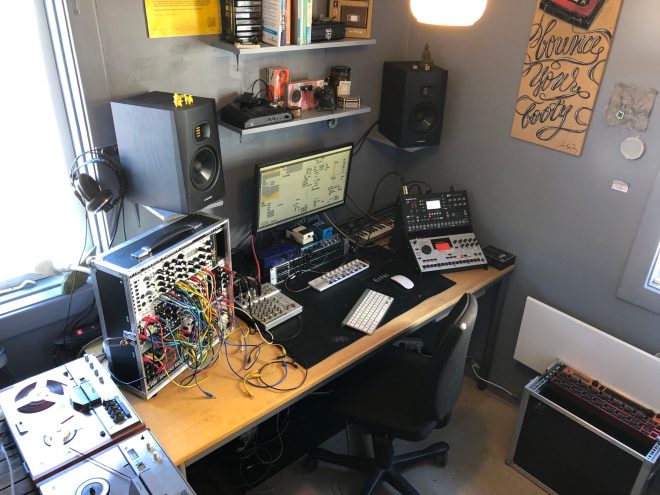
Show us your current studio

Promote your latest thing… Go ahead, throw us a link.

instagram: http://instagram.com/sisterevertone
website: https://www.julieoestengaard.com/
latest live set: https://www.julieoestengaard.com/quarantine-session


[Editor: Do you have a favorite tip, trick or way of working with any of the gear from this interview?
Then throw a comment below…
]


Sofie Birch – Productive Gear Flipper

1. Favourite knob/fader/switch on a piece of gear and why?

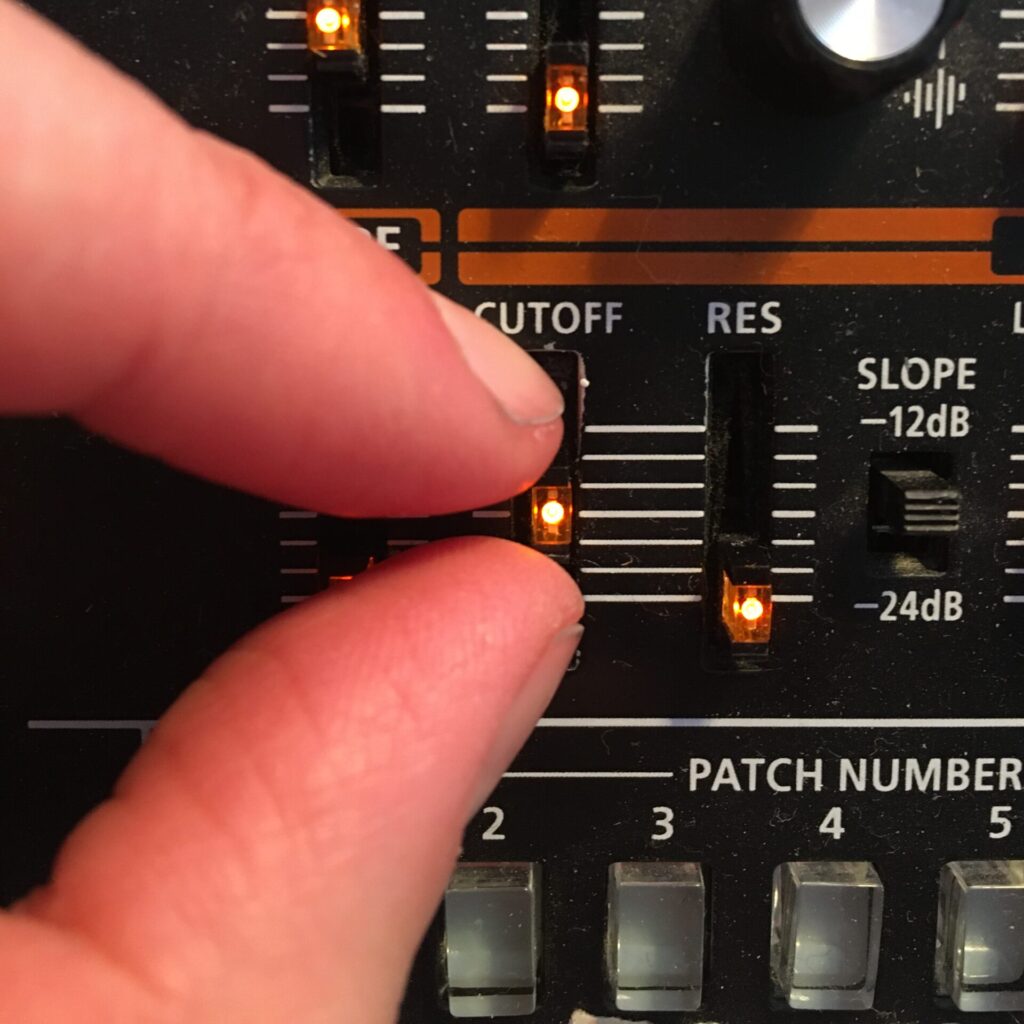
Filter cutoff slider

The cutoff fader on the JP 08. It is so small that not everyone can use it. But for me it is perfectly formed. After so many years of using that instrument almost everyday, I have practised how to make very small changes with very small knobs. The faders on JP-08 are all the same, but the cutoff is without a doubt the one I have used the most. High frequencies is not my thing, so I like to cut a lot.

2. Do you have an ‘almost’ perfect bit of kit? What would you change?

Roland JP08

I would love it, if the JP-08 had more tracks like for example the Analog Four. Just four tracks would make it possible to make beautiful patterns on top of each other. Or if you could play tapes on the Casio CK-500 while playing its keyboard. Then you could record pads and soundscapes and play on top of them. Would also be pure magic if my clarinet had a wireless invisible incorporated microphone 😀

Clarinet

3. What setup do you bring on holiday/tour/commute etc.?

I always bring my Octatrack mk1, Roland JP-08 and my Strymon Big Sky when I play shows. I think I could do all of my shows on just these machines, but I always feel like I have to add something. An extra element, like a mic, a clarinet or some more effect pedals. So I usually have these machines as a basic setup and then add some more on top!
When I go on holiday or travel I bring my zoom recorder and my laptop and headphones. Then I can mix and edit unfinished stuff and add new recordings on the go.

Octatrack, Strymon Bigsky and Roland synth

What software do you wish was hardware and vice versa?

I wish that the chorus from Ableton Live was also a hardware effect pedal. Somehow it always gives me exactly what I am looking for when I want to spread or diffuse a sound. I have used it a lot on vocals. It makes it easier to mix my own voice when it sounds differently, but I’m also starting to like the effect on vocals in general. Makes the voice kind of dubbed and takes the sweetness out of the sound. It is also very nice to use on synths.
Don’t really know about the other way round….

Ableton Chorus

5. Is there anything you regret selling… or regret buying?

I like to have a minimalistic and managable studio setup. Instead of having too much gear that I don’t use, I buy something new, use it and record it, sample it and compose with it, and then I sell it again. For example: I used the Roland EP-30 as the main keys for half of my latest release Island Alchemy, and sold it right after the release. Recently I bought a Casio CK-500, which I have great plans with. It has two cassette players incoorporated and some really nice sounding presets. Especially the reverb and sustain function/switch adds very nice layers to the presets. Also there is a radio in it, that can be sampled directly to the cassettes. Right now, I have borrowed a MOOD pedal from Chase Bliss, that I have hooked up with the Casio – it can create some really nice pads together with the organ preset for example. 

Anyways, this way of buying and selling, creates a good flowing creativity that constantly brings new ideas. AND it fits my very small studio!

[Editor: I couldn’t agree more! No more agonising over purchases or regrets of selling. Just be ok with being a gear-flipper and feel comfortable using that as an aid the creative flow. Even better than gear-flipping though, are generous friends that you can borrow gear from]

Casio CK500 with cassette decks

6. What gear has inspired you to produce the most music?

Roland JP-08 is the boutique version of the old Jupiter 8 synth (which is <3). It’s a very small synth. I bought it with the 25 keyboard and even though it can be hooked up with a bigger midi keyboard, it just lives in that bundle and has done so, ever since I purchased it. I love that it’s tiny. I love how it fits in everywhere. And it is no problem for me to use the transpose knob when changing octaves. I know this little machine in and out.

7. If you had to start over, what would you get first?

An Octatrack. Or at least I would have gotten a sampler way before I did. It makes so much sense to use a sampler for my music. I love to layer sounds and I love to record nature sounds and atmospheres. When I began to play live shows, I started out with bringing tape machines to play my recorded atmospheres.

Elekton Octatrack

I also use the OT as a looper now which could have saved me from using the Boss RC-30 loop pedal for years. I have always missed a MIDI input on that pedal, but on the other hand it is also very nice to create unpredictable and organic floating patterns and harmonised pads on it.

8. What’s the most annoying piece of gear you have, that you just can’t live without?

Before I started using my OT as a looper also, I would have said the Boss RC-30. I needed it to layer my sounds, but it is so unprecise and bad sounding. Now, I don’t have any annoying gear!

Boss RC30 Loopstation

9. Most surprising tip/trick/technique that you’ve discovered about a bit of kit?

I remember when I learned to play with the FX track on Elektrons Analog Four from a guy who tipped me about it, after I played a concert. You can create some incredibly atmospheric and suspensefull buildups by playing around with the parameters on the FX track, especially the feedback and the filters (HPF, LPF and overdrive). And then you can send the FX track to the reverb and delay again and make it feed into beautiful suspensefull pads.

FX tracks on the Octatrack

Artist or Band name?

Sofie Birch

Genre?

Experimental, minimalistic synth and ambient.

Selfie?

Sofie Birch

Where are you from?

I’m from Denmark and grew up both in the countryside, on a small island and in Copenhagen, where I currently live.

How did you get into music?

I started singing and playing guitar as young girl. But I quickly got interested in the process of recording and producing, because I felt there was more to music than composing and writing. I started out with Reason on my parents computer. This led me to study sound design many years later and that really got me into hardware and experimental music.

What still drives you to make music?

When I listen to some very beautiful music that inspires me to imprint or interpret it into my own.
The constant need in me to improve and develop ideas is what makes me want to keep on producing. But also the fact that I get peaceful and concentrated when I produce and play.

How do you most often start a new track?

I start by making loops and figures that can be replayed over and over and extended and layered with new figures and so on. And then at last, I have a big amount of work in deleting tracks again and find out what is really working together.

How do you know when a track is finished?

I know the track is finished when I’m no longer interested in working with it. There is this perfect moment when a track is not too finished and not too unfinished. When it still has the soul of a one take and the sound of careful work.

Show us your current studio

Birch home studio

Promote your latest thing… Go ahead, throw us a link.

Go listen to Hidden Terraces which was aired on the swedish radio channel Retreat Radio.

It is a 36min long sound piece of synth figures and ambiences from my trip to Colombia this winter. It’s an audible postcard, a travel through nature and harmonies. It will be released on cassette through the german label VAAKNER later this year.


[Editor: There are affiliate links to the relevant gear throughout the articles. It helps to support this blog. In fact, should you be needing some patch cables or guitar strings. Then clicking on one of the above links and buying any product that you prefer, will help the blog… doesn’t even have to be the ones in the link. Thx]