Jason Dungan – Blue Lake

1. Favourite knob or fader or switch on a piece of gear and why?

In the spring, I sold almost all of my pedals (channel switch, looper, EQ, some other things) so that I could first buy a 12-string guitar, but also because I decided to lean in to having a very minimal, nearly no-pedal setup. I used to use a compressor and an EQ on my guitar, but now I plug it straight into the amp. I remember seeing Fugazi play many years ago, and got my mind blown by seeing they played their guitars straight into the amp. This has a hands-on, active element to shaping sound that I find compelling.

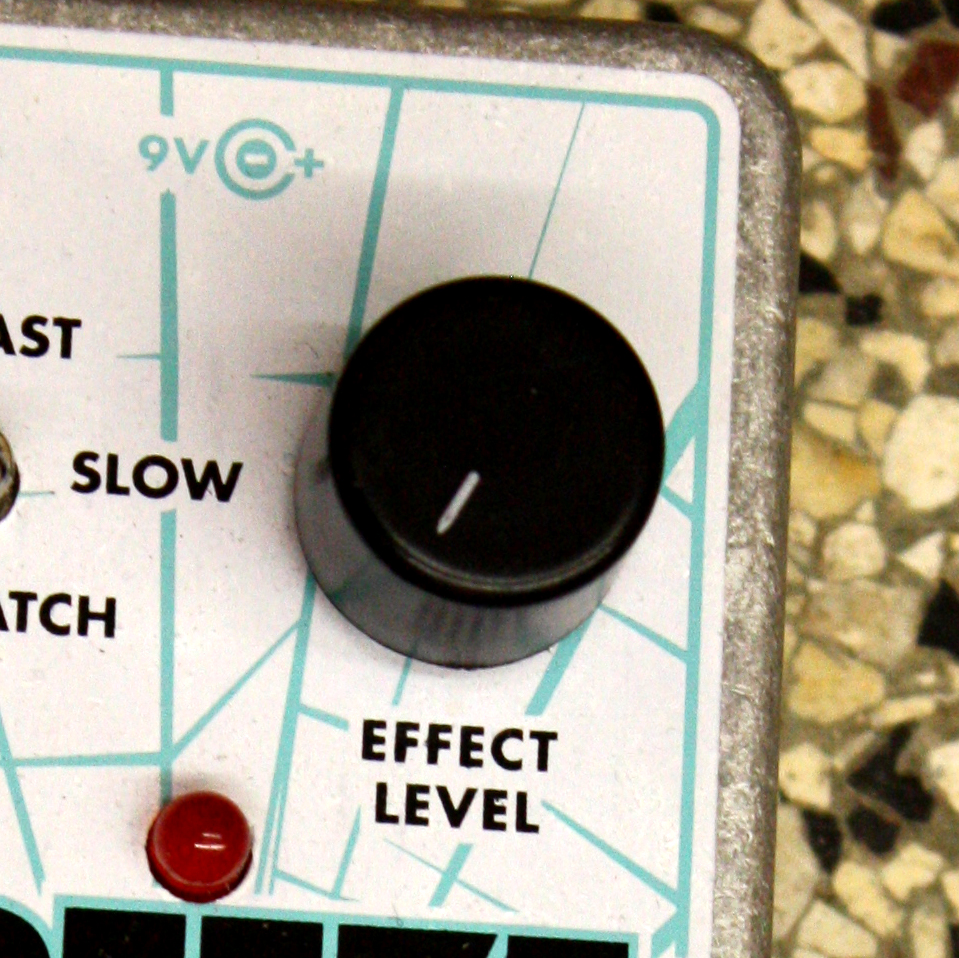
Freeze pedal by Electro-Harmonix

However, I still use one pedal: a Freeze pedal by Electro-Harmonix. I send my zither through this pedal, and use it to occasionally freeze chords on the zither, turning them into drones. Because there are several strings being struck, the captured tone is quite dense harmonically, so the pedal “struggles” a bit, creating a beautiful-sounding but slightly varied, unstable drone. I use this playing live, and particularly when I’m playing solo, it’s an important extra sound in parts of the set. So my favorite knob is simply the fader knob on that pedal, which I keep up next to the zither, since I need to manually fade in and out while continuing to play. The fader is very sensitive so it allows me to do this in a very fluid way.

2. Do you have an ‘almost’ perfect bit of kit? What would you change?

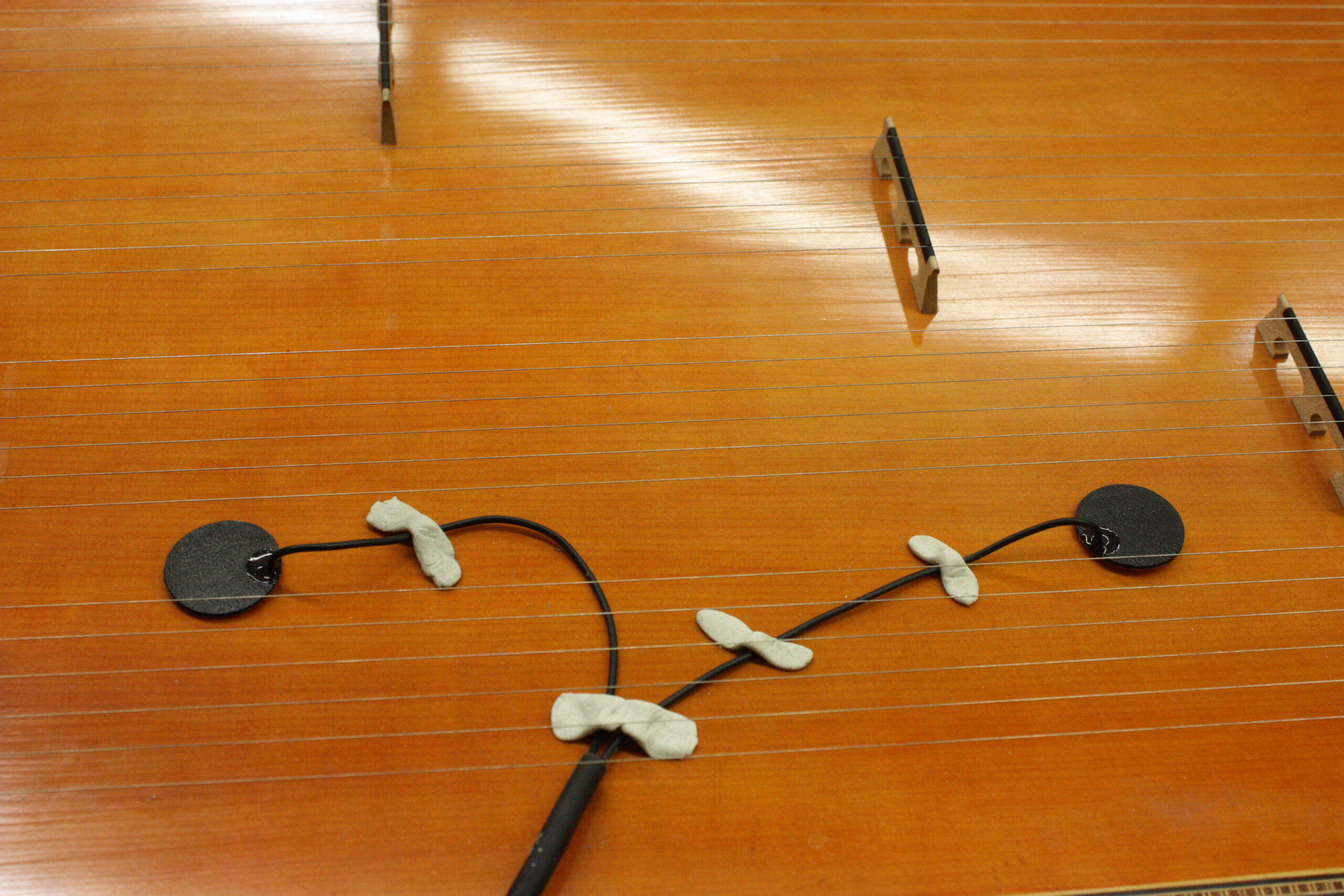
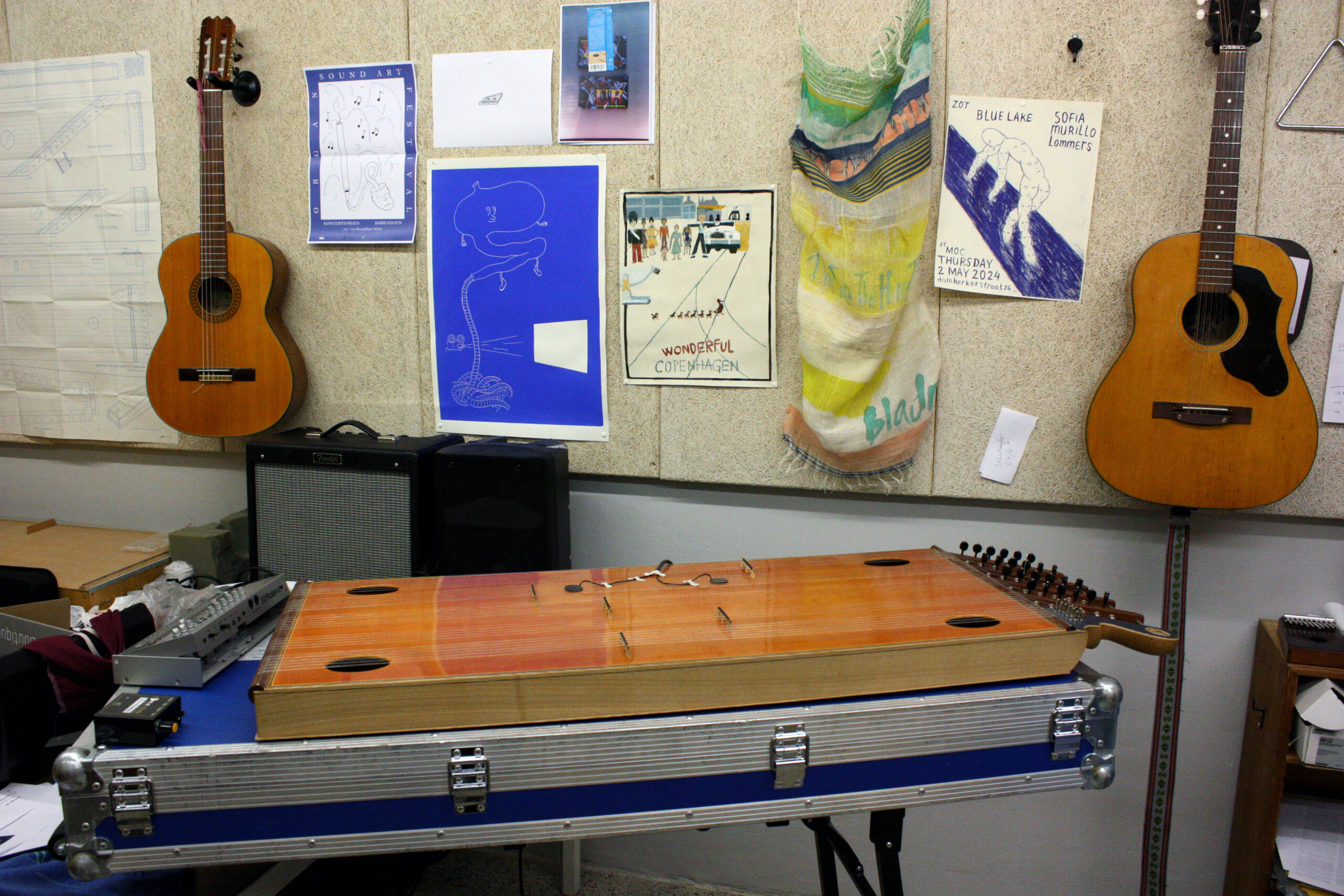
Since my zither is self-built, working on finding an amplification solution took a lot of trial and error, mixing different piezo and mic setups. Some were very prone to feedback, and others created a very boomy sound. I finally found a great double-piezo and pre-amp setup made by the Oregon-based company K&K Sound. They produce a piezo mic for banjo, which has twin piezo heads wired in to one plug. So this allows me to cover more surface area of the instrument, thereby picking up a wider variety of sound.
If I could improve it, it would be to include a little instrument mic, perhaps inside the instrument.

K&K Sound piezo pickup on zither

3. What setup do you bring on holiday or tour or commute etc.?

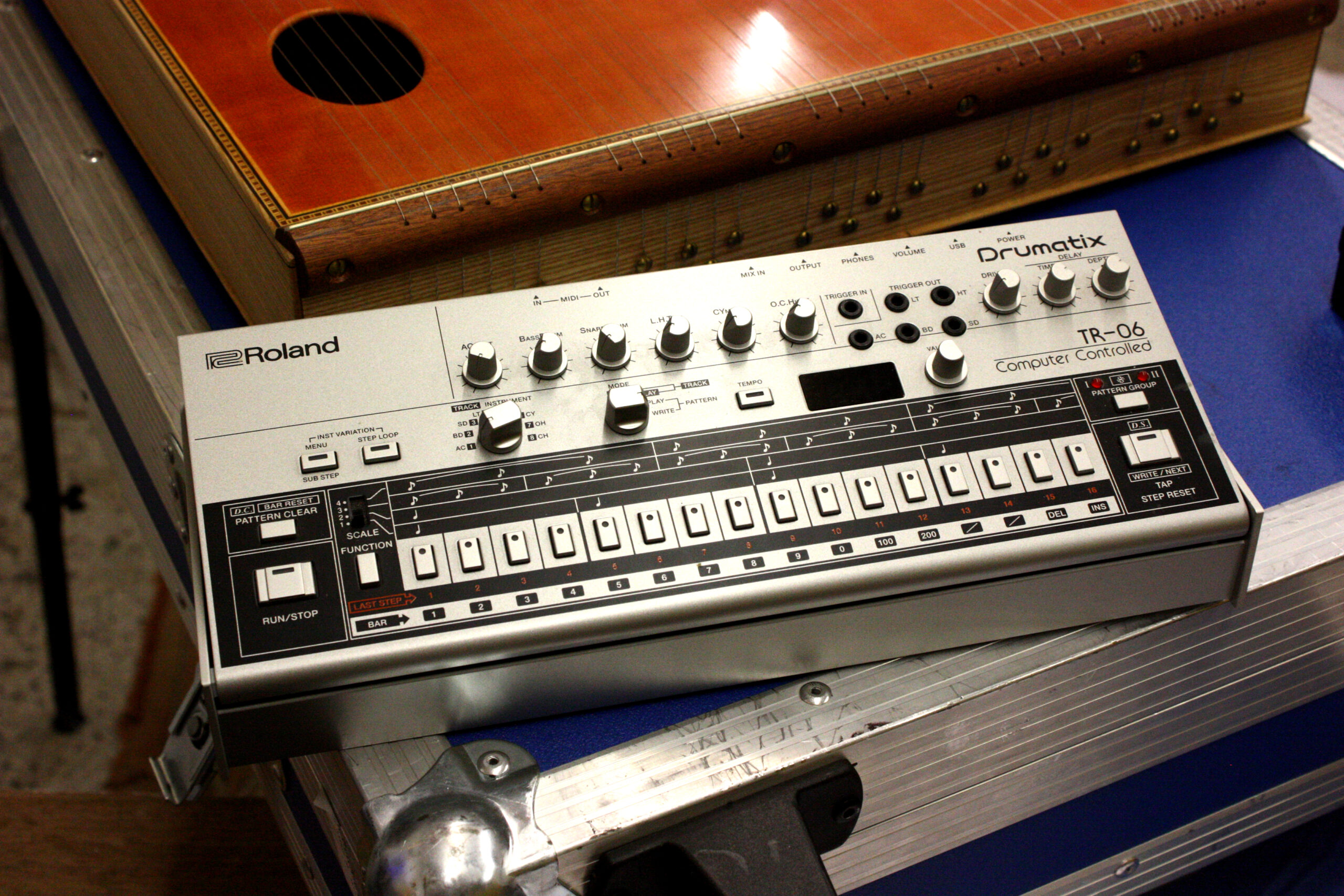
On tour, I’m usually bringing two main instruments (guitar and zither), which is already pushing it, gear-wise, so I try to bring as little extra as possible. I usually bring the Freeze pedal, and then a small wind, either the clarinet if I have space, or an alto recorder. Often if I’m spending some days on holiday and I want to work on music, I’ll bring my Roland TR-06 drum machine – it allows me to work on ideas, even make demo recordings that have a little more “band” feel.

Roland 606 drum machine

4. What software do you wish was hardware and vice versa?

I loved recording on four-track tape machine when I was younger, for its hands-on feel and ability to create a sense of magic in the process, and also because it had a lot of limitations which could be creatively stimulating. If I could get my wish, it would be to somehow combine the workflow of Protools with the hands-on, low-fi feeling of a Tascam tape machine.

5. Is there anything you regret selling… or regret buying?

In the last 10 years, I think I bought 2 (or possibly 3) looper pedals, only to realize that I didn’t want to use them, and sold them again. I’ve now fully leaned in to playing direct and using no loopers.

6. What gear has inspired you to produce the most music?

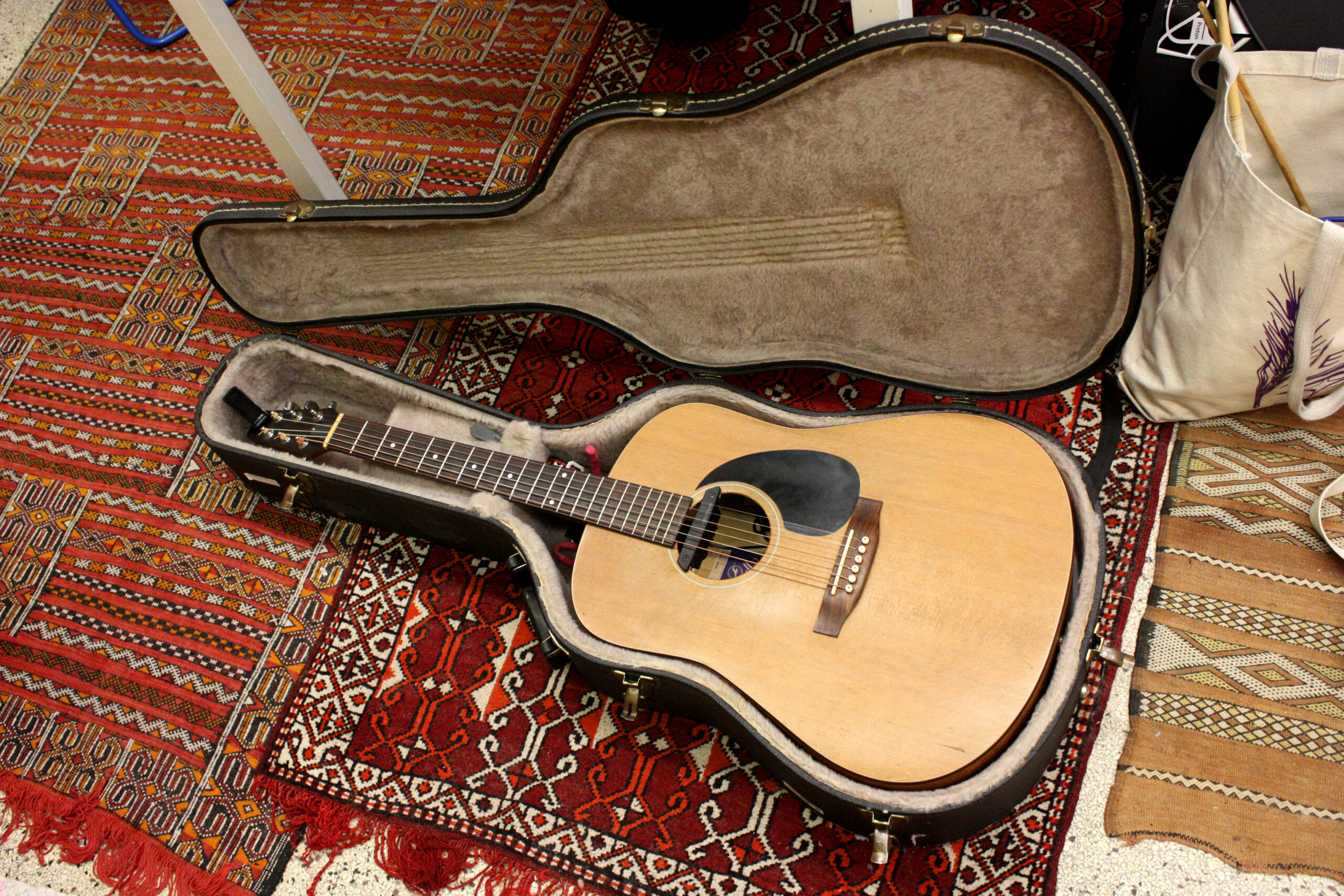
Seagull acoustic guitar

This is possibly a slightly square answer, but it’s my guitar. As a teen, I saved up money mowing lawns and bought a Seagull acoustic guitar, I’ve probably had it since I was 13. I’m still playing it as my main instrument, and it has carried me through so many eras of interest in music. To still be working professionally on an instrument that I played as a kid does something semi-profound in my head, and I think it’s also just this feeling that the instrument represents what I love about music, that the instrument is this thing you have to meet with your body and mind and see what you can pull out of it. When I was 13 I sat and tried to play Jimi Hendrix songs on it, and now I use it to make my records, so that continuity is quite fascinating to me. It’s still my go-to instrument for working, thinking about new ideas, and to just play and see what comes out.

7. If you had to start over, what would you get first?

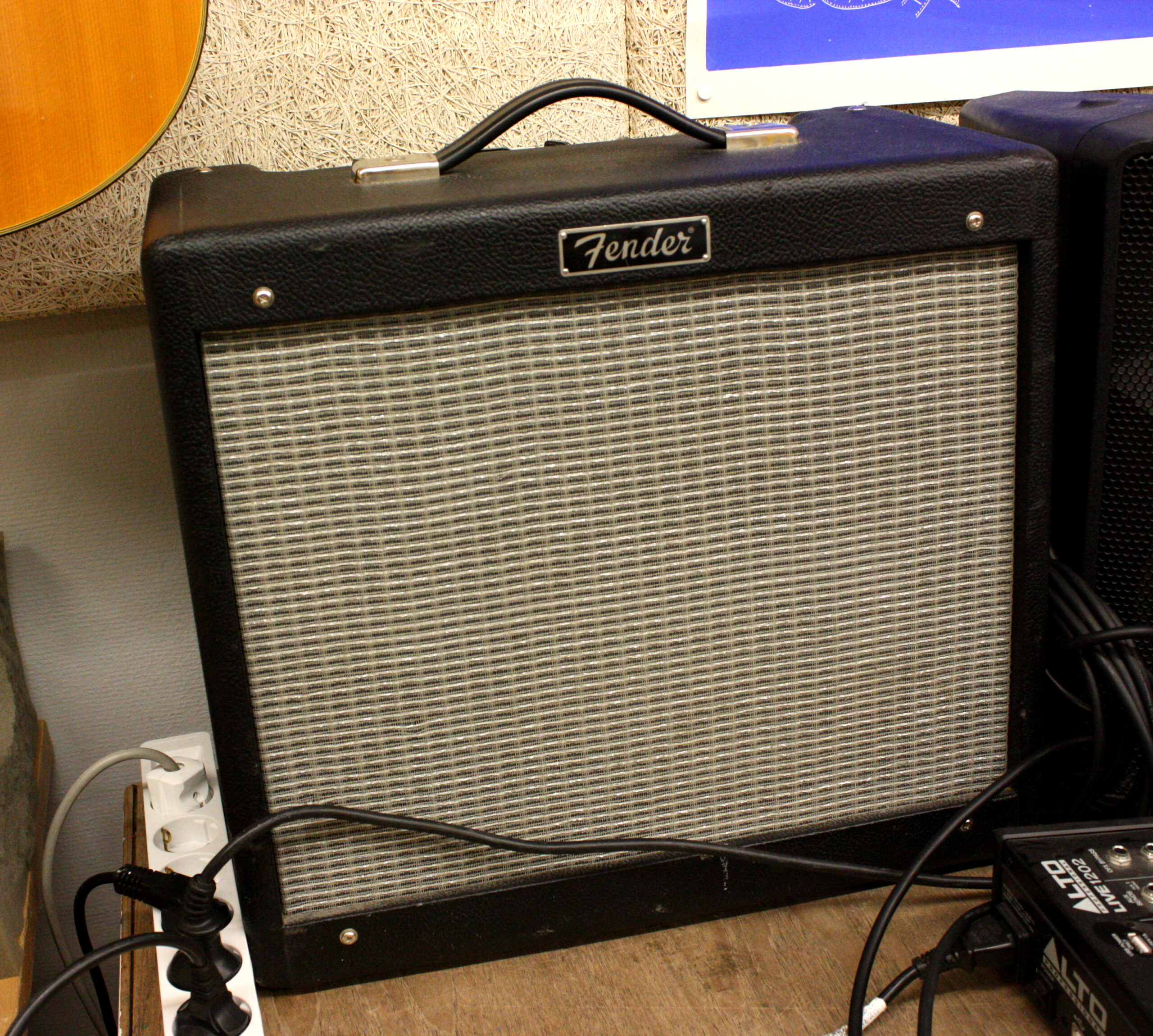
I went years without having a decent amp, just borrowing them from people to play and record. I now have a Fender Blues Junior, a relatively small but great-sounding amp that I really love. I would go back in time and get one of those as soon as possible.

Fender Blues Junior

8. What’s the most annoying piece of gear you have, that you just can’t live without?

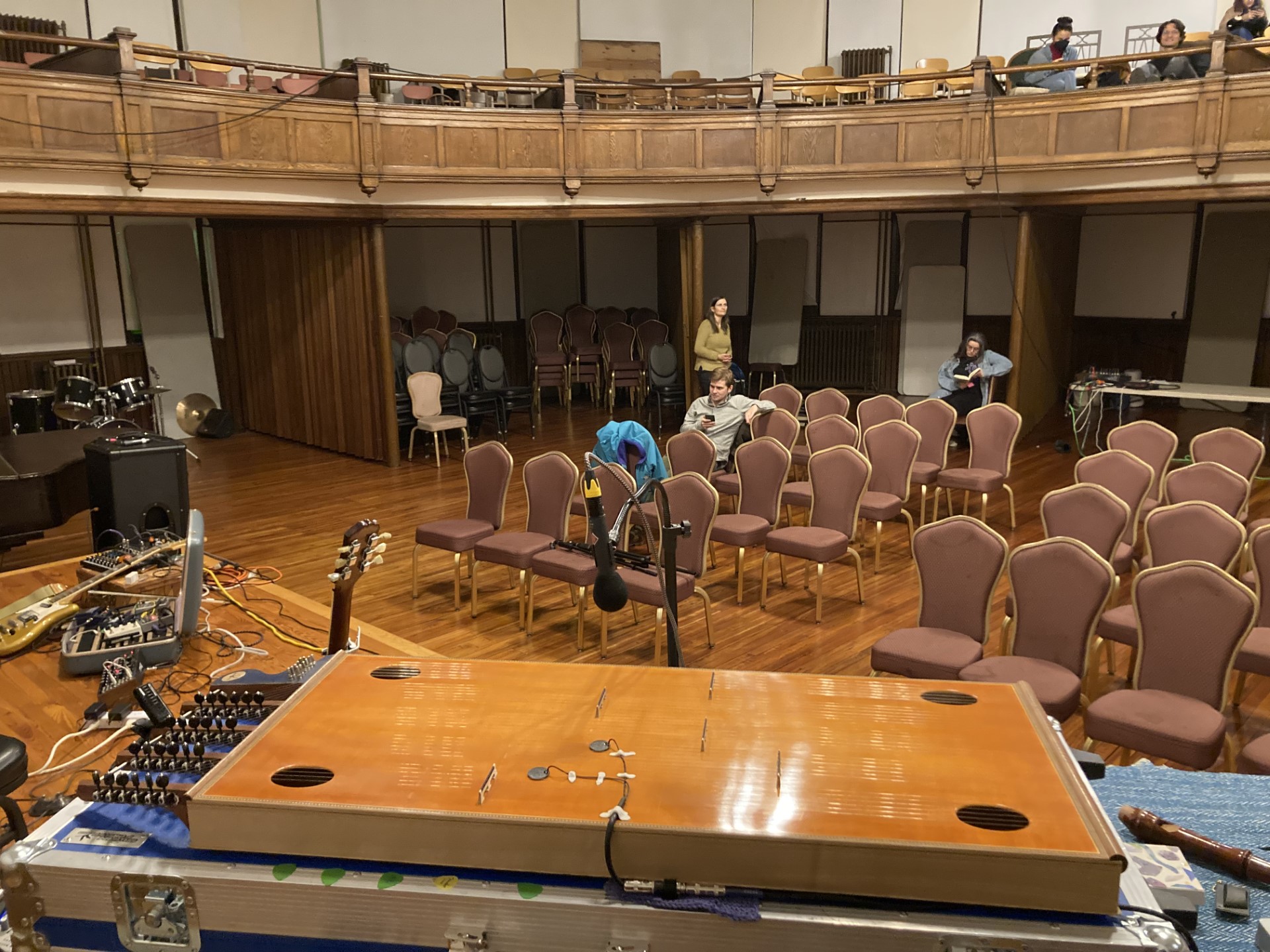
This would have to be the zither. I made several versions myself over the past 5 or so years, and then in 2023, I had Jens Erik Larsen build a 36-string zither, based on an improved design of the previous versions. It’s got bridges on the soundboard, so that I can play with each hand on a separate section of the strings, giving a whole range of sounds and possibilities. It wasn’t insanely expensive, but it definitely cost something, and it took a few months to make. It’s really intrinsic to this extra dimension of the music, which is in dialogue with the guitar, but because this instrument is played in a very different way, it really creates a different sound world. Why is it annoying? It’s got a solid travel case, which is good for the instrument, but I tend to travel with both the guitar and the zither, which can really be murder sometimes.

Jens Erik Larsen built 36-string zither

9. Most surprising tip or trick or technique that you’ve discovered about a bit of kit?

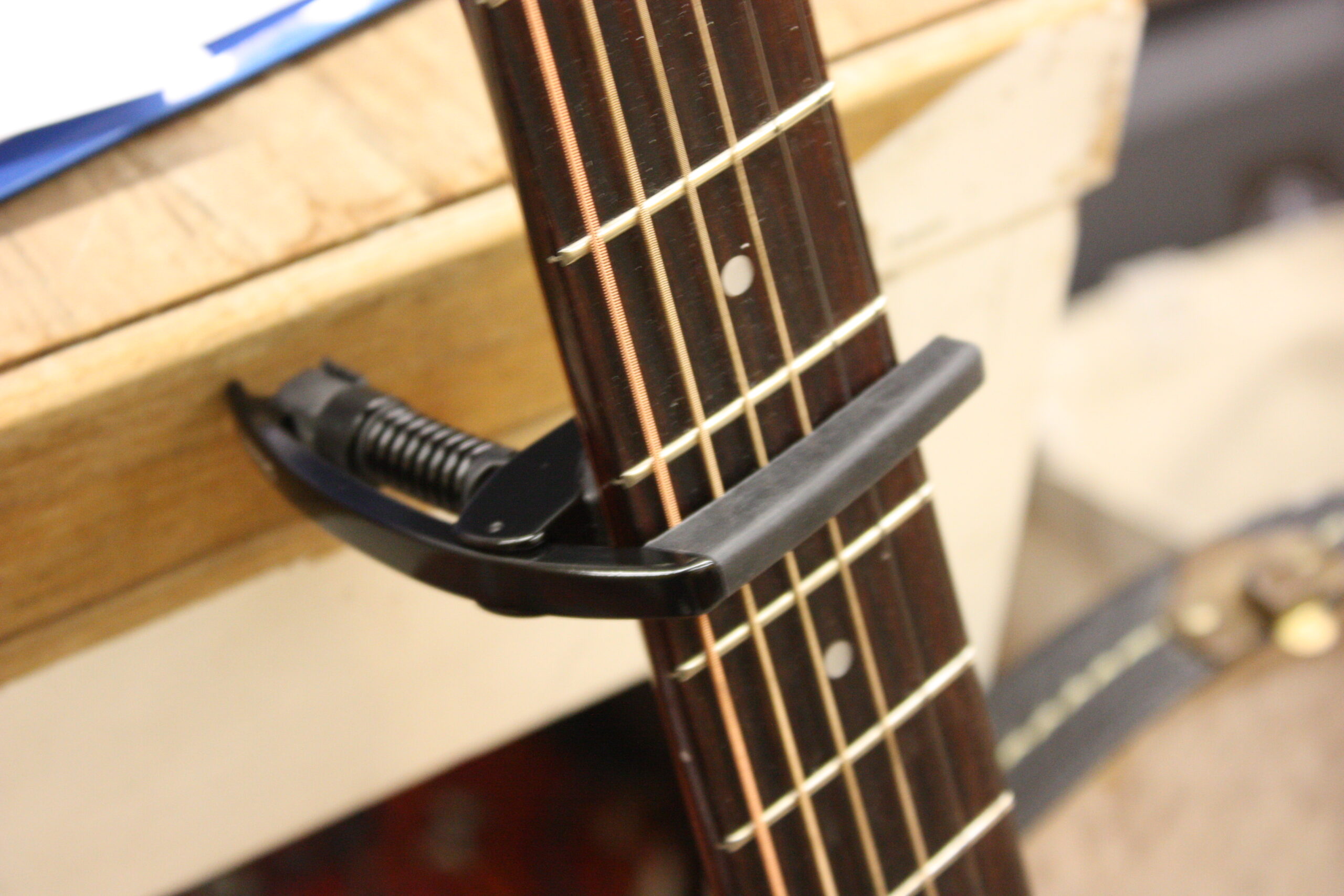
This is quite basic, but I never really used a capo on the guitar, until recently. It was suggested to me by Carolyn Goodwin, who is the bass clarinettist in Blue Lake, but is also a very good guitar player. I often play in my own tunings, and these tunings create relations between the strings that I quite like. Using the capo more recently has allowed me to maintain some of these interval relations between the strings, but work in different keys, bringing more variation to the tonal material in the music, and I’ve found this quite exciting.

Guitar capo

Artist or Band name?

Blue Lake

Genre?

The first albums were made by me in my home studio, playing acoustic guitar, clarinet, various bits of percussion, keys, and a series of self-built string instruments that are related to the zither, but have some unique elements. I would connect the music to various strains of American music (country, folk, guitar soli) and is also reflective of my 10 years in Scandinavia, listening to local experimental music, jazz, and contemporary classical music in Denmark and Sweden. In the past few years, Blue Lake has expanded into a band, featuring Carolyn Goodwin on clarinets, Pauline Hogstrand on viola, Tomo Jacobson on double bass, and Oliver Laumann on drums.

Selfie?

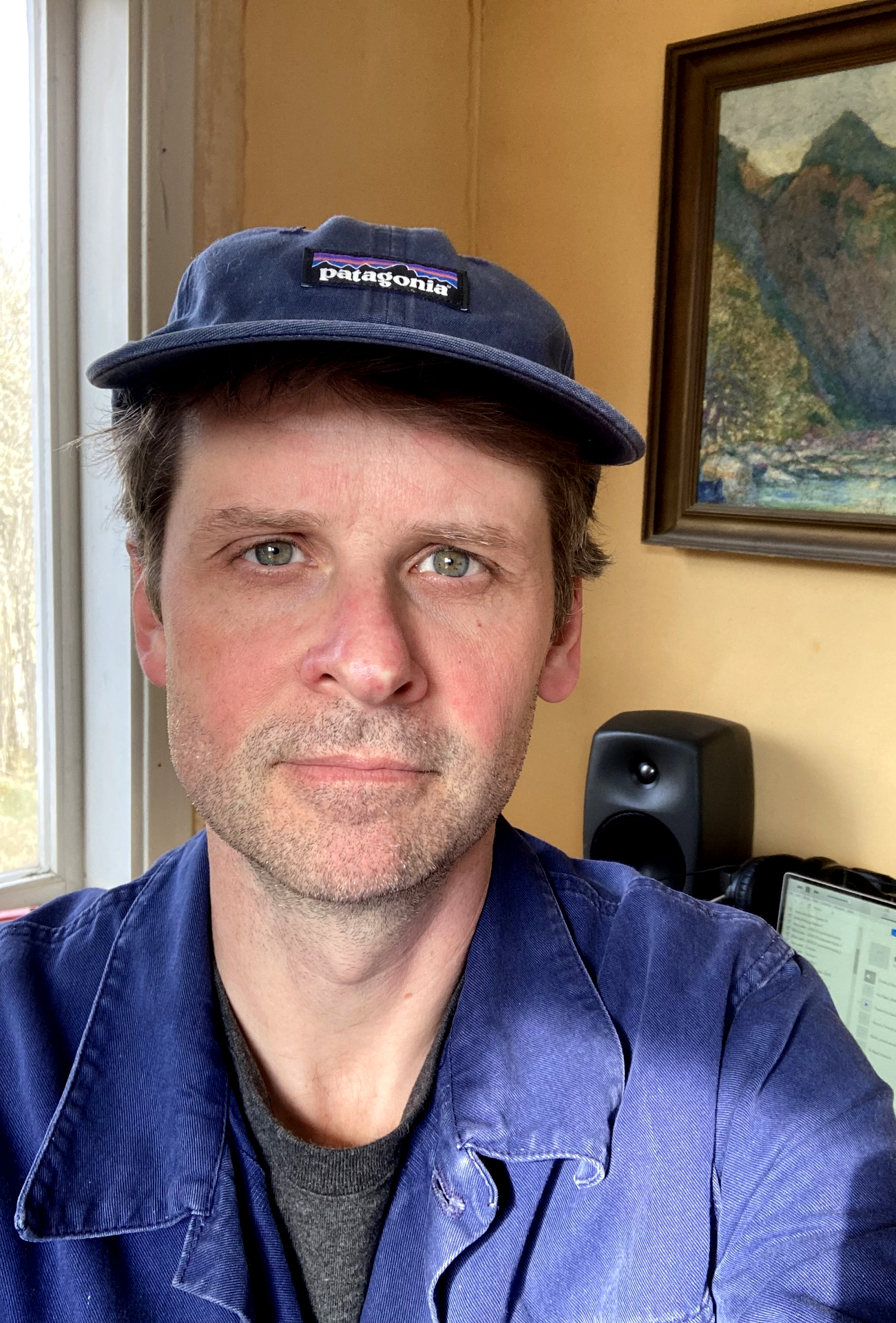
Jason Dungan aka. Blue Lake

Where are you from?

I grew up in Dallas, TX, and have lived in Copenhagen since 2015.

How did you get into music?

I grew up in a very musical household, in the sense that my parents were very into live music, and really loved things like Crosby, Stills, and Nash, Joni Mitchell, Talking Heads. My father had a big record collection and was always making mix tapes for long car drives. The experience of listening to these tapes while the Texas landscape unspooled out the window was definitely a formative experience for me. I started playing guitar and cello from around 12-13, and then when I was 15 I moved to Switzerland, to a school with no music program. At that point, I started to write and record my own music on cassette, getting deep into the guitar and thinking about the recording process itself. I didn’t think so much about releasing this music, but I fell in love with the recording process itself at an early point.

I returned to the US for college, living in Vermont, where I was very active at the college radio station and played in a few rock bands, making my own songs that I would probably describe as noisy country-rock. At that point, I felt both deeply obsessed with music, but also felt like doing it professionally was somehow impossible – I think I imagined that I would do other things in life, and would somehow play in a band on the side.

I then moved to London, studying art, and I began to work as a visual artist and teacher, focusing on making films. I then was part of starting a band called Squares and Triangles, with 4 other London artists. This became a very active project, where we recorded regularly and played when we could. This was a lot about improv, group dynamics, and experimentation. I learned a huge amount about music and recording through this project.

And then, in 2015, I moved to Copenhagen and got immersed in the scene here, and decided to fully commit to making music, and started to put out records as Blue Lake. The early records were made at my home studio and at Christianshavns Beboerhus, as well as a summer house in Sweden. I was using guitar, cello, zither, and also building percussion instruments, finding objects to use in the music. The music kept evolving, and now I’ve been releasing the last 2 x LPs with Tonal Union, a British label.

What still drives you to make music?

I think it’s a way of thinking and working that at this point comes very naturally and on some level, feels necessary or unavoidable to me. The first couple of Blue Lake LPs were made as kind of mini-pressings of something like 80 copies. I didn’t really have an expectation that the records could travel beyond Copenhagen, but I felt that I needed to collect and document the music. For me, each record represents a way to gather together what I’m working on at the moment, and also to push forward and build from the last record. In that way, there’s always more to learn and more to discover, so it feels like a landscape that has endless possibilities, which I find very compelling. I still get a huge amount of excitement from working on new music, from recording, from playing live.

How do you most often start a new track?

In the beginning, I would often do some improvising while recording, and then go back to things that were interesting and revise them.
Increasingly, I am using more of a writing process, where I start to write elements on the guitar or the zither, and just get used to playing them and working out a structure before I do any recording. If it is something that keeps my interest over a period of time, I will then start recording it to get a sense of the wider arrangement, and to see if other elements or instruments can come into the mix.

How do you know when a track is finished?
Sometimes it takes a while… I recorded the most recent Blue Lake LP in the Village studio, in Vanløse, Copenhagen. This meant that I had to book studio dates, and you have to be extremely conscious of time and money. There were gaps of a few weeks between each session so I was able to evaluate the state of each track and work out what else I wanted to add, or if I wanted to re-record certain parts. I’m always asking a question of a track, which is: is there anything else it can do? Does it have more potential? I like to use the recording process to fully explore the possibilities of a track, while at the same time, I want to keep the immediacy and spontaneity of the performance. So I work at not overdoing things or over-layering them. Working at the Village was really useful in that each element is very well recorded, so it has a lot of presence and power. This encourages you to use as few elements as possible, and keeps the recordings focused.

Show us your current studio

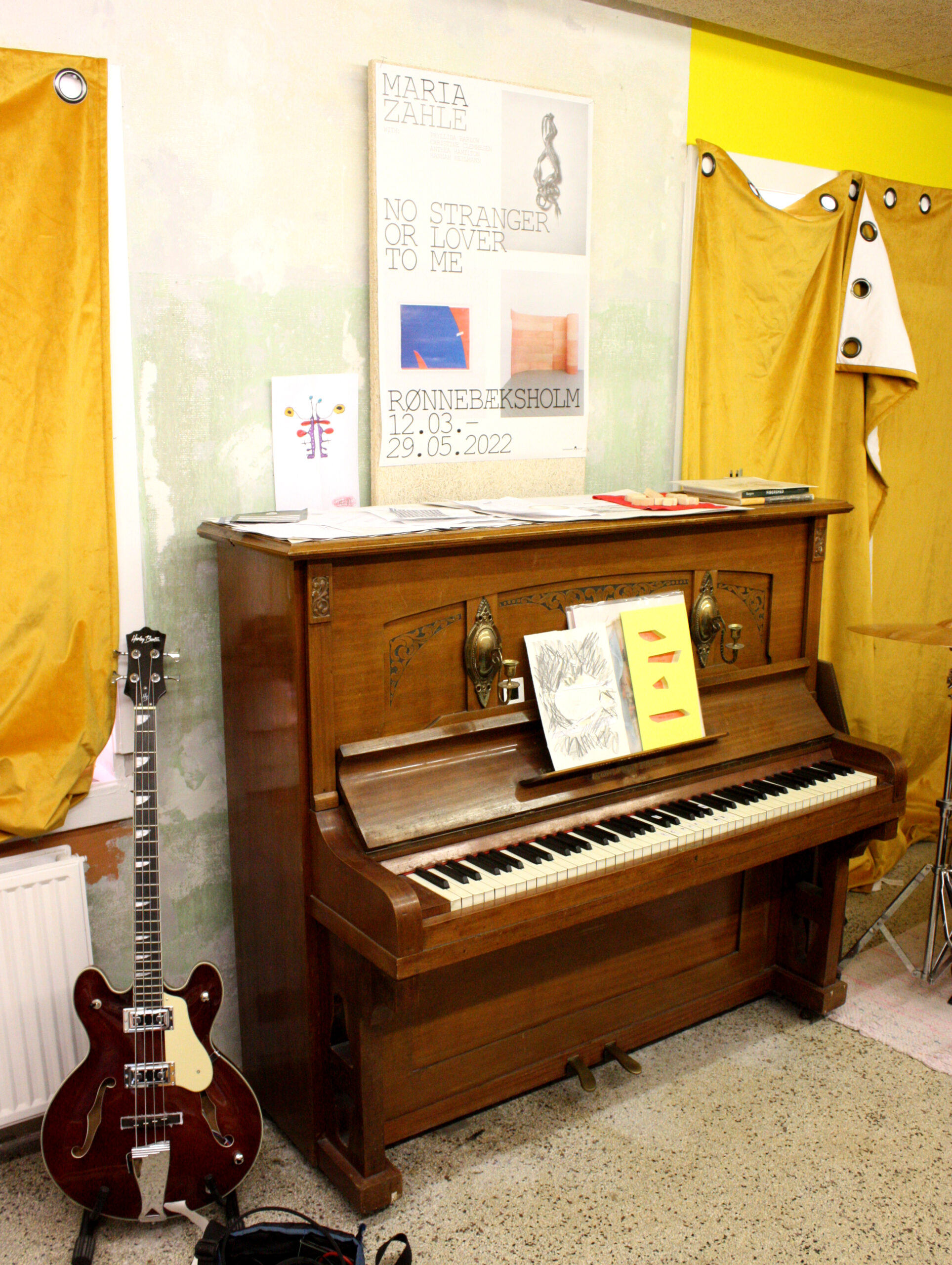
Home studio piano and bass
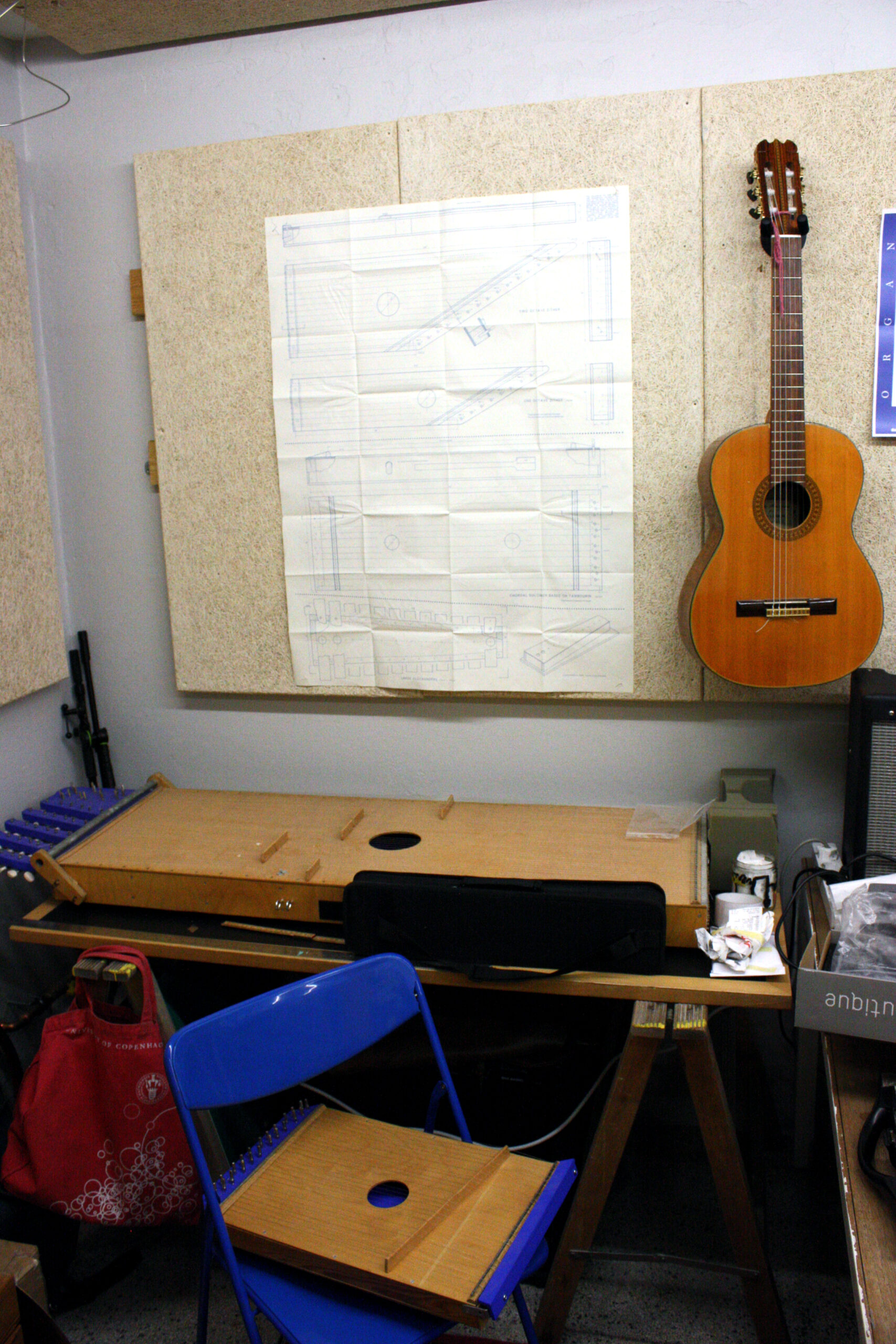
Home studio zithers
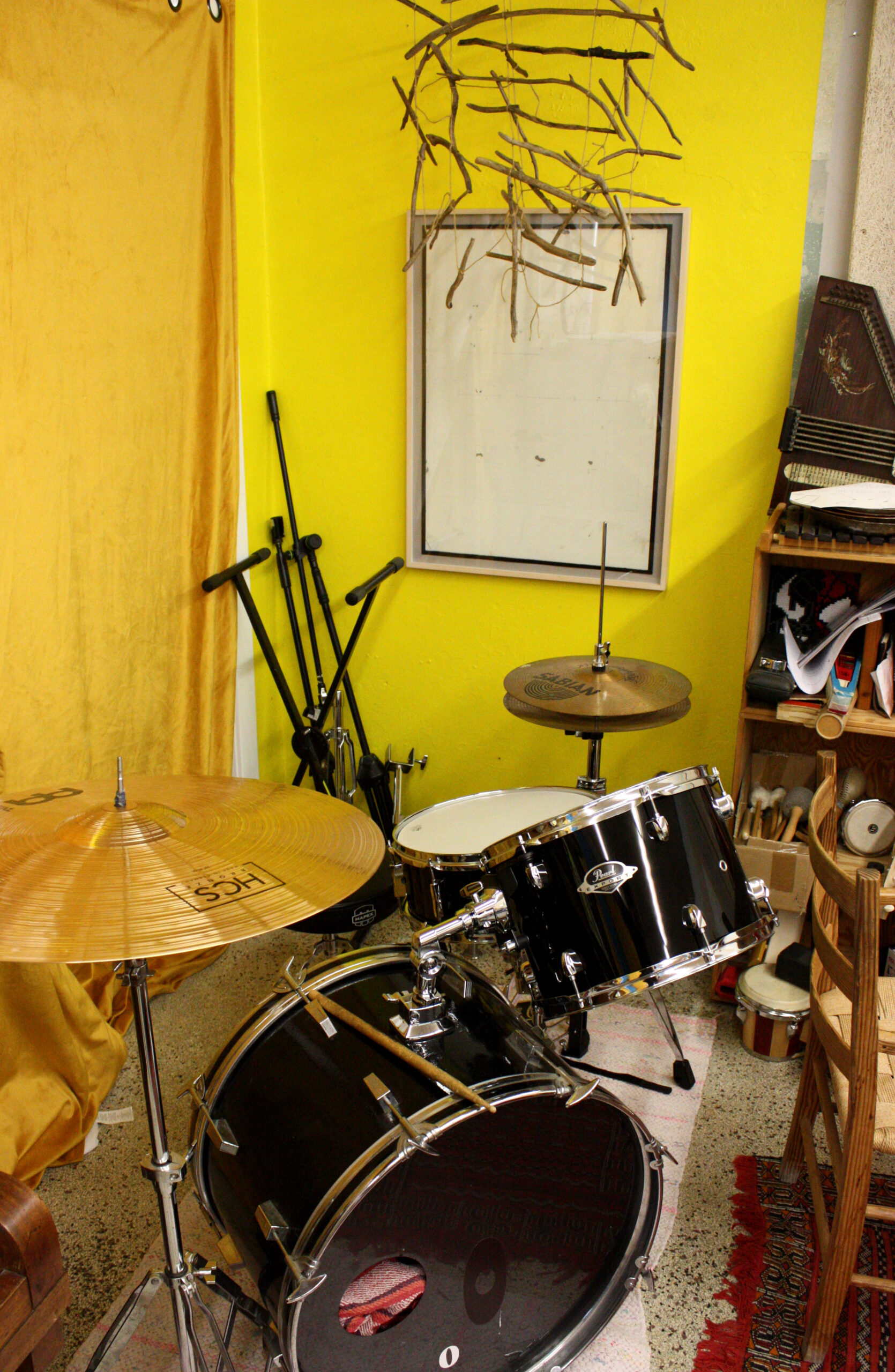
Home studio drums
Home studio zither and acoustic guitars

Best creative advice that you’ve ever heard?

I read an article once which featured Steve Albini recording a band in his studio. They were talking about keeping in an element, but pushing it down low in the mix. Albini simply told them: “Feature it or fuck it”, which is to say: if it’s going to be in there, make sure it has a strong reason to be there, and that it’s doing something special in the track. Otherwise don’t bother.

Promote your latest thing… Go ahead, throw us a link.

Blue Lake put out a mini-LP called Weft in January of this year on Tonal Union.

https://bluelake1.bandcamp.com/album/weft


Simon Thomas – MosaicTapes

1. Favourite knob or fader or switch on a piece of gear and why?

Mannequins by Whimsical Raps

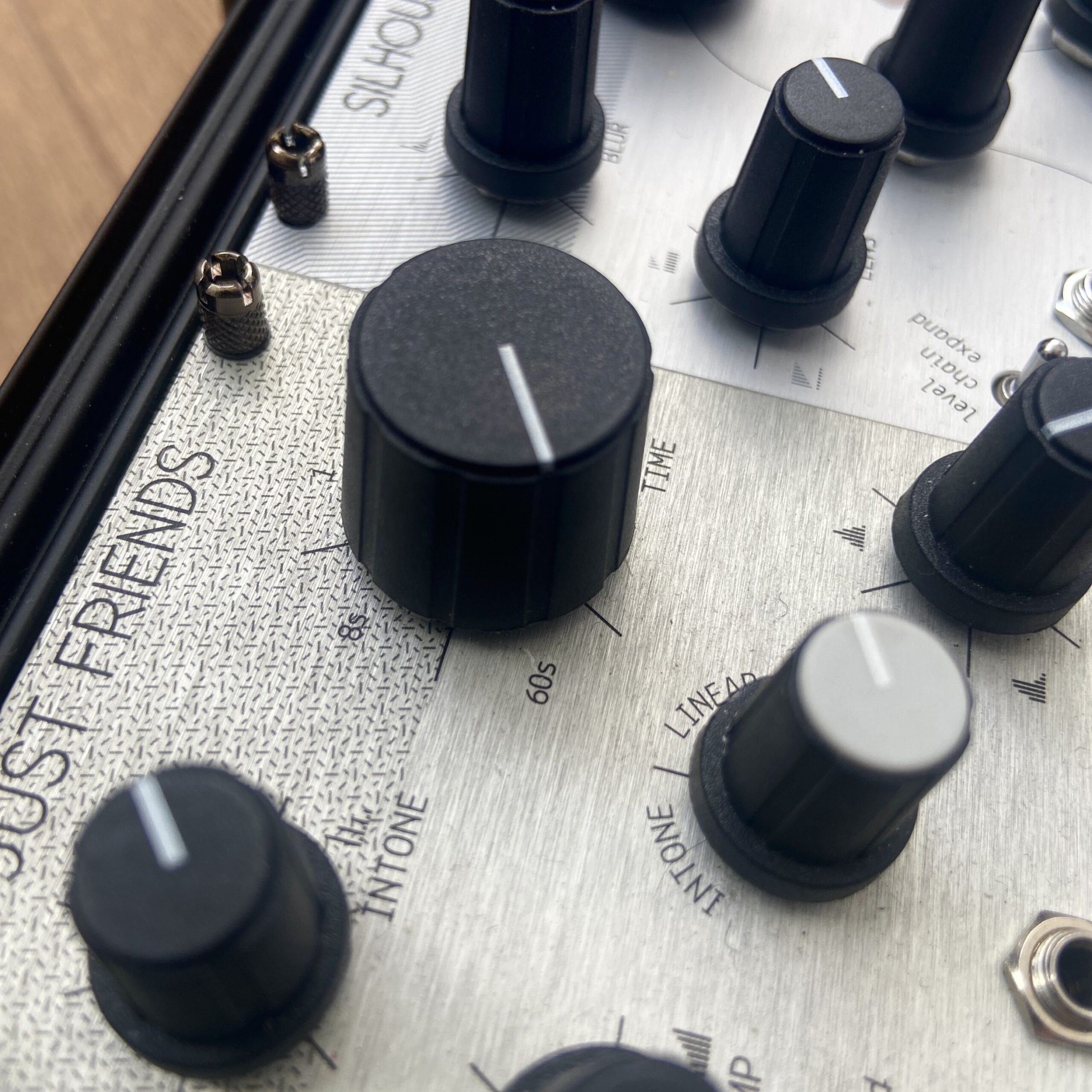
I have a bit of a love/hate relationship with gear and regularly purge almost everything, but there are a few bits that bring so much value to me that I think they are here to stay. The Mannequins modules by Whimsical Raps are such examples, and the ‘big’ knobs on them are so smooth and lovely. They’re really fun to play around with (especially the one on Silhouette).

2. Do you have an ‘almost’ perfect bit of kit? What would you change?

I don’t think I do have anything even approaching perfect, to be honest! There are some bits that provide unique value, like the Cocoquantus, and for me I think I prefer having a select number of pieces that make up a ’near perfect’ picture rather than having to rely on one thing.  

Cocoquantus

3. What setup do you bring on holiday or tour or commute etc.?

I rarely make music on the go – I like to create in a quite private way, so making music while commuting feels a bit distracting and uncomfortable. I have taken my laptop on holiday before; I’m a big fan of Max, and patches like ppooll and Leafcutter John’s Forester, have both been really important to me creatively. I also have a young son, so our holidays are really busy, so having my laptop allows me to get going on something very quickly with very little other dependencies. 

Max device Ppooll

4. What software do you wish was hardware and vice versa?

I absolutely would love to see a hardware version of Slate + Ash’s Cycles. That thing is amazing, and having a stand alone box would genuinely be the stuff of dreams.

Slate + Ash’s Cycles

5. Is there anything you regret selling… or regret buying?

As I said before, I often sell everything, and I don’t think I regret much, if any. The only thing that comes to mind is a lovely Telecaster which I think I may have had around 2008, and sold probably in 2012. 

Fender Telecaster

6. What gear has inspired you to produce the most music?

Without a doubt Max MSP (does that count?) I never make music with hardware – it’s a tool for performance for me, and all my music is made in on my laptop. 

I remember when my son was born, I had a 6U/104hp Eurorack case, and I would try to carve out time to make something using it, as I felt insanely guilty for having spent all this money on something which wasn’t being used. Looking back, it felt like a real struggle to get it all out, patch it up, find a spare surface to work on and then try and muster some creative energy. I think within a year I had maybe 2 or 3 half-baked ideas. 

Norns and Grid

There was this thread on Lines about non-traditional DAW like environments (or something like that), and Forester was listed on there. It cost £45 so I decided to give it a go, and within two or three days I had made my first album, The Children of Several Famous Geophysicists. On top of it being creatively freeing, I also felt like I had discovered my sound. I jumped into ppooll soon after that and that became totally indispensable for me (helps that my heroes Fennesz and Tim Hecker both use it). 

7. If you had to start over, what would you get first?

Definitely a laptop – there’s so many cool things to explore; not just Max, but things like Tidal Cycles – there are endless possibilities, and most of them are free! If not, I’d go for a Norns – you can pick up a Shield relatively cheaply and there are so many amazing scripts to explore… plus you can record to the hard drive.

Norns Shield and Grid

8. What’s the most annoying piece of gear you have, that you just can’t live without?

That’s an incredibly difficult question – I tend to get rid of things that I find annoying. With that in mind though, I’d probably say my guitar – I’d obviously never get rid of it as I dearly love it, but I think my annoyance comes from my poor technical ability. I also think that as a sound-making device, I find it hard to make it sound like anything other than a guitar, which I find frustrating. 

9. Most surprising tip or trick or technique that you’ve discovered about a bit of kit?

It’s not gear specific, but re-amping things I think is a really cool trick to transform sounds into something new, especially using ‘crappy’ recording devices – iPhones, cassette players, children’s toys (especially if broken). Magic.  


Artist or Band name?

I make music as Mosaic Tapes

Genre?

‘Ambient’ although I don’t really like that term. Soundscapism? I dunno, it’s all pretty reductive. 

Selfie?

MosiacTapes aka. Simon Thomas

Where are you from?

I live just outside of London

How did you get into music?

My dad was always into music – he had loads of CDs, and my Uncle was a pretty successful musician – he was the guitarist of a band called Charlie and produced the album Dangerous Age by Bad Company as well as working with 3 Colours Red and The Yo Yos. He taught me and my brother how to play guitar, and when I was 16 and my brother was 14 we started a band. We did a couple of UK tours and supported some pretty decent bands, but broke up in 2007. I still think the songs are great; my brother is a world-class song writer and it shows in everything he has done since. 

What still drives you to make music?

I have a compulsion; I have to be creative or I get frustrated and down. I’ve been playing live more this year than before, so I have been focusing on my live set and creating less, but it still scratches the itch for me. 

How do you most often start a new track?

Usually it will start with an interesting sample that I have made in Cycles, or have discovered, and then I will warp that out of all recognition and then start layering other bits on top of it. 

How do you know when a track is finished?

All of my tracks are done in a single take, so it’s done when I run out of steam and everything fades away. It’s a really useful way of not over engineering ideas.

Show us your current studio

Sadly, I don’t have the space for a studio, so I usually just commandeer the dining table. 

MosaicTapes desktop studio

Best creative advice that you’ve ever heard?

If you have creative block, don’t try and force it – it’ll only make you feel worse. Go for a walk and it’ll come back to you. 

Promote your latest thing… Go ahead, throw us a link.

I released a track with Jogging House recently: https://music.apple.com/gb/album/is-this-single/1793909231 

And my album Beloved Algorithms came out last December: https://lontanoseries.bandcamp.com/album/beloved-algorithms 


Jérôme Vergez – Minimanalog

1. Favourite knob or fader or switch on a piece of gear and why?

SSL Console Faders
SSL G serie console faders

My favourite fader is the motorized fader of the first SSL I touched. I wasn’t 20 years old when I had the chance to work as a sound assistant on a SSL G serie console… I’ve always had this fascination for analog consoles, especially SSLs. But I also love fiddling with the Cutoff of my Moog!

2. Do you have an ‘almost’ perfect bit of kit? What would you change?

Verbos modules are almost perfect except their price… They are so perfect when they are combined all together.

Verbos Electronics Eurorack

3. What setup do you bring on holiday or tour or commute etc.?

I don’t really have a fixed setup. I like to change following desires or projects. On holiday, I usually only bring one machine, like a synth, a mini modular or a drum machine.

4. What software do you wish was hardware and vice versa?

Nothing in particular. The software and hardware offerings are so wide.

5. Is there anything you regret selling… or regret buying?

I am constantly buying and selling… I have even sold and bought back up to 3 or 4 times the same machine… I really have to stop doing this. Today I’m trying to stabilize my setup by keeping only the essential parts.

6. What gear has inspired you to produce the most music?

The eurorack modular modules are the most inspiring instruments for me. There are so many possibilities that you can build the instrument you want according to your style and your objectives. I can’t stand the idea of empty spaces in my case. I try to stay on a certain size of case with modules that I like to exploit at 100%.

Eurorack modules

7. If you had to start over, what would you get first?

Starting over would mean buying a powerful MacBook with Ableton Live as you can produce whatever you want on a laptop. And since I need a knob box and real cables to be inspired… I would buy a Moog Sirin.

Moog Sirin
Moog Sirin

8. What’s the most annoying piece of gear you have, that you just can’t live without?

My Synthi A. This is by far the most inspiring. It is known for being a synth of research and experimentation, but used in a more classical way it produces sounds with extremely rich harmonics. Before realizing my dream and acquiring one in good condition, I think I had all the clones, copies, or modules inspired by this synth.

EMS Synthi A
EMS Synthi A

9. Most surprising tip or trick or technique that you’ve discovered about a bit of kit?

When I discovered that you could use a spring reverb like a drum machine, simply by turning off the power and plugging it back in.

Knas Ekdahl Moisturizer

Artist or Band name?

Jérôme Vergez

Genre?

Ambient, Minimal, Techno, EBM

Selfie?

Jérôme Vergez

Where are you from?

Toulouse, France.

How did you get into music?

When I was 18, I got my hands on a Roland S50 sampler, and it was already too late, I was infected.

What still drives you to make music?

I’m always looking for something. A quest that still doesn’t seem to me to be finished, a work that is never finished. That’s why I always have trouble finishing my titles. I have to focus on one task at a time, and move forward step by step, preventing myself from referencing the things from the previous stages.

How do you most often start a new track?

I don’t have any rules. It can be a sample, a patch on my modular, a bass line, an idea that’s lying around… etc.

How do you know when a track is finished?

Never! That’s the problem (see above…)

Show us your current studio

Jeromes Studio
Jeromes Studio
Jeromes Analog Synth Rack

Best creative advice that you’ve ever heard?

To not necessarily try to respect the rules that can be heard or found on the web and not to fall into habits (especially those of others…).

Promote your latest thing… Go ahead, throw us a link.

https://linktr.ee/jeromevergez