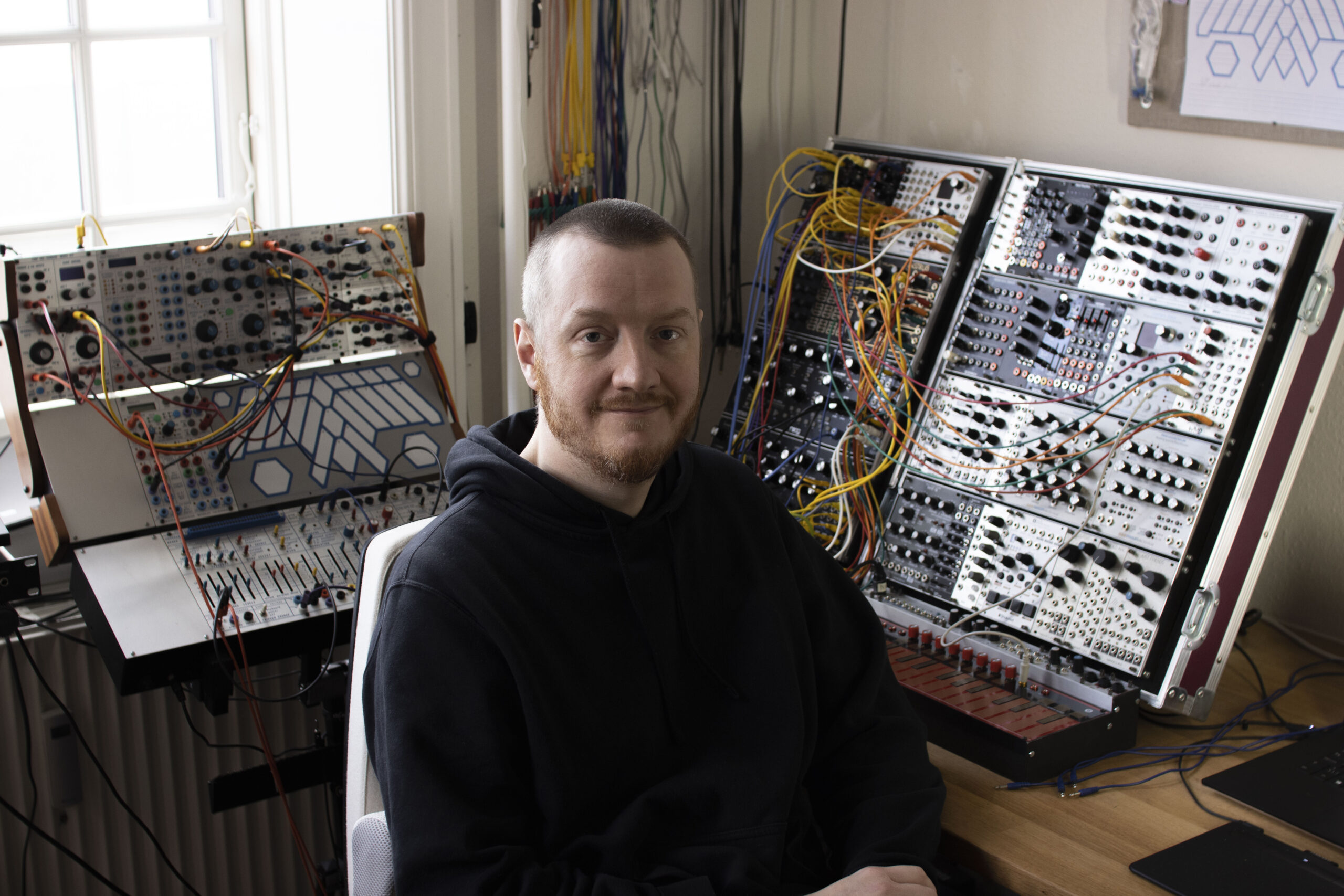
Jens Paldam – Buchla Buddy

1. Favourite knob/fader/switch on a piece of gear and why?

Turing Machine
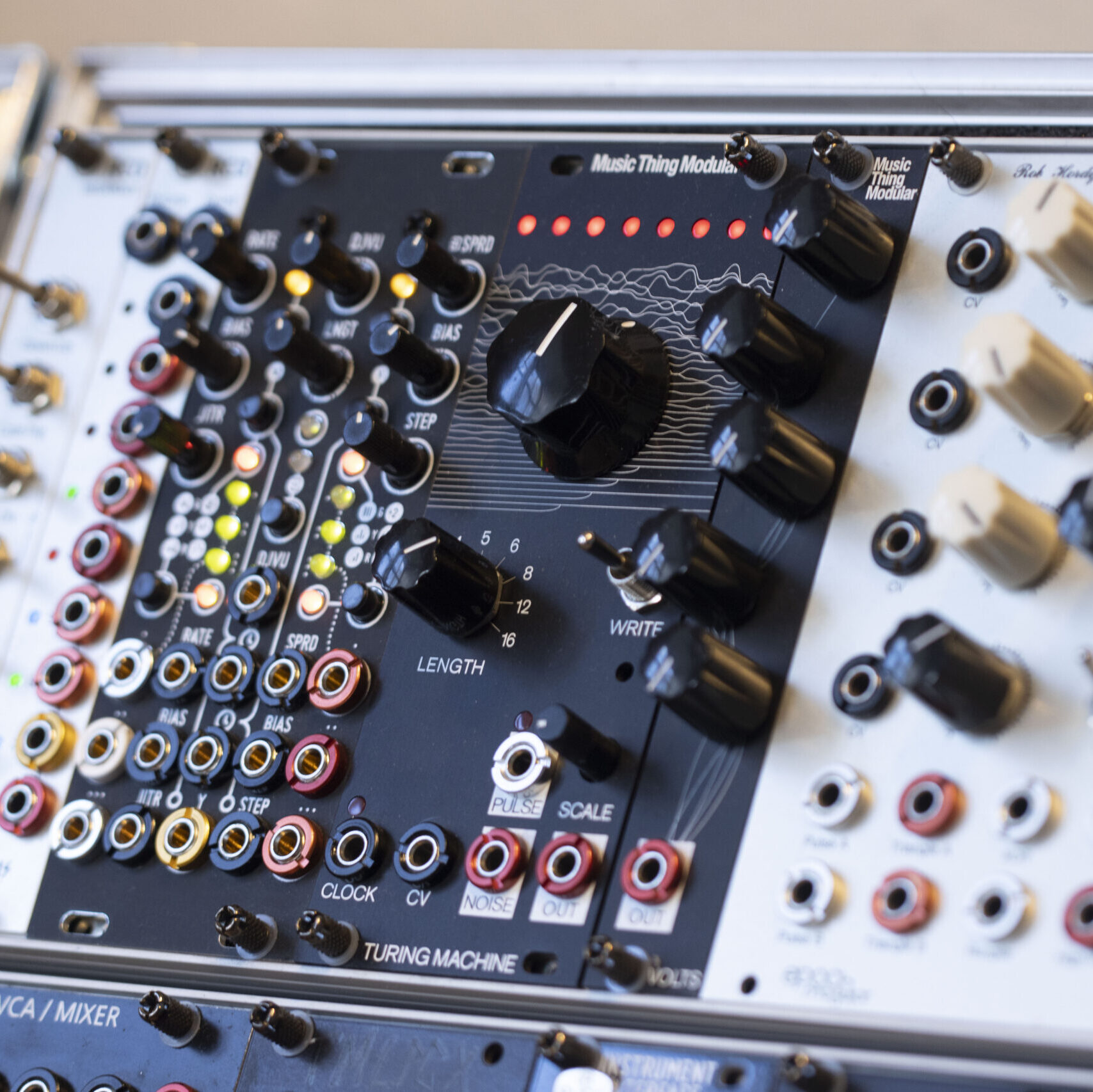
Turing Machine by Music Thing Modular

Here I am on the same blog as Tom Whitwell (Editor: Read his answers to ‘9 Odd Questions’ here) and I must mention his Turing Machine. It is one of the most brilliant modules out there and the knob that sets the balance between random and looped is nothing short of genius in all its simplicity. I have it sitting right next to Mutable Instruments Marbles (though I have owned the original, I currently use the Antumbra CARA version to save precious hp). Marbles is another brilliant module that expands on the core idea from the Turing Machine. The two of them are often patched together in a feedback loop that forms the foundation of many of the patches I create.

2. Do you have an ‘almost’ perfect bit of kit? What would you change?
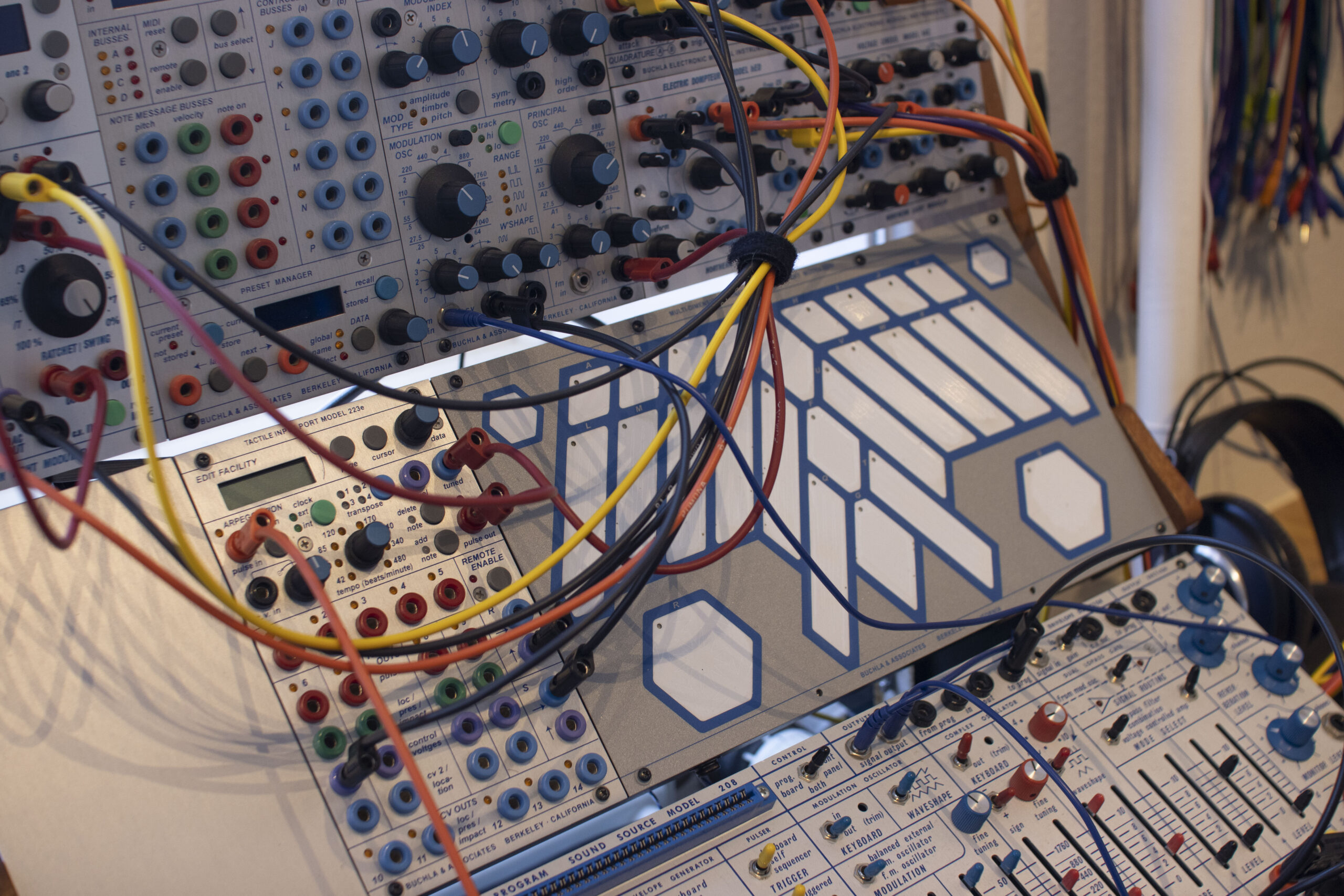
The Buchla Multi-dimensional kinesthetic input port model 223e is somewhere between a keyboard and a sequencer. It is extremely playable. With it, one never runs out of control voltage sources. You can dial in the CV value for each key, so any scale or tuning system can be applied. The one thing that would be great was if the CV value wasn’t restricted to whole numbers, since the note I am trying to reach often lies somewhere between two whole numbers :/

Buchla Multi-dimensional kinesthetic input port model 223e

3. What setup do you bring on holiday/tour/commute etc.?
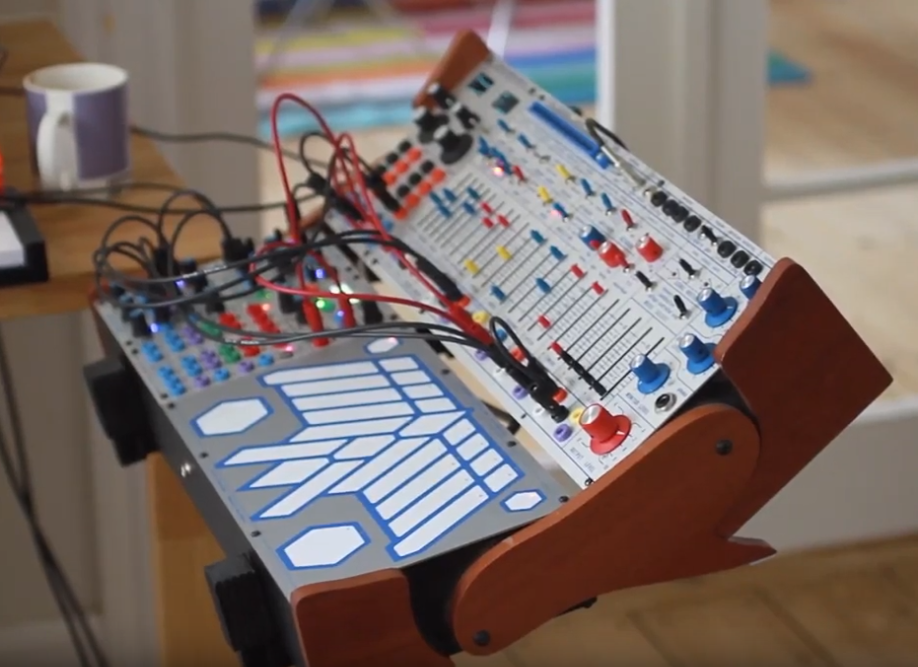
I usually bring my Buchla Skylab case. I have this nice soft bag for it and it can be packed while patched up.
There is always some programming of the 223e I can do, something that is nice to do away from the distractions of my other studio gear.

4. What software do you wish was hardware and vice versa?
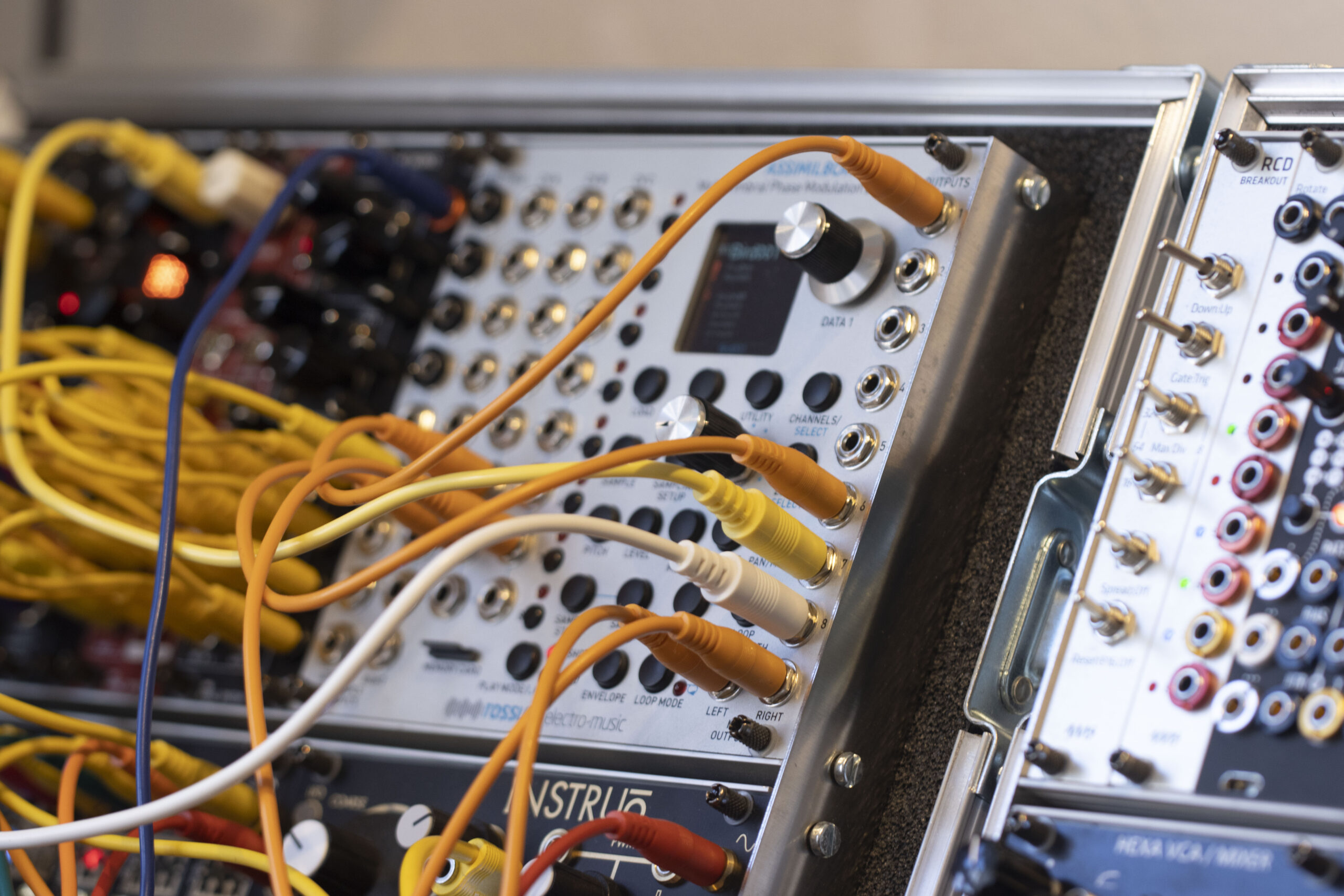
I worked with several hardware samplers over the years, but with the software sampler HALion from Steinberg I thought I had found my main sampler. When I started using modular hardware, I stopped using samplers all together, but about a year ago, I got hold of an Assimil8or from Rossum Electro Music. Though it might not be as comprehensive as a software sampler like the HALion or Native Instruments Kontakt, it has some great features that makes it an amazing tool in a modular context, like sampling of CV, phase modulation, scrub and shuttle, CV control over bit depth and aliasing. It is an amazing module.

Assimil8or by Rossum Electro Music

5. Is there anything you regret selling… or regret buying?
I had a TR-808 that I sold some 15 years ago for about 1000 euros. I don’t really miss having it, since I hadn’t lived in Detroit in the eighties and wasn’t amongst those who had thrown their love on a discarded second hand machine, using it to realize their dream of changing the world through a unique vision of how the future should sound, but I regret not holding on to it for a little longer because now it is worth three times what I sold it for. Basically, I am on the lookout for something that is unique for my time and can help me achieve something with the same level of originality as the 808 and the techno created by the maestros from Detroit.

6. What gear has inspired you to produce the most music?
Sorry for the predictable and boring answer, but probably just modular gear in general. When patching, I can “invent” my own instrument particular to whatever track that I wish to create. This description might also apply to other types of gear or software, but with modular, everything starts like an experiment. It is to me, infinitely more inspiring and creative than choosing a software instrument and then browse through and modify the presets until I find a sound I like.

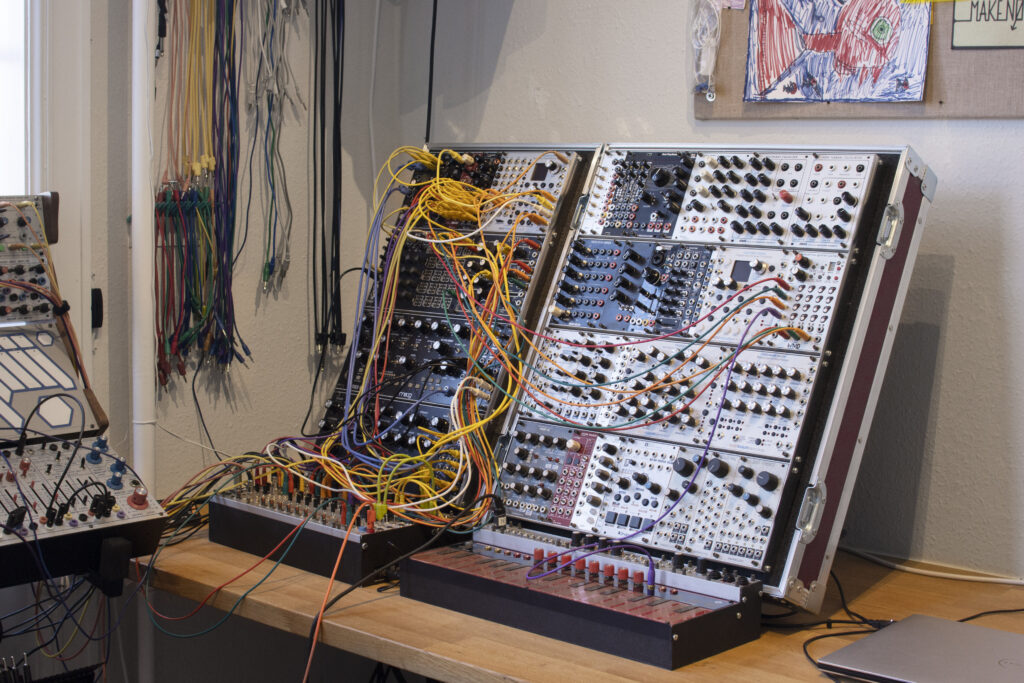
Jens Paldam’s Eurorack Modular

7. If you had to start over, what would you get first?
Modular hardware, like maybe a Doepfer system. Learning about modular is learning about the elements of electronic music in the right order. When I got my first modules, working with music software suddenly felt like a flight simulator compared to modular, which is like being in the cockpit of a real airplane 🙂

8. What’s the most annoying piece of gear you have, that you just can’t live without?
Not sure that I have any gear that annoys me. The one thing I can think of is the Rossum Control Forge. It is in every sense an amazing module – it takes the concept of the Buchla MARF to the next level. But since it is so advanced, I often have to reach out for the manual, so I guess that is one of those “good problems”.

9. Most surprising tip/trick/technique that you’ve discovered about a bit of kit?

Roman Filippov Buchla 208 Clone

I have a Roman Filippov Buchla 208 Clone. I absolutely love the way it sounds, and wouldn’t change it for a “real” Buchla 208, even if I got paid to do it, but one thing that bothered me was that I didn’t have control over the envelope section’s attack and decay, that was until a friend of mine pointed out that patching CV into the ‘from prog‘ and ‘to prog‘ does exactly that.


Artist or Band name?
Jens Paldam

Genre?
Leftfield

Selfie?

Jens Paldam in his happy place

Where are you from?
Aarhus, Denmark

How did you get into music?
I started playing the guitar when I was seven.

What still drives you to make music?
I can’t stop. I love it. I once asked myself the essential question: What is it you want? Do you want to put your efforts into making a name for yourself or do you want to put everything into making music that gives your listeners an experience? You might think that the two are not mutually exclusive, but he who chases two rabbits rarely catches one – as the Japanese saying goes.

How do you most often start a new track?
I make a field recording somewhere and get an idea. Other times, an experiment on the modular becomes the foundation of a new track.

How do you know when a track is finished?
When it starts to feel done, I let it sit for a while without listening to it. That is the only way I can come close to that valuable fresh ears experience.

Show us your current studio
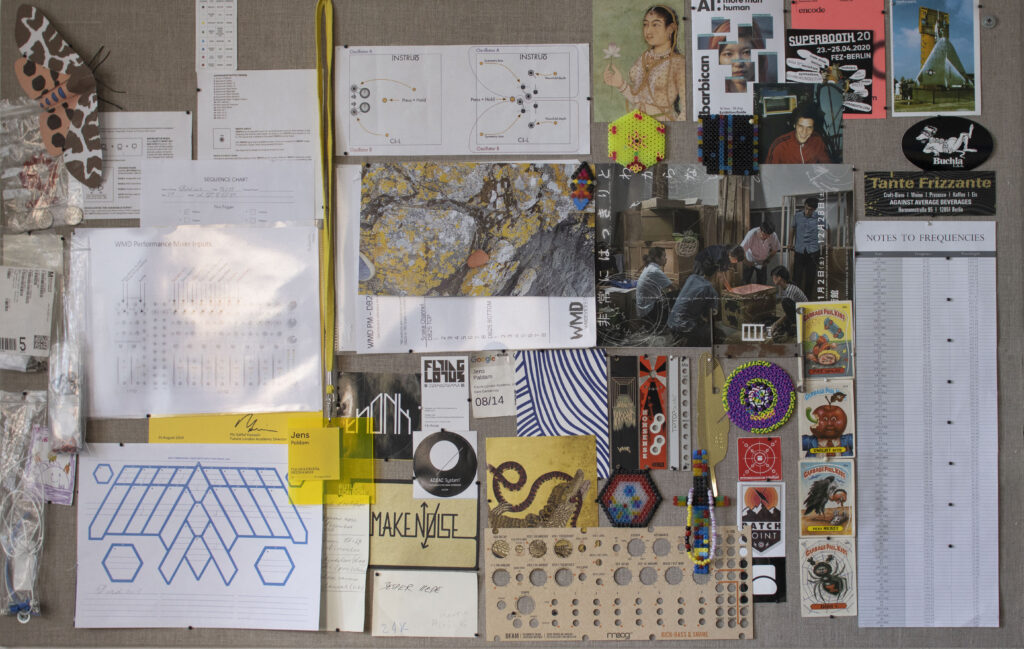
Here is a photo of the bulletin board I have above my studio desk. I often look at it and let my thoughts drift while listening to a track I am working on, so the content changes frequently.

Mood board of meditating modular mind

Best creative advice that you’ve ever heard?
Anything worth doing, is worth doing well.

Promote your latest thing… Go ahead, throw us a link.
My YouTube channel is youtube.com/jenspaldam

But I also think you should do yourself a solid and check out Chris Cutler’s excellent podcast series “Probes”… I learned so much from it.

[Editor: Jens recently did a lovely ‘driven’ ambient set at Chiba City Museum of Art in Japan. Check it out below]


[Editor: Do you have a favorite tip, trick or way of working with any of the gear from this interview?
Then throw a comment below…
]


Tuesday Night Machines – On a Sunday

1. Favourite knob/fader/switch on a piece of gear and why?

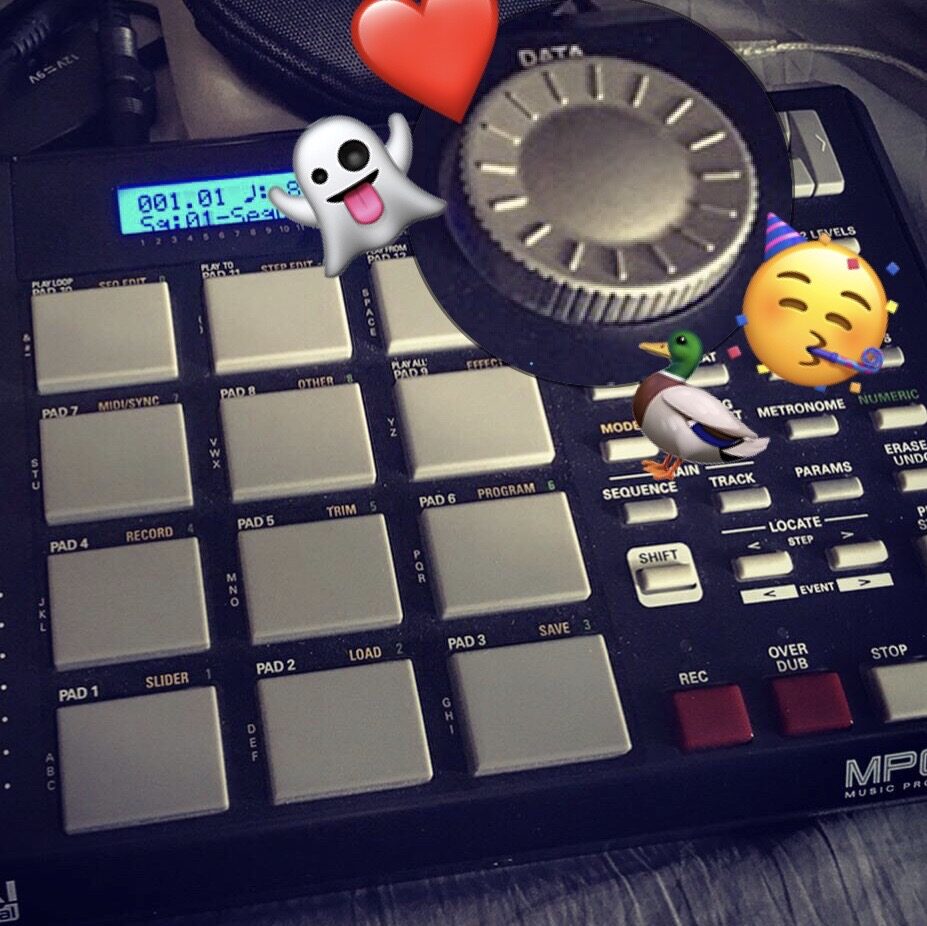
I have a weird fixation with the data wheels on Akai’s MPC 500 and MPC 1000. They’re not really high quality components or feel nice to the touch, but they’re essential to operating those devices efficiently and in my opinion the designers did a great job of integrating them into the software and general MPC workflow. They’re just so quick and easy to rotate and the software reacts so snappily to their motion … it’s a delight.

Akai MPC500

2. Do you have an ‘almost’ perfect bit of kit? What would you change?

AE Modular

This always depends on the situation or musical context, but I’ve been very impressed by the AE Modular synth format and how it developed over the past two years. It’s a fully featured modular synthesizer, which is relatively small and portable and costs only a fraction of a Eurorack system. I’ve dreamed of a system like this ever since I delved into the modular synth rabbit hole ten years ago and it seems that it has finally become reality … at least for my tastes and requirements.

3. What setup do you bring on holiday/tour/commute etc.?

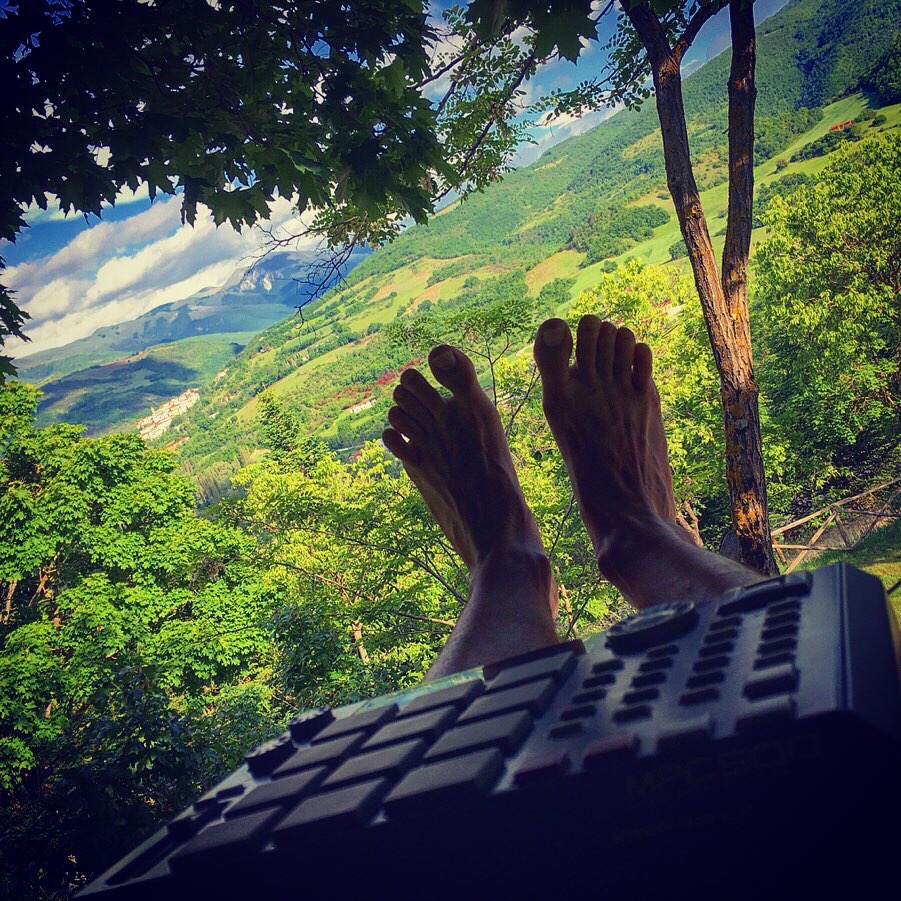
Akai MPC 500 and YouTuber’s toes

I love making music while on vacation or when commuting. The iPad has worked for me greatly as a mobile music workhorse ever since its inception and I always carry it with me and do something musical with it. Sometimes it’s too much like a computer though, meaning that it can distract me with its internet access, notifications, etc. So, especially for vacations, I like to bring other pieces of gear as well, which run on USB power bank power, which is easy nowadays, even for devices requiring a 12V supply, thanks to cheap and efficient step-up adapter cables. Last year I re-bought the aforementioned MPC 500 and created a full album with it during a three week camping vacation. For this year I’m planning to take my freshly modded TI-82 calculator with Houston Tracker 2 and maybe even a Gotharman Little Deformer 3. I have also enjoyed Teenage Engineering’s OP-1 (obviously), the Bastl Microgranny 2 and BitRanger, a Gameboy Advance Micro with LSDJ and various other bits. Somehow, I can concentrate on music best when I’m on vacation and I get the most finished tracks out of those periods of time.

TI-82 calculator with Houston Tracker 2

4. What software do you wish was hardware and vice versa?

Lumen! It’s a really cool analog-style video synth for macOS with MIDI control, which I would really love to have as a standalone and affordable hardware device. Maybe I can snag a Critter & Guitari ETC at some point, which seems close.

Lumen video synth

5. Is there anything you regret selling… or regret buying?

I’m not into vintage synths or rare gear, so I’ve not regretted selling stuff so far, because I could always just buy it again if I wanted to. However, I’m in the heaviest music studio downsizing phase I’ve ever had right now and I might run the risk of finally regretting a thoughtless sale after all. I sometimes get this “reverse GAS”, which makes me feel unattached to all my gear, so I end up selling things left and right. After those phases though, there has always been something new to be acquired and tried out with the new funds. It’s a journey and I enjoy it.

6. What gear has inspired you to produce the most music?

Ciat Lonbarde

While it was not the “most” music I made, my recent foray into Ciat Lonbarde instruments, like the Cocoquantus, Sidrax Organ and Plumbutter, very much inspired me. Those instruments are incredibly well designed for spontaneous, electric forest ambient music live-patching sessions.

Linnstrument and inspiration

Apart from that, I also like to play an MPE synth with the Linnstrument and have the Bastl Thyme or Mooer Ocean Machine attached as audio effects. Somehow this simple setup is an instant relaxation tool for me. I could press, slide and wiggle my fingers for hours on this rubbery control surface and drown in the looping ambient delay and reverb sounds coming through my headphones.

Linstrument and Mooer Ocean Machine

7. If you had to start over, what would you get first?

I think I might try a larger hardware music workstation, like the MPC X and then get some cheap and small gadgets to sample.

8. What’s the most annoying piece of gear you have, that you just can’t live without?

Axoloti DSP DIY

I’ve kept a few of my DIY synths for way too long. They took too much space and I hardly used them anymore, yet I couldn’t let go of them. Especially the Axoloti platform is like a drug to me sometimes. It’s so easy to prototype and build synth, sampler and sequencer ideas with it, but all of the sudden you have eight of those DSP boards and a drawer full of wooden boxes which might work as enclosures, electric components and cheap USB MIDI controllers. Still, the Axoloti is one of the most empowering electronic music experiences for me. Making your own hardware instruments from scratch is incredibly satisfying, especially when it’s that easy.

Axoloti DSP board

9. Most surprising tip/trick/technique that you’ve discovered about a bit of kit?

Reading Ken Stone’s CGS Serge circuit diagrams made me discover the power and versatility of the 4051 analog multiplexer IC, which is a 3 bit, binary-addressed eight-way switch, perfect as a basic building block for analog sequencers. This has furthered my DIY endeavors tremendously and if everything goes as planned, it will result in my first commercially available modular synth module later this year. [Editor: Cool, I look forward to hearing and seeing what these do. Will insert link when it comes out]

Synth DIY

Tuesday Night Machines logo

Artist or Band name?

The Tuesday Night Machines

Genre?

All over the place. It’s not good to cultivate an audience for my music like this I guess, but I like jumping between genres. I’ve made chiptunes, a beat tape, harsh noise, ambient drones and I’m currently dabbling in Acid. Oh well.

Selfie?

Sure, but I’m writing this on the couch and it’s Sunday, so I look the part.

Felix on a sunday aka. Tuesday Night Machines

Where are you from?

My family moved a lot, so I’m not “from” somewhere really. I currently live in Köln, Germany for over a decade though, so it looks as if I like this city.

How did you get into music?

I had classic piano lessons and some electric keyboard lessons as a child, which I didn’t like too much back then. I’m glad that I got some basic music theory from it though. Later, I learned to play the guitar during university to play my favorite punk rock songs. Electronic music came some time after I started working then, beginning just with a copy of Ableton Live Lite, which seemed like a fun and easy way to make music. Apparently it wasn’t though, as it led me to DAWless hardware setups quickly.

What still drives you to make music?

I work in visual media, so music is basically the counterpiece to my day job. It’s a great way to relax for me, more or less away from the computer.

How do you most often start a new track?

Mostly with a certain sound or melody. Depending on the workflow of the device I’m playing with, I sometimes even just create one single long audio track for that one sound and then layer drums and other instruments on top afterwards.
How do you know when a track is finished?

When I get past the 3 minute mark.

Show us your current studio

The current state of my studio downsizing craze:

Cupboard studio

.. and how it was before, neatly constructed inside an inconspicuous IKEA PAX wardrobe:

Cupboard studio full of knobs

Best creative advice that you’ve ever heard?

That limitation thing which everyone mentions. Limitations are great for music.

Promote your latest thing… Go ahead, throw us a link.

Thicket Whispers, a Ciat Lonbarde album:

https://nightmachines.bandcamp.com/album/thicket-whispers

Thicket Whispers, a Ciat Lonbarde album by Tuesday Night Machines

[Editor: You seen any of TuesdayNightMachines youtube tutorials? Leave a comment]


[Editor: Do you have a favorite tip, trick or way of working with any of the gear from this interview?
Then throw a comment below…
]


A773 – Melodic Modular Maestro

1. Favourite knob/fader/switch on a piece of gear and why?
I just love my Horstronic joystick! I’ve been trying out a few different touch/grab/turn modules and somehow didn’t gel with most. But the joystick is great. I removed the spring from it, to keep it from returning to center position, it makes much more sense to me, that it stays where it’s left. It feels really good and the gestural nature of if makes it such a joy to “play”.
To cater for the muscle memory I mostly have it patched up the same way: X controls “skipping of something” (left is no skip, right is more skip) and Y is “brightness of something” (up is bright, down is mellow, middle is neutral).

Horstronic Joystick

2. Do you have an ‘almost’ perfect bit of kit? What would you change?
I recently got a 2nd hand MicroFreak, that I’ve fallen in love with. It has a quite simple synth engine, but the modulation matrix opens it up and makes it easy to get organic and dynamic sounds. I was a bit skeptical about the Buchla-style keyboard, but it feels great and the polyphonic aftertouch is very nice. It has a few quirks, for instance although the engine is polyphonic, everything runs through a monophonic filter, but for me it just adds to it’s charm.
There are, however, two things that annoy me. Most importantly: it always powers on on preset 1, something I hate so much that I sold modules, I otherwise liked because of them not remembering their state between powercycles. I’m hoping they’ll change that in a new firmware soon! Secondly, it’s quite a shame that it doesn’t have CV in, but I’m not sure they can fix that with a firmware update 🙂

Arturia Microfreak

3. What setup do you bring on holiday/tour/commute etc.?
I actually stopped bringing stuff on holiday and trips. I prefer to take time off, do nothing, maybe read a book. Currently I’m reading Schoenbergs “Theory of Harmony”, which contrary to what many people believe, is not at all about 12-tone technique, but rather sums up and marks his departure from tonal music. Last time I was on an exceptionally long and boring train trip, I brought the computer and took the opportunity to work with csound. I mostly use it to generate batches of samples with slight or drastic variations for later use in the ER-301.

Orthogonal Devices ER-301

4. What software do you wish was hardware and vice versa?
The ORCΛ “sequencer” would be great to have in modular format, just a screen, connections for USB keyboard and a bunch of trigger and CV I/O. A friend of mine has made
a module for himself from a raspberry pi, that kind of is that, but it’s too much DIY for my skills and it’s also a bit rough around the edges. The only software I use on a daily basis is Reaper, I’m not sure I’d like to have that in hardware. I think software and hardware have their strengths and weaknesses, and the power of Reaper to me is the extreme flexibility, which I don’t think would carry over to hardware.

5. Is there anything you regret selling… or regret buying?
I had a Yamaha SY77 some years back, it was an amazing synth, not really sure why I sold it.

6. What gear has inspired you to produce the most music?

I’ve become much more productive since I got into modular, maybe it is because you can’t make anything new before you pull the cables. When using software I often had a hard time finishing anything, there was always this feeling of unrealized potential in every track.
With modular there’s no way around it, just finish the patch, record it, pull the cables and then move on.

Eurorack modular and audio mixer

7. If you had to start over, what would you get first?
I’d get a modular and an acoustic piano!

Night time modular lights

8. What’s the most annoying piece of gear you have, that you just can’t live without?
I have a very brutal attitude towards annoying gear, to the point that I’d rather change my workflow, than live with something that annoys me. So I can’t really think of any piece of gear I have that annoys me.

9. Most surprising tip/trick/technique that you’ve discovered about a bit of kit?
I recently found that the mystic circuits vert can make sound without any input, which surprised me, since it’s basically an AD converter. I had to switch it off/on to convince myself it wasn’t due to some old input still stuck in there. When sending it random voltages it makes some wonderful, glitchy bursts, all with a bit different flavour, depending on what output you use.

Mystic Circuits Vert

Artist or Band name?
a773

Genre?
Melodic electronic music.

Selfie?
Please no!

Where are you from?
Copenhagen, Denmark

How did you get into music?
I taught myself to play the piano as a teenager, then eventually ended up studying jazz piano at the conservatory in The Hague. Around the same time as I started playing the piano, I got interested in electronic music, and read all books (which weren’t many) available in the public library on synthesizers, and soon after I bought my first synth, a Roland JX-8P.

What still drives you to make music?
Music in general is the most satisfying activity I have ever been involved in. And when it comes to making music, the whole process of making something out of nothing is so fulfilling. I love all the small and large decisions that it takes, to make a piece of music. I also immensely enjoy improvising, that whole interacting with the music in the moment and making split minute decisions represents something very special, something that keeps the mind alert and the music fresh.

How do you most often start a new track?
That’s deliberately very different. Sometimes I have a rhythmic idea, sometimes I have a chord progression or a modulation in mind, sometimes it’s just an experiment on the modular that develops into something.

How do you know when a track is finished?
When my teletype is full (not entirely untrue). On a serious note, I make all my music on the modular, and perform it live in one take. So it’s a process, where I patch something up, then play it, then patch some more. At some point I’ll explore what I have, try out different forms, find ways to take it down dynamically, or ways to go wild. I might find there’s a tricky part I need to practice, or feel something needs to be added, a variation in the bass or more texture, so I might work a bit more on the patch. When I can play the patch confidently and don’t feel like anything is misssing, I multitrack to reaper, and at this point I consider it finished. More often than not, I do a quick mix right after the recording, to check if the performance was ok. If not I do another take, I very rarely do any overdubs or edits.

Show us your current studio

Best creative advice that you’ve ever heard?
“Don’t be afraid to imitate, the closer you get to your heroes, the closer you get to yourself”

Promote your latest thing…
latestyoutube.a773.dk

[Editor: Have you gone modular or have you deliberately stayed away?? Leave a comment]