Kaspar Kaae – Cody-licious

[Editor: Okay… this interview is with someone who has got to have one of the greatest collections of vintage guitars (and music gear) in Denmark. The fact that this person is also a busy film composer and the main songwriter/singer in a very influential danish indie folk band is just perfect! Enjoy!]

1. Favourite knob or fader or switch on a piece of gear and why?
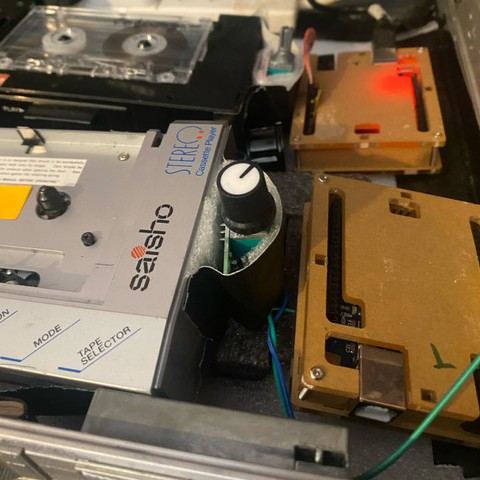
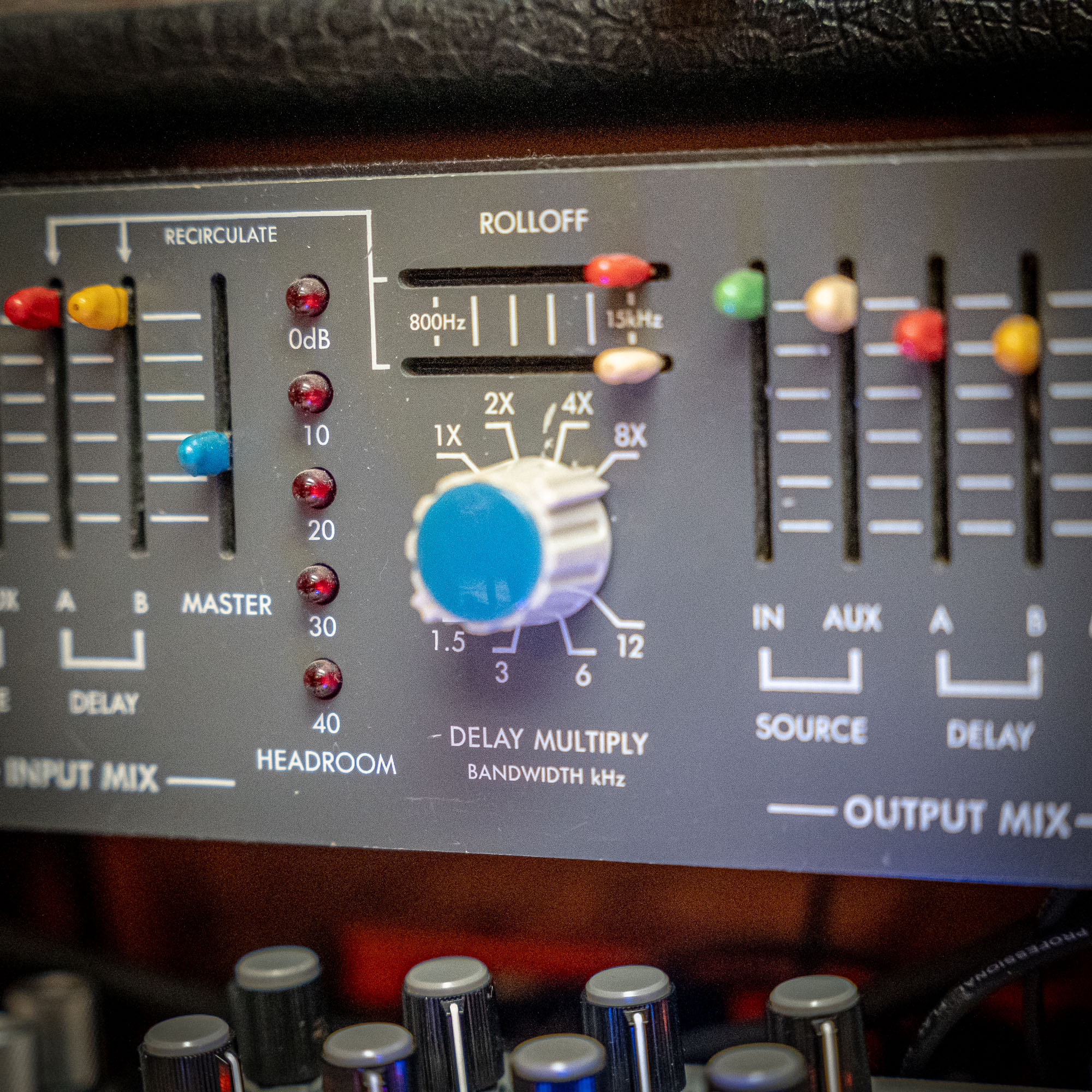
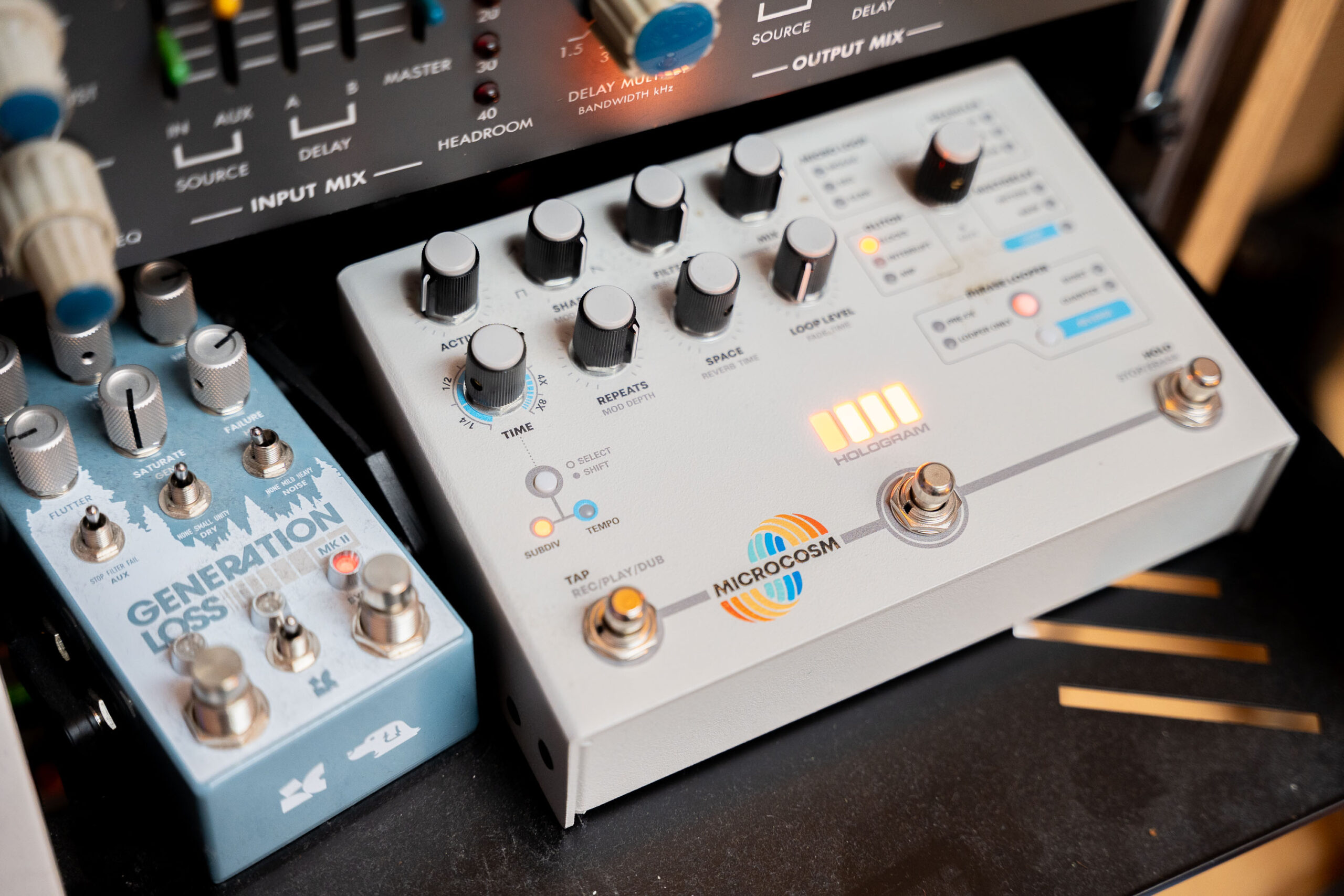
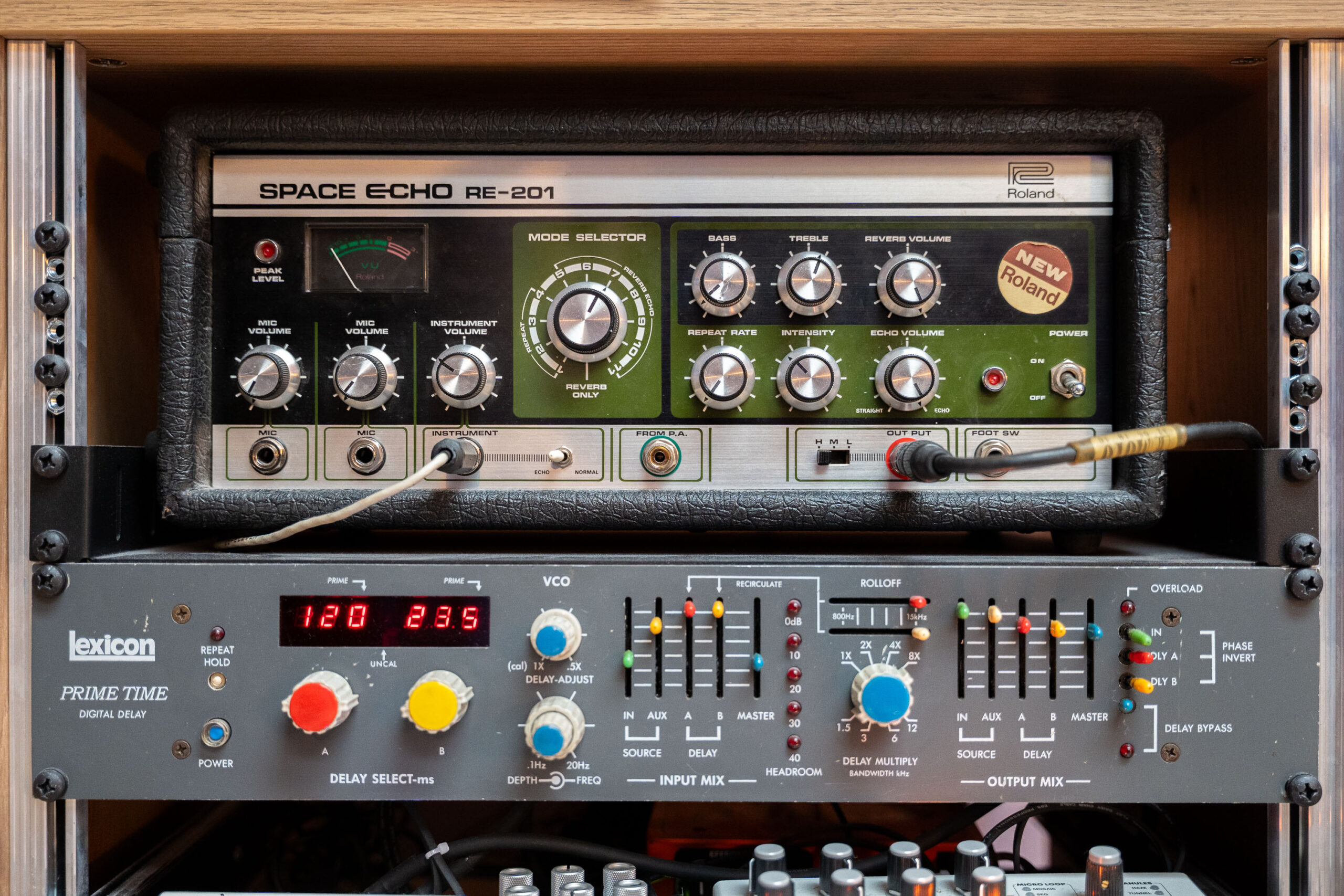
Lexicon Primetime Delay Multiply knob

The Delay Multiply knob on the Lexicon Primetime. There’s something tactile about it that just draws me in—it’s not just a control; it feels like a direct line to shaping the space of a sound. On the Primetime, every tweak transforms the ambience in a way that feels alive. It’s not about perfection; it’s about responding in real time to what the track needs. The character it adds, even in subtle doses, inspires me to experiment, sometimes in directions I wouldn’t have imagined. I spend hours just playing with it, seeing what weird reverbs or delays I can coax out.

Chase Bliss Gen-Loss and Hologram Electronics Microcosm

It’s a lot like the Hologram Electronics Microcosm, in that I can put nearly any type of sound into it, and it just spits music out.

2. Do you have an ‘almost’ perfect bit of kit? What would you change?

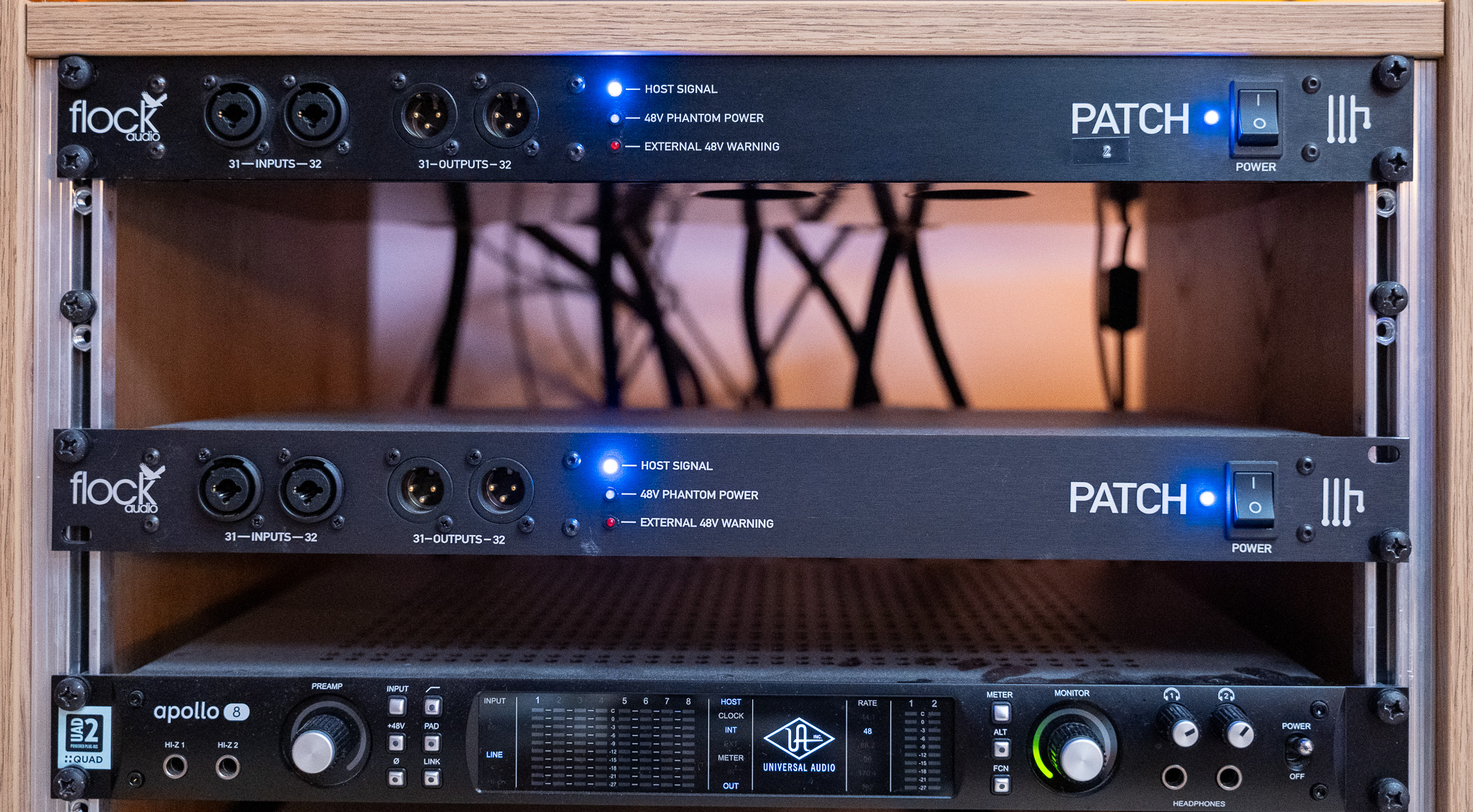
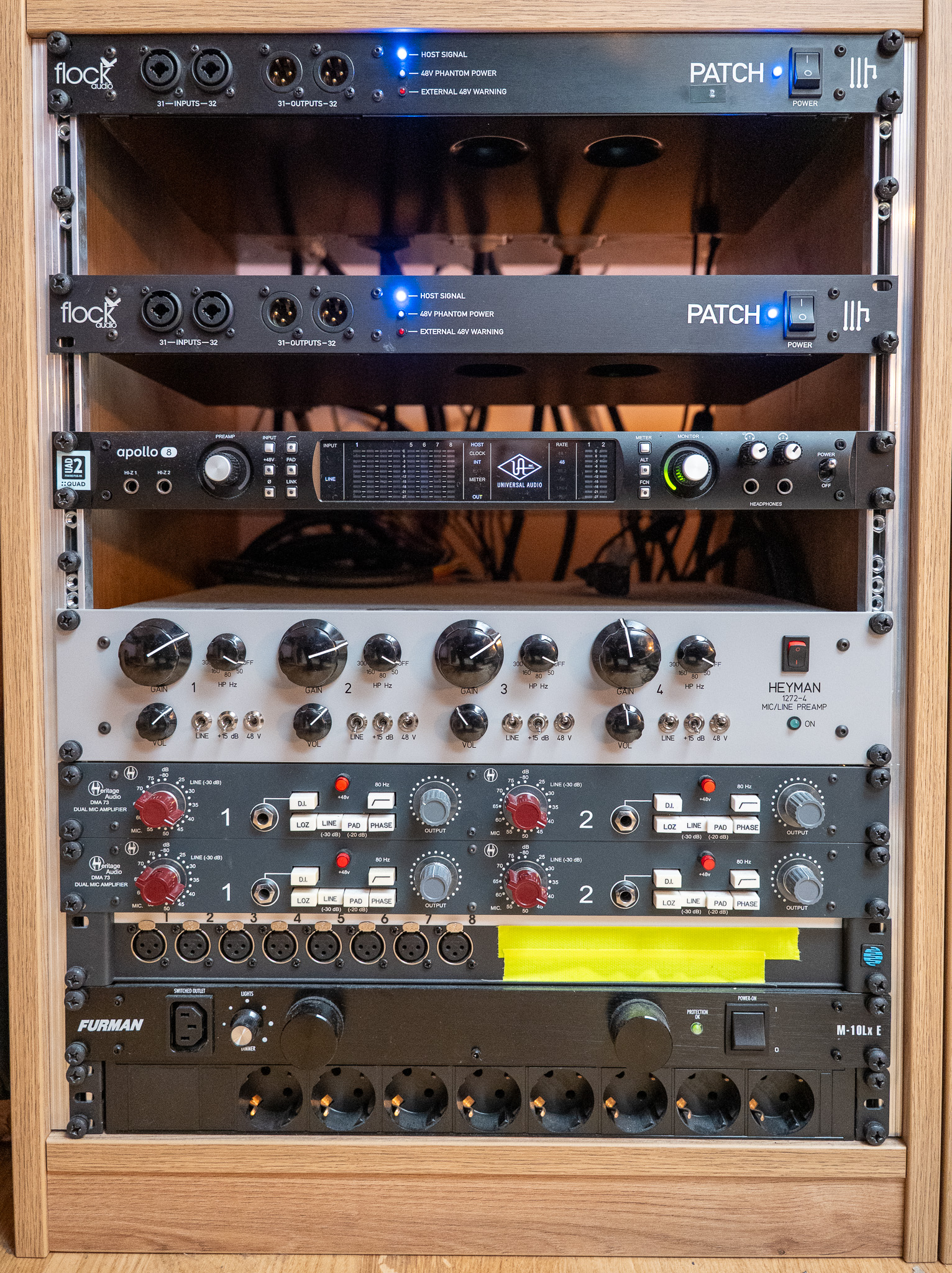
My Flock Audio patchbay, digitally controlled analog routing, it’s incredibly practical.

Flock Audio digital patchbay and UAD Apollo soundcard

The 2 units were expensive, but they quite literally tie the whole studio together. It’s one of those bits of gear that costs a lot, but when you finally invest in it, you wonder why on earth you haven’t done so earlier!

3. What setup do you bring on holiday, tour, or commute?

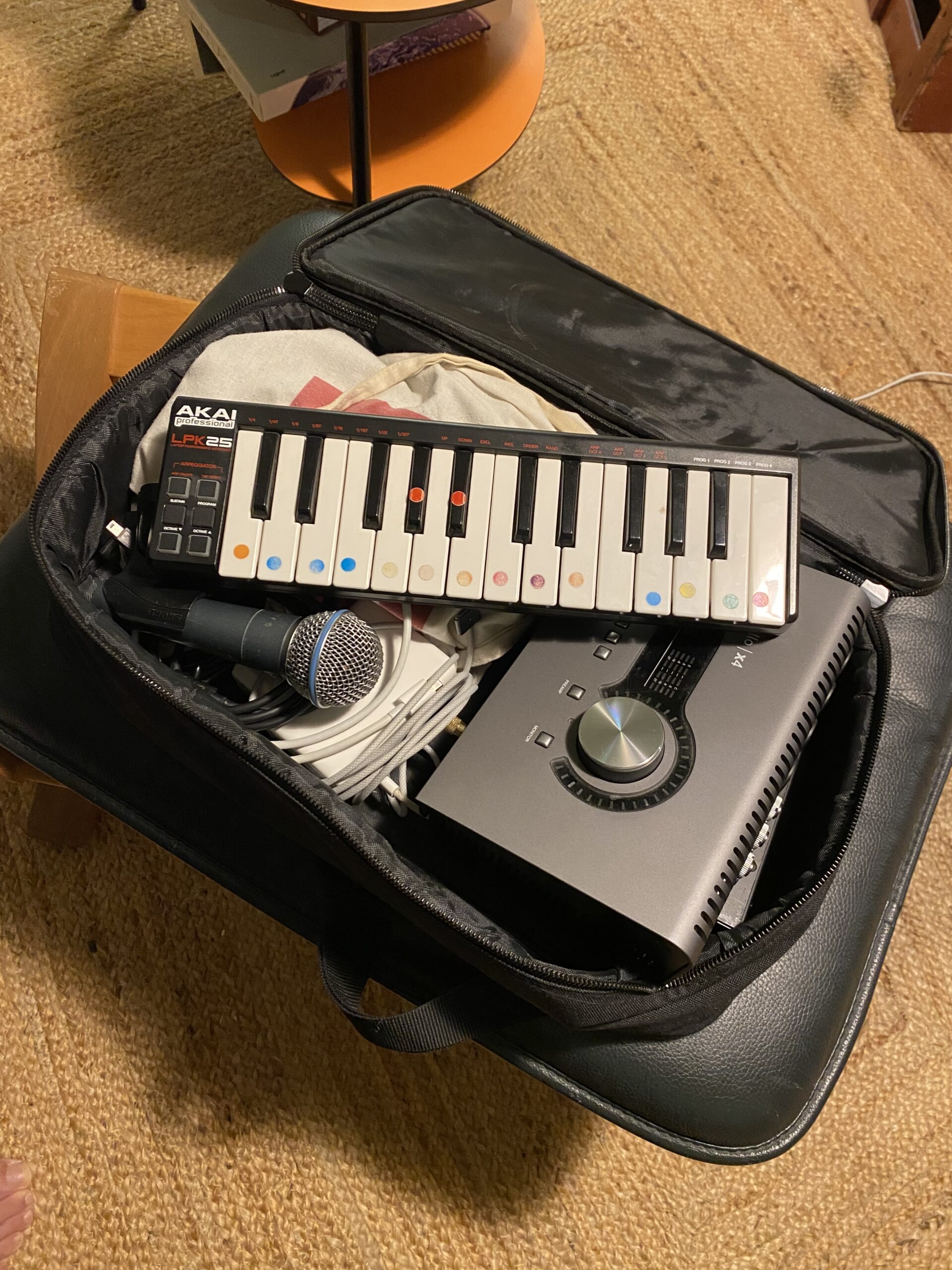
I usually take a small pedalboard with an Apollo X4 interface, a UAD DSP core and a Shure Beta 58 mic. With a MacBook, it’s compact but allows me to capture ideas quickly anywhere. The Apollo lets me keep recording quality high, while still being portable, and the Beta 58 is rugged, reliable, and works with pretty much everything.

Travel setup

When working abroad I travel light, because I want to be able to experiment without being tied down by too much gear. It’s about having enough to inspire creativity, but not being weighed down too much.

4. What software do you wish was hardware and vice versa?
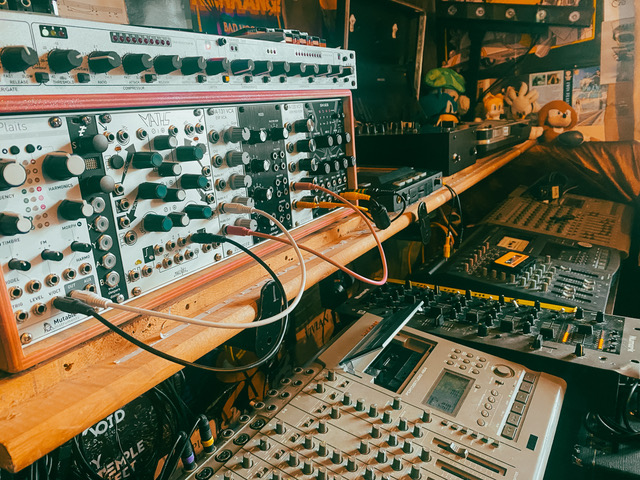
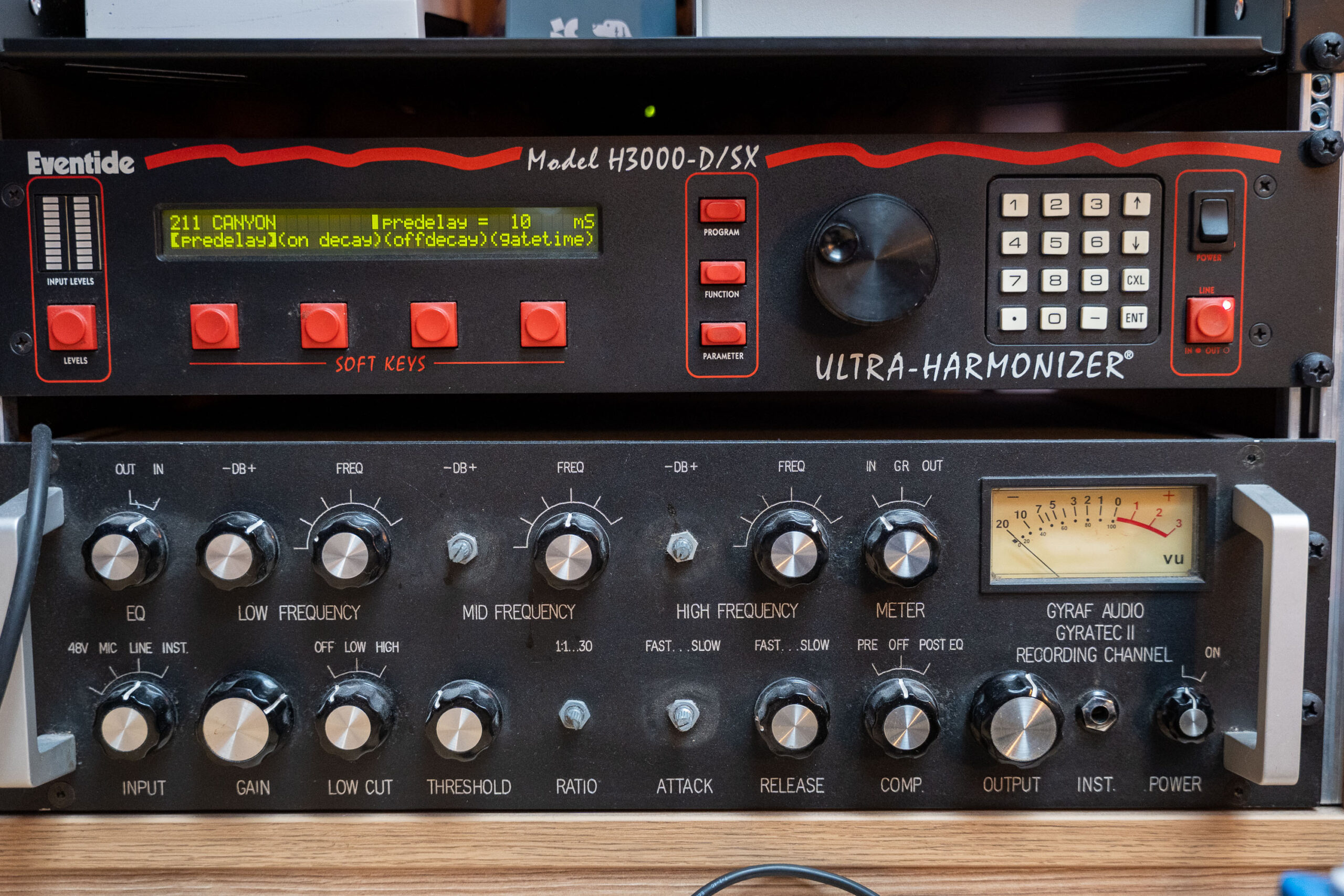
Honestly, I’ve tried to build a setup where I have all hardware duplicates of favorite software. I like having the tactile, hands-on experience of hardware while also keeping the flexibility of software. For me, the ideal is not to wish one was the other—it’s to blur the lines, so that I can get the best of both worlds.

Eventide H3000 and Gyraf Audio Gyratec II

I also really learn a lot from having something in both hardware and software form. Like the PrimeTime is also emulated by SoundToys PrimalTap, and when I got the hardware it helped me understand the VST even better.

Roland Space Echo RE-201 and Lexicon Prime Time

5. Is there anything you regret selling… or regret buying?

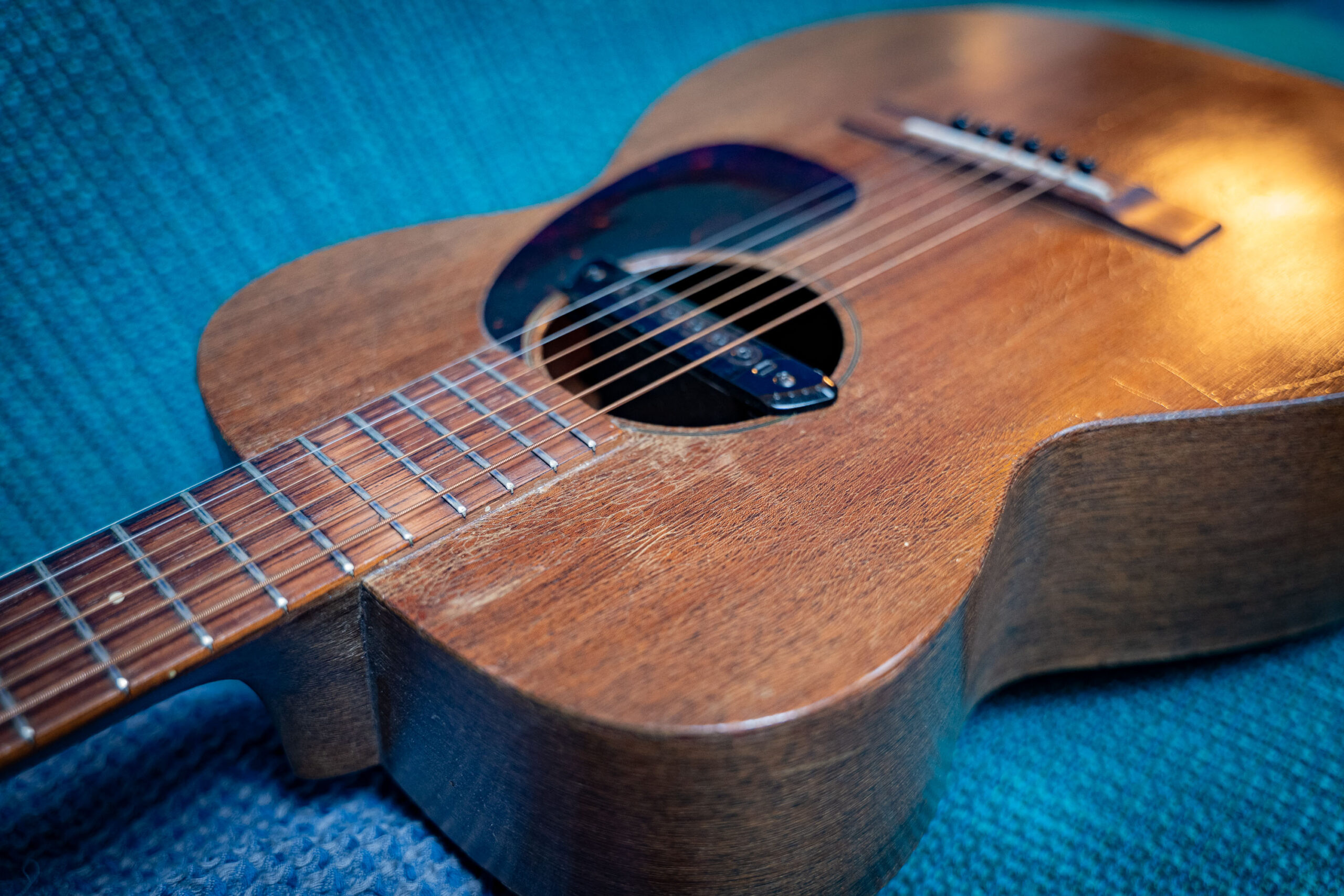
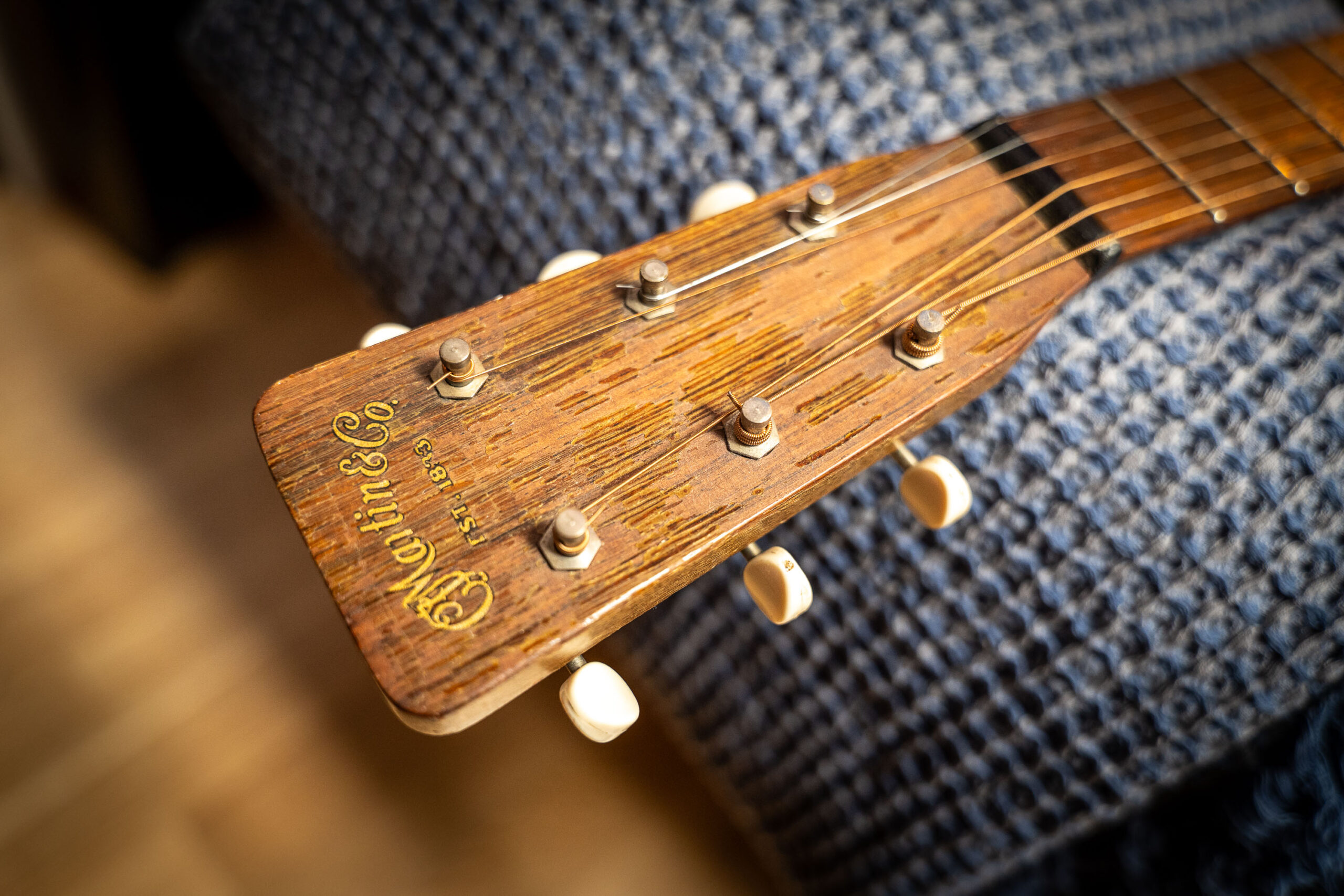
1953 Martin O-15 acoustic guitar

I regret selling my mahogany 1953 Martin O-15 acoustic. I bought it in New Orleans when I first toured in the USA in 2008. It had a tone that was intimate, warm, and unique—it was almost like it had its own personality. I sold it in 2011, and then in the winter of 2024, I was out with a friend who wanted to check out a vintage Gibson for sale from a private collector. And I found that exact guitar again! But the guy didn’t want to sell it.
After quite a bit of wrangling, and showing him my photos of me playing the guitar on stage back in 2009, he eventually agreed to sell it to me again … at quite a good price … for him!
But I just had to have it again… over the 13 years that I didn’t own it, I often thought about it. And I took it as a sign from fate, that I was meant to play it again because of the sheer coincidence of stumbling across it again.
I wrote and recorded all the songs on my debut album on this guitar, and it’s a part of my history.

1953 Martin O-15 acoustic guitar

No regrets buying anything, though. Every purchase I’ve made has either shaped my sound or taught me something about what I want. Even when a piece of gear doesn’t end up being central, it informs my decisions in the future.
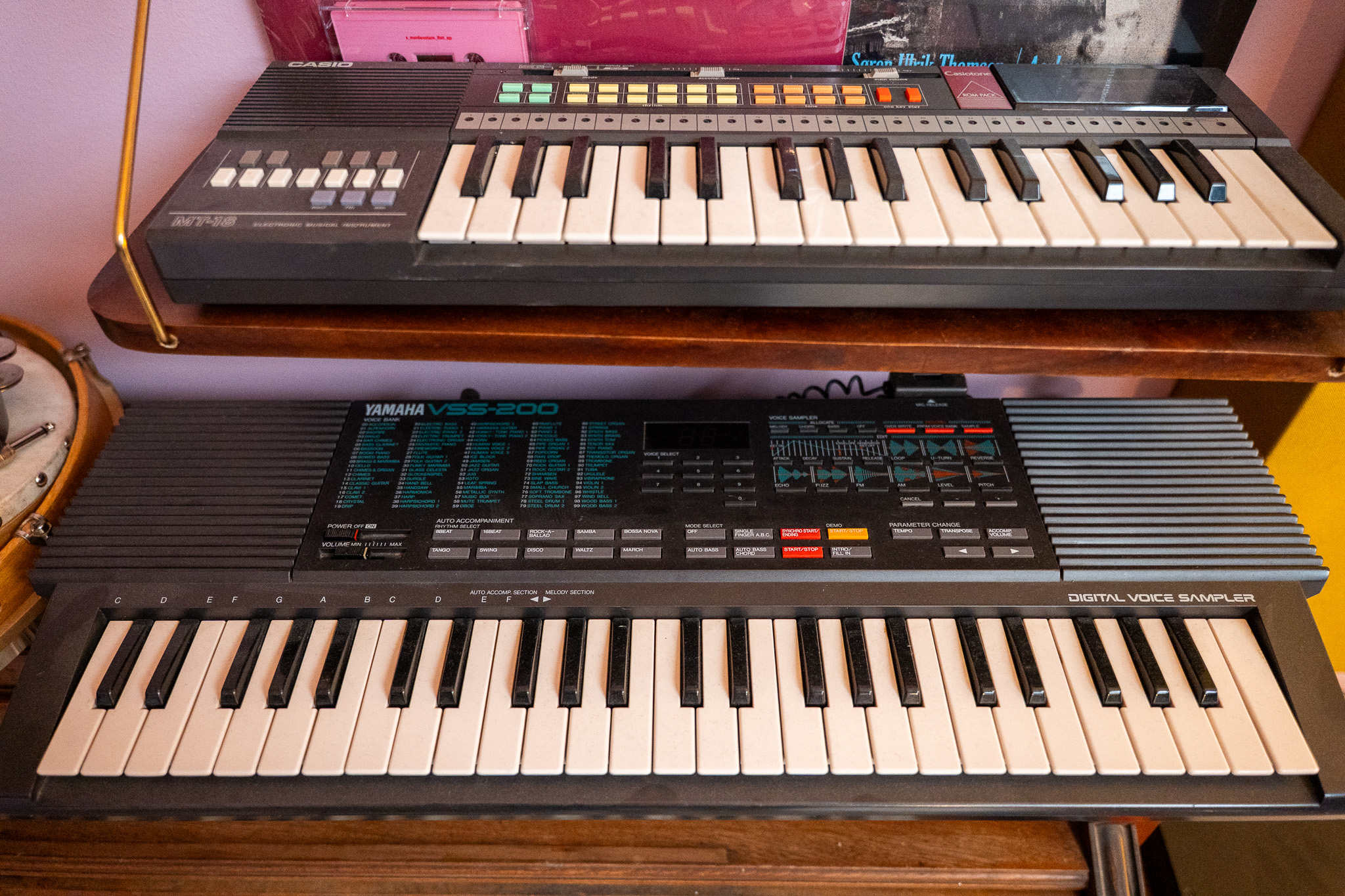
Like these small portable plastic keyboards, the CasioTone and the Yamaha VSS-200. They have a unique and crunchy sound, that works well in a few situations.

Yamaha vss200 and Casiotone

6. What gear has inspired you to produce the most music?

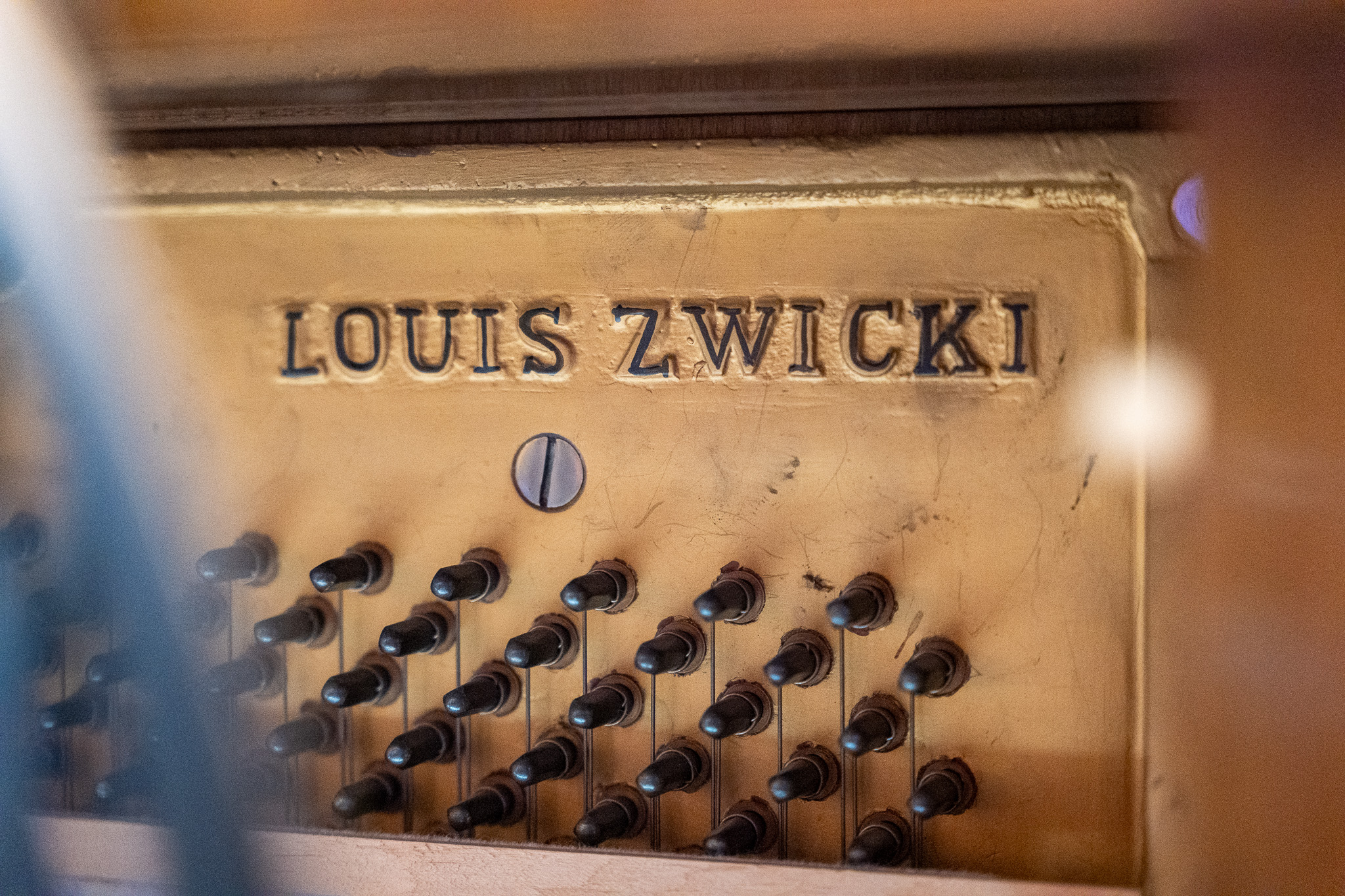
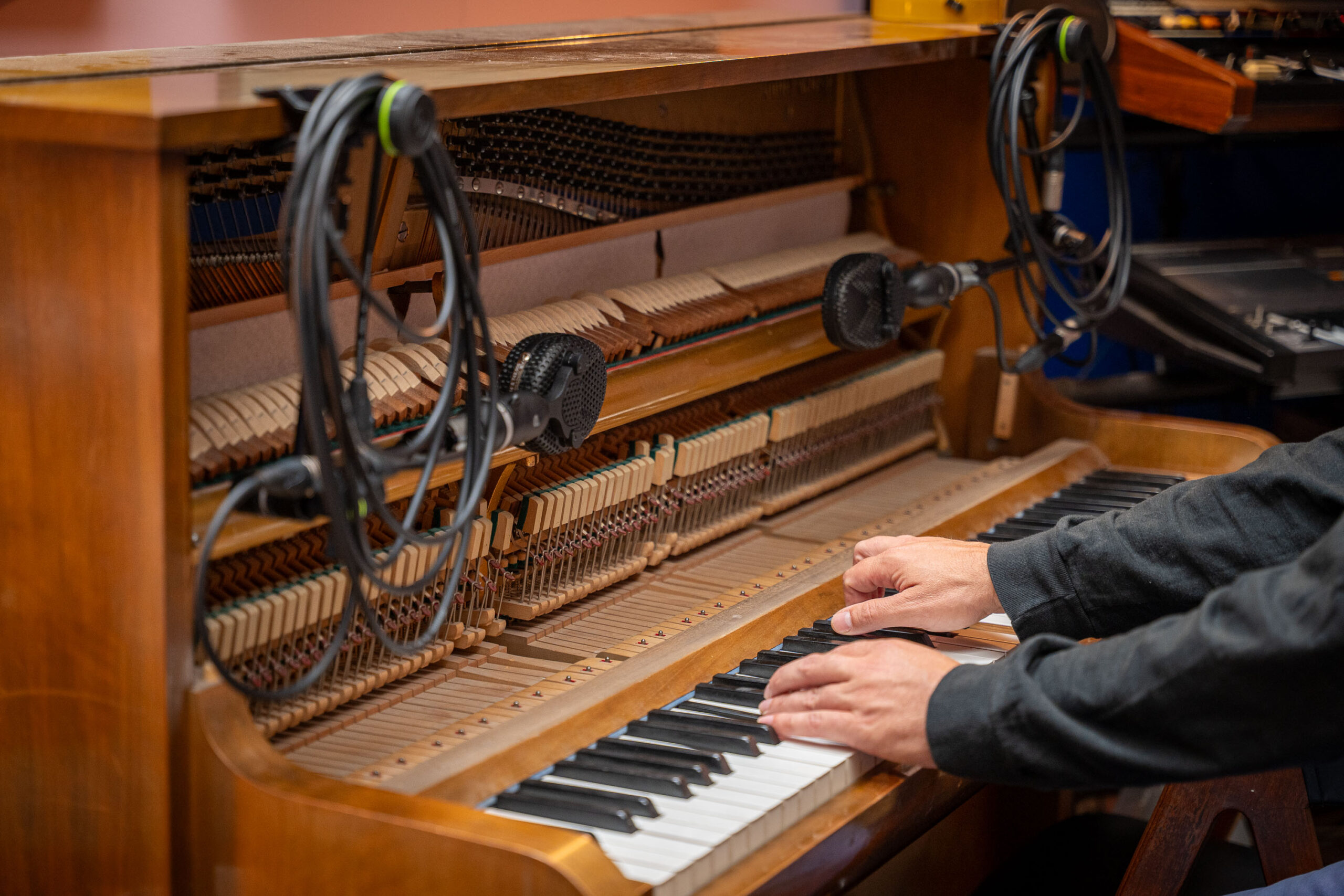
Definitely my Louis Zwicki upright piano, Roland Juno-60, Telefunken Neumann U47, and Fender Jaguar. The piano is the foundation of everything; it’s the place where melodies and harmonies emerge…. But again – all my instruments do that. This is just my immediate answer to a rather big and unfair question, cause tomorrow it might be something else 😉

Playing the upright Louis Zwicki
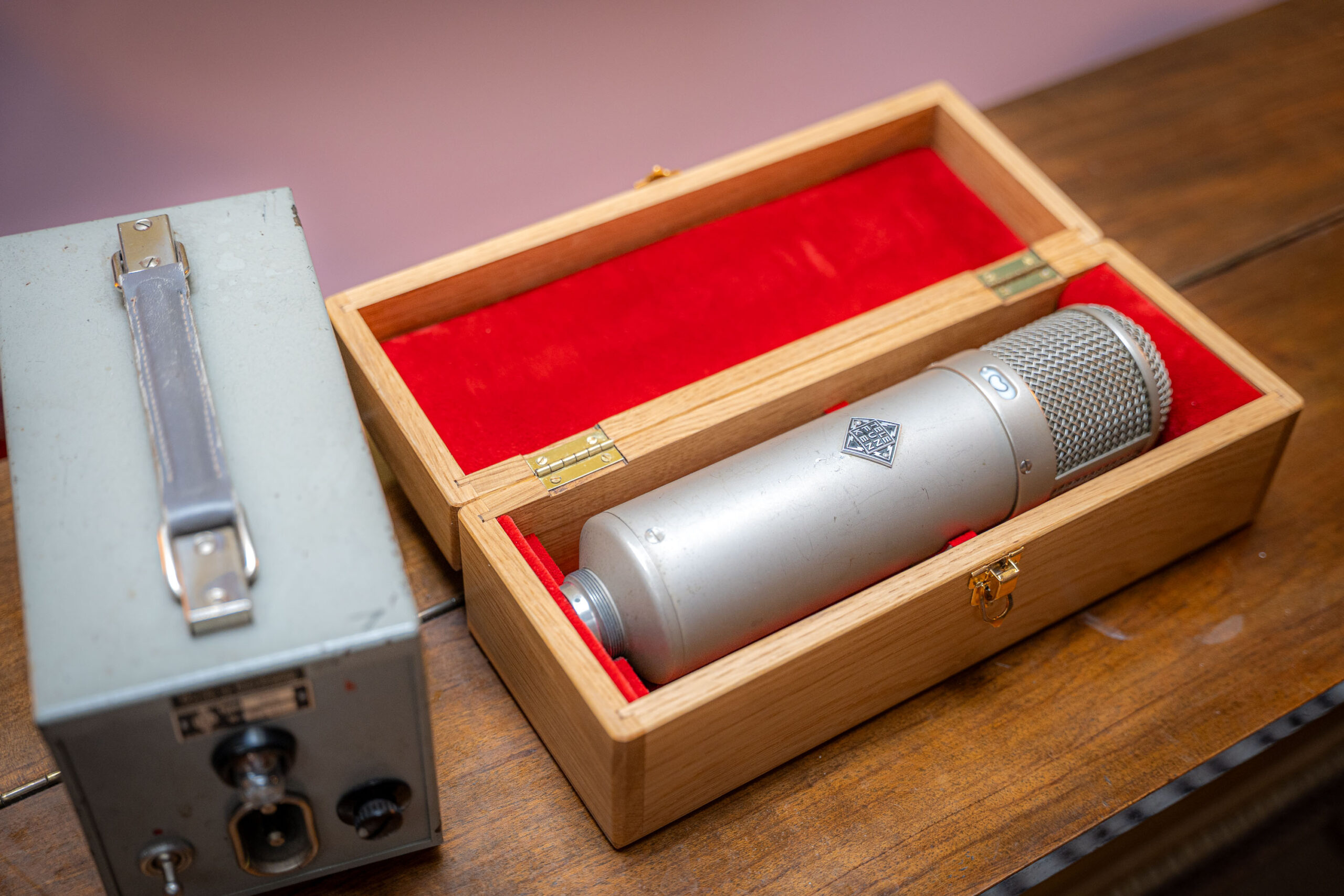
1953 Telefunken Neumann U47

The Telefunken Neumann U47 captures emotions in a way that is almost human—it’s not just recording sound; it’s recording presence. A cellist I work with said to me, that this particular U47 makes her cello sound better on recording than it does it real life.
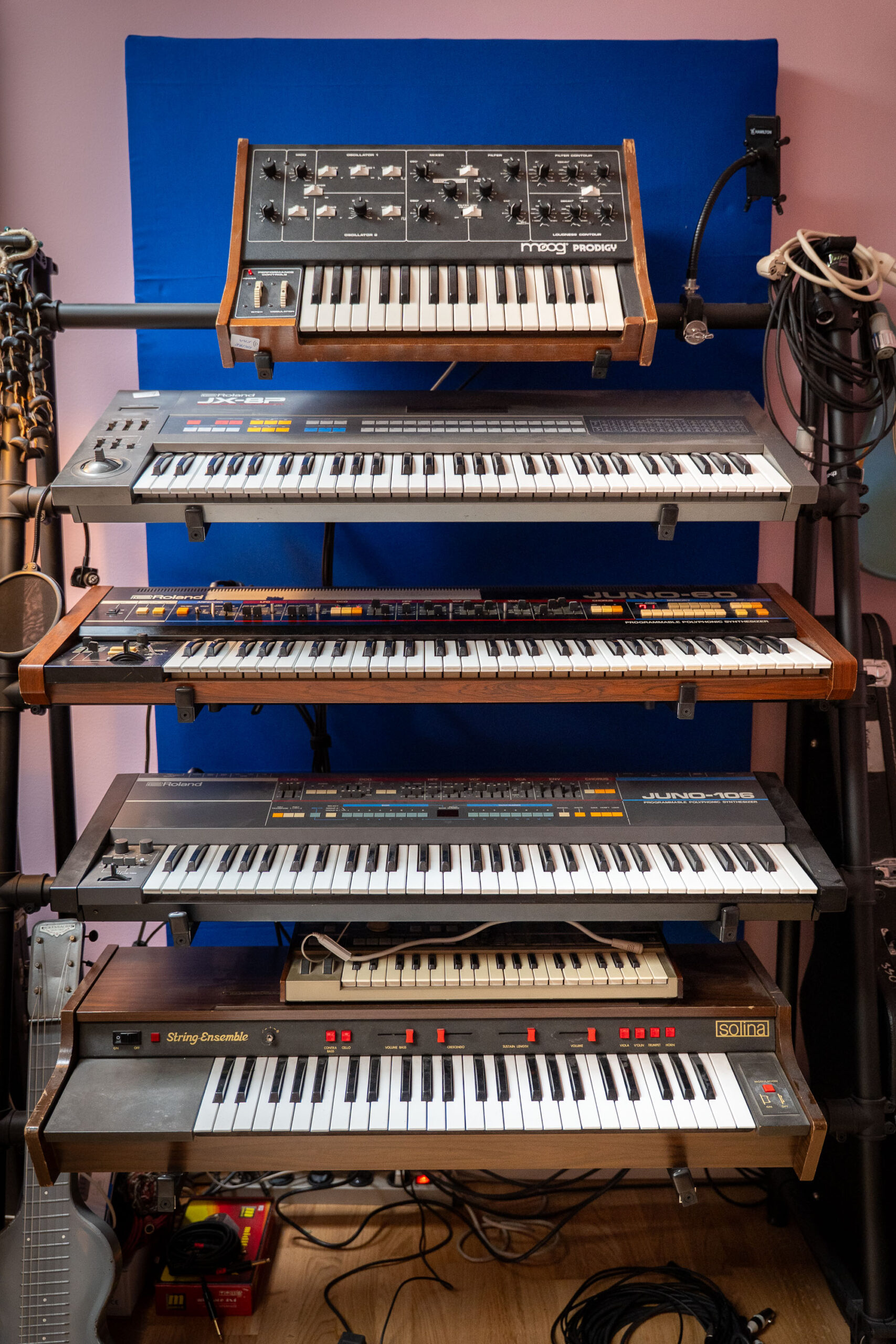
The Juno-60 gives me warmth and unpredictability that I can’t get elsewhere, and also I’ve used the Juno so much that I feel very much at home with it. So much so that I gotta admit that I actually have 2 units, one in Copenhagen and one in Berlin!

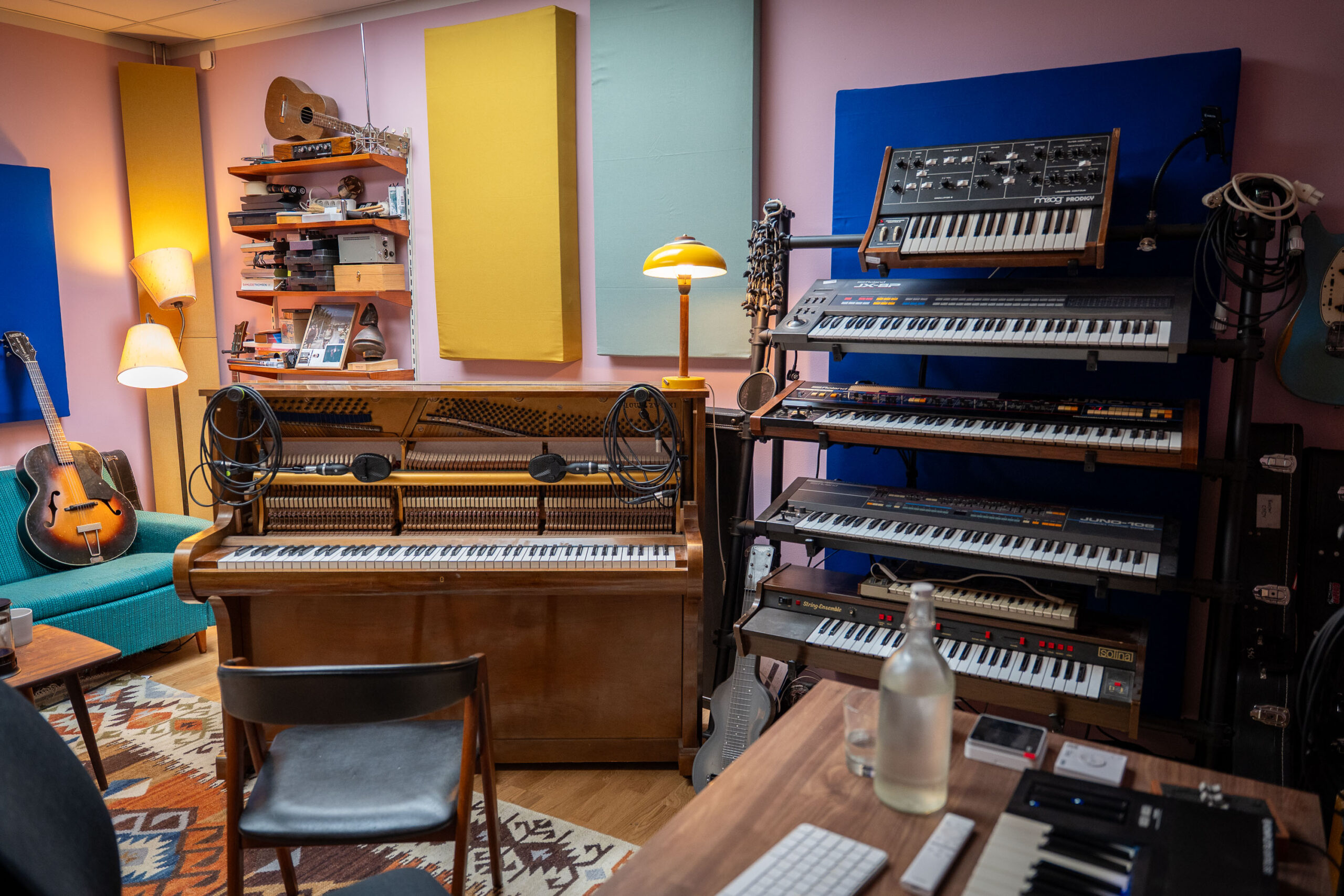
Rack of vintage synths – Roland Juno-60

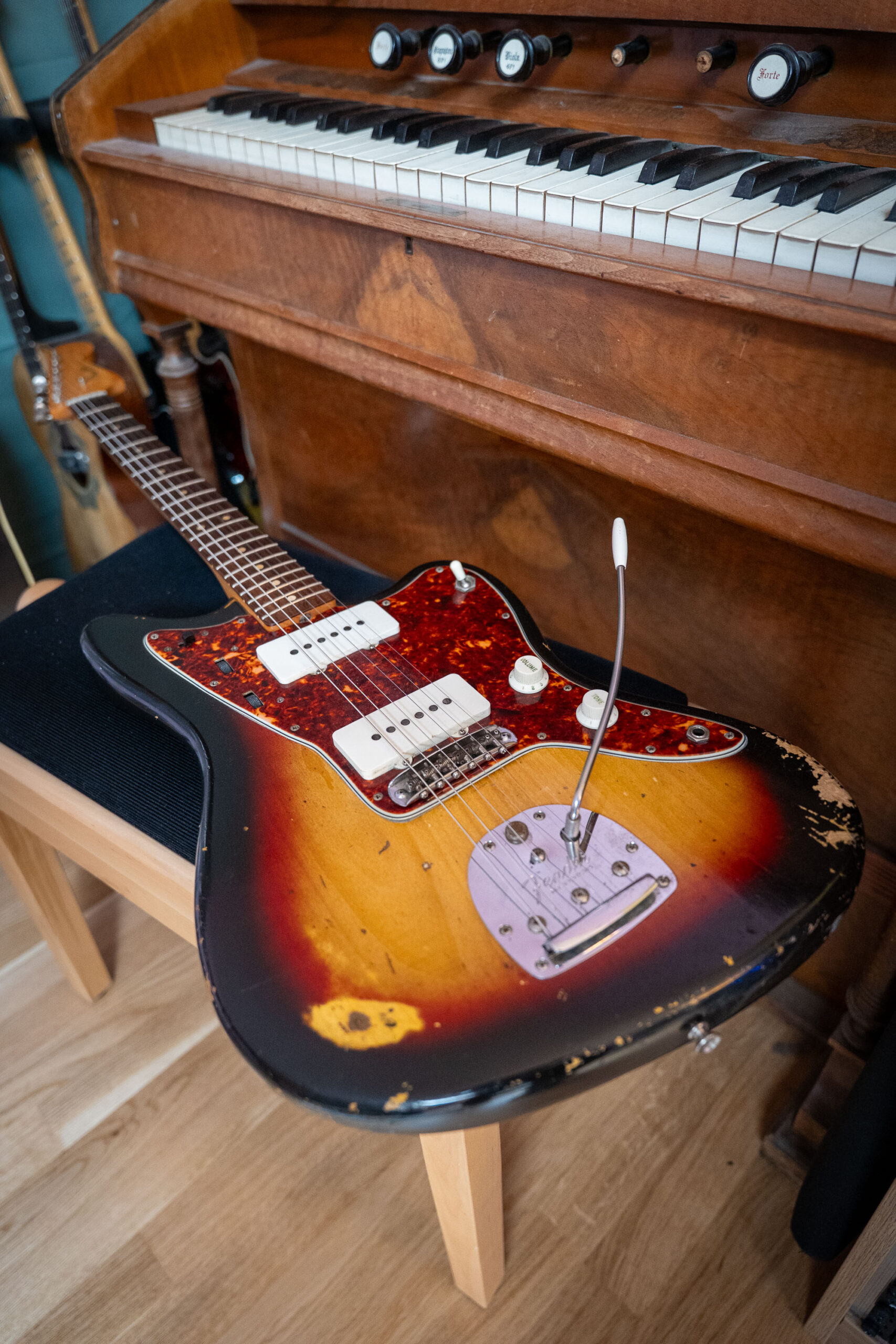
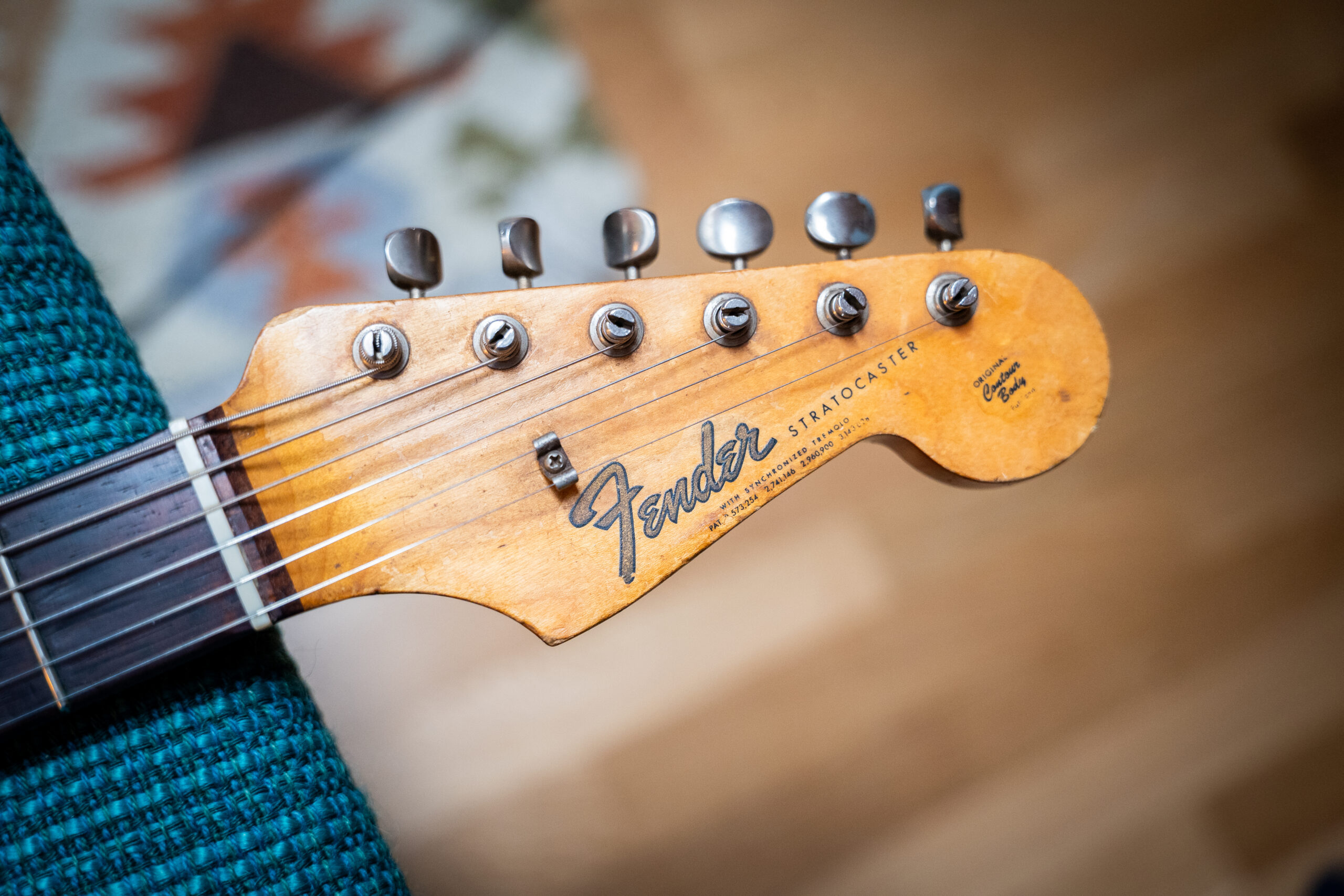
The Fender 1964 Jazzmaster allows me to explore textures and tonalities that are immediately inspiring. Together with my pedalboards and stompbox fx, these instruments aren’t just tools anymore – they are like a part of me, since I’ve been playing Jazzmasters for more that 20 years. It’s the guitar I’ve played the most.

1964 Jazzmaster and pump organ

7. If you had to start over, what would you get first?

I would start simple, probably with my holiday travel board. Something portable that still allows you to explore sounds and ideas. I’d probably get bored of that simple setup and then I’d slowly bring back the vintage gear, piece by piece, layering textures and capabilities. The temptation is always to chase the “perfect setup” but I think starting small encourages creativity—you’re forced to solve problems and think musically rather than technically.

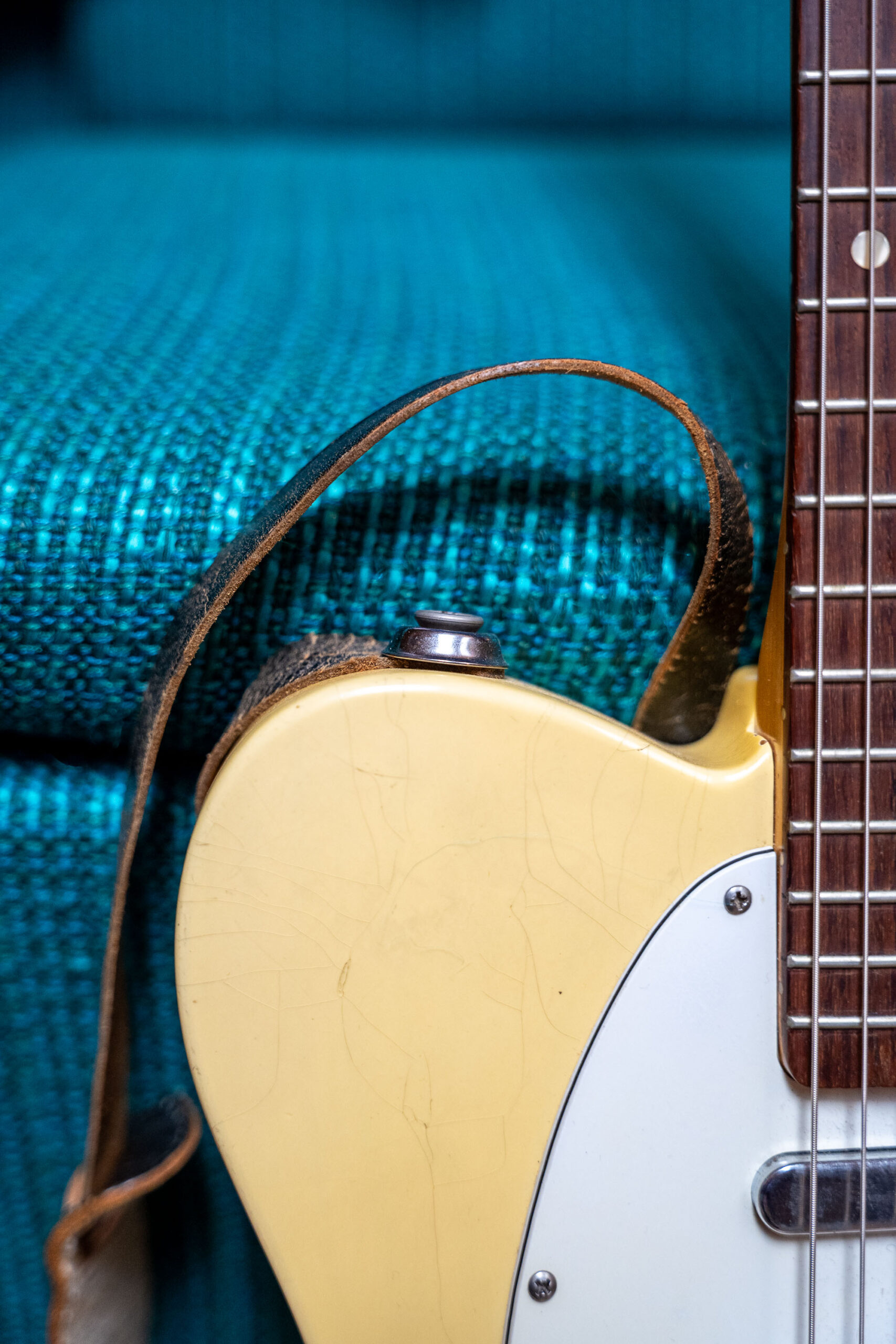
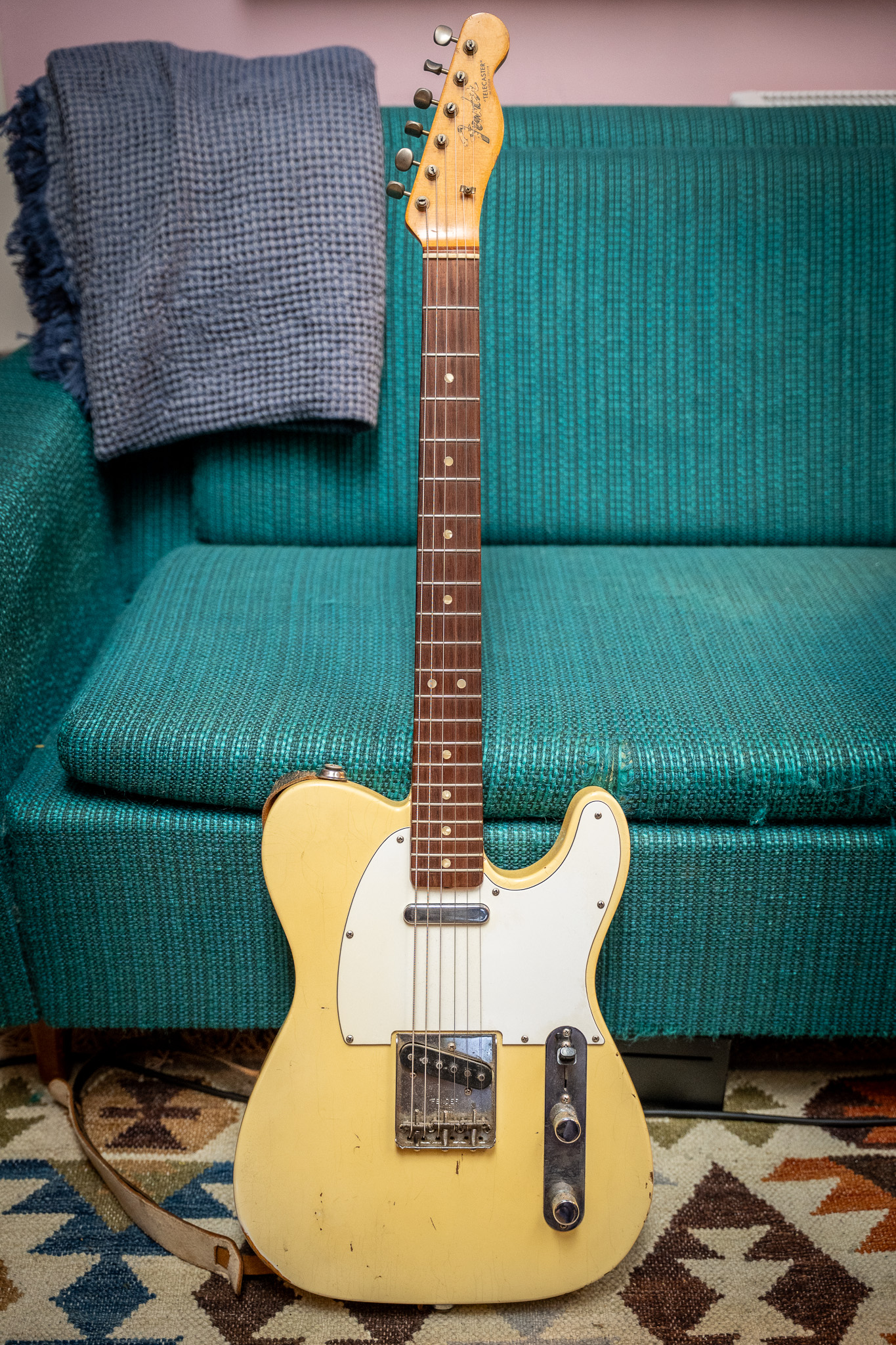
Fender 1966 Telecaster

All the stuff in my studio is kind of a lifetimes worth of collecting. It’s a bit painful to imagine it all gone.

Fender 1966 Telecaster
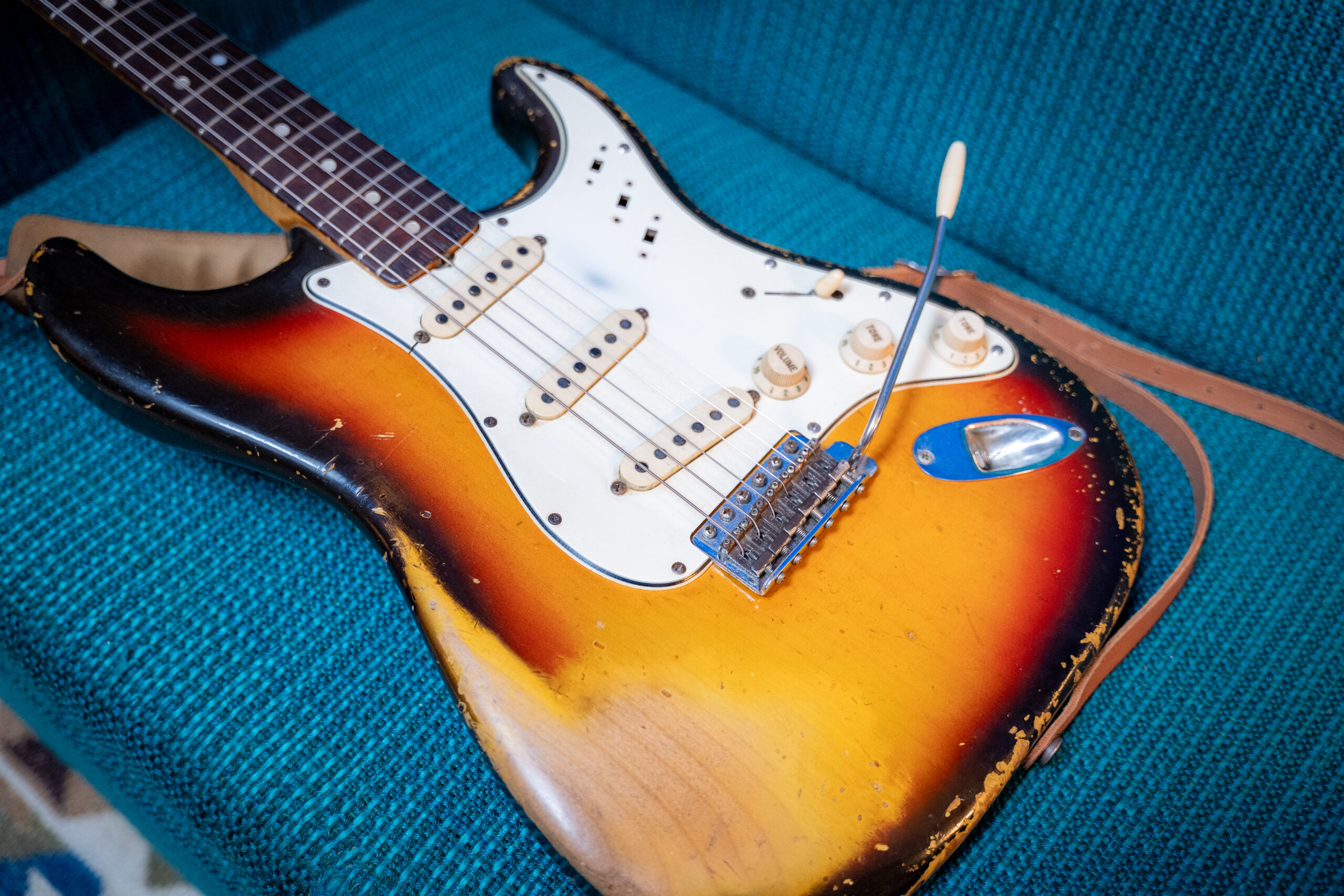
Fender 1964 Stratocaster

8. What’s the most annoying piece of gear you have, that you just can’t live without?
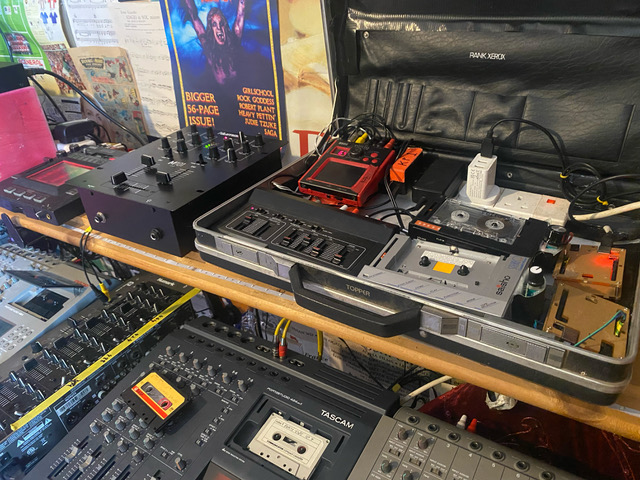
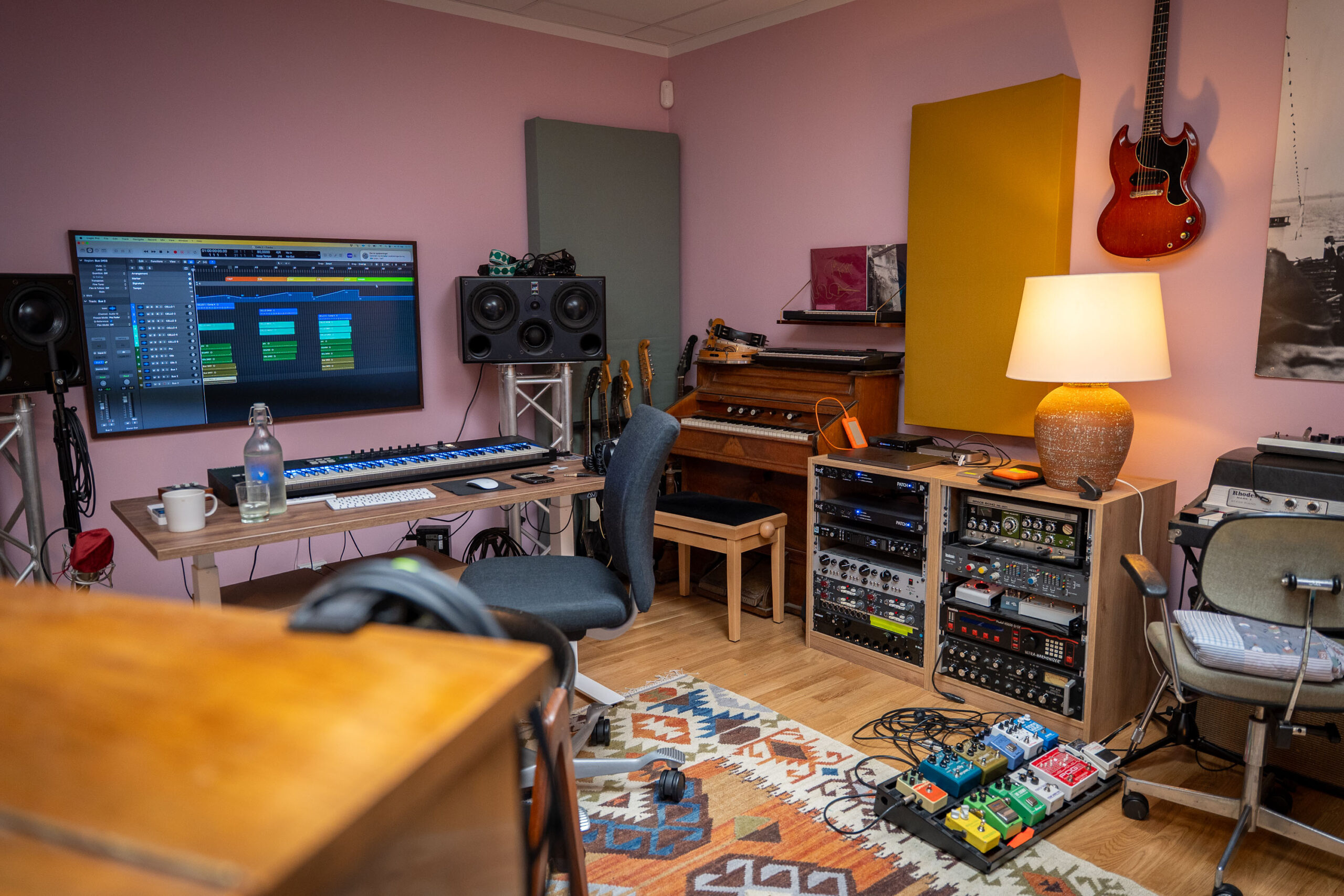
Rack Flock Audio, UAD Soundcard, Heyman and Heritage Preamps

I’d have to say the Flock digital patchbay. It’s annoying because it was manufactured with a low quality threading for the d-sub connectors on the back, so now it is broken and the connection is glitchy. But it’s so essential to my working process that I don’t have time to un-patch it, send it to repair and re-patch the whole studio.

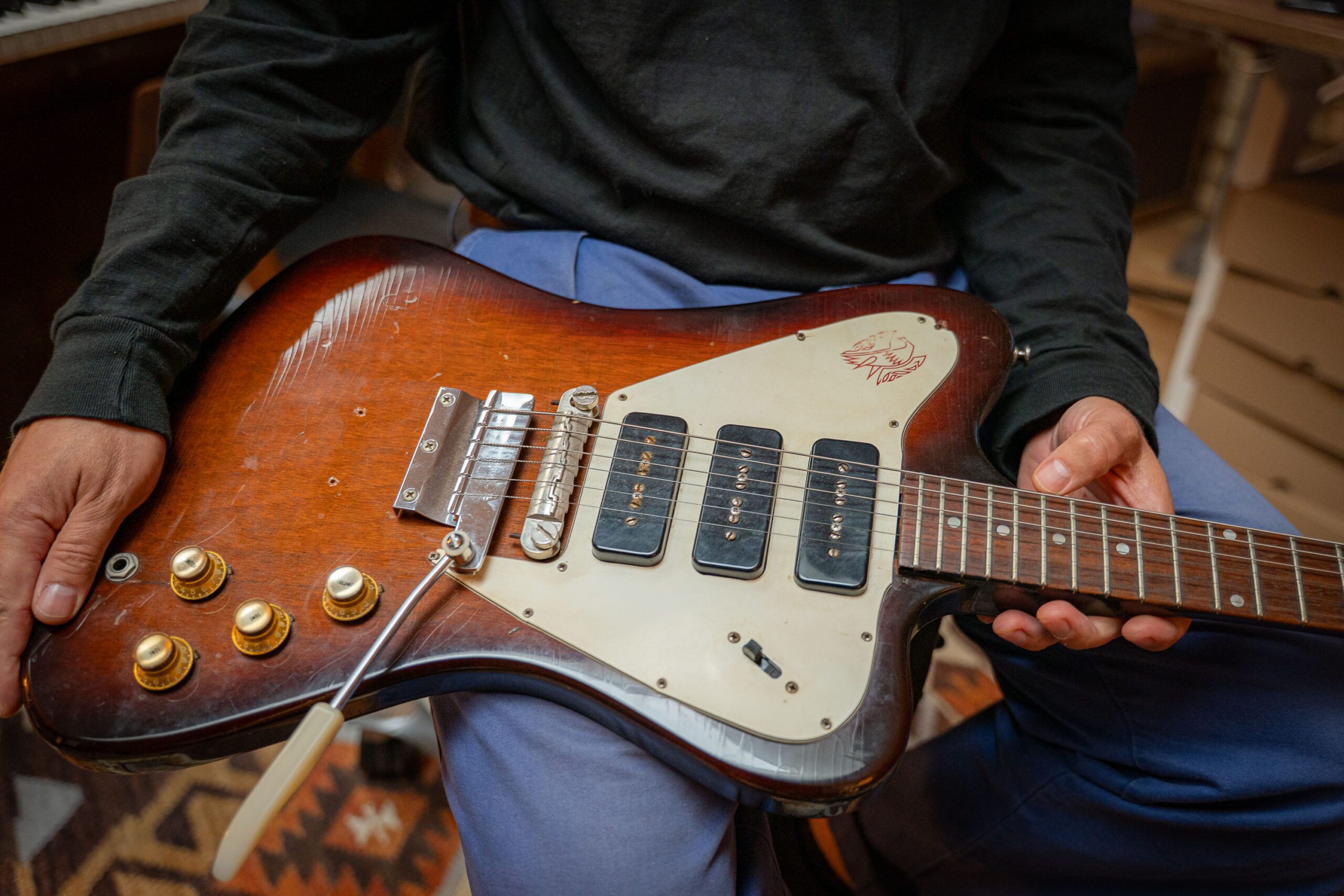
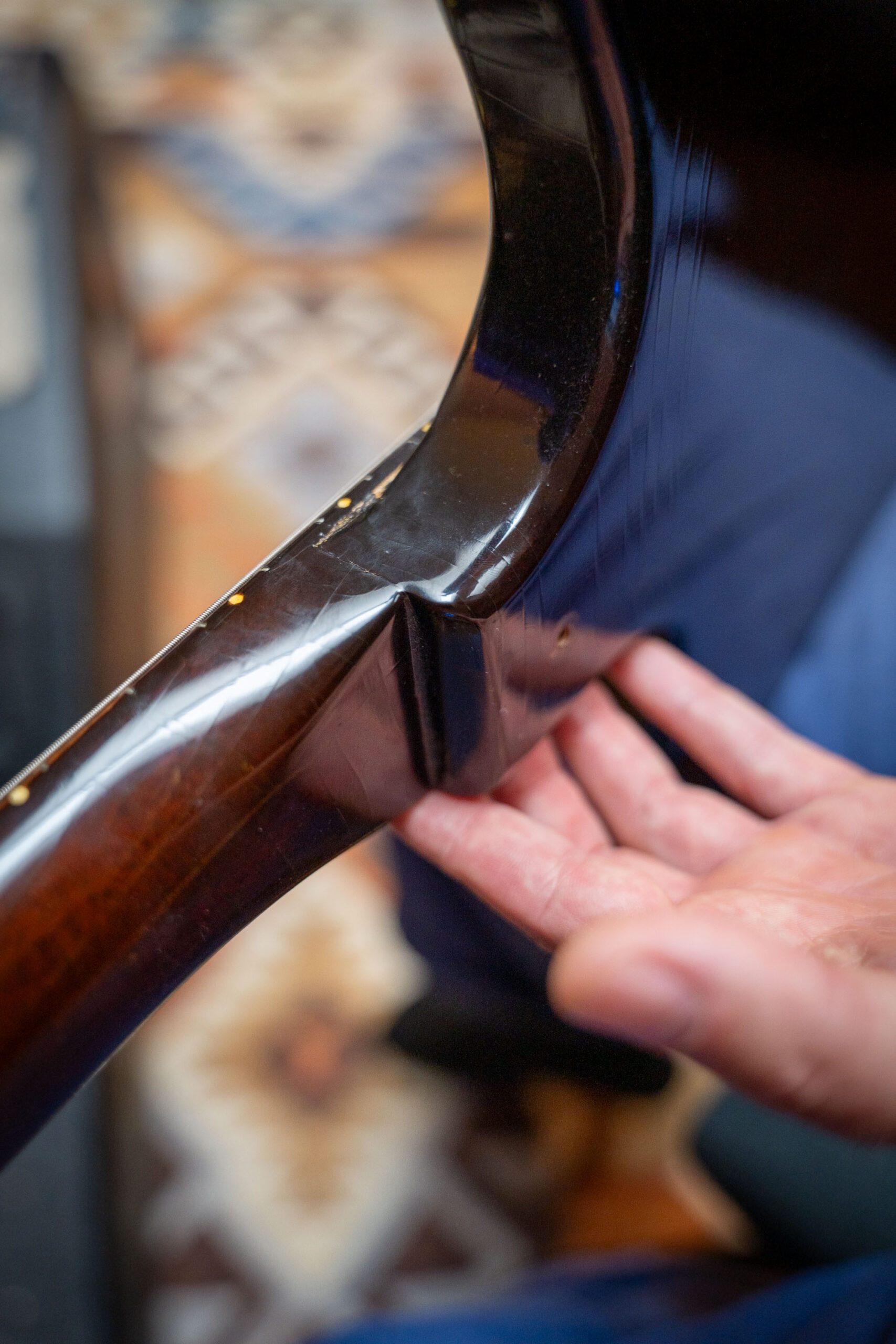
I also have a 1965 Gibson Firebird that has a glued in neck. It’s got 3 P90 pickups and a fantastically dry sound. However it just doesn’t hold tuning and the intonation is terrible. You basically can’t play a whole song all the way through. But it records really well.

1965 Gibson Firebird

9. Most surprising tip, trick, or technique that you’ve discovered about a bit of kit?

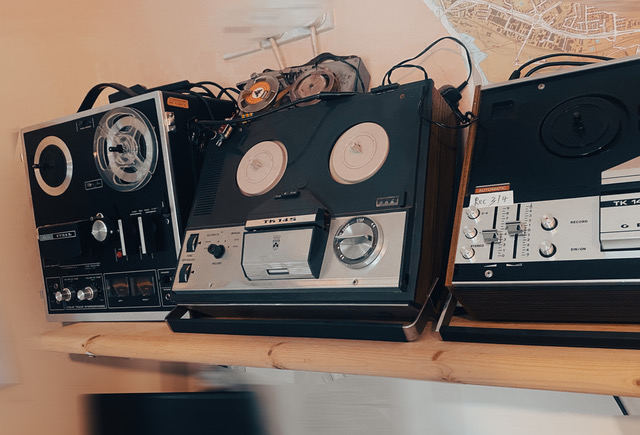
Enjoy the parts of the sounds that are ‘faults’. This is something I’ve realized over years of experimentation. Imperfections—whether it’s a synth that drifts out of tune, a reverb that rings out in unexpected ways, or tape hiss—can be incredibly inspiring. Instead of fighting them, I embrace them. They add character, unpredictability, and a human element to recordings that otherwise might feel sterile… or worse ordinary.

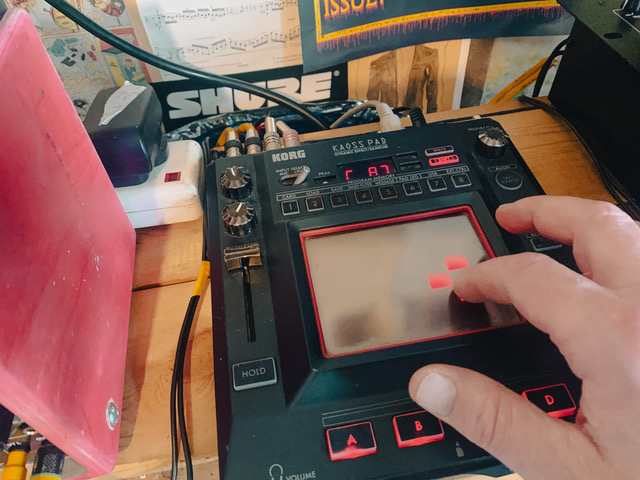
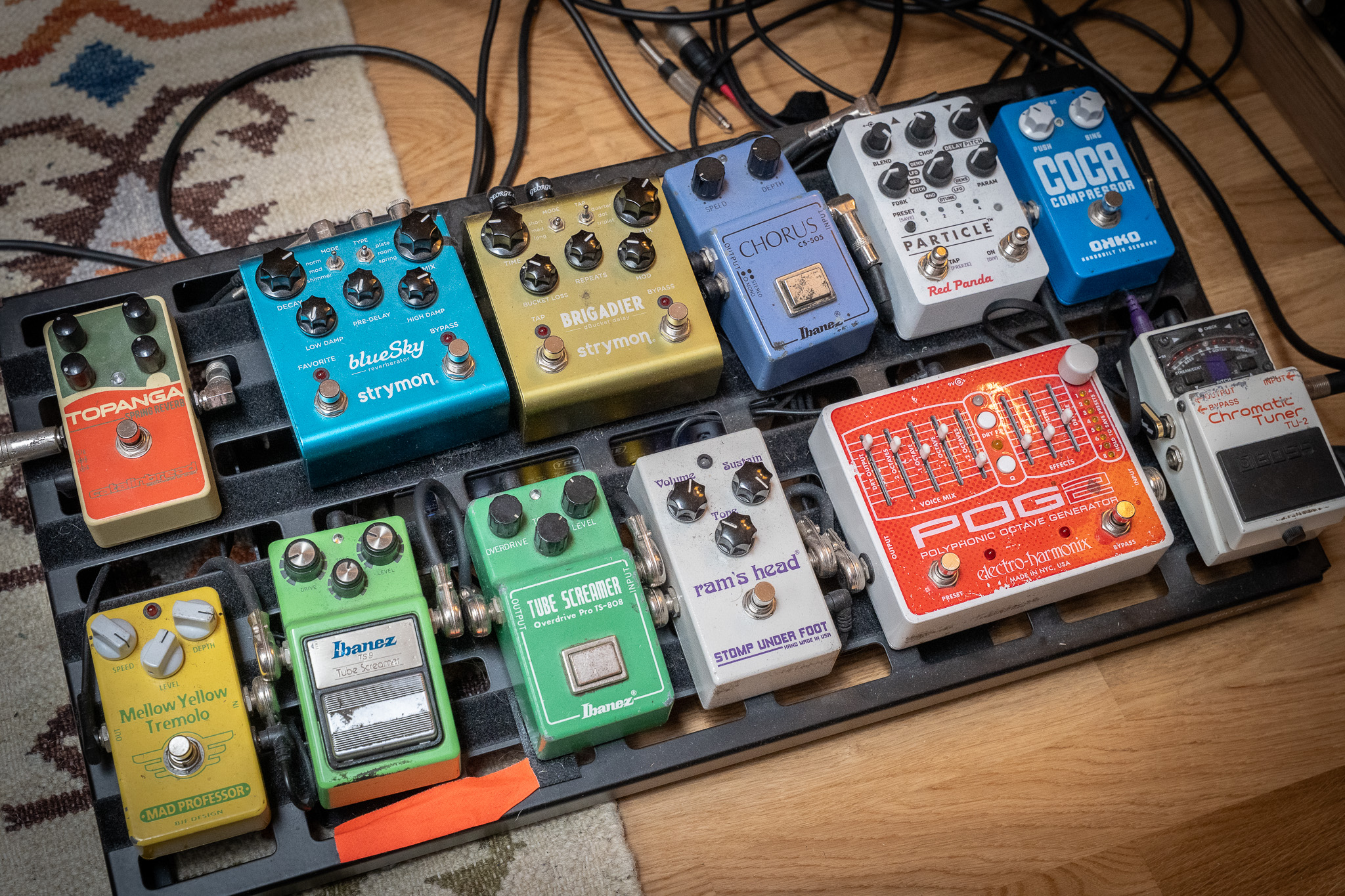
Pedal board

Artist or Band name?

Kaspar Kaae

Genre?

Cinematic indie folk.

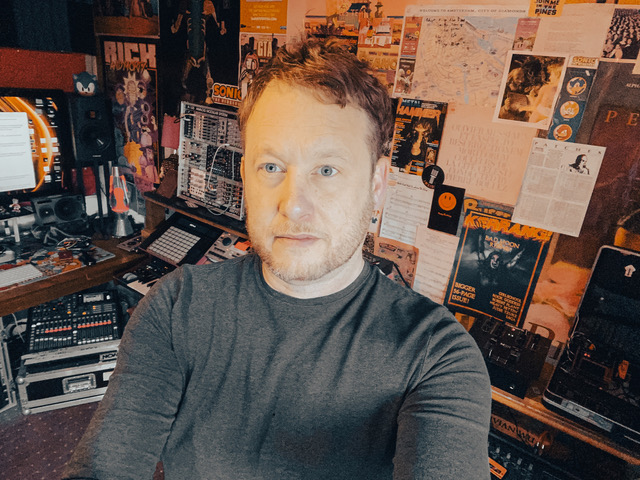
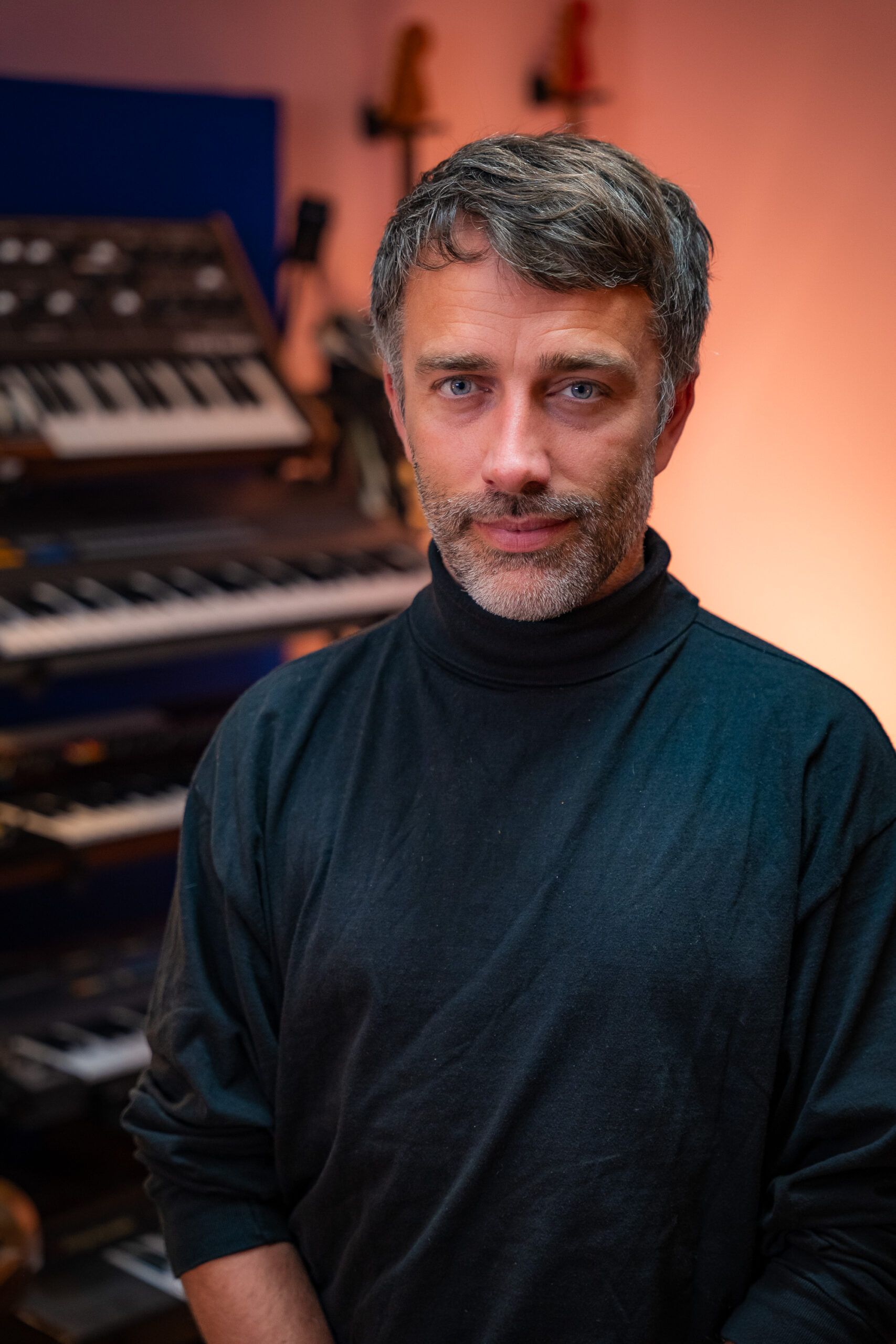
Selfie

Kaspar Kaae

Where are you from?

Bornholm, Denmark. It’s an island in the Baltic sea and it’s quite far from the mainland of Denmark. Moved to Copenhagen when I was 19.

How did you get into music?

When I was around 10 years old, a school friend named Rolf at school started to play on the pianette (small upright piano) that we had in our classroom, and I was fascinated by it. So of course I had to start playing myself.
He then started to play acoustic guitar and we learned together for a while. He showed my Am, C, D and F. So I immediatly put those together and said to my parents “Hey, I wrote a song!”

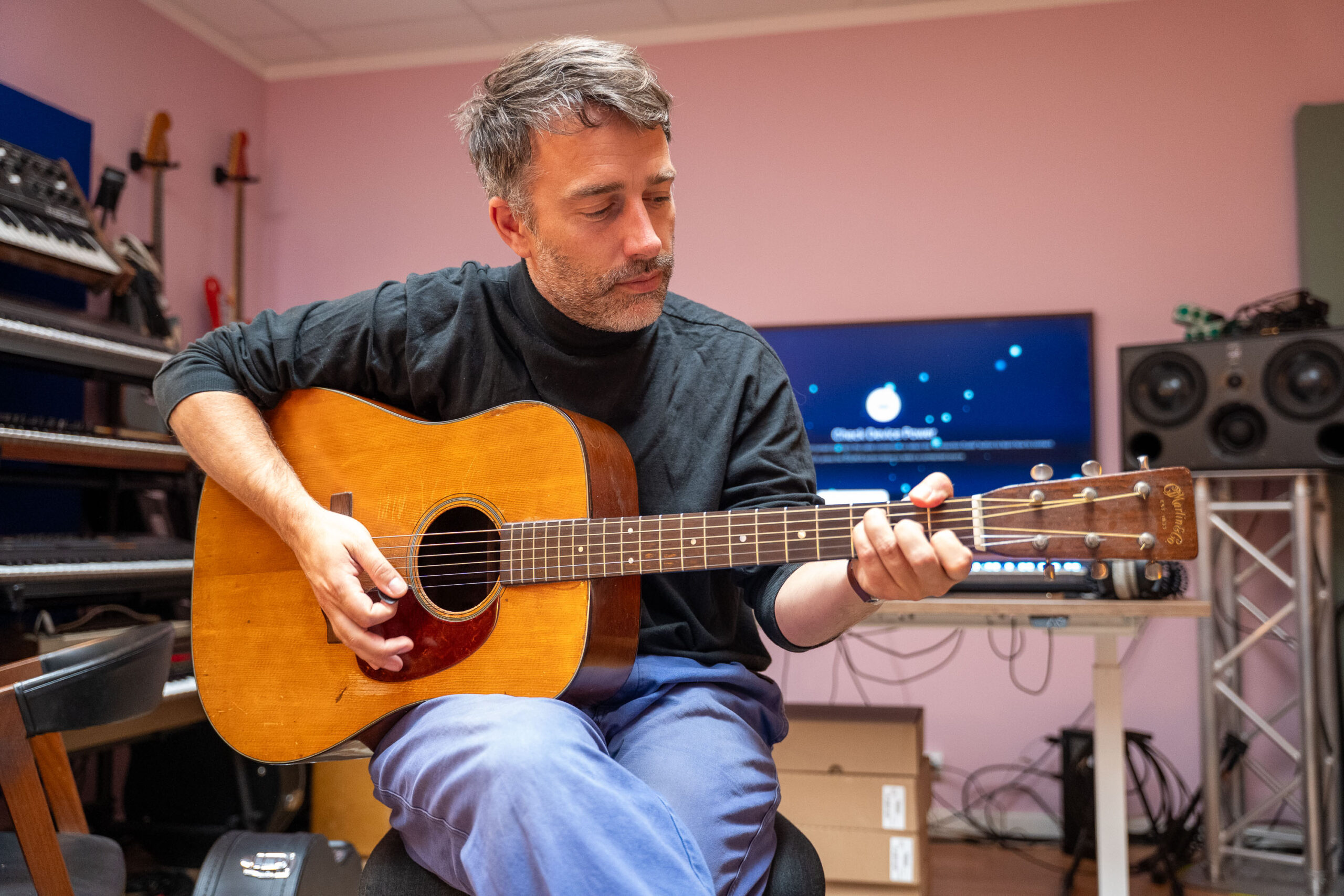
Kaspar Kaae with his vintage 1948 Martin D-18 acoustic

Couple of years later, I was allowed to trade my mom’s acoustic for an electric guitar … and since then, it’s just been music, music, music.

What still drives you to make music?

Curiosity and not knowing the answers. Every track starts as the question: “What happens if I try this?” That uncertainty is still exciting. It’s not about finishing a product—it’s about discovering, exploring, and reacting to sounds as they evolve.

How do you most often start a new track?

Blank template in Logic. I rarely begin with a pre-conceived idea. Starting empty forces me to listen, respond, and experiment. I’ve tried making a template with a bunch of sample libraries, but it makes the whole process a bit more boring for me. Doesn’t feel creatively exciting.
I have ‘workshop’ days with my musical collaborators, where we spend a day just trying out a lot of different ideas and crazy experiments. Most don’t work, but maybe 1 out of 10 become a composition that is an idea that you would never find any other way.

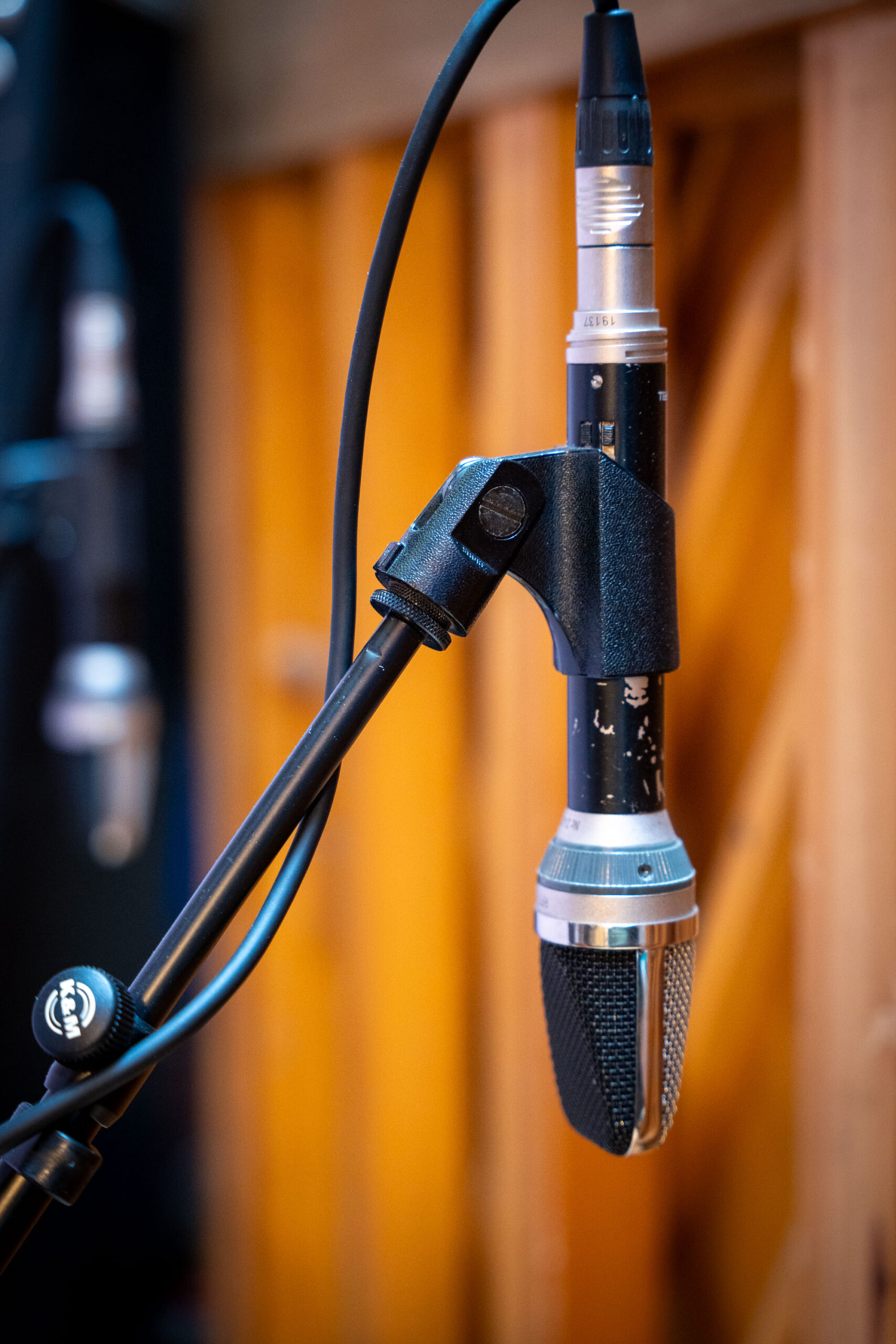
1970’s Gefell M-71 mic behind the piano

How do you know when a track is finished?
I really don’t. It’s hard to be objective about your own work. I rely heavily on collaborators like directors, producers or editors —they can tell me when something feels emotionally or conceptually complete. Often, a track evolves far beyond my initial idea, and outside feedback helps me recognize when it’s “done enough” to either be useful for a film scene or as an independent musical release.

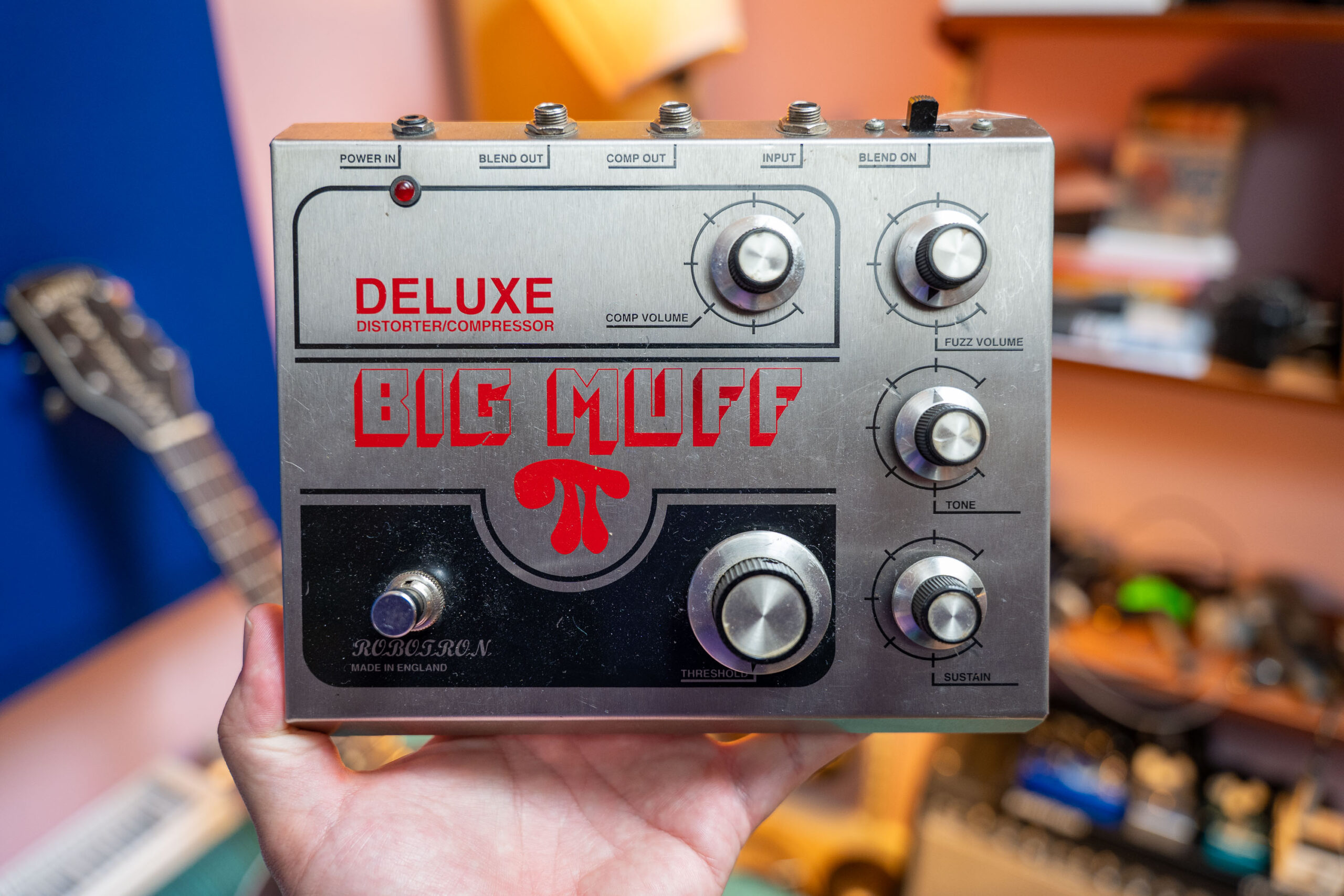
Robotron ‘70 Deluxe Distortion/Compressor Big Muff

Show us your current studio

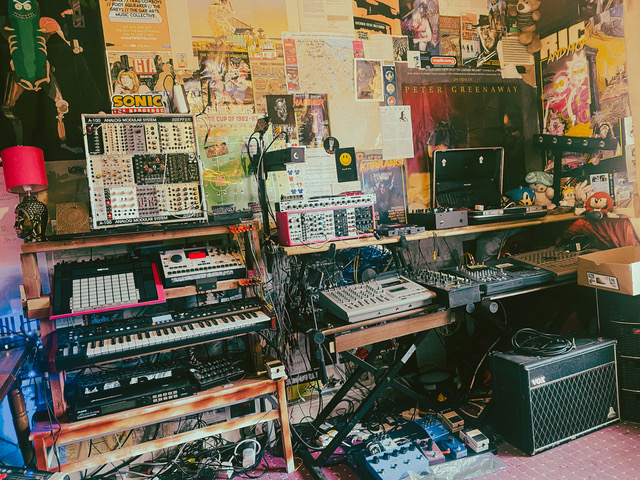
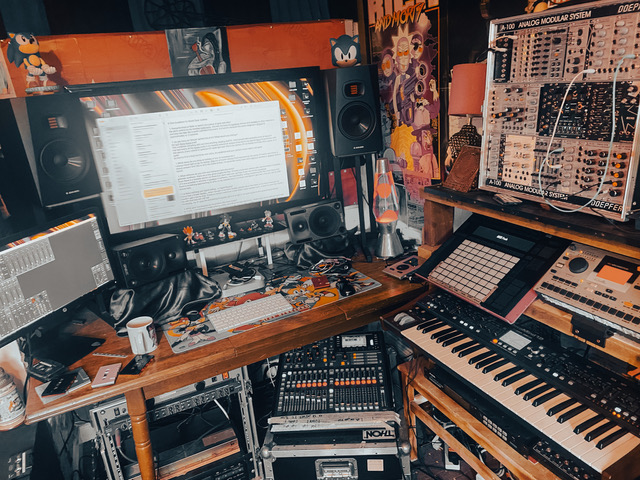
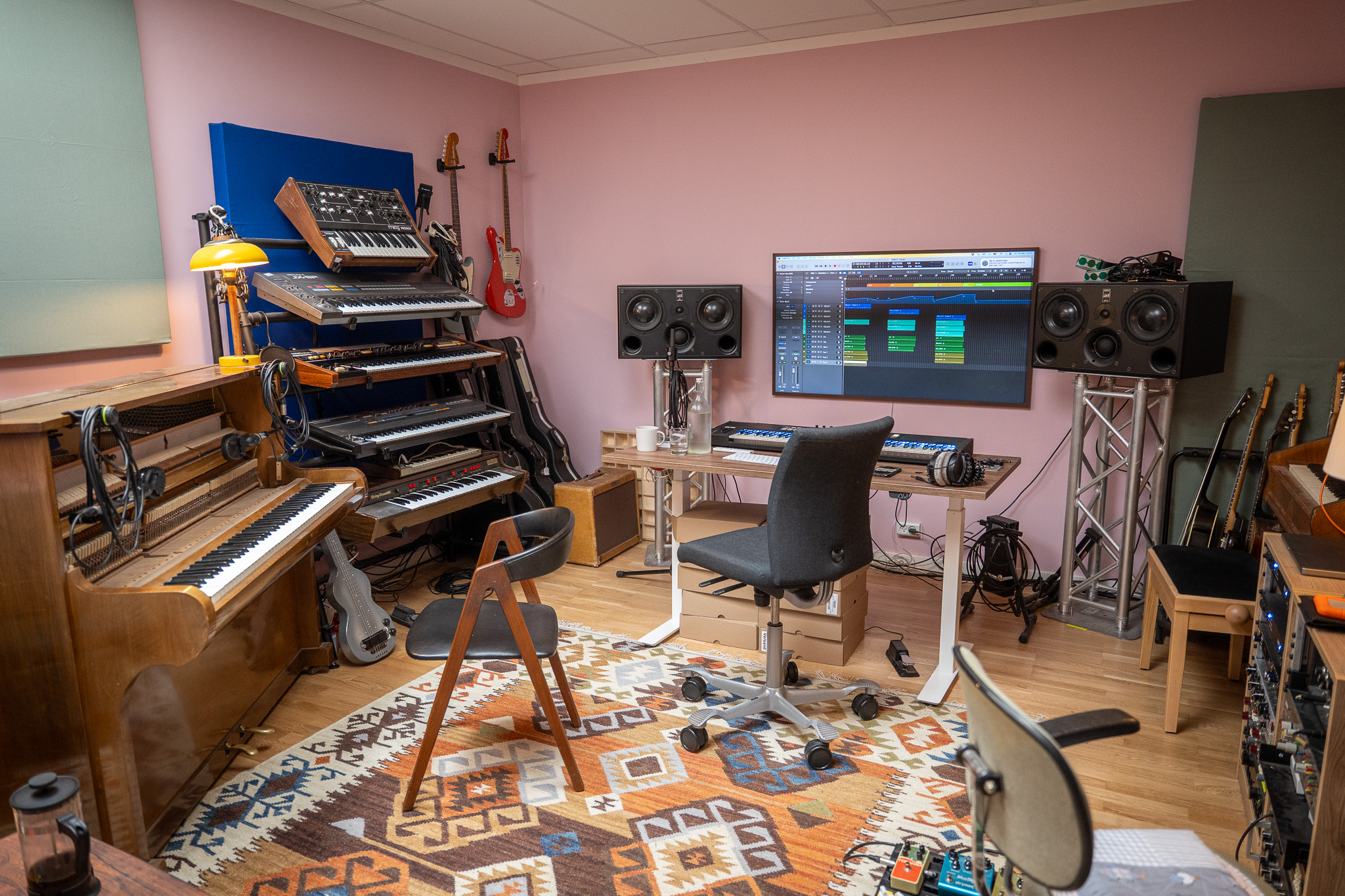
It’s a hybrid of vintage but still practical. The Flock Audio patchbay, Lexicon Primetime, Juno-60, piano, 1953 Telefunken Neumann U47, Fender 1964 Jazzmaster—all of it is central to my workflow. The space isn’t flashy, but it’s alive. Every cable, knob, and surface has a purpose. It encourages experimentation and allows me to move quickly between ideas. It’s not just a studio—it’s a creative ecosystem.

Kaspar Kaae – Studio
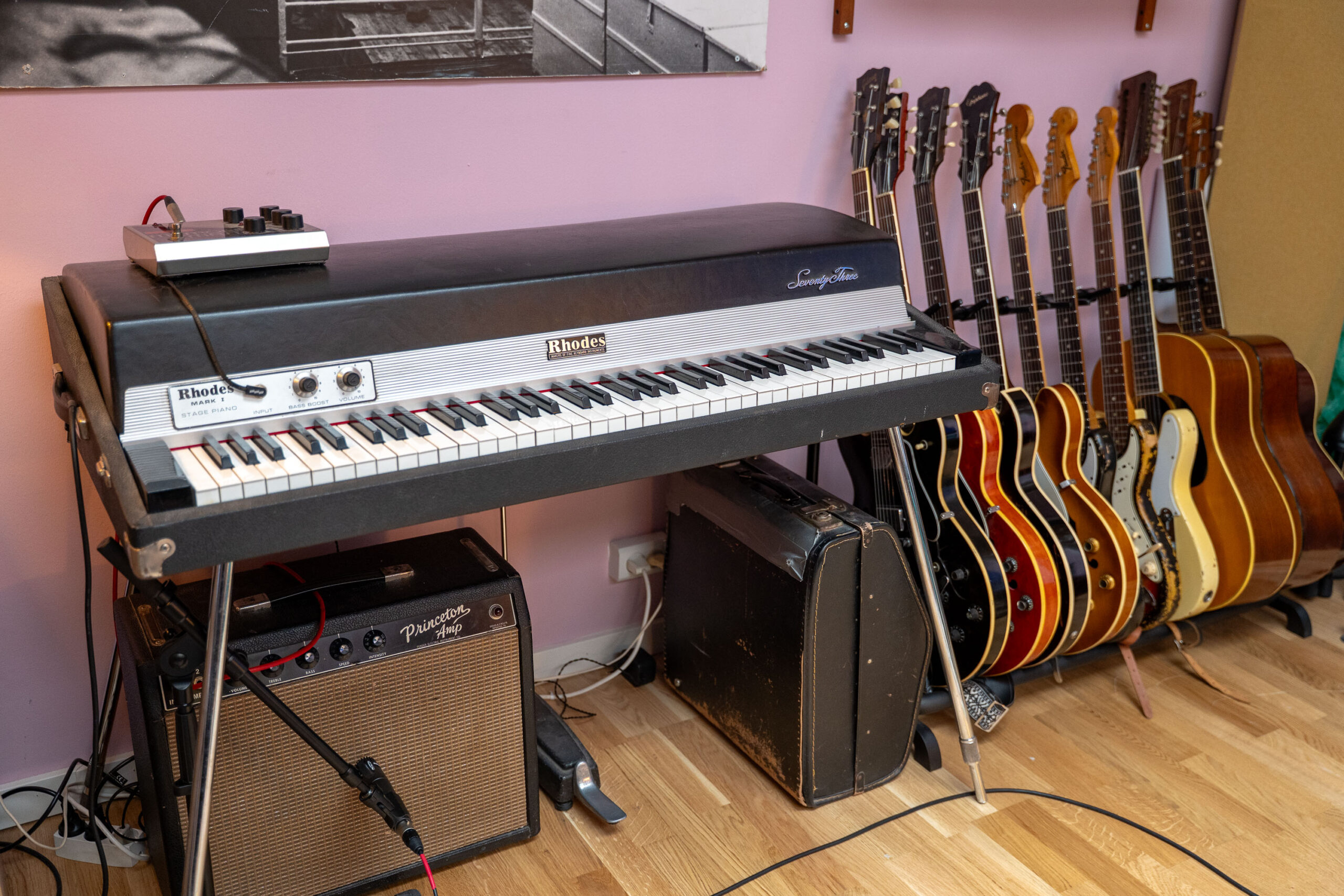
Rhodes and Guitar rack
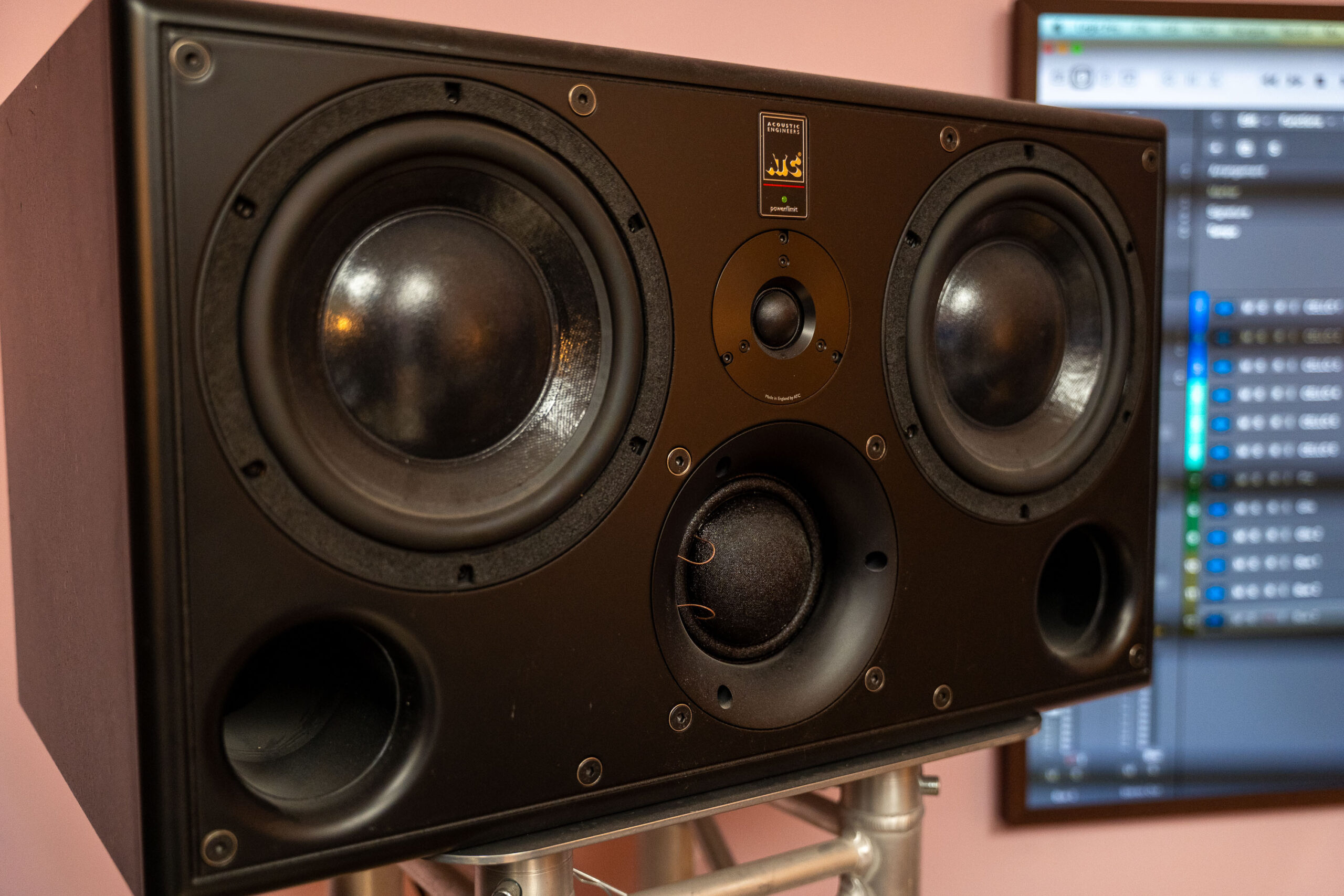
Studio ATC monitors

Best creative advice that you’ve ever heard?

“Have an idea, but be open to new things.” It’s deceptively simple. An initial idea is just a starting point; the magic happens in letting the work transform itself during the process. Tracks often end up somewhere completely different from the original concept, and the best work comes from embracing that evolution rather than trying to control it.

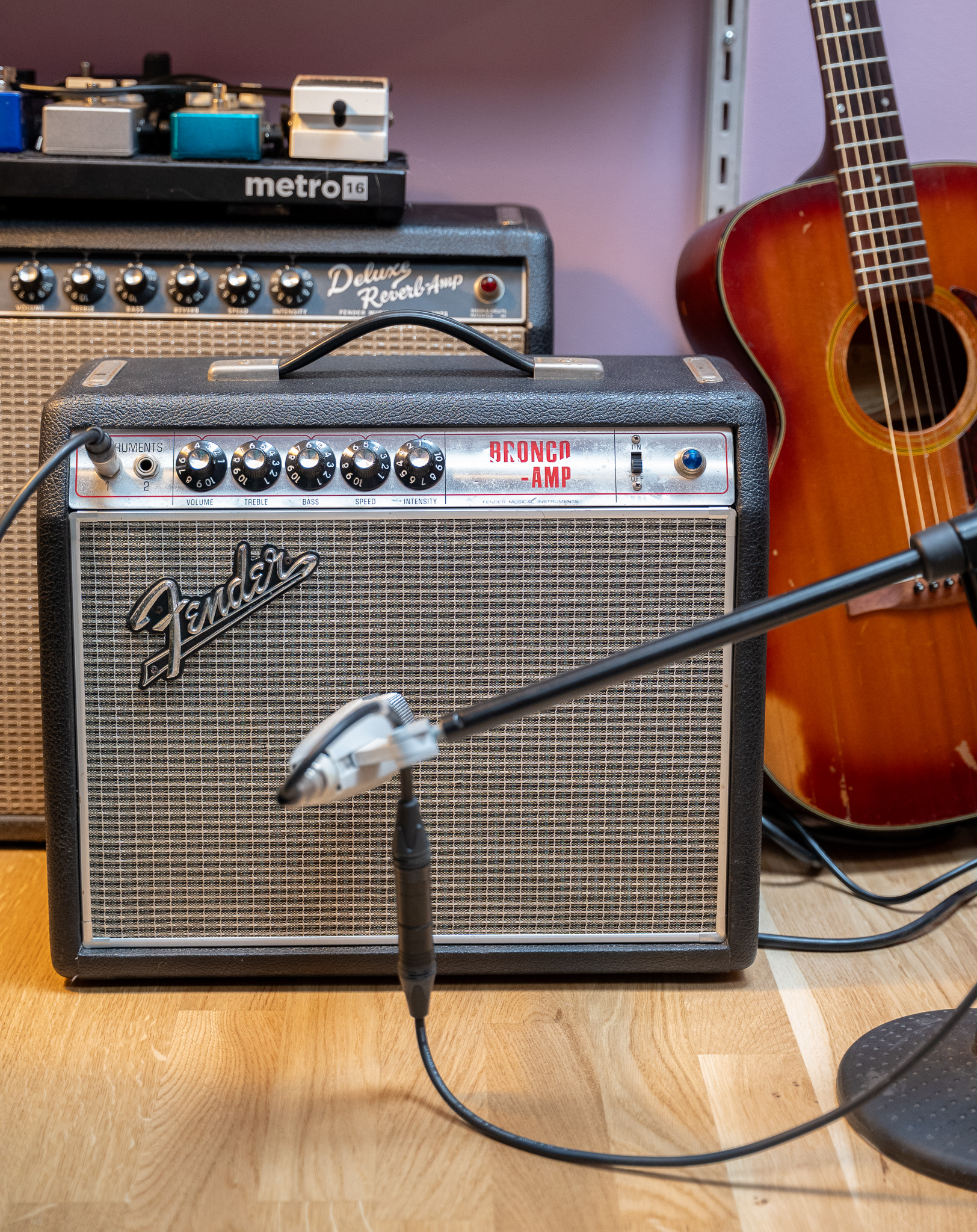
Fender Bronco amp

Promote your latest thing…

My latest release is with my band Cody. Our new album is called Everything Falls Apart.


Cormac O’Halloran – DJ Kormac

1. Favourite knob or fader or switch on a piece of gear and why?

Sequential Circuits Prophet 6 slop knob

I’ve recently bought a Sequential Circuits Prophet 6 for a new score I’m working on and it’s got this curious SLOP button in the middle. It adds randomised tuning stability to emulate the tuning instability of vintage analog oscillators. It brings a lovely degree of “wonkiness,” immediately makes sounds a little more curious and it’s fantastic when used in conjunction with the Pan Spread knob.

2. Do you have an ‘almost’ perfect bit of kit? What would you change?

I really like where my modular case is at the moment. It’s quite a simple configuration, but ticks a lot of boxes for me creatively. A lot of it is based around the new Moog Labyrinth semi modular and some make noise bits and I’ve got their four-zone bus case, which I love. It’s also great for live shows. I have a Doepfer spring reverb module and tank and I’ve been meaning to add a second one of these so that I might have a stereo reverb. The plan is to send the output from the Mimeophone into this new stereo spring reverb for strange sounding delays.

Doepfer spring reverb module and tank

3. What setup do you bring on holiday or tour or commute etc.?

I travel to London a good bit to attend mix sessions for Film/TV and I’ll generally just go with my laptop, drives, dongles etc and my Universal Audio Apollo Twin X. It’s a really solid audio interface, runs my UAD plugins and the preamps are good for recording on the go if I need to.  

DJ Kormac Live setup – at The Playground artist studios in Dublin, Ireland, June 2025.

4. What software do you wish was hardware and vice versa?

I’d really like it if the Universal Audio Console software had a dedicated hardware controller of some sort. Everything in my studio is connected directly into 2 Apollo x 8s so I’d buy that in a heartbeat! 

The Overstayer Stereo Modular Channel gets a huge amount of use here. If there was a software version, that sounded as good (which I’d be dubious about tbh!) I’d have it on everything. 

5. Is there anything you regret selling… or regret buying?

I had a Buchla Easel Command for a while and never warmed to it. I got a few bits out of it, but I never got really excited about playing it. And it was a nightmare to get that sequencer playing in tune. I guess that’s kinda the point of some of the Buchla stuff. After a while it was just sitting there so I replaced it with the Tip Top Audio/Buchla 258T oscillator for my modular rig (at about 1/10th of the cost of the Easel) and moved it on.

6. What gear has inspired you to produce the most music?

Of late, I’ve been finding the Soma Pulsar 23 drum machine hugely inspiring. It’s great for starting tracks as it tends to spit out patterns and sounds that I wouldn’t have naturally just dialled in – which is exactly what I’m looking for. 

Soma Pulsar 23 drum machine and Lyra drone machine

I love sending a voltage to the “MAD” pin on the FX section. This can give you a weird, circuit bent sounding version of your pattern which, when smashed through the Overstayer or a Culture Vulture, can be a very inspiring place to start a track. 

I did this exact thing on my new single, Down Below (see below.)   

7. If you had to start over, what would you get first?

Probably the Overstayer Modular Channel. I actually waited for mine for about 2 years so it would be a good idea to get the order in. This was during Covid and I’m sure they’ve sorted that out now. 

Overstayer Modular Channel

8. What’s the most annoying piece of gear you have, that you just can’t live without?

I’m not sure if it is gear but probably Logic Audio. 

I only use it for writing cues when I’m scoring Film/TV as it can send out time code to sync Pro Tools (which houses my video file[s,] dialog etc.) 

I use Ableton a lot so when I switch to Logic, I just find it a bit clunky and unintuitive and there seems to be an endless amount of menu diving involved. Certain functions you’d expect to be able to perform easily and to be placed front and centre are a bit hidden away – which can be frustrating. 

If Ableton had rock solid timecode functionality I’d be much happier there…

9. Most surprising tip or trick or technique that you’ve discovered about a bit of kit?

That’s a tough one! Of late, I think it’s using the “MAD” pin on the Pulsar 23 (described above.) 


Artist or Band name?

Kormac

Genre?

I guess you’d call it Electronica. But there are frequently live players, and even orchestras involved 🙂 

Selfie

DJ Kormac

Where are you from?

I’m from Dublin, Ireland.

How did you get into music?

I started playing guitar and drums when I was 12. I was very influenced by rock, metal, grunge and Sonic Youth. 

What still drives you to make music?

It’s been my job for a long time so, there’s that, but, honestly, if I won the lottery in the morning, I’d still come into the studio the following day. I’m never “finished” with music. I always have a list in my head of the next ten things I want to try and create. Must have been born this way…

How do you most often start a new track?

Ideally, I like to start a new track with a small melodic ostinato or choppy vocal sample that allows me to write chords, bassline and drums around. I’ll often get a small loop going in SLate + Ash’s Cycles software or on my Morphagene and use that as a means to “write around.” In fact, I often end up discarding these initial loops once I’m up and running. Sometimes they’re just the way to kick off the process.

If I’m writing for a picture, it’s completely dictated by what I see in front of me, what’s in the script and the broader idea for the score in general.

How do you know when a track is finished?

Ideally, I’ll have time to live with it for a while, play it at home, in the car etc. and I’ll make some notes about what needs fixing. 

When I’ve made all those changes, it’s usually time to wrap it up. 

Someone told me once, “you don’t finish projects, you abandon them” and there’s definitely a bit of that going on too.

Show us your current studio

DJ Kormac studio
DJ Kormac live setup

Best creative advice that you’ve ever heard?

Inspiration needs to find you working.

Promote your latest thing… Go ahead, throw us a link

Down Below (Feat. Katie Kim from OXN) is out on my Always The Sound label on July 18th.

https://found.ee/kormacdownbelow


Nicolas Melis – Melodicolas

1. Favourite knob or fader or switch on a piece of gear and why?

One of my favorite knobs is the filter cutoff on the Moog Matriarch. There’s something incredibly satisfying about how responsive and musical it is—just turning it slightly can completely transform the mood of a sound. It’s one of those controls that feels alive under your fingers. It really connects you to the instrument, and that tactile element is a big part of why I love working with hardware.

Moog Matriach cutoff

2. Do you have an ‘almost’ perfect bit of kit? What would you change?

I’d say the Sequential Prophet Rev2 is almost perfect for me. It’s incredibly versatile, sounds fantastic, and it’s become a core part of my workflow. Honestly, I wouldn’t change anything about it — it just works.

Sequential Prophet Rev2

3. What setup do you bring on holiday or tour or commute etc.?

I don’t get much holiday time during the year, so when I do, I like to spend it swimming, relaxing, and enjoying good food. But if I happen to find a piano around, I’ll definitely play — can’t resist that!

4. What software do you wish was hardware and vice versa?

One software I really wish existed as hardware is the Valhalla plugins—especially their reverbs like VintageVerb and Supermassive. They’re my favorite effects plugins, and it would be amazing if they came in a hardware pedal or rack unit form.

As for hardware that hasn’t been emulated yet, honestly, I can’t think of any off the top of my head. These days, so many classic and unique pieces have great software versions. That said, nothing quite replaces the hands-on experience and vibe of the actual hardware, so I still love both worlds.

5. Is there anything you regret selling… or regret buying?

I definitely regret selling my Sequential Pro 3. It’s an incredible synth with so much depth and character. I also regret selling my Roland Jupiter-4, which had a warm, unique sound that’s hard to find. And I have to say, I regret selling my very first synth, the Roland Super JX10 — it was special as my entry point into synthesis.
As for regretting buying, nothing really stands out. Every piece of gear I’ve invested in has brought value in some way.

Racks of keyboards

6. What gear has inspired you to produce the most music?

The Sequential Prophet Rev2 has been a huge source of inspiration for me. Its rich sound and deep modulation capabilities really spark creativity and let me blend my classical background with electronic textures seamlessly. It’s become a central part of my music-making process and always pushes me to explore new sonic territories.

Nicolas Melis

7. If you had to start over, what would you get first?

If I had to start over, I’d begin with a computer and dive into learning synthesis through VST plugins first. It’s a great way to explore sounds and concepts without a big upfront investment. After that, I’d probably invest in a good used polyphonic synthesizer with a quality keybed to practice and bring those ideas to life more expressively.

8. What’s the most annoying piece of gear you have, that you just can’t live without?

In general, my old analog synths can be a bit annoying because they require regular maintenance, and unfortunately, I don’t have a tech nearby to help with repairs. Despite that, their unique sound and character make them irreplaceable in my setup—I just have to accept the extra care they need.

MiniMoog

9. Most surprising tip or trick or technique that you’ve discovered about a bit of kit?

One cool trick I like with the OB-6 is using the second oscillator as an extra LFO. If you set Oscillator 2 to a low frequency and turn off keyboard tracking, you can use it to modulate things like the filter or pitch via the X-Mod section. It adds a nice layer of movement that makes the sound feel more alive. I know many people already know about this, but it’s one of my favorite things..

Sequential Prophet Rev2 on top and OB-6 below

Artist or Band name?

Nicolas Melis

Genre?

I don’t think I’ve defined a specific genre for myself yet. I’m really drawn to cinematic music that combines synths and piano — if that makes any sense. I’m also inspired by a mix of styles like IDM, dark ambient, glitch, and experimental electronic — all of which have that deep, atmospheric feel I really enjoy.

Selfie?

Nicolas Melis

Where are you from?

I was born and raised in Cyprus, but I’ve also spent many years in Germany — both places have shaped who I am, musically and personally.

How did you get into music?

I got into music at a very young age, starting with classical piano. Growing up practicing almost every day really shaped the way I connect with music. I eventually went on to study Piano Performance in Classical Music as well as Contemporary Improvisation in Germany.

Those studies gave me a strong foundation, both technically and artistically, and over time, my curiosity pushed me toward synthesizers and electronic music. Blending that classical background with modern technology has become a defining part of my musical identity.

What still drives you to make music?

What still drives me to make music is the need to express things I can’t put into words. It’s a way of processing emotion, time, and experience. That feeling when a sound or a chord progression clicks into place and evokes something real — that’s still magic to me. Also, I’m always curious to explore new sounds and techniques, and that curiosity keeps pulling me back to the studio.

How do you most often start a new track?

When I start something new, I usually begin by improvising on the piano. That’s where I discover ideas. I record what feels interesting, and from there I build on it. I haven’t released any original music yet—just a few classical interpretations like Bach and Satie on a synth—but I’m working on my own material and hope to share it in the future.

How do you know when a track is finished?

For me, a track feels finished when it communicates the emotion or atmosphere I had in mind—when nothing feels unnecessary and everything has space to breathe. I tend to strip things down rather than add more, so it’s often about knowing when to stop:)

Show us your current studio

Studio 1
Studio 2

Best creative advice that you’ve ever heard?

The best creative advice I’ve heard is: “Don’t wait for inspiration—just start.”

Creativity often shows up once you begin, not before. Showing up consistently, even when you don’t feel inspired, is what leads to breakthroughs.

Promote your latest thing… Go ahead, throw us a link.

Lately, I’ve been focusing on growing my YouTube channel, but I’ve found it a bit challenging to get my Instagram followers to make the jump over there. If you enjoy synths, vintage keyboards, and creative performances, I’d really appreciate your support!

🎬 Check out my YouTube channel here :
https://www.youtube.com/nicolasmelis
Every like, comment, and subscription means a lot — thank you! 🙏

Also check out my bandcamp:
https://nicolasmelis.bandcamp.com/album/bach-on-a-synth