Gustav Rasmussen – Synthing The Horn

1. Favourite knob/fader/switch on a piece of gear and why?

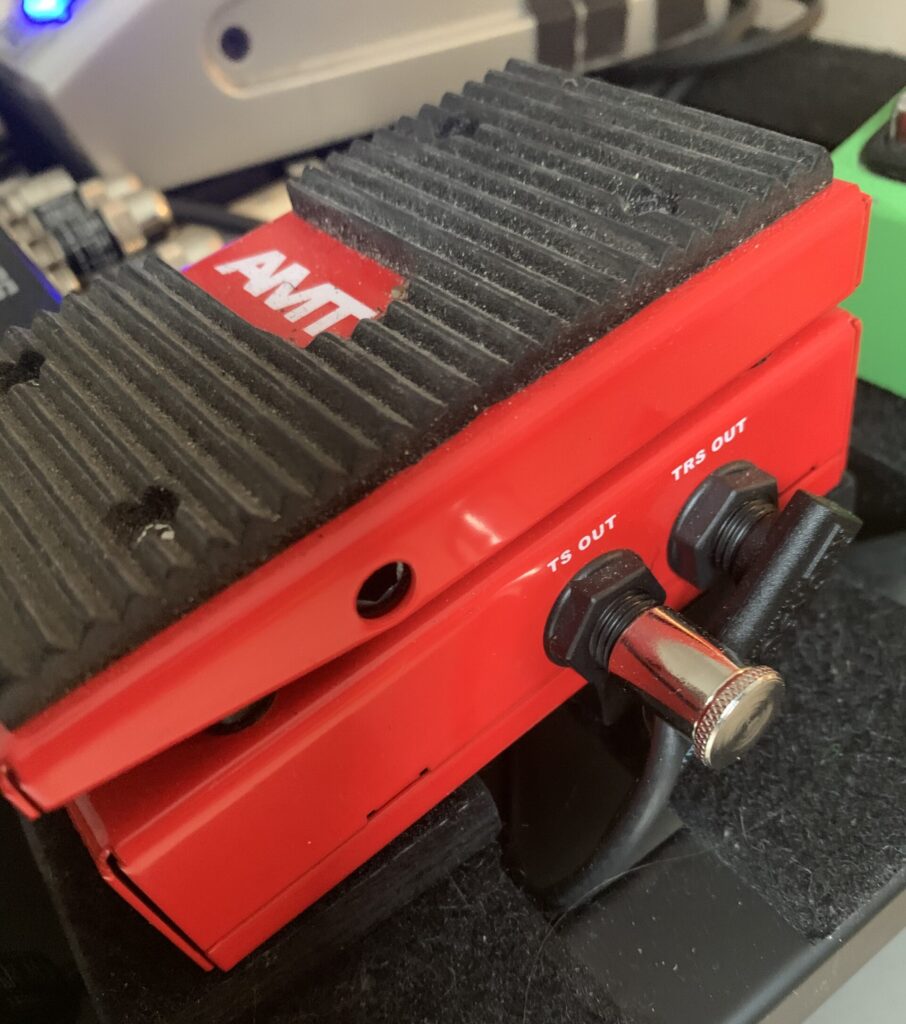
AMT Expression Pedal

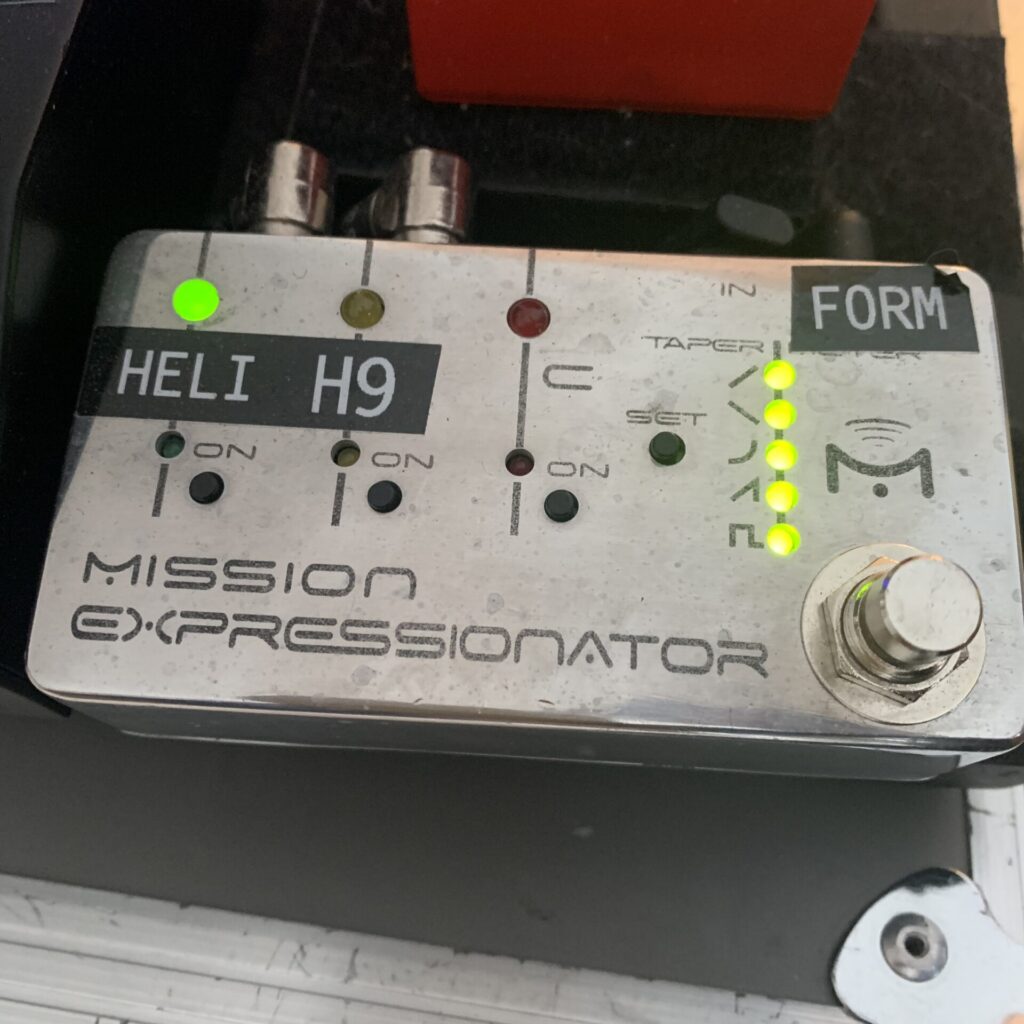
I would say my mission engineering expressionator + my expression pedal. A lot of the time, I use my hands to make music, so having a knob under my foot is super useful. And with the expressionator, I can use the same expression pedal for a number of different pedals, and on top of saving space on my board I can use it on several pedals at once. For me the expression-pedal is so important because I can play around with a lot of different musical parameters while I am playing – so it gives me a great connection between the acoustic and the electric.

Mission Engineering Expressionator

2. Do you have an ‘almost’ perfect bit of kit? What would you change?

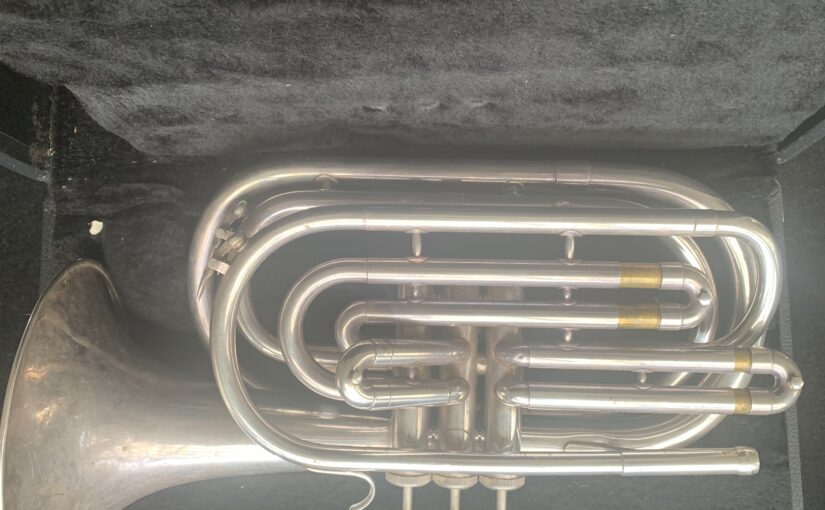
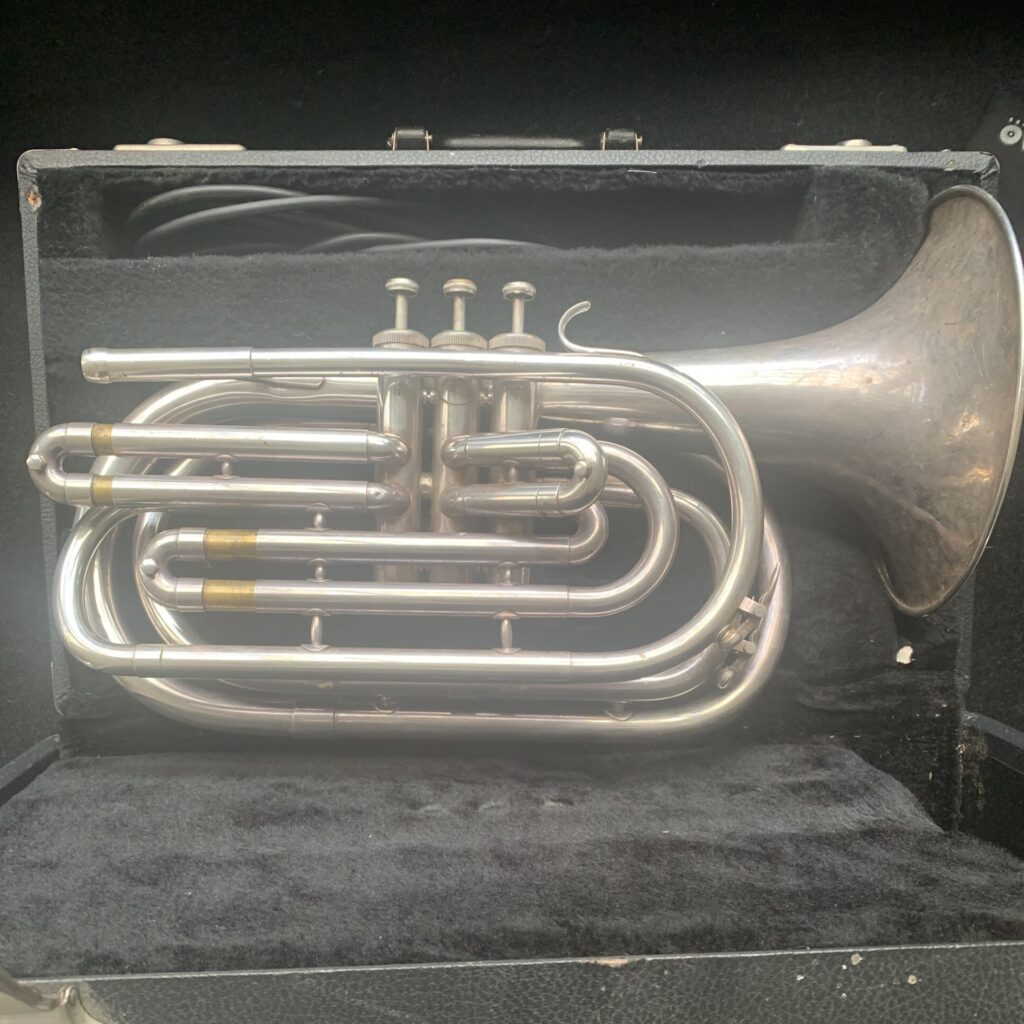
Trombone

My trombone. The sound is wonderful and it’s in great condition even though it’s pushing 60 years old now. If it doesn’t break in some way, I will still be playing it in 60 years time 🙂 However: the one thing I would change is to implement some kind of pickup system. It is a constant work-in-progress scouring the internet, talking to other horn players etc. and I have tried a number of systems (clip-on mics, piezo-pickups soldered to the mouthpiece, practice mutes with microphones) but they usually fail in either sounding crappy acoustically or not being well suited for effects. I’ll continue searching and cross my fingers that one day, I’ll have a true electronic trombone.

3. What setup do you bring on holiday/tour/commute etc.?

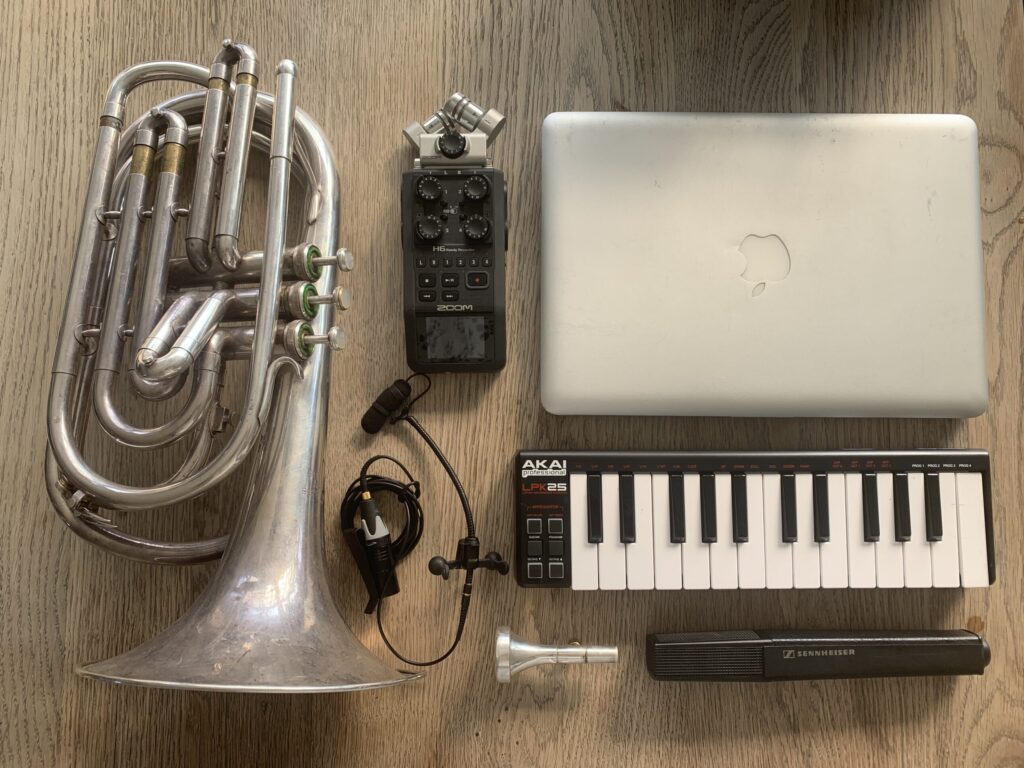
Trombone, Zoom H6 and a MacBook

Zoom H6 + a few instruments & my macbook. The zoom H6 is brilliant because of it’s size and versatility: I can do field recordings, use it as an audio device and record into a DAW, using stereo mics or whatever I have on hand.

4. What software do you wish was hardware and vice versa?

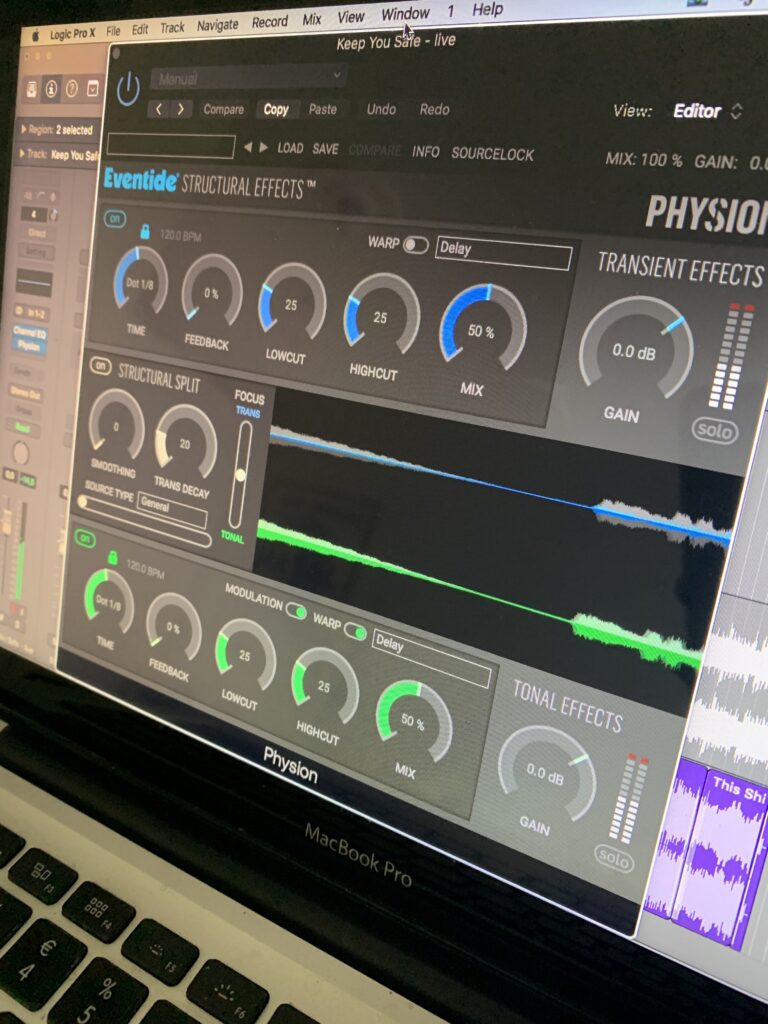
Eventide Physion

Eventide Physion plug-in is a brilliant tool for changing the texture of an instrument. It separates the audio signal into transients and tonal parts – take away the attack of a piano, get a randomly stuttering horn sound – etc. and since I mainly work with acoustic signals, this can really change the sound of the instruments into something unexpected and unique.

5. Is there anything you regret selling… or regret buying?

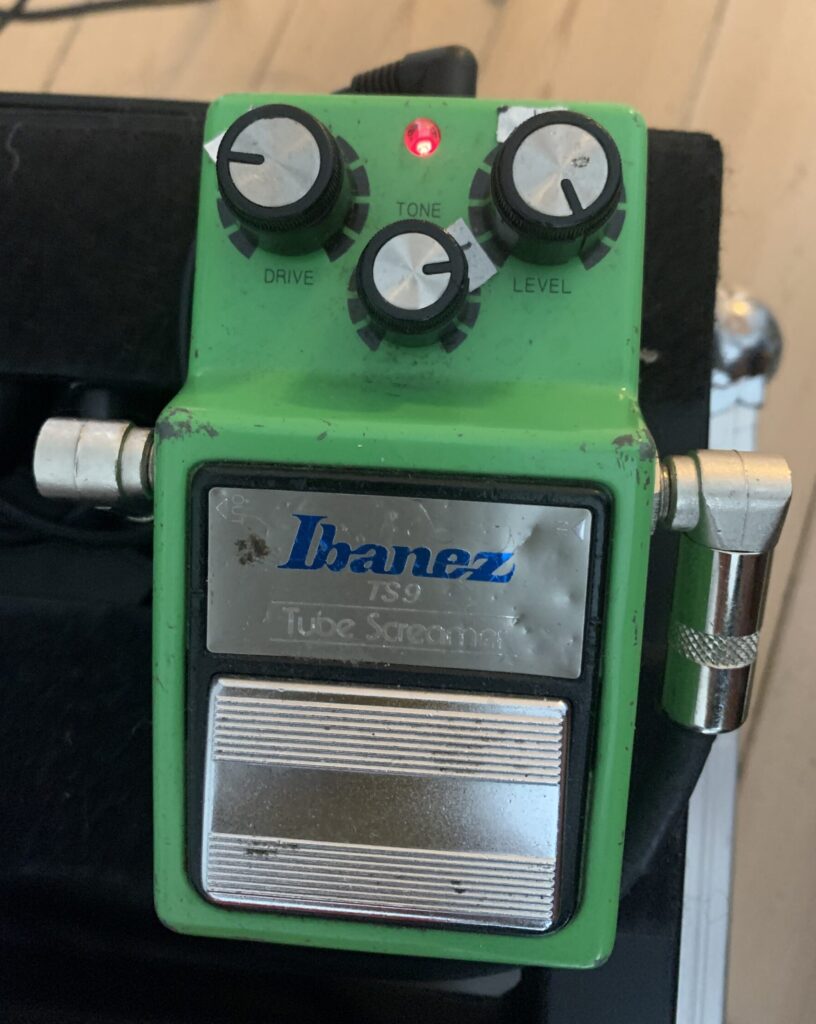
I am pretty un-sentimental when it comes to instruments and gear: if it’s useful and inspiring to me I’m happy, and if it ends up unused in the corner, then someone else may as well enjoy it. Having said that I almost sold the very first pedal I ever bought – a Boss Turbo Overdrive (OD-2) a couple of years ago but thought twice because, of course, it’s still a great pedal. I saved up for it over 20 years ago, in high school and it was the beginning of a new world for me.

A classic Ibanez Tubescreamer

6. What gear has inspired you to produce the most music?

My computer. Studio-quality recordings in the bedroom, weird processing, layering of sounds etc etc. – the fact that I have all this at my fingertips still gives me a surge of amazement and joy every time I do it.

7. If you had to start over, what would you get first?

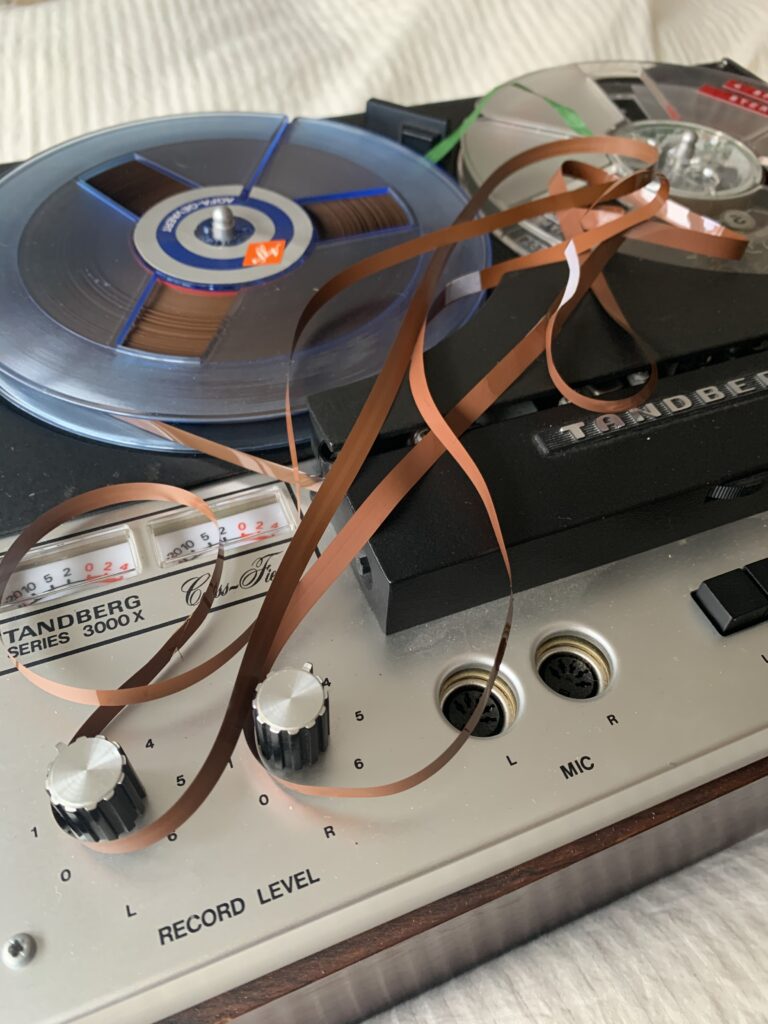
A 4-track cassette recorder. Simple to use, but infinitely inspiring – and it would have put me on track (!) towards composing my own material much sooner.

Tanberg 3000X

8. What’s the most annoying piece of gear you have, that you just can’t live without?

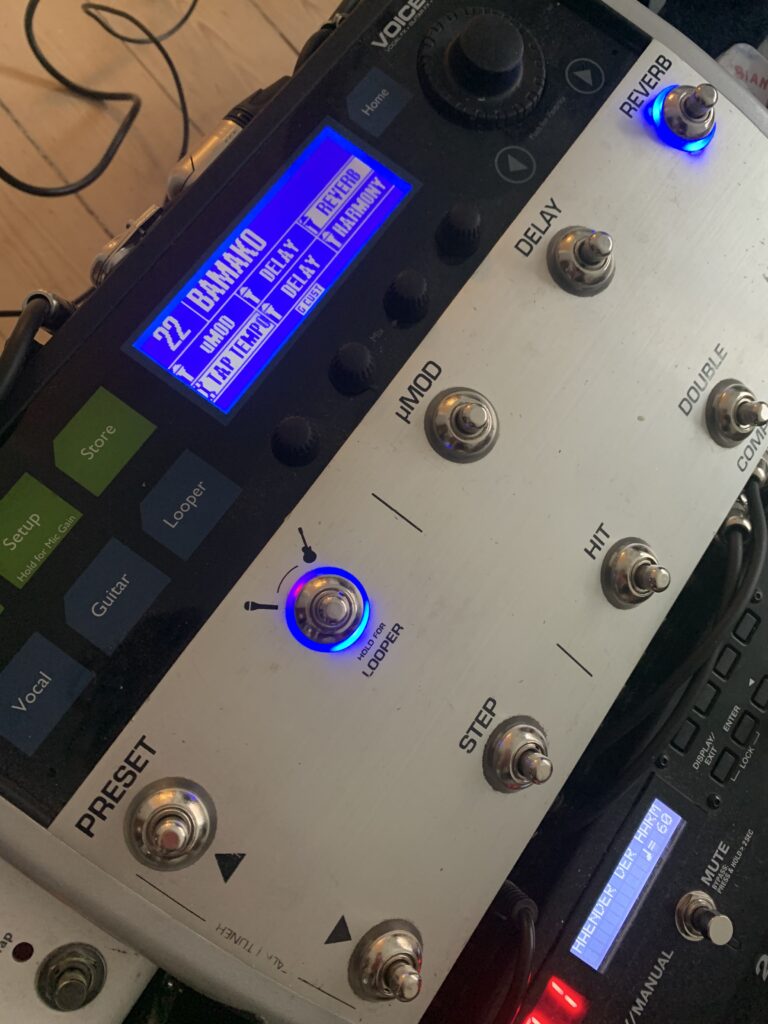
My trusted TC Helicon Voicelive pedal. A large fellow, that I really only use for one thing: harmonizing. My main instrument (trombone) only produces one note at a time, so it is an endless thrill for me to add extra notes – do a keyboard part, play a nicely voiced chord etc. It really opens up the spectrum of what is possible on my instrument. Basically I can program it to produce 4 new notes depending on what note I play – so way beyond just adding notes of a scale. And precisely this feature means that I cannot live without it. Quite annoying, because it is noisy, clunky and heavy. Please, someone make a small pedal that does just that and I’ll have room for loads more stuff on my pedal board 😉

TC Helicon Voicelive

9. Most surprising tip/trick/technique that you’ve discovered about a bit of kit?

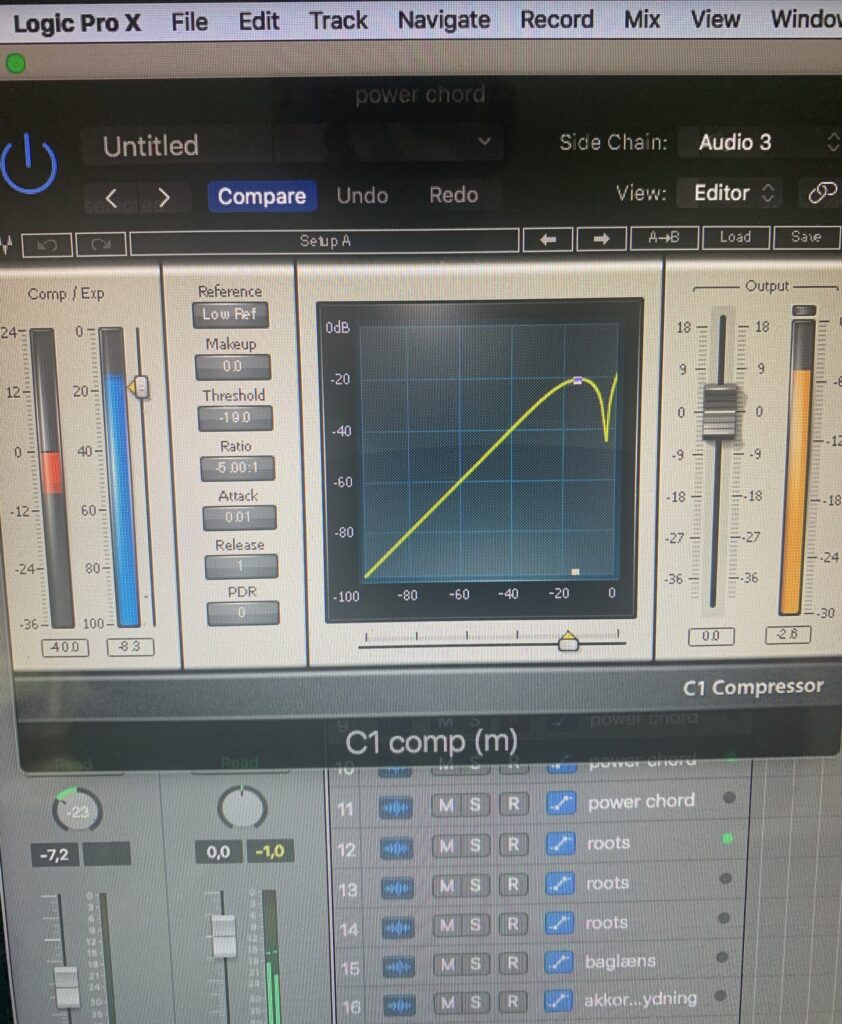
Recently while I was working on the recordings of my indie-tronica choir project “Ghost Coast Choir”. I got some really cool distortion out of playing around with side chain compression. I basically set the attack and release time to very fast and the compressor just didn’t know when to grab the audio. The fluctuating digital distortion I got out of that was completely unpredictable and a sound I would never have gotten otherwise. 

Logic Pro X and C1 Compressor

Artist or Band name?
The KutiMangoes, Ghost Coast Choir.

Genre?
Afro-beat, post-classical indie-choir/ambient/experimental.

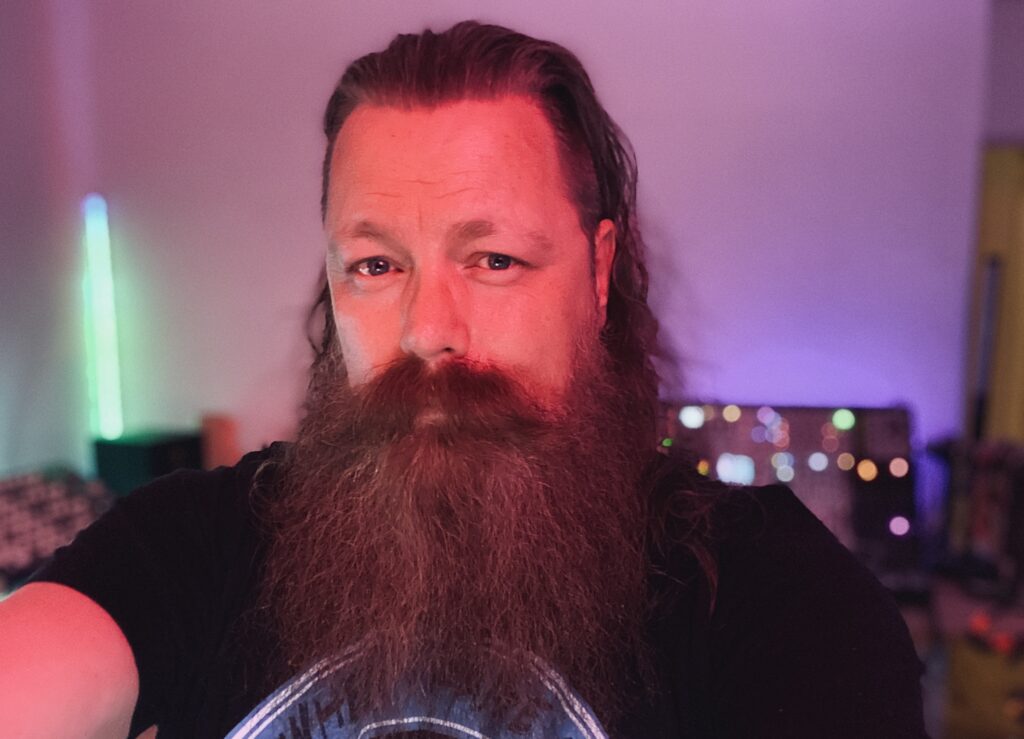
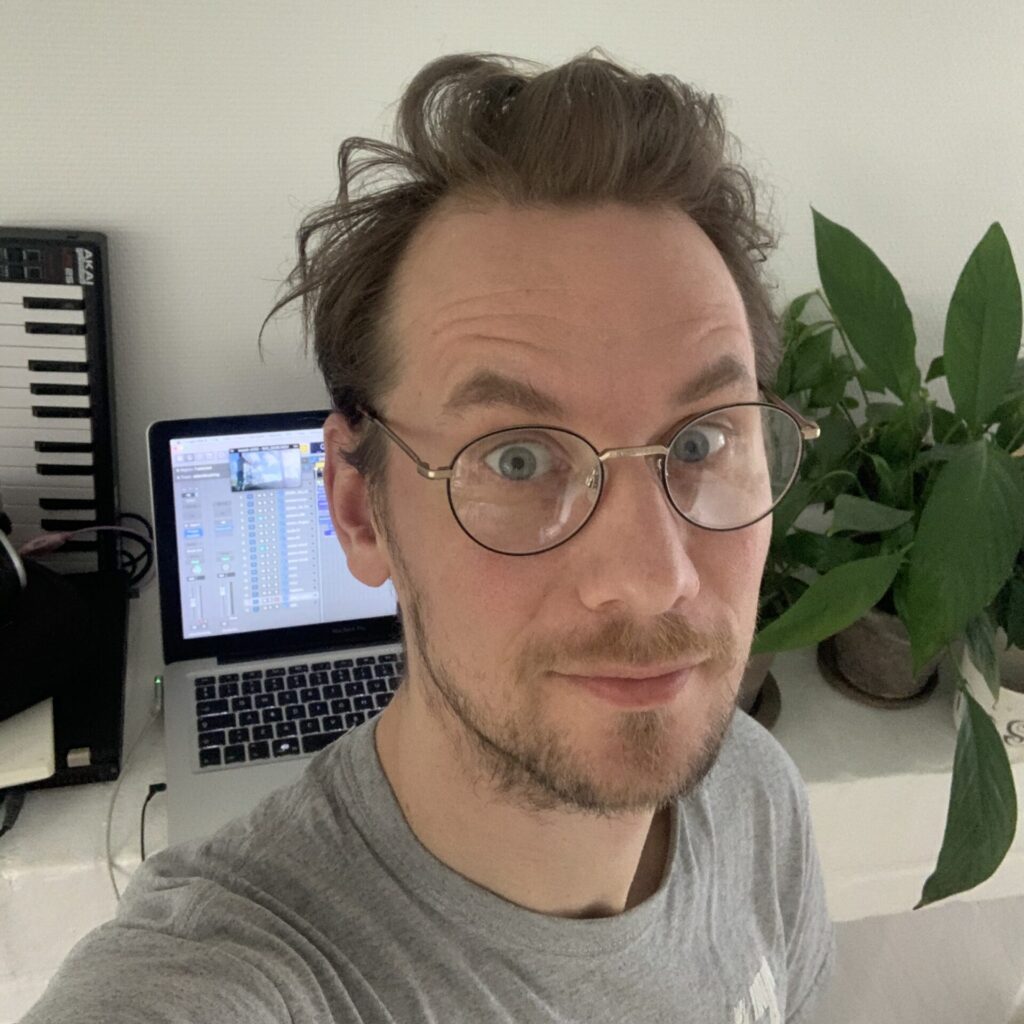
Selfie?

Where are you from?
Copenhagen, Denmark.

How did you get into music?
Started playing the trumpet as a 7-year old. Then messed around on a lot of different instruments growing up, and this really shaped my musical development, in the way that I’m more interested in the music than the instrument.

What still drives you to make music?

The desire to communicate with sound. The way music can make me feel certain things, swallow me up in whole worlds or surprise me, is a constant motivation, and to not only be in the receiving end, but changing it around and having my music affect the listener in all sorts of ways is a great joy.

How do you most often start a new track?
Any inspiration will do. Often I use some kind of technical issue to start me up like “let’s explore a new effect, certain mode of playing or plug-in” – and this then takes me to new places. For me it needs to feel new, so I don’t resort (too much) to the tried and true.

How do you know when a track is finished?
To me it’s a matter of trying to listen to it as if you’ve never heard it before and register your own reaction to it. When you work deeply with a track you can lose sight of how it communicates, because your mind is focused on technical stuff on many levels. But being able to take a step back and just listen is really crucial.

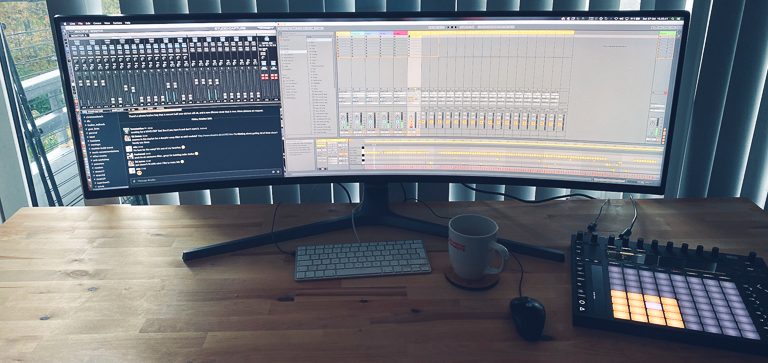
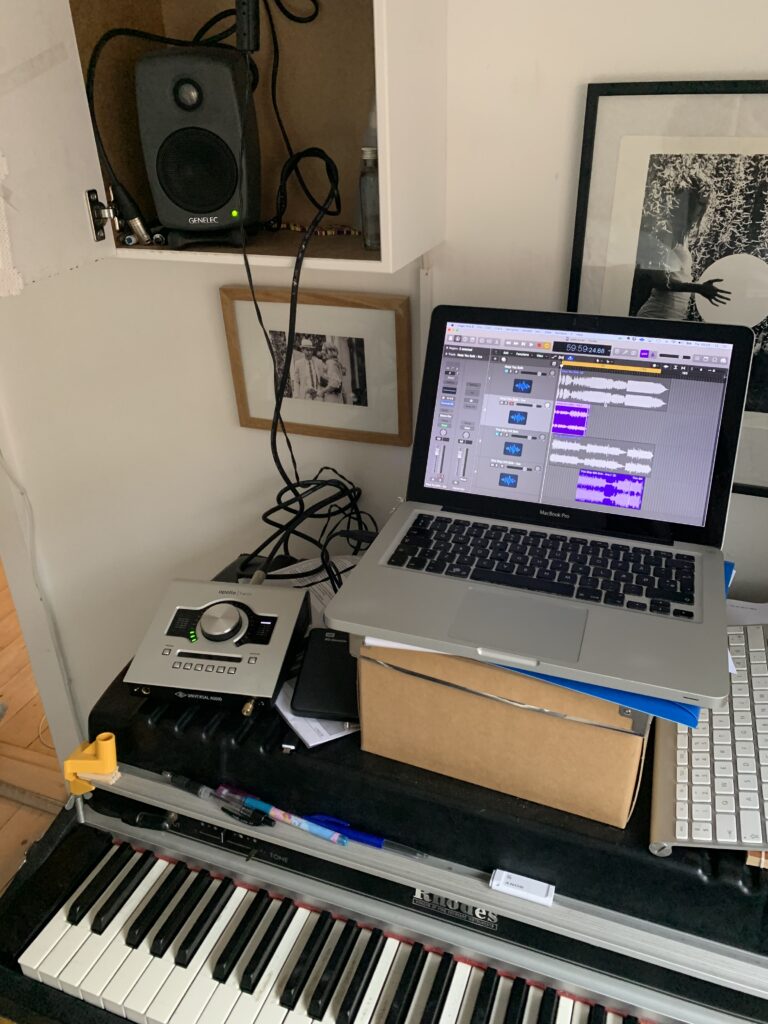
Show us your current studio

Gustav Rasmussens Studio

Best creative advice that you’ve ever heard?
Accept that you keep on feeling like a beginner – even after 20 years. Every time you create something it feels as if you are re-inventing your own work process. In other words: it never feels like another day at the office – when you create something new you start from scratch. Every time.

Promote your latest thing… Go ahead, throw us a link.
Kutimangoes.com / ghostcoastchoir.com

[Editor: It is refreshing to read about an audio-fx obsessed player, whose main instrument isn’t electric guitar or keyboard. Know any other timbral explorers playing others instrument? Suggestions are welcome in the comments]


Kumie – Battery Powered Fun

1.  Favourite knob/fader/switch on a piece of gear and why?
Currently, I love the buttons on the Elektron Digitakt. I’m not a gamer, but in the past couple years, I have gotten super into mechanical keyboards. The Digitakt’s keys have that same feel.They have such a satisfying click and light up quite nicely. They aren’t velocity sensitive, but I actually don’t miss that feature on the device.

Elektron Digitakt
Elektron Digitakt

2.  Do you have an _‘almost’_ perfect bit of kit? What would you change?
The OP-Z is sooooooo close to being perfect for me. It’s tiny, portable, the synth engines are solid, it samples, the step components and performance effects are a blast, and the encoders are a close second for favorite knob/fader/switch. But, the sampling could be better. In a perfect world, it would have a little more memory to store samples in a bank the way the Digitakt does. Then using the OP-Z app, I could access and load them for a given project. I’d also make some tweaks to how it sends MIDI because right now lots of crazy things happen when I try to control other hardware.

IMG_1189.HEIC
Teenage Engineering OPZ

3.  What setup do you bring on holiday/tour/commute etc.?
The OP-Z is with me, always. Though, I did just get a Roland MC-101, so I may start carrying that around too.

IMG_1193.HEIC
Roland MC-101 and Teenage Engineering OPZ

4.  What software do you wish was hardware and vice versa?
I wish there was something a little more Ableton-like in the hardware world in the $500 range. Looping pedals are nice and in the moment, but not good (in my mind) for planning and arranging finished songs. And, most other samplers I have seen are a little half baked in the loop/slice/time stretch department.

5.  Is there anything you regret selling… or regret buying?
I am a gear hoarder. I hate selling things. I just put them in cold storage until something inspires me to use them again. For example, I got a Yamaha QY70 the summer of 1997. I used it for a couple years, then got really into Reason and Logic and never touched it. About a year ago, I was inspired by someone else’s Instagram post to pull the QY70 out and use it to sequence other gear. Turns out, it is the perfect companion to the Volca line.

IMG_1092.HEIC
Yamaha QY70 and Korg Volca Drum

BUT, there is one device that I bought and hated so much that I returned a day later: The Boss DR-202 Dr. Groove. I got it around the time it was released. I had this fantasy that it would be my core groove production tool. It wasn’t. Sounds were meh, sequencer was meh, even the buttons were pretty meh.

6.  What gear has inspired you to produce the most music?
I spent about 7 years barely making music even though I had Ableton Live and Reason just sitting loaded on my computer waiting to be used. I just could not get excited about sitting down with a mouse and staring at a screen for fun after staring at one for work all day. Then, the OP-Z came out and thought that maybe it was time to give hardware a try again, which led me to all sorts of other battery-powered music-making devices. It’s exciting to be able to just turn a device on and start instantly making beats and sequences. 

IMG_0942.HEIC
OPZ with iPad app and Volca Drum

7.  If you had to start over, what would you get first?
Even though bang for your buck answer would be an iPad (so many good music apps), I’d start with hardware. Since I love grooveboxes so much, that would be my starting point. Maybe one of the recent Electribes or a Novation Circuit. Or, of course, an OP-Z.

8.  What’s the most annoying piece of gear you have, that you just can’t live without?
Ableton Live. It is really hard for me to stay focused on a piece of software, but it is just so essential for finishing tracks.

9.  Most surprising tip/trick/technique that you’ve discovered about a bit of kit?
It wasn’t really a surprise, but the most welcome technique I have found in recent hardware (like the Digitakt, OP-Z, and Volca Drum) is parameter locking. It opens so many creative possibilities.


Artist or Band name?
Kumie

Me.jpg
Scott Kumis

Genre?
Soundtracks for sci-fi stories that don’t exist

Where are you from?
Currently, Northern Virginia

How did you get into music?
I started taking drum and percussion lessons in the 5th grade and kept going from there.

What still drives you to make music?
It’s an itch that just needs to be scratched. One of the only places in my life where I can fully focus on something for hours without the urge to check my phone or surf the web.

How do you most often start a new track?
Drums are my original instrument. So things almost always start with a beat.

How do you know when a track is finished?
I’ll let you know when I figure that out.

Show us your current studio
It’s a bit of a mess now as it doubles as my office for telework and also a closet.

IMG_1191.HEIC
Scott Kumis’ studio

Best creative advice that you’ve ever heard?
Make as much art as you can, no matter how bad. The more you create without holding back, the better you get over time.

Promote your latest thing… Go ahead, throw us a link.
You can fine me in a few places here: https://kumiemusic.com/kumie-links/

[Editor: Hey, anyone else got a good battery powered setup? Using PowerBanks? SolarPanels? HamsterWheel Generator? Leave a comment]


Tuesday Night Machines – On a Sunday

1. Favourite knob/fader/switch on a piece of gear and why?

I have a weird fixation with the data wheels on Akai’s MPC 500 and MPC 1000. They’re not really high quality components or feel nice to the touch, but they’re essential to operating those devices efficiently and in my opinion the designers did a great job of integrating them into the software and general MPC workflow. They’re just so quick and easy to rotate and the software reacts so snappily to their motion … it’s a delight.

Akai MPC500

2. Do you have an ‘almost’ perfect bit of kit? What would you change?

AE Modular

This always depends on the situation or musical context, but I’ve been very impressed by the AE Modular synth format and how it developed over the past two years. It’s a fully featured modular synthesizer, which is relatively small and portable and costs only a fraction of a Eurorack system. I’ve dreamed of a system like this ever since I delved into the modular synth rabbit hole ten years ago and it seems that it has finally become reality … at least for my tastes and requirements.

3. What setup do you bring on holiday/tour/commute etc.?

Akai MPC 500 and YouTuber’s toes

I love making music while on vacation or when commuting. The iPad has worked for me greatly as a mobile music workhorse ever since its inception and I always carry it with me and do something musical with it. Sometimes it’s too much like a computer though, meaning that it can distract me with its internet access, notifications, etc. So, especially for vacations, I like to bring other pieces of gear as well, which run on USB power bank power, which is easy nowadays, even for devices requiring a 12V supply, thanks to cheap and efficient step-up adapter cables. Last year I re-bought the aforementioned MPC 500 and created a full album with it during a three week camping vacation. For this year I’m planning to take my freshly modded TI-82 calculator with Houston Tracker 2 and maybe even a Gotharman Little Deformer 3. I have also enjoyed Teenage Engineering’s OP-1 (obviously), the Bastl Microgranny 2 and BitRanger, a Gameboy Advance Micro with LSDJ and various other bits. Somehow, I can concentrate on music best when I’m on vacation and I get the most finished tracks out of those periods of time.

TI-82 calculator with Houston Tracker 2

4. What software do you wish was hardware and vice versa?

Lumen! It’s a really cool analog-style video synth for macOS with MIDI control, which I would really love to have as a standalone and affordable hardware device. Maybe I can snag a Critter & Guitari ETC at some point, which seems close.

Lumen video synth

5. Is there anything you regret selling… or regret buying?

I’m not into vintage synths or rare gear, so I’ve not regretted selling stuff so far, because I could always just buy it again if I wanted to. However, I’m in the heaviest music studio downsizing phase I’ve ever had right now and I might run the risk of finally regretting a thoughtless sale after all. I sometimes get this “reverse GAS”, which makes me feel unattached to all my gear, so I end up selling things left and right. After those phases though, there has always been something new to be acquired and tried out with the new funds. It’s a journey and I enjoy it.

6. What gear has inspired you to produce the most music?

Ciat Lonbarde

While it was not the “most” music I made, my recent foray into Ciat Lonbarde instruments, like the Cocoquantus, Sidrax Organ and Plumbutter, very much inspired me. Those instruments are incredibly well designed for spontaneous, electric forest ambient music live-patching sessions.

Linnstrument and inspiration

Apart from that, I also like to play an MPE synth with the Linnstrument and have the Bastl Thyme or Mooer Ocean Machine attached as audio effects. Somehow this simple setup is an instant relaxation tool for me. I could press, slide and wiggle my fingers for hours on this rubbery control surface and drown in the looping ambient delay and reverb sounds coming through my headphones.

Linstrument and Mooer Ocean Machine

7. If you had to start over, what would you get first?

I think I might try a larger hardware music workstation, like the MPC X and then get some cheap and small gadgets to sample.

8. What’s the most annoying piece of gear you have, that you just can’t live without?

Axoloti DSP DIY

I’ve kept a few of my DIY synths for way too long. They took too much space and I hardly used them anymore, yet I couldn’t let go of them. Especially the Axoloti platform is like a drug to me sometimes. It’s so easy to prototype and build synth, sampler and sequencer ideas with it, but all of the sudden you have eight of those DSP boards and a drawer full of wooden boxes which might work as enclosures, electric components and cheap USB MIDI controllers. Still, the Axoloti is one of the most empowering electronic music experiences for me. Making your own hardware instruments from scratch is incredibly satisfying, especially when it’s that easy.

Axoloti DSP board

9. Most surprising tip/trick/technique that you’ve discovered about a bit of kit?

Reading Ken Stone’s CGS Serge circuit diagrams made me discover the power and versatility of the 4051 analog multiplexer IC, which is a 3 bit, binary-addressed eight-way switch, perfect as a basic building block for analog sequencers. This has furthered my DIY endeavors tremendously and if everything goes as planned, it will result in my first commercially available modular synth module later this year. [Editor: Cool, I look forward to hearing and seeing what these do. Will insert link when it comes out]

Synth DIY

Tuesday Night Machines logo

Artist or Band name?

The Tuesday Night Machines

Genre?

All over the place. It’s not good to cultivate an audience for my music like this I guess, but I like jumping between genres. I’ve made chiptunes, a beat tape, harsh noise, ambient drones and I’m currently dabbling in Acid. Oh well.

Selfie?

Sure, but I’m writing this on the couch and it’s Sunday, so I look the part.

Felix on a sunday aka. Tuesday Night Machines

Where are you from?

My family moved a lot, so I’m not “from” somewhere really. I currently live in Köln, Germany for over a decade though, so it looks as if I like this city.

How did you get into music?

I had classic piano lessons and some electric keyboard lessons as a child, which I didn’t like too much back then. I’m glad that I got some basic music theory from it though. Later, I learned to play the guitar during university to play my favorite punk rock songs. Electronic music came some time after I started working then, beginning just with a copy of Ableton Live Lite, which seemed like a fun and easy way to make music. Apparently it wasn’t though, as it led me to DAWless hardware setups quickly.

What still drives you to make music?

I work in visual media, so music is basically the counterpiece to my day job. It’s a great way to relax for me, more or less away from the computer.

How do you most often start a new track?

Mostly with a certain sound or melody. Depending on the workflow of the device I’m playing with, I sometimes even just create one single long audio track for that one sound and then layer drums and other instruments on top afterwards.
How do you know when a track is finished?

When I get past the 3 minute mark.

Show us your current studio

The current state of my studio downsizing craze:

Cupboard studio

.. and how it was before, neatly constructed inside an inconspicuous IKEA PAX wardrobe:

Cupboard studio full of knobs

Best creative advice that you’ve ever heard?

That limitation thing which everyone mentions. Limitations are great for music.

Promote your latest thing… Go ahead, throw us a link.

Thicket Whispers, a Ciat Lonbarde album:

https://nightmachines.bandcamp.com/album/thicket-whispers

Thicket Whispers, a Ciat Lonbarde album by Tuesday Night Machines

[Editor: You seen any of TuesdayNightMachines youtube tutorials? Leave a comment]


[Editor: Do you have a favorite tip, trick or way of working with any of the gear from this interview?
Then throw a comment below…
]