1. Favourite knob or fader or switch on a piece of gear and why?
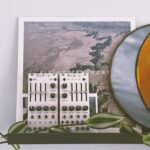
Melbourne Instruments Nina
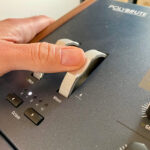
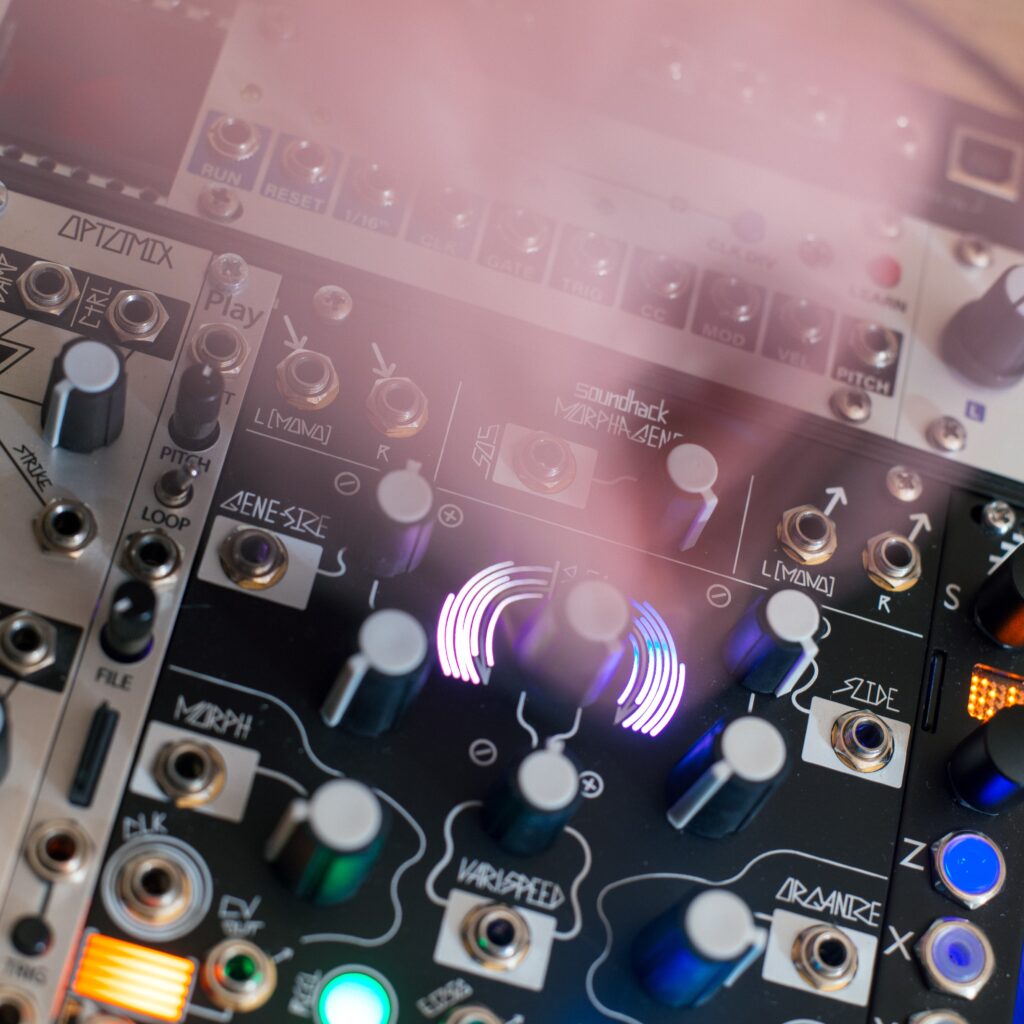
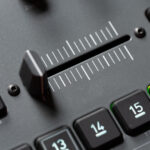
This is an easy one. The motorized knobs on the Melbourne Instruments gear are incredible. To know the exact position of every parameter for every preset, and even for the modulation matrix, is something the hardware world has been crying out for ever since the invention of presets. I never grow tired of seeing the multiple parameters moving as if, to quote the Scottish Enlightenment economist Adam Smith, by an invisible hand.
2. Do you have an ‘almost’ perfect bit of kit? What would you change?
Boss RPS-10
The Boss RPS-10 is so imperfect that it’s perfect. It’s a digital delay from the ’80s with a quirky feature set that can be manipulated in the most pleasing ways. What seems like a very standard delay and pitch shifter can create very experimental noises and textures. The only thing I’d change is making it stereo instead of mono.
3. What setup do you bring on holiday or tour or commute etc.?
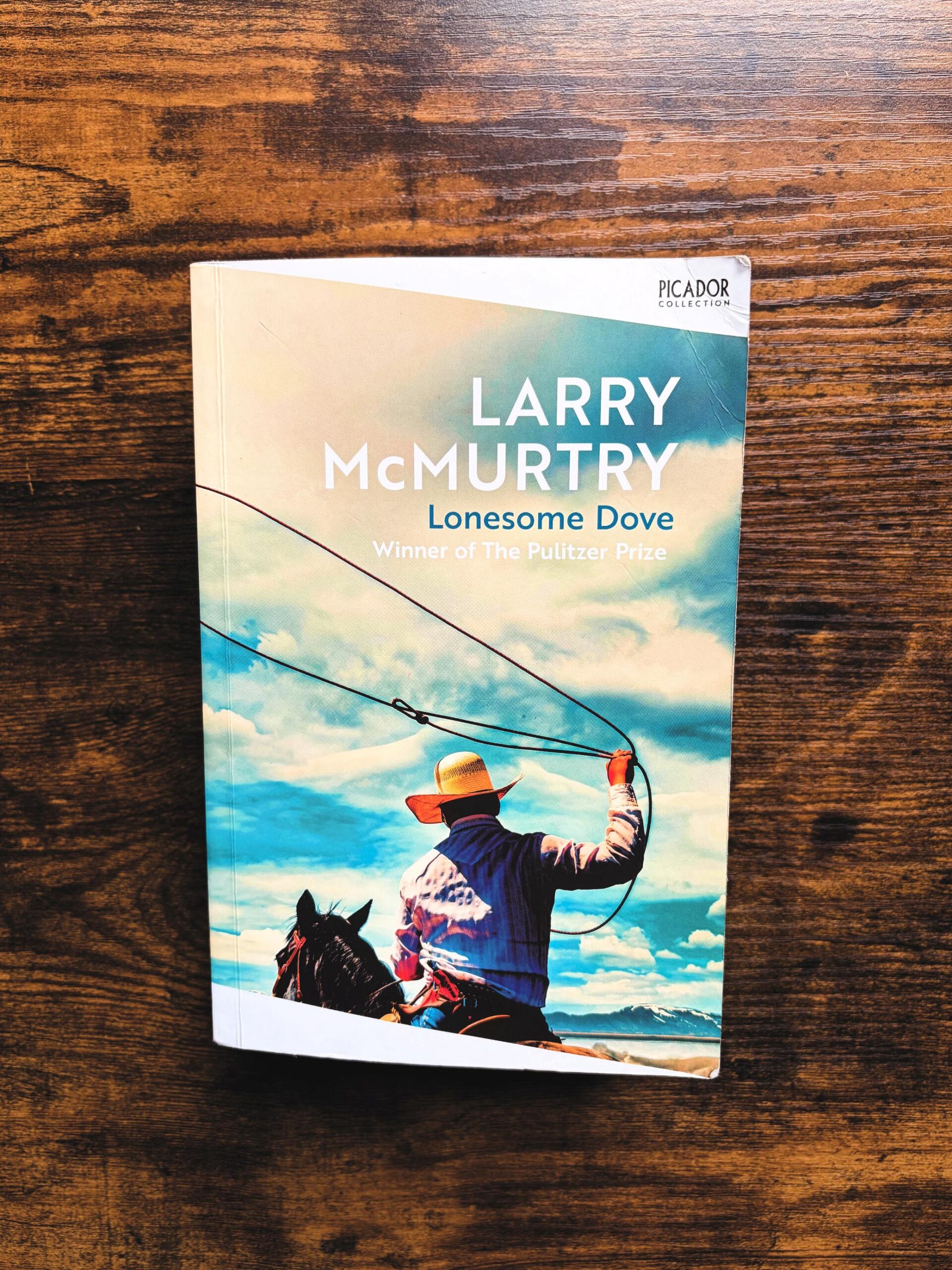
A novel idea
In the past, I’ve always liked the idea of making music on holiday or whilst travelling, but the truth is I never actually get round to doing it. I’ve now decided to take a good book, enjoy the holiday, and let the music wait for when I get home.
4. What software do you wish was hardware and vice versa?
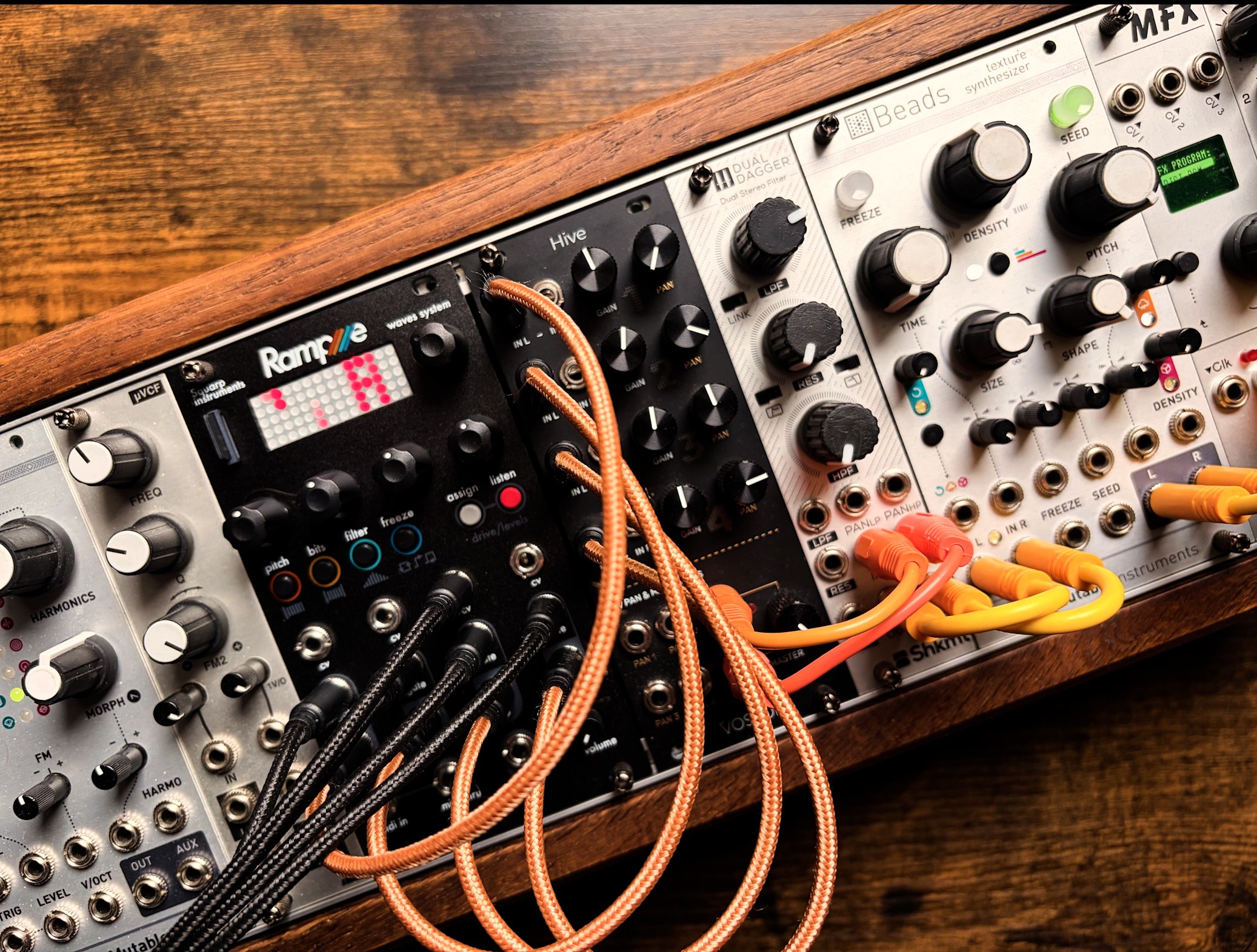
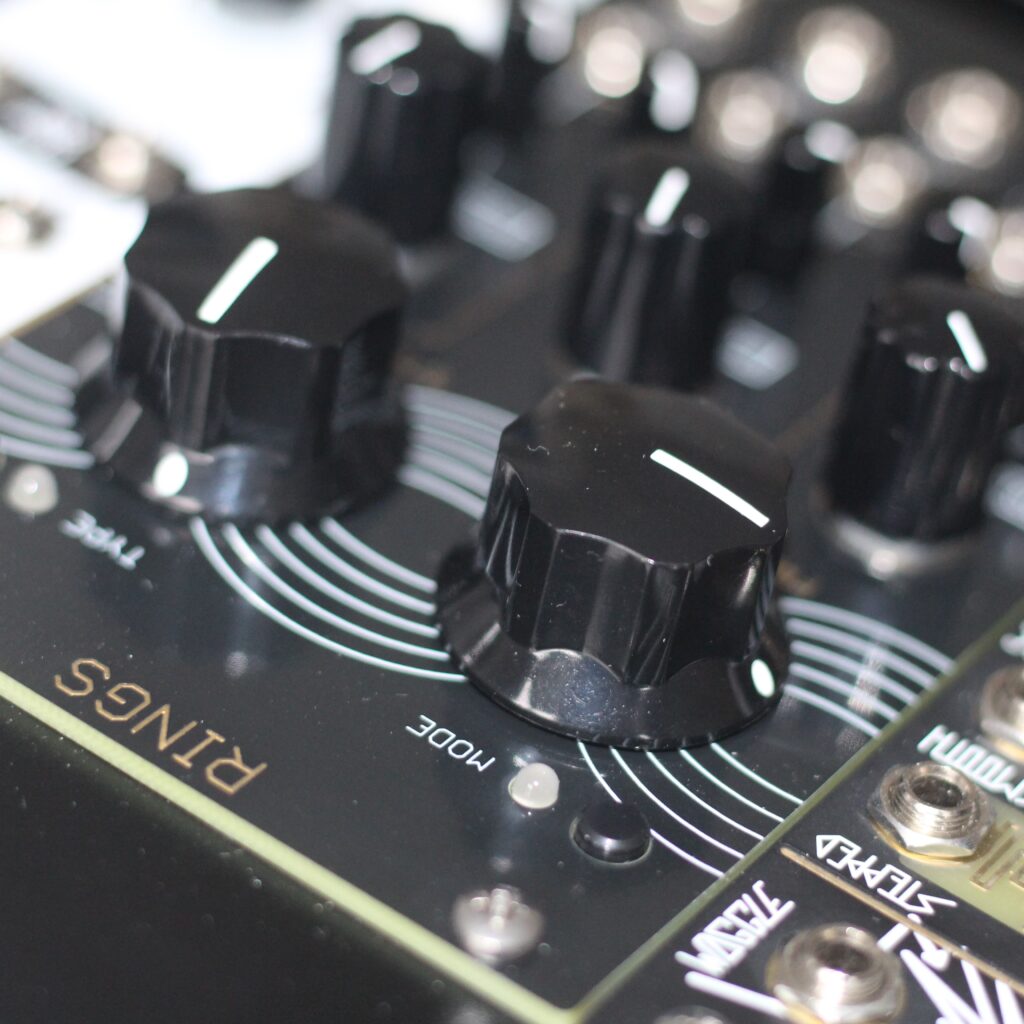
Mutable Instruments Beads
This is quite a boring answer, but the iZotope De-noiser plug-in would come in very handy for playing live with particularly noisy set-ups. And I’d love a software version of Mutable Instruments Beads.
5. Is there anything you regret selling… or regret buying?
Squier Stratocaster
Many years ago, I sold my first ever electric guitar, a cheap, red, Squier Stratocaster. It was nothing special at all, but I wish I still had it. God, I loved that thing!
6. What gear has inspired you to produce the most music?
Recently, I’ve been loving old romplers like the Korg Triton. It has the perfect balance of late-’90s technology and cheesy, yet very usable, sounds. I also have a Spanish acoustic guitar, which I love to write on.
Spanish acoustic guitar
7. If you had to start over, what would you get first?
Another boring answer, but I’d go for a DAW, Ableton in my case, and a MIDI keyboard. That alone is the perfect starting point to make great music.
8. What’s the most annoying piece of gear you have, that you just can’t live without?
More eurorack modules
I work a lot with modular synthesizers, and you really don’t get more annoying than that! You have to physically patch modules together, patch cables are annoying, you can’t save presets, it’s wildly expensive, and I bloody love it!
9. Most surprising tip or trick or technique that you’ve discovered about a bit of kit?
After making countless product demos, I’ve come to truly appreciate the value of reading the manual. I’ve discovered so many unknown features, shortcuts, and techniques by forcing myself to wade through dry, lengthy manuals, and it’s something I now do with any new piece of gear.
Artist or Band name?
The Unperson
Genre?
Modular
Where are you from?
Glasgow, Scotland
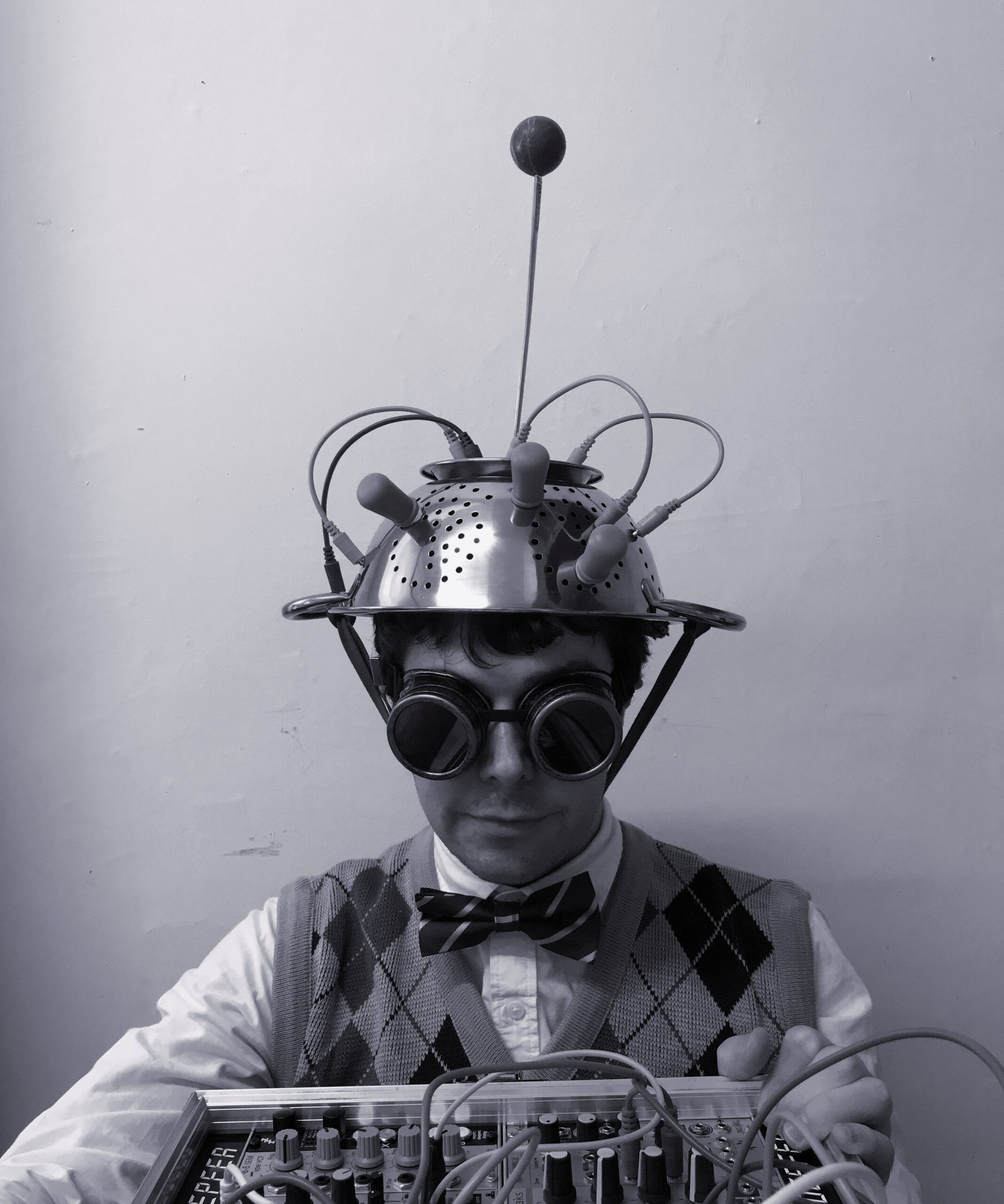
Selfie?
Ally – The Unperson
How did you get into music?
I’ve always liked music as far back as I can remember, but when I heard Nirvana for the first time, at around 12 years old, I knew I wanted to be a musician and got that first guitar the following Christmas.
What still drives you to make music?
I think that humans have a natural desire to build and create. That can be building civilizations, cities, temples, art, or music. Music is the one thing I feel drawn to, and it still fulfils my desire to create.
How do you most often start a new track?
It depends on whether I already have an idea or not. If I have an idea, then I’ll just start recording. If I’m starting with a blank slate, then I’ll put down a drum beat and experiment on top of it.
How do you know when a track is finished?
When there are no moments or sections that annoy me every time they come around!
Best creative advice that you’ve ever heard?
Don’t wait for inspiration, treat it like a job. That is, if you want to make it your profession. If you’re doing it for fun and enjoyment, then don’t pressure yourself and have fun!
I have some albums up on Bandcamp, as well as all your usual streaming platforms, and if you like musical demonstrations of hardware instruments, then please check out my YouTube channel:
1. Favourite knob or fader or switch on a piece of gear and why?
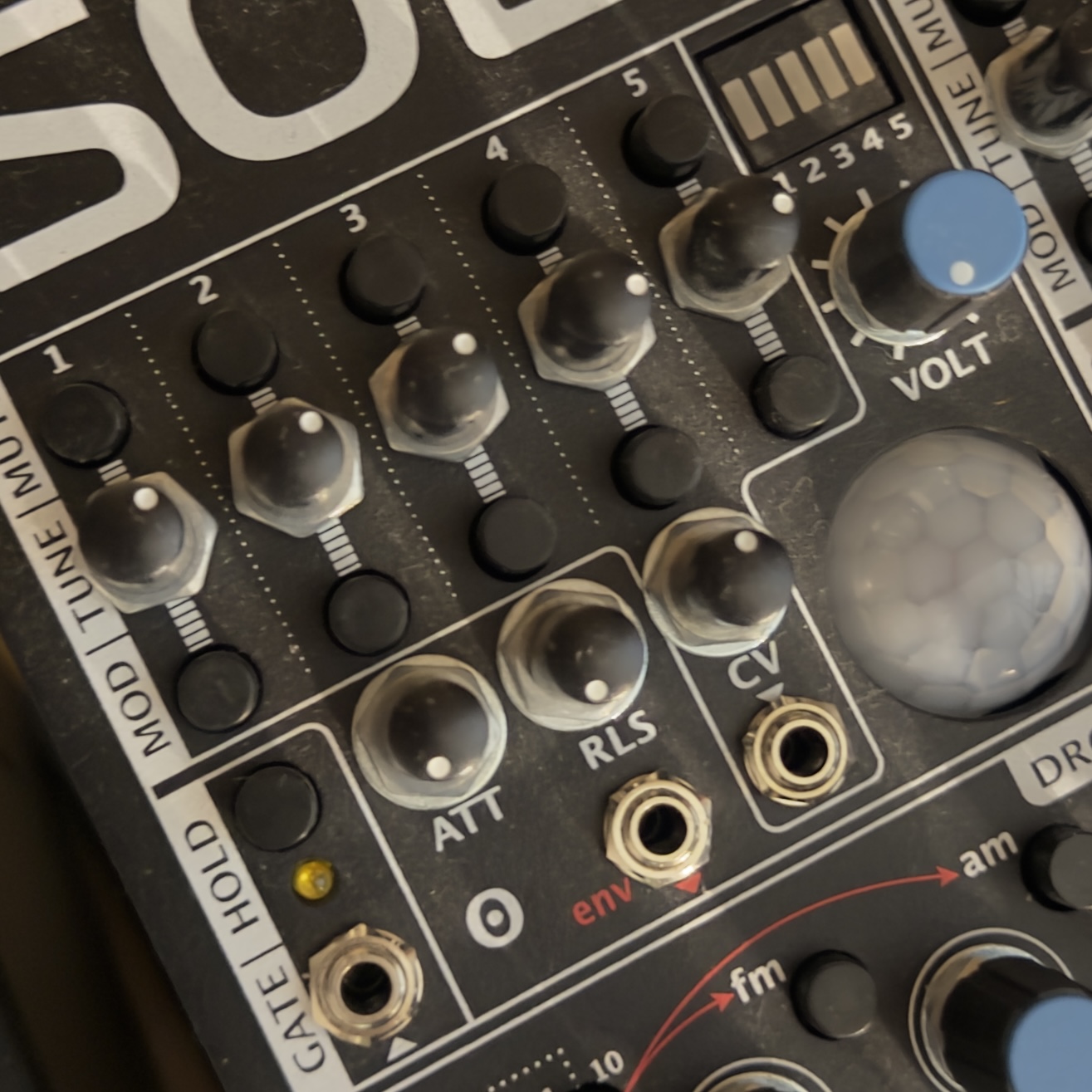
Certainly, the “keyboard” of the Solar 42. It offers a huge range of possibilities for use, and its design is unique (just like the whole synth, after all).
Solar 42
2. Do you have an ‘almost’ perfect bit of kit? What would you change?
Also in this case, I have to mention the Solar 42F. It’s a fantastic machine that can also be used — as in my case — for more experimental techno.
Solar 42
The only small flaw I would change is related to a technical detail: I noticed that the volume of the first 4 voices is slightly lower than the volume of the keyboard and the other two voices (5 and 6). I’m not sure why, but sometimes this creates small issues during live mixing.
But aside from that, it’s an incredible synth.
3. What setup do you bring on holiday or tour or commute etc.?
My setup depends completely on the kind of gig I have to play (when I’m on vacation, I don’t bring instruments with me 😉 ).
Techno setup
I divide my setup into 3 different possibilities:
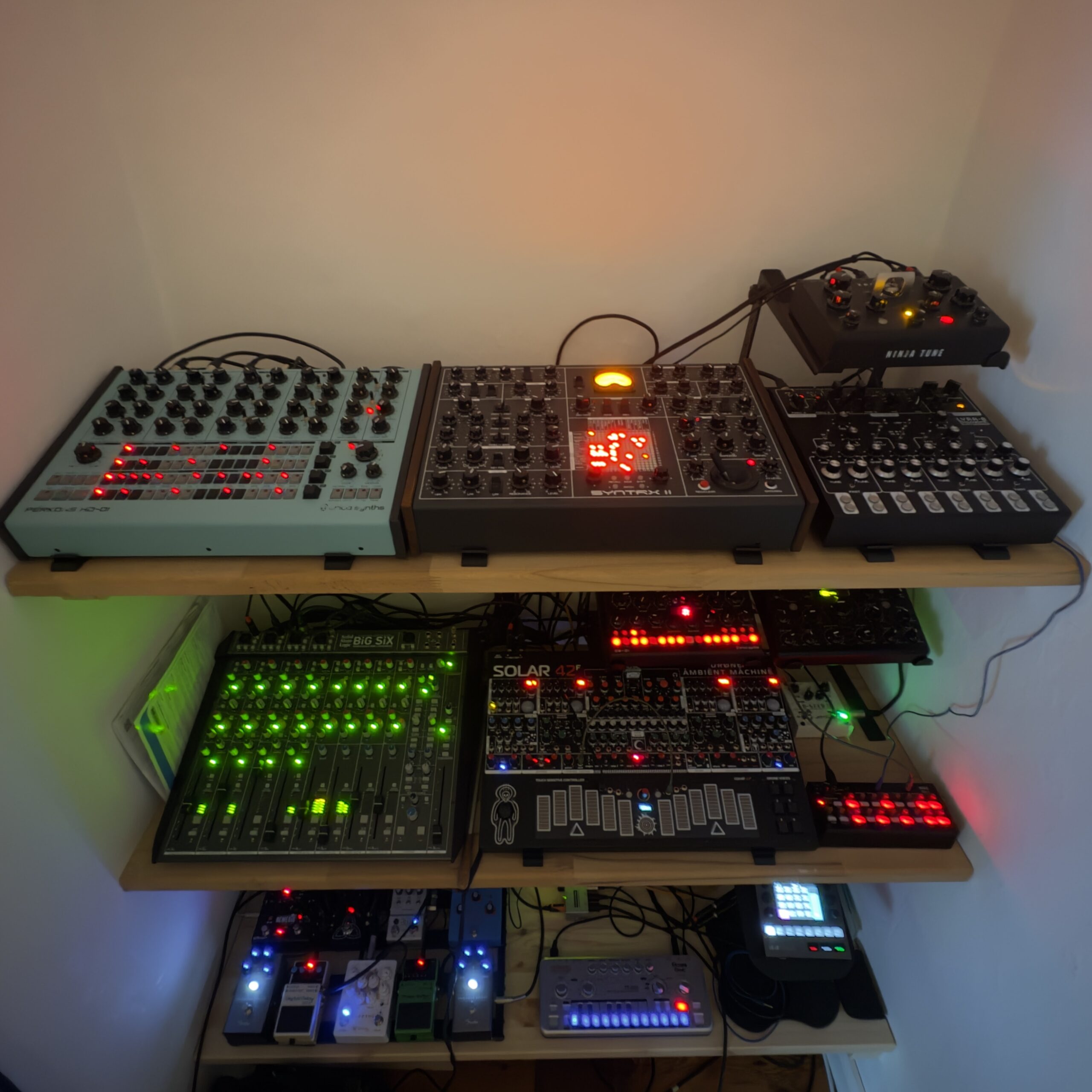
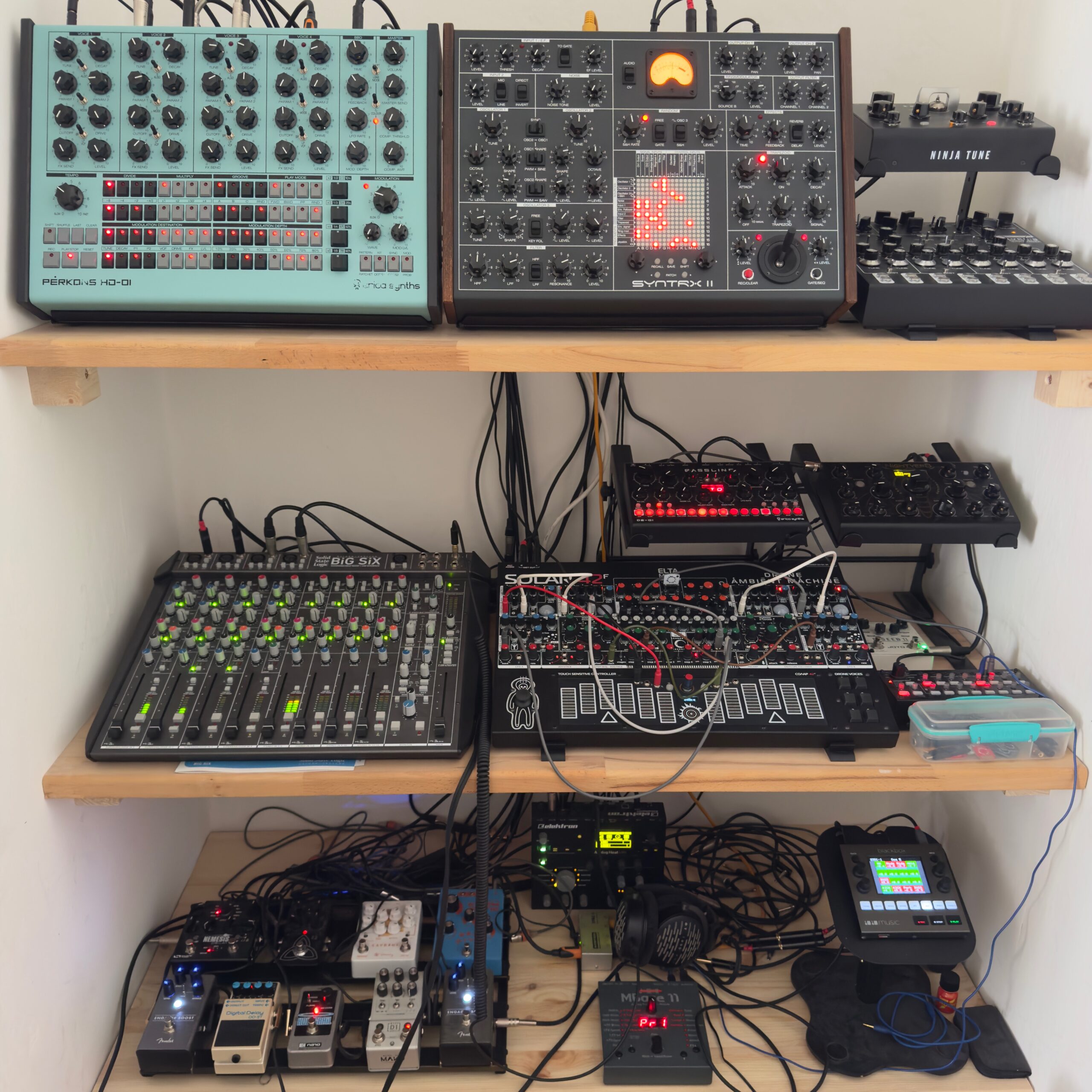
Small events — in this case I only bring the Syntrx II as the main machine for improvisation, together with the DB-01 Bassline and the Blackbox for some samples. This setup is essential when I have to travel by plane.
Medium-sized events where I can travel by train — I add the Solar 42 to the previous setup, so I have two machines for improvisation.
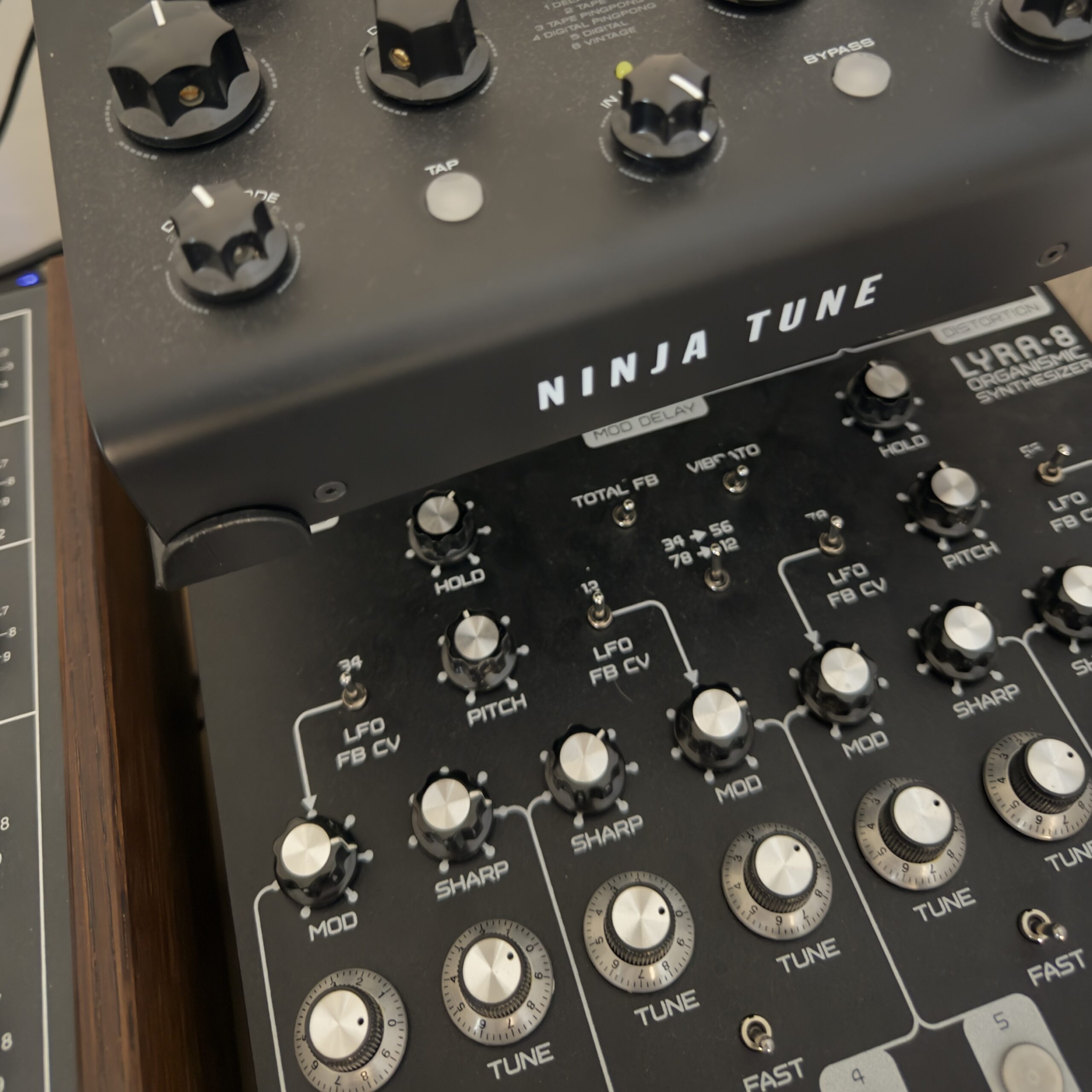
And finally, events in Berlin, like my last gig at Renate. In that case I brought almost all of my machines, including the Lyra-8, Zen Delay, and Nightverb.
4. What software do you wish was hardware and vice versa?
I don’t use software, and I’m not interested in software either. I only use Ableton Live for multitrack recordings — that’s it.
5. Is there anything you regret selling… or regret buying?
I regretted selling the DFAM, and in the past I also regretted buying the Juno-106 — although in that case, I was actually happy to sell the Juno again.
6. What gear has inspired you to produce the most music?
Syntrx II
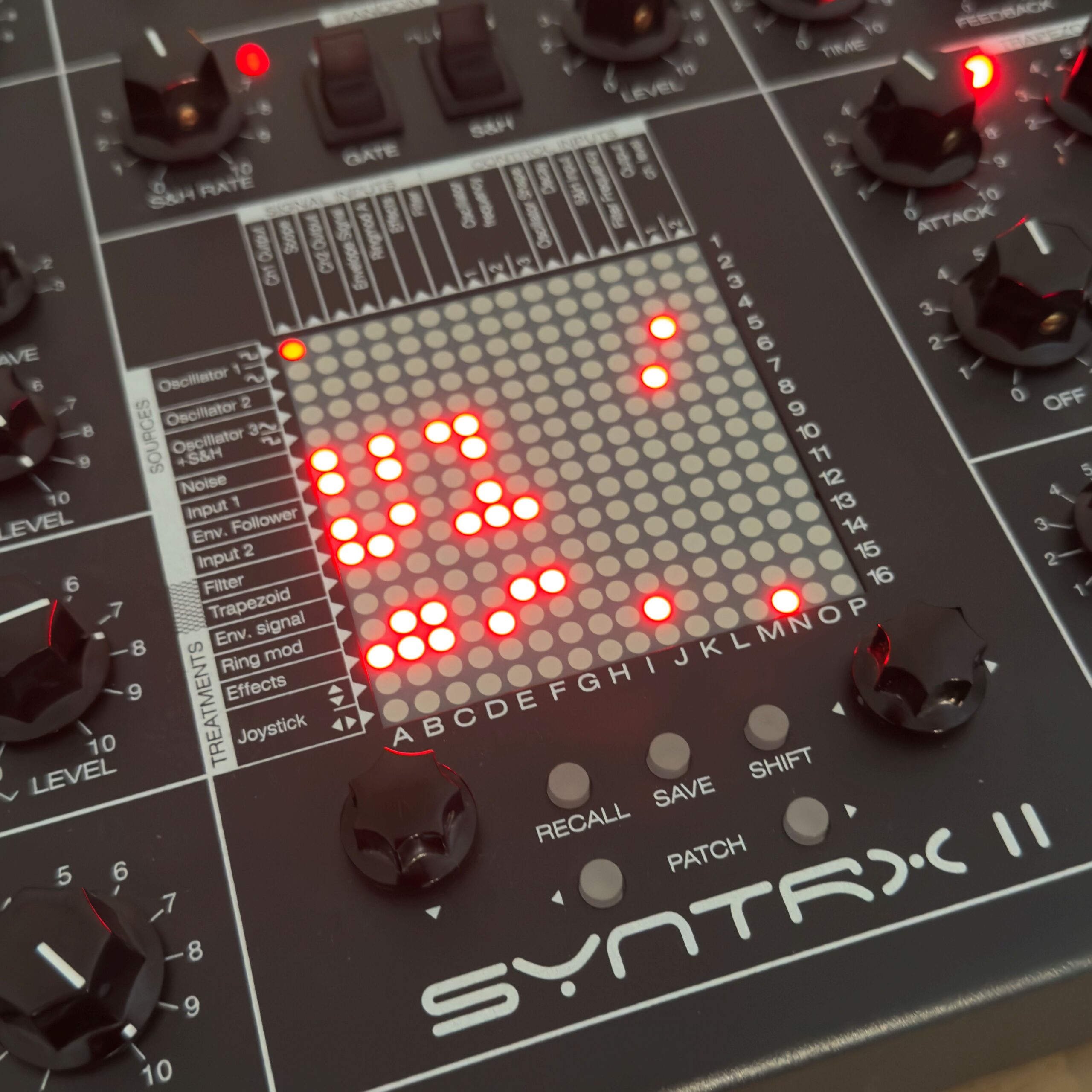
Without a doubt, the Syntrx II. It’s exactly the kind of gear that inspires me the most every single time — I switch the machine on and I never know where I’m going to end up.
As soon as I hear something I like, I immediately record it, since there’s no possibility to save anything except the patch, of course. But this “always living in the present” aspect is actually the thing I love most about it (besides the fact that it has a HUGE sound).
7. If you had to start over, what would you get first?
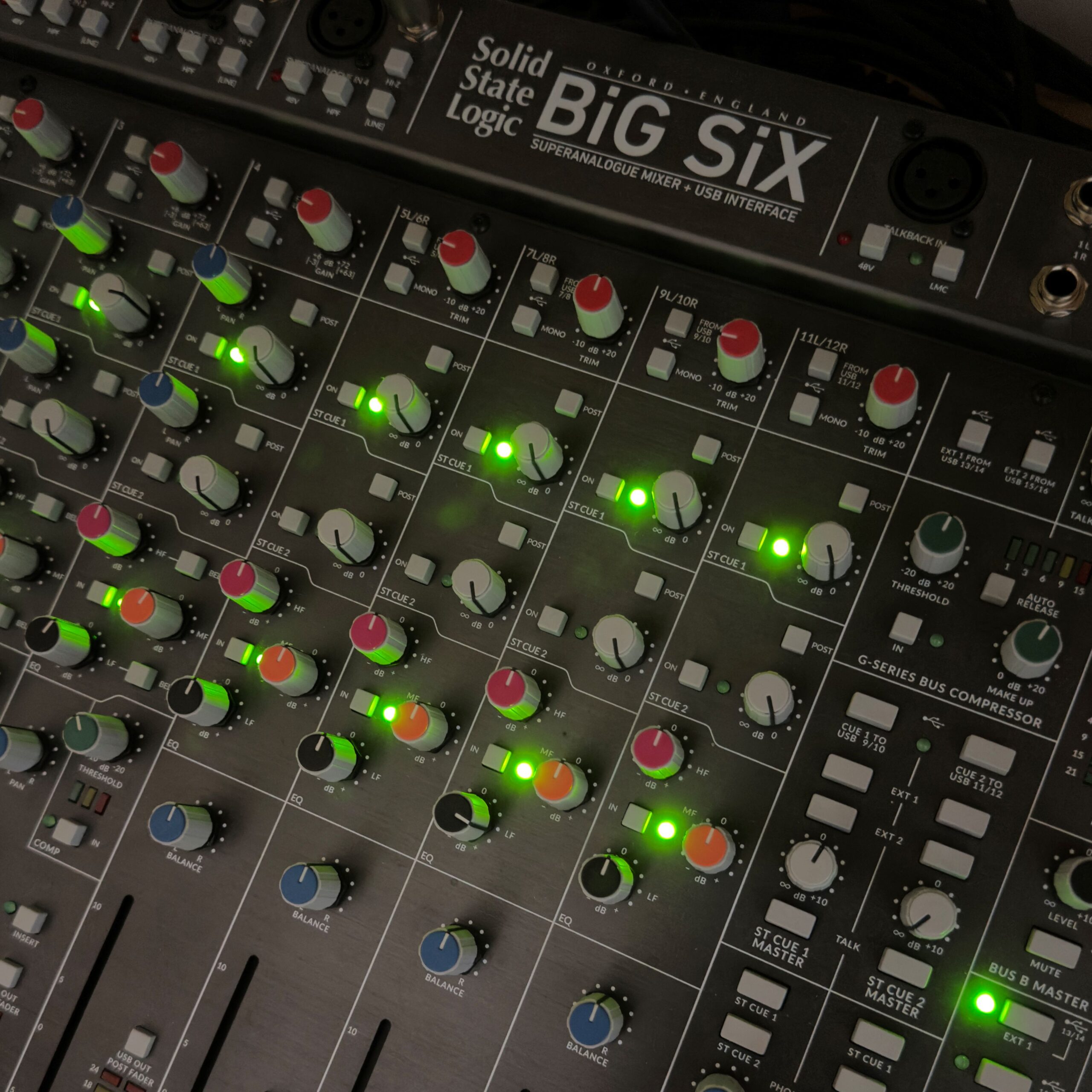
A real professional studio mixer — and the only one on the market (at an affordable price) is the Big Six. That should be the very first thing to buy.
SSL Big Six Mixer
The sound of the mixer is simply too important, and I realized that far too late.
8. What’s the most annoying piece of gear you have, that you just can’t live without?
Maybe the Lyra-8. It’s practically impossible to use it in an “ordinary” way — it’s simply a strange synth, but an amazing one. I always try to use it, even just a little, in my productions.
Lyra-8
I almost never bring it to live performances, except for special events where I’m able to bring a lot of gear with me.
9. Most surprising tip or trick or technique that you’ve discovered about a bit of kit?
I realized that, in order to achieve drumming that feels organic while still containing groove, it’s important to blend the analog sounds of a drum machine — in my case the Perkons HD-01 — with short digital percussive samples.
Maybe this only works for me, I don’t think it’s a universal rule, but for my aesthetic it feels like everything gains more organicity and groove. And those are always two elements I’m looking for in both my live performances and my productions.
Artist or Band name?
Not Operated
Genre?
(Techno)
Selfie?
Fabrizio Nocci aka. Not Operated
Where are you from?
From Italy
How did you get into music?
Music has always been my passion for as long as I can remember. But since I didn’t come from a musical family, I didn’t pick up an instrument until I was 16.
I bought an electric guitar and started playing metal in a band. Later, I studied classical music, graduated in composition from the conservatory, and then completed a Master’s degree in electroacoustic music here in Berlin at the Hanns Eisler School of Music Berlin.
Electronic music and my passion for techno came only later, here in Berlin, when I discovered club culture.
What still drives you to make music?
For me, music is the most absolute language — the most beautiful one, and the only one that never bores me. The day I no longer feel the “physical” pleasure I experience when listening to or making music, I think I’ll stop.
How do you most often start a new track?
For me, making tracks is always a LIVE experience — everything starts from playing my machines. Sometimes I begin by working on the drumming and then everything else follows, but other times I might start from a texture, a sound, or a bass line. There’s never a fixed rule.
I play, I improvise, and when I like what I’m hearing, I record it in multitrack. That’s the first phase. After that comes another equally creative phase, which is building the structure of the track, followed of course by the mixing process.
The workflow is always divided into these three stages.
How do you know when a track is finished?
When I realize that there’s nothing left to remove, then I understand that the track is finished.
Show us your current studio
Home techo studioNewest setup
Best creative advice that you’ve ever heard?
Listen back to what you’ve made many times, in different situations and on different sound systems. Never trust the excitement of a track that has just been finished.
Promote your latest thing… Go ahead, throw us a link.
I only use my IG page to promote my activities and my new productions
1. Favourite knob or fader or switch on a piece of gear and why?
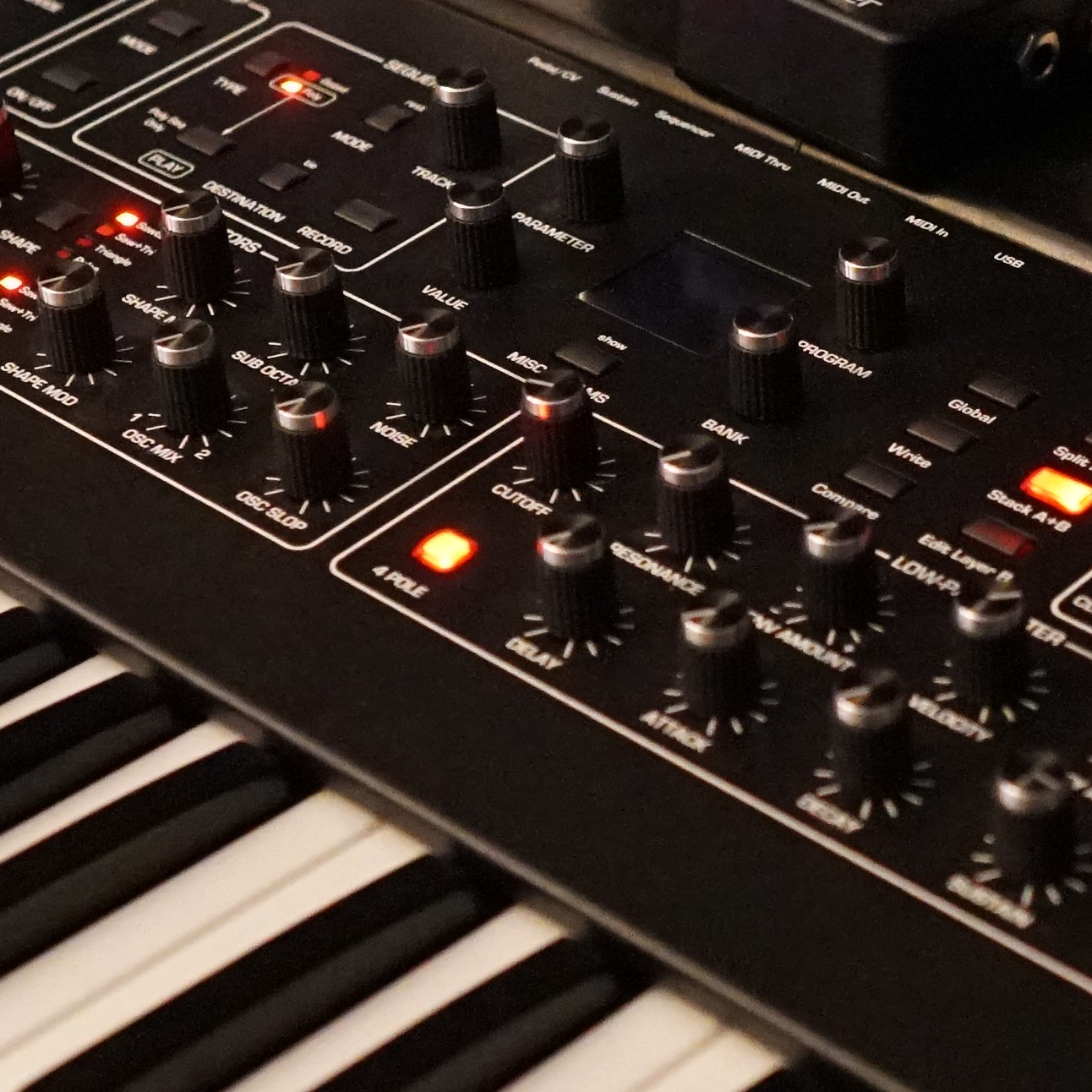
Sequential Prophet-6
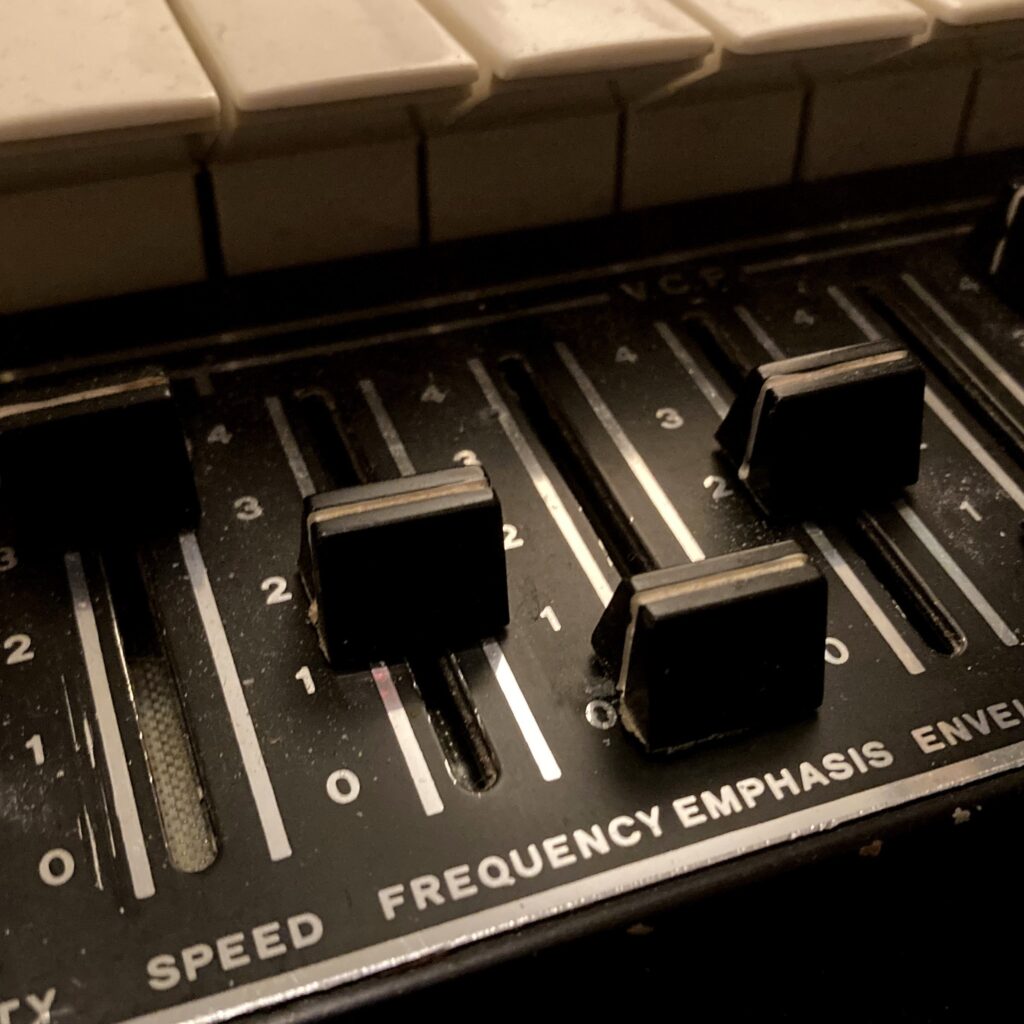
I would have to say the filter cutoff on any synth. Having spent quite a bit of my life as a musician—initially as a bass player and vocalist— but beside singing, I’ve spent the last ten years playing synths more than anything else. The filter knob is just beautiful for controlling dynamics and emotion; you can make “orgasmic emotional expressions” with just a single note if you get the movement right. I often spend more time perfecting the filter motions than the actual notes themselves. You can even see on my Prophet-6 that while the other knobs are still tight, the filter knob is super worn out from so much use. And if you wanna see me sweep some knobs I’ll be playing at Store Vega in Copenhagen on the 27. May 2027.
2. Do you have an ‘almost’ perfect bit of kit? What would you change?
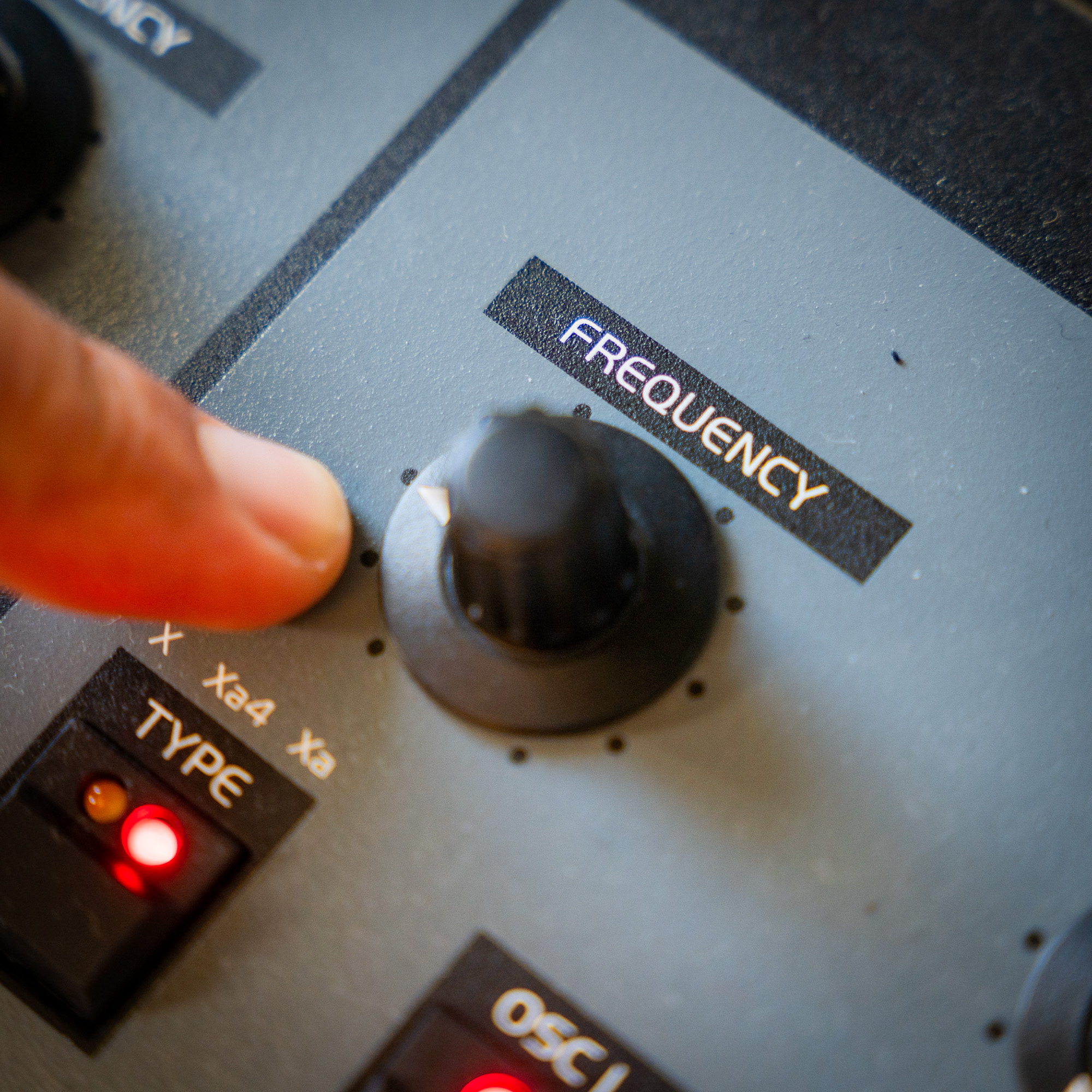
My Sequential Prophet-6 is very close to being perfect. It sounds fucking amazing, and I’ve used it for three solo albums and a lot of WhoMadeWho records. It is definitely my most beloved synth ever. However, the cutoff button is wobbly and tiny. It’s not a good knob for monkey-ing around with, especially in a live setting where it has now started to feel quite frail. If I could change one thing, I’d give it a much sturdier knob so I could really work it. Like the frequency knob on my Oberheim OB-X8. Now that’s a big, bold knob!
Oberheim OB-X8Oberheim OB-X8
3. What setup do you bring on holiday or tour or commute etc.?
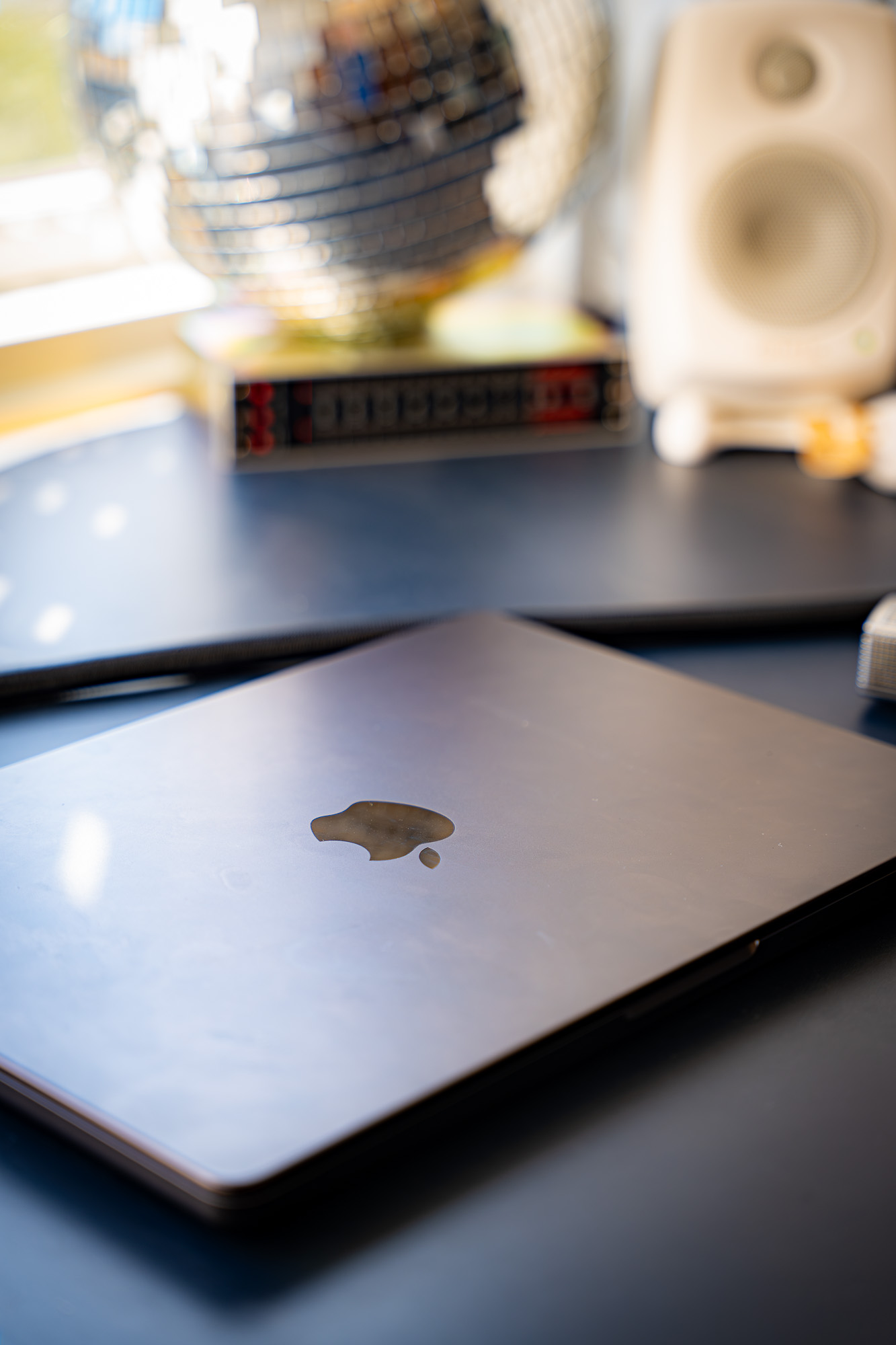
Holiday and tours are two very different things for me. On holiday, I bring nothing if possible. On tour, my MacBook is the most important thing because that’s where I produce my music. Travel gives me “slow time”—long stretches on planes or in cars where I can work in a deeper way and really get into the details.
MacBook
In the studio, I deliberately stick to a schedule of 6 to 8 hours per day, and often I have a lot to get done, so I don’t have the patience or time for slow puzzles. But on tour with a long transatlantic flight for example, I can sit for hours and puzzle over just three lines of lyrics to get them perfect.
4. What software do you wish was hardware and vice versa?
I love hardware, but I use plenty of software. I’d love for the Roland Jupiter-4 I’ve been borrowing to be software because it is so tactile and ‘clumsy-in-a-good-way’. It’s old-school, hunky, and very random compared to modern, sleek gear.
On the flip side, I rely heavily on the UAD Apollo ecosystem for its Unison preamps. The difference between their software Neve 1073 and the real thing is so small it’s basically just down to the tiny variations between units, which is a total game-changer for getting high-quality input without the hassle of vintage hardware.
UAD Apollo 8
5. Is there anything you regret selling… or regret buying?
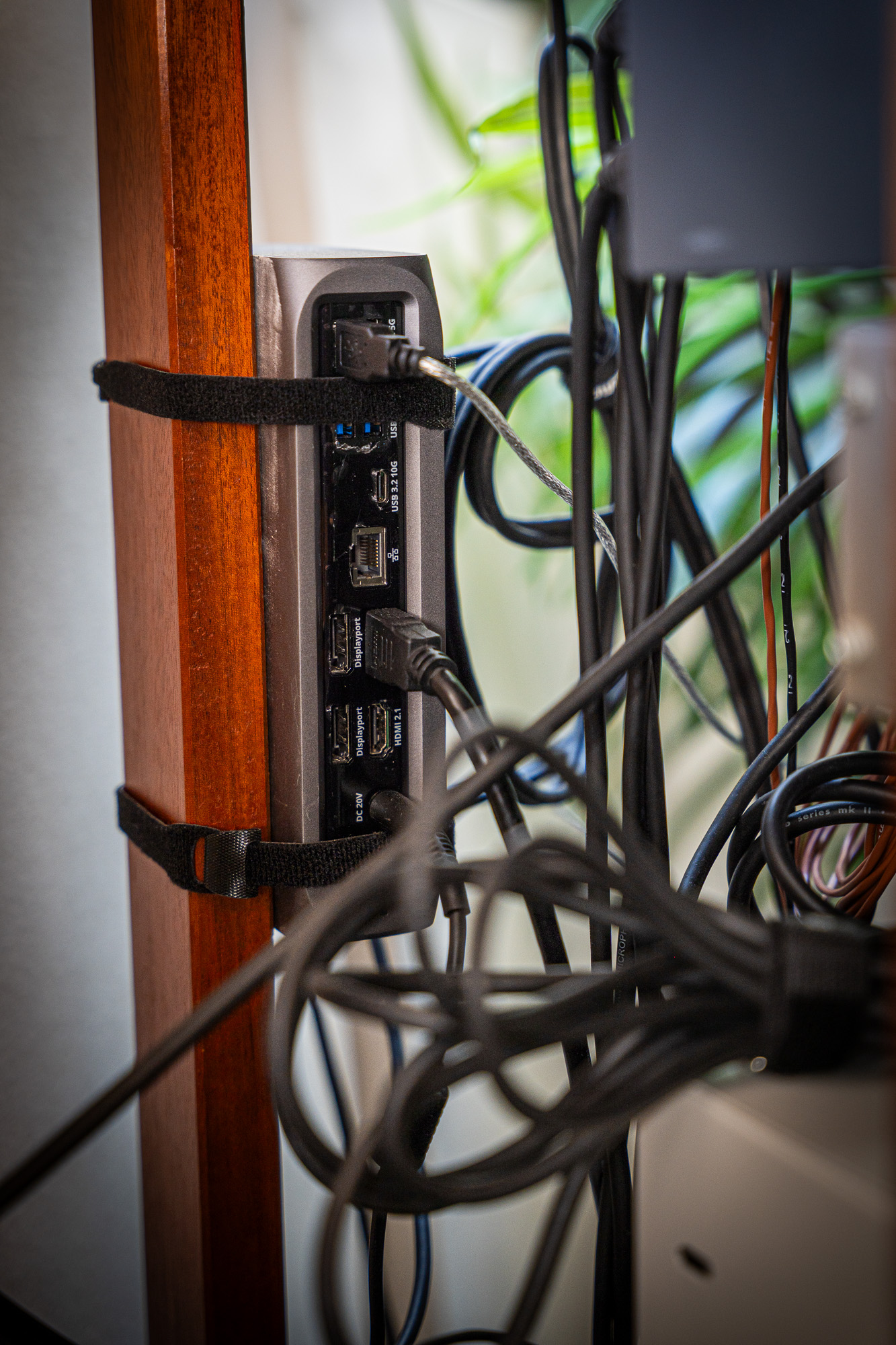
I regret selling my very first amp and electric guitar from when I was 14. It was a smallish Orange amp with that hessian front, with a spring reverb, combined with a brownish guitar by Vantage. That combo would look incredibly cool, if it were in my studio now. My biggest regret buying is a USB hub for 3000 danish kroner that was supposed to be the “best”, but it creates an annoying electrical noise that messes up my workflow. It’s a shitty piece of crap gear that I’m currently just stuck with. It is hidden away behind my outboard rack, so at least I don’t have to look at it.
USB hub for midi
6. What gear has inspired you to produce the most music?
Definitely the Prophet-6… again. It just became a central part of my sound as a solo artist. I got it right before I made my first solo album in Danish. I tried a friend’s for five minutes and immediately knew I had to get one. It feels “extra analog”—dusty, woody, and smoky. While I also have a Jupiter-4 and two Juno-60s, the Prophet is my desert island synth.
Sequential Prophet-6
7. If you had to start over, what would you get first?
Well, if I can’t keep answering “Prophet-6”! Then I’d say a computer and a good sound card, specifically from the Apollo ecosystem. Being able to plug a mic directly into the card and know you’re getting professional, high-quality audio without fighting old, noisy cables or temperamental vintage outboard, is essential for focusing on the music, rather than technical issues.
8. What’s the most annoying piece of gear you have, that you just can’t live without?
The computer and Logic DAW. It’s the backbone of everything I do, but it’s also the thing that can suck you into technical troubleshooting for an entire day instead of actually making music.
Also I would say my voice is also kind of a piece of gear that is ‘annoying’ to me, because I spend the bulk of my time in the studio singing, so I can’t live without it. But I have had 4 surgeries to fix my vocal chords, and through so much use, I have damaged my voice and I have to be very deliberate and careful with it now.
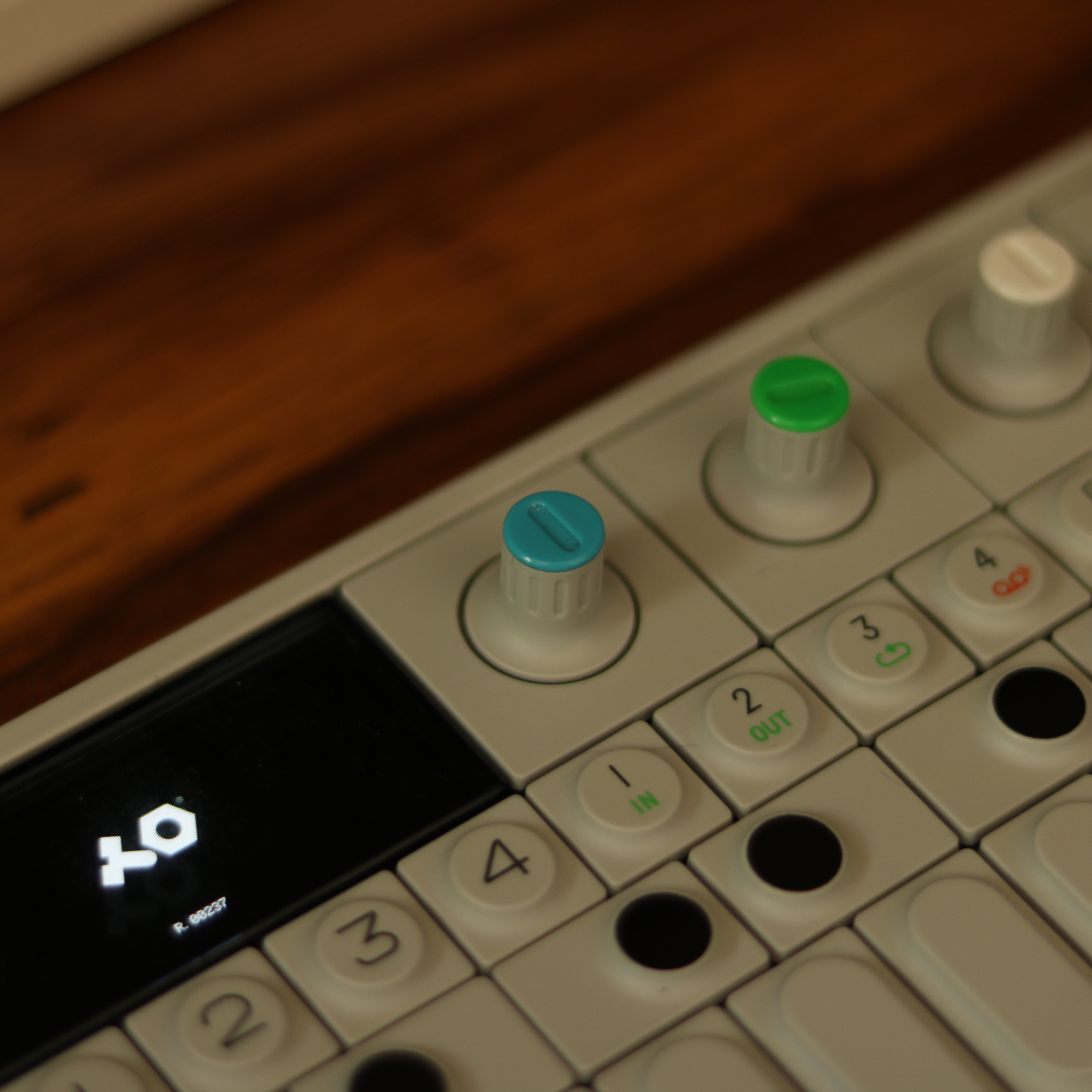
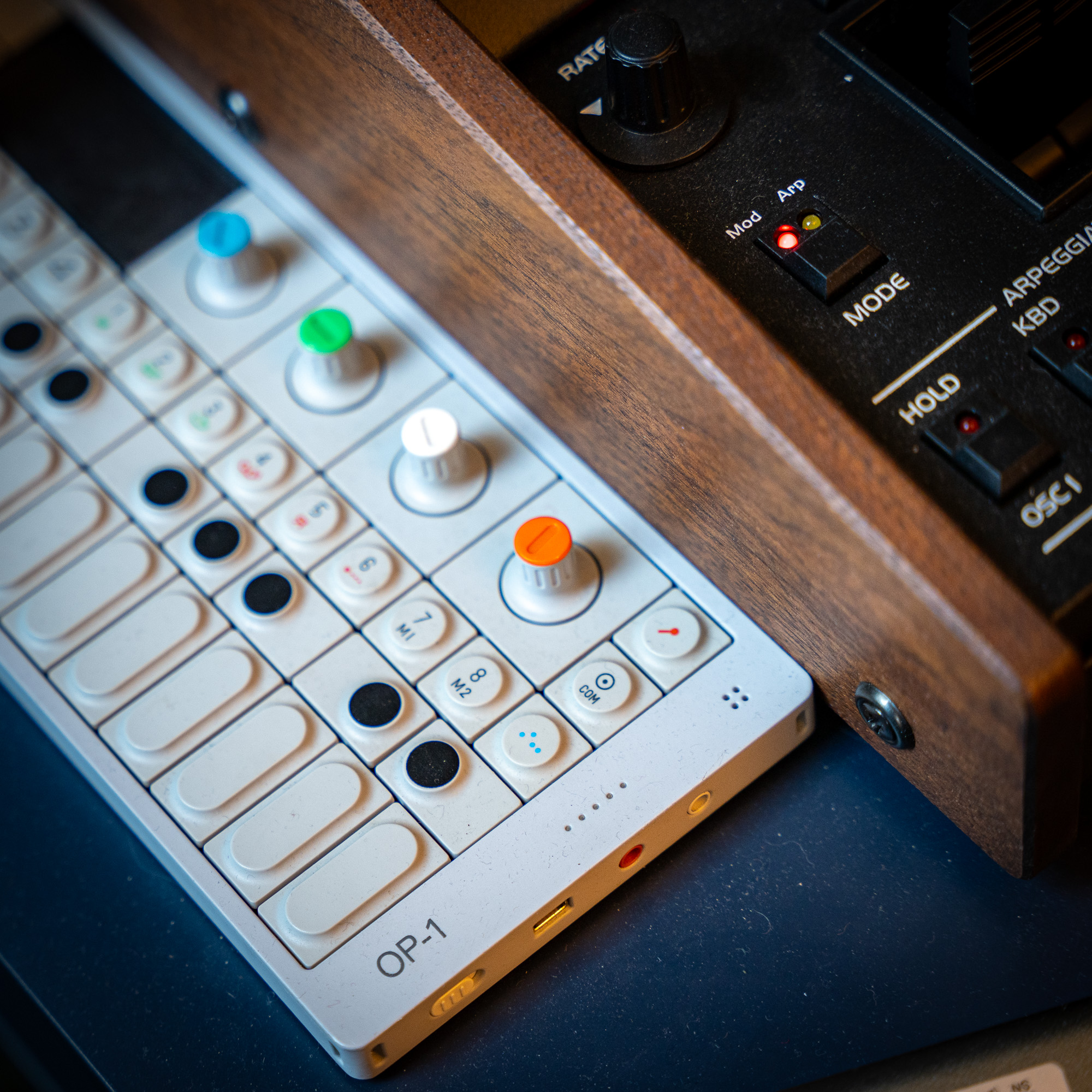
Teenage Engineering OP-1
9. Most surprising tip or trick or technique that you’ve discovered about a bit of kit?
The “Village” method of gear. I’ve been borrowing a friend’s Jupiter-4 for ten years, while he’s been borrowing my double bass for the same amount of time. Borrowing and swapping gear keeps things fresh; after 20 years with a synth, it’s nice for it to “go other places” while you try something new. It’s a beautiful way to keep the creative cycle moving through your musical community and network.
Sequential drum machine
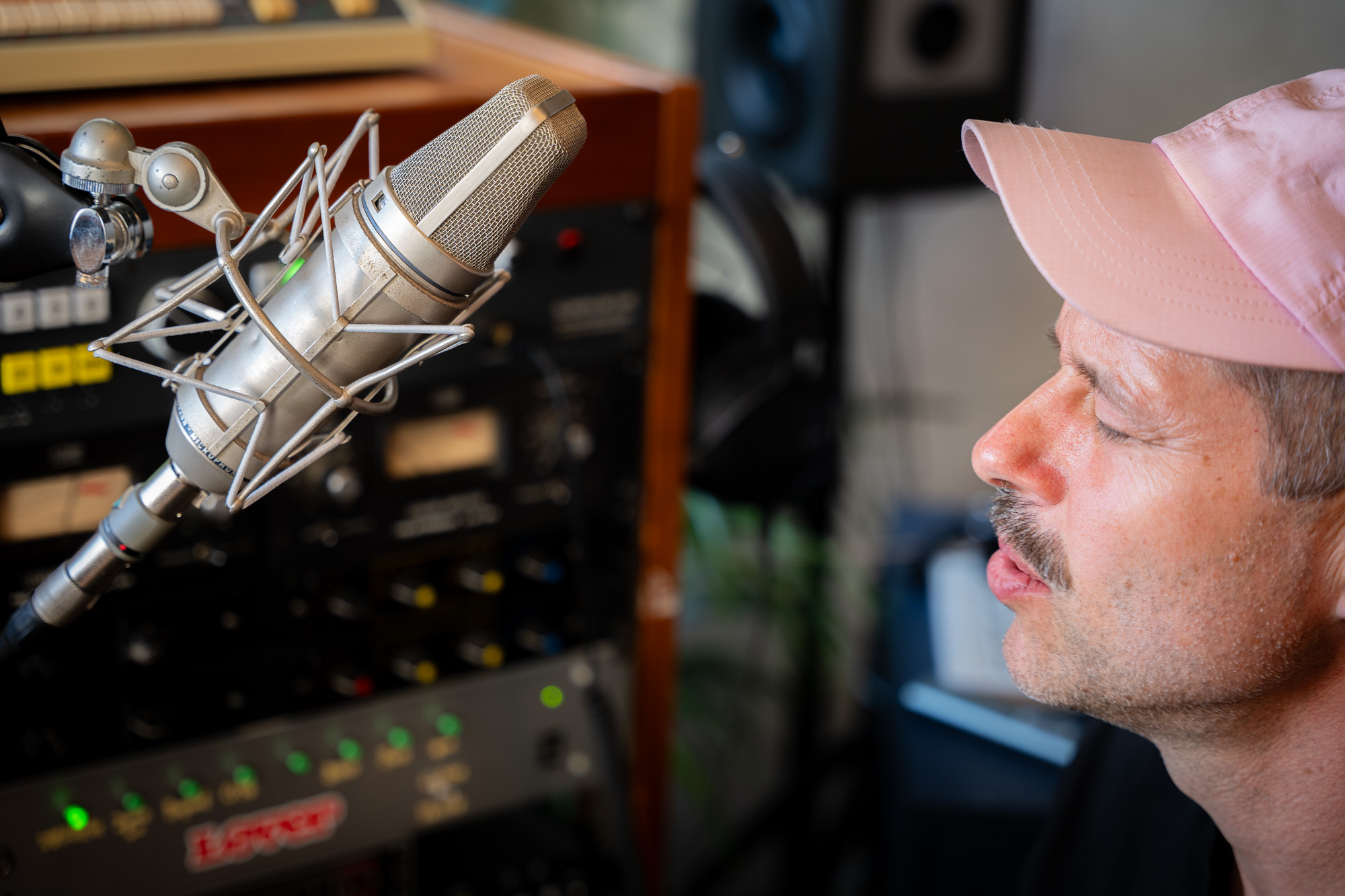
I also hate using pop filters on a microphone. So I use the old Frank Sinatra trick of angling the mic down 45 degrees above my mouth, so that the plosives and air go ‘under’ the diaphragm of the mic. Then you can really emote and get into all the feelin’ of it… Like so:
No pop filter necessary on that Neumann U87
Artist or Band name?
Tomas Høffding (solo project) and WhoMadeWho (band).
Genre?
Indie / Electronic / Alternative… Dance-able yet sad.
Selfie?
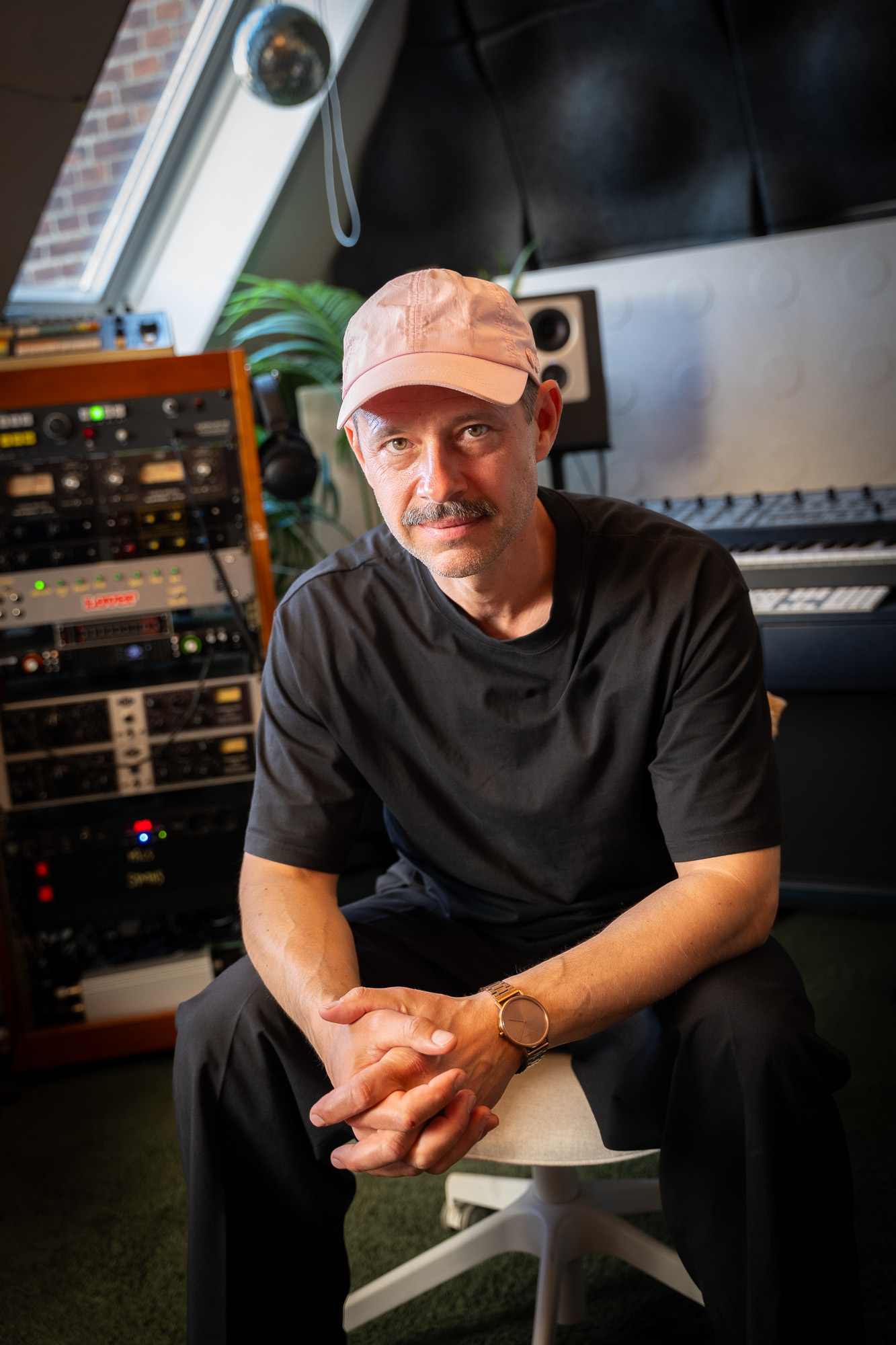
Tomas Høffding
Where are you from?
Roskilde, Denmark. In fact, when I was very young, I lived in a house under a bridge, which was a little iconic/infamous in that area. The address became the title of a song “Darupvej 109” which I wrote about that time and place.
How did you get into music?
Oh, I’ve been doing this a long while, started around age 14 when I bought my first amp and electric guitar. I eventually became a conservatory educated bass player and singer. Been in a rock band where we released 3 albums, then electronic dance-punk music with WhoMadeWho, where we’ve done 7 albums together and continue touring the club scene all over the world. Now I’m also 3 albums deep with my solo project.
Honestly I feel there was no other way for me, but to do music. It was the most natural thing for me to do, and it just kinda came easy for me.
What still drives you to make music?
The need for emotional expression and the constant drive to finish albums and songs. Balancing two full musical careers keeps me moving forward. About 7 years ago I started getting into writing songs with danish lyrics, and it has really renewed my energy, as well as motivated me, and given me a new burst of creative output.
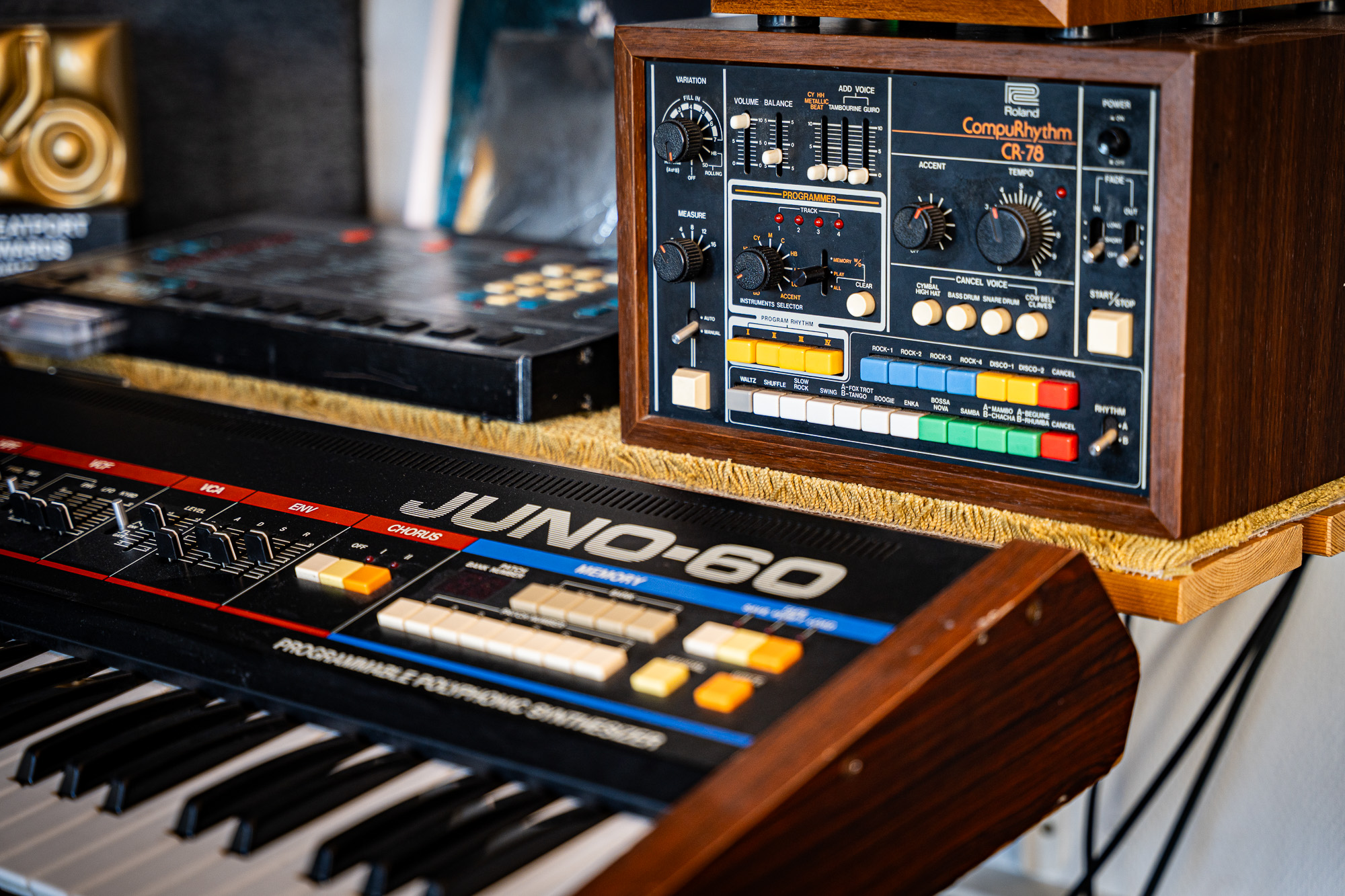
Roland Juno.60 and a CR-78Acoustic guitar – BjärtonAcoustic guitar – Bjärton
How do you most often start a new track?
There are many way into a song for me. Could be a melody or lyric, a riff, a beat, a thought or even simply a certain feeling. But I’d say that I am very process-oriented. I often focus on the physical “motions” of the gear, like the sweep of a filter, to find the right dynamic and emotional starting point.
How do you know when a track is finished?
I have a huge library of songs and ideas and I’m forever able to bounce from one thing to the next, so I’m never lacking for something to do. And I work in bursts of energy. I get super excited to build a studio or a track, but once that initial burst is over, I prefer to be finished because my patience for the “puzzle” of it ends with that first momentum. The exception to that is the ‘slow time’ on tour, and even then it’s the deadline of arrival that focusses the mind. But I know I have a work ethic that keeps me grinding away until its done… or I take the idea and go in a different direction with it, and find a use for it in a different context.
Show us your current studio
Studio
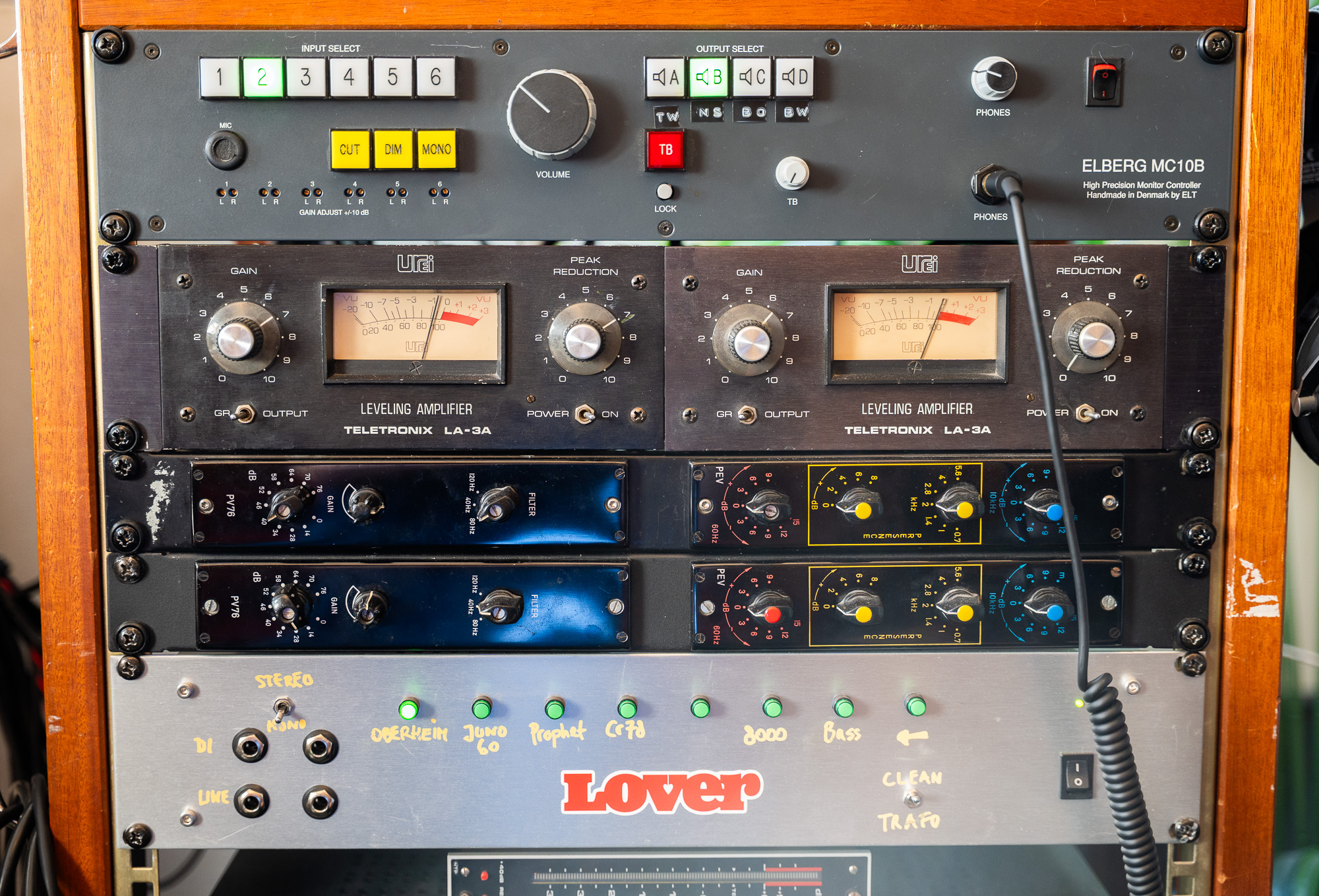
The studio features gear like the Prophet-6 and Juno-60, alongside vintage preamps like the Urei Teletronix LA-3A units that have a lot of history—some were even used on Michael Bundesen’s vocals (legendary danish singer in Shu-Bi-Dua) and Kim Daugaard bass! (another legendary musician).
I designed and built the interior of the studio myself. It is a curated selection of gear, furniture, pieces of art and acoustic regulation. And it has got 3 large windows angled upwards to the sky with great view of a surprisingly industrial part of Copenhagen. It’s a creative space, that isn’t sterile, and is setup for a good vibe. One of the best studio spaces I’ve had.
Don’t disappear into not making music. It’s easy to spend an entire day on technical problems like a faulty USB hub or A/B testing gear, but the goal is always the song.
Promote your latest thing… Go ahead, throw us a link