Wandour – Fully full

1. Favourite knob or fader or switch on a piece of gear and why?

At the moment, it is the morph knob on the NINA by Melbourne Instruments. I love being able to move between two different synth sounds with one control. I can go from a wide, spacious pad to a lead sound just by turning that knob.

NINA by Melbourne Instruments

It is useful for sound design, but it is also fun to play. Sometimes the most interesting sound is somewhere between the two settings, and I would probably never find it, if I were programming everything one parameter at a time.

2. Do you have an ‘almost’ perfect bit of kit? What would you change?

My lunchbox setup is probably the closest thing I have to an almost-perfect sound recipe. I use it on the kick and bass in all my tracks to get that punchy, saturated low end I like.
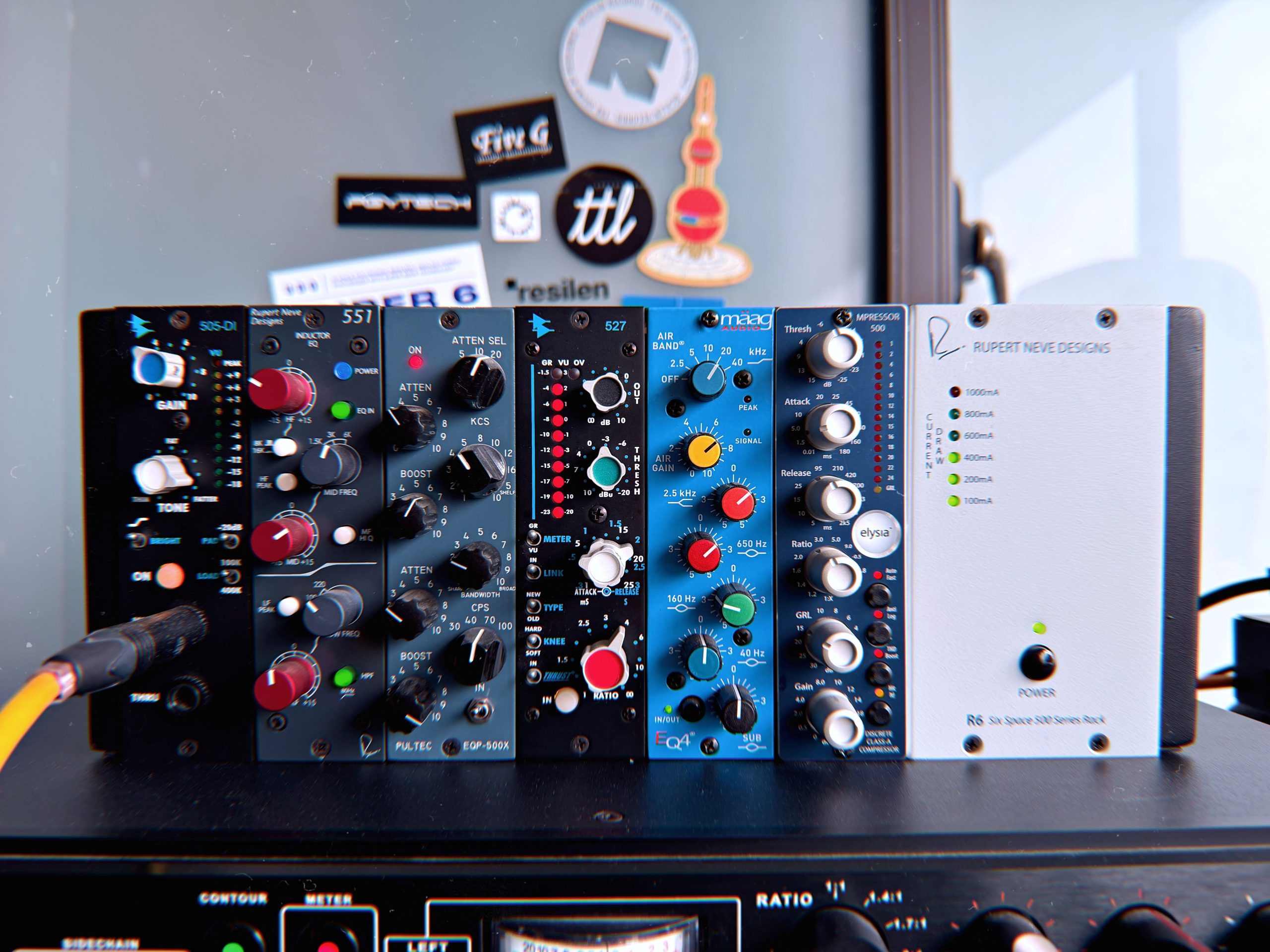
500 Rack Lunchbox

For the sound I am after at the moment, it does pretty much everything I need. I cannot point to something I urgently want to change, although that does not stop me from lusting after an original rackmount Pultec. There is always something else on the wish list.

3. What setup do you bring on holiday or tour or commute etc.?

If I am trying to travel light, I bring my standalone Push 3 and a cassette recorder. That is usually enough to capture an idea without taking half the studio with me.
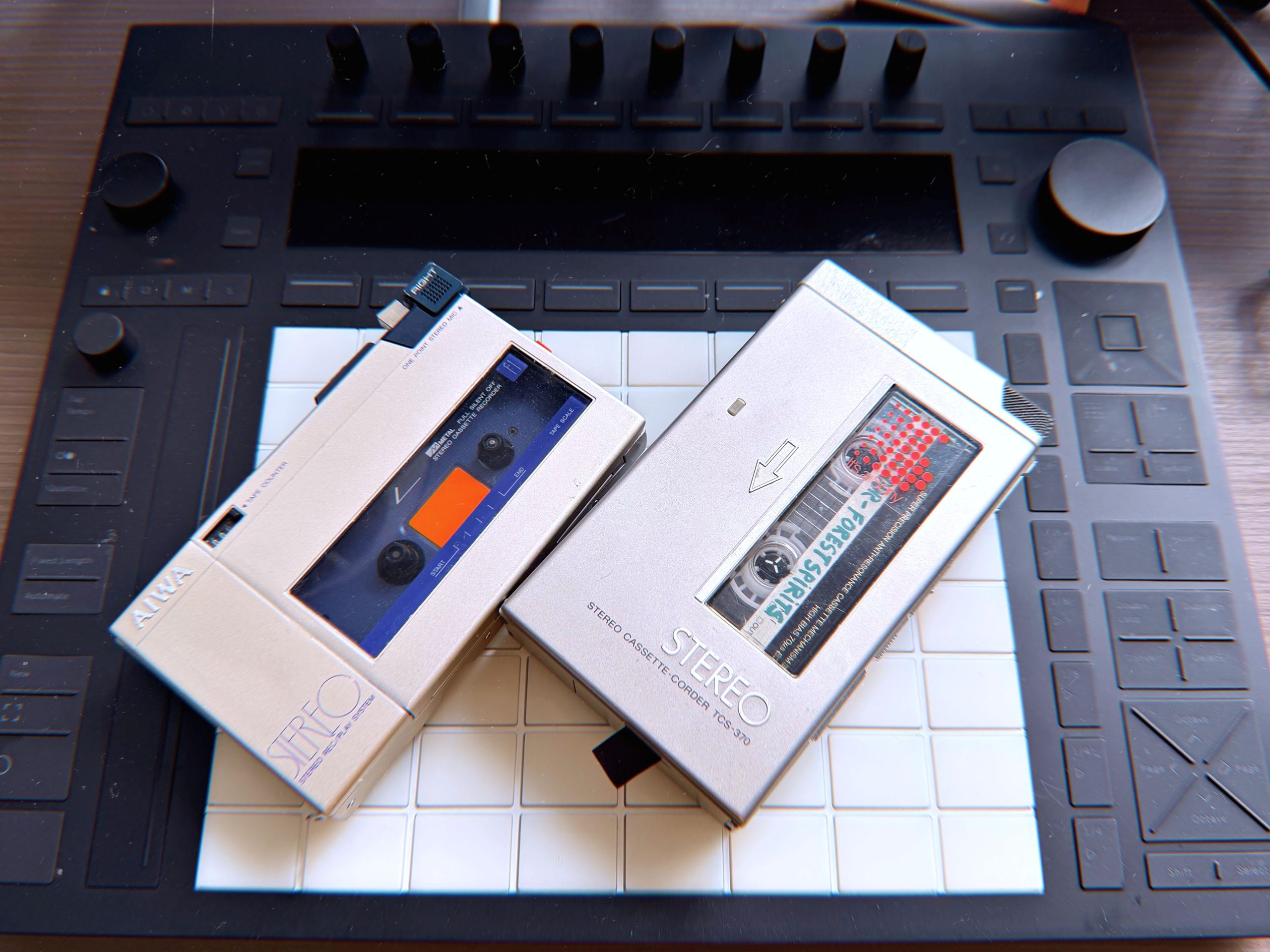
Push 3 and a cassette recorders

I record sounds that catch my attention or capture the mood of a place, then bring them into the Push and start layering, chopping and sketching. I do not necessarily try to finish anything while I am away. I just want to catch the feeling while it is still fresh and give myself something to develop later.

4. What software do you wish was hardware and vice versa?

That is a tough one because I do not use much software or many VSTs in my current workflow. Rather than turning one particular plug-in into hardware, I would wish for my ideal granular synthesizer and sampler combined in one very compact machine.
I would want something I could take anywhere, record straight into and use to turn a small sound into the beginning of a track. Basically, a little box that lets me get lost in sound without needing to open a laptop.

5. Is there anything you regret selling… or regret buying?

I regret selling my Yamaha NS-10s. I spent quite a while finding a pair in good working condition, but I was still early in my production journey and struggled to make anything sound good on them. Eventually, I sold them.
Looking back, one of my best mixes was made with their help. I think I appreciate what they were doing for me much more now than I did at the time.
As for things I regret buying, we probably should not open that conversation. There are far too many.

6. What gear has inspired you to produce the most music?
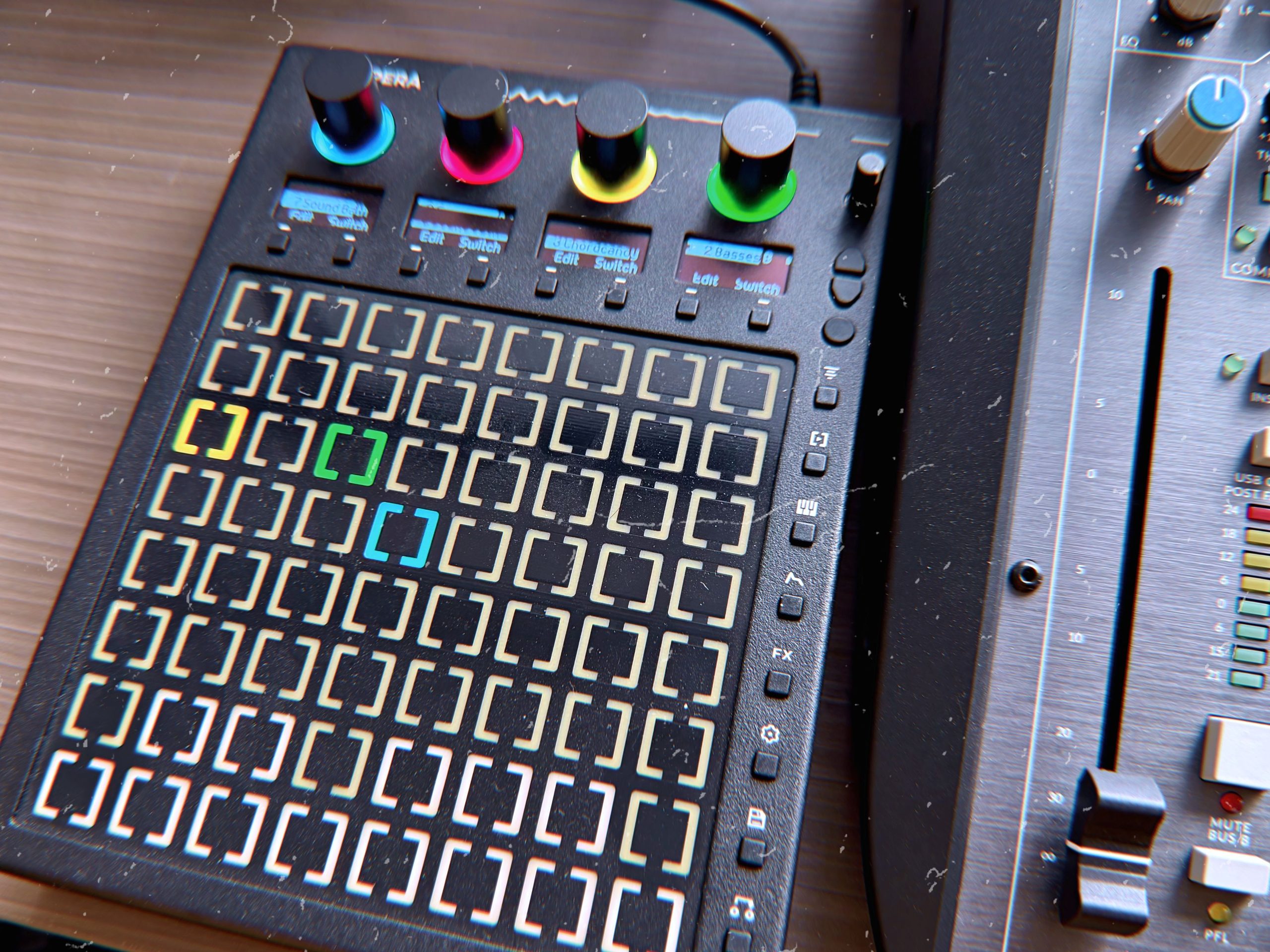
Tempera by Beetlecrab Audio

Lately, it has been the Tempera by Beetlecrab Audio. It is one of those devices that helps me find an atmosphere, before I have even decided what kind of track I am making
Once I have that initial texture or mood, it becomes much easier to hear where a melody or drum pattern might go. I like equipment that gives me a starting point rather than making me feel I need a fully formed idea before I switch it on.

7. If you had to start over, what would you get first?

I would invest in a really good audio interface, something like an RME Fireface, and the best pair of Audeze headphones I could afford.
I would put more money into being able to hear what I am doing before buying lots of instruments and processors. Knowing what I know now, I think that would have saved me a lot of time, money and second-guessing.

8. What’s the most annoying piece of gear you have, that you just
can’t live without?

Patchbays! I suspect quite a few people with hardware-heavy studios will understand that answer.
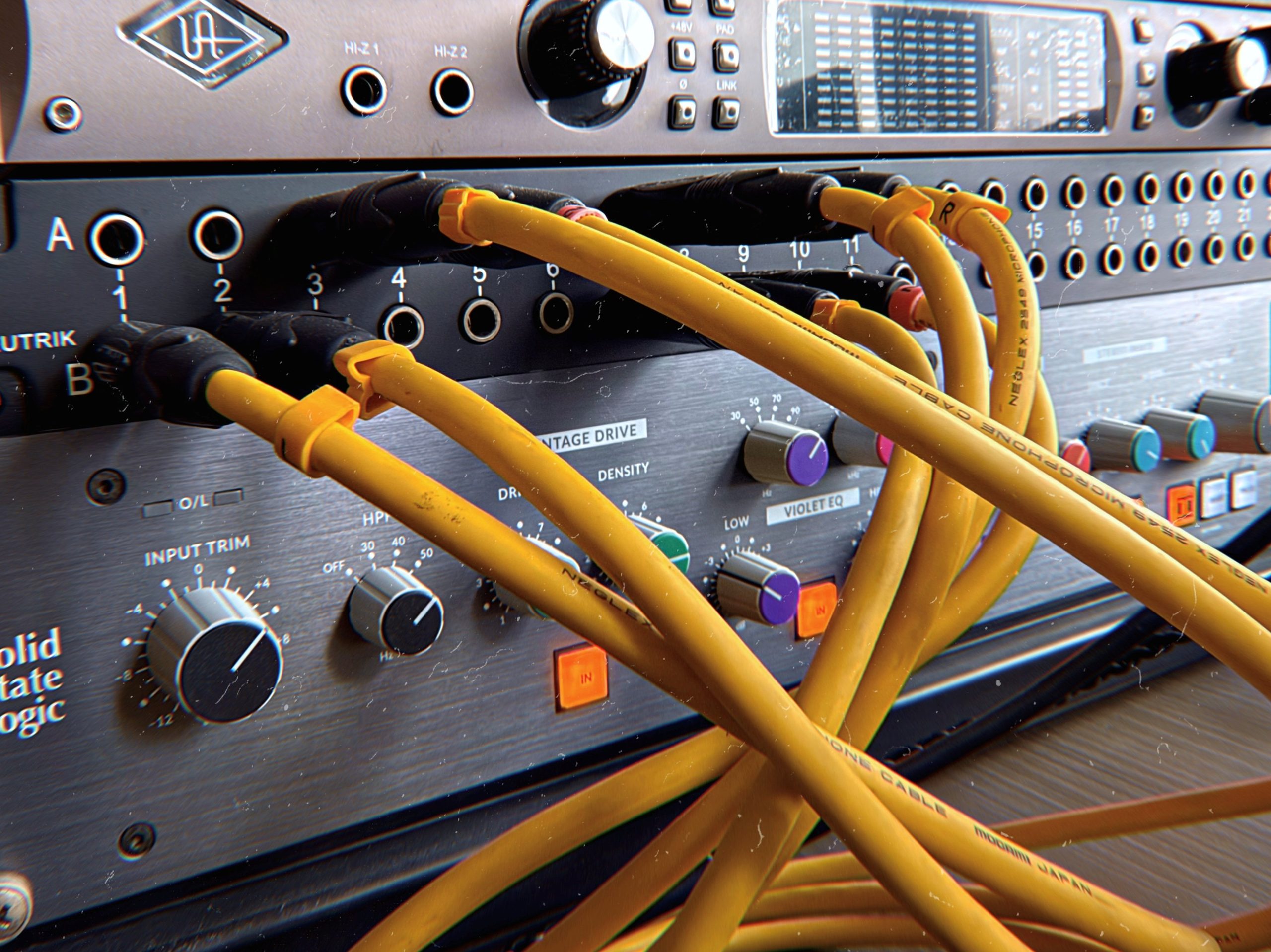
Patchbays

I love the flexibility they give me, but keeping track of the routing and working out why something is not coming through can test my patience. They make life easier right up until the moment they make it more complicated.
I have been curious about the newer computer-controlled patchbay systems, but I have not had a chance to try one yet. For now, I am still doing it the hands-on way.

9. Most surprising tip or trick or technique that you’ve discovered
about a bit of kit?

One of my favourite little discoveries came from experimenting with kicks on cassette.
Some of my older Sony cassette machines have a speed control, so I record a kick fairly hot to tape and then slow it down slightly on playback.
I like the combination of that lower, stretched-out sound and the saturation from the recording. I then layer it underneath the original kick rather than replacing it entirely. The original keeps the attack, while the tape version adds weight and a rougher texture.
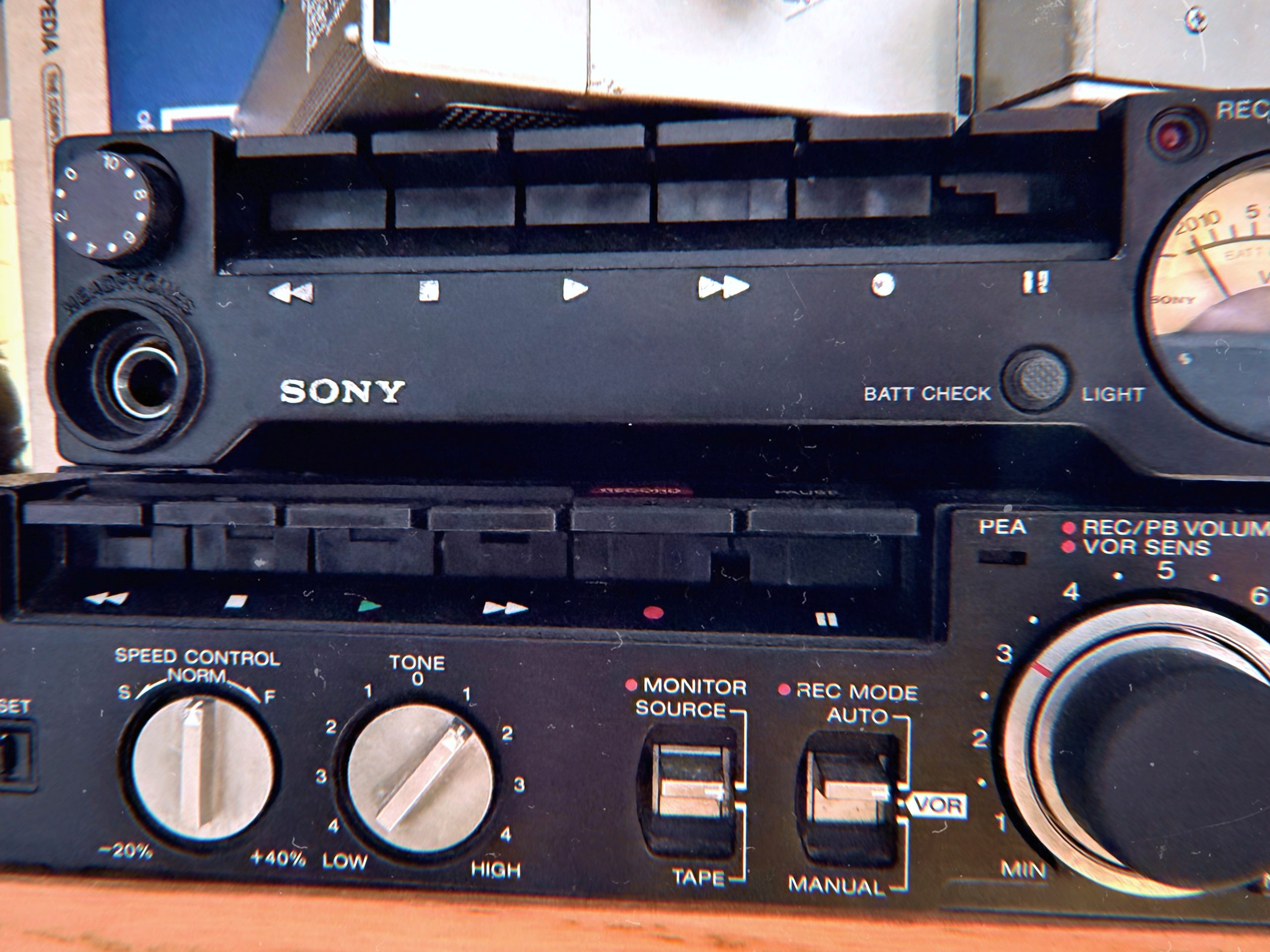
Sony cassette machines with speed control

In my own experiments, I have particularly liked the results from older Type I and Type II cassettes. Different tapes and machines give me different results, so part of the fun is finding the combination that works for that particular kick.


Artist or Band name

Wandour

Genre

Ambient, Downtempo, Breakbeat, Melodic Techno

Selfie?
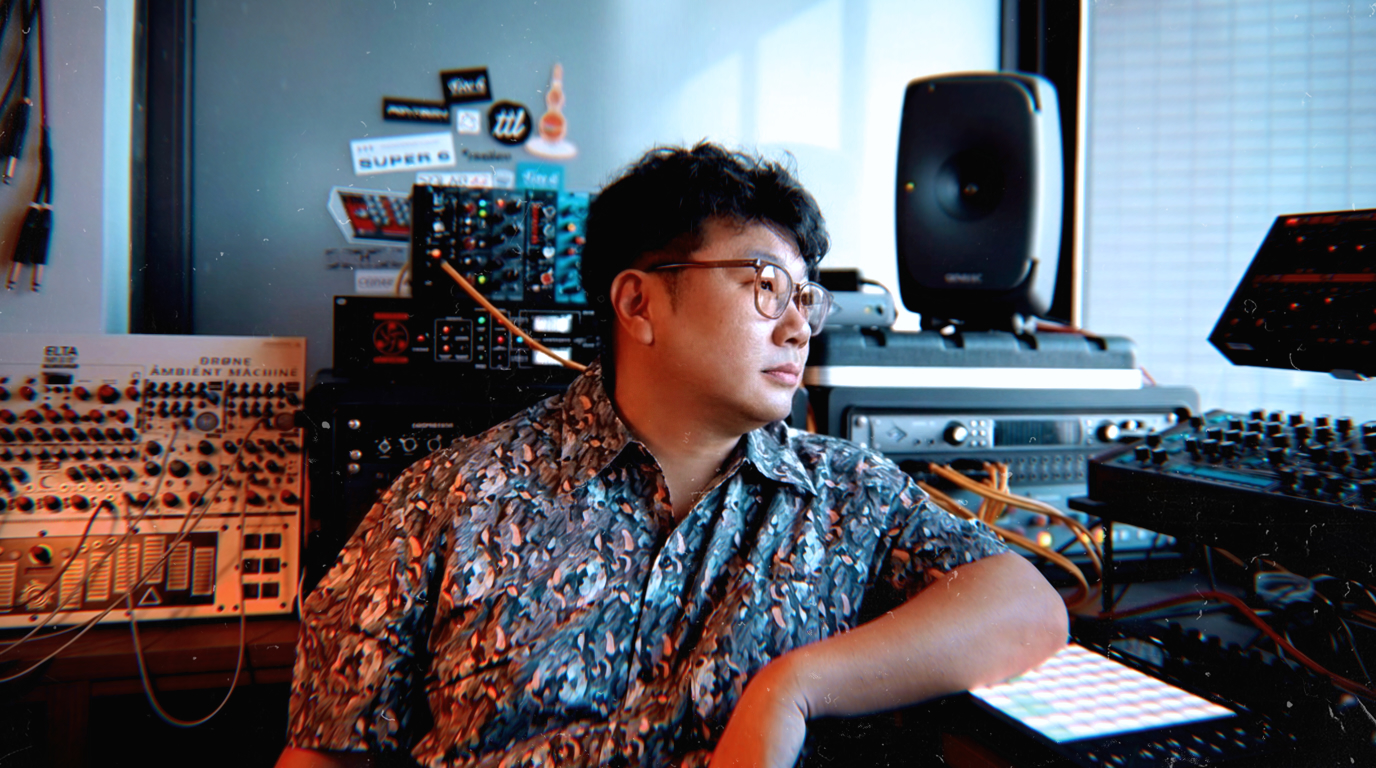
Wandour

Where are you from?

Jakarta, Indonesia

How did you get into music?

I used to work in advertising as a producer, putting together the visual and audio elements behind the scenes. Initially, I was more focused on the visual side, but gradually I became increasingly interested in what the music was doing.

I started learning to make soundtracks to accompany the visuals rather than only choosing existing music. From there, I became curious about what would happen if the music did not have to serve an advert or fit someone else’s brief. That eventually led me to making full tracks of my own.

What still drives you to make music?

For me, making music is a way to step away from everyday life. Some people find that escape through travelling or going out. I find it by sitting down with sounds and building a world I can spend some time in.
I hope the music can offer something similar to other people. It does not have to take them to the same place it takes me. If it gives someone a little breathing room or lets them disappear into their own thoughts for a while, that means a lot.

How do you most often start a new track?

I usually start with a field recording that captures the feeling I want to explore. It gives me somewhere to begin, rather than staring at an empty project and trying to invent an atmosphere from nothing.
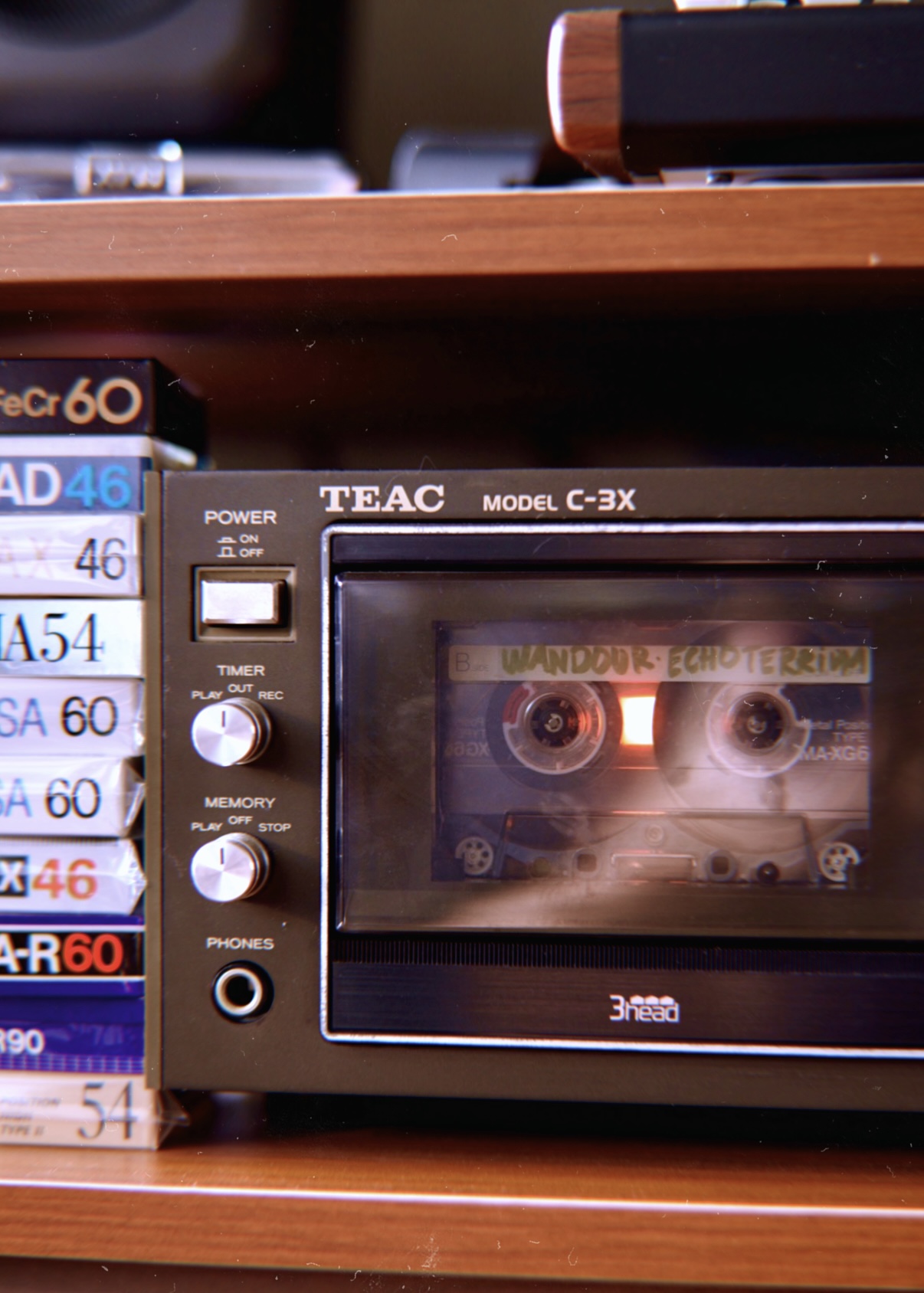
Teac Tape

Then I might add a synth drone or a few layers of texture and listen to what feels right against it. Once that little environment starts to make sense, I build the rest of the track around it.

How do you know when a track is finished?

When I stop listening for mistakes and start enjoying the music. There is usually a point where I realise I have listened to the whole track without reaching for a control or making a mental list of changes. That is a good sign I should leave it alone. Otherwise, I can keep adjusting things long after I have stopped making them better.

Show us your current studio
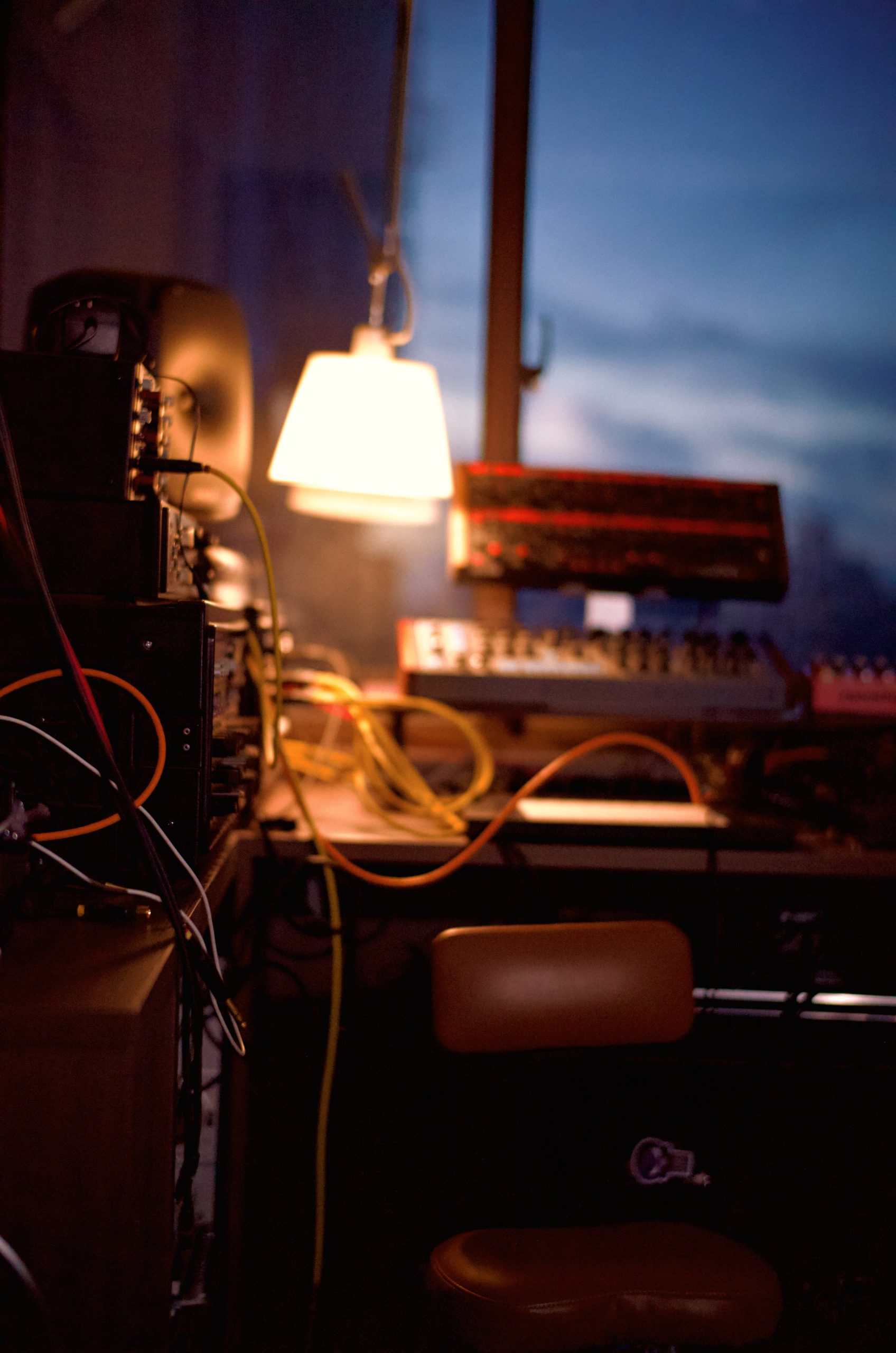
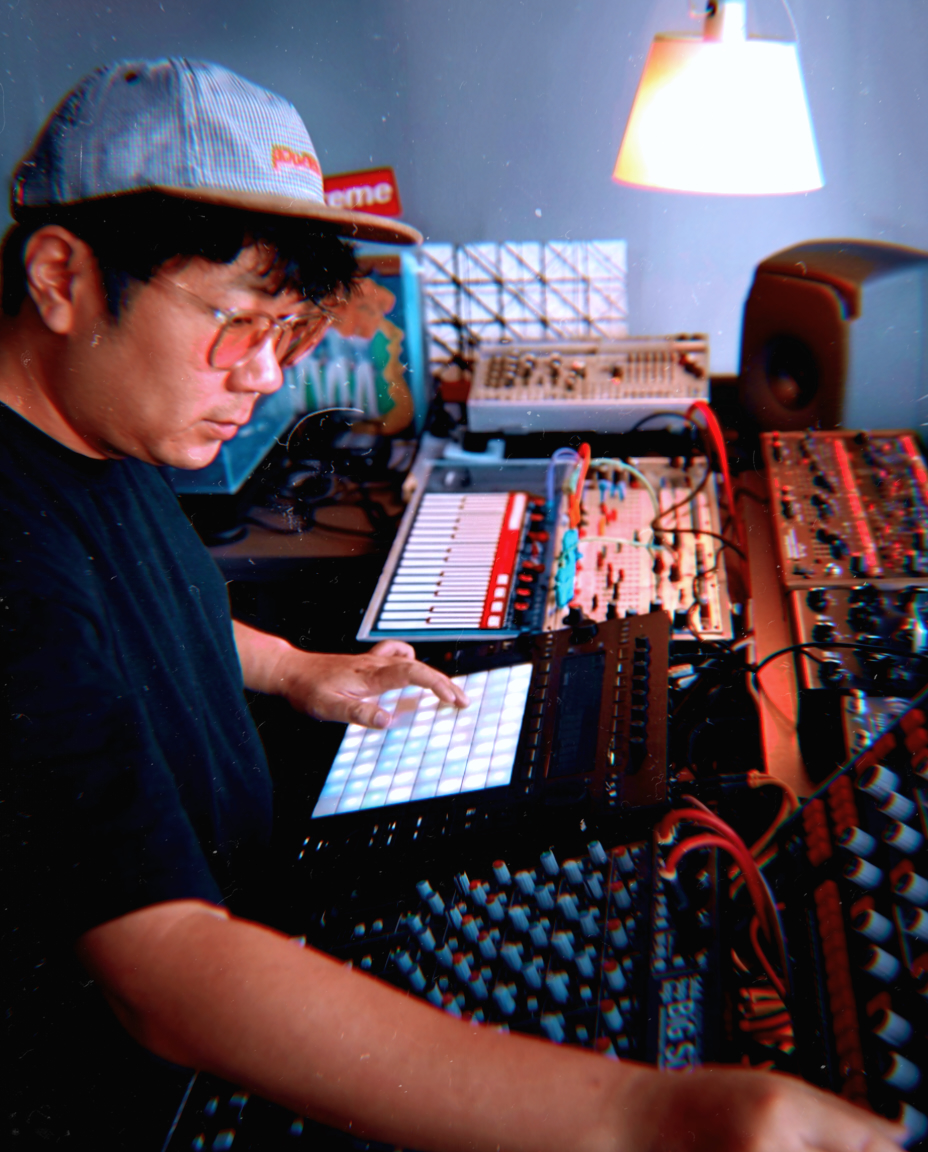
Wandour Studio
Wandour at the Push 3

Best creative advice

“KISS: Keep it simple, stupid.” It is something I try to apply to everything I do. For me, it means knowing what you want to make and keeping your decisions focused on that goal.

It is easy to get distracted by what else you could add, especially when you have a room full of equipment and endless ways to process a sound. In music, I try to ask myself whether another layer or another effect is actually helping the track say what I want it to say.

Sometimes a field recording and a simple melody already carry the feeling perfectly. Adding more might make the production more complicated without making the music more meaningful.
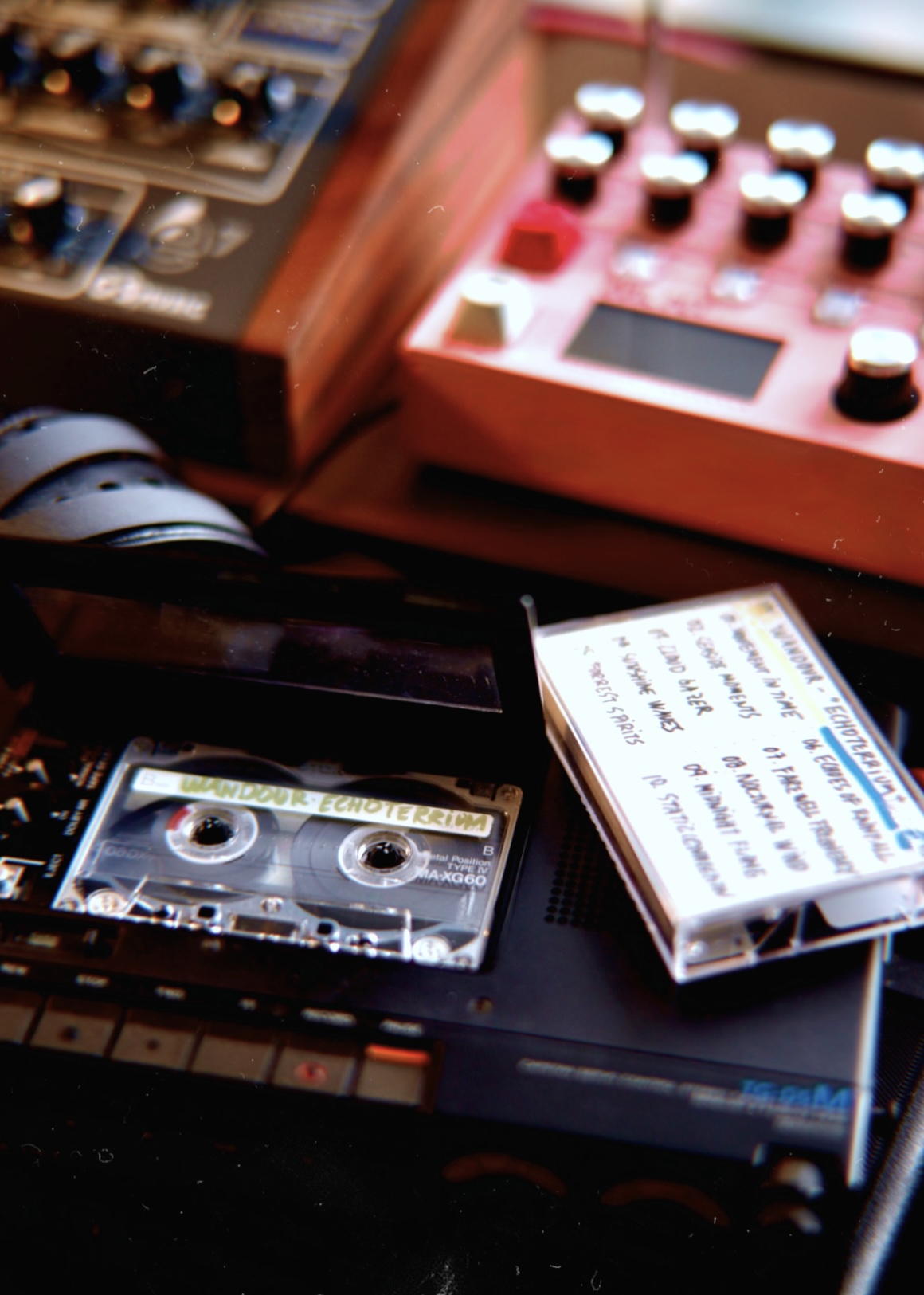
More tapes

I do not think keeping things simple means avoiding detail or ambition. It means knowing what matters and not getting in its way. Once something achieves what I wanted it to, I try to recognise that and stop, rather than keep adding things just because I can.

Promote your latest thing… Go ahead, throw us a link.

My new album, Echoterrium, drops on 28 October through Resilen Records. It is a ten- track journey through ambient textures, downtempo grooves, breakbeats and live strings, built around field recordings I collected while travelling and sounds processed through vintage cassette equipment.
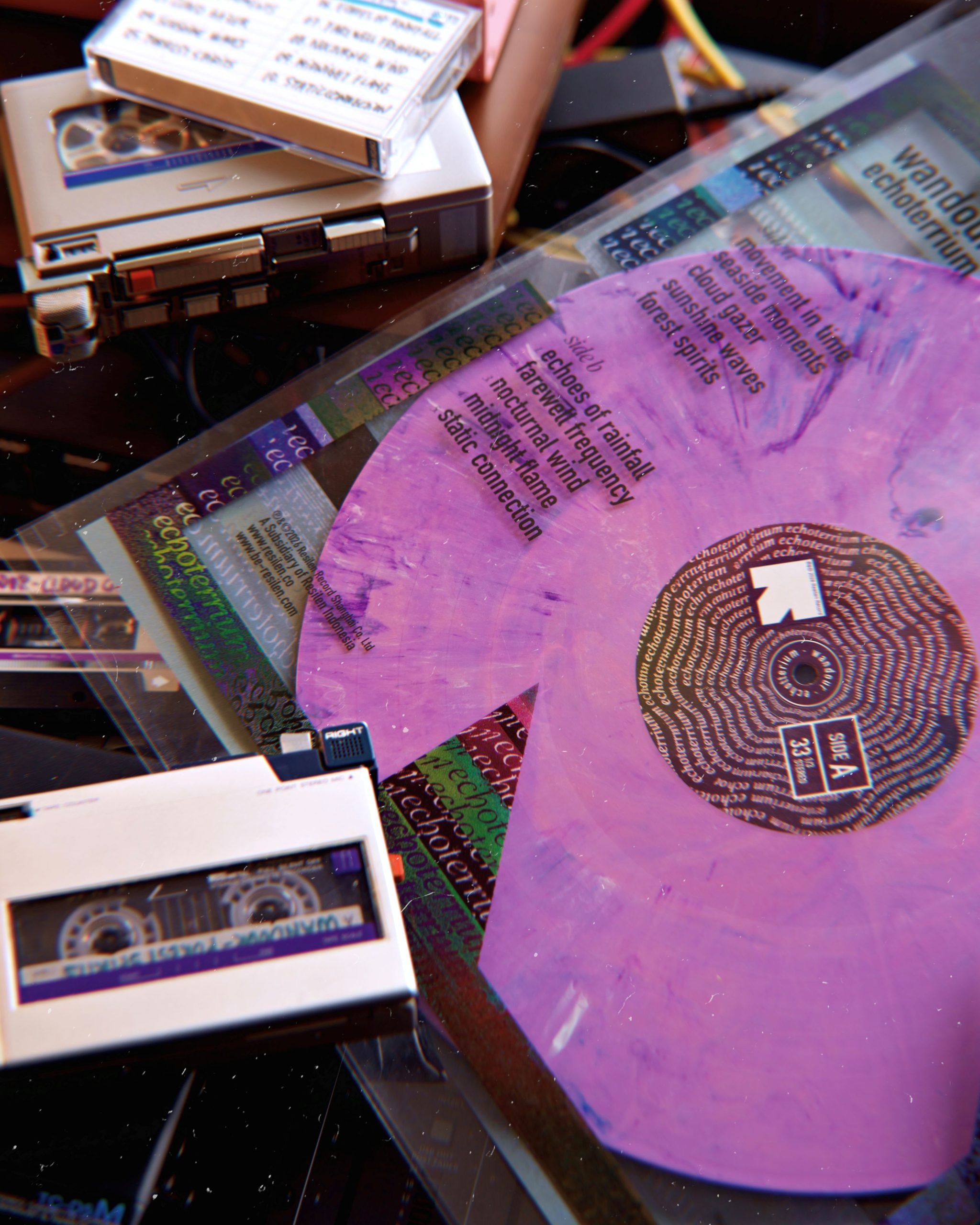
Echoterrium LP

The idea is that a familiar sound can unexpectedly bring back a place, a person or a moment you thought you had forgotten. These tracks started with my own experiences, but I hope listeners can find their own memories inside them.
If that sounds like your kind of escape, I would love for you to give it a listen.

You can also support the release by buying the album on Bandcamp, including the limited-edition 180-gram vinyl, with just 200 copies available in the first pressing.

For more of the sounds, places and stories behind the music, come and find me on Instagram and YouTube.

Instagram: @lets.wandour

YouTube: @Wandour

Buy the album on Bandcamp: https://wandour.bandcamp.com/album/echoterrium


MLEsynth – Snakestyle

1. Favourite knob, fader, switch, on a piece of gear and why?

Doepfer A-103 filter

I have to say the cutoff frequency on the Doepfer A-103 filter. It captures something of the spirit and concept of the Roland TB-303 without being a clone, and within that it has its own character which I like very much.

2. Do you have an ‘almost’ perfect bit of kit? What would you change?

I love my Doepfer A-100. I would say that it’s almost perfect, or as perfect as it can be. It has a clear and practical design which I appreciate. What would I change? There’s always a battle for space in the rack, and I’m always having ideas about how I want to expand it with additional modules, but that goes with the territory. I’m going to have to think about a new case soon.

Doepfer A-100

3. What setup do you bring on holiday or tour or commute, etc.?

If ever I am on any kind of holiday I take my laptop with me, so I can work on composing, arranging, and processing beats. When I’ve played live I’ve kept it simple with a laptop, the Alesis Multimix 8 USB mixer, and a synth for live tweaking, like the Doepfer, or the Roland JP-8080 when I owned one.

Alesis Multimix 8 USB mixer

4. What software do you wish was hardware and vice versa?

It would be amazing to see Reaktor in hardware form, but to be able to zoom in and out like you can in the software, you’d need to be able to bend the laws of physics. I can’t think of any hardware that I’d like to see as software though. The amount of software plugin versions of different classic synths available now is amazing.

Native Instruments Reaktor

5. Is there anything you regret selling… or regret buying?

I borrowed a Roland SH-101 back in 1995, and I briefly owned one in 1997 before having to sell it several months later. It was the first analogue synth that I managed to get my hands on, and I learned so much from using it, putting the theory into practice, etc. I love its clear visual structure. I tend to do a lot of research into equipment before I buy it, so I don’t really have any regrets. That said though, maybe I would not have bought the Roland JP-8000 and waited for the JP-8080 rack version to come out.

Roland SH-101

6. What gear has inspired you to produce the most music?

Getting into analogue modular gear changed the way I approach producing music. I started off with modules that would give me a decent monosynth for synth leads, but as I have expanded, my approach has also widened. Sometimes a single experimental sound you discover can give a new tune its own unique character. You can think more widely about what sort of sound you want to build and test out ideas.

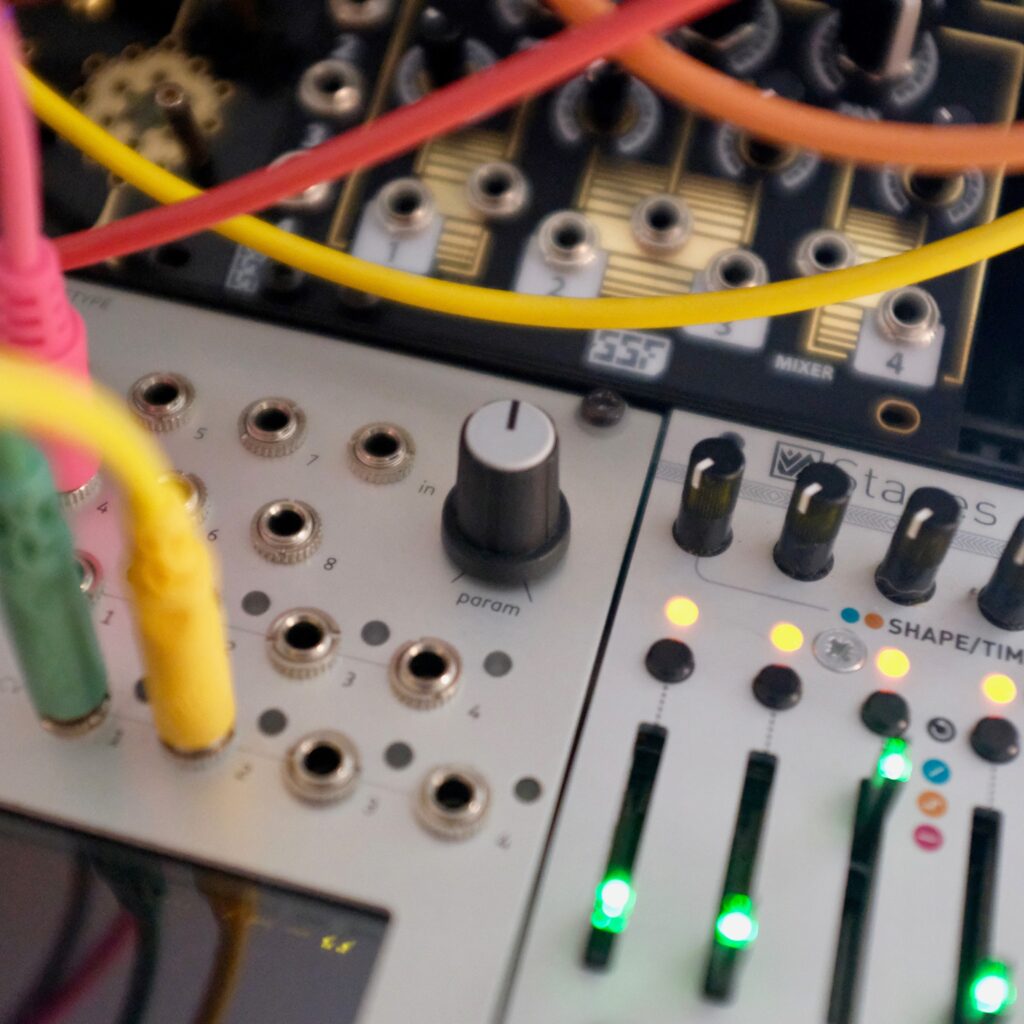
Eurorack modular Behringer

7. If you had to start over, what would you get first?

My first piece of gear was the Roland MC-303. It was a very good starting point. From that I got to familiarise myself with the Roland style of user interface. Sometimes I think I should have started out with a laptop with software for sequencing instead, but then I would not have gained the experience I did with the MC-303.

Roland MC-303

8. What’s the most annoying piece of gear you have, that you just can’t live without?

My laptop can be frustrating at times when it takes longer than expected to start up, especially when I have an idea in my head that I want to get down as quickly as possible.

9. Most surprising tip or trick or technique that you’ve discovered about a bit of kit?

Having four programmable input velocities on the MC-303 made me think about velocity levels, and by extension dynamics. From that I started to think about proportion and balance in everything from velocity and level in the mix to stereo panning, and I began to think of every element as relative to everything else in proportion and balance.

Roland MC-303

Artist or band name?

Snakestyle

Genre?

Electronica, ambient, chillout, downtempo, IDM, psychill, with melodic progressive textures.

Selfie?

Matthew Leigh Embleton aka. Snakestyle

Where are you from?

I’ve lived in and around South East London for most of my life.

How did you get into music?

When I was around 7 years old, I was given my first keyboard, and a vinyl copy of Oxgene by Jean Michel Jarre. It all started from there. I saw additional artwork and photos from the album with Jean Michel Jarre surrounded by all his analogue synthesisers and equipment, and I thought “I want to do that”. Electronic music seemed to offer a world of creative imagination that had not been previously possible, it looked like a world I wanted to be a part of.

First keyboard Yamaha PSS-133

What still drives you to make music?

It’s part of who I am and what I do. I still have things that I want to say with music, atmospheres I want to create, and sounds I want to experiment with, and to develop my sound ever further.

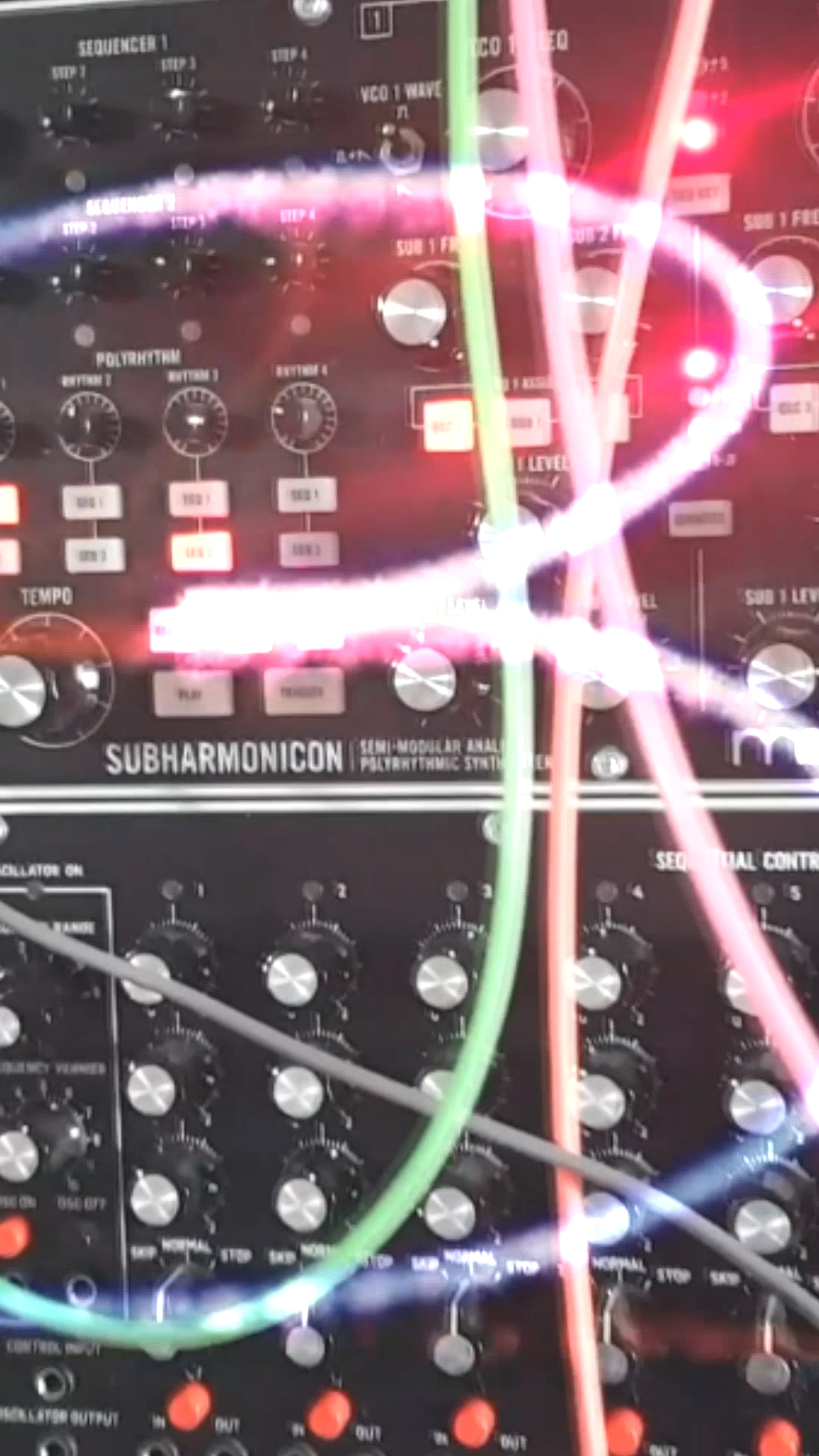
Moog Subharmonicon

How do you most often start a new track?

Most often I tend to build a track from the rhythm up. I get an idea in my head for a groove I want to create and build on. Then I add things, and then take things out until I’m happy. I’m interested in bridging the infinite space of potential with different patterns, schematics, logics, and systems. I create a framework with which to navigate the unknown. Sometimes I’ll pick a series of random BPMs and keys, and see what happens.

How do you know when a track is finished?

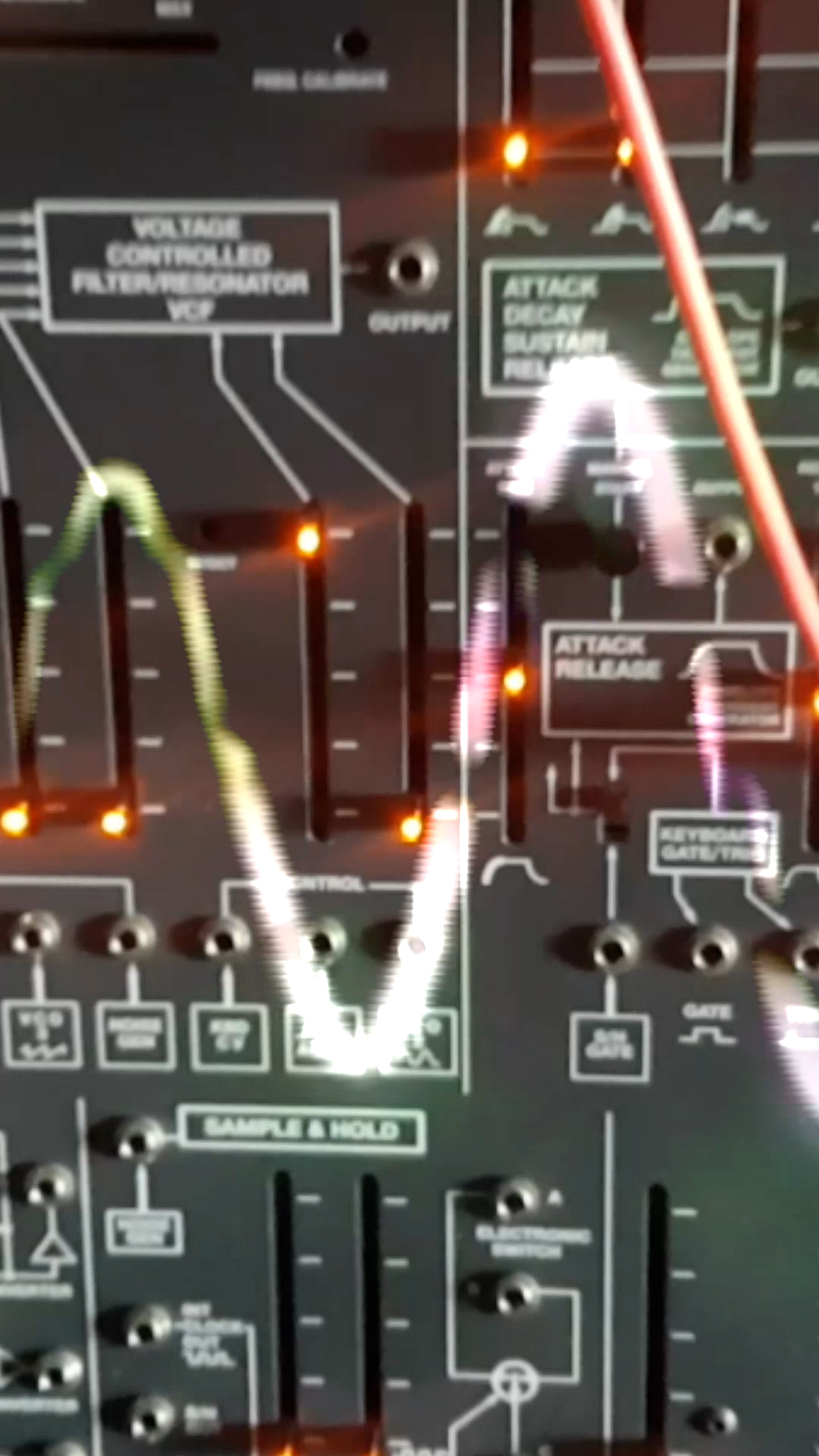
2600

When I am working on a track, I live and breathe it. It’s all I think about all day. I am constantly listening to it over and over again, thinking ‘what needs changing?’, ‘what is it missing?’, ‘what does it need?’.
When I listen all the way through without finding anything that I would add, remove or change, I think ‘yes, that’s done’, or at least that it’s time to take a break from it, and come back to it again with fresh ears 24 hours later.

Show us your current studio

I worry that keeping all my gear set up in a particular way might inadvertantly limit or narrow my approach somehow. I often keep everything packed away until I get a strong idea of what I want to work on, and then I set everything up around that idea, using only what I need and keeping it simple.

Best creative advice that you’ve ever heard?

It’s not the amount of gear you’ve got, but what you actually do with what you’ve got. Try to favour building your own sounds over using presets. Don’t worry too much about sounding like artist X or Y, sound like YOU.

Promote your latest thing, go ahead, throw us a link

My most recent single ‘Deeper Understanding’ is on Alex Tronic Records: https://snakestylemusic.bandcamp.com/album/deeper-understanding

Deeper Understanding by Snakestyle

Website: https://www.matthewleighembleton.co.uk/snakestyle.htm
Bandcamp: https://snakestylemusic.bandcamp.com/
Youtube: https://www.youtube.com/@MLESynth
Facebook: https://www.facebook.com/profile.php?id=61580691853426
Instagram: https://www.instagram.com/mlesynth/
TikTok: https://www.tiktok.com/@mlesynth
X: https://x.com/MLESynth


Aqeel Phillips – A View to Aqeel

1. Favourite knob/fader/switch on a piece of gear and why?

Monome Teletype

I’m gonna go with the Monome Teletype’s single “param” knob. It might be a weird answer, since this knob can do whatever you want it to do, but personally I almost always have it mapped to a global “probability” setting in my Teletype patches. Probability that a trigger will pass through, probability that triggers might jumble and be routed to an unexpected output, etc. I consider this a bit of a secret weapon, and discovering this was a moment when I was really feeling like I was figuring out how to work modular into my music. With this single knob, I can control the “energy” of a patch, taking it from sparse and mysterious to lively and animated with a quick flick.

2. Do you have an ‘almost’ perfect bit of kit? What would you change?

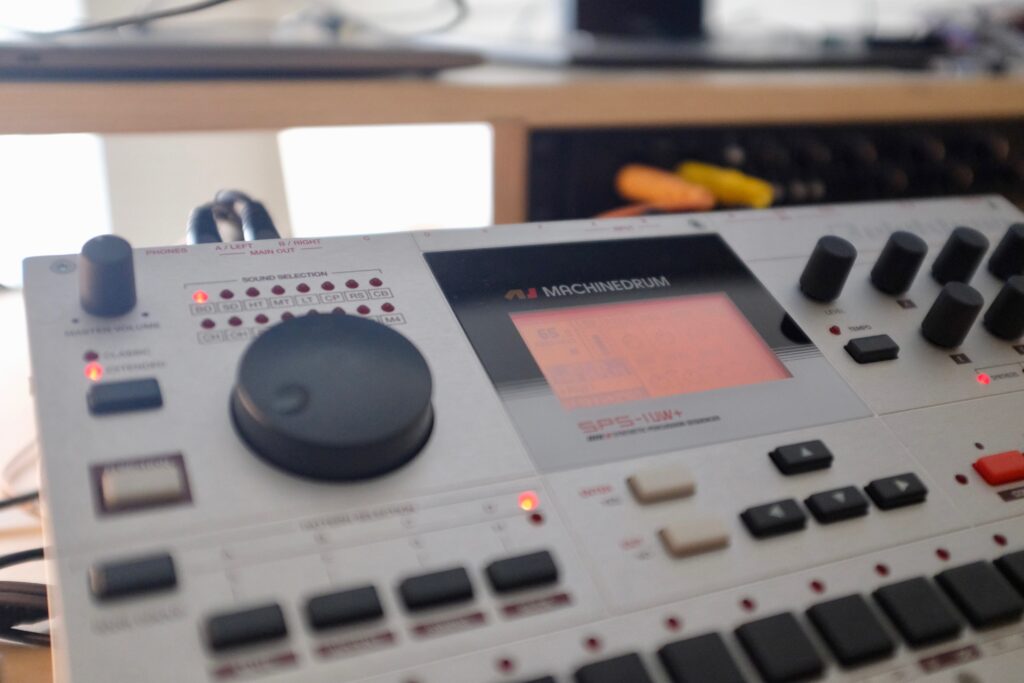
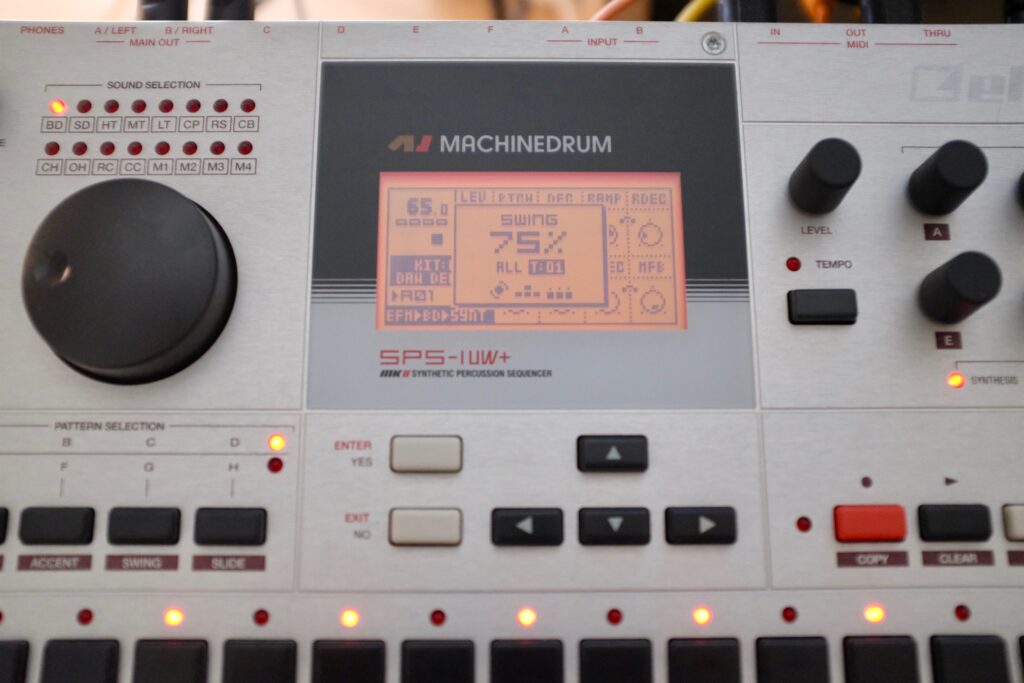
Elektron Machinedrum

I’ll say the Elektron Machinedrum. It sounds amazing, and I feel like I barely need to edit and mix the sounds that come off of it, but it’s definitely dated. It doesn’t have all of the niceties of the newer Elektron boxes, like the Rytm mkII or Digitakt. I find it really easy to edit the wrong track, and it unfortunately doesn’t have the modern Elektron sequencer with trig conditions and microtiming. I’ve even considered sequencing it externally… But the sounds themselves are totally worth keeping it around, even with these limitations.

3. What setup do you bring on holiday/tour/commute etc.?

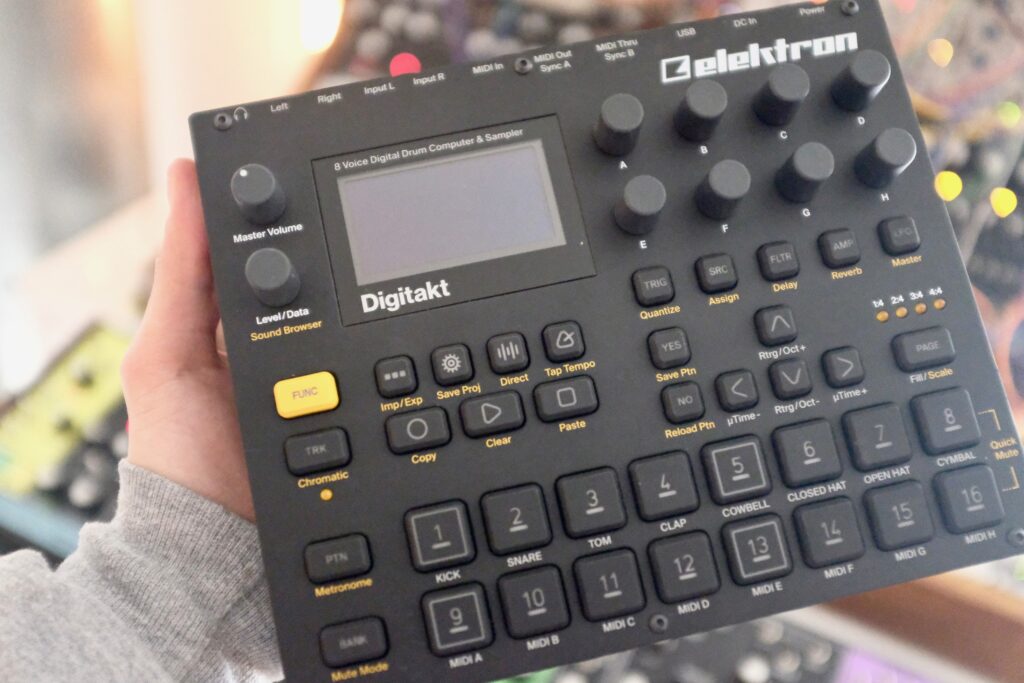
Elektron Digitakt

Historically, I’ve taken the Digitakt. It’s easy enough to throw in a backpack, and you can even record off it without an interface via Overbridge. For whatever reason though, I usually tend to be finishing projects while traveling, so it’s often just my laptop and headphones.

4. What software do you wish was hardware and vice versa?

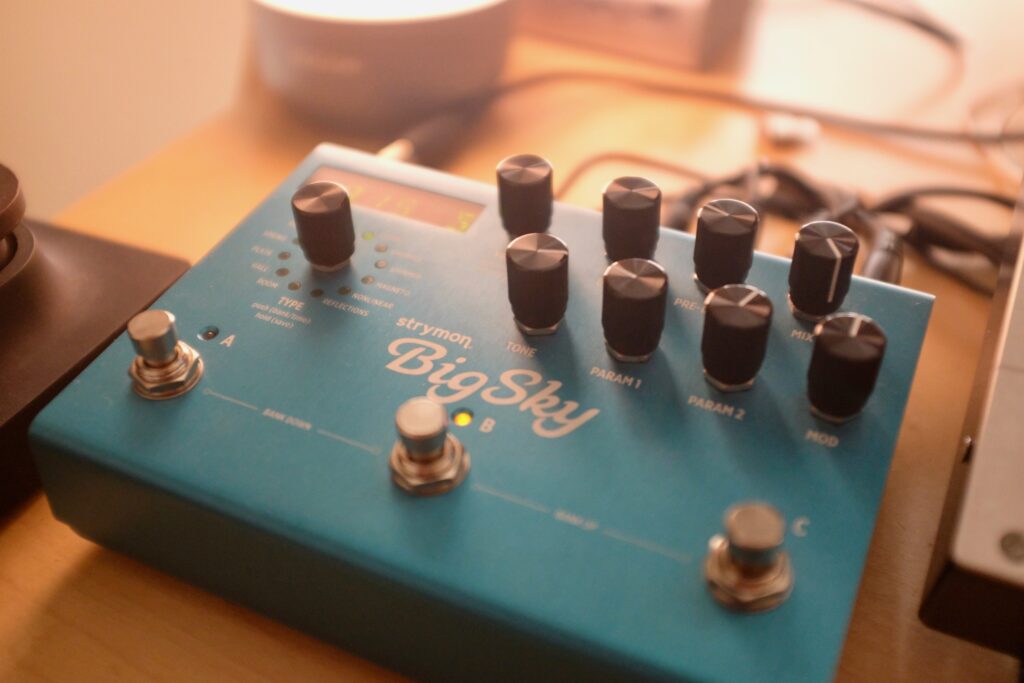
Strymon Big Sky

I don’t use a lot of software… I’ll cheat and say that sometimes I wish I had a real piano or Rhodes, as opposed to the VSTs that I use in my music. In terms of hardware, I often wish the Strymon Big Sky was a plugin that I could pull up on the computer. I really just use it as a master send effect from Ableton. 

5. Is there anything you regret selling… or regret buying?

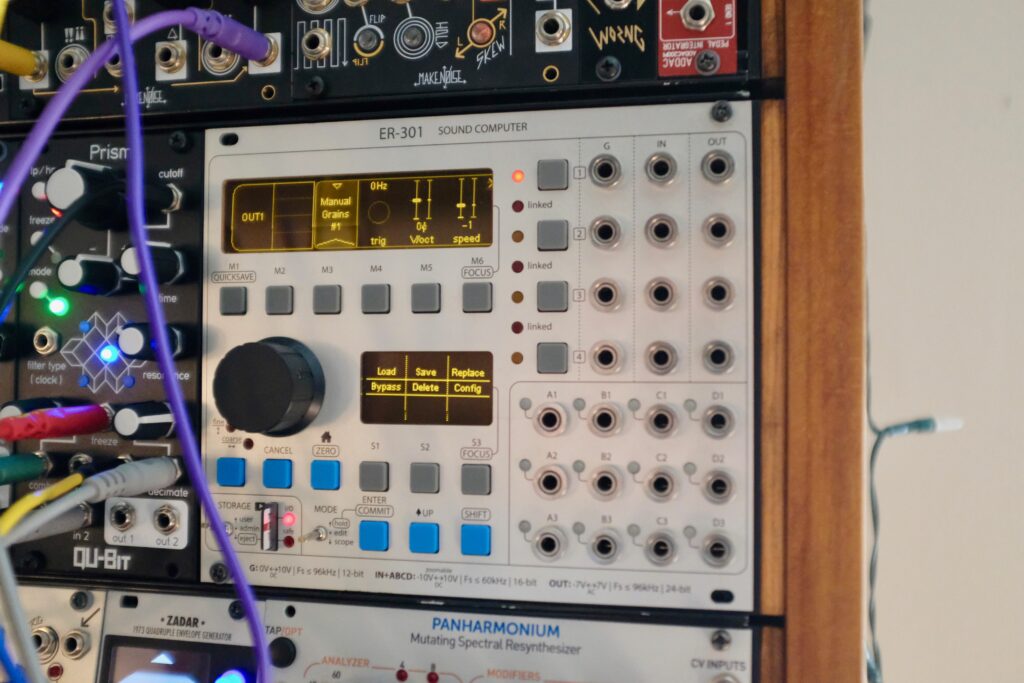
ER-301

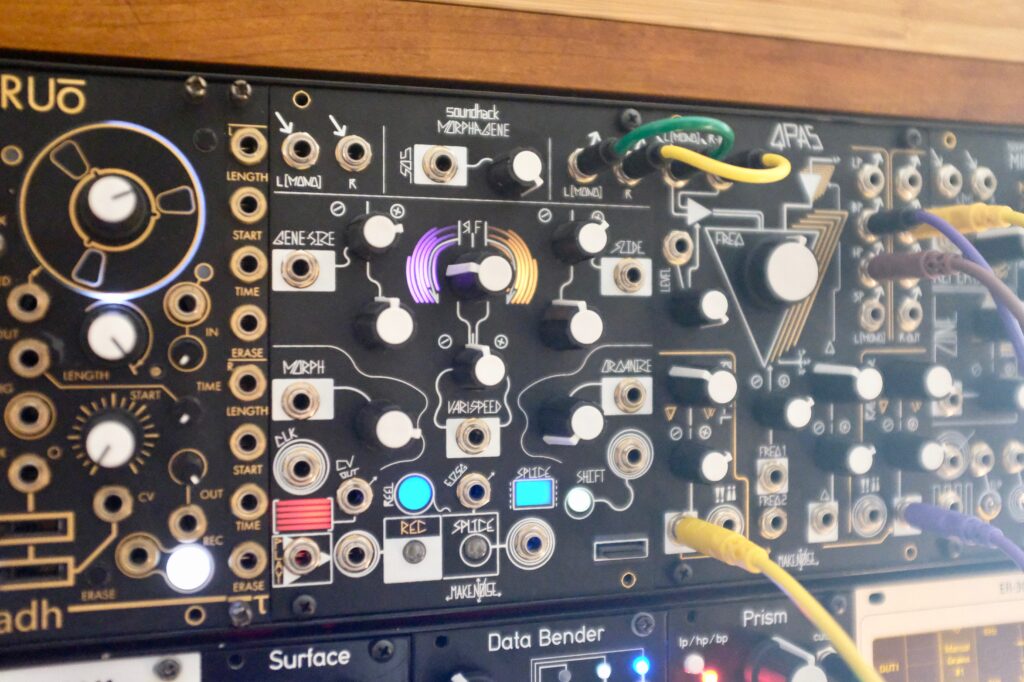
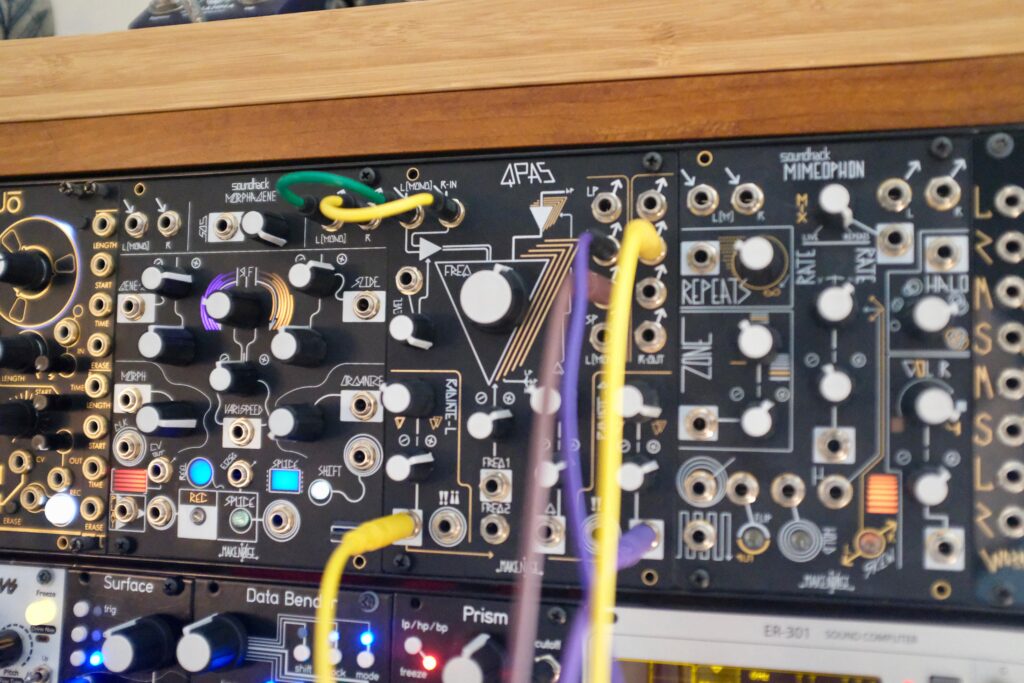
Most things I find myself regretting selling, I eventually end up buying again. It feels a little silly (and I lose some cash in the process), but sometimes it takes some time away from something to really respect its worth. I’ve sold and re-bought Make Noise Morphagene, Intellijel Metropolis, and I recently bought an ER-301 back from a friend. I did nab a really nice Yamaha electronic drum kit for an utterly insane deal a while back, and ended up passing it on to somebody else when I was living in a small apartment. Now that I’ve got the room for it, I definitely miss it.

I regret buying an Arturia Matrixbrute. Some of the keys broke somewhere along the way, and it’s so heavy and large that it’s been unruly to get it fixed and eventually sell it. I’ll get around to it, but I’m never excited about the idea of lugging it out to the car…

6. What gear has inspired you to produce the most music?

Make Noise Morphagene

Probably Morphagene, the same Morphagene that I’ve sold and re-bought haha. Nowadays, it’s genuinely my favorite module and really epitomizes eurorack to me. I never know what it’s gonna do, but I always love what it ends up spitting out, which is a huge part of the fun I have with modular. It’s like my little bandmate that comes up with something interesting and inspiring for me to craft a song with.

7. If you had to start over, what would you get first?

Make Noise Tape & Microsound Music Machine

In the same vein as my previous answer, I’d probably start with the Make Noise Tape & Microsound Music Machine. I’ve essentially got this in my system in my rack, purposefully placed right next to each other too. Each module in that system is something that I don’t believe quite exists in the software realm. So I feel like I could do a lot with that system and any DAW for drums, soft synths, effects, etc.

8. What’s the most annoying piece of gear you have, that you just can’t live without?

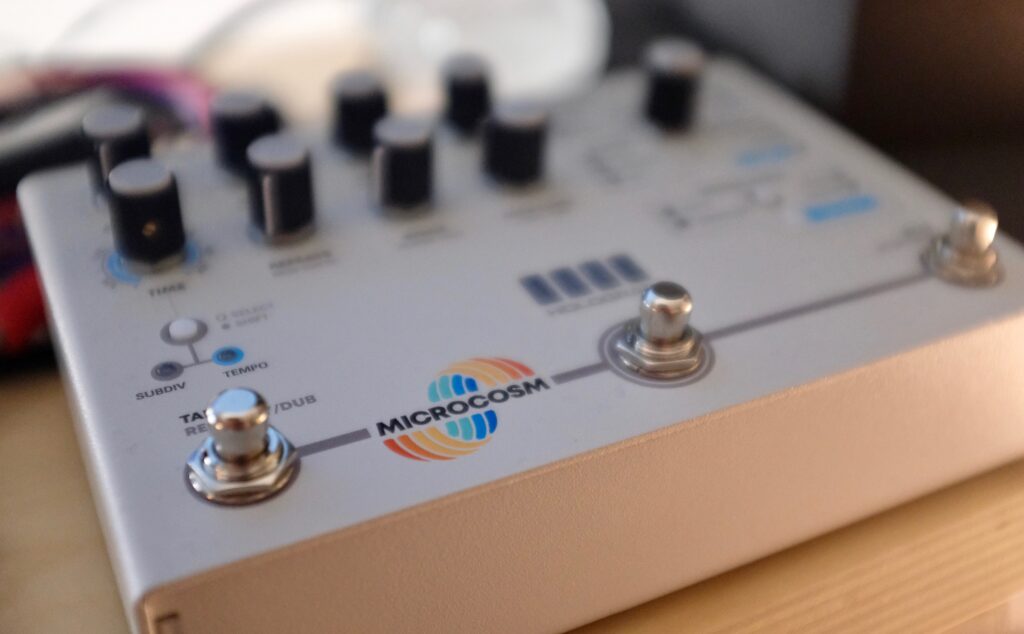
Hologram Electronics Microcosm

Pieces of gear that annoy me don’t tend to stick around very long. 🙂 I’ll say the Hologram Electronics Microcosm. I don’t think it’s very flexible, but what it spits out is absolute gold. It feels kind of scared of sounding “bad”, and I frequently find myself wishing I had access to the sounds “between” the settings that it offers. But at the same time, it’s my go-to for spicing up a track, and creating something unexpected. I will say, I think if I didn’t have experience with modular (meaning, having so much experience making bad sounds), I would be totally content with it. But with that experience, it often feels like a box of nice Clouds presets.

9. Most surprising tip/trick/technique that you’ve discovered about a bit of kit?

I mentioned the Machinedrum feeling a little primitive, but I’ve figured out a couple tricks here and there that get me where I need to go. One is that I’ve been using the “swing” to make my beats more interesting. The MD doesn’t have microtiming, but you can add swing per step (even on individual tracks), and adjust the amount of swing. I’ll often have fun with punching in a standard beat, adding swing to a couple steps, and then setting the “swing” amount to something extreme like 75%. This way, it might imply a 32nd note in some places, without adjusting the overall sequence timing to be 2x. It’s something that you could easily do with microtiming on something like the Digitakt, but it needs this fun little workaround on something older like the MD.

Machinedrum

Artist name

Aqeel Aadam

Genre

Some kind of downtempo, cinematic ambient meshed with hip-hop style beats.

Selfie

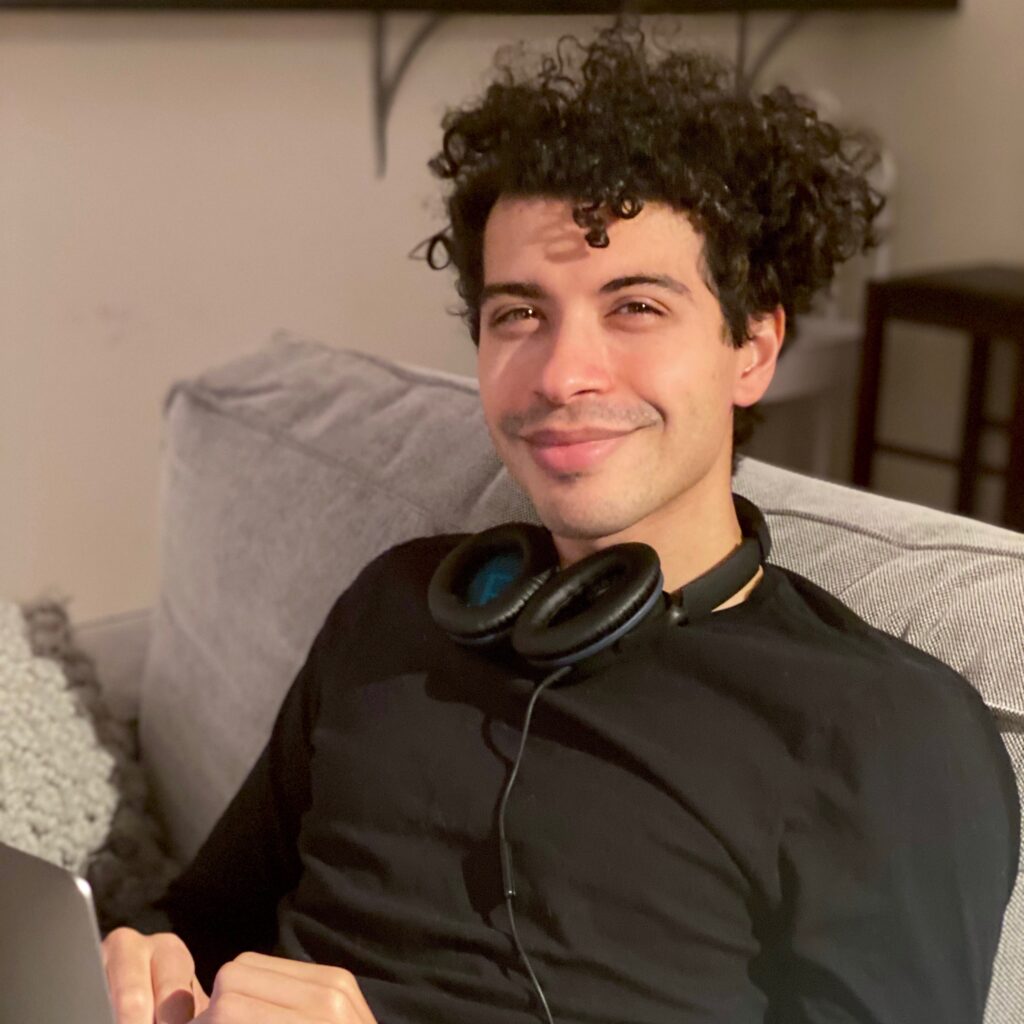
“Hey, can you take a picture of me?” in the middle of writing this.

Aqeel Philips in the middle of writing this interview

Where are you from?

Outside of Philadelphia, PA (which is where I currently live too!)

How did you get into music?

I started by teaching myself guitar and eventually started making sample-based beats with Ableton in high school. I wanted to trend more towards “composing” than “producing”, so I caught the hardware bug once I realized it could be like commanding your own little orchestra.

What still drives you to make music?

From a musical perspective, I don’t think I can honestly claim that it’s therapeutic or anything like that, but creating something is an activity that I genuinely very deeply enjoy (I suppose this is some form of therapy…). I like creating the music that I want to hear and feel like the world might enjoy. There’s also a sense of pride in creating something that feels very gratifying.

From another perspective, there’s a vast world of instruments that offers a great sense of exploration to me. There’s always a new stone to uncover, a new path to try out, some combination of things that you might never have considered before. Kurt Vonnegut said “we are put on earth to fart around,” and I can say for certain that hardware and modular synthesizers can provide you with a great deal of farting around.

How do you most often start a new track?

Ambience, atmosphere, texture – some kind of ambient wash that becomes the sonic bed for the track. I like to set up a generative bed with something like Morphagene or a granular module, which gives me the “kindling” to find inspiration from and write with. I’ll listen to these beds and hear accidental snippets of chords or melodies – this gives me inspiration to refine those random ideas into something more formalized. Also, I find it very hard to add in texture after the fact, so I like to start with it to keep myself sane.

How do you know when a track is finished?

In line with the previous answer – when I’m working on a track, I’ll hear “whispers” of things to add, little ideas that pop into my head that become a melody, bassline, chord progression, rhythmic element, etc. Once those stop revealing themselves, I take it as my cue to hit record.

Show us your current studio?

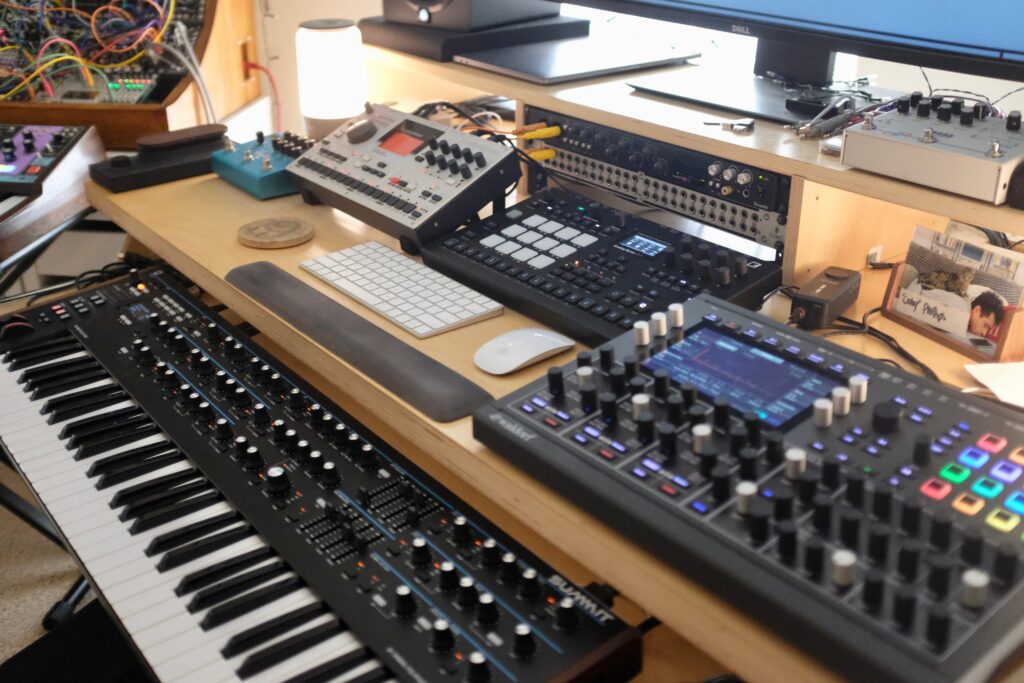
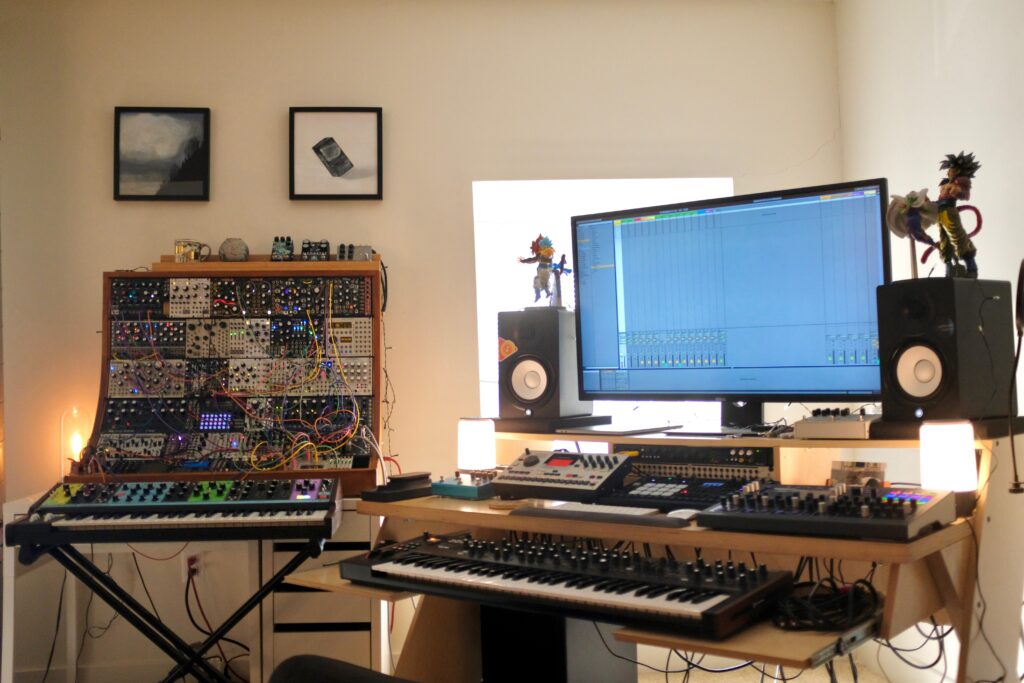
Home studio desk
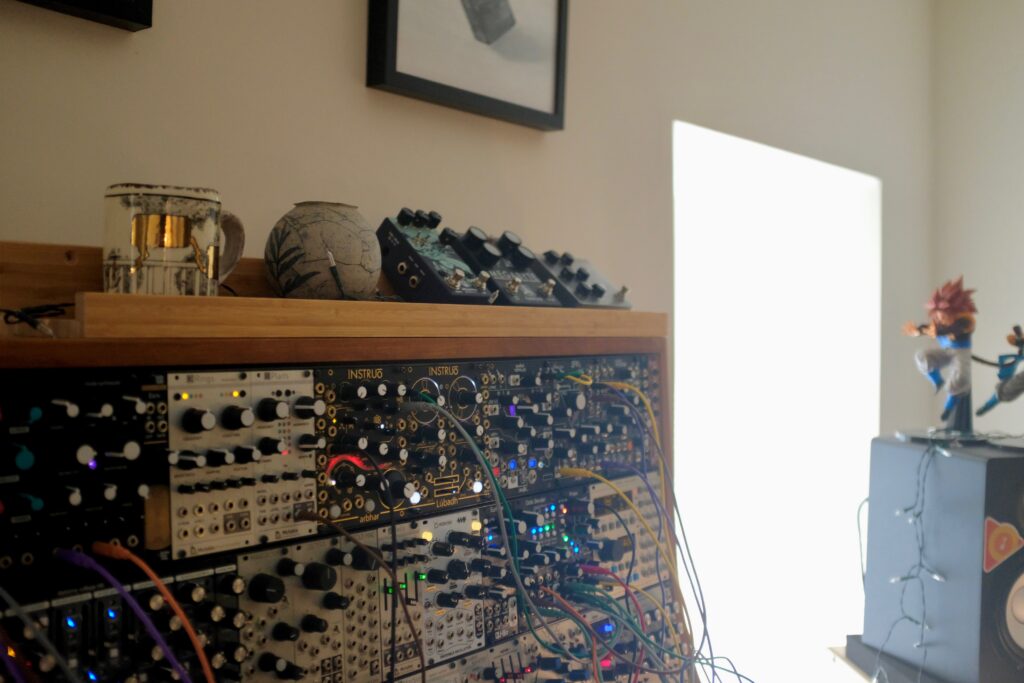
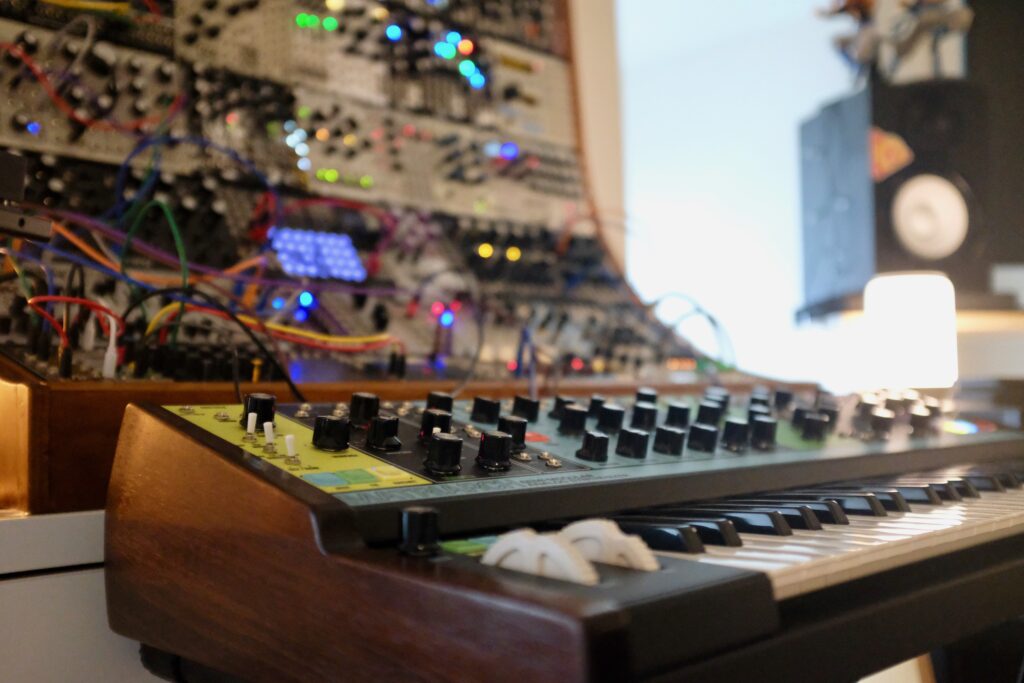
Home studio with eurorack
Moog Matriach

Best creative advice that you’ve ever heard?

Probably to “invest in happiness”. Suffering from GAS and chasing gear is one thing, but if there’s something you can tell will help you feel creative and make your life more fun and easier, get it. Looking around my studio though, maybe I’ve invested in happiness too much 🙂 But at the end of the day, the only reason I hold onto something is because it makes me happy to use it.

Aqeel’er Studio [Editor: Ok. I’ll stop now]
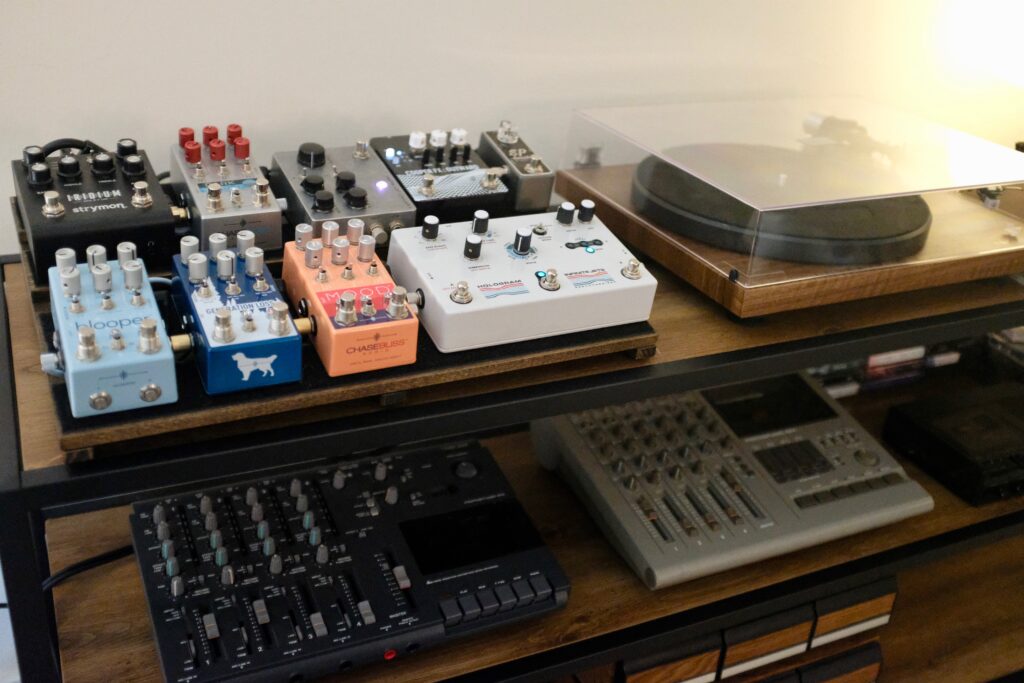
Fx Pedals and 4-track tape
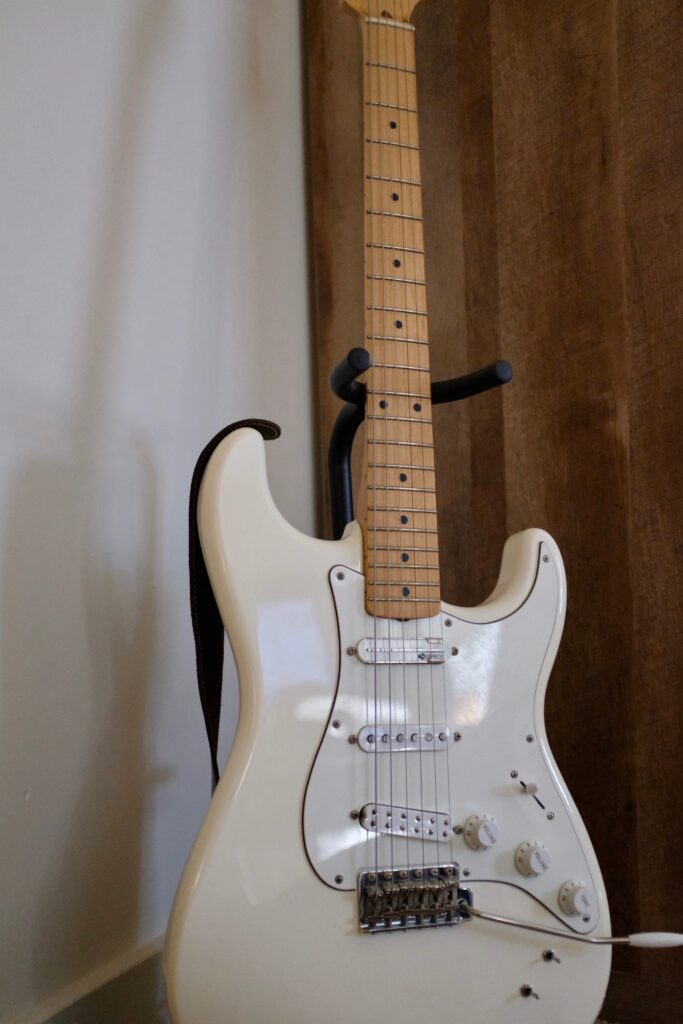
Ed O’Brian Strat [Editor: just about the perfect guitar]

Promote your latest thing… Go ahead, throw us a link.

I just put out a new collaborative EP with my friend Fossilize Me on Mystery Circles! 2 songs each from FM and myself, and one mash-up track. It can be purchased on a 7” vinyl here and is available for streaming under each of our names.


[Editor: Do you have a favorite tip, trick or way of working with any of the gear from this interview?
Then throw us a comment below…
]