Ekkoflok – Flok… fl*k.. f¤*k.. ^¤*\

1. Favourite knob/fader/switch on a piece of gear and why?

NP-Elektroakustik faders

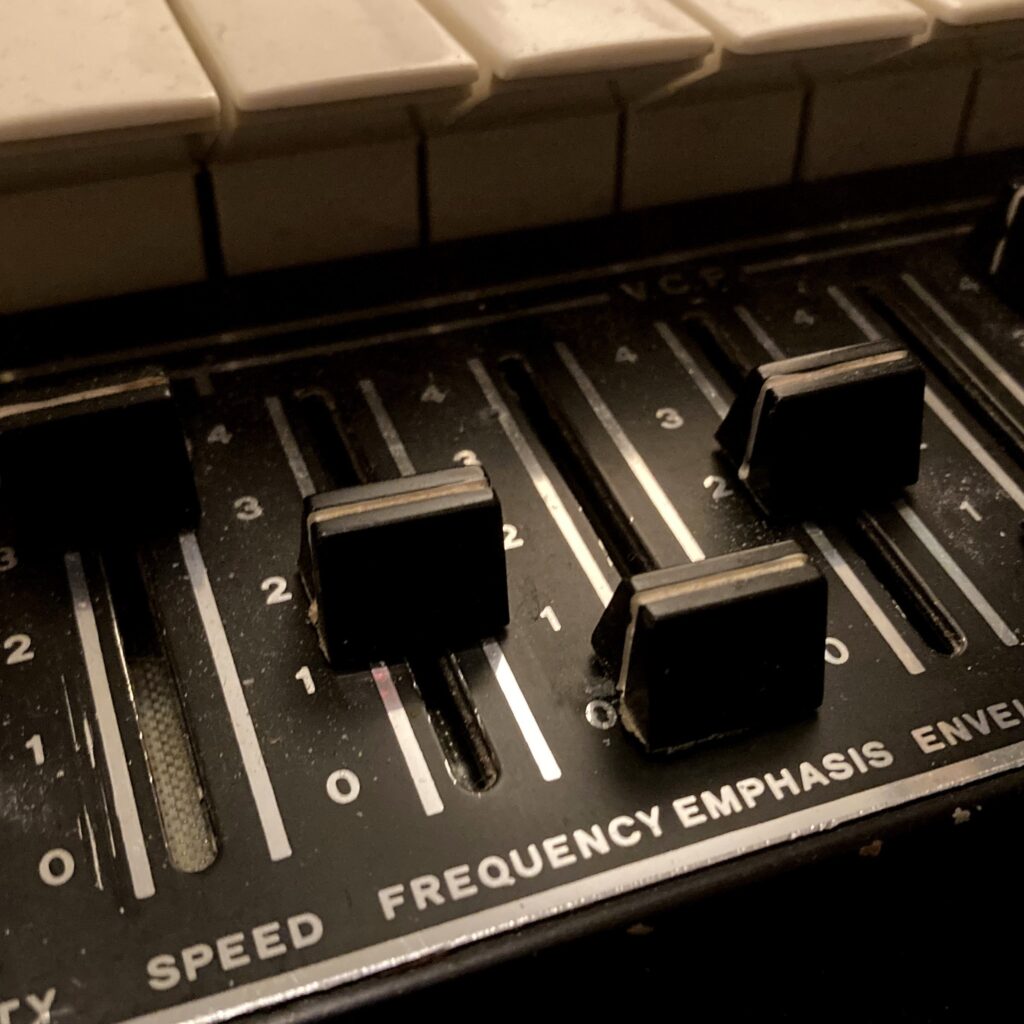
I generally have a thing for long faders on old analog gear, my favorites being a large Neumann stereo fader and the faders on old NP-Elektroakustik gear (used by Danish Broadcasting)… It’s just so satisfying to move (and even just to look at) them.

Neumann stereo faders

However I must admit that these faders do not really get much use at the moment because I have to “solder them up” – I guess this is the curse of DIY’ing stuff… It’s easy to end up with the soldering iron as your main instrument and a pile of unused electronic junk… But it can also lead you to explore new and surprising sounds and techniques.

NP-Elektroakustik analog mixer

For a more “fun” choice I’d choose the “gear lever” found on a lot of old Scandinavian reel to reel tape recorders. These old machines are largely mechanic and so the transport mechanism is all handled mechanically. I find it oddly satisfying to operate these levers controlling the mechanics

Scandinavian reel to reel tape recorders

For a purely synth-oriented (or functional) viewpoint I’d probably choose the rate knob on the Serge Smooth and Stepped Function Generator (SSG) (when used as a sample and hold) – it is possible to go in and out of perodic and (seemingly) nonperiodic patterns just by fine tuning the knob. This is a way of generating “melodic content” that I have used a lot.

2. Do you have an ‘almost’ perfect bit of kit? What would you change?

Ekkoflok’s homebuilt modular

That has to be my homebuilt modular….. which is ever changing… I started building it from scratch back in 2012. At first I planned on building 40(!) modules… That was before I realized the amount of work needed, I guess.
I also found that my plans/ needs for the instrument changed all the time is I learned more about synthesis and developed my own techniques.

Today I do most of my performances on a part of my modular system. I have found that it actually helps me to not bring to much modular gear, as I find you can do a lot with just a handful of modules. Sometimes I’ve brought to much gear for a live set and felt like I only scratched the surface of the sonic possibilities. When I bring a smaller setup I force myself to think creatively and push the modular to the limit.

Close up of Ekkoflok’s homebuilt modular

3. What setup do you bring on holiday/tour/commute etc.?

I recently bought my first synth (that is – the first one I didn’t build myself) – a Korg Volca FM. It’s so small that can easily fit in even a small bag pack.
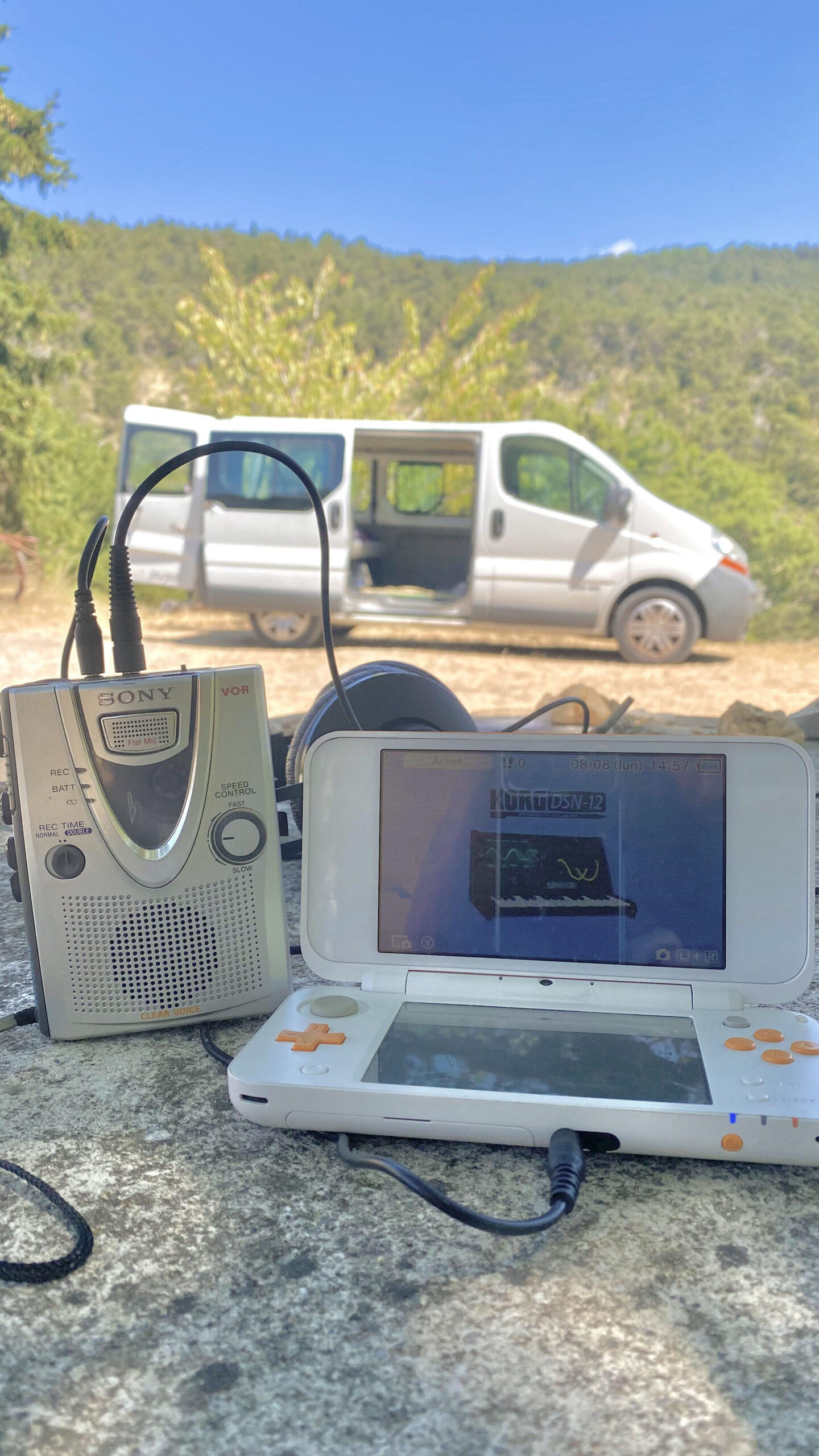
I’ve often brought a minimal modular setup, a portable recorder and sometimes just my laptop. Last summer I wanted to get ”away from work” so I only brought my Sound Devices recorder, microphones and headphones. That way I didn’t end up working as if I were still at home (and at the same time it made me long to get home to all the patch cables).

Ekkoflok sampling the sea

4. What software do you wish was hardware and vice versa?

Cecilia5 – a great tool for sound exploration. I would love to have that in a dedicated box or maybe as an app.

VCV-rack aka. the Gateway drug

With the rise of VCV-rack I think it kind of fulfilled a lot of desire for virtual versions of my modular. Still would love to see a software version of the Neutron Sound Orgone Accumulator along with more esoteric synths like Serge and Buchla. However I still think the physicality is one of my hardware modular’s main strengths. I feel that a few modules can take me a long way.

5. Is there anything you regret selling… or regret buying?

I have a couple of boxes filled with half- (or less) populated PCBs (printed circuit boards). Thinking of all those half finished projects makes me a bit sad.
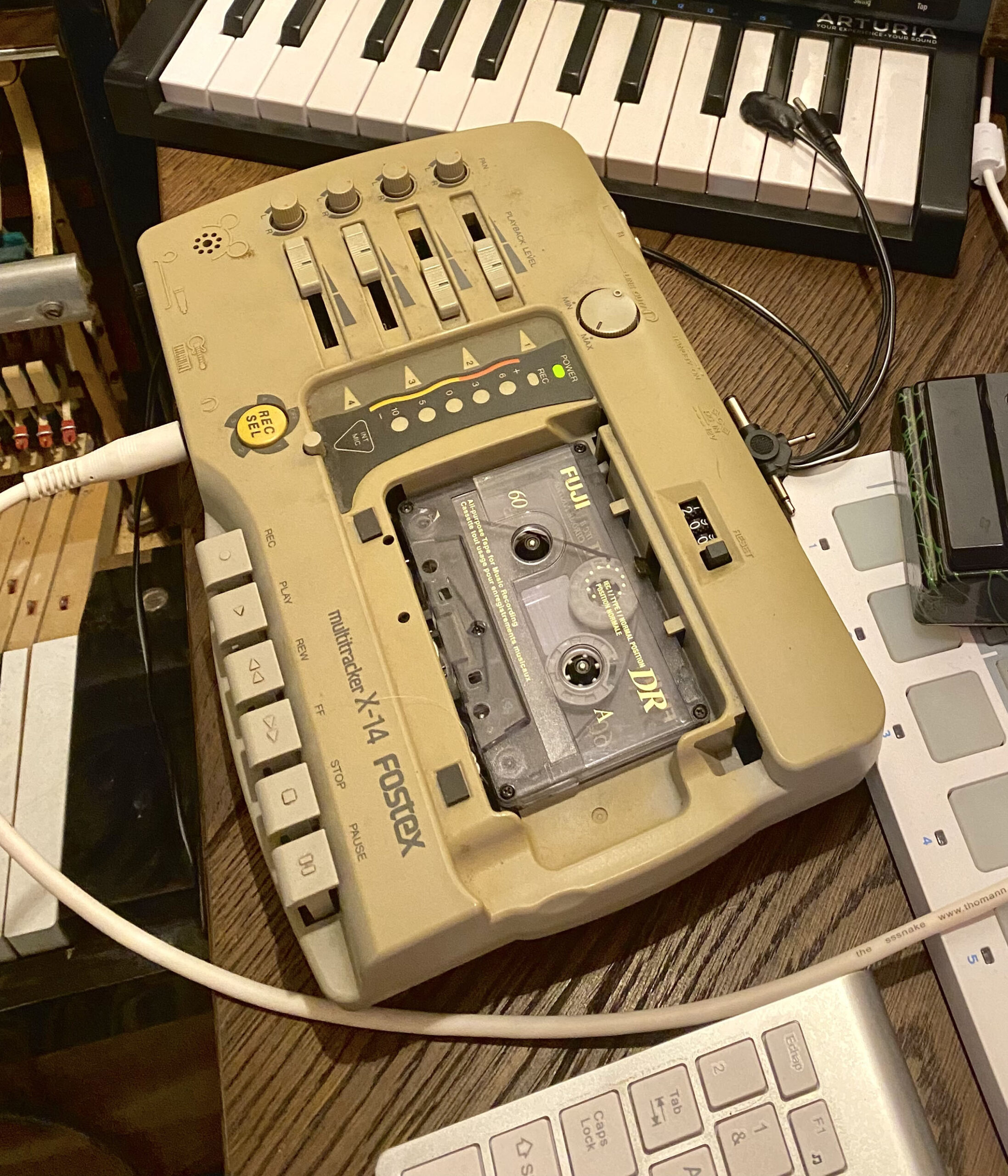
I sold two (broken) 4-track recorders during corona…. Still sometimes asking myself whether I should have tried harder to fix them, since they were sold very quickly. However I still have two functioning ones… How many 4-tracks do one need??

Tascam 424 mkii

6. What gear has inspired you to produce the most music?

That must be my homebuilt modular synth. Since 2012 when I devoted myself to that project it has been the pivotal point of my career. It has taught me so much about music and sound. However I rarely approach it with a ”now I’m gonna make a track”, it’s more of an explorative process that often leads me to discover new sounds or form the basis of a new track idea.
My album Lydlandskaber (2017) was made entirely with one-takes and the modular as the center piece, whereas my new album Mosaik is made out of many layers of modular sounds, field recordings, prepared instruments and vocal work.
Actually it took me a long time to figure out how to use the thousands of recordings on my hard drive.
In more recent year I have begun to work more and more with tape, which I also find very inspiring. It feels like it gives me a lot without me doing anything, it sort of has it’s own life. In the digital domain I often find myself wanting to colour things up a bit or a lack of character.

7. If you had to start over, what would you get first?

Well, when I started making music in the 00’s I was using plugins exclusively the first years – it made me dream (and drool) of a synthesizer wall… And back then hardware synthesizers (and especially modular gear) wasn’t very accessible. Since I grew up in a family of artists there wasn’t a lot of money, but lot’s of creativity so it seemed obvious to me that I should build my own synthesizer.

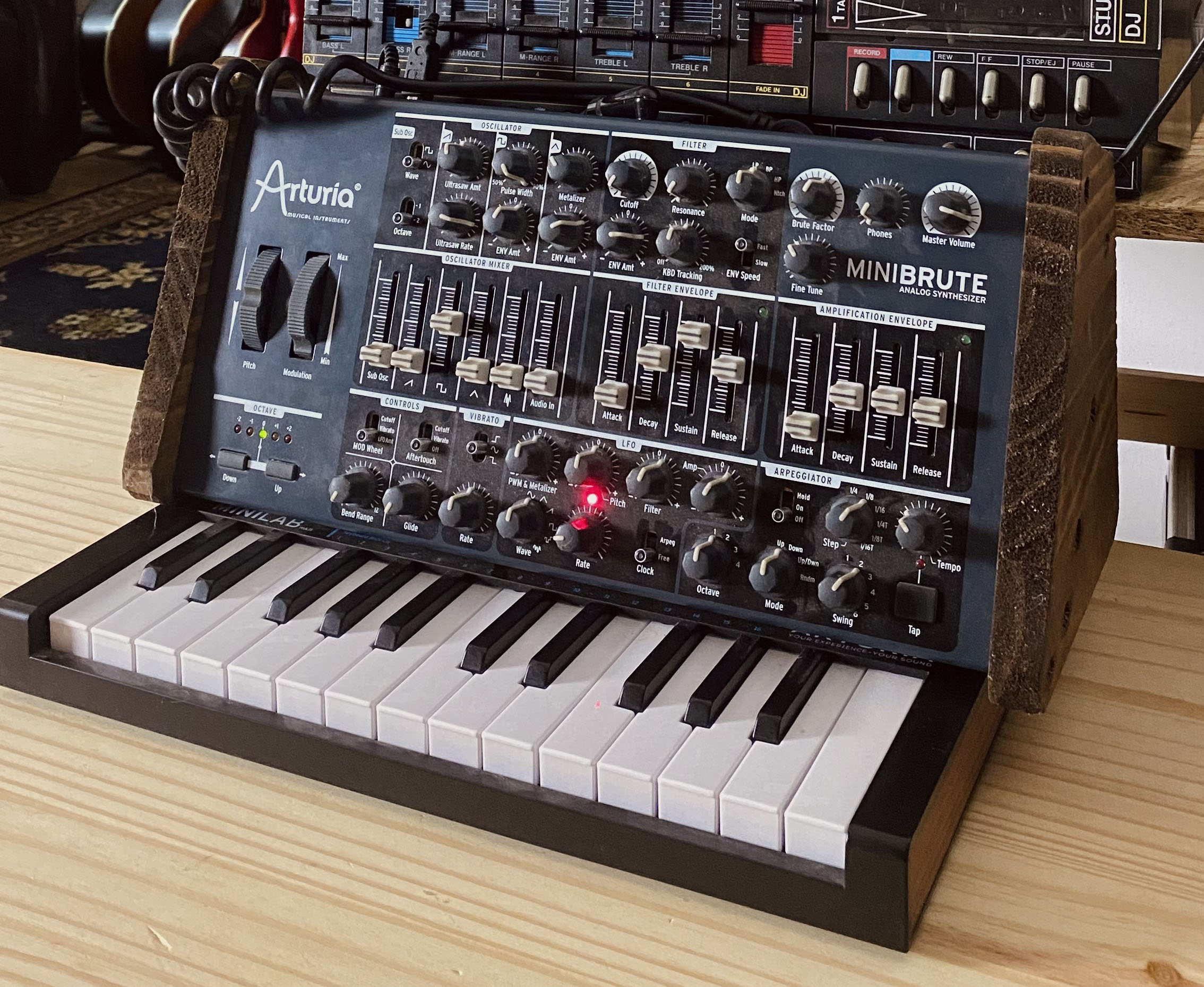
Today there are a LOT of options when it comes to analog synths… So maybe I’d just buy something. However I think it is important to take your time and dedicate yourself to your instrument which might be harder to do if you are constantly hunting for the ”next big thing”. I think a good place to start would be something like a Minibrute, which has all the essentials and then build (or buy) a rack of things to expand on the functionality. And then a 4-track and some tape-loops. I think it is important to try what it feels like to make music without a computer, personally it resulted in me creating an entirely different style of music and it helped me realize how I wanted to use the computer creatively.

PD in dark mode

For example I like working with Pure Data which is kind of modular-modular synthesizer in the sense that it is easy to create your own modules in contrast to VCV-rack which is rather an emulation of a hardware modular. Since I’ve spent so much time with modulars it feels very natural to think in terms of modules and patch cables. I also use Ardour for tracking and mixing but I prefer creating music without being tied to a daw and then use the DAW later in the process for refining and over dubbing.

8. What’s the most annoying piece of gear you have, that you just can’t live without?

Sound Devices MixPre 6

Probably used to be my Zoom H4n which has been upgraded to a Sound Devices MixPre6 – although I love many aspects of it, there are a few annoying things – for example it is so power hungry that I have to use a usb power bank which makes it a bit clumsy.

9. Most surprising tip/trick/technique that you’ve discovered about a bit of kit?

The Serge Dual Universal Slope Generator can double as a clock divider. The Serge DUSG is probably my all time favorite module, it can do so many things, sort of a chameleon module that you can (patch-) program to do (almost) anything. The Make Noise Maths is inspired by this module and is quite similar.

Serge Dual Universal Slope Generator

But back to the question – what I like to do is to have a master clock sending pulses to both sections of the DUSG (used as envelope) using the outputs to control a vca or vcf and then modulating the decay time of the to DUSGs. This can result in some very complex and ever changing rhythms because the envelope doesn’t start over until the cycle is completed. Another favorite of mine is to use the outputs of the DUSG to “ping” resonant filters. That way you can make a percussive sound without needing a dedicated oscillator and vca.


Artist or Band name?

Ekkoflok

Genre?

Experimental/ ambient/ drone/ avant-garde

Selfie?

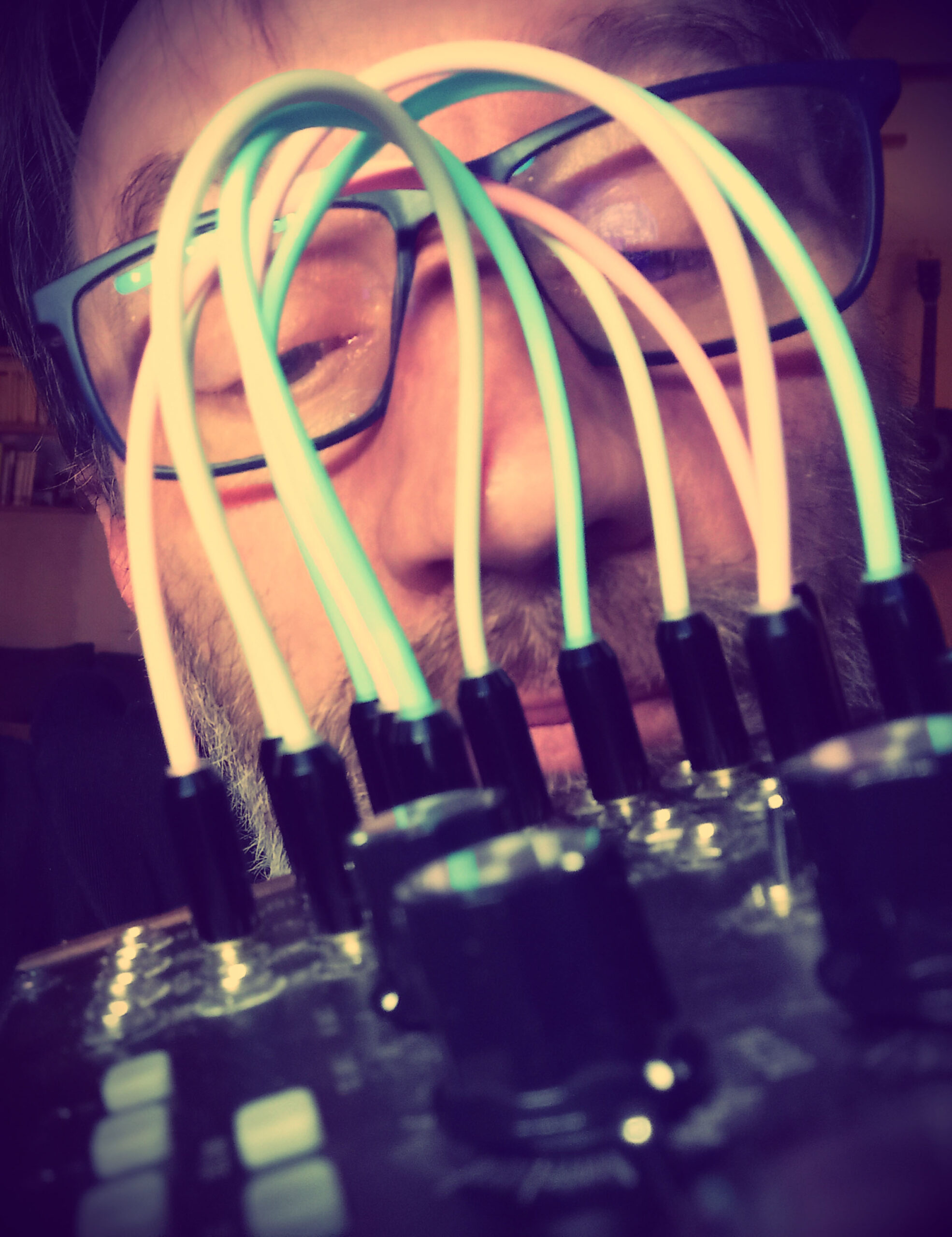
Valdemar Kristensen- aka. EkkoFlok

Where are you from?

I’m born in Næstved but my father lived in Vesterbro, Copenhagen so I guess I have experienced both the boring suburban life and the (at that time) rough atmosphere of Vesterbro with junkies and sex workers on every corner.

How did you get into music?

I think I was around 12 years old when I opened Cubase (sx3) the first time. I was playing drums at the time (and a bit of guitar). I think I heard about Cubase in some TV-show (Boogielisten???) and then I “borrowed” a copy of it. I clearly remember how overwhelmed I was by the complexity of the software, but at the same time fascinated by all the possibilities. At the time I was playing in a band (and very enthusiastic about it) and I thought the other band members were not dedicated enough. So it was a joyful moment, when I found out I could be my own one-man-band with the help of a computer and a DAW. While my friends where playing World of Warcraft I was jamming out in my basement room.

What still drives you to make music?

The music is free space where I can disappear into another dimension and completely forget about place and time.

How do you most often start a new track?

I probably spend the most time on “sound exploration” – looking for something new or exciting (to me). I then try to record (on my Mixpre or tape) as soon as possible.
I have a huge library of sounds from these sessions that I try to combine to form compositions.

How do you know when a track is finished?

It has to feel finished. When I had a more DAW-based workflow it was quite hard to tell when to stop; there is always something to change. Since I changed to working more with one-takes it is much easier I think, and the process feels more immediate

Show us your current studio

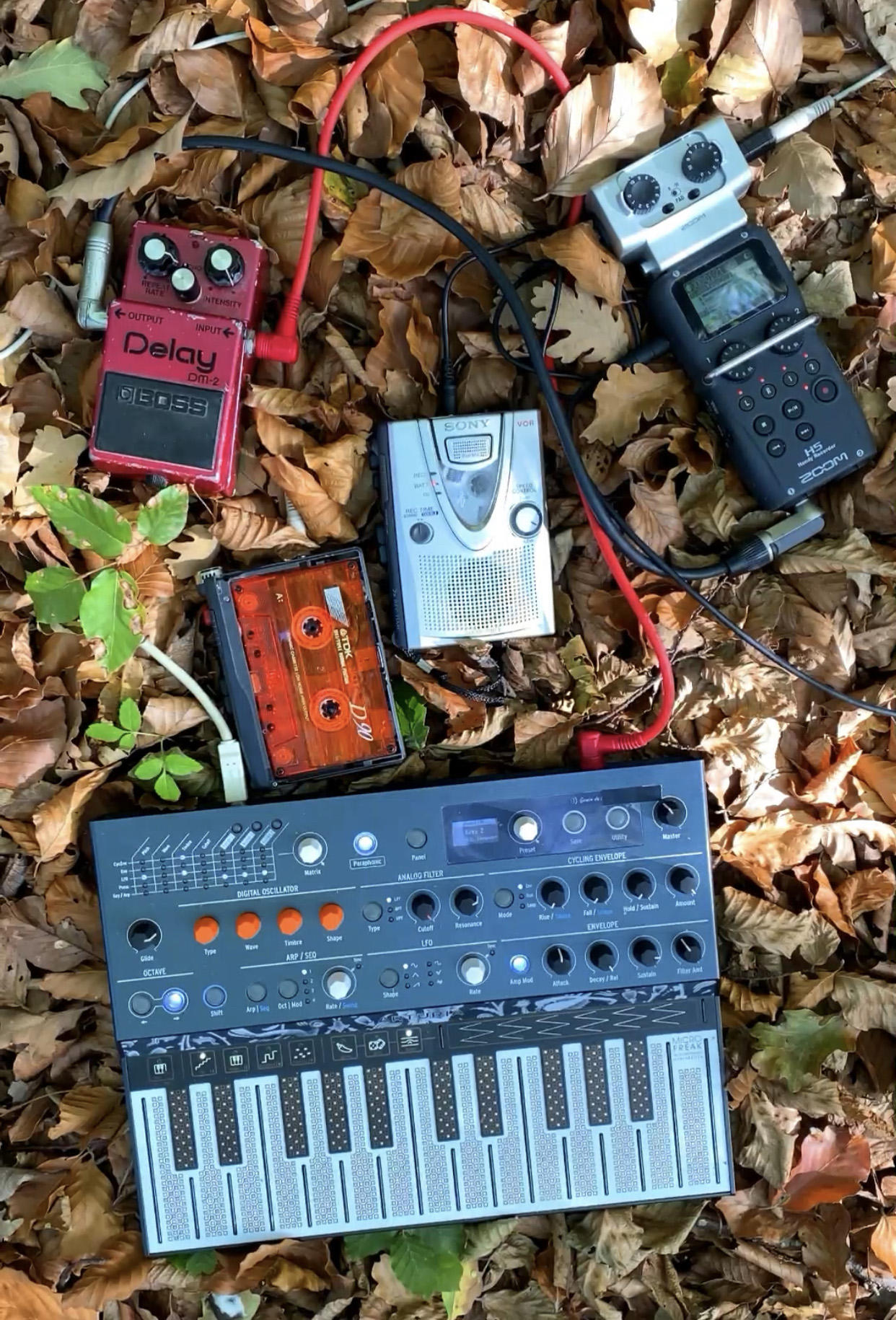
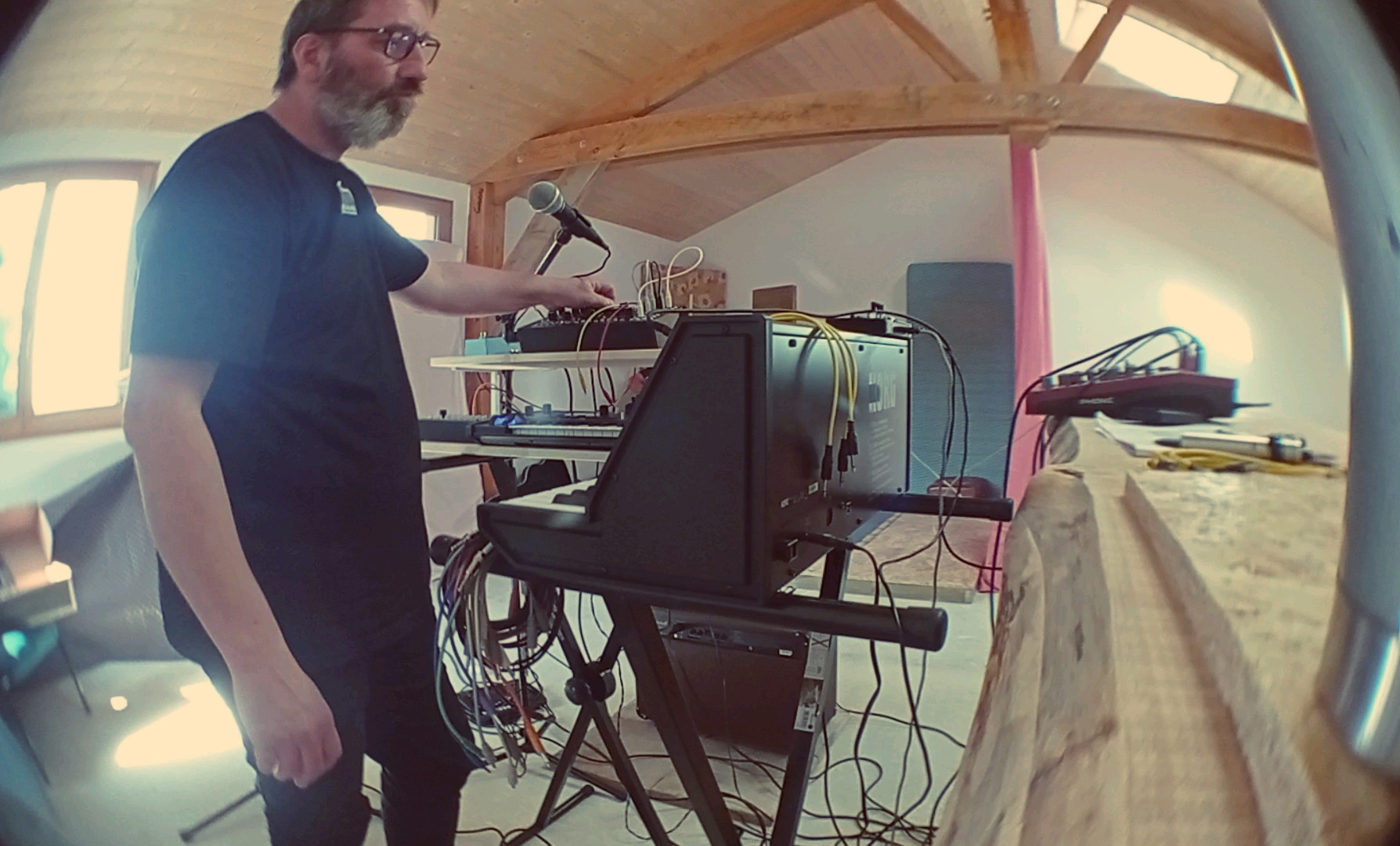
I often find myself creating music on the floor. I think it can be very inspiring to build up a new “mini-studio” with a limited amount of tools/ instruments.

Floor based studio
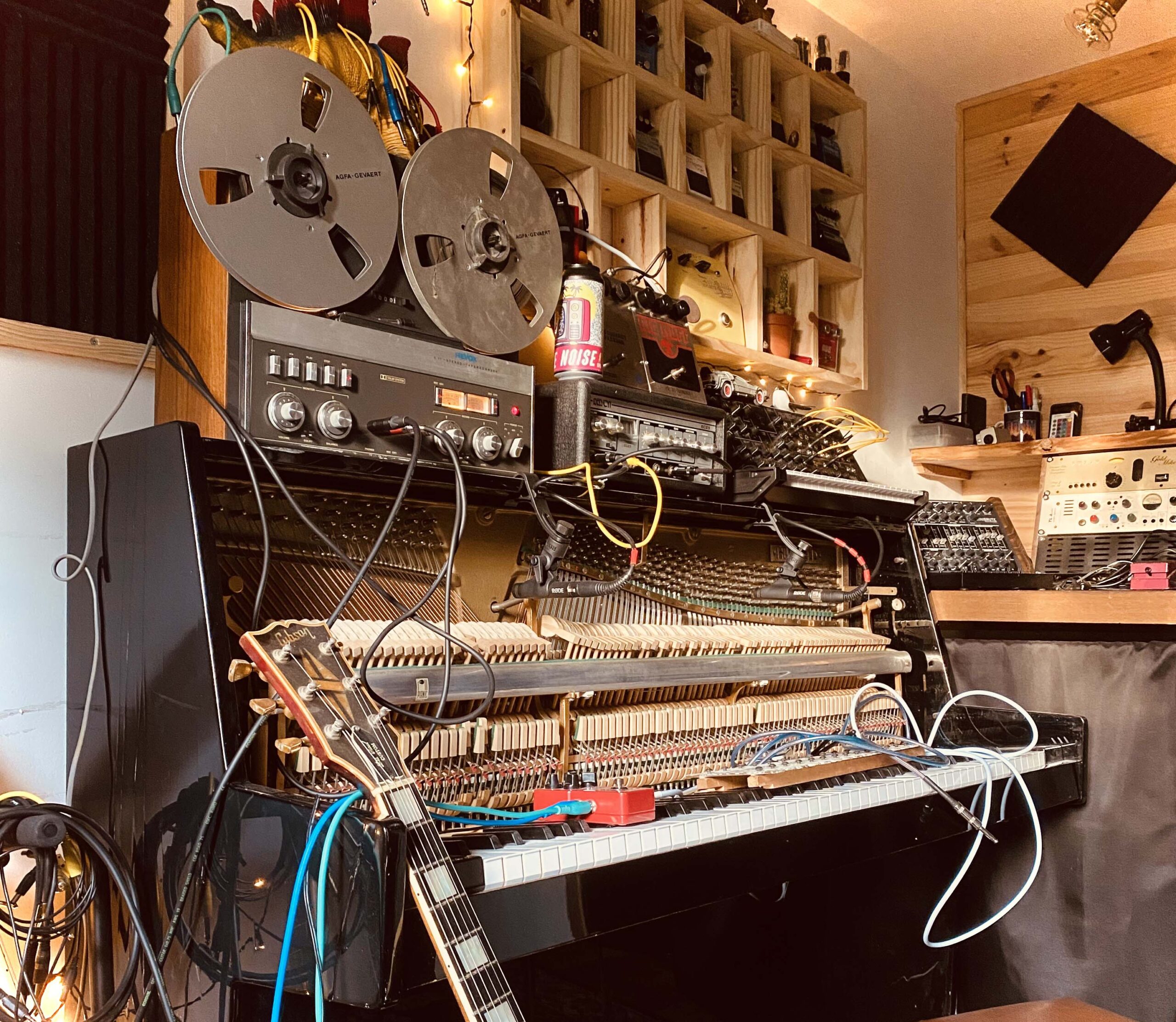
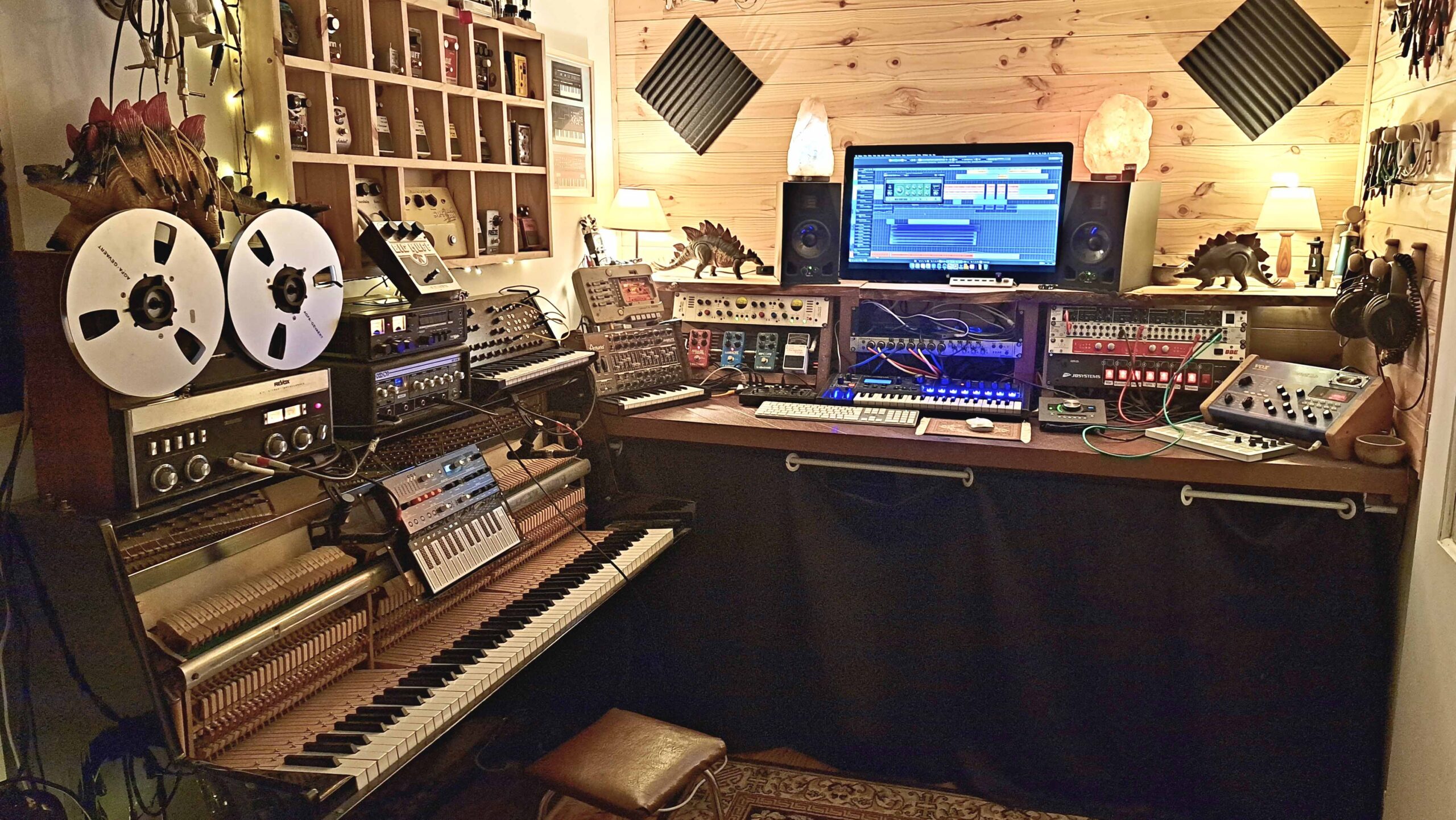
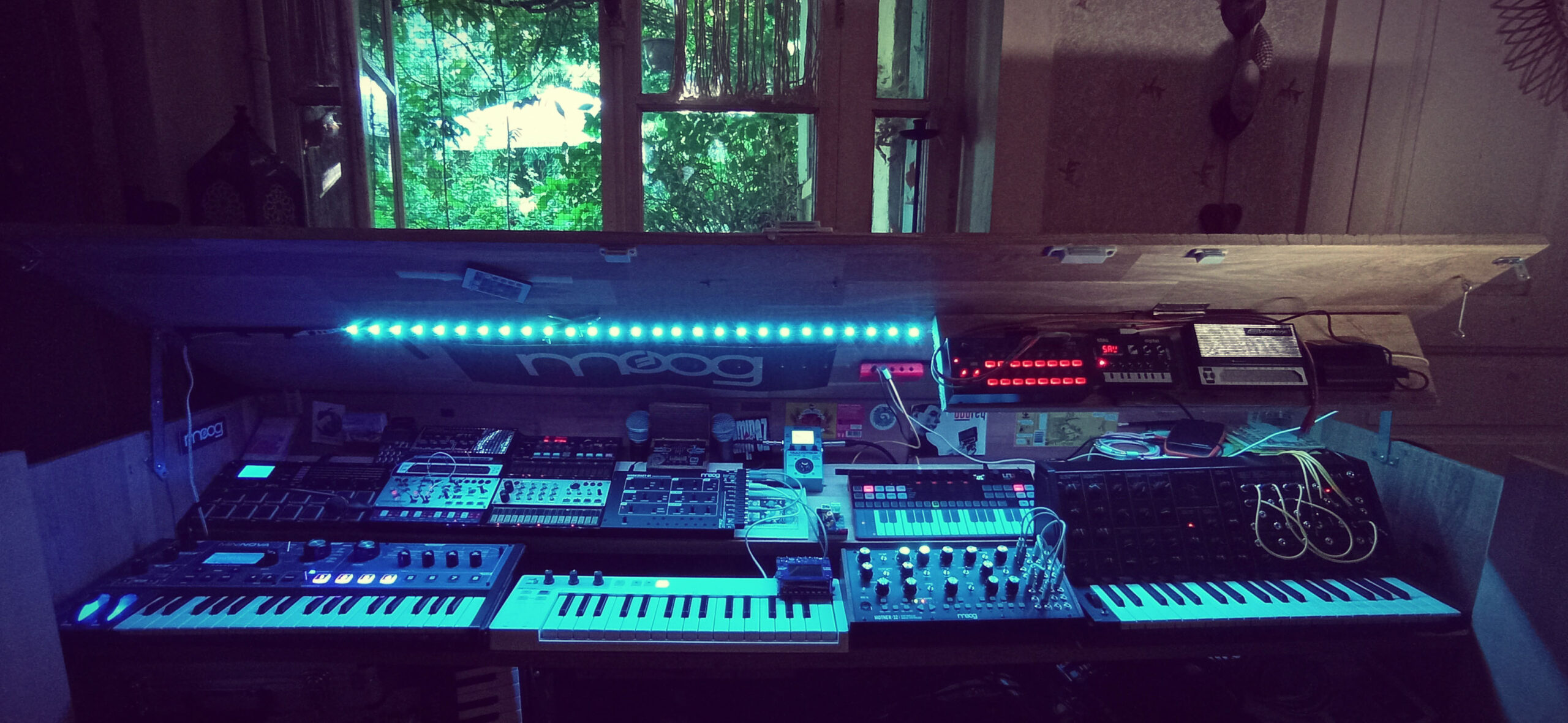
Ekkoflok’s Home Studio

Best creative advice that you’ve ever heard?

Probably “do it yourself”… I think this was a recurring theme in my childhood – that I could learn how to do things myself, be it playing the drums, drawing or building a synthesizer.

Promote your latest thing… Go ahead, throw us a link.

I released a new album Mosaik at the end of 2022. I describe it as “A sonic mosaic in sustained time”. Avalable as 12” vinyl or download at ekkoflok.bandcamp.com as well as on various streaming platforms.


[Editor: There are affiliate links to the relevant gear throughout the articles. It helps to support this blog. In fact, should you be needing some patch cables or guitar strings. Then clicking on one of the above links and buying any product that you prefer, will help the blog… doesn’t even have to be the ones in the link. Thx]


Danny Kim – DSKO

1. Favourite knob or fader or switch on a piece of gear and why?

Modal 008

Favorite knobs would have to be the Modal 008. They are metal, round with a dimple on top. Favorite fader would have to be the Juno 106. Just a couple millimeters makes the filter morph into a different sound. I’ve ridden the cutoff fader for miles. I also like the fader on Roland System 100 Model 101. Old, but sturdy and stylish.

Roland Juno 106

For Eurorack, I’d say my fav knobs are on the Rossum Evolution. They’re kind of similar to the pots on the Dave Smith PolyEvolver.

Dave Smith PolyEvolver

2. Do you have an ‘almost’ perfect bit of kit? What would you change?

Well I guess that would depend on three criteria for me. The character of the sound, depth of synthesis, versatility, intuitiveness of the interface, build quality. I also like a bit of a challenge to learn. But not so complex that it takes forever to get to a sweet spot.

Modal 008

For me, one all-encompassing synth would be the Modal 008. It is the most refined sounding analog poly synth that I’ve played in the past 20 years. It has 15 different filter modes, tons of physical controls at your fingertips. There are no on-board effects but you can dial in some very refined and inspiring sounds without too much difficulty.

Modal 008 with 15 filter modes

Then you have a great sequencer that can trigger notes or modulate almost any parameter with the “Animator” feature. It does have a bit of a wonky menu, that sometimes freezes on a knob turn. I wish I could update the processor to eliminate some of those glitches and give it an OLED touch screen to improve the navigation but nothing’s perfect.
The designer George Hearn moved on from Modal to found a company called UDO. In late 2020, he released the Super 6 binaural synth. It’s a really cool 12 voice polyphonic synth with high resolution digital oscillators. I’m looking forward to diving deep into it this coming year.

Modal 008 Sequencer

3. What setup do you bring on holiday or tour or commute etc.?

MPC Live 2

I have a retro MPC Live 2 that is pretty cool because it has a sound bar, is rechargeable and you can produce full tracks on it with some diligence and patience. You can load it up with a ton of samples. It can even be upgraded with an internal SSD drive. I recently got an ASM Hydrasynth Explorer that can take batteries. I think I might bring it next time I travel.

Hydrasynth Explorer

4. What software do you wish was hardware and vice versa?

I wish there was a hardware version of Absynth. It was one of the most unique sounding synths I’ve ever heard. Sadly, it was announced a few months ago that Native Instruments was going to discontinue its inclusion in their collection.

I think it would be cool to get a software version of the underrated Modor NF-1, since it is all digital and there are ten different forms of synthesis. There are a ton of physical controls but due to its complexity, there’s still a lot under the hood that you have to dive into the menu to find such as the FM operators or formant features.

Modor NF-1

5. Is there anything you regret selling… or regret buying?

I regret selling my big yellow Waldorf Q. I was broke in Hollywood during the actors and writers strikes of 2006. I was a freelance sound editor and had just left the studio I was working at after I had worked on a big feature film called Pathfinder for 20th Century Fox. The strike went on for a long time and eventually I had to let go of one of my first synths. I’ve since owned and sold the Waldorf Microwave XT, original Pulse rack and 2 Pole Filter Pedal.

Conversely, I haven’t been as into the Waldorf Quantum. On paper and visually it looked like most amazing synth ever. But it sounds kind of sterile to me, even with the analog filter. I have a friend who likes the Iridium for its sample playback capabilities, but I generally prefer VCO’s and non-sampled realtime sound sources. I get more of my style of sounds out of synths such as the Moog Matriarch or Cwejman S1 MK2. So I may be limiting myself from the Quantum’s best features. I’ve heard other people get cool results from it. I think I would get more out of the PPG Wave tribute from Groove Synthesis, the Third Wave.

6. What gear has inspired you to produce the most music?

Lately, I’ve been really into the Elektron Syntakt. You’ve got 8 digital and 4 analog tracks. Each track can be configured to a different “machine” that is synthesized around conventions such as bass drums, snares, hats, claps, etc. On the synth side, you’ve got an 8-bit SID type of machine, chord generator that can be quantized to different scales, then an analog two oscillator synth. Unfortunately it’s monophonic, but I hope that it gets firmware to allow the combining of tracks allow for 2 to 4 voice polyphony at some point soon. It certainly has the capability with 12 tracks.

Being confined to a set of 8 unique parameters for each synth or percussion machine did a couple things for me: first, it forced me to fully utilize each machine’s sound design capabilities. Since you can quickly settle on a sound relatively quickly with the limitations, you can focus on the writing of notes and beats. The second thing it did was the polar opposite; the limitations drove me to find external/outboard solutions such as polyphonic sound sources that could be sequenced from the Syntakt’s external MIDI machine. The first candidate was an Erica Synths 42hp Pico case. I put a Supercritical Demon Oscillator and Expander with a Pittsburgh Local Florist and a Supercritical Neutron Flux stereo filter in there. So that skiff essentially became the 8th track on my Syntakt.

Eurorack

One of the things that helped me unlock the Syntakt’s capabilities is the Arturia Keystep 37. The Keystep has a great feature which is that you can hold the function button then instantly change the MIDI channel from the keyboard. So you can jump back and forth between tracks in your sequence while you’re writing melodies and parts. You can quantize your notes as they are being played in.

Arturia Keystep Pro (pictured here) and the twin Elektron Syntakts

7. If you had to start over, what would you get first?

Prophet XL

With my existing knowledge and experience? Maybe a Sequential Prophet XL. It covers a lot of different sounds between the virtual analog waveforms and sample oscillators. If I was starting out, I’d probably get a Juno 106, which was actually the 3rd or 4th synth I first bought.

8. What’s the most annoying piece of gear you have, that you just can’t live without?

JX-8P

The Roland JX-8P. Big heavy with plywood bottom and plastic ends that have fading metallic paint. Membrane buttons as frustrating as the DX-7. But the pads out of that thing sound beautiful. I was able to get a PG-800 programmer for it, which made it much more useable. The JX-10 is basically two 8P’s and is somewhat strange to program even with a PG-800 since it has two halves. The JX-10 was used by the composer Angelo Badalamenti for the iconic theme song for David Lynch’s Twin Peaks, which was later sampled by Moby for the house track “Go”. I can’t seem to bring myself to sell it, but it’s so bulky that it’s usually sitting upright until I need it for its lush pads.

Roland PG-800

9. Most surprising tip or trick or technique that you’ve discovered about a bit of kit?

Probably the strangest feature I’ve encountered is the countdown menu in the Modor NF-1. You have to make your selection before it finishes counting down, otherwise it exits on its own.

Modular Eurorack in Black light

Technique-wise, one of the coolest things about modular synths is the ability to chain multiple clock and rhythm modules. For instance, I might use the ALM Pamela’s Workout as an initial tempo generator into Vermona Random Rhythm to create a bunch of multiplied clock signals in different clock divisions. From there it may go into Mutable Instruments Grids or the more recent Mystic Circuits IDUM module. Then finally with the 3rd layer, I’ll patch into the actual sequencer be it WMD Metron or Shakmat’s Four Bricks Rook. My goal is to create rhythmic variations for the sequence that can be globally affected with a relatively simple knob or fader movement, which is ideal for live performances. Trying to achieve some randomness but still enough control to make it sound musical. That’s generally where I like to reside.


Artist or Band name?

It was Psinex, then Distco, Distortion Corporation, now DSKO. My actual company is named Distortion Productions from when I worked full time as a freelance sound editor on films and directed concert and music videos for various local LA electronic music producers, classical Indian musicians and the “Inside” video for Detroit’s ADULT.

Genre?

All over the place: electro, Italo disco, synth wave, techno, dub, electroclash, trip hop, ambient. I try not to think too consciously about genre when I’m writing something.

Selfie?

DSKO

Where are you from?

Was born in Palo Alto and raised in Santa Rosa, Northern California. Have lived in Las Vegas, Hollywood/LA and Seoul, Korea. Now I’m back near where I was born, in Santa Clara and San Jose.

How did you get into music?

I started out as a cellist in the high school orchestra. I took lessons from Corinne Antipa, a cellist in the local Santa Rosa Symphony.
Music-wise I was a big Front 242 and Depeche Mode fan as a kid. I actually just saw Front 242’s final performance at the DNA Lounge in San Francisco recently. It was great show and an emotional moment for them saying goodbye on stage. In college, I was a tech house and trance DJ during college in Las Vegas and in LA during the rave scene.

What still drives you to make music?

I’ve always wanted to see electronic musicians and the synthesizer community properly represented from a cultural and artistic standpoint. I’ve been going to shows for many years, but from 2016, I started putting on my own live synth shows in the SF Bay Area, primarily in downtown San Jose in association with the First Friday monthly street fairs organized by Cherri and Brian from Gallery Anno Domini. I built good relationships with synth companies such as Sequential, Make Noise, Folktek as well as some very talented performers from across the country such as Richard Devine, Patrick O’ Brien, Robert Aiki Aubrey Lowe, Lightbath while promoting equally talented locals such as r beny and Haptic Synapses.

My interests tend to pull me towards their origins and pioneers. It was a sort of pilgrimage traveling to the Detroit Movement Festival in 2006 and 2008 and hearing Octave One, Scan 7, Model 500, and many others there. I also had a chance to go to the 2012 Moogfest when it was still in Asheville, North Carolina. It was great to see the Voyagers on the Moog factory line along with the showroom. Those trips were a big inspiration to me as a promoter and artist. I feel like I’ve carried those experiences with me in spirit in all the events that I have held.

How do you most often start a new track?

I used to make a new track every month. Lately, it’s become either a new modular patch video on my Youtube or Instagram. I would definitely like to get back to writing full tracks and albums.

How do you know when a track is finished?

Usually when I can listen to a track repeatedly without getting tired of hearing it. I’d imagine that’s how a sculptor feels by the time they decide when to stop chipping away at the stone. I suppose the difference being that you can’t add back what you remove to a stone. With a track, it’s certainly possible to overembellish it with too many elements.

Show us your current studio

Neon Dragon
A desktop of synths
Studio Rack
Studio Buddies

Best creative advice that you’ve ever heard?

It’s a fairly common piece of advice, but particularly important for someone as easily distracted as I am. Finish your project and don’t try to make it too perfect. Allow for mistakes and imperfections. The pursuit of perfection can lead to becoming discouraged and eventually abandoning something that might actually be much better than you might think. Like many artists, I tend to be very hard on myself.

Promote your latest thing… Go ahead, throw us a link.

I’ll be performing at SynthPlex in LA/Burbank on the evening of October 29th, 2022. It’s been three years since the last event so I’m really looking forward to it. I’ve got a laser show planned to go with my live synth set.

I’m also putting out the follow-up to the 2019 synth and arts print-only journal called Open Source. It’s taken the better part of 3 years to put it together. One of the most difficult projects I’ve ever worked on because of the ever-increasing scope of it.
It started from around 80 pages and now up to around 130 with original articles, artwork and interviews from artists I admire from around the world such as Robert Henke and Nonotak. By the time the project is finally completed, I think it will be worth the effort. I’m aiming to get it done in time to show at Superbooth next May in Berlin.


[Editor: There are affiliate links to the relevant gear throughout the articles. It helps to support this blog. In fact, should you be needing some patch cables or guitar strings. Then clicking on one of the above links and buying any product that you prefer, will help the blog… doesn’t even have to be the ones in the link. Thx]


Jim Wylde – Sp3ct3rs D3mos

1. Favourite knob/fader/switch on a piece of gear and why?

Currently, the Pulse Generator switch on the Resonance Circuits – Empathy Generator. Can just flick it on, with rate at 0, then slowly raise the rate knob to get these beautiful rhythmic drifting shifts in sound.

Resonance Circuits – Empathy Generator

2. Do you have an ‘almost’ perfect bit of kit? What would you change?

The Outerspace Sounds Mostro FM synth is an almost perfect piece of gear. I would add more flexibility in the onboard looper. Speed variations and reverse or randomization would be amazing. Would also make the patch save feature a bit easier to use. Finally, a dedicated on / off switch. Still, it stands heads above most other FM synth modules out there that I have tried and is a pleasure to use plus pulls amazing sounds. 

3. What setup do you bring on holiday/tour/commute etc.?

For the longest time it was the Microgranny, ipad, 3 pedals and the irig… Now if I go on holiday, I’m not sure what I will take. I feel like for exploration and just deep setting up of patterns and sounds for later play the Synthstrom Deluge may be just the ticket. Especially with the latest 4.0 update.

4. What software do you wish was hardware and vice versa?

Software that I wish was hardware would be Borderlands. It’s a pretty spectacular app and I have had tons of fun with it since I first got it. Haven’t played with it for awhile as trying to cut down on screens while creating music. 

I don’t really use a lot of software and apps to be honest. I think Skot Wiedmann’s Hyve synth would make a pretty cool iPad app though. 

5. Is there anything you regret selling… or regret buying?

Regret’s a bit of a strong word for this, but I bought the Red Witch – Medusa because I love tremolo and although I kept it for maybe 3 years, I never really loved it although I tried. I learned a few things about what I want as opposed to what I bought. I think overall we, for those of us who are not just collect them all type folks, we learn what sounds we want to create and work with and when something isn’t the right fit, have no issue parting with it.

6. What gear has inspired you to produce the most music?

So far it has to be the Mostro Synth. A great little FM synth that had a quick run with a company Outer Space Sounds (they made about 50), then the company broke up. It has a great and simple workflow with greatly adjustable parameters. It’s stereo and has midi in and out and is polyphonic. It is pretty perfect for me.

Mostro Synth

7. If you had to start over, what would you get first?

I would get the small cello set up I have right now. NS Wav4 cello [EU], Voodoo Labs – Pedal Power 8 [US, EU], Aclam pedal board, Nux Optima Air, Jackson audio – Bloom, Screwed Circuitz Irvine’s Fuzz, drolo Stamme[n], DBE – Space Bender, Fairfield Circuitry Meet Maude [US, EU], and the Old Blood Noise Endeavors – Sunlight [US, EU]

8. What’s the most annoying piece of gear you have, that you just can’t live without?

The most annoying piece of gear is the Synthstrom Deluge. It is too damn deep to be honest. As a piano roll style sequencer, synth and sampler it is probably more versatile than tons of other gear out there. Like a swiss army knife of possibility. But the number of shortcuts, things you can change etc… is more than overwhelming for someone who doesn’t have tons of free time to learn it all, let alone the bare minimum of what is needed. Yet, when I need this tool, I grab it without hesitation along with the manual, plus the printed-out updates… so much reading… always.

Synthstrom Deluge

Most surprising tip/trick/technique that you’ve discovered about a bit of kit?

I have nothing to add here to be honest.


Artist or Band name?

Jim Wylde, sp3ct3rs, Soft Altars, The Dead Fairies

Genre?

Ambient, lofi-ambient, lofi-doom, ambient-noise, experimental, horror-scapes

Selfie?

Jim Wylde
Jim Wylde


Where are you from? 

Montreal Quebec, by way of Vancouver British Columbia

How did you get into music?

When I was in university, I got my first personal laptop since I was a kid. I was given a cracked copy of FL10 and started playing with samples and recordings I found online. It was a free thing I could do as I was broke most of the time, although it went nowhere. Years later I worked on an ep with a friend in Italy, and that got me going into my own solo work. 

What still drives you to make music?

I am driven by the need to create, to explore sound, to see what I can come up with usually using one sound source. I like to spend evening playing around until I find something I like, a small pattern, a set of loops interacting with each other or granular samples shifting over time… 

As I have been doing pedal demos for about 3 years now, a lot of my inspiration for further creation comes from setups that I put together for building my YouTube and IG videos as sp3ct3rs d3mos.

How do you most often start a new track?

I usually start with the idea of what sound I want, pick instrument and pedals, tweak out pedals until I get the right sound then, just explore

How do you know when a track is finished?

I am never really sure; I just reach a point where I need to leave it alone. 

Show us your current studio

Jim Wylde Studio

Best creative advice that you’ve ever heard?

“It’s not the note you play that’s the wrong note – it’s the note you play afterwards that makes it right or wrong.”-Miles Davis

Promote your latest thing… Go ahead, throw us a link.

Well there’s tons of music and compilations here: Music | fallen lo- (bandcamp.com)

And all of my demos are here: https://www.youtube.com/c/sp3ct3rsd3mos


[Editor: There are affiliate links to the relevant gear throughout the articles. It helps to support this blog. In fact, should you be needing some patch cables or guitar strings. Then clicking on one of the above links and buying any product that you prefer, will help the blog… doesn’t even have to be the ones in the link. Thx]