1. Favourite knob/fader/switch on a piece of gear and why?
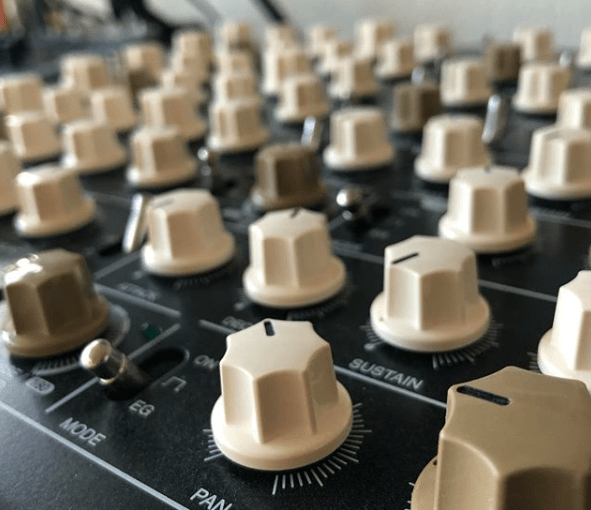
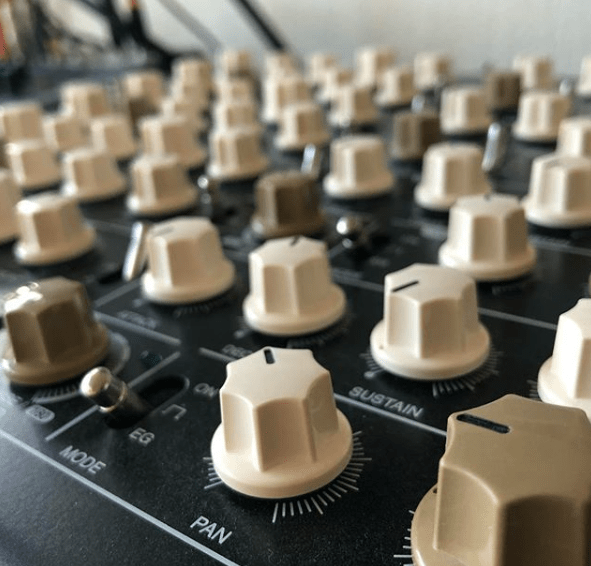
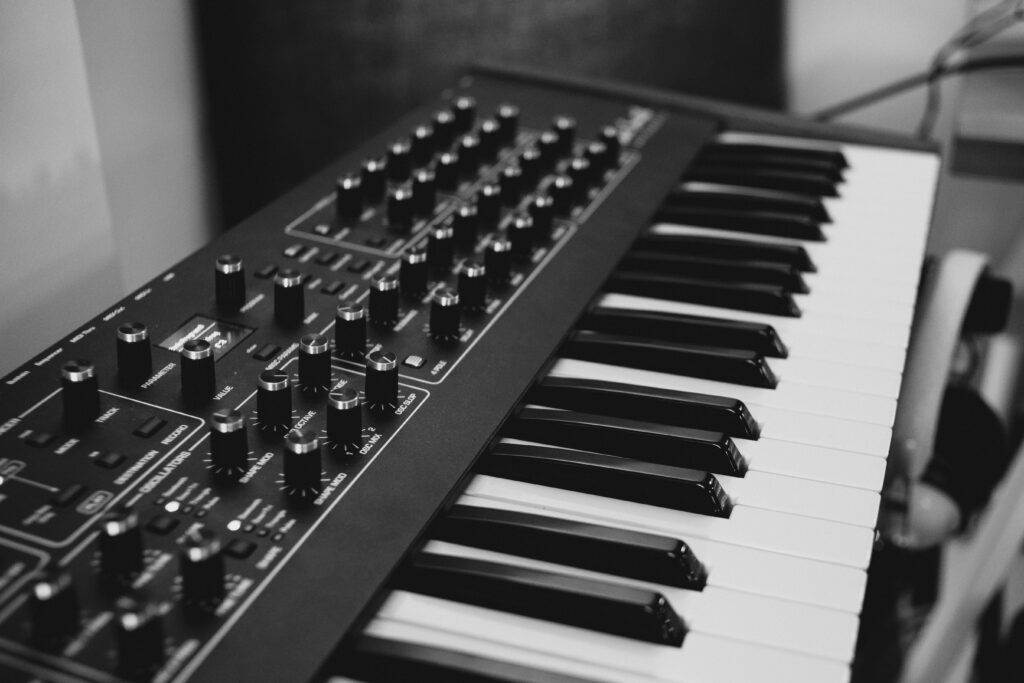
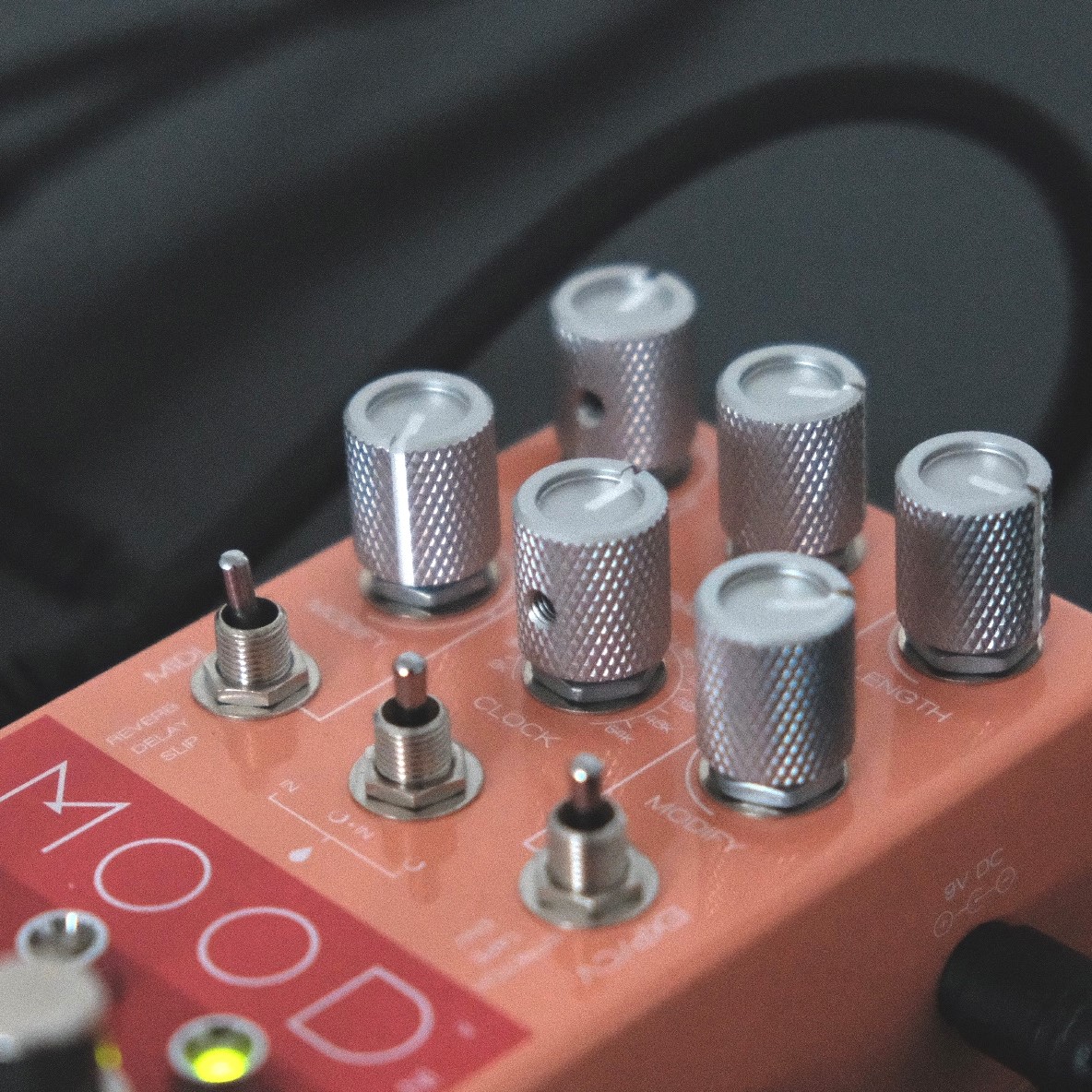
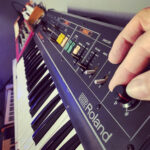
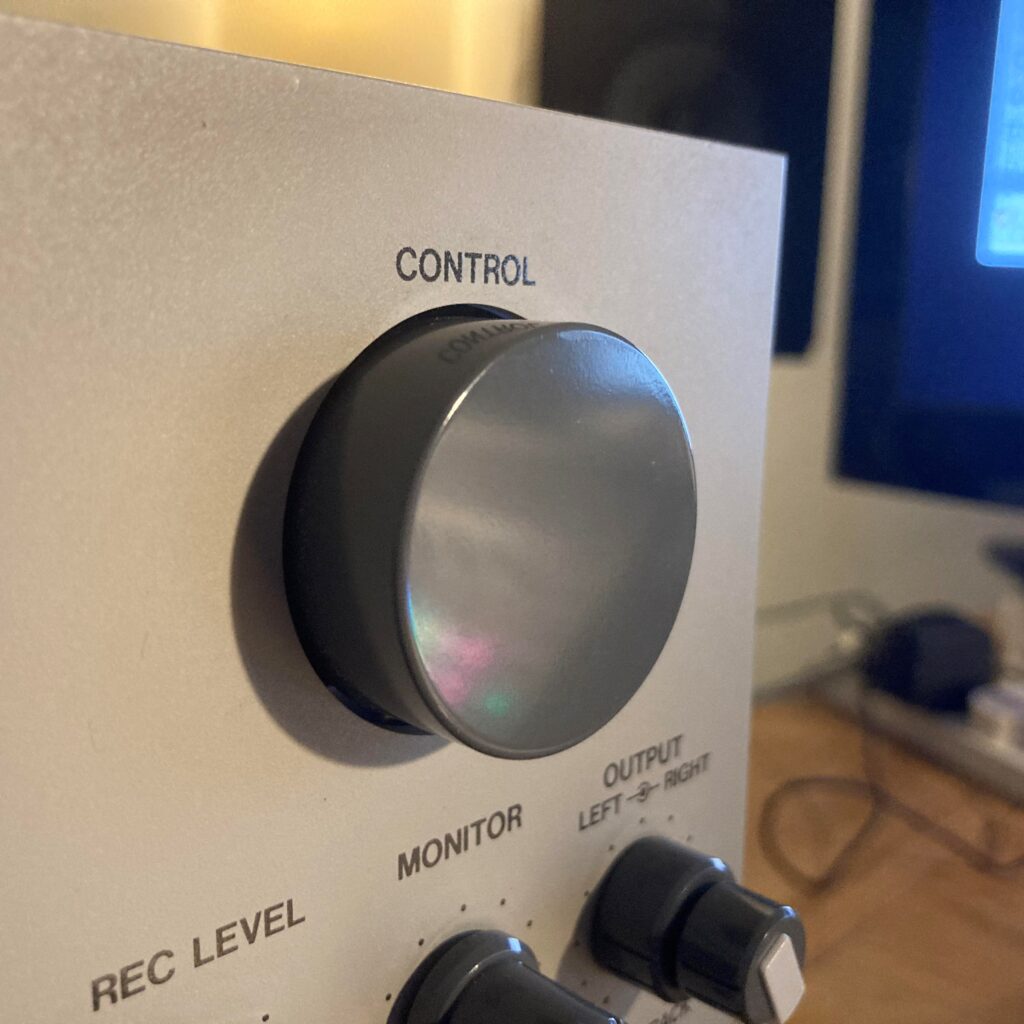
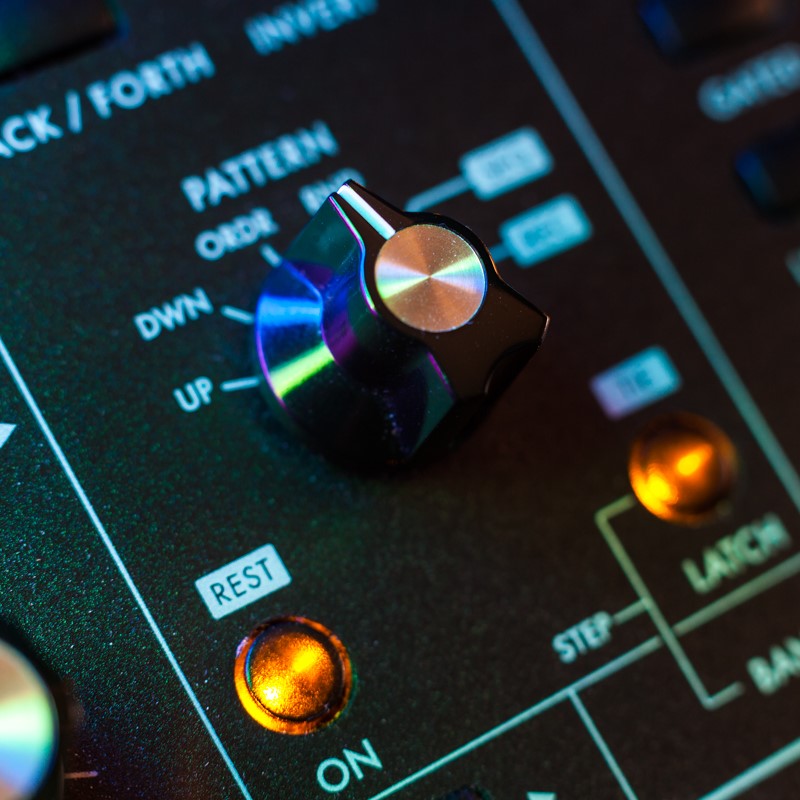
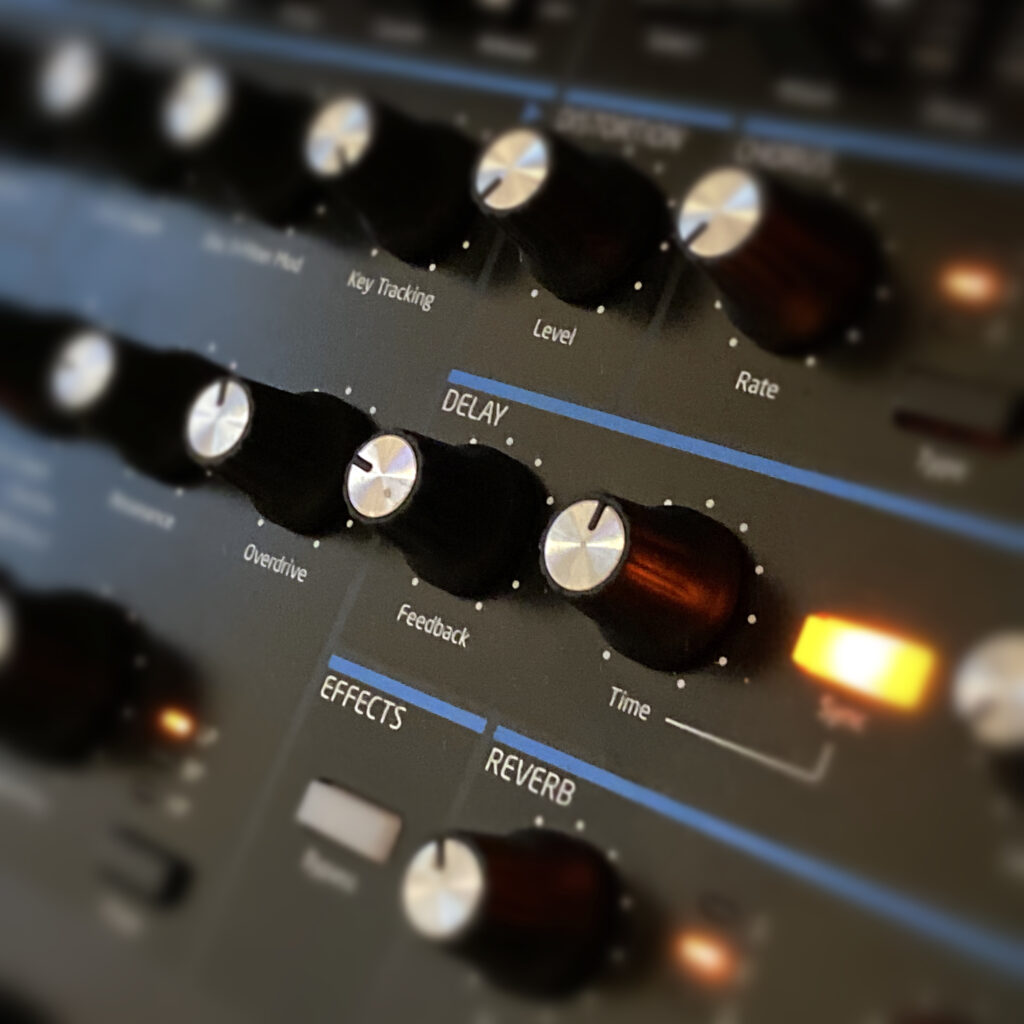
Right now I’m crushing hard on the faders of the Verbos Harmonic Oscillator. But in a longer perspective I’ve got to say the Octave and Waveform switches on the Vermona Perfourmer, the resistance and “click” is true perfection.
Vermona Perfourmer
2. Do you have an ‘almost’ perfect bit of kit? What would you change?
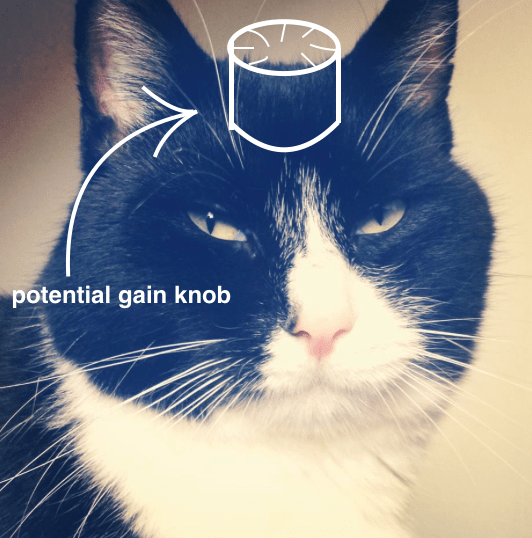
That would be my analog noise machine, aka my cat, Frasse. He makes all kinds of inspiring noises. But he would benefit a lot from a gain knob.
Frasse Cat
3. What setup do you bring on holiday/tour/commute etc.?
My laptop and, if not completely impossible, my trusty eurorack case!
Urba Doloro’s Eurorack
4. What software do you wish was hardware and vice versa?
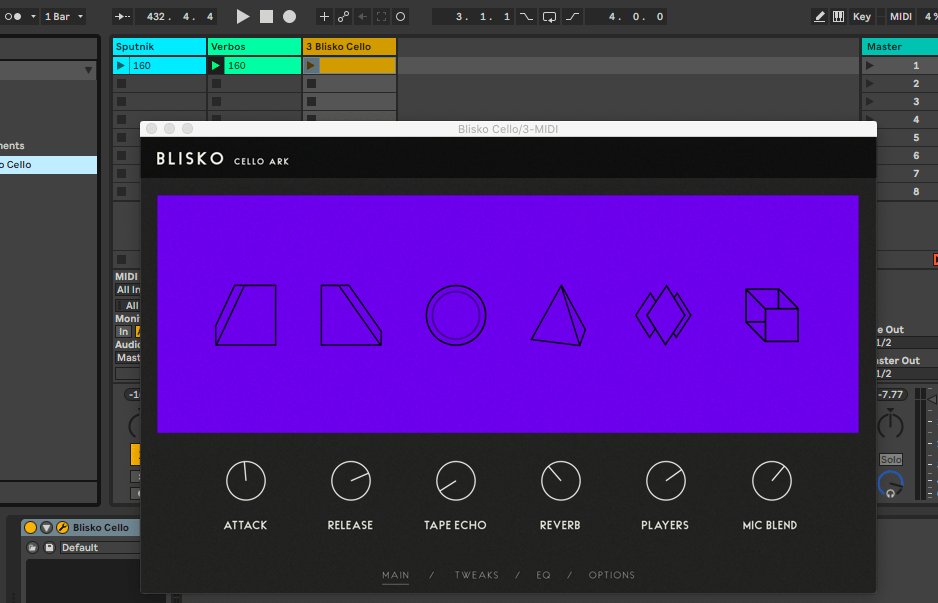
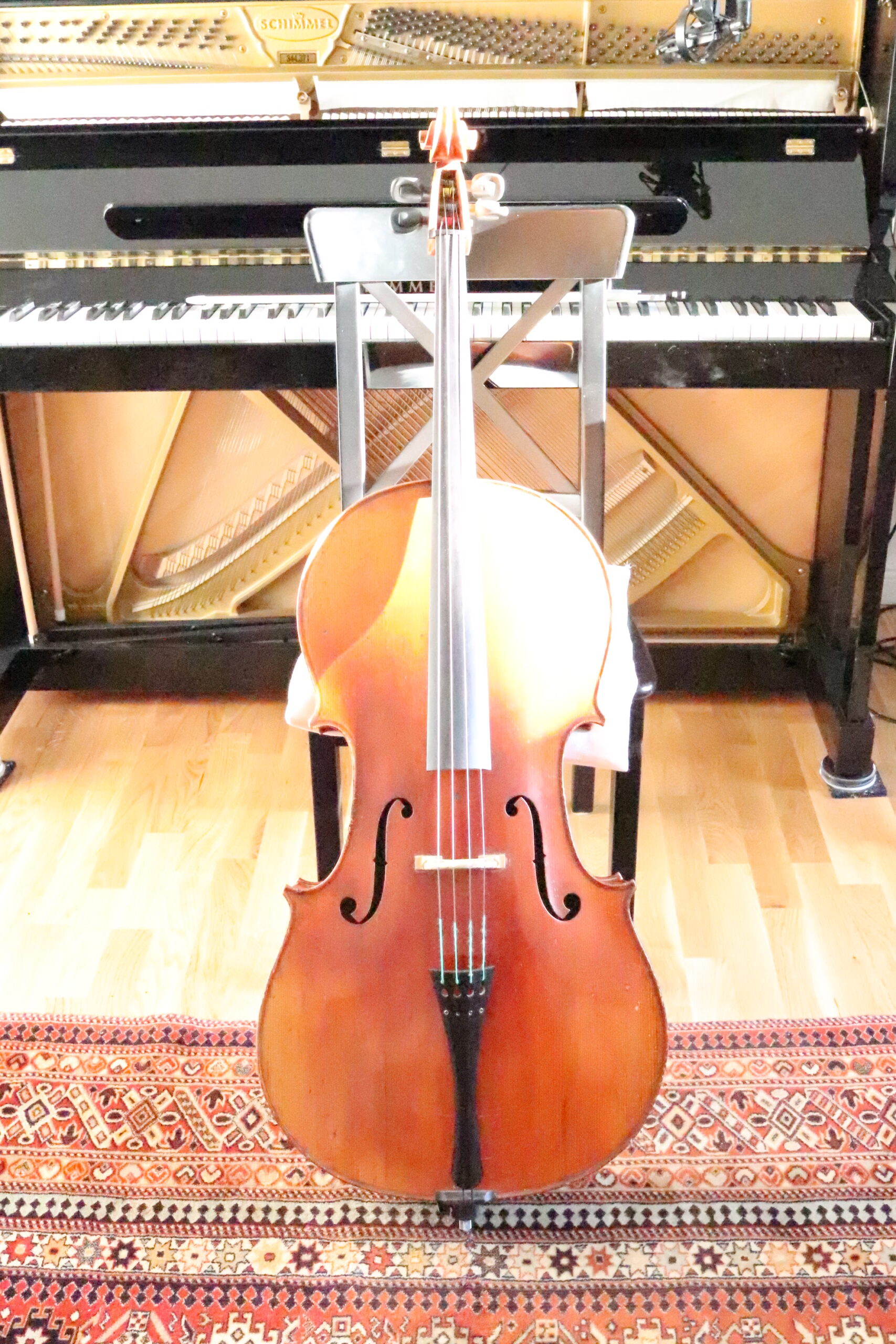
The blisko cello kit from felt instruments. I absolutely love it, but I would love it even more if I could have a small(ish) stand alone device with knob per function.
Blisko VSTi
5. Is there anything you regret selling… or regret buying?
I once bought and later sold the Waldorf Streichfett. Then I bought it again, and sold it again. Give me another year and I’ll probably have bought it a third time..
6. What gear has inspired you to produce the most music?
My Hammond SK-1. Right now I use it as part time Hammond organ and part time midi keyboard for using the Spitfire felt piano.
Hammond SK-1
7. If you had to start over, what would you get first?
I would, as last time, get a piano first. Learning the piano and music theory is really the staple of how I approach writing music. I find it very enjoyable to compose on the piano and then arrange it for eurorack, strings and piano.
8. What’s the most annoying piece of gear you have, that you just can’t live without?
My laptop. I can’t say I enjoy working on the computer when making music, but I can’t see myself managing without a computer at this moment.
9. Most surprising tip/trick/technique that you’ve discovered about a bit of kit?
Not really a trick, but I recently was surprised by how much I love the distortion you can create with Mutable instruments Veils just by pushing it towards the exponential mode. There are like a million sweetspots there when using it with various sound sources!
Artist or Band name?
Urba Doloro
Genre?
Somewhere between electronic minimalism and classical music maybe?
Where are you from?
Sweden, currently living in Västerås. It’s basically in the middle of Sweden, close by Stockholm.
How did you get into music?
I often went to a small record store called Jay’s records to buy a bunch of Bob Dylan albums when I was like 16 or 17 years old. One day the store owner told me he had put away something special for me. It was The Brown Album from The Band. It 100% blew me away and for the first time I understood why people love both playing and listening to music. I spent all summer learning the songs on piano. To this day the track King Harvest is still one of my absolute favorite songs of all time.
The Band
What still drives you to make music?
It’s a combination of doing it for myself because I feel a need to, but also to be able to communicate views on human society that I feel is not the most focused on in music. Urban alienation being the main theme I try to work with.
How do you most often start a new track?
It’s twofold. The creative process is generally started with reading scientific articles/books within my line of work, urban planning, to find topics to composer over. The actual writing of the music is almost always starts at the piano. I tend to start out with a few rules of limitations and then improvise over them for an hour or two. Then I try to find pieces of the improvisation I like and start arranging them.
How do you know when a track is finished?
I really don’t. I’ve had serious problems finishing projects the last few years. However, I’m really trying to find some kind of middle road right now by letting friends listen to my tracks. Based on their reactions (and of course my own judgement) I decide when things are finished.
Show us your current studio
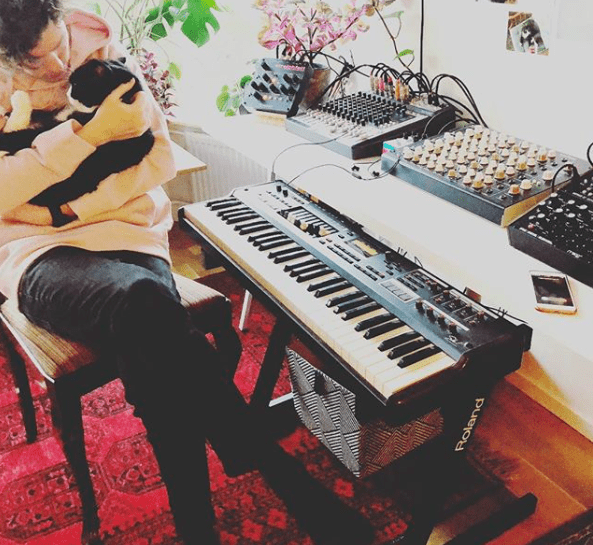
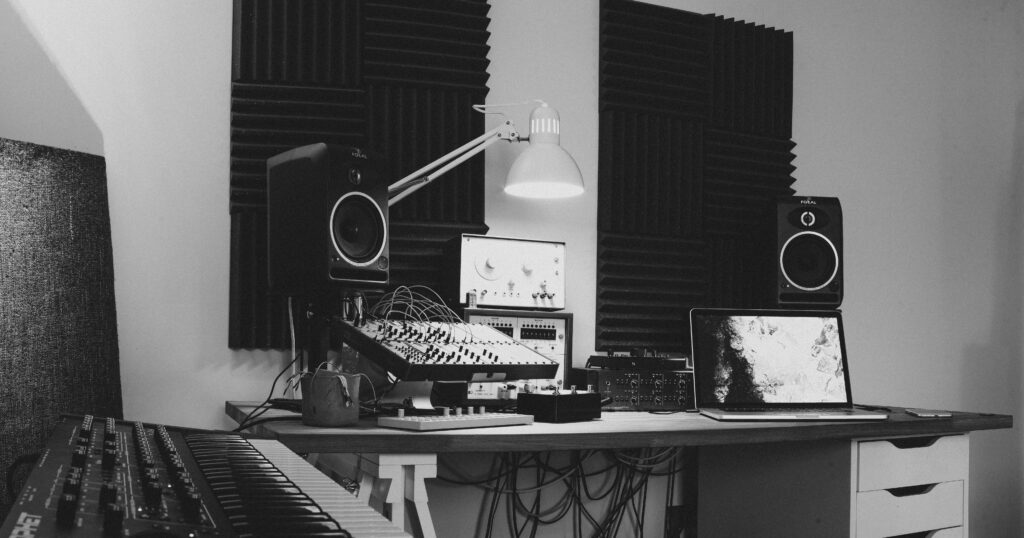
I’m waiting for a new grand piano, which will spice up my “studio”. So for now it’s just my eurorack case, my laptop, and my hammond. I tend to try to move it around a lot in my apartment to stay inspired, here is a summer-version of my studio!
Eurorack and cat
Best creative advice that you’ve ever heard?
I’m going to go with something Todd Barton recently told me when discussing what to buy/not to buy and how to stay creative, he told me to “Follow the sound”.
Promote your latest thing… Go ahead, throw us a link.
1. Favourite knob/fader/switch on a piece of gear and why?
Ondes Martenot
Maybe a cheeky/tenuous answer but – the ribbon of my ondes Martenot. It’s essentially a knob. You wear the metal ring on your right index finger, and it is attached to a string which is wrapped around a drum inside the machine. As you move the ring, the drum spins, a potentiometer is turned, and the pitch is altered. The amount of expression offered by this simple mechanism is unparalleled. My alternative answer would be another tenuous one – the touche d’intensité of my ondes. It is the volume control, and it’s name doesn’t translate exceptionally well into English. It is very tactile and very sensitive. It really is the soul of the ondes, and all your articulation comes from this wonderful key. The further you depress it, the louder the sound gets – simple!
Empress Zoia
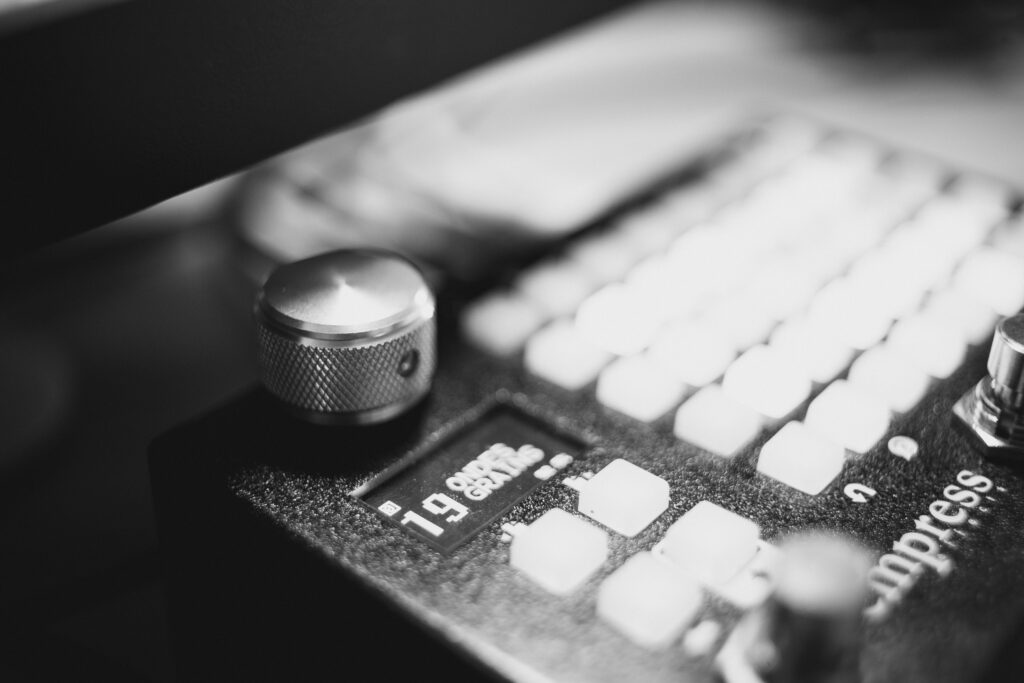
(Honourable mention to the silver knob/button on the ZOIA! The satisfying *clunk* of clicking that button is both mine and my wife’s favourite thing about the ZOIA!)
2. Do you have an ‘almost’ perfect bit of kit? What would you change?
I’ve loved the DSI/Sequential Prophet sound for ages, and I think the Rev2 is a super workhorse that manages to avoid being the typical jack-of-all-trades that some synths aspire to be. For my purposes it is practically perfect, but I would personally want to add a few things; an analog hi-pass filter (instead of relying on the digital one in the effects), an extra effects slot, polyphonic aftertouch, and more noise types…probably other things, too. It hasn’t let me down so far, and I’ve always managed to get the sound out of it, that’s in my head.
Dave Smith Instruments Prophet
3. What setup do you bring on holiday/tour/commute etc.?
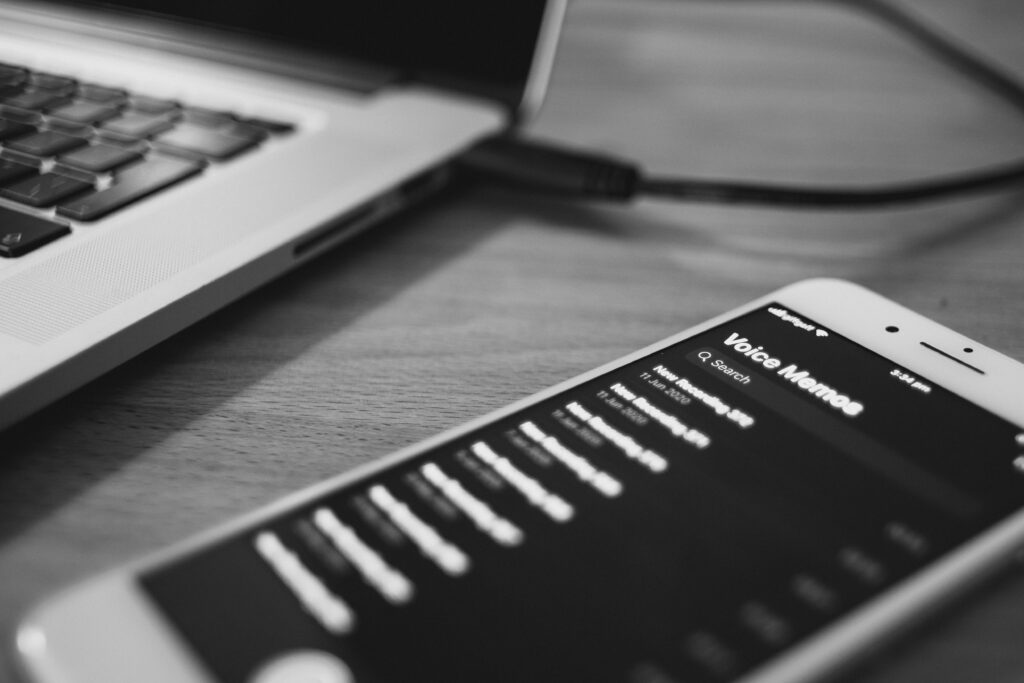
I don’t know if you’d call it a ‘setup’, but I always have my phone with me, and it is a vital tool in my music making. Most of the pieces on my new album started life as voice memos, and I think I have another two or three albums worth of material on my phone, going back years. I also like to record rivers and birds, etc. Some photographer or cinematographer said that “the best camera is the one you have with you” and I think, for me, my phone is the equivalent for music. I have recordings of a sweet little piano in a BnB in Huddersfield, a few harmoniums in a schoolhouse in Iceland, a violinist in an reverberant underpass in Berlin…but mostly the piano under my stairs or sketches of new ideas on the ondes. I also try to take a notebook with me when I go away on holiday or when I am sojourned in a studio somewhere. It helps me get ideas out of my head to make room for others. I do get twitchy and a bit miserable when I’m away from my ondes for too long but there isn’t really a remedy for that, unfortunately!
[Editor: ‘Getting ideas out of ones head, to make room for others’ is a great way to think about a sketch pad]
4. What software do you wish was hardware and vice versa?
I used Max/MSP a lot in college and university, and always wished there was a way to package my patches up into hardware. I haven’t used Max as much in the past few years, but the ZOIA is certainly scratching that particular itch for me, though it isn’t quite the hardware version of Max/MSP. I don’t think I would wish ‘being software’ on any piece of hardware, to be honest. I really value tactility. I don’t particularly hate software, though.
5. Is there anything you regret selling… or regret buying?
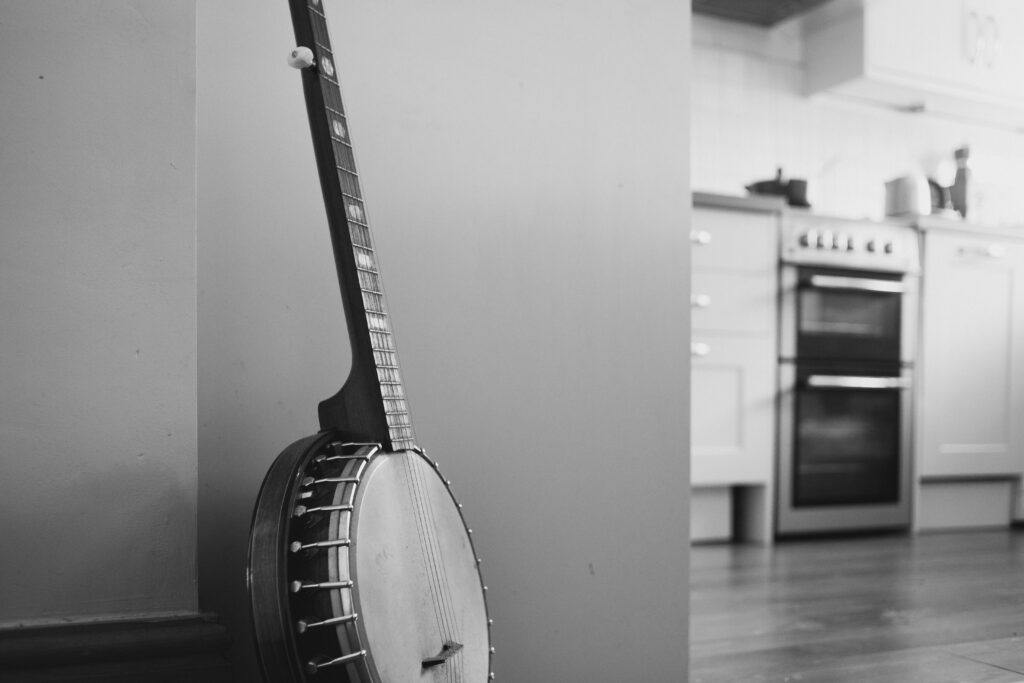
I traded an ex-BBC ReVox A77 tape machine for a banjo. If you can’t sense the regret in that sentence, then trust me – I regret it. The banjo sits in my kitchen and haunts me daily.
A Banjo
6. What gear has inspired you to produce the most music?
The ondes Martenot. I’d be hesitant to brand it as ‘gear’ but, ultimately, it is a tool that allows us to make heard our own waves. It is an instrument, sure, but Maurice Martenot said “the instrument is first and foremost ourselves”. The ondes has taught me this lesson over and over again in many different ways so far. The ondes and has really become a part of who I am, physically and musically. All of my musical ideas revolve around the ondes Martenot now, and it has inspired me to release music moreso than any other instrument, piece of equipment/gear etc.
Ondes Martenot
7. If you had to start over, what would you get first?
First thing I’d get is an ondes. Mine was built for me by Jean-Loup Dierstein in Paris and I wouldn’t hesitate to have him build me one if I was starting over again.
8. What’s the most annoying piece of gear you have, that you just can’t live without?
My computer. I just think computers are one of those “can’t live with ‘em, can’t live without ‘em” sort of things. I hate that it has to be there, but nothing is as convenient and practical for the music I make. A necessary evil! I don’t hate the process of making music on a computer, though, it makes sense.
9. Most surprising tip/trick/technique that you’ve discovered about a bit of kit?
I have this big old Soundtracs 16 – 8 – 16 that I sometimes run things through to get some of that saturation and drive that you can only really get from older analogue preamps. I remember running a drum pattern through it, along with the prophet, a function generator, and some ondes Martenot loops. Driving the preamps hard would make the whole mix pump and breathe with the drum pattern. Lovely.
Artist or Band name?
Josh Semans
Genre?
Hard to say, maybe experimental/electronic/alternative/classical. That sort of thing, I suppose!
Selfie?
If I must! (Attached!)
Josh Semans
Where are you from?
The north of England!
How did you get into music?
I’ve always been around recorded music, and I’ve loved musical instruments for as long as I can remember. Piano and guitar were my first instruments as a child, then I really got into drums and synthesisers. The drums where my main instrument for a while, now it is the ondes Martenot. I still love synthesisers, and do play the piano a lot.
Upright Piano
What still drives you to make music?
I can’t not do it.
How do you most often start a new track?
I come up with new ideas most days, and I usually record them onto my phone or an Ableton session to be worked on at a later date. I’m currently working on about 5 or 6 new pieces. I like having multiple pieces on the go, so I can work on something else when I’m a bit worn out from another.
How do you know when a track is finished?
When the endless tweaking becomes pointless.
Show us your current studio
Ondes MartenotJosh’s Studio
Best creative advice that you’ve ever heard?
Something that James Murphy said about why he reformed LCD Soundsystem made me dig around to find this quote from David Bowie; “Always go a little further into the water than you feel you’re capable of being in. Go a little bit out of your depth. And when you don’t feel that your feet are quite touching the bottom, you’re just about in the right place to do something exciting.”
Promote your latest thing… Go ahead, throw us a link.
1. Favourite knob/fader/switch on a piece of gear and why?
That’s a hard question to answer as every instrument is a composition of different knobs, faders and switches, which are only valuable through their interaction between each other. But if I had to choose one it would be the cutoff knob or fader. I tend to like very mellow sounds especially for inspiration.
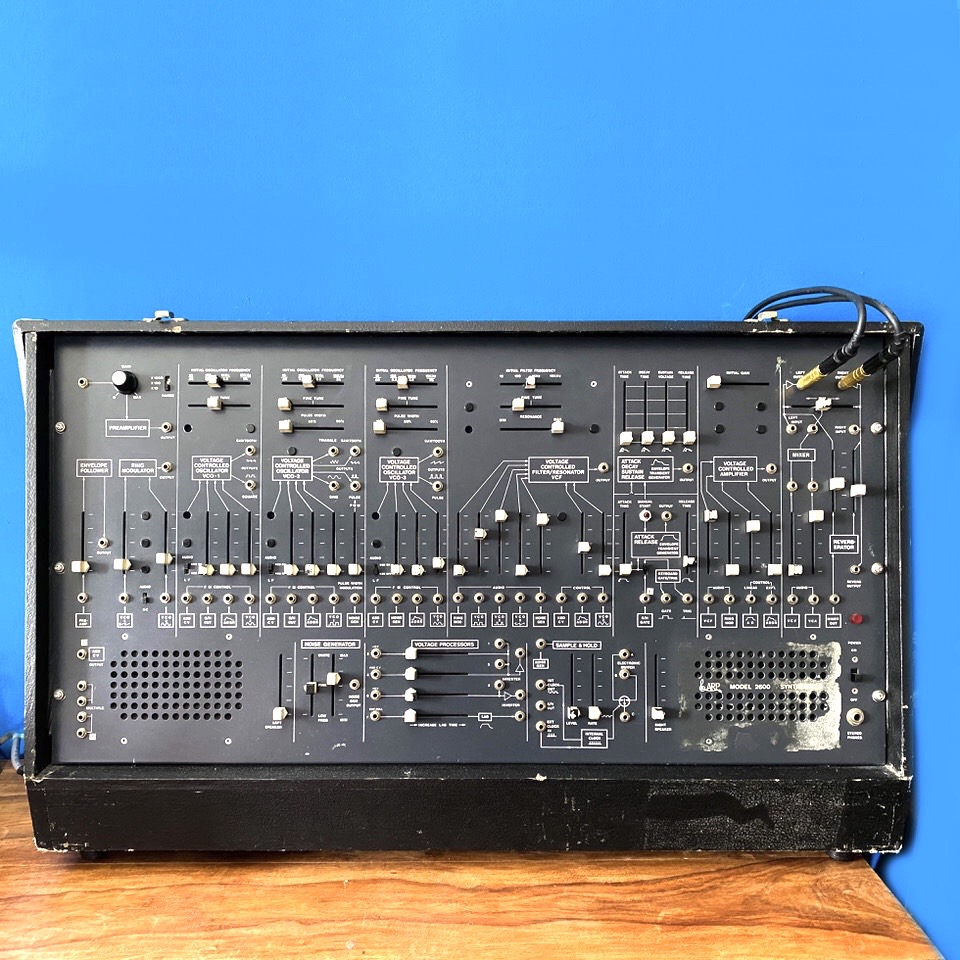
ARP2600
My favourite cutoff of all times is the one on my ARP2600, especially with the resonance on maximum. I have never heard a more beautiful and eerie sound.
2. Do you have an ‘almost’ perfect bit of kit? What would you change?
Panic Girl Eurorack modular
That would be my modular system. It grows and changes with me as I grow and change as an artist, and it’s the perfect instrument for those “happy little accidents”, for experiments, for getting to that next level sound design wise. What I would change about it? Maybe it would be great to make them less heavy all in all, especially if you want to travel with it.
Eurorack and flower
3. What setup do you bring on holiday/tour/commute etc.?
As much as fits in my suitcase. I usually take a skiff with me, my OP-1, an iPad and my laptop, just to have some options when in a good flow.
Eurorack skiff as LP cover with an OP-1 and SM57
4. What software do you wish was hardware and vice versa?
I’d like to have the René by Make Noise as a Plugin, I love that module. It brings that bit of extra spice to my tracks, that I really like. And the Malgorithm, it’s my go to bitcrusher sound that I can’t get enough of so far. As for the other way around I would love to have the Fabfilter plugins as a module, especially the Limiter. It gives you the volume you need without colouring the sound too much, I use it on every track I make as well as their EQ.
Make Noise Rene
5. Is there anything you regret selling… or regret buying?
Not yet. I surely bought some gear, especially some modules that didn’t fit my workflow after all. But that’s part of the game with modular synthesizers in my opinion, you try, sell, buy, reconfigure and grow with your system (or the other way around?) like you grow musically and as a person throughout life.
Eurorack and a bit of ARP2600
6. What gear has inspired you to produce the most music?
I’d say Logic and my modular system. There is so much to explore in each, so many possibilities to learn new things and so much room for „happy accidents.“
I spent a lot of time learning Logic as a rookie, I wanted to know it inside out so I can “play” it like an instrument. And there are several things especially in the beginning you have to figure out before you can produce music without having to think too much, like moving the anchor point in your audio regions or how to get an audio file with a different bpm to fit your track or how to set up the Environment for different purposes and so on. While figuring all that out, I came up with one idea after the other of what I wanted to try and explore musically. Back then I spent every free minute with Logic, it was extremely exciting to unlock all those levels of music creation one by one, it’s actually quite similar like getting addicted to a video game.
And modular instruments are just crazy with all their possibilities, it’s an endless source of inspiration to me for about ten years now. I’ve tried out so many modules by now, I couldn’t count them all. I also got some of them sent to me to write articles about for the german print magazine Sound & Recording, like the Yarns module by Mutable Instruments for example. And now I can’t live without it anymore. They are all very unique and special in their own way, it’s exciting and often eye-opening to make music with them.
7. If you had to start over, what would you get first?
I think I’m pretty ok with how things went and what equipment I got throughout the years. I started out on a PC, learned Logic, Cubase, ProTools, Fruity Loops and Reason at the SAE Institute back then and finally got a Virus TI as my first synth.
The most important thing to me is to learn how for examples DAWs work in general or how synths work in general, so I can translate that knowledge quickly to any other related gear rather than learning just one DAW or one synthesizer in and out and not knowing how to use similar gear from other companies.
That can be pretty helpful especially if your working as an audio engineer or composer and need to work with different tools from time to time.
8. What’s the most annoying piece of gear you have, that you just can’t live without?
That would be the computer per se I suppose. Especially moving to a new computer can be quite unnerving or when your current one gets too slow for all the tasks you want to do.
9. Most surprising tip/trick/technique that you’ve discovered about a bit of kit?
That would be modules with which you can do generative patches, that was a real eye-opener for me. The René module by Make Noise with it’s cartesian sequencer was my first experimental module and I still use it in every patch I make. Being able to set the notes of a scale, but randomizing the order in which those notes are being played can make for some very interesting variations in a patch.
Artist or Band name?
Panic Girl
Genre?
Electronica, Downtempo, Experimental
Selfie?
Martha Bahr aka. Panic Girl
Where are you from?
I’m currently living in Munich, Germany.
How did you get into music?
I discovered my passion for music very early on when I was a child. I was utterly fascinated with this invisible medium that still seemed to surround me though I couldn’t touch or see it. I already knew back then that I wanted to spend my life with music, in whatever way possible.
Panic Girl in a dream of wires
I sang in the school choir for several years, learned how to play the piano and the guitar and was playing in bands when I was a teenager. That’s when I got more and more interested with the equipment that we used like the mixing desk, the effects we applied to our instruments or DI Boxes for example. I just wanted to know how they worked. When a good friend of mine told me about the SAE Institute I knew instantly that this is what I wanted to do. I quit my studies at the university and finally started the Audio Engineering Program at the SAE Munich.
What still drives you to make music?
I just can’t do without it, it has been such a vital part of my being since early childhood. I still have tons of ideas I want to try out and there is always so much exciting equipment out there to explore. And there are also inspiring collaborations with for example Anatol Locker. We make experimental music as Lucid Grain, where we create music with our modular synthesizers that none of us could compose on it’s own. It’s like melting two musical minds into new fresh musical pieces. Inspiration is everywhere I suppose, you just have to learn to see it.
How do you most often start a new track?
I need a sound that inspires me to make a full song out of it. That sound can be literally everything, be it a noise from the coffee machine or birds singing, sounds from my modular system, my ARP2600 or my OP-1 for example. I often seem to navigate towards mellow and dreamy sounds and pads, noisy background sounds like from a vinyl player or field recordings. That initial sound then determines where I go from there, if the track needs drums or if it will be a more experimental one, if I feel like singing to it or if some more field recordings would fit well.
Arp2600
How do you know when a track is finished?
The composition part of music making is usually done pretty quickly. It’s the mixing that takes up most of my time. I check it on several loudspeakers and headphones and have to adjust it several times, until it sounds equally good on everyone of them. I also find it very useful to not listen to the track for at least one or two weeks, so you actually have forgotten how it sounds. If you then re-listen and still like it, then I guess you’re good to go.
Show us your current studio
Eurorack and Arp2600Roland Juno-60 and a Casio
Best creative advice that you’ve ever heard?
One of the sentences that stuck in my head for years is that you shouldn’t listen too emotionally when you’re working on a track, especially during the mixing stage. That’s something I still can’t fully control, sometimes I just need to crank up the volume, dance around and go back to work after that. You need a clear and calm mind for mixing to make those technical decisions, to make a mix work. I could for example drown everything in reverbs and delays, I just love how they sound. But it’s definitely not good for your mix, it gets muddy very fast. So I need to hold back and work on the mix from an mixing engineers perspective to get the most out of it.
Promote your latest thing… Go ahead, throw us a link.
I’m very proud of my latest album “Cake On Jupiter” that I released with Modularfield last year:
[Editor: Beina a musician now a days means taking on many different roles. Which you can see that people such as Ms. Bahr is very adapt at. Do you struggle with the various roles required to be a productive musician these days? And which roles are the most challenging? Leave a comment below.]
[Editor: Do you have a favorite tip, trick or way of working with any of the gear from this interview? Then throw a comment below…]