Paul Talos – Signal Soundlabs

1. Favourite knob/fader/switch on a piece of gear and why?
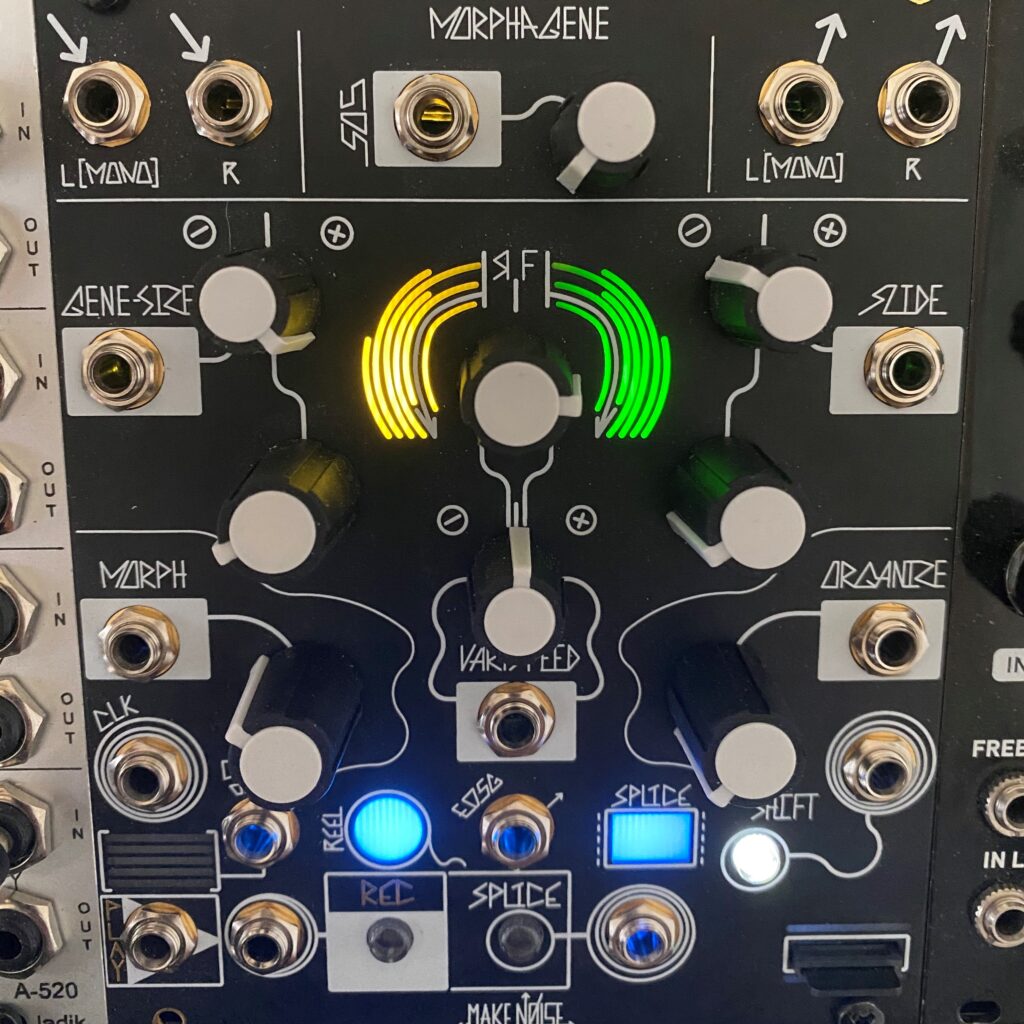
Make Noise Morphagene

Lately, it’s been the Vari-Speed knob on the Morphagene. It’s really incredible how something as simple as changing the speed and pitch of a sound can turn it into something completely unrecognizable. Things get even more interesting when you start reversing things too. You really end up discovering all kinds of sounds within sounds that you never really would have thought were there, especially when slowing samples down. Gotta love the wonderful world of microsound.

2. Do you have an ‘almost’ perfect bit of kit? What would you change?
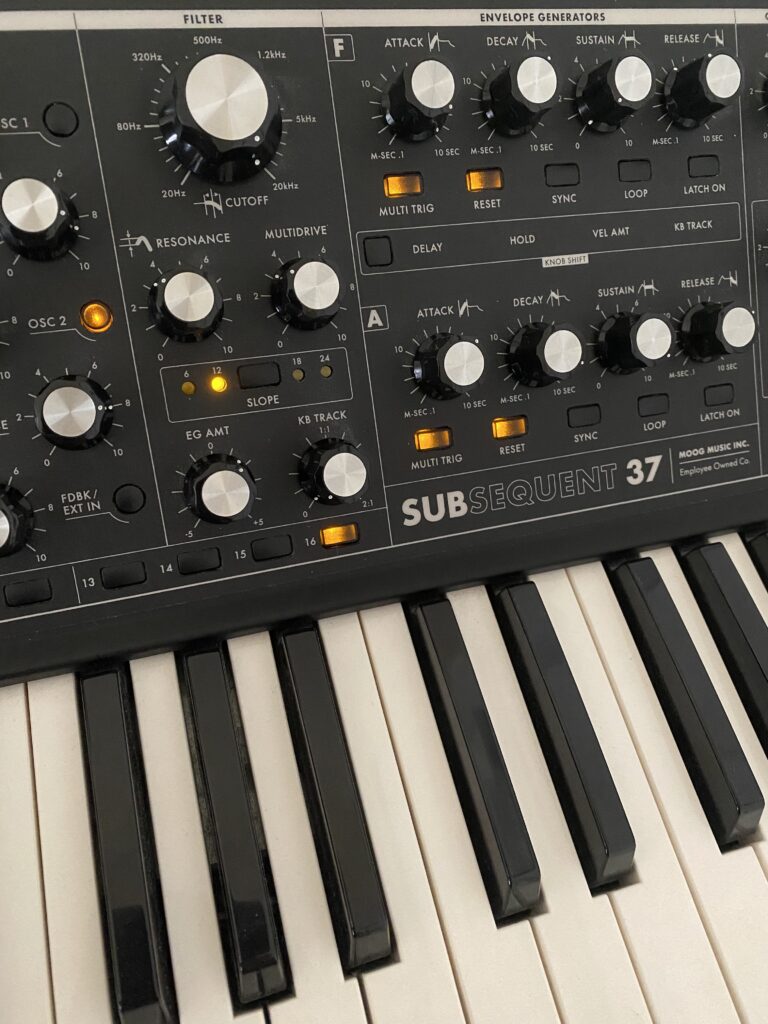
Moog Subsequent 37

The closest thing for me would be my Moog Subsequent 37. It just puts so much sound design power at your fingertips, you almost don’t need anything else. Between having one of my favorite filters, two different kinds of distortion, and plenty of modulation options, there’s enough in there to make a lifetime’s worth of music. It may not be as infinitely versatile as my eurorack setup, but there’s a certain immediacy about it that allows me to get what I need out of it very quickly. The only thing that could possibly make it even better is if it had voltage control over more of the parameters. I actually really regret not jumping on the CV version while they were still making those, as that would have been as close to perfect as you can get.

3. What setup do you bring on holiday/tour/commute etc.?
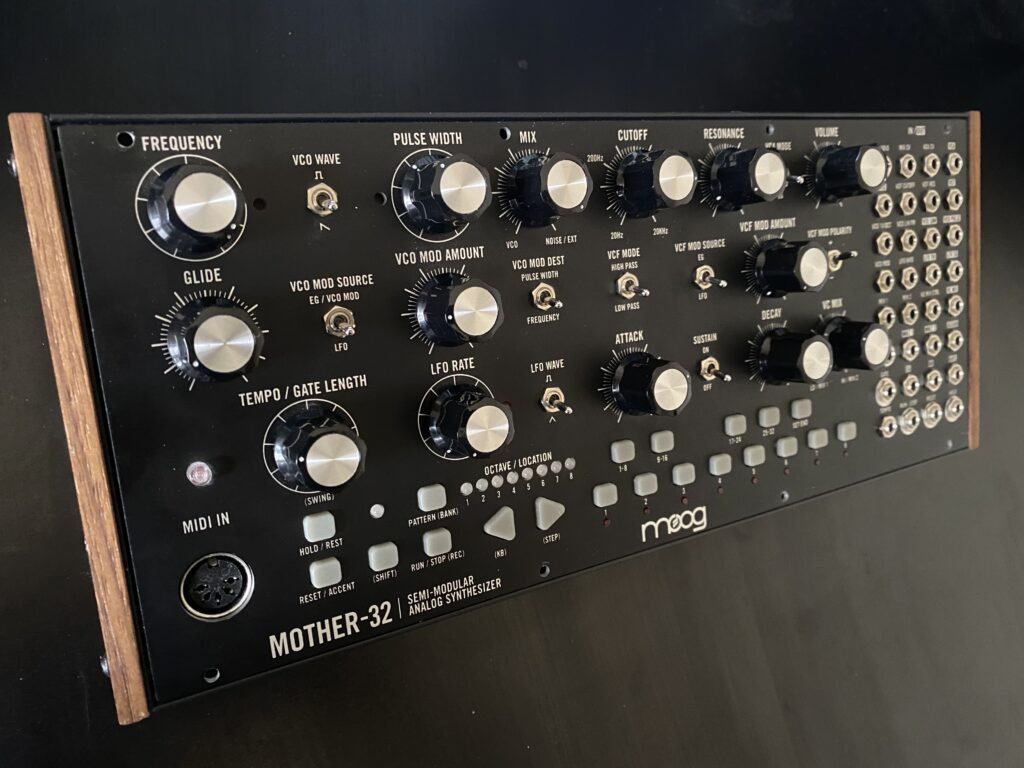
Moog Mother-32

I can’t say I do much traveling with my gear, as my setup wasn’t exactly designed with mobility in mind. But I guess if I were to bring anything, it would be my Moog Mother-32. Not only is it one of my more compact instruments, but I find its limitations to be pretty inspiring. It’s a surprisingly deep instrument and can yield some very unexpected results with a bit of clever patching. I often feel like I’m just scratching the surface of what it can do, so I suppose traveling with it would really force me to get everything I can out of it.

4. What software do you wish was hardware and vice versa?
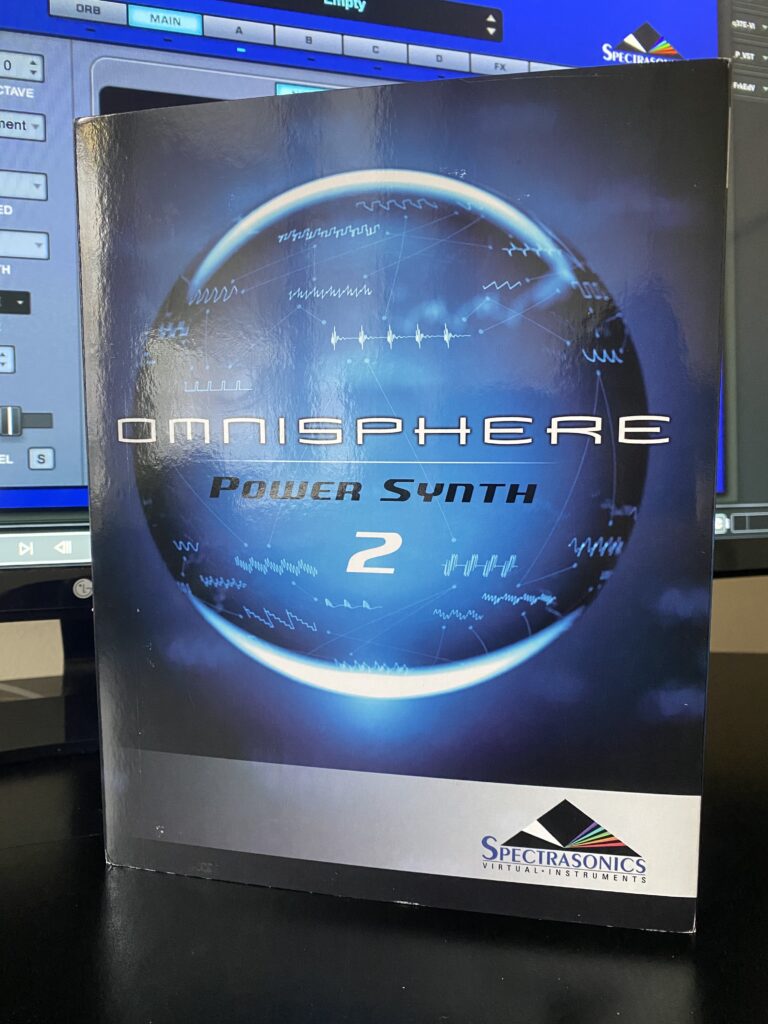
Spectrasonics Omnisphere

I really wish there was some kind of hardware version of Spectrasonics Omnisphere. It’s such a useful instrument when scoring for a film, especially for creating cinematic soundscapes. It’s one of the few VST instruments I find myself going back to time and time again. If they made a hardware version with some CV control over the parameters, I’d buy one in a heartbeat. Of course, with the size of the library being what it is, I’m sure it would be incredibly impractical to actually implement in hardware form, much less in eurorack format.
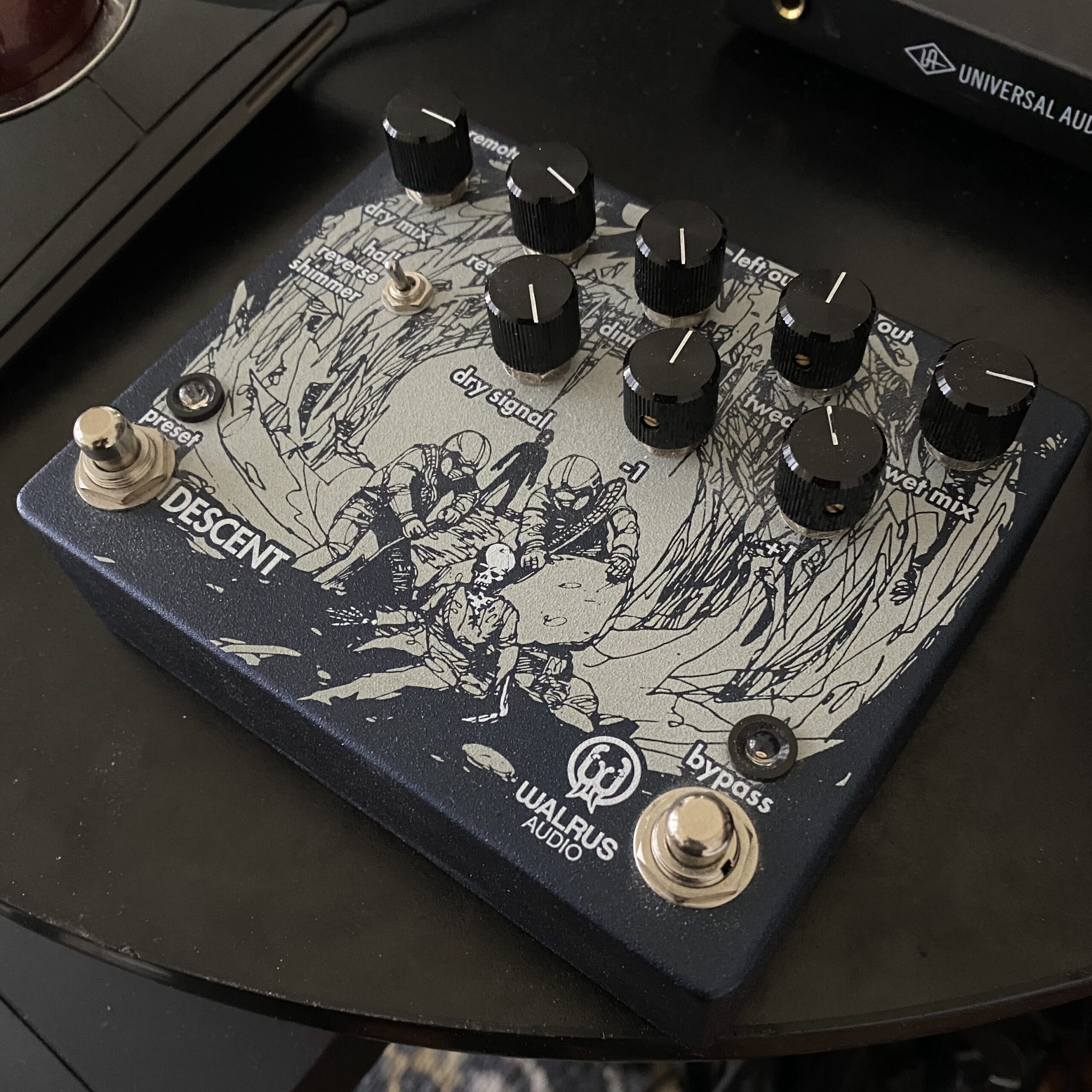
Walrus Audio Descent

On the flip side, I’d love a plugin version of my Walrus Audio Descent reverb pedal. I use the shimmer mode on that pedal quite a bit to add an almost choir-like quality to synths, and would love to have multiple software instances to use throughout a mix. Sure, there are ways of creating a similar sound using other software (the Descent is digital after all) but the pitch shifting on this pedal has a very particular, kind of unnatural sound to it. Hard to describe, but it definitely has a tone and I haven’t really come across anything else that sounds quite like it.

5. Is there anything you regret selling… or regret buying?
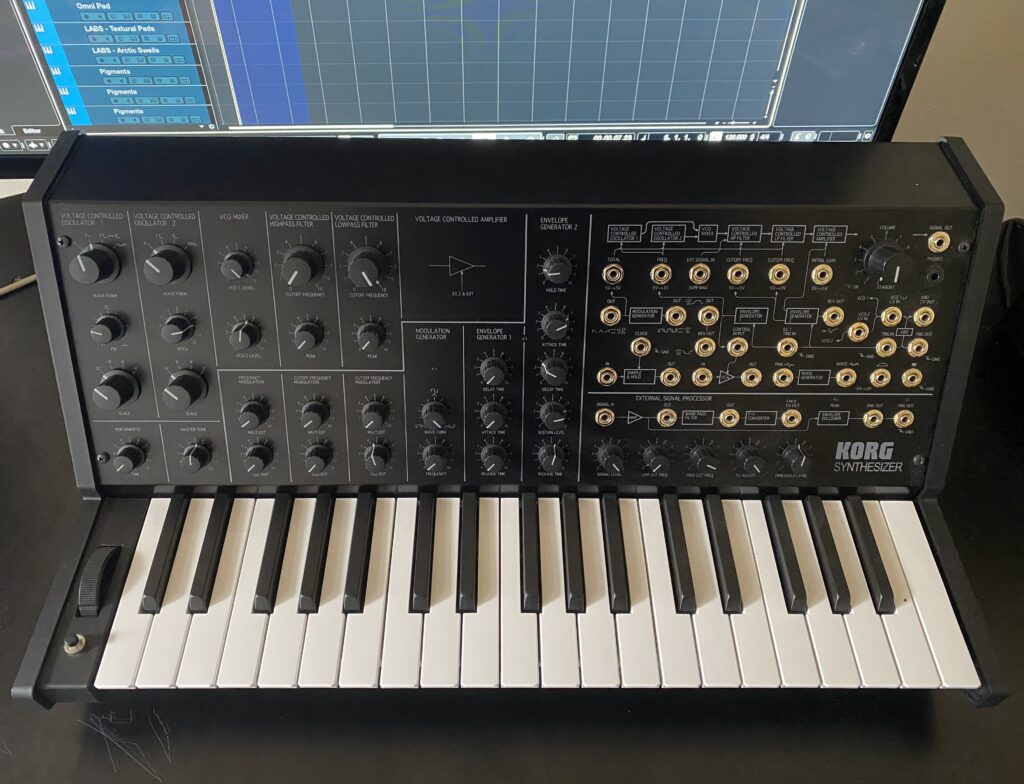
Korg MS-20 mini

I sold my Korg MS-20 mini when I first started diving into eurorack. At the time, I figured it didn’t make sense to have a semi-modular synth that didn’t speak Volt per Octave and was looking to get some cash to finance the beginnings of my modular (I believe I ended up buying a Maths with the money I made). But over time I realized just how much I missed those oscillators and filters. It’s such a unique instrument, and much like the Mother-32, it just has a very inspiring set of limitations. So last year, I actually ended up buying it again and will never repeat the mistake of selling it.
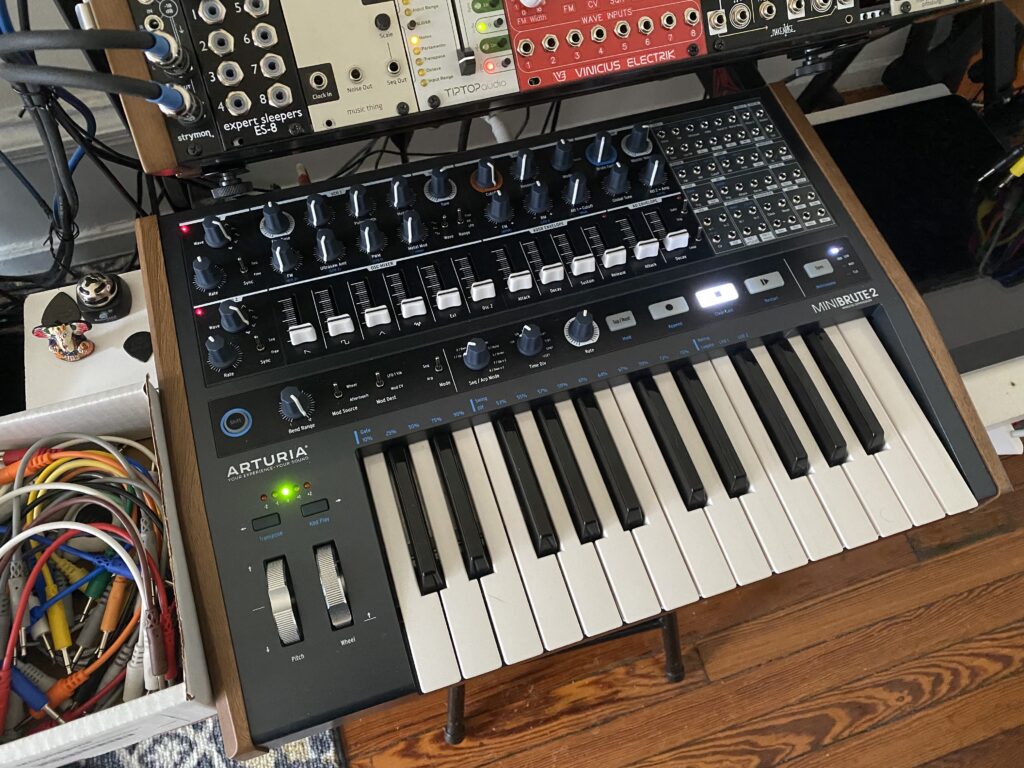
Arturia Minibrute 2S

As far as buyer’s remorse on a piece of gear, I bought an Arturia Minibrute 2S when they first came out and had some regrets on that one. The synth voice itself is phenomenal, and the ability to integrate it with eurorack really enhanced the functionality of my existing modular system. But I never got into a good flow with the sequencer. As someone with a background in music theory, I found it really difficult to visualize musical intervals due to its lack of a traditional keyboard. So I eventually ended up selling it and getting the keyboard version instead. Been loving it ever since.

6. What gear has inspired you to produce the most music?
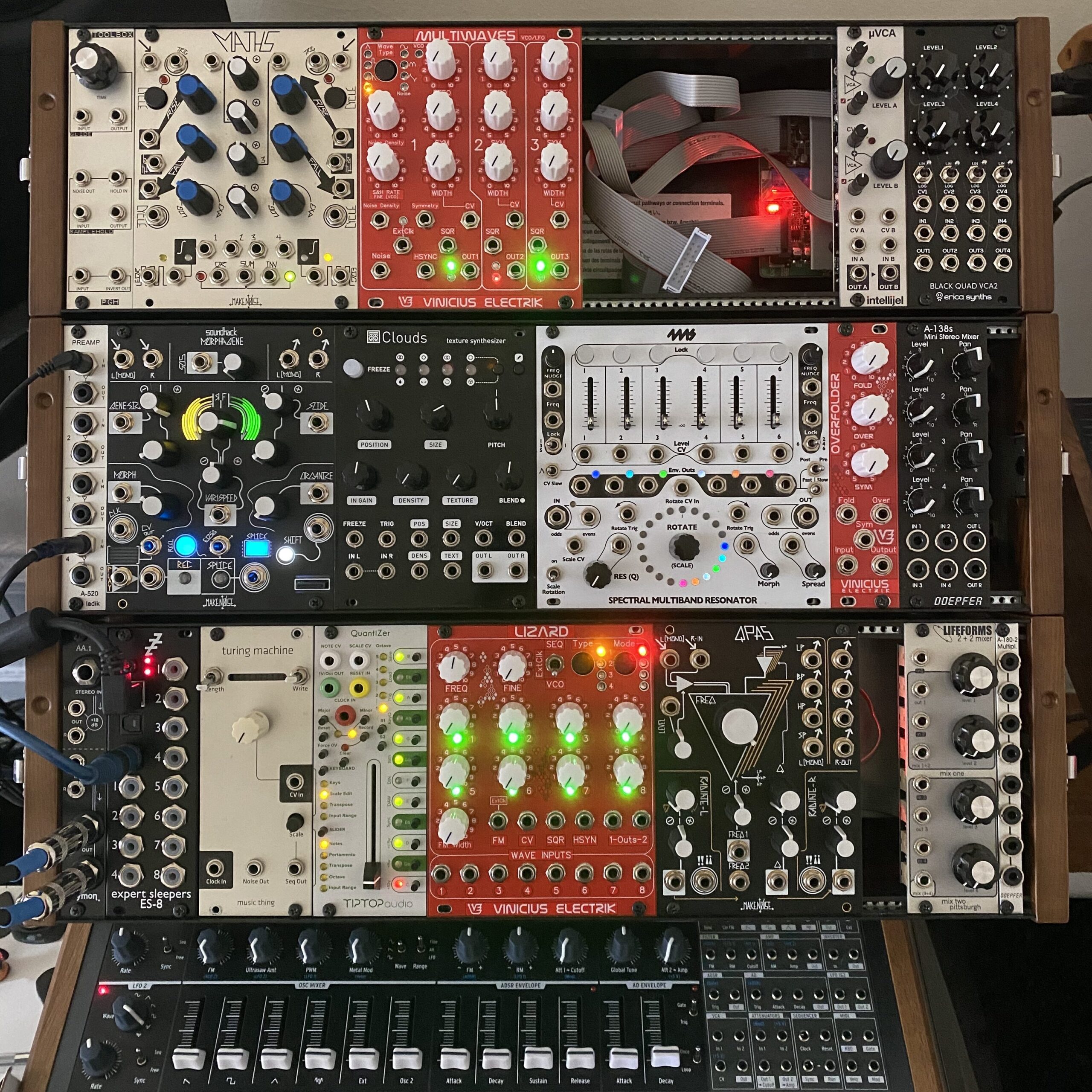
Signal SoundLabs Eurorack

Lately, my eurorack rig has been the most consistent source of inspiration. I made some upgrades to it recently, and after about three years of buying and selling modules, I finally feel like I have most of the puzzle pieces in place. Modular synthesis definitely has an element of unpredictability, feels like these modules have a will of their own sometimes and I’m just along for the ride.
It really is a happy accident machine. The downside is it can be a bit difficult to tame, especially when working on music that is synced to visuals. But lately I’ve managed to find a workflow that has been very effective for film music. The key was to start recording everything I did on the modular and then spending some time editing to pick out all the best parts. The editing can be time consuming, but I find myself getting faster and faster with patching so it all evens out. Overall, I just find it more inspiring to capture a bunch of audio from the modular and then work by subtraction rather than addition.

7. If you had to start over, what would you get first?

If I had to start again, I’d probably get the most powerful computer I could afford, along with a copy of Cubase, a Universal Audio Apollo Twin, and some kind of semi-modular synth like the Minibrute 2. A basic rig like this would cover pretty much all the essentials, while combining a tactile hardware workflow with plenty of digital flexibility.

8. What’s the most annoying piece of gear you have, that you just can’t live without?
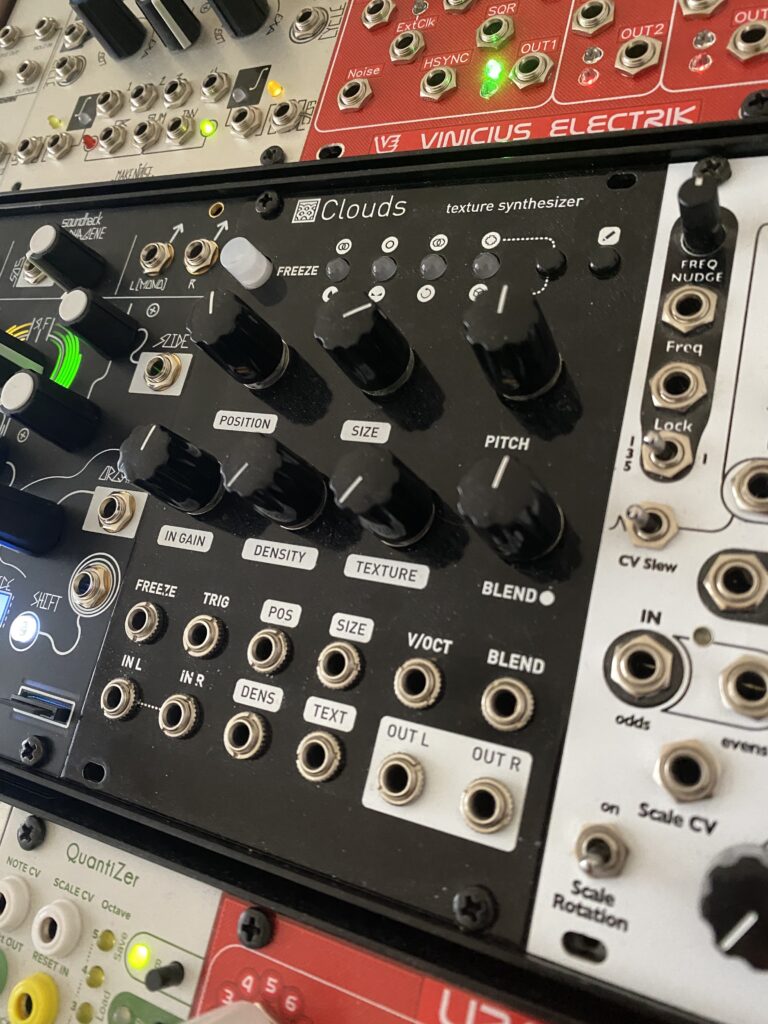
Mutable Instruments Clouds

Hard to say, but I guess I kind of have a love/hate relationship with my Mutable Instruments Clouds module. I rely on it pretty heavily when it comes to making any kind of ambient drone patch, but I find it rather annoying having to remember what all the controls do in its various different modes. Having installed the Parasite firmware really didn’t help with that either. That said, I came across an iOS app called Modes that acts as a nice cheat sheet for some multi-function modules, so I’m definitely not pulling my hair out as much as before. As much as I have a few gripes with Clouds, it really brings a lot to the table and has become pretty much irreplaceable in my rack.

9. Most surprising tip/trick/technique that you’ve discovered about a bit of kit?
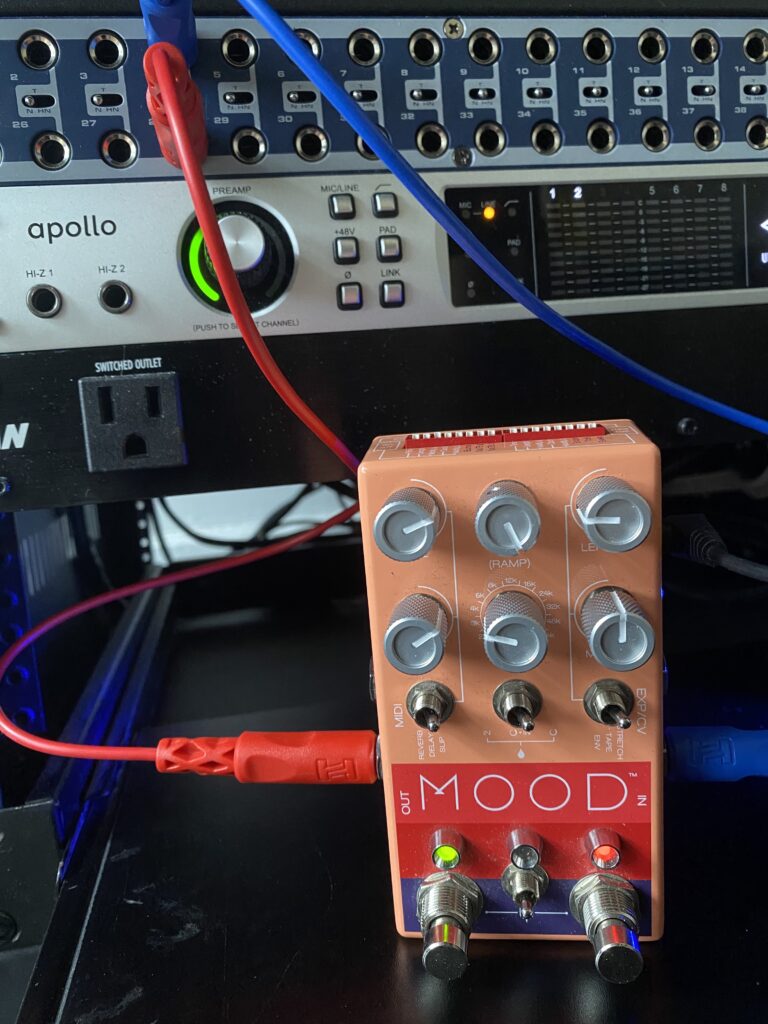
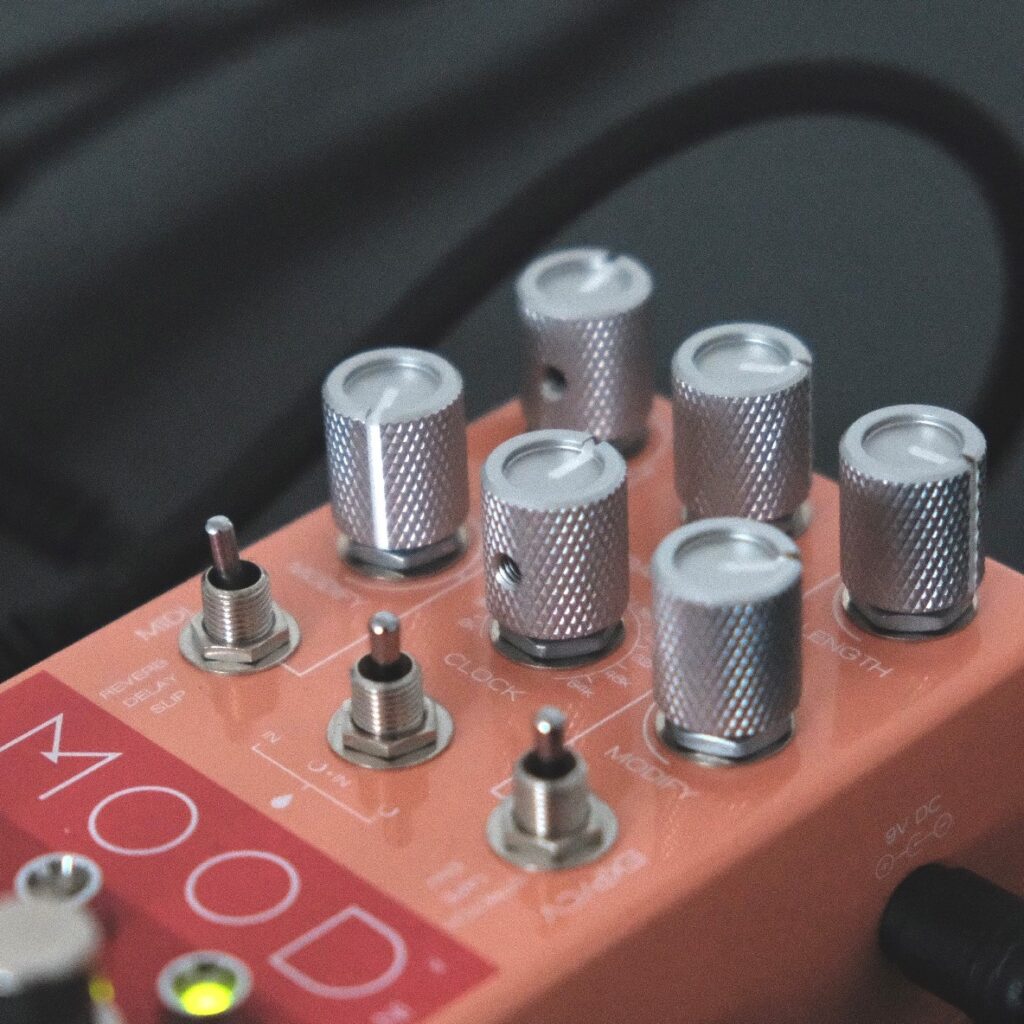
Chase Bliss MOOD

I’ve recently been getting more and more into processing audio from Cubase using effects pedals. Plug-ins can be great, particularly for utility functions like EQ, but nowadays there are so many unique pedals out there, it feels like a shame not to use them to process in-the-box sounds as well. I’ve been doing this a lot with my Chase Bliss MOOD pedal in particular, which lets me grab a short slice of audio from the DAW and transform it in all kinds of quirky and interesting ways. Lately, whenever I get stuck on a track, I’ll start feeding random audio into MOOD (unused takes from the modular work particularly well) just to see what happens. It’s a great way to get myself out of a creative rut.


Artist or Band name?

Paul Talos

Genre?

Cinematic Electronica. I’ve never been sure how to categorize my music exactly, so eventually I just made something up. I think it sums things up pretty nicely.

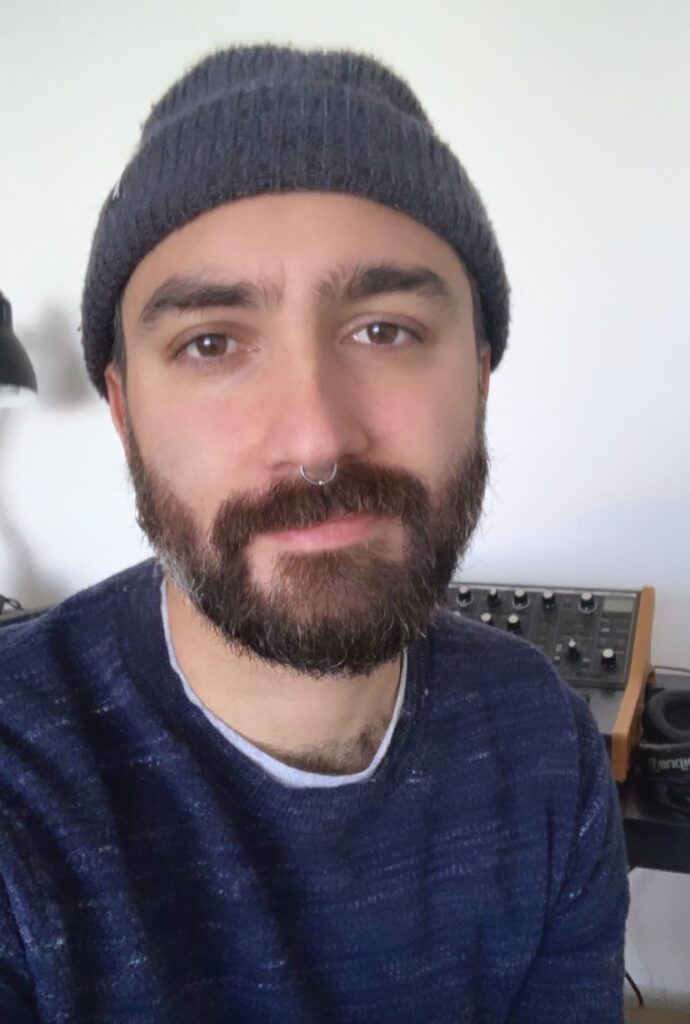
Selfie?
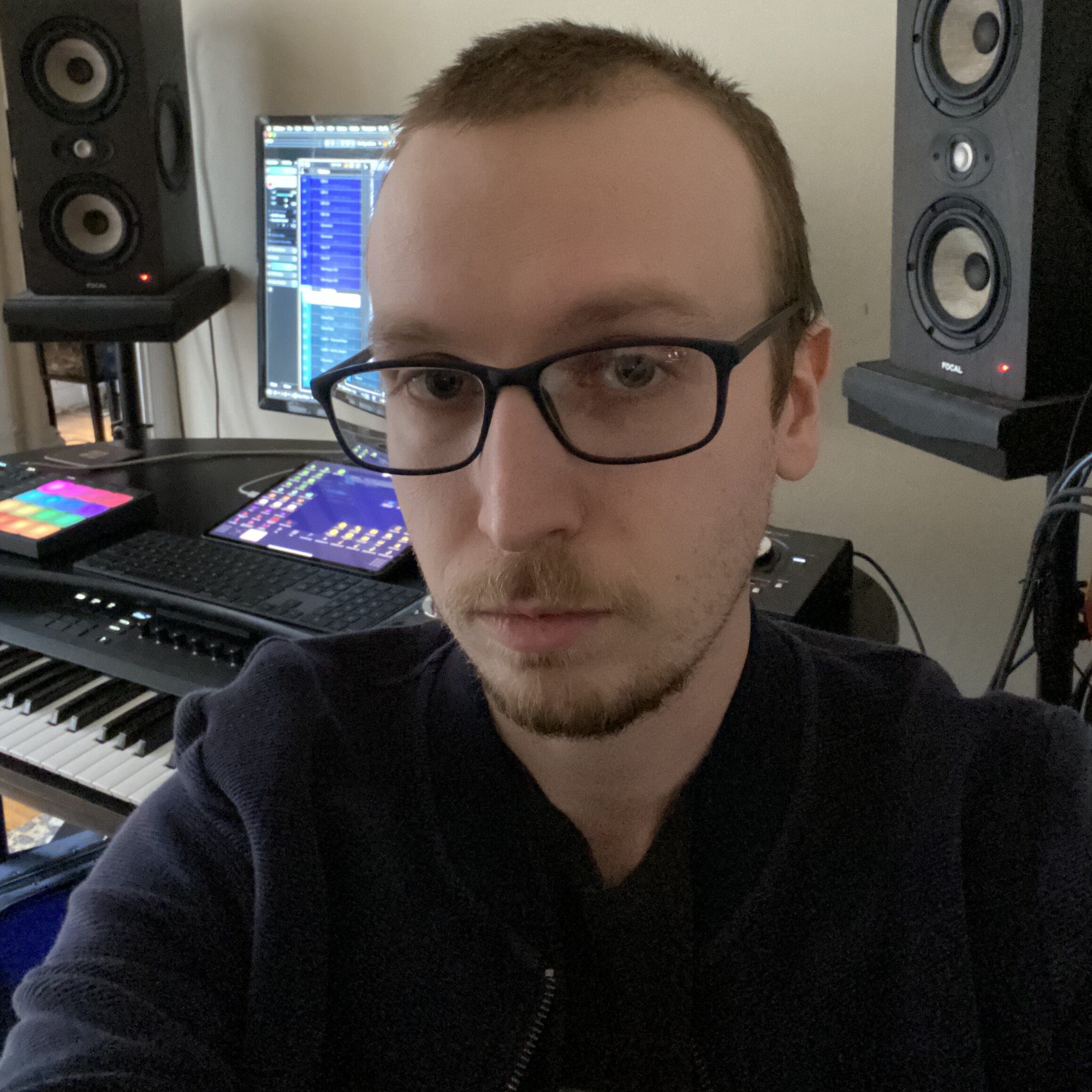
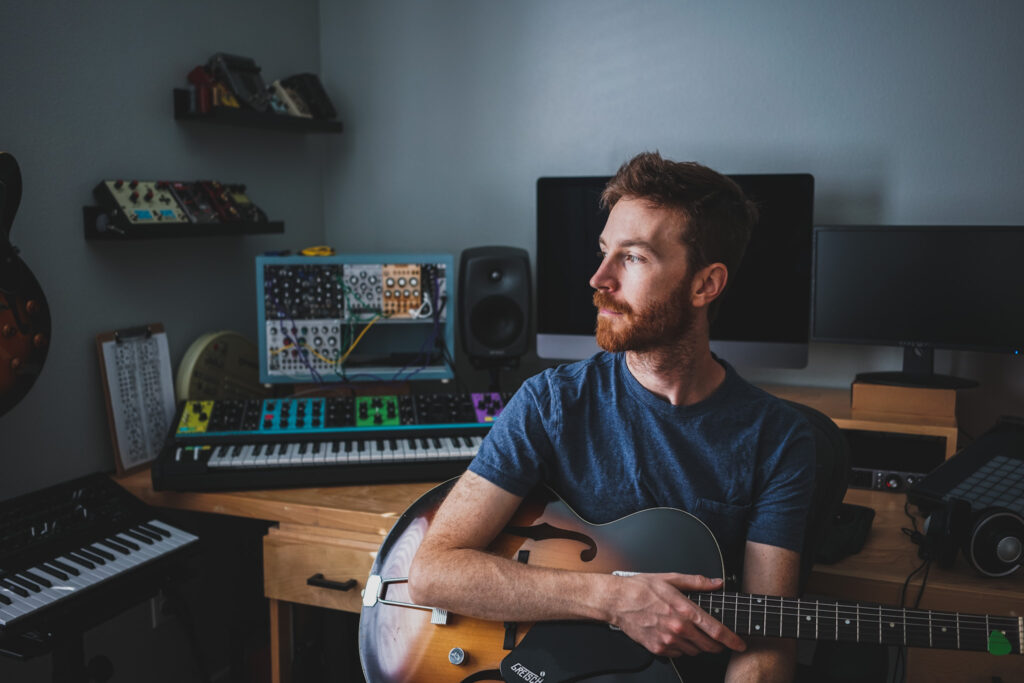
Paul Talos

Where are you from?

Born in Germany, grew up in Boston, MA. Currently living in Philadelphia, PA.

How did you get into music?

I started playing electric guitar around the age of ten and started experimenting with home recording on a laptop when I was a teenager. After high school, I spent some time at Berklee College of Music studying guitar and discovered a love of synthesis and all things electronic music shortly after that.

What still drives you to make music?

Music’s become my job over the last few years, so a paycheck is definitely one thing that drives me. But more importantly, I constantly find myself inspired by just listening to other people’s music and trying to deconstruct what I’m hearing. I’ve come across some very interesting synthesis and production techniques just by trying (and usually failing) to emulate something I heard somewhere else.

How do you most often start a new track?

As a film composer, the answer to that question really varies from project to project. Production timelines and deadlines can be vastly different from one film to the next, so sometimes it might be starting a new track every day, other times I’ll write two or three a week. I do try to spend some time every day just to make some kind of noise though, usually on the modular. I find that synthesis is a skill that really needs to be maintained, otherwise it just gets harder the longer you are away from it. So regardless of what I’m working on, I try to squeeze in some synth time at least once a day, so I don’t get too rusty.

How do you know when a track is finished?

It really never is, but once the deadline hits it’s usually good enough. Honestly, if I didn’t have deadlines of some sort, I’m not sure I would ever finish anything. 

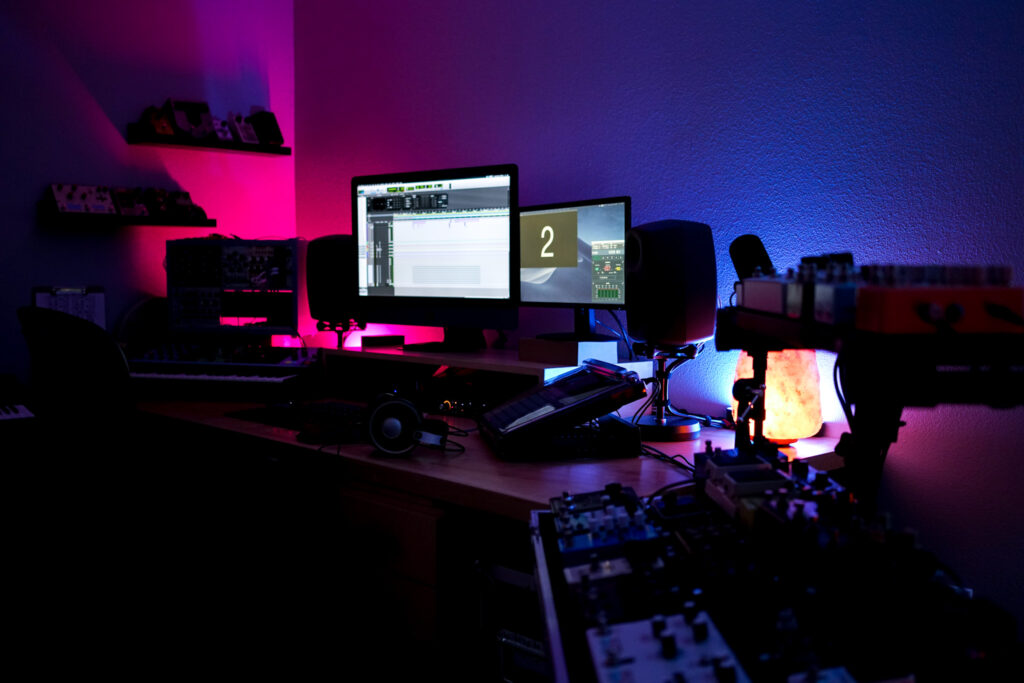
Show us your current studio
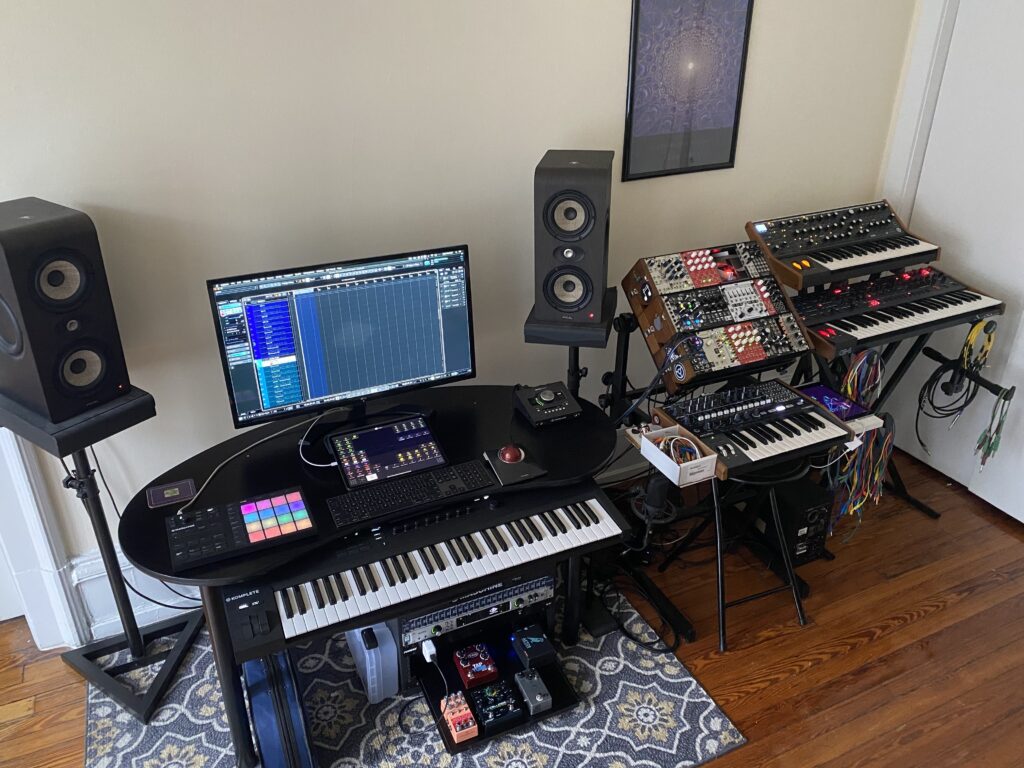
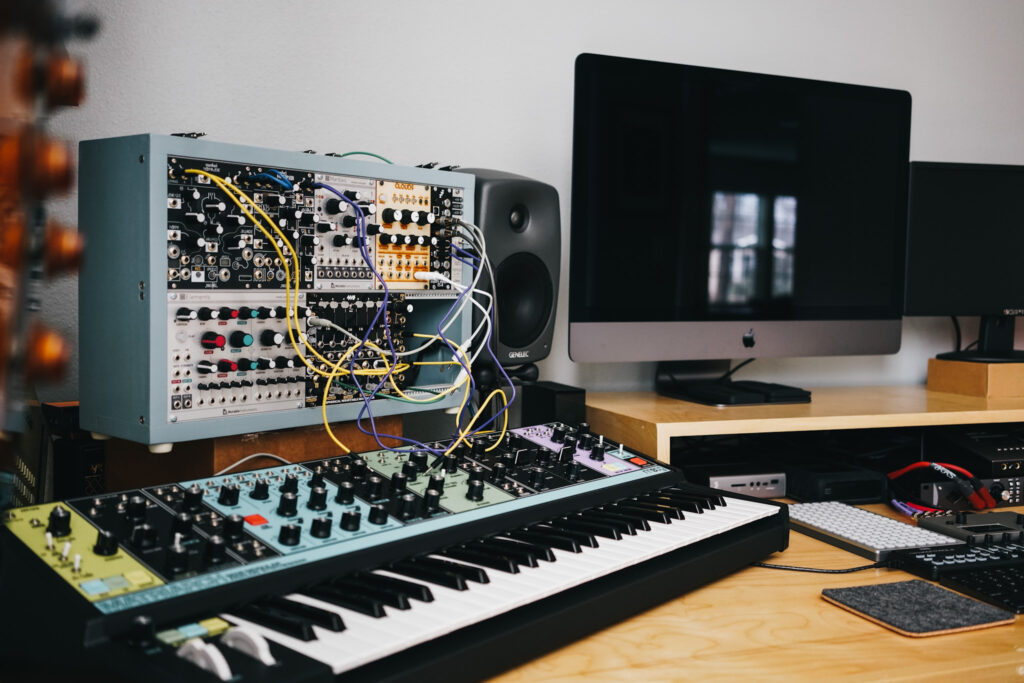
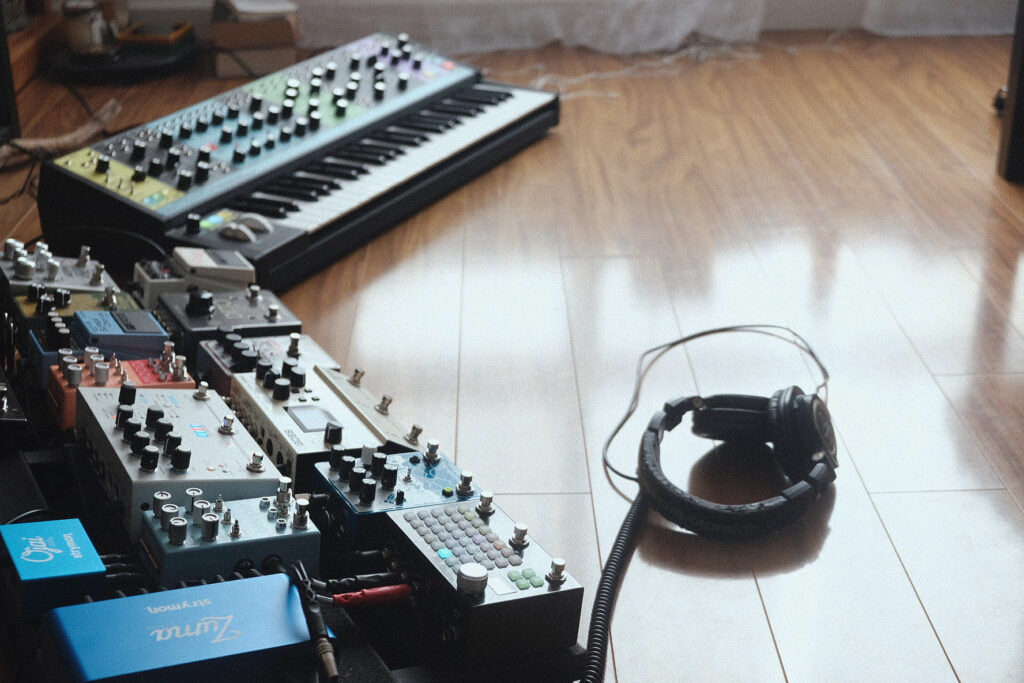
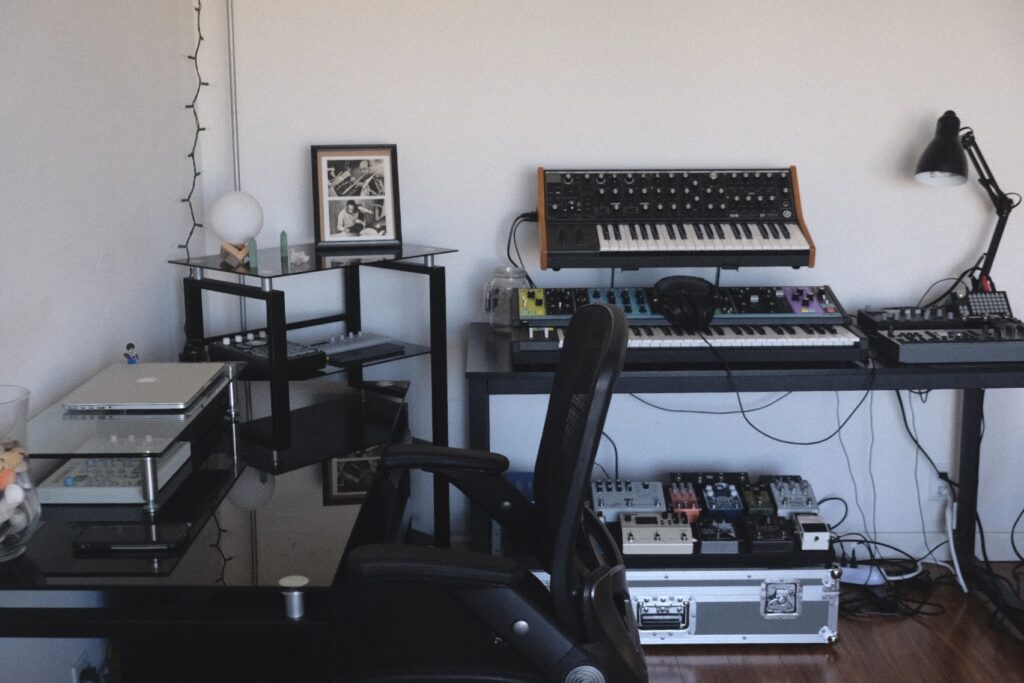
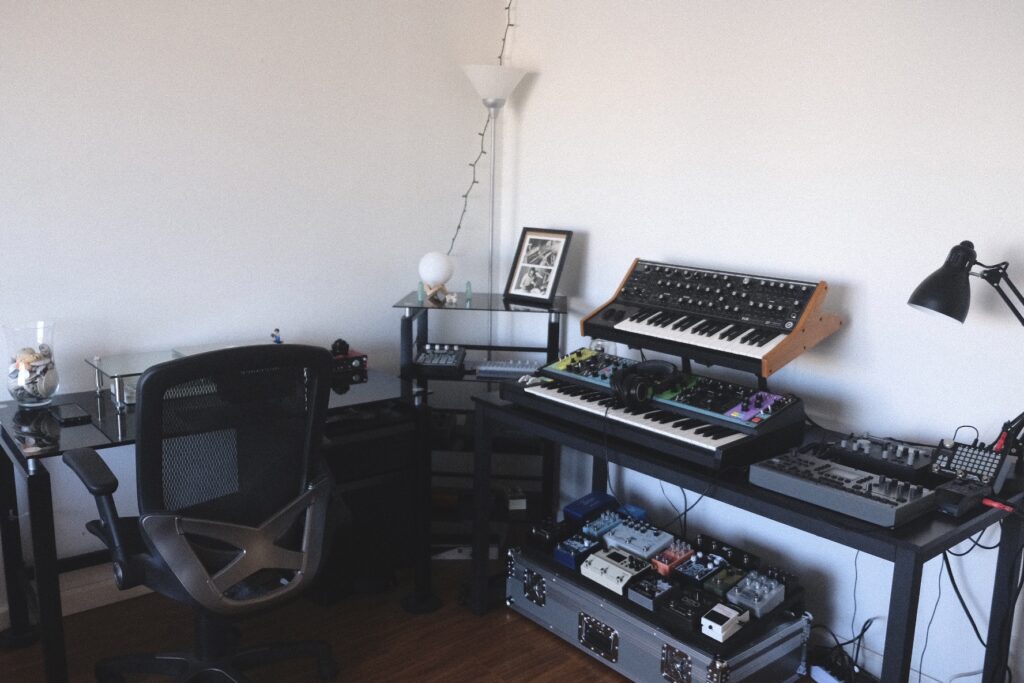
Signal SoundLabs studio

Best creative advice that you’ve ever heard?

This one kind of relates to one of the other questions about finishing tracks. I took this music production class in college, and the professor said something one day that really stuck with me. I’m paraphrasing, but it was something along the lines of this: A mix is never done, you just stop working on it eventually. To hear that from a professional in the industry was incredibly reassuring at the time. I think it’s something that applies not only to a mix, but to music making in general. Nothing is ever truly finished and that’s okay.

Promote your latest thing… Go ahead, throw us a link.

Back in July, I released my score for a short thriller film called ‘Just Like You.’ The score is available on all streaming platforms. Links below.

Just Like You (Spotify)

https://music.apple.com/us/album/just-like-you-original-score-ep/1521324795

https://paultalos.bandcamp.com/releases


[Editor: Do you have a favorite tip, trick or way of working with any of the gear from this interview?
Then throw us a comment below…
]


TJ Dumser – Six Missing

1. Favourite knob or fader or switch on a piece of gear and why?

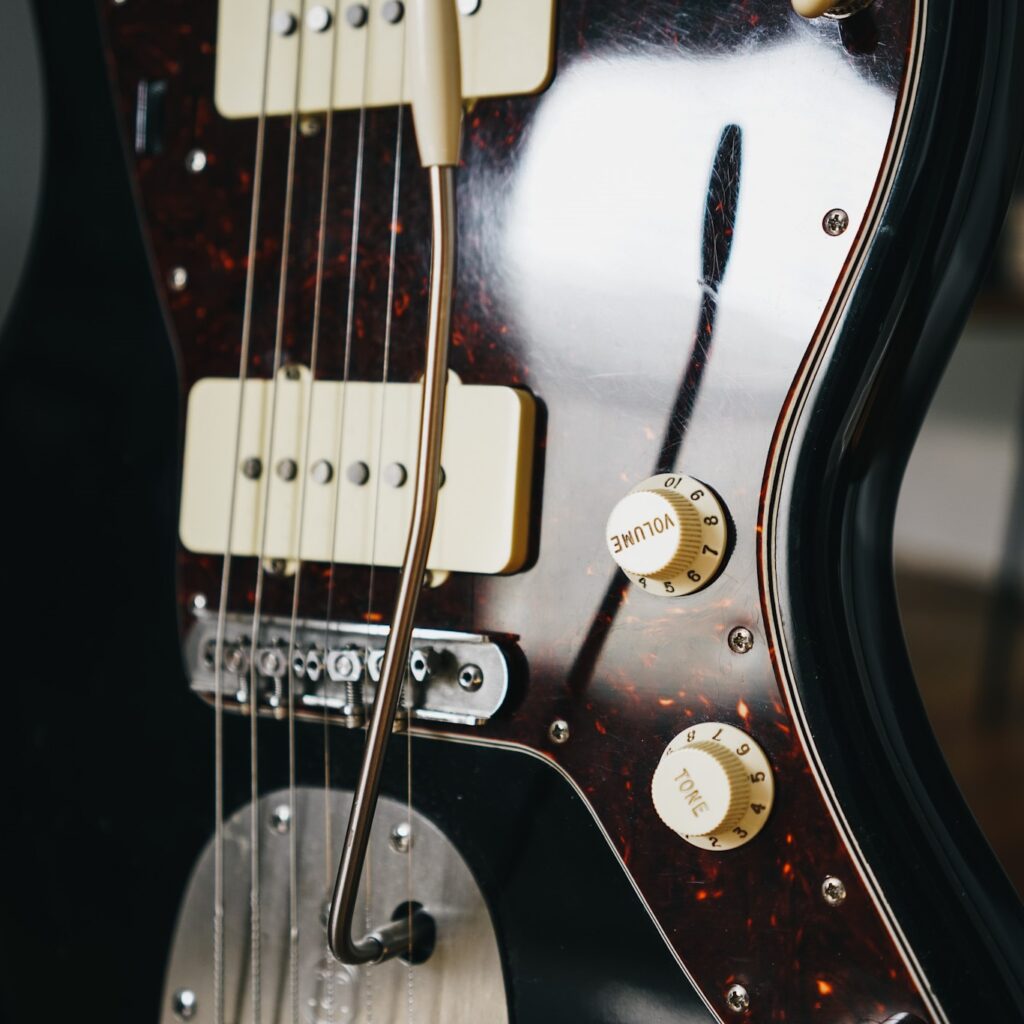
Jazzmaster volume knob

Yes, absolutely, without a doubt, the volume knob on my Jazzmaster. Coming from a band background and learning how to blend with other musicians and when to step out front, I was always using my volume knob. Mostly to clean up my tone and then to send it into overdrive. I play expressively and dynamically, never with a compressor pedal so I am always going for the volume knob. I can control swells and it’s become such second nature to my playing that my pinky just sort of rests there all the time.

2. Do you have an ‘almost’ perfect bit of kit? What would you change?

My room is pretty dialed in right now. Since my day job of being a sound designer and mix engineer for advertising, film, and TV keeps me mostly in the studio, I’ve put a lot of time and effort into making the room my instrument. I have my modular rack, my pedalboard, my synths all patched and routed so I can send and receive audio from any of those places – I have total freedom to create. But I would change the amount of space I have, haha, I always want more.

The Six Missing hub

3. What setup do you bring on holiday or tour or commute etc.?

Since the start of the pandemic we haven’t traveled anywhere. And before that I wasn’t touring all that much since my live setup got pretty large, in fact, the setup got to the point where I wasn’t able to take the subway any longer – I need a cab or to drive to the gig. Which for people that have never lived in NYC, that’s a huge dealbreaker as you’ll often spend the money you made from your set on cabs. So the biggest thing for me when I go on holiday is my headphones. I try to create music every day so when I take a vacation, I am truly off-the-grid. But now that I’m in Austin which is far from my home in NYC, I have begun planning a travel/mobile rig – it’s Ableton based and I think the Arturia Keystep looks like the best investment in a tiny keyboard as I could integrate it into my modular rack as well as controlling VSTs. I fall prey to the “I want to have all my options be options” mentality, so traveling light will be a fun challenge I look forward to. I’ll have to check back in with you and keep you posted on how I net out!

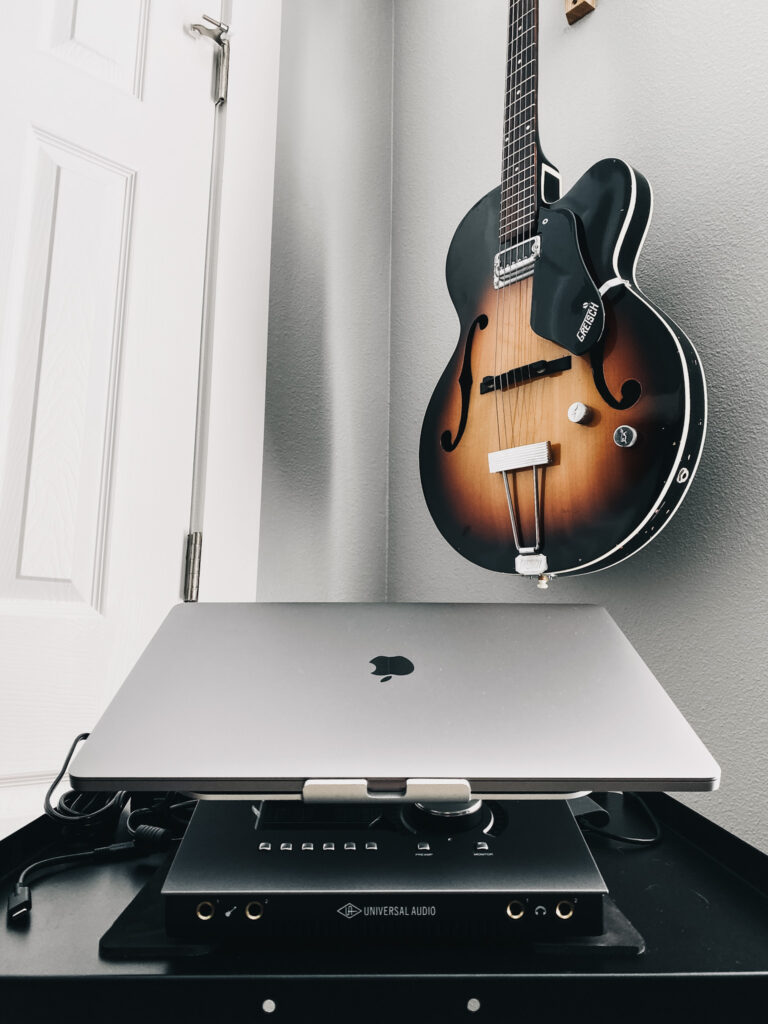
Compact setup: MacBook, UAD soundcard and guitar

4. What software do you wish was hardware and vice versa?

An interesting question indeed. I had seen someone else you interview mention that a lot of software is hardware emulations or based on some piece of hardware, which I agree with. I don’t get picky, though I do think that having Big Sky algorithms in plug-in format would be super cool. Although, I’m sure you’d need a separate computer to run all that DSP, which then circles back to having a box, so I suppose they thought about that and why they stayed away from it. I mostly feel like there’s a companion piece of hardware or software for anything you can dream of these days, and like I said, I don’t discriminate – while, yes, an original Minimoog Model D probably sounds better than a VSTs version, I don’t have the $10k for the real thing and dang if presets aren’t awesome to recall.

Moog Matriarch and Eurorack

5. Is there anything you regret selling… or regret buying?

I’ve been fortunate enough to never really have buyers remorse because 30-day return policies are awesome. But I will say that I purchased the ROLI Seaboard recently with hopes and dreams of it completely transforming how I compose with strings and MPE devices and it was just…awkward. Perhaps I didn’t give it enough time to grow on me. The squishy part was fun for a bit, though I can see it attracting cat hair like crazy. I have only ever sold gear I know I was never going to use again. I tend to hang on to things because I’m a sound designer and having random old pieces of gear are inspiring and you never know when you’re going to need it.

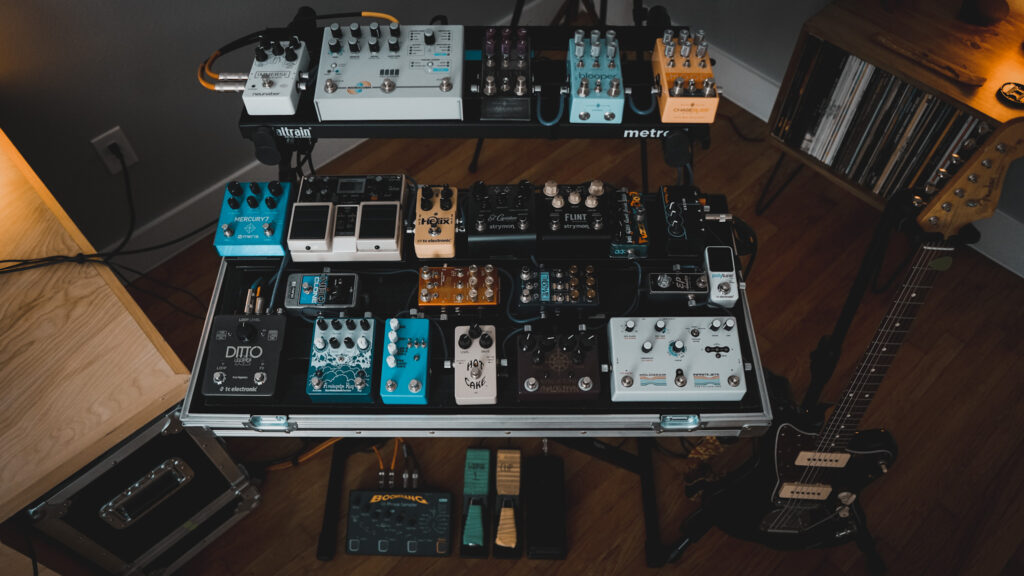
Pedalboard goodies

6. What gear has inspired you to produce the most music?

Surprisingly, diving into modular gear was the most inspiring and overwhelming. And now that I’ve picked up Norns and Grid, I’m feeling that same sense of “how do I control you!” which I really think makes you enter into that beginner’s mind and where the magic happens. It’s for this reason (and I’ll get roasted for this, I’m sure) that I absolutely never read a manual. I love clicking about/turning knobs/making horrible mistakes when I first get a piece of gear. I think not knowing what you’re doing is when your true talent shines through. You just kind of use The Force to figure it out and stumble your way through. But to stop getting preachy and answer your question, modular. My newest EP on Inner Ocean Records happened in about three weeks after I got all my rack set up, it was just insanely inspiring to have semi-generative sounds morphing and allowing me space to write other lines over it with other instruments.

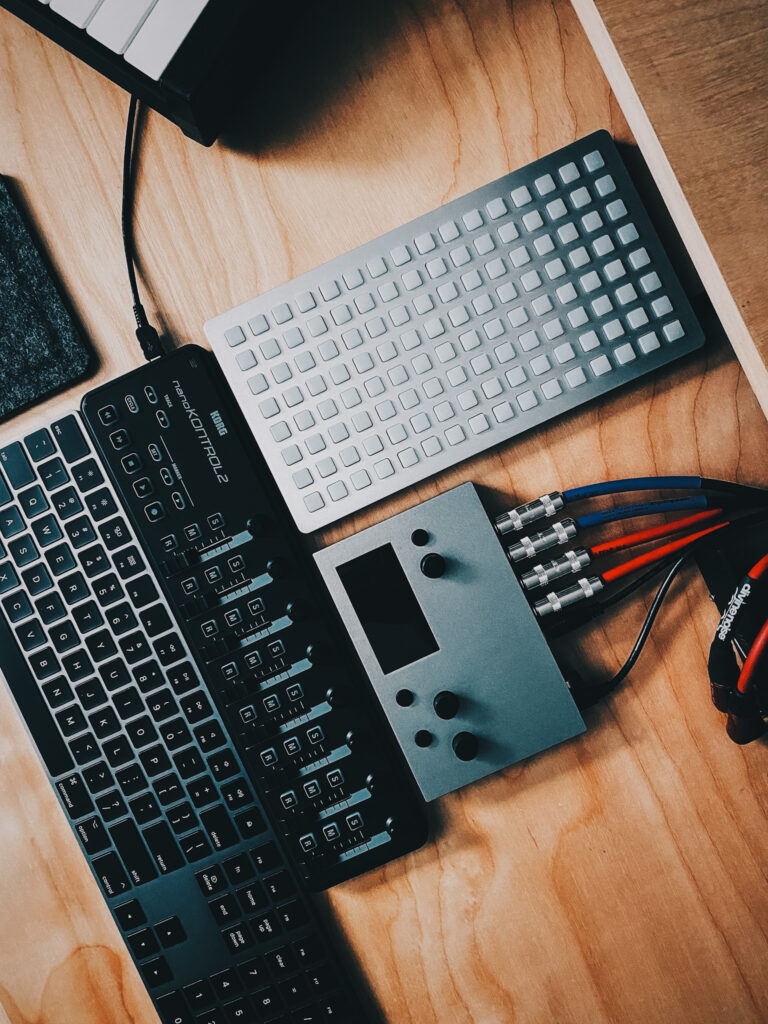
Norns and Grids

7. If you had to start over, what would you get first?

If I had to start over I would still start with just a single piece of gear and learn it completely inside and out before buying the next piece of gear. I admit to falling victim to gear acquisition a while back but I always had this sense of wanting to know how to use the gear I had before stepping up. Granted, I have a ton of pedals these days, but it took me a good three years to get to this point.

Pedals galore

8. What’s the most annoying piece of gear you have, that you just can’t live without?

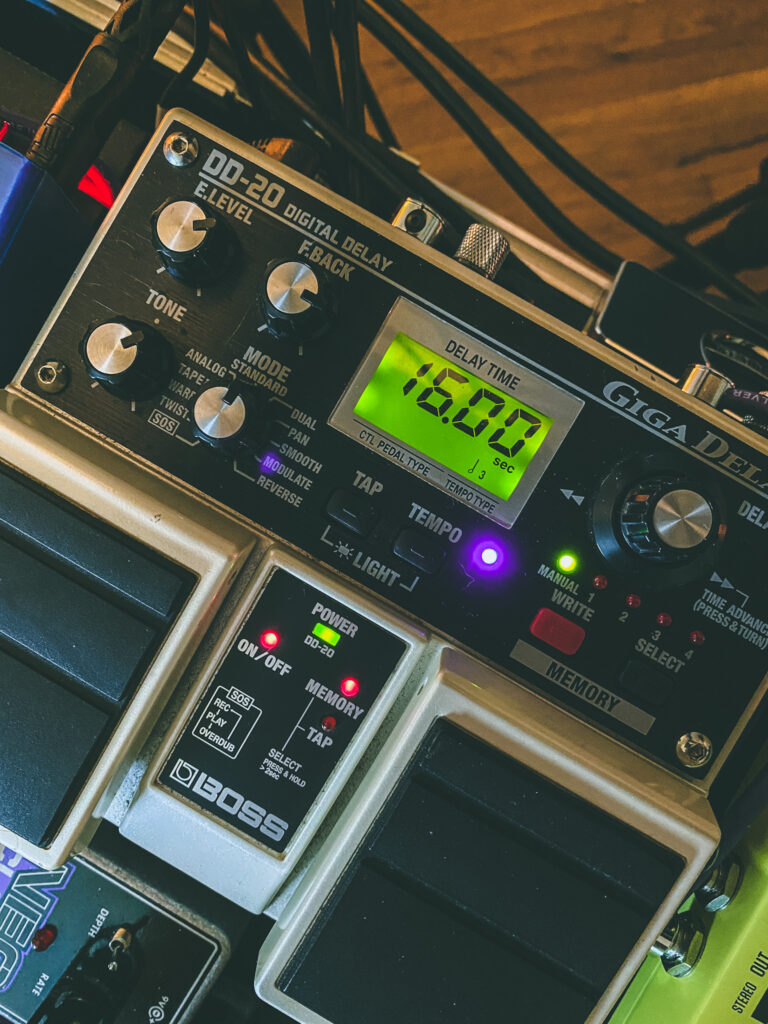
Haha, this question is great. The most annoying piece of gear I have (though I still love it) is my DD-20, the old big block delay. When the thing boots up it defaults to being on. There’s probably a way to change that but I never looked it up and when it kicks on with the board the first algo is my custom 16-second delay. So if there’s a bit of hum from the unplugged ¼” cable or I flub a note I won’t hear it for another 16-seconds, way after I’ve forgotten and then I’ll chase line hum or a looper pedal somewhere in the chain for five minutes, until I realize it’s just the delay kicking around every 16-seconds. I have Nels Cline to personally thank for making me lust after 16-second delays.

Boss DD-20

9. Most surprising tip or trick or technique that you’ve discovered about a bit of kit?

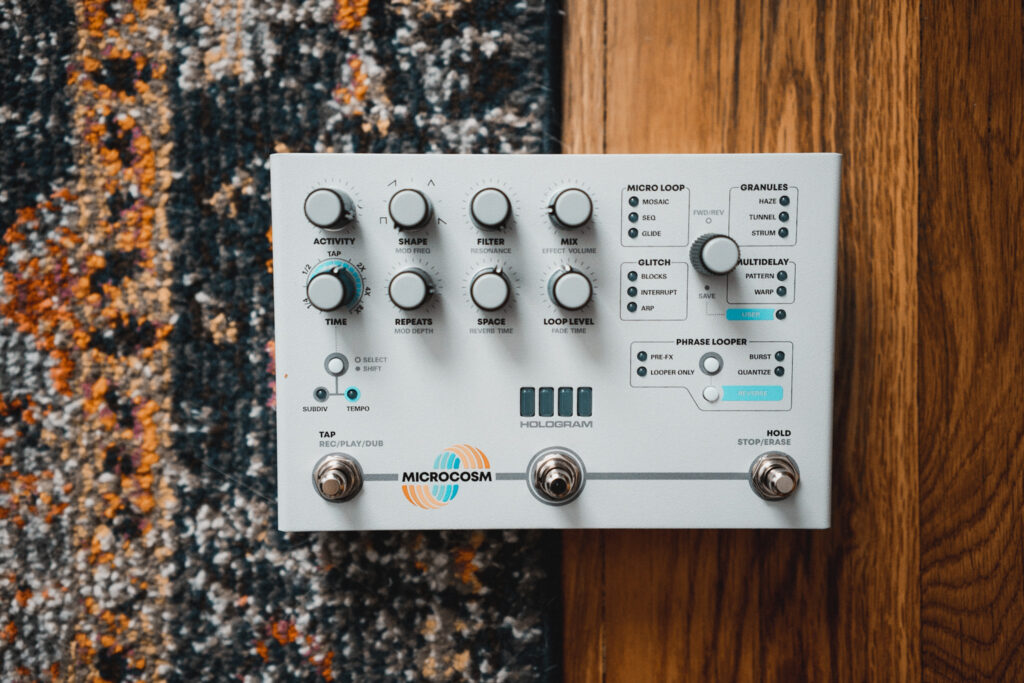
Hologram Electronics Microcosm

I got to be one of a very small handful of beta testers on the Hologram Microcosm, so I had the pedal well before the public did and I have never had the opportunity to speak directly to the minds that designed and created the pedals I played, so I learned tons of fun insider tricks with it. But my most favorite trick on it, is taking a live effect and capturing it into the looper and then sending that loop back through the live effects pre-effect and processing that loop a second time but through a different live effect. So fun.

[Editor: The Microcosm is gonna be a classic!]


Artist or Band name?

My name is TJ Dumser but I perform as Six Missing.

Genre?

Ambient, Electronic… Meditation Music sounds grabby, so does Furniture Music or Music for Plants. Music that allows you to do other things and zone out to it.

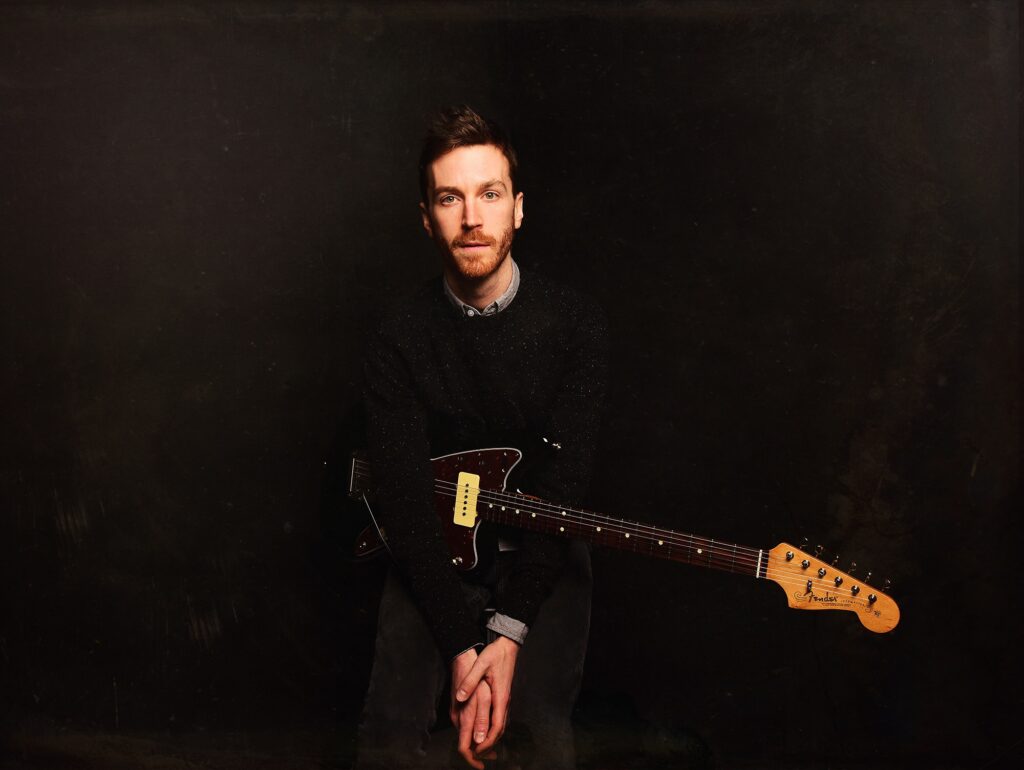
Selfie?

TJ Dumser aka. Six Missing

This isn’t a selfie, but I spent money on this session with this talented photographer Shervin Lainez and so I usually like to get some mileage out of it 😛 

Where are you from?

I’m from NY, but have been spending the past year (lol, let’s be real, quarantine) in Austin, TX. 

How did you get into music?

I have always loved music and performing, I used to do it even as a baby in diapers, shouting nonsense into a microphone and directing orchestras through the kitchen. But it really hit when I saw Back to the Future and caught my first glimpse at Marty’s red Gibson 335. After that, I uncovered milk crates of records in my grandma’s attic and heard Stairway to Heaven and had my mind blown as a 11 year old. After that, I needed to have a guitar. So I was able to convince my parents that I was interested enough for them to get me one and had been playing since I was 12.

What still drives you to make music?

Music has always been a way for me to retreat from other stresses. Given the state of the world and the general level of collective anxiety, music has given me a way to take care of myself. It’s a way that I can contribute something positive. It ends up making me genuinely feel better having taken some time to play. My hopes are that I’m able to give just even the smallest bit of relief to people who hear my music, maybe it gives them that chance to take a breath or to help them meditate or go to sleep – which I realize isn’t every musicians dream “for folks to fall asleep to my music” but hey – if that helps someone, then I’m happy.

How do you most often start a new track?

It has morphed. When I was mainly composing ambient guitar loops or guitar based tracks, I would just turn on the gear and let the DD-20 sit in 16-sec delay mode and start piling layers into it, slam that into the Ditto x 2 and knock it into half speed and that became my bed. But these days I’m spending more time with eurorack modular gear and synths like the Monome Norns. I can usually get a nice atmosphere created by sending some audio to my modular gear and manipulating over there, capture some ideas and then start adding a bass line with the Moog Matriarch. Though I’m new to it, Norns is massively inspiring and I love the idea of having a tiny digital bandmate taking care of melodies and rhythms for me.

How do you know when a track is finished?

I’m sure the answer is very different for the musicians you’ve interviewed, but for me my answer changes all the time. I have a set of tracks that comprise an LP, about 11 tracks, just sitting collecting dust because I “still feel like they need something” and then I have EPs that I sit and complete in a weekend. Honestly, it’s that different for me. I suppose there’s just a knowing you feel about the track, like, did I serve this? If so, I move on. Also, if I get bored with or anything I try to add to a track starts sounding like garbage or I spend far too long working on a line…that’s how I know. If the track tells me it’s complete. It’ll push away all the superfluous junk.

[Editor: That’s a different way of doing things, it sounds almost like your songs have their own desires and needs. I guess a more empathetic approach to composition by considering the needs and wants of a piece, independently from your own wishes as a composer]

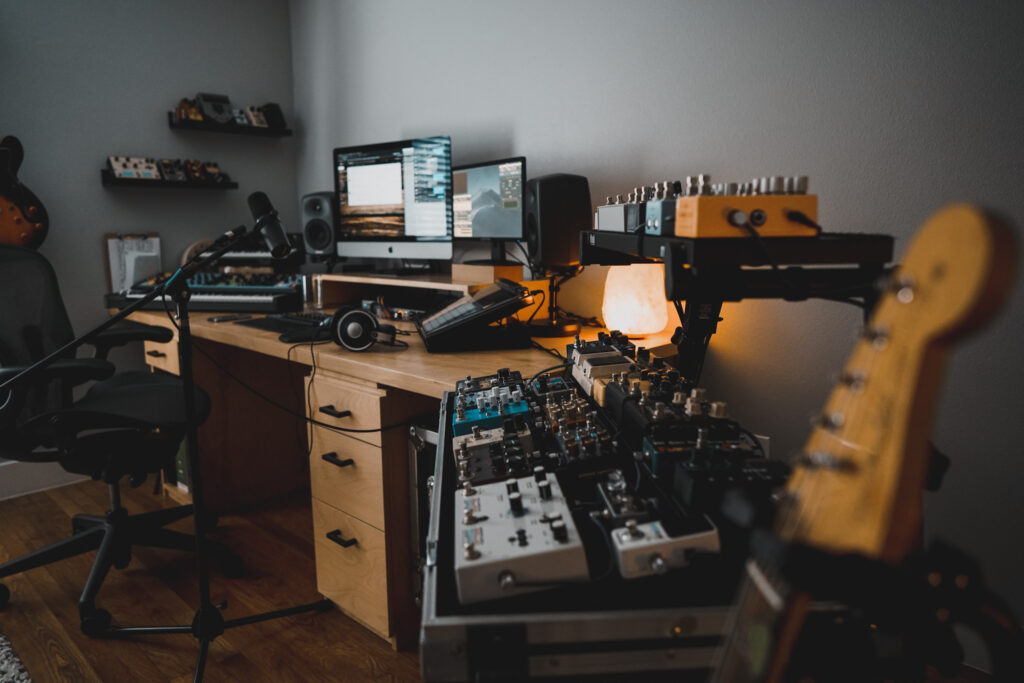
Show us your current studio

Six Missing home studio

Best creative advice that you’ve ever heard?

Show up each day and do something. Whether that’s reading about someone who set out to achieve a goal or career and is doing it. Or just noodling with the guitar. Or perhaps even just turning on the synth, just to let it warm up. You don’t have to expect a masterpiece, but the fact that you’ve done something with the day means that you’ve placed your intention on it and odds are you’re going to get surprised every once in a while.

Promote your latest thing… Go ahead, throw us a link.

Thanks for asking! I have my debut EP coming out on Inner Ocean Records called “Patricia” on February 12th.

It’ll be available via Inner Ocean’s site as well as mine – or you can stay tuned to my Instagram (www.instagram.com/sixmissing) for more!


[Editor: Do you have a favorite tip, trick or way of working with any of the gear from this interview?
Then throw us a comment below…
]


Shipwreck Detective – Dev Bhat

1. Favourite knob or fader or switch on a piece of gear and why?

I love the knobs on Chase Bliss pedals. They have responsive, precise dialing and feel durable.

Chase Bliss Mood

2. Do you have an ‘almost’ perfect bit of kit? What would you change?

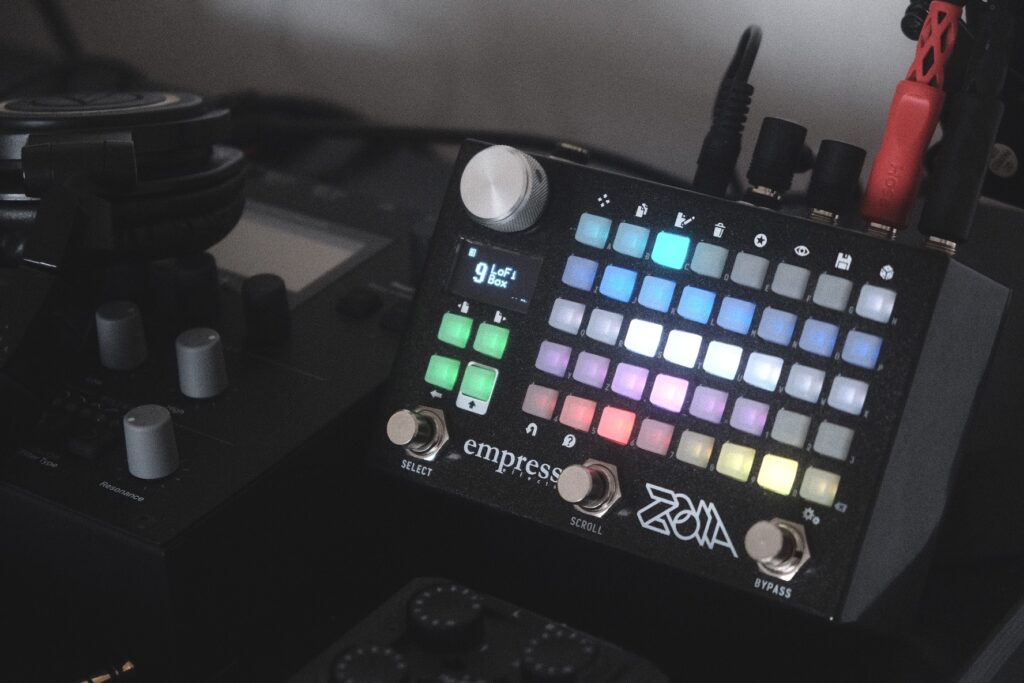
The Empress Effects Zoia is beautiful and versatile when it comes to sound and design. It’s a studio and performance mainstay for me. It’s nearly perfect, however the tweaking of effects is not as immediate as on a dedicated effect pedal. I’d also love to get weirder with the ins/outs, like routing an fx send to an external loop of other effects and then back in. But that’s a small trade-off for what the pedal is already capable of — which is a lot.

Empress Effects Zoia

3. What setup do you bring on holiday or tour or commute etc.?

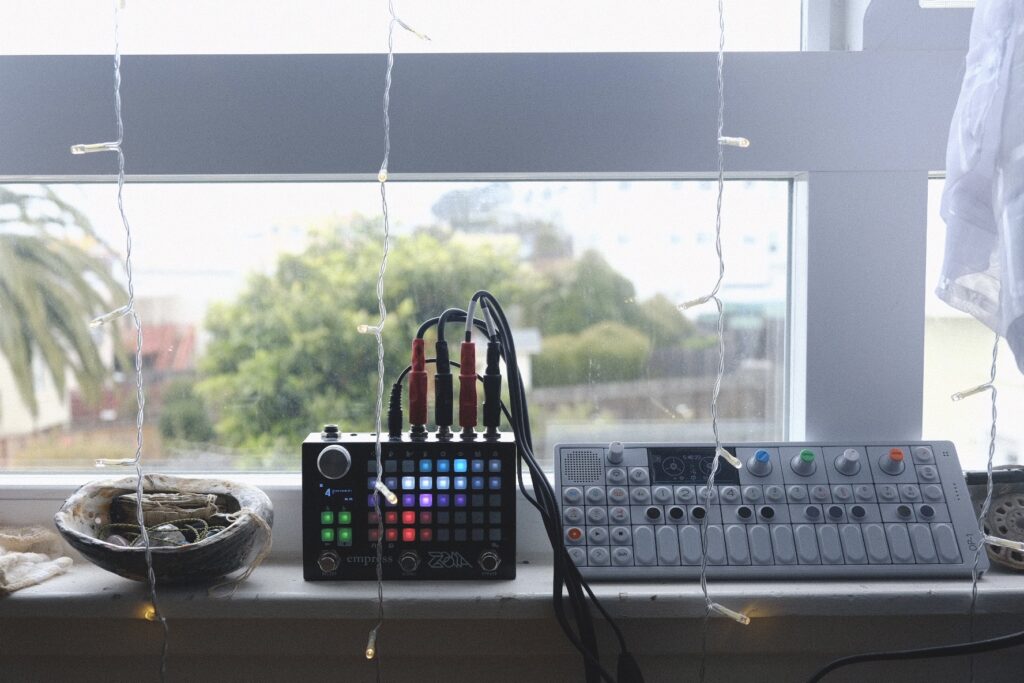
I don’t spend much time making music when traveling, but I once took the OP-1 on holiday, and it was the perfect tool for creating little sketches inspired by the moment or the day. I treated it like an audio travel journal. If I’d had the Zoia at the time, I’d have also loved to bring that.

Teenage Engineering OP-1 and Empress Effects Zoia

4. What software do you wish was hardware and vice versa?

I’m not very familiar with software. I used Reason for production many years ago when I was first getting into electronic music composition, and the detailed graphic interface had a lot to do with why I eventually became more interested in hardware. On the flip side, if there were a software version of the Chase Bliss Mood (or some kind of similarly playful granular/sampling effect), I’d definitely be interested in exploring it. The only software I use these days is Logic to record.

5. Is there anything you regret selling… or regret buying?

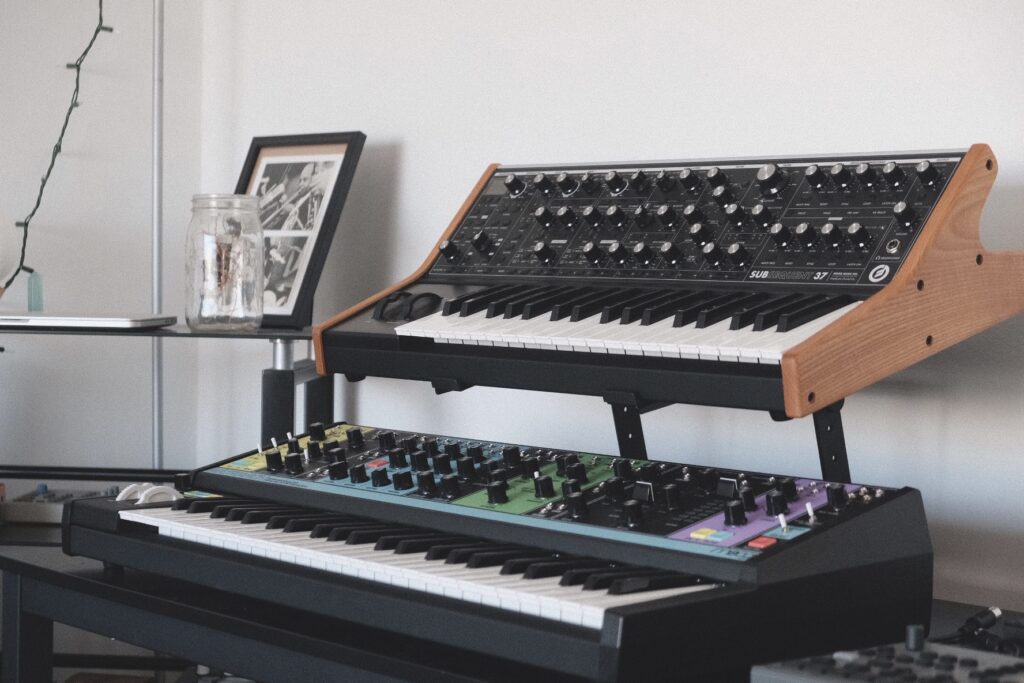
I don’t get attached to most gear, but I regretted selling my Moog Sub 37 a few years ago. I tried to fill the hole it left with a Matriarch, but the Matriarch could not have been more different. I recently reunited with the Sub 37, and the Matriarch is up for sale. 

Moog Sub37 and Matriarch

6. What gear has inspired you to produce the most music?

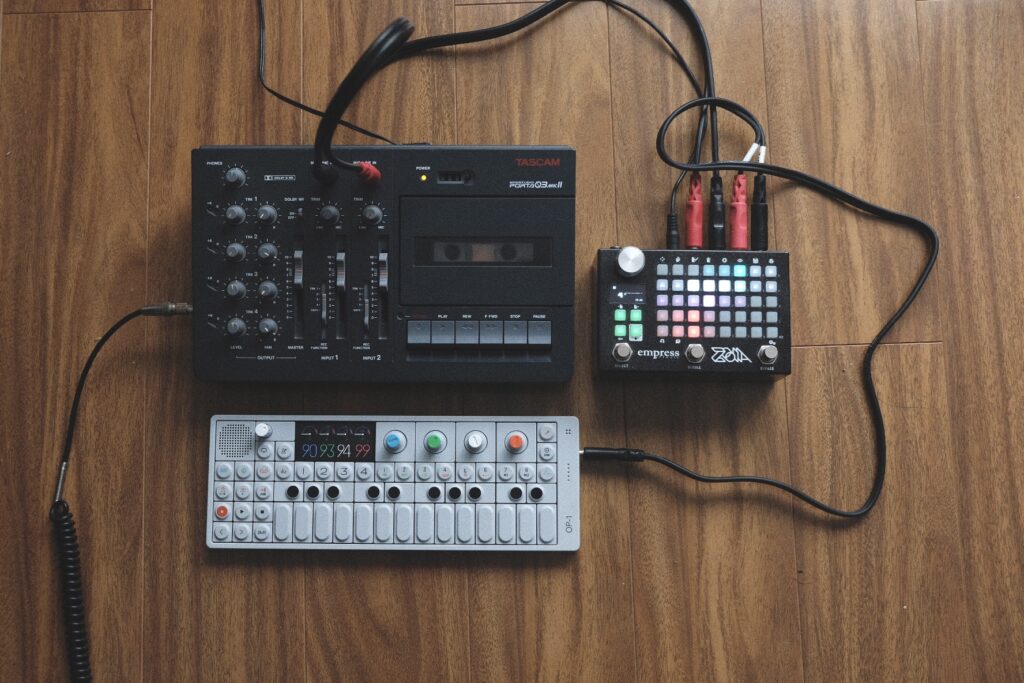
The OP-1 has played a major role in a lot of the music that I’ve released in the past couple years. Its digital tape opens up so many possibilities for texture and looping. I like to record directly to the OP-1 tape, experiment with the tape speed, and process more when I find something I like. I’ve also used my pedalboard to create most of the sounds that eventually end up on the OP-1 tape. I treat it like an independent sampler.

Teenage Engineering OP-1, Empress Effects Zoia and a Tascam Porta-03
Moog and FX Pedalboard friends

7. If you had to start over, what would you get first?

I don’t think I would change anything gear-wise, but I do wish I had had a better understanding of what I wanted to create. Now that I know which textures and atmospheres I want to convey, I can better figure out which instruments are best suited for that sound. Then again, I wouldn’t have figured that out any other way than through trial and error. My very first synth was an Alesis Micron, bought from a second-hand instrument shop in Santa Cruz. I don’t have that synth anymore and probably wouldn’t use it now, but I love what I learned from it. I feel that way about most gear: each piece of gear teaches me something even if I don’t end up keeping it.

[Editor: I feel exactly the same way. Sometimes I even think that buying a new piece of gear is like borrowing the musical-brain from a gear-maker. Using a great piece of gear really feels like a conversation]

8. What’s the most annoying piece of gear you have, that you just can’t live without?

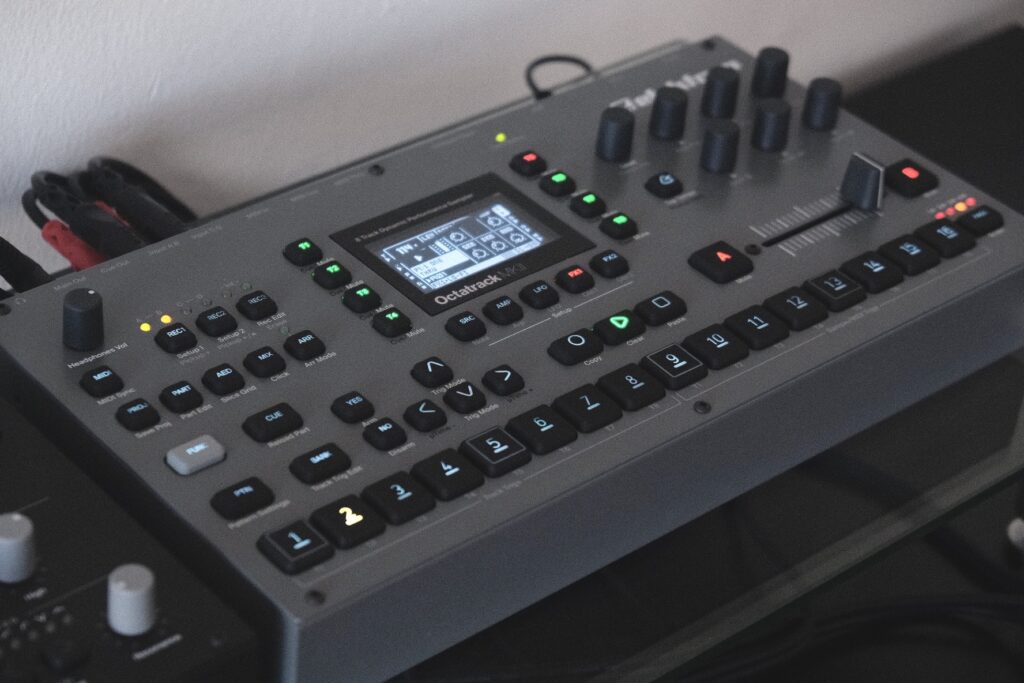
I thought this would be a tough question until I looked over at my Octatrack Mkii. It’s a pain in the ass, and I love it. I purchased it thinking I’d use it as a super powerful looper or for chopping guitar samples to use in my band. Instead I use it as an advanced, MIDI-powered mixer that can do stereo looping and some light DJ effects. It’s a kind of hub for my jams that I can’t imagine not having. 

9. Most surprising tip or trick or technique that you’ve discovered about a bit of kit?

That method of using the Octatrack as a mixer comes straight from Enrique Martinez. His videos completely re-contextualized the instrument for me. Thinking about the Octatrack in terms of tangible use cases made it far less intimidating.

Elektron Octatrack

Artist or Band name?

Shipwreck Detective

Genre?

Ambient downtempo drone stuff

Selfie?

Dev Bhat aka. Shipwreck Detective

Where are you from?

San Francisco

How did you get into music?

My first instrument was the trumpet, but discovering rock, especially metal, punk, and industrial music, as a teenager was transformative. Music videos were unashamedly a big part of this. The sound blew my mind, and seeing musicians interact with their instruments and each other also changed the way I interpreted that sound. It looked a lot more fun and expressive than what I’d been doing (sitting and playing old symphonic music in the school band). So I took guitar lessons for a little while and eventually taught myself bass and drums. I just wanted to be in bands and play shows. That’s still all I want. 

What drives you to make music?

A combination of expression and exploration. I want to express the way I feel on the inside through sound and texture. I have a hard time understanding myself most of the time, and exploring sound feels the same as exploring my own thoughts and feelings. Sometimes it’s warm and soothing. Other times it’s noisy and confusing. I love music because it doesn’t have to have words; there doesn’t need to be an explanation. It can just be. 

How do you most often start a new track?

How I’m feeling informs the overall tone. Then I establish an atmosphere and sense of place that the track is happening within. I build everything from a base texture like a synth drone, guitar loop, field recording, or maybe a percussive noise (I’m also a drummer, so sometimes I’ll start with beats before melodies).

How do you know a track is finished?

A track is done when it matches the atmosphere in my head and when I feel like I’ve challenged my own conventions at least a little bit. 

Show us your current studio

Shipwreck Detective Studio

Best creative advice that you’ve ever heard?

The phrase “keep it simple, stupid” has become an ethos for how I make music. I appreciate art that has a minimalist, uncomplicated, or even un-finished element to it. Not to say I don’t appreciate complexity, but there’s a potent energy when something is done quick and dirty—using only what was necessary—and then left that way. It preserves the raw emotion that too much polish can destroy. 

Promote your latest thing

My most recent thing as Shipwreck Detective is a long-form streamed performance that I did for a small group called Man vs. Machine. The audio for that is at shipwreckdetective.bandcamp.com

I’ve also been making music with a new band, Grimoires, and look forward to releasing some songs with them soon.

[Editor: Dev also does a lovely instagram @ShipwreckDetective]


[Editor: Do you have a favorite tip, trick or way of working with any of the gear from this interview?
Then throw us a comment below…
]