Martha Bahr – Panic Girl

1. Favourite knob/fader/switch on a piece of gear and why?

That’s a hard question to answer as every instrument is a composition of different knobs, faders and switches, which are only valuable through their interaction between each other. But if I had to choose one it would be the cutoff knob or fader. I tend to like very mellow sounds especially for inspiration.

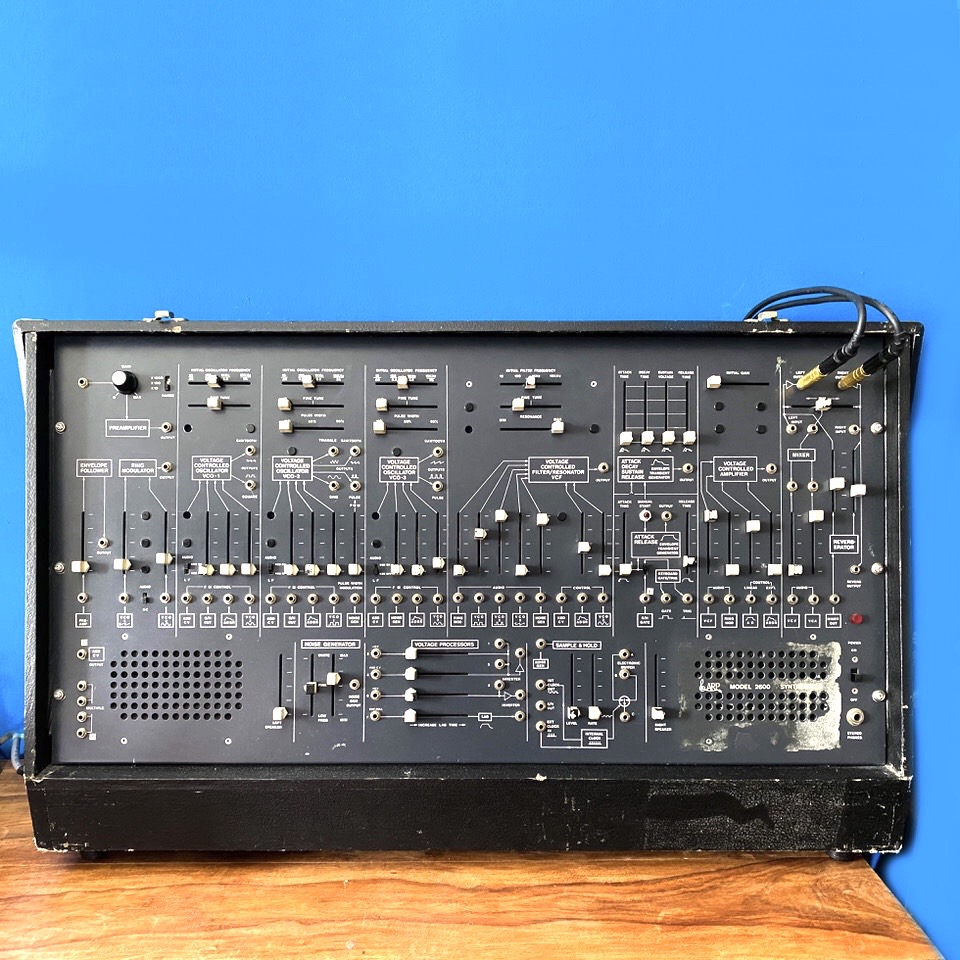
ARP2600

My favourite cutoff of all times is the one on my ARP2600, especially with the resonance on maximum. I have never heard a more beautiful and eerie sound.

2. Do you have an ‘almost’ perfect bit of kit? What would you change?

Panic Girl Eurorack modular

That would be my modular system. It grows and changes with me as I grow and change as an artist, and it’s the perfect instrument for those “happy little accidents”, for experiments, for getting to that next level sound design wise.
What I would change about it? Maybe it would be great to make them less heavy all in all, especially if you want to travel with it. 

Eurorack and flower

3. What setup do you bring on holiday/tour/commute etc.?

As much as fits in my suitcase. I usually take a skiff with me, my OP-1, an iPad and my laptop, just to have some options when in a good flow.

Eurorack skiff as LP cover with an OP-1 and SM57

4. What software do you wish was hardware and vice versa?

I’d like to have the René by Make Noise as a Plugin, I love that module. It brings that bit of extra spice to my tracks, that I really like. And the Malgorithm, it’s my go to bitcrusher sound that I can’t get enough of so far. 
As for the other way around I would love to have the Fabfilter plugins as a module, especially the Limiter. It gives you the volume you need without colouring the sound too much, I use it on every track I make as well as their EQ. 

Make Noise Rene

5. Is there anything you regret selling… or regret buying?

Not yet. I surely bought some gear, especially some modules that didn’t fit my workflow after all. But that’s part of the game with modular synthesizers in my opinion, you try, sell, buy, reconfigure and grow with your system (or the other way around?) like you grow musically and as a person throughout life.

Eurorack and a bit of ARP2600

6. What gear has inspired you to produce the most music?

I’d say Logic and my modular system. There is so much to explore in each, so many possibilities to learn new things and so much room for „happy accidents.“ 

I spent a lot of time learning Logic as a rookie, I wanted to know it inside out so I can “play” it like an instrument. And there are several things especially in the beginning you have to figure out before you can produce music without having to think too much, like moving the anchor point in your audio regions or how to get an audio file with a different bpm to fit your track or how to set up the Environment for different purposes and so on. While figuring all that out, I came up with one idea after the other of what I wanted to try and explore musically. Back then I spent every free minute with Logic, it was extremely exciting to unlock all those levels of music creation one by one, it’s actually quite similar like getting addicted to a video game.

And modular instruments are just crazy with all their possibilities, it’s an endless source of inspiration to me for about ten years now. I’ve tried out so many modules by now, I couldn’t count them all. I also got some of them sent to me to write articles about for the german print magazine Sound & Recording, like the Yarns module by Mutable Instruments for example. And now I can’t live without it anymore. They are all very unique and special in their own way, it’s exciting and often eye-opening to make music with them.

7. If you had to start over, what would you get first?

I think I’m pretty ok with how things went and what equipment I got throughout the years. I started out on a PC, learned Logic, Cubase, ProTools, Fruity Loops and Reason at the SAE Institute back then and finally got a Virus TI as my first synth.

The most important thing to me is to learn how for examples DAWs work in general or how synths work in general, so I can translate that knowledge quickly to any other related gear rather than learning just one DAW or one synthesizer in and out and not knowing how to use similar gear from other companies.

That can be pretty helpful especially if your working as an audio engineer or composer and need to work with different tools from time to time.

8. What’s the most annoying piece of gear you have, that you just can’t live without?

That would be the computer per se I suppose. Especially moving to a new computer can be quite unnerving or when your current one gets too slow for all the tasks you want to do. 

9. Most surprising tip/trick/technique that you’ve discovered about a bit of kit?

That would be modules with which you can do generative patches, that was a real eye-opener for me. The René module by Make Noise with it’s cartesian sequencer was my first experimental module and I still use it in every patch I make. Being able to set the notes of a scale, but randomizing the order in which those notes are being played can make for some very interesting variations in a patch.


Artist or Band name?

Panic Girl 

Genre?

Electronica, Downtempo, Experimental 

Selfie?

Martha Bahr aka. Panic Girl

Where are you from?

I’m currently living in Munich, Germany.

How did you get into music?

I discovered my passion for music very early on when I was a child. I was utterly fascinated with this invisible medium that still seemed to surround me though I couldn’t touch or see it. I already knew back then that I wanted to spend my life with music, in whatever way possible. 

Panic Girl in a dream of wires

I sang in the school choir for several years, learned how to play the piano and the guitar and was playing in bands when I was a teenager. That’s when I got more and more interested with the equipment that we used like the mixing desk, the effects we applied to our instruments or DI Boxes for example. I just wanted to know how they worked. When a good friend of mine told me about the SAE Institute I knew instantly that this is what I wanted to do. I quit my studies at the university and finally started the Audio Engineering Program at the SAE Munich.

What still drives you to make music?

I just can’t do without it, it has been such a vital part of my being since early childhood. I still have tons of ideas I want to try out and there is always so much exciting equipment out there to explore. And there are also inspiring collaborations with for example Anatol Locker. We make experimental music as Lucid Grain, where we create music with our modular synthesizers that none of us could compose on it’s own. It’s like melting two musical minds into new fresh musical pieces. Inspiration is everywhere I suppose, you just have to learn to see it.

How do you most often start a new track?

I need a sound that inspires me to make a full song out of it. That sound can be literally everything, be it a noise from the coffee machine or birds singing, sounds from my modular system, my ARP2600 or my OP-1 for example. I often seem to navigate towards mellow and dreamy sounds and pads, noisy background sounds like from a vinyl player or field recordings. That initial sound then determines where I go from there, if the track needs drums or if it will be a more experimental one, if I feel like singing to it or if some more field recordings would fit well. 
Arp2600

How do you know when a track is finished?

The composition part of music making is usually done pretty quickly. It’s the mixing that takes up most of my time. I check it on several loudspeakers and headphones and have to adjust it several times, until it sounds equally good on everyone of them. I also find it very useful to not listen to the track for at least one or two weeks, so you actually have forgotten how it sounds. If you then re-listen and still like it, then I guess you’re good to go.

Show us your current studio

Eurorack and Arp2600
Roland Juno-60 and a Casio

Best creative advice that you’ve ever heard?

One of the sentences that stuck in my head for years is that you shouldn’t listen too emotionally when you’re working on a track, especially during the mixing stage. That’s something I still can’t fully control, sometimes I just need to crank up the volume, dance around and go back to work after that. You need a clear and calm mind for mixing to make those technical decisions, to make a mix work. I could for example drown everything in reverbs and delays, I just love how they sound. But it’s definitely not good for your mix, it gets muddy very fast. So I need to hold back and work on the mix from an mixing engineers perspective to get the most out of it.

Promote your latest thing… Go ahead, throw us a link.

I’m very proud of my latest album “Cake On Jupiter” that I released with Modularfield last year:

https://panic-girl.bandcamp.com/album/cake-on-jupiter

[Editor: Beina a musician now a days means taking on many different roles. Which you can see that people such as Ms. Bahr is very adapt at. Do you struggle with the various roles required to be a productive musician these days? And which roles are the most challenging? Leave a comment below.]


[Editor: Do you have a favorite tip, trick or way of working with any of the gear from this interview?
Then throw a comment below…
]


Mylar Melodies – Talks With Hands

1. Favourite knob/fader/switch on a piece of gear and why?

UA Apollo

My UA Apollo interface’s on/off switch – it’s a big silver lever that goes CLACK in an extremely loud and satisfying way. Apparently it’s actually the same on/off switch they use on their LA2A’s, so that switch has royal heritage.

2. Do you have an ‘almost’ perfect bit of kit? What would you change?

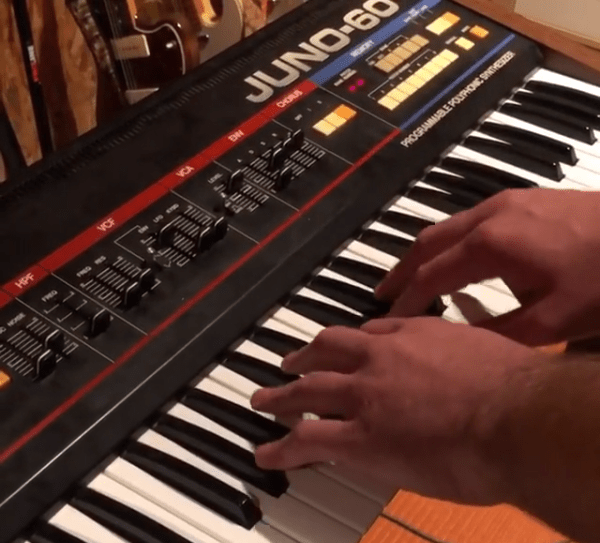
I think everyone thinks it’s very easy to improve on gear, or that a manufacturer was daft not to include some simple feature when in fact it’s anything but simple (or cheap) to add just any old feature. Or that that feature is the thing stopping you from making good music. But as for perfect gear – I guess the Juno 60. It’s very simple, it has nothing superfluous, and it always sounds absolutely amazing. If I would change it, I would take presets off (because it’s so direct you don’t really need them – and of course, yes that’s a Juno 6) – and if I added anything, well I DID add the Juno 66 mod to mine, the best thing being, that it turns a precise DCO machine into a aphexy wooze-machine.
The perfect effect is the LA2A. It has two knobs, it’s set and forget, and it never fails, or sounds over the top.

Roland Juno 66

3. What setup do you bring on holiday/tour/commute etc.?

My iPhone, running Xynthesizr, pretty much just sequencing one blissy dual VCO with 98% echo patch, that I never modify beyond a few basic parameters. That’s all you need. I actually literally played a set at Moogfest on just my iPhone with this – directly connected to the PA through the headphone jack – I just improvised on Xynthesizr for 45 minutes with a couple of other elements for colour. I worked out the kinks about a day before. I can’t believe I got away with that, but I hope it makes a point. In fairness I had spent over a year solid jamming with that app on trains, planes and automobiles. I am always far more impressed with and weirdly, envious of (for their restraint and focus) musicians that have almost no gear, than ones that have everything. I make videos about gear, so it can’t help but pile up.

4. What software do you wish was hardware and vice versa?

I wish Xynthesizr was hardware. I wish the Reason PX7 rack extension was hardware. I wish the Casio FZ1 filter was software.

Reason PX7 rack extension

5. Is there anything you regret selling… or regret buying?

I regret selling my second-ever synth, the only synth I’ve ever maxed out every single memory location on with my patches – a Korg MS2000.
I regretted buying the Novation Nova, which was my first synth. It was way, way, way too complicated for me and I had no idea where to start. I directly swapped it for the MS2000. And while I think the person I did the trade with thought they got the better deal, I definitely did. That was the synth that taught me synthesis. I rinsed that MS2000.
I definitely bought or traded stuff for a Cheetah MD16 drum machine at one point which I remember thinking “what the absolute hell am I doing with this grey door stop”. In fairness I probably didn’t know what I was doing and it was fine, but I’m still not convinced.

6. What gear has inspired you to produce the most music?

Ableton Live. That’s also all you need, but it’s all too easy to fall into jaded patterns of use and habits with it, which you need to be aware of or you’ll end up spending thousands of pounds on a eurorack habit in a desperate bid to rekindle the feeling of “beginners mind” once again.
But mainly, what has inspired the most music is time. Having the luxury of time in which to make music is harder and harder as life goes on and responsibilities grow, and especially the idea of being a full time musician is incredibly difficult to maintain and I’m amazed people do it at all. It’s interesting to consider that many musicians can only become successful through either being utterly utterly dirt poor, or rich to start with – being the only way one could afford the time to become successful. Is there a middle ground?

7. If you had to start over, what would you get first?

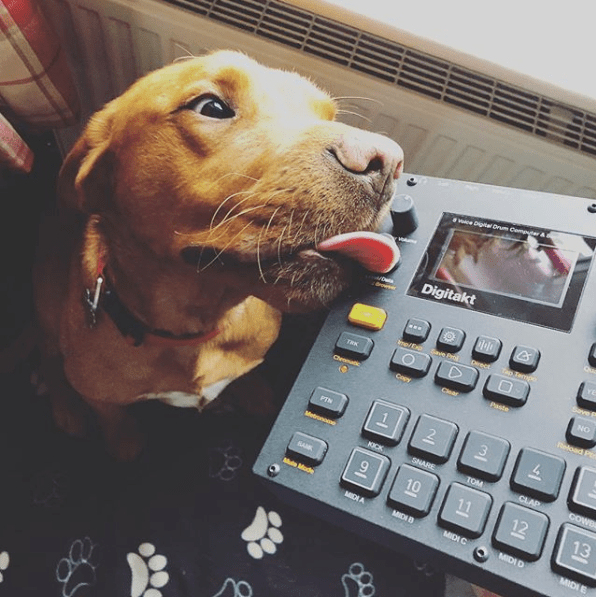
A Digitakt. That’s also all you need.
[Editor: And a nice doggie for company]

Digitakt and doggie

8. What’s the most annoying piece of gear you have, that you just can’t live without?

Adobe Premiere. It’s a bug-infested rats nest, it’s stupidly basic with audio… but I need it. If it ever truly falls over, Davinci Resolve is waiting in the wings, and is free.

9. Most surprising tip/trick/technique that you’ve discovered about a bit of kit?

The incredible genre-defining boundary-expanding main spooky string riff in LFO’s “LFO”, clearly the sound that inspired the track (because you wouldn’t just magically find that sound would suddenly fit what you were doing, you fit a track around IT) is a straight preset (melody and all) from the cheap as chips Kawai K1. That’s right, one of the best moments from one of the best British dance tunes of all time is a preset. Presets are not “for the weak”. Making a good tune is hard enough as it is. Having FINISHED a tune BECAUSE you used presets is far cooler than having hundreds of half finished tracks where you synthesized every hihat from scratch.
Guitar bands don’t build new instruments for every song – there’s a balance to be struck. You can separate the processes of sound design and song writing – it’s something I’m mindful I need to do more. Either way I accept inspiration wherever I find it.

[Editor: ‘Accept inspirations wherever you find it’ – that is a nicely turned phrase and great advice]


Artist or Band name?

Mylar Melodies

Genre?

Electro/techno. I’m inspired whenever I think about Aphex, LFO, Boards of Canada, James Stinson, and Kraftwerk. So hopefully I float around in their worlds musically… A bit.

Selfie?

Mr. Mylar Melodies

Where are you from?

An hours drive from where Mark Bell was from.

How did you get into music?

A perfect storm of having older brothers to who played me Orbital and RDJ, one of whom had an MC-303 (Yes, MC) which he let me fiddle around with, having access to a stack of Future Music issues in a time before the internet, and being bequeathed several grand from my late great uncle at the age of 16(!) years old.

As you might image I frittered most of that money away on stupid pointless things, but I did spend a massive chunk of it on my first ever music gear and a proper stereo, and I never looked back. That was probably the best imaginable upshot of him leaving me the money, despite me wasting most of it – it’s funny that the right gift at the right time can change someone’s life.

You can see how privileged I was to get that push, and the money, and to be young enough to have the time especially – I lived in the countryside, so there were no friends to see (without a lift) or places to go. It’s good to remind yourself that having access to tools and a relaxed environment and the luxury of time, where you can experiment with them – and to have taste makers like your brothers – is essential to make people who can explore creative pursuits, and I’m lucky I had it.

Ralf and Florian [Editor: Of Kraftwerk fame] were well off, how else would they afford a Minimoog, a Synthi and the time to play it?! Of course now the tools are far cheaper, and the software is free (time is still a luxury). The internet could be like an older brother, but there’s just too much noise. How do you discover your “thing” anymore? I’m encouraged to see that people do discover things like Eurorack, and that’s a route into electronic music for them.

Roland MC303 and Eurorack

What still drives you to make music?

The knowledge that if I sit down and fiddle around, something good will most likely come of it. And about thinking about those people I mentioned before, sat in their personal Kling Klangs, playing around with tools just like the ones I have, and coming up with timeless music. That always makes me want to try as well.

How do you most often start a new track?

Making music is a bit like sculpture, or seeing a dog in a cloud. I NEVER pre-imagine what I’m going to make. I just start turning dials and pushing buttons until something cool pops out and a little light goes on my head, and then I get an idea of what that blob could be further shaped into, and then I zone it in on that, and then other complimentary things suggest themselves.
At the end of it, you end up with a semi coherent thing and wonder… how did this even start out?
Usually, also the first idea is wack, but the second or third thing you make from all the sounds and sequences of the first is far better. The main thing is to just sit down and play, irrespective of whether you feel inspired (that will happen by playing), and not to be concerned whether you will make anything “good” or not (that is – partially – out of your control).

[Editor: Kinda like how it’s useful to separate sound design from composition, I guess it’s equally useful to separate the process of creation from judgement of good vs. bad... Or maybe ‘separate’ is too strict a word? Perhaps ‘compartmentalize’?]

How do you know when a track is finished?

I 100% do not know this, and I fiddle away at things endlessly. So much so, that I’ve been engineering systems, so that I have no choice, but to accept my first or second real-time pass at something as “it”. If I later decide it really is crap, I’ll just have to make something else. Quantity makes quality.

Show us your current studio

Mylar Melodies Studio

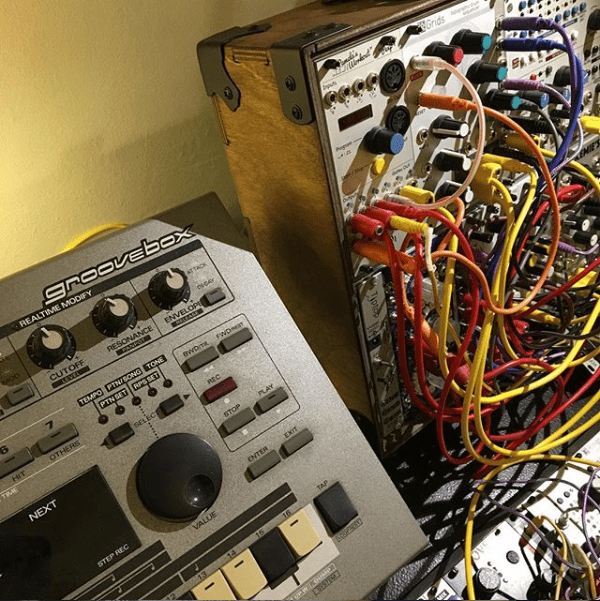
This is half plugged in right now, as I’m trying to find a way to have the stupidest amount of gear in the smallest space.
I feel obliged to say there isn’t (so far, for me) a relationship between having loads of gear and making loads of music. Just like having fifty guitars doesn’t make you a brilliant guitarist. I am not in any way proud of having loads of stuff in principle (NB: Although I love all these things, I’ve slowly gathered it all this over decades, it most definitely did not arrive overnight), and most of the things I own are individually pretty cheap bits of gear. I love these individual bits, both for what they are/do (their market value doesn’t correlate to their coolness to me in all cases) and for their place in musical history, I definitely have the curse of being a collector.

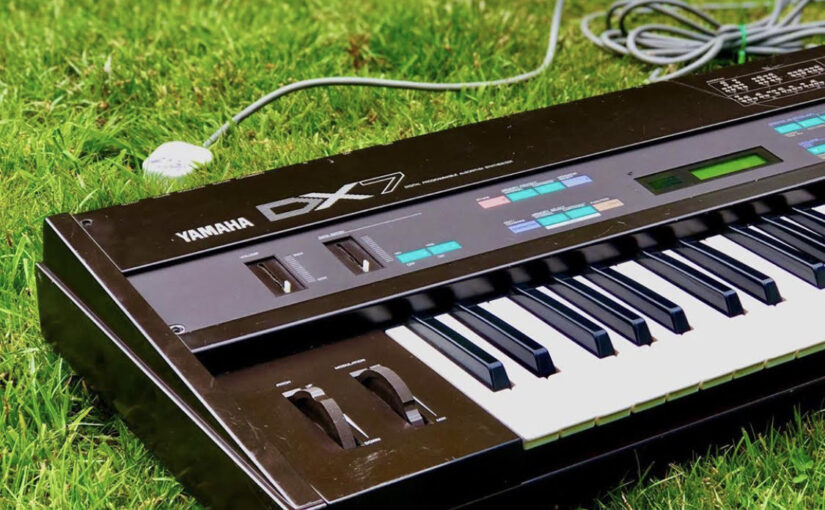
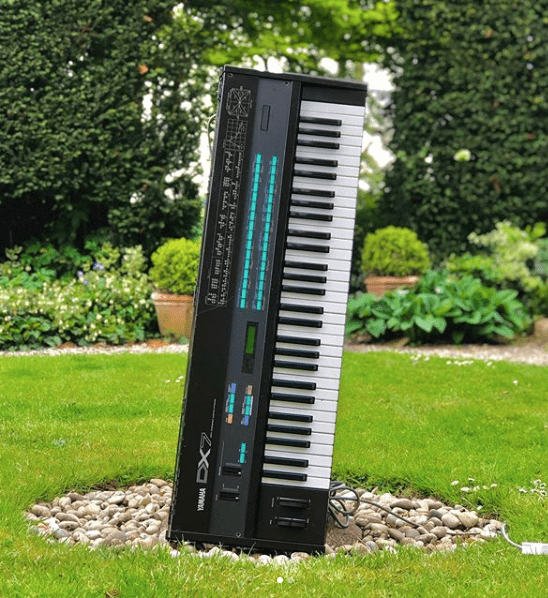
Yamaha DX7

Case in point, I own a DX7 – a proper brown old first edition DX7, and I think it’s utterly amazing for both the historical influence and as a synth. It’s such a futuristic beast, yet fuzzy and nostalgic all the same time. FM synths are extraordinary to me and much more like alchemy than subtractive ones.

But the thing I am actually proud of in that studio picture is that in the last three months I have been working to make it all completely accessible and immediate on (3!) patchbays, so I can actually make full use of it, both for impromptu live jams and recording multi-tracks to computer, and variations thereof. About f*king time. Get yourself enough patchbays to have all the I/O of your studio fully plumbed in.

Otherwise you’ll never use it! I didn’t, and I’ve started applying the “build a system” mentality which I’ve learned through Eurorack, to my wider studio. A well organised patchbay system is essential.

Best creative advice that you’ve ever heard?

A recent one:
“Do not try to create and analyze at the same time. They are different processes.”

I believe strongly that quality is a byproduct of quantity. Just make the music and try not to care if it’s good – in fact revel in making something terrible, if that will help you not give up, just don’t abandon it. Finish it and then see what you learned from it. And if you need an evil, but effective way to force yourself to finish something – bet a friend a significant amount of money (£100+, or more if you’re doing well) you’ll make an agreed deadline. Always worked for me.

Promote your latest thing… Go ahead, throw us a link.

Here’s a video I made about how to recreate a Buchla Music Easel in only 62HP of Eurorack modules. I’m making a whole series of these little mini “Suggested Systems”. Go on and subscribe to the channel if you like nerdy chats about synths and gear? Go on. Go on now:

https://youtu.be/B40AizE6i2g

Also I have a podcast talking to electronic musicians and gear makers, including chats with Scanner, Tom Furse from the Horrors and the wonderful Adrian Utley so far.

http://www.whywebleep.com

Am I allowed three?! Here’s that Moogfest I did on an iPhone:
https://youtu.be/7xhWLtRQ6Aw


[Editor: There are affiliate links to the relevant gear throughout the articles. It helps to support this blog. In fact, should you be needing some patch cables or guitar strings. Then clicking on one of the above links and buying any product that you prefer, will help the blog… doesn’t even have to be the ones in the link. Thx]


Andreas Hald – Playful Filmic Composer

1: Favourite knob/fader/switch on a piece of gear and why?

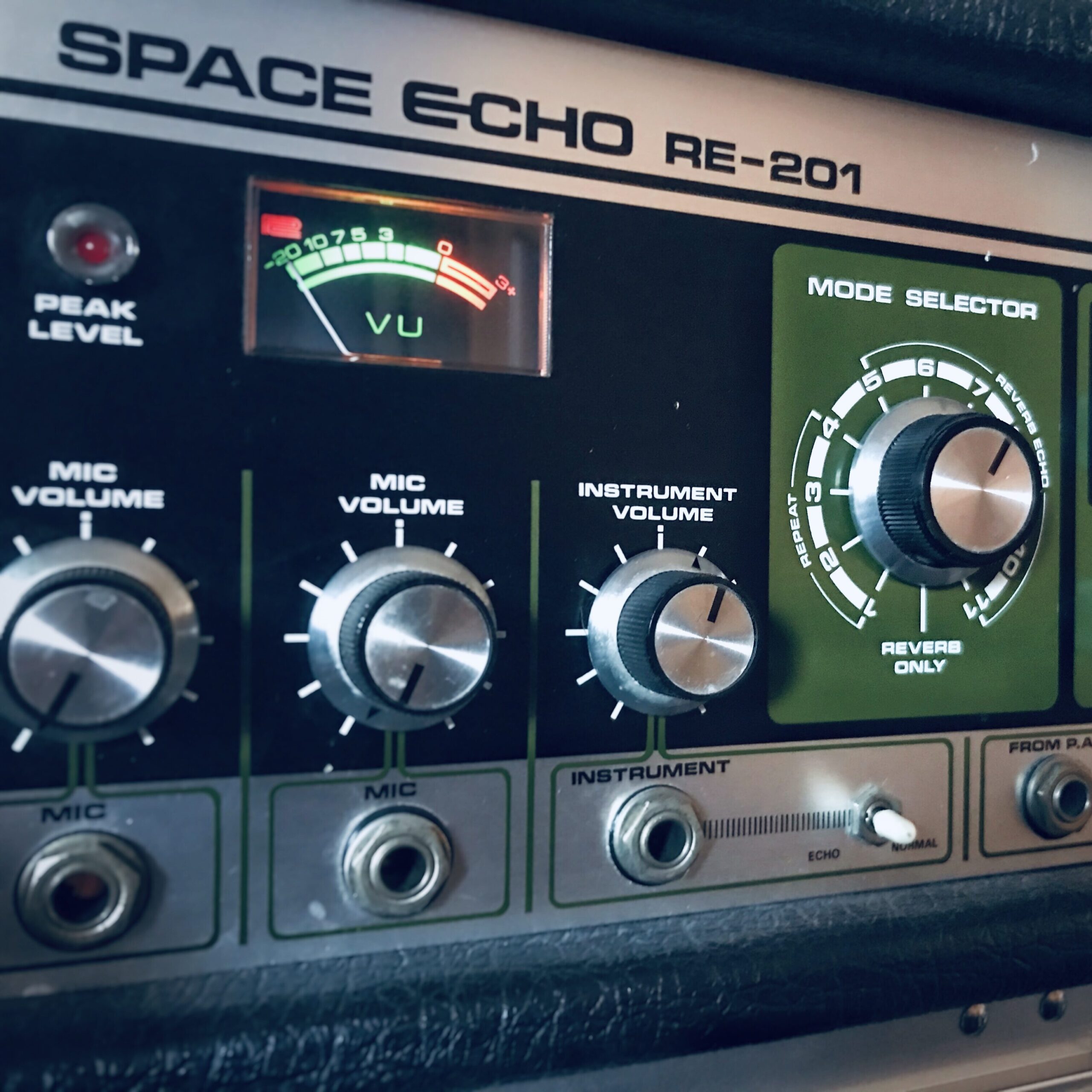
Roland Space Echo RE-201

Ahh, that’s a tough one – there are so many! But – I like big knobs and I can not lie – so I’ll have to go with the Mode Selector on my Space Echo RE-201. It’s big and clicky, and it sits on one of my absolute favorite piece of gear. Sometimes I just turn it on so that I can hear the tape whistling around in there. So great.

[Editor: Possibly the greatest knob on the greatest fx ever]

2: Do you have an ‘almost’ perfect bit of kit? What would you change?

I don’t think so. What comes the closest, is my old trusty Juno-60. To me, it’s the most musical sounding synth I know of. It’s perfect with all its imperfections. Warm and noisy – “brown- and round-sounding” to be cliche, it so inspiring to turn on. Instant greatness. It would be fun to add some of the features from a modern synth like the Prophet 6, but again – the limitations that this (and others) instrument has, is what I like about it and keeps my fluids going. In my line of work I need limitations, so I welcome them.

Roland Juno-60

3: What setup do you bring on holiday/tour/commute etc.?

Well, back in the days I always towed a guitar, amp and ALL of my pedals to any vacation, but ending up not really playing it. So I don’t bring that much anymore. It’s more than often an instrument or synth of a kind that I want to check out further and haven’t had the time to do so. On my last holiday I ended up bringing my cello and a drum machine. I have this weird sickness, that I can only do proper work in my studio, so I try to avoid working elsewhere and don’t bring computer or anything. I need too much hardware to do my work.

Prophet 6 and Juno-60

4: What software do you wish was hardware and vice versa?

In software to hardware – Xils 4, an “Analog Matrix Modular Synthesizer” from Xils Lab. Would love to have that as an enormous beast in the studio. I love that plugin, but mainly use my (hardware)modular synth now. But that plugin tickled me in all the right places. I’m really a big fan of hardware, so I wish that all software was hardware and that we from birth learned to write music on paper and record on tape ;-). That being said, I’m obviously a slave of the modern world.

Xils 4 VSTi

5: Is there anything you regret selling… or regret buying?

I only think I’ve sold three pieces of gear actually, and I regret all three. A Fender Hot Rod Deville 4×10 amplifier. A Bogner Shiva head amplifier and a Custom made Fender Stratocaster. Especially selling the Fender amp is a regret. I’ve listened to some recordings from back in the days when I had that, and it sounded awesome. I sold it to buy the much more expensive Bogner, which I then also sold. So because of that, I’m never selling anything again. I still have a Bogner amp though, and I’ll post a picture of it – just because it’s so cool looking. Can’t think of any regrets in buying.

Bogner amp

6: What gear has inspired you to produce the most music?

Pianos. There’s something incredibly satisfying in playing a real piano. Hard to beat. Instantly something sounds as proper music. I haven’t always had a piano at a studio, but I have now – and I would love to get a Grand Piano one day. But for now, I’m really digging the intimate and noisy sound from this upright. Just got it serviced, and it’s so good now.

Upright piano

7: If you had to start over, what would you get first?

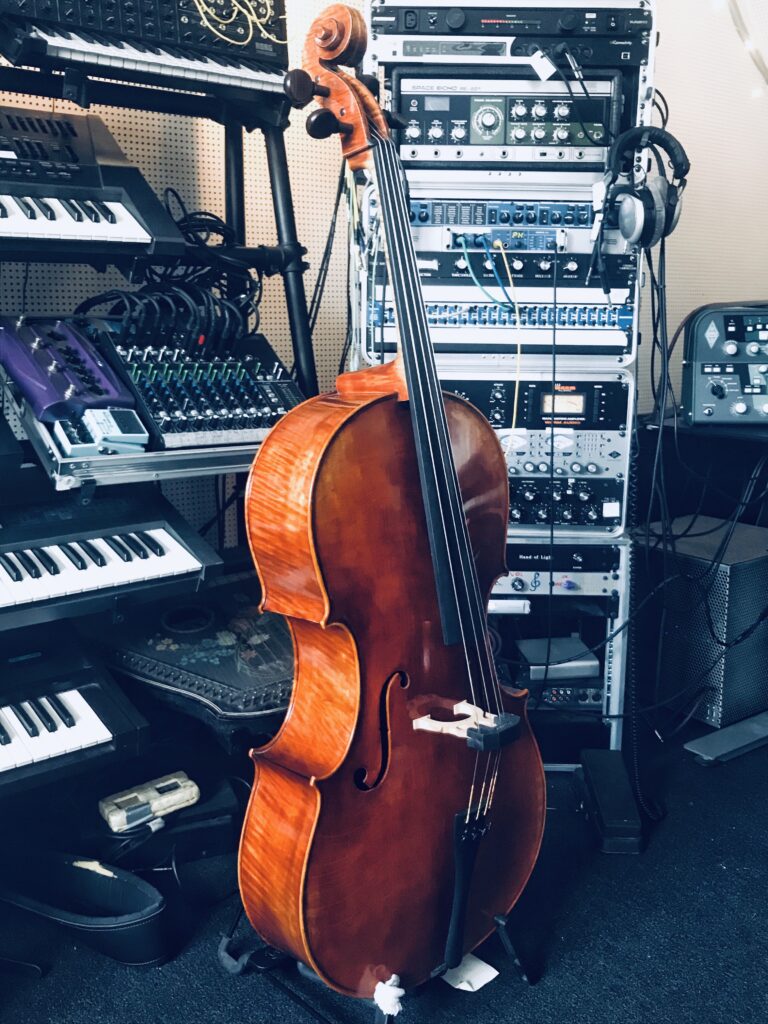
Hmm. Good one. A cello or a pedal steel guitar. I want to be good at those and would (now) have loved to have played something else, that every kid on the block didn’t also play (guitar). I would also tell myself to buy the best equipment. Quality over quantity. I have a pedal steel with humbucker now and love the sound of it.

Cello

8: What’s the most annoying piece of gear you have, that you just can’t live without?

Maybe my Kemper Profiler. I use it all the time and love and adore it, even though I should record amps instead. I do both, but the Kemper is just so convenient. It just looks cheap – like it jumped out of the 90’s – and the menu scrolling is horrific. But sound and work-wise: Love it. I could add my computer to the list. Love/hate relationship – but I just can’t live without it.

9: Most surprising tip/trick/technique that you’ve discovered about a bit of kit?

Hardly a trick – but making my monophonic Korg MS-20 sound like an awesome stereo synth by using the headphone out in the external signal processor and then having two outputs from it, to plug into a mixer with panning possibilities and adding effects. Great revolution for me personally. I used that synth ALL THE TIME on a feature Netflix movie.


Artist or Band name?

Andreas Hald, composer for film and media. NBrigade – music teams for film, television and games.

Genre?

Filmmusic (which means all kind of weird genre-less music).

Selfie?

I don’t do selfies, but here’s a picture of me playing the pedalsteel!

Pedal Steel and film composer Andreas Hald’s silhouette

Where are you from?

Skagen, the very top of Denmark. Very small town.

How did you get into music?

Started playing rock music with a buddy when we’re 10, renting our own rehearsal space when we were 13 (one where we could do parties, drink beers and skip school without our parents noticing).We discovered and experimented with music together, and I’ve never let go of it. 

What still drives you to make music?

The moments with zen-like qualities that you can’t get elsewhere. They don’t occur daily, but when they do – it all makes sense. 

How do you most often start a new track?

With a weird sound created on a synth. Other times at the piano.

How do you know when a track is finished?

When I’m passed deadline. I need the deadlines.

[Editor: I also like the wooshing sound they make as they go by]

Show us your current studio

Here you go, a few pictures of studio and gear. My modular synth setup is connected with my guitar pedals most of the time, and i use Intellijell modules to do that. I didn’t have a 1 unit space in my rack, so I drilled them into a plate myself.

Best creative advice that you’ve ever heard?

“No matter how good you get, there’s alway ten Swedes better than you”.

[Editor: Ha!]

Promote your latest thing… Go ahead, throw us a link.

I’m currently working on two tv-series, one called Friheden ll (Pros and Cons) – which is the second season of a Viaplay Original series, and a series for DR (Danish Broadcasting Corporation) currently untitled.

Andreashald.com


[Editor: Do you have a favorite tip, trick or way of working with any of the gear from this interview?
Then throw a comment below…
]