1. Favourite knob/fader/switch on a piece of gear and why?
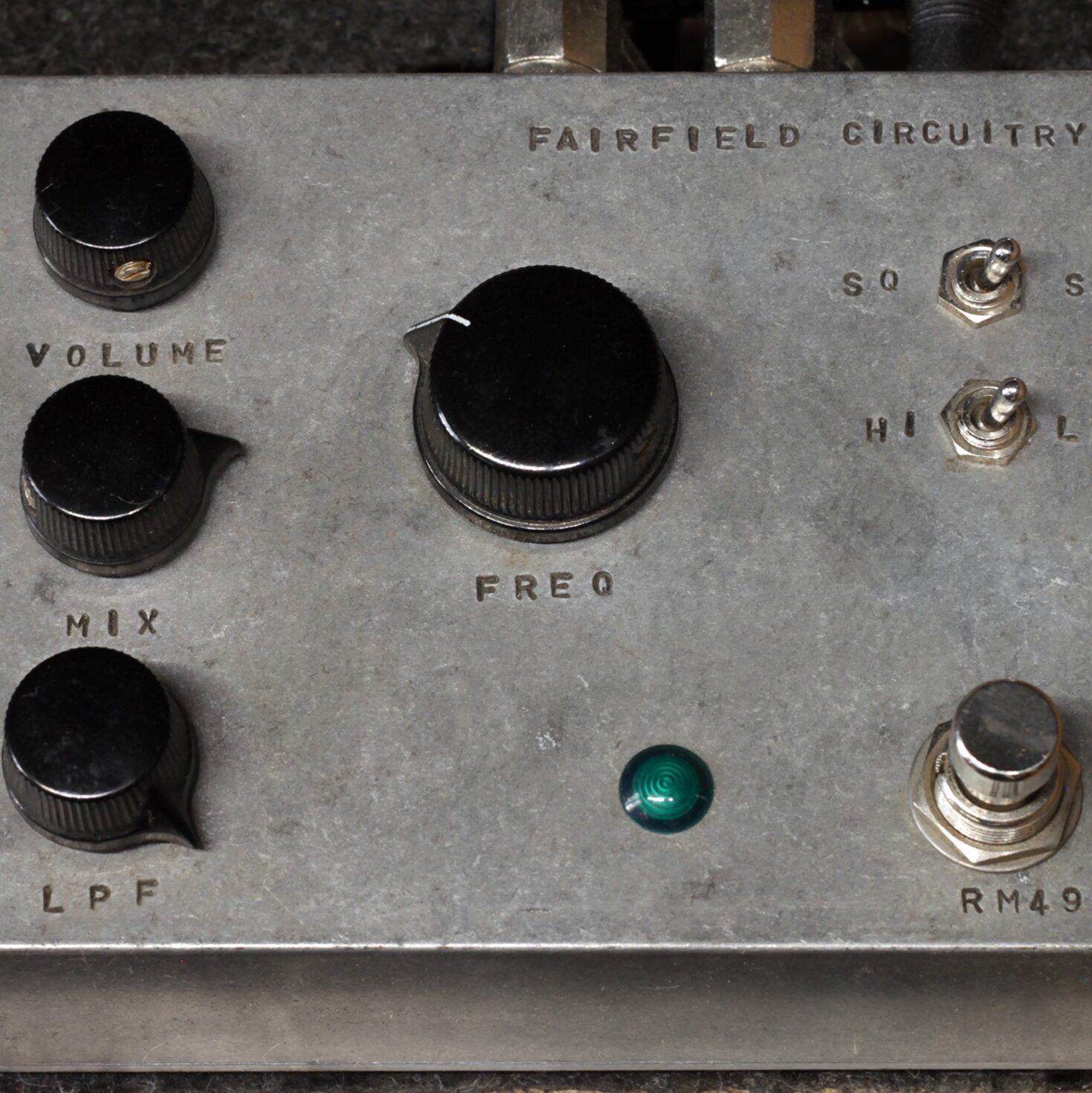
Definitely the frequency knob on the Randy’s Revenge from Fairfield circuitry. The pedal has a ton of amazing different sounds, I feel like they chose so perfectly the right potentiometer value to cover such a wide-range amount of sounds for the ring modulator and for the tremolo. Plus, having a big knob makes it even more enjoyable to use, and for once the pointy knob also adds to the feeling of super-precise setting. I’m not that much a pointy-knob guy (just because of its look), but Fairfield circuitry nailed it on all of their pedals : their potentiometers truly have a super precise feeling when changing the settings, even by doing super small adjustments.
2. Do you have an ‘almost’ perfect bit of kit? What would you change?
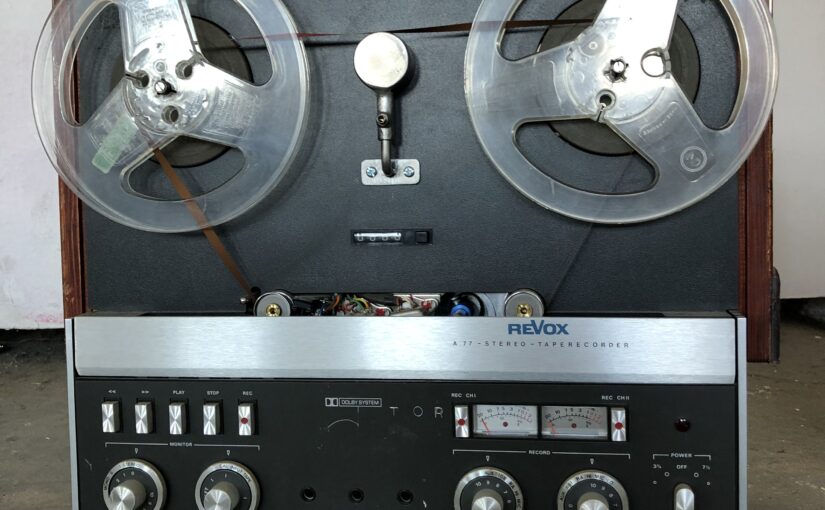
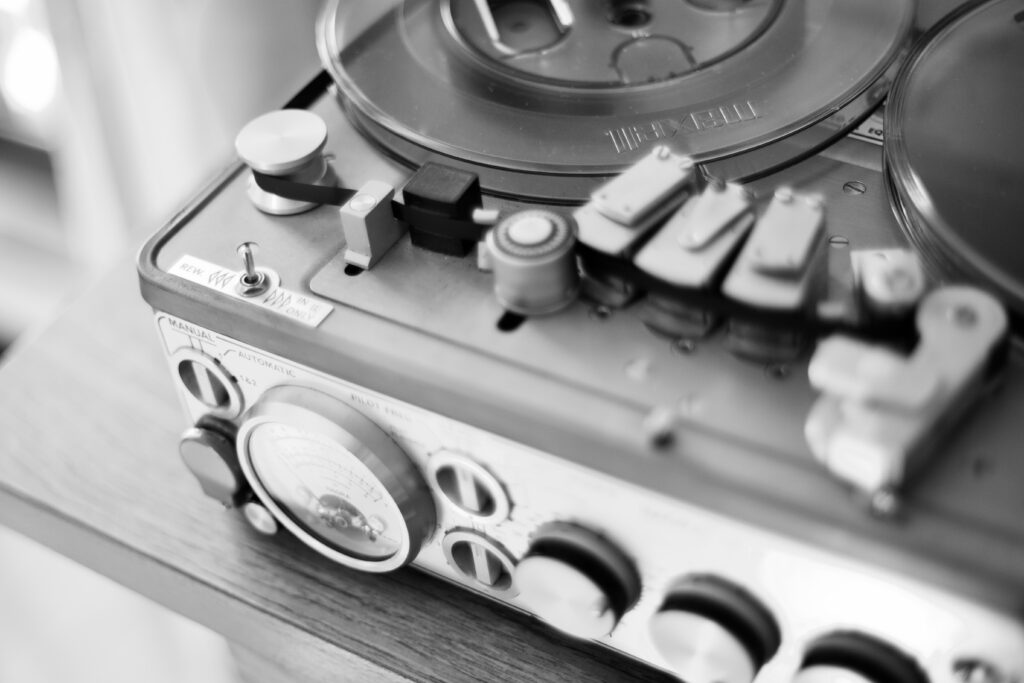
I’m really happy about the guitar pedalboard that I’ve build. I like going through years with different tastes, buying and selling gear to find the ones that fit the best for what I like to do. My project went from guitar only to guitar + reel-to-reel machines + tape players + circuit bent toys + keyboards, so I also had to adjust my guitar rig to go along. I can sample a lot, play with modulation pedals, I have different textures of fuzz/overdrive, two pedals that can sustain notes and creates drones…. everything fits into the custom wooden flight case that I’ve build years ago in my tiny student room (musician’s neighbors always suffer I have to say!), it’s somehow a bit crooked and it wears some traces of the past, but I can’t stop trying to improve it ! And if I had something to add it would definitely be more stutter/glitch/looping pedals (I admit I’m lurking on the Stammen[n] from Drolo for a long time now, as much as the Bloopers from Chase Bliss Audio).

3. What setup do you bring on holiday/tour/commute etc.?
When I play live, I usually bring everything. That means guitars, amps, pedalboards, tape players, synths, drums sometimes, tape/toys/keys and its dedicated pedalboard. And just by reading my answer again I understand why I don’t play that much live! And for holidays, I like to bring a small Zoom sound recorder, and a walkman to capture low fidelity sounds of friends and nature. It’s a bit heavy and it some precious space, but I do the same with photography (I always bring twin-lens reflex during holidays).

4. What software do you wish was hardware and vice versa?
I don’t have anything digital, I don’t work with plugins & vsts. I record on a multi-tracks DAW of course, but everything has to start as a live composition that I could be able to play solo live, so I try to get rid of the computer as much as possible when it comes to music composition.
5. Is there anything you regret selling… or regret buying?
I regret selling the Danelectro backtalk reverse delay years ago (the old version one), I needed money back then but I’d love to have it back now, even if the pedal is super big, and if the effect can be found on other gear… I really liked its silly look.
6. What gear has inspired you to produce the most music?
Multiple ones of course, but the main one that help me to find a new way of composing was the Tascam 414 (a 4-track tape player) when it came to entering into tape loops. I mainly use it to support now the guitar and other instrument, but when I started with it I couldn’t stop making tape loops of anything around me. I still do, but now that I have find a better use of the instrument, I can still notice how everything often starts from it.

And tiny mention for the ehx freeze pedal for drones. Amazingly, having one drone and multiples pedals plug right after it open so many possibilities. I love how one sustained note can be developped for hours.

7. If you had to start over, what would you get first?
Learning violin or piano. I’ve decided to add piano in my compositions just couple of months ago (I bought one last year), and the possibilities that are in front of me amazes me everytime. I also bought a violin years ago, and only use it (as the piano) to experiment stuff since I’m learning how to play with them. But I can’t stop having an accoustic set in mind with prepared instruments. A kit consisting of a piano, violin, loopers and tape machines would be something I’d love to start over with.
8. What’s the most annoying piece of gear you have, that you just can’t live without?
Probably the whammy 4. But just because it’s too big, it take the size of 2 pedals, and I don’t use it that much except for having an octave below and for down-tuning (sounds amazingly powerful when coupled with a fuzz). I’ve opened it once to see how the pedal was working, and immediately got surprised by the expression pedal’s system. I won’t spoil it (if you have a whammy 4, do it if you’re experienced with opening stuff… I don’t wanna be responsible if you break something!) but this tiny detail also changed my decision to sell it for a smaller version, just because I loved what I saw. And also, every time when I was posting a picture of my pedalboard on a forum or social media, I instantly got that question : “Why do you put your whammy so high? Isn’t that hard to reach it?”. At a point that it started to be my own meme, and some people that followed me were openly asking it again, and again, and again as a joke. The unreachable whammy guy.

9. Most surprising tip/trick/technique that you’ve discovered about a bit of gear?
Nothing too fancy, but recently the unsynchronized loops on the Ditto X4 got me super excited, because I love looping a small phrase on two separated tracks at the same time and stopping the recording with a super slight delay. That way, the two samples will slightly drift from each other and create a whole new rhythm. I’ve always loved doing that with tapes, but trying it as well on a pedal was something new, since I didn’t have a multi-tracks looper. I edited and posted a video on my youtube channel called “Asynchronous loops” where I explain how I play with this technique.
Artist or Band name?
Hors Sujet
Genre?
Instrumental ambient/drone
Selfie?
That’s the only picture that I don’t take unfortunately.

Where are you from?
Toulouse, France.
How did you get into music?
My parents obviously have put me on a good path. My father, grand father and great grandfather were drummers, and as a kid I once saw some picture of my mom & dad playing bass and drums with friends, that got me thinking “What would it feel to be in a musical band”. There are some picture of me behind a drumset at age 1, and my grand-father gave me his drum set when I was around 12. I only had one band in my youth, a grindcore band (I was behind the drums), then I’ve decided to start Hors Sujet around 2005.
What still drives you to make music?
I realize that everytime I wanna compose something, I wanna say something or scream it out loud, but I don’t feel able to do so. Mostly inner questions about love, solitude, injustice, anger and desire. So maybe not finding answers to those questions, but trying to liberate a bit of the energy that drives those questions to understand them more.
How do you most often start a new track?
I usually start with unexpected ideas. Some images, a feeling, an emotion, a trip, a book, a voice, anything that can produce in my brain some changes, some new air to breath. I love that feeling of having ideas out of nowhere, and having a carnival brain that never stops help. Wether it happens when I’m on my bike, in the bathroom, in my bed right before to go to bed, I try to write down everything, or record my voice singing a melody, a story…just not to forget them. I’m not that much of a rehearsal person who practice hours before finding something that I like or that could work. Most of the time when it comes, I’m away from any musical gear. Ideas are a real magical moment for me when it happens, when you stop walking just because something caught your attention inside, and when you’re in a hurry to go back home just to try to put in music what you have been thinking about. That’s usually how I start to compose. After laying down a couple of things that sound like what I had in mind, it can be pretty fast to develop afterward.
How do you know when a track is finished?
Things are obviously different when I record for professional contracts or for myself as Hors Sujet. I try to repeat to myself “Better is the worst enemy of good” most of the time when mixing a track. Because I always want to add an extra arrangement, to record something that will make a difference. As the common saying goes : the only rule is that there are no rules. Wether it can work for you in 4 months or in 4 days, then do what’s good for you.
I’ve worked once on an album for a year and this is something I try to avoid as much as possible. Every time that I start a new release I decide a deadline (so also a deadline for each track as well, to have a small agenda for myself), that way I can choose listening days in advance, so during the recording process I can let a track rest for a couple of days, then listen to it again and make a todo list of things that I have to correct/re-arrange/delete/record again, and I repeat the operation multiples times, until the todo list gets smaller and smaller.
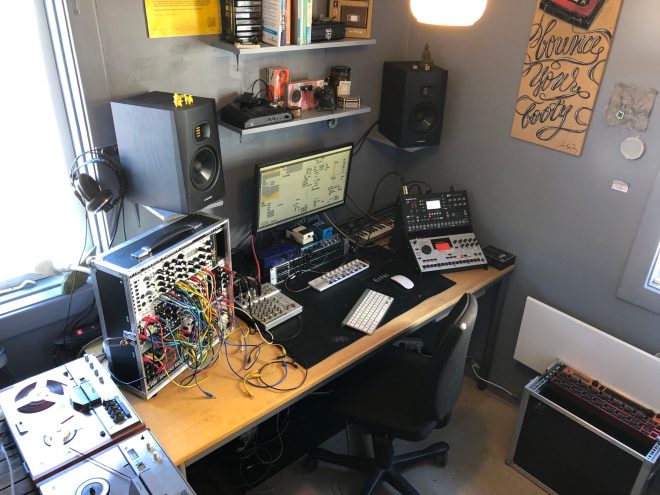
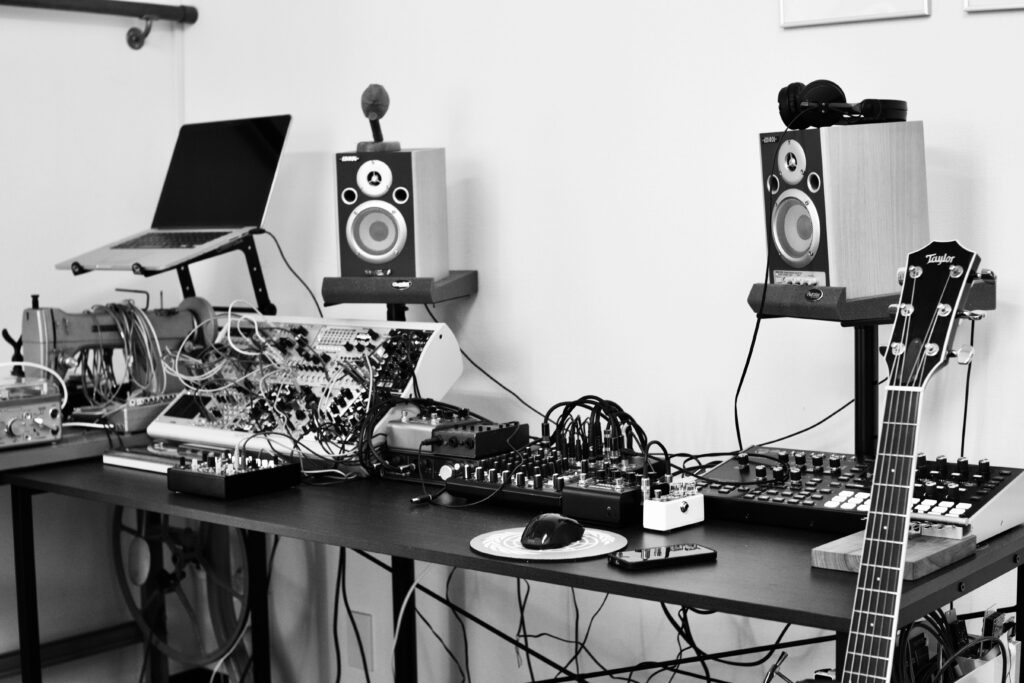
Show us your current studio

Best creative advice that you’ve ever heard?
I don’t know if it’s related to creation, but I’ve met a sound engineer and a composer a couple of years ago that I’m now close friends with, who both work in a local recording studio, and shared with me their point of view on the music industry after years of work. Finding the proper “use” of your art. That moment when you decide to make a living out of music can be decisive, specially because all of the conditions which can sometimes result from it (way of life, intermittent work, financial issues, depression…), and they totally helped me to focus on the fact that it’s a job like any other job.
There’s a magical liberty of creating music and building a lifetime artwork, but it requiers hard work, dedication, constant efforts, humility, inspiration and sometimes perfectionism.
Talking about this condition helps a lot, in my case being in a one-man project taught me a lot of things and I’m thankful that I’ve also met great minds to help me go forward on my musical journey.
Promote your latest thing… Go ahead, throw us a link.
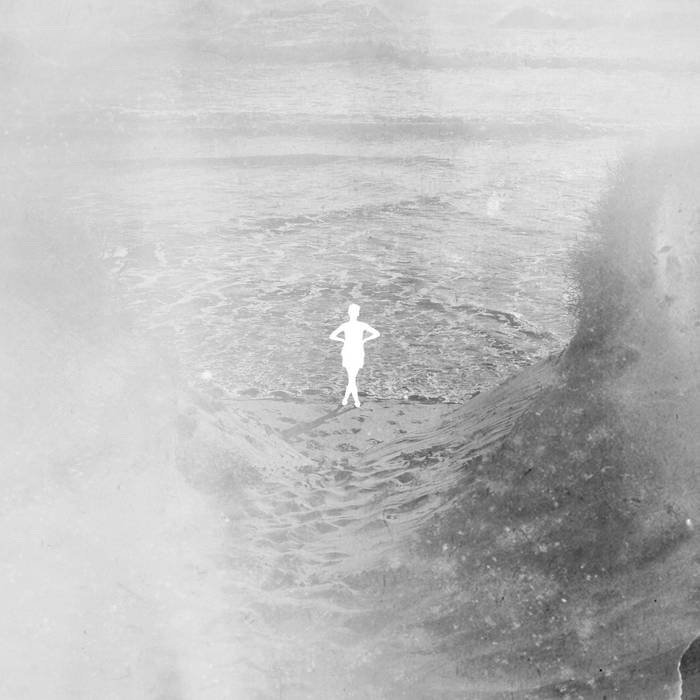
My latest album : “Avec la distance”
I post most of my music as Hors Sujet, and the handcrafted effect that I build as TATAKI. So you’ll find my music, my musical video clips, things that I build, demos of circuit-bent gear, and some other videos that I make when I feel like it (road trip, thoughts) here: https://www.youtube.com/user/horssujet21
My bandcamp to support me: https://horssujet.bandcamp.com/
[Editor: Do you have a favorite tip, trick or way of working with any of the gear from this interview?
Then throw a comment below…]