Asymmetric Cut – Davide Bernardi

1. Favourite knob/fader/switch on a piece of gear and why?
Arturia MicroFreak

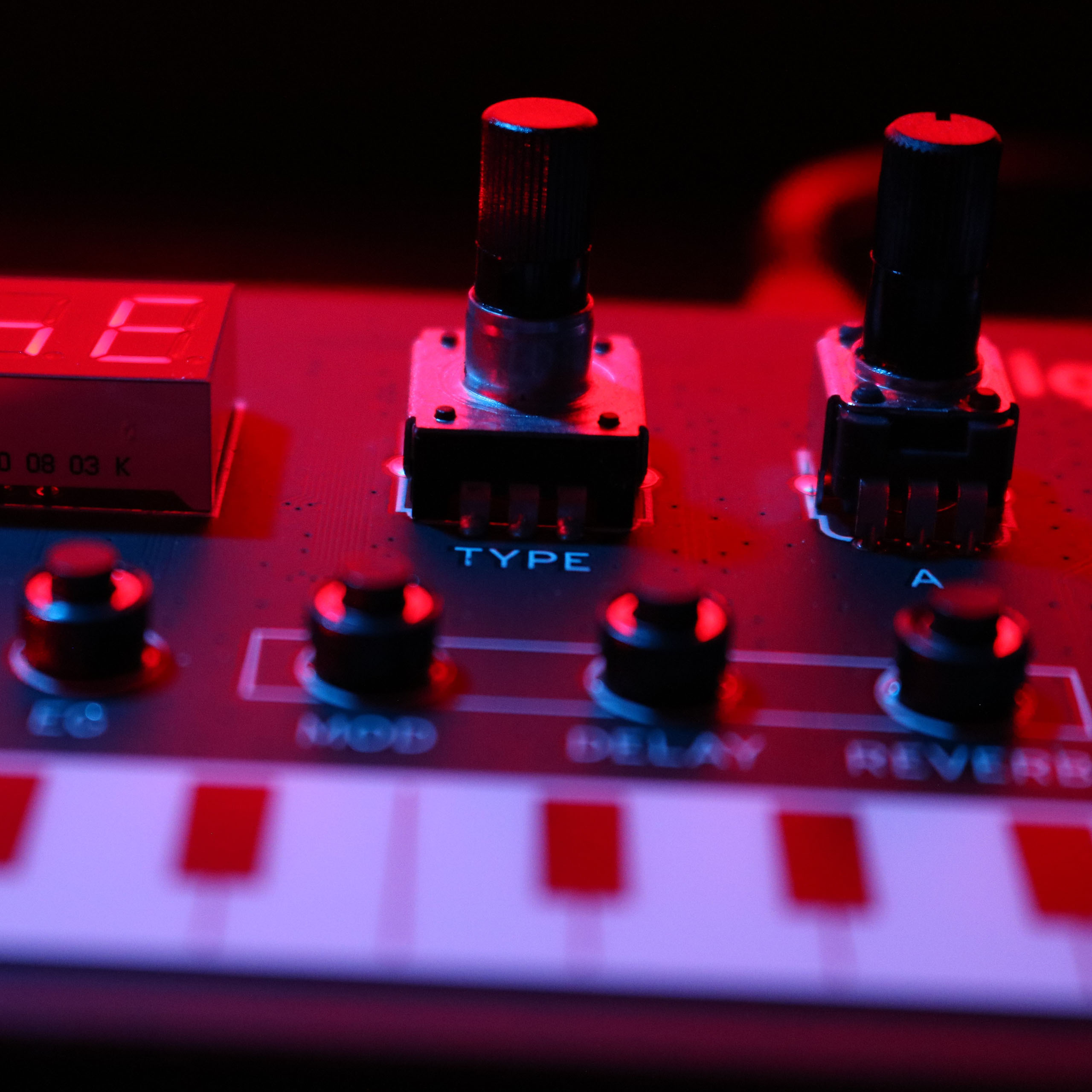
One of my favorite knobs are all the Arturia MicroFreak potentiometers, but my fav thing about the MF is the touch sensitive keyboard (I was scared at the beginning, but now I’m totally in love).
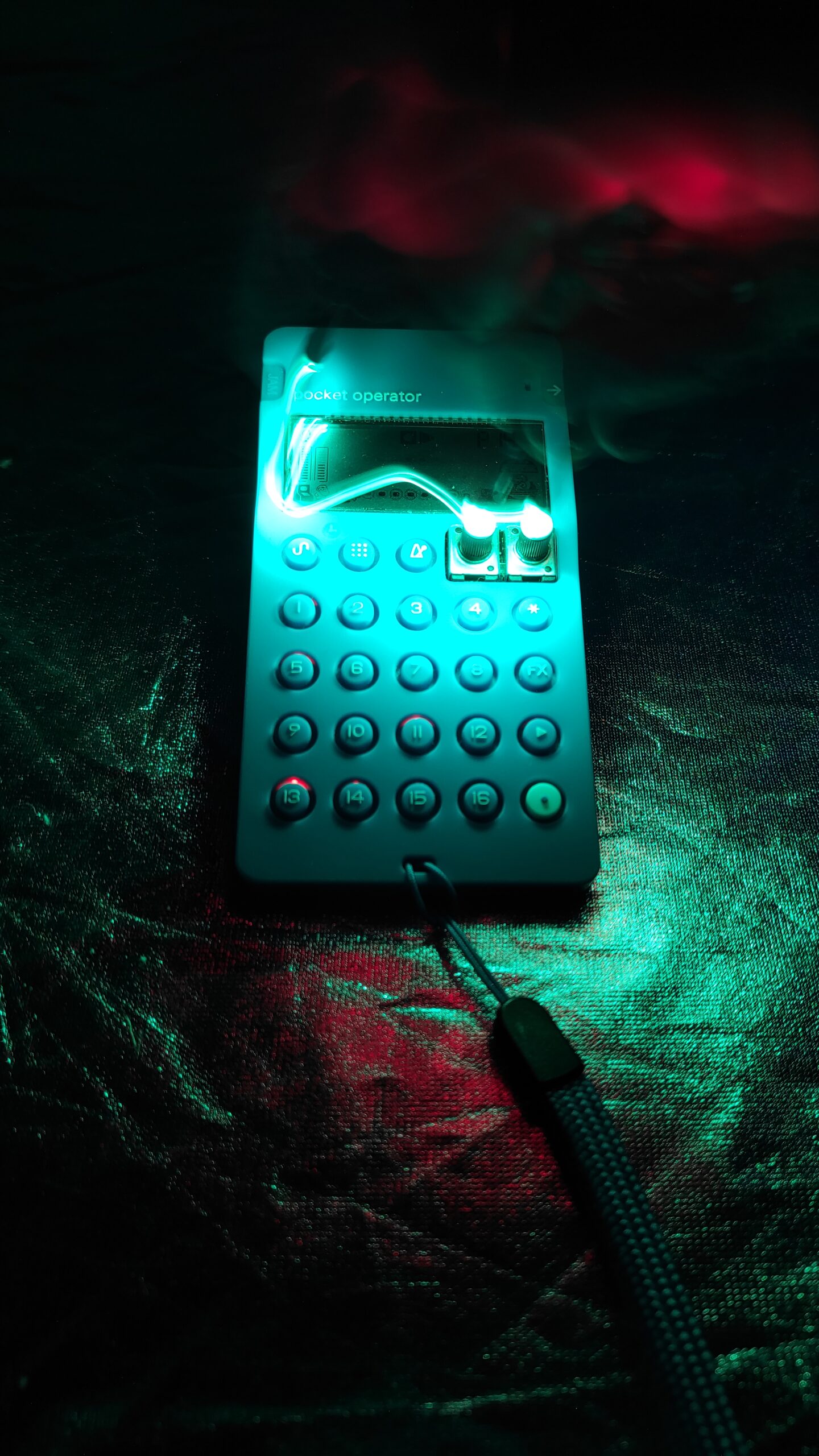
Another thing that I like so much, are the wooden and clicky buttons of the OrganelleM.

2. Do you have an ‘almost’ perfect bit of kit? What would you change?

I don’t own many things, I have the Critter & Guitari Organelle M, Norns Shield by Garret Labs (+ Novation Launchpad Mini MK2 as 64 “Grid”), Arturia MicroFreak, Koma Elektronic Field Kit FX, Zoom MS-70CDR pedal and an old Panasonic Dictaphone.

Panasonic Dictaphone

I use an old version of Ableton Live Intro (8), just as multitrack recorder + Audacity and Adobe Audition for “editing” with Zoom U-22 as audio interface.
I would love to start/switch into the modular world, but for now I’m learning/trying this great and awesome world with VCV Rack 2.
Also the Ciat-Lonbarde ecosystem, it fascinates me a lot.

3. What setup do you bring on holiday/tour/commute etc.?

Critter & Guitari Organelle M

Organelle M is the perfect companion in combination with the Norns Shield (with external power bank) and Zoom MS-70CDR.

Zoom MS-70CDR

4. What software do you wish was hardware and vice versa?
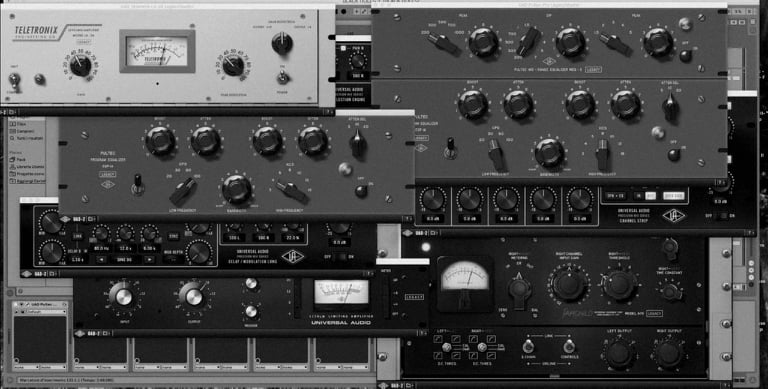
Valhalla Supermassive as a real pedal and almost all the Splice VST effects.
I would love to have all the Ciat-Lonbarde (Cocoquantus, Deerhorn Organ, Sidrax Organ, Tocante, etc …) as virtual instruments, to try/learn their workflow.

5. Is there anything you regret selling… or regret buying?

Regret selling, the Boss SP-202 and the Yamaha MT50 4 track cassette recorder.
Regret buying, probably nothing, all the equipment that I’ve had, have in some way either good or bad things about them, that help me to learn something.

6. What gear has inspired you to produce the most music?

Norns Shield and Organelle M are my main “brains”, especially with generative scripts / patches.
I like to control them with 2host USB (Midi USB-USB) or sequencing the MicroFreak.
Sometimes I like to record samples / fields recording, with piezo mic on the Koma Field Kit FX or with the Dictaphone.

Norns Shield

7. If you had to start over, what would you get first?
I’m not consider myself as “musician”, my workflow is about feelings, insights and following the flow, so maybe probably, learn and study music theory and a lot of things that I don’t know, even if I like (perhaps too much) the transportation and philosophy of the generative music.

Arturia MicroFreak and Organelle M

8. What’s the most annoying piece of gear you have, that you just can’t live without?
Cables and power adapters.

9. Most surprising tip/trick/technique that you’ve discovered about a bit of kit?

I have no real tricks (being self-taught), but I have learned a lot thanks to the various online communities (for Norns and Organelle) and I wanna say thanks to all those who spent time and energy creating new scripts and patches!


Artist or Band name?

Asymmetric Cut

Genre?

Ambient / Soundscape / Drone

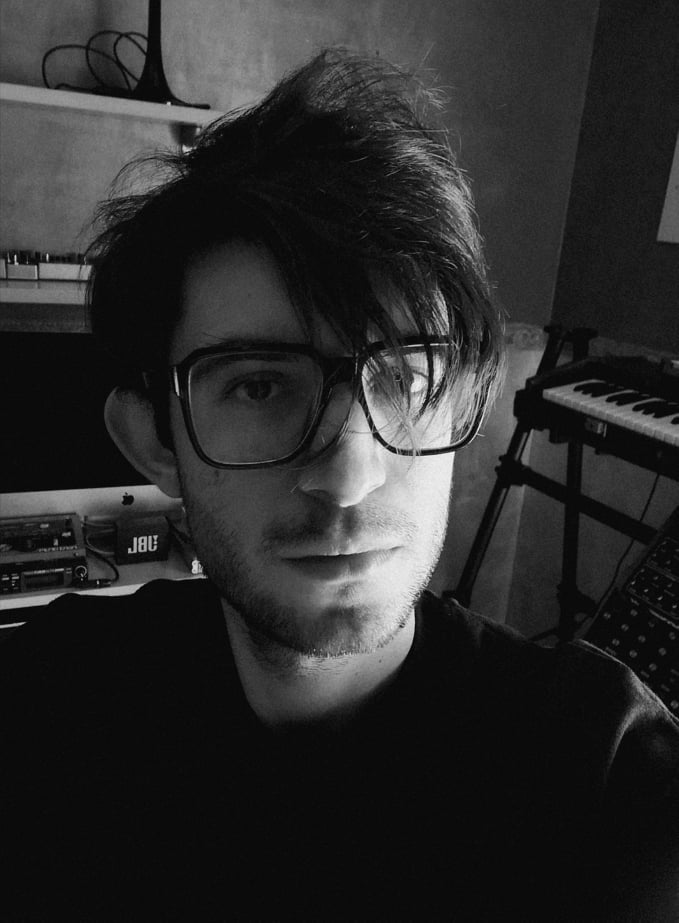
Selfie?

Where are you from?

Italy

How did you get into music?

When I was child, I got an xmas gift (Bontempi keyboard) then around 14, playing guitar (hardcore / punk / grunge), then I dive into electronic music with FastTracker 2 on 486 PC.
Later with different gear, such as samplers (E-mu ESI-32 and Boss SP-202) and grooveboxes (Roland MC-303 and MC-505).

What still drives you to make music?

I’m not a professional musician (I’m photographer and teacher), so for me it’s just something to relax, make something (hopefully good) and with the social media, make connections and know nice and talented people (like you and many others).

How do you most often start a new track?

Depends of my mood, but usually I start with the Norns Shield or /with Organelle M and the MicroFreak through the MS 70-CDR, layering some sounds and working on, till I’m ok with the result.

How do you know when a track is finished?

I usually start listening to it many times to understand if I have skipped any steps or made some drafting errors, then I let it settle, like wine and decide if it is usable or not.

Show us your current studio

Desktop Studio

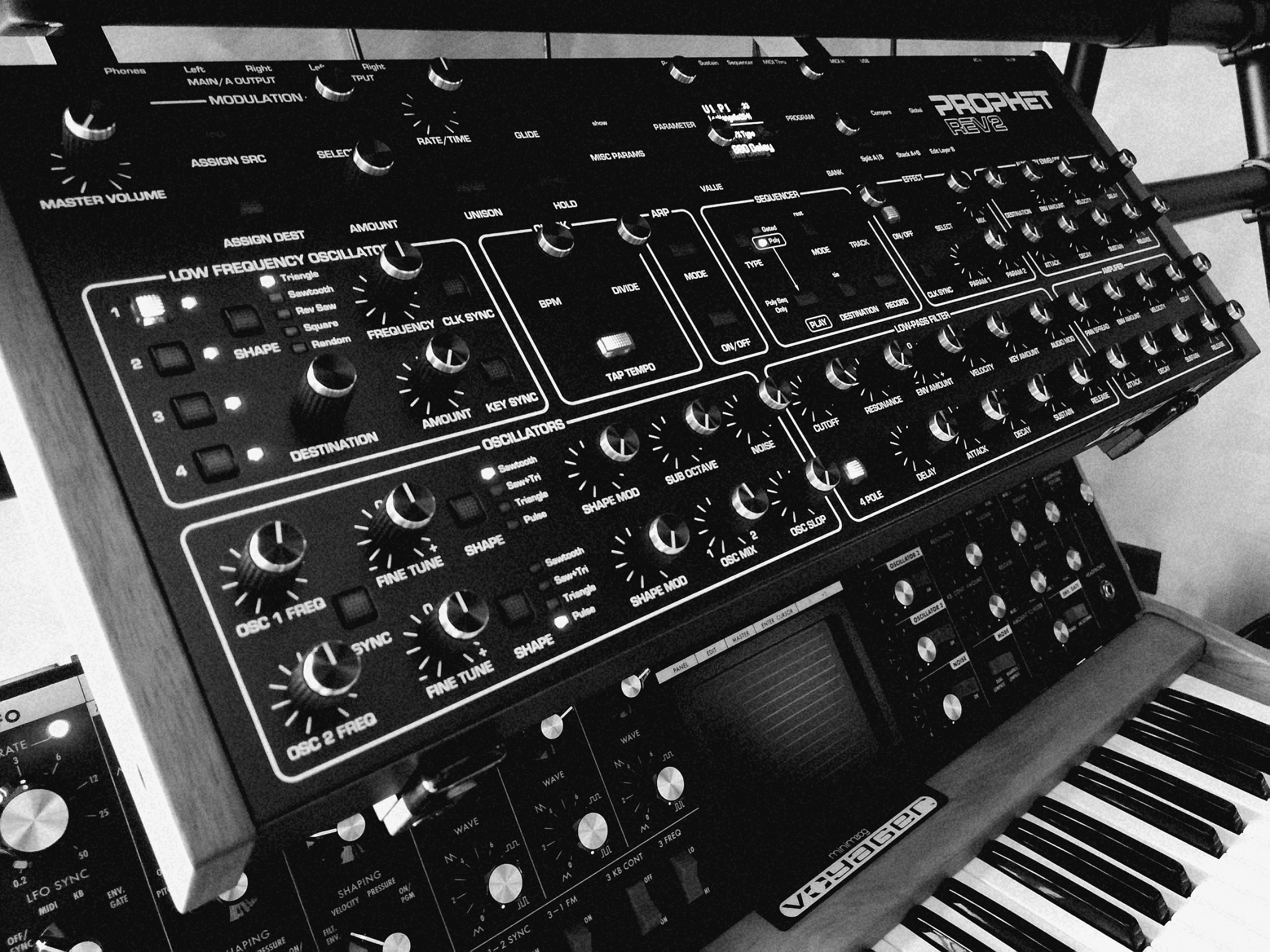
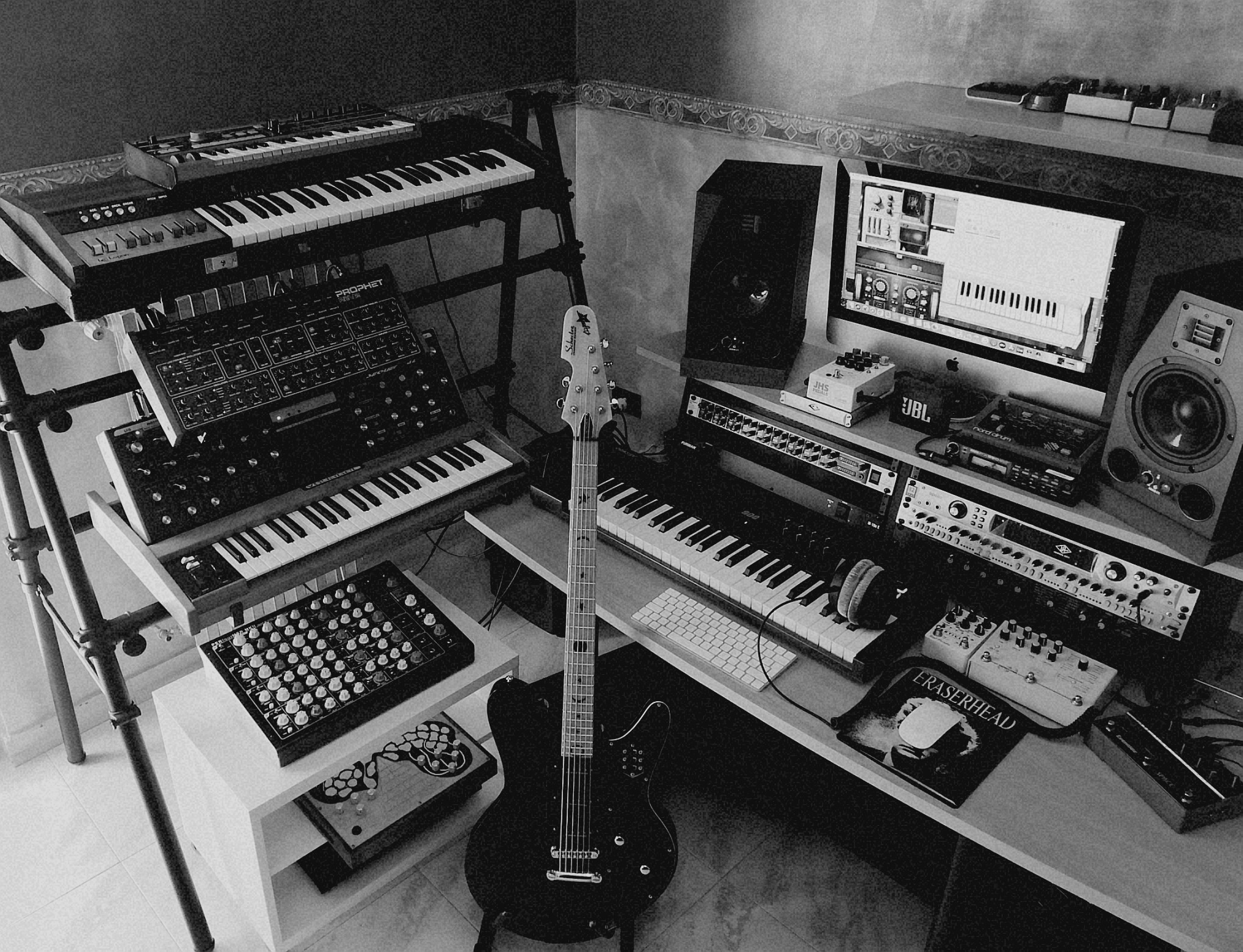
I don’t have studio or studio space in my little apartment, so every time I wanna play I set everything on the living room / work / eating table.

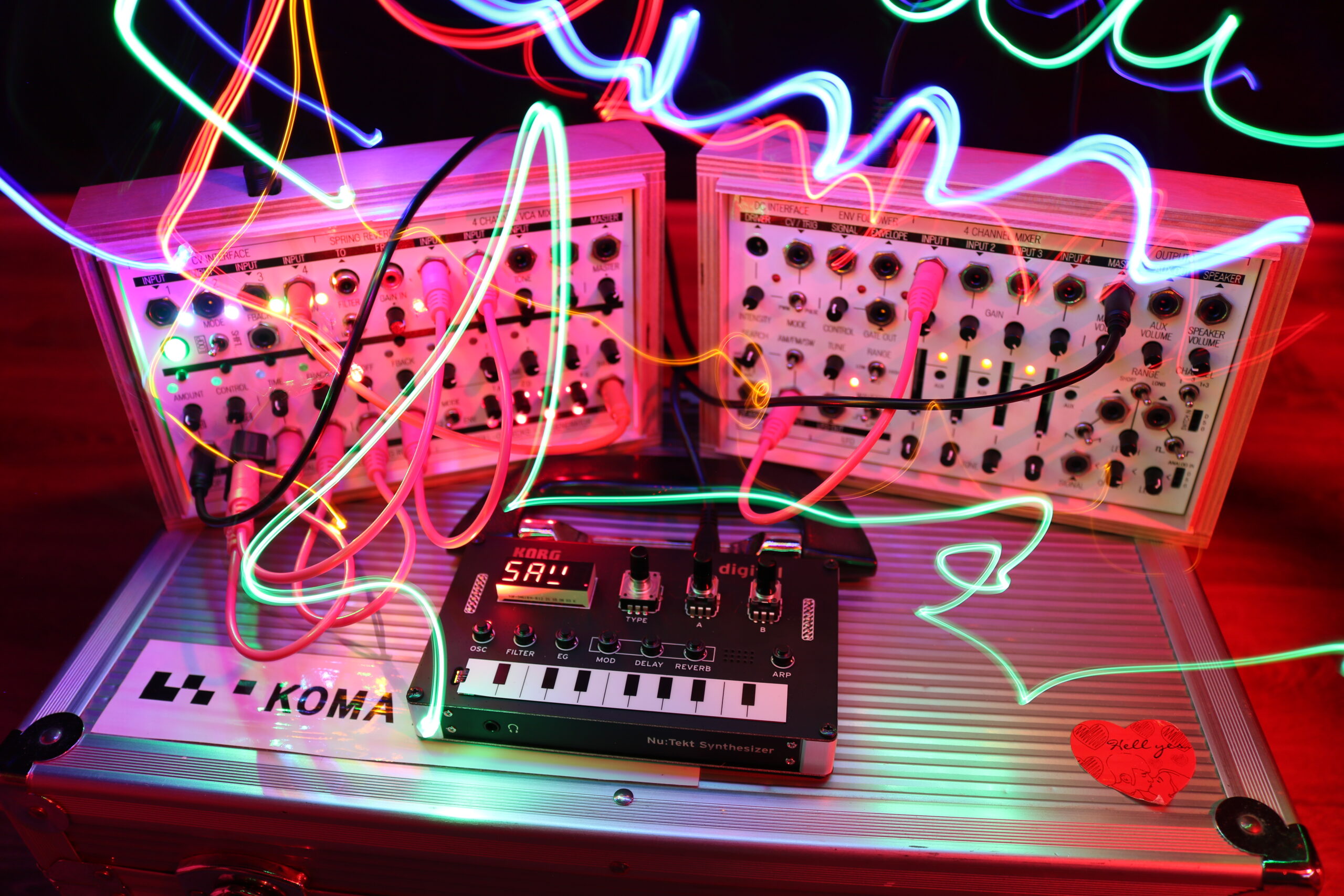
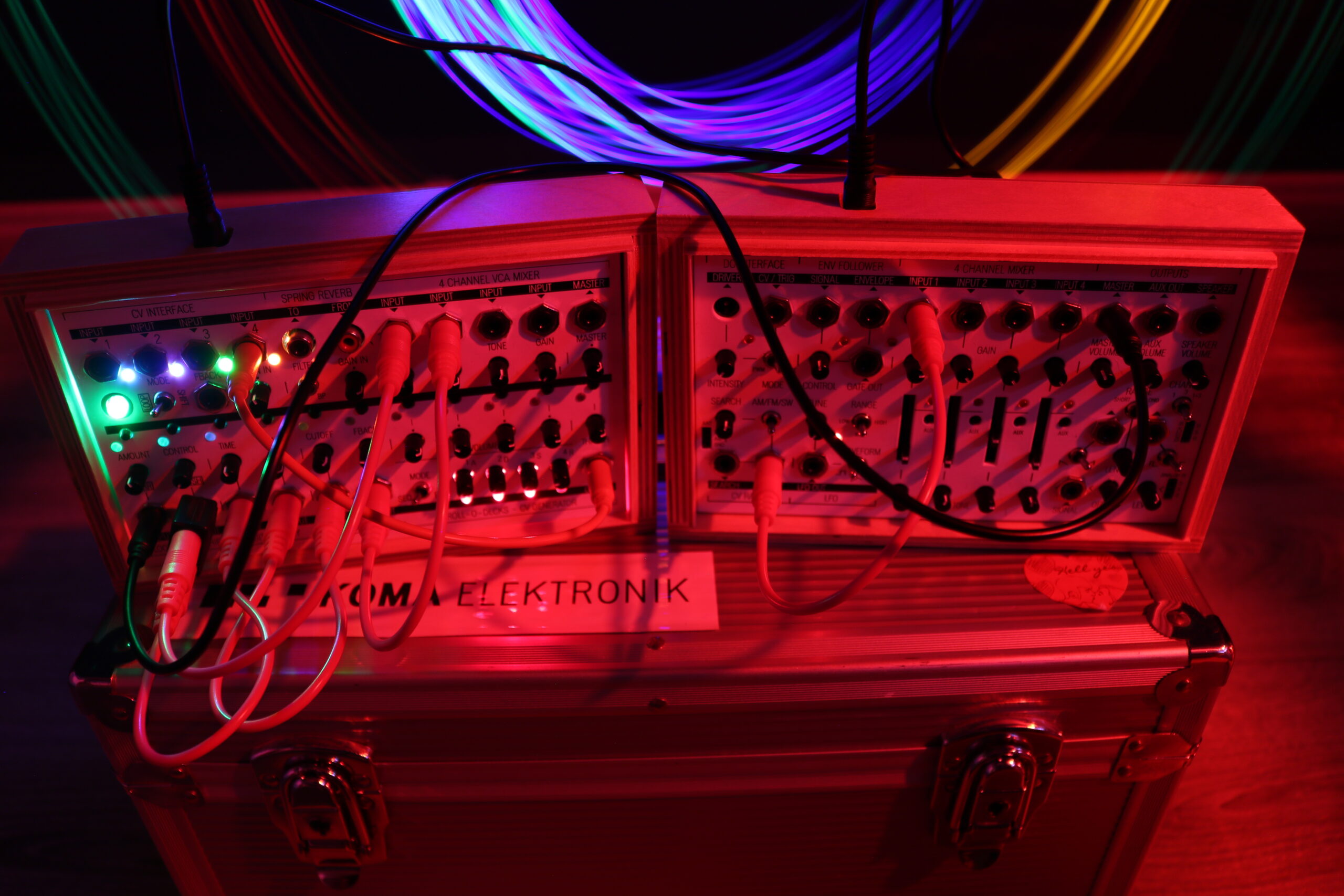
Koma Elektroniks FieldkitFX

Best creative advice that you’ve ever heard?

For me works very well the Samuel Beckett’s quote: “Try again. Fail again. Fail better”.
So this kind of mantra could be … try, try, try, don’t be afraid to fail and then try again, having learned something valuable from your experience.
Eventually it goes without saying, you will achieve success.

Instagram: https://www.instagram.com/asymmetric_cut/
Bandcamp: https://asymmetriccut.bandcamp.com/

SoundCloud: https://soundcloud.com/asymmetriccut


Nathan – Accelerator Jengold

1. Favourite knob/fader/switch on a piece of gear and why?

In terms of aesthetics and tactility, it has to be the main rotary knob on the ZOIA by Empress Effects. The way it subtly clicks is super satisfying, and the chunky chrome design stands out compared to other pedal knobs. In terms of functionality I’ll go with the D-C-V (Dry-Chorus-Vibrato) knob on the Walrus Audio Julianna.

Dry-Chorus-Vibrato knob on the Walrus Audio Julianna

It controls the stereo spread of the effect and the mix of chorus and vibrato. The Julianna is an ‘always on’ pedal for me – the modulation sounds great and D-C-V knob helps to always find that sweet spot. I typically use the Julianna to make lofi guitar tones using the random LFO setting and a slow vibrato.

2. Do you have an ‘almost’ perfect bit of kit? What would you change?

I’ll have to go with the ZOIA again for this question! It’s one of my favourite pieces of gear and I use it in pretty much all of my music. It’s both dauntingly complex and surprisingly intuitive. It’s mind-blowing how much Empress Effects managed to cram into this small box! I’ve been using it for a couple of years now, but I still feel like I’ve only scratched the surface of what it can do. I use it in all sorts of ways, such as a semi-generative synthesizer, looper, midi controller and of course as a multi-FX unit.

ZOIA by Empress Effects

My only complaint is that because it does so much it’s difficult to know where best to put it in the signal chain. One possible solution would be a set of additional inputs/outputs for an FX loop, and the ability to assign modules either before or after the FX loop. A couple of additional assignable knobs would also make parameter control more immediate.

3. What setup do you bring on holiday/tour/commute etc.?

I’m a fan of the Elektron Model:Samples for making music on the go. It’s super portable and I like the directness of the ‘function per knob’ design. It’s perfect for quickly sketching out ideas whilst travelling.

Elektron Model:Samples

Other devices offer more features, like the OP-Z, but I have a soft spot for the Elektron workflow. I don’t use it in my main setup due to the lack of direct sampling, but it’s a fun device to kill some time with.

4. What software do you wish was hardware and vice versa?

I predominantly use a ‘DAWless’ setup, so I don’t have much experience with software. I only really use my DAW (Studio One 5 to be exact) to record/master and try to do everything else using hardware. Tactility is an integral part of making music for me, I like the physical connection to whatever I’m writing. I don’t have the same drive to write music when I’m working on a laptop. I also find a limited palette of sounds to be quite inspiring, so the inherent limitations of hardware gear can paradoxically be liberating.

Nathan’s pedalboard of tactility

That said, I would love a virtual version of my pedalboard so I could try out different setups without having to tear the whole thing apart!

5. Is there anything you regret selling… or regret buying?

I recently sold my Walrus Audio Slö reverb pedal and replaced it with a Meris Mercury7. Although I really like the expansive stereo sound of the Mercury7, I definitely prefer the modulation on the Slö. It has a unique dreamy quality which is perfect for lo-fi reverbs and woozy textures. I would rebuy it in a heartbeat if they ever made a stereo version with a random LFO mode

Sovtek Big Muff

My biggest gear regret is not looking after my Sovtek Big Muff. Unfortunately it’s been battered from years of gigging and no longer has the original knobs or switch. It’s just too temperamental to use regularly in my setup now.

6. What gear has inspired you to produce the most music?

Roland JU-06A

I’ve been really inspired by the Roland JU-06A synth over the past year, it’s the synth I come back to most often. I love the range of sounds, the simplicity of patch design and its compact size. Roland did a great job replicating that classic Juno sound in a small and affordable package. I also get a lot of inspiration from my humble Boss RC202 loop station. I love working with loops and layers, and the RC202 offers a good balance of features and usability. All of my tracks begin as loops, and I wouldn’t know where to start without my RC202.

7. If you had to start over, what would you get first?

This is a bit of a cop out, but if I had to start over I would probably start with some guitar and piano lessons! I’m completely self-taught, so I sometimes feel a little limited by my technical skills. To answer the question more directly, if I was starting over with electronic music production I would probably begin with an Arturia Microfreak.

Arturia Microfreak

Due to the wide range of features and relatively low price, it’s a great introduction to hardware synthesis. The keybed isn’t for everyone, but the range of synth engines, the intuitive modulation matrix and the analogue filter make it incredibly good value. If it had built-in FX it would be the total package. Although I don’t use mine much anymore, I still consider it to be a modern classic.

8. What’s the most annoying piece of gear you have, that you just can’t live without?

As much as I love my Elektron Digitakt, it can be a real pain to use sometimes! There are a lot of functions which are not immediately apparent, and it takes time to learn how to use it properly.

Elektron Digitakt

I actually prefer the usability of its little brother, the Model:Samples, but the additional features of the Digitakt make it substantially more powerful. It’s basically the brain of my setup, even though I probably don’t use it to its full potential. Elektron have done a great job with software updates over the years and have added a number of clever features, like the secondary LFO.

9. Most surprising tip/trick/technique that you’ve discovered about a bit of kit?

The Expression Ramper by Old Blood Noise Endeavours is a deceptively versatile pedal, which offers a unique approach to expression control. There are so many ways to use this tiny pedal to drastically change how other pedals work.

Expression Ramper by Old Blood Noise Endeavours

My favourite trick is to use the Expression Ramper to control the pitch parameter on the Red Panda Particle v2. Whilst in reverse mode it creates a fantastic reverse pitch-shift effect which cascades with the delay repeats.


Artist or Band name?

Accelerator Jengold.

Genre?

A mix of lofi, synthwave, dreampop and shoegaze.

Selfie?

Nathan

Where are you from?

North Wales, UK.

How did you get into music?

Music has always been an important part of my life; I’m thankful that my parents and brother introduced me to artists like The Cure, Radiohead, Tom Waits, Massive Attack, Godspeed You! Black Emperor and Brian Eno. I took up bass when I was a teenager and played in a few post-rock and post-metal bands whilst in University. I later moved into electronic music production using software like Reason, and then got into hardware gear with an Arturia Microbrute (which I sadly no longer own).

What still drives you to make music?

I’ve always enjoyed being creative and having a musical outlet helps me to cope with stress and anxiety. I like having a way to express how I feel, even if I don’t always understand my own thoughts and feelings – which probably explains why most of my music has a downbeat or melancholy vibe. Producing something tangible from my creativity, like a finished song or EP, is a big driver for me.
I think this is linked to my preference for tactile music production; using software feels too ephemeral to me. I love conceptual music and take inspiration from a wide range of books, films and other media when writing. Short-form jams on Instagram are my primary output, so I’m super inspired by other artists with a similar approach like Andrew Black, Joshua Dowell and Simon Von Walbrook. I’m really proud to have had my music featured on microbiology posts by Chloe Savard and Penny Fenton, and I would love to produce more music for other media.

How do you most often start a new track?

I typically start with sound design, either creating a unique guitar sound using various FX or developing a new synth patch. I’ll then loop a simple melody and experiment with different layers until it feels right. Sometimes I focus on the melody, other times I focus more on the overall vibe, it just depends on the individual track. Percussion usually comes last so I can choose samples and rhythms to fit the music. 

How do you know when a track is finished?

Most of my music is based around looping and building layers of melody, so an important skill is knowing when to stop. When I can remove a layer and the track sounds better, it’s probably finished! If I get stuck on a track I’ll take a break for a few days and then come back to it with a fresh perspective. My least favourite part of making music is mastering, so I’ve developed a couple of mastering templates in my DAW to help speed up the process and remove some layers of indecision. For official releases on Spotify (etc.) I rely on my good friend Chris Walker, who always does a great job fixing up my masters.

Show us your current studio

Synths, samplers and loopers

My setup is in a tiny office/walk-in wardrobe in my house, but it has pretty much everything I need. I’m planning to add an analogue synth at some point (like a Pro-1 or Minilogue) and a Colour Palette electronic kalimba by Lottie Canto.

Studio desk

Best creative advice that you’ve ever heard?

I’m going to echo what Dev Bhat (Shipwreck Detective) said in his interview for this blog: “keep it simple, stupid!” This really resonates with my own approach to writing music. There’s a skill to communicating an emotion, theme or concept in an honest and direct manner without resorting to cliché. I like to embrace simplicity and try to express myself with a limited number of components.
An important part of being creative is trusting your instincts and not focusing too much on what does or doesn’t work in theory – theory should be used to help us translate and communicate our ideas rather than to provide a rigid framework for them.

Promote your latest thing… Go ahead, throw us a link
I regularly post jams on Instagram (@accelerator.jengold), so that’s the best place to keep up to date with what I’m doing. My music is also available on most streaming platforms, just search for Accelerator Jengold. My latest EP, Pyre, came out last year and is full of weirdo synthwave tunes, go check it out! I’m currently working on a new EP and some upcoming collaborations. Thanks!

Instagram: https://www.instagram.com/accelerator.jengold/

Spotify: https://open.spotify.com/artist/0KrYUaPA2BsqVMiDCVmywM?si=ZJdIN-wDS4-J0UdkHjEWsA

Linktree: https://linktr.ee/acceleratorjengold


Max Beatwerk – Finger Rabbit

1. Favourite knob/fader/switch on a piece of gear and why?

Dirtbox by Dr Alien Smith

As a drummer I am not so much of a knob guy, but right now I always enjoy dialing in the amount of distortion with my newly acquired Dirtbox from Dr Alien Smith.
And then there is that light switch in my studio which powers up everything with just one touch. Very satisfying!

The studio switch

2. Do you have an ‘almost’ perfect bit of kit? What would you change?

I think that would be my two Sebatron VMP4000e tube preamps. They are tubey but fast and make me sound better without having to practice, haha! However I wished for a more relaxed output dial knob. You need a calm hand to use them, because it quickly jumps from not enough to way too hot output, at least with loud sources like drums. But that’s a minor issue, I really love these units.

Sebatron VMP4000e tube preamps

3. What setup do you bring on holiday/tour/commute etc.?

Compact stage drum kit

Generally I like compact setups. The stuff I bring depends on the music, but it is basically my 20“ aluminum bassdrum, two shallow snares, a cymbal and a floortom. Then an array of sizzlers and dampeners and maybe a sample pad for sounds that are hard to reproduce mechanically in a live setting.

4. What software do you wish was hardware and vice versa?

Never really thought about that. My tracking room has all the tactile stuff like drums, cymbals and analog gear, whereas my mixing space is at home and strictly software. Perhaps some of the elaborate software I use would be more fun, if it was hardware. But I don’t care because I could not afford it anyway.

5. Is there anything you regret selling… or regret buying?

In today’s used gear internet cycle, it’s easy to sell and rebuy stuff. However, I really regret selling a Noble&Cooley Piccolo Maple snare drum I bought used for cheap. I sold it for another snare and since then I ask myself: Why? Then there was this big Sonor SQ2 high end kit I ordered when that line was first released. It was a great sounding instrument, however the wait was really long and during that time I began switching to smaller kits, so when it finally arrived it felt massively oversized.
Things got even worse, because when I tried to cut the air vent into the resonant head of the bass drum, I slipped off and cut my thumb so badly that I had to drive to the hospital. So I had a brand new, oversized kit, that I could not even play for three weeks.

But I have a story with a happy end, too! A few years ago I regret selling my Pearl Masters drumkit I bought new when I was 16. I contacted the guy who bought it from me back then and he agreed to sell it back to me. After 18 years. That kit sounds so good and I still use it regularly.

Pearl Drums

6. What gear has inspired you to produce the most music?

Broken lamp percussion. Not to be played by hand!

That’s a tough question. There certainly is some piece of gear I produced the most beats, with but that might not necessarily be the one that inspires me the most. However there are things that are part of my setup almost all the time. For example that quirky single tension pancake aluminum drum from Sugar Percussion. That’s a funky piece of gear with a stunningly versatile sound – at least for my stuff. Recently I found out that a broken IKEA lamp I accidentally killed with one bash, gives me a lot of inspiration. And that’s true for both the intact and broken condition.

Pancake snare

7. If you had to start over, what would you get first?

I would probably treat my room with acoustic elements.

8. What’s the most annoying piece of gear you have, that you just can’t live without?

It’s soft mallets, no matter which brand. I love the broad sound and the tamed transients, but the way I use them (hard hits on cymbals, rimshots etc.) they never hold up well for longer than a few weeks. That’s really annoying…and expensive. But I simply cannot live without them.

Mallets

9. Most surprising tip/trick/technique that you’ve discovered about a bit of kit?

I once discovered that plastic bottles and metal nut cans are not only great for carrying around water and nuts, but also act as great sound bending tools. Another cool discovery was the doorway to my studio. I found out that it doesn’t only act as a decent doorway, but a very exciting and dirty (and cheap!) reverb device. Pretty cool!

Bottle Phaser
Natural Reverb

Artist or Band name?

Maxbeatwerk

Genre?

Electro pop, hiphop, experimental, industrial, remote work for basically every genre

Selfie?

Max Gebhardt and the rabbit finger

Where are you from?

I am from Bremen, Germany.

How did you get into music?

My parents are both music lovers. When I was a kid my dad played the saxophone in a bebop band. He regularly „ordered“ me in front of my parent’s stereo to listen to Charlie Parker, Don Ellis, Duke Ellington, Thelonious Monk, my mom also played classical music to me. Then at age 13, I visited my cousin, whose brother had a drumkit. Although he was not at home at the time my aunt allowed me to try it out. The rest of my stay must have been a nightmare for everyone except for me, because it was impossible to make me stop banging on those drums. After I got home my parents had no choice, I had to have my own kit. It was a beat up Gretsch from the 70s.

What still drives you to make music?

Music!

[Editor: Yes!]

How do you most often start a new track?

I modify parts of my kit until I „hear“ something exciting. Or create something from my little instrument collection. Many drummers play the best when their kits are set up exactly the way they are used to. But at some point I found out that it pushes me when the drums and cymbals are set up somehow weird or odd. This approach is certainly not the best when you have to play a certain routine, but for my work mode it’s great. Sometimes it feels natural from the get go, but often enough I have to really learn my „inventions“. You don’t see it in the videos, but almost any horizontal motion interferes with the physical playing balance because it messes with gravity. The same goes for let’s say a bottle on a bass drum beater. It looks easy, but it changes the feel drastically to the point where my stuff is almost unplayable. These breaking points are where I become creative.

How do you know when a track is finished?

My mix place is at my appartement. At some point I turn up the volume, go to the kitchen and if it still feels good while hearing it from the coffeemaker I know it’s finished.

Show us your current studio

Max Gebhardt Photo:Ben Eichle
A slam of snares

Best creative advice that you’ve ever heard?

Be fearless! Sounds easy, but it took me years to listen to my inner voices and apply what they say to what I am doing. Another great advice came from drummer Jojo Mayer who said something like: „don’t aim for perfection, but instead for clarity“. I don’t know if that’s an original quote, but it is powerful.

Promote your latest thing… Go ahead, throw us a link

www.maxbeatwerk.com

[Editor: Max also have a lovely Instagram chock full of weird beats and odd noises. Check it out instagram.com/maxbeatwerk]