1. Favourite knob or fader or switch on a piece of gear and why?
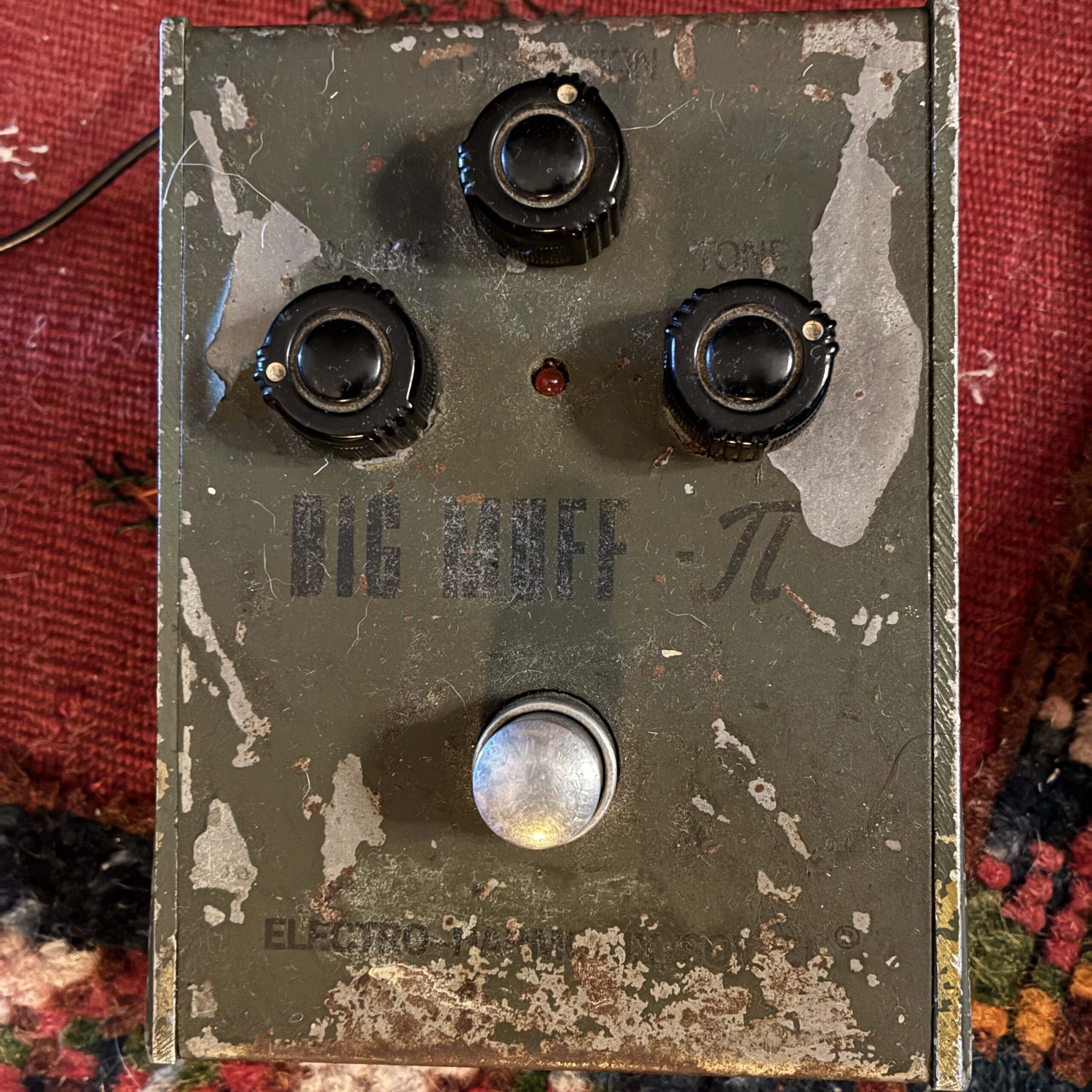
The switch (and knobs) on my 90s Green Russian EHC Big Muff. I’ve never seen a cooler, chunkier or more bad-ass switch on a pedal. The knobs look like they’re repurposed from poison bottles. Just seeing that thing on the floor next to my amp inspires me to play.
Green Russian EHC Big Muff
2. Do you have an ‘almost’ perfect bit of kit? What would you change?
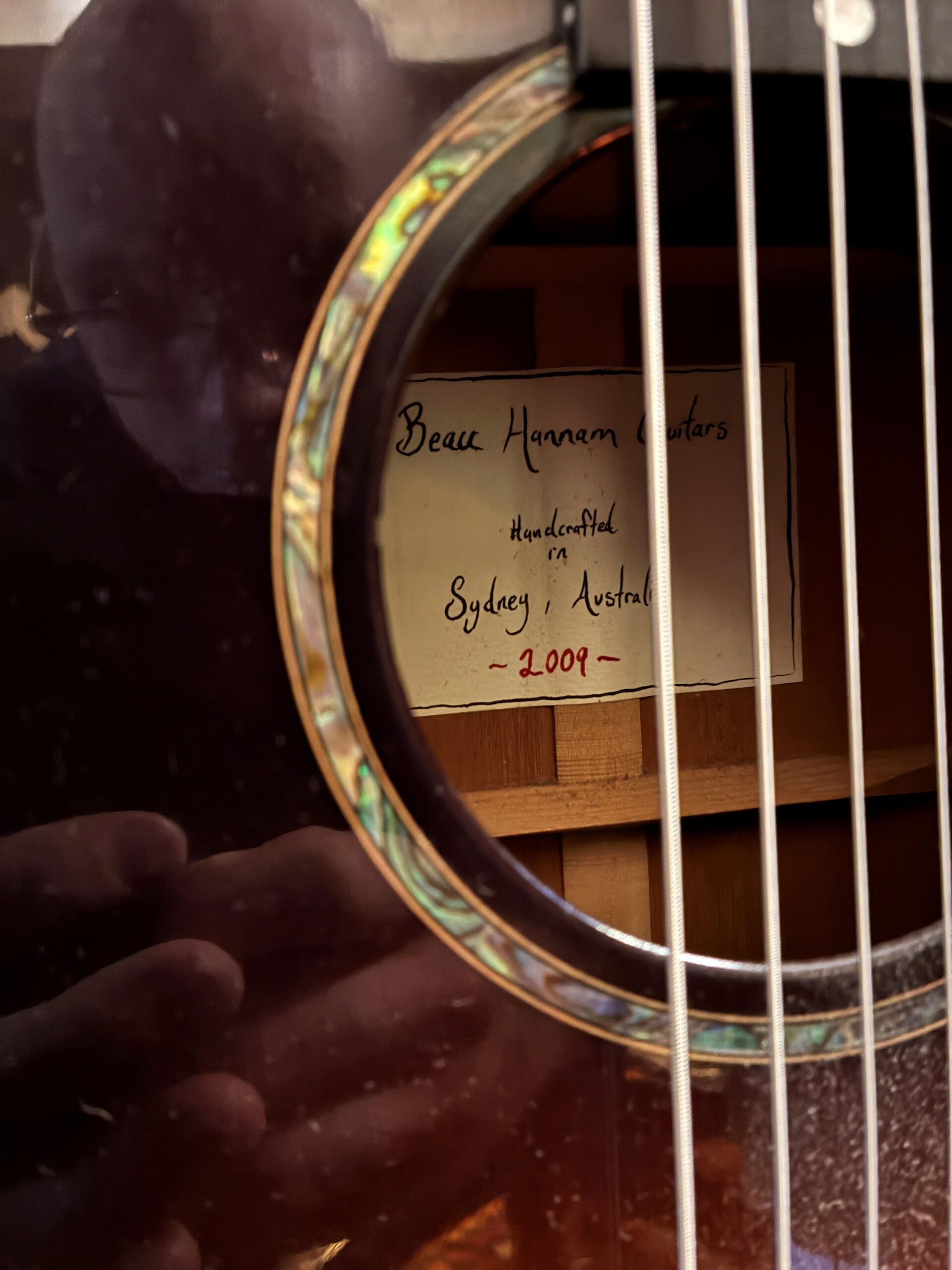
My Beau Hannam acoustic guitar from 2009. Beau is a luthier from Australia who now builds from the USA. He made this guitar for himself just before he moved overseas and sold it to help fund the move. I found it a couple of years ago in a second-hand guitar store and snapped it up. It’s quite a small body and feels shorter scale – a little bit of a one-off because he based it on a resonator design, but it’s a traditional wood guitar. I don’t think I’d change anything about it. I just want him to build me more guitars.
Beau Hannam acoustic guitar
3. What setup do you bring on holiday or tour or commute etc.?
If I can have a guitar in my hotel room that’s enough. On the last few tours I’ve done I brought one of those little Positive Grid pocket-sized amps which is great for practicing.
4. What software do you wish was hardware and vice versa?
I really like Acustica audio plugins. They really make me want the hardware they’re based off. I’m honestly trying to get as far away from software as I can in my workflow.
Acustica Audio plugins
5. Is there anything you regret selling… or regret buying?
I had a really great ’55 Gibson Les Paul Junior which I sold to find the making on a record. I’d love to still have that guitar. I’ve bought a few hardware synths that always end up sitting around because I’m not really a keys player. No I just collaborate with or hire keys players when I need.
6. What gear has inspired you to produce the most music?
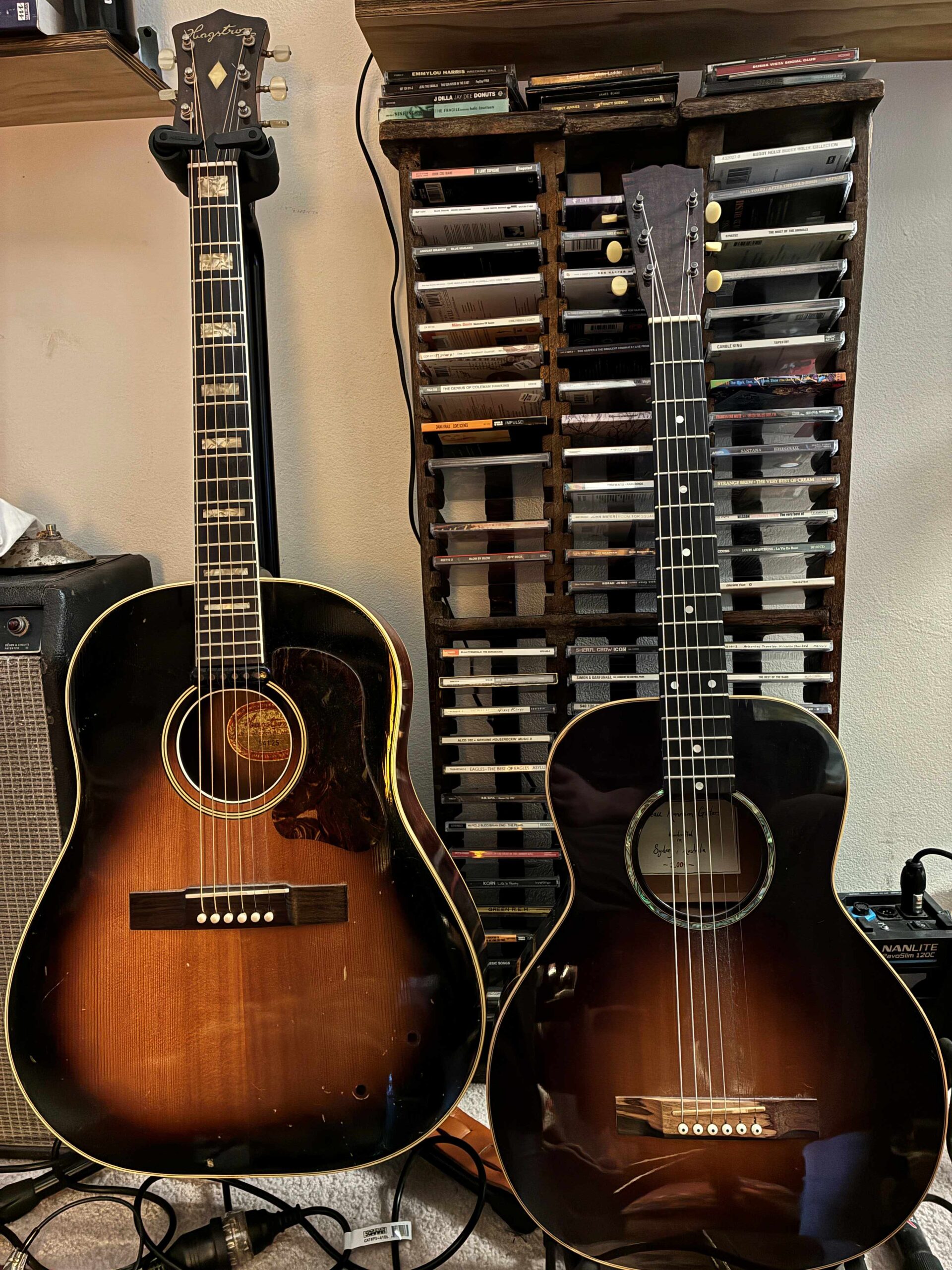
Probably both my acoustic guitars – my Beau Hannam and my ’68 Hagstrom. They’ve both got songs in them.
Beau Hannam and ’68 Hagstrom
7. If you had to start over, what would you get first?
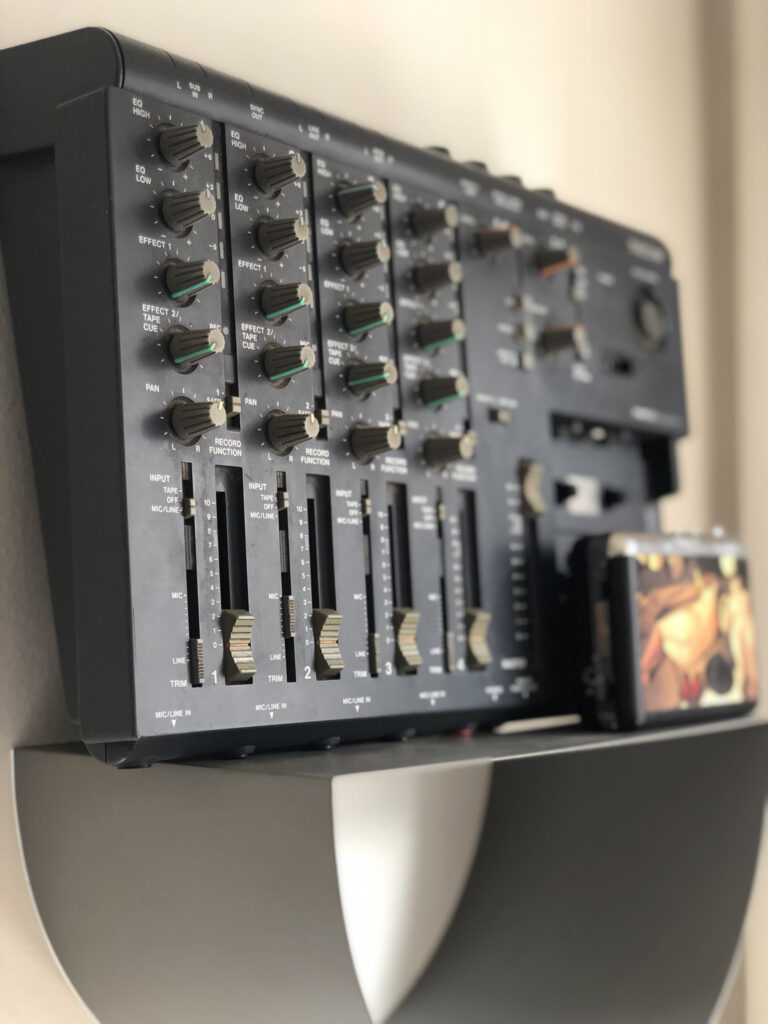
A Tascam 4-track. I’d love to be able to re-learn recording without seeing waveforms on a screen.
8. What’s the most annoying piece of gear you have, that you just can’t live without?
I find DI’s annoying/boring to buy but I am addicted to my Pueblo Audio DIs for bass.
Pueblo Audio DI
9. Most surprising tip or trick or technique that you’ve discovered about a bit of kit?
I love the way the Alesis Quadraverb distorts. That was a nice surprise. It also can sample which I haven’t tried yet though.
Artist or Band name?
Pete Covington
Genre?
Singer-songwriter (mostly)
Selfie?
Pete Covington with his Josephson C705 mic
Where are you from?
Sydney, Australia
How did you get into music?
I was obsessed with Elvis when I was a kid and he started me on the journey.
What still drives you to make music?
It feels like I don’t have a choice. I’ve learned it’s the best thing for me to do in order to be the best person I can for myself and those around me.
How do you most often start a new track?
Rarely right now for my own stuff because I’m working on music with other people.
How do you know when a track is finished?
I have a deadline, then once I suspect that it might be done I take as long of a break from listening as the deadline allows, then listen fresh and pay attention to my emotional reaction and sense of inner knowing. Then it’s just about trusting myself.
Show us your current studio
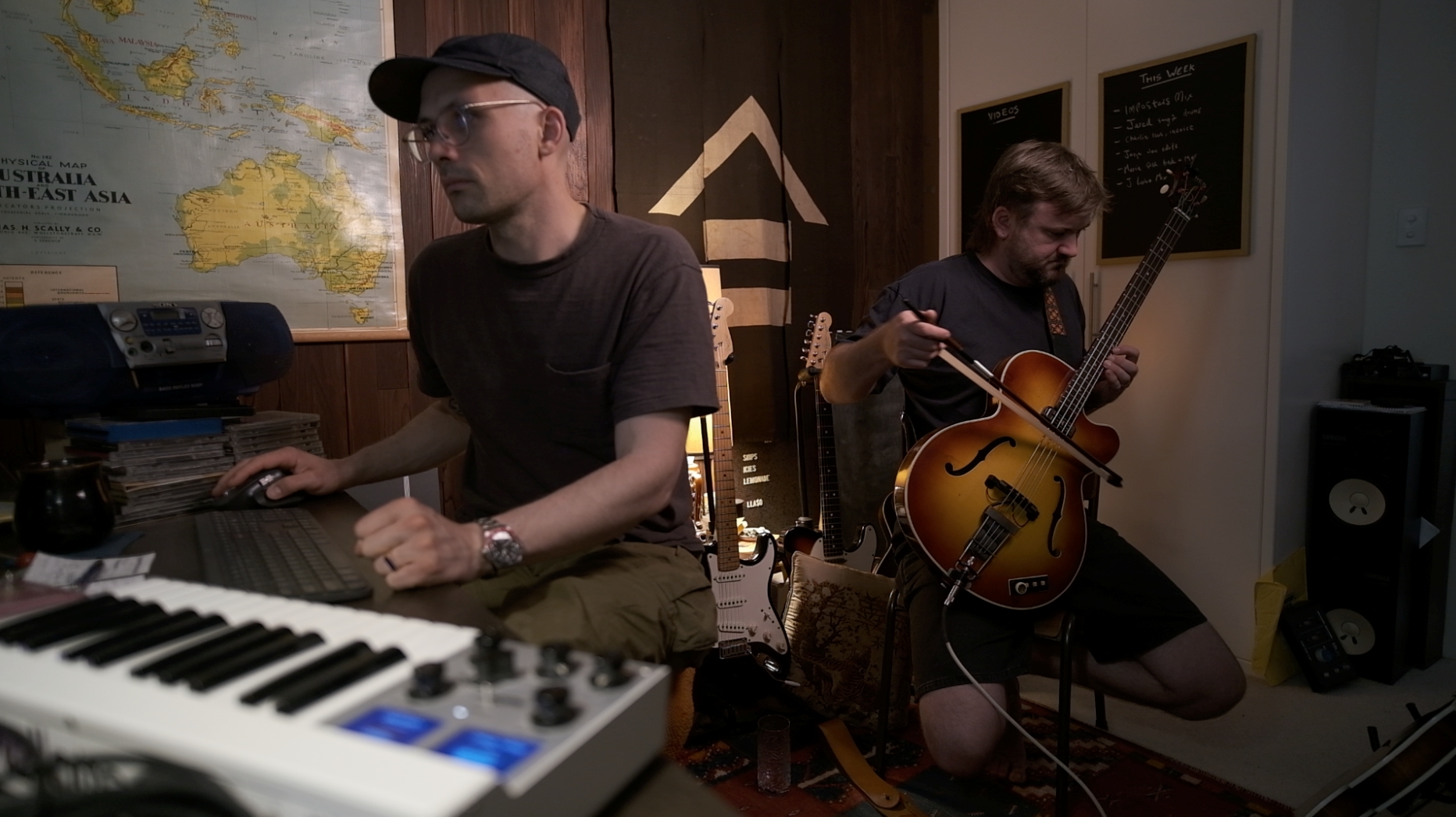
Pete Covington songwriting space
Best creative advice that you’ve ever heard?
“Man, sometimes it takes you a long time to sound like yourself.” Miles Davis.
Promote your latest thing… Go ahead, throw us a link
1. Favourite knob/fader/switch on a piece of gear and why?
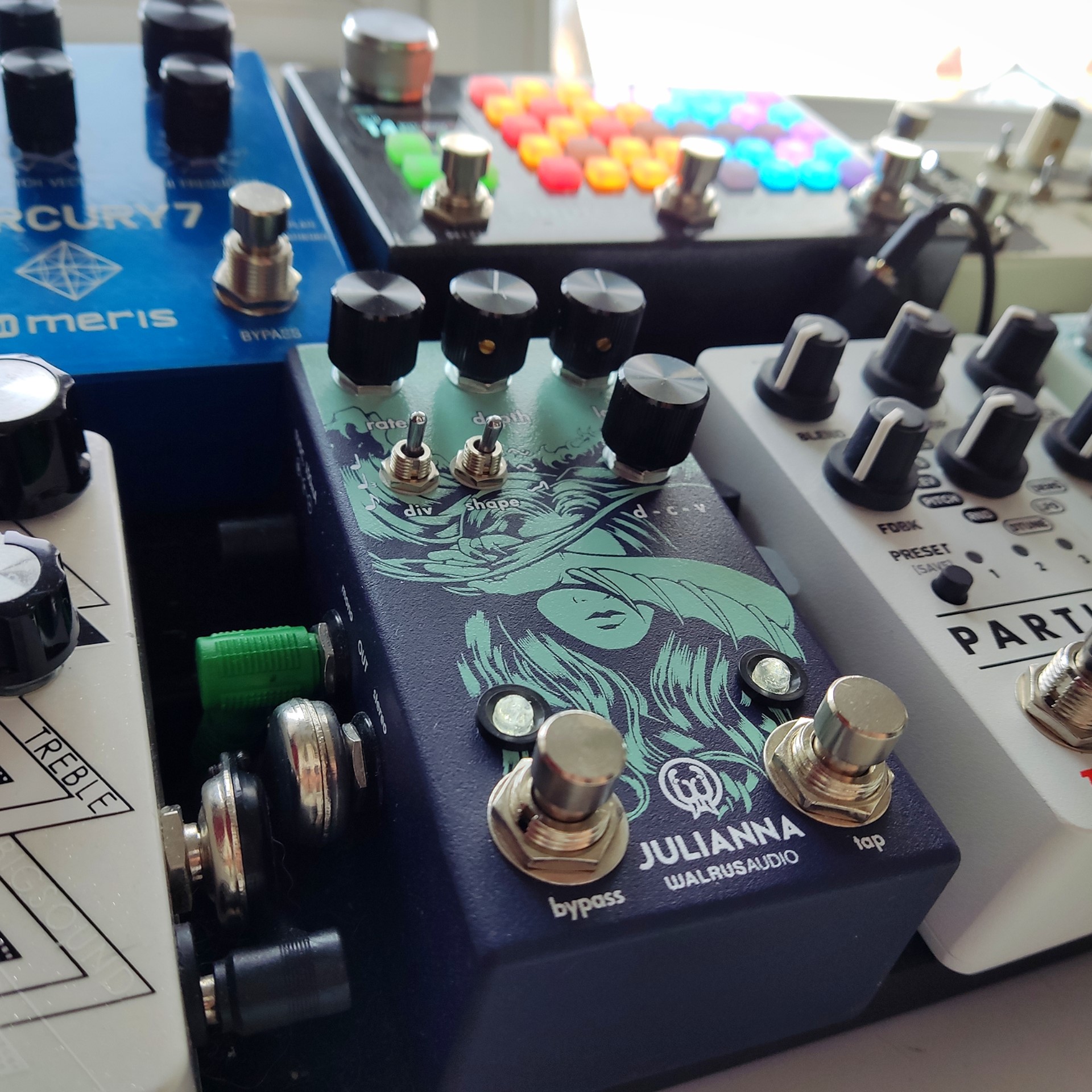
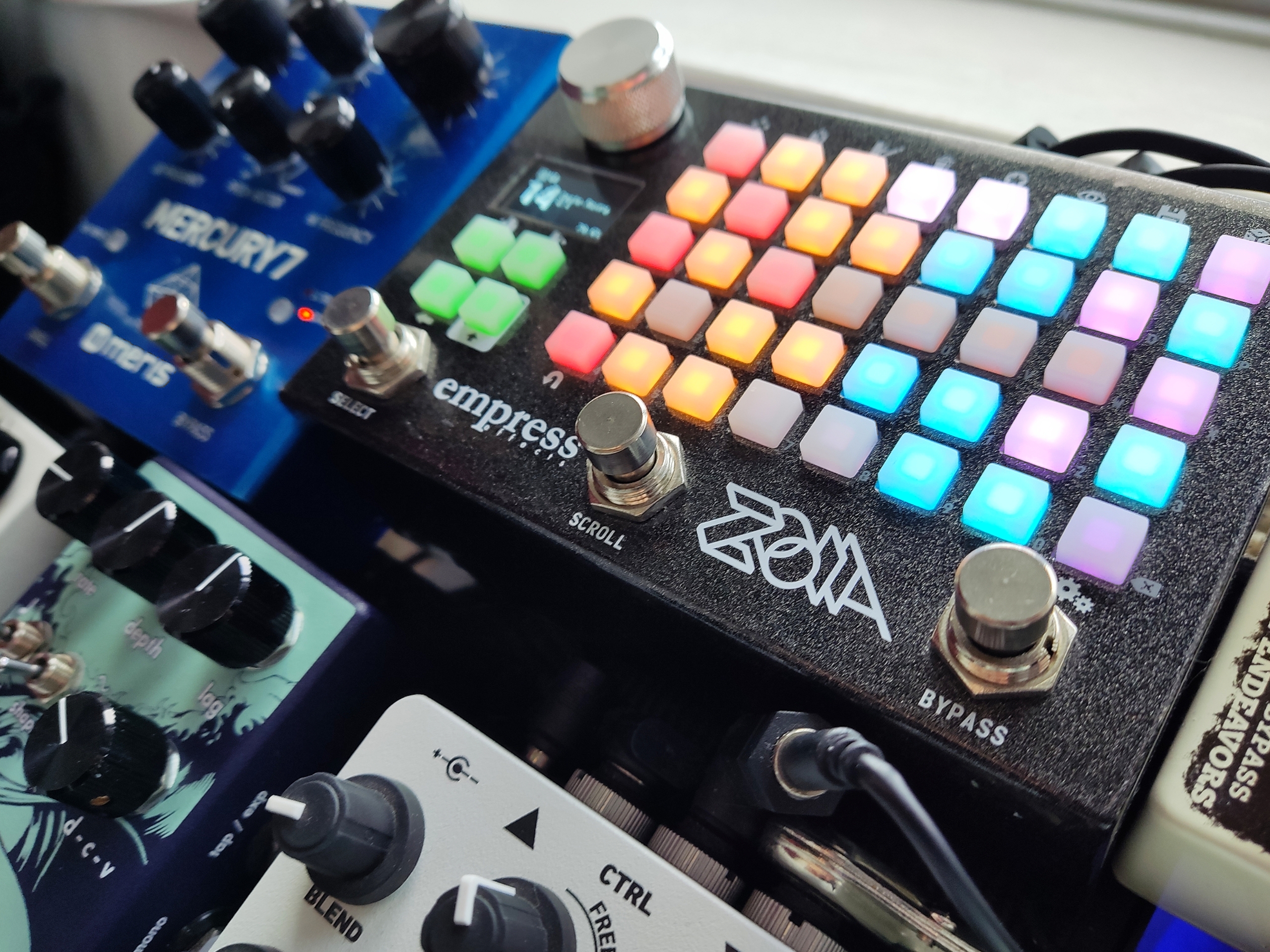
In terms of aesthetics and tactility, it has to be the main rotary knob on the ZOIA by Empress Effects. The way it subtly clicks is super satisfying, and the chunky chrome design stands out compared to other pedal knobs. In terms of functionality I’ll go with the D-C-V (Dry-Chorus-Vibrato) knob on the Walrus Audio Julianna.
Dry-Chorus-Vibrato knob on the Walrus Audio Julianna
It controls the stereo spread of the effect and the mix of chorus and vibrato. The Julianna is an ‘always on’ pedal for me – the modulation sounds great and D-C-V knob helps to always find that sweet spot. I typically use the Julianna to make lofi guitar tones using the random LFO setting and a slow vibrato.
2. Do you have an ‘almost’ perfect bit of kit? What would you change?
I’ll have to go with the ZOIA again for this question! It’s one of my favourite pieces of gear and I use it in pretty much all of my music. It’s both dauntingly complex and surprisingly intuitive. It’s mind-blowing how much Empress Effects managed to cram into this small box! I’ve been using it for a couple of years now, but I still feel like I’ve only scratched the surface of what it can do. I use it in all sorts of ways, such as a semi-generative synthesizer, looper, midi controller and of course as a multi-FX unit.
ZOIA by Empress Effects
My only complaint is that because it does so much it’s difficult to know where best to put it in the signal chain. One possible solution would be a set of additional inputs/outputs for an FX loop, and the ability to assign modules either before or after the FX loop. A couple of additional assignable knobs would also make parameter control more immediate.
3. What setup do you bring on holiday/tour/commute etc.?
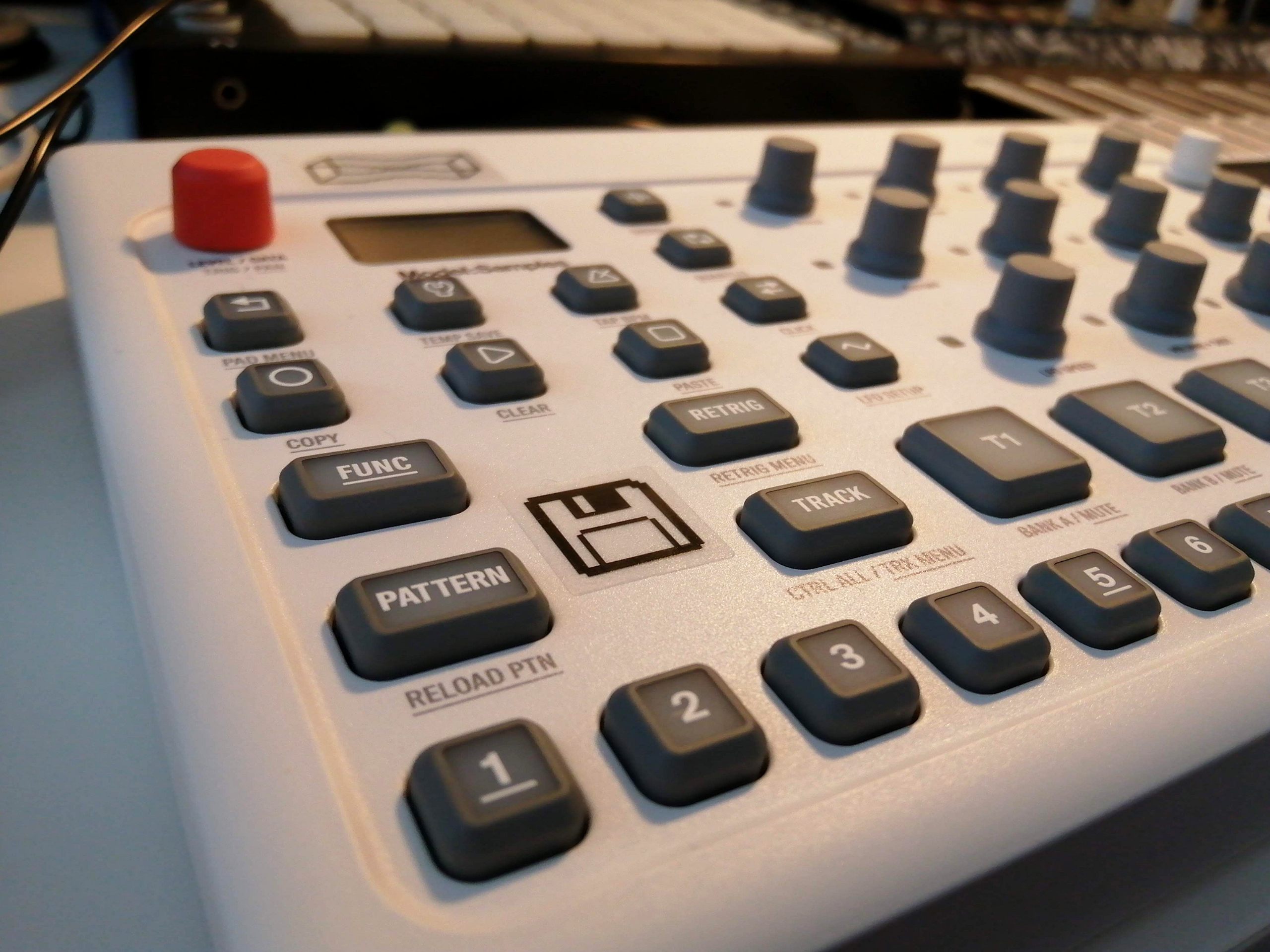
I’m a fan of the Elektron Model:Samples for making music on the go. It’s super portable and I like the directness of the ‘function per knob’ design. It’s perfect for quickly sketching out ideas whilst travelling.
Elektron Model:Samples
Other devices offer more features, like the OP-Z, but I have a soft spot for the Elektron workflow. I don’t use it in my main setup due to the lack of direct sampling, but it’s a fun device to kill some time with.
4. What software do you wish was hardware and vice versa?
I predominantly use a ‘DAWless’ setup, so I don’t have much experience with software. I only really use my DAW (Studio One 5 to be exact) to record/master and try to do everything else using hardware. Tactility is an integral part of making music for me, I like the physical connection to whatever I’m writing. I don’t have the same drive to write music when I’m working on a laptop. I also find a limited palette of sounds to be quite inspiring, so the inherent limitations of hardware gear can paradoxically be liberating.
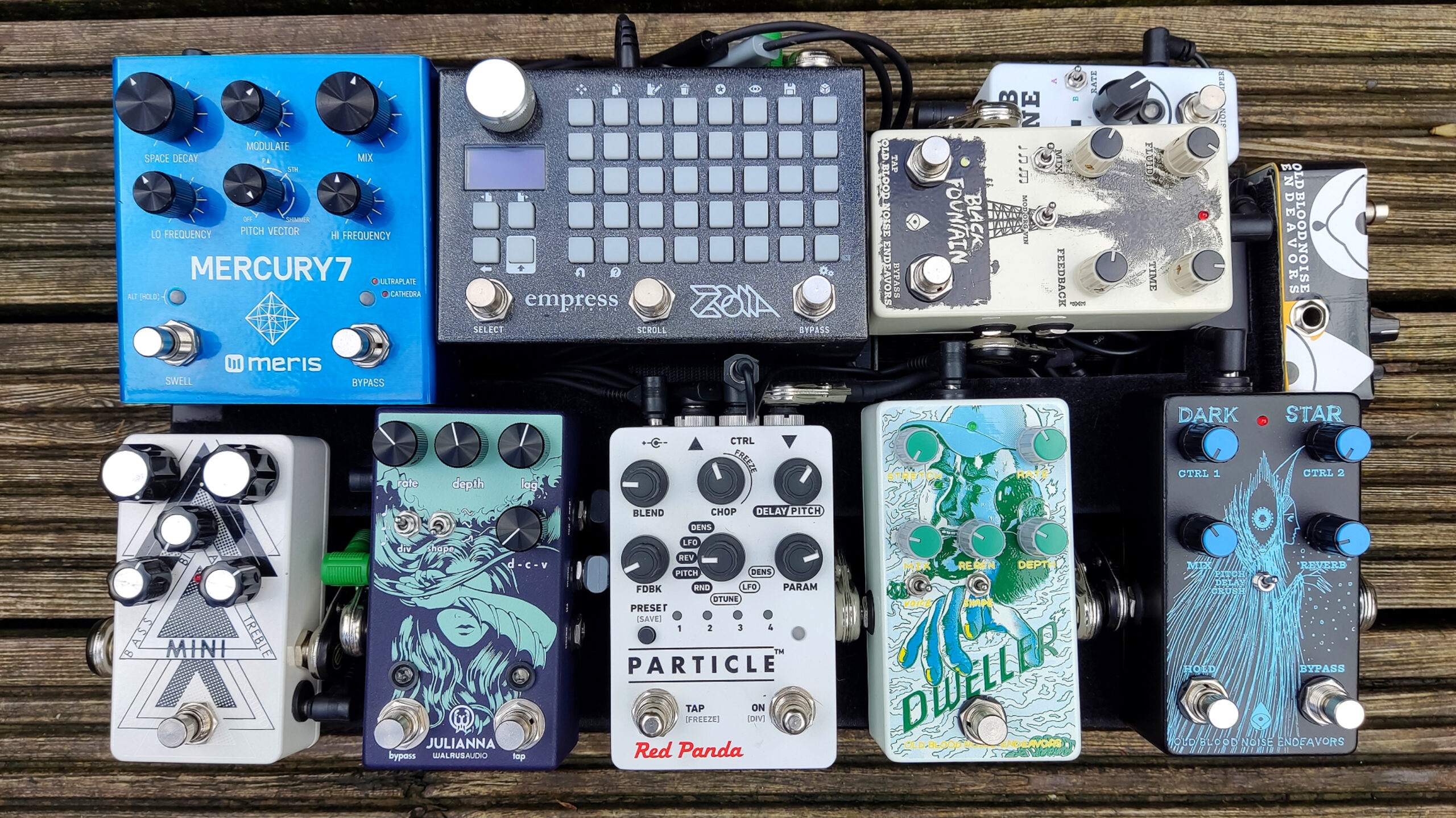
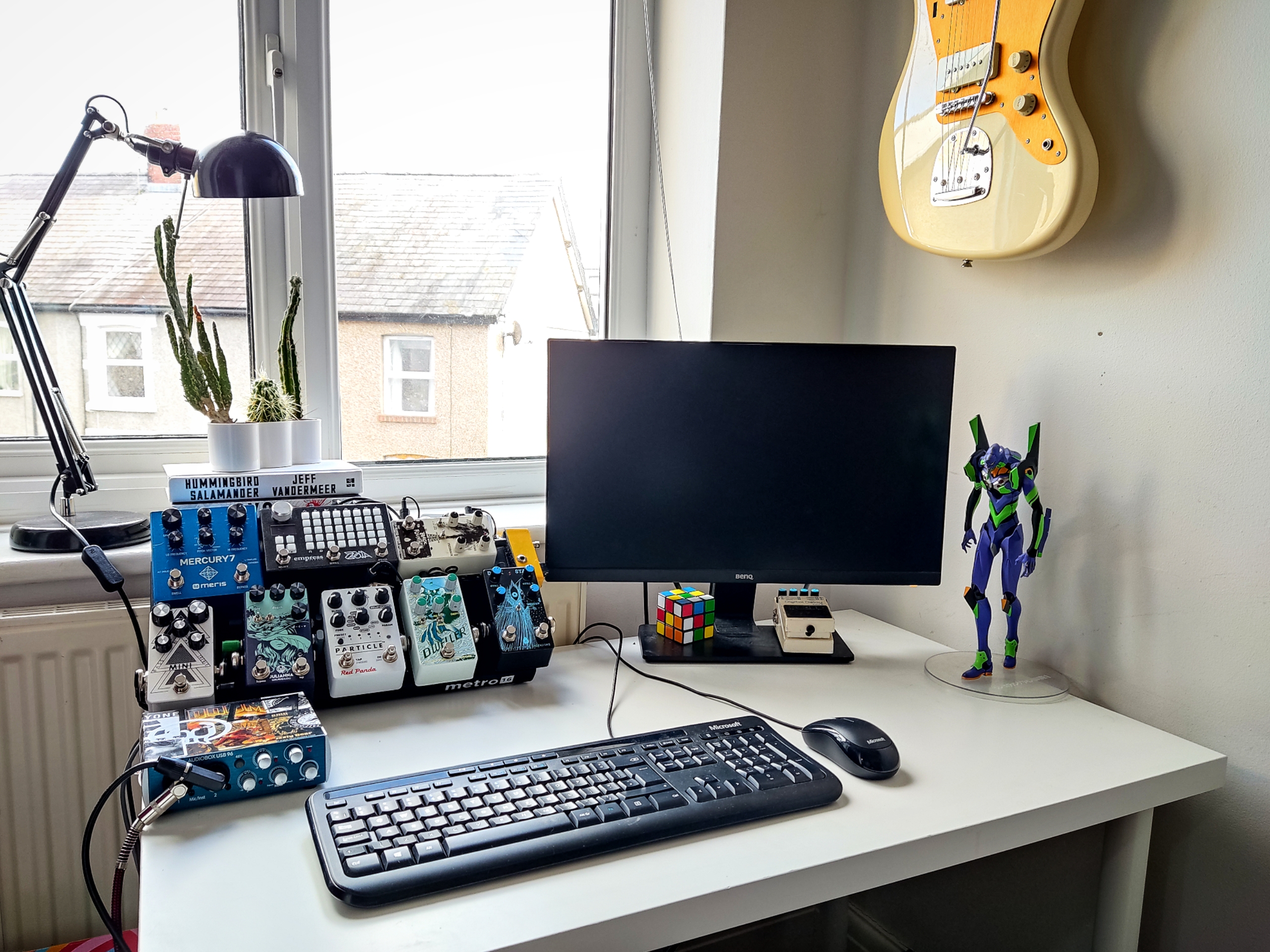
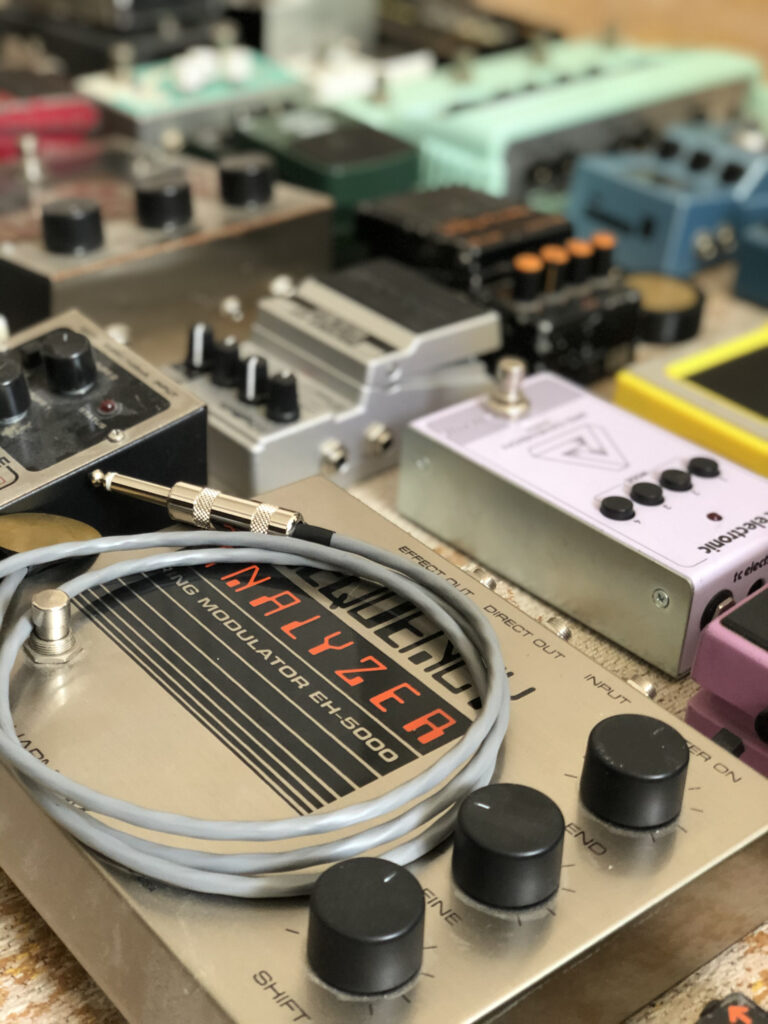
Nathan’s pedalboard of tactility
That said, I would love a virtual version of my pedalboard so I could try out different setups without having to tear the whole thing apart!
5. Is there anything you regret selling… or regret buying?
I recently sold my Walrus Audio Slö reverb pedal and replaced it with a Meris Mercury7. Although I really like the expansive stereo sound of the Mercury7, I definitely prefer the modulation on the Slö. It has a unique dreamy quality which is perfect for lo-fi reverbs and woozy textures. I would rebuy it in a heartbeat if they ever made a stereo version with a random LFO mode
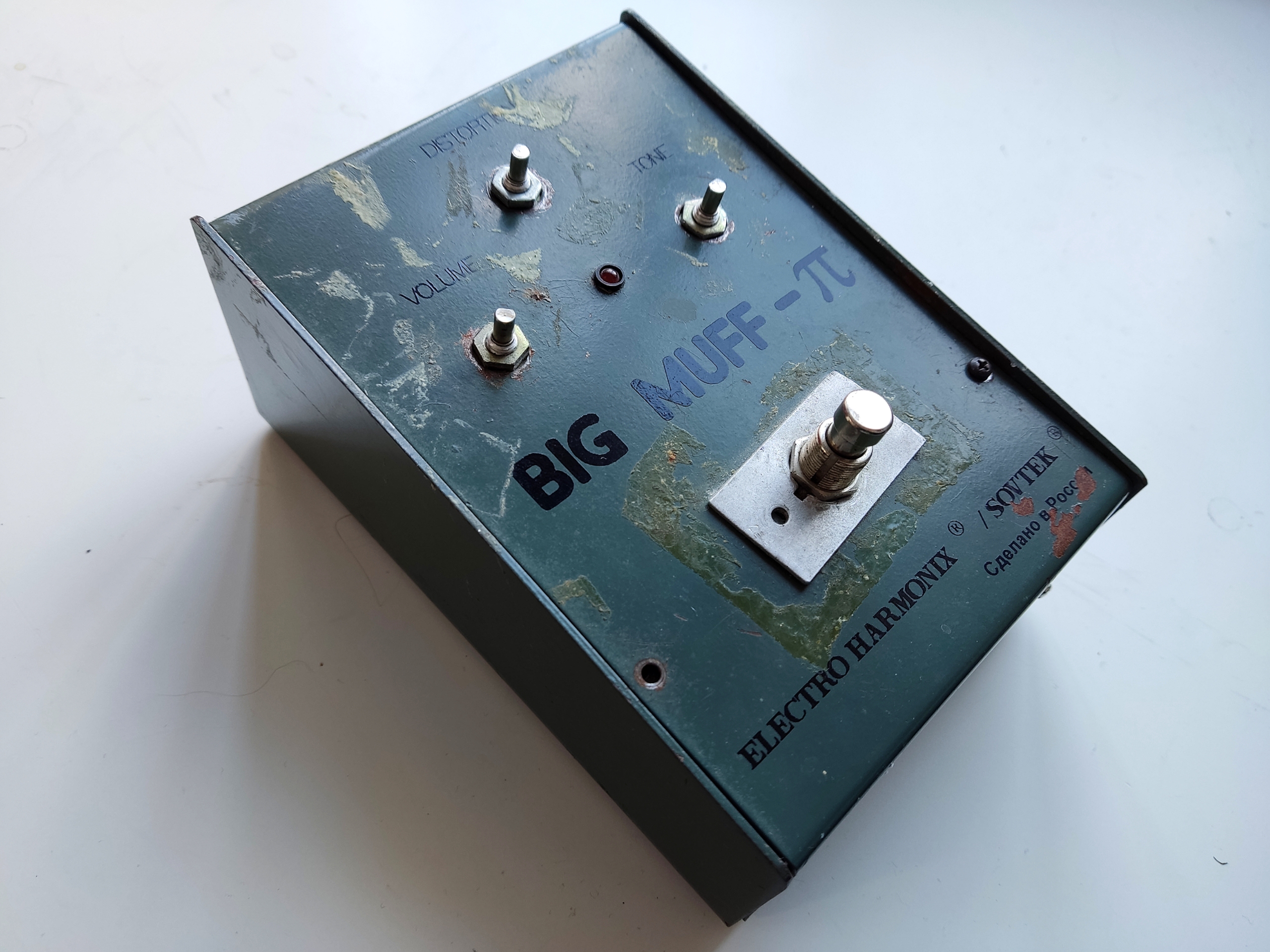
Sovtek Big Muff
My biggest gear regret is not looking after my Sovtek Big Muff. Unfortunately it’s been battered from years of gigging and no longer has the original knobs or switch. It’s just too temperamental to use regularly in my setup now.
6. What gear has inspired you to produce the most music?
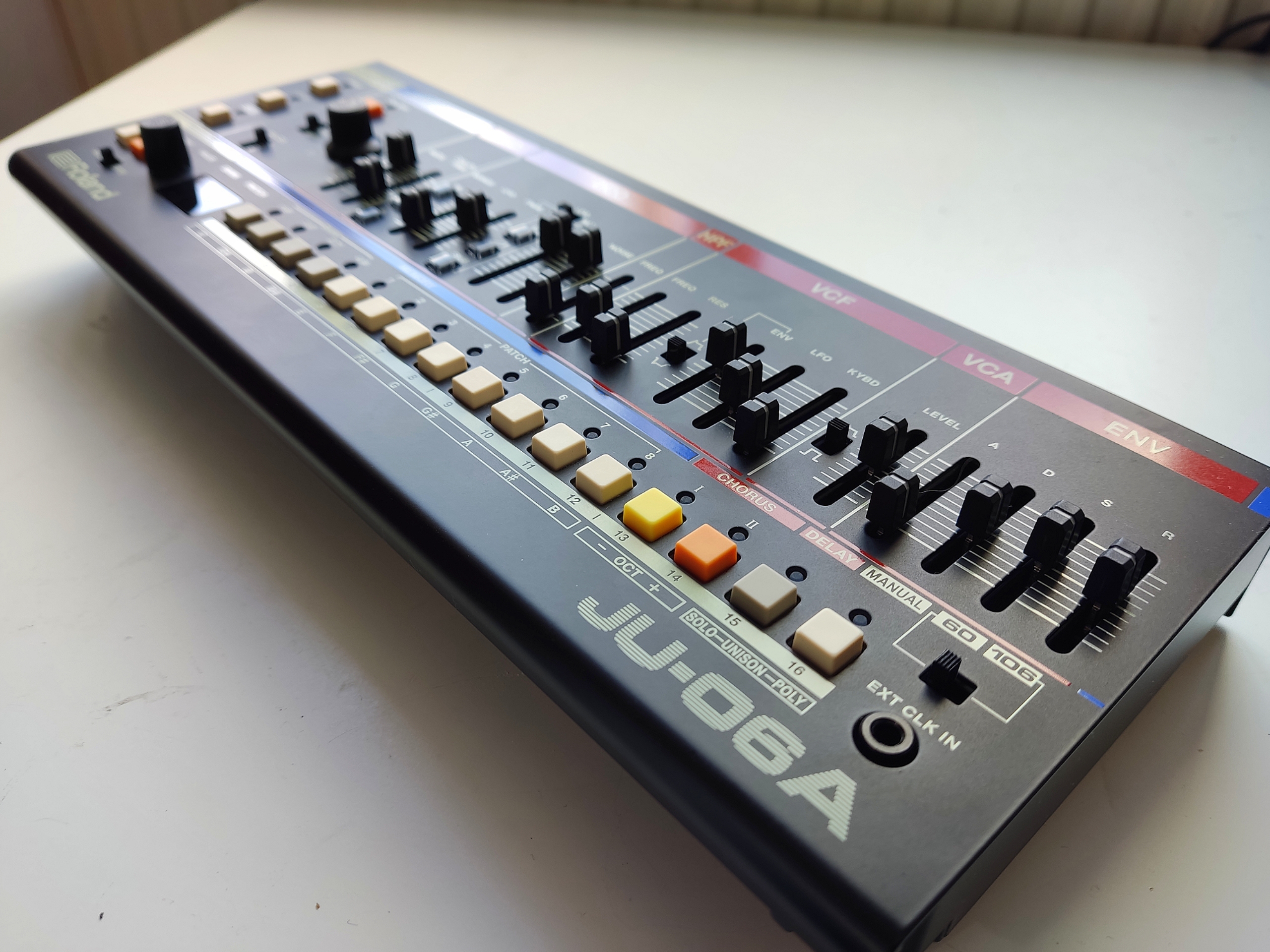
Roland JU-06A
I’ve been really inspired by the Roland JU-06A synth over the past year, it’s the synth I come back to most often. I love the range of sounds, the simplicity of patch design and its compact size. Roland did a great job replicating that classic Juno sound in a small and affordable package. I also get a lot of inspiration from my humble Boss RC202 loop station. I love working with loops and layers, and the RC202 offers a good balance of features and usability. All of my tracks begin as loops, and I wouldn’t know where to start without my RC202.
7. If you had to start over, what would you get first?
This is a bit of a cop out, but if I had to start over I would probably start with some guitar and piano lessons! I’m completely self-taught, so I sometimes feel a little limited by my technical skills. To answer the question more directly, if I was starting over with electronic music production I would probably begin with an Arturia Microfreak.
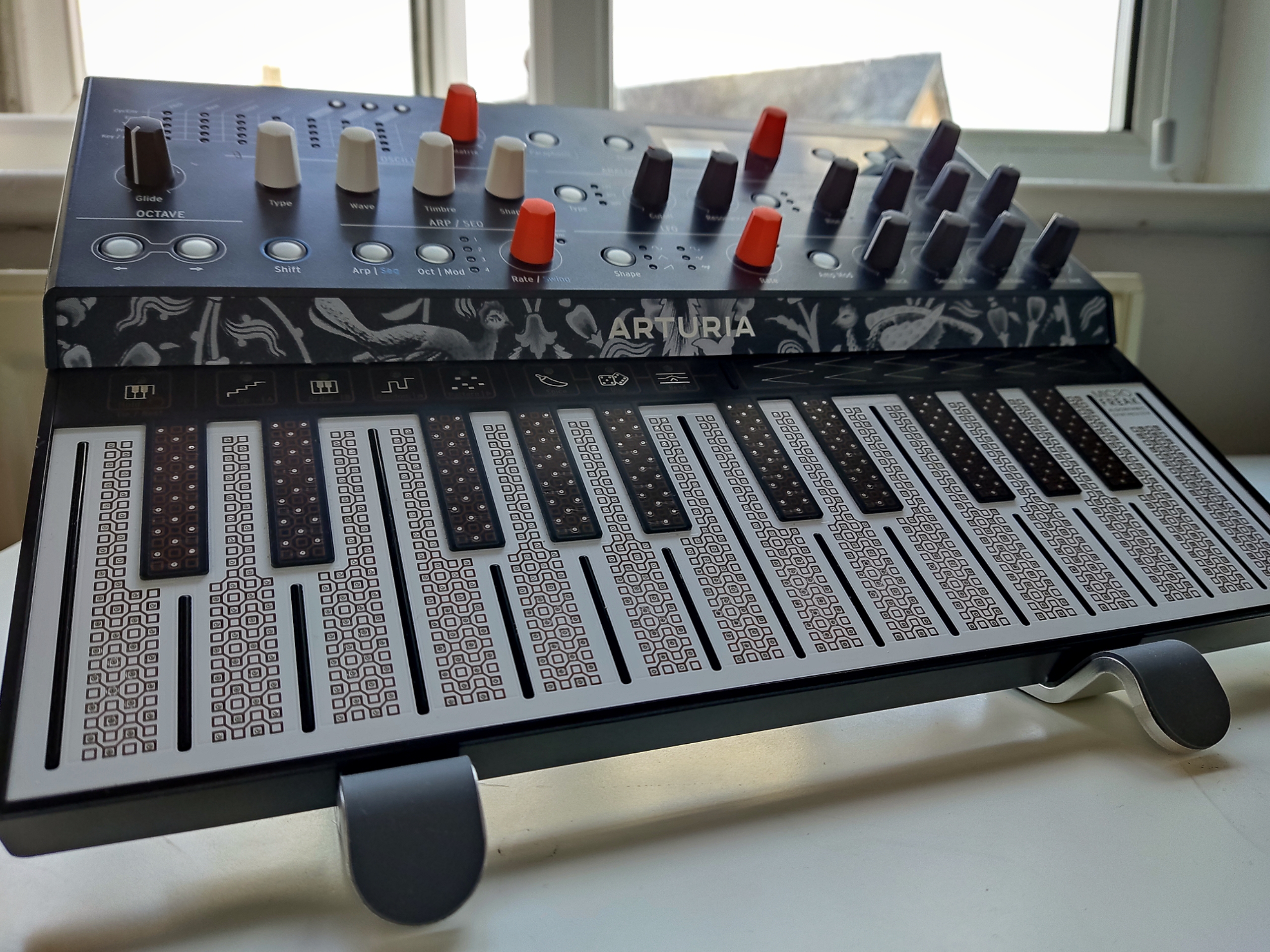
Arturia Microfreak
Due to the wide range of features and relatively low price, it’s a great introduction to hardware synthesis. The keybed isn’t for everyone, but the range of synth engines, the intuitive modulation matrix and the analogue filter make it incredibly good value. If it had built-in FX it would be the total package. Although I don’t use mine much anymore, I still consider it to be a modern classic.
8. What’s the most annoying piece of gear you have, that you just can’t live without?
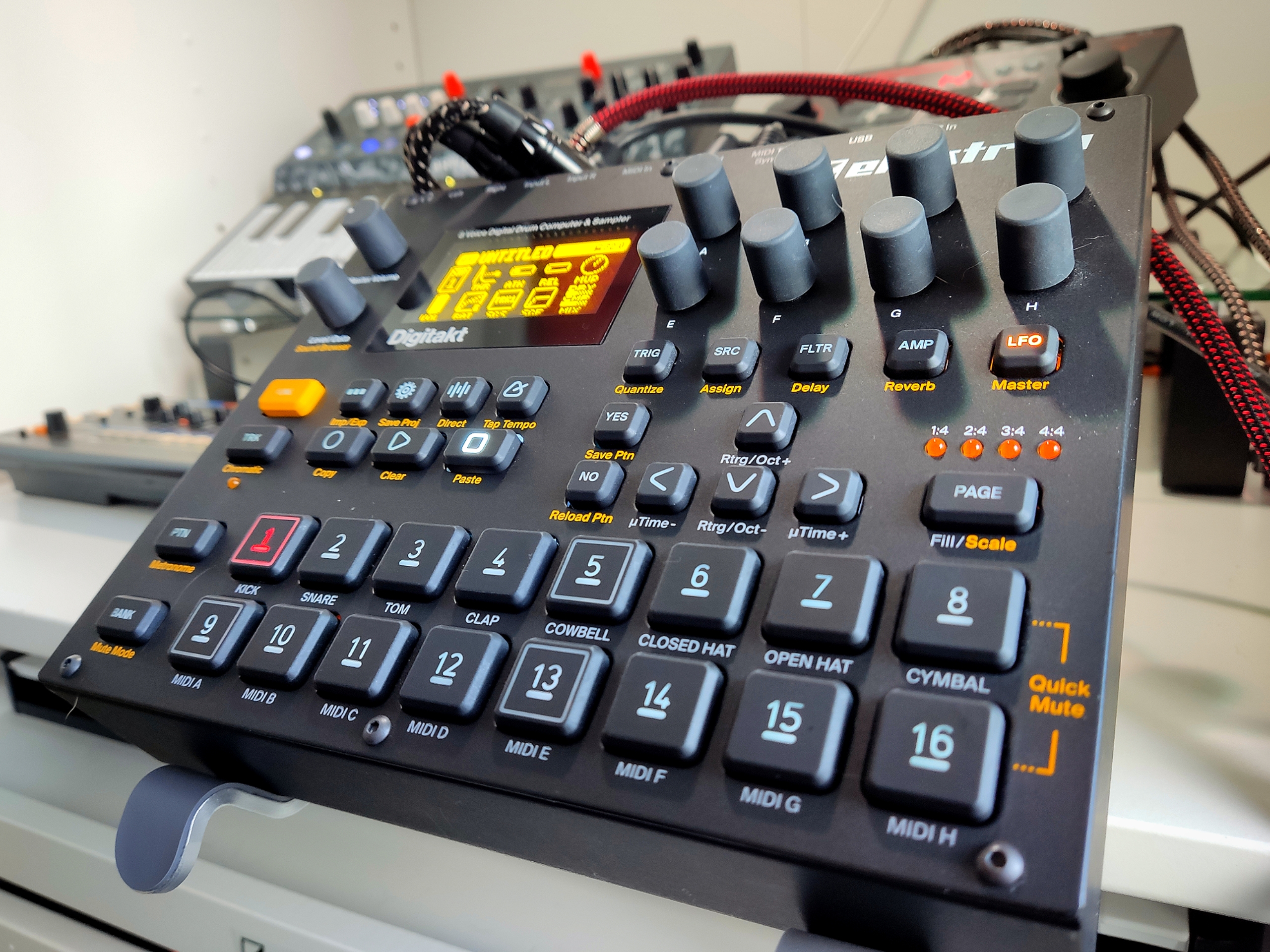
As much as I love my Elektron Digitakt, it can be a real pain to use sometimes! There are a lot of functions which are not immediately apparent, and it takes time to learn how to use it properly.
Elektron Digitakt
I actually prefer the usability of its little brother, the Model:Samples, but the additional features of the Digitakt make it substantially more powerful. It’s basically the brain of my setup, even though I probably don’t use it to its full potential. Elektron have done a great job with software updates over the years and have added a number of clever features, like the secondary LFO.
9. Most surprising tip/trick/technique that you’ve discovered about a bit of kit?
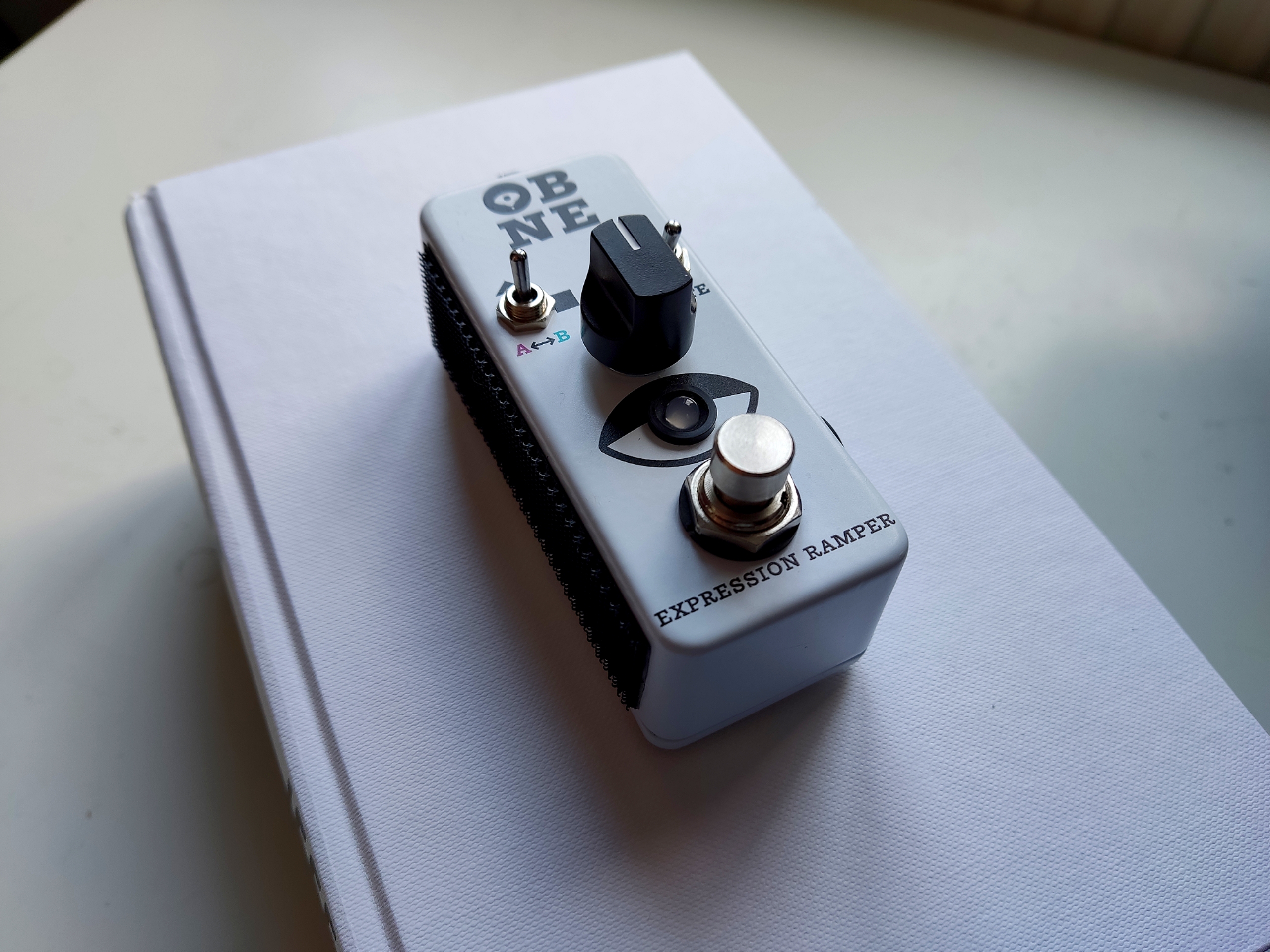
The Expression Ramper by Old Blood Noise Endeavours is a deceptively versatile pedal, which offers a unique approach to expression control. There are so many ways to use this tiny pedal to drastically change how other pedals work.
Expression Ramper by Old Blood Noise Endeavours
My favourite trick is to use the Expression Ramper to control the pitch parameter on the Red Panda Particle v2. Whilst in reverse mode it creates a fantastic reverse pitch-shift effect which cascades with the delay repeats.
Artist or Band name?
Accelerator Jengold.
Genre?
A mix of lofi, synthwave, dreampop and shoegaze.
Selfie?
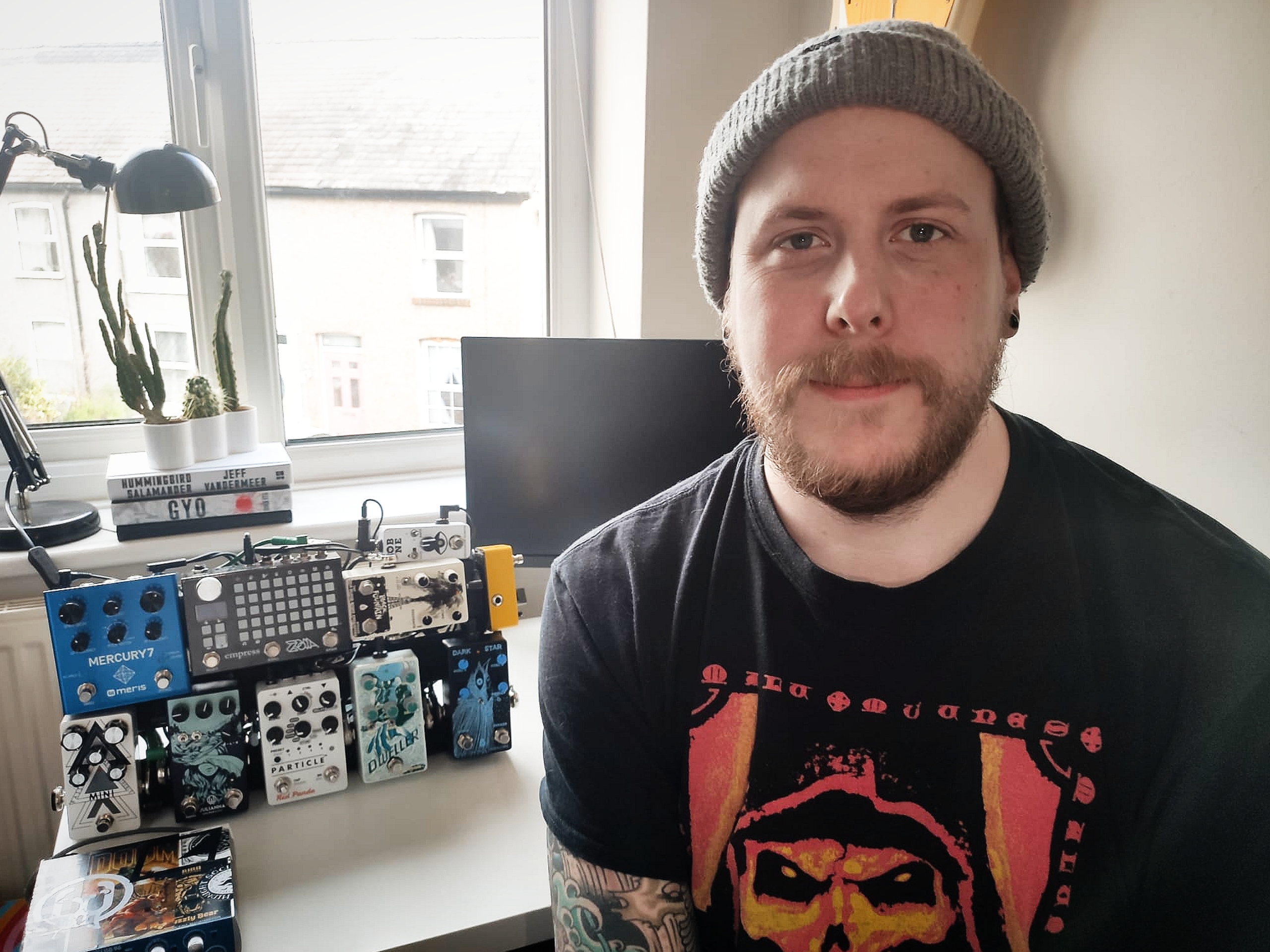
Nathan
Where are you from?
North Wales, UK.
How did you get into music?
Music has always been an important part of my life; I’m thankful that my parents and brother introduced me to artists like The Cure, Radiohead, Tom Waits, Massive Attack, Godspeed You! Black Emperor and Brian Eno. I took up bass when I was a teenager and played in a few post-rock and post-metal bands whilst in University. I later moved into electronic music production using software like Reason, and then got into hardware gear with an Arturia Microbrute (which I sadly no longer own).
What still drives you to make music?
I’ve always enjoyed being creative and having a musical outlet helps me to cope with stress and anxiety. I like having a way to express how I feel, even if I don’t always understand my own thoughts and feelings – which probably explains why most of my music has a downbeat or melancholy vibe. Producing something tangible from my creativity, like a finished song or EP, is a big driver for me. I think this is linked to my preference for tactile music production; using software feels too ephemeral to me. I love conceptual music and take inspiration from a wide range of books, films and other media when writing. Short-form jams on Instagram are my primary output, so I’m super inspired by other artists with a similar approach like Andrew Black, Joshua Dowell and Simon Von Walbrook. I’m really proud to have had my music featured on microbiology posts by Chloe Savard and Penny Fenton, and I would love to produce more music for other media.
How do you most often start a new track?
I typically start with sound design, either creating a unique guitar sound using various FX or developing a new synth patch. I’ll then loop a simple melody and experiment with different layers until it feels right. Sometimes I focus on the melody, other times I focus more on the overall vibe, it just depends on the individual track. Percussion usually comes last so I can choose samples and rhythms to fit the music.
How do you know when a track is finished?
Most of my music is based around looping and building layers of melody, so an important skill is knowing when to stop. When I can remove a layer and the track sounds better, it’s probably finished! If I get stuck on a track I’ll take a break for a few days and then come back to it with a fresh perspective. My least favourite part of making music is mastering, so I’ve developed a couple of mastering templates in my DAW to help speed up the process and remove some layers of indecision. For official releases on Spotify (etc.) I rely on my good friend Chris Walker, who always does a great job fixing up my masters.
Show us your current studio
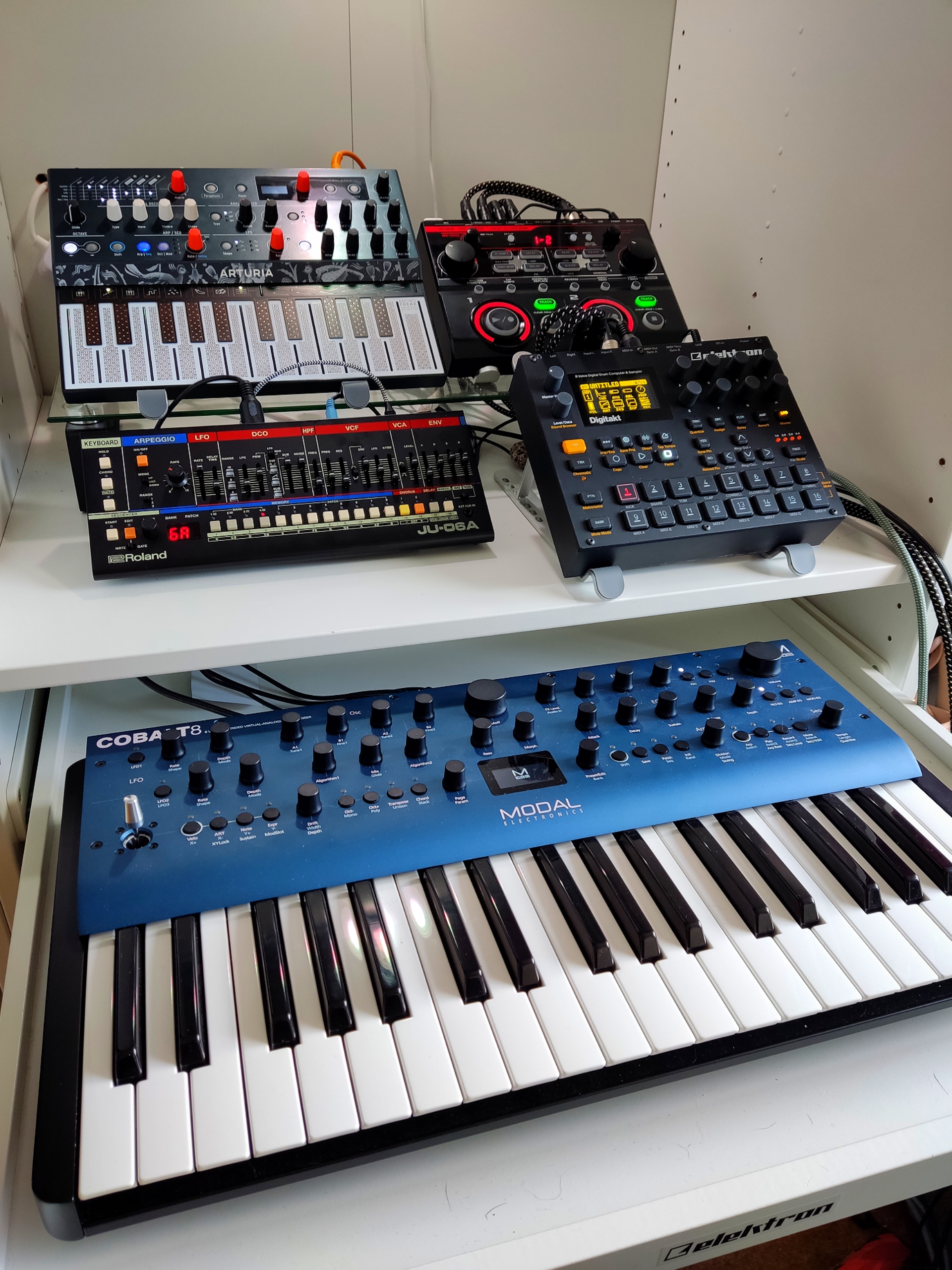
Synths, samplers and loopers
My setup is in a tiny office/walk-in wardrobe in my house, but it has pretty much everything I need. I’m planning to add an analogue synth at some point (like a Pro-1 or Minilogue) and a Colour Palette electronic kalimba by Lottie Canto.
Studio desk
Best creative advice that you’ve ever heard?
I’m going to echo what Dev Bhat (Shipwreck Detective) said in his interview for this blog: “keep it simple, stupid!” This really resonates with my own approach to writing music. There’s a skill to communicating an emotion, theme or concept in an honest and direct manner without resorting to cliché. I like to embrace simplicity and try to express myself with a limited number of components. An important part of being creative is trusting your instincts and not focusing too much on what does or doesn’t work in theory – theory should be used to help us translate and communicate our ideas rather than to provide a rigid framework for them.
Promote your latest thing… Go ahead, throw us a link
I regularly post jams on Instagram (@accelerator.jengold), so that’s the best place to keep up to date with what I’m doing. My music is also available on most streaming platforms, just search for Accelerator Jengold. My latest EP, Pyre, came out last year and is full of weirdo synthwave tunes, go check it out! I’m currently working on a new EP and some upcoming collaborations. Thanks!
1. Favourite knob/fader/switch on a piece of gear and why?
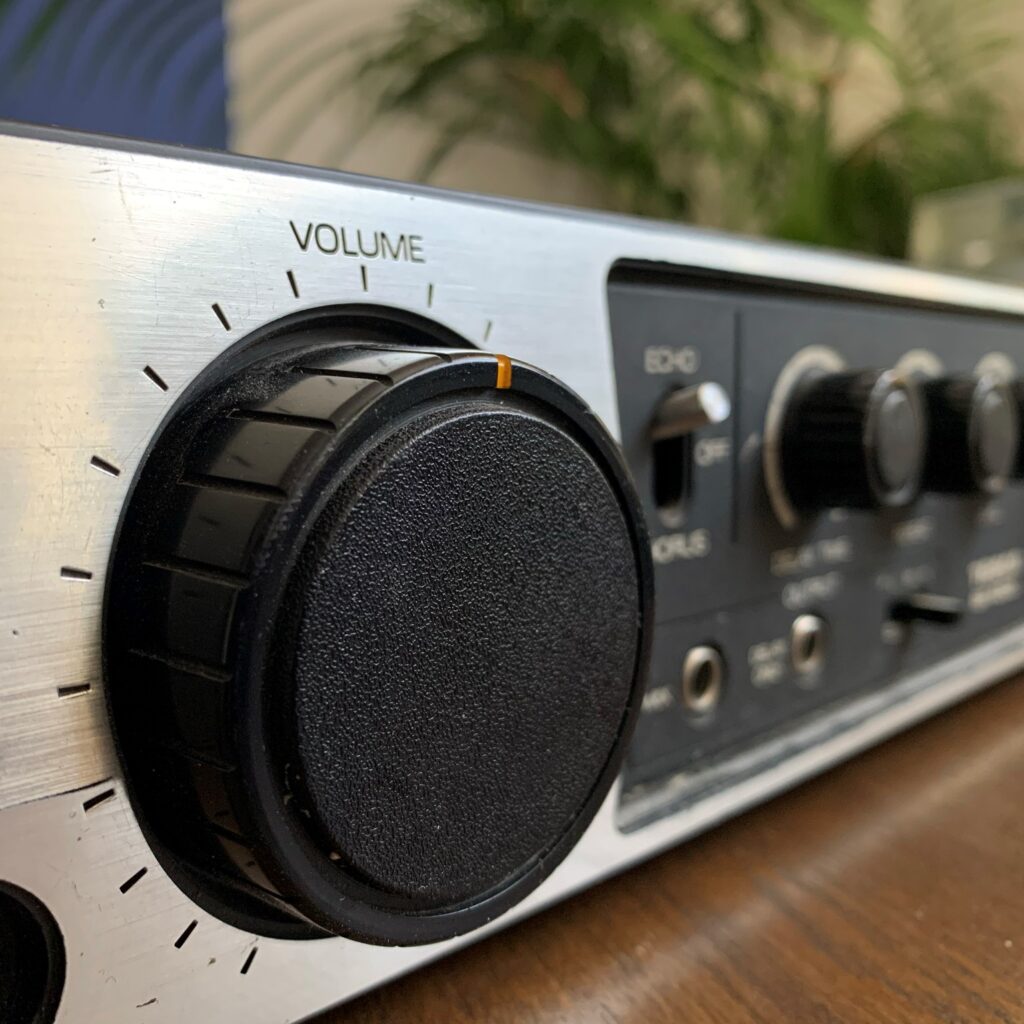
Teisco Rack Delay
My favorite knob is the volume knob on my old Teisco delay rack, you can be really precise with a knob of that size.
2. Do you have an ‘almost’ perfect bit of kit? What would you change?
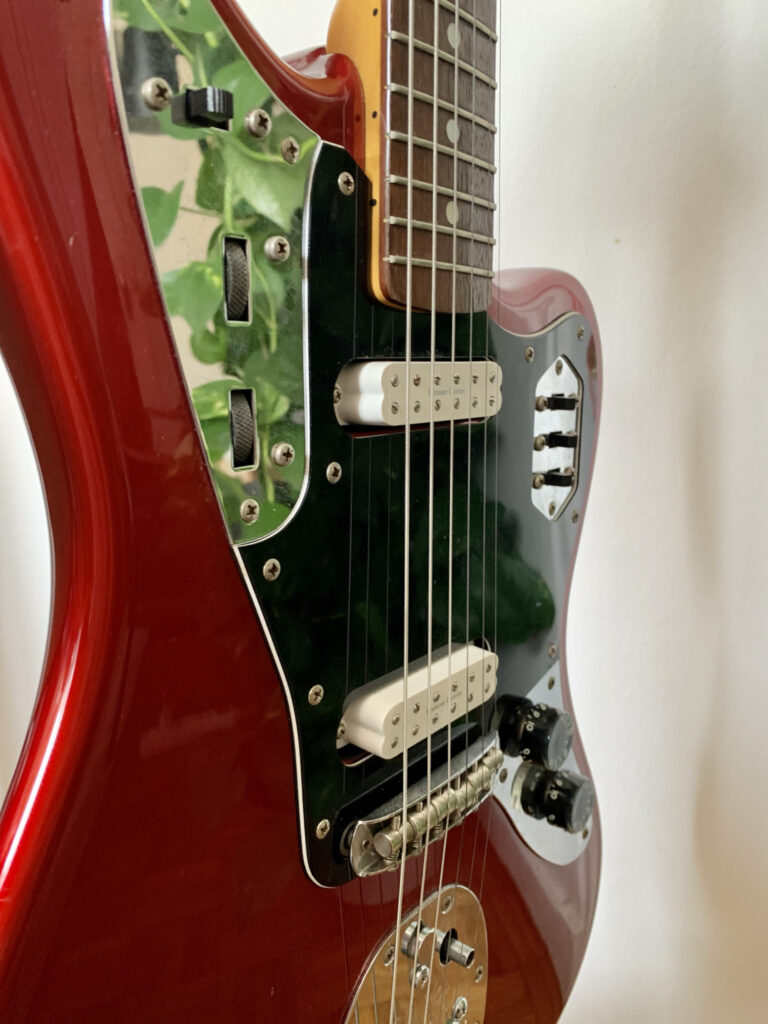
Fender Jaguar
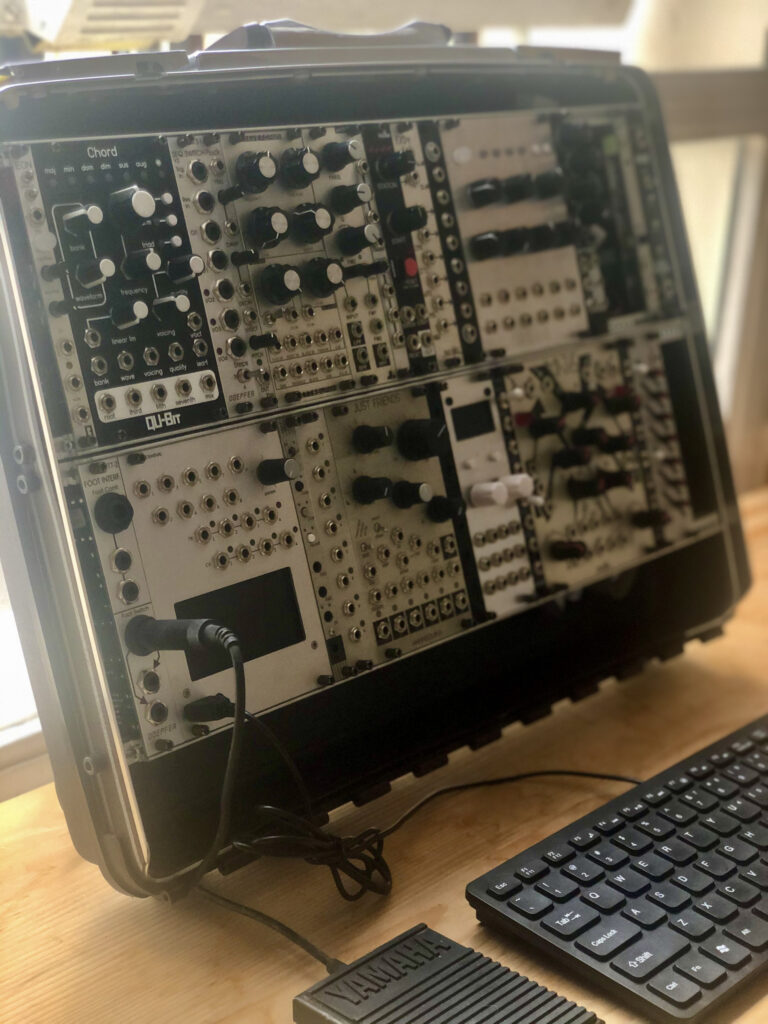
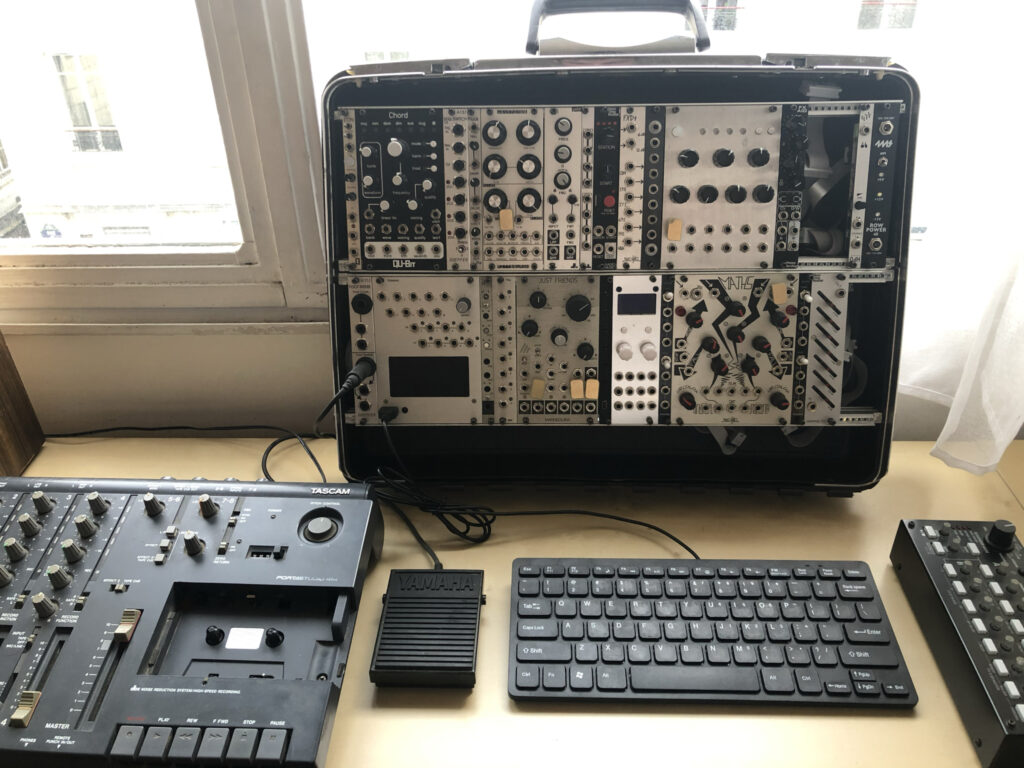
With years spent playing music I never felt the feeling of perfection, I always change and so does my instruments/gear. Yesterday was my lovely Fender Jaguar, today is my modular synthesizer, tomorrow… I don’t know yet. It’s difficult for me to focus on one genre/project, I want to know and to do everything. And my modular synthesizer is the proof, at the beginning I wanted a sort of a west coast synthesizer, after focusing on textures and now a little bit of everything. But now I’m more confident, so I’ll say my modular synthesizer, because I can change a little thing to do utterly beautiful things.
Suitcase Eurorack Modular
3. What setup do you bring on holiday/tour/commute etc. ?
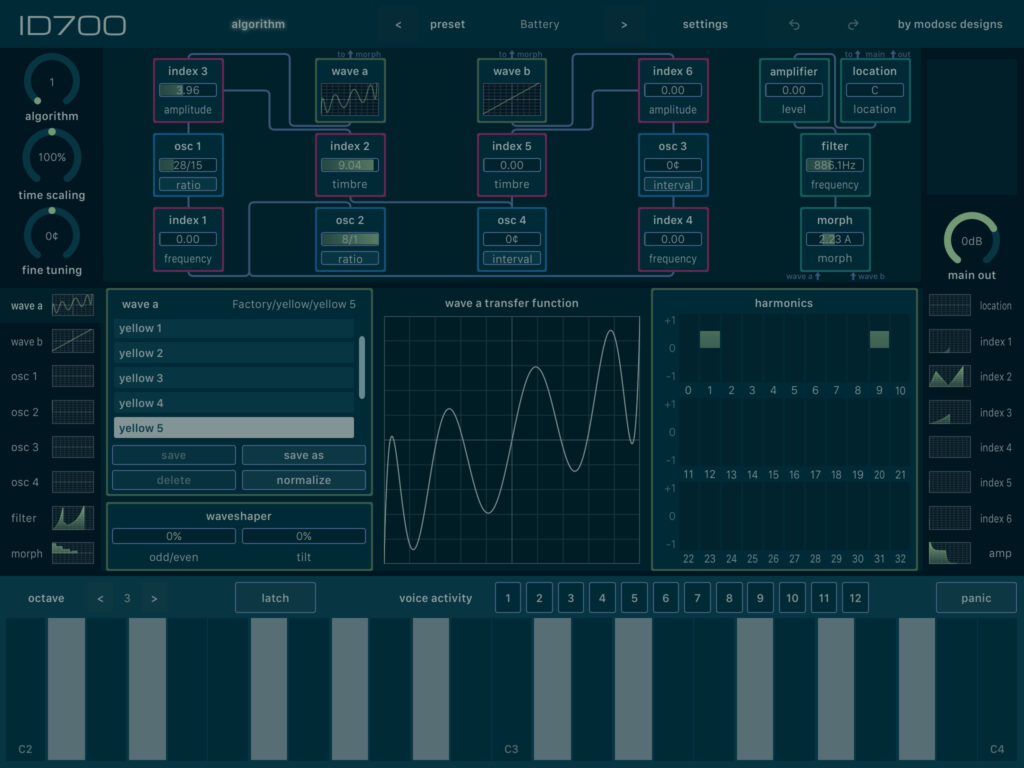
ID700 Buchla iOS app
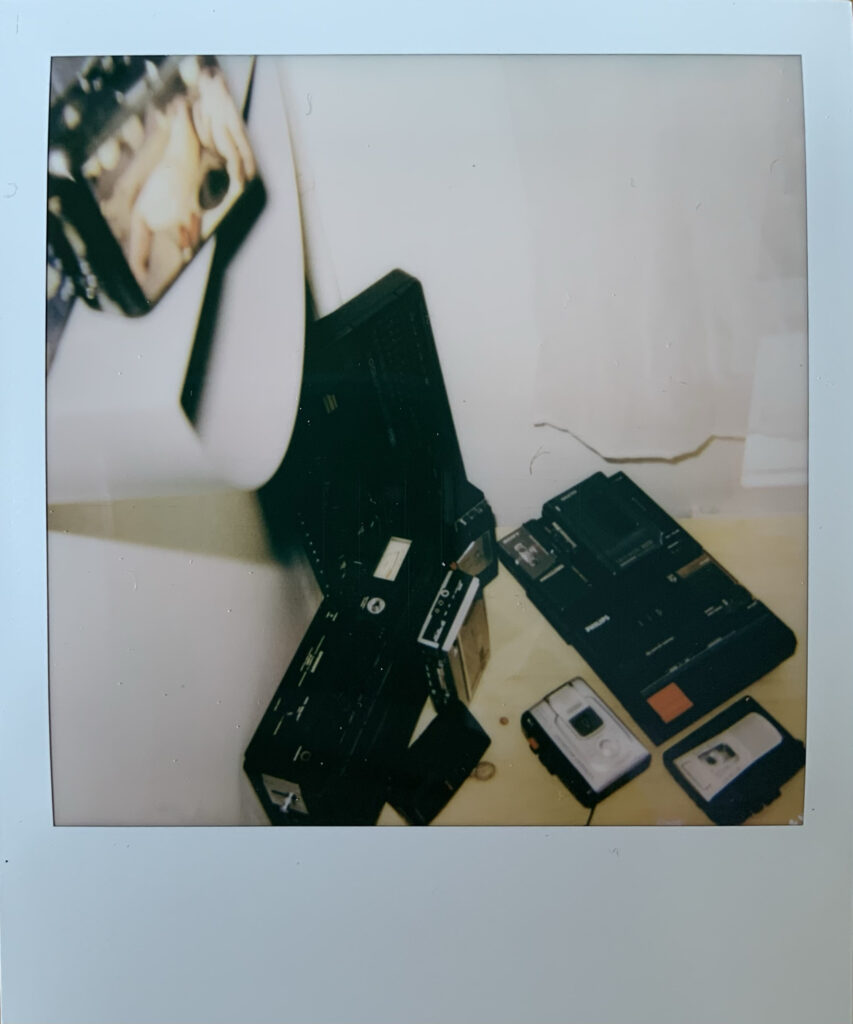
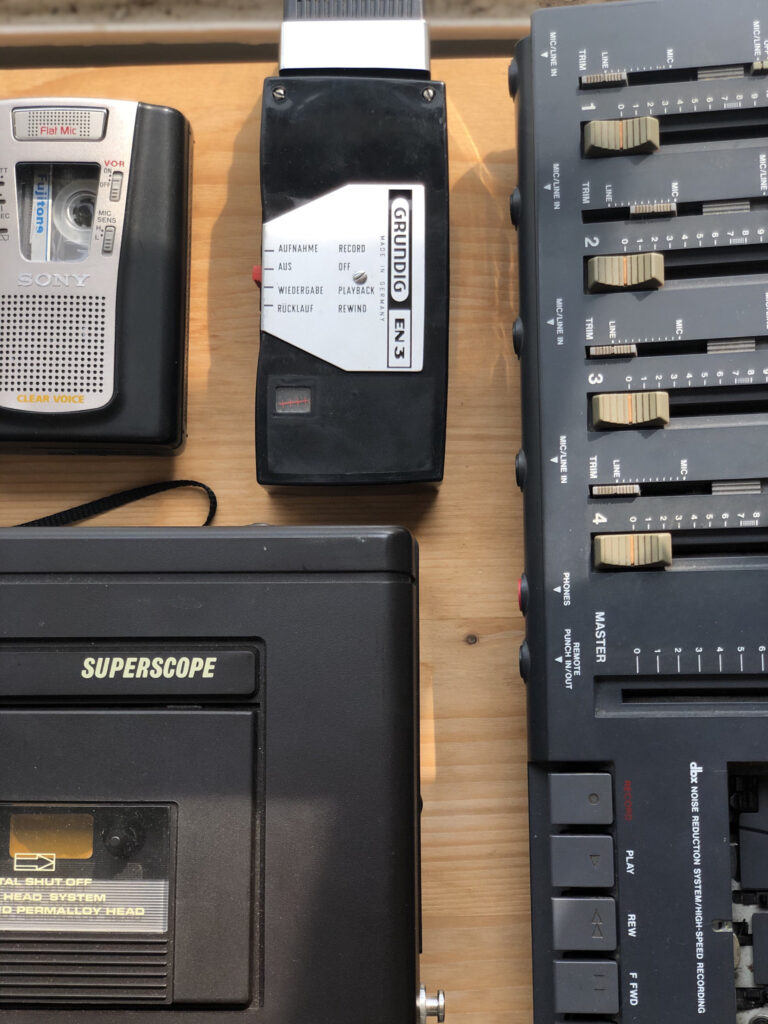
Either I go on holiday or for a walk (even at work, but don’t tell anyone) I always bring a tape recorder with me.
Also my iPad, with some granular devices, Quanta or the new emulation of the Buchla 700.
4 track and walkman
I like compact gear, recording sounds in the daytime and processing them at night time.
Night time processing
4. What software do you wish was hardware and vice versa?
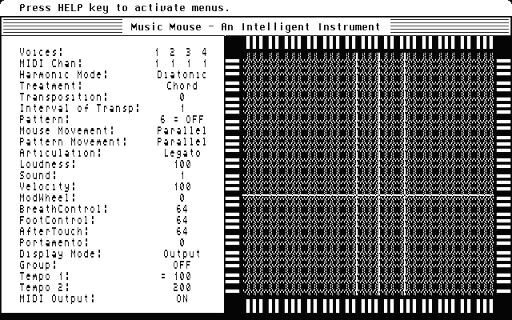
I’d really like the Music Mouse from Laurie Spiegel in a hardware form for sure, it’s easy enough to program something lovely and yet complex enough to explore a lot of different paths.
Music Mouse from Laurie Spiegel
5. Is there anything you regret selling… or regret buying?
« Regrets, I’ve had a few, but then again, too few to mention »
All gear eventually fades to bokeh
I don’t regret any purchase or sale, it was the right time for every separation or acquisition. But who knows ?
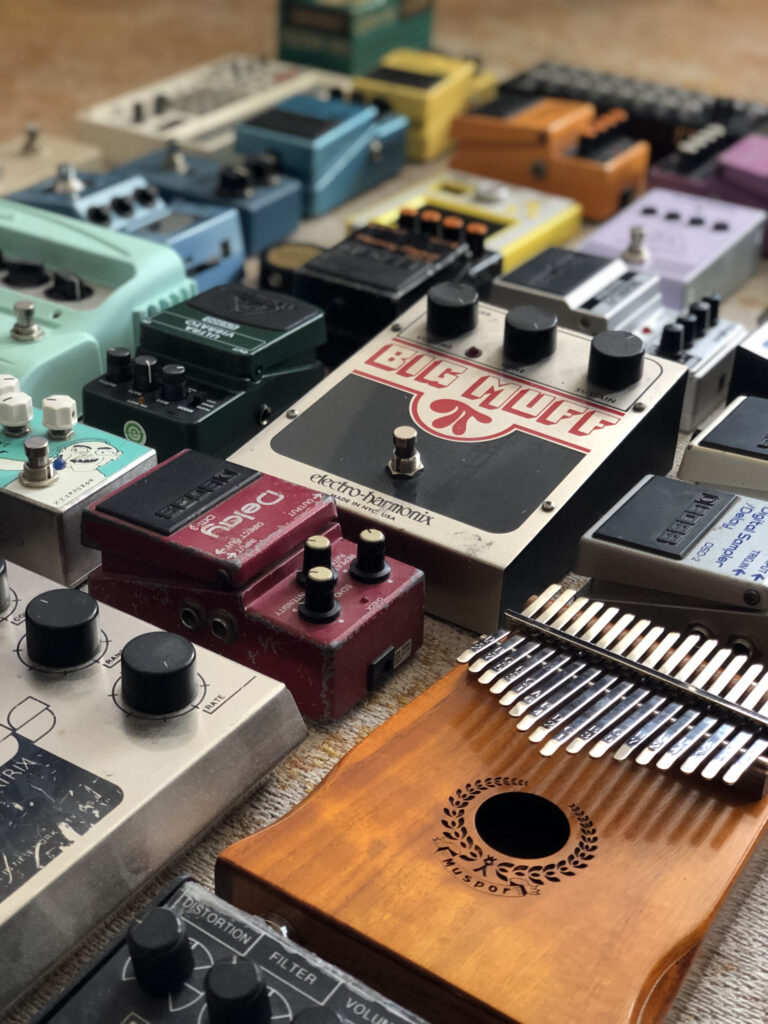
Kalimba and Big Muff
There is an adaptation time for everything, especially electronic devices, you see a video or test it for fifteen minutes, and then at home it’s not the same. So you have to delve into it and learn it better to find out if you really like it. Not taking enough time is a common mistake that I made several times…
But don’t feel ashamed or guilty, it’s the right path. Once you know, what you don’t like, it gets easier.
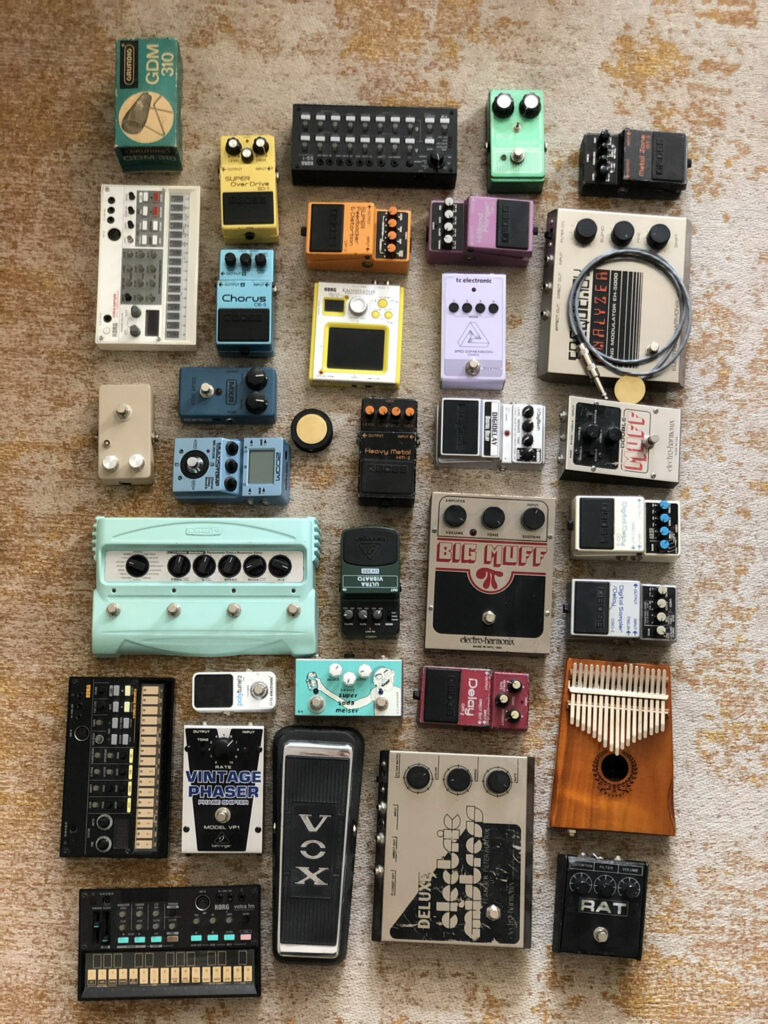
A glutton of gear from above
6. What gear has inspired you to produce the most music?
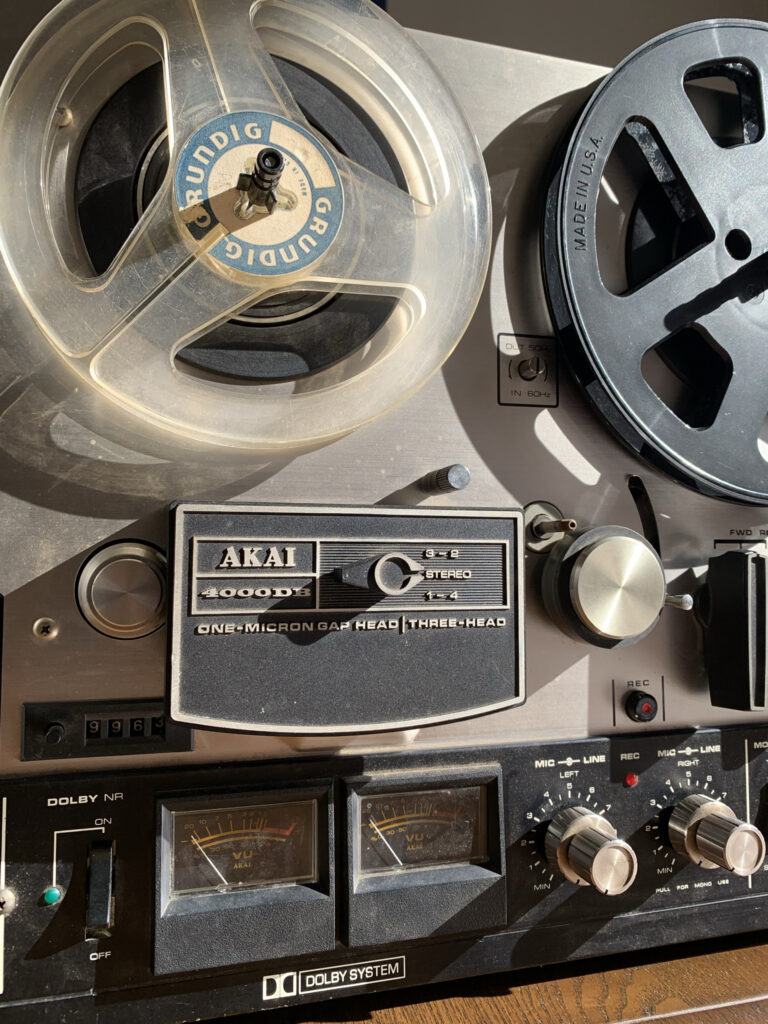
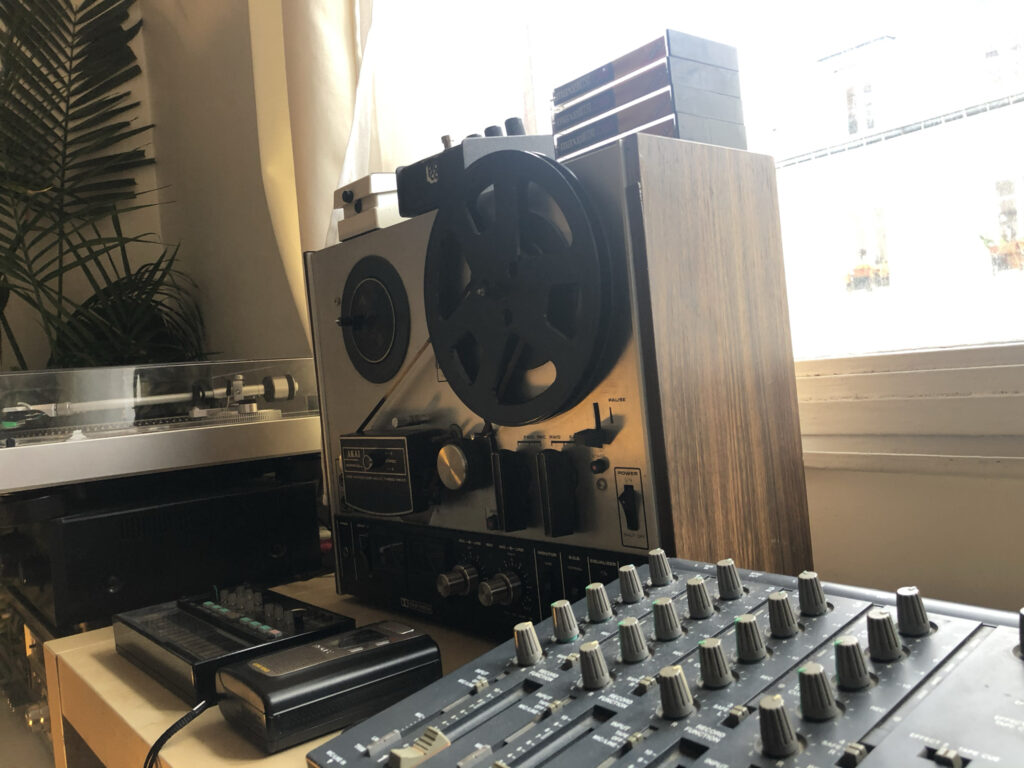
I think it’s my newly acquired Akai tape recorder, I’ve been messing around with cassettes for quite a long time, but to have a bigger tape to work with, cutting, editing, staring at, is absolutely marvelous.
Akai Reel to Reel tape recorder
7. If you had to start over, what would you get first?
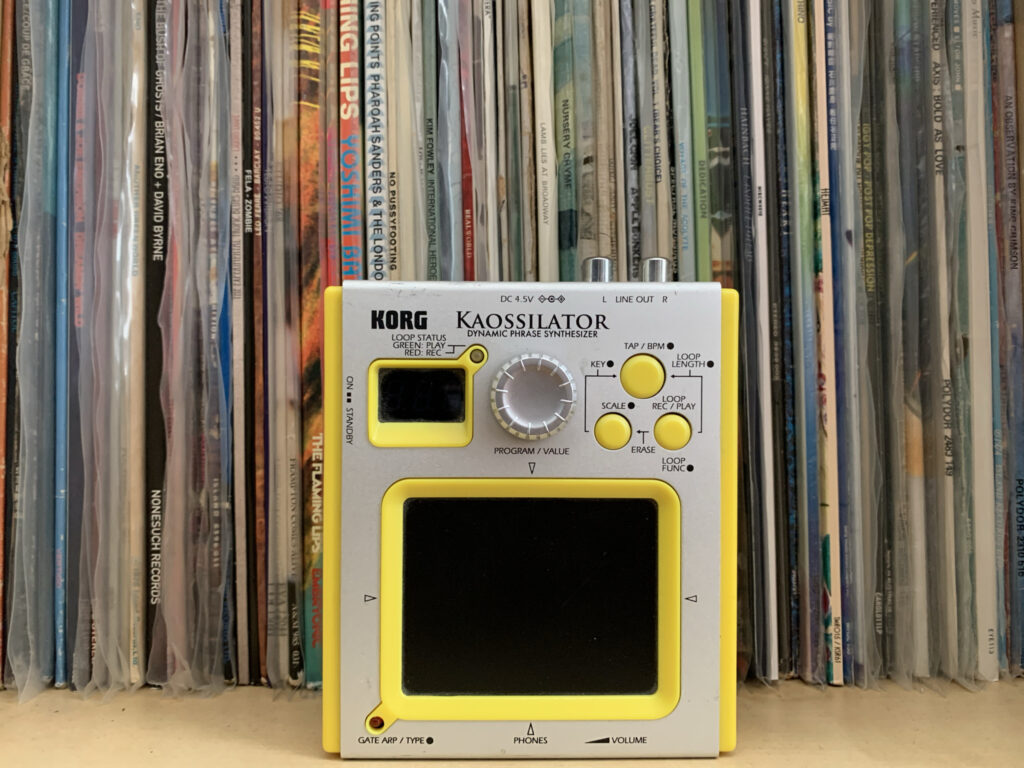
Korg Kaossilator
I think a kaossilator and a cassette tape recorder. You can do plenty of things with the kaossilator. Also if you fool your tape recorder to do it, it’s possible to overdub without erasing anything. So yes, with these two you have a lot of different sounds in your pocket.
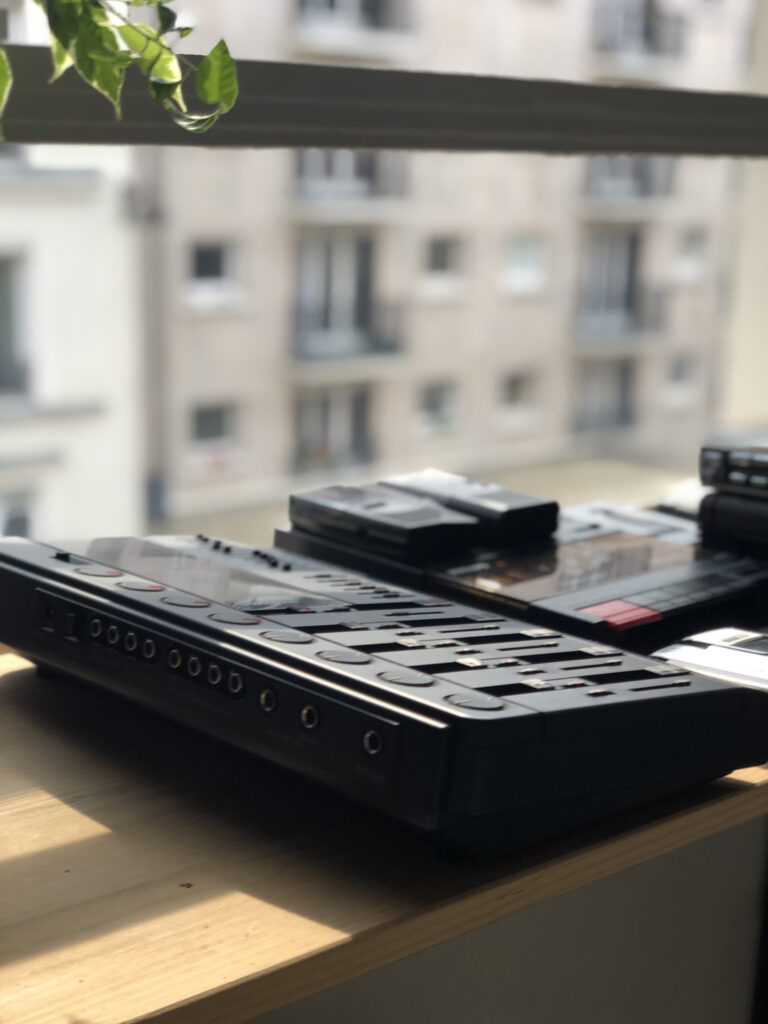
Cassette tape recorders
8. What’s the most annoying piece of gear you have, that you just can’t live without?
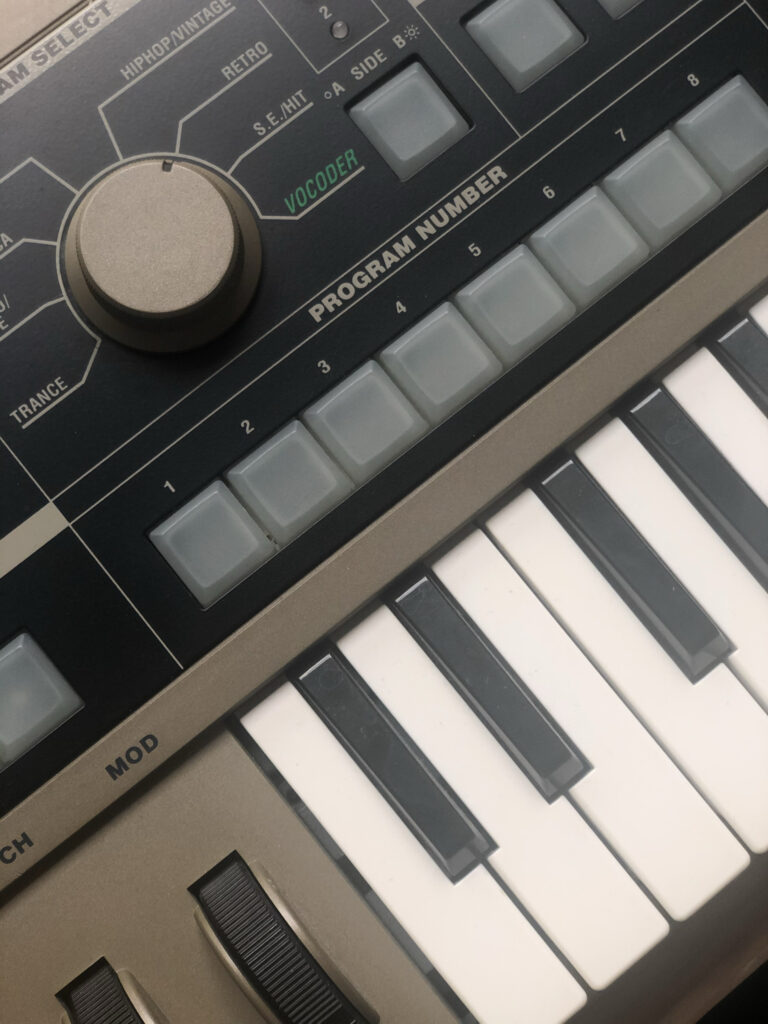
I think it’s my MicroKorg, it was my second synth (the first one was a Yamaha CS15 that broke). It has a peculiar sound, not the best keys, but I love it anyway.
Korg MicroKorg
9. Most surprising tip/trick/technique that you’ve discovered about a bit of kit?
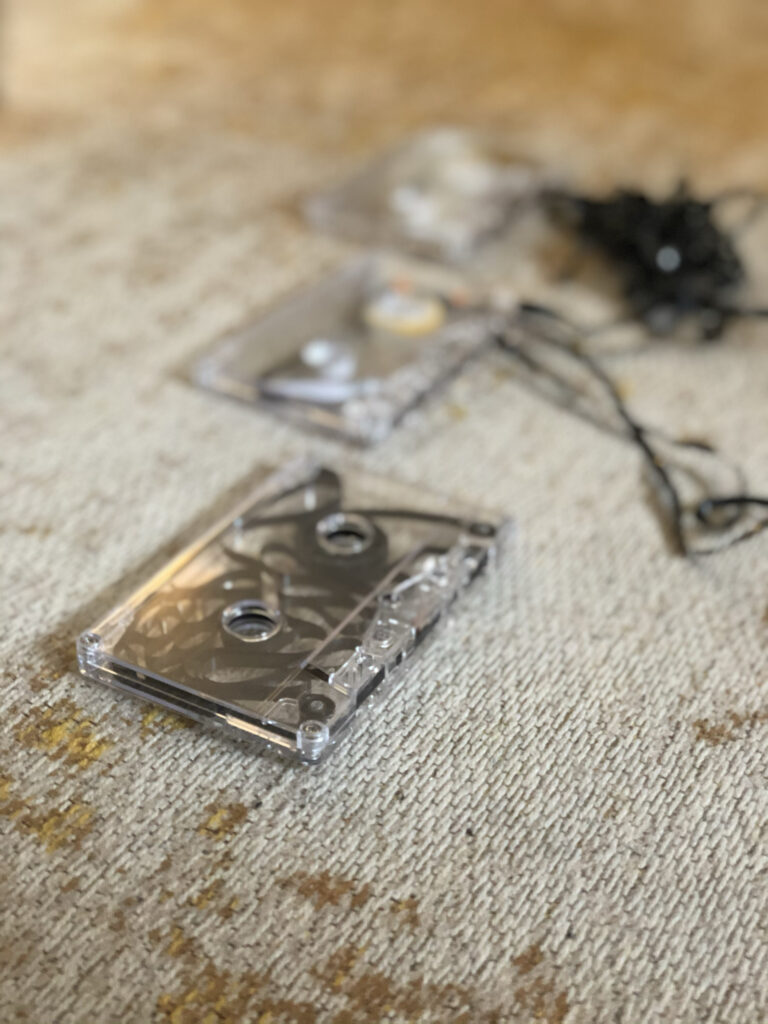
A very long tape loop, I saw someone doing those kind of things on Instagram (hello, @robotmammal) and I tried for several days. After a lot of effort and moaning, I finally managed to do it ! And… it broke.
Cassette Tape Loops
Artist or Band name?
Kevin Paul Cahay.
Genre?
Free jazz ? I always wanted to say free jazz.
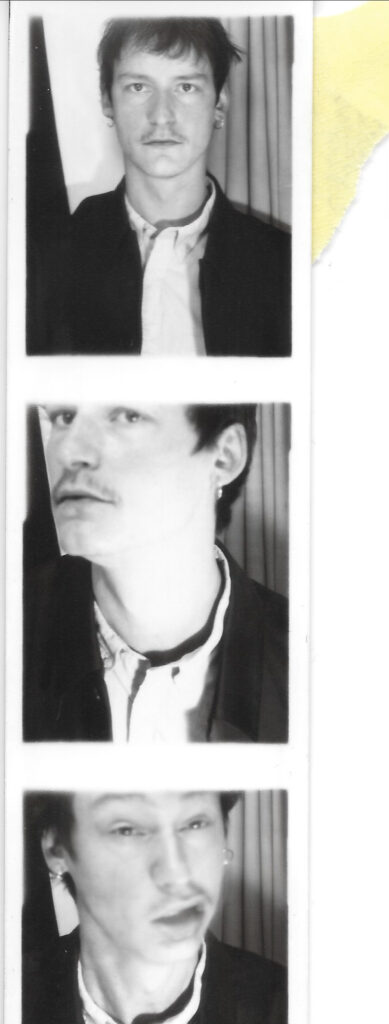
Selfie?
The many faces of Kevin Paul Cahay
Where are you from?
I’m from Paris/France.
How did you get into music?
Since I was born, my parents were listening to music loudly, and I remember dancing and jumping everywhere to Rage Against The Machine and Weezer.
But at the age of ten I told myself that rather than listening to music I could play it ! So I asked for an electric guitar on my birthday and began to compose some songs and record them with my phone or on Audacity (via the computer microphone…) After that I created my artist name « tomorrow massacre » (tomorrow because one of my favorite song is called tomorrow by The Human Instinct, and massacre because of the Brian Jonestown Massacre) and had a band for a couple of years going on tour, recording albums.
After we broke up, I was alone and wanted to do something else, so I began to have an urge to play modular synthesizer, explore new sounds and embrace experimentation without the intro/verse/chorus thing.
I did my first EP at the beginning of 2021 and I’m planning to have another one out this year as well.
What still drives you to make music?
Everything.
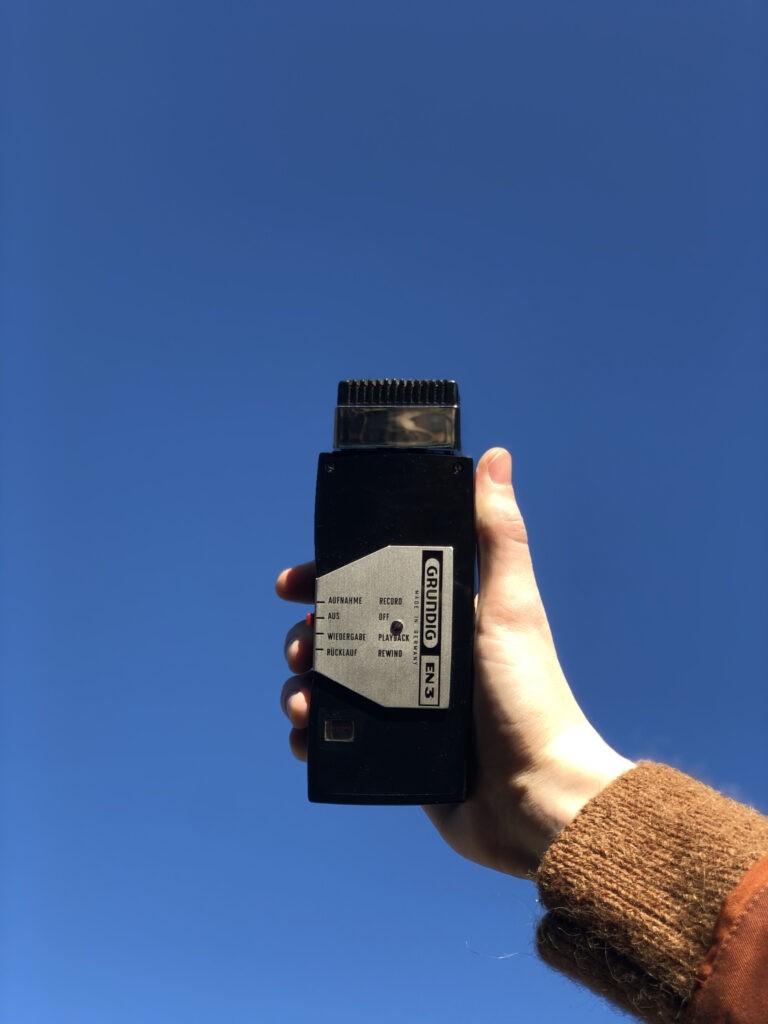
Grundig EN3 Dictaphone… shaving the sky
How do you most often start a new track?
Nothing is really planned, I always want to try a lot of things (like a video I did with 5 delay pedals) and then something that I like appears (and sometimes not).
How do you know when a track is finished?
Nothing left to add
When I want to add something, but it doesn’t sound good at all.
Show us your current studio
Analog goodies…and eurorack buddies
Best creative advice that you’ve ever heard?
My French teacher in high school always told me « when there are three words there are two too many » , and I apply this to my music.
Promote your latest thing… Go ahead, throw us a link.
[Hey YOU my dear Reader, it’s Martin the Editor here: I gotta ask, coz it’s been bothering me for a while… how would you suggest that I could encourage more commenting on the this blog? There’s like zilch happening and it’s kinda bumming me, as well as the google search algorithm, out 😉 ]