Martin Pedersen – Scores Of Zealand

1. Favorite knob or fader or switch on a piece of gear and why?

Space Echo RE-201 Mode Selector knob. Do you really need an explanation… Just look at it:)
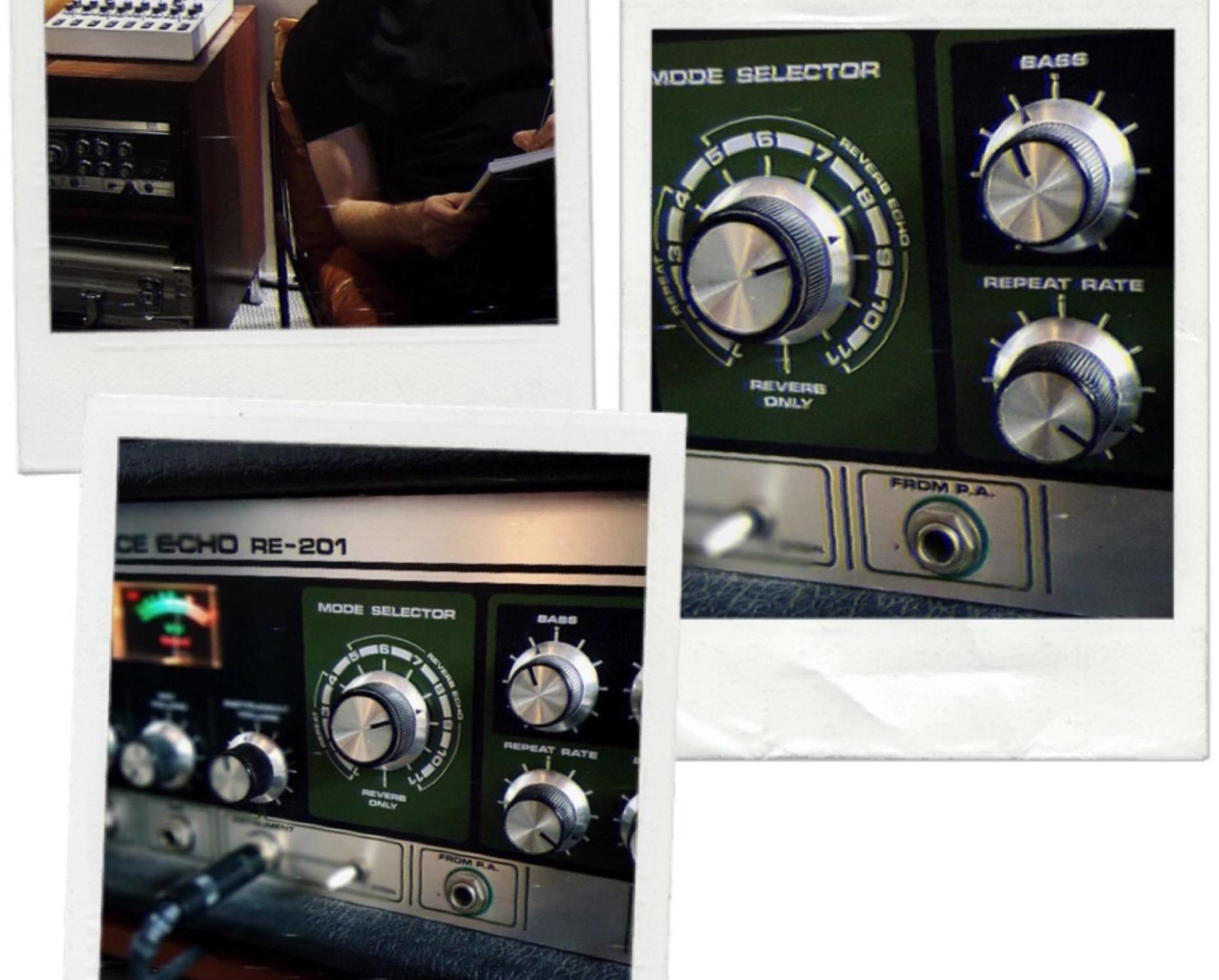
Space Echo RE-201 Mode Selector knob

2. Do you have an ‘almost’ perfect bit of kit? What would you change?

Maybe my Juno 106. Great for bass, synth stabs, arps, pads.  
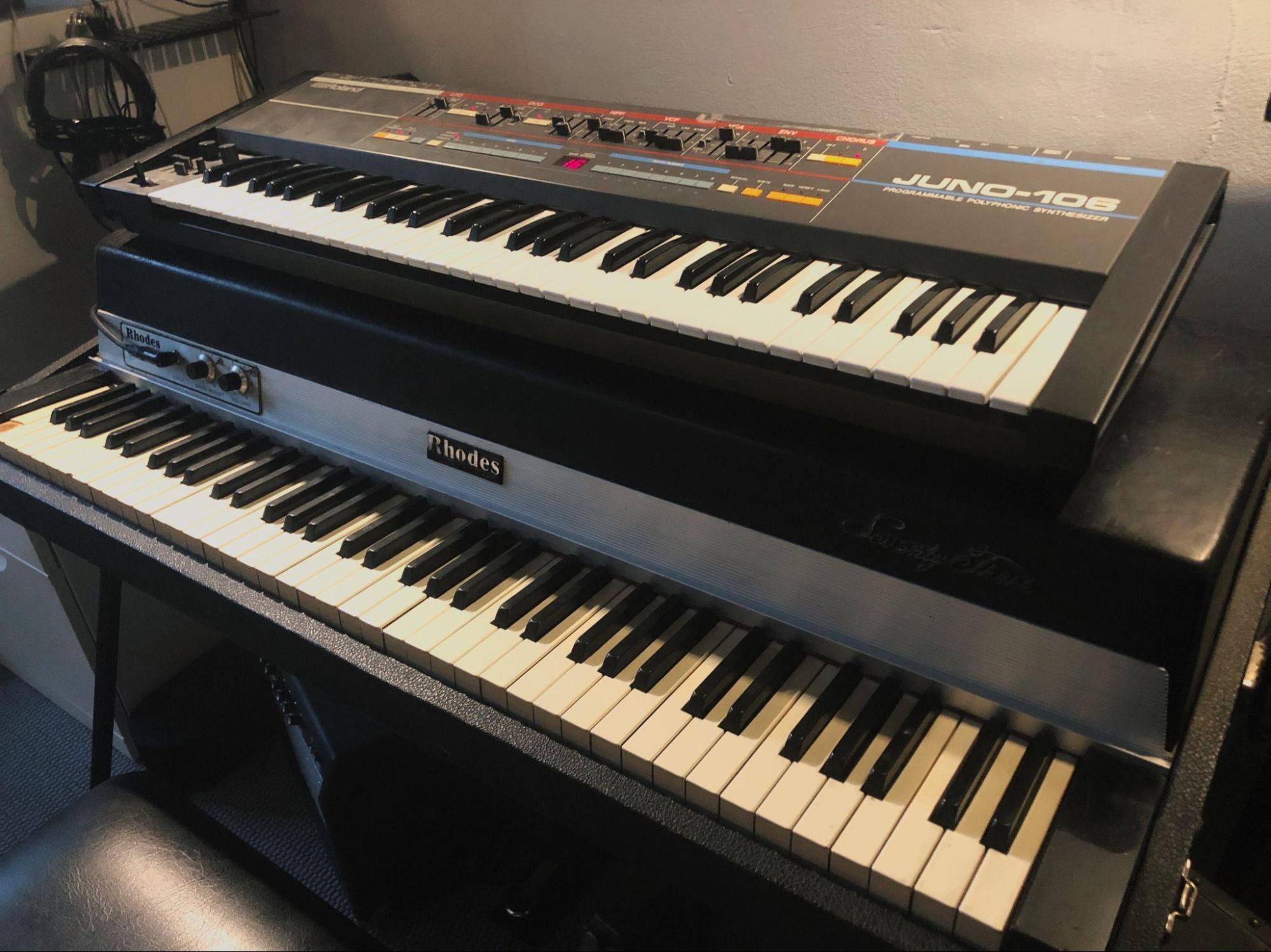
Roland Juno 106 and Rhodes

3. What setup do you bring on holiday or tour or commute etc.?

Macbook Pro, 2 Samsung T2 SD’s (1 with samples and libraries. 1 with projects), Beyer Dynamics DT headphones, iRig midi keyboard with sustain.
A laptop. Ableton / Cubase. Headphones. Soft synths – Omnisphere, Zebra, Diva. NI Kontakt and some libraries.
If you’re into strings – Some of the Spitfire Audio sample libraries are pretty  good. Small midi-keyboard (with sustain). And oh, just a quick tip about that…
If you play piano sounds on a small crappy non-weighted midi-keyboard, remember to use the velocity midi effect (in Ableton) on the track for playing with smoother velocities. Without it, it maxes out the vel. CCs real quick. Or a least that’s what it sounds like to me. 

4. What software do you wish was hardware and vice versa?

Actually none I think. Every piece of hard- or software I have, is in the studio for a reason. After working almost exclusively in the box with soft synths and samples and FX in Ableton and Logic, for almost 15 years, I began to buy more physical gear. Mostly synths with analog circuits and my Space Echo RE-201. But with every piece of gear (hardware or software) in mind to cover different requirements.
Not because of better sound quality, since a lot of the “soft stuff” sounds amazing. But because of the tactile and more experimental experience of turning knobs and pushing faders.
I fucking love to put on the lab coat and just dive in and forget everything around me and just see where it takes me. If I pull up a soft synth, I get often inspired to make something, but I almost never get surprised. If I work on my Arp Odyssey, Lyra-8 or run stuff through my Clouds from Mutable Instruments, I get stuff I would never have dreamed of. It’s all the dirt, irregularities and happy accidents that I find interesting. It’s kind of more relatable on a both a mental and physical level. Specially as colours opposite to the more “clean” and “regular” stuff.  

5. Is there anything you regret selling… or regret buying?
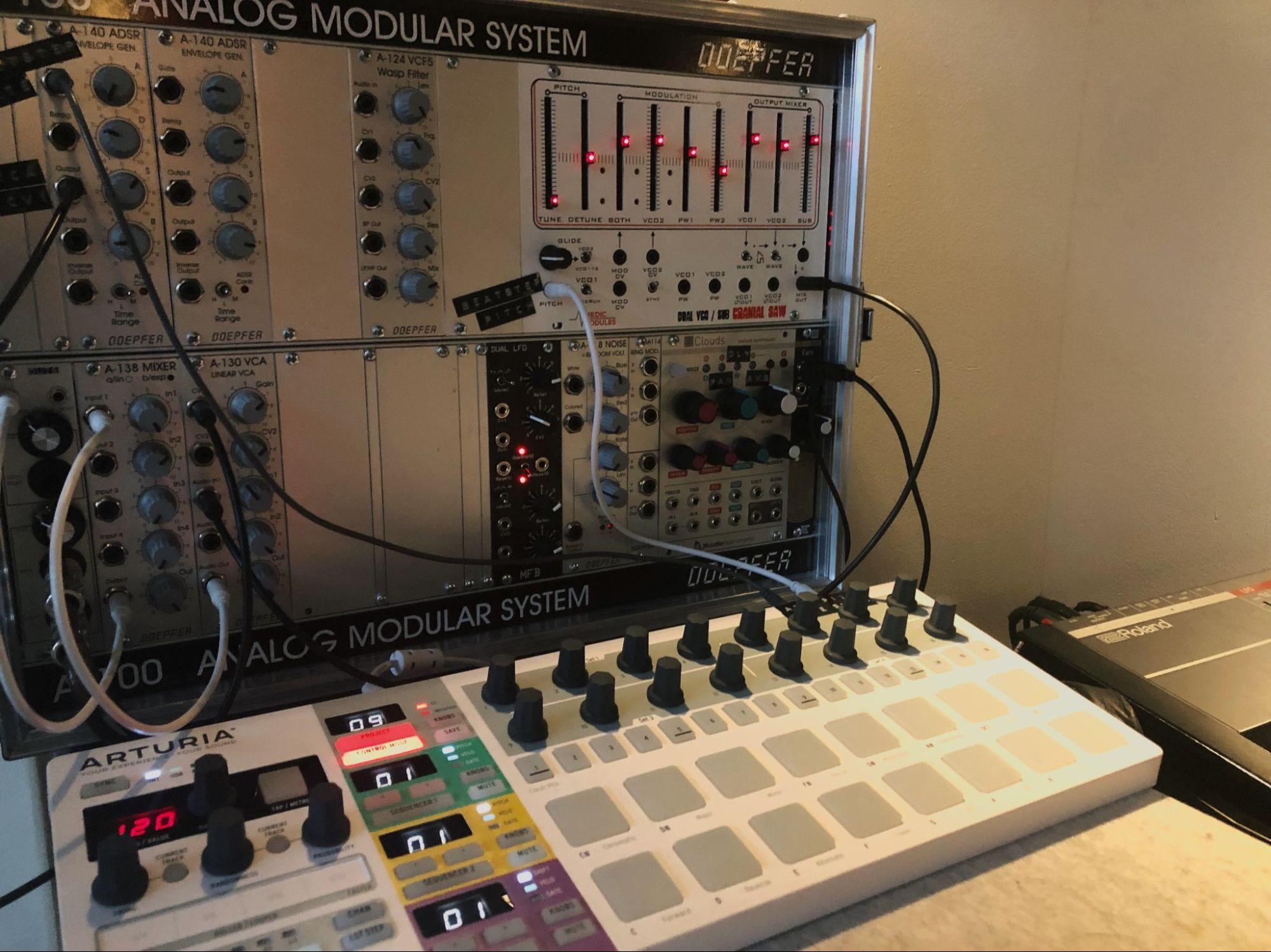
Eurorack and Arturia Beatstep

Can’t really justify how much I spend on my eurorack setup. It just doesn’t get used enough. Same goes for my Moog Sub37.
Sometimes I cheat and use a plug-in… Sorry. 
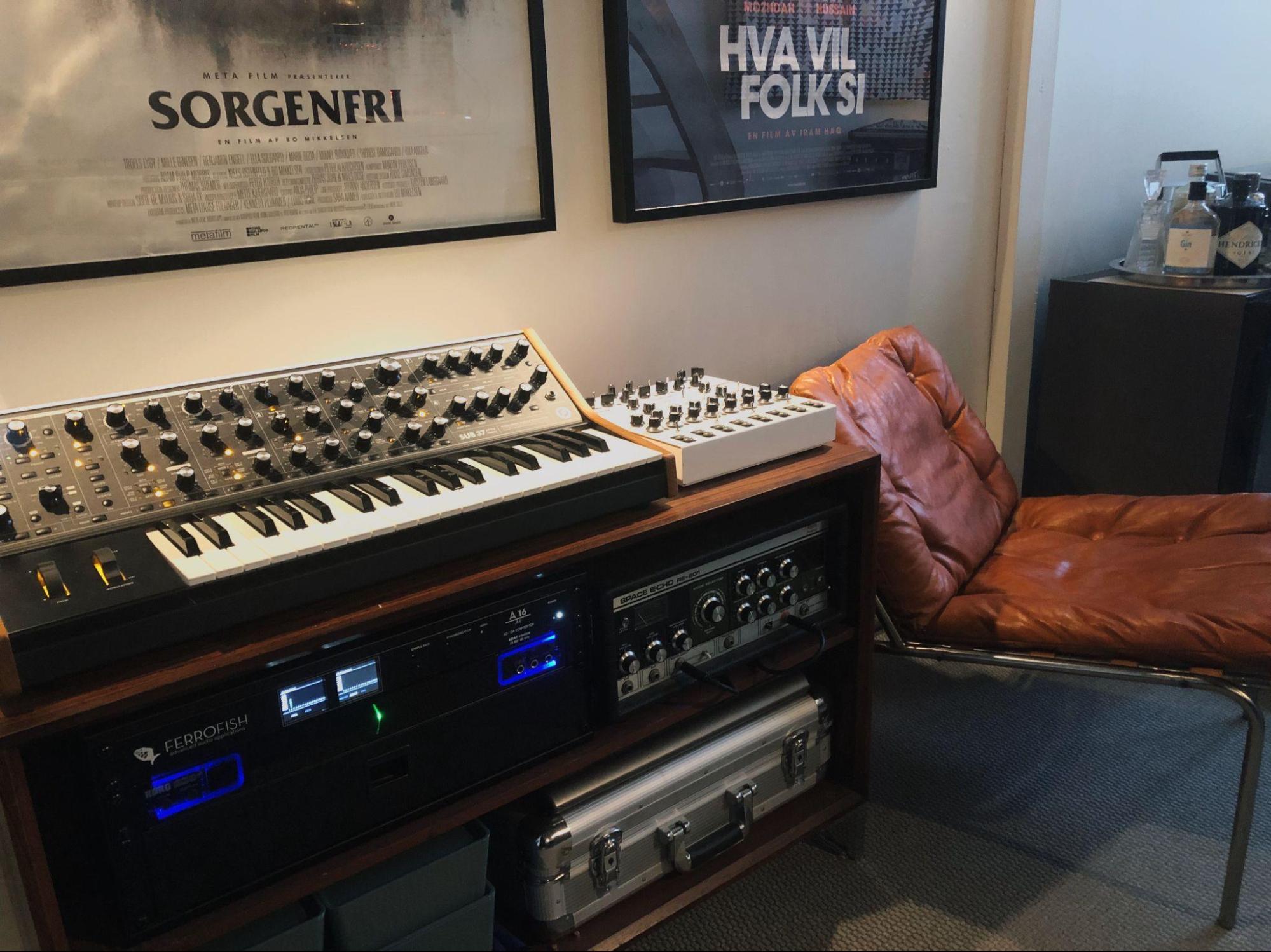
Moog Sub37 and Lyra

But every time I do use it, specially for more distinct bass, its amazing with the live recorded filter modulation. Then the sound comes alive. 

6. What gear has inspired you to produce the most music?’

On the “soft” side – Omnisphere, some Kontakt synths, Spitfire string libraries. Hardware – My Juno 106, the Arp Odyssey.

7. If you had to start over, what would you get first?

A wealthy girlfriend, cause this GAS is a sure way to be broke forever 🙂 

8. What’s the most annoying piece of gear you have, that you just can’t live without?

My brain
Other than that… Can’t really think of one.

9. Most surprising tip or trick or technique that you’ve discovered about a bit of kit?

For those of you working to picture in Ableton. It’s actually possible to change the framerate. So the film and project are in sync.

Did my first feature film without knowing this and it fucked up the sync. After several YouTube deep dives, several years later (and after switching to Logic) I found a way. 

Crtl and (left mouse click) in the timeline with min/ sec. = Choose framerate 
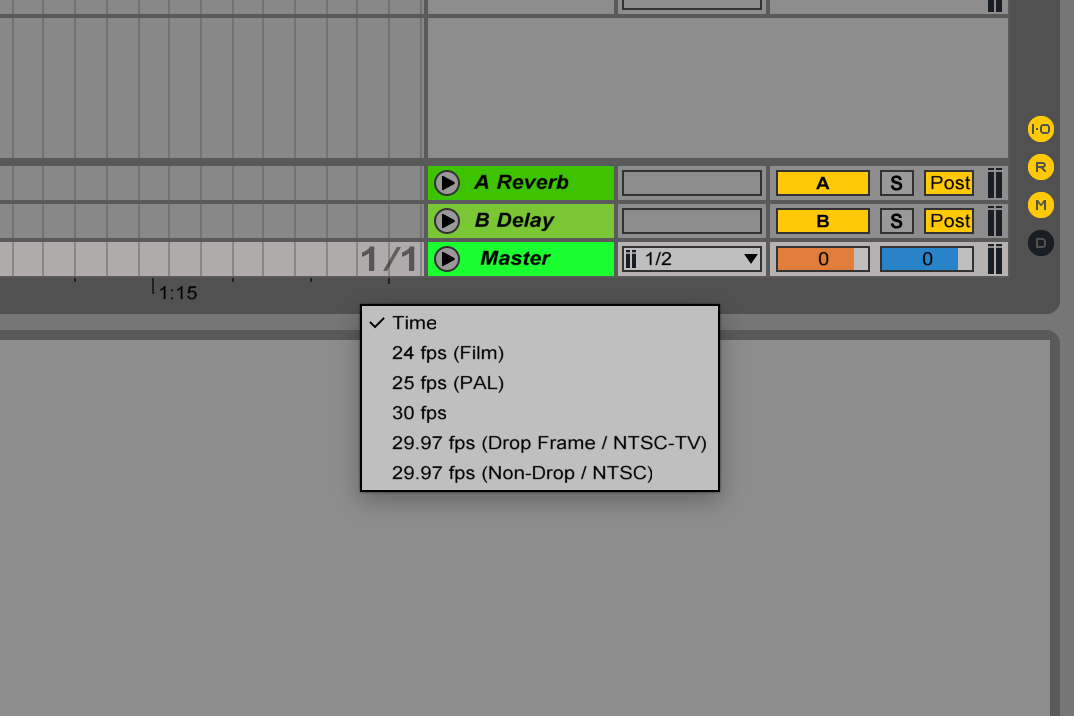
Pro Tip: Ableton can change frame rate of timeline for sync to film

Artist or Band name?

Martin Pedersen

Genre?

Electronic or hybrid film music – Meaning a blend of electronic and acoustic instruments, and organic  elements. 

Selfie?
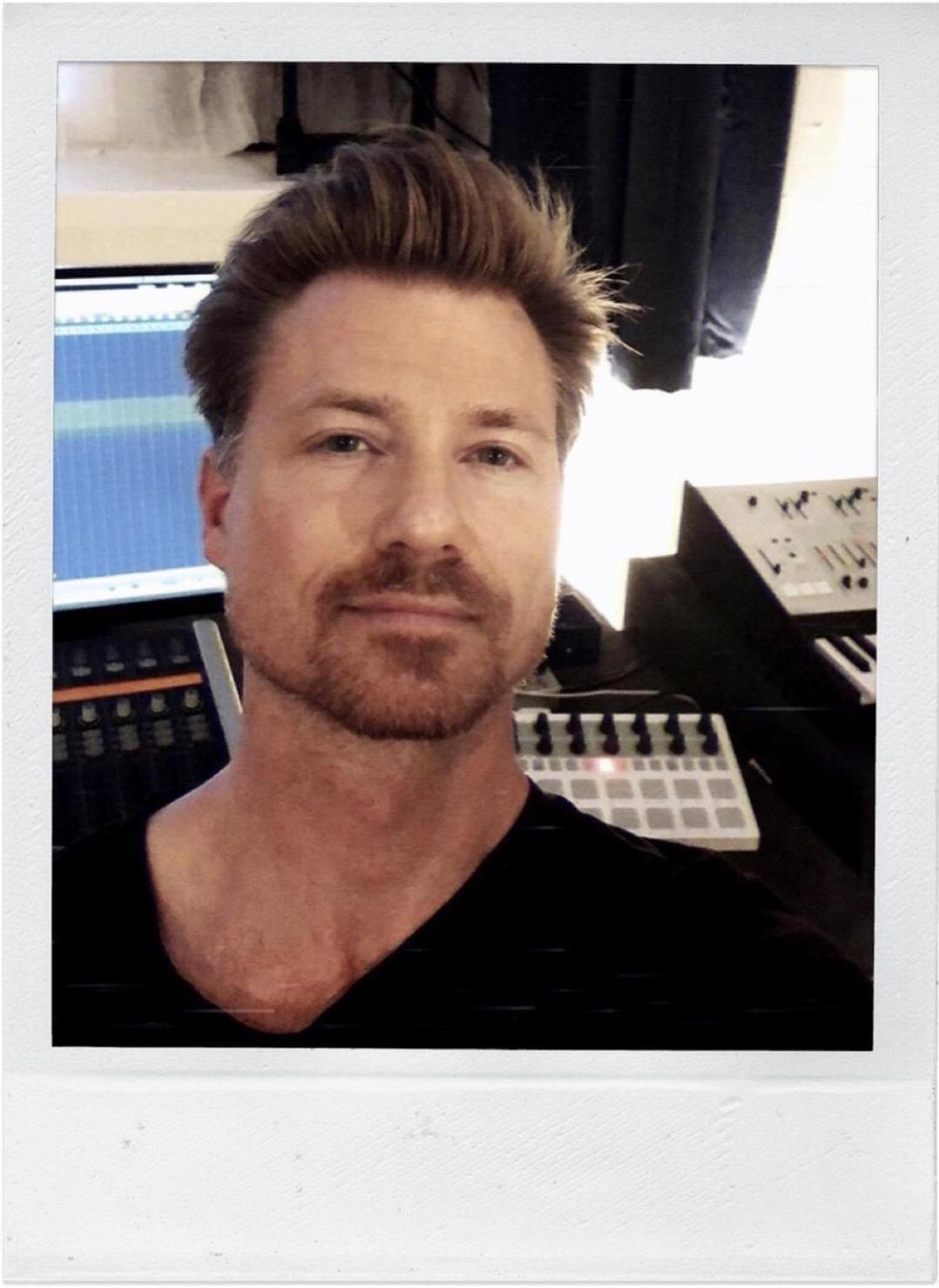
Martin Pedersen

Where are you from? 

Copenhagen. But grew up in the south of Zealand. Moved back just before attending the Rhythmic Conservatory in CPH.

How did you get into music? 

My parents doesn’t play music, but the radio was always on. I started playing saxophone at the age of 12 after watching a badass norwegian jazz quartet by chance on tv in my room. 

Started making electronic music at 14 – SONY Acid Music Studio was the bomb back in the 90s. For me at least.  

What still drives you to make music?

If I focus on my work in film. What drives me is, I just love storytelling SO much. Co-storytelling as a composer or just watching a film or a good show. Or just listening to a piece of music that can be a story on it’s own. It’s all about the emotional responds. To be totally immersed, letting everything else fade away around you. It all inspires my creative work and drives me to be a better storyteller. Film music or, the score, is a vital part of most film. I love amplifying the spirit of the film and storytelling with my music.
Music can reveal a films inner life in a way that can’t be fully articulated in any other way. It can have a telling effect on how the characters in the story come across – on how we perceive what they are feeling or thinking. The more engaging the drama – The truer the story becomes. Ok… I totally stole those lines from somebody. Can’t remember who… But I agree.

How do you most often start a new track?

Maybe a cool place to start is – How and when in the production phase I start composing the music for a new film or show.

Because it also relates to how I start a new track – Or “cue” – as it’s called in film. 

When – It always starts with initial talks with the director. What is the heart of the story. 

Are there musical references to draw from or is that up to me. And how do I translate that into what the DNA of the music will be. The earliest in the productions phase was composing after reading the script.   

Working on the score for the first season of the tv-show “HOOLIGAN” I worked from the script and from dailies (unedited footage shot that day). That gives me an idea of the mood and tempo in the scene. How the camera is worked, the lighting and how the actors express themselves and interact with eachother.

Working on the score for the feature film “What Will People Say” I started working from scenes and a fully edited, but not picture locked film (Not locked meaning – most of the scenes are pretty much lined up, but not cut to the final length or order.) 

How – I typically start with talks with the director about the story and the initial overall vibe. 

Maybe also guided by musical references / tracks / cues. Parts of my score for the feature film “What We Become” was initially used as temp music in “What Will People Say”, before I was contacted to do the score. Temp (temporary) music is what the editor / director uses under scenes to “colour” the scene and drive it along. Temp can also help the composer to make a cue for a specific scene, that have a similar mood / function. Some composers love it. Others fucking hate it. I really don’t mind it. The hardest for me has been composing a new cue, from my own cues from other films used as temp. Making the cue kind of like it, but still sounding original for that specific project.    

Hands on – I work in template in Logic. With everything set up with instrument groups, subgroups and fx groups.  
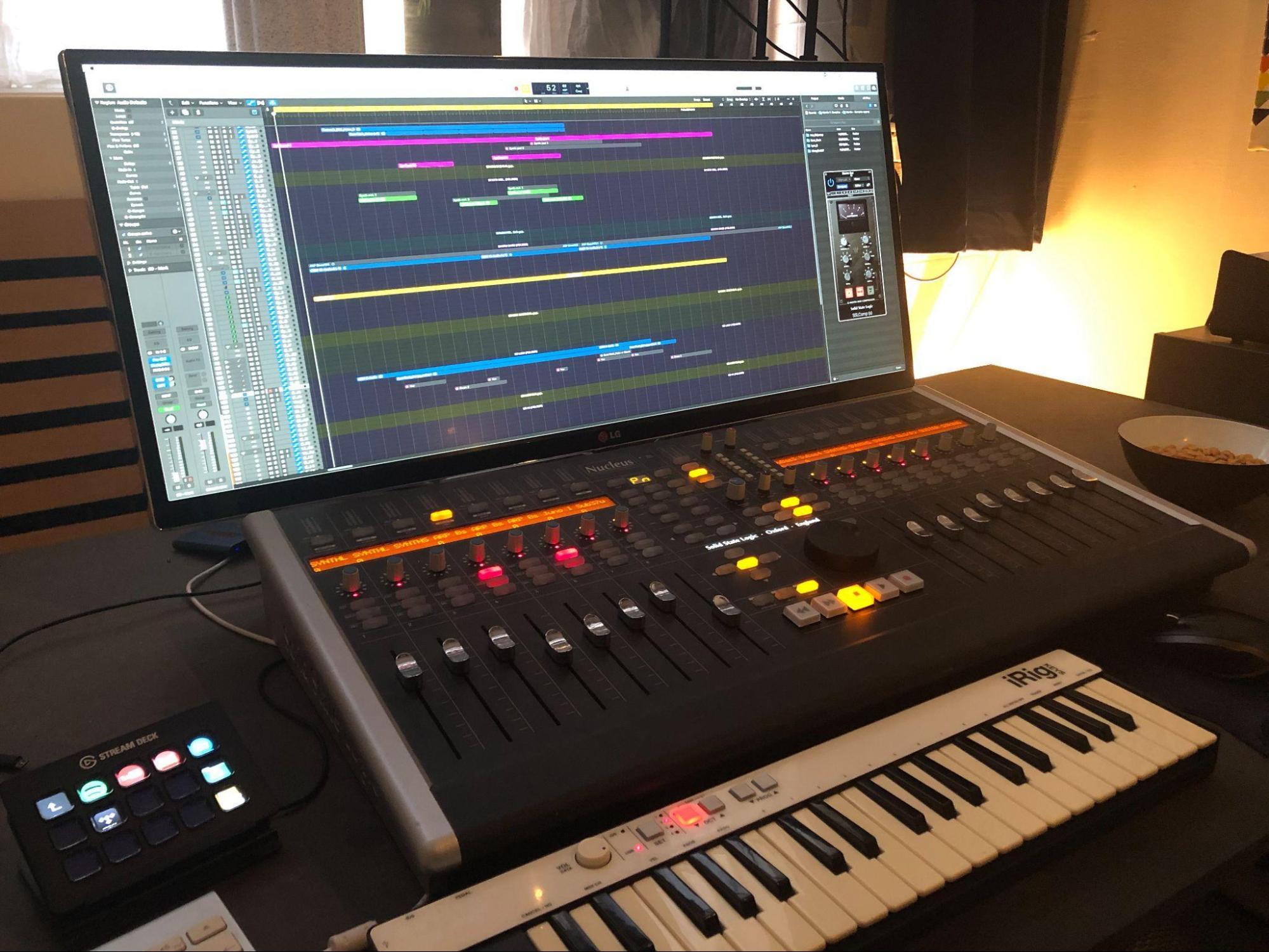
Logic and Controller

If it’s the first piece of music made for the film or show, I almost always open Logic. Look at the blank template. And go “Oh fuck, how do I do this? Maybe I should just find a job cutting grass or something more tangible. Normally that goes away quite fast. 

I like to think about instrumentation and make sound palettes used in the specific project, before a single note is “written”. 

During the process of working on the score, instruments and elements get cut out or added, defined by what the cues is made for if an instrument just doesn’t fit the overall vibe.

I do write themes. Sometimes from the beginning of the project. Just on a piano. 

But often I’ll start with giving characters or elements in the film, specific individual soundpalettes. Or maybe a single instrument per character as a point of departure. 

On a lot of scenes with underscoring, I start with a pad, evolving atmosphere or bass sound. “droney stuff” used as a bed for others elements. 

Sometimes you need tempo driven elements to start it off. Arps or percussive elements. Sometimes a theme. I can start out with a massive sound in one scene. An almost do nothing in another. It’s all up to what serves the storytelling. And the film overall.

So the answer is… It depends. But I usually start every new track / cue with two questions – “What purpose does the music have in this scene? What is the feeling of the music in this scene?” And musically go from there.

I’m pretty heavy on the synth and electronic side. I use Omnisphere, Arturia Analog Lab and NI Kontakt libraries a lot. 

So often I’ll set up interesting sounds within that. Some sounds from libraries. Other sounds are based on samples I’ve found, put into Omnisphere’s sampler and processed in different ways.. 

If a cue calls for something weirder like pitch-modulating or microtonal stuff, I usually start with using my analog synth’s – The Arp Odyssey or Lyra-8. If a scene calls for a more melancholic mood, I love using my Juno 106, for softer pads with a bit of modulating drift.      

Fun fact – I often get inspired by working together with the sound designer on a film. Maybe they use some auditive elements – buzzing light fixtures or aircon sounds I dig. I then use that sound or something like it processed, as musical elements. When I did the score for the feature film “What We Become”, Peter Albrechtsen – the sound designer on the film, inspired me a lot. 

I incorporated some of his sounds used as musical components. It glues the music and sound design well together.

I especially dig the primary sound in the musical palette of the SWAT team. That sound was initially made out of a metal chair being dragged over a concrete floor in an very large room. So sometimes my cues starts with a “real” sound that’s been processed.

How do you know when a track is finished?

When nothing weird sticks out, the scene moves along and you are engaged all the way. On a more overall view. A film is never finished. It premieres. Meaning you have until your deadline… Then it’s finished no matter what. 

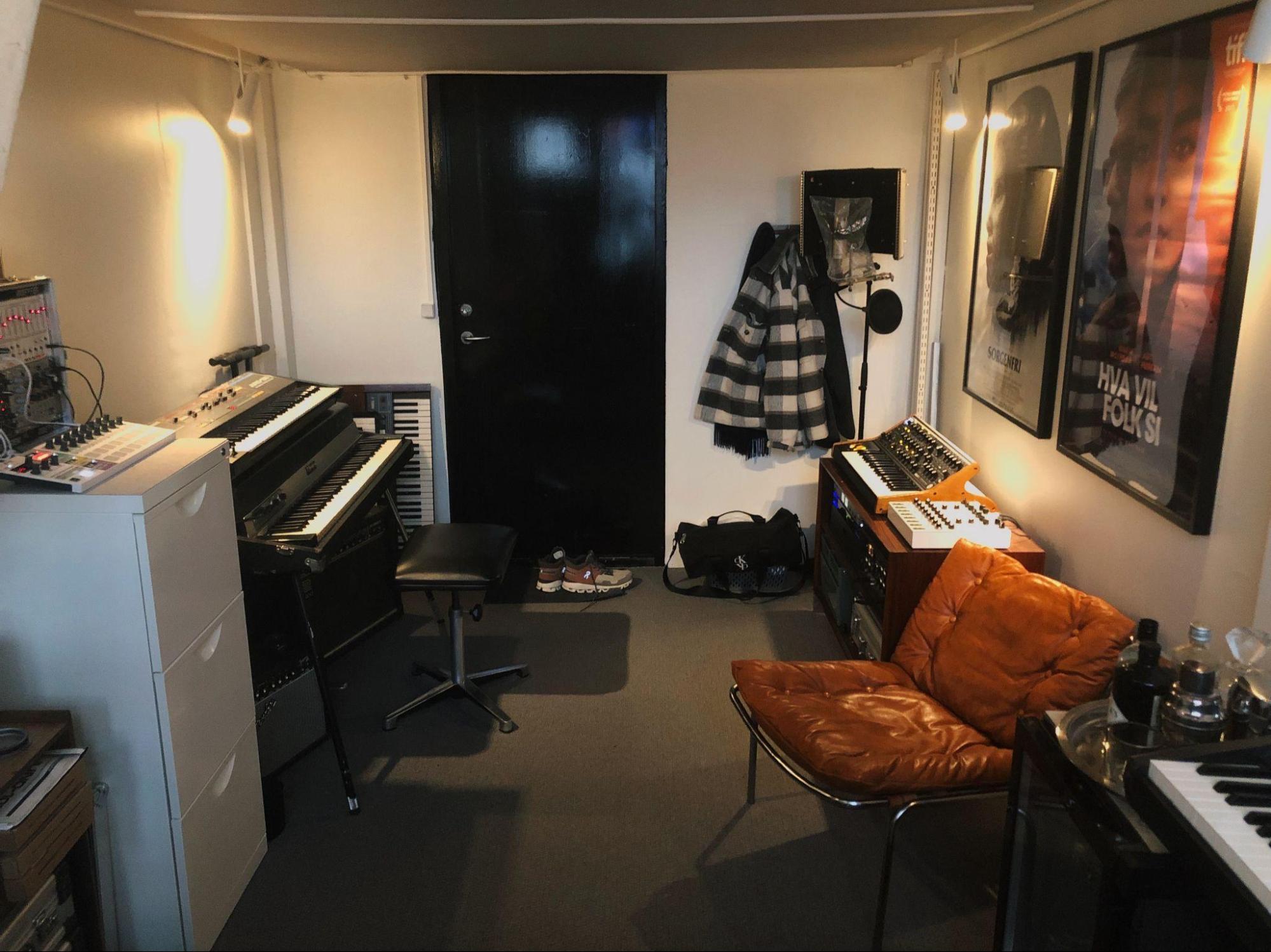
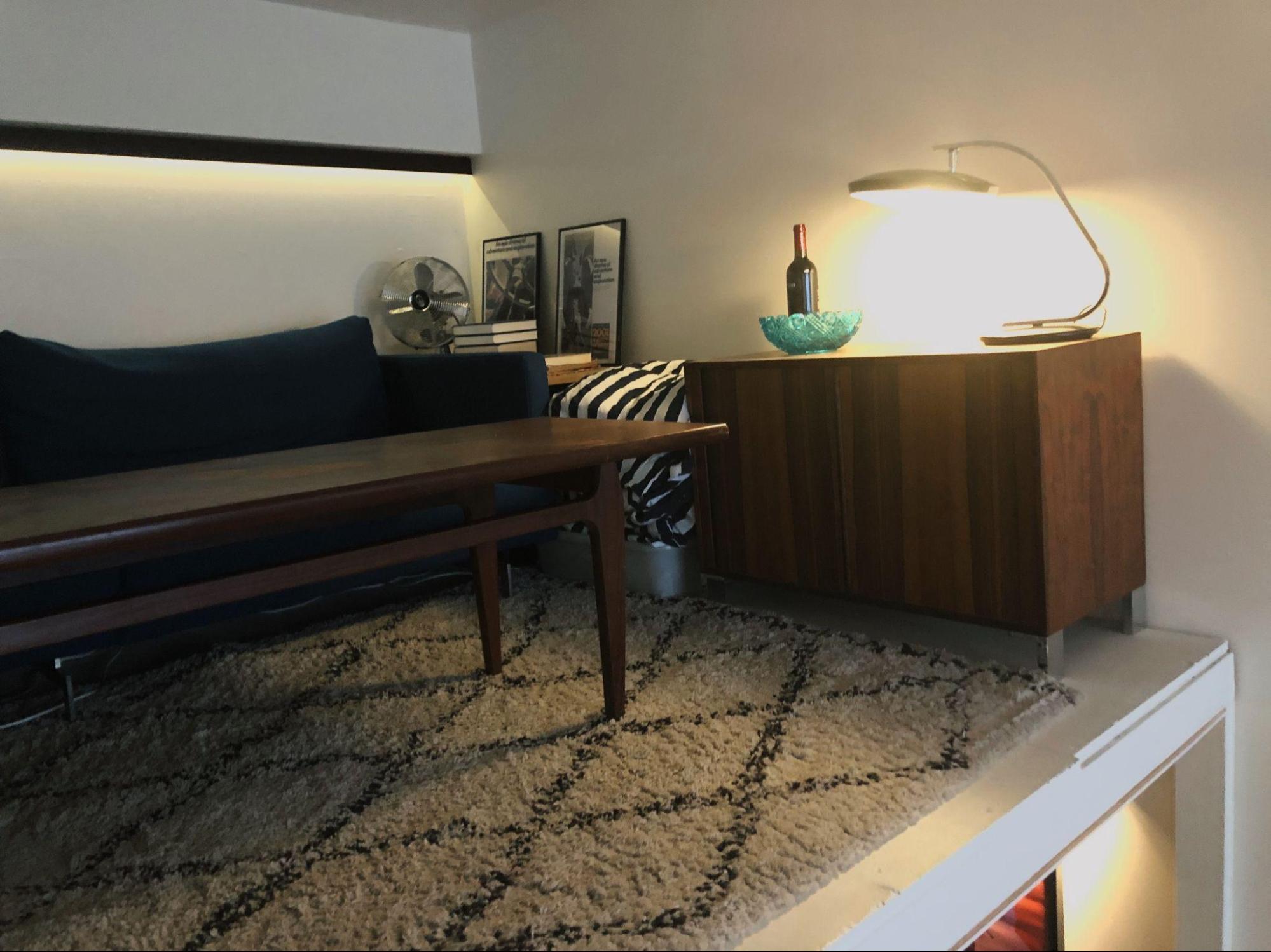
Show us your current studio
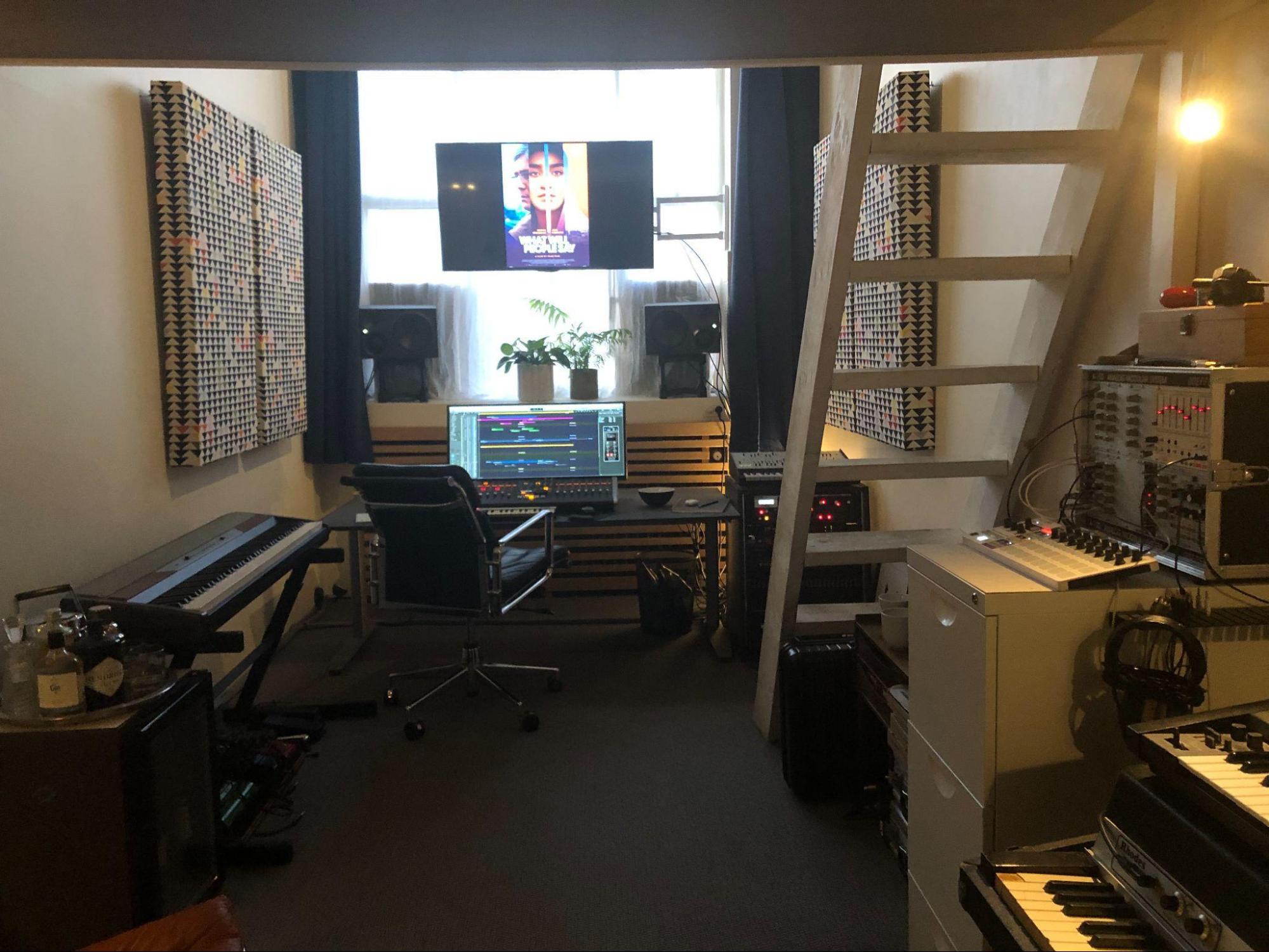
Martin Pedersen’s Studio
Martin Pedersen’s Entrance
Martin Pedersen’s Studio Lounge

Best creative advice that you’ve ever heard? 

Love what you do. And try out new stuff.  

A new approach to the material – Like working  with certain dogmas, new gear, a new instrument. Listen to genres you normally don’t do. Things that pushes you out of your typical musical comfort zone. The more I learn, the more I keep re-falling in love with music.    

Promote your latest thing… Go ahead, throw us a link.

One of the bigger recent things I’ve done is the tv-show “HOOLIGAN” season 1. 

These days I’m working on my second album titled “COCOON”. Release later this year. Spotify

[Editor: You can find more about Martin at his site www.composermartinpedersen.com]


[Editor: There are affiliate links to the relevant gear throughout the articles. It helps to support this blog. In fact, should you be needing some patch cables or guitar strings. Then clicking on one of the above links and buying any product that you prefer, will help the blog… doesn’t even have to be the ones in the link. Thx]
Martin A. Ottesen – Funkstar De Luxe

1. Favourite knob/fader/switch on a piece of gear and why?

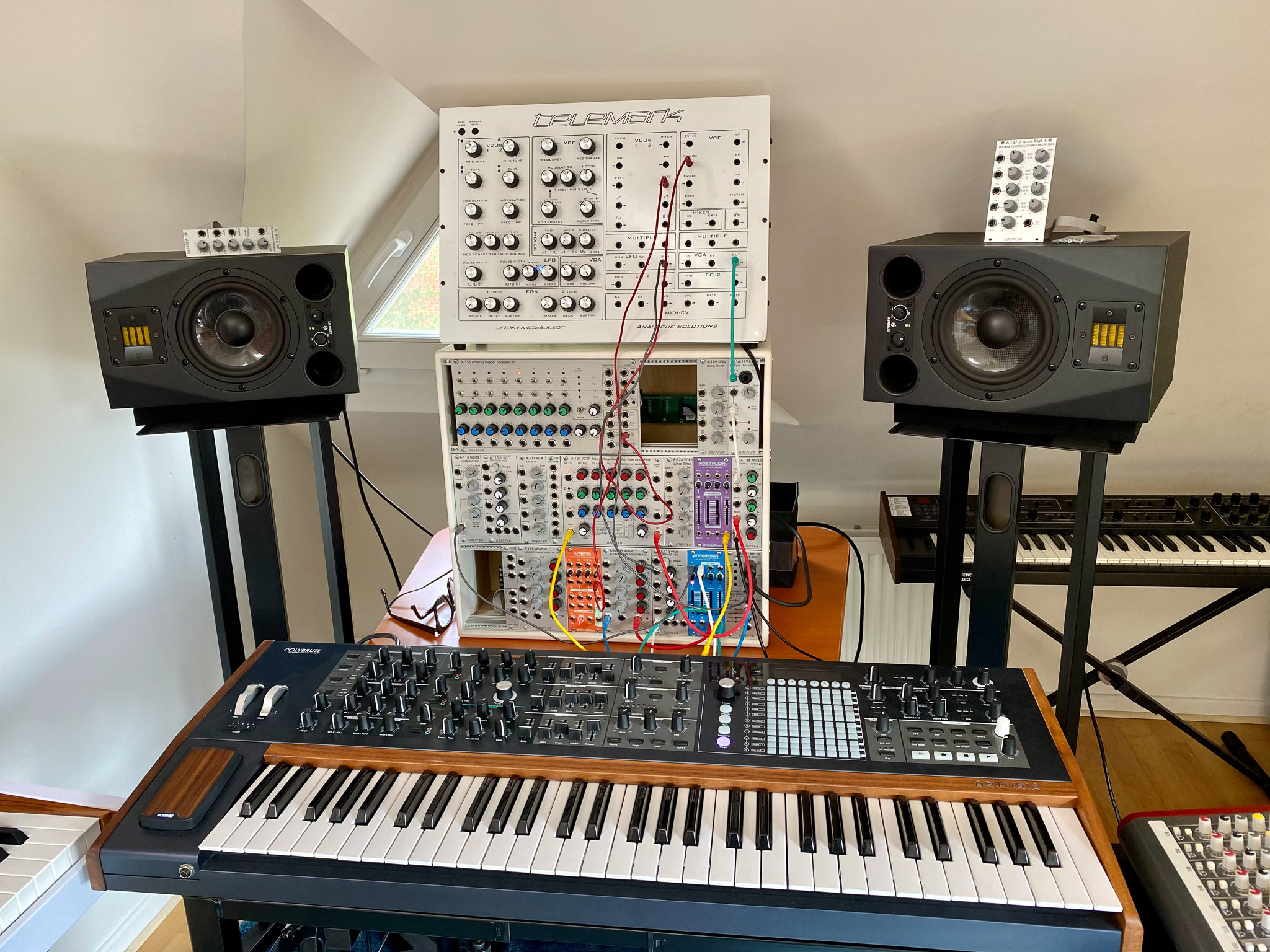
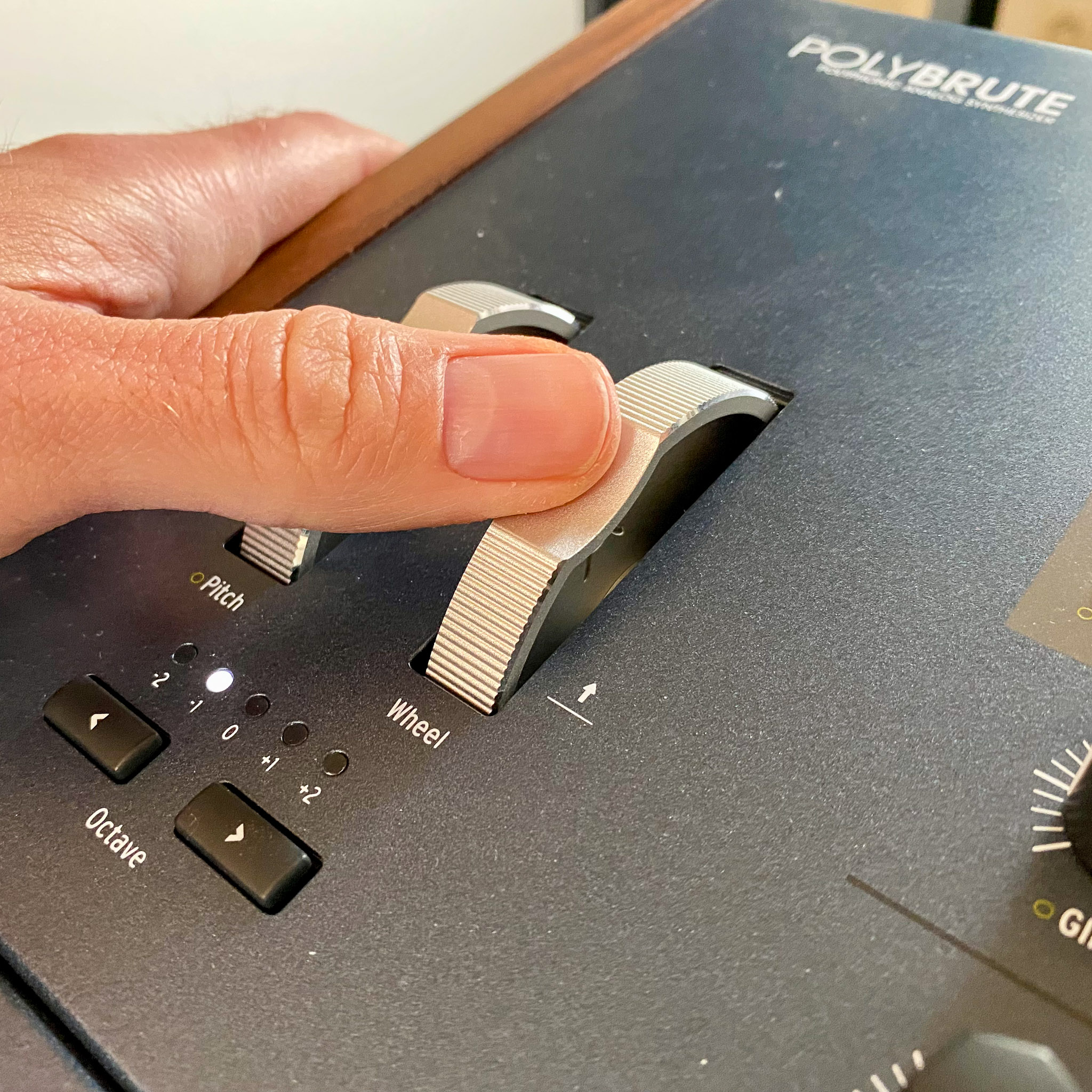
Mod Wheel on the PolyBrute

Besides a high quality keyboard bed, I love the modulation wheel and assigning it to control various parameters of a patch. I’m a keyboard player of the 80/90’ies, so my left hand is used to working the mod wheel quite a bit. It’s nice and tactile and you can instantly see and feel the position. An important element of breathing life into a sound – to me at least.

2. Do you have an ‘almost’ perfect bit of kit? What would you change? 

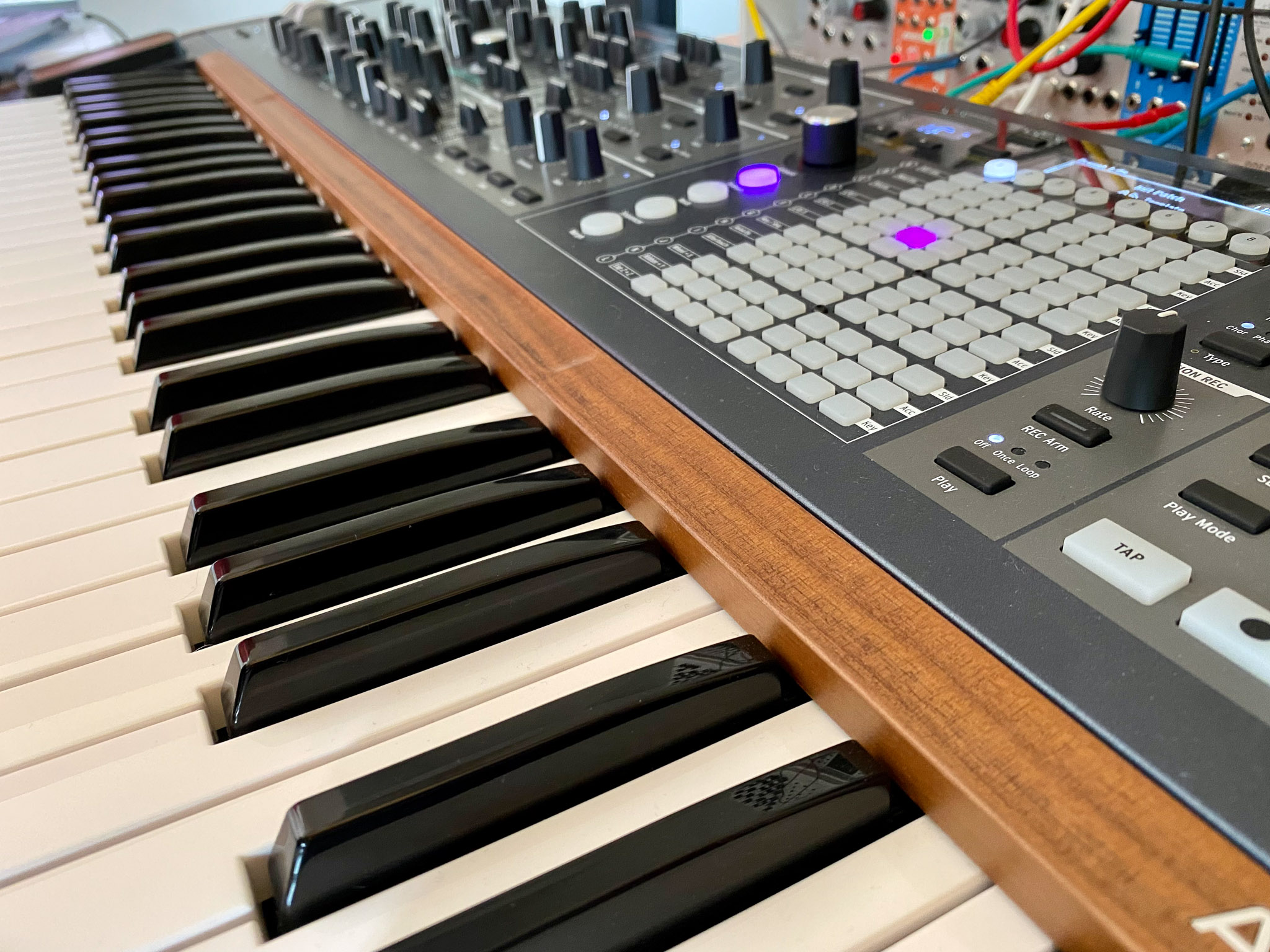
The latest addition to my setup is the PolyBrute which is really great overall. If import and playback of own samples/waveforms was possible, it would have been perfect.

3. What setup do you bring on holiday/tour/commute etc.?

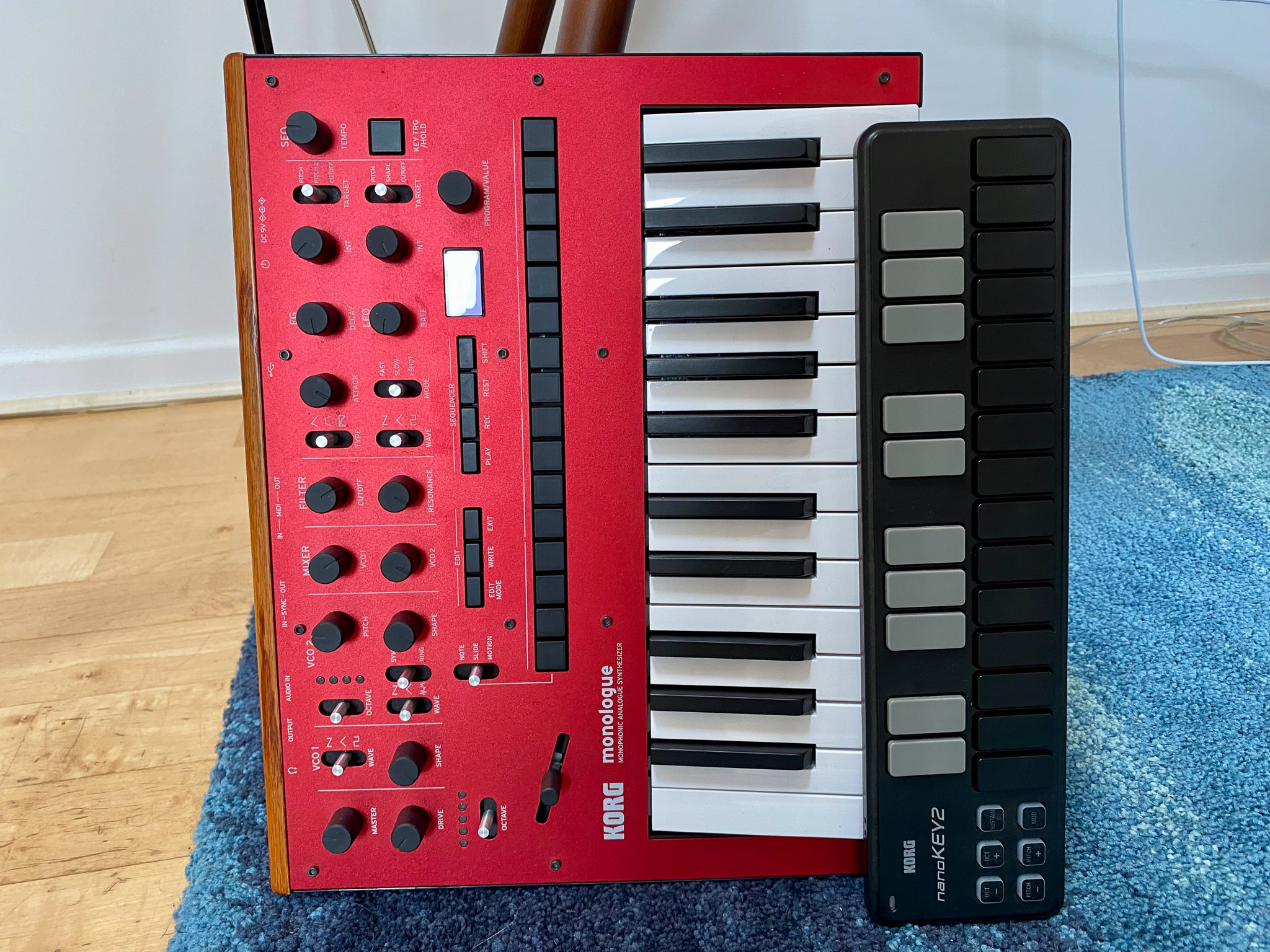
A MacBook Pro and a small controller. I’m a keyboard player so keys are vital to me. How my fingers move around on the keys is a big part of the writing process. I don’t like minikeys, but for travelling it is convenient bringing a small controller such as the Korg Nanokey[US, EU] or a Korg Monologue[US, EU]. I always bring good headphones.

Korg Nanokey and a red Monologue

4. What software do you wish was hardware and vice versa?

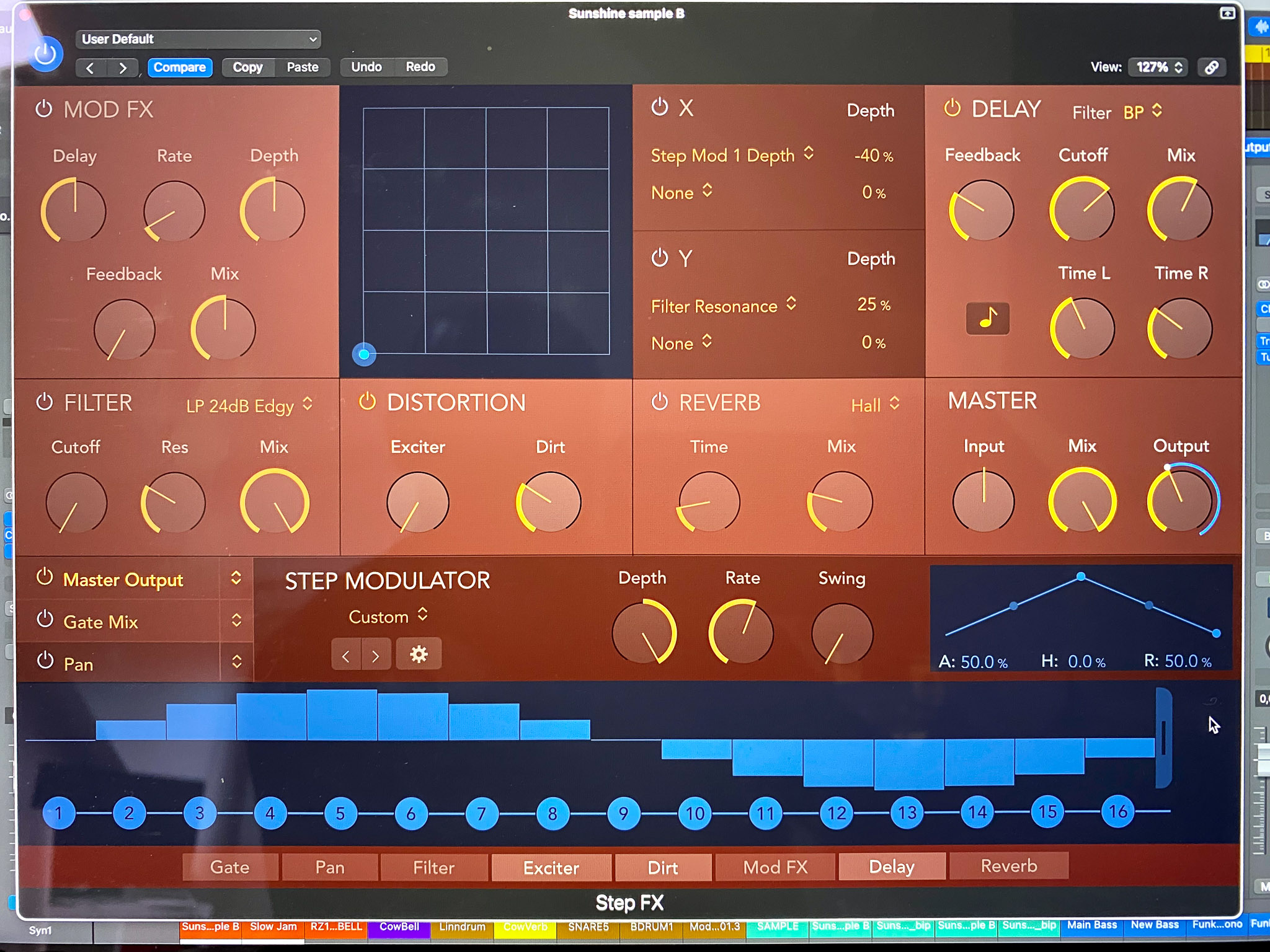
Logic has a Step FX plug-in which I totally dig. Would be cool having complete hardware control over that – a dedicated unit/controller with the same visual layout. I love hardware, so no particular wish for anything to be software. I believe there’s plenty of software solutions out there. 

Logic Step FX plug-in

5. Is there anything you regret selling… or regret buying?

I sold a Roland SH-101 years ago. I would like to have kept it, but then again, I probably wouldn’t use it that much. I bought the microKorg [US. EU] some years ago thinking that it would be a nice travelling companion, but I didn’t really get into it so I sold it again.

6. What gear has inspired you to produce the most music?

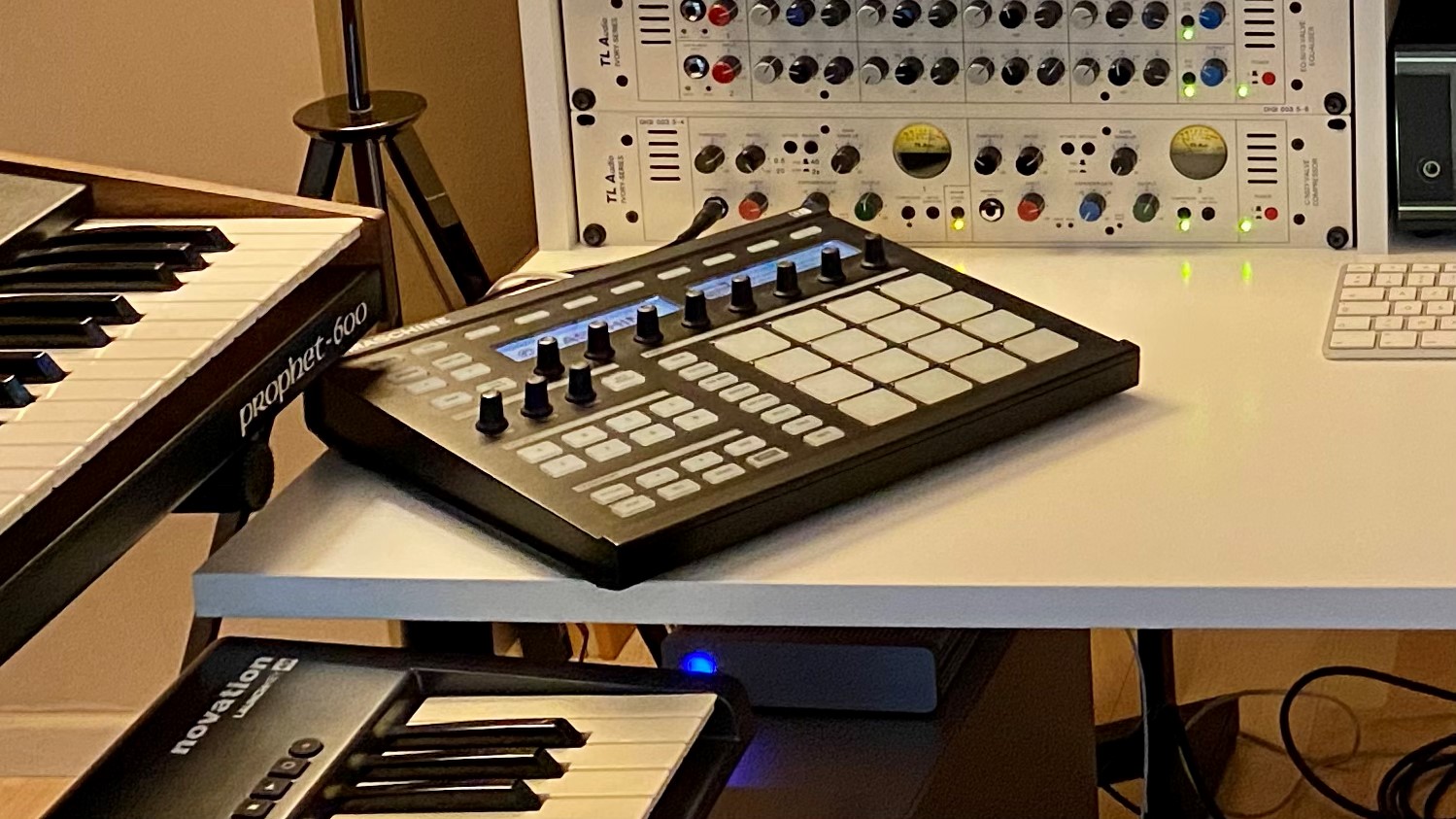
Definitely samplers, I made my entire debut album ‘Keep On Moving’ with a Yamaha A-3000 before DAWs became the norm. Later on I bought the Native Instruments Maschine [US, EU] when it first came out and that was really a boost for me making more sophisticated drum patterns. Recently I have retired the Maschine and turned to Logic’s samplers, especially the Q-sampler chopping up all kinds of audio. Q for Quick, and it certainly is. 

Native Instruments Maschine

7. If you had to start over, what would you get first?

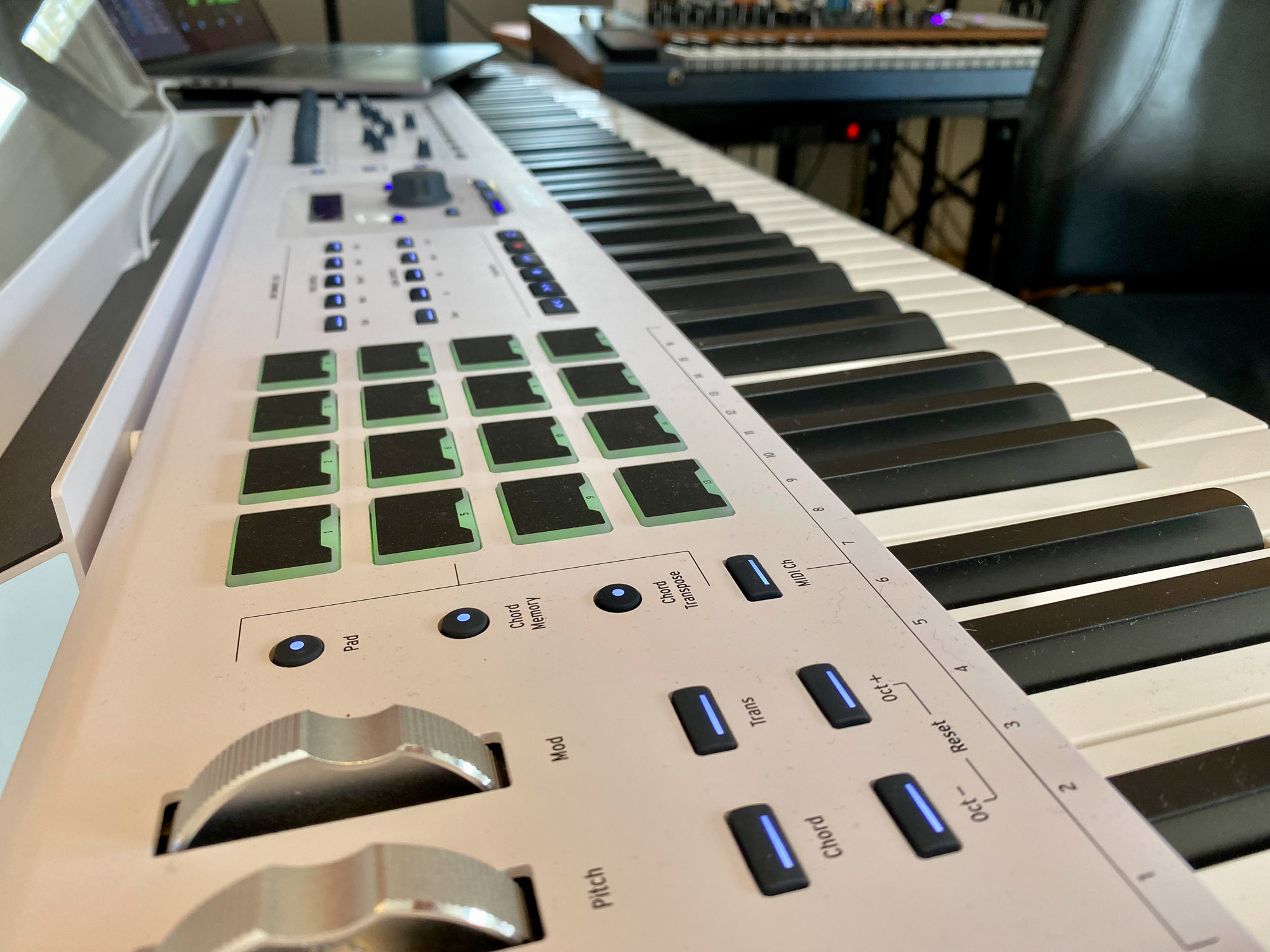
Besides a MacBook Pro running Logic, a high quality MIDI controller keyboard. I recently upgraded to the Arturia Keylab 88 mkII, Arturia Keylab 88 mkII] which is just brilliant.

Arturia Keylab 88 mkII

8. What’s the most annoying piece of gear you have, that you just can’t live without?

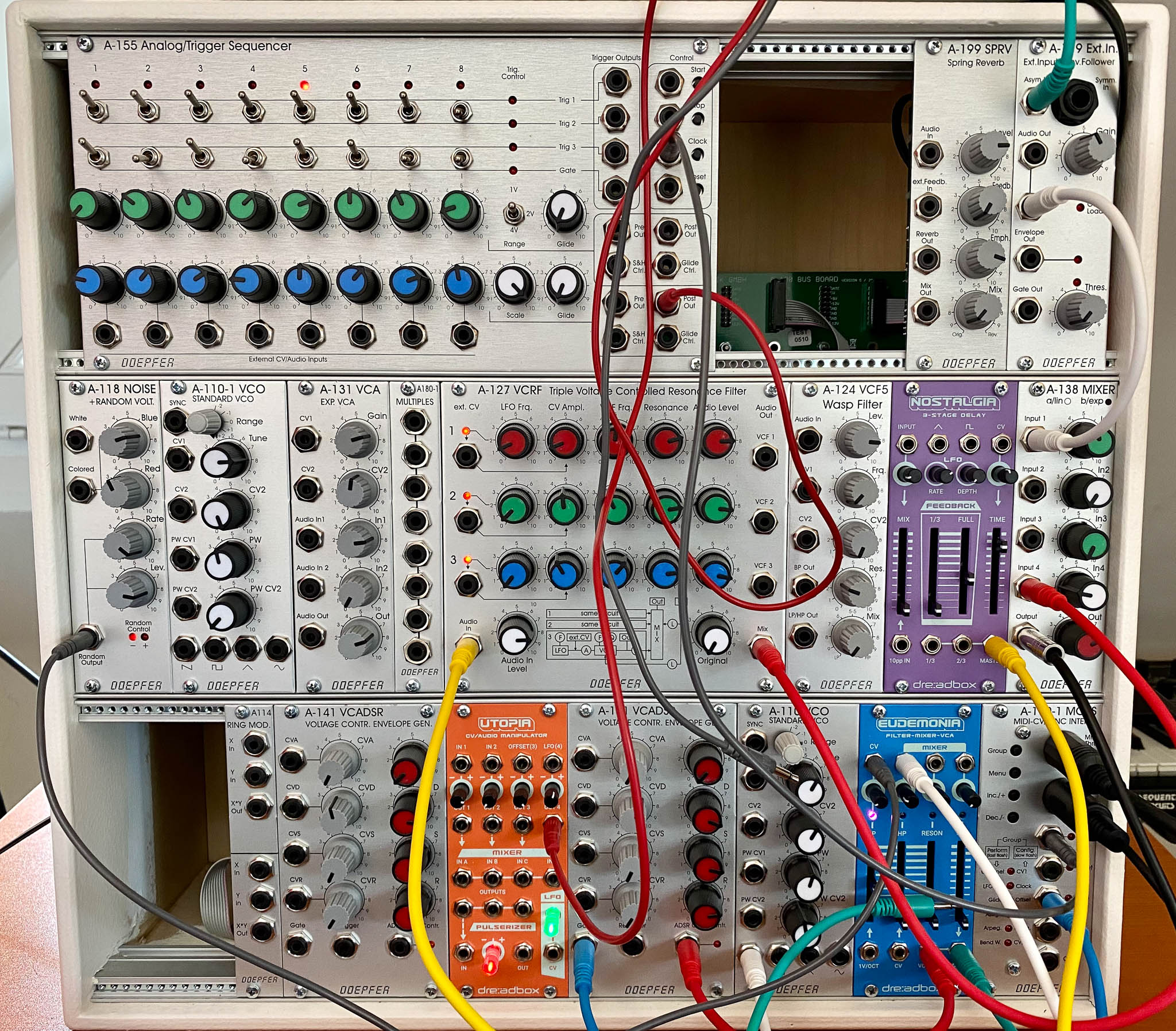
The analogue and modular synths take so much time to patch up, but I really like having hardware synths in my studio. If I get stuck on a project I usually find some inspiration or new ideas in the synths. They’re also the only instruments I know and then just play.

Eurorack square of Doepfer

9. Most surprising tip/trick/technique that you’ve discovered about a bit of kit?

Sending audio through my little modular system for modulating is great fun and often gives surprisingly interesting results. Even with just a few modules a dull audio track can be transformed into something completely different.
Another technique I find interesting is setting up a patch on a hardware synth (preferably mono modular) and the letting Logic’s auto sampler sample it into a polyphonic patch. It usually turns out different than expected.

Analog corner

Artist or Band name?

Funkstar De Luxe

Genre? House / Electronica

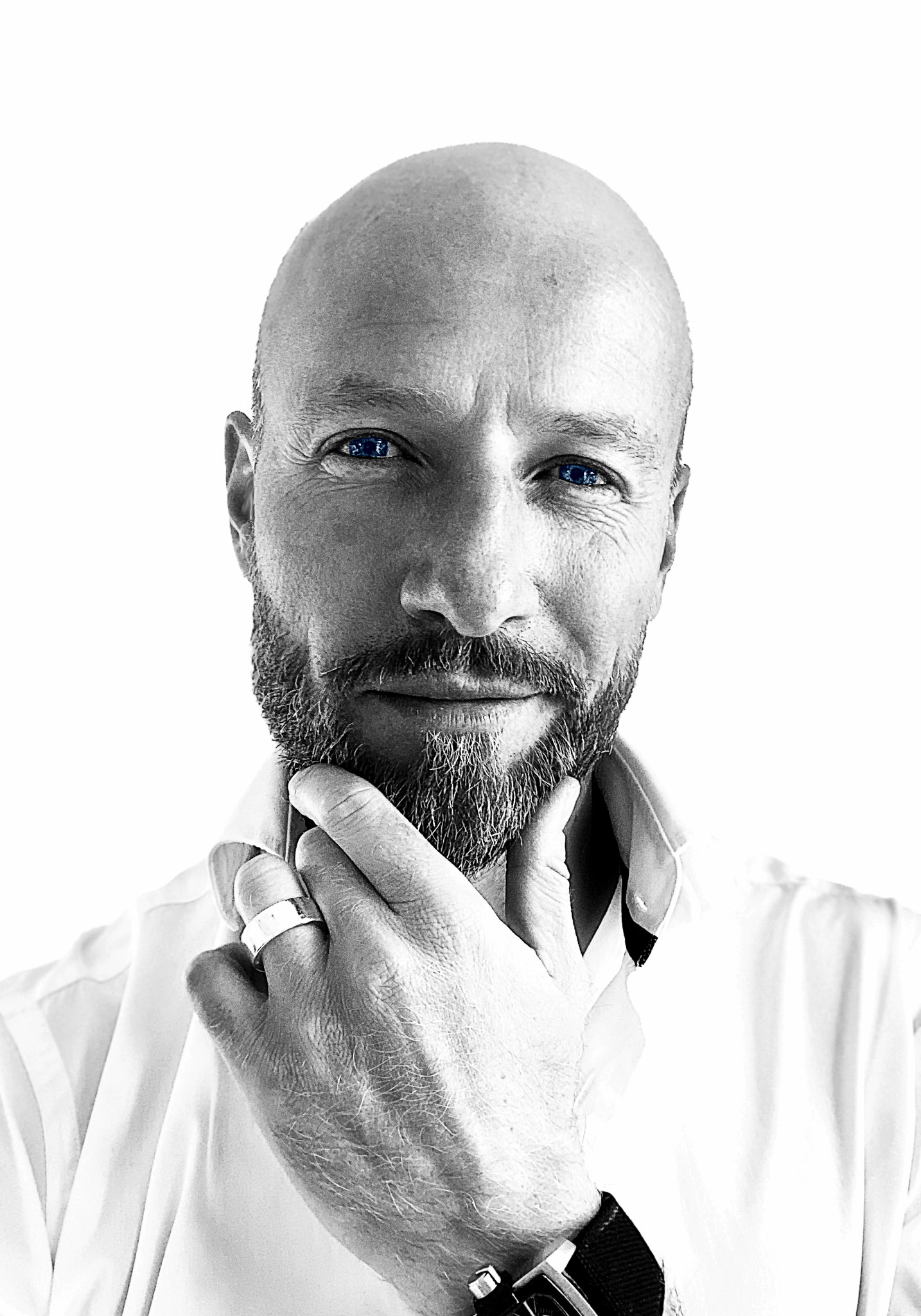
Martin Aulkjaer Ottesen aka. Funkstar De Luxe

Where are you from?

Kerteminde, Denmark

How did you get into music?

My mother was a musician. We had a piano and an electric organ, and I was always fascinated by the knobs and switches on the organ. When I later discovered synthesizers I was hooked and knew that I wanted to get into that. But first my parents arranged for me to get piano lessons.

What still drives you to make music?

Sounds, atmospheres and of course grooves. I find it amazing that you can get so many differents sounds out of even the smallest synth. The big reward for me is when a track really comes together as a unity.

How do you most often start a new track? 

If it’s a remix, I usually start with the bare acapella finding a cool chord progression that fits, then drums and groove. If it’s a track from scratch, I’ll probably program a sound and find some chords or a melody to begin with. Recently I have been getting into just jamming away and see what comes up. That’s a nice contrast to building a track sample by sample in a DAW.

How do you know when a track is finished?

Most often I cycle between mixing and adding new elements but I try not to put too many layers in a production. It’s better having a few that really work, also in order give those layers more room to live in. When everything comes together the right way it just sounds finished.

Show us your current studio

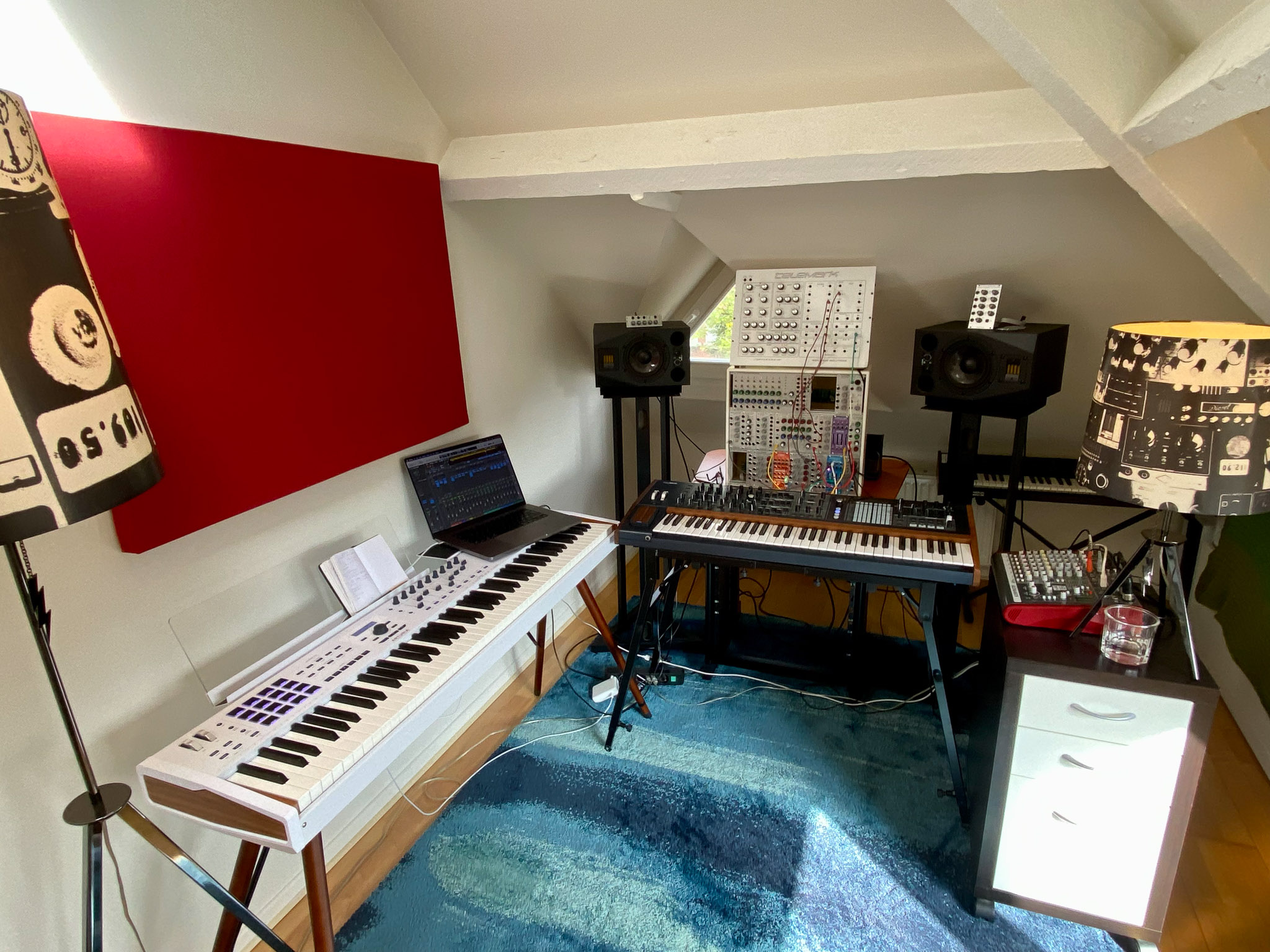
I used to sit in the garage of the house but due to flooding in 2021 I have moved to the attic. I have a minimal setup at the moment but a few pieces of good gear definitely goes a long way.

Home studio – movin’ up in the house to the attic

Best creative advice that you’ve ever heard?

Limit your options. If you have a studio full of gear and so many possibilities it might be hard getting anything done. Pick a few pieces of gear and see how far you can go with that. Once you have an idea or direction, you can always use other gear if you are looking for a specific sound or effect. The same goes for software. See how far you can get with just a handful of plug-ins.

Promote your latest thing… Go ahead, throw us a link.

My album Redemption (out on 21 Oct. 2022) is quite different from my dance remixes. This is more melodic and electronic sounding, not specifically aimed at dancefloors. It’s been very refreshing doing a whole album giving room to different kinds of expression, definitely a very personal piece of work: https://funkstar.lnk.to/album


[Editor: There are affiliate links to the relevant gear throughout the articles. It helps to support this blog. In fact, should you be needing some patch cables or guitar strings. Then clicking on one of the above links and buying any product that you prefer, will help the blog… doesn’t even have to be the ones in the link. Thx]

Stefan Tretau – St Modular

1. Favourite knob or fader or switch on a piece of gear and why?

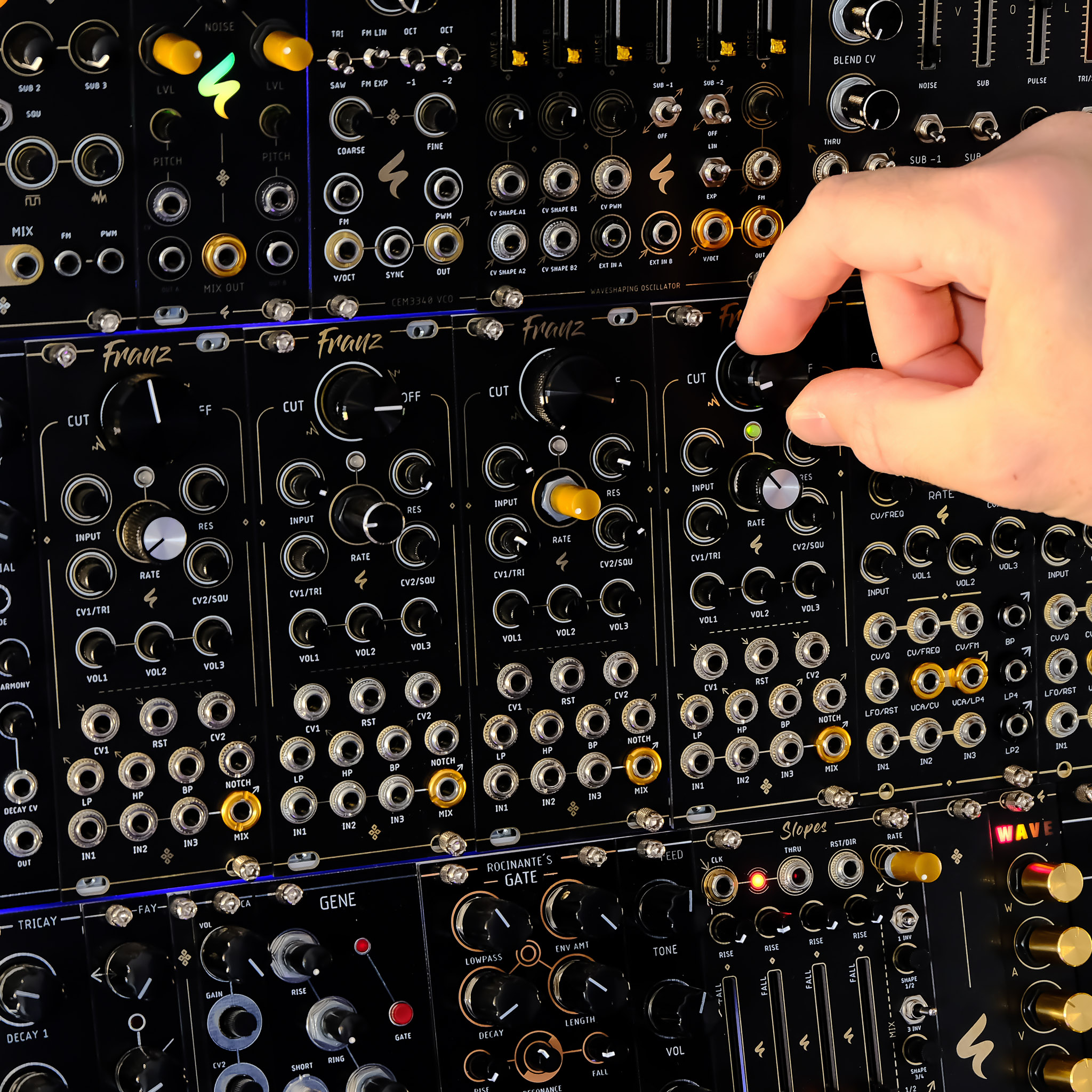
Lots of Freq Knobs

First of all, I love every cutoff control. It is just such a powerful and enjoyable part of subtractive synthesis, that it will always be my first and preferred choice when looking for a knob to turn.

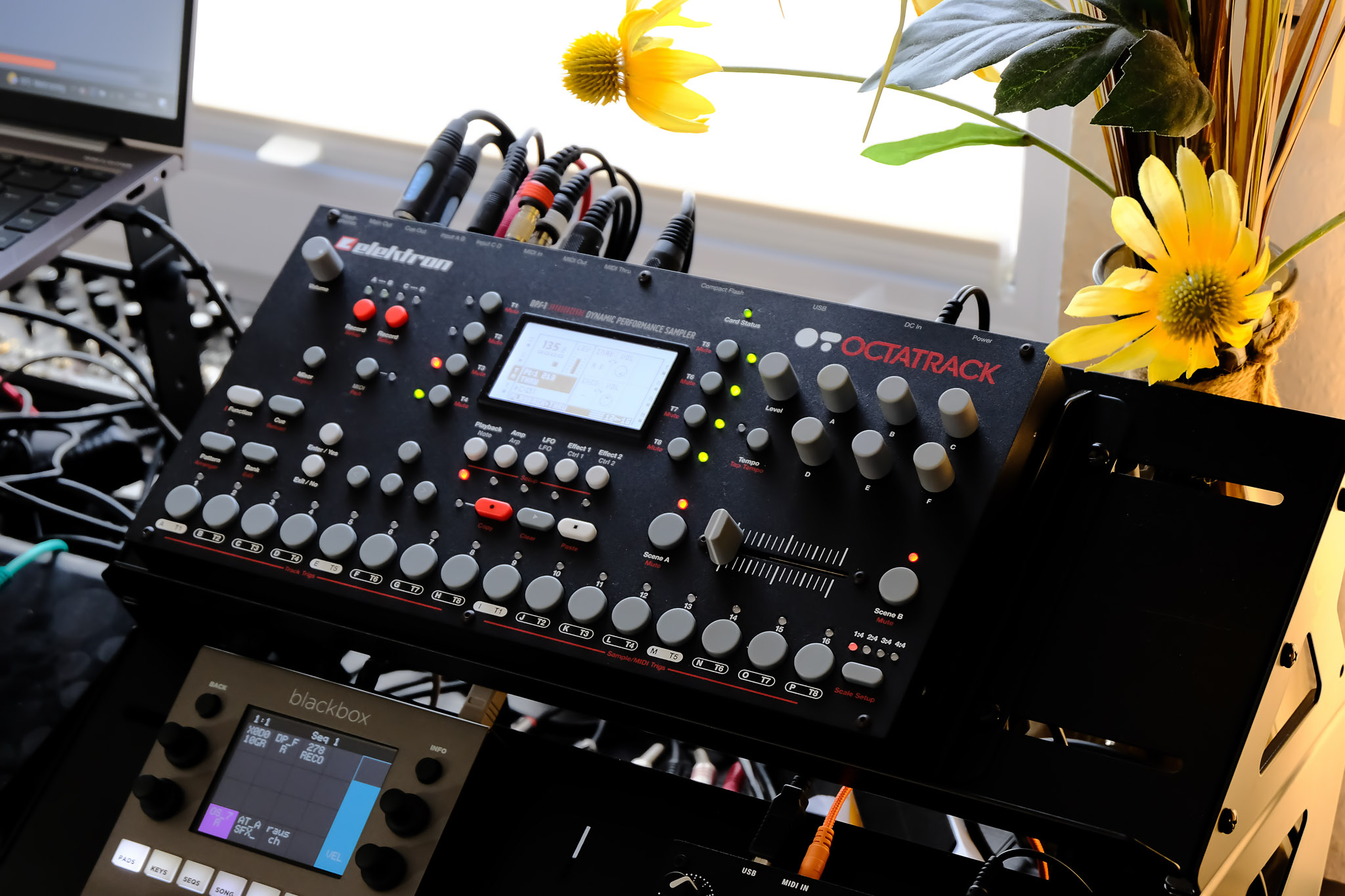
Elektron Octatrack

Second, the Elektron Octatrack fader is definitely one of the most powerful controls for a wide range of parameters, be it effects or sample processing. The possibilities are endless and its so easy to use.

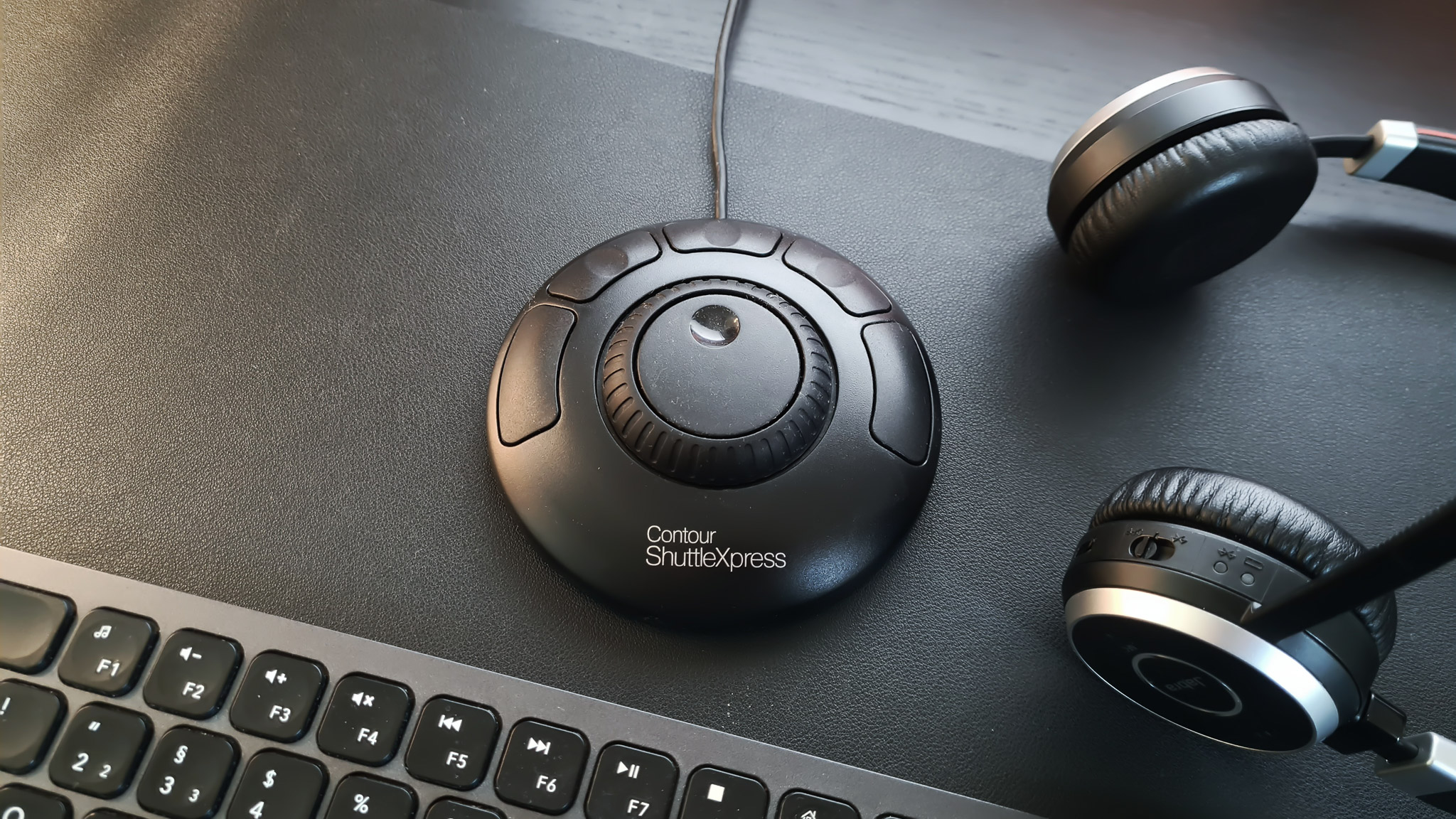
Contour – Shuttle Express

Last, but not least, I bought a multimedia editor controller called “Contour – Shuttle Express” that allows me to create shortcuts for certain functions in the Eagle CAD program, which I use to design circuit boards. This has drastically improved my efficiency and speed when designing PCBs.

2. Do you have an ‘almost’ perfect bit of kit? What would you change?

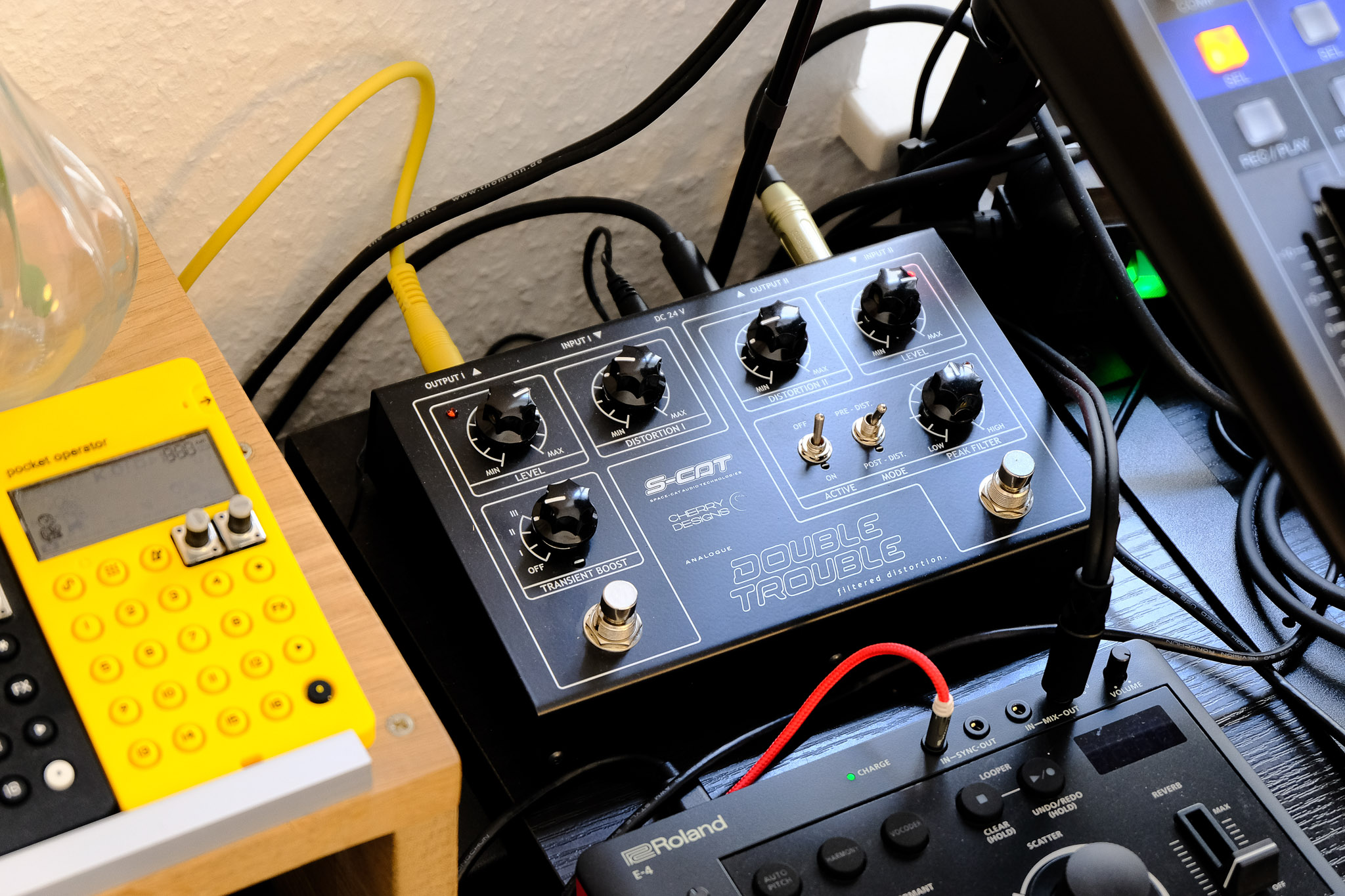
S-CAT Double-Trouble Dual Filtered Distortion

I recently bought the S-CAT Double-Trouble Dual Filtered Distortion and I would immediately call it a perfect device. It has two channels, one optimized for synths and one for drums, and sounds delicious. I started to used it with the Roland TR8-S and the Behringer TD-3-MO and immediately went into an acid-frenzy. Here’s a video snippet where I also used it with the little Roland T-8 Aira compact groovebox.

Fun thing! :-

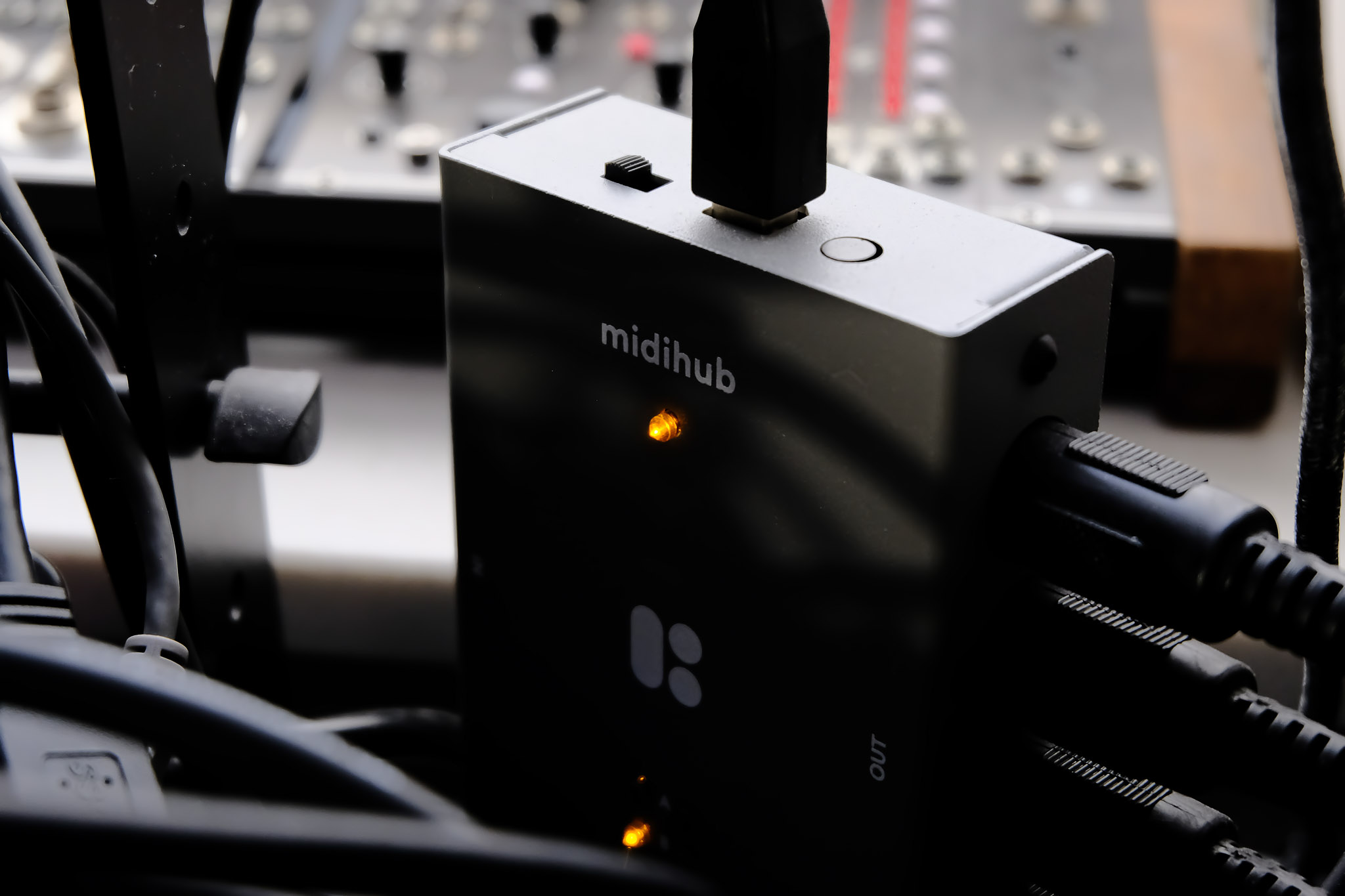
Blokas Midihub

Also worth mentioning is the Blokas Midihub, an interface and standalone MIDI processor that is as flexible as a midi interface can get. With the included editor, you can configure every midi setting imaginable. The only improvement would be a larger version with at least 8 channels.
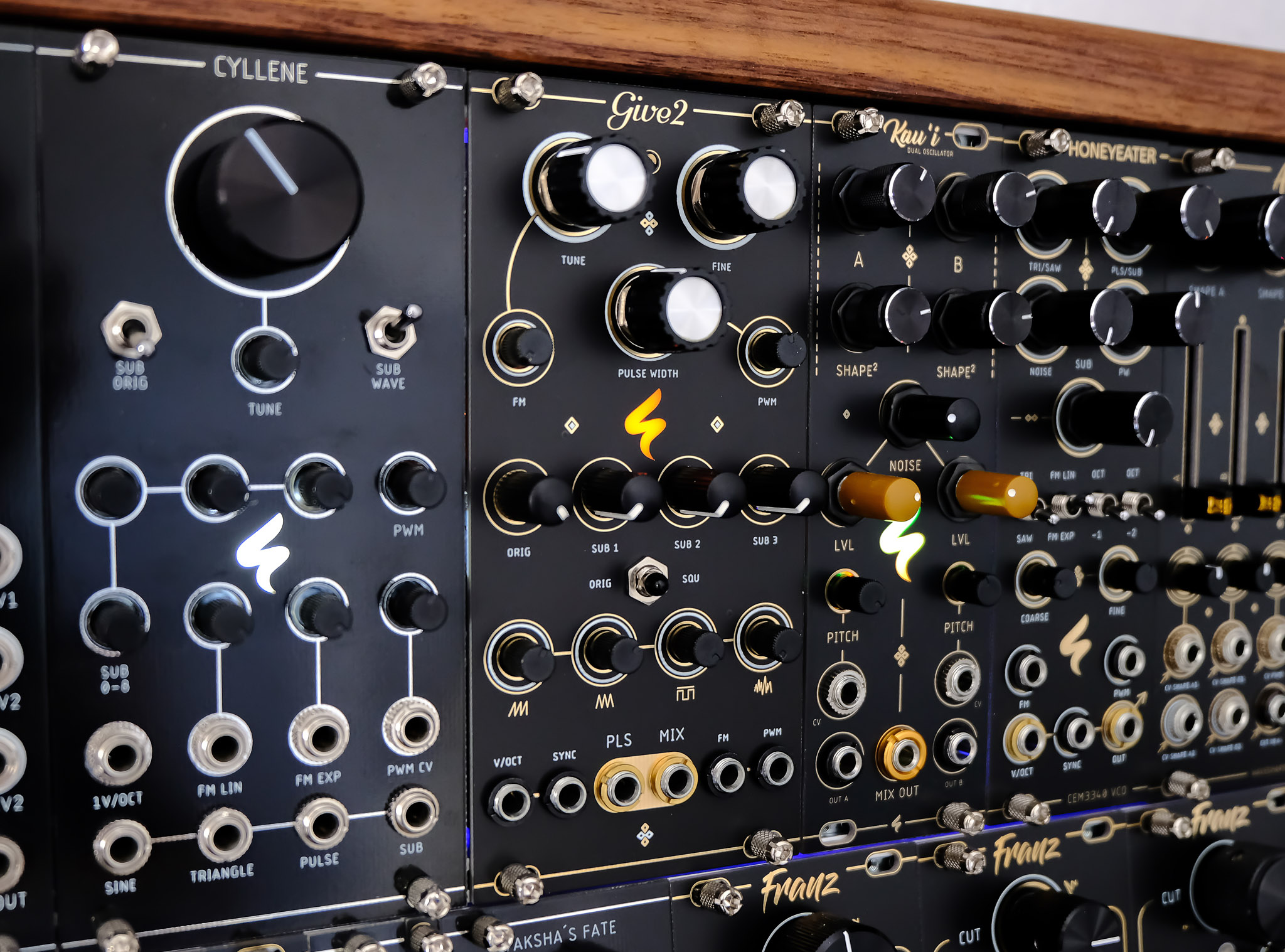
Finally, the “GIVE2“ Oscillator I designed is still my favorite and I use it in almost every single patch. The only thing I would change in a future version would be to add faders instead of knobs and VCAs for each waveform at the mix output.

GIVE2 oscillator

3. What setup do you bring on holiday or tour or commute etc.?

A couple of years ago I put together a small Eurorack case that would somehow eliminate my GAS for the Buchla Music Easel (I named it “Euro Easel” ;-} ). It’s a small case with quite some limitations, but it has just the right modules to create very interesting sounds…. and it worked, I haven’t bought the Easel yet 🙂 It’s my travel case that I choose to take on vacation. You can find some videos about it here.

Takin’ it Easel

If I can’t take the travel case with me, I like to use an iPad or the three Aira Compact Grooveboxes, which are definitely fun.

4. What software do you wish was hardware and vice versa?

There are many multi fx vsts available, but there are just few ways to add multi fx with a hardware device that is not a pedal. I currently use the Octatrack to add effects to the main output. But I would like to have a device that looks like one of the Pioneer FX series units and has a functionality like Sugar Bytes Turnado VST, Fabfilter Effects VST or the Ozone Mastering Tools – and nothing less 😉

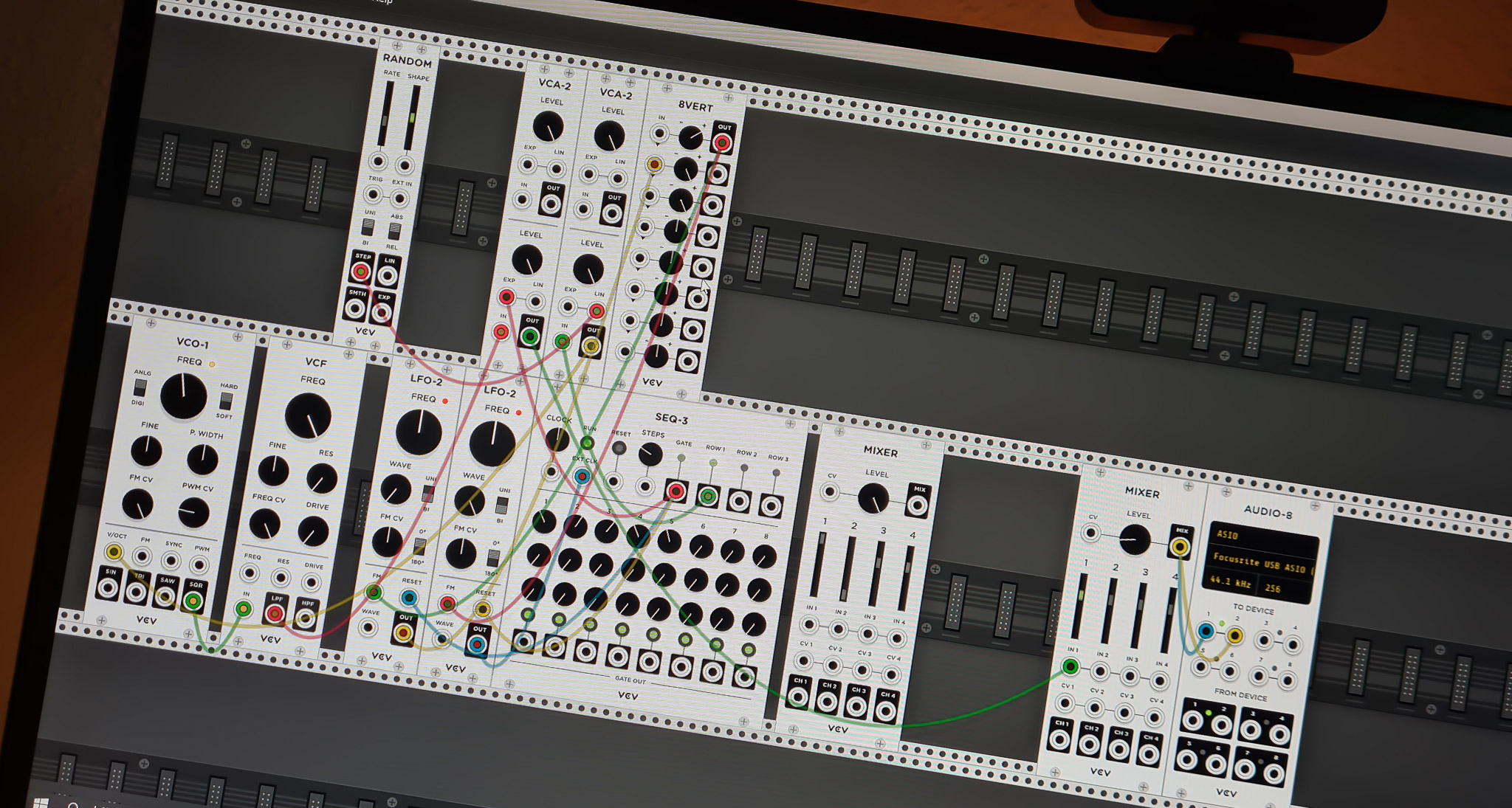
VCV Rack

If VCV Rack didn’t already exist, I would want to see some sort of modular software to test and review modules. Fortunately, VCV Rack is already the perfect solution for that. It has helped me to come up with new module designs that combine various module functions into one unit. In VCV Rack I tested their practical application in advance before writing schematics and making prototypes.

I can’t think of any other hardware that I would like to see as a software solution.

5. Is there anything you regret selling… or regret buying?

I wish I still had my Korg Electribe R and the Clavia Nord Micro Modular. They were way ahead of their time and I really enjoyed using them.

These were some of the last sounds I made with the Micro Modular, and it breaks my heart not to have it on my desk today.
There are some modules I bought that I didn’t keep for long. But the list would be too long to mention them here.

As for my designs, there are a few modules I have published that I regret creating.
Mostly because my design skills have improved and I wouldn’t design them the way they used to be published. But I won’t tell you which ones they are 🙂

6. What gear has inspired you to produce the most music?

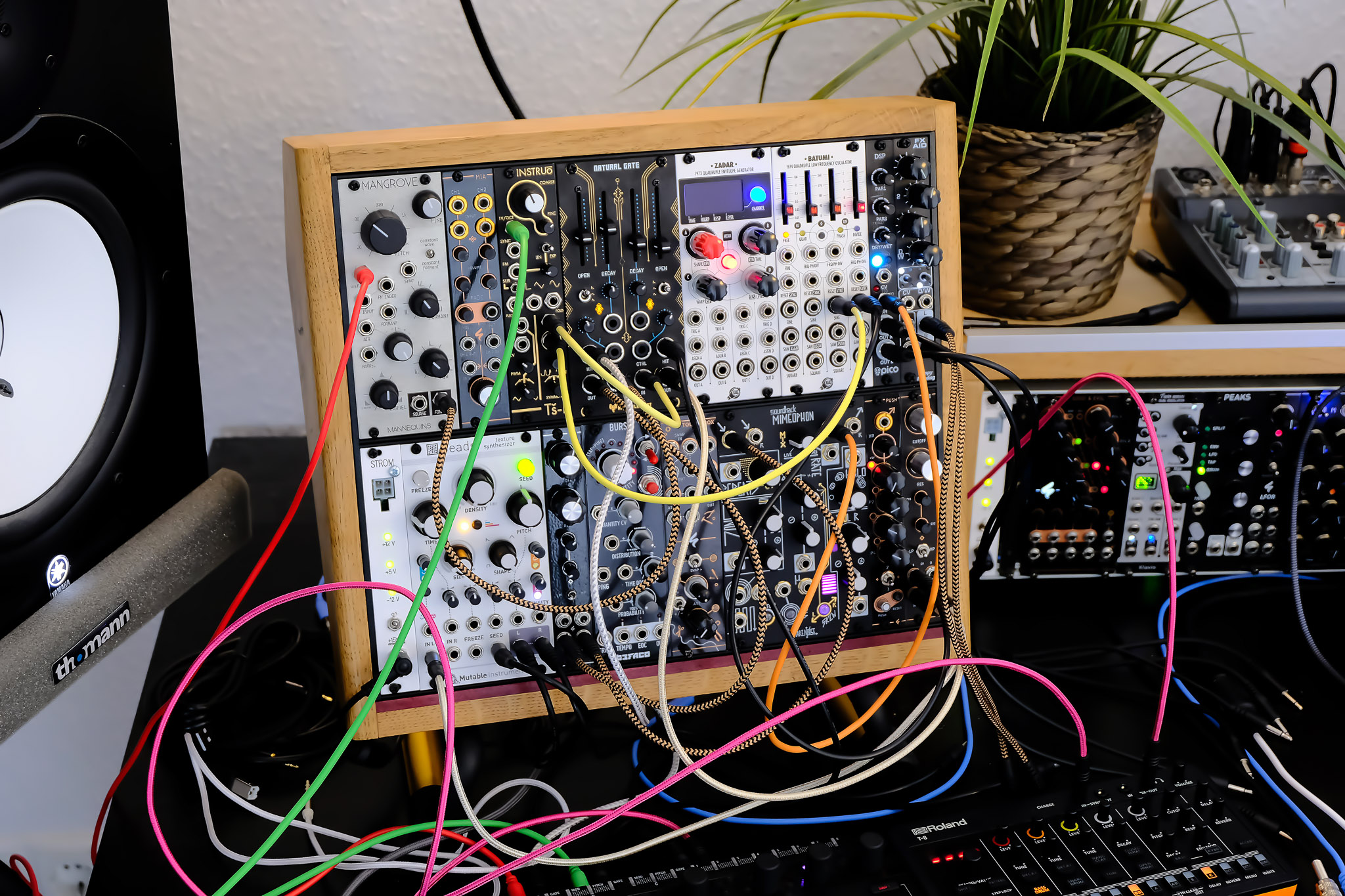
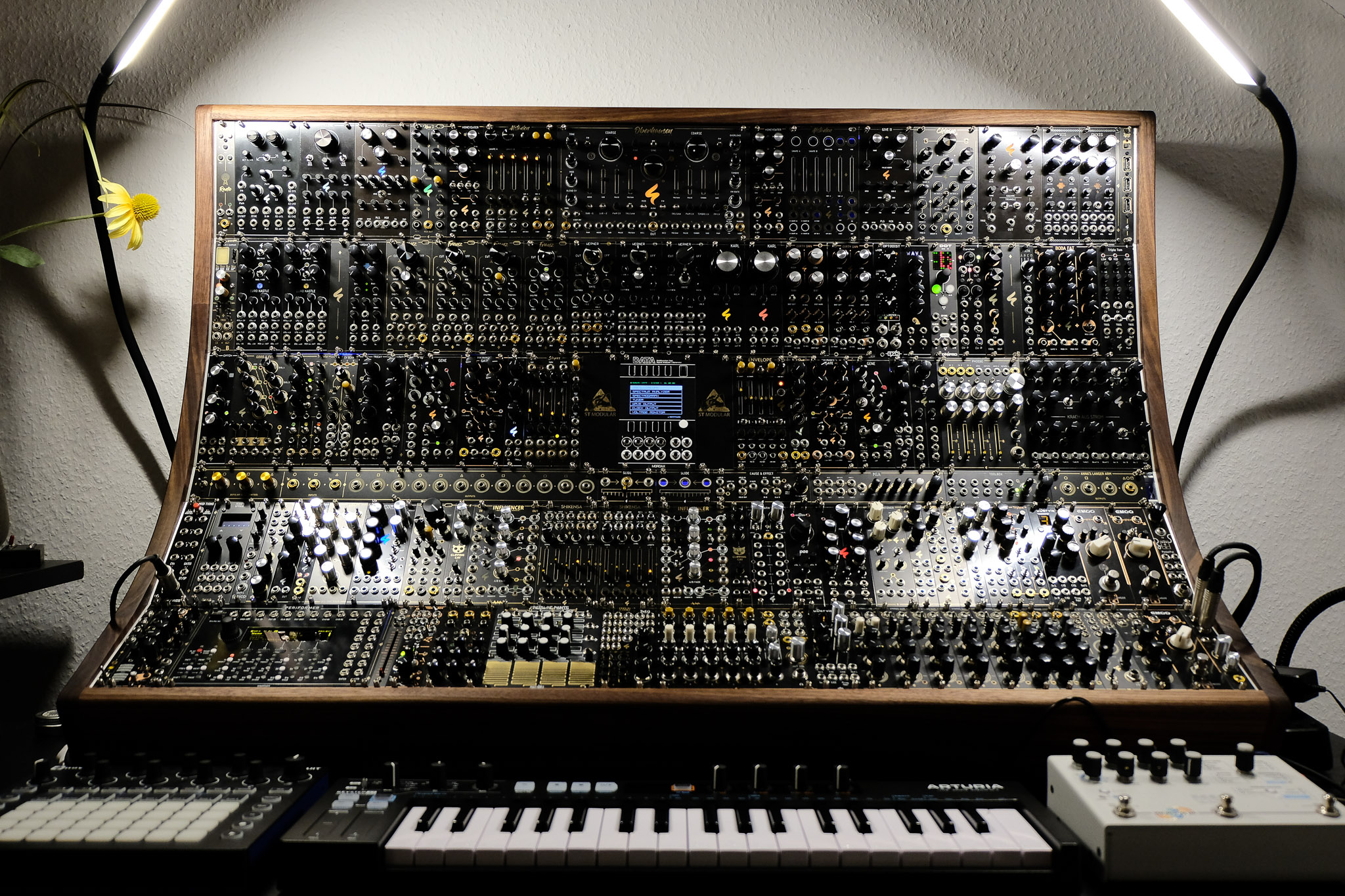
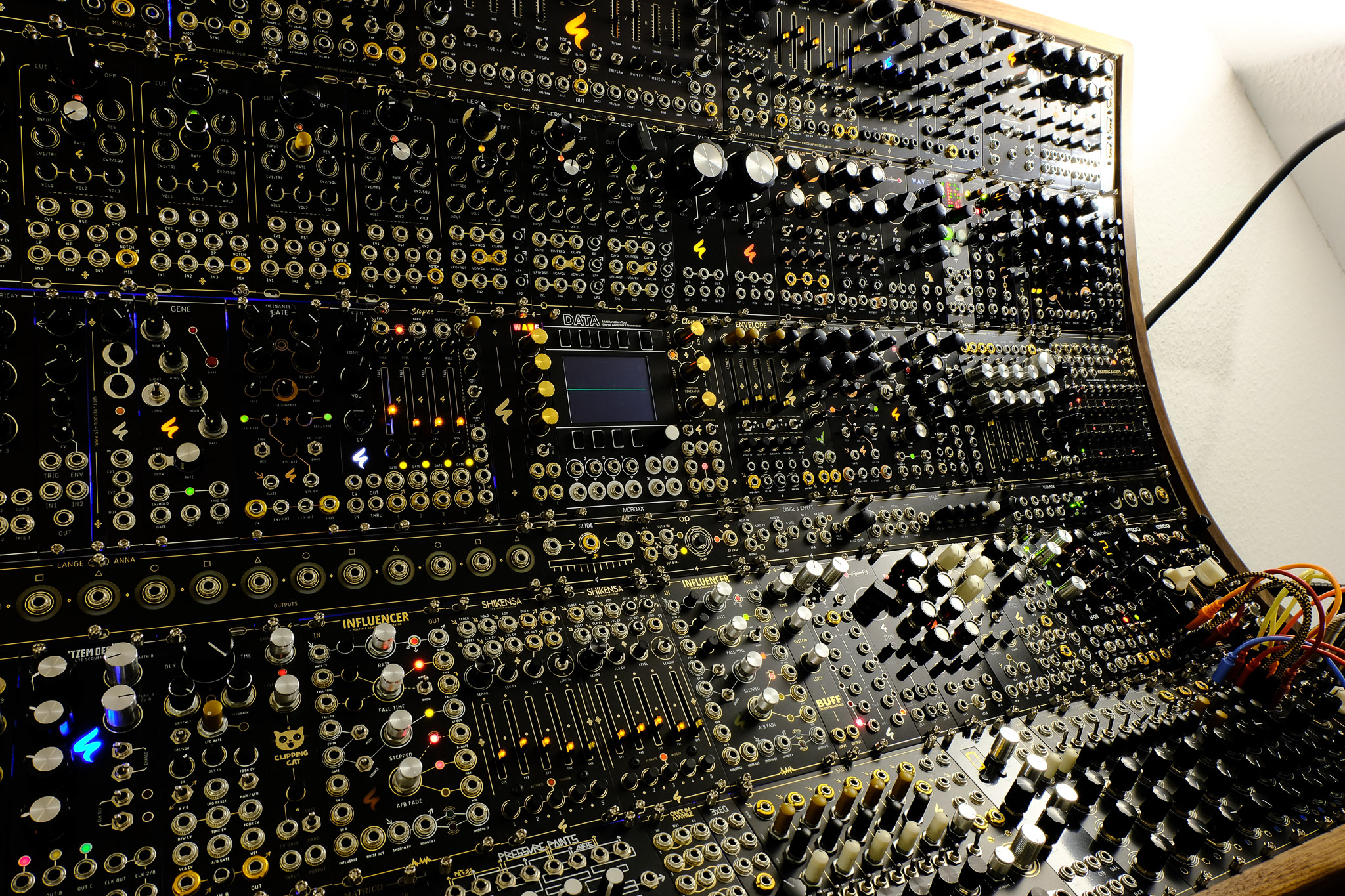
The ST Modular Beast

Definitely my modular. Especially the last album „Ostinato Modulare“, released in 2020, is strongly inspired by modular synthesis. But also other releases have their origin in melodies and sequences I created on my modular system.

A little close on the ST Modular Beast

Also worth mentioning is the “Mopho“ from Dave Smith Instruments, which I used very often in the past. It’s such a great sounding and powerful little instrument when used with a software editor.

Little Mopho hiding there

I also often used the Korg Gadget iOS app to sketch out ideas that eventually found their way into a final track.

7. If you had to start over, what would you get first?

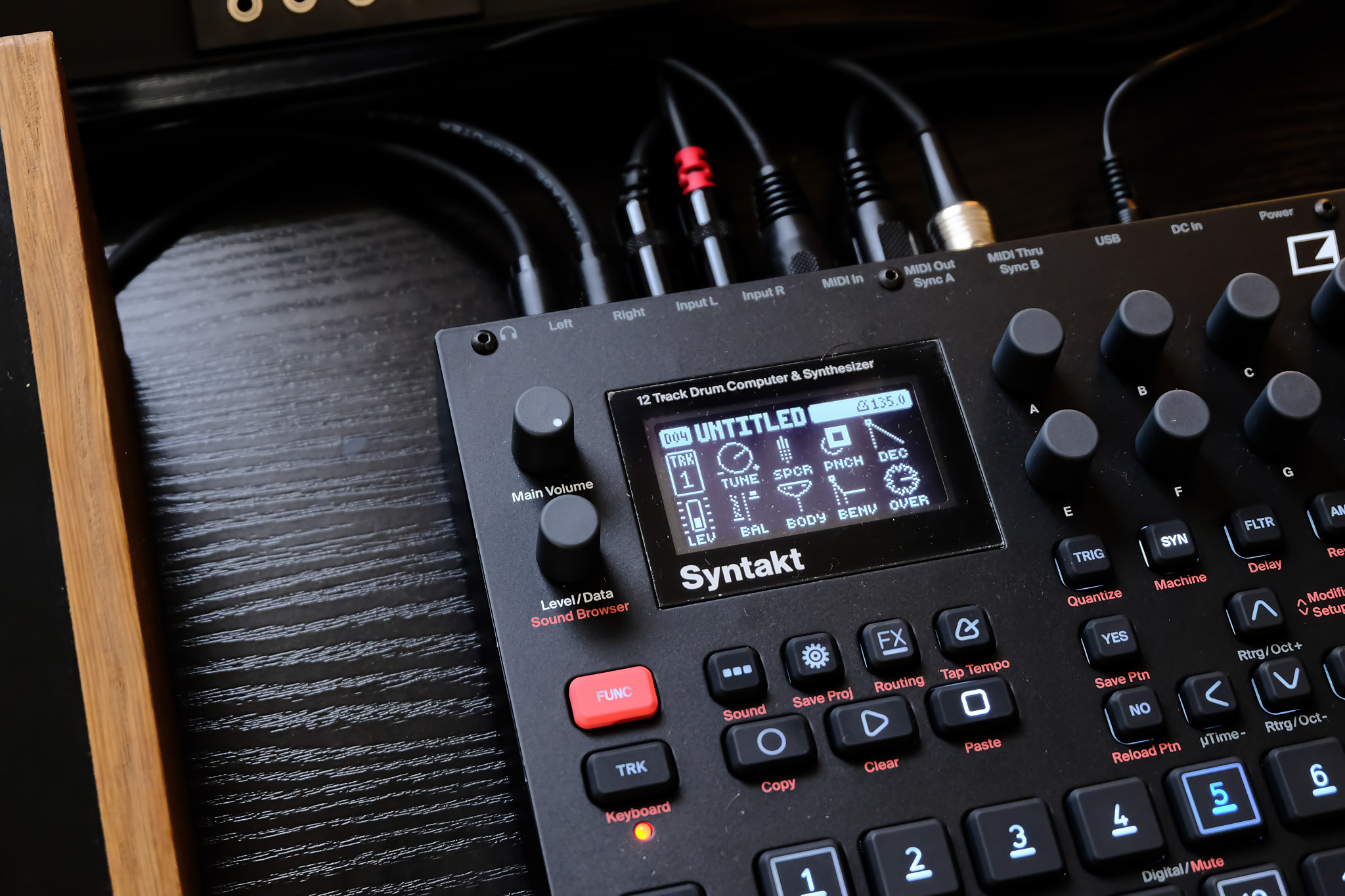
Any Groovebox (Syntakt, Roland TR8-S, or Roland MC707 or similar)

Elektron Syntakt

8. What’s the most annoying piece of gear you have, that you just can’t live without?

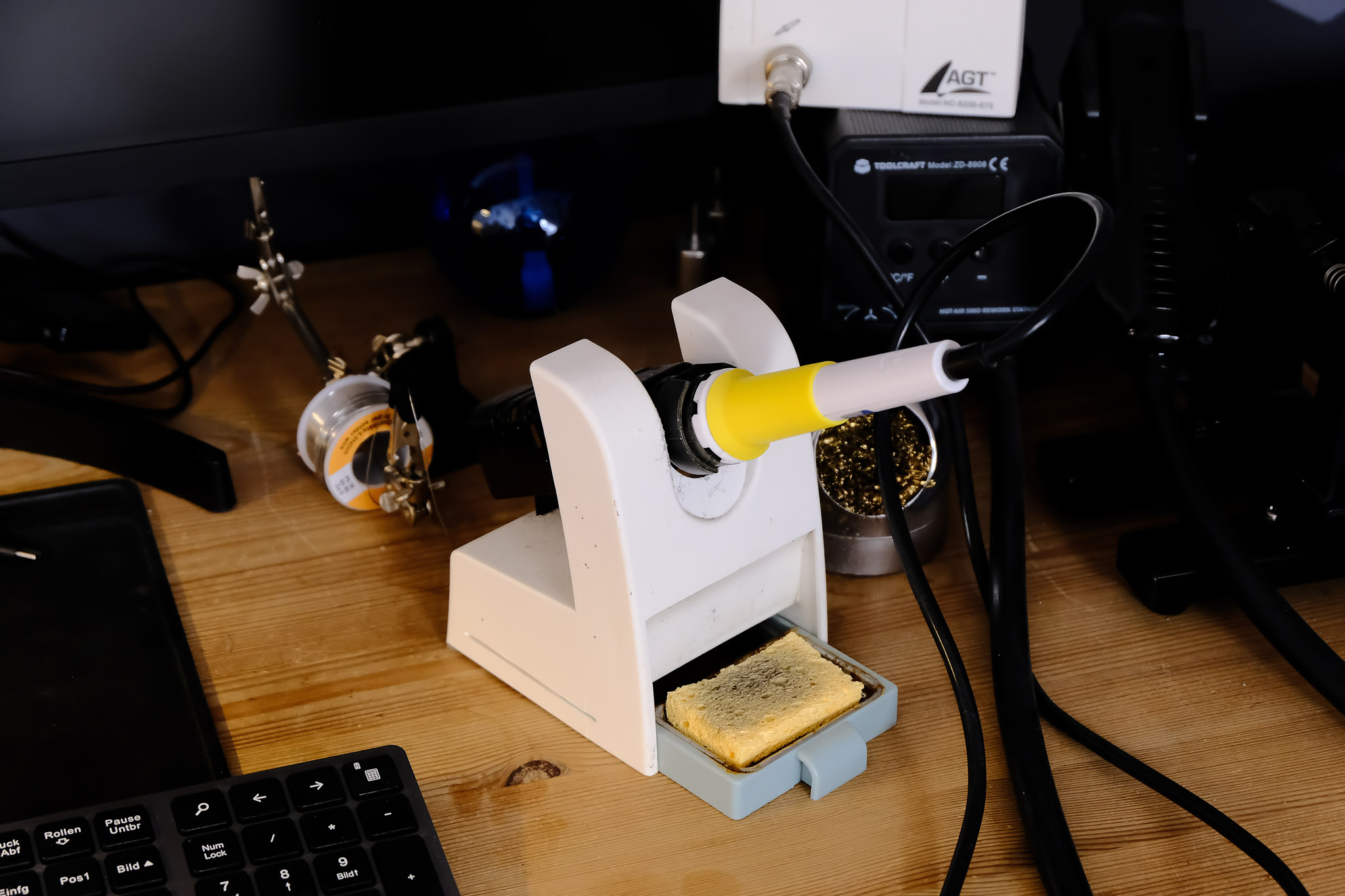
My soldering iron! I used to love soldering and enjoyed that deep yoga-like relaxation of soldering in repetition and deep concentration. But the solder fumes and flux residue, the time it takes me to solder prototypes and troubleshoot, and the fact that my body doesn’t like sitting in one position for long periods of time are increasingly annoying me.

Soldering iron

9. Most surprising tip or trick or technique that you’ve discovered about a bit of kit?

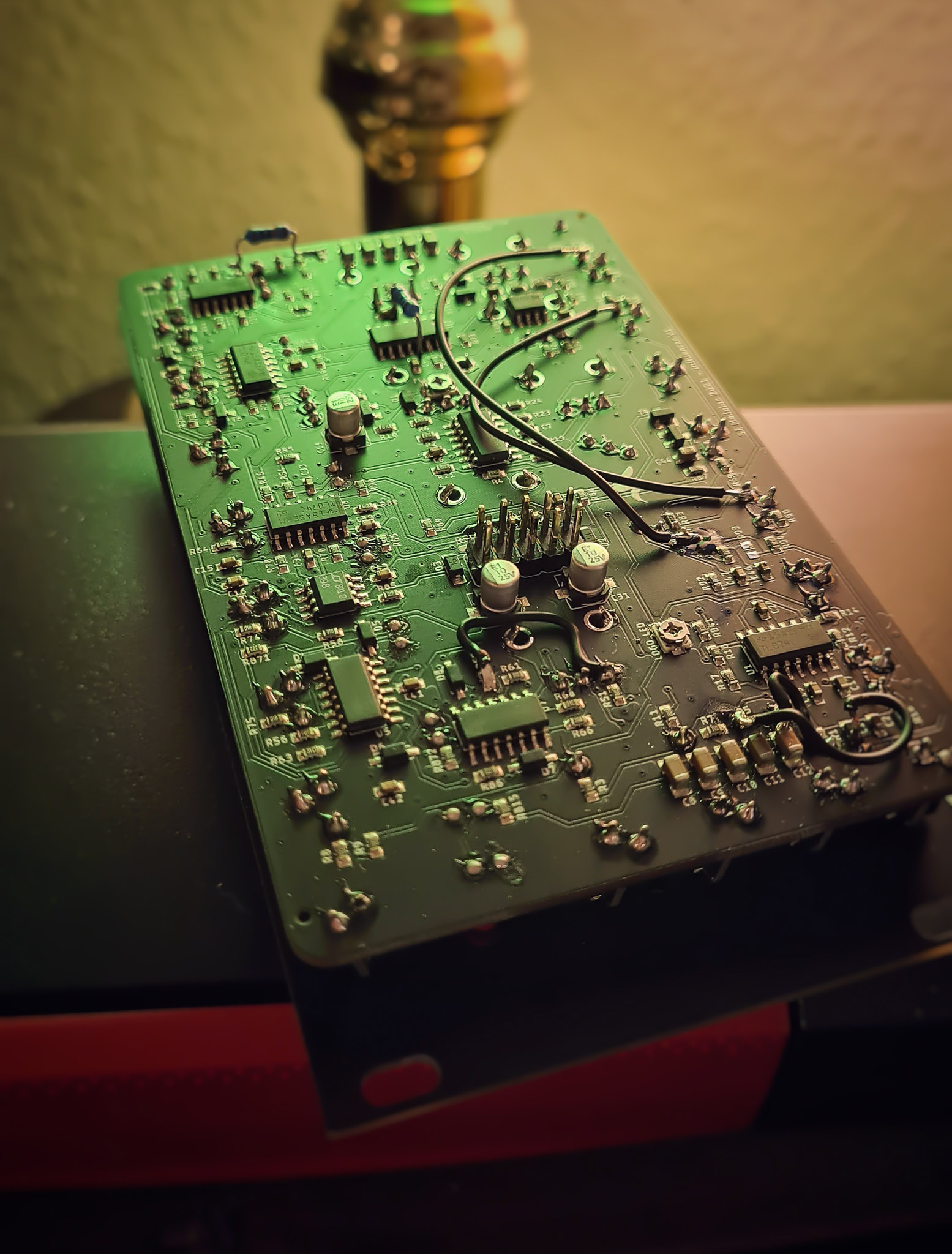
PCB

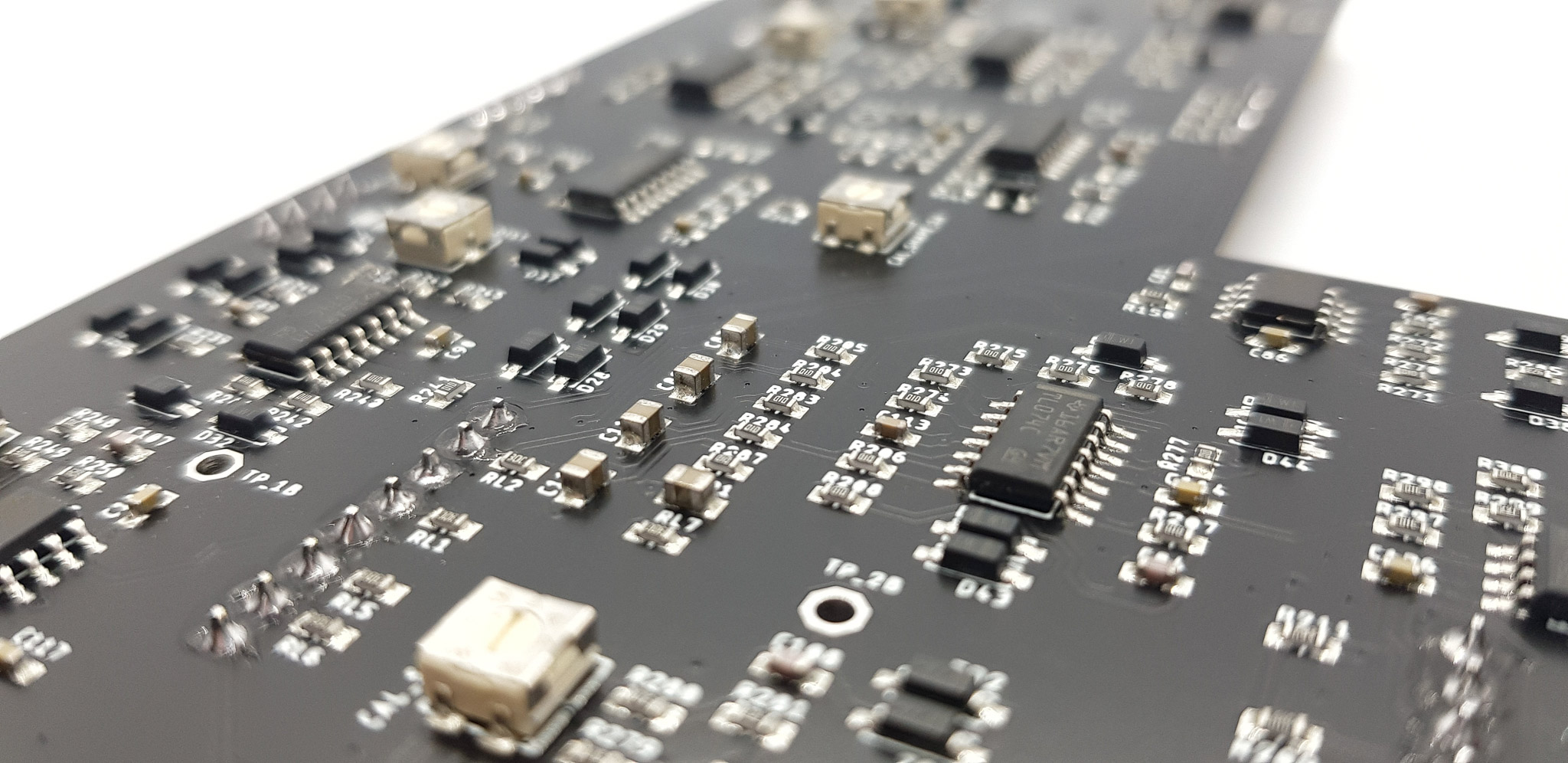
I would like to mention the moment when I found out how easy it is to order ready soldered PCBs. I used to solder all SMD components myself and at some point decided to use PCB assembly for prototyping. This dramatically increased the speed at which I could work on my PCB designs. That was both a surprise and a relief.

Closer to the PCB

Apart from that, almost every single unit has some “hidden” features that surprise me – like the ducking functionality with the FX tracks on the Syntakt, the control-all functionality on most Elektron units, or the way you arrange effects in scenes on the Octatrack.

Also, a modular system is an endless source of “happy little accidents,” as Bob Ross would say. There are so many different techniques to use CV. Every time I patch, I’m surprised how musical challenges can be solved with modular control voltages. I remember being overwhelmed by the possibilities offered by a single function generator. Depending on the patching technique you can use it as an oscillator, a filter, a distortion and an envelope with sustain stage.

Not what you think of when you see a module like this, is it?

A single module can be a world in itself, spreading its CV tentacles into an endless modular universe full of surprises.


Artist or Band name?

Stefan Tretau / ST Modular / ST Records

Genre?

From Ambient to Techno

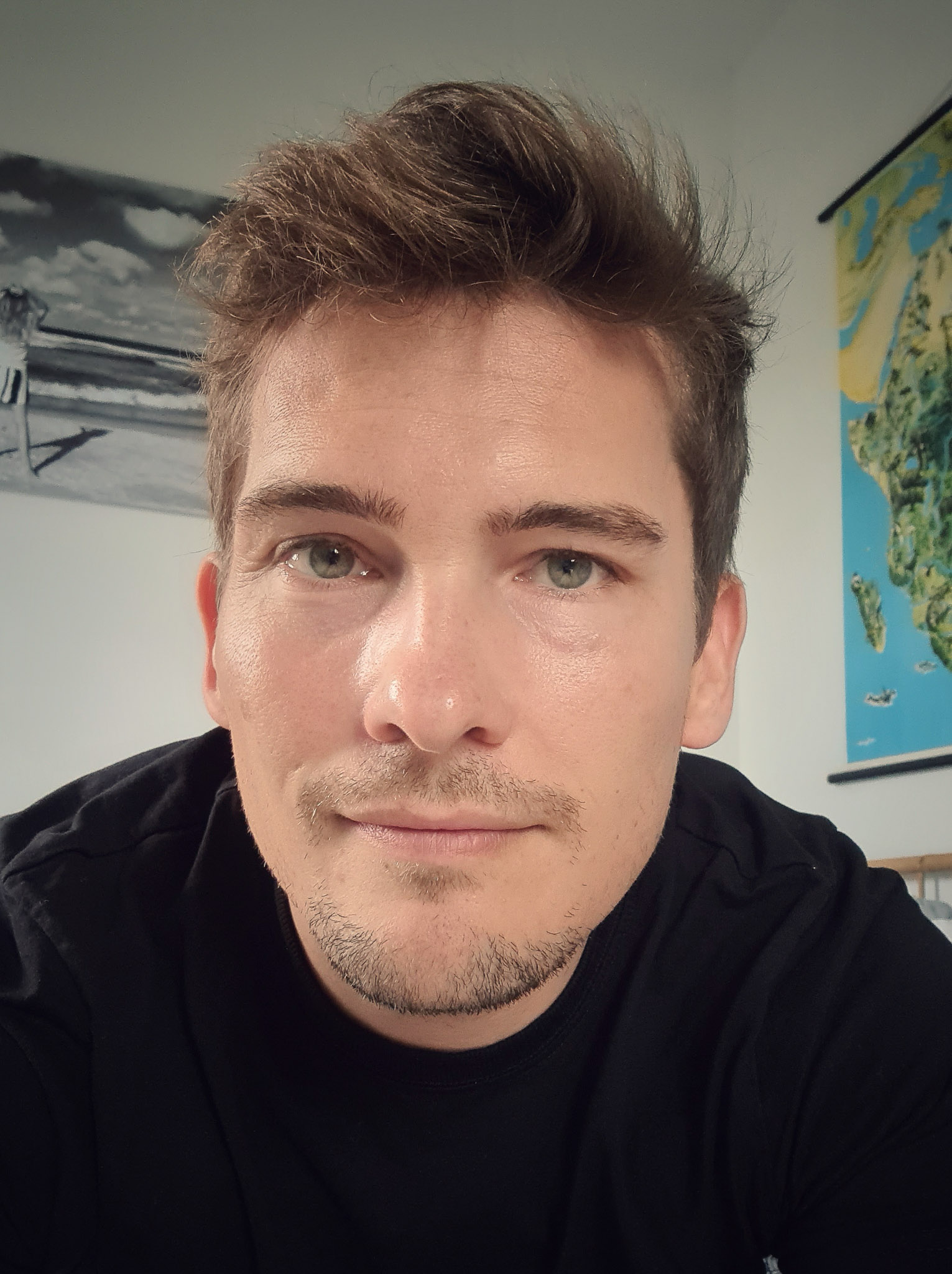
Selfie?

Stefan Tretau

Where are you from?

Oberhausen, Germany

How did you get into music?

Well, it’s not the piano and guitar lessons I used to get, but it was actually a friend’s Roland MC- 303 that I was lucky enough to use in 1999. That was my rabbit hole that I never got out of.
Shortly after that we bought a Roland MC-307, a Future Retro 777, a TB-303, a Micro Modular and a Jomox Xbase 09 and we started playing acid live acts as Complexx303“ in the early 2000s. Some time later it was just a small step to jump into the Eurorack universe. I bought my first Eurorack modules in 2016.

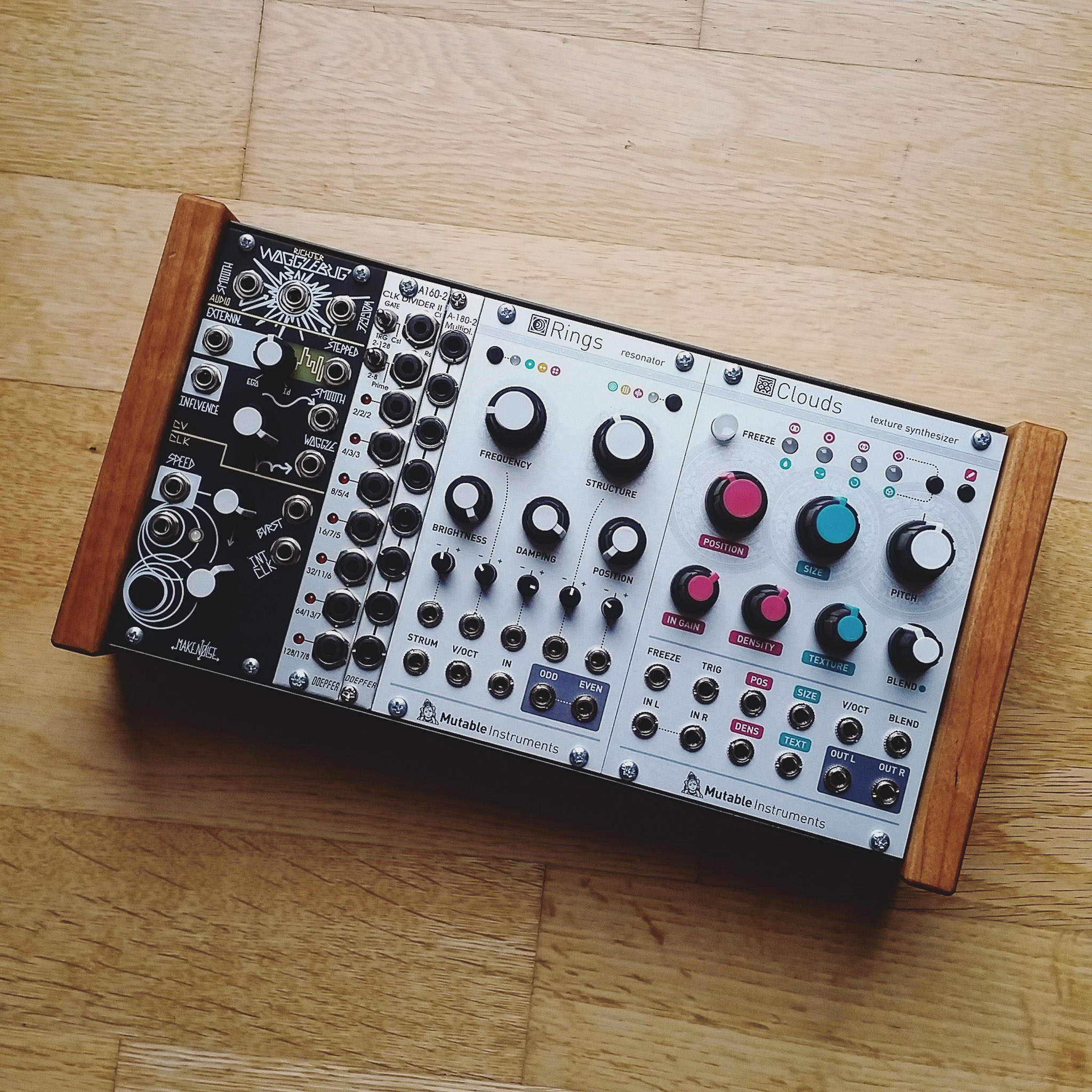
Stefan’s first eurorack case

ST Modular also started with a little push from a friend. He showed me how to build a Schmitt- Trigger oscillator, and I couldn’t believe how easy it was to recreate it on a breadboard. That was the second rabbit hole that somehow replaced the synthesizer-hole for some time. So instead of making music, I breadboarded, read books, created magic smoke, and eventually designed a desktop synthesizer, effects pedals, and a first Eurorack module, a passive mult.

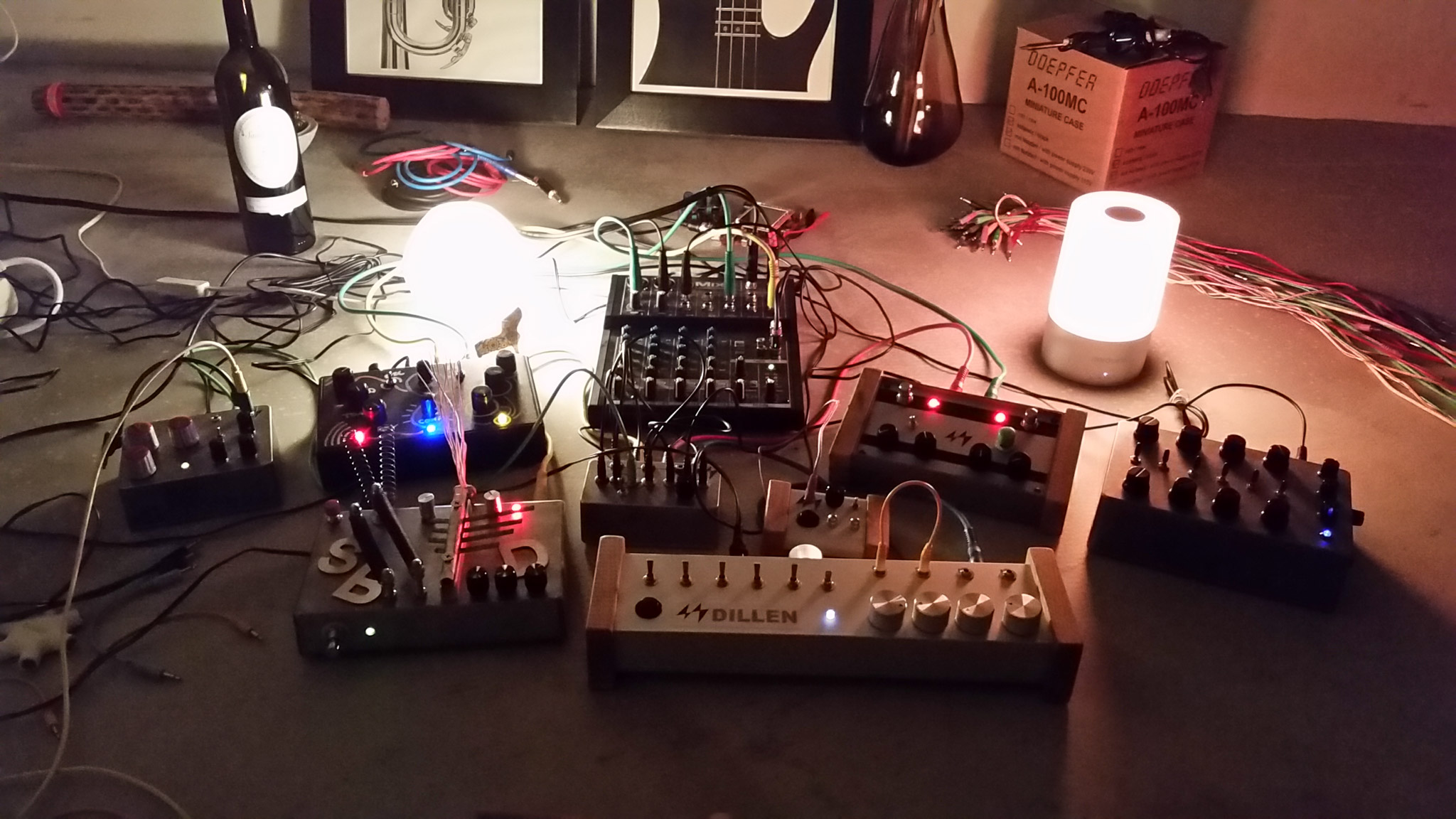
Live synth setup

However, before I got into Eurorack designs, I focused on pedal and synthesizer designs. In the video linked here, you can see how I create all sorts of noises with these DIY boxes. You can also see a first logo design there, which is the predecessor of the current ST Modular logo.

Now that I had a foot in the door I could not resist to deal further with concepts and circuit diagrams and spent whole weekends researching on the internet and watching youtube tutorials.

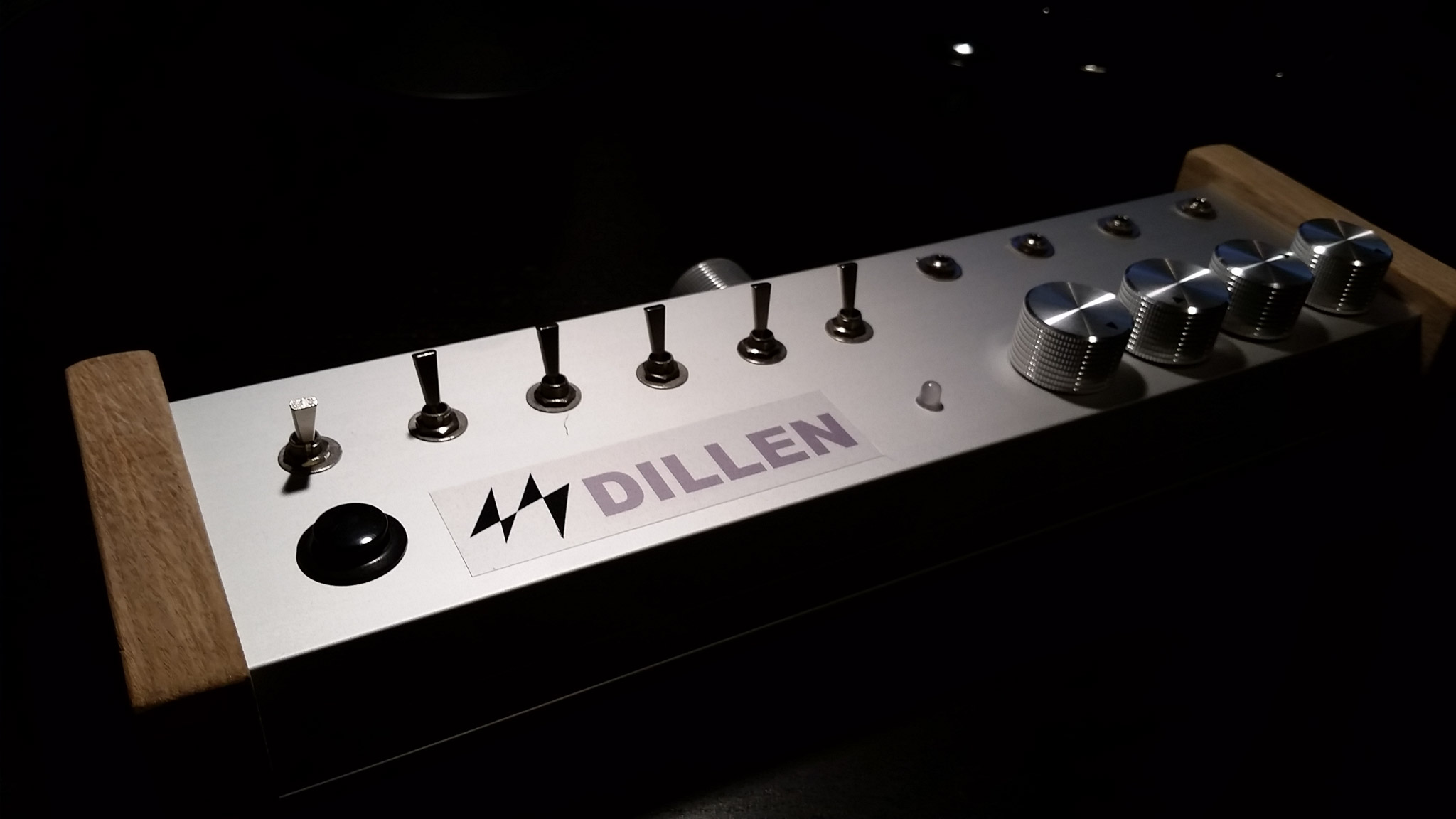
First synth design called Dillen in 2015

When the first working Eurorack module was built (Triple Tom), I didn’t actually intend to offer modules or boards to other builders. It was then the builders themselves who kept asking for boards and finally got me to make a first attempt to offer PCBs in cooperation with pushermanproductions.com in 2018.
And ST Modular was born.

What still drives you to make music?

That moment you surprise yourself.

How do you most often start a new track?

A kick and a bassline or a sound/melody that fascinates me.

How do you know when a track is finished?

I used to be very fast at producing and it wasn’t uncommon to finish a track in one day. I once participated in a remix contest for a label called “Karmarouge” and produced and submitted my remix within a single day. Surprisingly, my track was chosen to appear on the final vinyl release.

So, I’m not a perfectionist I guess and I don’t spend hours working on a snare sound.
If the track conveys a certain vibe, I can’t remove anything superfluous from the mix and nothing else extremely bothers me, it’s done!

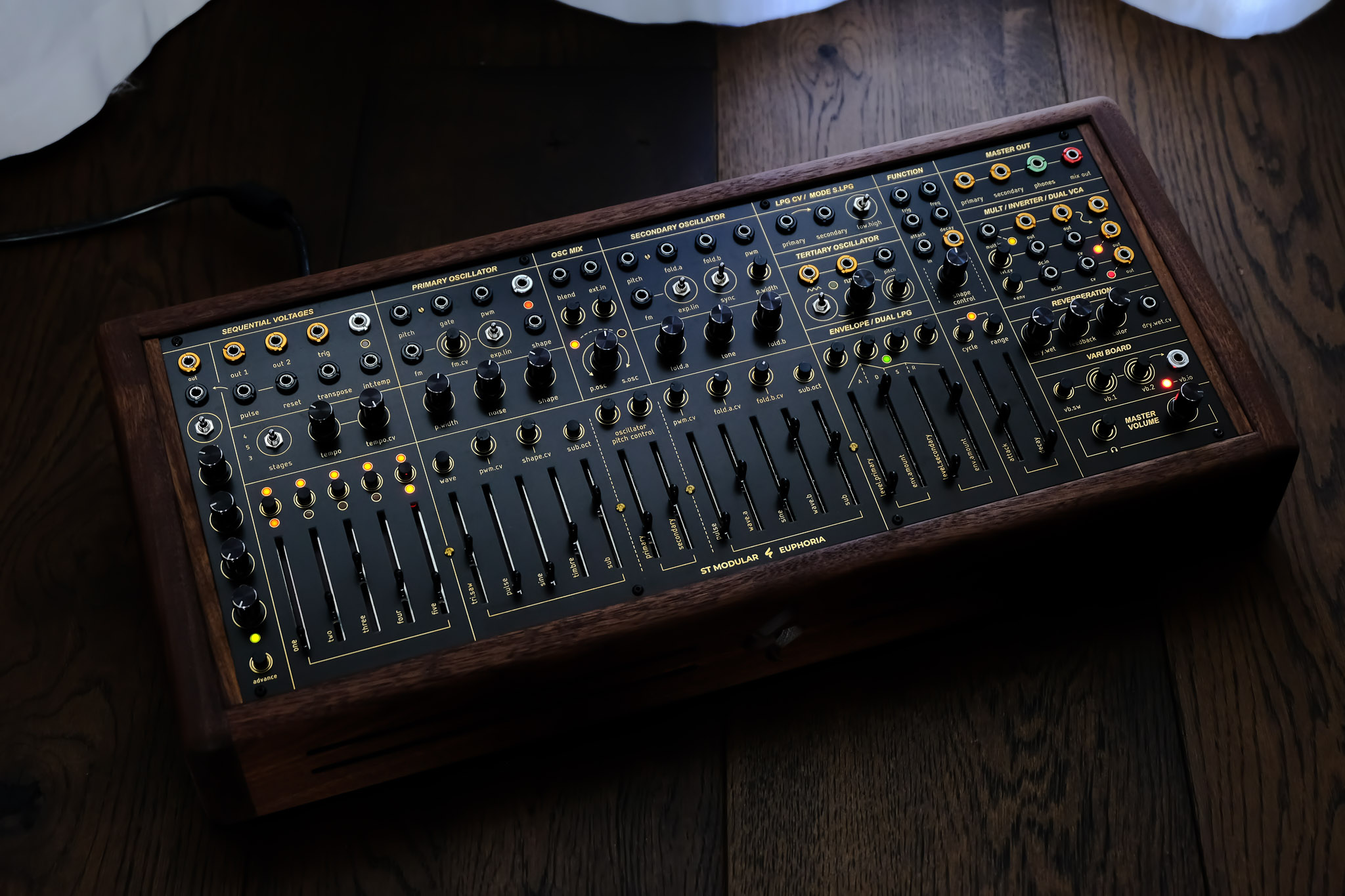
ST modular System

As for the ST modular designs, each new prototype has to go through several weeks of extensive testing in my case. I design modules primarily for my personal use. If I don’t like the experience of playing with it, it doesn’t get released. I have a whole case full of finished prototypes that I have never published. They work technically fine, but they somehow didn’t turn out the way I had imagined.

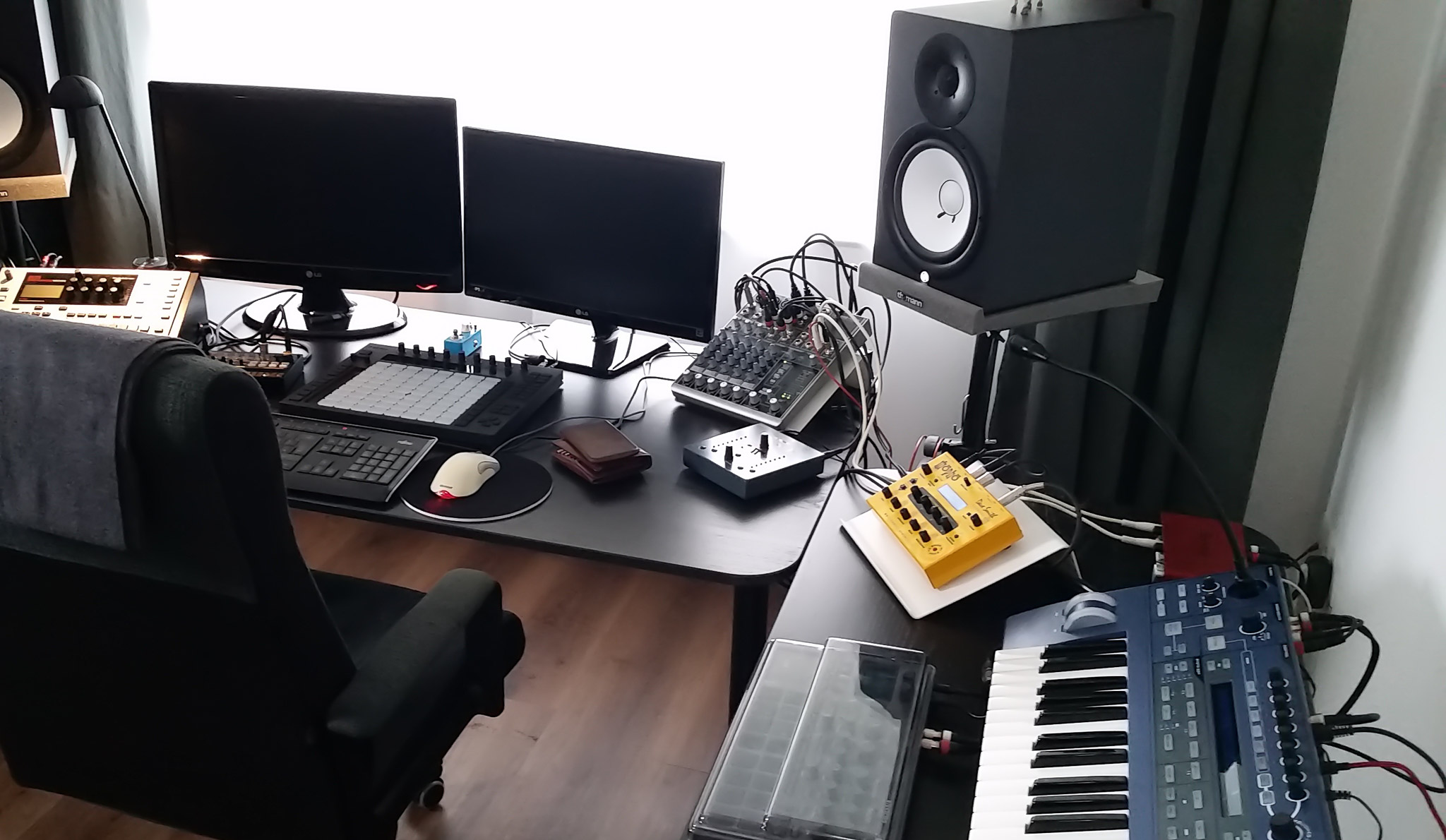
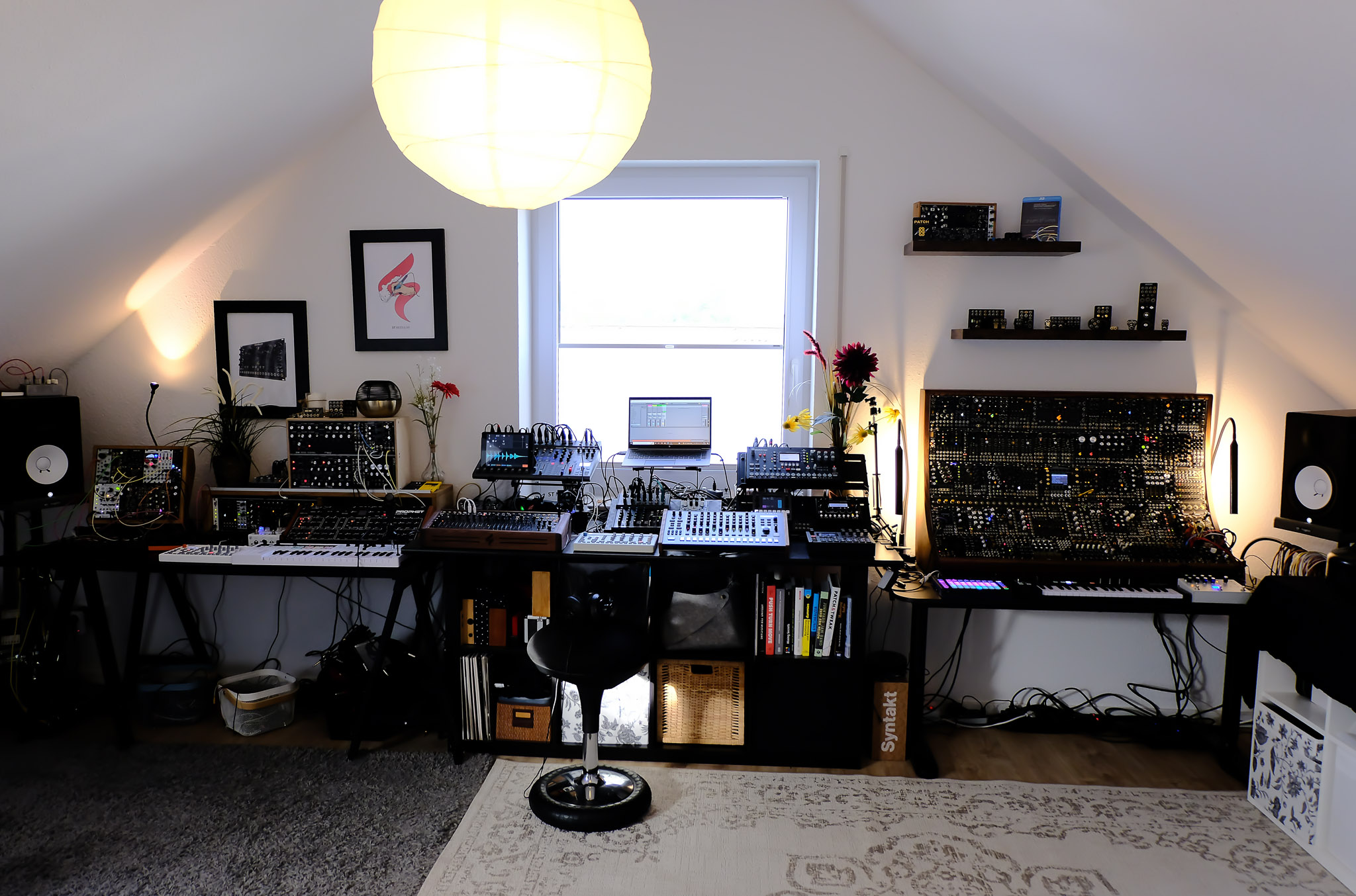
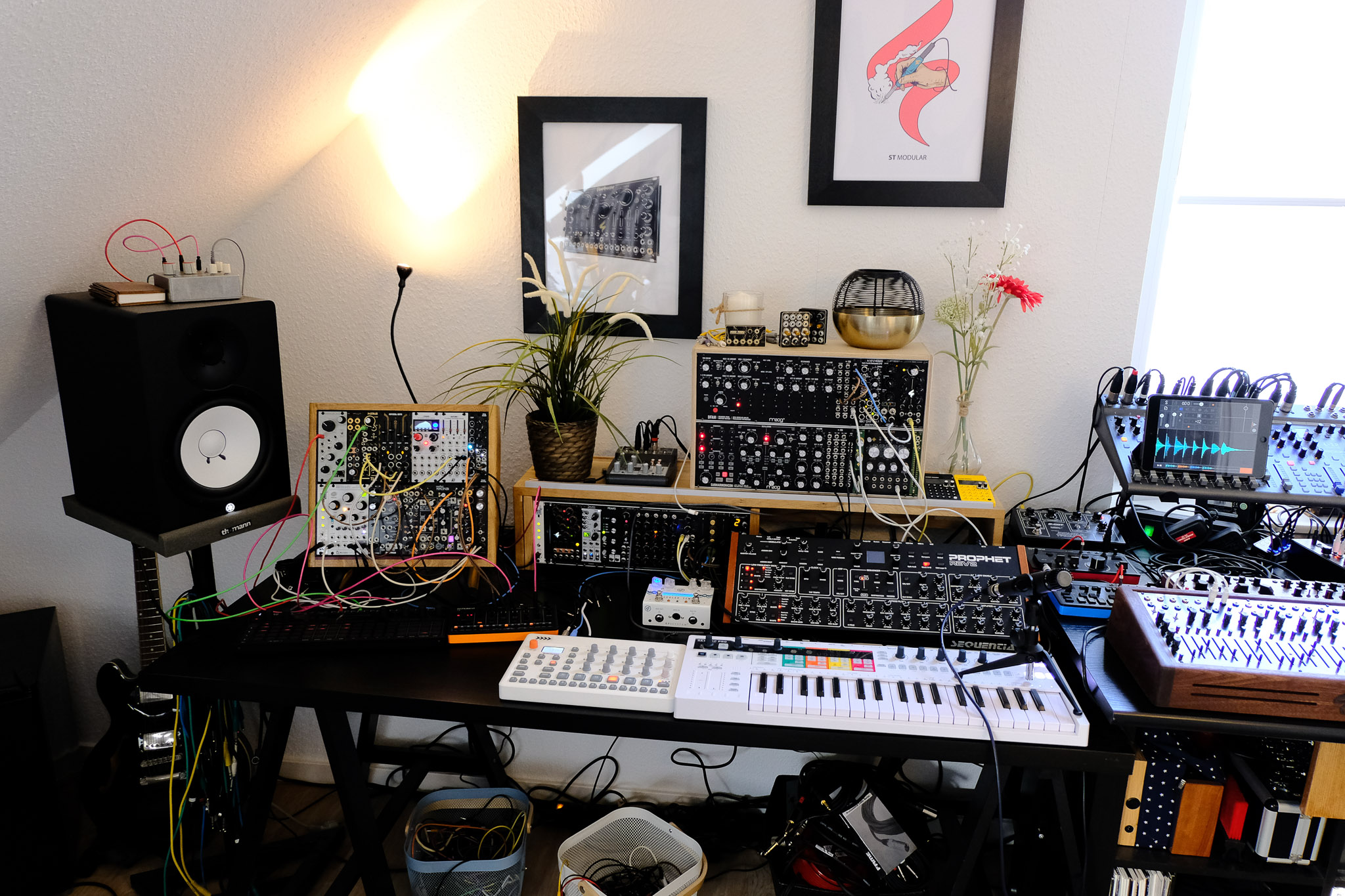
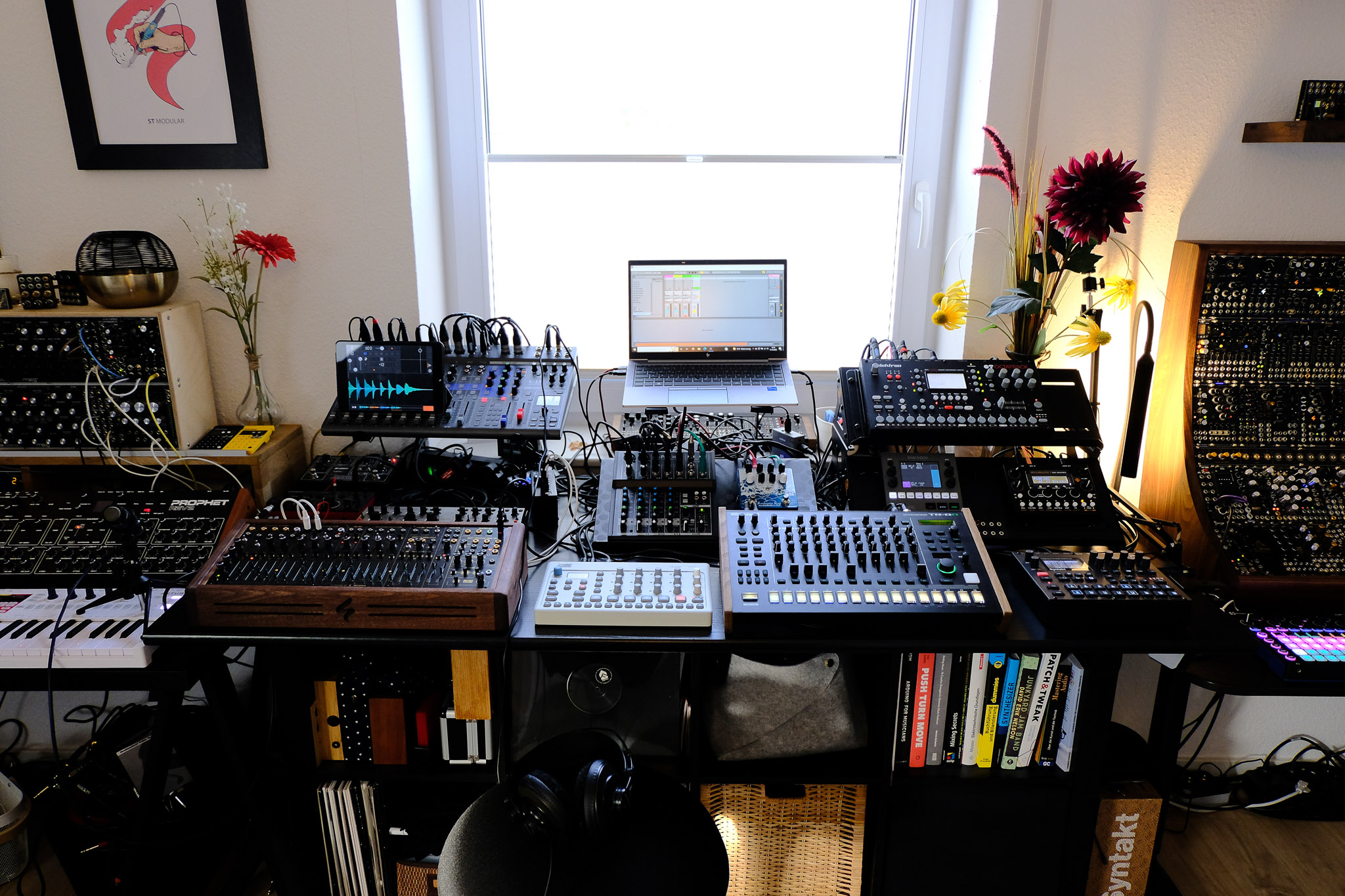
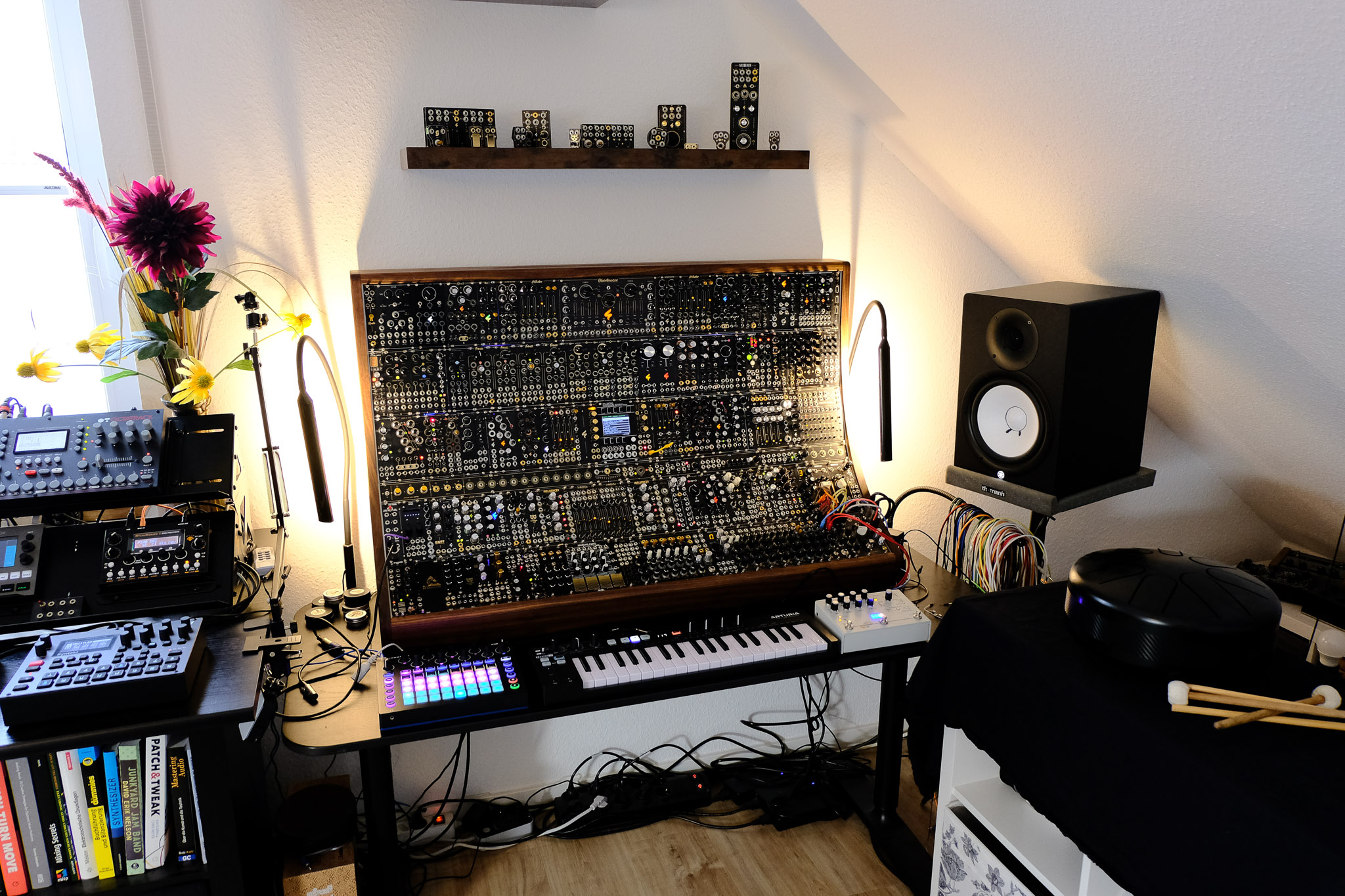
Show us your current studio

Attic home studio
To the left of the Attic home studio
Center of the home stuio
Left side with the modular beast

Best creative advice that you’ve ever heard?

Just sit down and start!

Promote your latest thing… Go ahead, throw us a link.

ST Records – Latest Release „Ostinato Modulare“
https://www.st-rec.de/

ST Modular – Euphoria (DIY Semi-Modular Synthesizer)
https://www.st-modular.com/euphoria/

ST Modular – Eurorack DIY
https://www.st-modular.com/

Follow me on Instagram
@stefan_st_modular

[Editor: There are affiliate links to the relevant gear throughout the articles. It helps to support this blog. In fact, should you be needing some patch cables or guitar strings. Then clicking on one of the above links and buying any product that you prefer, will help the blog… doesn’t even have to be the ones in the link. Thx]