Slow Haste – Chillwave To Taste

1. Favourite knob/fader/switch on a piece of gear and why?
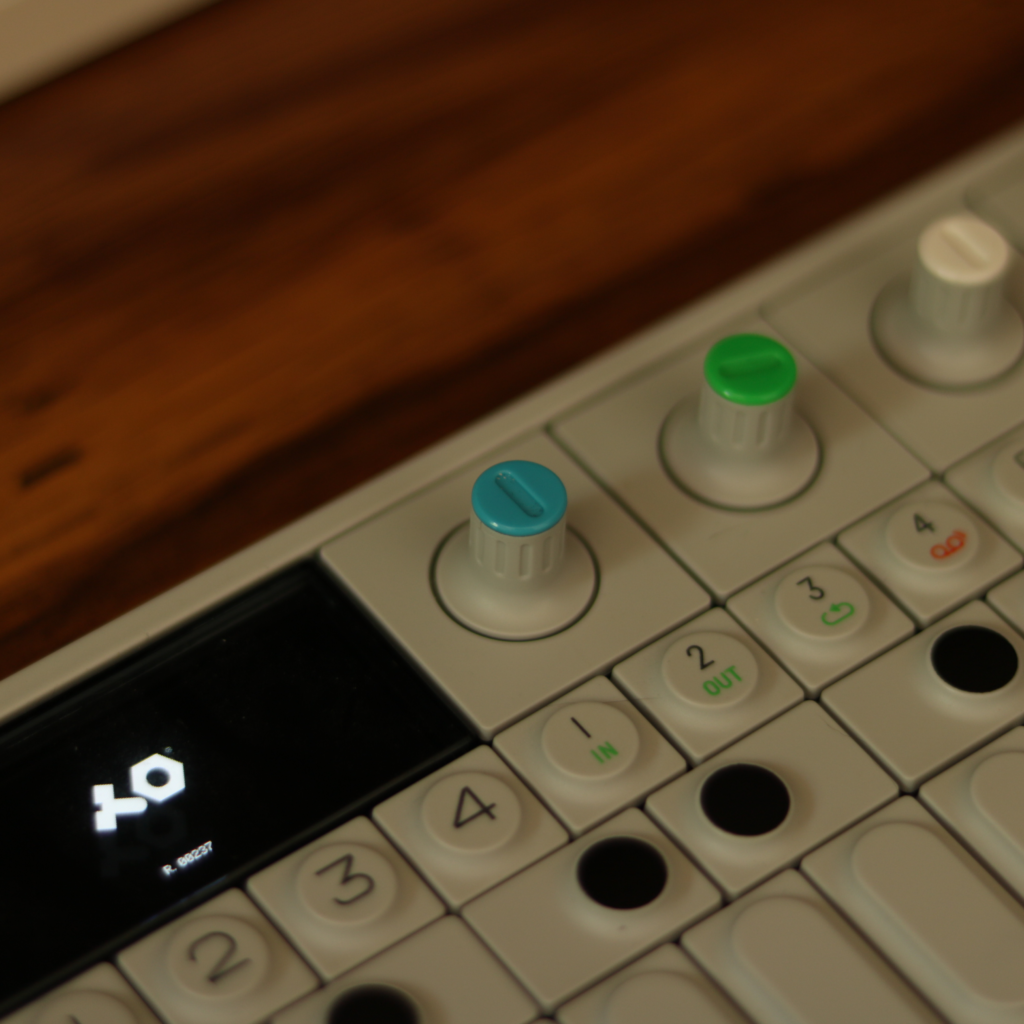
OP-1

The blue rotary encoder on the Teenage Engineering OP-1.  I actually cannot keep my hands off of it.  If you watch any of my Instagram jams featuring the OP-1, I’m constantly nudging and spinning it every which way to adjust the tape speed while performing — sort of a faux-master-pitch-vibrato.  Vibrato is tied with reverb for my favorite effect, it adds emotion, uncertainty, and imperfection to everything.  It makes the OP-1 sound less digital, and the OP-1 is unashamedly digital.  Don’t get me wrong, I love that about it.  But that blue knob gives it soul.

2. Do you have an ‘almost’ perfect bit of kit? What would you change?

The Caroline Guitar Co. Météore.  It was my first reverb pedal, and I got it at Chicago Music Exchange the first time I visited Chicago (where I now reside!)  It’s also my only reverb pedal I haven’t sold or traded.  For the uninitiated: it’s a lo-fi reverb inspired by the sonic environment of a particular modern Paris Métro station.  It can get super super gritty and loud, but I think it excels at layering right behind the dry signal, spilling out little splashy puddles of your guitar tone. The only thing I would change is the switches — sometimes engaging the pedal can be a bit finicky.  But to be completely honest, I always have it on (literally all the time) so it’s a non-issue, really.
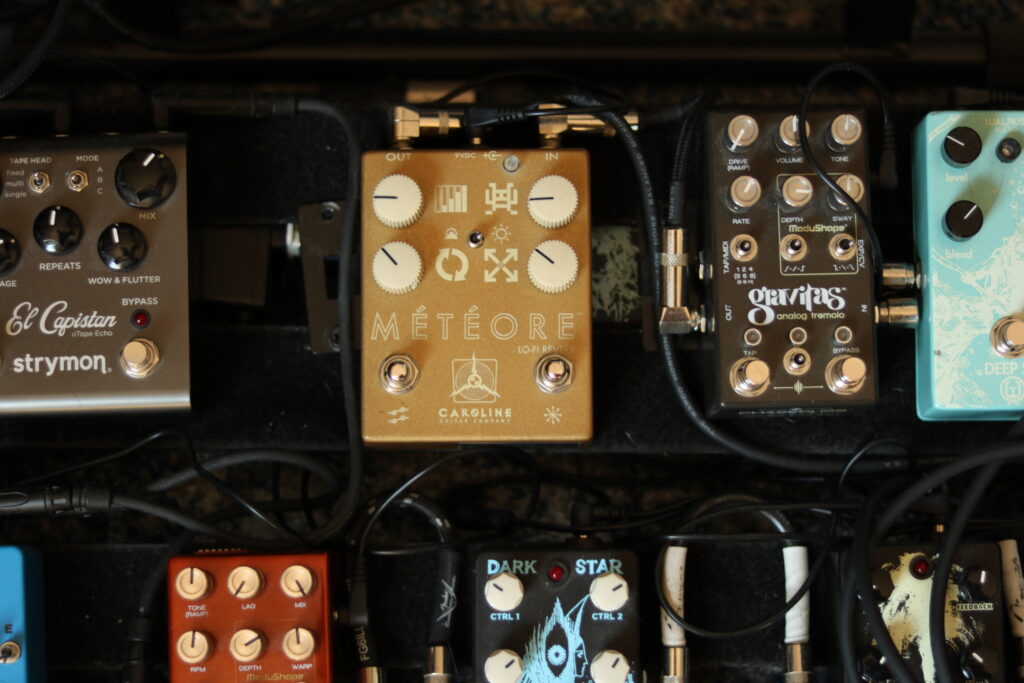
Caroline Guitar Co. Météore

3. What setup do you bring on holiday/tour/commute etc.?

My OP-1.  It’s really the only easily portable piece of gear I have, aside from individual effects pedals.  The OP-1 has an absurd battery life, is designed to travel well, and is perfect for killing time while sketching out ideas or just messing around.  Not to mention you can sample ANYTHING with it.  A laptop, an aux cable, and the OP-1 is a fantastic portable drawing board.  Some of my favorite OP-1 pieces have been built around random samples recorded straight to the onboard mic, too.  
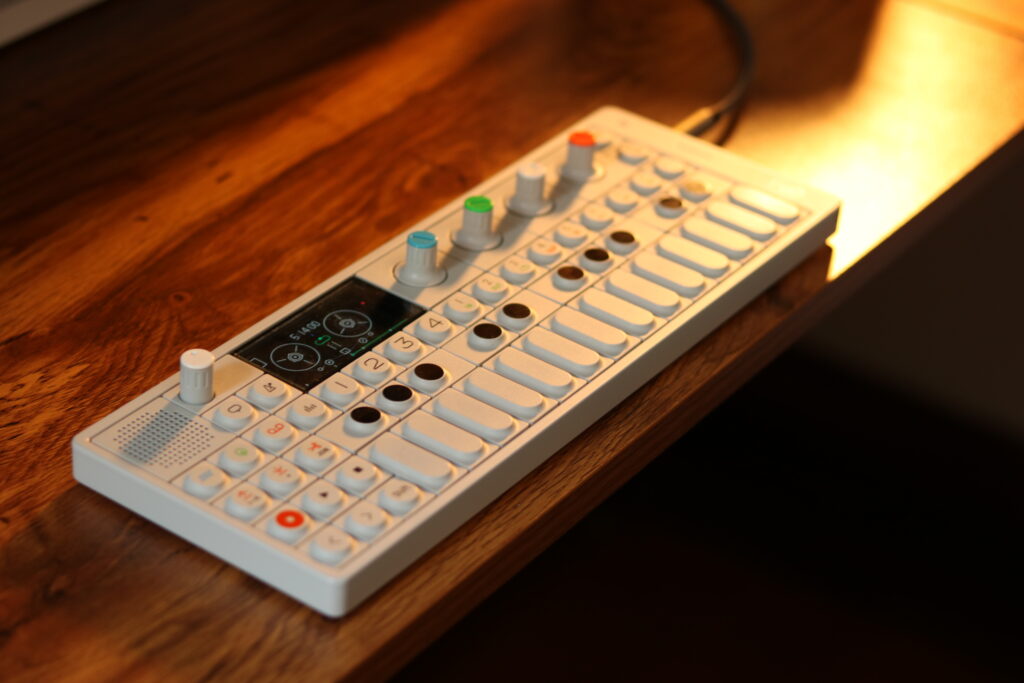
OP1

4. What software do you wish was hardware and vice versa?

To be honest, I’m not a huge software person.  I’m not a “hardware purist” or a strictly DAW-less musician, but I don’t enjoy making music with software nearly as much as with hardware; it’s just not as inspiring to me.  A DAW is a specific tool that fits into a specific part of my process.  That said… I think having software versions of all of my guitar and modular effects would be incredibly convenient for experimentation and playing around in Logic Pro X.  I think the Montreal Assembly Count to 5 would be particularly fun to play with in a DAW, automating parameters could get really wacky really fast.
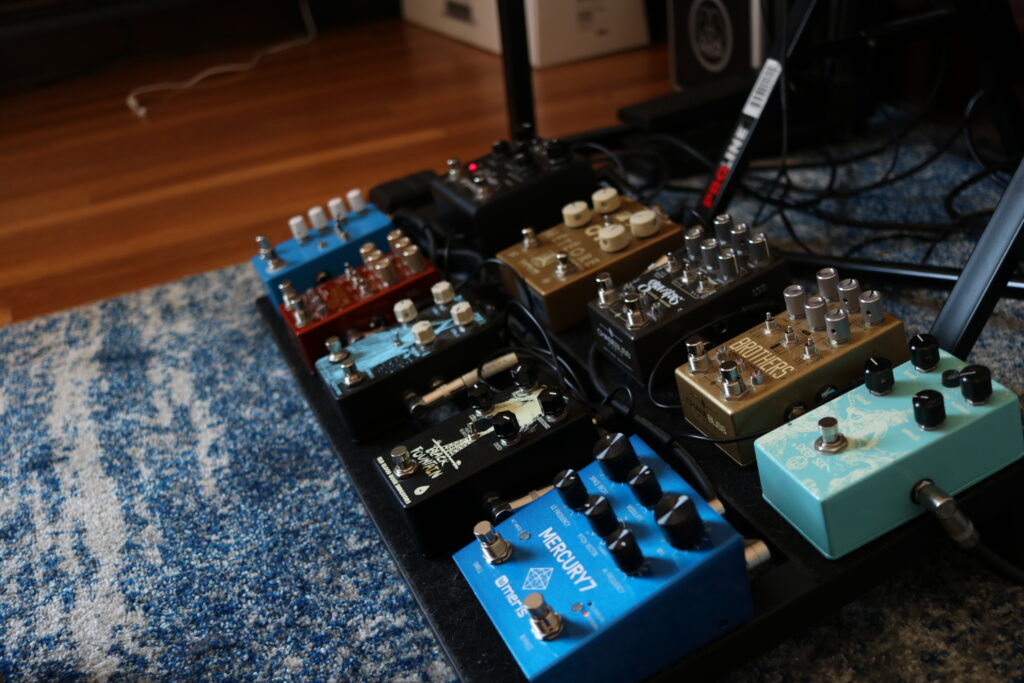
Pedalboard of fun

5. Is there anything you regret selling… or regret buying?

I regret selling my Chase Bliss Audio Thermae more than anything.  I bought it on an impulse the summer it was released.  It was not a sound financial decision.  I used it on a recording project and sold it a few months later because I knew I didn’t need it.  But whenever I see any posts showcasing that pedal, I end up revisiting old recordings I’ve used it on and get pretty nostalgic.  As weird as that sounds, it definitely reminds me of hot summer days, since that’s when I was using it most!

6. What gear has inspired you to produce the most music?

It’s a tie between my modular system and the OP-1.  My recent album was almost entirely produced on the OP-1, but most of the songs came from modular samples.  I unintentionally started writing and recording the album the day that I got my first modules (Mutable Instruments Plaits and Marbles), just messing around and recording audio into the OP-1 tape tracks.  The modular inspired, and the OP-1 enabled.
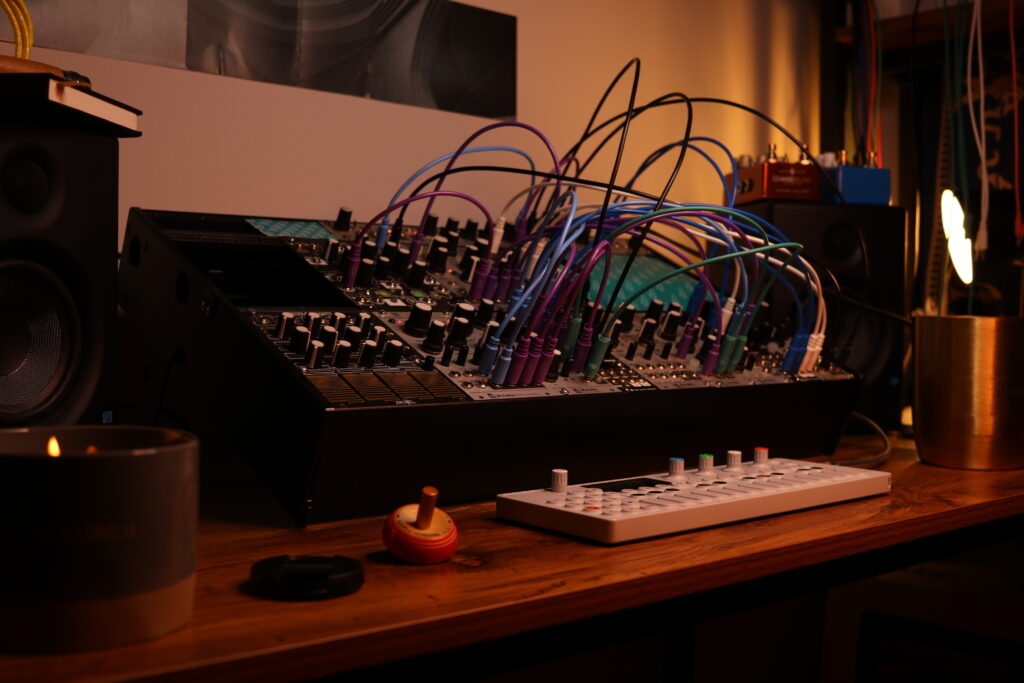
Eurorack modular

7. If you had to start over, what would you get first?

No surprise here: the OP-1.  But can it come with a guitar?  I don’t need pedals or even an amp.  I can get by with the OP-1 and a guitar.
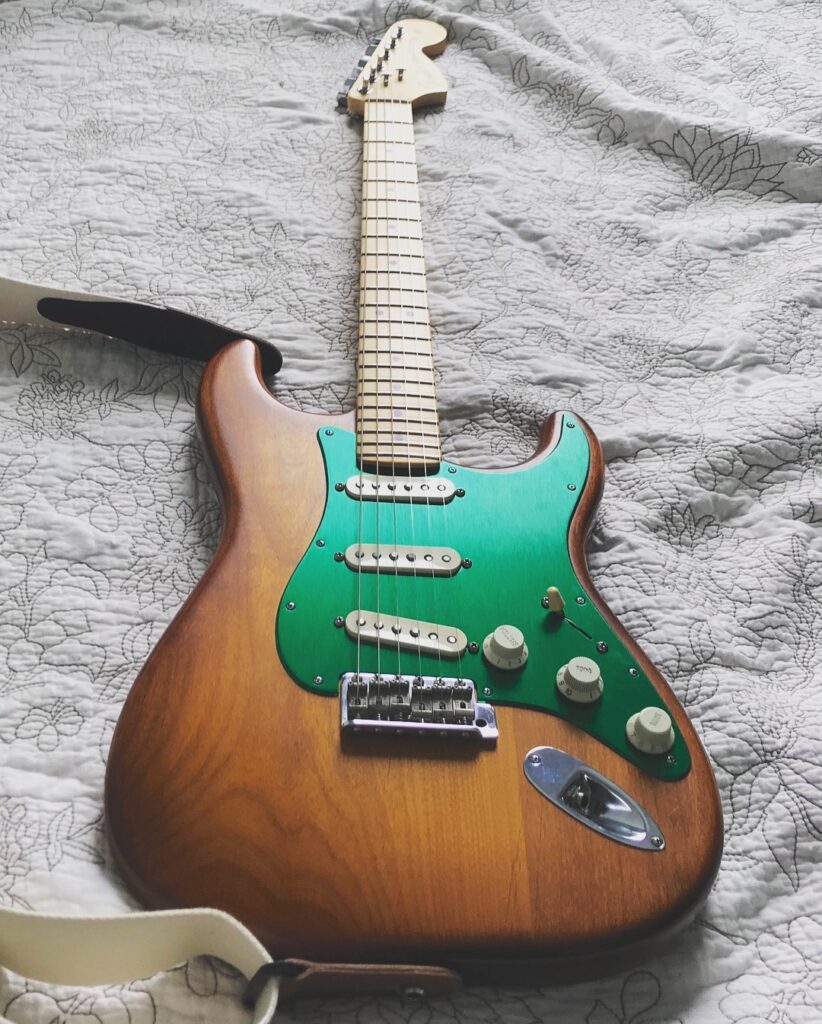
Sweetly colored Stat

8. What’s the most annoying piece of gear you have, that you just can’t live without?

Cables.  Not talking about patch cables here — I love modular patch cables, and physically patching my system is one of the most therapeutic aspects of creating music.  Any other cables though… mic cables, instruments cables, power cables, etc.  If everything could just connect wirelessly, I wouldn’t have to worry about the physical placement of objects or “setting things up” when I want to play and record.  I have a lot of stuff in a small space, so I try to keep things as tidy as possible.  Cables make this quite a challenge.
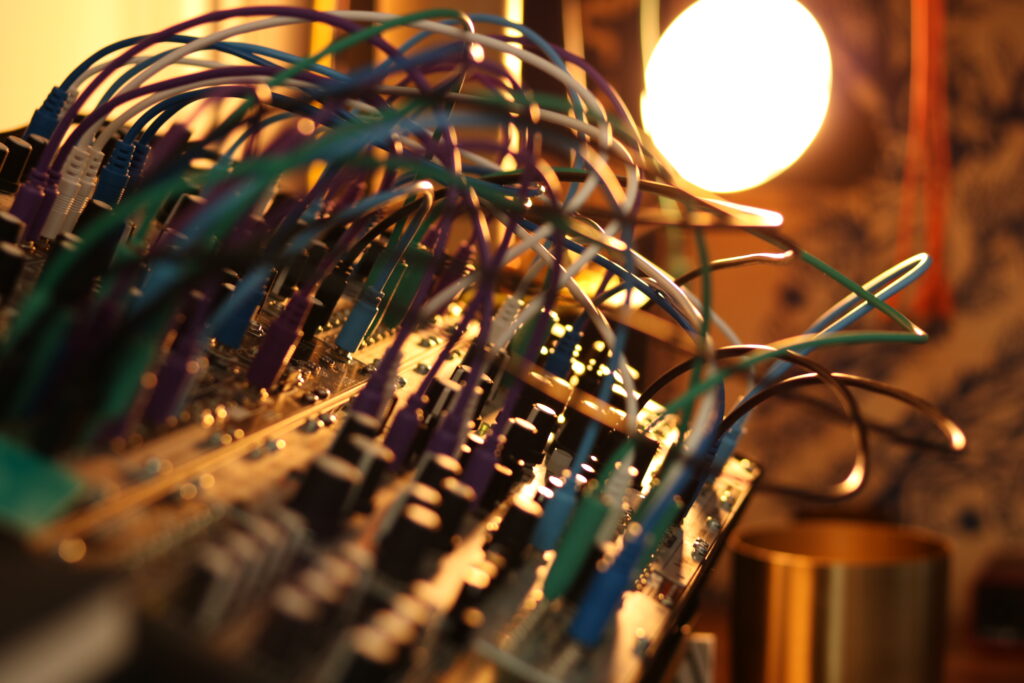
Cables

9. Most surprising tip/trick/technique that you’ve discovered about a bit of kit?

More of a creative/writing tip than a technical tip: one of my favorite “help I’m stuck and don’t know where to start creating!” solutions is to play a melody or chord progression into the Montreal Assembly Count to 5, lock a pitch shifted loop into place, and then record a fixed number of bars of that loop onto my Boss RC-30 Looper.  Hearing the instantaneous alteration of an improvised melodic idea repeated in a rhythmic manner gives me SO much to play off of.  It’s an easy quick way to create a new idea to build upon.  If you don’t like the result, it’s easy to give it another go.  I create most of my guitar loops this way, and end up sending them into my modular system and mangling them further with the Make Noise Morphagene.  
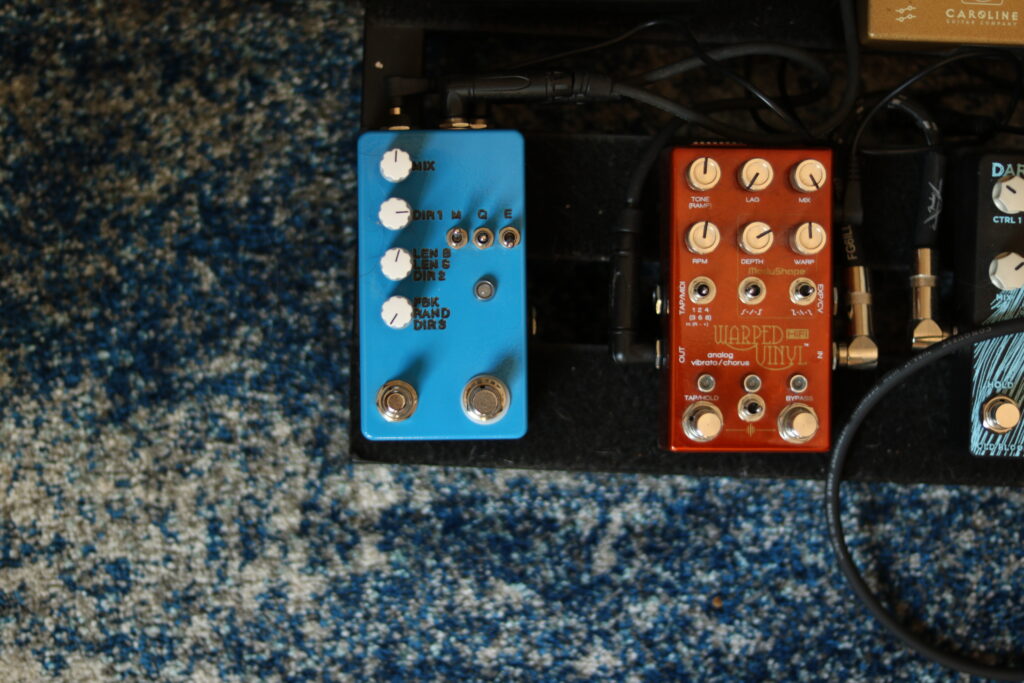
Montreal Assembly Count to 5

Artist or Band name?

Slow Haste

Genre?

Experimental Electronic, Chillwave, Ambient.

Selfie?
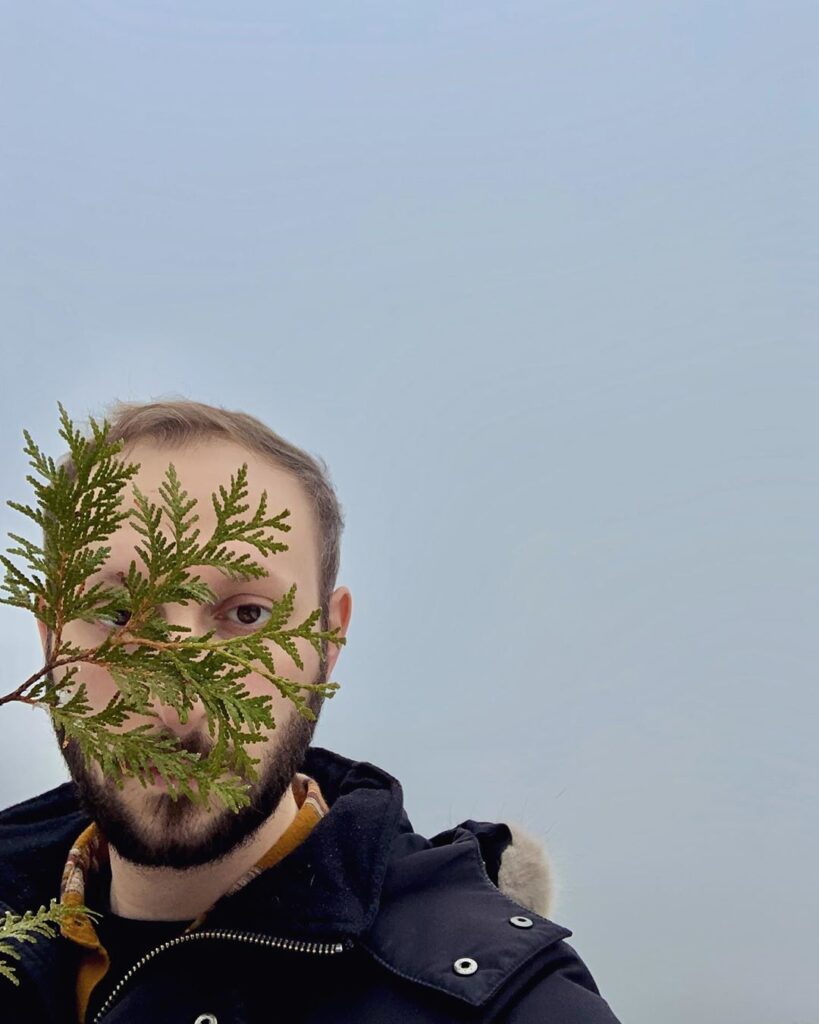
Slow Haste

Where are you from?

Born and raised in Windham, ME.  Currently based in Chicago, IL.

How did you get into music?

I asked my parents for guitar lessons when I was 6 yrs old, and then drum lessons at 8 yrs old.  I played clarinet in my school band, in a pop punk band with friends, and sang in an auditioned choir in high school.  Music has always been a part of pretty much everything I do, constantly evolving with me.  I also currently play guitar and sing in an indie rock band called Tired Driver.

What still drives you to make music?

It’s an outlet for expression, at the most vague level.  I’m still trying to figure this one out myself.  I tend not to fully understand the essence of a body of work I produce until it’s complete and I’m able to reflect on it from an outside perspective. I suppose I should work on being more in touch and intentional with my musical brain!  But seriously, the stuff I find most inspiring is the stuff that just spills out without having to think about it.  Once that foundation is down, I can use my logical brain to piece it together.  But the essence just happens.  Coffee helps, too.

How do you most often start a new track?

It’s mostly improvisational.  I will decide to play percussion, guitar, synths, or whatever else.  Once I find a beat/melody/progression/etc that excites me, I build upon that with other instruments.  Most of the time once I hear something I like, I can hear the rest of an arrangement in my head and will try to piece this together as I proceed. I’m the most productive early in the morning.  Generally, I thrive in the daytime and vastly prefer it over night.

How do you know when a track is finished?

When it makes me smile.  Sounds stupid but I mean it.

Show us your current studio
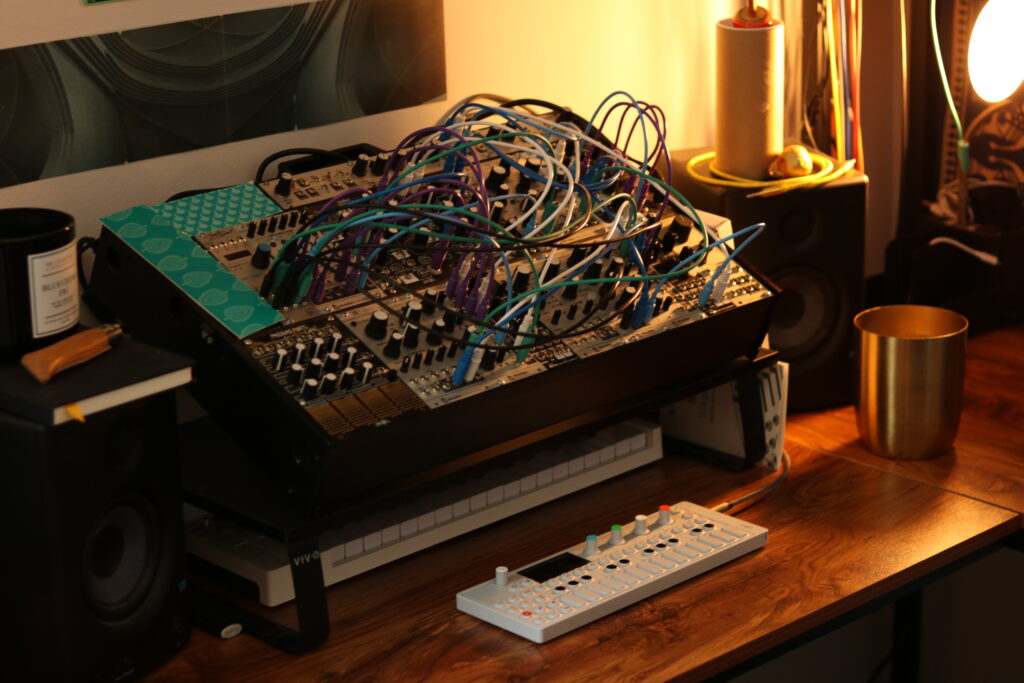
Studio

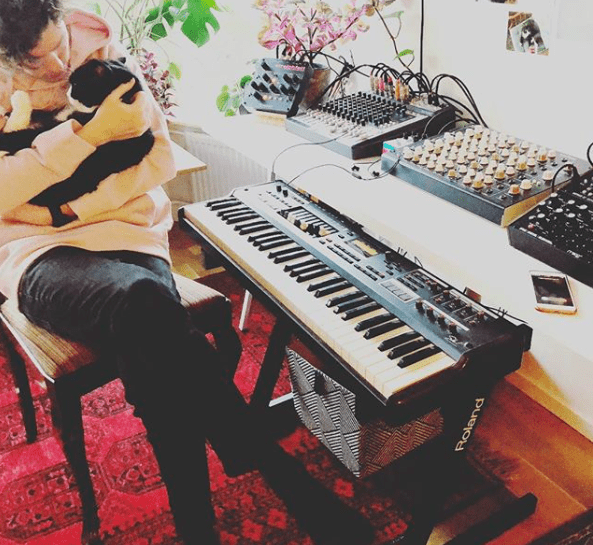
Hard to get it all in one shot with guitars/amp/pedals, but here’s my desktop setup! Also, here’s a shot of my old setup in a prior apartment, pre-OP-1 and modular.
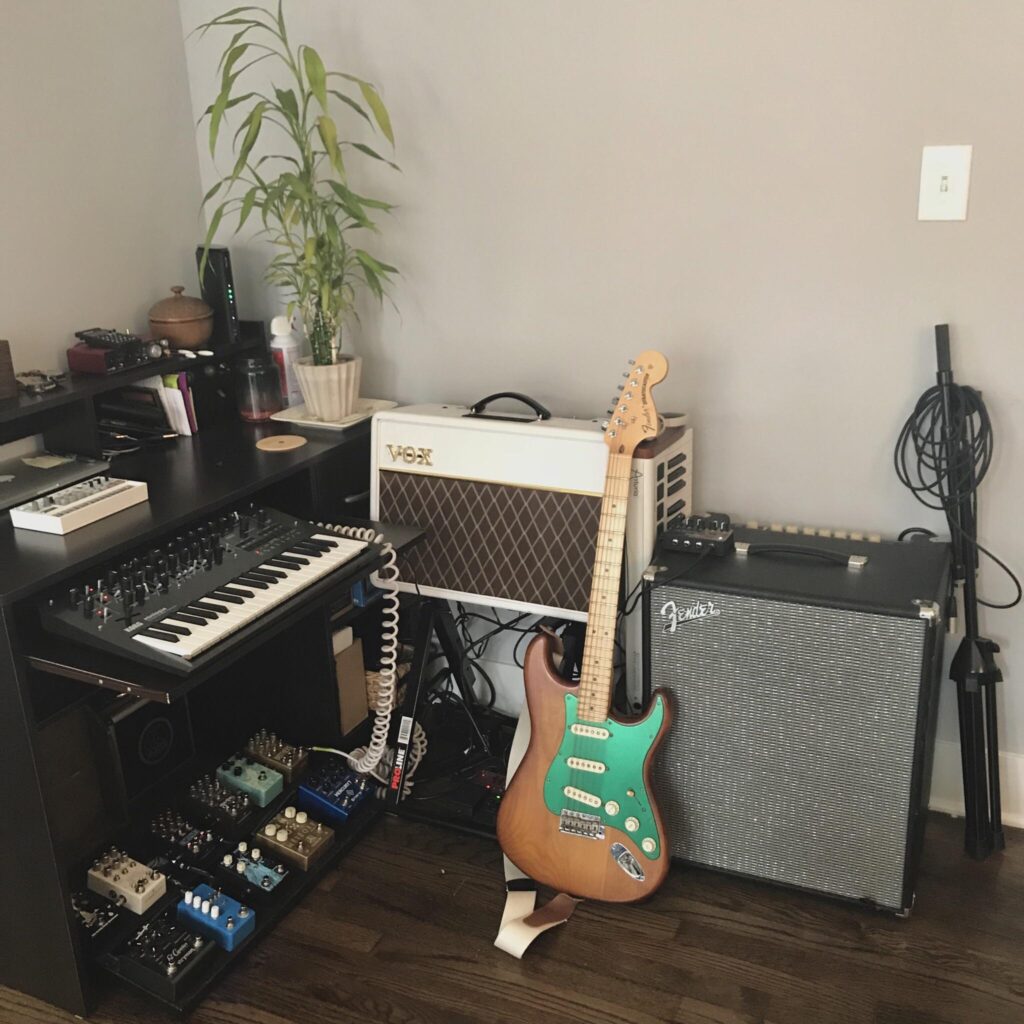
Studio

Best creative advice that you’ve ever heard?

I don’t know if I heard this anywhere or if it’s just become a common practice of mine through trial and error: Don’t force yourself to try to create if you aren’t in the mood.  I’ve done that before and it makes me start to resent the process.  I never want making music to feel like a chore, so I never make myself do it if I don’t feel like it.  A lot of people will say “just sit down at your instrument and start playing, do this every day to get in the habit”, but I’ve never really gelled with that sentiment.  I have to be excited about what I’m doing to be able to be productive and enjoy it.  And I think it’s important to give myself space from creativity if I’m just not feeling it for whatever reason.

Promote your latest thing… Go ahead, throw us a link.

I released my first album, “Dandelion”, in March. Go give it a listen!

https://slowhaste.bandcamp.com/album/dandelion


[Editor: Do you have a favorite tip, trick or way of working with any of the gear from this interview?
Then throw a comment below…
]


Victor Öberg – Urba Doloro

1. Favourite knob/fader/switch on a piece of gear and why?

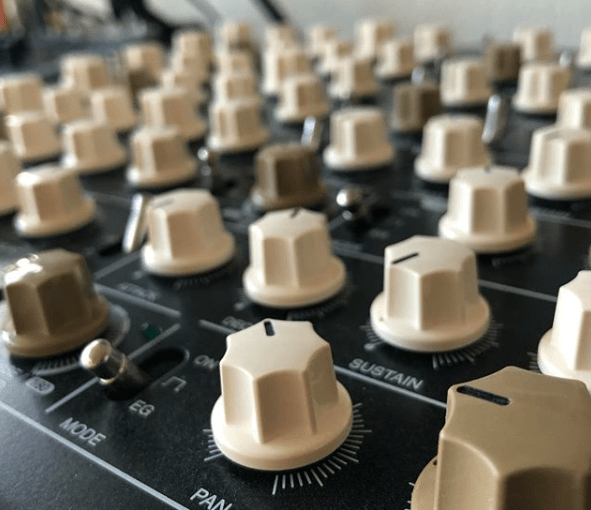
Right now I’m crushing hard on the faders of the Verbos Harmonic Oscillator. But in a longer perspective I’ve got to say the Octave and Waveform switches on the Vermona Perfourmer, the resistance and “click” is true perfection.

Vermona Perfourmer

2. Do you have an ‘almost’ perfect bit of kit? What would you change?

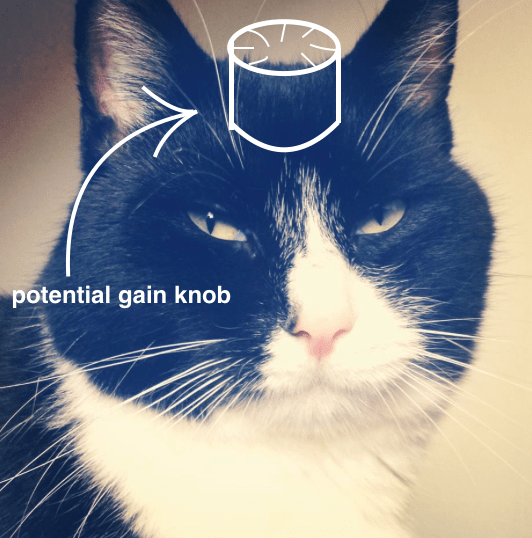
That would be my analog noise machine, aka my cat, Frasse. He  makes all kinds of inspiring noises. But he would benefit a lot from a gain knob.

Frasse Cat

3. What setup do you bring on holiday/tour/commute etc.?

My laptop and, if not completely impossible, my trusty eurorack case!

Urba Doloro’s Eurorack

4. What software do you wish was hardware and vice versa?

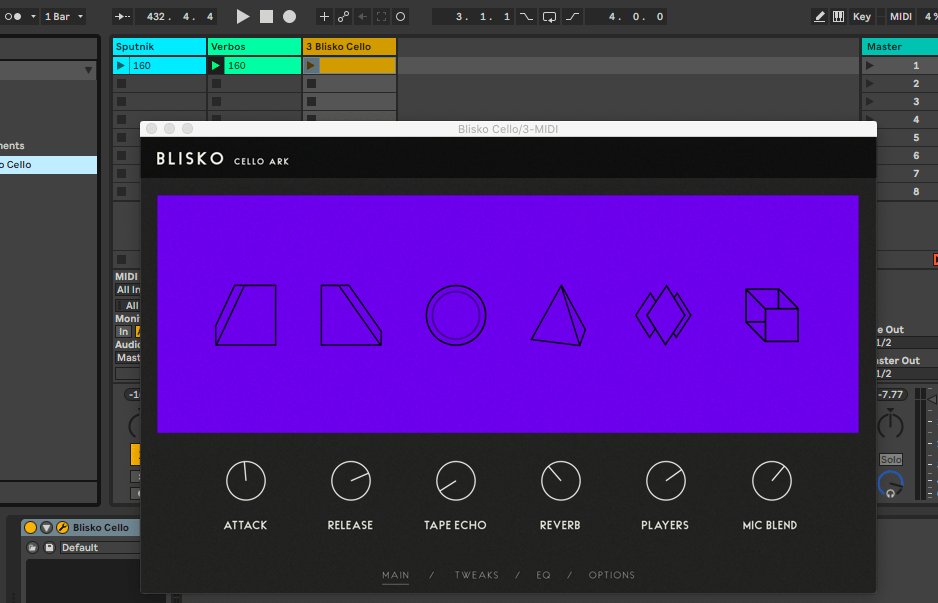
The blisko cello kit from felt instruments. I absolutely love it, but I would love it even more if I could have a small(ish) stand alone device with knob per function.

Blisko VSTi

5. Is there anything you regret selling… or regret buying?

I once bought and later sold the Waldorf Streichfett. Then I bought it again, and sold it again. Give me another year and I’ll probably have bought it a third time..

6. What gear has inspired you to produce the most music?

My Hammond SK-1. Right now I use it as part time Hammond organ and part time midi keyboard for using the Spitfire felt piano.

Hammond SK-1

7. If you had to start over, what would you get first?

I would, as last time, get a piano first. Learning the piano and music theory is really the staple of how I approach writing music. I find it very enjoyable to compose on the piano and then arrange it for eurorack, strings and piano.

8. What’s the most annoying piece of gear you have, that you just can’t live without?

My laptop. I can’t say I enjoy working on the computer when making music, but I can’t see myself managing without a computer at this moment.

9. Most surprising tip/trick/technique that you’ve discovered about a bit of kit?

Not really a trick, but I recently was surprised by how much I love the distortion you can create with Mutable instruments Veils just by pushing it towards the exponential mode. There are like a million sweetspots there when using it with various sound sources!


Artist or Band name?

Urba Doloro

Genre?

Somewhere between electronic minimalism and classical music maybe?

Where are you from?

Sweden, currently living in Västerås. It’s basically in the middle of Sweden, close by Stockholm.

How did you get into music?

I often went to a small record store called Jay’s records to buy a bunch of Bob Dylan albums when I was like 16 or 17 years old. One day the store owner told me he had put away something special for me. It was The Brown Album from The Band. It 100% blew me away and for the first time I understood why people love both playing and listening to music. I spent all summer learning the songs on piano. To this day the track King Harvest is still one of my absolute favorite songs of all time.

The Band

What still drives you to make music?

It’s a combination of doing it for myself because I feel a need to, but also to be able to communicate views on human society that I feel is not the most focused on in music. Urban alienation being the main theme I try to work with.

How do you most often start a new track?

It’s twofold. The creative process is generally started with reading scientific articles/books within my line of work, urban planning, to find topics to composer over. The actual writing of the music is almost always starts at the piano. I tend to start out with a few rules of limitations and then improvise over them for an hour or two. Then I try to find pieces of the improvisation I like and start arranging them.

How do you know when a track is finished?

I really don’t. I’ve had serious problems finishing projects the last few years. However, I’m really trying to find some kind of middle road right now by letting friends listen to my tracks. Based on their reactions (and of course my own judgement) I decide when things are finished.

Show us your current studio

I’m waiting for a new grand piano, which will spice up my “studio”. So for now it’s just my eurorack case, my laptop, and my hammond. I tend to try to move it around a lot in my apartment to stay inspired, here is a summer-version of my studio!

Eurorack and cat

Best creative advice that you’ve ever heard?

I’m going to go with something Todd Barton recently told me when discussing what to buy/not to buy and how to stay creative, he told me to “Follow the sound”.

Promote your latest thing… Go ahead, throw us a link.

My instagram always loves some support.


[Editor: Do you have a favorite tip, trick or way of working with any of the gear from this interview?
Then throw a comment below…
]


Martha Bahr – Panic Girl

1. Favourite knob/fader/switch on a piece of gear and why?

That’s a hard question to answer as every instrument is a composition of different knobs, faders and switches, which are only valuable through their interaction between each other. But if I had to choose one it would be the cutoff knob or fader. I tend to like very mellow sounds especially for inspiration.

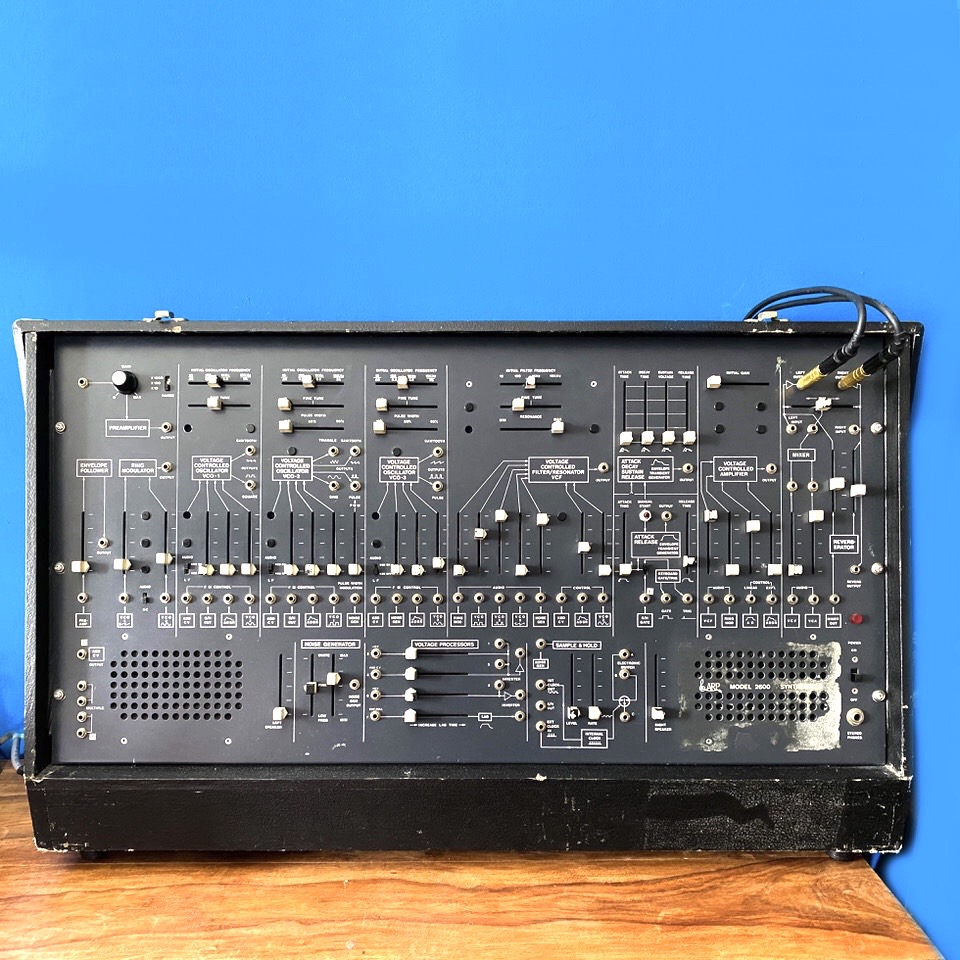
ARP2600

My favourite cutoff of all times is the one on my ARP2600, especially with the resonance on maximum. I have never heard a more beautiful and eerie sound.

2. Do you have an ‘almost’ perfect bit of kit? What would you change?

Panic Girl Eurorack modular

That would be my modular system. It grows and changes with me as I grow and change as an artist, and it’s the perfect instrument for those “happy little accidents”, for experiments, for getting to that next level sound design wise.
What I would change about it? Maybe it would be great to make them less heavy all in all, especially if you want to travel with it. 

Eurorack and flower

3. What setup do you bring on holiday/tour/commute etc.?

As much as fits in my suitcase. I usually take a skiff with me, my OP-1, an iPad and my laptop, just to have some options when in a good flow.

Eurorack skiff as LP cover with an OP-1 and SM57

4. What software do you wish was hardware and vice versa?

I’d like to have the René by Make Noise as a Plugin, I love that module. It brings that bit of extra spice to my tracks, that I really like. And the Malgorithm, it’s my go to bitcrusher sound that I can’t get enough of so far. 
As for the other way around I would love to have the Fabfilter plugins as a module, especially the Limiter. It gives you the volume you need without colouring the sound too much, I use it on every track I make as well as their EQ. 

Make Noise Rene

5. Is there anything you regret selling… or regret buying?

Not yet. I surely bought some gear, especially some modules that didn’t fit my workflow after all. But that’s part of the game with modular synthesizers in my opinion, you try, sell, buy, reconfigure and grow with your system (or the other way around?) like you grow musically and as a person throughout life.

Eurorack and a bit of ARP2600

6. What gear has inspired you to produce the most music?

I’d say Logic and my modular system. There is so much to explore in each, so many possibilities to learn new things and so much room for „happy accidents.“ 

I spent a lot of time learning Logic as a rookie, I wanted to know it inside out so I can “play” it like an instrument. And there are several things especially in the beginning you have to figure out before you can produce music without having to think too much, like moving the anchor point in your audio regions or how to get an audio file with a different bpm to fit your track or how to set up the Environment for different purposes and so on. While figuring all that out, I came up with one idea after the other of what I wanted to try and explore musically. Back then I spent every free minute with Logic, it was extremely exciting to unlock all those levels of music creation one by one, it’s actually quite similar like getting addicted to a video game.

And modular instruments are just crazy with all their possibilities, it’s an endless source of inspiration to me for about ten years now. I’ve tried out so many modules by now, I couldn’t count them all. I also got some of them sent to me to write articles about for the german print magazine Sound & Recording, like the Yarns module by Mutable Instruments for example. And now I can’t live without it anymore. They are all very unique and special in their own way, it’s exciting and often eye-opening to make music with them.

7. If you had to start over, what would you get first?

I think I’m pretty ok with how things went and what equipment I got throughout the years. I started out on a PC, learned Logic, Cubase, ProTools, Fruity Loops and Reason at the SAE Institute back then and finally got a Virus TI as my first synth.

The most important thing to me is to learn how for examples DAWs work in general or how synths work in general, so I can translate that knowledge quickly to any other related gear rather than learning just one DAW or one synthesizer in and out and not knowing how to use similar gear from other companies.

That can be pretty helpful especially if your working as an audio engineer or composer and need to work with different tools from time to time.

8. What’s the most annoying piece of gear you have, that you just can’t live without?

That would be the computer per se I suppose. Especially moving to a new computer can be quite unnerving or when your current one gets too slow for all the tasks you want to do. 

9. Most surprising tip/trick/technique that you’ve discovered about a bit of kit?

That would be modules with which you can do generative patches, that was a real eye-opener for me. The René module by Make Noise with it’s cartesian sequencer was my first experimental module and I still use it in every patch I make. Being able to set the notes of a scale, but randomizing the order in which those notes are being played can make for some very interesting variations in a patch.


Artist or Band name?

Panic Girl 

Genre?

Electronica, Downtempo, Experimental 

Selfie?

Martha Bahr aka. Panic Girl

Where are you from?

I’m currently living in Munich, Germany.

How did you get into music?

I discovered my passion for music very early on when I was a child. I was utterly fascinated with this invisible medium that still seemed to surround me though I couldn’t touch or see it. I already knew back then that I wanted to spend my life with music, in whatever way possible. 

Panic Girl in a dream of wires

I sang in the school choir for several years, learned how to play the piano and the guitar and was playing in bands when I was a teenager. That’s when I got more and more interested with the equipment that we used like the mixing desk, the effects we applied to our instruments or DI Boxes for example. I just wanted to know how they worked. When a good friend of mine told me about the SAE Institute I knew instantly that this is what I wanted to do. I quit my studies at the university and finally started the Audio Engineering Program at the SAE Munich.

What still drives you to make music?

I just can’t do without it, it has been such a vital part of my being since early childhood. I still have tons of ideas I want to try out and there is always so much exciting equipment out there to explore. And there are also inspiring collaborations with for example Anatol Locker. We make experimental music as Lucid Grain, where we create music with our modular synthesizers that none of us could compose on it’s own. It’s like melting two musical minds into new fresh musical pieces. Inspiration is everywhere I suppose, you just have to learn to see it.

How do you most often start a new track?

I need a sound that inspires me to make a full song out of it. That sound can be literally everything, be it a noise from the coffee machine or birds singing, sounds from my modular system, my ARP2600 or my OP-1 for example. I often seem to navigate towards mellow and dreamy sounds and pads, noisy background sounds like from a vinyl player or field recordings. That initial sound then determines where I go from there, if the track needs drums or if it will be a more experimental one, if I feel like singing to it or if some more field recordings would fit well. 

Arp2600

How do you know when a track is finished?

The composition part of music making is usually done pretty quickly. It’s the mixing that takes up most of my time. I check it on several loudspeakers and headphones and have to adjust it several times, until it sounds equally good on everyone of them. I also find it very useful to not listen to the track for at least one or two weeks, so you actually have forgotten how it sounds. If you then re-listen and still like it, then I guess you’re good to go.

Show us your current studio

Eurorack and Arp2600
Roland Juno-60 and a Casio

Best creative advice that you’ve ever heard?

One of the sentences that stuck in my head for years is that you shouldn’t listen too emotionally when you’re working on a track, especially during the mixing stage. That’s something I still can’t fully control, sometimes I just need to crank up the volume, dance around and go back to work after that. You need a clear and calm mind for mixing to make those technical decisions, to make a mix work. I could for example drown everything in reverbs and delays, I just love how they sound. But it’s definitely not good for your mix, it gets muddy very fast. So I need to hold back and work on the mix from an mixing engineers perspective to get the most out of it.

Promote your latest thing… Go ahead, throw us a link.

I’m very proud of my latest album “Cake On Jupiter” that I released with Modularfield last year:

https://panic-girl.bandcamp.com/album/cake-on-jupiter

[Editor: Beina a musician now a days means taking on many different roles. Which you can see that people such as Ms. Bahr is very adapt at. Do you struggle with the various roles required to be a productive musician these days? And which roles are the most challenging? Leave a comment below.]


[Editor: Do you have a favorite tip, trick or way of working with any of the gear from this interview?
Then throw a comment below…
]