Francesco Gennari – Eurorack Études

1. Favourite knob or fader or switch on a piece of gear and why?

Aesthetically, the knobs and selectors on the Nagra III drive me crazy: big, solid, and the selector has a really nice click.
From a functional point of view, I love the Var Shape on the NTO oscillator by Serge/Random Source: I really love that continuous waveform change.
Honourable mention to the frequency knob of the Soundfreak Triple VCO (VCS3 in 4U format).
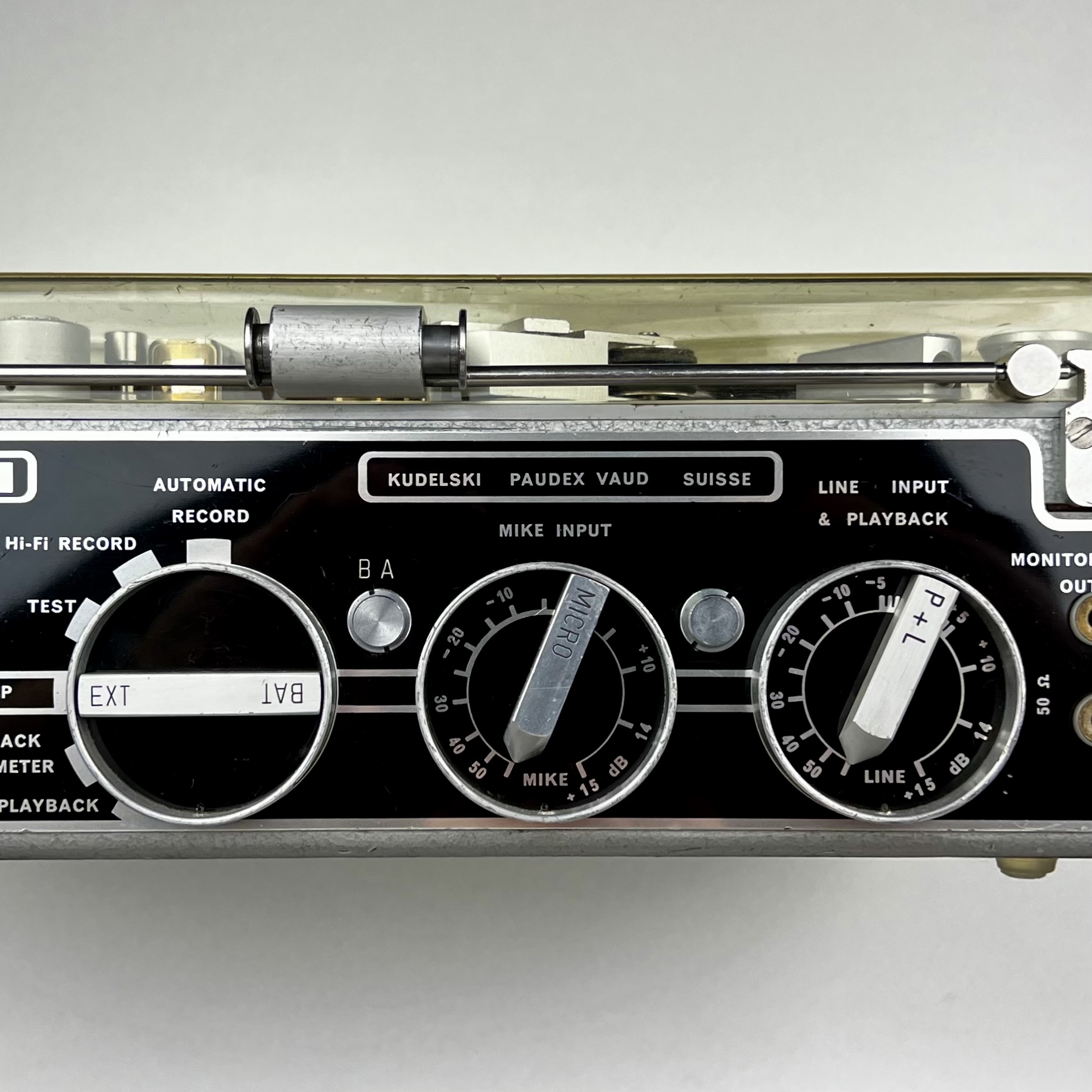
Nagra III

2. Do you have an ‘almost’ perfect bit of kit? What would you change?

The Fostex X-28 multitracker. I’ve been using it for years, even live; it does everything it needs to do and it does it well, but despite regular maintenance, every now and then (still don’t know why) it decides not to turn on.
It’s not particularly nice when it happens 10 minutes before a live show, but since I decided to use it, I factor in a bit of thrill!
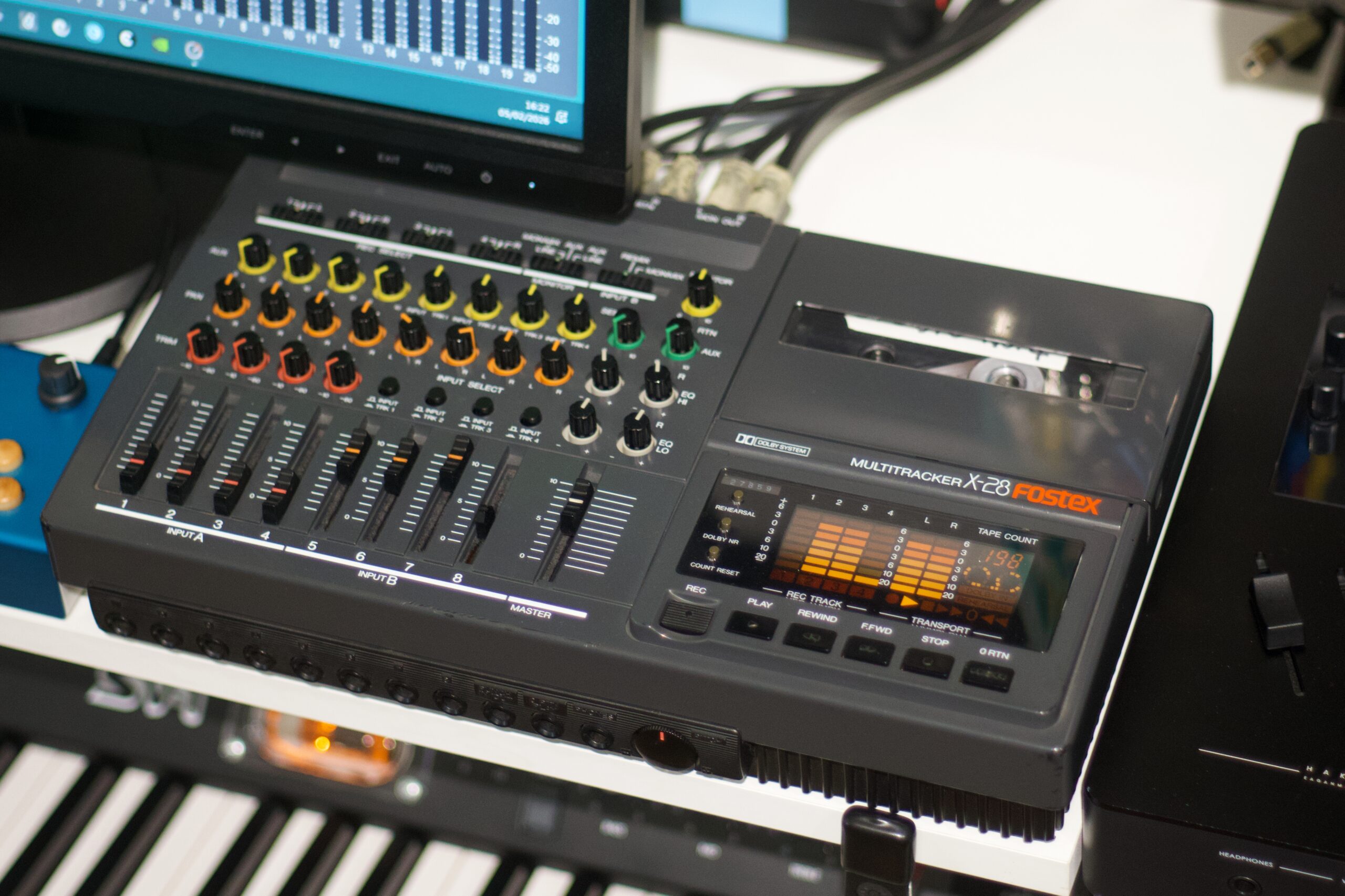
Fostex X-28 multitracker

3. What setup do you bring on holiday or tour or commute etc.?

On holiday, just headphones to listen to other people’s music.
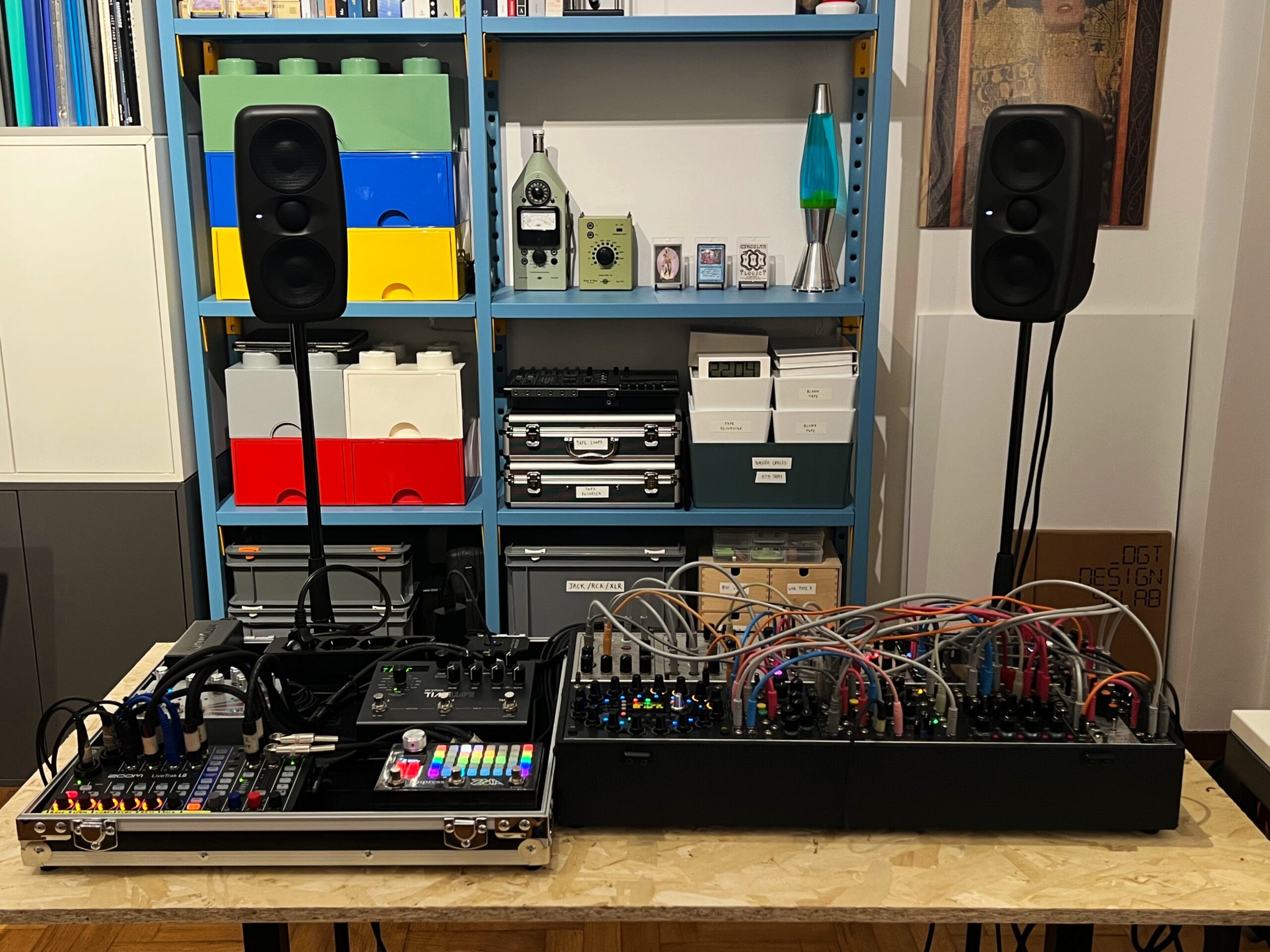
For live shows, lately my setup consists of a Eurorack system, a pedalboard with mixer, Fostex X-28, and Osmose.
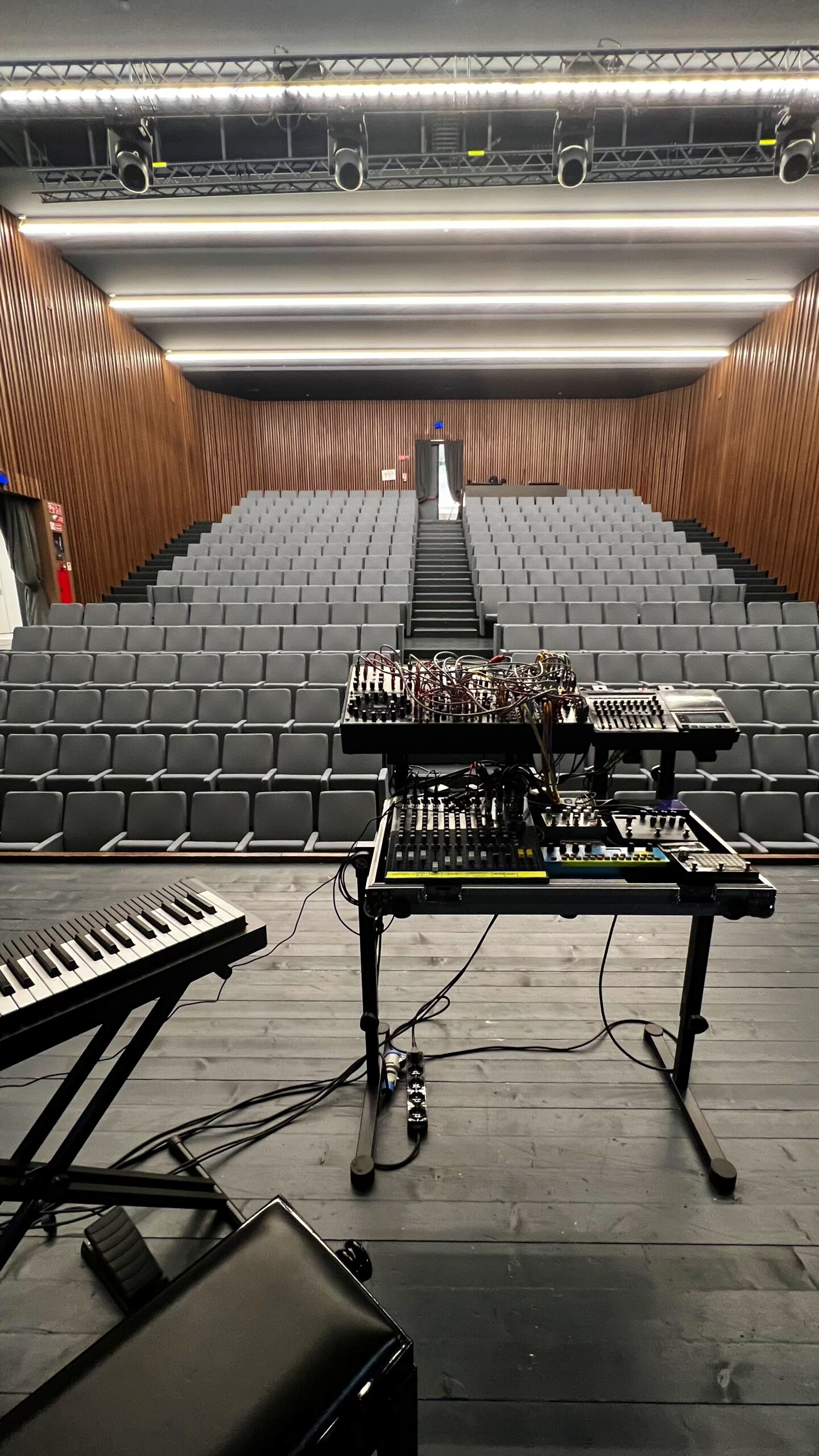
Live electronic setup

4. What software do you wish was hardware and vice versa?

Nothing. I’d say there’s enough choice both in software and hardware.

5. Is there anything you regret selling… or regret buying?

Sentimentally speaking, I regret selling the Korg Microkorg, it was my first synth.
Another synth that I always regret selling every time I try it again is the Moog Grandmother: fat sound, nice keyboard, great spring reverb, semi-modular.
Sooner or later it will come back into my studio 🙂
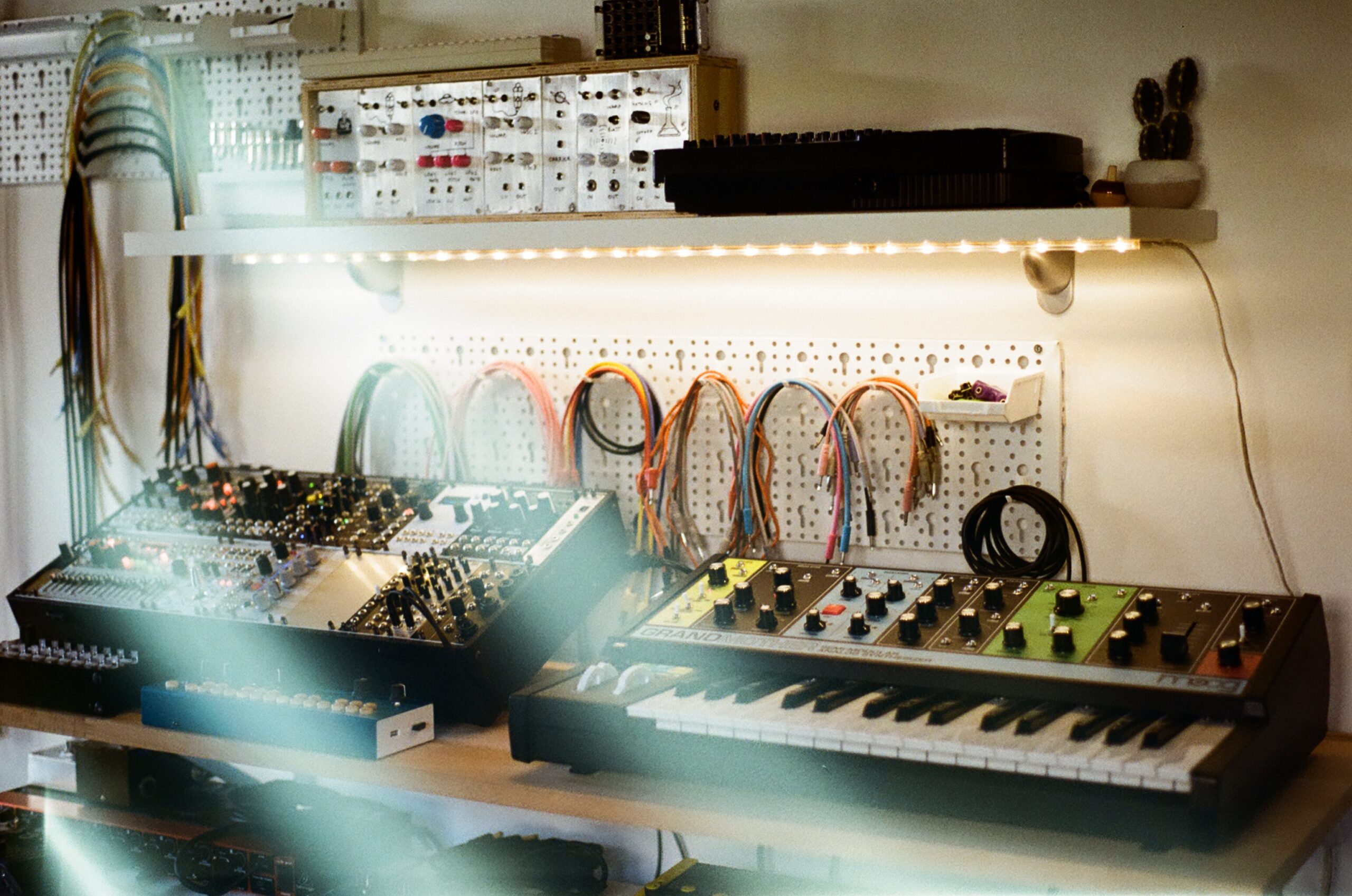
Moog Grandmother

6. What gear has inspired you to produce the most music?

The piano.
It’s the instrument that shaped me, even beyond a purely musical point of view.
The one that has always been with me.
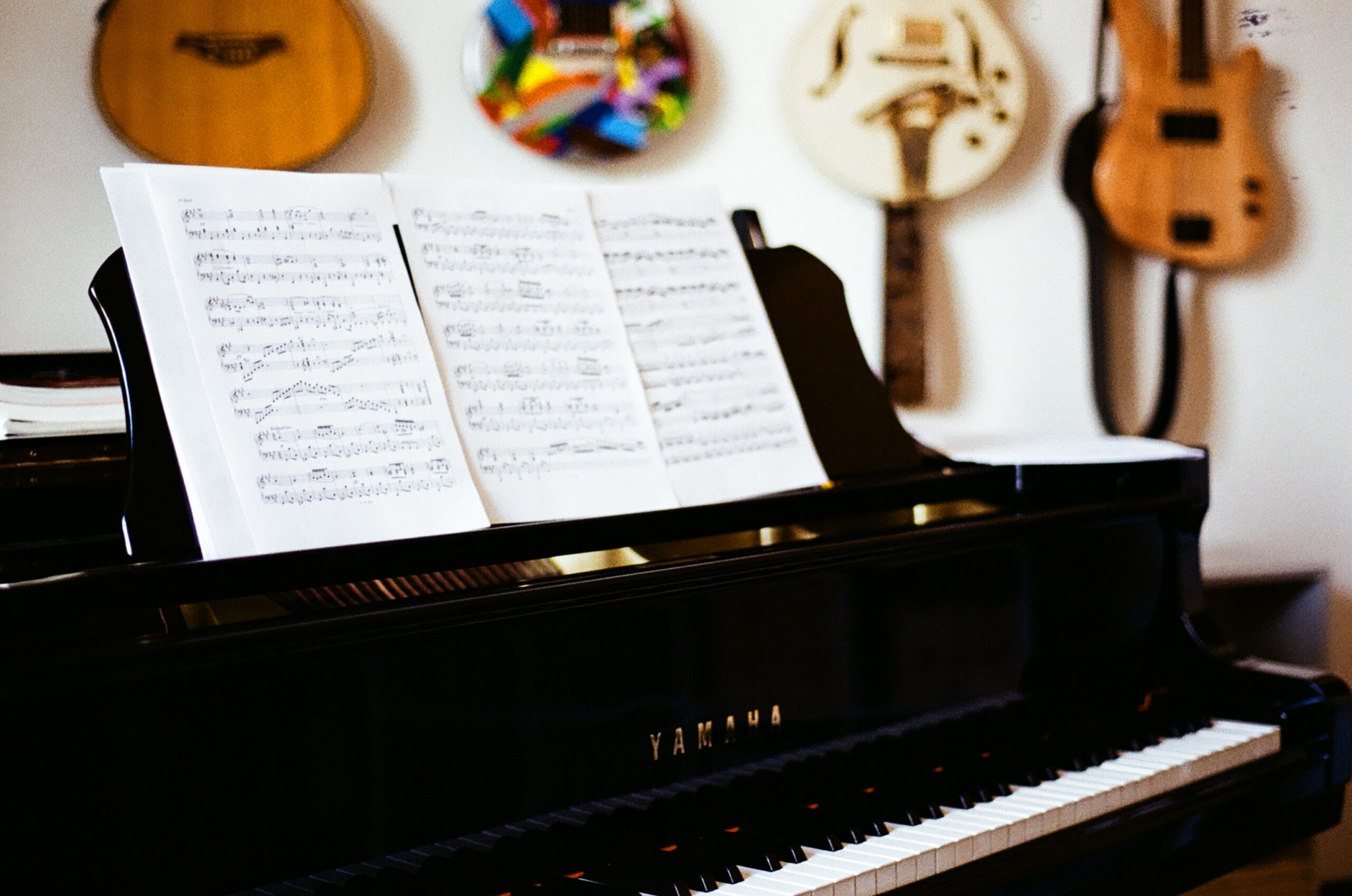
Yamaha Piano

7. If you had to start over, what would you get first?

In general? A piano.
Synth/production-related? PC + audio interface + speakers/headphones.
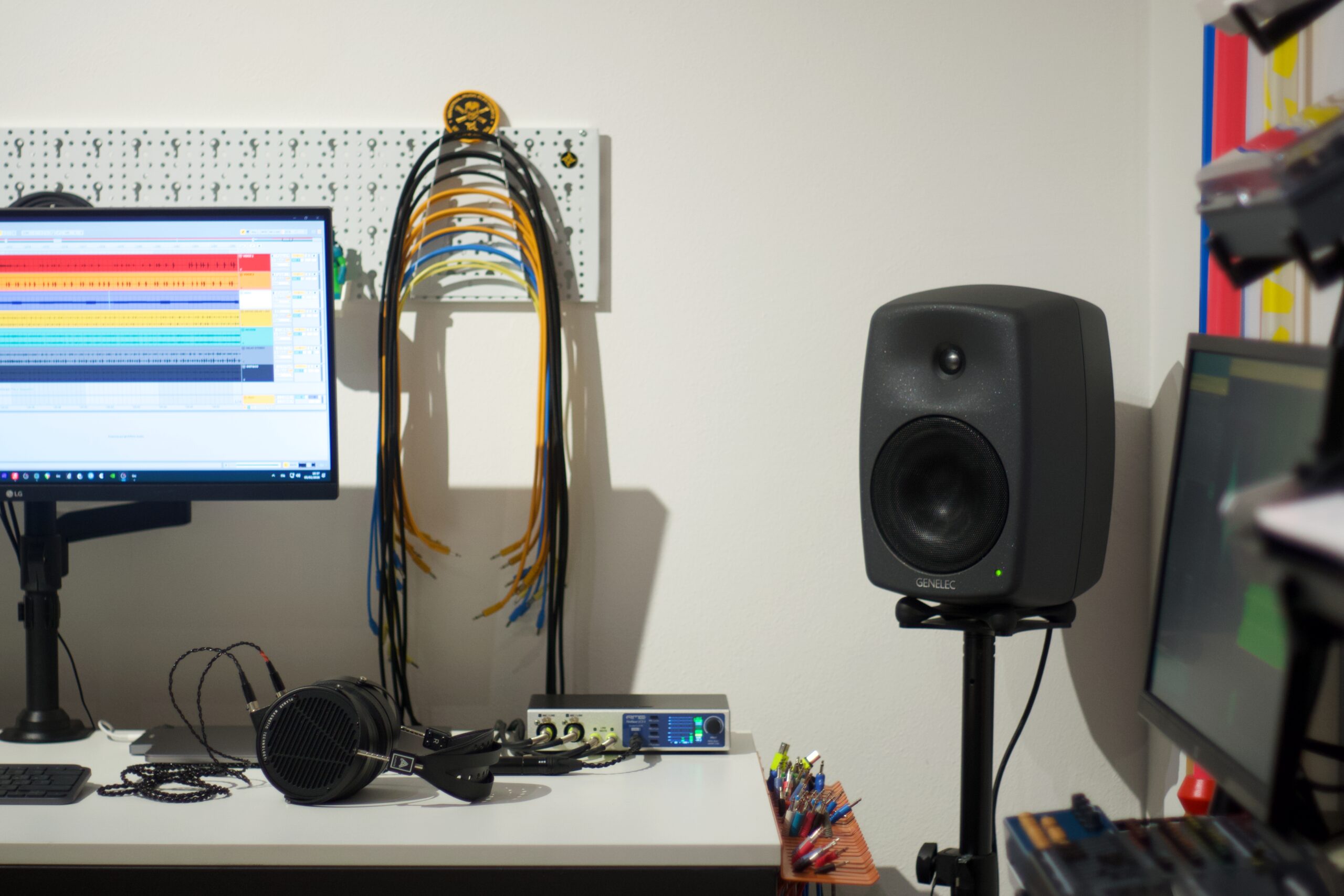
DAW, RME audio interface and Genelec Speaker

8. What’s the most annoying piece of gear you have, that you just can’t live without?

CASES! Hard cases, soft cases, flight cases, pedalboards. They’re expensive, big, heavy, and when I change setup often you have to modify them, adapt them, or worse, replace them.
But it’s the best way to transport my instruments around, so that’s how it goes.

Gear cases

9. Most surprising tip or trick or technique that you’ve discovered about a bit of kit?

Well, it’s a technique that I really like and use a lot: cross FM modulation.
One oscillator modulates another in frequency, and the latter modulates the first one back.
You end up in definitely wild sonic territories, but I really enjoy being able to tame the modulation by finding various sweet spots that allow me to use it in a melodic way as well.
Two of the modules where I prefer to use this technique are the Piston Honda mk3 by Industrial Music Electronics and the Brenso by Frap Tools.
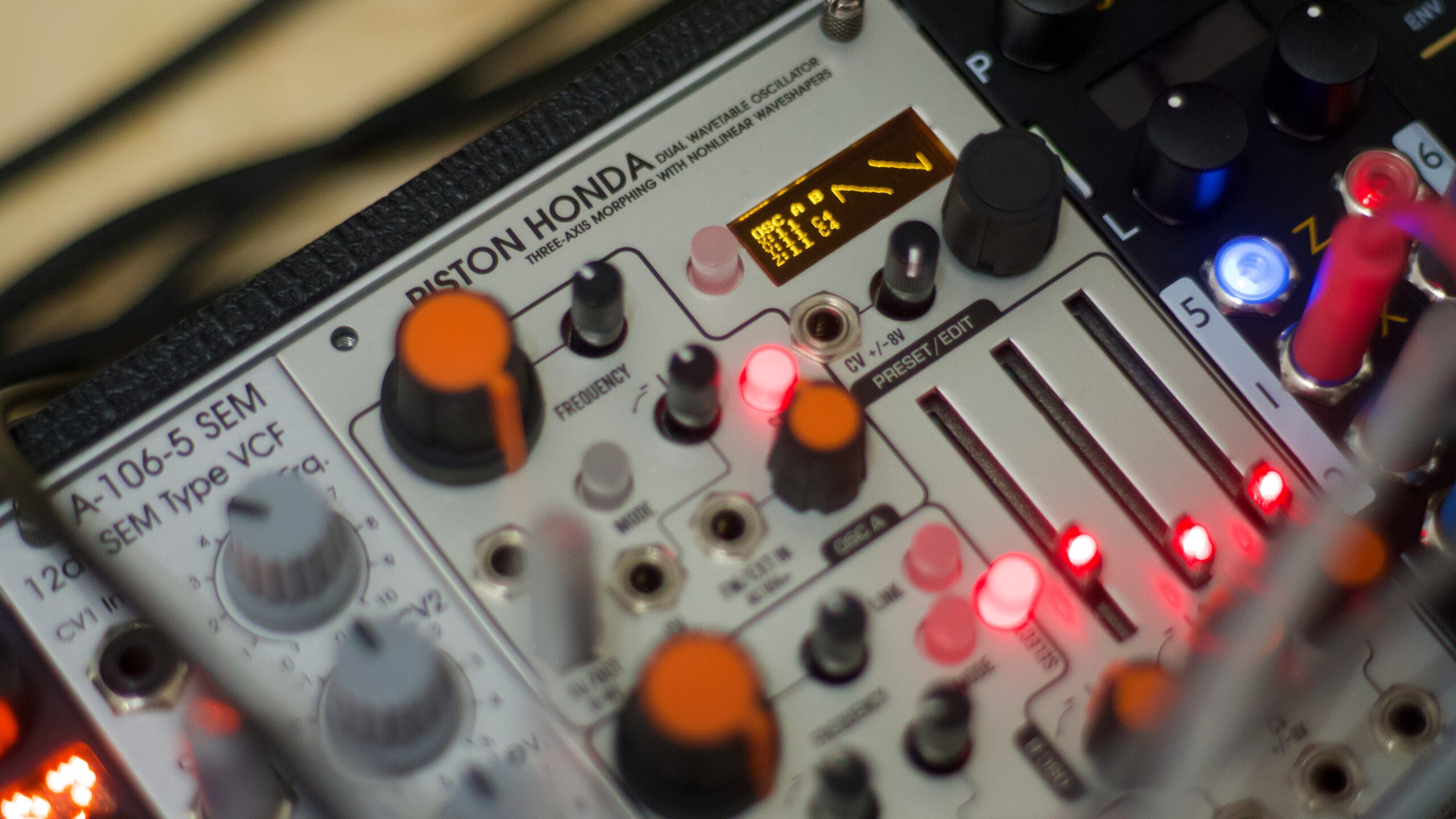
Piston Honda mk3 by Industrial Music Electronic

Artist or Band name?

Francesco Gennari

Genre?

Electronic.

Selfie?
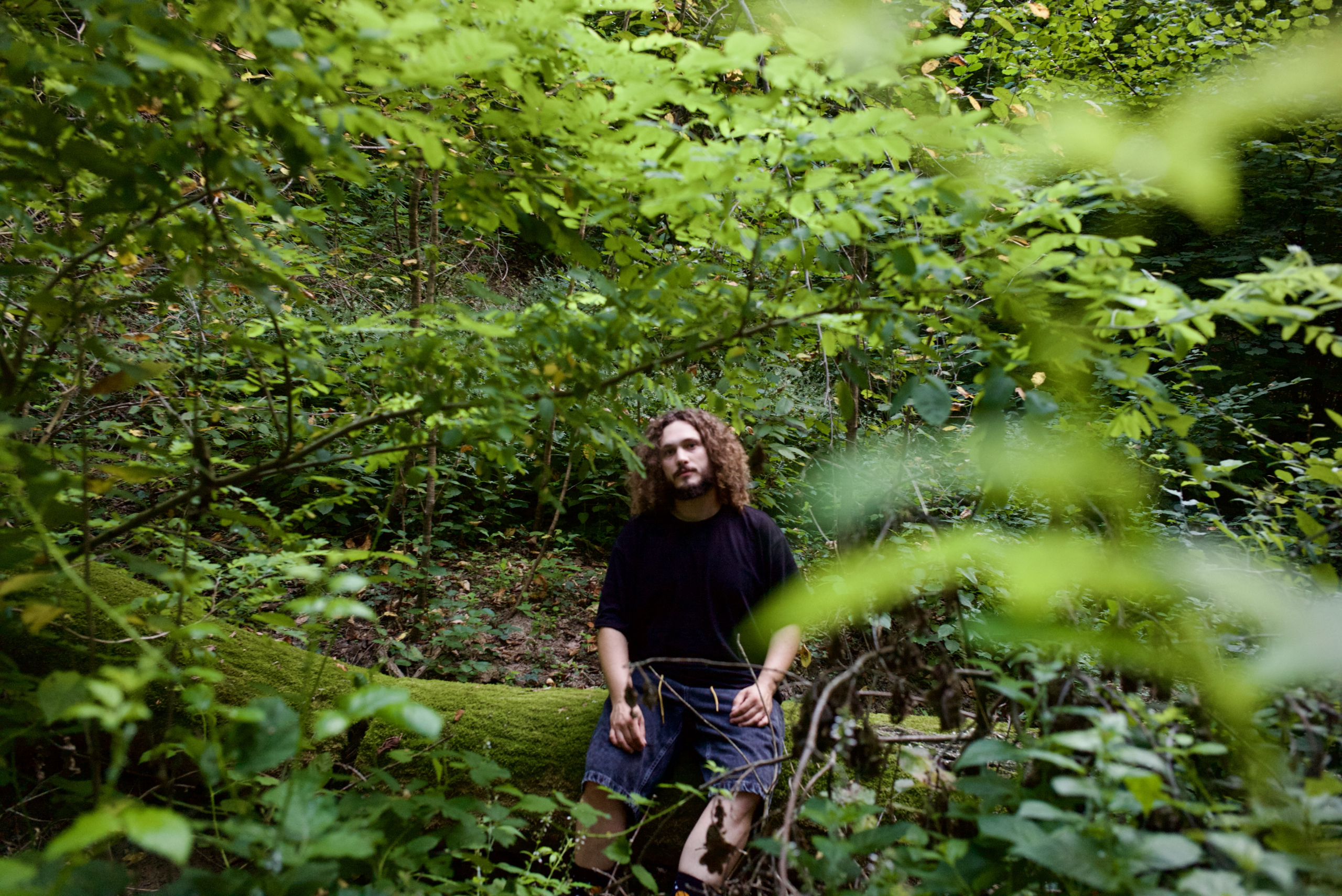
Francesco Gennari

Where are you from?

Brescia – Italy

How did you get into music?

I started playing the piano as a child, around the age of 5.
One day, a teacher at the kindergarten I attended brought in a digital piano to play, and I was completely enchanted by it. From that moment on, I started taking lessons, and later, around the age of 13/14, I entered the Conservatory to study classical piano, completing the course about 10 years later.
At the same time, I began developing an interest in other instruments: I played guitar and bass in a couple of bands with friends, until I got my first synth around the age of 18.
However, the synth loop started more seriously and intensely a few years later. Curious, I took part in a DIY workshop to build a small synth with three oscillators and a filter.
I then went through Pure Data/Max, continued with DIY, other keyboard synths, and eventually landed in the Eurorack modular world.

What still drives you to make music?

The urge to create something, to express myself, and the curiosity to try and discover something new.

How do you most often start a new track?

Most of the time everything starts at the piano.
The process can begin from a melodic, harmonic, or rhythmic idea. From there, I tend to transcribe my idea into my main sequencer in my modular system, which is Usta by Frap Tools, or bring everything into the DAW.
The development often continues in parallel by creating further interlocks, melodic lines, or interventions on the piano keys, and then moving on to timbral and structural research within the modular system.

How do you know when a track is finished?

In most cases, I realise it when I notice that I’m obsessing over too many details of the track, or when I see that I already have too many different versions of the same piece.
At that point, it means I’m stuck in an endless hyper-perfectionism loop.

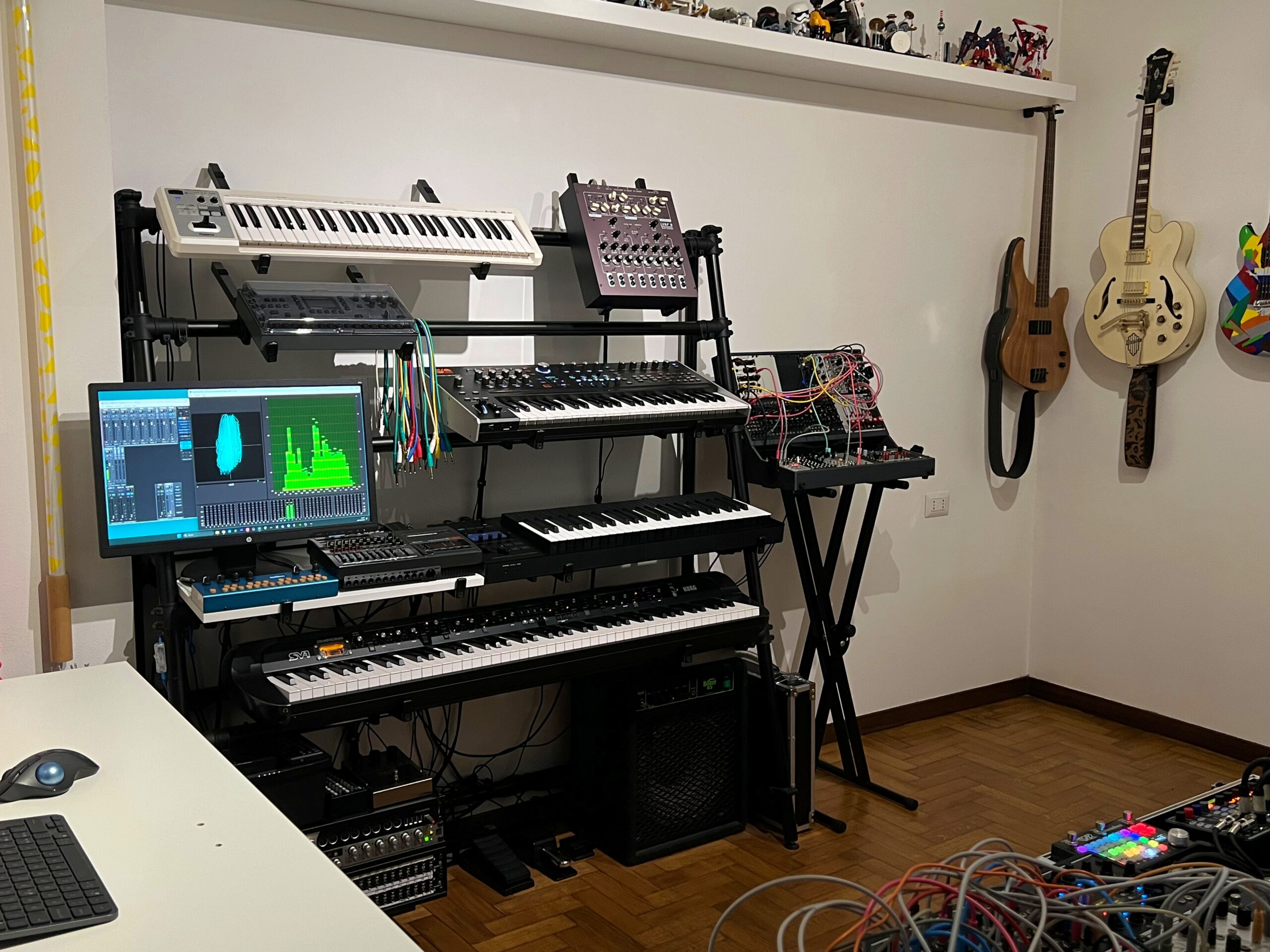
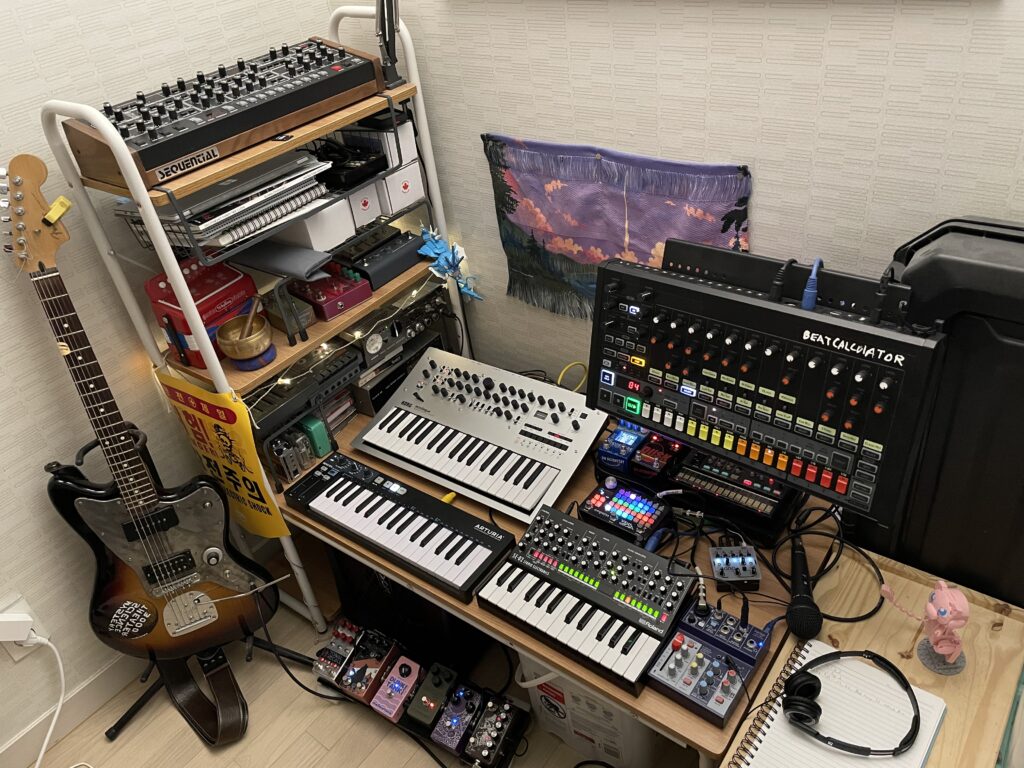
Show us your current studio
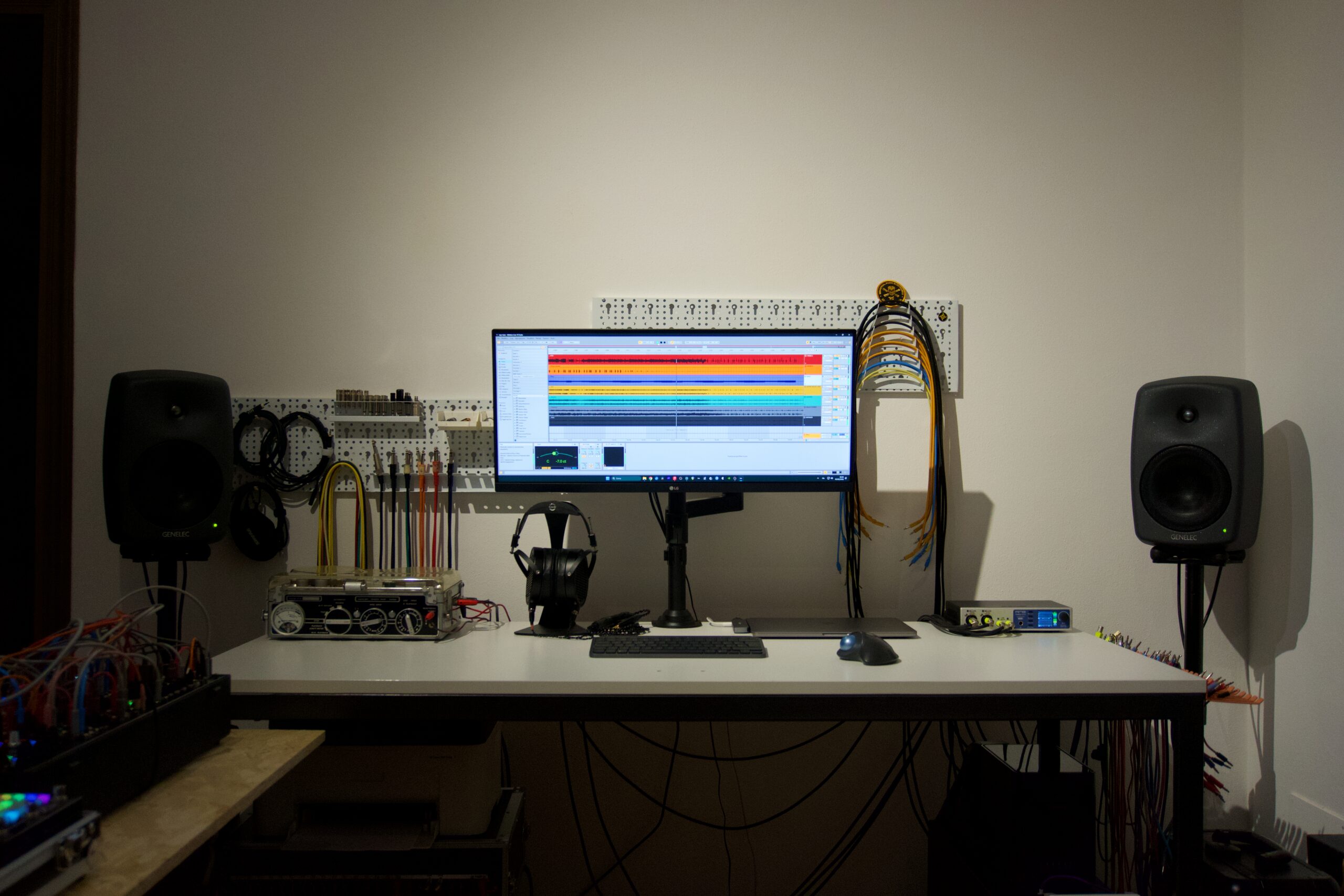
Studio desktop
Studio synth rack
Yamaha Piano
Eurorack desk

Best creative advice that you’ve ever heard?

Be curious.
Go beyond, explore, experiment, and research.
This helps you understand yourself and allows you to find a way to express yourself creatively.

I remember how my piano teacher at the conservatory used to introduce me to, and push me to investigate, the context of the piece I had to study: discovering the composer and placing that piece in a specific historical moment and in the composer’s own life. This process always changed my reading and interpretation of the piece.

Promote your latest thing… Go ahead, throw us a link.

My latest album: Studi

– Bandcamp: https://francescogennari.bandcamp.com/album/studi

– YouTube: https://www.youtube.com/playlist?list=PLBdrsKXF5H_y91ONIyzsYOt05CMWgL6nM

– Platform: https://tr.ee/WKJTshcvsA

Studi is made up of 8 tracks inspired by the concept of the Étude, where technical exploration and sound research converge.
Each Studio is accompanied, in addition to the album cover, by an artwork created by artist/designer Daniel Hicks, based in San Diego, CA, offering a visual counterpart to the music.

You can also find a performance of each track followed by a track breakdown on the Frap Tools channel: https://www.youtube.com/playlist?list=PLPVhsLeaCG8ouhhsNamWOdhtU07GYkItN
Stegonaute – Lofi Thought

1. Favourite knob or fader or switch on a piece of gear and why?

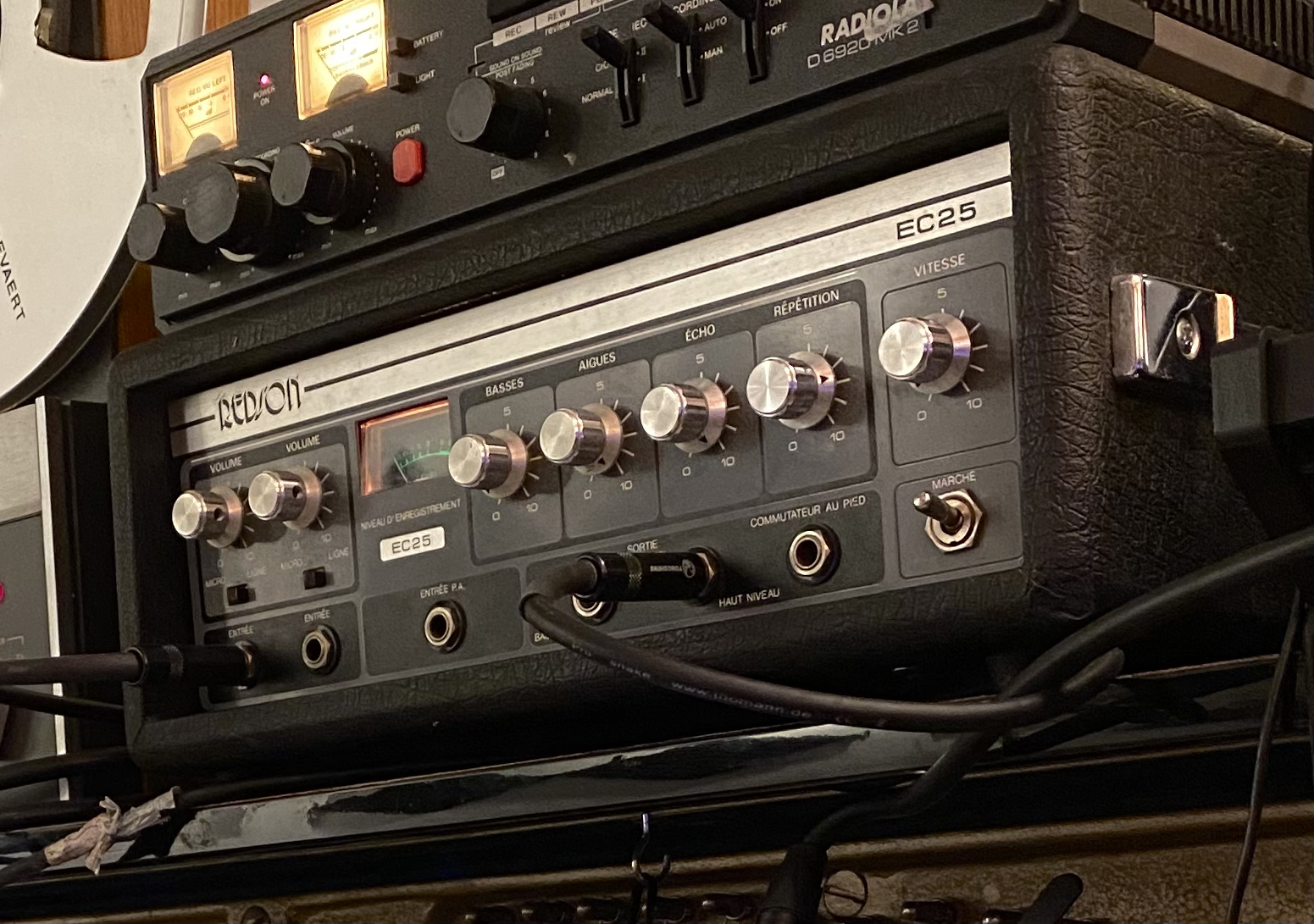
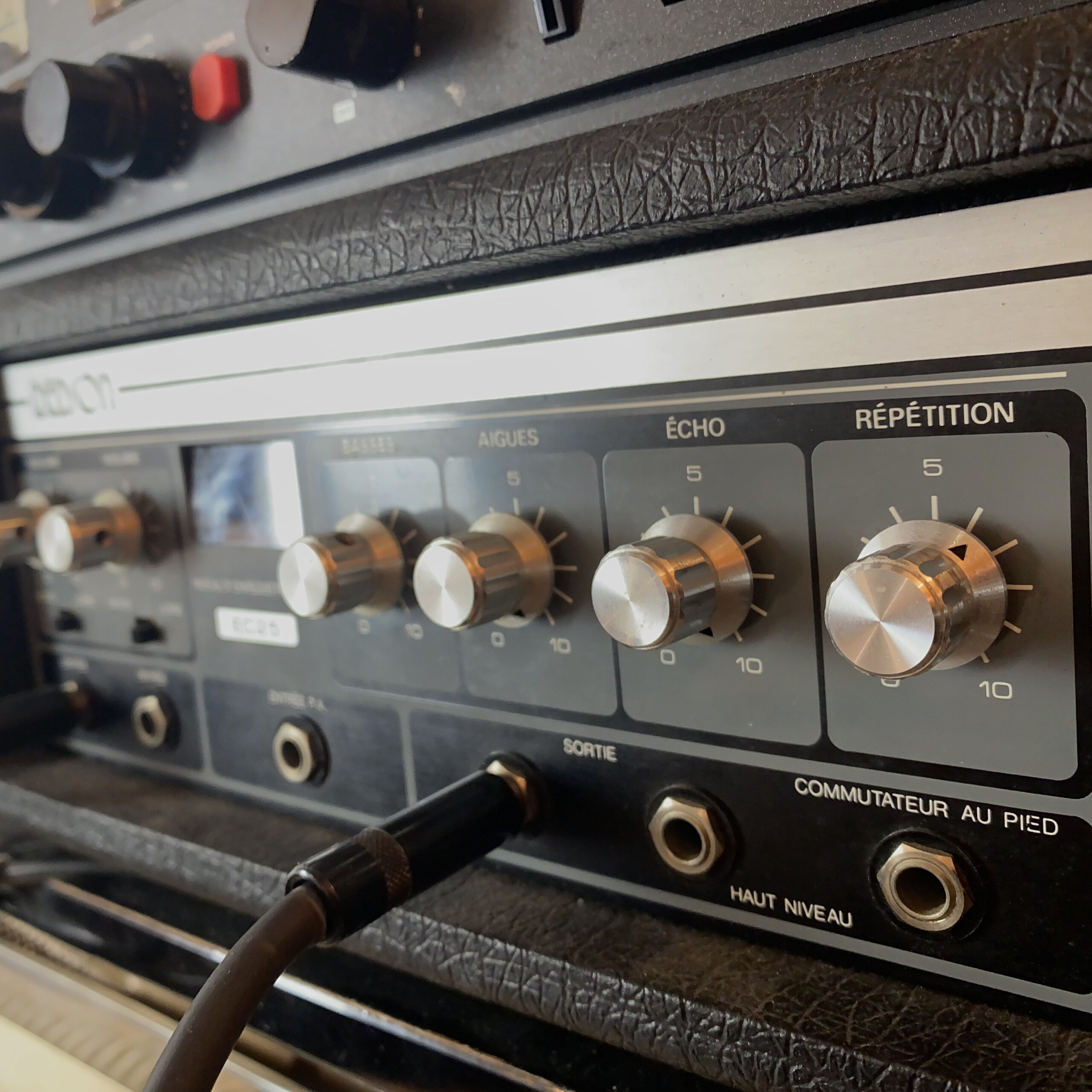
Redson EC25 Repetition knob

I’m in love with the “repetition” knob (in French on the device) of my Redson EC25. It turns most chord progressions into space travel. The result can be extremely soft, with ethereal echoes, or very violent with destructive feedback. I use this (very lofi and cheap by the way) echo chamber as an instrument in its own right.

2. Do you have an ‘almost’ perfect bit of kit? What would you change?

I don’t have ONE perfect kit, I like to navigate between my different devices. I will consider a perfect kit for one week before using another exclusive for the next. That’s what I like and that makes me never get bored.

3. What setup do you bring on holiday or tour or commute etc.

Travel setup

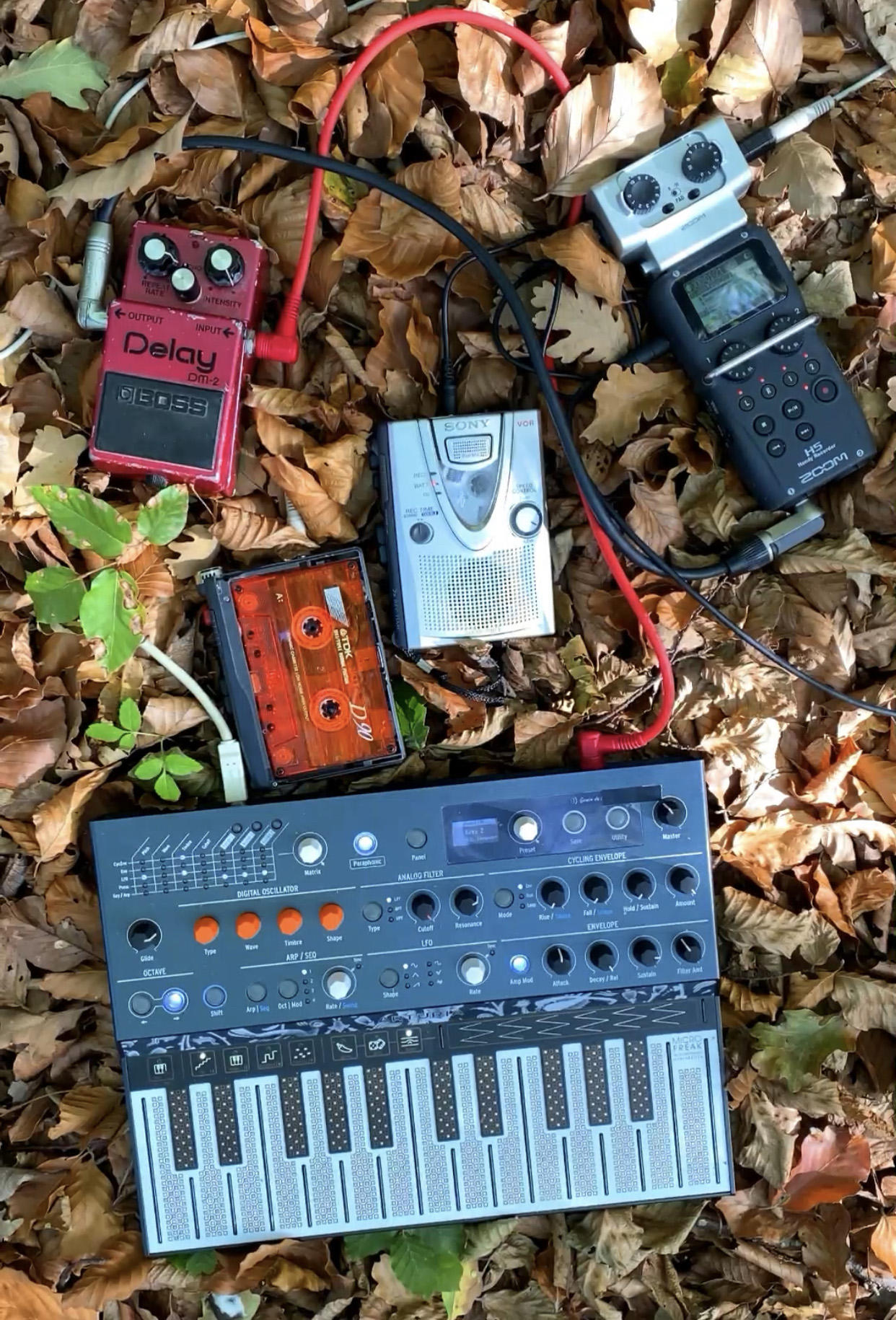
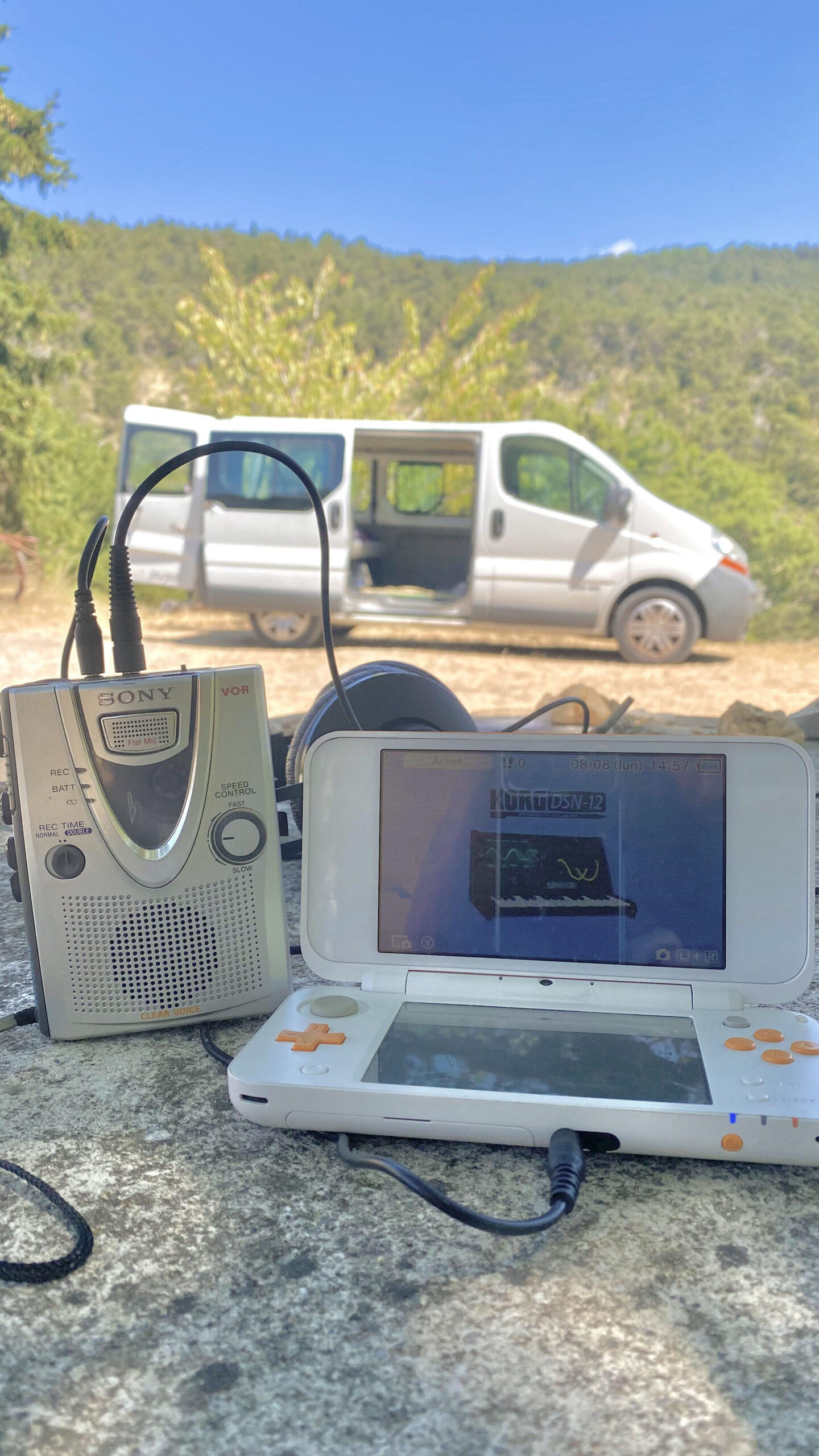
I like to travel with the Arturia Microfreak because it is small, light and runs on usb battery. And when my children give me permission, I use their Nintendo 3DS with the Korg DSN12 program, which is a surprising emulation of the Korg MS10. I also bring a Sony TCM200 tape recorder to play with the different playback speeds. And of course on my Zoom H5 to record.

Nintendo 3DS with the Korg DSN12 program and a Sony TCM200 tape recorder

4. What software do you wish was hardware and vice versa?

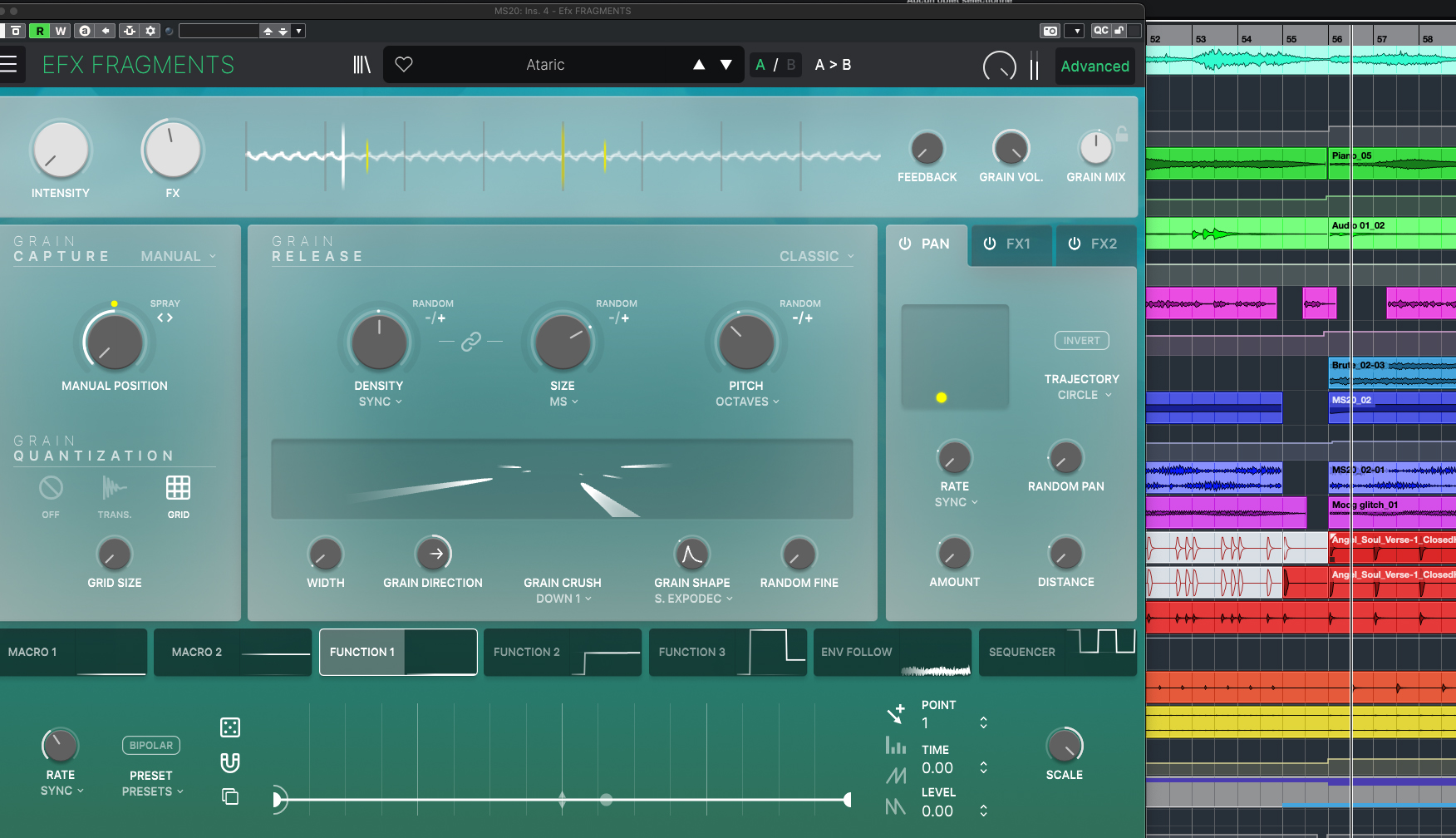
I would love to have the equivalent of Arturia’s “Fragments” plugin in pedal format. It’s a very inspiring granular processor, which can totally change a drum beat or a synth pad. I don’t use it as much as I would like because the computer is almost completely absent from my creative process now.

Arturia’s Fragments vst plugin

On the other hand, I haven’t found an echo plugin as dirty as my Redson EC25, all the space echo emulations that I have tested sound much too clean, even with an old tape simulation. So I would say a cheap tape echo plugin.

Redson EC25 Tape Echo

5. Is there anything you regret selling… or regret buying?

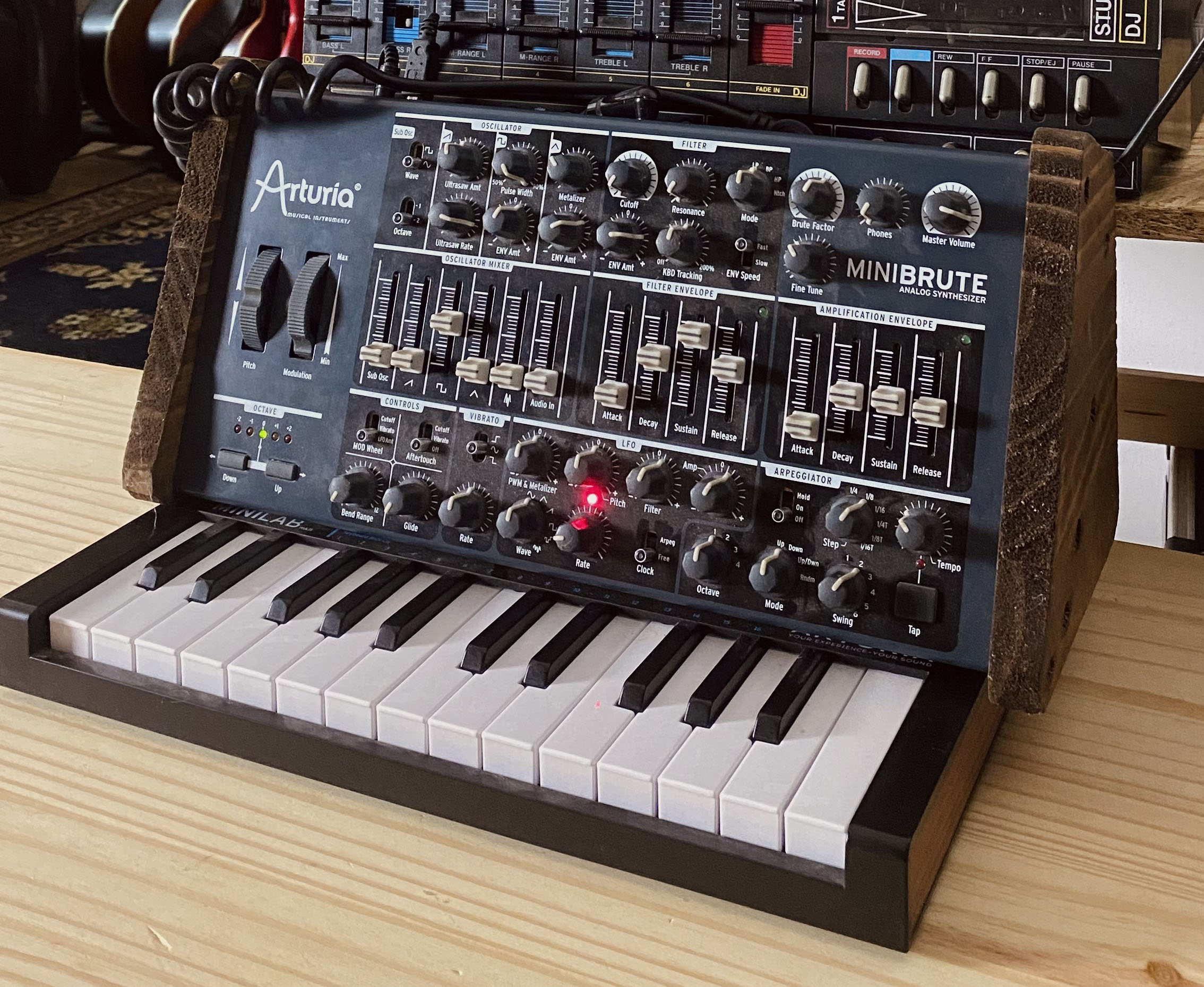
I have a love-hate relationship with the Arturia Minibrute (MKI), which I’ve bought, sold and repurchased several times. So I would say it is perfect to answer the 2 questions haha.

Arturia Minibrute

6. What gear has inspired you to produce the most music?

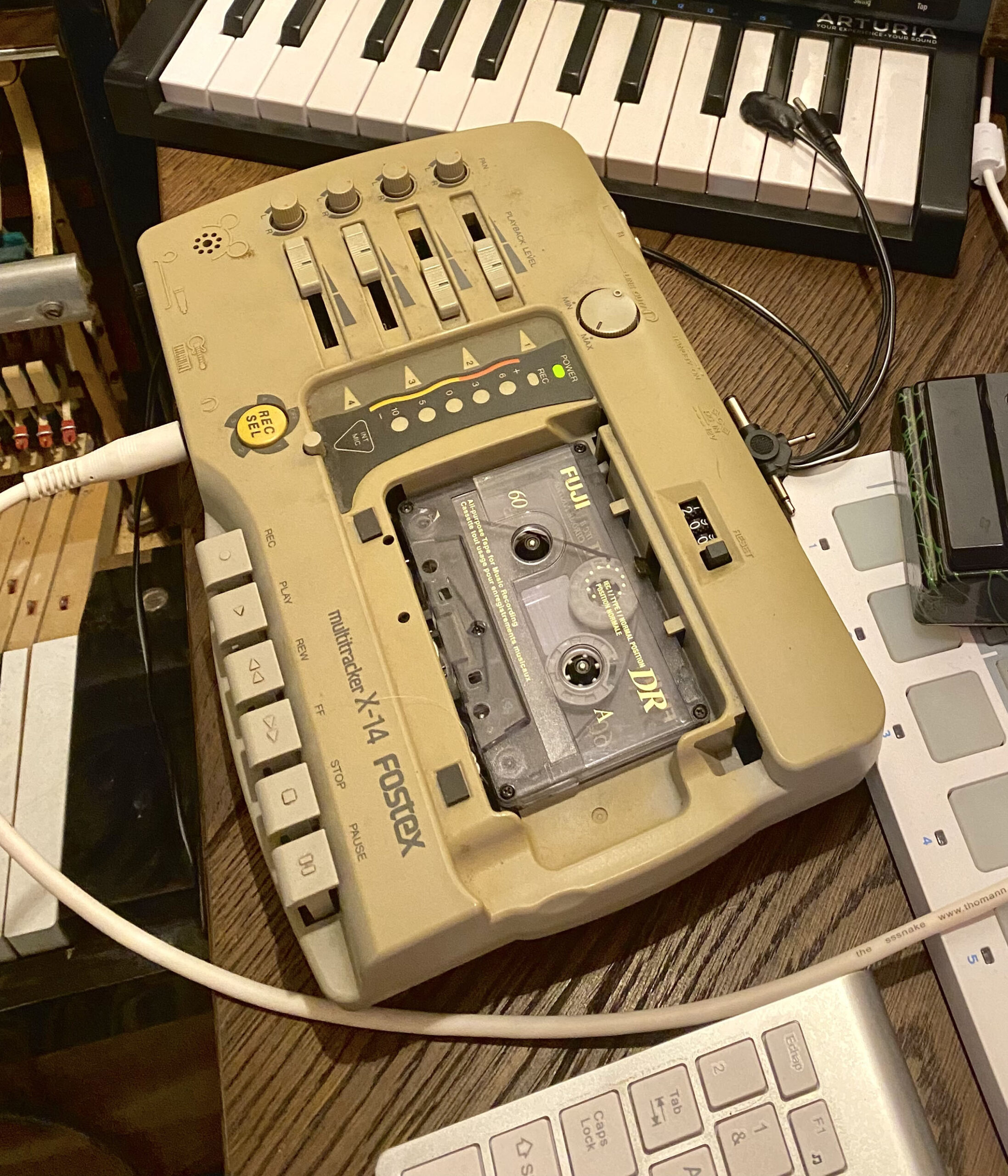
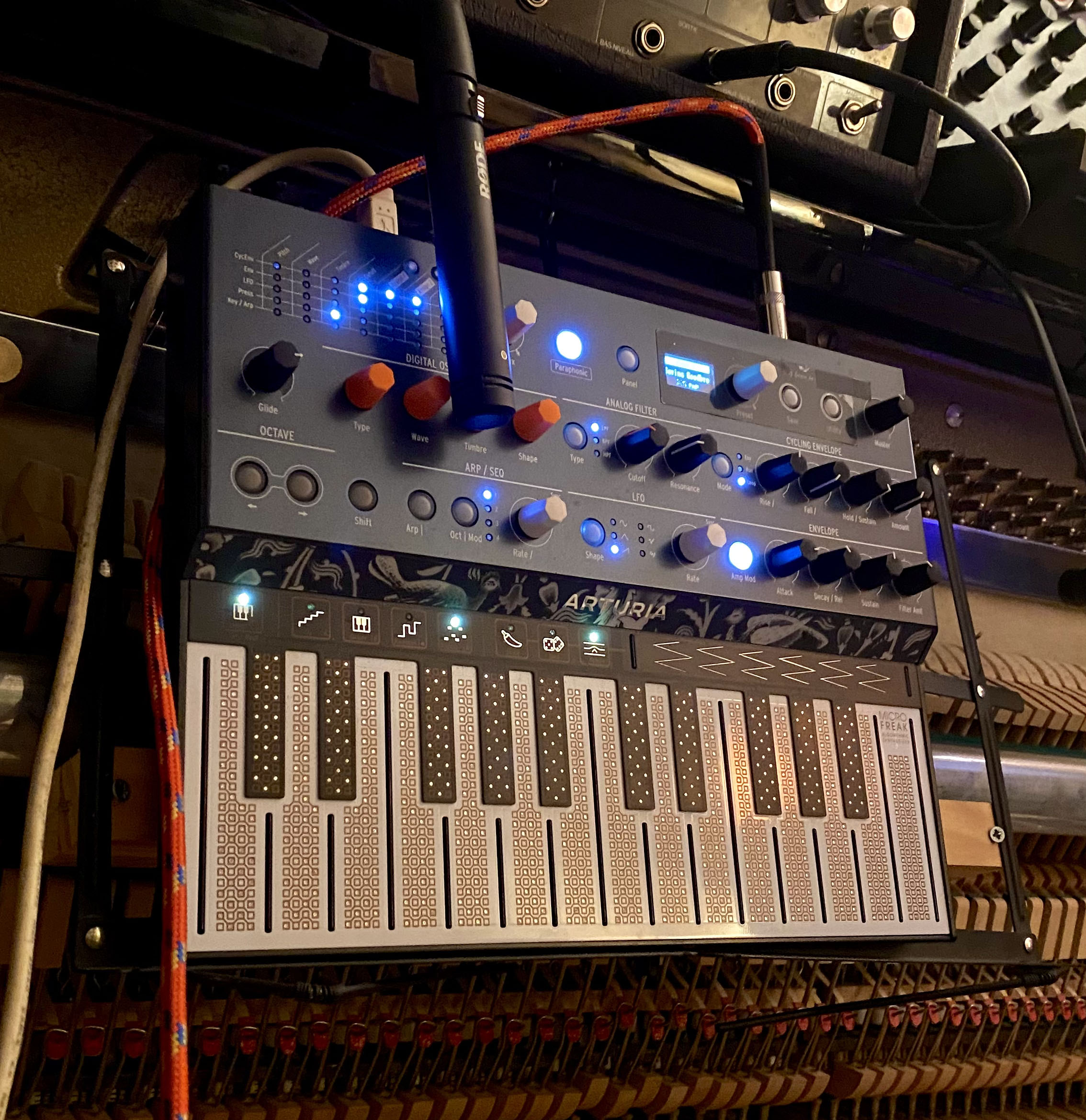
It’s hard to choose between my Fostex X14, which introduced me to the world of tape looping, and between the Arturia microfreak which allows me to compose outdoors, whether in the forest or on the top of a mountain.

Fostex X14

I have the Fostex for 18 years, and the Microfreak for 2 months. This makes me happy because I think there are always new things to discover and explore.

Microfreak

7. If you had to start over, what would you get first?

I think I would take a Mac and a UAD interface directly. I lost too much time with the computer, with my current system I almost forget it.

8. What’s the most annoying piece of gear you have, that you just can’t live without?

Except my computer, nothing bothers me yet !

9. Most surprising tip or trick or technique that you’ve discovered about a bit of kit?

I recently discovered that with a tape multitrack recorder like my Fostex I could play tapes recorded on normal devices in reverse mode. Combined with the different tape speeds, it’s pure happiness !


Artist or Band name?

Stegonaute

Genre?

Euuuh… Lofi, Trip Hop, Ambient ?

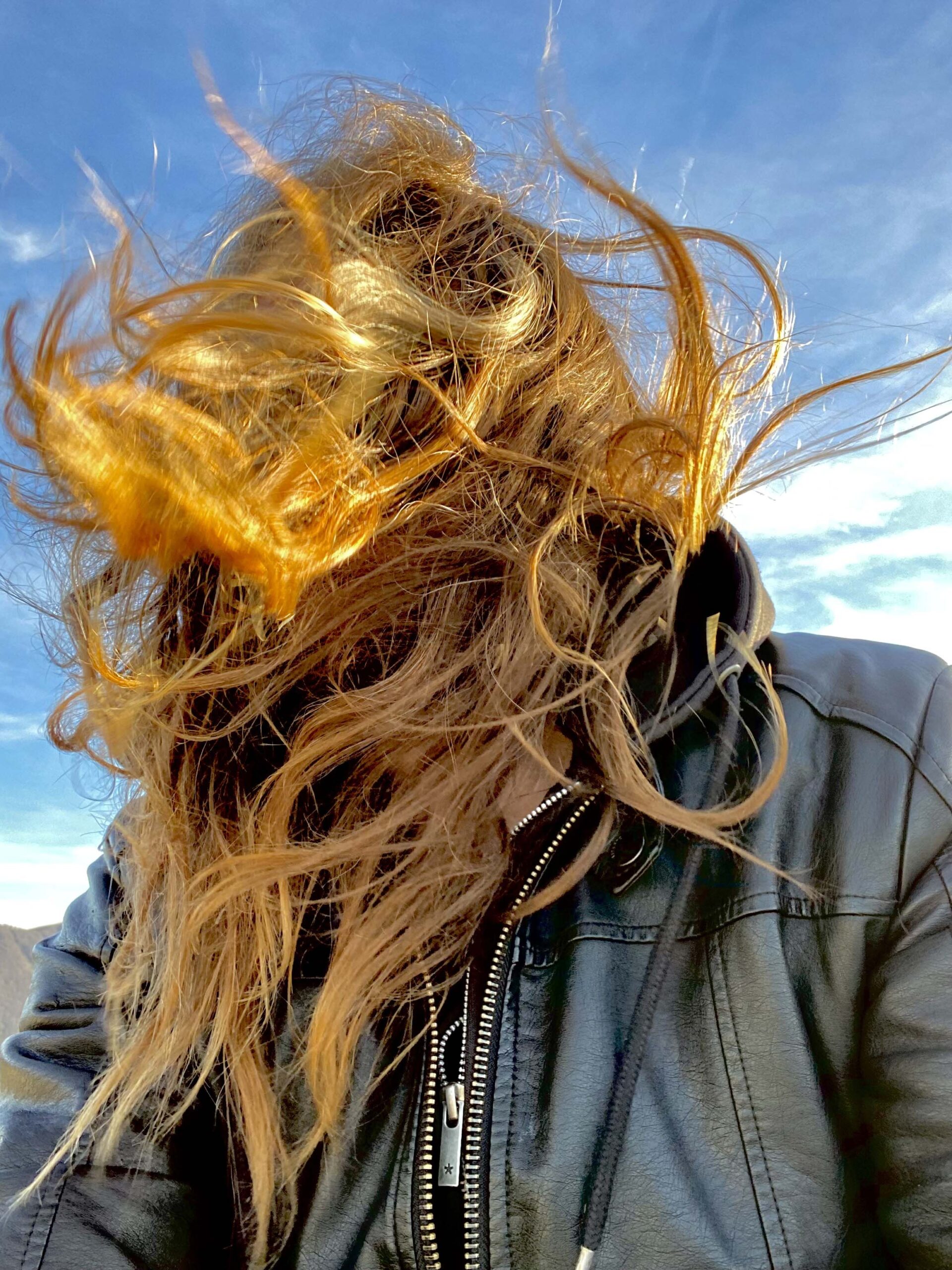
Selfie?

Stegonaute

Where are you from?

I live in a small village in the south east of France

How did you get into music?

I started at the age of 12 with the bass, then with the guitar.

What still drives you to make music?

I like exploring new sounds, traveling and letting myself be carried away. It’s my main way of expressing myself.

How do you most often start a new track?

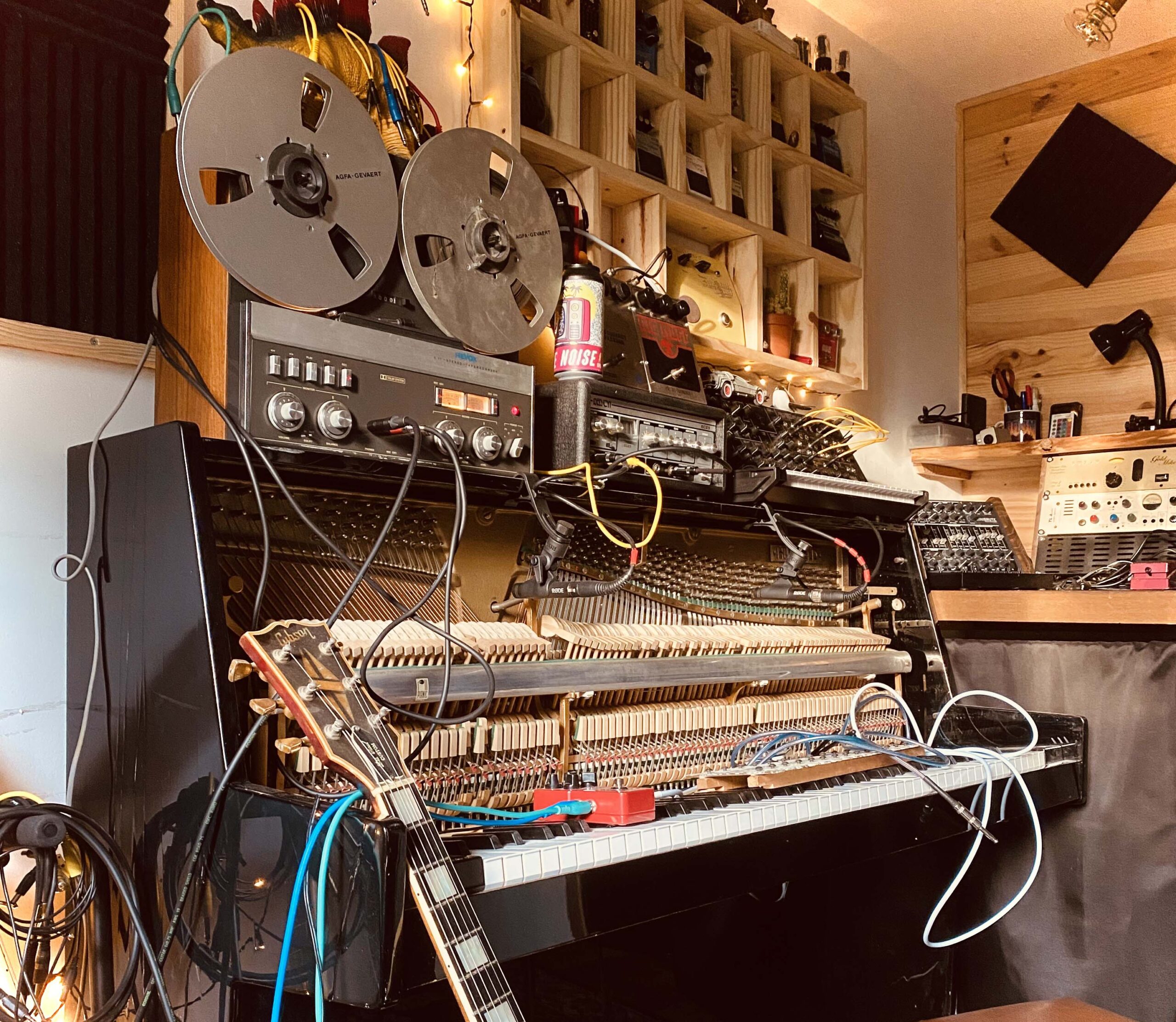
Stegonaute’s piano covered in FX

I start most of the time on my acoustic piano, even if I don’t know how to play it. I like the fact that there’s no need to turn it on, it’s even faster than plug and play!

How do you know when a track is finished?

NEVER ! I stop working on it at some point in order to move on. Releasing EPs on the platforms allows me to say to myself “it’s over, I’m not touching it anymore!”. Otherwise I’ll still be working on it…

Show us your current studio

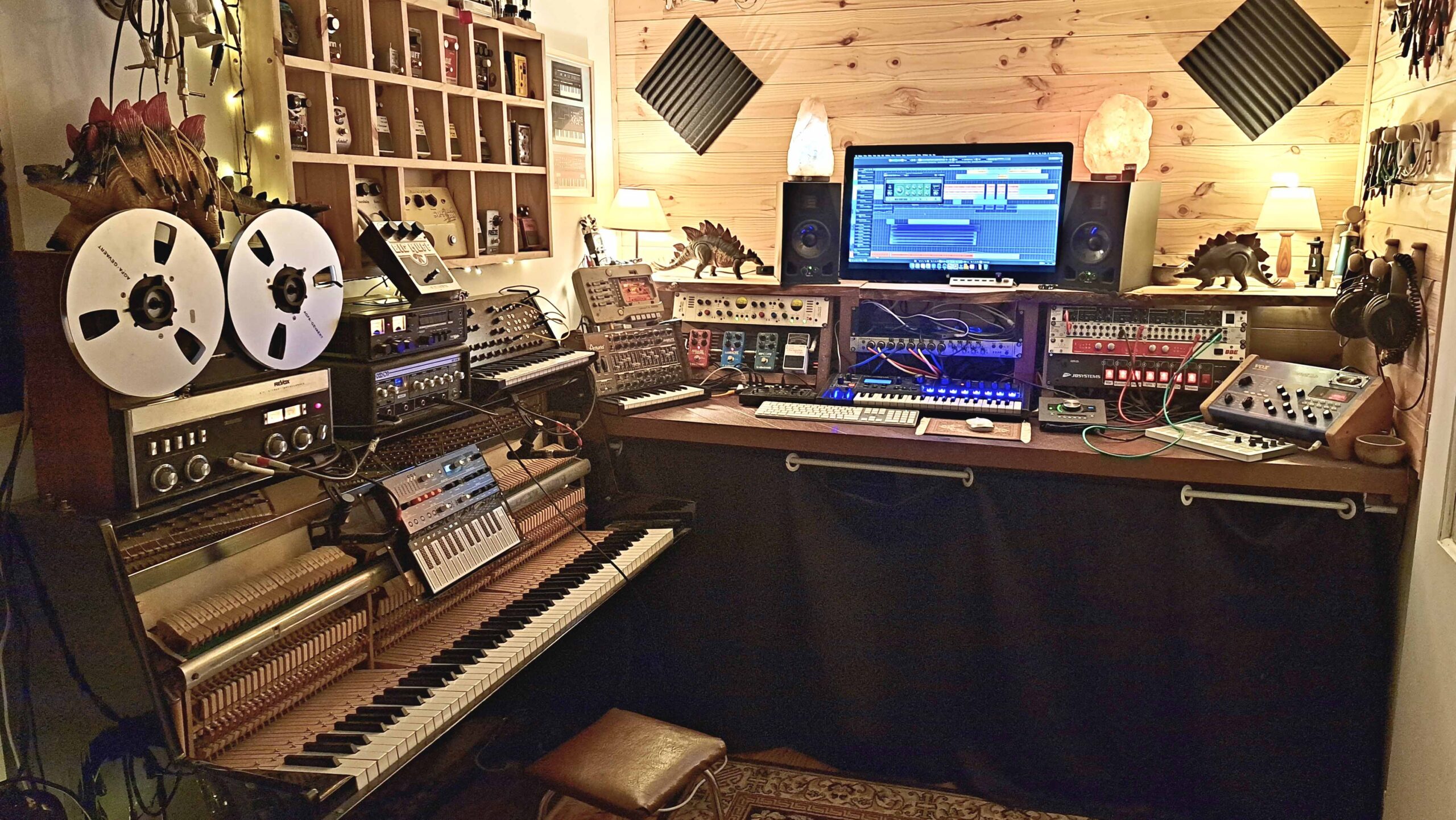
Stegonaute’s studio

Best creative advice that you’ve ever heard?

Put your phone in airplane mode.

Promote your latest thing… Go ahead, throw us a link.

Instagram @Stegonaute

Here is my latest EP : https://stegonaute.bandcamp.com/album/freefall

and my YouTube Channel


[Editor: There are affiliate links to the relevant gear throughout the articles. It helps to support this blog. In fact, should you be needing some patch cables or guitar strings. Then clicking on one of the above links and buying any product that you prefer, will help the blog… doesn’t even have to be the ones in the link. Thx]


William Stewart – W1llys

1. Favourite knob/fader/switch on a piece of gear and why?

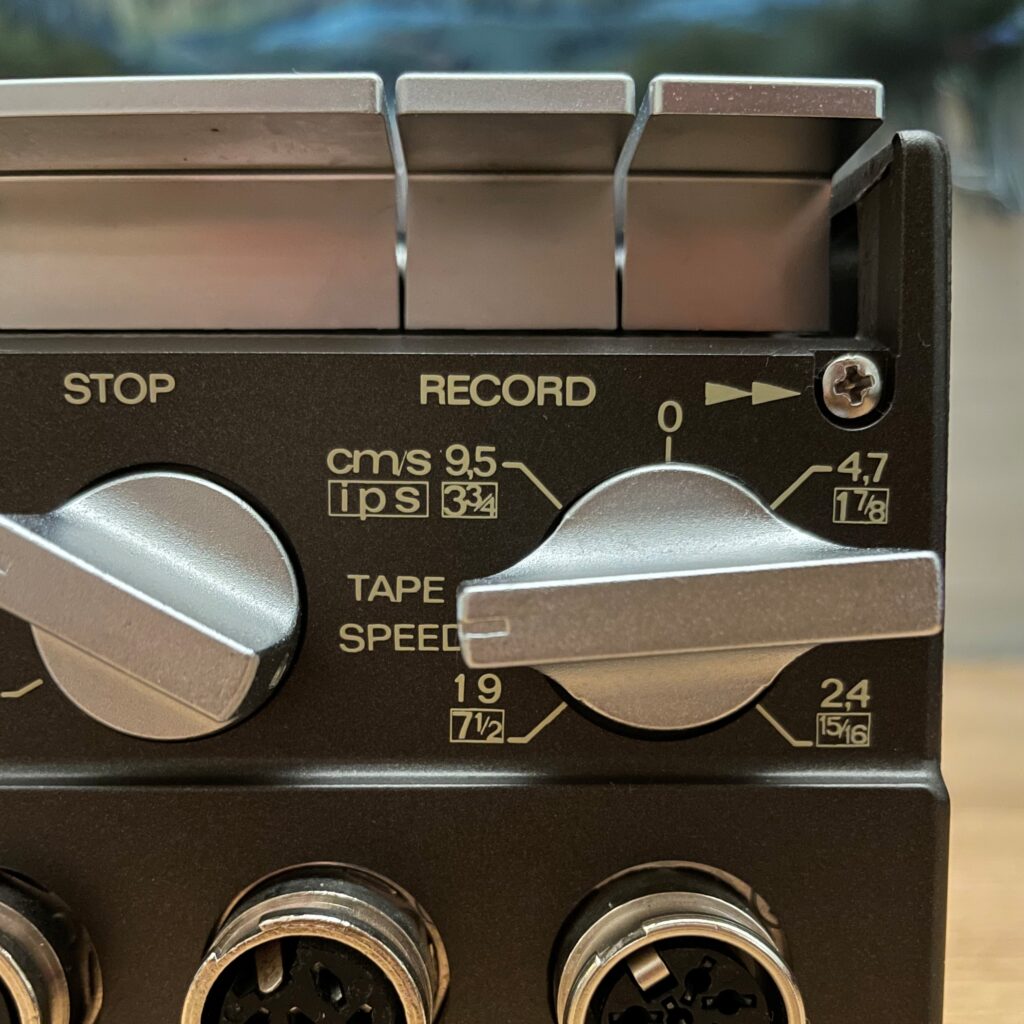
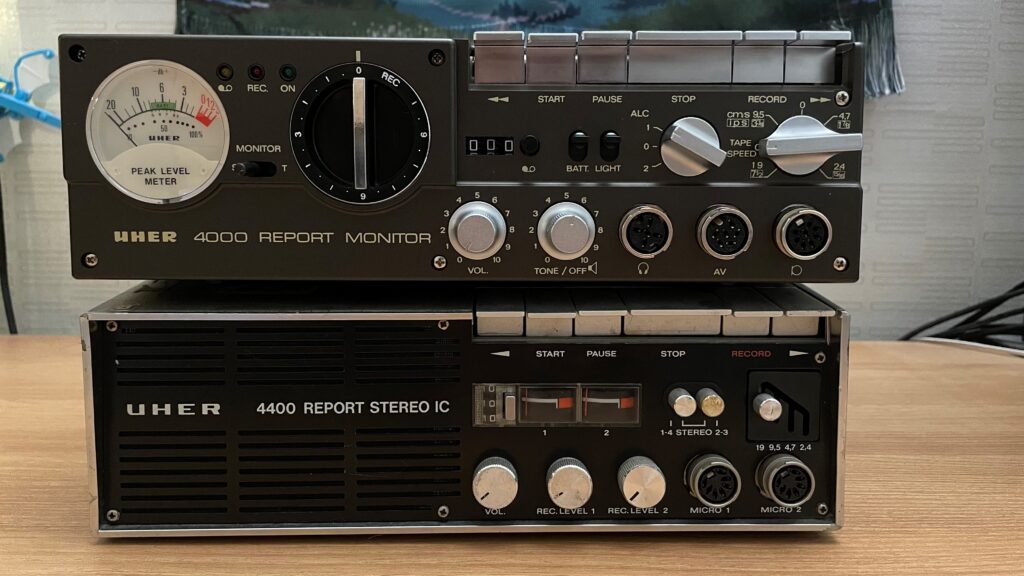
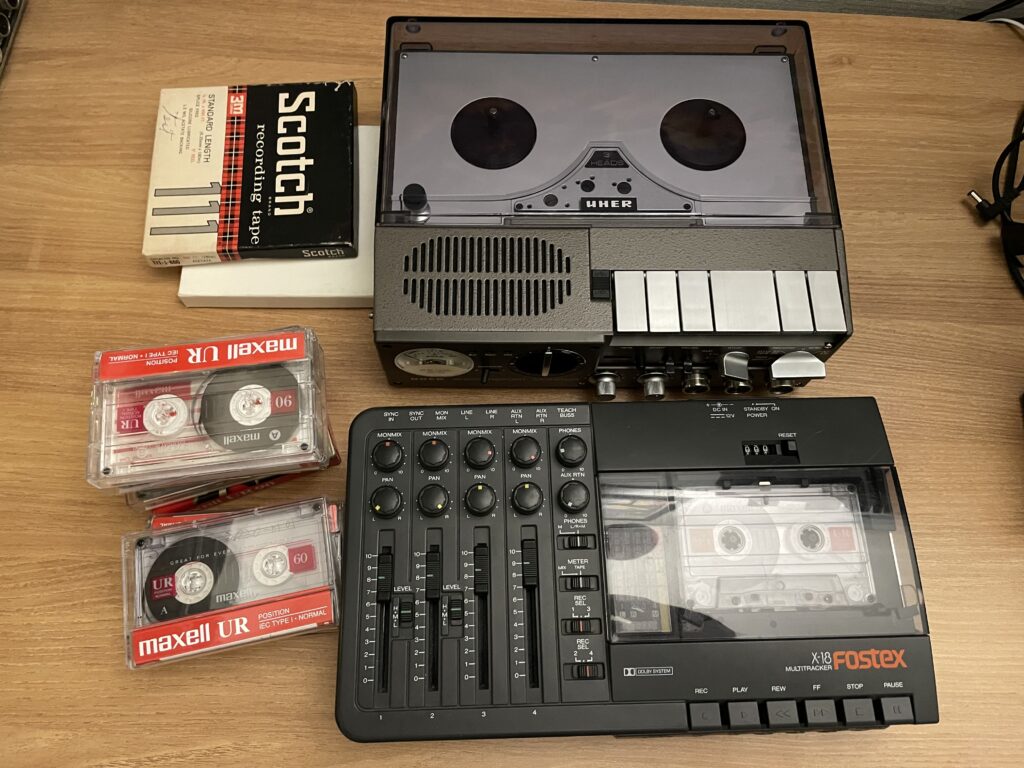
Uher Speed Knob

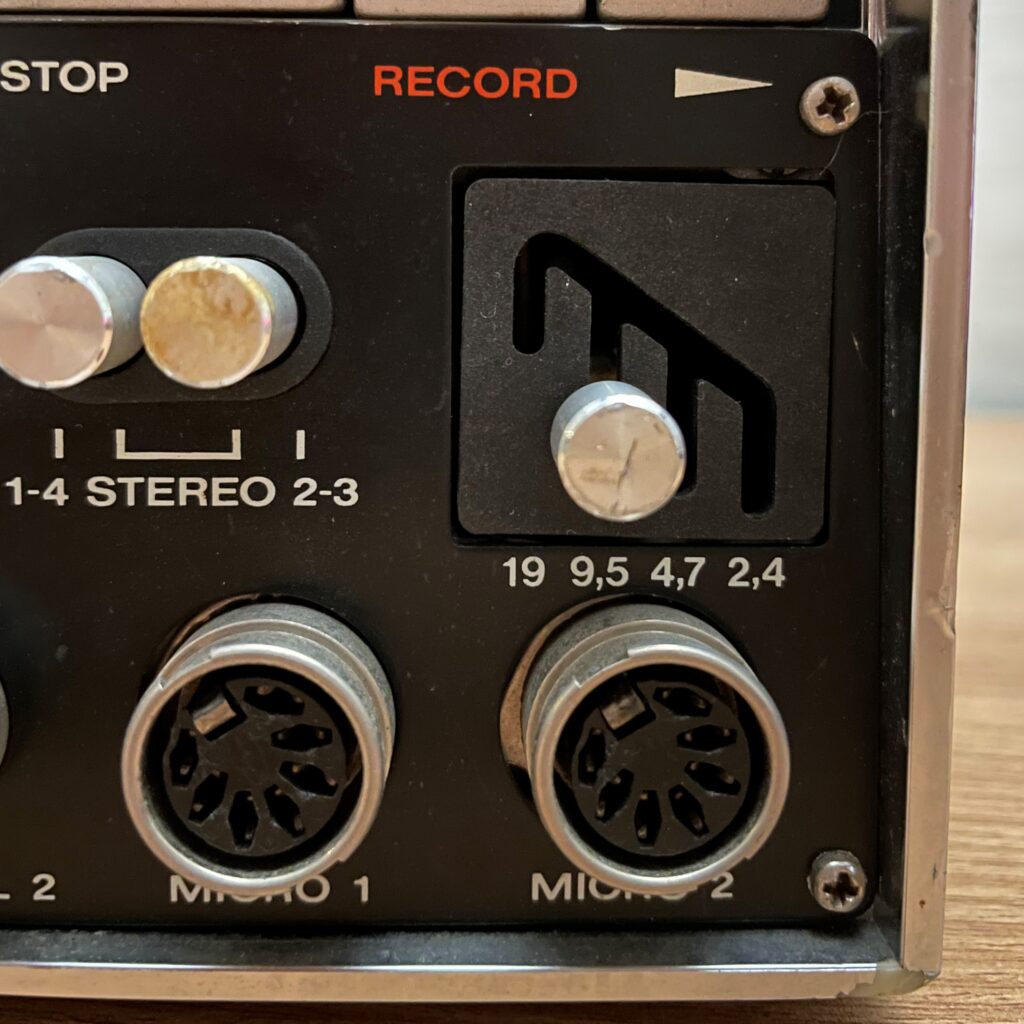
The speed selector on my Uher. The older model has a tiny gear shift for selecting the speed, but the new one just has a knob; a knob with a nice feel and weight. When you move it, you can feel the shifting of the gears inside as the mechanisms thunk into place. It’s immensely satisfying.

Uher Speed Lever
Uher Tape recorders

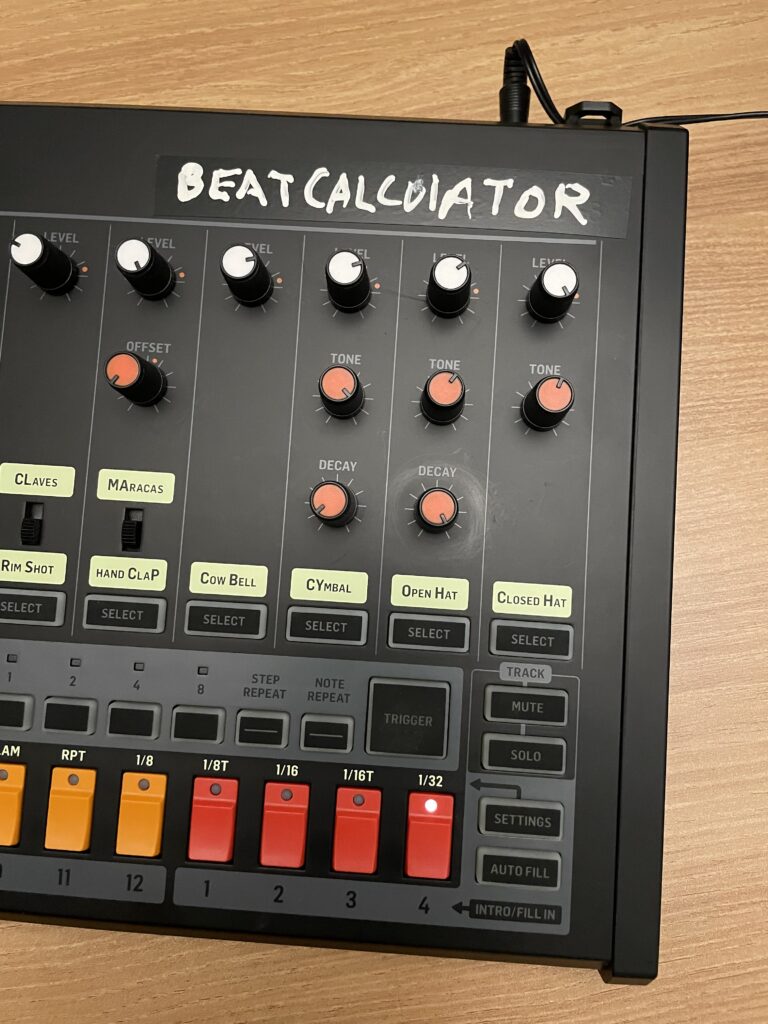
My second place choice is the hi-hat decay knob on my 808 clone. Riding that during a groove is endless fun.

808 Hihat decay knob

2. Do you have an ‘almost’ perfect bit of kit? What would you change?

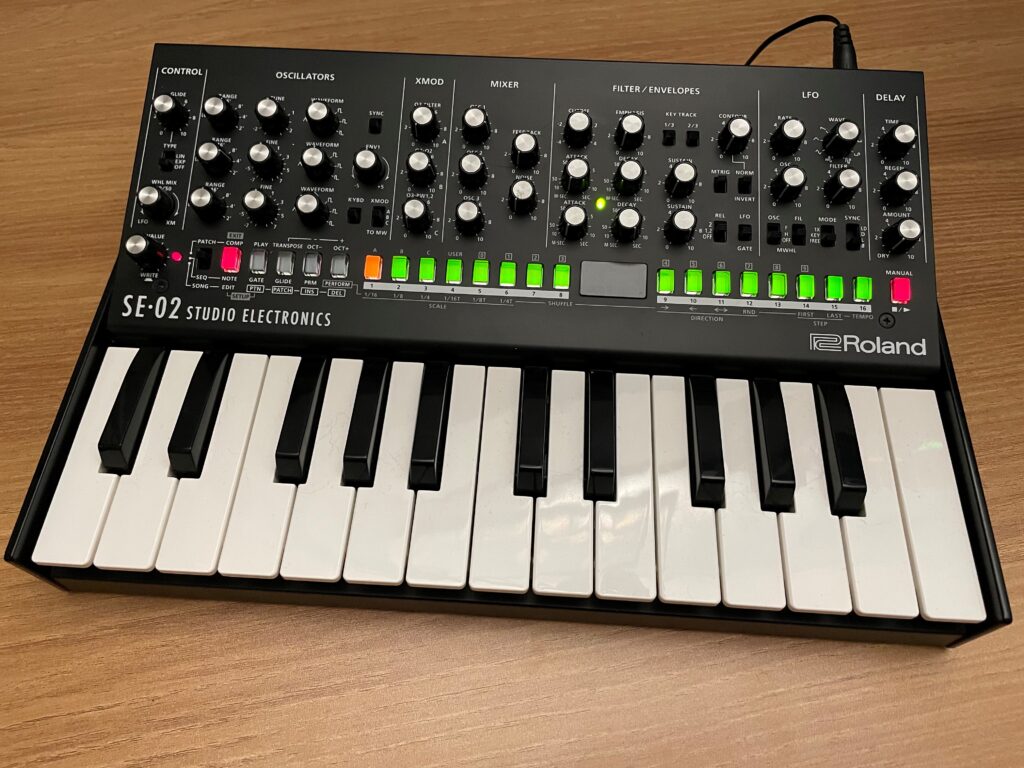
It might be the SE-02. The first synth I really learned how to use was the SH-09. It taught me how flexible a simple architecture can be, and how rewarding learning how each piece of a synth works together is. It taught me that the controls are as much a part of the instrument as the keys. Ever since then, no synth has been as fun to play as a solid monosynth.

Roland SE-02

The SE-02’s very much in the same vein, and it seems to be able to scratch every sonic itch I have. The delay’s grainy in all the right ways. The filter has a character that doesn’t make me think “Moog” for some reason. The filter has grit, filth, and somehow feels cold. Not machine cold, but unfeeling in the same that the universe is. When that filter sweeps just right it feels like the dawn, it feels like the slow and sudden heat as the sun rises in the morning. I love this thing. There’s magic in the way the envelopes and filter interact with the delay.

There are three things I’d change. The first thing I’d change is the knob taper. It’s exponential and it makes playing the knobs an extremely delicate procedure. The second is I really wish I had full ADSRs. That extra level of control would be much more welcome than panel controls for portamento. The third is the sequencer. It would be a lot nice if I could have longer sequences, and I really wish the sequence transpose could latch.

3. What setup do you bring on holiday/tour/commute etc.?

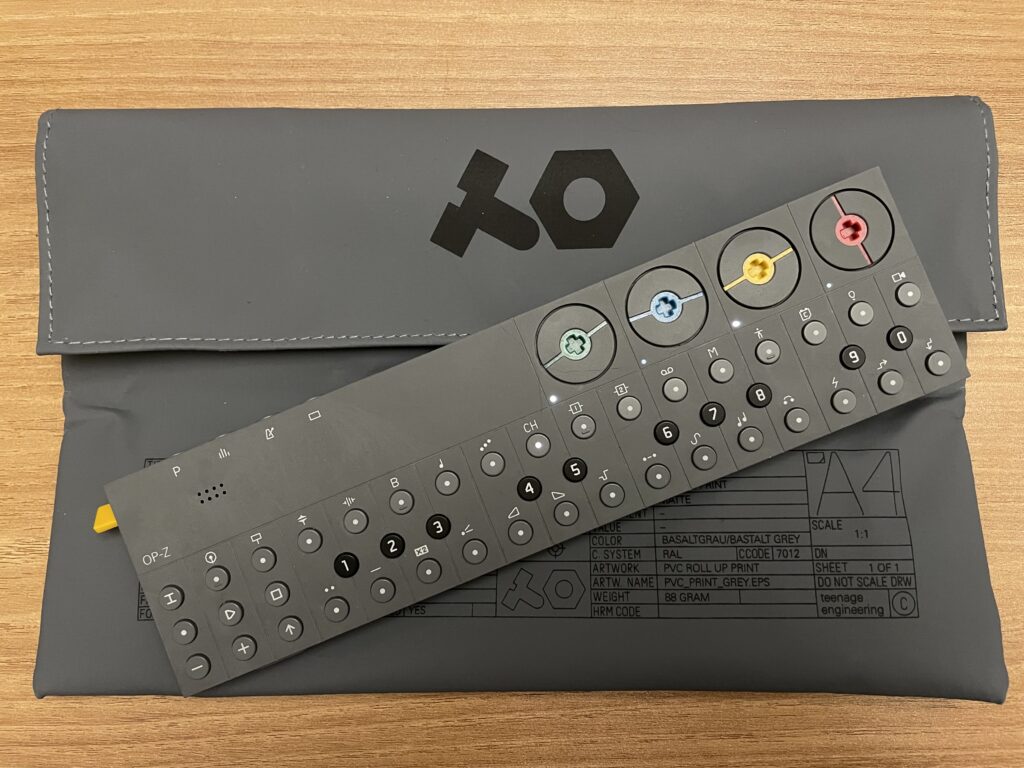
The obvious answer here is the OP-Z. It’s fun, quick, and easy to use. It’s also super easy to take on a plane. Making a full track with just this is surprisingly easy and fun. It definitely caught me off guard with how user friendly and fun it is to use.

Teenage Engineering OP-Z

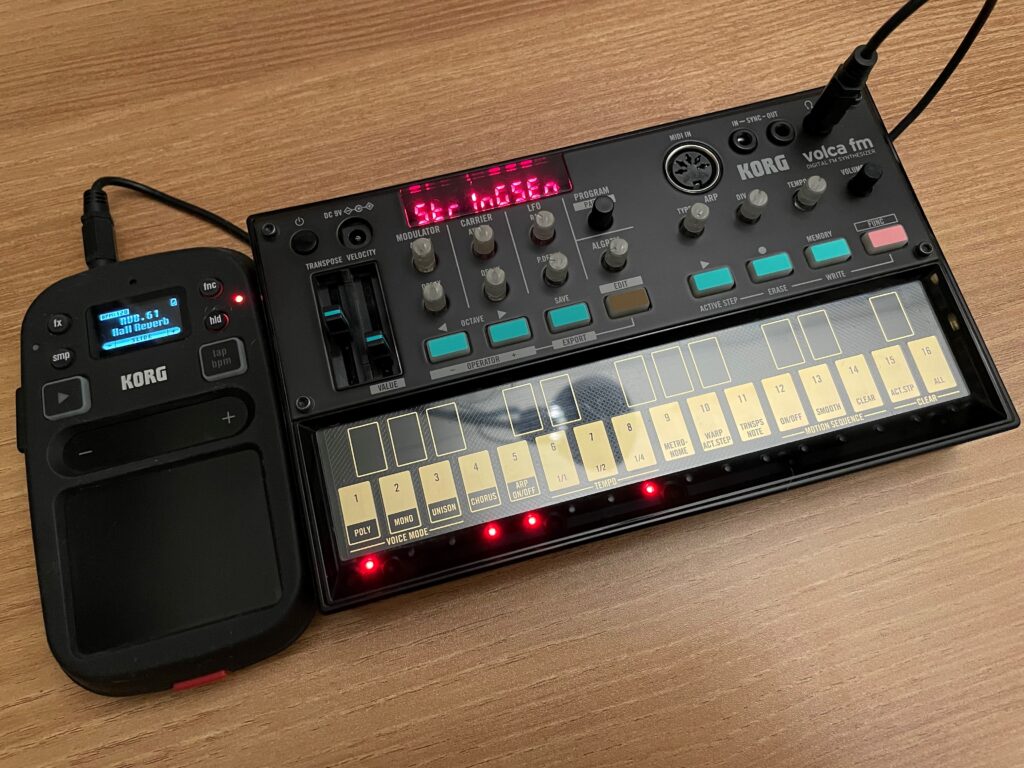
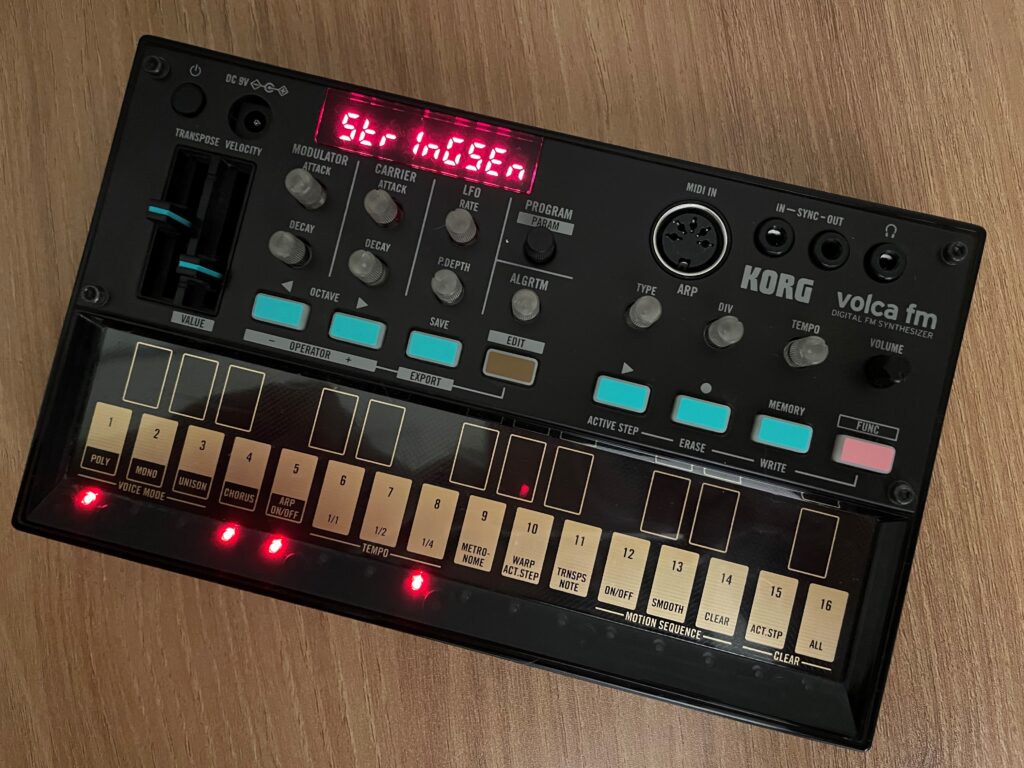
Realistically and historically, though, my preference is to bring either the Volca FM and Mini KP or the Roland SE-02. When I sit down to play I’m not typically trying to write or work on a song. Usually I just want to explore a sound or a musical phrase. The SE-02 and Volca FM are excellent for sound exploration. If I want to make a minimalist composition these are my go-to pieces of gear, and fortunately they’re small enough for a carry-on.

Korg Volca FM and Kaoss Pad Mini

4. What software do you wish was hardware and vice versa?

I am (un)fortunately a luddite. When I record or make music it’s almost entirely analog. One thing I wish I could do with my hardware setup is automate parameter controls. There are ways to do this if I went modular. If I used software I know I could automate some of the parameters of my physical instruments. Bringing Windows, Mac, or Linux into my setup would violate a lot of what my setup’s built on: spontaneity. I can write and record a song relatively quickly and easily, without worrying about system updates or getting sucked down the black hole that is the internet.

Analog recording

This is typically just called a DAWless setup. But I really don’t like that nomenclature. It defines a musical approach as being the absence of something, in a way. Really I just like playing instruments and don’t want to try and play a computer like an instrument.

5. Is there anything you regret selling… or regret buying?

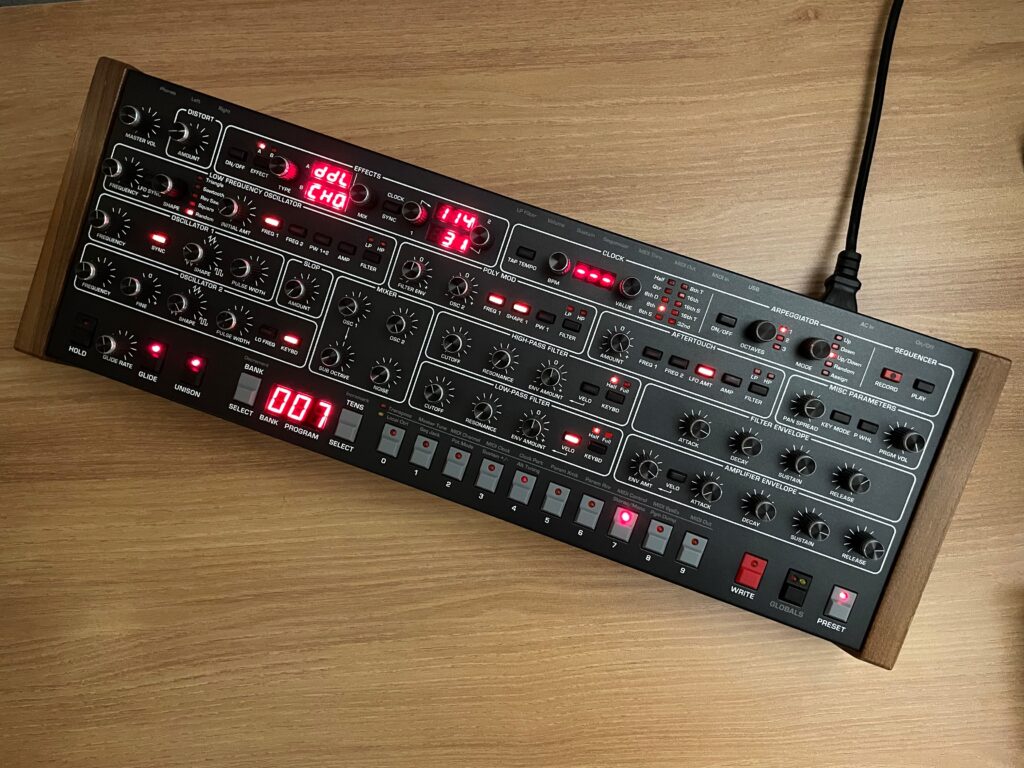
DSI Prophet 6

The Prophet 6 is a rare animal. I’ve bought a lot of gear that I regretted, but this one the only one I’m keeping. It sounds great and it’s super flexible, but it has a lot of little design choices that drive me nuts. The problem is it sounds sooooo good. So, when I use it I love the sounds I get, but I always find myself frustrated by something.

It seems like it’s made for people working in studios who want to lay down tracks, or sample its lush sounds to use in a DAW. Regardless, it doesn’t seem to be made for my workflow.

DSI Prophet 6

But I am going to keep it around because it sounds ridiculously nice. The sound is so rich and deep I forget how annoying it was to program it. It’s like hiking up a mountain with uncomfortable shoes. It’s a real pain at times, but the views you get make the discomfort worth it.

6. What gear has inspired you to produce the most music?

The Volca FM is definitely my most inspiring. It’s endlessly versatile, and has more features under its hood than it has any right to for its size and price point. It has the wild and wiry sounds FM is known for, and the limited controls on the surface are deceptive in their simplicity. It’s easy to rely on presets, and tweaking the few controls on the surface gets you tons of control. It also plays nicely with any effect you want to pair it with.

Korg Volca FM

It’s an instrument I have a love-hate relationship with, though. I’ve owned three of them. Whenever I try to dive into the parameters to do some deep editing, it make me want to toss it out the window. The balance of features, and how easy it is to switch between playing modes to introduce variations makes it really fun to play.

7. If you had to start over, what would you get first?

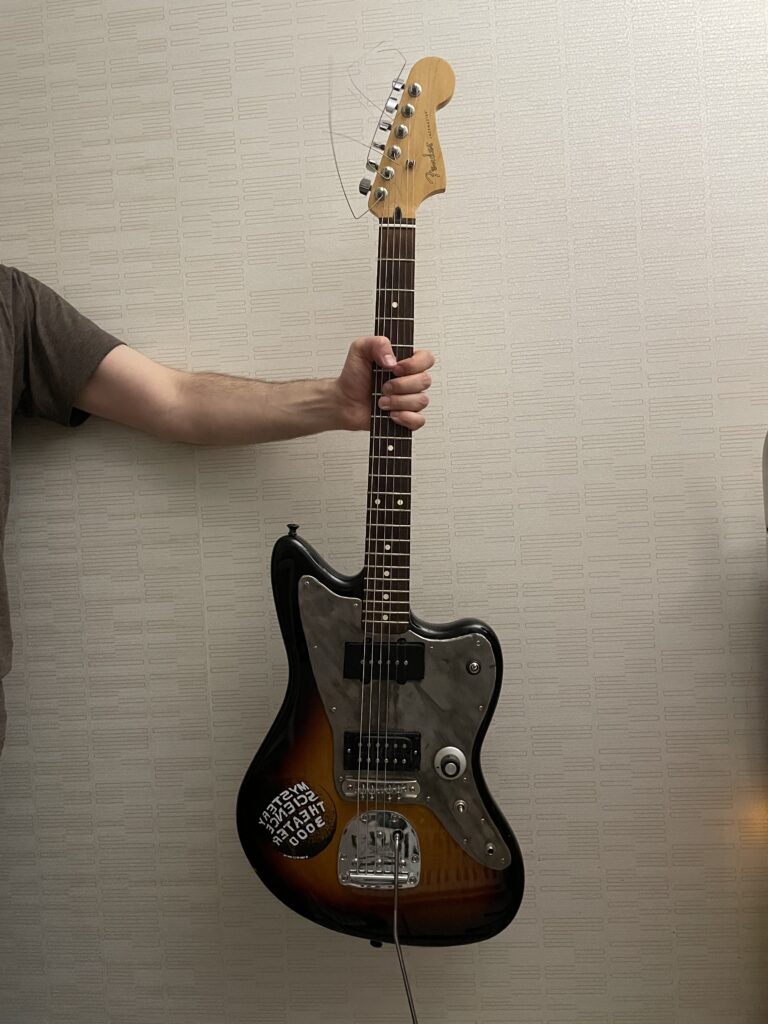
The Jazzmaster. Even though any synthesizer can run sonic circles around any guitar/pedal combo, it feels more emotional to play than any synth or drum machine. Fiddling around with the different intervals on the neck taught me everything I know about music, too. It’s cliche as hell, but playing a guitar with some fuzz and delay could keep me happy forever.

Fender Jazzmaster

8. What’s the most annoying piece of gear you have, that you just can’t live without?

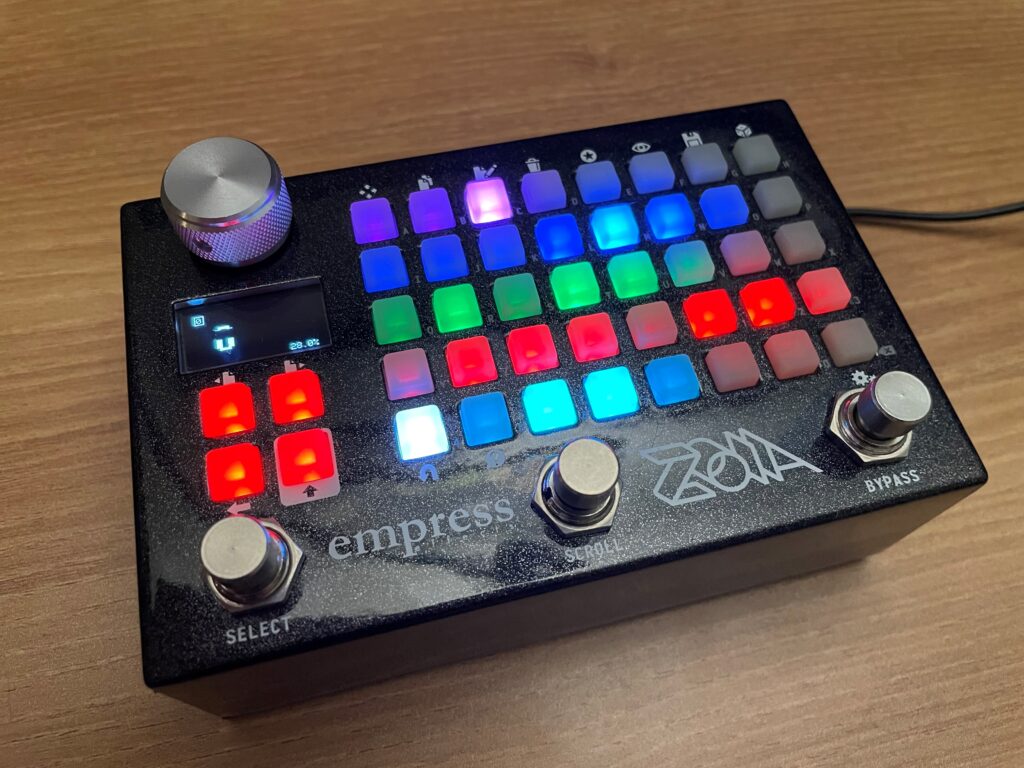
The Zoia is hands down the most useful and inconvenient piece of gear I own. If I have an idea that I can’t achieve with anything else, the Zoia can usually get me close enough. It does what it does better than anything else I know of, but I wouldn’t want to use it with a band.

Empress Effects Zoia

9. Most surprising tip/trick/technique that you’ve discovered about a bit of kit?

Envelopes are surprisingly underrated. Clones of “good” ones don’t really get talked about, and people don’t really seem to covet and worship the exact curves of one over another’s.

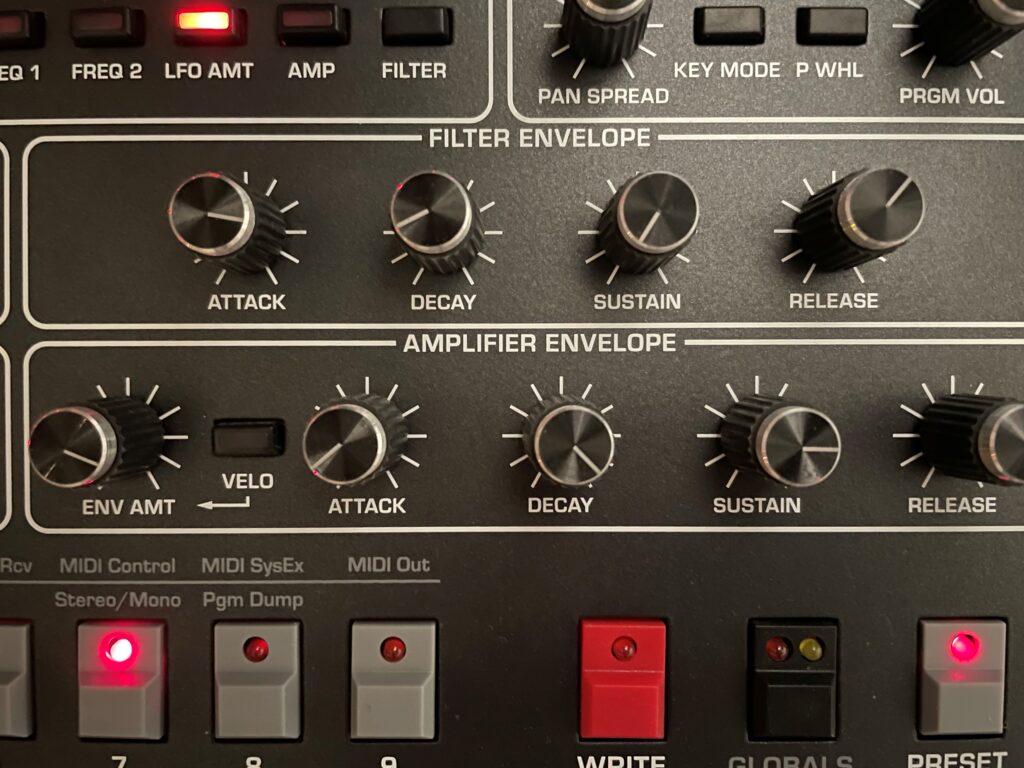
No two synths I’ve played have had the same envelopes. Each one has its own type of pluck, swell, and decay. It feels like they’re what transform a synth into a playable instrument. I wish there was more emphasis on modulating and controlling their parameters. Slight modifications to the decay of an adsr can completely transform a bland sequence. They really breath life into every sound.


Artist or Band name?

Willy

Genre?

I’ve never been good at sticking to a genre. It seems to waffle between synthwave, cinematic, harsh noise, and synth-pop.

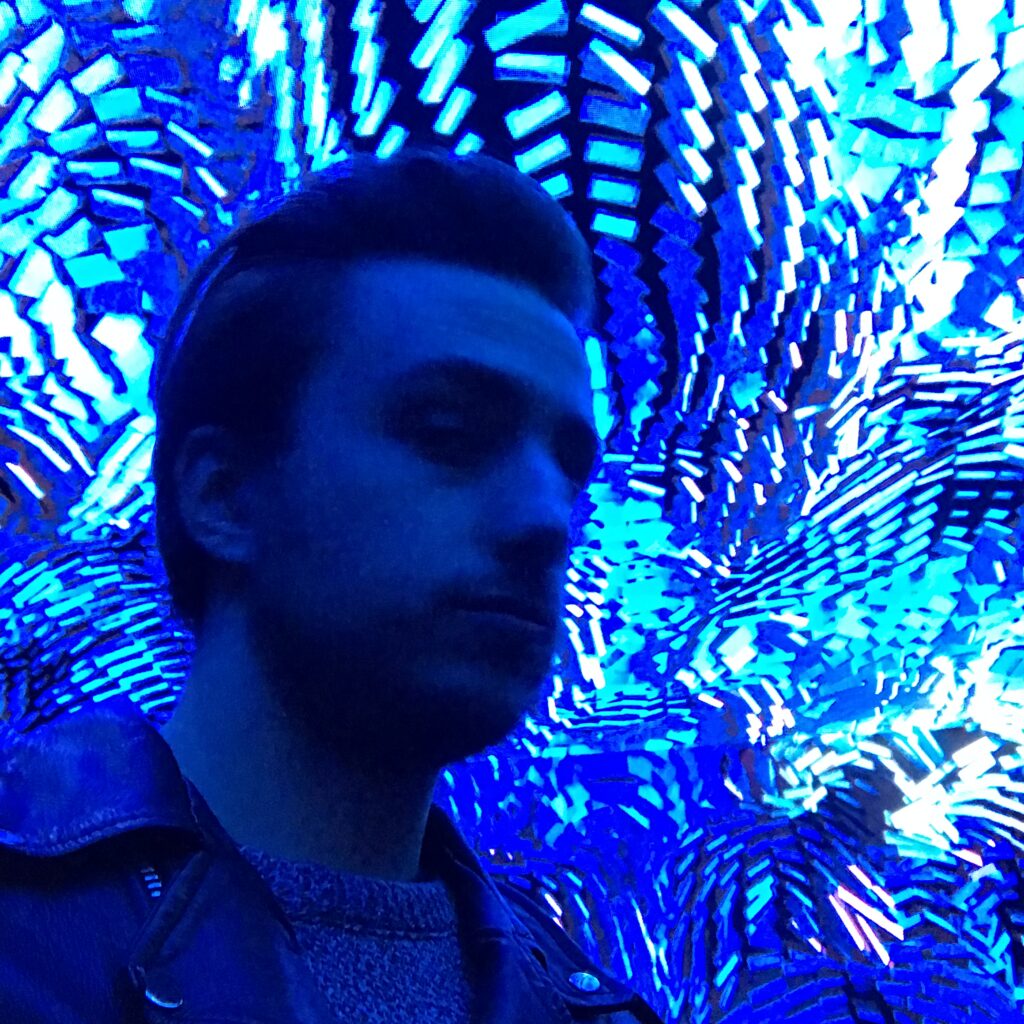
Selfie?

William ‘Willy’ Stewart

Where are you from?

Benson, Utah

How did you get into music?

My mom signed me up to play violin in my middle school’s orchestra. After that it was relatively easy to play bass in my friend’s band. From there I was hooked.

What still drives you to make music?

It’s an emotional thing mainly. It helps me experience my emotions. Lately when I sit down to play it’s after a rough day, and it helps me process what’s happened. Other times, it’s when I’m feeling numb, and playing helps me open up and experience my emotions. This is essentially why I haven’t recorded very much music. It’s usually an expression of anxiety, depression, or fear. So, I don’t really want to live in that moment long enough to record it.

How do you most often start a new track?

Most often it’s with a riff or a phrase. I’ll have an idea for a sound, or find one via knob twiddling, and then I see what notes feel good with that sound. Once I’ve got something that makes me happy, I start seeing what other sounds I can layer in to compliment the original sound.

How do you know when a track is finished?

When I can listen to it without wincing, and it doesn’t feel empty. If I can listen without wincing it means I don’t have anything to redo, and as long as it sounds “full” I don’t need to add anything else.

Show us your current studio

William’s studio

Best creative advice that you’ve ever heard?

Play every day. Some variant of that’s what I hear all the time from everyone, but there really is no better advice. In my twenty years of music making experience, this advice has always held true. If you’re not inspired then try learning theory, practicing your technique, try reproducing real world sounds with synthesizers, try something outside of your comfort zone, or just have fun making noises. Keep at it every day to keep your tools sharp, then you’ll be ready to act when you actually have something to play.

Promote your latest thing… Go ahead, throw us a link.

The only places I regularly post anything are my Instagram and tiktok.