ShoeGazeCity – Head DownTown Sound

1. Favourite knob/fader/switch on a piece of gear and why?
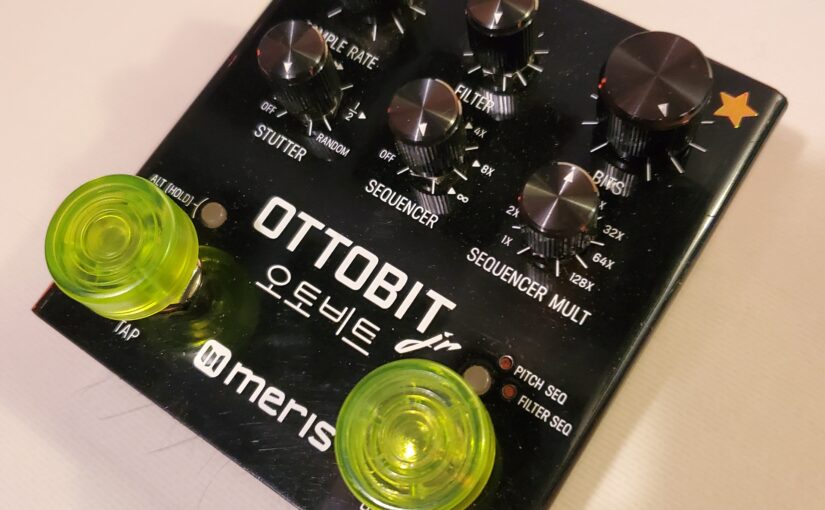
My favorite knob has to be the sequence multiplier knob on my Meris OttoBit Jr. This pedal is a bit-crusher/video game/glitch/stutter machine and it has a full on 6-step sequencer built in (which can be used to sequence multiple things, but pitch is the most obvious and fun one). The sequence multiplier knob speeds up the rate of the sequence being played, so you can get pretty wild on-the-fly video game arpeggios if you manually turn the knob while sustaining a note. (You can also use an expression pedal to do this, but alas, I don’t have room on my board for one at the moment).

Ottobit Jr. by Meris

2. Do you have an ‘almost’ perfect bit of kit? What would you change?

The DigiTech EX-7 Expression Factory pedal comes to mind. This big and heavy expression pedal looking box has a bunch of different sounds packed into it… It has overdrives/distortions, flangers/rotary modulation, a full on whammy pedal, and my favorite: the legendary space station. The idea is to let the user control all of these authentic sounds via the expression pedal (ie: controlling pitch on the whammy setting, or the swell of the space station). However, it kind of sucks that the actual feel of this expression pedal is so hard to use. It’s very “sticky” feeling and doesn’t move a lot, so you have to be very precise on how you use it. It also requires a bit of an extra “push” to turn it on, which involves stepping on the front or back of the pedal, and it always feels awkward. I give it 10/10 for the sounds it makes, but is very difficult to use in a live setting.

DigiTech EX-7 Expression Factory pedal

3. What setup do you bring on holiday/tour/commute etc.?

I play guitar and keyboards in an instrumental progressive-rock band called Tortoise Forest. We all have fairly large pedal boards and try to implement weird electronic sounds into our music whenever possible. So my usual gear that I bring to shows consists of 1 or 2 guitars (90’s Yamaha SGV-300 and/or Squier Super-Sonic), a loaded pedal board (Pedaltrain Novo 24), my amp (a Quilter Tone Block 201 head and a 1×12 cab that I converted from an old broken Fender Stage Master), my keyboard (Nord Electro 3 73SW) and synth (Korg Prologue 8) and sometimes a powered speaker for the keys/synth (JBL EON615).

I’ve gotten pretty good at setting all of this up in a timely manner, although the keys/synths are still pretty new for me in the band. I still play about 70% of the time on guitar and about 30% I switch to pianos, organs, electric pianos or synth leads & pads. I have thought about down-sizing the board and what-not, but I use all of these tools at live shows and I really enjoy improvising with new sounds each night, even if it means cramming extra stuff into my tiny sedan! 

Tortoise Forest live pedalboard setup
Quilter Tone Block 201 head with a 1×12 cab Fender Stage Master
Nord Electro 3-73SW and Korg Prologue 8

4. What software do you wish was hardware and vice versa?

Right away, I gotta say that I wish Serum was available as an actual synth and not just a plug-in. Serum is an extremely versatile synth plug-in that has a very intuitive user interface, even if you’re not a big synth person. I have used a lot of synth VSTs and other plug-ins and I wish a lot of them were available as hardware units, but I love Serum so much and use it to write/improv/record many projects. I went with the Korg Prologue for my live hardware synth because it still does a lot of things well (mono leads, pads, arp stuff, etc.) But to have Serum in an actual hardware synth would be a dream. I understand why it’s not really feasible to do this, as you can add so many voices and so many high-end effects with Serum, but maybe someday…

For hardware available as software, I’m just gonna be that guy and wish that my entire pedal board was available as one easy-to-use plug-in. There are certain products available to record your board into your DAW without an amp or any kind of cab emulation… But it would be rad if in the future, every new pedal you purchase came with a serial-code or something for a free plug-in version. Then you could design a board in your DAW and have it there for recording with actual effects that you’re used to using, instead of having to design reverbs with unfamiliar plug-ins.

Serum VST plugin

5. Is there anything you regret selling… or regret buying?

Well, I have to admit that when I first bought my Meris Enzo (synth pedal), I ended up selling it. I just had a hard time using it live and dialing in levels. Then after about a week of not having it, I missed it SO much and ordered another one. It is one of the most flexible pedals capable of so much other than just gorgeous “real” synth sounds. I especially missed it for it’s dry mode, which lets you use a plethora of effects including pitch shifting, portamento, modulation (with rotary vibes), filters, ring mod, delay.. It is the coolest!).

Meris Enzo

I don’t regret buying too many items, however I do own TWO 1983 Yamaha SBG-200 electric guitars, and I totally don’t need TWO of them. My friend had one when we were younger and I remember it being awesome, so I bought one on Reverb (and it was as awesome as I remember). Then I saw another one pop up, the same exact guitar in the same finish, and I bought that one… My thought process was that these are becoming rare and I want to have a backup, but now I have an extra guitar taking up valuable space in my tiny basement studio and I never play it. Also, it’s for sale if anyone is interested ;).

Yamaha SBG-200

6. What gear has inspired you to produce the most music?

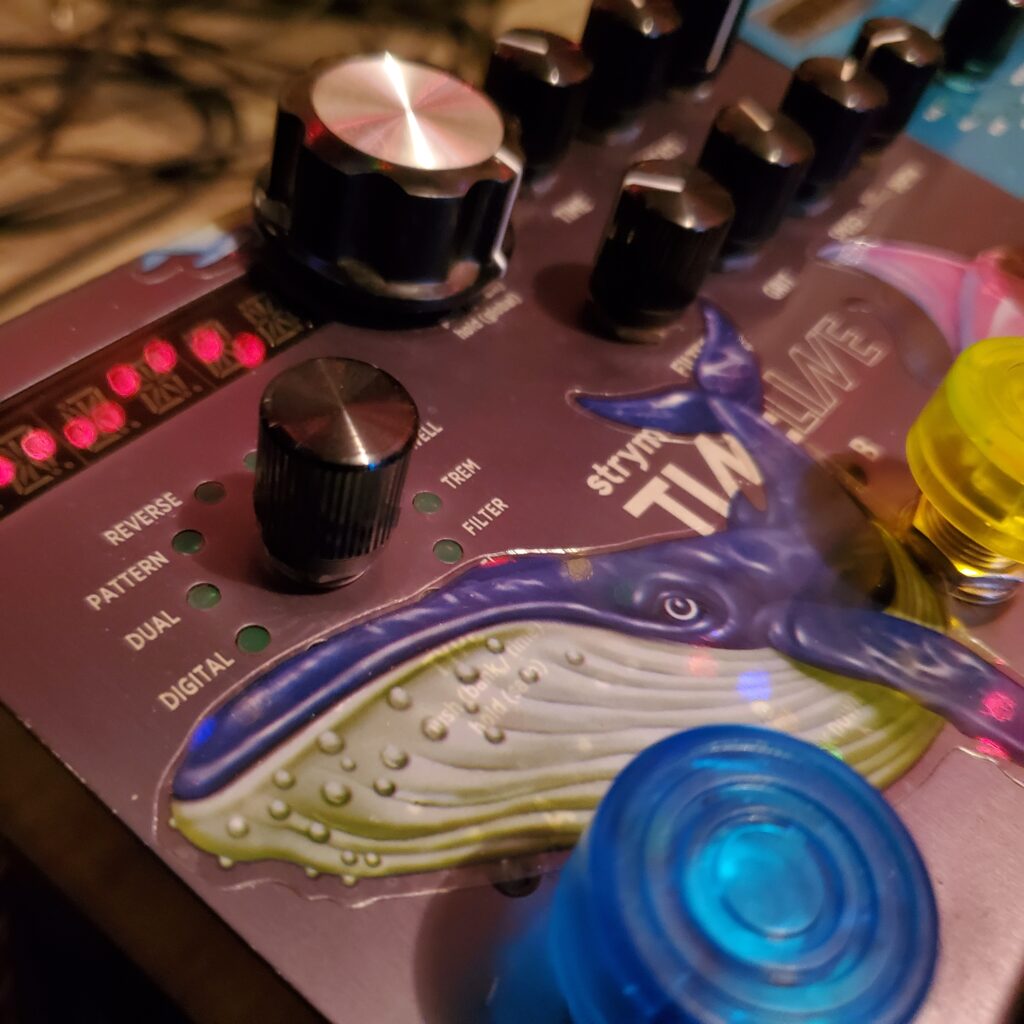
Hmm… A few pedals definitely come to mind. Any delay or reverb pedal with super long decay times are always inspirational. I got my Strymon TimeLine when I was just out of high-school back in 2010. That thing opened up a whole new world for me. It has infinite decay times with a bunch of different sounding delays, modulation, and a built-in looper… Ahh that looper is SO good. I know there are more options for loopers on the market now (I want a Blooper)… But the TimeLine looper can do similar things as the Line 6 DL-4 and being introduced to this when I was younger let me explore different sonic soundscapes that I didn’t know were possible to create.

Strymon Timeline

I also have to give it up to Meris again, the Hedra is one of the craziest pedals I have ever used. I bought it the day it was released (because Meris is great at revealing mysterious new pedals) and it’s one of my favorites on my board today. I’m a huge fan of pitch delay and this thing has THREE separate pitch delays that you can dial in at different rhythmic patterns. It can also pitch glide as slow or fast as you want it to, giving every option you would want in the world of pitch shifting.

Meris Hedra

7. What’s the most annoying piece of gear you have, that you just can’t live without?

I mentioned it earlier, but again I have to say the Strymon TimeLine. It still sounds great compared to everything out there today, and I have been using the looper for so long that it’s become so natural to use compared to other loopers. BUT the foot switches are very worn out from a decade of use, (plus it’s annoying to have to click two switches at once to bank up/down). I have sold some gear recently so that I can afford to order a midi controller to control all of my midi pedals. This will allow me to access more presets on each pedal, explore new sonic territories, AND hopefully make it so I don’t have to ever use the footswitches on the TimeLine again (will be using the midi controller as a looper-controller as well). I’m very excited.

Strymon Timeline having a whale of a time

8. Most surprising tip/trick/technique that you’ve discovered about a bit of gear?

Using multiple loopers at once. I have performed solo sets where I will use two looper pedals that are not at all midi-synced or anything, and stacking them is surprisingly good sounding. What I do is loop/record a short melody into the first looper in my signal chain. Then, after auditioning different chord progressions and/or basslines to put under this melody, I will loop/record the new chord progression WITH the first looper also playing the melody INTO the second looper in my chain. I’m sure that some people reading this are like “why don’t you just use a single looper than can already do this?”, which is totally valid. Because that exists. Umm, they are more expensive and I like using cheaper loopers that I already have. Plus this setup usually takes up less space than larger loopers (had the Boss RC-300 and sold it for being so huge). Some of my favorite loopers I use for this are the Line 6 DL4, Hotone Wally, Boss RC-3, Strymon Timeline, and the new Dunlop Clone Looper. Side note: having a looper such as the DL4, Timeline or the Clone Looper with a “play once” function makes it easier to “sync” each stacked loop.

Multiple loopers: Timeline, Line6 DL4, MXR clone, Hotone Wally, Boss Loop Station

Artist or Band name?

Tortoise Forest

Genre?

Instrumental Progressive-Rock

Selfie?

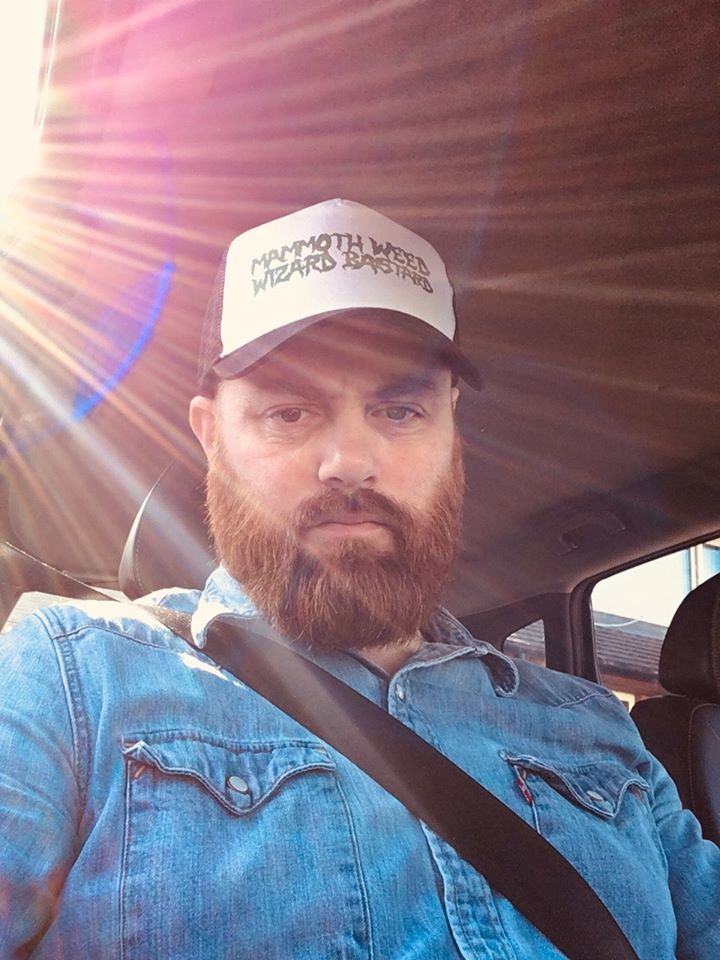
Max Davies aka. ShoeGazeCity

Where are you from?

Buffalo, NY

How did you get into music?

I started taking piano lessons when I was 5, then switched to drums and guitar when I was 13 and played in a bunch of bands. Being able to record myself on different instruments at a young age helped me to grow as a musician (thanks old school Tascam 8 Track :).

What still drives you to make music?

A bunch of things. Friends who post clips on Instagram of new pedal/instrument sounds are always super inspiring and make me want to explore new ideas in my studio. Writing new stuff with the band is always fun because it gives us the opportunity to take time to create something extremely technical/progressive/mathy in a private setting and then allows us to record this and play it live for our friends and fans to hear. Such a good feeling to have people enjoy what you’re creating.

How do you most often start a new track?

It depends on which project I’m working on. Tortoise Forest typically starts with one single melody, chord progression or “riff”. We try to explore every single possibility of different ways of playing that riff, whether it be backwards, faster, slower, in a random time signature, drowned in weird pedal effects, whatever. This makes writing songs in the progressive genre very satisfying. 

I will also record myself on drums, guitar, bass, keys, and vocals from time to time and make solo ambient/math/post/prog rock stuff. Sometimes if I want to just record “something” I will lay down an improvised/on-the-spot drum part without knowing what I want on top of it. Then I grab a guitar and throw whatever comes to mind on it, then record the appropriate bass lines, keys and sometimes vocals. Sometimes it works and sometimes it doesn’t even come close, but it still lets me practice improvising and I think it’s important to create new music every single day.

How do you know when a track is finished?

You don’t! I mean, there have been songs where we just didn’t have any more parts to add on and we deemed it as being finished. On the other hand, we still have songs that have been in the writing phase for a while that feel like they need more of… “something”. I guess regardless of the traditional “verse/chorus/bridge” writing styles, if our songs have a beginning, a middle chunk and an ending that sounds like an ending, we are generally pretty happy. 

Show us your current studio

ShoeGazeCity Studio
ShoeGazeCity Pedals and Guitars
ShoeGazeCity DAW setup with Ableton Live

Best creative advice that you’ve ever heard?

Everyone has a different standard for what is considered good music. You can create whatever you want, just create something.

Promote your latest thing… Go ahead, throw us a link.

I post pedal sounds and loops on my Instagram almost daily → @shoegazecity


[Editor: Do you have a favorite tip, trick or way of working with any of the gear from this interview?
Then throw a comment below…
]


Aldrin – Buzzin’ Bleeps

1. Favourite knob/fader/switch on a piece of gear and why?


These things always change. But the monome “Series” 64 grid has the most wonderful switches/buttons. Unfortunately, I don’t use it that much these days as I’ve made a DIY 128 grid. But the buttons on the DIY grid are less nice than the 64. Not only do they feel nice, but they represent a blank canvas. No visual cues to pull you in any direction until you load up a script or an app.

Blooper Knobs


Also, Chase Bliss Pedals have knobs that feel great. The traction of these knobs makes them feel sturdy and precise.

2. Do you have an ‘almost’ perfect bit of kit? What would you change?


My fates. Fates runs monome norns, ORAC and soon Organelle patches. I am unfortunately not the most skilled in coding. But the communities based around these ecosystems make this device close to perfect. The amazing sequencers, samplers, loopers etc. that one can use here without having to open a computer is wonderful. There is not much I would change. I just need a device to connect to my Fates that lets me organize how I send/receive midi to all my Midi devices.

3. What setup do you bring on holiday/tour/commute etc.?

Opz and Microcassette


OP-Z (for making tunes) + microcassette Dictaphone (for sampling) + iRig1 (to get samples from Dictaphone to the OP-Z easily) + a USB to lightning adaptor to records from the OP-Z to my iDevice. I really love the sound of oversaturated tape samples.

4. What software do you wish was hardware and vice versa?

I used to wish for “Ableton in a Box”. But I can’t imagine having a piece of hardware that would have that many possibilities, when recording I prefer to have some limitations and return to it for editing, mixing, mastering and some overdubs. I’ve felt a strong disconnect to computers as a creative music tool for many years, but recently I discovered the amazing Felt Instrument Lekko and Jasno(and soon Blisko I hope). I have never felt such an immediate connection to software instruments. They both feel amazing and the textures they produce almost feels tangible, but for now I don’t mind using them as software. They have been my main sound source into another piece of software I recently discovered, Fantastic Voyage. It is a software 4 track recorder, looper and creative fx unit with a patch matrix. It is like a magic box; you patch up something, send it some audio and the results are instantly amazing.

5. Is there anything you regret selling… or regret buying?

I traded away my Chase Bliss MOOD for an Empress ZOIA some months back, I really miss the MOOD. But the ZOIA is also wonderful, and it can do almost anything you want. But the MOOD is really unique.

6. What gear has inspired you to produce the most music?

Discovering monome grids and Brian Crabtree’s mlr script and all the variations of that changed my whole approach to making music. I am not a person who sits down and write songs, I like to explore sounds and textures by looping and stacking them, trying to keep some sort of harmonic ground. I need something that can capture that, play it back and let me do some mangling of those sounds. And when I got my Fates it enabled me to break away from the computer. The norns ecosystem by monome and all the scripts that are built around the mentality of mlr give me something new to explore every time I sit down and start making sounds and loops.

7. If you had to start over, what would you get first?

If I had to rethink my whole creative workflow, I might have gotten into modular and built a rig around that. But it would still be based around the same sound sources, guitar and OP-Z, just a free-flowing modular effect skiff. I really like it when equipment becomes something you collaborate with instead of control, and I am trying to “let” my equipment function that way at the moment. But I feel like a modular rig would lend itself more to that approach.

8. What’s the most annoying piece of gear you have, that you just can’t live without?

Behringer Mixer

My retired Behringer mixer. I used to hate the thing, but it served a purpose. I decided to scale down to a Koma Elektronik Field Kit and live without multiple AUX buses + input/output galore. And I think this makes me happier. Apart from that, if it counts: cables and batteries. All different shapes, forms, sizes and types.

9. Most surprising tip/trick/technique that you’ve discovered about a bit of kit?

The tape track on the OP-Z is a plethora of fun. Sequencing it and then sending live audio into it is a favorite of mine. Connect whatever you use to get audio (or the internal mic), then select the tape track, then hold the shift button to select what tracks are fed into the tape track, select the module track (so that it lights up yellow/orange) and voila, whatever external audio is being sent into the OP-Z is now also sent into the Tape Buffer.


Artist or Band name?

Aldrin, but I also play in the bands Ben Leiper and Youth Pictures of Florence Henderson.

Genre?

Ambient? Organic Electronic? Soundbathism? New Age Guitar Music? Genres are hard.

Selfie?

Oystein

Where are you from?

Rjukan, Norway. But currently living with my partner and infant daughter in Oslo, Norway.

How did you get into music?

I guess it started with mainstream mid to late nineties pop music. But I was introduced to the Beastie Boys and The Chemical Brothers at a young age by a friend. And I remember being fascinated by the rich soundscapes that both of these bands would make. I got into creating music some years later when me and a friend discovered that Mogwai’s album «Happy Songs for Happy People» had a version of Cubase with the stems for one of the songs for remixing. We started messing around with that for a while until we decided to record by ourselves. We made an EP of weird noisy instrumental music based around very unauthorized samples of dialogue from different films we liked. We actually duplicated a bunch of tapes and sold maybe 10 to people on the internet.

What still drives you to make music?

I have a deep urge to create something. Not necessarily for anyone else to consume, but for my own sake. And sitting in my living room listening to some sort of loop I just made over and over again is very comforting. Of course, I love it if someone else likes my reverb drenched sounds, but I am truly happy as long as I like whatever sounds me and my gear make.

How do you most often start a new track?

All my current stuff is improvised, but it normally starts with guitar looped some way. Then I add loops of other stuff like plucked pine cones, field recordings and whatever sound I find interesting on my OP-Z.

How do you know when a track is finished?

When I stop the Zoom h4n recorder after sitting around listening to the same intertwining modulating loops for about 30 minutes.

Show us your current studio

Aldrin’s Home Studio Corner

Not really a studio, more like “the corner by the bookshelf of my living room”.

Best creative advice that you’ve ever heard?

My parents, and especially my father, taught me that you should not care too much about what other people think, the most important thing is that you are enjoying what you do. Lately I’ve been trying to follow the 12 principles of 12k records, and they feel like a complement to that early advice:

  1. Don’t tell listeners what they want to hear, let them discover that for themselves.
  2. Treat your audience as they are: intelligent, passionate lovers of art and sound.
  3. Evolve constantly, but slowly.
  4. Stay quiet, stay small.
  5. Strive for timelessness.
  6. Never try to be perfect. Beauty is imperfection.
  7. Simplicity. Anti-Design.
  8. Never try to innovate, be true to yourself, and innovation may happen.
  9. Explore sound as art, as a physical phenomenon — with emotion.
  10. Develop community.
  11. Be spontaneous.
  12. Everything will change.

Promote your latest thing… Go ahead, throw us a link.

I stream on a semi regular basis on twitch.tv/aldrinsound, follow me on Instagram or Facebook for updates.


[Editor: Do you have a favorite tip, trick or way of working with any of the gear from this interview?
Then throw a comment below…
]

Liam Killen – Killer Beatz

1. Favourite knob/fader/switch on a piece of gear and why?
OPZ knobs are so smooth- they’re the easiest things to spin- easier than any other knob that i’ve seen. It’s quite genius actually! A +  to Teenage Engineering on that design (as per usual).

TE OPZ
Teenage Engineering OPZ

2. Do you have an ‘almost’ perfect bit of kit? What would you change?
Recently I’ve been discovering Arturia’s software synth bundle. Synths/keyboards include: DX7, Jupiter 8V, Fafisa, Prophet V and many more. KILLER and super affordable pack that I would recommend to anyone, I got it off Splice.com
I love me some synth hardware, but I just don’t have the space, budget, time and interest to deal with it and this is an amazing alternative.

3. What setup do you bring on holiday/tour/commute etc.?
I would bring my laptop, just because I can do most of what i’m capable of doing at home with just that- and of course my OP1 because of how portable and easy to use it is. It also makes for a great midi keyboard, instead of using the keys on my laptop. Sometimes I actually prefer a mini set up rather than all of the gear I have at home. 

IMG_1081.jpg
Teenage Engineering OP-1

4. What software do you wish was hardware and vice versa?
I’m beginning to wish that all hardware was software just because of how much easier/less expensive/more accessible it is in that format. That being said, there’s nothing quite like a modular synth, or an OP1 and I don’t think it would ever be possible to replicate it 100% using software (watch it happen this year). Honestly, I don’t have a solid answer to this question right now. I like everything as is, that being said, I feel like a combination of hardware + software is the way to go as a producer in 2020.

5. Is there anything you regret selling… or regret buying?
I recently bought an API lunch box- but then never needed to buy pre amps to go with it. I bought it to record drums, which i’m not really doing much of anymore, because I no longer have a studio to play at. So now it’s just sitting at my friend’s place…collecting dust.
I will say that buying gear is a skill- like all of the gear that I own now, I use, where as when I first started collecting gear, I bought things that I thought were cool, but I didn’t really need. I feel like it’s just something that you have to go through- so just make sure that you take care of your gear so you can resell it when you’re done.

6. What gear has inspired you to produce the most music?
Recently i’ve been using the SP404 a lot and have been composing tunes specifically for the sound and aesthetic of the instrument; so more in the lofi genre. That being said, i’ve been exploring what other genres work and the thing is quite diverse! I recently posted a live set on my Youtube channel, for anyone who’s interested, linked right here below.

Liam Killen killin’ it

7. If you had to start over, what would you get first?
I’m happy with where i’m at now, not sure I would change anything to be honest! I’m glad that I started on drums because it gives me that rhythmic intuition that most people don’t have. Sometimes I do wish that I had started my Youtube channel earlier so that i’d have more of a following, but it takes time and i’m really enjoying the process anyway. I genuinely do love creating videos for you guys and so i’m going to keep doing it!

8. What’s the most annoying piece of gear you have, that you just can’t live without?
I bought a Pocket Operator Modular 400 months ago. The gear itself is not annoying at all…What’s annoying is assembling the thing. I’m pretty sure that the screws that came with it were not the proper ones- so I had to find these tiny little watch screws to put the thing together. Assembling it was probably the most annoying thing that i’ve ever experienced. That being said though, now that it’s all built, it looks so pretty!

Teenage Engineering PO400 and a little Rick and Morty PO35

9. Most surprising tip/trick/technique that you’ve discovered about a bit of kit?
When I was taking drum lessons, my teacher taught me what I think is one of the most important things that i’ve learnt in music- and that’s the long/short note method. I wouldn’t be able to explain it thoroughly over text but it has to do with syncopation of long and short notes and how there’s actual rules to what makes something groove. Basically, Quarter notes are long and so they are accented and syncopated notes followed by a rest are also long- also accented. Everything else is a short note, and there for played as a ghost note. These rules basically revolutionized the way that I think about rhythms and music in general.
In the synth/gear/modular world, these rules are nowhere to be seen, but I try to make them work in my electronic music tracks, which I think helps give me a certain edge. Maybe i’ll get into this in a Youtube video one day now that I think of it… hmmmmmmm. 


Artist or Band name?
Liam Killen

Genre?
That’s a tough question- we’ll say Electronic Music for now. 

Selfie?

Liam Killen
Liam Killen

Where are you from?
Montreal, Canada

How did you get into music?
I always knew I wanted to do something in music but that “something” has changed a lot throughout my life. I started very young at the age of 9 on the drums- my parents bought me a kit because I was constantly banging rhythms on tables. When I was around 15, I became pretty much obsessed with jazz drumming- wasn’t much of a sporty kid so I figured i’d focus my energy on something that I was naturally good at. I ended up going University in jazz performance on drum set- which I graduated from in 2015. I knew I couldn’t make a living off of jazz performance so I branched out during my time in university- played in a million bands, started learning new instruments and eventually got into music production, which i’ve been making a living off of for the past 5-6 years. Just recently though, like in the past 6 months, i’ve really started focusing on creating video content and not just music, and finding my voice and personality over social media, mainly my Youtube channel. I’ve been having a lot of fun with it and it will remain my focus for the foreseeable future. 

What still drives you to make music?
I’ve always been a very motivated person when it comes to music- like i’m really not hard to inspire. Honestly, recently i’ve been listening to less spotify stuff and more to people over social media, like on instagram and youtube and learning from them, which gives me plenty of motivation. I also just feel “at home” when i’m creating- it’s been a solid outlet for me since as long as I can remember, which is why i’ve worked so hard to make it my living. 

How do you most often start a new track?
Recently, i’ve been starting tracks by either programming a solid drum beat that I vibe with, or with a really inspiring sample, whether it’s one of my own or someone else’s. I used to be against using other people’s samples, but if you think about it, the biggest producers in the world do it, so why would wouldn’t I? Why limit myself?
I’ve noticed that the whole sample thing is controversial for some people. So here’s another interesting way to think of it:
My roots are in a band setting. So for me, I was a piece of the puzzle as was everyone else in the band, I was basically a hired gun a lot of the time. So let’s say you use a drum sample in one of your tracks, something that you had no hand in ACTUALLY creating, isn’t that basically the same thing as a band leader hiring a drummer to play drums on his track? That’s sort of the way that I look at it now. And lastly, if it sounds good it’s good! Also it has to be legal, lol. 

How do you know when a track is finished?
I usually like to take a couple of days away from the track when I think that it’s finished. If when I go back to it i’m able to listen through without being “taken out of it” or distracted by an element of the track, that’s when i’m happy. I try to limit myself in that respect though, because it’s easy to go in circles, especially when it comes to the mix, in which case it becomes a waste of time. Just put it out!

Show us your current studio
It’s such a mess right now! My videos look pretty clean, but then when you see behind the scenes, you see how messy it really gets. 

IMG_1075.jpg
Liam’s studio desk
IMG_1076.jpg
E-piano and E-Bass
IMG_1079.jpg
E-Drums and E-Guitars and other guitars

Best creative advice that you’ve ever heard?
I’ve noticed that a lot of people have a hard time getting started- and 90-95% of being prolific is just sitting down at your computer/instrument, and starting. Once you come up with an idea or something that inspires you, you’re in the clear!

Promote your latest thing… Go ahead, throw us a link.
I’m constantly releasing stuff and the best way to keep track is through my social medias. I’m always posting new videos to my Youtube channel and I’m also releasing my first official EP to all listening platforms, so stay tuned for that, out April 7th, 2020. EP cover and Youtube channel linked down below. 

Liam Killen YouTube

CURIOUS final.PNG
LK Curious album cover

[Editor: Liam is obviously a Teenage Engineering fanboi, just like me. But do YOU think that collecting gear from one manufacturer is a good thing or a bad thing, for creating a personal musical style? Leave a comment below]