1. Favourite knob or fader or switch on a piece of gear and why?
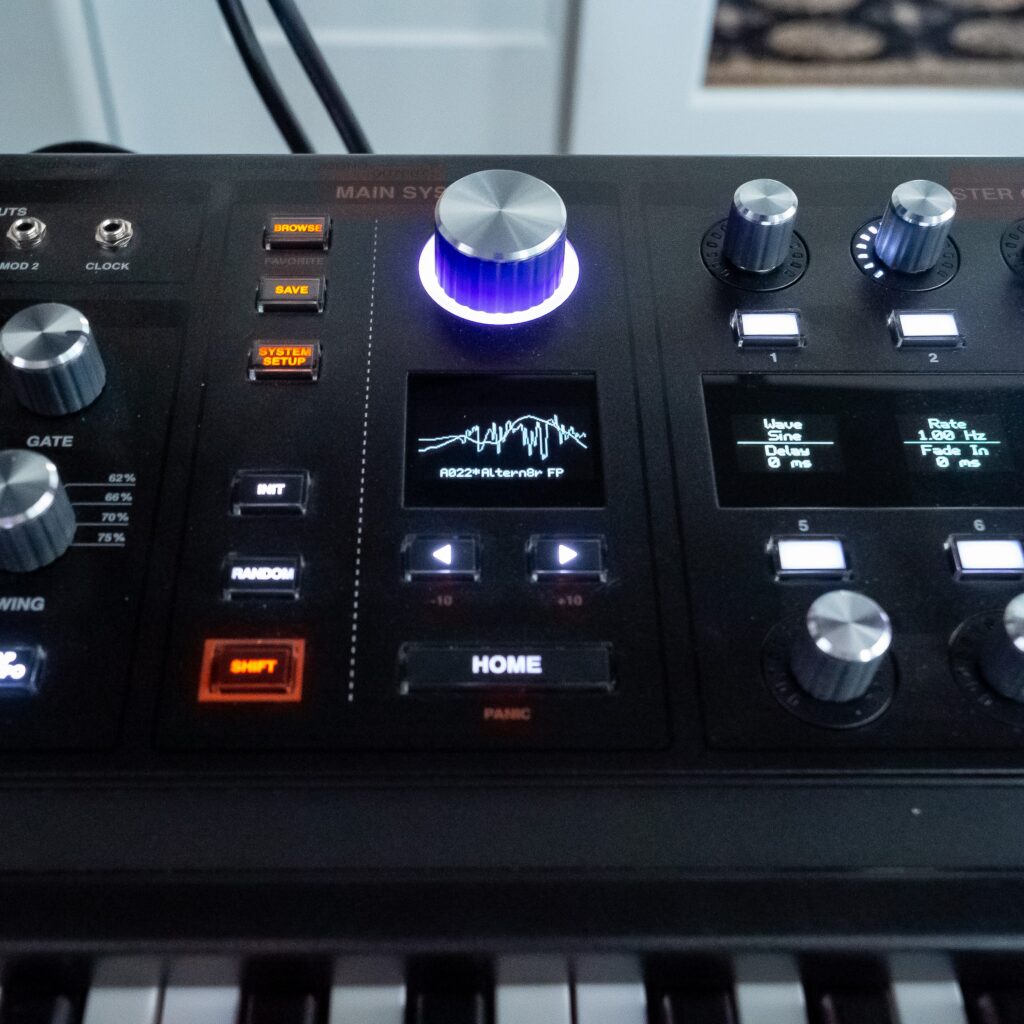
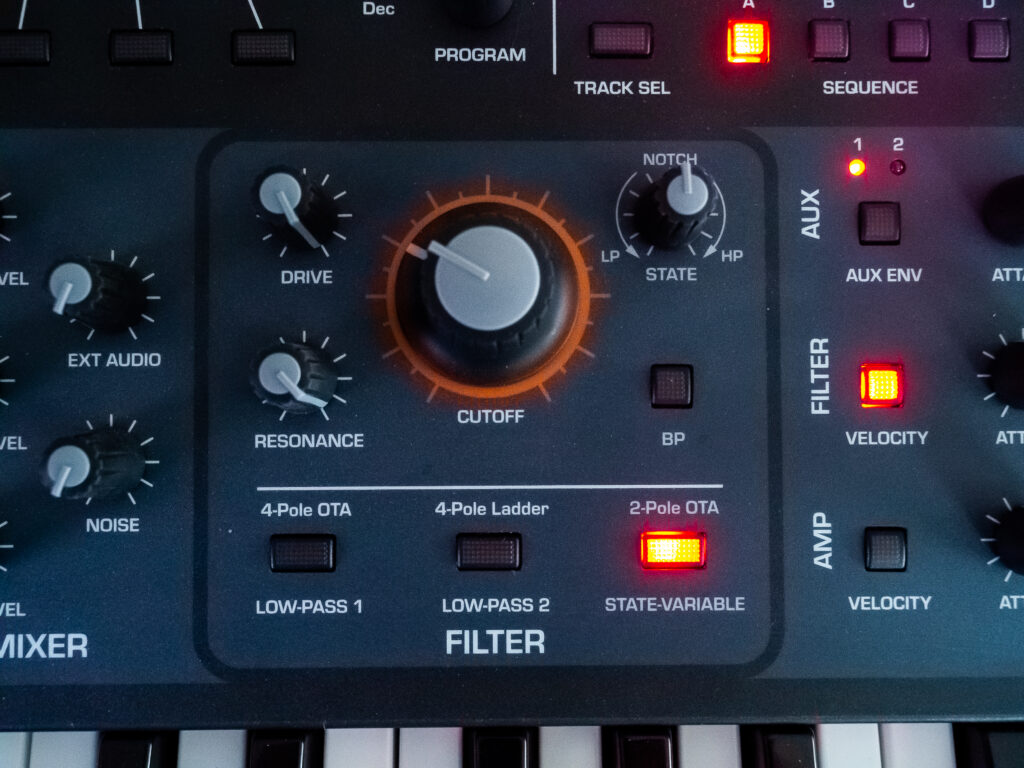
The Hydrasynth main encoder knob. It’s huge.
Hydrasynth main encoder knob – it’s lit from beneath
Second place goes to anything that turns up the volume.
2. Do you have an ‘almost’ perfect bit of kit? What would you change?
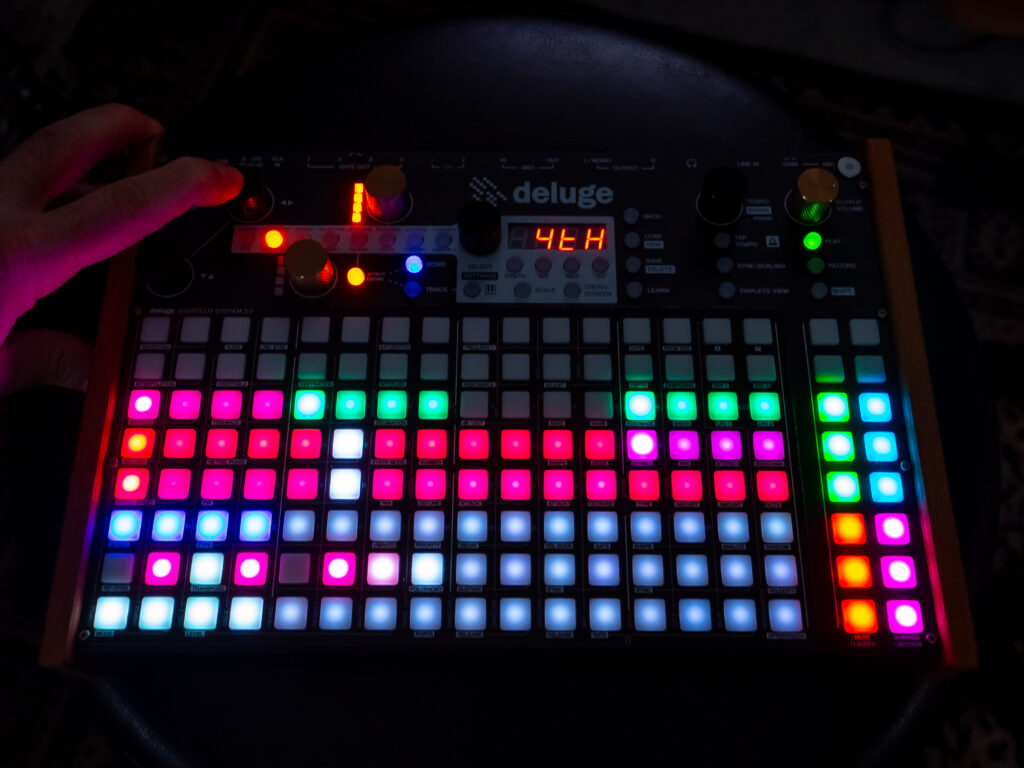
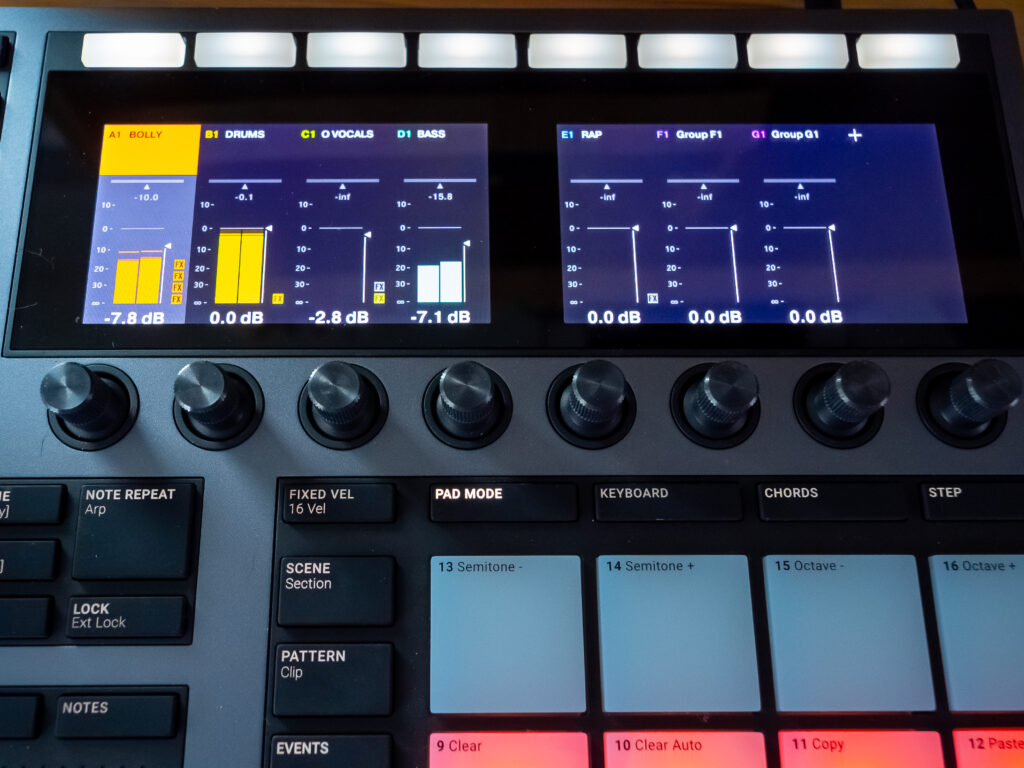
I wish the Synthstrom Deluge had an OLED screen and I wish the Mashine+ could make actual synth patches from scratch.
Native Instruments Mashine+
3. What setup do you bring on holiday or tour or commute etc.?
OP-1 or Deluge or iPad for granular apps like Borderlands.
4. What software do you wish was hardware and vice versa?
I used to think a bunch about this, but after getting the Hydrasynth I don’t really care about software in hardware. If I could get Pigments as hardware that would be dope. I would love more wacky probabilistic and self-patchable software stuff.
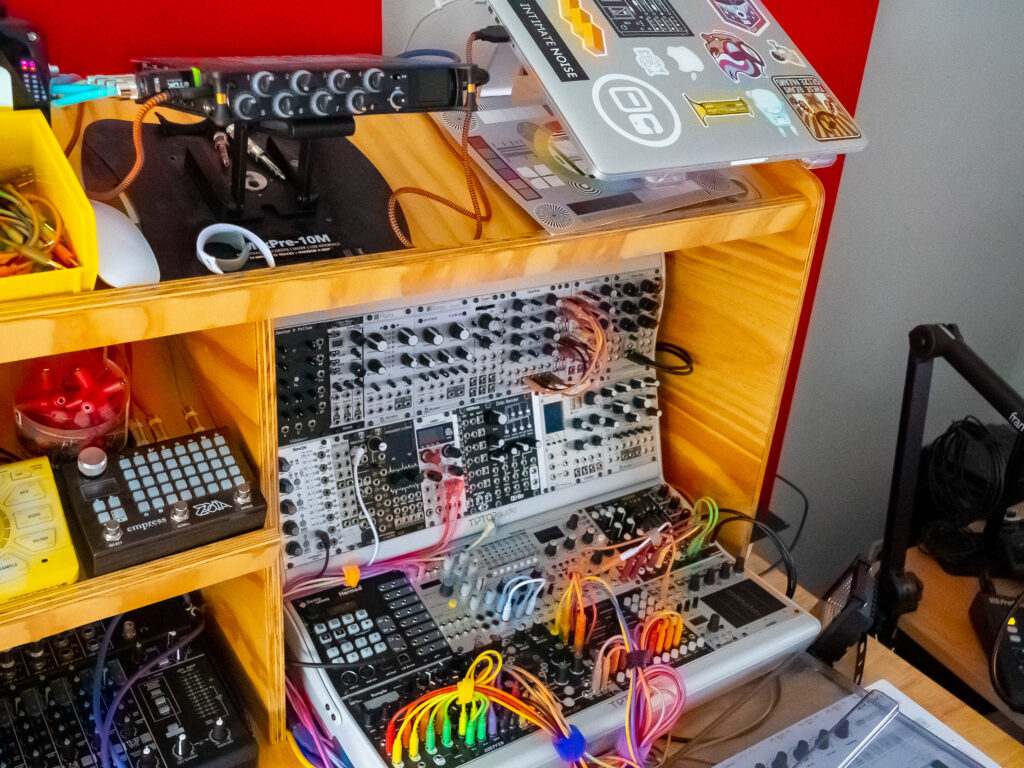
Slow spagettification of a studio
5. Is there anything you regret selling… or regret buying?
Zero regrets in selling. Selling is freedom.
A corona lockdown audience
Buying, I dunno. Everything I’ve bought I’ve bought because it had a reason to exist in my setup at that time. When I sell it, it’s because it’s redundant or I’ve outgrown it.
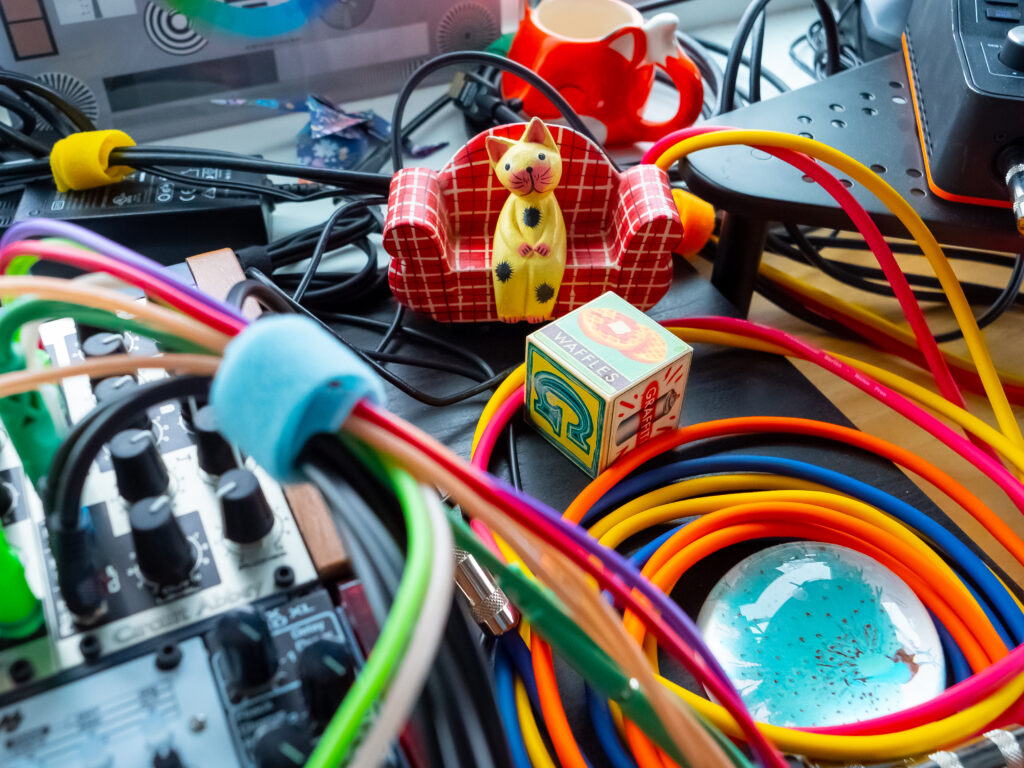
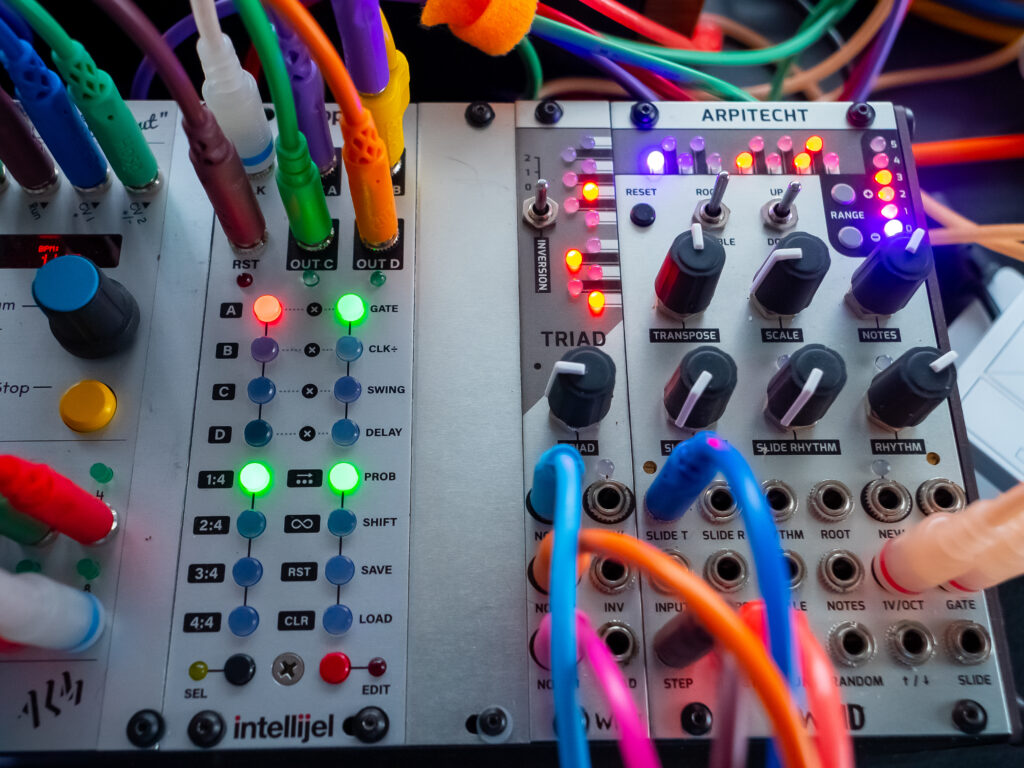
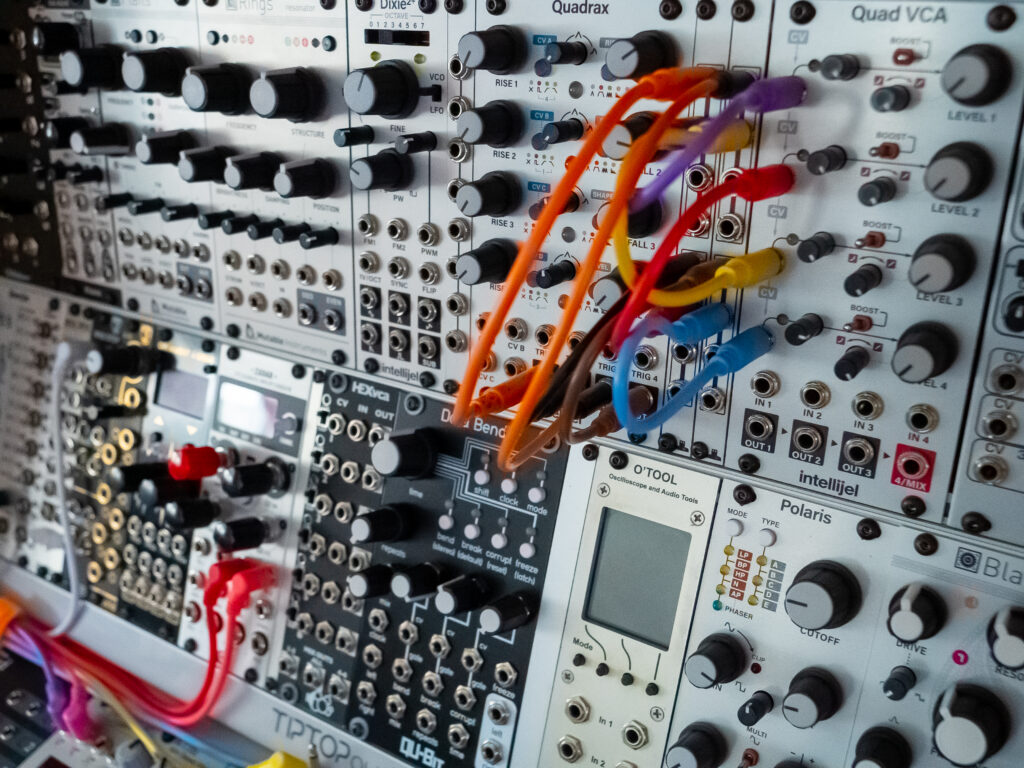
Vivid colors of eurorack
6. What gear has inspired you to produce the most music?
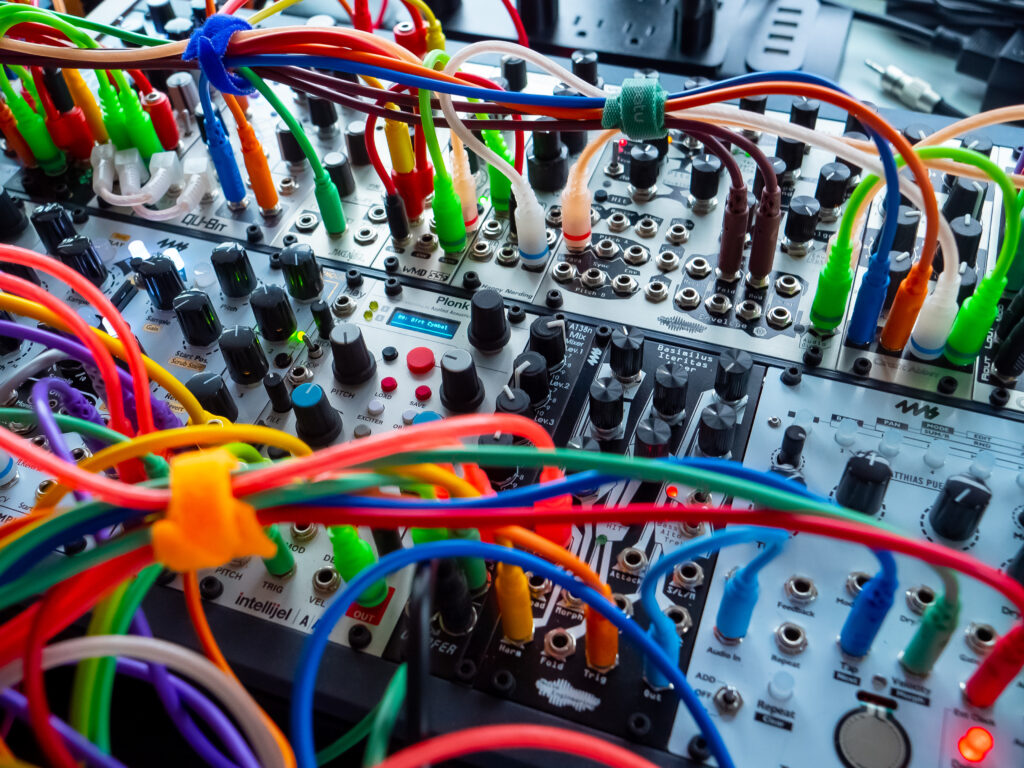
Neatified cables
Up until this year, the Teenage Engineering OP-1. This year it’s been eurorack.
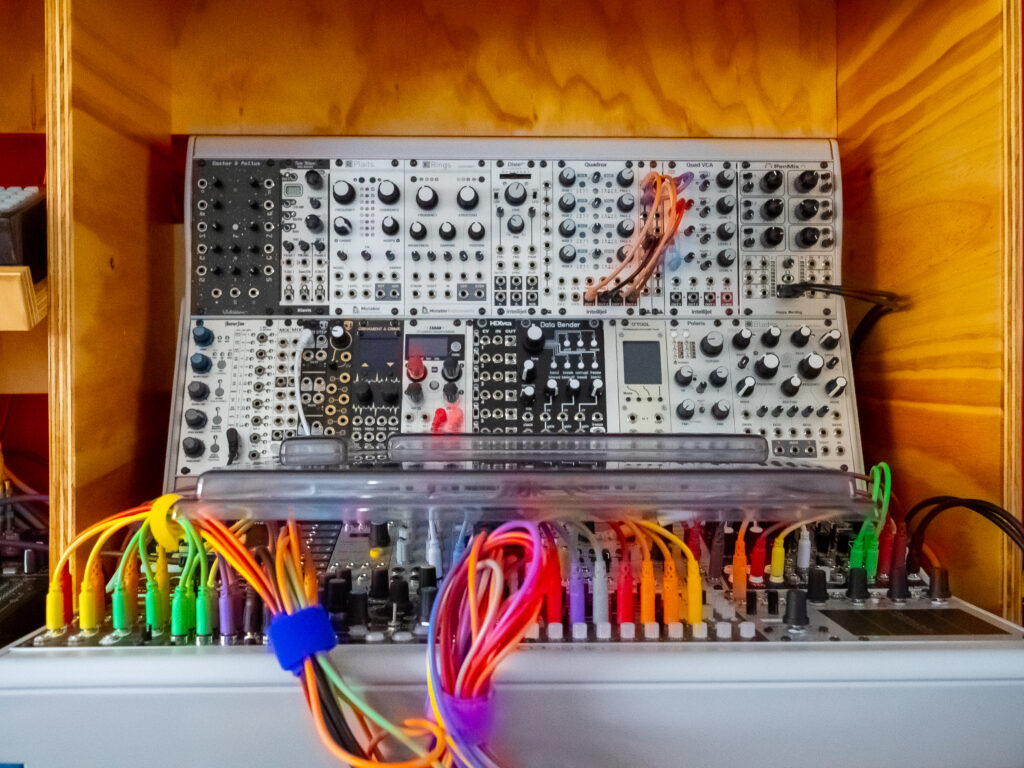
A rainbow in eurorack
7. If you had to start over, what would you get first?
I still think a good DAW with a decent sample library, one good synth VST, and a hunger to learn is the best thing you could possibly start with. So I would do that.
8. What’s the most annoying piece of gear you have, that you just can’t live without?
Anything involving my computers, haha. I know that’s a cop-out answer, but like, man. They can do everything, but fuck up harder than anything else.
Can’t get around computers. But you can mount them up high!
9. Most surprising tip or trick or technique that you’ve discovered about a bit of kit?
I think audio-rate modulation, in general, is something that never occurred to me until recently. Everytime I see DivKid do something with it I’m like “oh right, I can do that”. It’s wild.
Audio rate mod everthing… in eurorack
Artist or Band name?
Jeremy Blake for music, Red Means Recording for YouTube
Genre?
Electronica, Downtempo, Alternative Electronic
Selfie?
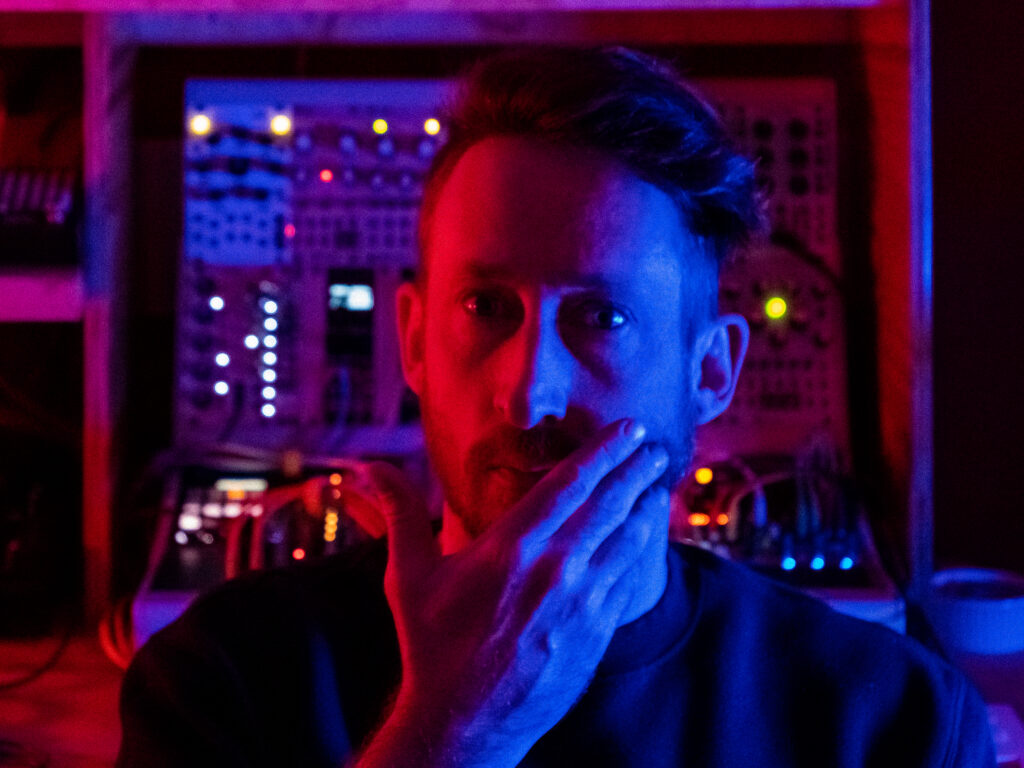
Jeremy Blake aka. Red Means Recording
Where are you from?
Seattle, WA
How did you get into music?
I started playing the flute in Elementary School. Was lucky enough to be exposed to orchestral playing and jazz ensemble. Flunked out of music performance school because I was spending too much time sneaking into the studio to use the equipment and I didn’t wanna play the flute anymore. Was playing with trackers and anything I could get my hands on. Went to audio engineering school, kept experimenting. Eventually fell into YouTube music production videos. Most recently I’ve fallen hard for modular and I’m having a blast.
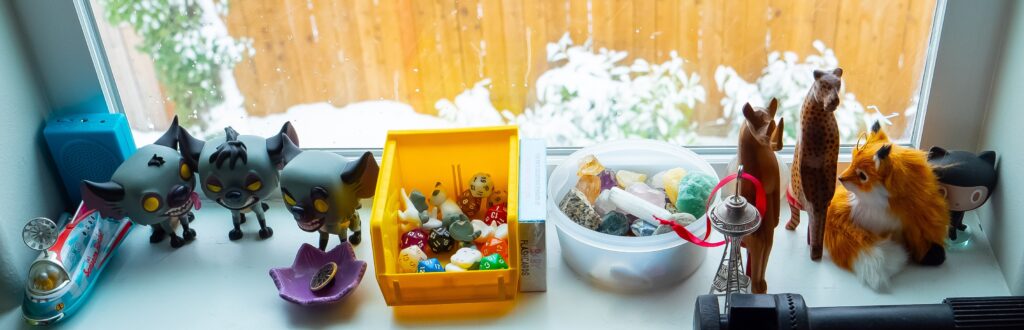
Desktop inspiration
What still drives you to make music?
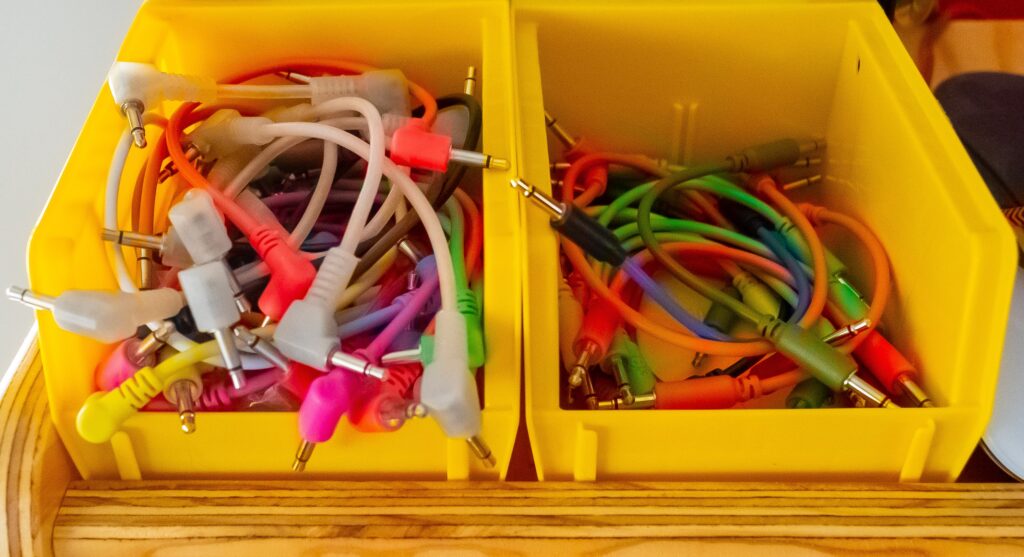
When life gives you cables, make yellow shelving organisers
All the little pieces of things I know can be rearranged to augment some new idea. Everything can be recontextualized and spun into a new idea. There’s no end to the inspiration.
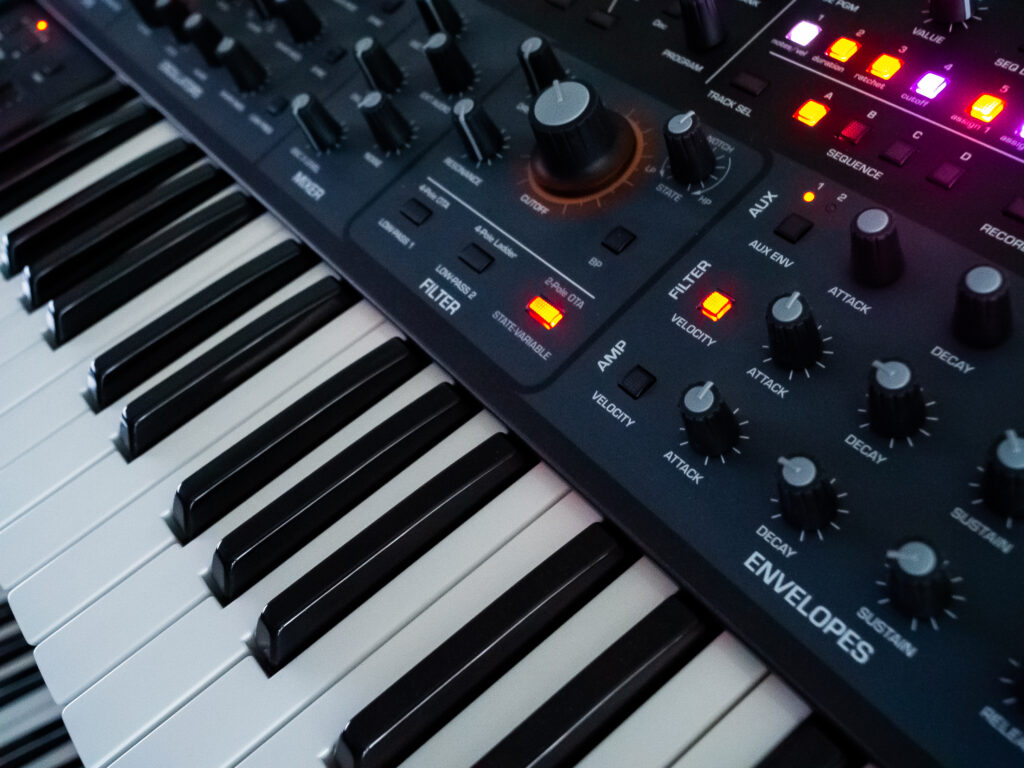
Gratuitios knobalation of the Sequential Pro 3Knobalicious
How do you most often start a new track?
Lately, a lot. Modular has been a really refreshing platform for experimentation. I’m writing at least one new thing a week.
How do you know when a track is finished?
With modular and hardware it’s easy: when the performance is done and I’ve mixed and mastered it. With DAW-based stuff, it’s when I’ve gone through all my iteration passes, like idea, arrangement, mixing, re-arrangement, ear candy, and mastering. I go by a rule of three approach: if I can listen to a track 3 times and not mess with it, it’s done. If something bothers me 3 times, I change it.
[Editor: That answer is one of the most systematic and quantified approach to that question. That I’ve read. Excellent!]
Show us your current studio
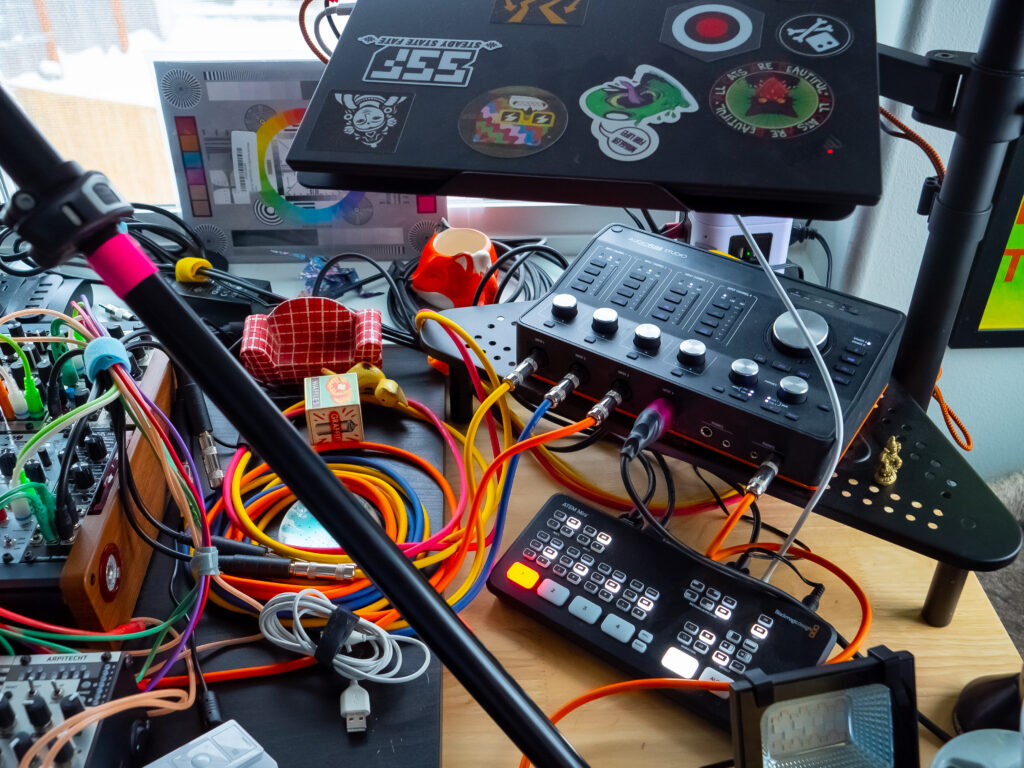
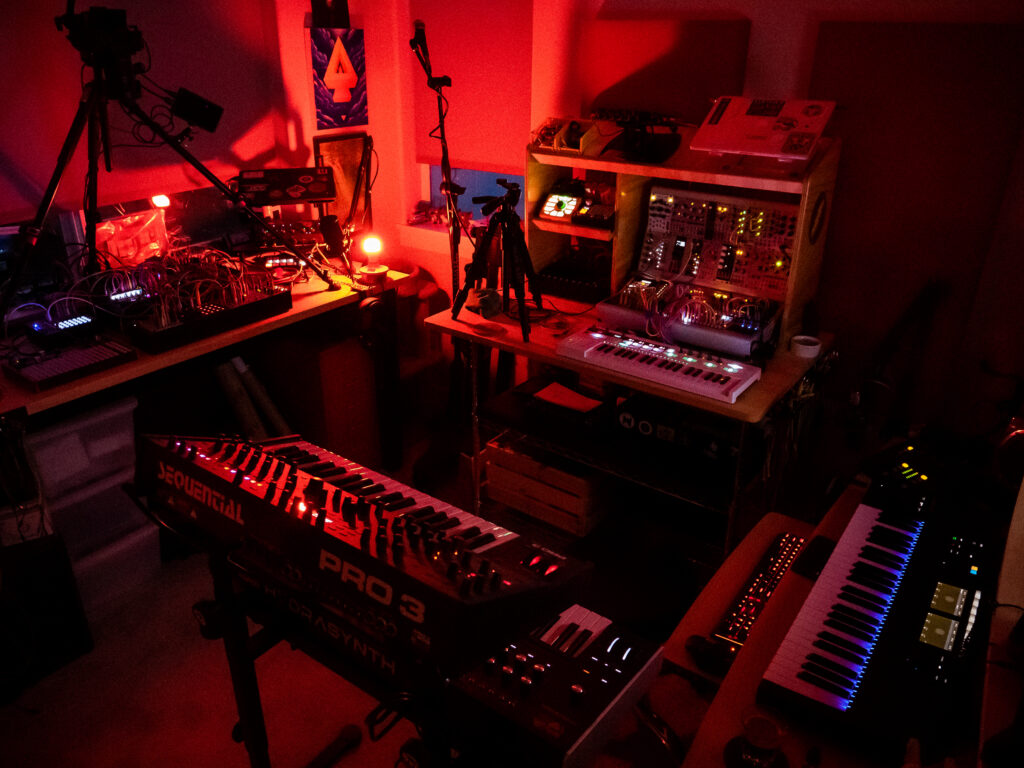
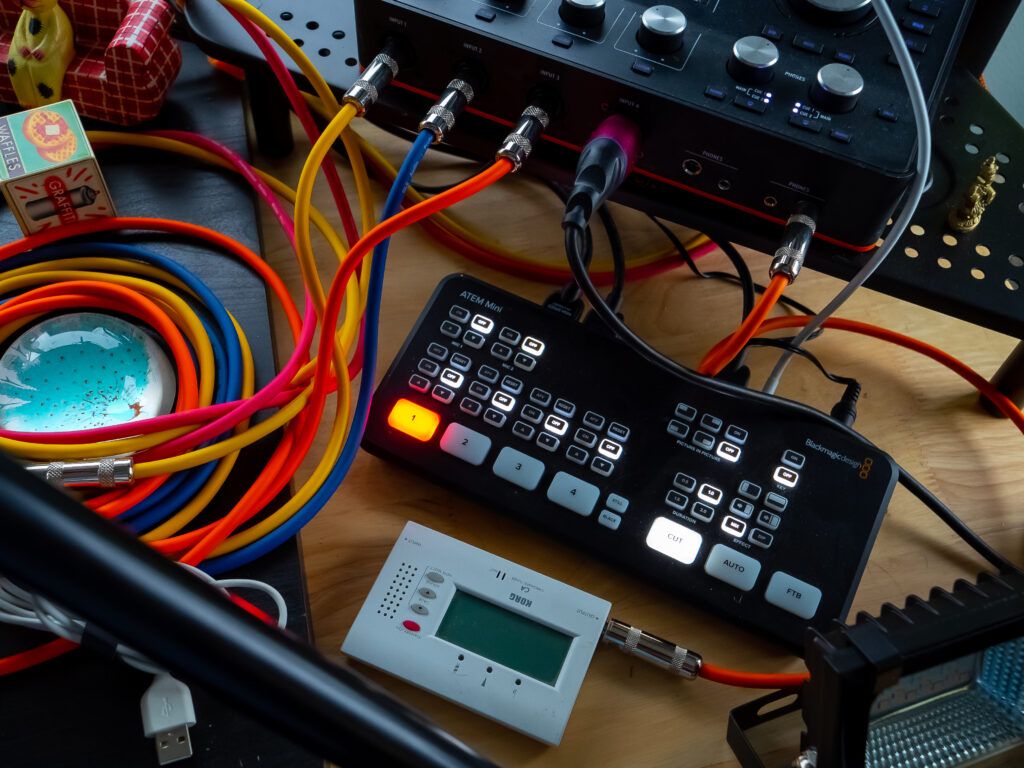
Jeremy Blake’s very red Red Means Recording studioBlackmagic ATEM Mini and a tuner
Best creative advice that you’ve ever heard?
Limitation breeds innovation, tied with “put a donk on it”.
Promote your latest thing… Go ahead, throw us a link.
[Editor: There are affiliate links to the relevant gear throughout the articles. It helps to support this blog. In fact, should you be needing some patch cables or guitar strings. Then clicking on one of the above links and buying any product that you prefer, will help the blog… doesn’t even have to be the ones in the link. Thx]]
1. Favourite knob/fader/switch on a piece of gear and why?
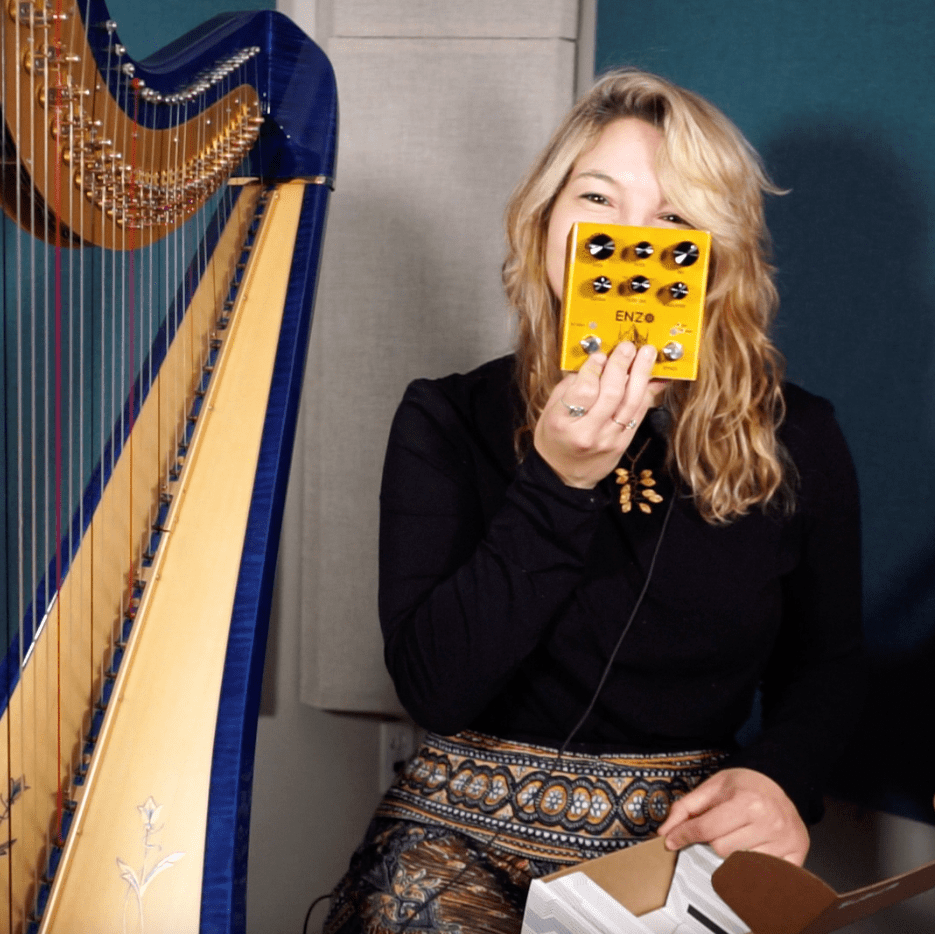
Meris Enzo
This is definitely the little button on the Meris Enzo [US, EU] that puts it in “Arp” mode. It essentially turns the chords you play into sequenced patterns at whatever tempo you set. It was such an amazing experience interacting with that mode for the first time, because I heard Enzo go from doing my bidding, to it having some thoughts of its own and playing alongside me. If you split your signal so one is dry (or going through a separate pedal chain) and the other one is through Enzo on arp mode, the sequences create a wonderful foundation for improvisation. I wouldn’t depend on being able to recreate some of those moments easily; but that’s why I love Enzo. Meris pedals are like people.
2. Do you have an ‘almost’ perfect bit of kit? What would you change?
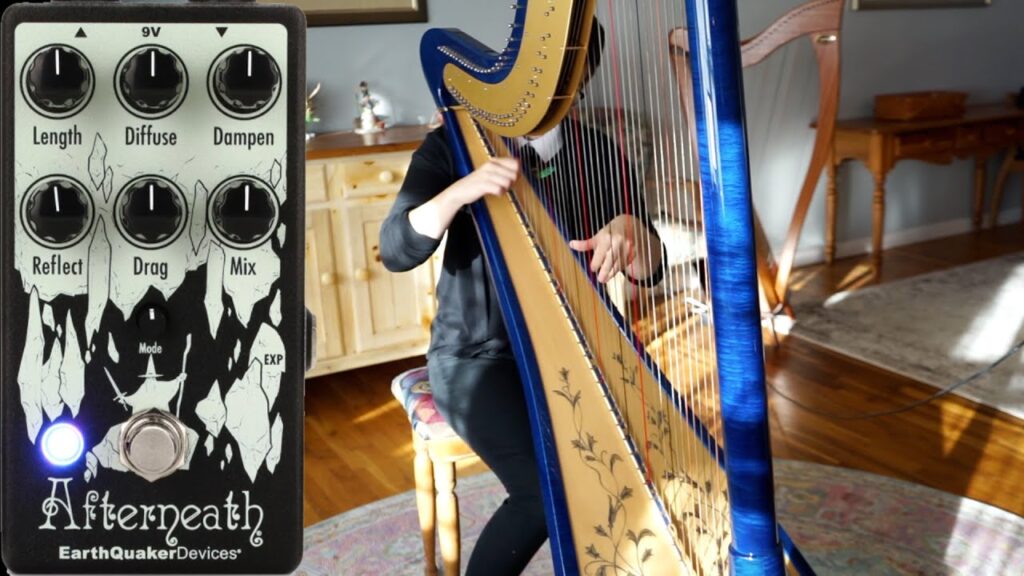
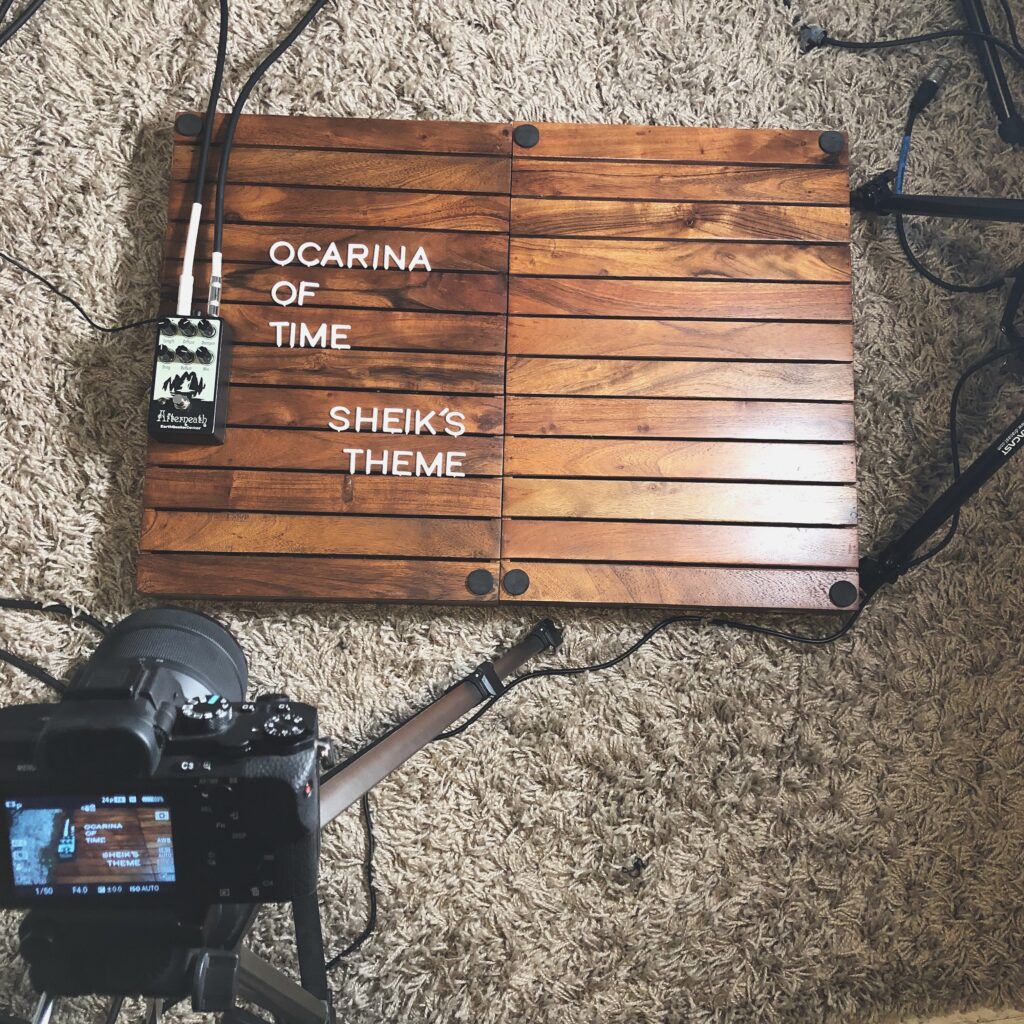
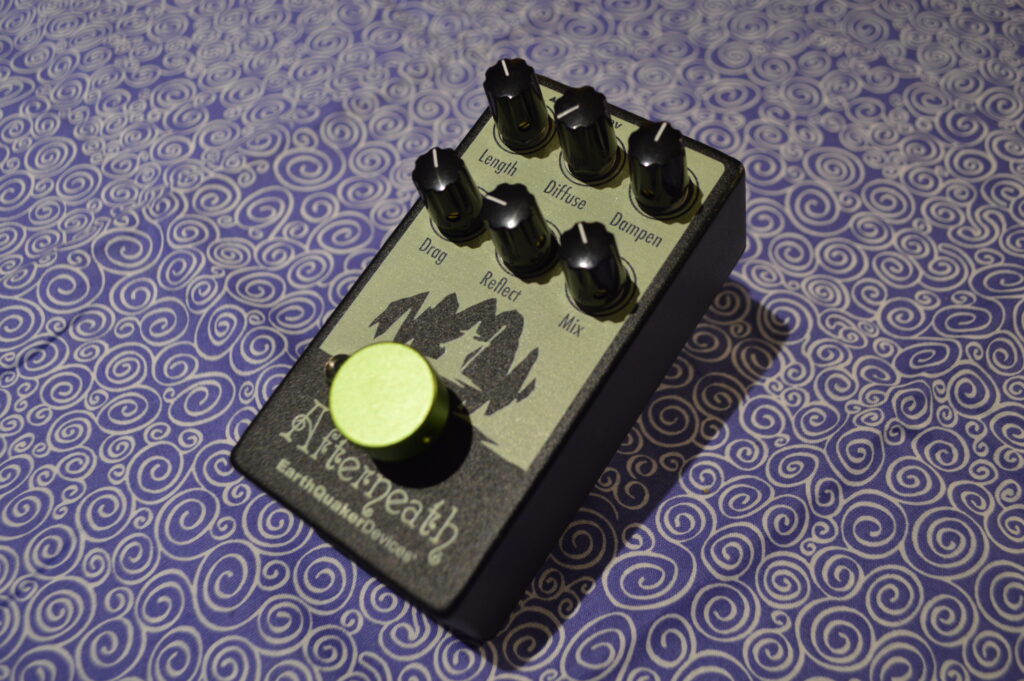
EarthQuaker Devices Afterneath V3
I’d say the EarthQuaker Devices Afterneath V3 [US, EU]is near-perfect for me. The reverb pairs perfectly with the harp, and pretty much every other instrument (especially voice)! It would work well in any piece I play. The only improvement I can think of is an upgrade to stereo output.
3. What setup do you bring on holiday/tour/commute etc.?
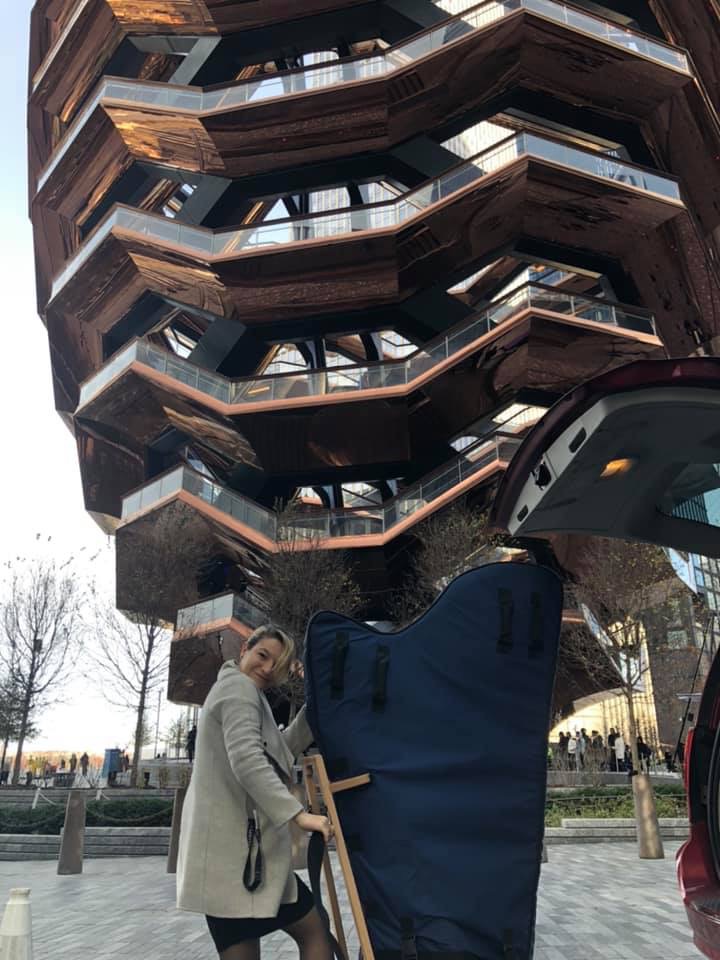
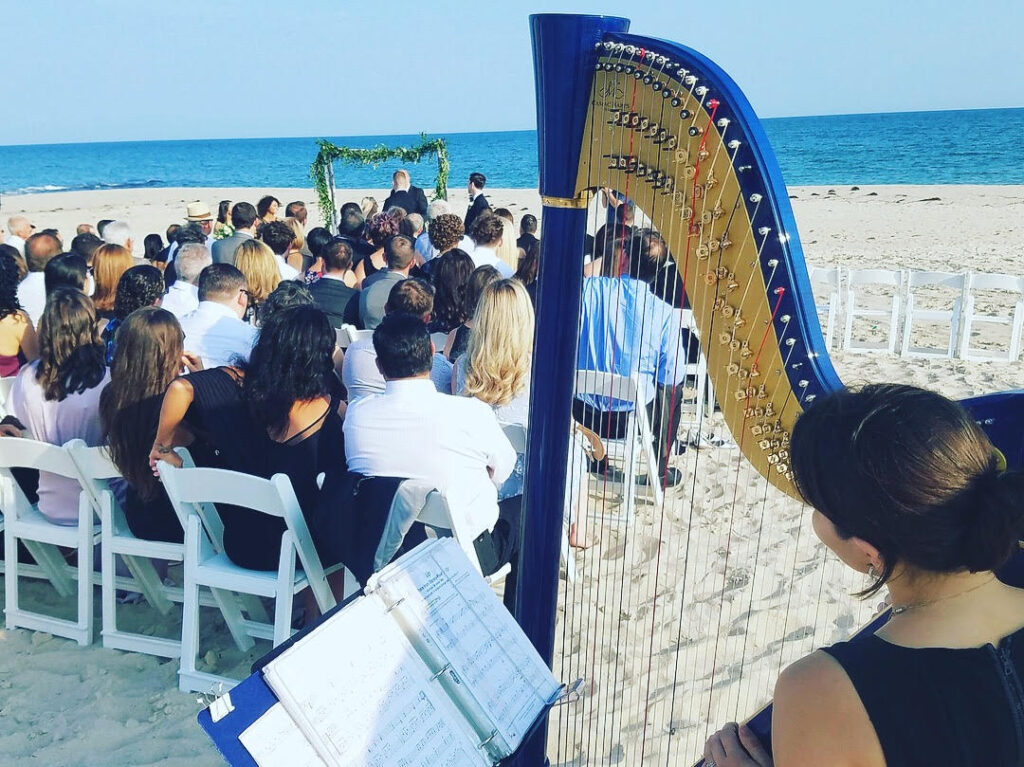
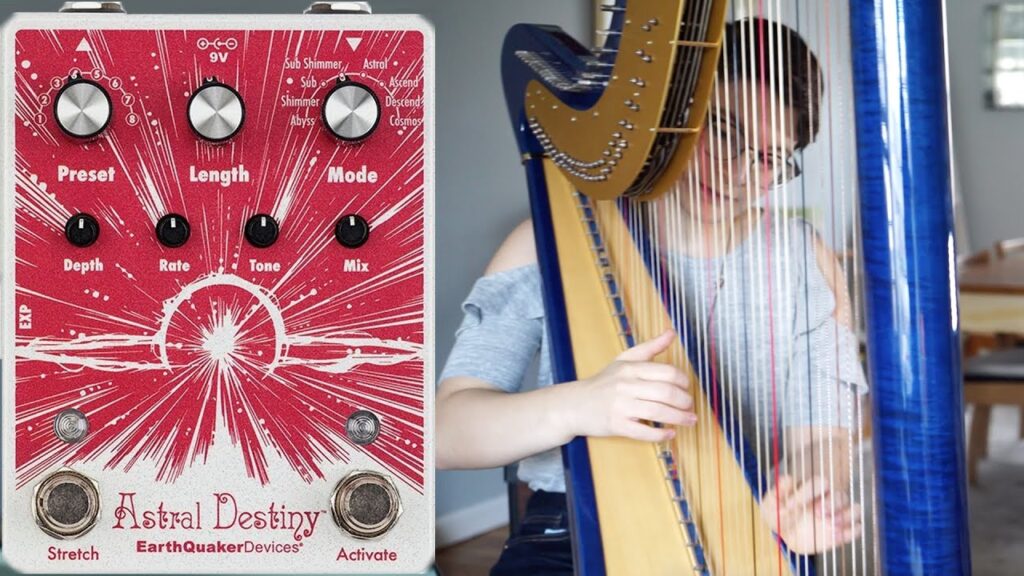
Out and about with a Harp
Unfortunately my electroacoustic Camac harp is too large and too sensitive to the weather/humidity to bring on vacation; I’d just be worrying about it the whole time and not be able to enjoy myself! On vacation or long car rides, I usually bring my Harpsicle; it’s a tiny budget lever harp that I don’t have to worry about as much. If I want to bring a few effects pedals for fun, I’ll bring whichever pedals I got recently, with my tiny travel amp and either my Organelle [US, EU]or keyboard to play through them. I just got my new Lottie Canto Colour Palette electric kalimba, which will now be a vacation staple. My wedding gig schedule doesn’t usually allow me to tour, or perform far from my home state, but I’d love to consider it after the pandemic! If you’re wondering how I transport my harp to gigs:
4. What software do you wish was hardware and vice versa?
I wish I had Fab-Filter Pro-Q 3 in a pedal box, with the same spectrum analyzer graphic display on a screen, complete with dynamic EQ. I know, it’s a lot to ask for. I’ll keep dreaming.
5. Is there anything you regret selling… or regret buying?
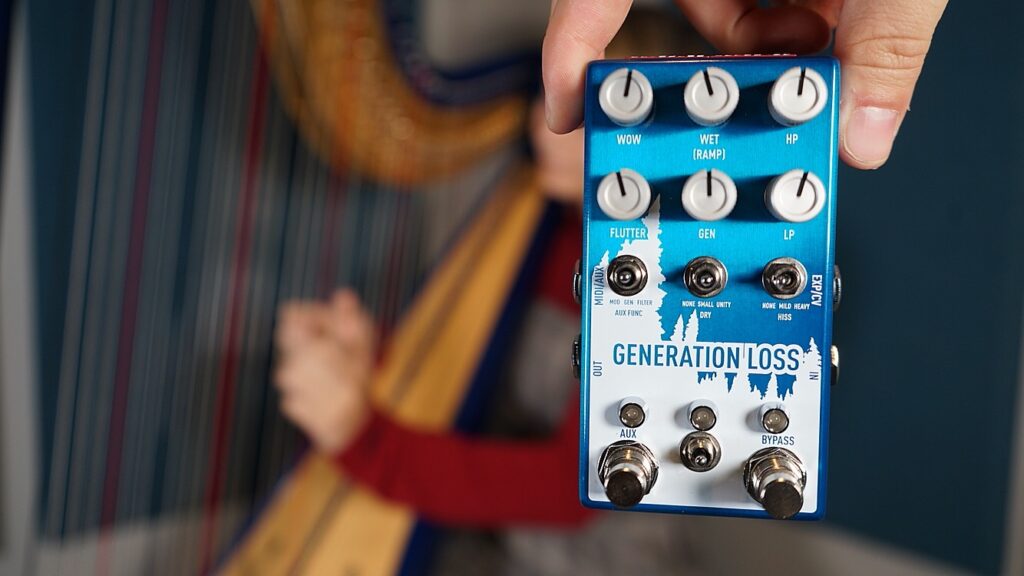
Cooper FX/Chase Bliss Audio Generation Loss limited edition pedal, hands down. The pandemic hit me really hard. I’m primarily a wedding musician, and at the start of the pandemic, I had so many gigs being cancelled/postponed and the uncertain future forced me to sell the majority of the pedals I owned at the time. I’d have to pay an insane price to get one now due to the limited availability/price inflation. I’m hoping Cooper FX decides to make a Generation Loss V2 so the amazing sounds of Gen Loss can be more available to everyone!
Cooper FX/Chase Bliss Audio Generation Loss
6. What gear has inspired you to produce the most music?
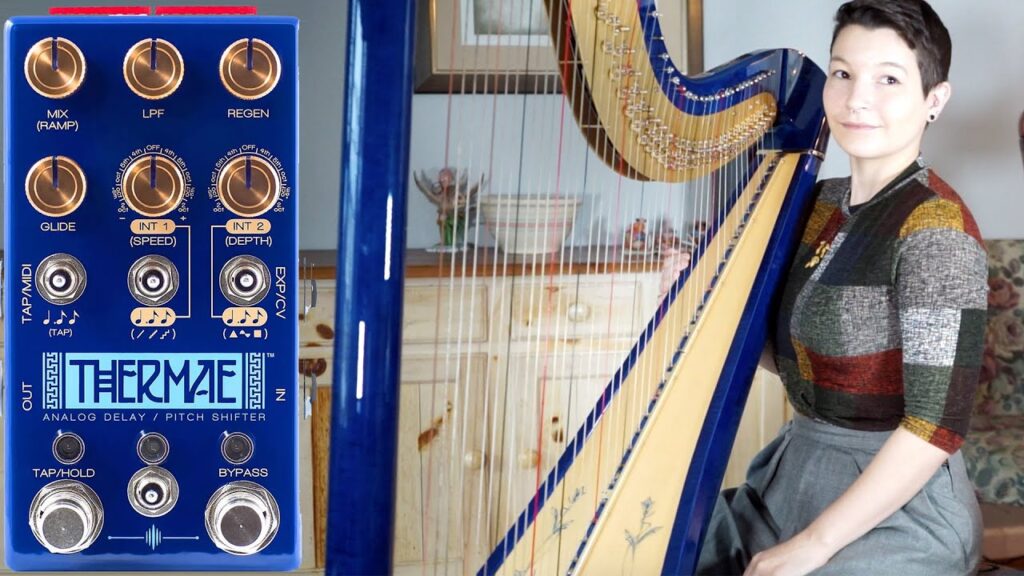
Chase Bliss Audio’s Thermae has such insane chemistry with the harp and my playing style. Whenever I plug into it and improvise some sketches, I create some of my best music. That pedal has resonated with me above most others over the past few months. It’s not so much direct inspiration from understanding the gear or thinking about it; more so the dialogue between Thermae and the harp in real-time has brought my improvisation to a higher level. The first time I used it, I was recording a demo with it for my YouTube channel, and I’ve used pretty much every sound made in that demo for original music releases, or background music across my YouTube channel. The foundation for my new single, Backyard Spaceship, is actually directly from my Thermae YouTube demo! It was such an amazing moment that I couldn’t recreate in the studio, so I just decided to use that audio as the starting point for that project.
Chase Bliss Audio’s Thermae
7. If you had to start over, what would you get first?
If I could go back, I’d definitely get a higher quality amplifier than the one I started with! I was playing my brand new electric harp through a very small $150 amp; it was like putting a bumper sticker on a Ferrari. I was new to gear at the time, and didn’t understand my options and the importance of investing in a higher quality amp.
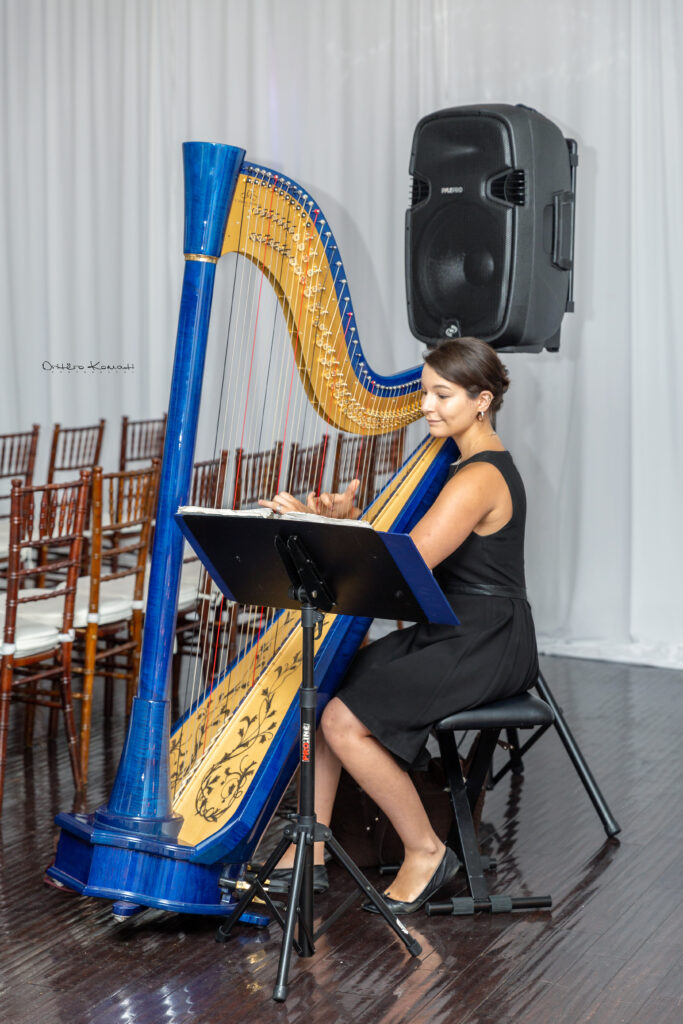
Harp with PA
I also probably would have got an EarthQuaker Devices Afterneath right away, which is an amazing device to help introduce yourself to more out-of-the-box effects pedals if you’re new to electric instruments and effects.
8. What’s the most annoying piece of gear you have, that you just can’t live without
My camera tripod is currently the bane of my workflow. I do a lot of reamping and desk recording, and it just doesn’t really go well with my setup and what I need it to do. I’m yet to find one in my budget that does what I need, but for now, I’ll have to keep taping mine to the edge of my desk on an angle and contort around it to make it work.
Camera tripods
9. Most surprising tip/trick/technique that you’ve discovered about a bit of kit?
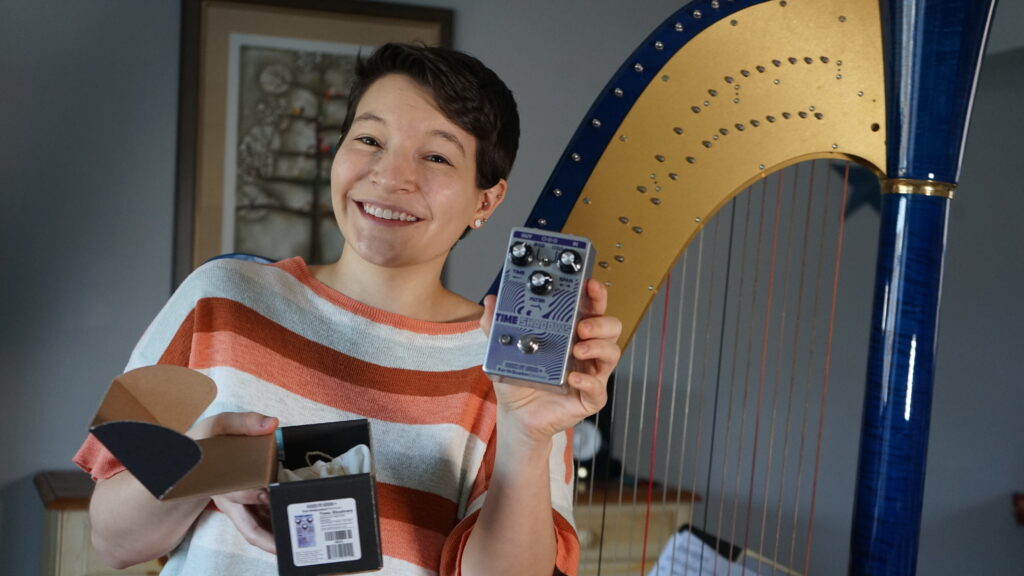
The other day, I found out the EarthQuaker Devices / Death by Audio Time Shadows pedal has a secret mode. If you put the switch in the center (it doesn’t click in place but it will stay there) it’ll create some interesting Rainbow Machine-like modulation.
EarthQuaker Devices / Death by Audio Time Shadows
Artist or Band name?
Emily Hopkins
Genre?
‘Cool harp stuff’. I always have trouble putting myself in a genre.
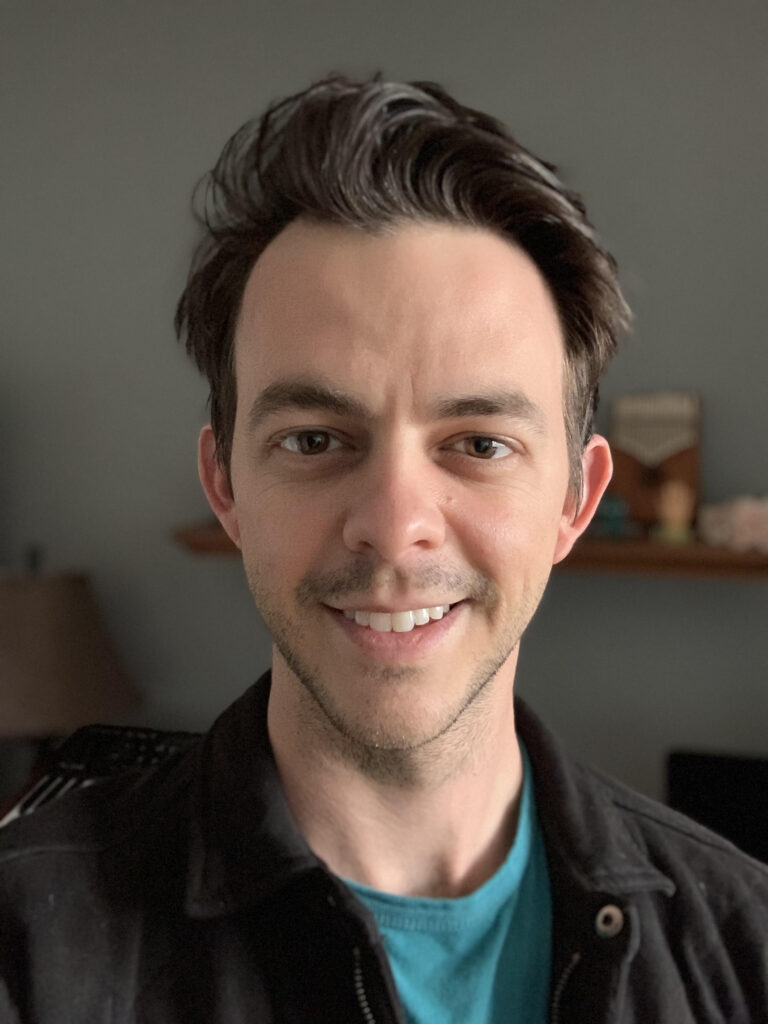
Selfie?
Emily Hopkins
Where are you from?
Long Island, NY.
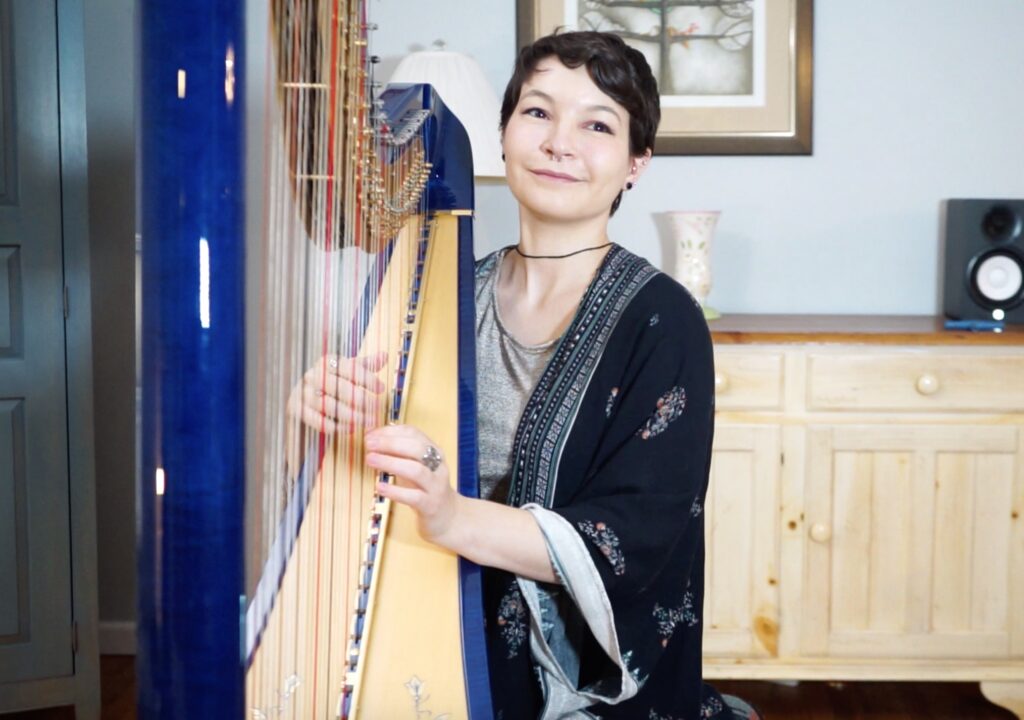
Working with the harp
How did you get into music?
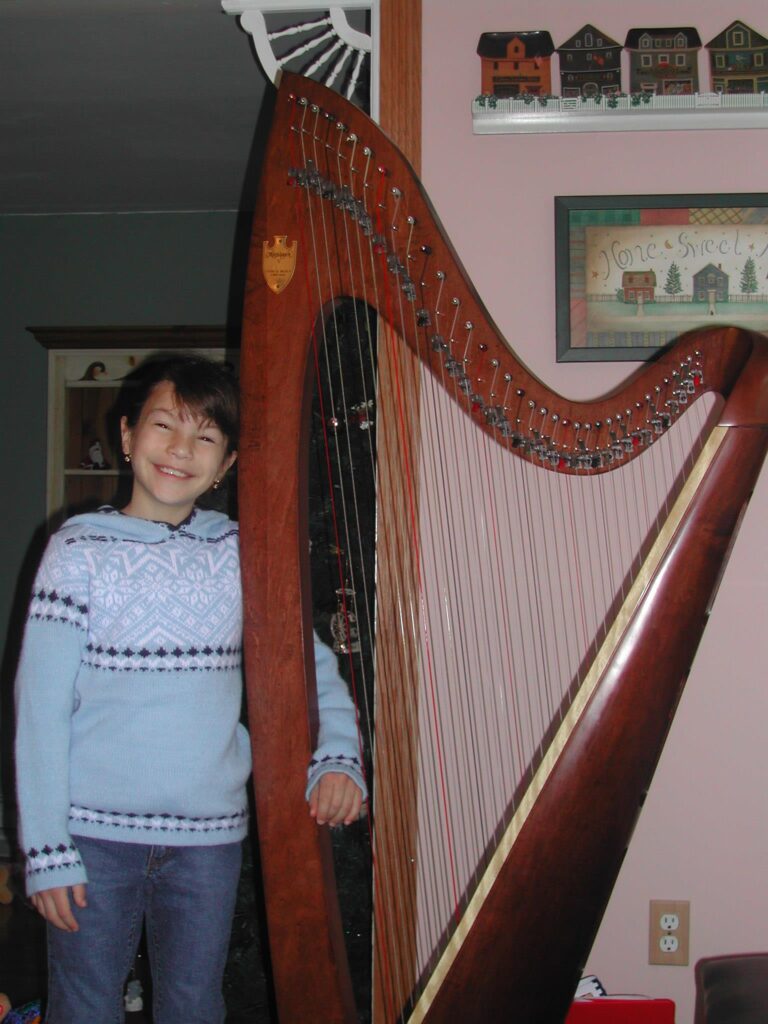
When I was 8 years old, I went to a Mexican restaurant on my birthday and there was a man playing harp during dinner (I later found out this was the amazing Edmar Castaneda during his college years!). I was absolutely mesmerized by his music, and begged my mom for harp lessons. Since I was homeschooled, I had plenty of time to practice, and was already playing piano for 4 years by the time I started (I tell everyone the harp is essentially just a piano flipped on the side!).
Emily Hopkins early years with the harp
What still drives you to make music?
The desire to connect to others and to break that stereotype of the harp being an exclusively classical / “boring” instrument. I love using effects pedals to show what a versatile instrument the harp is, and to constantly discover the new sounds it can create.
Improv! Most of the time, I discover a cool theme while I’m improvising during an effects pedal demo. My new single came exclusively from my CBA Thermae pedal demo, because I’m not overthinking anything.
How do you know when a track is finished?
When you accept that it’s finished, and you stop obsessing over it; whether it’s the composition, mix, or any tiny detail.
Show us your current studio
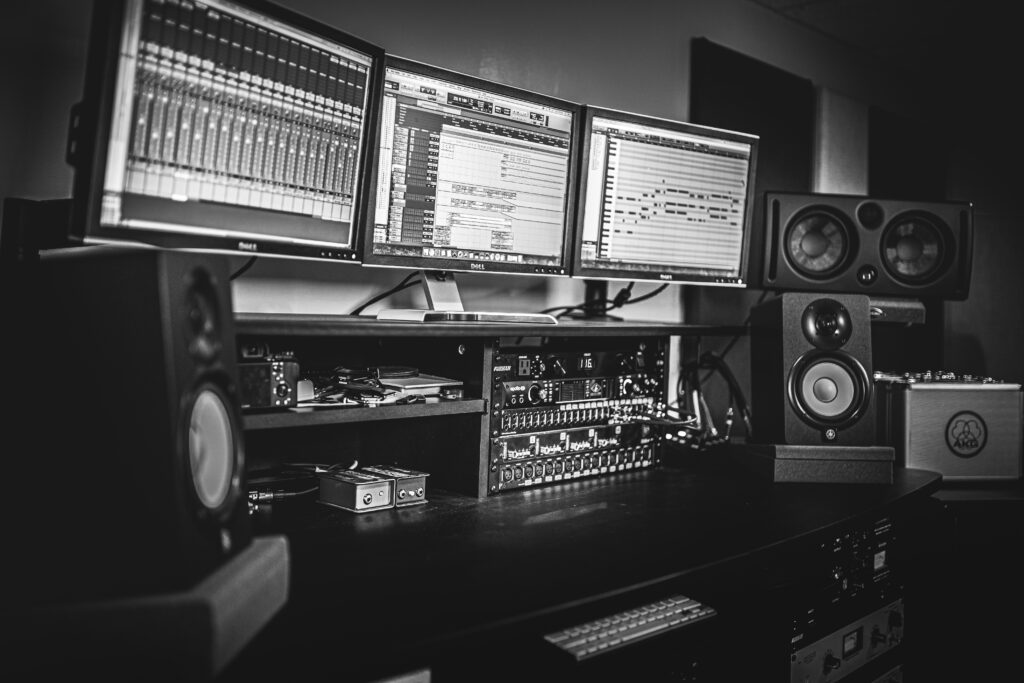
Emily Hopkins’ Studio
Best creative advice that you’ve ever heard?
The story of the “two bad bricks” really resonated with me. The short version is that Ajahn Brahm, a Buddhist monk, built a wall of a thousand bricks by hand, but two of the bricks ended up crooked. When visitors came to the monastery, he tried to avoid showing them the wall because he was so worried about them noticing those two crooked bricks. One day, someone approached him and told him how beautiful the wall was, but he disagreed, pointing out the two bricks. The visitor said, “There might be two bad bricks, but all I can see are the 998 perfect ones.” Even if you don’t play a piece absolutely flawlessly, most of the time you’re the only person who can hear the imperfections. It’s important to appreciate the successful elements of your work, and understand that imperfections in a piece are what makes it human. Also, I don’t believe in ‘wrong notes’ — only ‘interesting’ ones.
Promote your latest thing… Go ahead, throw us a link.
[Editor: There are affiliate links to the relevant gear throughout the articles. It helps to support this blog. In fact, should you be needing some patch cables or guitar strings. Then clicking on one of the above links and buying any product that you prefer, will help the blog… doesn’t even have to be the ones in the link. Thx]
1. Favourite knob/fader/switch on a piece of gear and why?
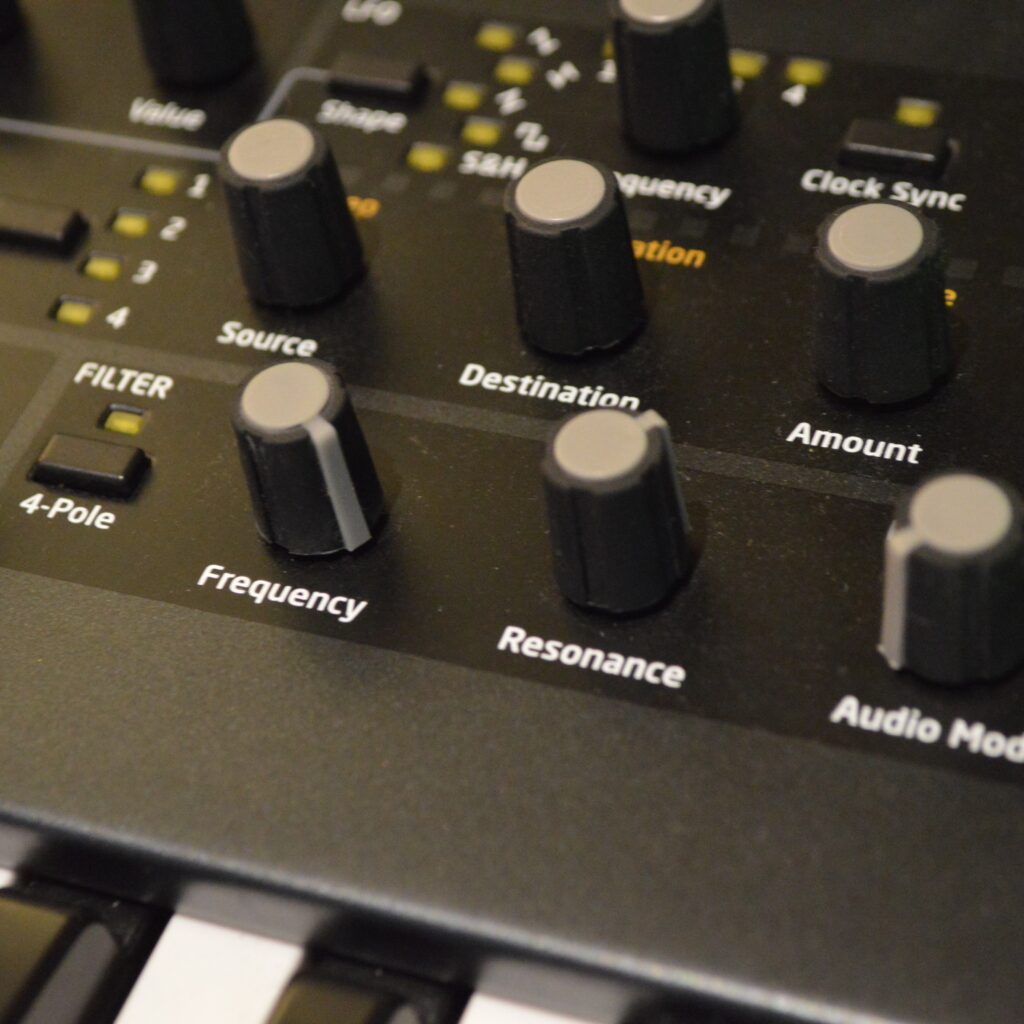
Sequential Mopho X4
My favorite knob is actually a combination of knobs; cutoff frequency (LPF in particular) and Resonance. Coming from a jazz saxophonist background, I did not have any interest in gear until my mid 20’s when I was at a music store with a good friend of mine. We sat down at the synths, found my way to a Microkorg XL, again with no real interest in them, and then I somehow managed to play around with the filter knob. I was mind-blown how cool sweeping a filter was! It was so space-sounding and magical and a sound I didn’t expect to find. I sat there for 30 minutes just playing a chord, letting it sustain while I swept the filter/resonance to get the dreamy space sound. The picture is of my Mopho x4, which has a stunning LPF Cutoff and Resonance combo.
2. Do you have an ‘almost’ perfect bit of kit? What would you change?
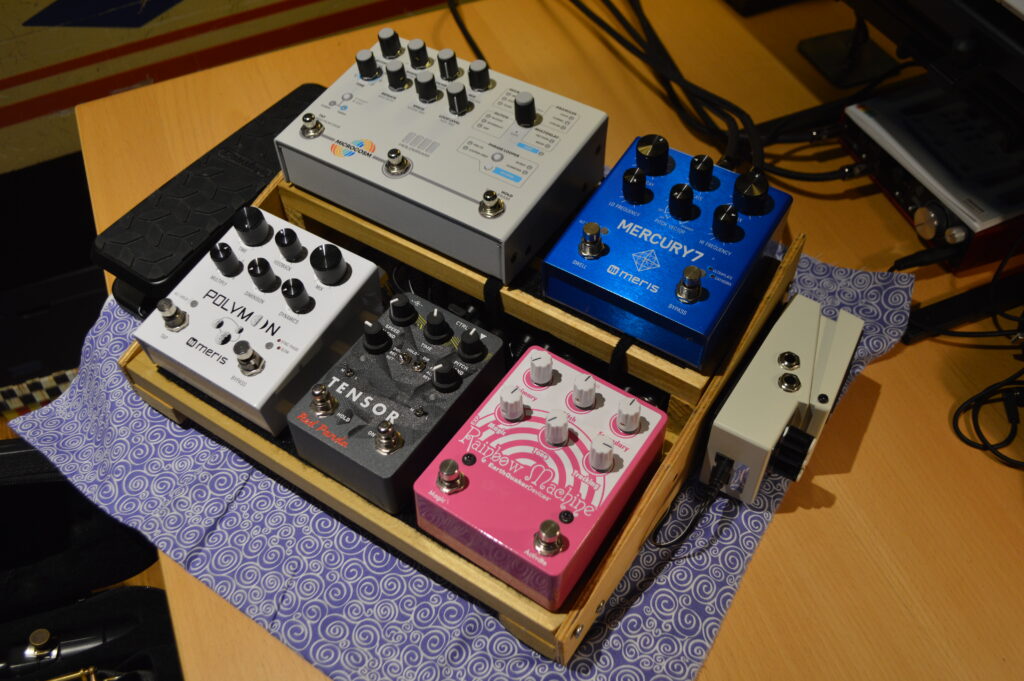
Pedalboard
I love my pedalboard! Again, as a saxophonist, there was no clear tutorial I could find on YouTube to figure out how to get the sounds I wanted to now achieve using a saxophone. I started experimenting with pedals in 2017, and have found a great balance between in-home solo ambient jamming and live performance utility. At home and by yourself, you can try any pedal/combination for anything, but playing with a live band, especially in a jazz setting, it becomes difficult to find the right pedals. The saxophone is a very difficult instrument to use with pedals live because most of the sound still will come acoustically. Therefore, I had to choose effects that would compliment my sound rather than change it. Looping makes a cool background in live settings, delay/reverb always nice because it lingers in the spaces of your playing, and the right kind of pitch shifting will add depth to your playing. No dirt here because it doesn’t really work well live because you’ll basically only hear the acoustic sound.
3. What setup do you bring on holiday/tour/commute etc.?
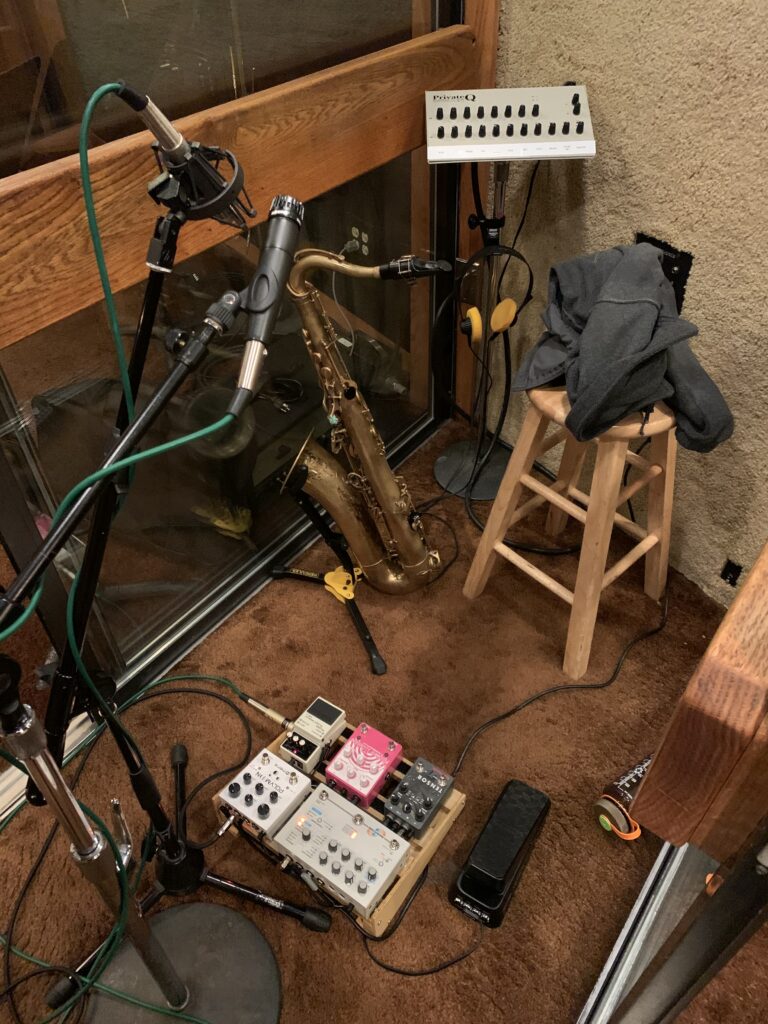
Recording setup – saxophone with pedals
With the pandemic going on, there has not been much opportunity to travel for musical reasons however, I was able to go and record my dream album in Washington D.C. back in December. It is an all-original music album of mine where I utilize the same pedalboard in the picture above in combination with my saxophone. When traveling home for holidays, I usually only bring the saxophone. I don’t end up playing much but will sometimes get some practicing/noodling in to try and stay in shape. The picture is of my set up from the album recording back in December
4. What software do you wish was hardware and vice versa?
To be honest, I don’t use too much software as far as instruments/effects are concerned. I mostly just use Ableton to record my solo-ambient music and lightly mix/master it there. I prefer the hardware due to my tactile way of approaching music. I learn best through my sense of touch and it is crucial for me when playing/writing music. This is probably why I am so bad at vocals, but also why “button” oriented instruments like saxophone, piano/synth, pedals are my instruments that I use the most.
5. Is there anything you regret selling… or regret buying?
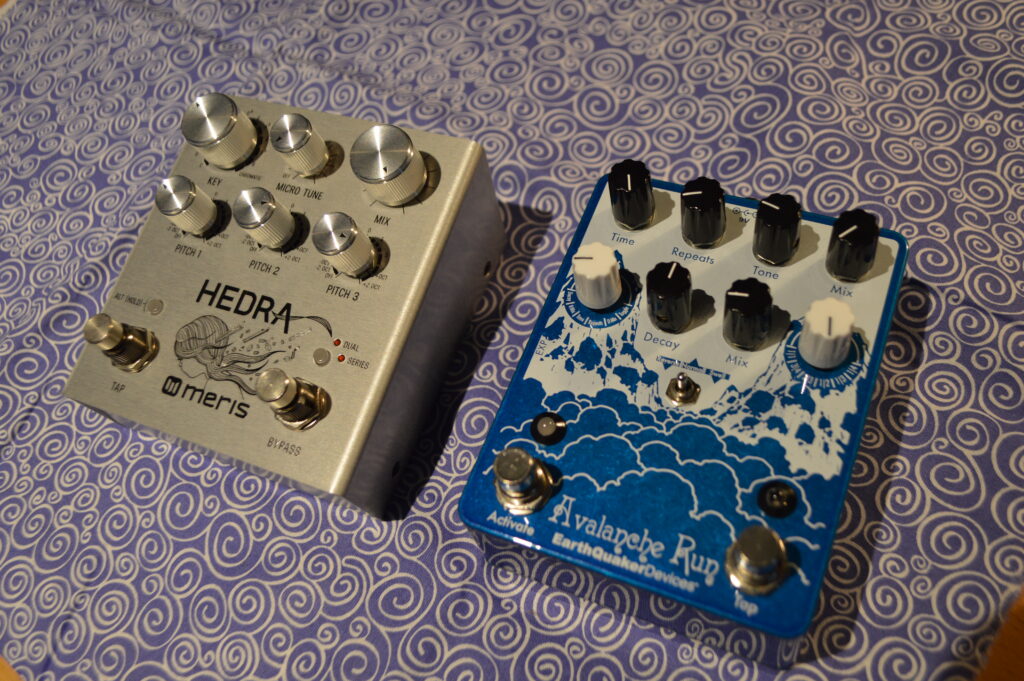
Earthquaker Devices Avalanche Run and Meris Hedra
There is nothing that I regret buying. I take a very long time thinking about what gear I want and why I want it so I never really have impulse purchases that I regret later. I do have a few pedals that I don’t often use; for example, the Avalanche Run and Hedra. However, they are not regrets as I still will pull them out from time to time to create a song or two. They are just not as crucial for most of the things I do with my music. I also have never sold a piece of gear so I can’t really say I regret selling anything, ha!
6. What gear has inspired you to produce the most music?
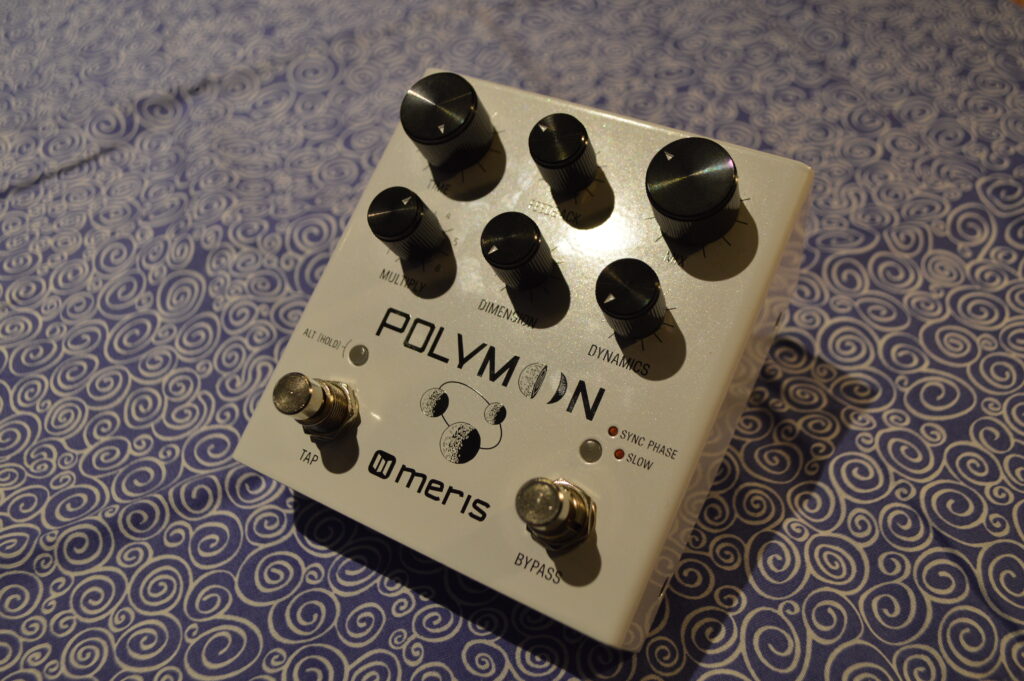
Meris Polymoon
Finally, an easy question to answer! The Polymoon by Meris is ABSOLUTELY 100% the gear that has inspired me to produce the most music. It has so much to offer, especially when you run it at the end of your chain. It can do the simple delay stuff, but also has a gorgeous phaser-verb when you crank the dimension. Putting it 100% wet mix will give what I consider the most beautiful sound a piece of gear can offer to this day. Not only that, but it has a wealth of modulation options that I use in so much of my music. Most notably, the octave up/down pitch shifted delays add such a beautiful space-cruising sound to your song. Being in the end of the chain, after my loopers and everything else, you can manipulate your loops by doing any of those things mentioned above and it will really dynamically change your composition/jam.
7. If you had to start over, what would you get first?
Afterneath by Earthquaker Devices
If I had to start over… this is a tough question to answer. My first purchase was the Afterneath by Earthquaker Devices, and it was probably the best thing I could buy to get into this stuff. I really wanted to find a way to stack multiple notes on saxophone as it is a monophonic instrument. Afterneath having the capabilities of having a really long/pronounced sustain, it was perfect for what I was trying to do. The only issue I ran into was when I would stack a chord of some sort, playing over the top of it would get added into the Afterneath. So going back, I would probably get the NS-2 by Boss and run it in conjunction with it. That way, I could stack my chords, then essentially mute my microphone so I could, acoustically, improvise/play over the top of my new chord. Also, I would buy a phaser, because as Stefan from the Pedal Zone has shown, running a phaser after the Afterneath is just beautiful and has that sweeping motion that first got me hooked in the first place.
8. What’s the most annoying piece of gear you have, that you just can’t live without?
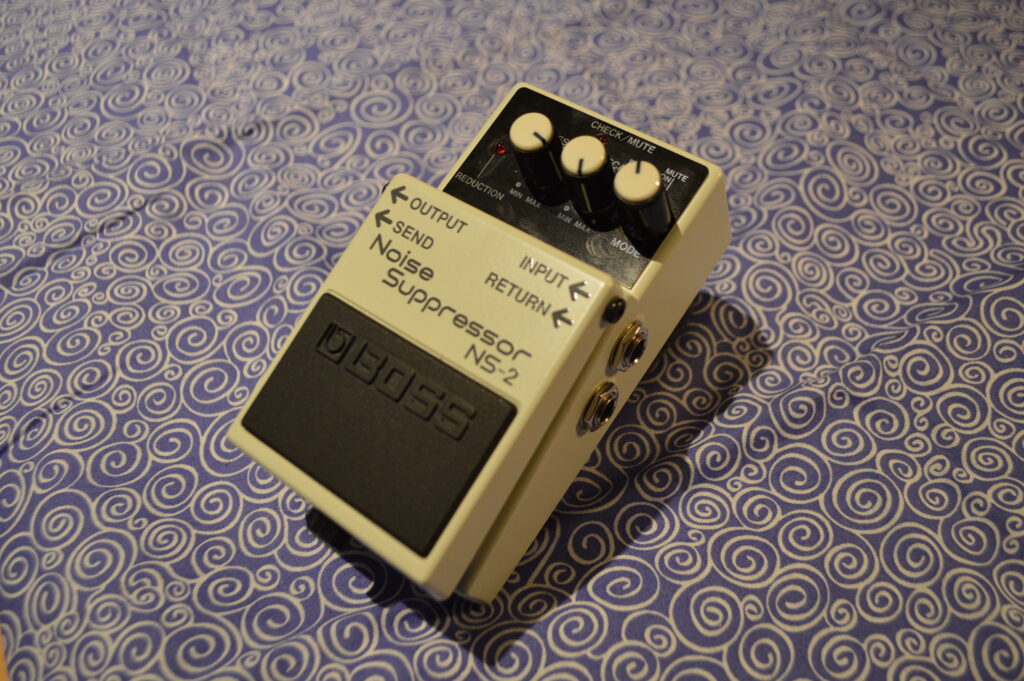
Boss NS-2
I don’t know if I would call it annoying per say, but I have found that the NS-2 by boss is absolutely necessary for probably any player who relies mostly on their acoustic sound. When playing live with a band, especially the louder bands, your microphone is going to bleed in all those drums, guitars, whatever. The NS-2 is SO useful with its gate function so it will only pick up whatever is directly in front of the mic. Not only that, but it cancels any feedback that I would get in those live settings which playing with a microphone will almost always give you (especially when using noisy effects). The only reason I would consider it slightly annoying is that because it takes up real estate (in my pedalboard picture you can see that I taped it to the side of the board) for something that I use basically as a one-trick always-on effect. However, it must be said that the NS-2 is a live-setting modified saxophonist’s biggest buddy.
9. Most surprising tip/trick/technique that you’ve discovered about a bit of kit?
I think the best trick I have learned about gear in terms of using gear as part of the compositional process is to experiment with your signal path and definitely put effects AFTER your loops. For example, having the Polymoon after my looper lets me change the composition so drastically that you almost wouldn’t believe it’s the same exact loop if I showed them separately. That is a very powerful thing to have at your disposal for those live gigs when a solo interlude to start the second set is warranted. Another idea is to put a pitch shifter after your loops so you can modulate to a different chord/key center to give you something new to play over the top of (this might require more parallel signal paths but I have done before and is very cool).
Artist Name
Tyler Cassidy (studbagl on youtube, Instagram, etc)
Genre
Adventure music, jazz, ambient.
Selfie
Tyler Cassidy
Where are you from?
I am originally from Fort Lauderdale, Florida, now living in Boston, Massachusetts.
How did you get into music
I played saxophone in middle school and was very neutral about it; it wasn’t fun or boring. But then my first day in high school in 2006, my grandad picked me up, who was the only other musician in the family. He had the music of Richie Cole and Charlie Parker playing on his CD’s and I couldn’t believe my ears. I didn’t know these things were possible on a saxophone. So when I got home, I opened up YouTube and listened to everything I could. It all spiraled from there.
What still drives you to make music?
I love writing music! As I said previously, I wrote an album and got to record it with a bunch of my friends and some new people back in December. The feeling of writing songs and then having them come to life is nothing less than fulfilling; you feel proud, happy, and satisfied all at the same time. This particular album was special for me because I got the chance to record live with a huge band. It was 10 people, myself on saxophone/effects, an electric guitarist, nylon/steel-string/electric guitarist, pianist, bassist, drummer, string trio and person conducting the string trio. It was magical and I can’t wait to write more and bring them to life.
How do you know when a track is finished?
So this question is better answered for my solo ambient stuff. Being a live-oriented musician, I usually one-take all of my compositions. So whatever you are listening to was all done live and in one track. It basically boils down to if I was satisfied with it or not and that’s how I will know if it is finished. Most of these compositions are live jams, some have a little more planning, but never usually that much.
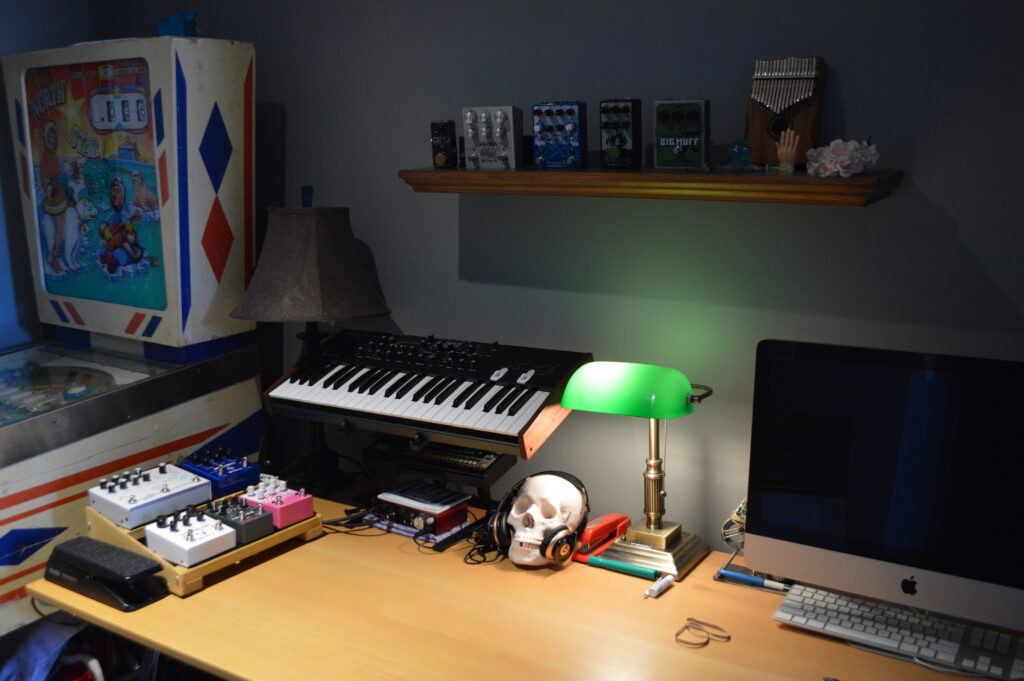
Show us your current studio
I call it the LazerMaze
Tyler’s home studio
Best creative advice I have ever heard?
Trust your ears. If your ears say it’s good, it is good. Sometimes it’s easy to let your brain get in the way when it says, “No, this definitely shouldn’t work” or “This wouldn’t make sense to go from this chord to this chord”. Your ears should always be trust! We are musicians after all.
Promote your latest thing… Go ahead, throw us a link.
The latest thing I have out is “Gentle Shore” which is a solo ambient album of mine. On my studbagl.bandcamp.com you can find 3 of my solo ambient albums as well as an album I did as a bandleader back in 2017 in Washington D.C. Definitely want to look out for the new album coming out in summer 2021 that I just recorded though; it blends all the jazz, ambient, post-rock, romantic adventure music that makes up my imagination into one.
[Editor: Do you have a favorite tip, trick or way of working with any of the gear from this interview? Then throw us a comment below…]