1. Favorite knob/fader/switch on a piece of gear and why?
I love the various knobs in my 500 rack for mixing and tracking stuff, I really love the 4 knobs on the OP-1.
500 Rack
2. Do you have an ‘almost’ perfect bit of kit? What would you change?
I think the MPC Live is a great blend of portability and a pro-grade DAW. I do wish it had portamento for the samples. Now i use the OP-Z for that bendy stuff and track it in.
Akai MPC Live, Linnstrument and iPad with Griffin Dock
3. What setup do you bring on holiday/tour/commute etc.?
I used to take the OP-1 everywhere, but now I pack even lighter. I always have my iPhone X and its loaded with lots of music apps. My favorite when on the go though is the T.E. PO-33. I take small earbuds and an old iPhone with the headphone jack for sampling on the go. I cooked up a few keepers in grocery lines etc..gas stations even lol
iPhone and TE KO33
4. What software do you wish was hardware and vice versa?
I still think the MPC can be like Ableton Live with a few more updates. Live is a really good and flexible DAW so that’s my target. I like emulations, but we don’t need all hardware to be cloned to software. Those knobs are way less fun.
5. Is there anything you regret selling… or regret buying?
I got the SP-808 when it came out (way back when) but I needed a good drum machine for hip-hop and it was not a good fit at all…I ended up sending it back and I got the MPC2000. That was a game changer for sure.
Akai MPC2000 in it’s natural habitat
6. What gear has inspired you to produce the most music?
OP-1 and OP-Z are at the top of my list
7. If you had to start over, what would you get first?
Now, I’d get a macbook, MPC Live, and the SSL Six. Add in a decent mic and pre and its a whole studio.
SSL Six
8. What’s the most annoying piece of gear you have, that you just can’t live without?
The computer for sure. I hate being a repair tech but it makes mixing and finishing records soooo easy.
9. Most surprising tip/trick/technique that you’ve discovered about a bit of kit?
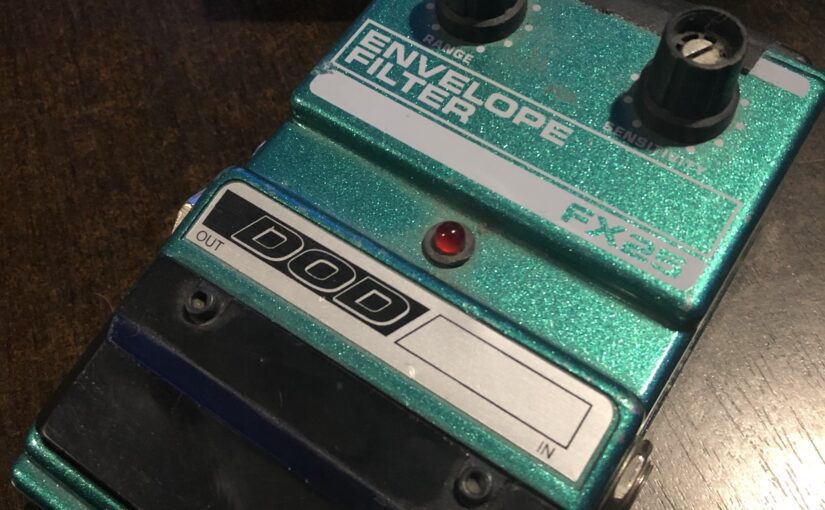
My DOD envelope filter is used for reggae basslines a lot. When I heard that, I turned down the knobs to 0 and WOW!!! It’s like an 808 bass guitar.
DOD Envelope Filter Pedal
Artist or Band name?
Dragonfly Bry at Mikromix Studio DMV
Genre?
Yes lol…..well mostly rnb and rap, but plenty of other stuff. I did a few electro albums that are still spinning out there, reggae too.
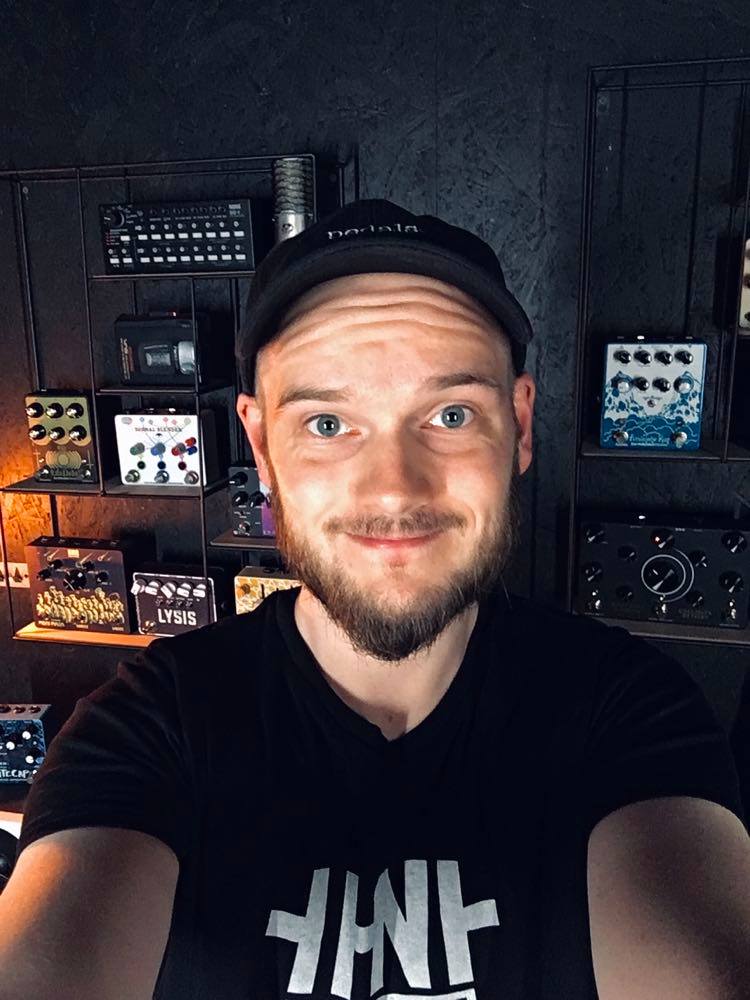
Selfie
Dragonfly Bry
Where are you from?
Maryland – The DC Metropolitan Area
How did you get into music?
Piano lessons in elementary, then drums and clarinet, then turntables (DJ-ing) and finally bass – all of that was before leaving high school. I later got my BS degree in Music Engineering Technology.
What still drives you to make music?
Creating music has been in my soul since I was a kid and never really left. Its like why I still breathe air, cuz I gotta 🙂
How do you most often start a new track?
Usually drums or melody but I also dig for samples using pretty much any source. I try to change it up often so I do not keep making the same songs over and over lol.
How do you know when a track is finished?
Usually I listen with fresh ears the next day and that is very revealing.
Show us your current studio.
Best creative advice that you’ve ever heard?
When you are in the flow, stay there because it doesn’t always come so easily. Also, less is more. Those two help me still to this day.
Promote your latest thing… Go ahead, throw us a link.
Lately I have been shooting more videos for my music production course at Mikromix.com I also have a Teenage Engineering 808 pack and an MPC Expansion pack for sale.
[Editor: Do you have a favorite tip, trick or way of working with any of the gear from this interview? Then throw a comment below…]
1. Favorite knob/fader/switch on a piece of gear and why?
I think its the ON switch of my power-distribution rack… It’s distributing the power to my whole studio, eurorack gear, outboard, speakers, and keyboards. When I switch that on, the air in the studio is ripe with possibility and promise. Sometimes, all the options are too much and I dive into crazy module-housekeeping, firmware updating, or somehow just bounce icons around on my computer desktop, and after a few hours, I have to switch off the system with nothing to show for it. Other times, I’ve managed to explore sonic avenues and great musical adventures – which, mostly, I just keep to myself and stash away on some hard drive…
Studio on and off switch
2. Do you have an ‘almost’ perfect bit of kit?
What would you change?I know it is a boring answer – but it’s my laptop… (which is also, funny enough, maybe the most horrible piece of kit). It’s the central control hub in my studio – and it would be immensely more challenging to record, learn about, integrate all the other stuff in the studio without it. I grew up in “the dark ages” and spend an awful amount of time on tape decks, 4-tracks, etc. – and had to save up to go to a studio to record something, often at bad hours and under strict time constraints. The laptop solves all that. On the other hand, though, it removes a lot of the more tangible and analog parts of music-making; it always needs some update and seems to get slow and chunky after just a few years. And it’s a constant fight to keep it from distracting you from where you wanna go… (Yeah, so, with great power comes great responsibility – and the problem with computers, is they take no responsibility – you have to do that yourself ;o) ). If I could change anything, I think it ought to be much easier (or in Apple’s case, simply **possible**) to update processors, memory, and disk drives on laptops.
3. What setup do you bring on holiday/tour/commute etc.?
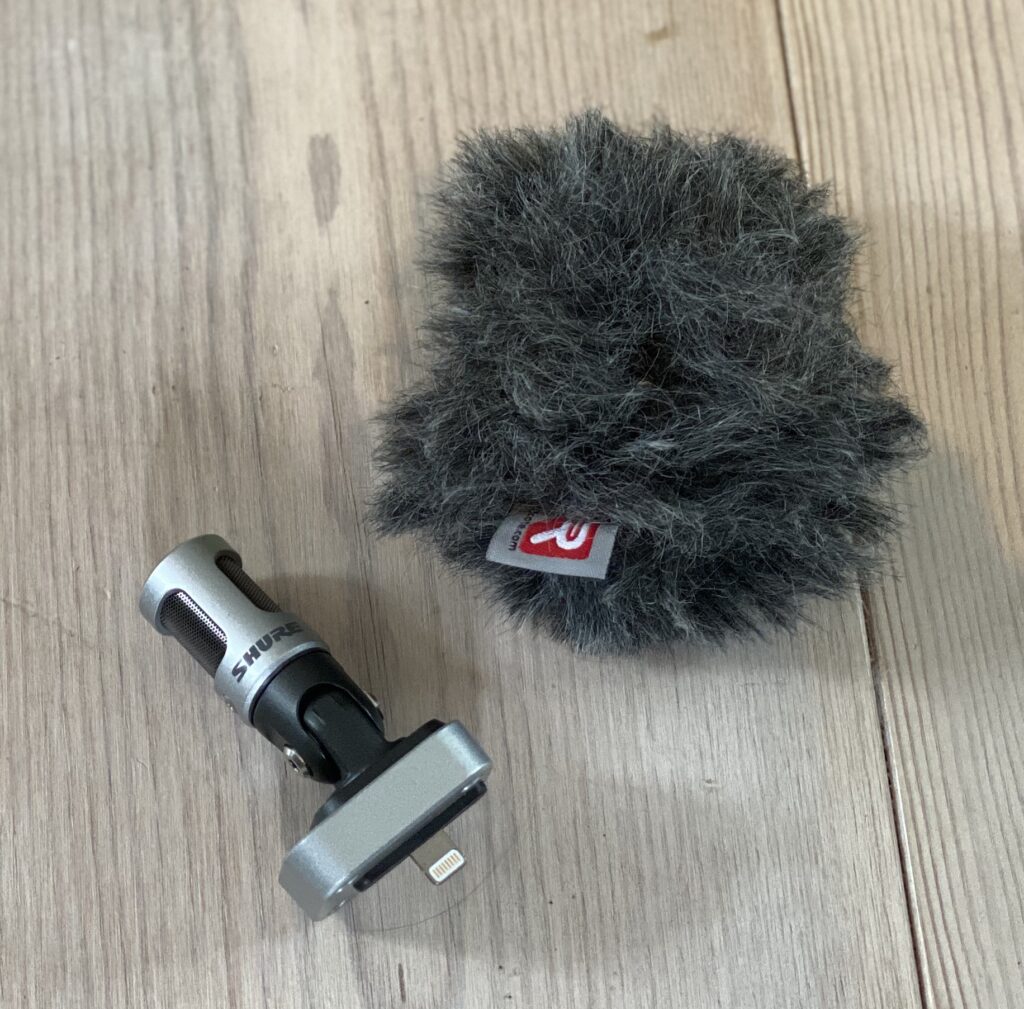
I’ve brought my OP-1 and Deluge a couple of times – both devices really great all-round sound and composition machines. I’ve recently traded my Deluge for an AKAI Force though, because I kept forgetting and had to relearn the interface for the Deluge. Also, I always bring some small recording gear (recently a Zoom HN6 or at least good external smartphone microphone like the SHURE MV88) traveling or commuting. If nothing else, I always bring home some “ambient” field recordings if I’ve been traveling to new places. Often, recordings like that, seem to come in handy…
Shure phone mic
4. What software do you wish was hardware and vice versa?
I would love for the ORCA live-coding environment to be available in a eurorack module. It’s running on the Monome NORNS, which is pretty close, but to me, it seems a eurorack version would be perfect. The other way around; I use simple Max for Live LFO’s a lot to map out to different parameters in Ableton. It would be great to have a Mutable Instruments “Marbles” available in Ableton also…
Orca live coding
5. Is there anything you regret selling… or regret buying?
Back in the day – maybe mid 90’ies – I bought a German soundcard (i forget the name) for my windows-based rig. It was pretty expensive for me at the time – and I think I spend years getting it to work properly and wasted a lot of precious time and creative energy on it. So, I think I mostly regret NOT selling enough gear…
6. What gear has inspired you to produce the most music?
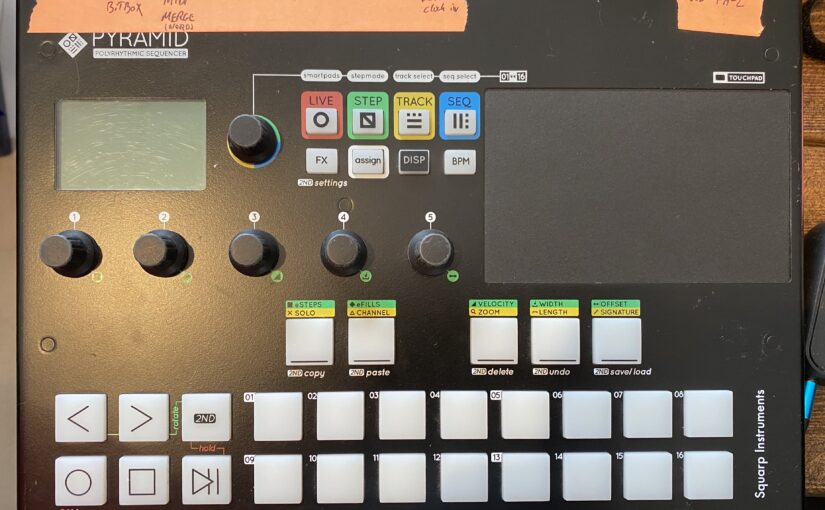
It might be my Squarp Pyramid sequencer and Eurorack combination. It’s limited enough, that I don’t get overwhelmed by choices like sometimes in computer-based DAW’s – but it’s also advanced enough to inspire and get deep into.
Pyramid Squarp
7. If you had to start over, what would you get first?
I would switch to Mac WAY sooner.
8. What’s the most annoying piece of gear you have, that you just can’t live without?
It’s my Eurorack setup. It’s a time-wasting, out-of-tune, where-is-that-noise-coming-from gigantic energy-suck of a brilliant magical sound and inspirational theme park of creativity…
9. Most surprising tip/trick/technique that you’ve discovered about a bit of kit?
I’m diving into different live-coding environments – mostly for straight fun and not “serious composition” – but find it very inspiring. Orca is a great source of inspiration – and I recently discovered the visuals-tool “Hydra”, which is a great and accessible tool for visualization.
Artist or Band name?
The last few years, I’ve been using the alias PopGoblin.
Genre?
I have no idea. Pop-minimal-electro-chill?
Selfie?
Morten aka. PopGoblin
Where are you from?
Copenhagen. Denmark.
How did you get into music?
I’ve been into music since childhood – playing around with tape-recorders, pianos, etc.
What still drives you to make music?
I don’t know why – making music is just something that is an integral part of me. I’m very much into how making music can throw me into flow-states and how pieces of music and sounds from way back, immediately brings back memories and even feelings across time. Music is a great storyteller and a time machine in that way.
How do you most often start a new track?
I fiddle around with gear. Record stuff. Throw it away. Pick it back up. Procrastinate. Sometimes, all of a sudden, something is taking shape, and I follow where it leads.
How do you know when a track is finished?
A track is never finished – just either abandoned or “put aside” to maybe evolve on its own…
Show us your current studio
Popgoblin’s Studio
Best creative advice that you’ve ever heard?
Austin Kleon’s series of books, starting with Steal Like an Artist, is great. They contain a lot of great advice!
Promote your latest thing… Go ahead, throw us link
[Editor: Besides being a great riffmaker and guitar pedal demo youtuber. Stefan also has a pretty cool band called Don’t Come Looking For Us. Check it out]
1. Favourite knob/fader/switch on a piece of gear and why?
Well, generally I’m a fan of the Mix knob on pedals. That’s where the magic begins. Endless sonic shades, textures, tones and timbres can be found within the pure level and balance of a wet and a dry sound.
Mix Knob Magic
But I would like to give a big shout-out to Death By Audio. I think they are masters at making knobs an integral part of their pedal layouts, mixing knob sizes and designs in order to give the players a more organic, intuitive and playful user experience. I especially like the design of their Evil Filter, where the huge Filter knob instantly catches your attention, so you know the main purpose of this pedal is to freaking rock that filter frequency with every fiber in your body!
[Editor: And it’s got that Moog girth!]
Death By Audio Evil Filter
2. Do you have an ‘almost’ perfect bit of kit? What would you change?
I think every piece of gear is “almost” perfect. That’s what makes them perfect. A piece of gear is a distillation of the designer’s mindset and skill set at a certain moment in time, and it’s the fact that you get the ability to figuratively experience and step into that moment when you play the gear that makes it inspiring.
Hence I always experience “Wow! I would never have thought of that!” moments more than “Why didn’t they do that instead?” moments, whenever I play a pedal, guitar or synthesizer. I know that’s probably just me over-romanticizing gear and the narrative behind them, but that’s just who I am and what I do. Plus, I see a big creative benefit in embracing limitations. A product’s small quirks and weird limits is often what prompts you to create something unique with it.
[Editor: Gear as a narrative story. That’s a beautiful way to think about it]
3. What setup do you bring on holiday/tour/commute etc.?
I’m currently not in any touring bands, so I haven’t dragged around my rig from venue to venue in a long time. But I’m currently in two newly started bands, so let’s see if that changes in the near future.
On a commute, I just bring my phone. There’s so many great music apps out there, and they give me all the creative outlet I need when I’m on the go. I really like the Moog Model D and Moog Animoog synth apps, the granular synthetic sample playground in Spacecraft, as well as the simple, yet immersive and calming generative ambiance of Bloom: 10 Worlds.
Moog iOS apps
4. What software do you wish was hardware and vice versa?
I really like the Valhalla DSP plugins. I wish their reverbs and delays were available in pedal format. They just sound divine! Going the other way, I think any pedal by Meris would become a freaking mind-blowing VST plugin. Their devices are equally adept as standard guitar pedals, synth enhancers and transcendant studio tools that can take drums, vocals or an entire mix to the next level. So being able to call them up whenever I wanted on my computer would be cool as hell.
Meris Pedals
5. Is there anything you regret selling… or regret buying
Not really. I try to keep regret as far away from my life as possible, even though that’s easier said than done… That being said, I recently did re-purchase a Line 6 Echo Park. I didn’t buy it because I regretted selling my old one, but because I felt like I didn’t give the pedal a proper chance when I had it the first time around. I’m very happy that I acquired it again. It’s a highly underrated delay pedal. Way ahead of its time. I really enjoy its swell mode and reverse delay, they just sound super organic, and its multi-tap and ping-pong modes sound unreal in stereo.
But the real kicker about this pedal is that every mode can take on the characteristics of either a Digital, Analog or Tape delay. Reverse Tape Delay is the beez neez. A fun story about it, is that the algorithms are designed by Angelo Mazzocco of Meris, during his time at Line 6.
[Editor: I think I gotta check out the EchoPark again!]
Line6 Echo Park
6. What gear has inspired you to produce the most music?
My music very often starts with a mood. Hence it’s never really a specific instrument that inspires it, but instead my pedals that inspire me to play a certain way on my instrument.
Reverb and rhythmic Delay always gets me going, and my EarthQuaker Devices Dispatch Master or Avalanche Run always deliver inviting and inspiring ambience in spades. So they have definitely initiated a lot of my compositions. Also have to give a big shout out to my Meris Enzo, which is basically 4 instruments in one pedal (mono synth, poly synth, arpeggiator and pitch-shifter). Its swelling synth pads, amazing filters and bouncy arp sequences always puts me in the mood to create.
Loop pedals also help me flesh out possible ideas on the fly quickly, or capture samples, textures and drones that later turn into full compositions. That being said, you of course need instruments to trigger the pedals, so a nice open major chord tuning on either my Telecaster or Jazzmaster always inspires me to create.
EarthQuaker Devices and Meris
7. If you had to start over, what would you get first?
A decent single-coil equipped guitar (probably a Telecaster… No, most definitely a Telecaster 😀 ), a great clean amp, a dreamy expansive reverb pedal, a versatile delay pedal, some sort of fun pitch-shifting textural tool and a looper.
8. What’s the most annoying piece of gear you have, that you just can’t live without?
That would probably have to be my Chase Bliss Audio Thermae. It can do the most amazing analog pitch-shifted delay sequences, but it’s not envelope triggered and there’s no visual indicator for where you are in the pitch sequence, meaning it’s extremely difficult to recreate the moments in time where you’re perfectly in sync with the sequence.
But I’ve also really learned to appreciate the randomness and “chaotic” nature of it, and I often use it to add a bit of unpredictability and “whimsy” underneath my playing. A texture I can react to. Like having an invisible improvising collaborator, that’s constantly pushing you to creative places you would never have thought of.
Thermae has really taught me that everything in life doesn’t need to be controlled and predictable. Sometimes you just need to go with the flow and see where it takes you. On top of that, when you turn off the pitch sequencing, it becomes one of the best analog delays I’ve ever played, if not the best.
[Editor: …And GOLD knobs! I feel that isn’t said enough]
Chase Bliss Themae
9. Most surprising tip/trick/technique that you’ve discovered about a bit of kit?
If we’re talking a specific pedal, then it’s probably my cascading octave-delay trick on the Meris Polymoon. If you hold down the Tap Tempo switch on it, it momentarily turns on a half-speed effect, which technically just makes your delay time twice as long, as long as you hold down the switch. So the trick is to hold down the switch, and play a quick melody pattern before you transition to the next chord in your progression, and the second you transition to the chord, you release the switch creating a beautiful flurry of cascading octave up delays. You can hear that exact trick in action here in my Meris Polymoon demo at 06:17, if you want to.
Meris Polymoon
If we’re talking in general, then it’s the importance of the volume and tone knobs on a guitar. This is definitely a no-brainer and not surprising at all for a lot of people, but it really took me a long time to understand and appreciate them.
When you start out on guitar, you (or at least I) just want to go full blast all the time. Why would want to turn down your guitar? and why would you want to kill the lovely clear high-end of your guitar with the tone knob? If I could, I would honestly have removed the volume and tone knob on my guitars long into my guitar journey.
But over the last 4-5 years I’ve discovered how important they are for finding your place in a mix, especially if you do a lot of loop compositions, like I do. If everything is full blast and full frequency all the time, then things will begin to sound un-dynamic and lifeless really quick.
On top of that, the volume and tone knobs are so pivotal for unlocking new tonal nuances when using dirt. I really like to use a very sharp and biting square-wave fuzz, and then roll back the tone on my guitar for rounder synth-like tones. It’s basically the same concept as subtractive synthesis. You have a wave-shape, and then you remove harmonic content via the tone knob to change that wave-shape. So guitarists, start rocking those controls closest to you!
Vol and Tone knobs
Artist or Band name?
Stefan Fast – Ambient noise-maker and host of YouTube channel, The Pedal Zone.
Genre?
Ambient/Post-rock.
Selfie?
Stefan Fast from The Pedal Zone
Where are you from?
⦁ Currently I reside in Aarhus, Denmark. ⦁ Born in Randers, Denmark.
How did you get into music?
It’s a long journey, I guess. I’ve always loved music. I have fond childhood memories of me laying on my parents’ couch reading comics and listening to Bryan Adams and Michael Jackson. I really cherished those moments, and somehow the music just augmented the reading experience. But I didn’t really get into playing music before I was 17-18 years old. I picked up a guitar in high-school because some of my class-mates played, and I thought they were cool, and I wanted to be cool.
When I discovered it wasn’t enough to just have the guitar to be cool, I decided I might as well learn to play it. So I learned some Metallica, System of a Down, Kashmir and Radiohead, and had fun with that.
But it wasn’t until a local post-rock band played at our high-school that my musical path was revealed to me. I had never heard anything like it. How so much emotion could be conveyed solely through instrumental music. I had never experienced music as dynamic and touching. I bought a delay pedal the next day, a Boss DD-6, and quickly discovered that the pedal could self-oscillate, effectively transforming my guitar into a synthetic instrument of doom and chaos. I haven’t looked back since!
What still drives you to make music?
When I make/play music on my own, it’s in order to reach a state of zen and calmness. Just strumming a guitar or listening to a 20sec reverb trail decay is pure meditation for me. It’s not a means for escape, but a means to create or restore balance within myself. When I play with others, it’s in order to be inspired by them, go new sonic places I would never travel on my own and to reach a heightened sense of unity and togetherness through the music we create.
How do you most often start a new track?
Often with a texture or a mood created by a slew of pedals. Other than that, plenty of reverb, delay and slowly played guitar arpeggios will always open doors to new tunes.
How do you know when a track is finished?
When I start to just drift away and let myself live inside the music, instead of thinking about EQ’ing or if tracks need to be added or taken away.
Show us your current studio
The Pedal Zone Desktop StudioThe Pedal Zone Studio
Best creative advice that you’ve ever heard?
Perfection is achieved, not when there is nothing more to add, but when there is nothing left to take away – Antoine de Saint-Exupery.
Promote your latest thing… Go ahead, throw us a link.
I upload new pedal demos or tutorials almost every week on my YouTube channel The Pedal Zone. So if you’re interested in ambient/post-rock/indie-rock applications of pedals, then it would be an honor if you stopped by and checked out some of the videos here -> www.youtube.com/thepedalzone.
[Editor: There are affiliate links to the relevant gear throughout the articles. It helps to support this blog. In fact, should you be needing some patch cables or guitar strings. Then clicking on one of the above links and buying any product that you prefer, will help the blog… doesn’t even have to be the ones in the link. Thx]