Paul Talos – Signal Soundlabs

1. Favourite knob/fader/switch on a piece of gear and why?
Make Noise Morphagene

Lately, it’s been the Vari-Speed knob on the Morphagene. It’s really incredible how something as simple as changing the speed and pitch of a sound can turn it into something completely unrecognizable. Things get even more interesting when you start reversing things too. You really end up discovering all kinds of sounds within sounds that you never really would have thought were there, especially when slowing samples down. Gotta love the wonderful world of microsound.

2. Do you have an ‘almost’ perfect bit of kit? What would you change?
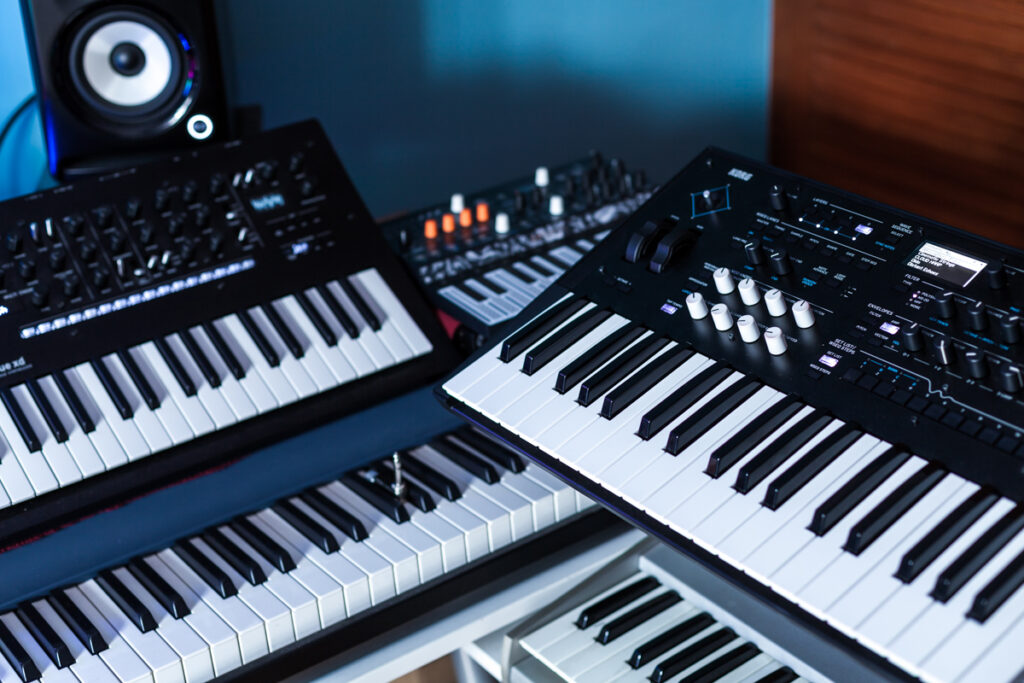
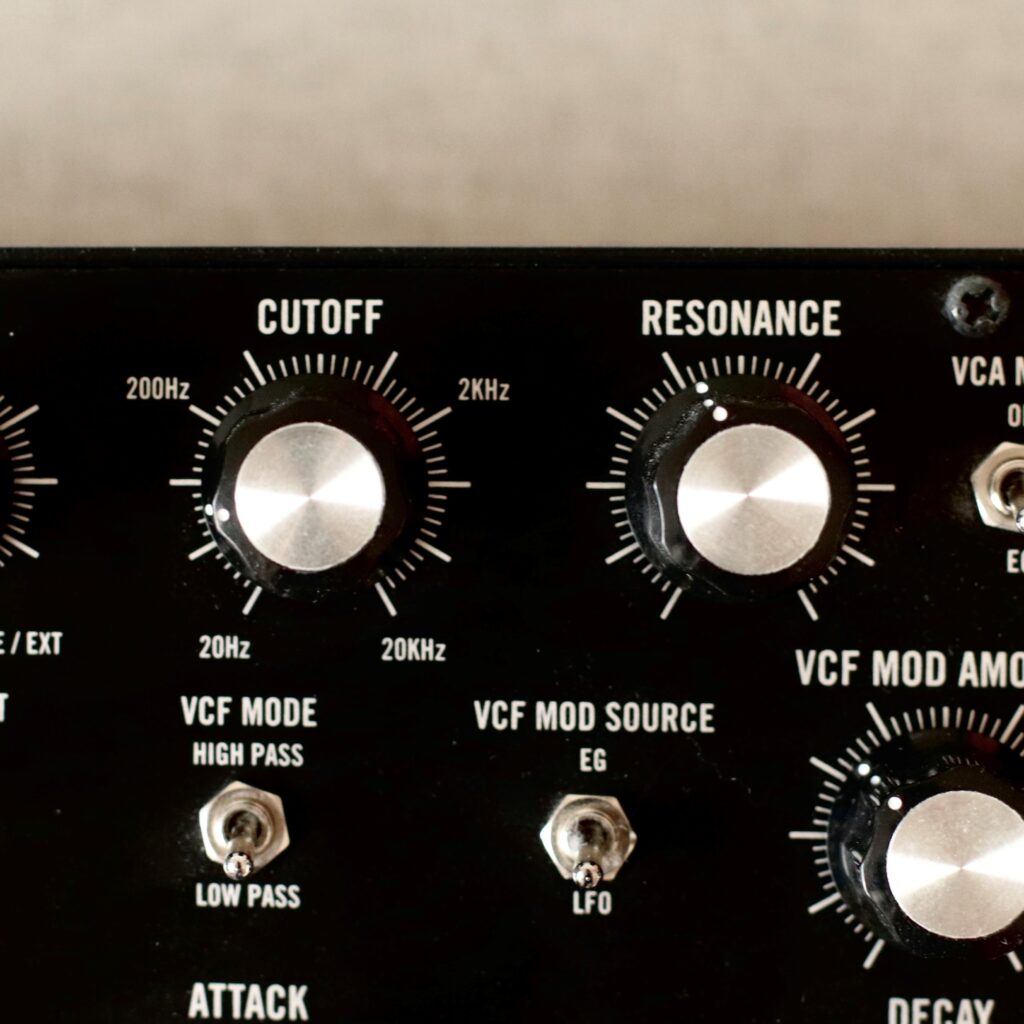
Moog Subsequent 37

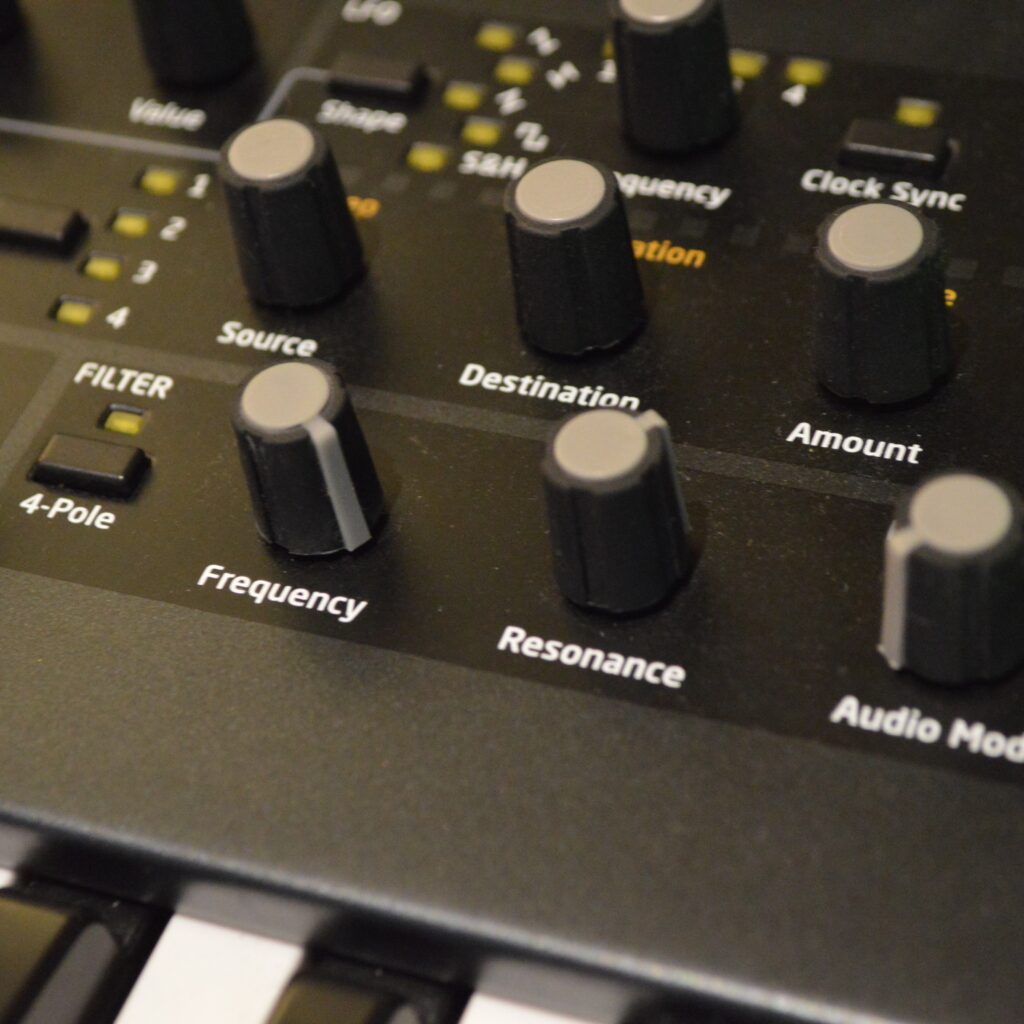
The closest thing for me would be my Moog Subsequent 37. It just puts so much sound design power at your fingertips, you almost don’t need anything else. Between having one of my favorite filters, two different kinds of distortion, and plenty of modulation options, there’s enough in there to make a lifetime’s worth of music. It may not be as infinitely versatile as my eurorack setup, but there’s a certain immediacy about it that allows me to get what I need out of it very quickly. The only thing that could possibly make it even better is if it had voltage control over more of the parameters. I actually really regret not jumping on the CV version while they were still making those, as that would have been as close to perfect as you can get.

3. What setup do you bring on holiday/tour/commute etc.?
Moog Mother-32

I can’t say I do much traveling with my gear, as my setup wasn’t exactly designed with mobility in mind. But I guess if I were to bring anything, it would be my Moog Mother-32. Not only is it one of my more compact instruments, but I find its limitations to be pretty inspiring. It’s a surprisingly deep instrument and can yield some very unexpected results with a bit of clever patching. I often feel like I’m just scratching the surface of what it can do, so I suppose traveling with it would really force me to get everything I can out of it.

4. What software do you wish was hardware and vice versa?

Spectrasonics Omnisphere

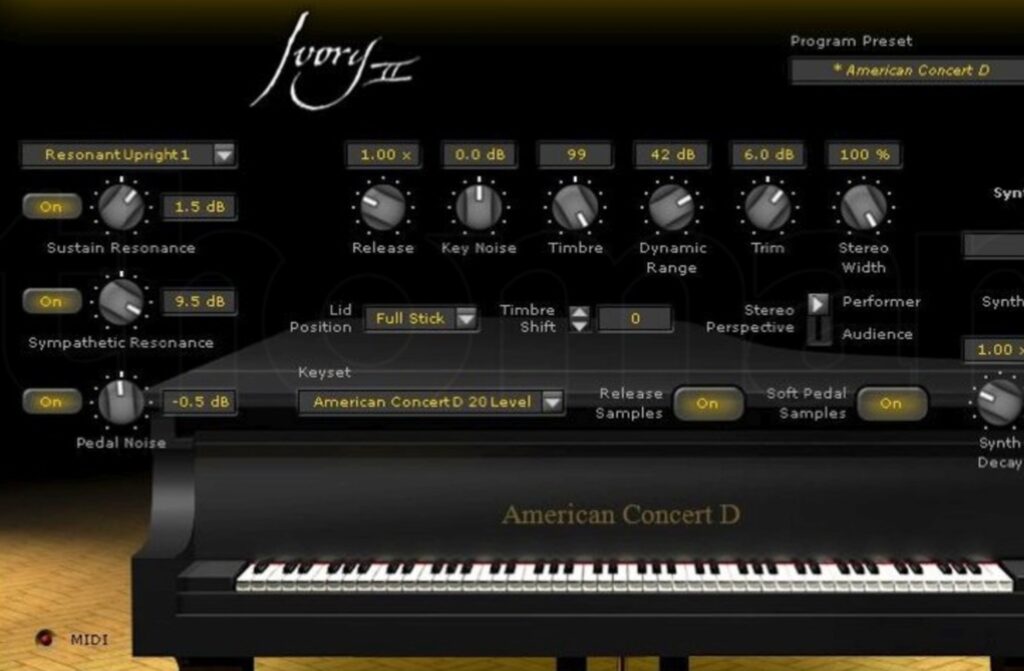
I really wish there was some kind of hardware version of Spectrasonics Omnisphere. It’s such a useful instrument when scoring for a film, especially for creating cinematic soundscapes. It’s one of the few VST instruments I find myself going back to time and time again. If they made a hardware version with some CV control over the parameters, I’d buy one in a heartbeat. Of course, with the size of the library being what it is, I’m sure it would be incredibly impractical to actually implement in hardware form, much less in eurorack format.

Walrus Audio Descent

On the flip side, I’d love a plugin version of my Walrus Audio Descent reverb pedal. I use the shimmer mode on that pedal quite a bit to add an almost choir-like quality to synths, and would love to have multiple software instances to use throughout a mix. Sure, there are ways of creating a similar sound using other software (the Descent is digital after all) but the pitch shifting on this pedal has a very particular, kind of unnatural sound to it. Hard to describe, but it definitely has a tone and I haven’t really come across anything else that sounds quite like it.

5. Is there anything you regret selling… or regret buying?

Korg MS-20 mini

I sold my Korg MS-20 mini when I first started diving into eurorack. At the time, I figured it didn’t make sense to have a semi-modular synth that didn’t speak Volt per Octave and was looking to get some cash to finance the beginnings of my modular (I believe I ended up buying a Maths with the money I made). But over time I realized just how much I missed those oscillators and filters. It’s such a unique instrument, and much like the Mother-32, it just has a very inspiring set of limitations. So last year, I actually ended up buying it again and will never repeat the mistake of selling it.

Arturia Minibrute 2S

As far as buyer’s remorse on a piece of gear, I bought an Arturia Minibrute 2S when they first came out and had some regrets on that one. The synth voice itself is phenomenal, and the ability to integrate it with eurorack really enhanced the functionality of my existing modular system. But I never got into a good flow with the sequencer. As someone with a background in music theory, I found it really difficult to visualize musical intervals due to its lack of a traditional keyboard. So I eventually ended up selling it and getting the keyboard version instead. Been loving it ever since.

6. What gear has inspired you to produce the most music?

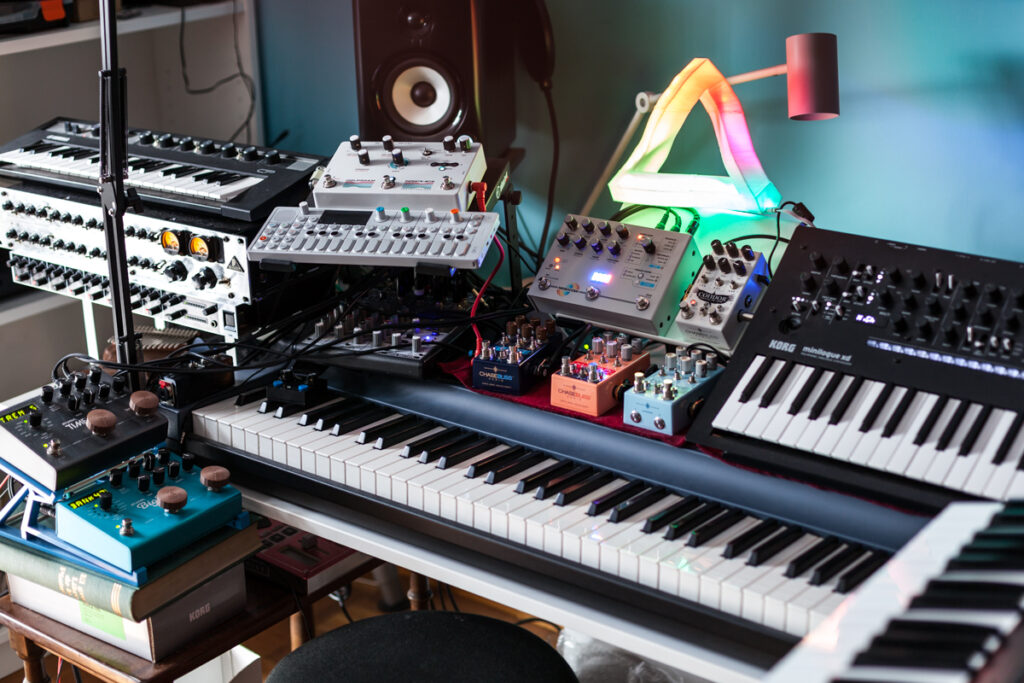
Signal SoundLabs Eurorack

Lately, my eurorack rig has been the most consistent source of inspiration. I made some upgrades to it recently, and after about three years of buying and selling modules, I finally feel like I have most of the puzzle pieces in place. Modular synthesis definitely has an element of unpredictability, feels like these modules have a will of their own sometimes and I’m just along for the ride.
It really is a happy accident machine. The downside is it can be a bit difficult to tame, especially when working on music that is synced to visuals. But lately I’ve managed to find a workflow that has been very effective for film music. The key was to start recording everything I did on the modular and then spending some time editing to pick out all the best parts. The editing can be time consuming, but I find myself getting faster and faster with patching so it all evens out. Overall, I just find it more inspiring to capture a bunch of audio from the modular and then work by subtraction rather than addition.

7. If you had to start over, what would you get first?

If I had to start again, I’d probably get the most powerful computer I could afford, along with a copy of Cubase, a Universal Audio Apollo Twin, and some kind of semi-modular synth like the Minibrute 2. A basic rig like this would cover pretty much all the essentials, while combining a tactile hardware workflow with plenty of digital flexibility.

8. What’s the most annoying piece of gear you have, that you just can’t live without?

Mutable Instruments Clouds

Hard to say, but I guess I kind of have a love/hate relationship with my Mutable Instruments Clouds module. I rely on it pretty heavily when it comes to making any kind of ambient drone patch, but I find it rather annoying having to remember what all the controls do in its various different modes. Having installed the Parasite firmware really didn’t help with that either. That said, I came across an iOS app called Modes that acts as a nice cheat sheet for some multi-function modules, so I’m definitely not pulling my hair out as much as before. As much as I have a few gripes with Clouds, it really brings a lot to the table and has become pretty much irreplaceable in my rack.

9. Most surprising tip/trick/technique that you’ve discovered about a bit of kit?

Chase Bliss MOOD

I’ve recently been getting more and more into processing audio from Cubase using effects pedals. Plug-ins can be great, particularly for utility functions like EQ, but nowadays there are so many unique pedals out there, it feels like a shame not to use them to process in-the-box sounds as well. I’ve been doing this a lot with my Chase Bliss MOOD pedal in particular, which lets me grab a short slice of audio from the DAW and transform it in all kinds of quirky and interesting ways. Lately, whenever I get stuck on a track, I’ll start feeding random audio into MOOD (unused takes from the modular work particularly well) just to see what happens. It’s a great way to get myself out of a creative rut.


Artist or Band name?

Paul Talos

Genre?

Cinematic Electronica. I’ve never been sure how to categorize my music exactly, so eventually I just made something up. I think it sums things up pretty nicely.

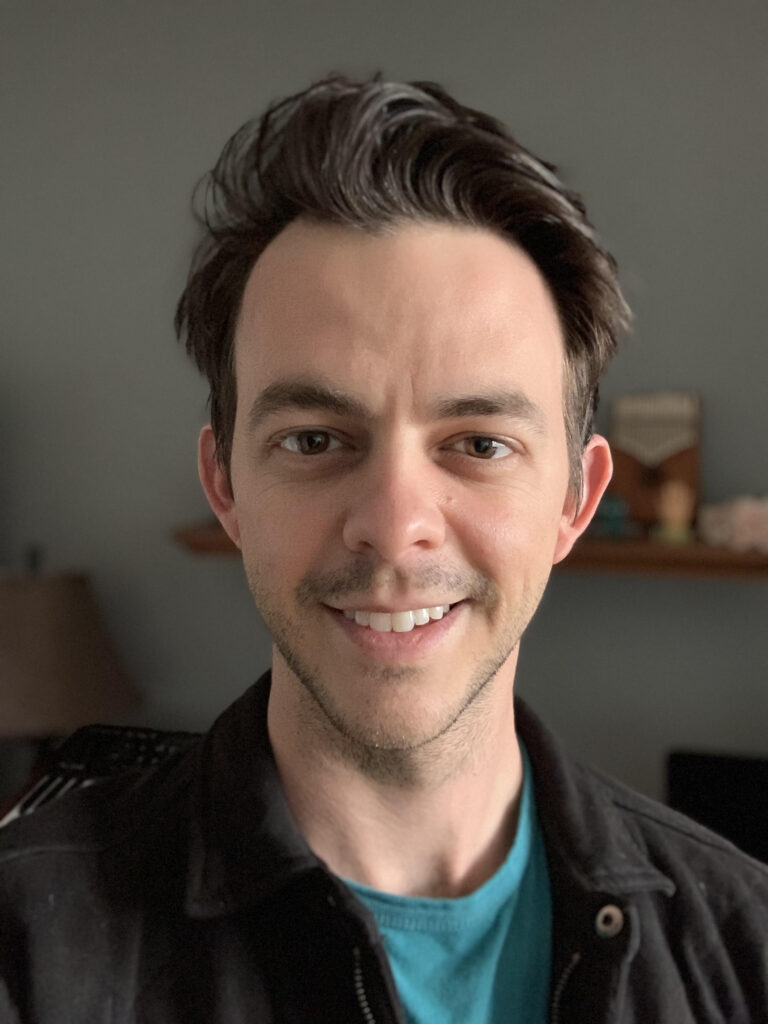
Selfie?

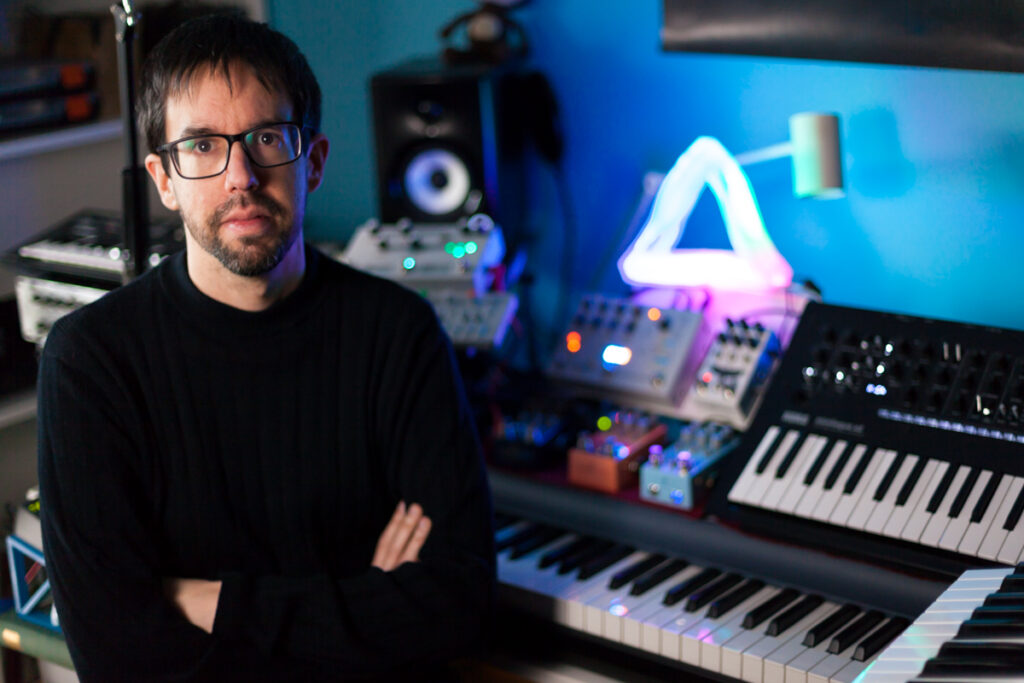
Paul Talos

Where are you from?

Born in Germany, grew up in Boston, MA. Currently living in Philadelphia, PA.

How did you get into music?

I started playing electric guitar around the age of ten and started experimenting with home recording on a laptop when I was a teenager. After high school, I spent some time at Berklee College of Music studying guitar and discovered a love of synthesis and all things electronic music shortly after that.

What still drives you to make music?

Music’s become my job over the last few years, so a paycheck is definitely one thing that drives me. But more importantly, I constantly find myself inspired by just listening to other people’s music and trying to deconstruct what I’m hearing. I’ve come across some very interesting synthesis and production techniques just by trying (and usually failing) to emulate something I heard somewhere else.

How do you most often start a new track?

As a film composer, the answer to that question really varies from project to project. Production timelines and deadlines can be vastly different from one film to the next, so sometimes it might be starting a new track every day, other times I’ll write two or three a week. I do try to spend some time every day just to make some kind of noise though, usually on the modular. I find that synthesis is a skill that really needs to be maintained, otherwise it just gets harder the longer you are away from it. So regardless of what I’m working on, I try to squeeze in some synth time at least once a day, so I don’t get too rusty.

How do you know when a track is finished?

It really never is, but once the deadline hits it’s usually good enough. Honestly, if I didn’t have deadlines of some sort, I’m not sure I would ever finish anything. 

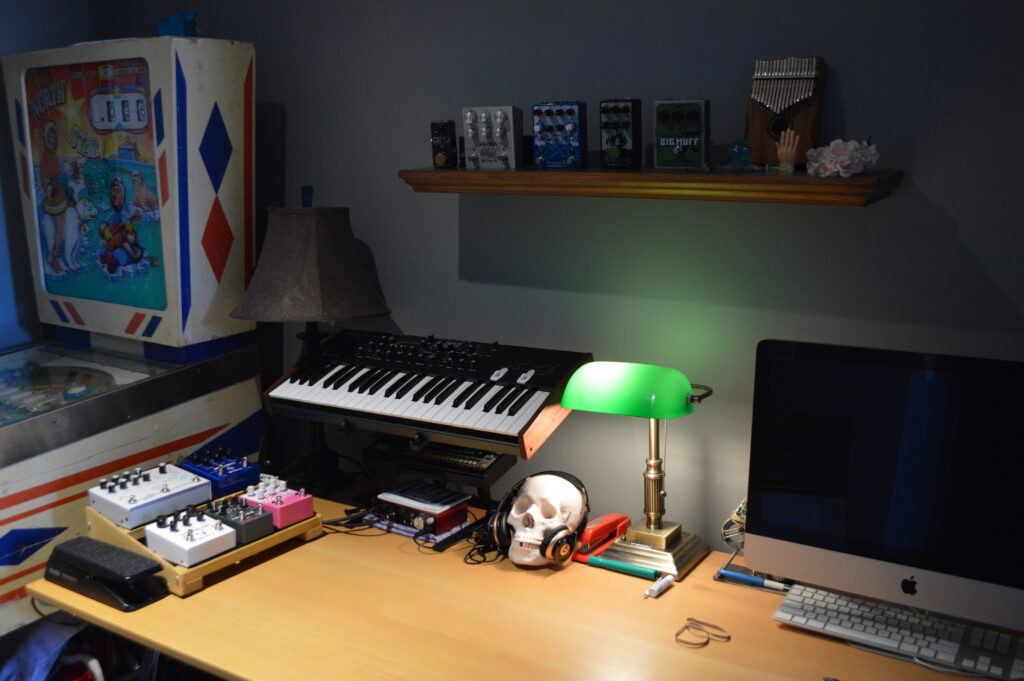
Show us your current studio

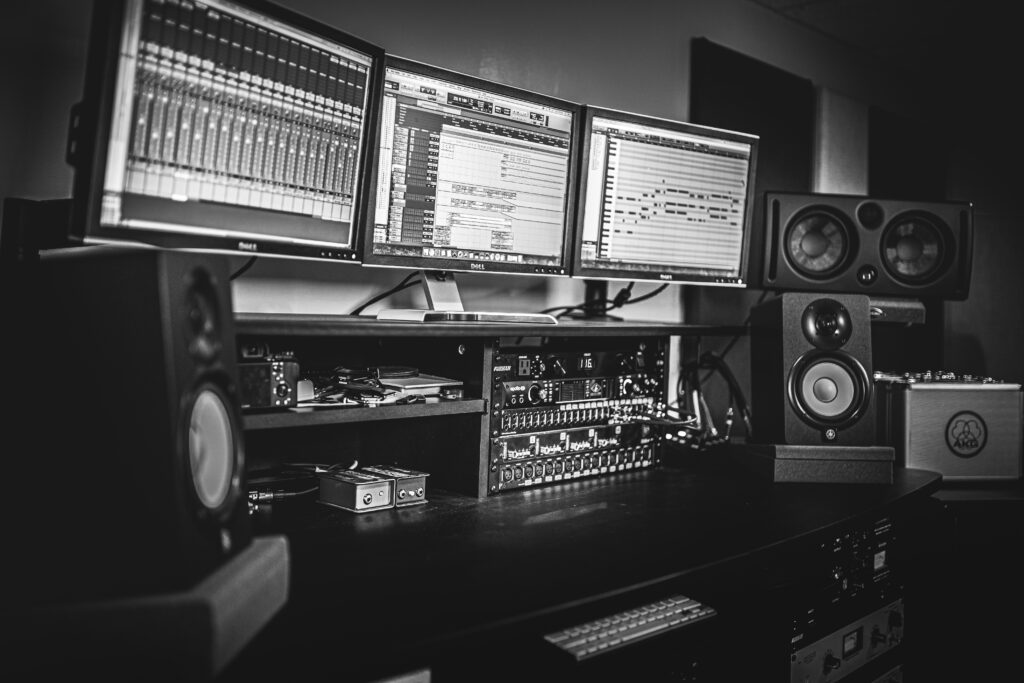
Signal SoundLabs studio

Best creative advice that you’ve ever heard?

This one kind of relates to one of the other questions about finishing tracks. I took this music production class in college, and the professor said something one day that really stuck with me. I’m paraphrasing, but it was something along the lines of this: A mix is never done, you just stop working on it eventually. To hear that from a professional in the industry was incredibly reassuring at the time. I think it’s something that applies not only to a mix, but to music making in general. Nothing is ever truly finished and that’s okay.

Promote your latest thing… Go ahead, throw us a link.

Back in July, I released my score for a short thriller film called ‘Just Like You.’ The score is available on all streaming platforms. Links below.

Just Like You (Spotify)

https://music.apple.com/us/album/just-like-you-original-score-ep/1521324795

https://paultalos.bandcamp.com/releases


[Editor: Do you have a favorite tip, trick or way of working with any of the gear from this interview?
Then throw us a comment below…
]

Noctopolis – Mattis Hencke

1. Favourite knob or fader or switch on a piece of gear and why?

Jen SX2000

I’m not that emotionally attached to individual knobs and faders, but there might be a few which have been important. First, the ”Frequency” fader on my first synthesizer, the Jen SX2000, which gave me the first real player experience of an actual filtered analogue synth sound and gave birth to a lifelong fascination.

Korg MS20 Mini

Second, maybe the MS20 Mini Lowpass filter knob which brought me back to analogue synthesis after many years of playing mainly samplers and vst plugins. And finally, any of the SOMA Lyra 8:s VCO tuning knobs which made me listen to sounds in a different way and appreciate imperfection.

SOMA Lyra 8

When it comes to tactility I must say that my Bugbrand banana cables mean a great deal, though. They’re a pleasure to use. Colourful and sturdy fun!

2. Do you have an ‘almost’ perfect bit of kit? What would you change?

The word ”almost” is important here because the perfect bit of kit doesn’t exist, I think. Gut feeling right now whispers about the Ciat-Lonbarde Cocoquantus. It never disappoints and has opened up a vast sound palette to me. Though ”perfect” is certainly not the correct word for any C-L gear. Which is the wonder of it!

Ciat-Lonbarde

3. What setup do you bring on holiday or tour or commute etc.?

Always: Field recorder. A pretty crap one, my old Zoom H-1 (the Rec button on that one´s been very important, too). For many years the small holiday setup was Laptop/Cubase, USB audio interface, master keyboard.

Lorre Mill Double Knot

If I ever start travelling again I guess the Cocoquantus or the Plumbutter (or my most recent addition, the Lorre Mill Double Knot) would be great to bring but I’m not sure I’d risk them.

Ciat-Lonbarde Plumbutter

4. What software do you wish was hardware and vice versa?

I’m not very good at wishing for what isn’t there already. Nowadays I find it really hard wishing for hardware to be anything else. The tactile side of playing electronic instruments has grown extremely important to me. That doesn’t mean I don’t like software. There are lots of great fx and instruments which I use a lot. I love the Sketchcassette, Valhalla Supermassive and NI Kontakt, for instance.
Software into hardware… if Soniccouture suddenly turned their Geosonics library in a portable, beautiful little synthesizer I’d probably be curious about it.

Tactile synths

5. Is there anything you regret selling… or regret buying?

I regret selling my second synth ever which was the Roland SH1000. I sold it for very cheap around ’98 when it seemed completely obsolete (and it probably still is, but what a clumsy old beauty!). To be honest, there was some divine justice going on since I sold it to the same guy from who I bought a Yamaha CS5 even cheaper a few years before that.
I kind of regret that I sold my Tascam 388 quarter-inch tape/mixer studio too, but that may be mostly from nostalgia and considering the recent tape hype.
Through the years I’ve bought lots of gear which I’ve sold pretty quickly. I’d say most of the Volcas and a Roland Boutique JX03 were all pretty regrettable purchases. And I didn’t gel with the Eowave Quadrantid Swarm, sadly. Maybe I should have been more patient.

Hyve-Synth

6. What gear has inspired you to produce the most music?

Chronologically: my family’s upright piano, my first Porta studio (Fostex 260), the AKAI S2000 sampler, and most recently the Ciat-Lonbarde instruments. All of these have shown new and compelling paths into new territories, or territories looking more and more like the ones I vaguely started dreaming of exploring as a kid. It’s not that different now from what it was back then.

Ciat Lonbarde Deerhorn-Organ

7. If you had to start over, what would you get first?

Piano, DAW, a nice bass guitar and some assorted percussion. And after that I´d discover touch- and gesture-based synthesizer instruments a bit earlier 🙂 .

8. What’s the most annoying piece of gear you have, that you just can’t live without?

I usually sell the annoying stuff. One instrument I think will stay with me is the Lyra 8. It changed my listening a lot and I love it but to be honest, those tuning knobs really take some patience. The lower they go, the more mindfulness demanded to get the wanted notes. But having grown into that routine has made tuning of the Ciat-Lonbarde instruments a breeze, so I guess I should be grateful to that sturdy little ”white angel”, annoying as it is.
The Tocante Bistab is on the whole extremely annoying and I could definitely live without it, but it’s a fun curiousity.

9. Most surprising tip or trick or technique that you’ve discovered about a bit of kit?

To my surprise I´ve become a much better bass player through switching to fretless bass. Over all, everything that forces you to listen carefully, instead of having safe routes and measures laid out all the time, is good. As long as we leave the Theremin out of it, of course. And a bunch of other instruments. But – baby steps …

Fretless Squier Jazzbass

Artist or Band name?

Noctopolis and Mattis Hencke.

Genre?

For Noctopolis I guess have to say electronic. And I would hope cinematic and emotional in its better moments. MH is more semi-classic, fairytale music and pop.

Selfie?

Sort of, but not really. A musical portrait 😀 .

Mattis Hencke aka. Noctopolis

Where are you from?

Living in Uppsala, Sweden.

How did you get into music?

Singing, drumming on biscuit tins and making up melodies from early age. Discovering the sound of synthesizers and pop music in general at the age of about 10 was a huge revelation. I took drumming and piano lessons and performed in different orchestras and ensembles but more importantly, I always wrote songs and formed different bands with my brother and schoolmates. Making noise, trying different instruments, dreaming up concepts and bouncing hissy tape recordings between decks with my friend to create full productions became very important, we learned about multitrack recording and from there it really took off. I’ve just never stopped creating and discovering music. Artists like David Sylvian, Trent Reznor, Scott Walker and Fennesz have been huge inspiration sources, as well as numerous neoclassical, ambient and post-metal artists and bands.

What still drives you to make music?

I want to create the sounds and represent feelings and pictures that I carry inside of my head and which are beyond words. I also strive to make the music I want to hear, it´s a way of life by now. Playing and making music is ta great path to get in touch with my core, so to speak. I wouldn´t call it an escape from reality – music and art contains so much more of creative, constructive reality than a lot of other miserable pastimes and preoccupations. Music can be an outlet for emotions and a recalibration of the soul and spirit. And that’s regardless of objective quality and results, as long as it leaves the performer curious and imaginative, I think.

How do you most often start a new track?

That varies a lot. Sometimes with a bassline or a sample, more often with improvising on the piano which turns into fragments of a song. Sometimes with a sung melody. There are plugins which have inspired quite a lot of my music too. The last few years I´ve started to improvise a lot on hardware electronic instruments and nowadays the Ciat-Lonbarde setup is a good starting point for exploring. I’ve got loads of recordings and snippets on the hard drive which sooner or later find their way into more ambient tracks or actual pop songs.

How do you know when a track is finished?

A good sign that I’m on the right track is when I get the sensation ”Wow, did I really create this?”. That, combined with a certain kind of childish happiness when listening to the music in an environment which is not the studio. The most difficult part, when it comes to knowing whether a track is really good or not, is to find the balance between emotional impact and cool or newly found sounds and ideas. That, and also to know that sometimes less is more, but that more is more quite as often!

Show us your current studio

It’s about 1,5 x 2,5 meters with no window. That’s definitely both a blessing and a curse.

Noctopolis home studio

Best creative advice that you’ve ever heard?

Spend time away from your music before finishing it. Never mix more than one track at once. Abandon songs that keep annoying you and make you frustrated, they’re probably not that good anyway. Or (quite rarely) they are, but you need more time to grow into them.

Promote your latest thing… Go ahead, throw us a link.

Recent two track ambient single:

https://noctopolis.bandcamp.com/album/a-year-ending-when-getting-back-home-single

2020 ”Space trilogy” albums:

https://noctopolis.bandcamp.com/album/malacandra-2 and

https://noctopolis.bandcamp.com/album/perelandra

…and a sentimental little something:

https://mattishencke.bandcamp.com/album/everyday-tales-bonus-tracks-version

They´re all at the major streaming platforms as well.


[Editor: Do you have a favorite tip, trick or way of working with any of the gear from this interview?
Then throw us a comment below…
]


David Rothbaum – Cross Town Patching

1. Favourite knob or fader or switch on a piece of gear and why?

The octave levers on my Yamaha CS-50. They are very playable. There is also just something very satisfying about the aesthetic of them as well as the acoustic clicking sound.

Yamaha CS-50

2. Do you have an ‘almost’ perfect bit of kit? What would you change?

I would say the combination of the monome grid and ansible using kria. To me this set-up is a perfect combination of thoughtful composition mixed with performance and improvisation. Honestly, it has fundamentally changed the way I think of composition. My only issue is the grid is near impossible to see in daylight. I do a lot of outdoor performances and this is always an issue. I often bring a beach towel to throw over the grid and myself to be able to see it.

Modular Field Trip

3. What setup do you bring on holiday or tour or commute etc.?

I bring my modular with me a lot. I compose and record on the spot in various locations and occasionally that included what was my daily 1-5 hour commute (pre-Covid). Doing this while driving is clearly a bad idea, would not recommend at all. To be clear I only patched while at a dead stop, which in Los Angeles is most of the time.

[Editor: Ha!… Make art anywhere]

Patching in traffic

4. What software do you wish was hardware and vice versa?

Paulstretch in a module would be awesome. SketchCassette too. I honestly cannot think of any hardware I’d like to see as software.

5. Is there anything you regret selling… or regret buying?

I am generally not too precious about gear but I did have a Roland Jupiter 4 that I sold to fund more modular and I wish I still had my Tascam 388.  

Tascam 388

6. What gear has inspired you to produce the most music?

In the last few years I would have to say again the monome / Whimsical Raps eco-system. 

Monome and Whimsical Raps in a case

7. If you had to start over, what would you get first?

Good taste.

[Editor: Nah, good taste is overrated…. and anyway, it’s just a by product of the artistic process, that can happen to the best of us 😉 ]

8. What’s the most annoying piece of gear you have, that you just can’t live without?

The computer.

9. Most surprising tip or trick or technique that you’ve discovered about a bit of kit?

I think in recent years it would have to be manually manipulating the Marantz PMD-430 cassette deck while monitoring live on the tape. Being able to play the tape warbles is pretty great.

Marantz PMD-430

Artist or Band name?

David Rothbaum 

Genre?

Recently, I would say ambient-adjacent. I tend to write mostly melancholic ambient music but I often add more rhythmic elements (I have been obsessed with odd meters and tuplets since forever), which I think disqualifies me as really being ambient. That said, I have made music in a number of different genres. I had a solo project called Monsturo for quite a while. That was very minimalistic drone/noise music, I used to describe it as field recordings for imaginary spacecraft 🙂 I have also played a lot of metal, jazz, noise and free improvisation. I auditioned once for Donny Osmond when I was a teenager in the 80s. 

Selfie?

I don’t really do selfies without my kid so…

David Rothbaum +1

Where are you from?

Born in NY but have lived in Los Angeles for 30+ years and that is my home.

How did you get into music?

As a listener I became obsessed with music as a kid. At around 7 years old I got into The Beatles & Donna Summer. Then shortly after that it was The Eurythmics, AC/DC, Supertramp, Devo & horror film scores. I would make tape mixes from the radio (I had an entire tape with recordings of “Sweet Dreams”). I also made tapes from the TV, grabbing bits of music from horror movies and TV shows that I liked. I failed at saxophone in 5th grade (I did learn the “Pink Panther” theme, though), but when I was 14 I took up the electric bass and played heavy metal.

What still drives you to make music?

Cannot imagine a life worth living without it. 

How do you most often start a new track?

More often than not it will start as an exploration of a technical or aesthetic idea, be it teletype code; a rhythmic, timbral or harmonic thing; or a patch idea. 

How do you know when a track is finished?

When whatever it is I am working on transforms from the technical into something that carries some emotional weight. Or I have a deadline that has expired. 

Show us your current studio

David Rothbaum’s studio

The modular is not the only thing in my studio. I have guitars, hardware synths, an electric piano etc., but it is overwhelming the center of it.

Best creative advice that you’ve ever heard?

Not comparing your work with others.  This is exceedingly difficult but absolutely liberating if you can do it.

Promote your latest thing… Go ahead, throw us a link.

I will be releasing a collection of short pieces that I have recorded and posted to social media over the last 4 years. It is called “Miniatures 2016-2020” and will be released on cassette and digital by the awesome Mystery Circles label in early 2021.

[Editor: Check out David’s lovely instagram or his website for more info]


[Editor: Do you have a favorite tip, trick or way of working with any of the gear from this interview?
Then throw us a comment below…
]