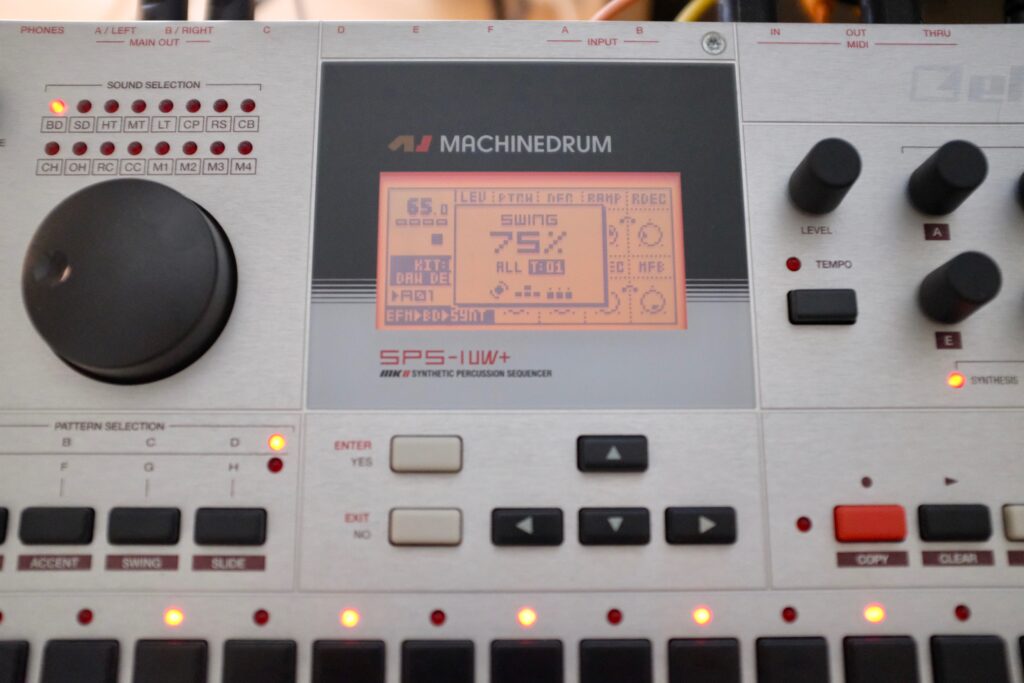
Oriol Domingo – El Garatge

[Editor: This is interview nr. 100! Yay!!! And to celebrate, we’re doing a GIVEAWAY! Oriol has kindly donated an El Garatge expression knob to one lucky price winner. Check out how to enter on my Instagram]
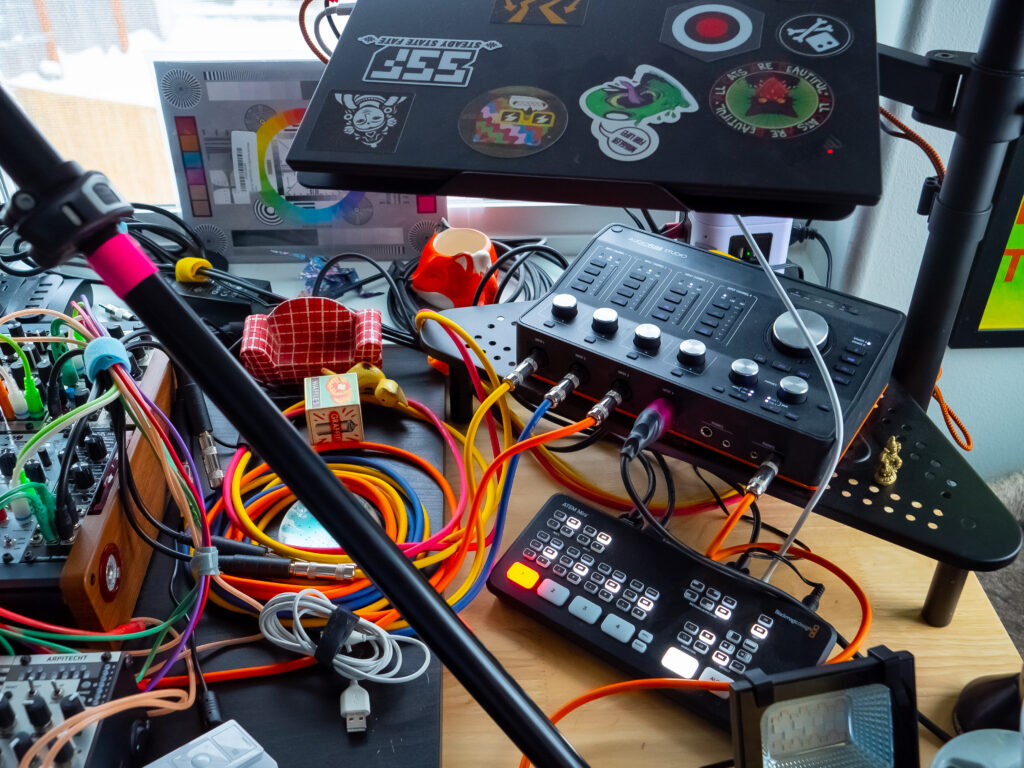
1. Favourite knob or fader or switch on a piece of gear and why?

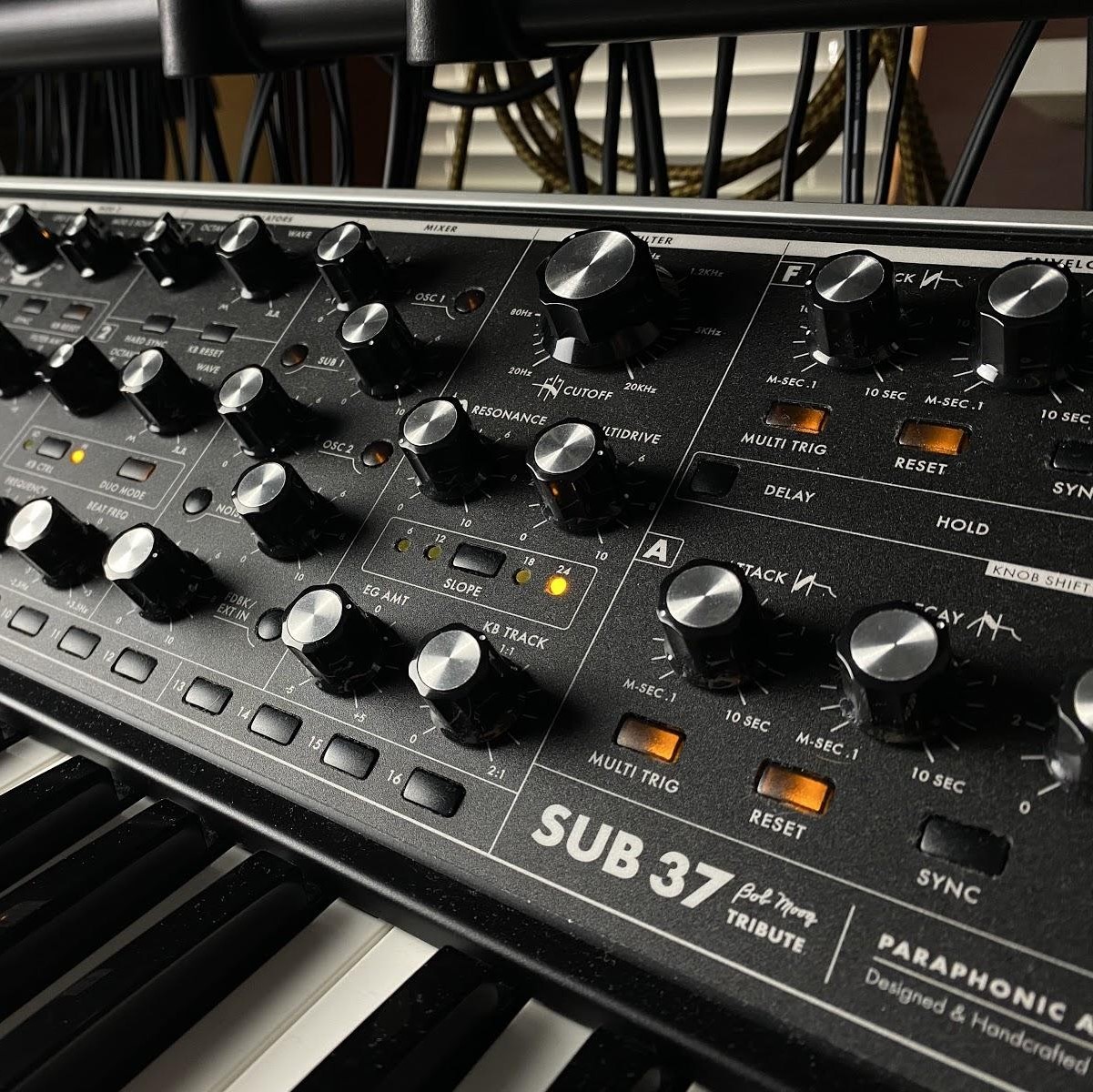
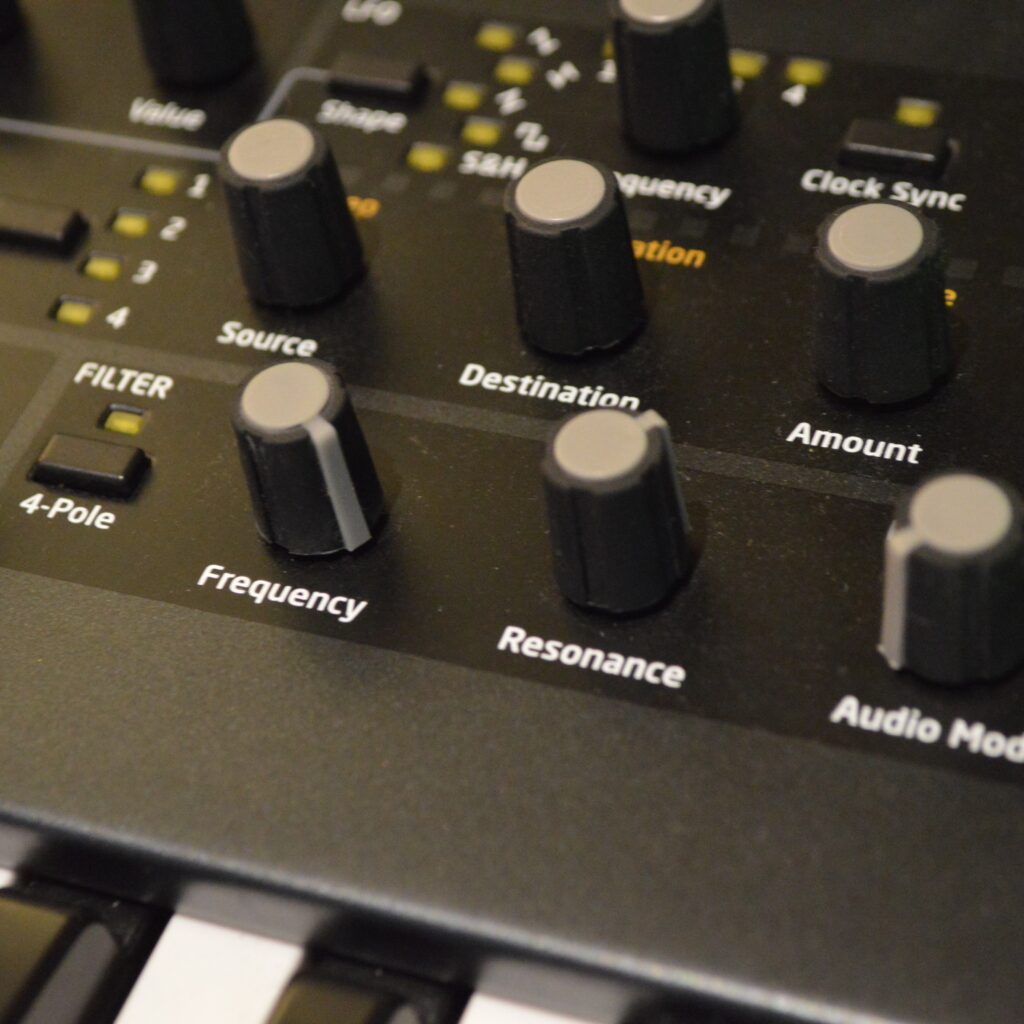
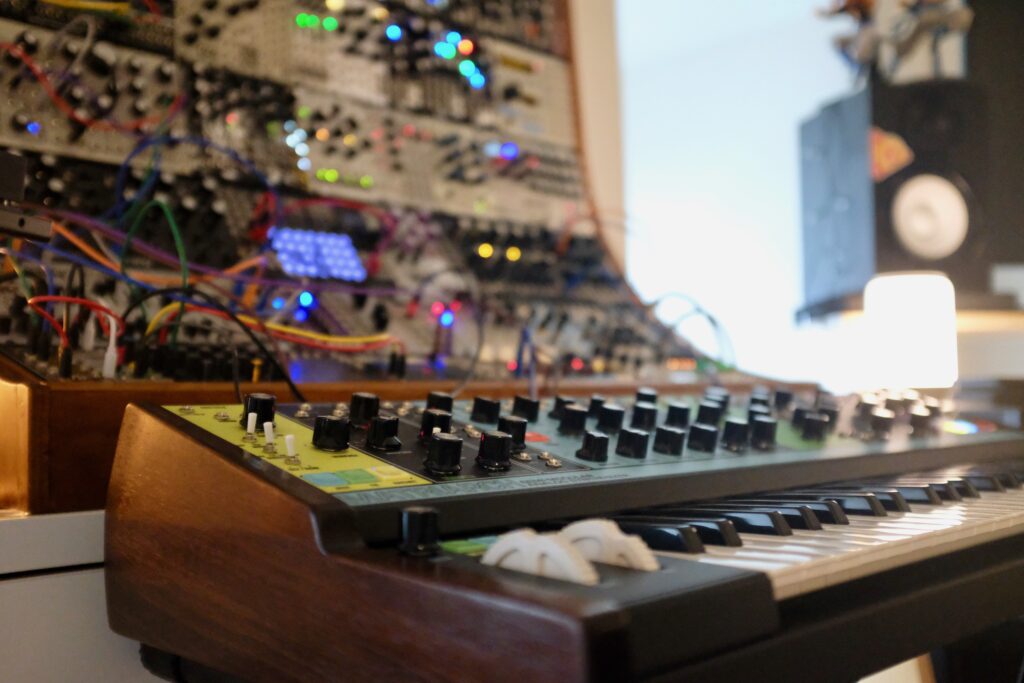
Moog Sub 37 chicken head knob

My Moog Sub 37 has a very good over all build quality. I like that despite being quite big, the filter knob moves really smooth, but what I like even more, is the pattern type and octave selectors, even the click sound is very pleasing!.

2. Do you have an ‘almost’ perfect bit of kit? What would you change? 

Access Virus Indigo 2

I really like my old Access Virus Indigo 2. Sounds really powerful and offers a lot of sonic possibilities, but due to the metal sides it’s insanely heavy and the keybed feels really cheap for me. I already have a bigger midi controller connected to it, but I like to use the built-in keyboards, especially when I’m just creating new sounds.

3. What setup do you bring on holiday or tour or commute etc.?

Teenage Engineering OP-1

Most of the time, just the Teenage Engineering OP-1. It’s perfect to practice with limitations. It allows me to create full songs without using any other device and I remember discovering some cool melodies that, with another piece of gear, wouldn’t have happened, because of the way it makes me work. Also, I can use the built-in mic, line in or FM radio too, when I want to use a little more elaborated portable setups.

4. What software do you wish was hardware and vice versa?

VST Synthogy Ivory Piano

As a piano player, I really like the VST Synthogy Ivory Piano. Most of the time I do my music without a computer, where the OP-1 is current main device to record with.
It would be really cool to just have that piano sound out of the computer, as most of the time I just want to play and it doesn’t make sense starting up a DAW or even a computer simply to play a sound, when I don’t want to do anything else. In fact, they did release a hardware version, but in addition to being really expensive I think they discontinued it.

5. Is there anything you regret selling… or regret buying?

Yamaha RM1X

Since I first discovered grooveboxes and synths, over time I ended up with a fair amount of devices, but sometimes I was more attracted to the aesthetics or possibilities, than what I really lacked in my studio.
Other times maybe I needed what I purchased, but in the end, the device didn’t fit my preferred way to work. I remember buying (and selling again very soon after) a Yamaha RM1X. It had a really powerful sequencer, but it wasn’t satisfying for me to play with. I also had fun with the Roland MC-303 Groovebox and even though I wouldn’t give it much use nowadays I still miss it sometimes.

6. What gear has inspired you to produce the most music?

Again, the OP-1 alone has given me a good amount of ideas. The workflow and immediacy to record and loop is something really well designed and that works very well in my case, because it really helps me to have visual feedback on what I’m doing.

TE OP-1

7. If you had to start over, what would you get first?

Probably a Korg Minilogue XD. It offers a lot of immediacy and very little menu diving, which is great to design sounds fast. In addition, the sonic possibilities and extra oscillators make it a really good synth to start with. It can easily do everything from drum sounds to bass, leads and pads. I miss a little more of polyphony, but adding a little of the internal reverb or delay effects can help with that.

Korg Minilogue XD

8. What’s the most annoying piece of gear you have, that you just can’t live without?

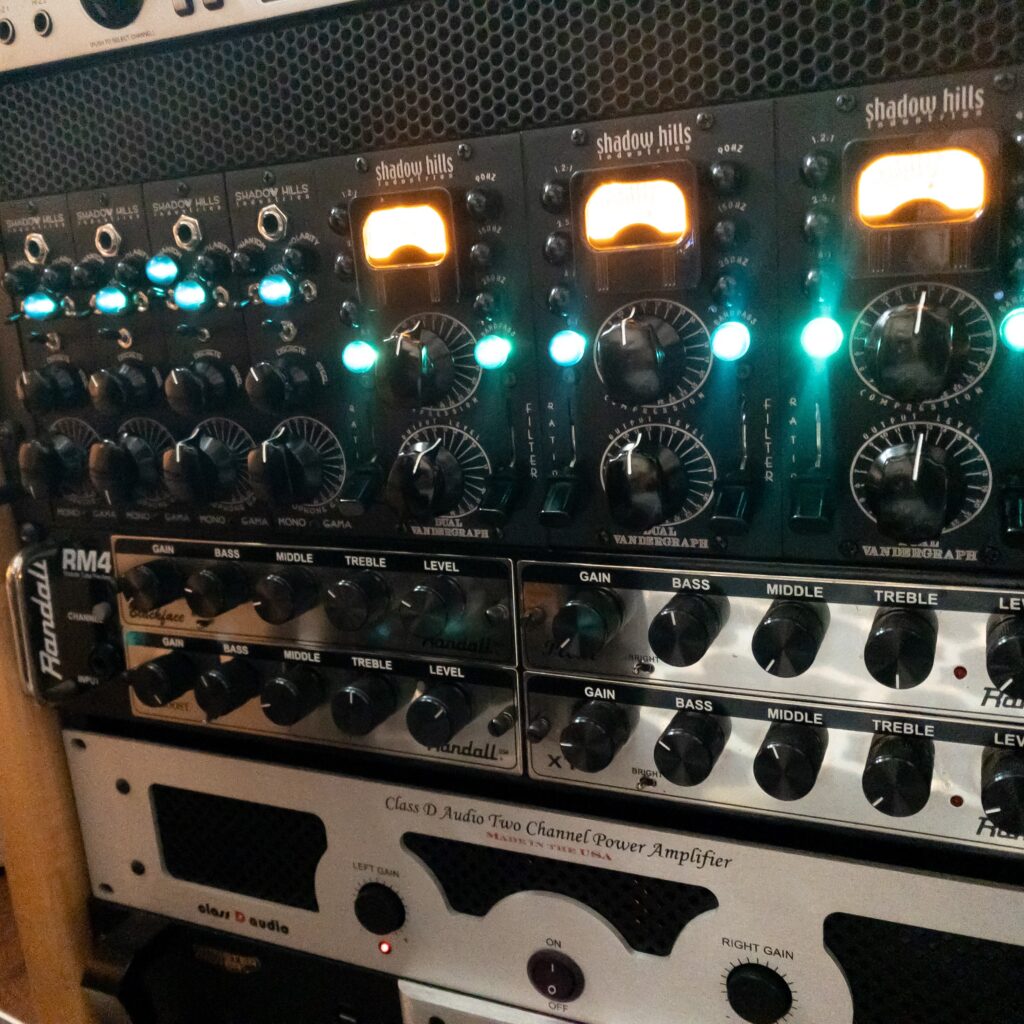
Despite having some decent synths and quality pedals, I still own, not one, but two Behringer mixers and a Tube Ultra-Q which I have only connected to my Yamaha Reface CP to add some EQ. I have one rack mixer with 8 stereo inputs where I connect all the synths. From that, I connect the main out to the other small mixer. where I add aux effects and additional synths or mics. Both mixers add a considerable amount of noise, especially the small one, depending on levels, but I’m just used to it and I keep using them for now.

Behringer mixers and Tube Ultra-Q

9. Most surprising tip or trick or technique that you’ve discovered about a bit of kit?

Maybe this can’t even be considered a technique, but sometimes I have fun placing piezo microphones between my midi keyboard keys and then amplify and add EQ to the noise while I play. Then I can record piano music with some real noises. I even tried placing the mic on old wood furniture to add some cracking noises while I record, which adds a little more atmosphere in my opinion.

[Editor: That is fantastic lateral thinking technique! I dig it!]

Piezo mic for mechanical noise

Artist or Band name?

I make music as Efímer on YouTube/Spotify. You can find me at youtube.com/efimer where I upload soundpacks and demos of my own devices too.

Genre?

I’d say Ambient/Downtempo, but sometimes I make piano and orchestral music too.

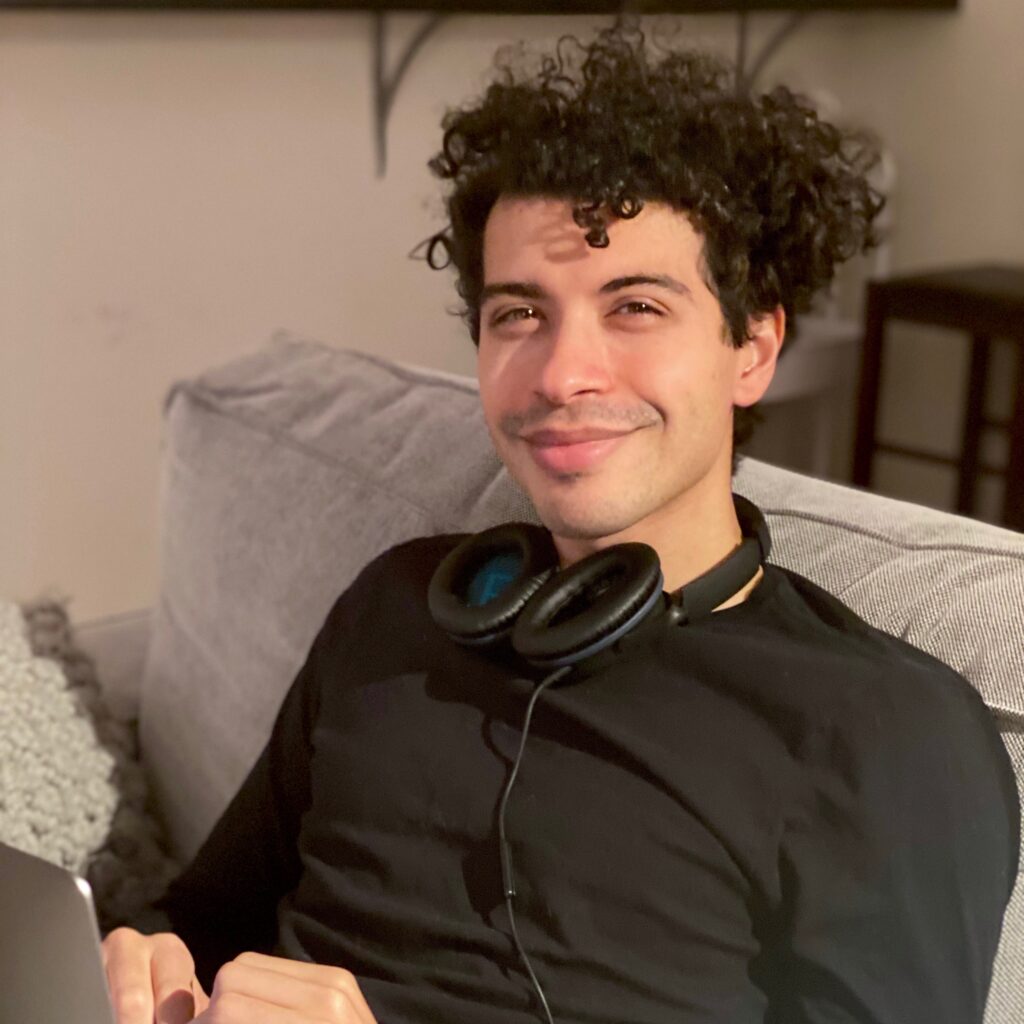
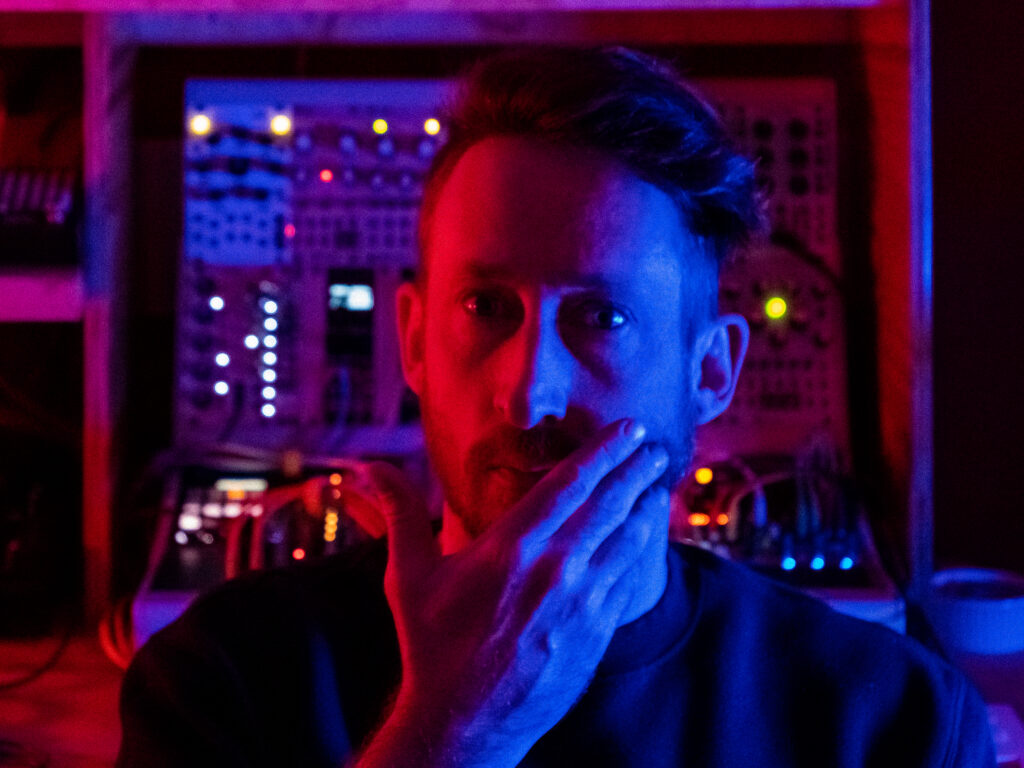
Selfie? 

Oriol Domingo in his studio

Where are you from?

Barcelona, Spain.

How did you get into music?

My grandparent used to take care of another family’s orchard. One day he returned home with one of these little mechanical toy pianos, that the kid of the other family didn’t want. I was 4 years old, but I still can remember what I felt when I played the first notes, I was immediately hooked and I’ve been playing by ear from that age.

The first song I played with that toy piano was MacGyver by the way, haha. When I was 8 my father understood I wasn’t going to stop playing the piano and he bought me a more decent one. From there, I discovered what I really liked was to play by ear and also create my own songs. All the synth stuff and GAS came when I was about 16 when I discovered the Roland MC-303 and Korg Electribes.

What still drives you to make music?

The act of creating something out of nothing, the possibility to create some unique music that could convey feelings to other people makes me happy. Of course it’s complicated to do anything really “new” but even the process of trying to create it can lead to understanding ourselves a little better, by trying to find our own voice. Creating music makes us wonder what do we want.

How do you most often start a new track?

I use two different methods. Sometimes when I’m learning to use a new piece of gear I just want to create some sounds. If during the process a new melody comes to my mind, I try to follow that and see where it goes, and if not, I’ll still have some patches to use another day. The other method I use is just starting with a piano or rhodes sound, which are my favorite, and start improvising while I think about other things.

How do you know when a track is finished?

When even the “worst” part of a track is still acceptable in my opinion. I usually listen to each fragment many times and try to correct the things I still don’t like. Sometimes works well too just listening to it in another moment or another day to realize there are still things to fix. I think it’s good to listen to your own old music too, in order to see if you would make the same decisions again.

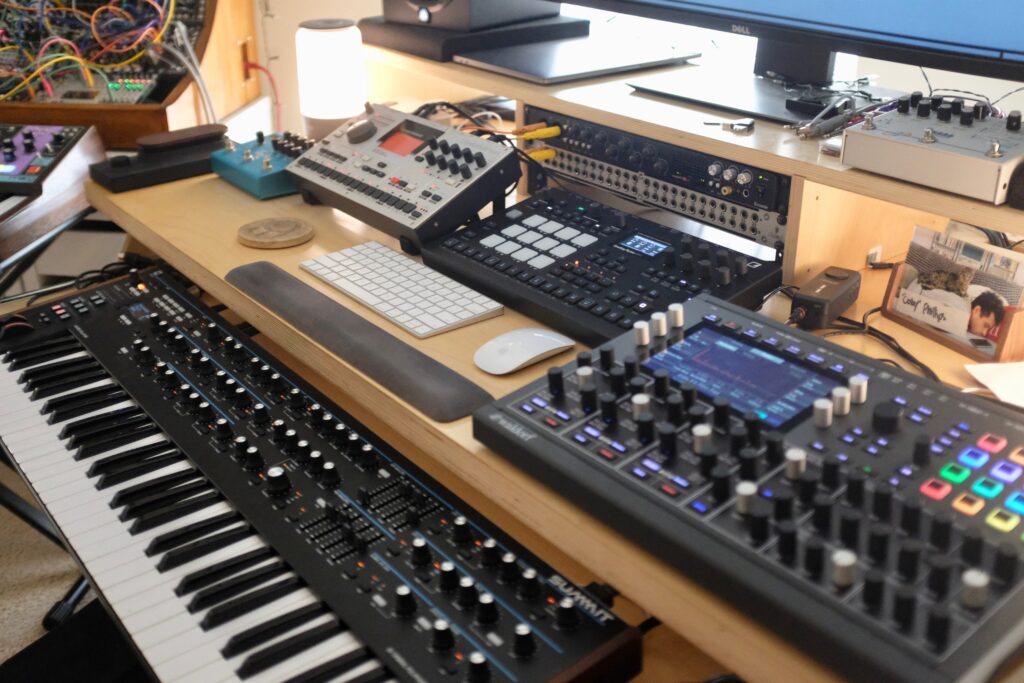
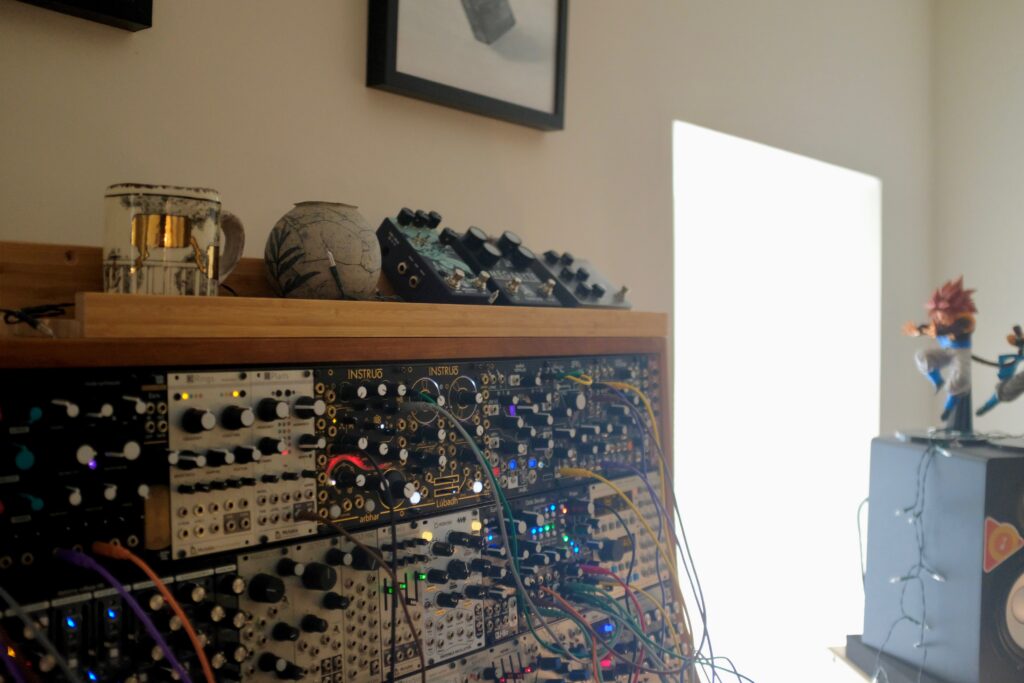
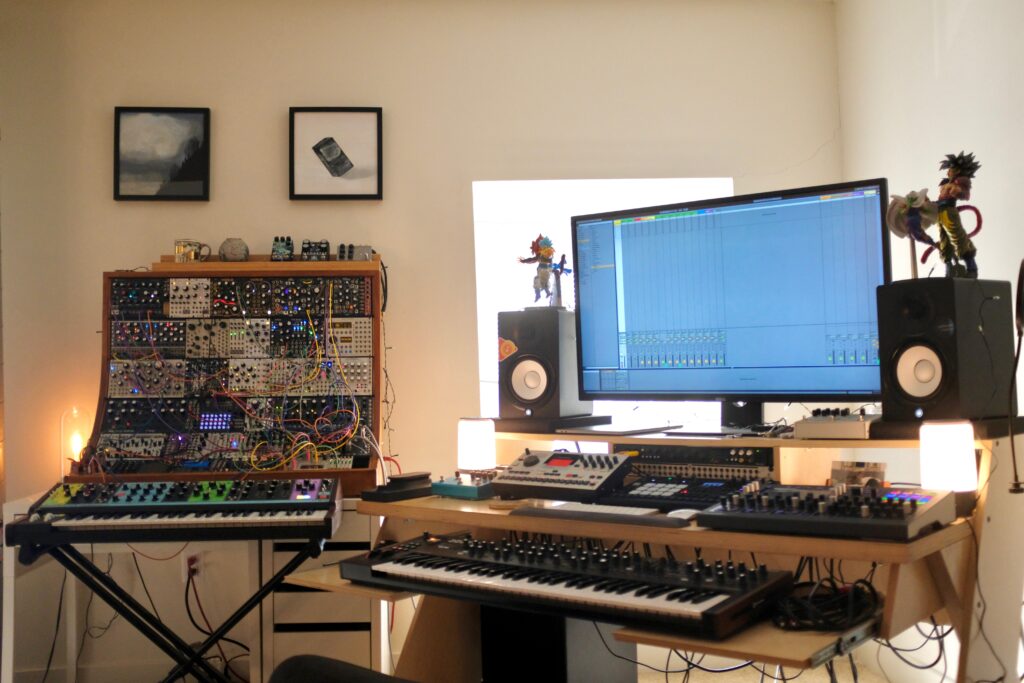
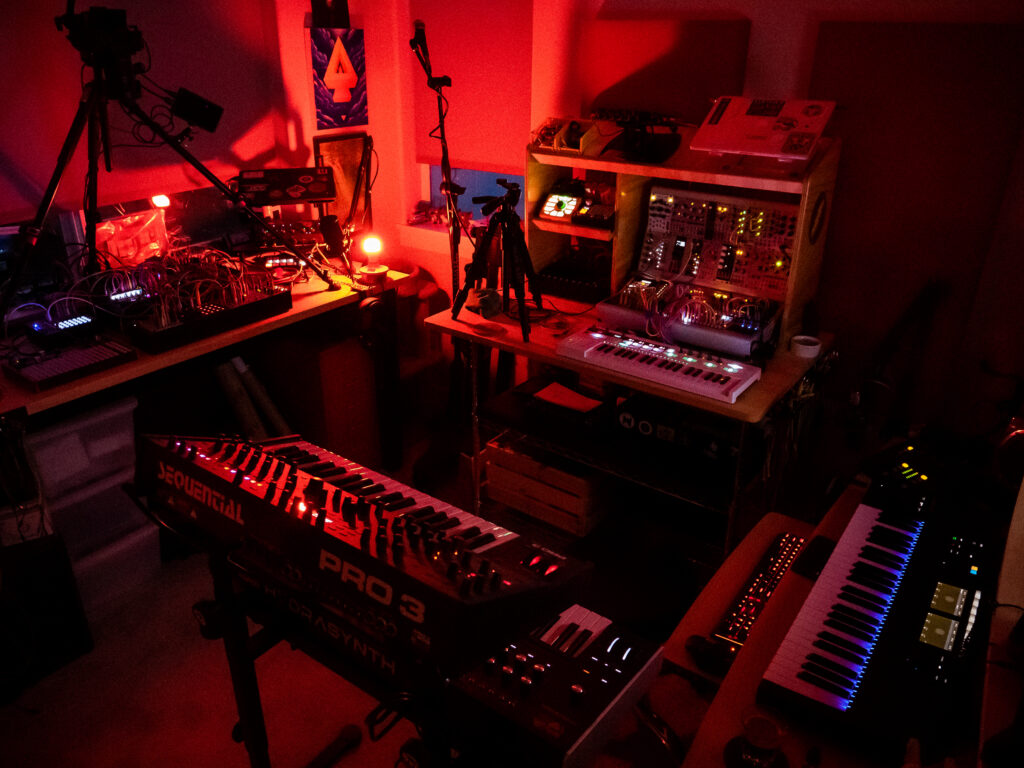
Show us your current studio

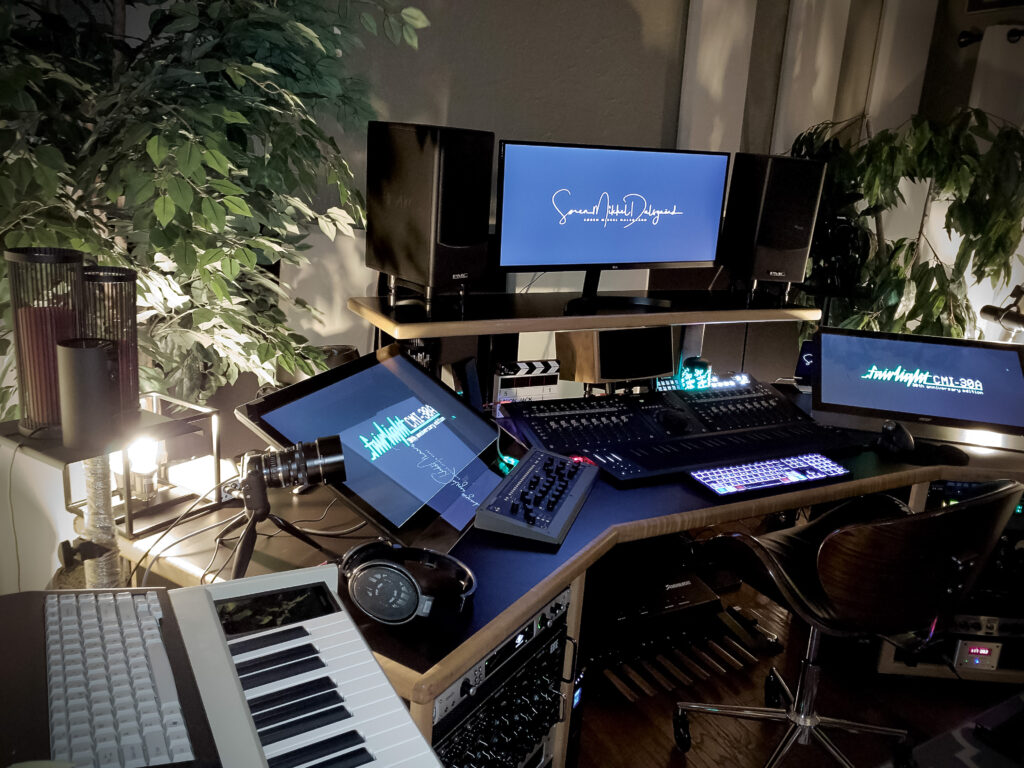
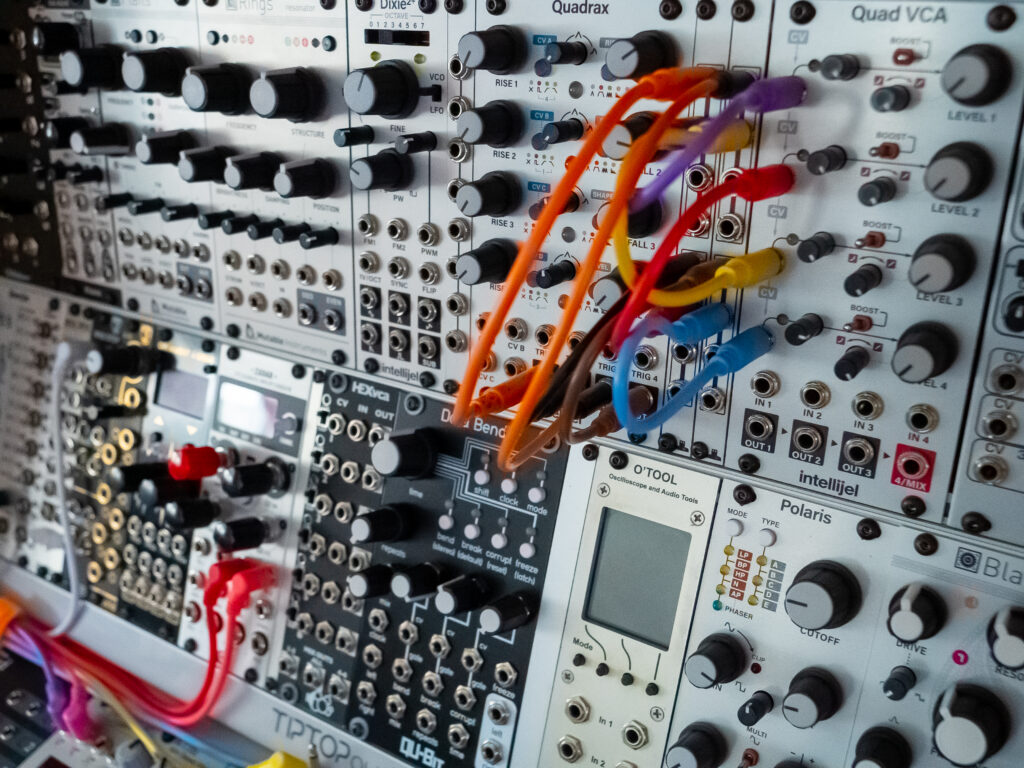
I don’t have much space so it’s quite fragmented and messy.

Oriol Domingo’s home studio

I love synths with keyboards, so it can be quite uncomfortable sometimes.

The El Garatge home studio keys

Best creative advice that you’ve ever heard?

Embrace limitations. It may seem very common to hear and I think it may not work for everybody. Not just your own creative limitations, but also adding and forcing other kinds of limitations like gear or even time.
Especially when starting new songs, the less options the better for me. It’s easy to get lost in the possibilities when you have a lot of gear, you could be constantly wondering if you chose the right synth or sound to start and which effects add, etc.
If you force yourself to use one synth, sound or even sample, changing is not an option, it’s all you have, so no need to think about that again and you can now start creating.

Promote your latest thing… Go ahead, throw us a link.

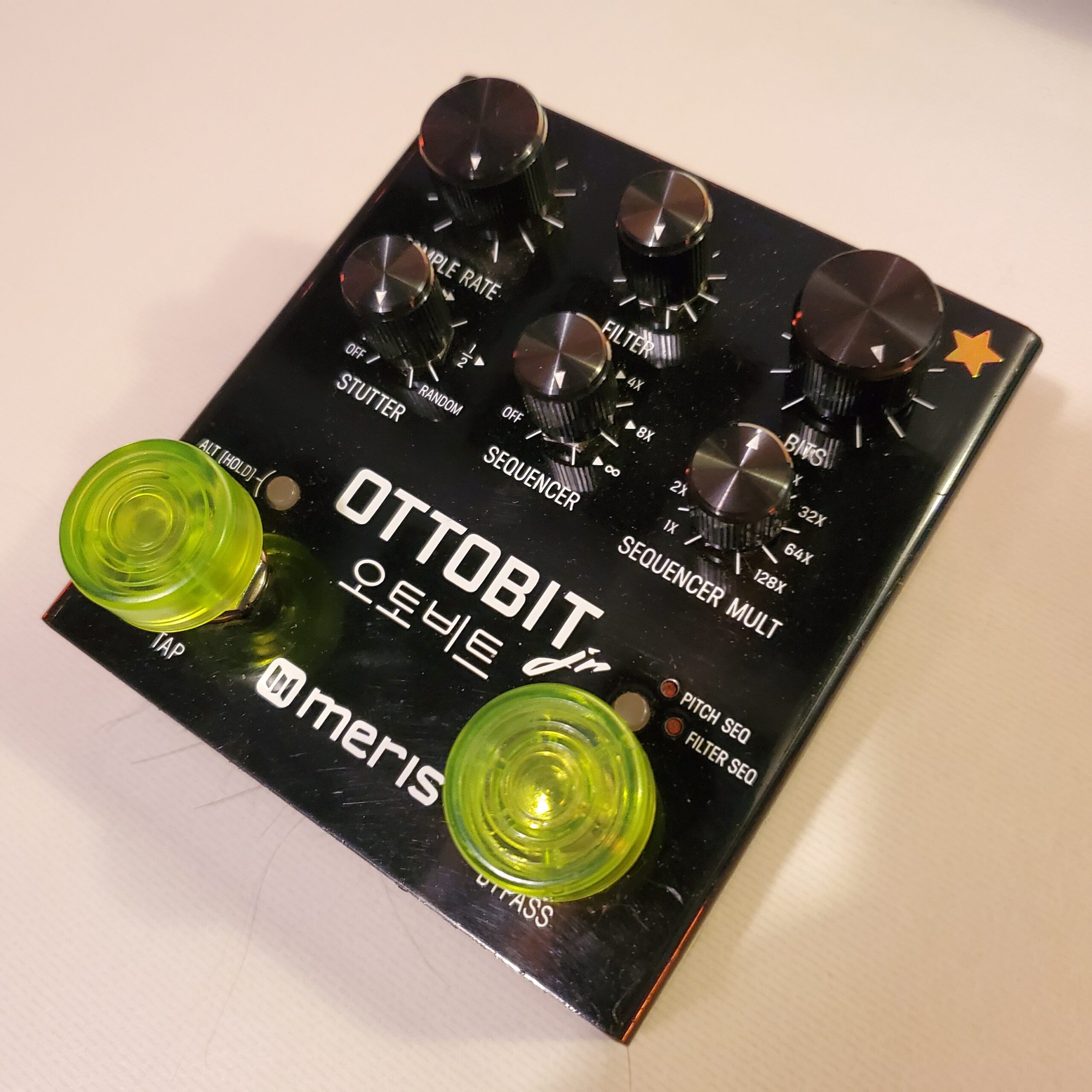
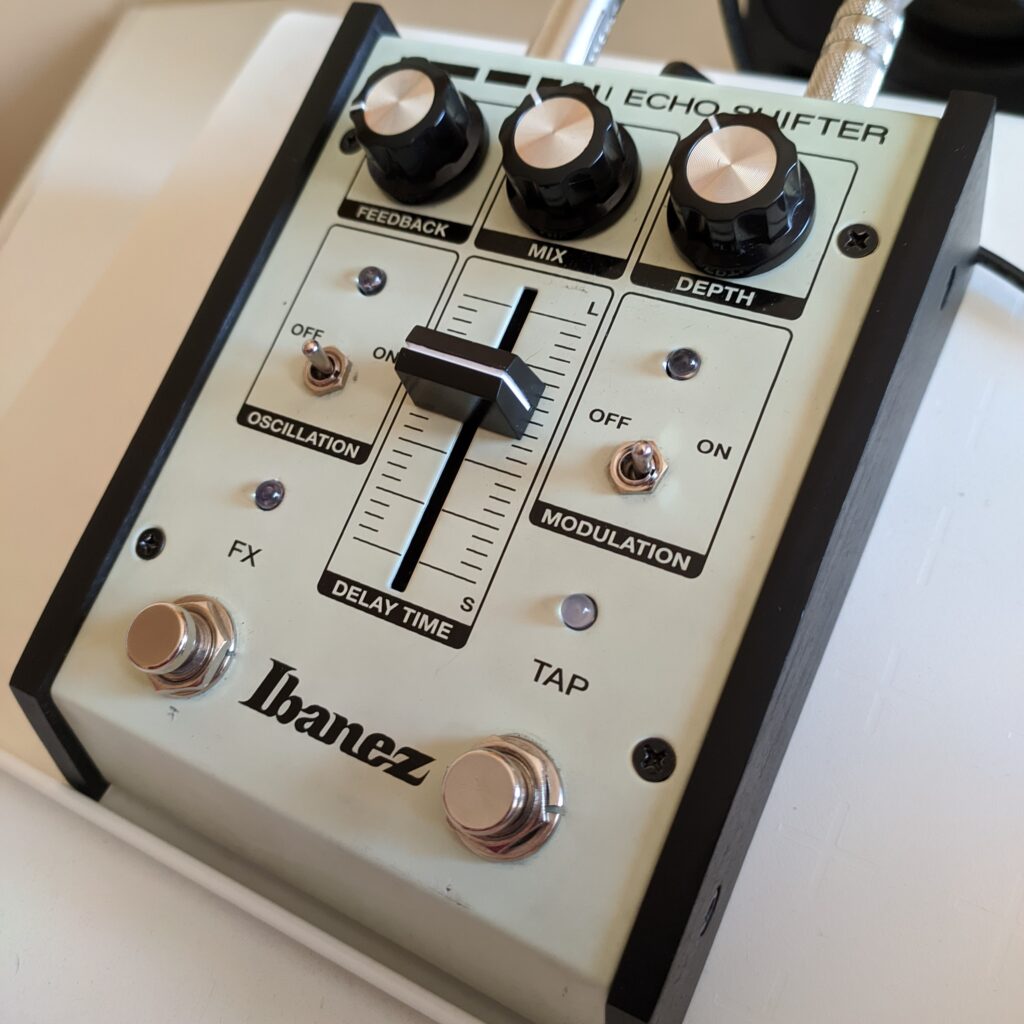
In the last weeks I’ve been developing this piggyback LFO knob with extra features for pedals with expression inputs, which will be finished soon I hope!:

https://elgaratge.com/echo-knob/


[Editor: It’s been a wild ride doing this music gear blog this past year and the blog isn’t even over 1 year old. Over 30,000 unique visitors have stopped by and had a monthly readership of between 1500 to 4000 readers.

… And I’d just like to thank YOU, my fellow music gear junkie…. But also, of course, the 100 artists who contributed and made this past year a little more tolerable.

Do you have any suggestions for the future of this blog? Then leave a comment below.]


Tyler Cassidy – Studbagl

1. Favourite knob/fader/switch on a piece of gear and why?

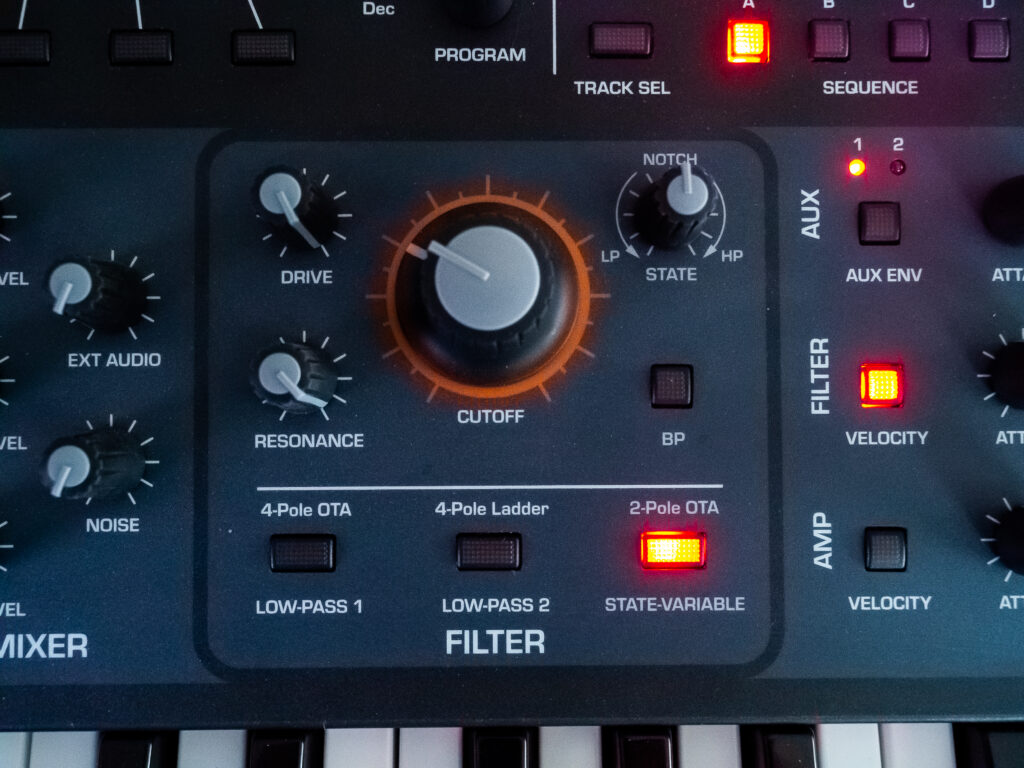
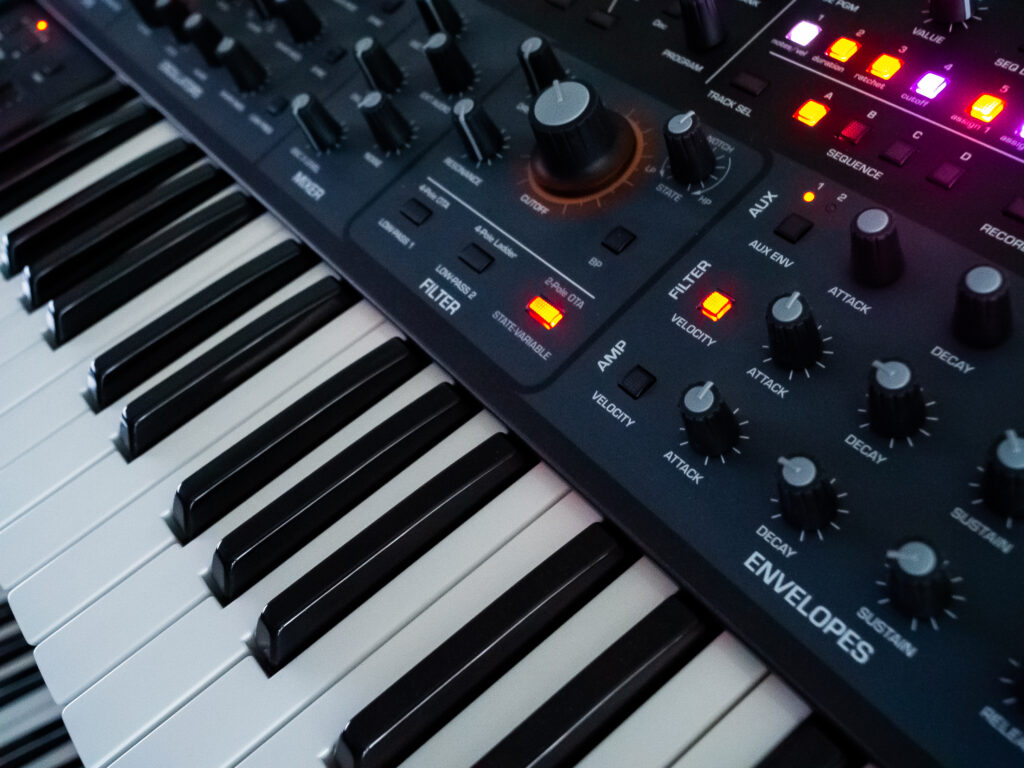
Sequential Mopho X4

My favorite knob is actually a combination of knobs; cutoff frequency (LPF in particular) and Resonance. Coming from a jazz saxophonist background, I did not have any interest in gear until my mid 20’s when I was at a music store with a good friend of mine. We sat down at the synths, found my way to a Microkorg XL, again with no real interest in them, and then I somehow managed to play around with the filter knob. I was mind-blown how cool sweeping a filter was! It was so space-sounding and magical and a sound I didn’t expect to find. I sat there for 30 minutes just playing a chord, letting it sustain while I swept the filter/resonance to get the dreamy space sound. The picture is of my Mopho x4, which has a stunning LPF Cutoff and Resonance combo.

2. Do you have an ‘almost’ perfect bit of kit? What would you change?

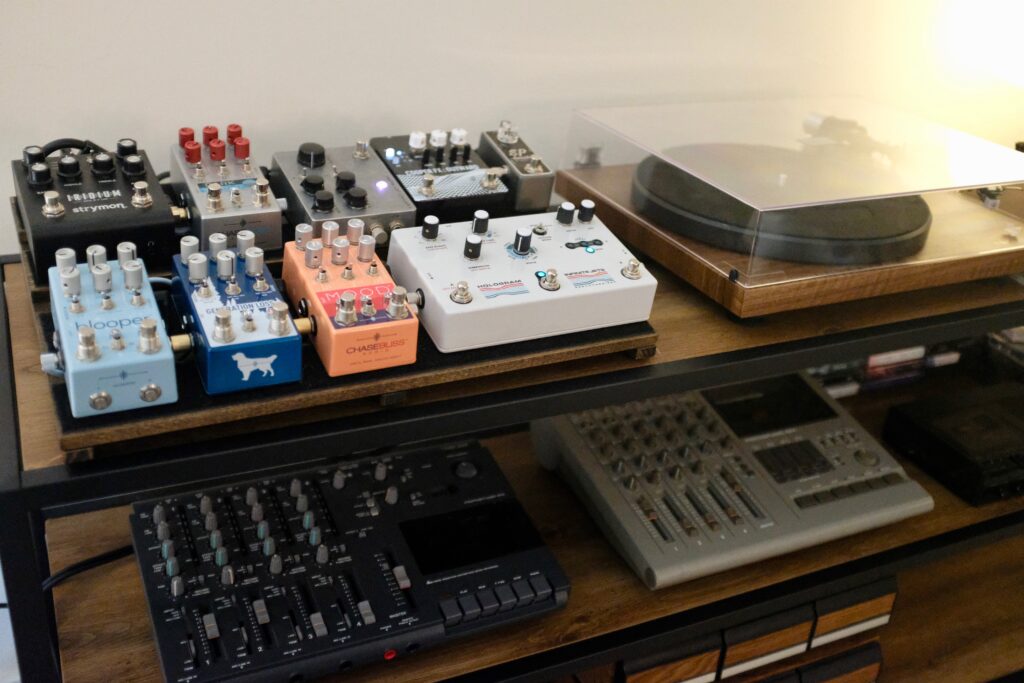
Pedalboard

I love my pedalboard! Again, as a saxophonist, there was no clear tutorial I could find on YouTube to figure out how to get the sounds I wanted to now achieve using a saxophone. I started experimenting with pedals in 2017, and have found a great balance between in-home solo ambient jamming and live performance utility. At home and by yourself, you can try any pedal/combination for anything, but playing with a live band, especially in a jazz setting, it becomes difficult to find the right pedals. The saxophone is a very difficult instrument to use with pedals live because most of the sound still will come acoustically. Therefore, I had to choose effects that would compliment my sound rather than change it. Looping makes a cool background in live settings, delay/reverb always nice because it lingers in the spaces of your playing, and the right kind of pitch shifting will add depth to your playing. No dirt here because it doesn’t really work well live because you’ll basically only hear the acoustic sound.

3. What setup do you bring on holiday/tour/commute etc.?

Recording setup – saxophone with pedals

With the pandemic going on, there has not been much opportunity to travel for musical reasons however, I was able to go and record my dream album in Washington D.C. back in December. It is an all-original music album of mine where I utilize the same pedalboard in the picture above in combination with my saxophone. When traveling home for holidays, I usually only bring the saxophone. I don’t end up playing much but will sometimes get some practicing/noodling in to try and stay in shape. The picture is of my set up from the album recording back in December

4. What software do you wish was hardware and vice versa?

To be honest, I don’t use too much software as far as instruments/effects are concerned. I mostly just use Ableton to record my solo-ambient music and lightly mix/master it there. I prefer the hardware due to my tactile way of approaching music. I learn best through my sense of touch and it is crucial for me when playing/writing music. This is probably why I am so bad at vocals, but also why “button” oriented instruments like saxophone, piano/synth, pedals are my instruments that I use the most.

5. Is there anything you regret selling… or regret buying?

Earthquaker Devices Avalanche Run and Meris Hedra

There is nothing that I regret buying. I take a very long time thinking about what gear I want and why I want it so I never really have impulse purchases that I regret later. I do have a few pedals that I don’t often use; for example, the Avalanche Run and Hedra. However, they are not regrets as I still will pull them out from time to time to create a song or two. They are just not as crucial for most of the things I do with my music. I also have never sold a piece of gear so I can’t really say I regret selling anything, ha!

6. What gear has inspired you to produce the most music?

Meris Polymoon

Finally, an easy question to answer! The Polymoon by Meris is ABSOLUTELY 100% the gear that has inspired me to produce the most music. It has so much to offer, especially when you run it at the end of your chain. It can do the simple delay stuff, but also has a gorgeous phaser-verb when you crank the dimension. Putting it 100% wet mix will give what I consider the most beautiful sound a piece of gear can offer to this day. Not only that, but it has a wealth of modulation options that I use in so much of my music. Most notably, the octave up/down pitch shifted delays add such a beautiful space-cruising sound to your song. Being in the end of the chain, after my loopers and everything else, you can manipulate your loops by doing any of those things mentioned above and it will really dynamically change your composition/jam.

7. If you had to start over, what would you get first?

Afterneath by Earthquaker Devices

If I had to start over… this is a tough question to answer. My first purchase was the Afterneath by Earthquaker Devices, and it was probably the best thing I could buy to get into this stuff. I really wanted to find a way to stack multiple notes on saxophone as it is a monophonic instrument. Afterneath having the capabilities of having a really long/pronounced sustain, it was perfect for what I was trying to do. The only issue I ran into was when I would stack a chord of some sort, playing over the top of it would get added into the Afterneath. So going back, I would probably get the NS-2 by Boss and run it in conjunction with it. That way, I could stack my chords, then essentially mute my microphone so I could, acoustically, improvise/play over the top of my new chord. Also, I would buy a phaser, because as Stefan from the Pedal Zone has shown, running a phaser after the Afterneath is just beautiful and has that sweeping motion that first got me hooked in the first place.

8. What’s the most annoying piece of gear you have, that you just can’t live without?

Boss NS-2

I don’t know if I would call it annoying per say, but I have found that the NS-2 by boss is absolutely necessary for probably any player who relies mostly on their acoustic sound. When playing live with a band, especially the louder bands, your microphone is going to bleed in all those drums, guitars, whatever. The NS-2 is SO useful with its gate function so it will only pick up whatever is directly in front of the mic. Not only that, but it cancels any feedback that I would get in those live settings which playing with a microphone will almost always give you (especially when using noisy effects). The only reason I would consider it slightly annoying is that because it takes up real estate (in my pedalboard picture you can see that I taped it to the side of the board) for something that I use basically as a one-trick always-on effect. However, it must be said that the NS-2 is a live-setting modified saxophonist’s biggest buddy.

9. Most surprising tip/trick/technique that you’ve discovered about a bit of kit?

I think the best trick I have learned about gear in terms of using gear as part of the compositional process is to experiment with your signal path and definitely put effects AFTER your loops. For example, having the Polymoon after my looper lets me change the composition so drastically that you almost wouldn’t believe it’s the same exact loop if I showed them separately. That is a very powerful thing to have at your disposal for those live gigs when a solo interlude to start the second set is warranted. Another idea is to put a pitch shifter after your loops so you can modulate to a different chord/key center to give you something new to play over the top of (this might require more parallel signal paths but I have done before and is very cool).


Artist Name

Tyler Cassidy (studbagl on youtube, Instagram, etc)

Genre

Adventure music, jazz, ambient.

Selfie

Tyler Cassidy

Where are you from?

I am originally from Fort Lauderdale, Florida, now living in Boston, Massachusetts.

How did you get into music

I played saxophone in middle school and was very neutral about it; it wasn’t fun or boring. But then my first day in high school in 2006, my grandad picked me up, who was the only other musician in the family. He had the music of Richie Cole and Charlie Parker playing on his CD’s and I couldn’t believe my ears. I didn’t know these things were possible on a saxophone. So when I got home, I opened up YouTube and listened to everything I could. It all spiraled from there.

What still drives you to make music?

I love writing music! As I said previously, I wrote an album and got to record it with a bunch of my friends and some new people back in December. The feeling of writing songs and then having them come to life is nothing less than fulfilling; you feel proud, happy, and satisfied all at the same time. This particular album was special for me because I got the chance to record live with a huge band. It was 10 people, myself on saxophone/effects, an electric guitarist, nylon/steel-string/electric guitarist, pianist, bassist, drummer, string trio and person conducting the string trio. It was magical and I can’t wait to write more and bring them to life.

How do you know when a track is finished?

So this question is better answered for my solo ambient stuff. Being a live-oriented musician, I usually one-take all of my compositions. So whatever you are listening to was all done live and in one track. It basically boils down to if I was satisfied with it or not and that’s how I will know if it is finished. Most of these compositions are live jams, some have a little more planning, but never usually that much.

Show us your current studio

I call it the LazerMaze

Tyler’s home studio

Best creative advice I have ever heard?

Trust your ears. If your ears say it’s good, it is good. Sometimes it’s easy to let your brain get in the way when it says, “No, this definitely shouldn’t work” or “This wouldn’t make sense to go from this chord to this chord”. Your ears should always be trust! We are musicians after all.

Promote your latest thing… Go ahead, throw us a link.

The latest thing I have out is “Gentle Shore” which is a solo ambient album of mine. On my studbagl.bandcamp.com you can find 3 of my solo ambient albums as well as an album I did as a bandleader back in 2017 in Washington D.C. Definitely want to look out for the new album coming out in summer 2021 that I just recorded though; it blends all the jazz, ambient, post-rock, romantic adventure music that makes up my imagination into one.


[Editor: Do you have a favorite tip, trick or way of working with any of the gear from this interview?
Then throw us a comment below…
]


Paul Talos – Signal Soundlabs

1. Favourite knob/fader/switch on a piece of gear and why?

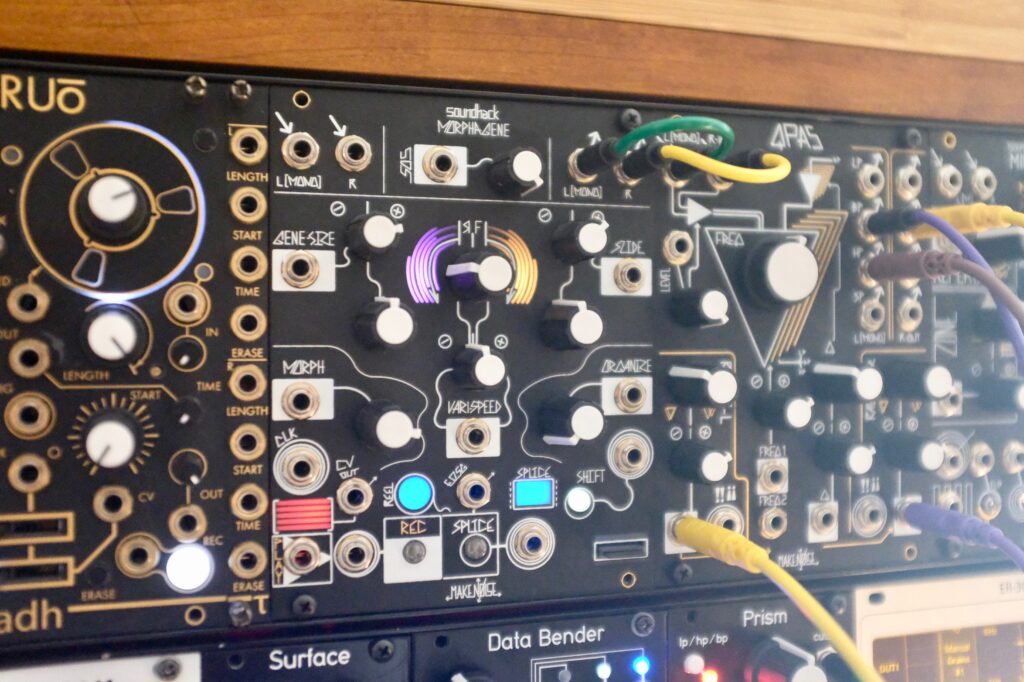
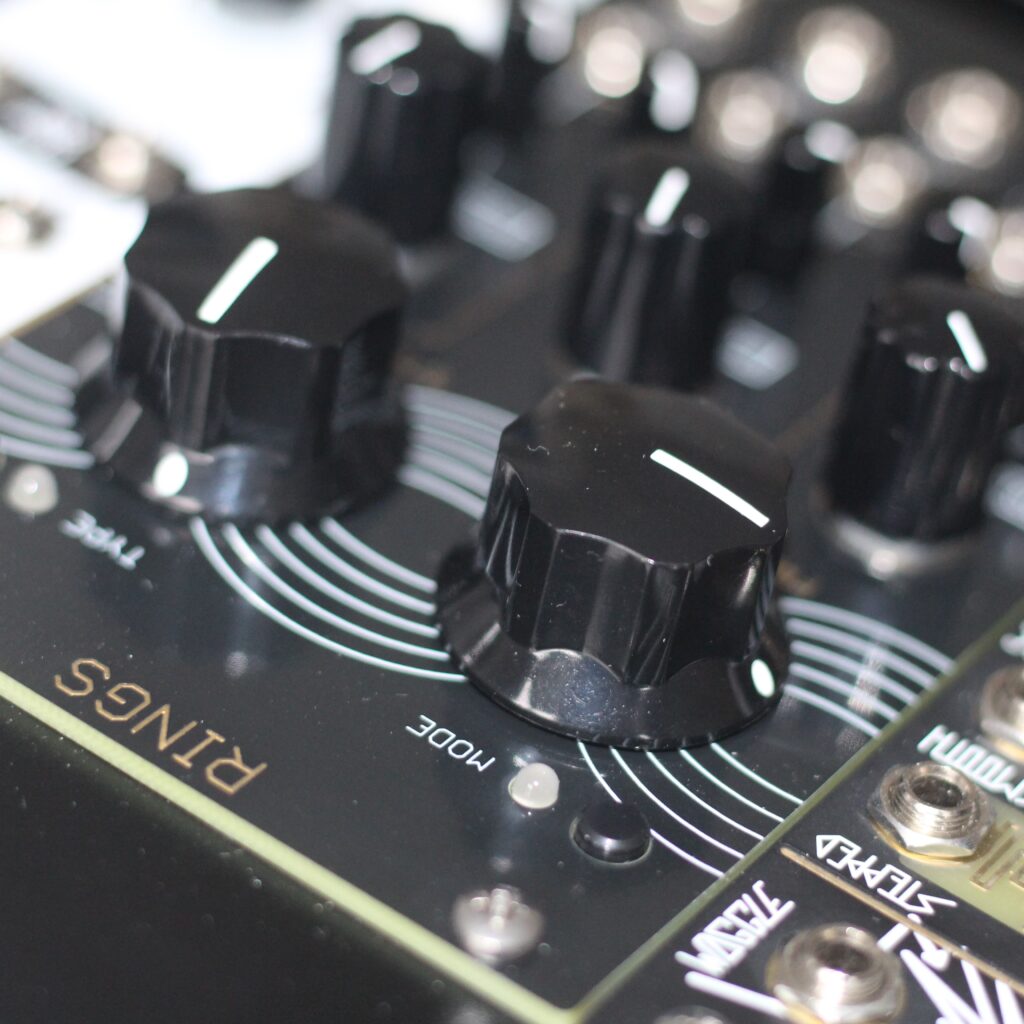
Make Noise Morphagene

Lately, it’s been the Vari-Speed knob on the Morphagene. It’s really incredible how something as simple as changing the speed and pitch of a sound can turn it into something completely unrecognizable. Things get even more interesting when you start reversing things too. You really end up discovering all kinds of sounds within sounds that you never really would have thought were there, especially when slowing samples down. Gotta love the wonderful world of microsound.

2. Do you have an ‘almost’ perfect bit of kit? What would you change?

Moog Subsequent 37

The closest thing for me would be my Moog Subsequent 37. It just puts so much sound design power at your fingertips, you almost don’t need anything else. Between having one of my favorite filters, two different kinds of distortion, and plenty of modulation options, there’s enough in there to make a lifetime’s worth of music. It may not be as infinitely versatile as my eurorack setup, but there’s a certain immediacy about it that allows me to get what I need out of it very quickly. The only thing that could possibly make it even better is if it had voltage control over more of the parameters. I actually really regret not jumping on the CV version while they were still making those, as that would have been as close to perfect as you can get.

3. What setup do you bring on holiday/tour/commute etc.?

Moog Mother-32

I can’t say I do much traveling with my gear, as my setup wasn’t exactly designed with mobility in mind. But I guess if I were to bring anything, it would be my Moog Mother-32. Not only is it one of my more compact instruments, but I find its limitations to be pretty inspiring. It’s a surprisingly deep instrument and can yield some very unexpected results with a bit of clever patching. I often feel like I’m just scratching the surface of what it can do, so I suppose traveling with it would really force me to get everything I can out of it.

4. What software do you wish was hardware and vice versa?

Spectrasonics Omnisphere

I really wish there was some kind of hardware version of Spectrasonics Omnisphere. It’s such a useful instrument when scoring for a film, especially for creating cinematic soundscapes. It’s one of the few VST instruments I find myself going back to time and time again. If they made a hardware version with some CV control over the parameters, I’d buy one in a heartbeat. Of course, with the size of the library being what it is, I’m sure it would be incredibly impractical to actually implement in hardware form, much less in eurorack format.

Walrus Audio Descent

On the flip side, I’d love a plugin version of my Walrus Audio Descent reverb pedal. I use the shimmer mode on that pedal quite a bit to add an almost choir-like quality to synths, and would love to have multiple software instances to use throughout a mix. Sure, there are ways of creating a similar sound using other software (the Descent is digital after all) but the pitch shifting on this pedal has a very particular, kind of unnatural sound to it. Hard to describe, but it definitely has a tone and I haven’t really come across anything else that sounds quite like it.

5. Is there anything you regret selling… or regret buying?

Korg MS-20 mini

I sold my Korg MS-20 mini when I first started diving into eurorack. At the time, I figured it didn’t make sense to have a semi-modular synth that didn’t speak Volt per Octave and was looking to get some cash to finance the beginnings of my modular (I believe I ended up buying a Maths with the money I made). But over time I realized just how much I missed those oscillators and filters. It’s such a unique instrument, and much like the Mother-32, it just has a very inspiring set of limitations. So last year, I actually ended up buying it again and will never repeat the mistake of selling it.

Arturia Minibrute 2S

As far as buyer’s remorse on a piece of gear, I bought an Arturia Minibrute 2S when they first came out and had some regrets on that one. The synth voice itself is phenomenal, and the ability to integrate it with eurorack really enhanced the functionality of my existing modular system. But I never got into a good flow with the sequencer. As someone with a background in music theory, I found it really difficult to visualize musical intervals due to its lack of a traditional keyboard. So I eventually ended up selling it and getting the keyboard version instead. Been loving it ever since.

6. What gear has inspired you to produce the most music?

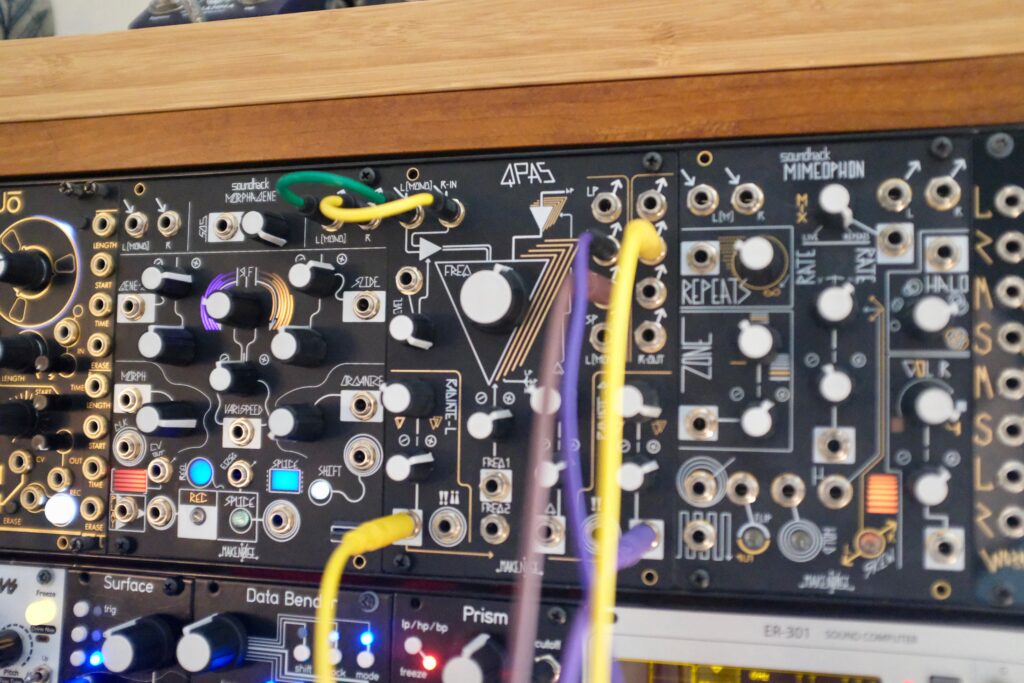
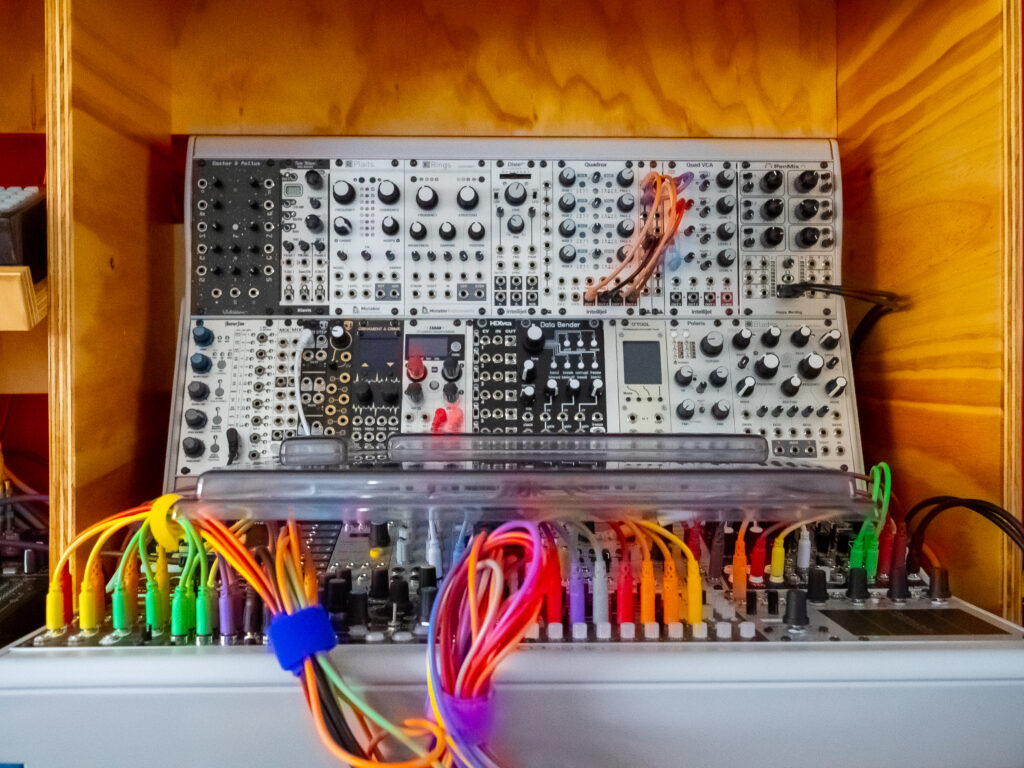
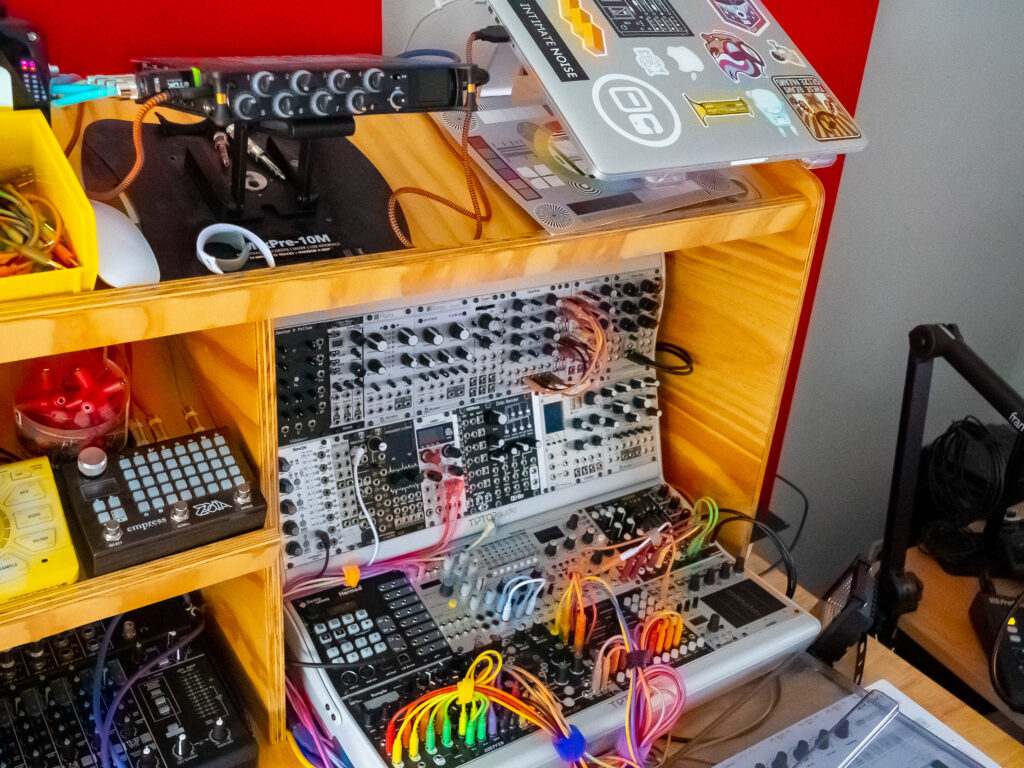
Signal SoundLabs Eurorack

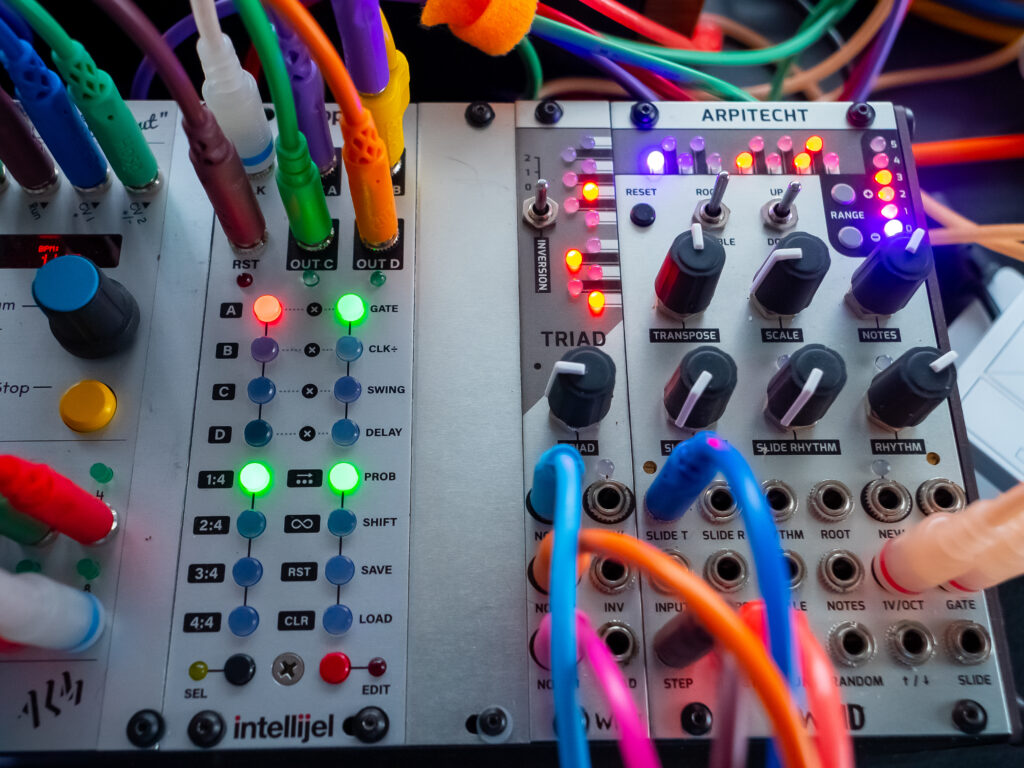
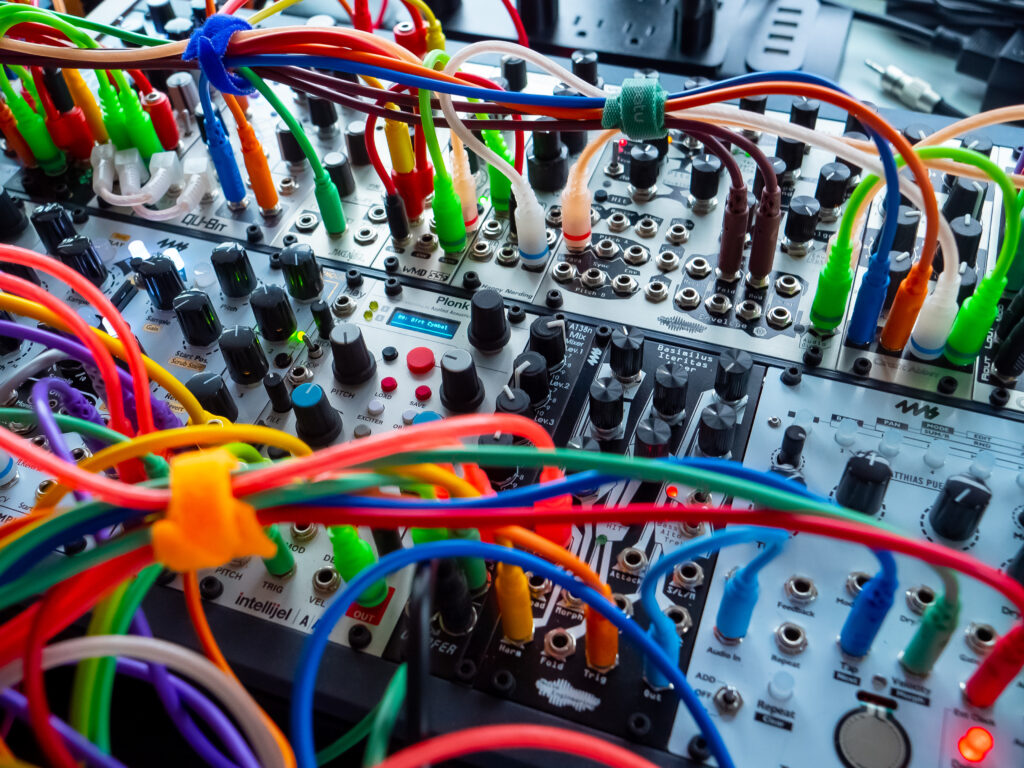
Lately, my eurorack rig has been the most consistent source of inspiration. I made some upgrades to it recently, and after about three years of buying and selling modules, I finally feel like I have most of the puzzle pieces in place. Modular synthesis definitely has an element of unpredictability, feels like these modules have a will of their own sometimes and I’m just along for the ride.
It really is a happy accident machine. The downside is it can be a bit difficult to tame, especially when working on music that is synced to visuals. But lately I’ve managed to find a workflow that has been very effective for film music. The key was to start recording everything I did on the modular and then spending some time editing to pick out all the best parts. The editing can be time consuming, but I find myself getting faster and faster with patching so it all evens out. Overall, I just find it more inspiring to capture a bunch of audio from the modular and then work by subtraction rather than addition.

7. If you had to start over, what would you get first?

If I had to start again, I’d probably get the most powerful computer I could afford, along with a copy of Cubase, a Universal Audio Apollo Twin, and some kind of semi-modular synth like the Minibrute 2. A basic rig like this would cover pretty much all the essentials, while combining a tactile hardware workflow with plenty of digital flexibility.

8. What’s the most annoying piece of gear you have, that you just can’t live without?

Mutable Instruments Clouds

Hard to say, but I guess I kind of have a love/hate relationship with my Mutable Instruments Clouds module. I rely on it pretty heavily when it comes to making any kind of ambient drone patch, but I find it rather annoying having to remember what all the controls do in its various different modes. Having installed the Parasite firmware really didn’t help with that either. That said, I came across an iOS app called Modes that acts as a nice cheat sheet for some multi-function modules, so I’m definitely not pulling my hair out as much as before. As much as I have a few gripes with Clouds, it really brings a lot to the table and has become pretty much irreplaceable in my rack.

9. Most surprising tip/trick/technique that you’ve discovered about a bit of kit?

Chase Bliss MOOD

I’ve recently been getting more and more into processing audio from Cubase using effects pedals. Plug-ins can be great, particularly for utility functions like EQ, but nowadays there are so many unique pedals out there, it feels like a shame not to use them to process in-the-box sounds as well. I’ve been doing this a lot with my Chase Bliss MOOD pedal in particular, which lets me grab a short slice of audio from the DAW and transform it in all kinds of quirky and interesting ways. Lately, whenever I get stuck on a track, I’ll start feeding random audio into MOOD (unused takes from the modular work particularly well) just to see what happens. It’s a great way to get myself out of a creative rut.


Artist or Band name?

Paul Talos

Genre?

Cinematic Electronica. I’ve never been sure how to categorize my music exactly, so eventually I just made something up. I think it sums things up pretty nicely.

Selfie?

Paul Talos

Where are you from?

Born in Germany, grew up in Boston, MA. Currently living in Philadelphia, PA.

How did you get into music?

I started playing electric guitar around the age of ten and started experimenting with home recording on a laptop when I was a teenager. After high school, I spent some time at Berklee College of Music studying guitar and discovered a love of synthesis and all things electronic music shortly after that.

What still drives you to make music?

Music’s become my job over the last few years, so a paycheck is definitely one thing that drives me. But more importantly, I constantly find myself inspired by just listening to other people’s music and trying to deconstruct what I’m hearing. I’ve come across some very interesting synthesis and production techniques just by trying (and usually failing) to emulate something I heard somewhere else.

How do you most often start a new track?

As a film composer, the answer to that question really varies from project to project. Production timelines and deadlines can be vastly different from one film to the next, so sometimes it might be starting a new track every day, other times I’ll write two or three a week. I do try to spend some time every day just to make some kind of noise though, usually on the modular. I find that synthesis is a skill that really needs to be maintained, otherwise it just gets harder the longer you are away from it. So regardless of what I’m working on, I try to squeeze in some synth time at least once a day, so I don’t get too rusty.

How do you know when a track is finished?

It really never is, but once the deadline hits it’s usually good enough. Honestly, if I didn’t have deadlines of some sort, I’m not sure I would ever finish anything. 

Show us your current studio

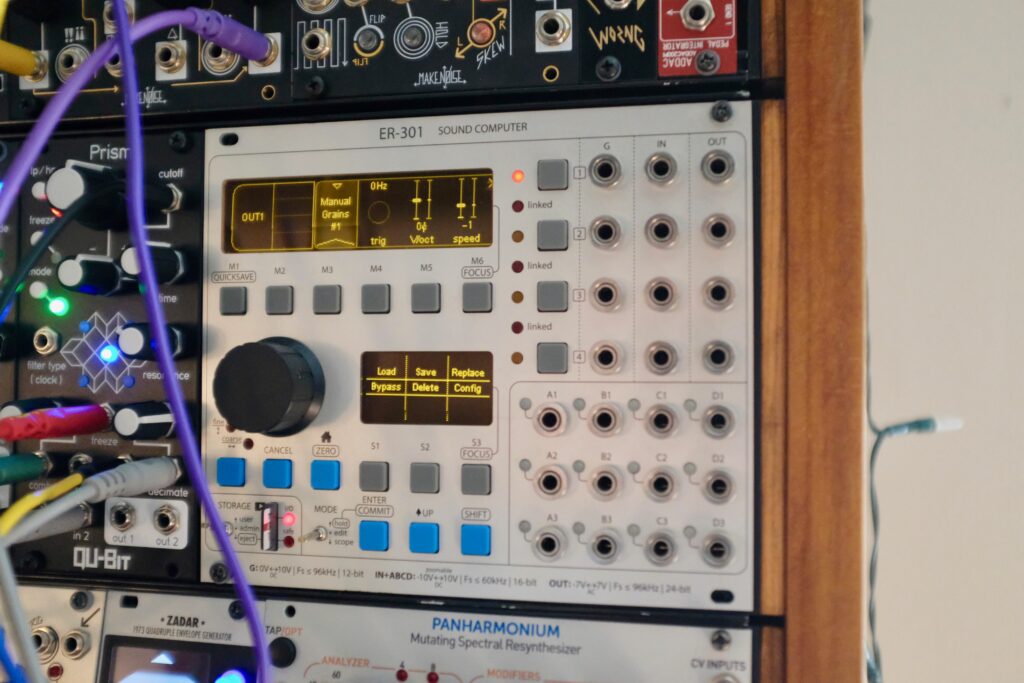
Signal SoundLabs studio

Best creative advice that you’ve ever heard?

This one kind of relates to one of the other questions about finishing tracks. I took this music production class in college, and the professor said something one day that really stuck with me. I’m paraphrasing, but it was something along the lines of this: A mix is never done, you just stop working on it eventually. To hear that from a professional in the industry was incredibly reassuring at the time. I think it’s something that applies not only to a mix, but to music making in general. Nothing is ever truly finished and that’s okay.

Promote your latest thing… Go ahead, throw us a link.

Back in July, I released my score for a short thriller film called ‘Just Like You.’ The score is available on all streaming platforms. Links below.

Just Like You (Spotify)

https://music.apple.com/us/album/just-like-you-original-score-ep/1521324795

https://paultalos.bandcamp.com/releases


[Editor: Do you have a favorite tip, trick or way of working with any of the gear from this interview?
Then throw us a comment below…
]