Ikosoveta – Synthalicous Funiture

1. Favourite knob/fader/switch on a piece of gear and why?
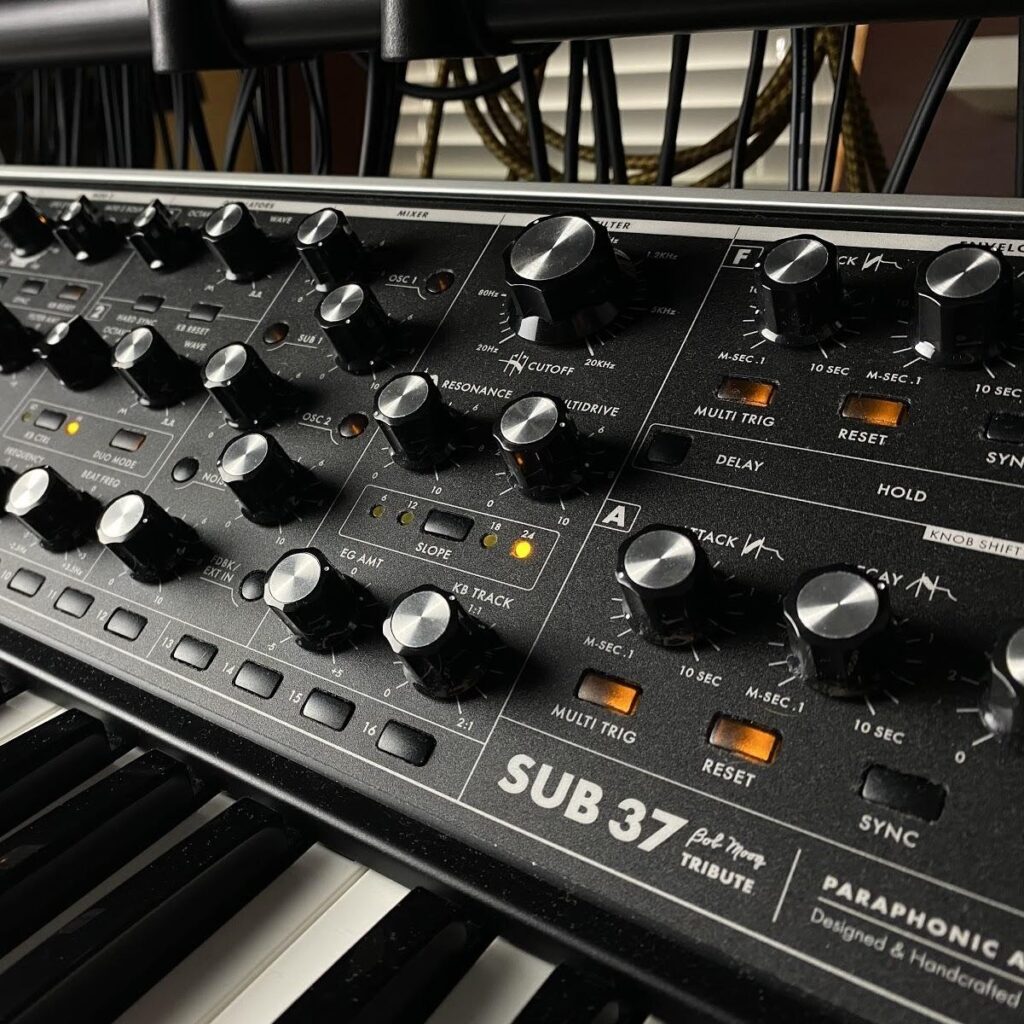
Moog Sub37

What immediately comes to mind is the cutoff knob on the Moog Sub 37. Not very original, but I love the responsiveness of it, I use the 37 on almost every recording, and I am always modulating it by hand while recording. It’s truly just a very satisfying turn and the warmth that comes from it gets me every time.

2. Do you have an ‘almost’ perfect bit of kit? What would you change?
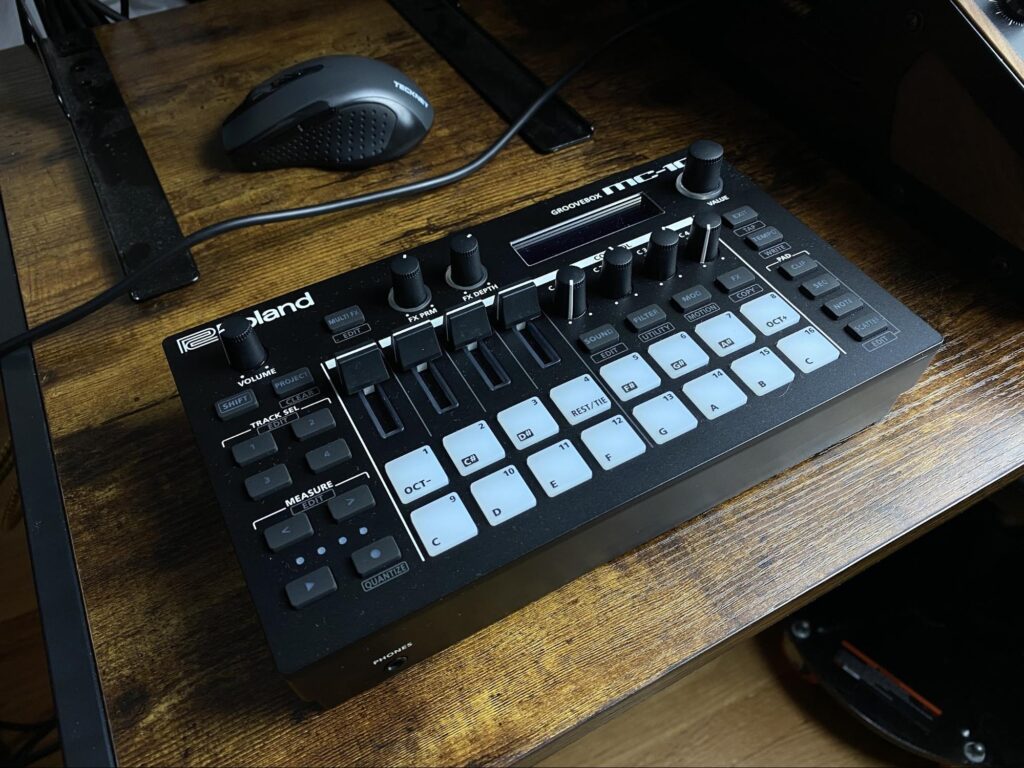
Roland MC101

The Roland MC-101 is a terribly fun device to work with. I have been only using that thing for the past month to produce Instagram videos while my home studio was in a transitional phase. I love how this device functions, the size and portability is great however, not being able to jump projects while performing is pretty disappointing. I’ve only played a handful of “shows” in my day, mostly when I was younger, but I solely performed on the Korg Electribe EMX-1. It was my first production station, so anything that comes close to EMX-1’s workflow is going to feel ‘almost perfect’. The MC-101 feels like a more updated, compact version of the EMX. Now that I am typing this out, I feel as though the EMX is the proper response to this question. Both have their quirks and work kind of similarly in my opinion. I do think it would be funny to play a show with only the MC-101 only on AA batteries and have the ability to switch projects seamlessly.

Korg Electribe EMX

3. What setup do you bring on holiday/tour/commute etc.?

My last large trip, I took the Digitone, Digitakt, and the Volca Drum. This was a pretty enjoyable setup however the sounds on the Volca are lacking a bit on the low end. Maybe the next trip that will be supplemented with the Roland TR-8S, which also isn’t my favorite device sound wise, but I do love the workflow of it. 

Digitakt and Digitone

4. What software do you wish was hardware and vice versa?

I wish there was a plugin version of my Korg KP3. I run my mixer’s master through the KP3 and usually process sounds individually on the fly when recording. Most of the time I use it for the glitchy stutters and reverbs just to add a little variation to recordings. Sometimes when I am mixing tracks away from the studio I do wish I could add a bit more. I realize there are other far superior processing VSTs that can handle this, but I prefer the crudeness of the KP3 and the touchpad surface is very entertaining. There’s no software that I would want to be hardware, because I don’t really use VSTs. Generally, I don’t like being in the DAW so there are no VSTs that could even capture my attention long enough to invest enough time in. 

Korg Kaoss Pad KP3+

5. Is there anything you regret selling… or regret buying?

The only thing I regret buying is the Arturia Rackbrute 6U. I wanted to get into modular gear so I purchased one and filled it with some gear until I could diversify it a bit more however, I had some power cycling issues with the Make Noise Morphagene. I was informed by the company and other people on Instagram that this is a common issue. I really wasn’t willing to constantly be flipping the power switch on and off simply to get one module to work. I also realized that I made more use out of the Moog DFAM and Mother32, so I decided to purchase the Subharmonicon and just replace the Rackbrute with the 3 tier Moog Semi-modular rack. 

Moog DFAM, Subharmonicon, Mother-32 and a sneaky Lyra-8

6. What gear has inspired you to produce the most music?

Percussion has always piqued my interest so I would have to say the Roland TR8-S has inspired me the most over the past year or so. There’s nothing super spectacular about it, it just has a really easy workflow and I love punching random rhythms into it, hitting play, and then constructing synth voices around that. That’s pretty much how most of the tracks are made. I did however recently acquire a DSI Tempest, so I am hoping to get more familiarized with that device and devote a bit more energy to that piece when mapping out songs. 

Roland TR8-S

7. If you had to start over, what would you get first?

I would immediately get a nice drum machine such as the Tempest along with a solid Moog as well. At the beginning I tried to supplement those higher fidelity options with cheaper pieces and ended up purchasing more as a result of that to find the sounds I was searching for. If possible, I believe the move is to save up for a few higher end pieces, instead of cheaper devices with weak builds and lacking synth engines. I also didn’t expect to get this into synthesizers though, so when I began making short videos on gear I was only looking for unrefined devices to just make quick songs on. But if one day I need to get rid of all of this, I would probably just keep the Tempest and the Matriarch… or something along those lines.

Dave Smith Tempest
Moog Matriarch

8. What’s the most annoying piece of gear you have, that you just can’t live without?

Everything that has annoyed me I have gotten rid of almost immediately, especially all of the devices I have received broken (which has been a lot). The setup needs to be easily accessible so that tracks can be created in a matter of minutes if necessary. The only somewhat ‘annoying’ thing is the sequencer on the Sub37. I really dislike that sequencer. Luckily, that was remedied when Novation sent me the Launchpad Pro to try out. If you have a Sub37, I highly recommend pairing it with the Launchpad Pro. 

Novation Launchpad Pro

9. Most surprising tip/trick/technique that you’ve discovered about a bit of kit?

The retrigger function on the Digitakt definitely changed the way I approach sampling a bit. Anything that randomizes patches or samples in an effortless manner will always catch my attention. The best part of electronic music is letting the machines take control of the song. 

Elektron Digitakt

EDIT (Hindsight): 

Upon looking back at these questions I have noticed that a lot of big pieces I wrote about have been replaced or are in the process of being replaced. These pieces include the MC101, Matriarch, Digitakt, Tempest, and the Launchpad. There’s a lot more that has been moved out of here, but those were unmentioned previously. 

A few things that have entered the studio that I have been enjoying as of late are the Tascam Model 24, Polyend Tracker, Polyend/Dreadbox Medusa, Roland MC 707, Novation Afx Station and Peak. I have been trying to size down quite a bit as a result of tentative future plans. The goal is to have a somewhat sizable and versatile studio that may load into a few separate road cases, if mapped out correctly. Another goal I have set for myself has been becoming more efficient in the producing and recording department hence the acquisition of the Model 24 and replacing the Tempest with an MC 707 and TR8S. Even though the Tempest is hard to part with, I noticed it immensely  slowing down my production speed, which I really can’t afford at the moment. The Tempest is such a powerful device, but it was consuming a lot of my studio time and limiting me from moving around the studio more than I would like. Generating tracks on a fairly quick basis is something that I really value. Maybe one day a Tempest or Rytm will cycle their way into the studio, but as for right now I need to focus on not becoming so attached to devices and the fluidity of a home studio. 


Artist or Band name?

Ikoseveta 

Genre?

Electronica

Selfie?

Ikoseveta

Where are you from?

Middle America

How did you get into music?

My family had encouraged me to take guitar lessons when I was 8 years old. I pursued that until my guitar teacher got arthritis when I was 16. At that point I decided to move on to electronic music by purchasing a Microkorg and the EMX-1 mainly because Rou from Enter Shikari had those. 

What still drives you to make music?

I’m not sure, I am just drawn to producing sound by any means. It’s not a conscious effort, I like picking things up and seeing what they can produce. It’s more fun with synthesizers and drum machines though, especially through monitors with a subwoofer. I don’t see myself as a musician or producer, I am more of a hobbyist. I am fortunate enough to have collected some nice gear and I see them more along the lines of having nice furniture. It is something to have in the room for you to enjoy on a daily basis. These devices just happen to produce noises that are very pleasing to me. 

How do you most often start a new track?

Any random sequence I pull up on a drum machine. 

How do you know when a track is finished?

I don’t know what constitutes as finished. I don’t put out much music anyways, most of it is either deleted or just stored in random external hard drives. If on the off chance I decide to put something out I try to finish it as soon as possible and deem it finished when I am tired of listening to it. 

Show us your current studio

Ikoseveta’s home studio

Best creative advice that you’ve ever heard?

I don’t think I have ever received creative advice because I have never really actively seeked it nor have I seriously pursued music. There is that cliche saying that you hear musicians reference in interviews about ‘doing it for yourself’ and whatnot. I think that is the right approach. Music does not have to be for monetary or social value. It can be practical like riding a bike or working out, something you do on a daily basis that you enjoy or something to keep your mind focused. I produce my favorite sounds around 3am when I am about to shut everything down after making 5-7 songs prior to that. So I guess not caring about what is produced or what happens to it and ‘doing it for yourself’ is the move for me. 

Promote your latest thing… Go ahead, throw us a link.

I have a pretty strict schedule of posting daily beatmaking/performance videos on Instagram and weekly videos on YouTube (different content from Instagram). All of my releases are also on all streaming platforms. I will provide all links below.

Instagram: https://www.instagram.com/ikoseveta/

YouTube: https://www.youtube.com/channel/UCit-UuOFYPtdx44cjIaPTUg 

Apple Music: https://music.apple.com/us/artist/ikoseveta/1455868222 

Spotify: https://open.spotify.com/artist/0EAqN6YKRxw7Hfu0UkTAAC?si=kWR9aO7ITBu3evjm0208jg 


[Editor: Do you have a favorite tip, trick or way of working with any of the gear from this interview?
Then throw a comment below…
]


Scott Brackett – Digital Retroist

1. Favourite knob/fader/switch on a piece of gear and why?

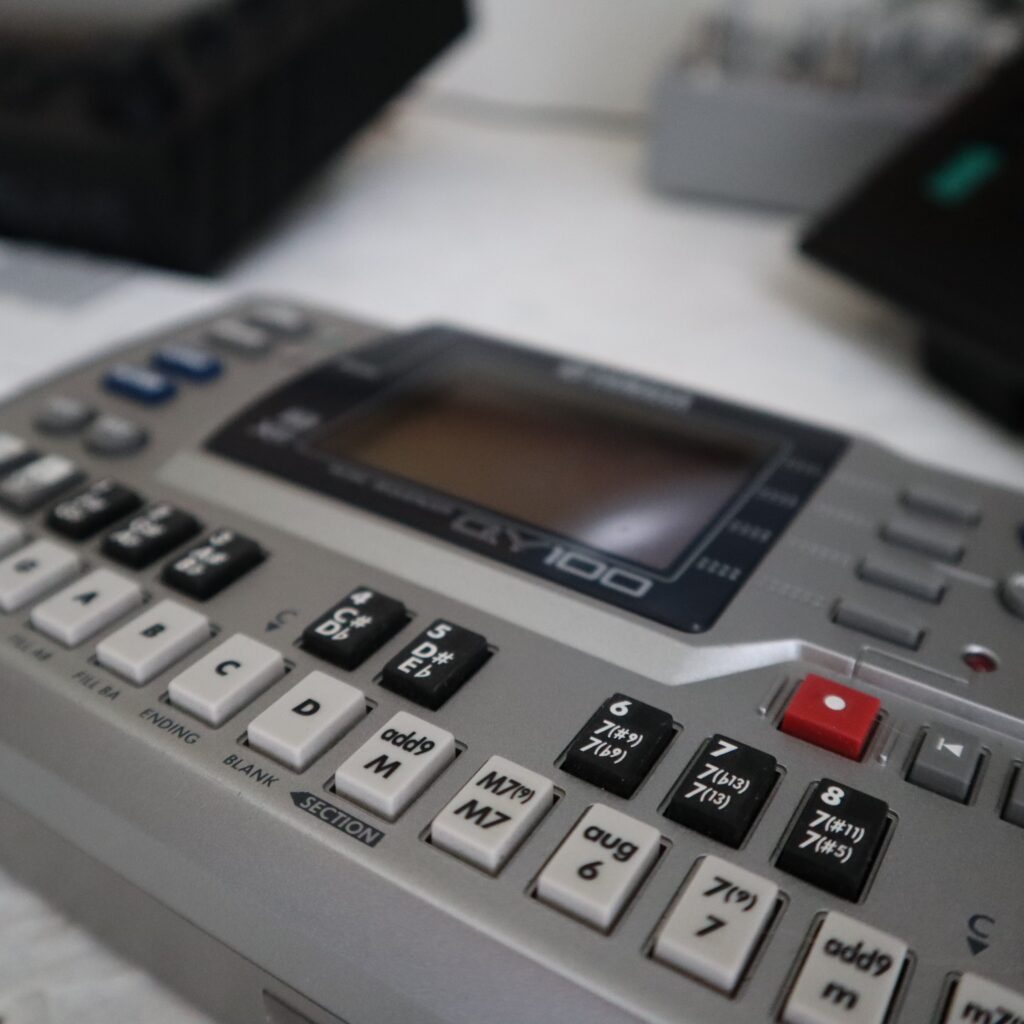
Yamaha QY100

I actually really love the keys for the QY-100/QY-70. They are cute little rubber calculator buttons that work keyboard keys and data entry. They’re not velocity sensitive, they’re probably too bouncy for most, but for me there’s something very pleasant about both their form factor, and the sensation of playing on them. I think the LCD reminds me of old “Tiger” hand held games, and the buttons remind me of old casio calculators, and the QY itself kind of reminds me of a gameboy, so the whole package together really helps me get in touch with a playful, less serious side of my musical self. Also, I have pretty small hands, so the size of the keys allows me to play parts that I would never attempt on a full size keyboard which can lead to some really interesting voicings.

2. Do you have an ‘almost’ perfect bit of kit? What would you change?

All of it! Every instrument is “almost” perfect. Part of the fun of making art through technology is the game of asking “what would make this even better?” Of course, at some point you have to sit down and make something, so it’s usually wise to wipe that question from one’s mind and treat any limitations as a creative challenge.

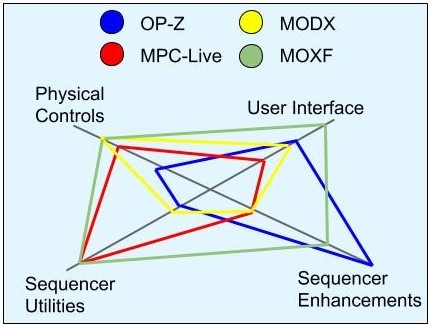
Diagram of synth characteristic stats

Sometimes I draw a diagram to help me figure out how I feel, here’s one that’s kind of like a character creation stats screen from a video game:

OP-Z has really cool sequencer effects, but is very light on editing utilities and the actual buttons to trigger notes are not super pleasant to use. MODX is very pleasant to play physically/tactilely, but the midi sequencer is more of a midi recorder with very light quantization and velocity editing, plus some minor non-destructive variation via the “play FX.” The MPC Live of course is amazing as a MIDI writing tool and has tons of editing capabilities, but the UI takes me some time to get my head around, and the sequencer randomizations are destructive edits so any given randomized pattern still sounds exactly the same, which is not the way that I prefer to use probability in my music.

My favorite sequencer is probably still the one on the Yamaha MOXF (a.k.a. the baby Motif that came out before the MODX), but the one thing I wish they had kept from the QY100 user interface was the “undo” shortcut. On the QY-100 (and QY-70, I think) you can hold “shift” and press the “job” button and it will undo whatever you just did, which is really nice. However, on the MOXF you have to actually go into the “job” menu and click at least one more button to undo the last action (two more button presses if the “undo” menu isn’t already showing!).

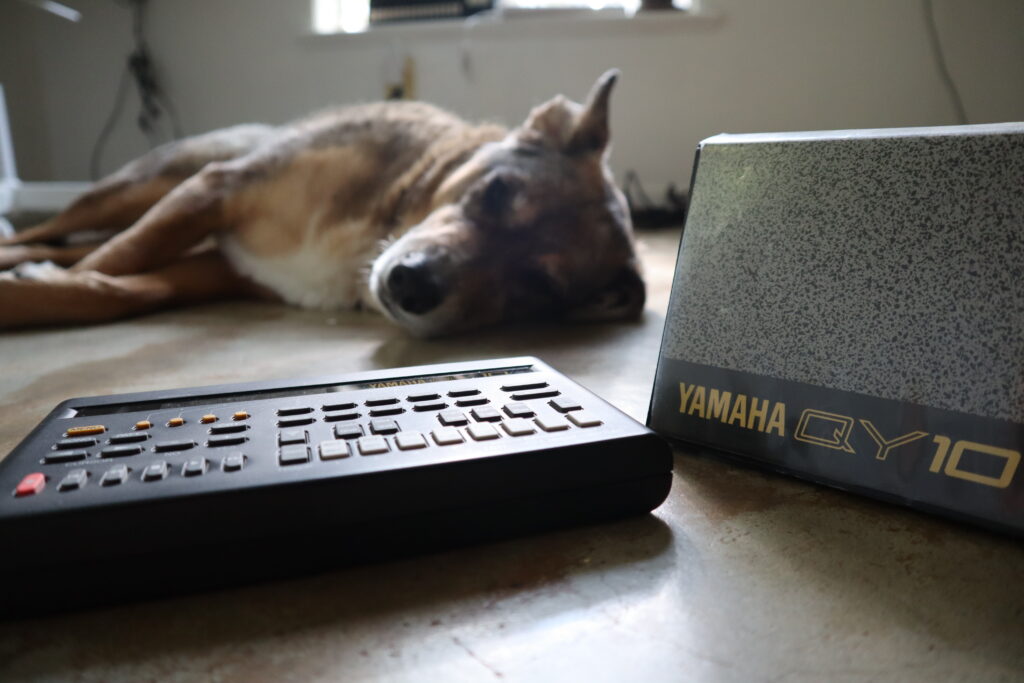
Synths and doggie

3. What setup do you bring on holiday/tour/commute etc.?

Usually op-1, Nintendo Switch or my 2DS. I love the op-z but sometimes it’s buttons are a little frustrating when I don’t have the device on a table top and I have yet to gel with the hand-held thumb-pressing grip I’ve seen some people use. The op-1 is usually what I’ll pick for a flight, since it’s a delight to play and the battery life is good enough to handle even the weirdest of connecting flight tom-foolery. The 4 track tape workflow of the op-1 is great for off-the-cuff creation which helps me stay in tune with my surroundings so I can draw on my environment for inspiration. With the nintendo switch I can use it to play games, or I can compose using Korg Gadget (an incredibly capable mini-studio), but the hand-held nature of the device means it’s a little more friendly to situations where I may not have a lap, or I’ll be getting up and down a lot. If I really need to go small I bring the Nintendo 2DS which has decent battery life, is super small, and I can run the Korg DSN-10, DSN-12 or MD-01 software.

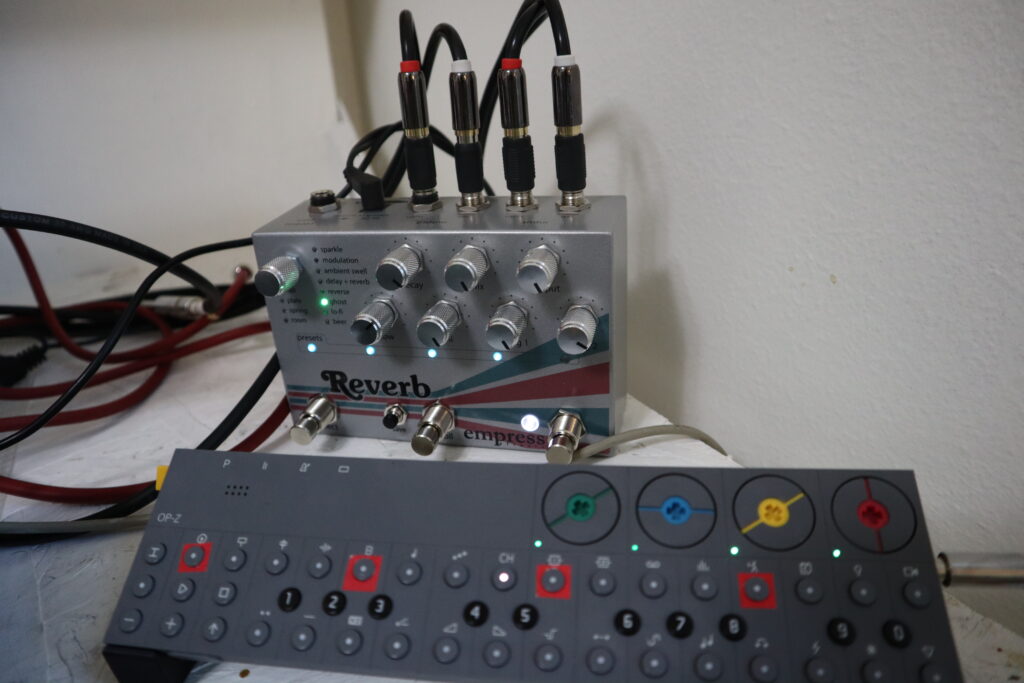
Teenage Engineering OPZ and Empress Effects Reverb

4. What software do you wish was hardware and vice versa?

I wish the original Native Instruments Massive plugin was a stand-alone piece of hardware. I LOVE it’s sounds and incredible routing flexibility, but don’t love having to run a standard operating system, sound card, video card, etc. just to get to it.

5. Is there anything you regret selling… or regret buying?

I did regret selling my Volca Keys, but I have since re-bought it already 🙂

I am generally not too precious about holding onto my gear, I sort of treat the second-hand market like a synth library. With each synth I buy and eventually resell sometimes I make money, but more usually I lose about 10-15% of what I paid for it. I consider that loss essentially my membership fee for being a synthesizerist.

6. What gear has inspired you to produce the most music?

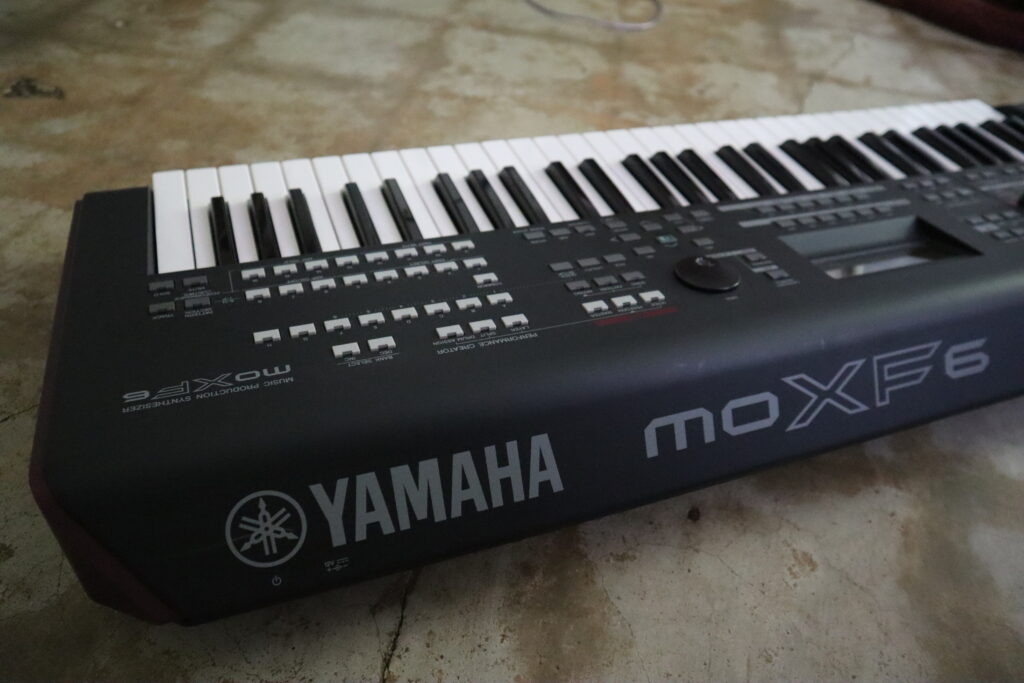
Old-school “Yamaha-style” sequencers. My first and greatest love in this regard was and still is the MOXF. The MOXF itself is like a budget version of the Motif, but the variations of that core sequencer engine are also present in the QY series and a few other preceding machines.

Yamaha moXF6

The midi sequencer has 3 modes: 1 for live-tracking midi record-style, a second a step-edit mode that uses staff lines and music notation, and an event list editor that just has a textual list of every midi event in chronological order. I’ve never been great at reading music, but I don’t find the typical midi piano roll particularly exciting for some reason. So these alternate visualizations are really nice to me.

The 16 track version of this sequencer that is in the MOXF lets you do stuff like put a 3 measure long loop next to a 17 measure loop in the same pattern (up to 256 measures!). You can also record parameter changes and whatnot for some really fun experimentation that I’ve only ever been able to duplicate with Ableton.

These sequencers do a crazy blending of pattern based groove box type functionality with a sort of classical/pop vernacular. It ends up creating a tool that is highly effective if you put in the time to learn all it’s features, but ultimately very stylistically unopinionated.

The MOXF boots up in 7 seconds, and then I’m writing songs and depending on whether I feel like tracking into a recorder, or programming in some stuff on the step editor it’s all ready to go in a stable and dependable package.

7. If you had to start over, what would you get first?

Honestly, I wouldn’t change a thing!

I am very much informed by exploration of whatever raw material is in front of me, but when I first got interested in bedroom recording, I started with crummy consumer arranger keyboards, a 4-track tape machine, and fruity loops. I think the challenge of trying to make music I liked with those raw pieces helped develop a mindset that there is a corner of every piece of equipment that will be the exact right thing for some song. It’s more important to use whatever you have and put in time with it, ultimately and I think my path led me to that conclusion pretty early on. It is always worthwhile to focus on your own technique in order to shore up what your instrument can’t do for you. Electronic music is definitely a conversation with manufacturers, a collaboration with their design team… but it’s important to remember that you are ultimately responsible for making good music.

When I was learning the trumpet as a young goober, I didn’t ever stop and think “This thing should have a fourth valve, then I’d really be killing this cover of the jurassic park theme song.” I just thought: “Man, I need to practice and get better at this instrument.” Then I’d go play megaman X instead. But the point is, I didn’t blame the company that made the trumpet for it.

That’s not to say that manufacturers shouldn’t be held responsible for ripping people off, or phoning in their designs, but I think as creators we have to take responsibility for our part too.

8. What’s the most annoying piece of gear you have, that you just can’t live without?

By far it is the personal computer. I get so frustrated wrestling with sound drivers and forced OS updates, but it is impossible to publish material in the digital age without some form of computer (or mobile/tablet device).

I tend to work best if I’m composing a little at a time, maybe 20-30 minutes a day with a longer session once or twice a week. So in order to avoid wasting a lot of time waiting for a computer to boot up and disconnecting/reconnecting USB devices, I typically choose a single device that boots up quickly. Working with dedicated devices like the MPC Live, or keyboard workstations like the MOXF/MODX are my happy place.

But at some point, I have to figure out how to get that material into a publishable format. Sometimes, like with the MPC Live, I’ll export the tracks as stems to mix on my computer. Or if I did some writing on the MODX, I’ll stream all the separate tracks into Ableton to mix and master. Other times I’ll do the arranging and mixing on the device like with the OP-Z or the MOXF and then just record a stereo mix onto my computer for mastering, naming and uploading the files to bandcamp or DistroKid.

The point is that at some juncture, my material has to cross through that membrane, and I find the more work I do on the pre-computer side of that divide, the more I enjoy myself. That said, I often prefer the end result of the projects that are closer to 50/50. Maybe it’s a bit more tedious in the later stages, but if I do my mixing in the computer it often sounds better, and I can do it faster. At least at my current skill level with dedicated hardware.

Something I’ve been working on lately to combat this aversion to the personal computer as an art tool is to really invest a ton of time into a piece of software that excites me: Sunvox. It’s a tracker/modular synth that’s free and open-source for PC/Mac/Linux. TBD on if that helps me make good art, but I am enjoying working with the computer more!

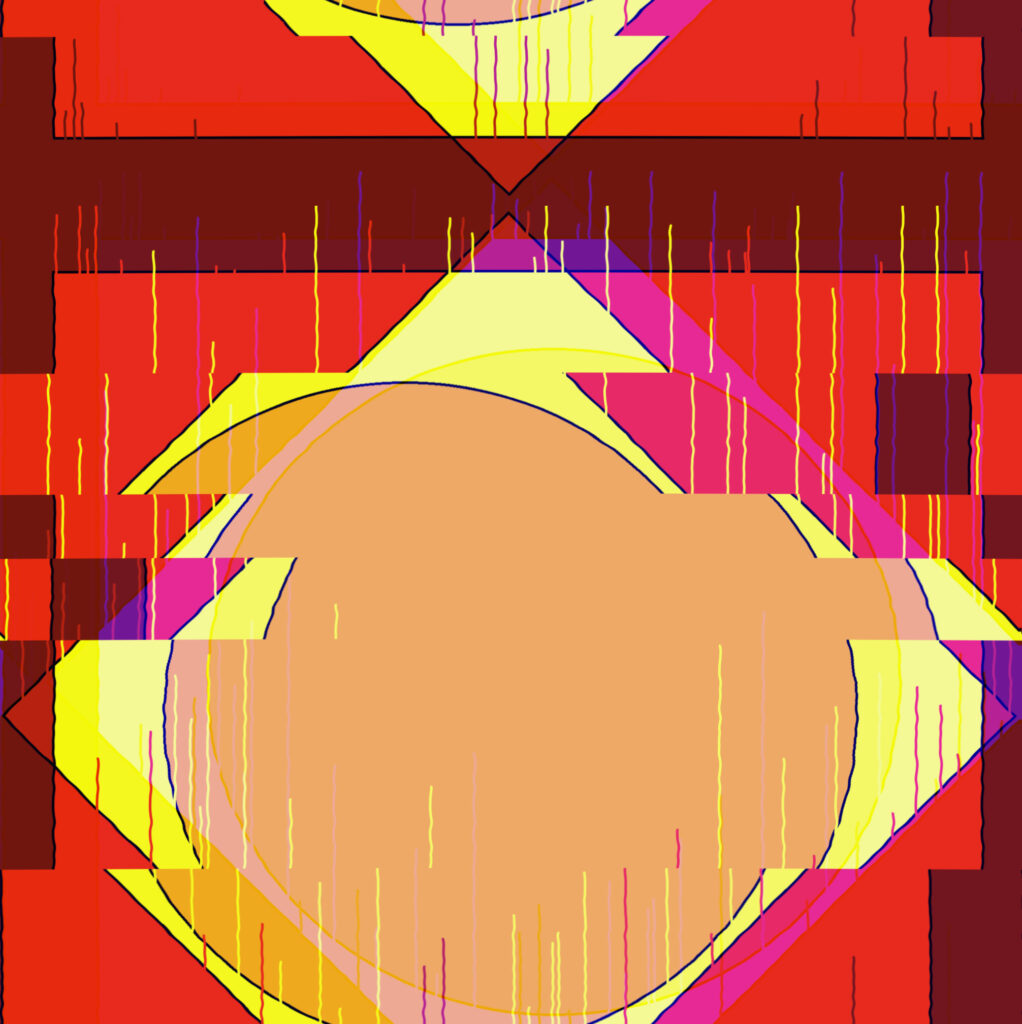
Computer generated glitch art in place of photo of a computer

9. Most surprising tip/trick/technique that you’ve discovered about a bit of kit?

Actually, it’s one of yours Martin. I saw a video on Youtube that you posted about how to use blank samples and assign them to layers that can be randomly triggered for an MPC Live keyboard program and it blew my mind. The end result was that you added a note trigger probability to an instrument that didn’t have that functionality. You found a way to work with what was already there and get the functionality you needed and I thought it was brilliant. I actually prefer the end result of that more than the randomness that they eventually added in a firmware update!

[Editor: I’m glad you found my youtube useful. I gotta admit though, that I believe that I got that trick from either MPCHead or TubeDigga’s channels… and embarrassingly I forgot which one]


Artist/Band name:

Scott Brackett/thebrackett

Genre

Ambient-ish, pop synthy, lo-fi hip-hop …wave?

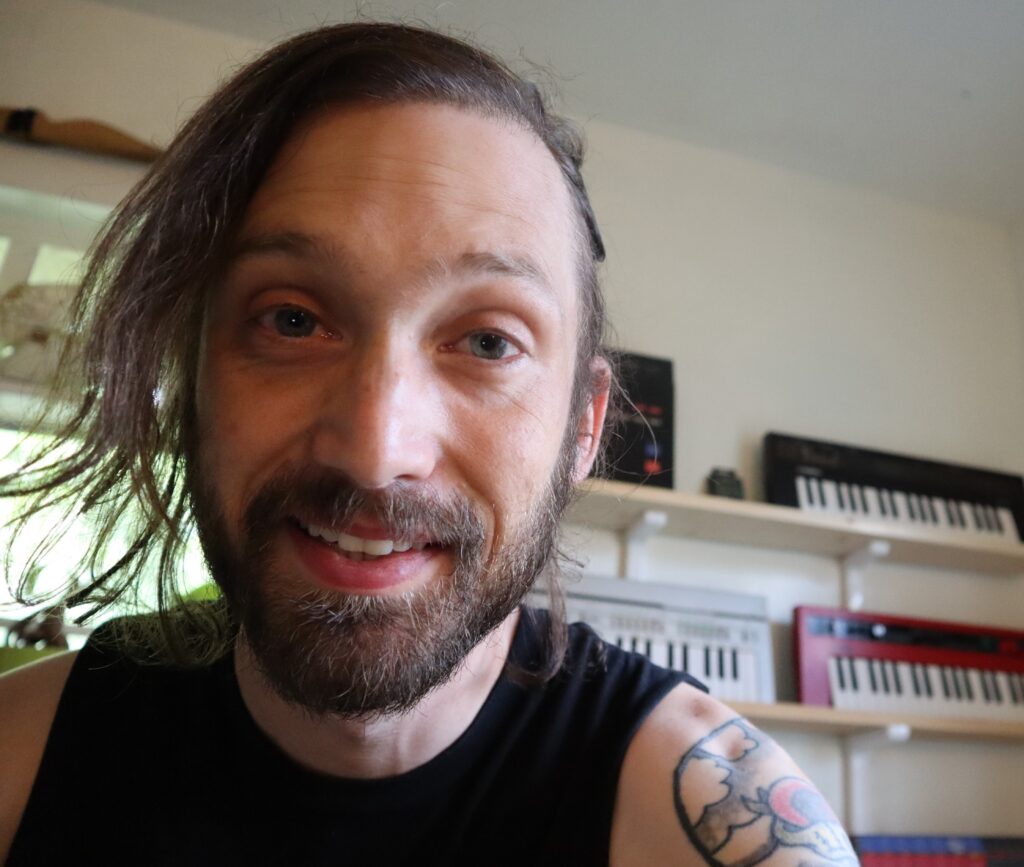
Selfie

Scott Brackett

Where are you from

Northern California originally, but have been in Austin Texas for about 15 years.

How did you get into music?

When I was in maybe 4th grade I joined the brass band at my public school. I originally wanted to play saxophone because of Lisa Simpson, but I panicked when they asked me and I picked trumpet, so that’s what I ended up with. I pretty quickly started trying to pickout 16-bit JRPG soundtracks by ear which led me to also playing keyboard and piano. I still played horns but also got into guitar and drums in my teen years. Eventually I settled into the “utility player” role because I could kind of pick up whatever and at least hold down a simple part, but my staples were usually cornet/trumpet, hand percussion and keyboards.

What drives you to make music still?

Playing music helps me to be with loved ones who are no longer here, dream up worlds that I’ve never been to, and connect with the kindest part of the universe I’ve ever met, in a way that I cannot find anywhere else.

I’ve got kind of a long story to explain what I mean:

My decision to stick with trumpet as a lad allowed me to take advantage of the great horn boom of the early aughts. Seems like you couldn’t swing a singer-songwriter without hitting an essential trumpet line for a folk-rock song, at that time. That serendipitous backdrop and my pleasant demeanor landed me in a touring band called “Okkervil River” in 2005. Their horn player dropped out a few weeks before a tour opening up for a band called “The Decemberists” and so I dropped out of college to go see if I could hack it playing in a “real” band.

I toured hard in several bands for the next 8 years and got to learn from some amazing musicians along the way. One of them, Travis Nelsen (who passed away a few weeks ago) taught me a lot about rhythm, stage presence and remembering to have fun with music.

Trav would do this thing where he would throw a stick way up in the air and then instead of catching it, he would pull another one out of his pocket right before coming back in on a nice sludgy ringo-style tom fill. Just when you thought: “there’s no way he’s going to catch it,” he would pull out the other stick and come back into the song with a smile on his face.

Travis was also notorious for his hard-hitting style. Some of his magic was not to do with how hard he hit the drums, but with how he played with timing. When he wanted a fill to really stand out, or a snare to really land hard, he’d let it drag a little bit later than you’d think would be musical, but that would mean the other instruments were already decaying on that beat, and so there would be this little space for the drum part to just come out pop you right in the face.

Off stage there wasn’t a tour where he didn’t look around at some point and make sure we all acknowledged how lucky we were to be playing music every night. On stage he would always go out of his way to try and get me to smile at some point in the show.

That’s a long way to answer your question, but the point is this:

My musical habits are little fractal grains of my personal experiences, seeded by the influences of the wonderful people that I have known and loved in my life. During creative acts, you get to spend time with all the moments that led up to that point.

Yes, I love to share my music and I hope other people like the end product, but making it and/or performing it allows me to access something that I simply can’t get from any other activity.

Best creative advice you’ve ever heard?

In the studio:
Limitations are key to creativity. If you are stuck or feel uninspired, remove some options.

On the stage:
Be yourself. I know it seems trite. But hear me out… if you struggle on stage, that struggle will resonate with certain folks. If you are effortless on stage, that will also resonate with certain folks. Just spend time being the most “you” that you can be.

Show us your current studio

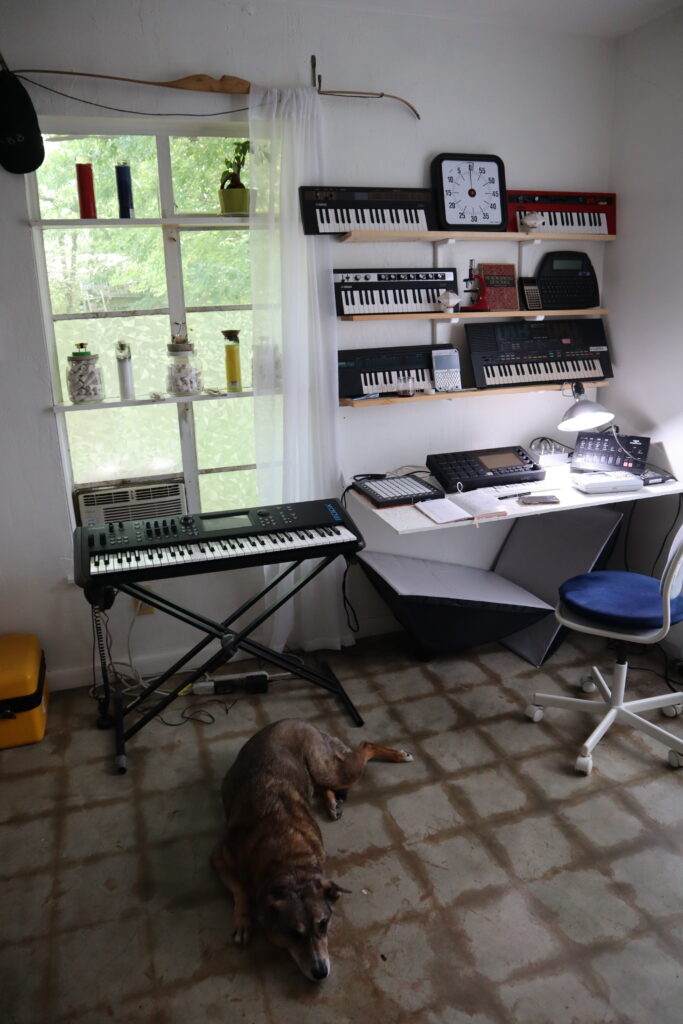
Scott Brackett Studio and Doggie

Promote your latest thing… Go on throw us a linnk

Here are the last two EP’s I did.

An Ambient album made using a multi-tracked Microbrute as the only sound source:

https://distrokid.com/hyperfollow/scottbrackett/popsicle

Here are the last two EP’s I did:
An Ambient album made using a multi-tracked Microbrute as the only sound source:
https://distrokid.com/hyperfollow/scottbrackett/popsicle

An ambient album using a multi-tracked Korg Volca Key as the only sound source:
https://distrokid.com/hyperfollow/scottbrackett/newtonian

Here’s my last full-length album
A lo-fi groovy synthwav-ey full-length. I used the OP-Z for all but a few overdubs:
https://distrokid.com/hyperfollow/scottbrackett/pocket-dimension

Also, check out my Youtube channel if you want…
https://www.youtube.com/thebrackett

[Editor: Do you have any of the gear in this article? Then why not share a tip or trick? Leave a comment below]


Selsey – Dreamy Synthy Pop

1. Favourite knob/fader/switch on a piece of gear and why?

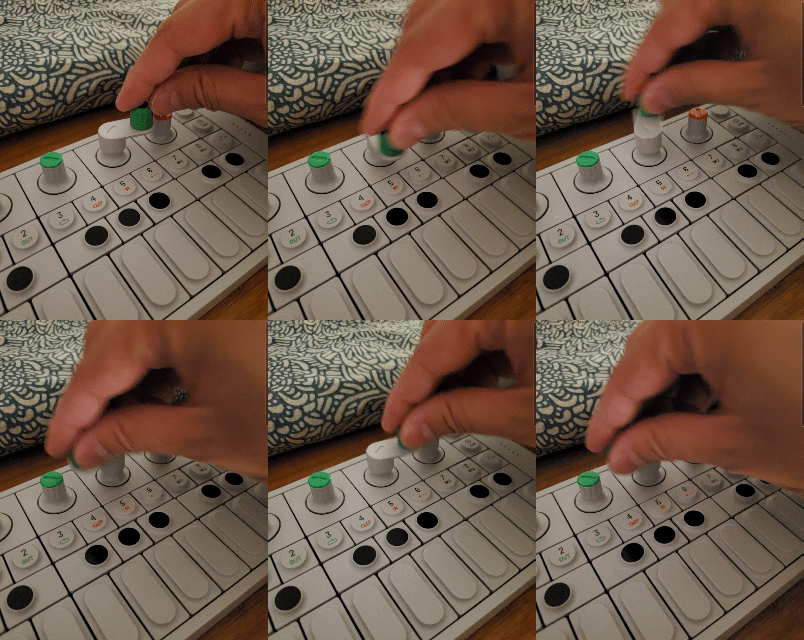
The OP-1 crank. It’s just so loveable!

Cranking the OP-1

2. Do you have an ‘almost’ perfect bit of kit? What would you change?

For me, it’s the OP-1. It’s a minimalist’s dream because it can do everything – drums, melody, bass, all the layers – in such an intuitive way. I’d make it fully MIDI compatible so I could integrate it into my Ableton workflow somehow; I’d make the keys touch sensitive; I’d give it 2.5 octaves instead of 1.5; and I’d give it a sustain pedal. Dream machine.

3. What setup do you bring on holiday/tour/commute etc.?

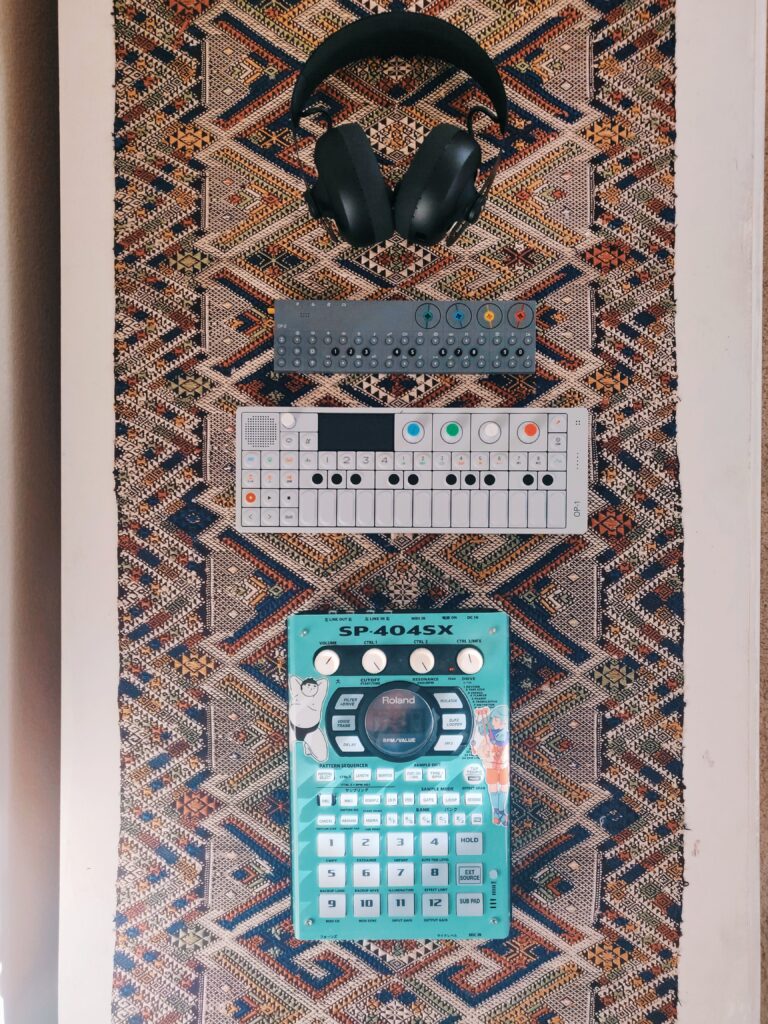
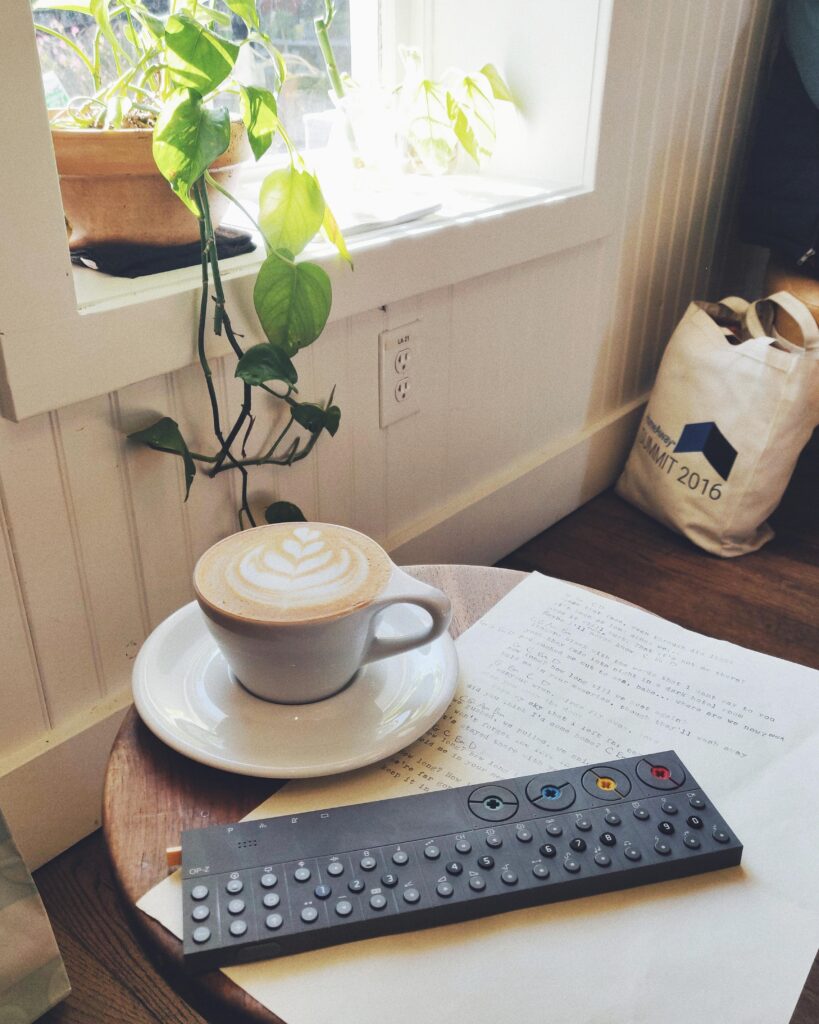
On a trip, I try to keep it light:

  • Nuraphones
  • OP-Z
  • OP-1
  • SP-404 (sometimes / for longer trips)
Travel music kit

To play a show, it’s more complicated! I add to that:

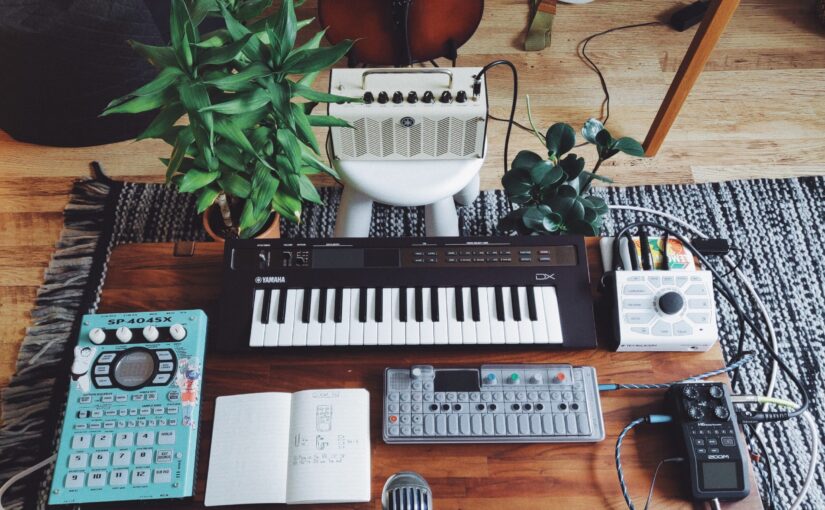
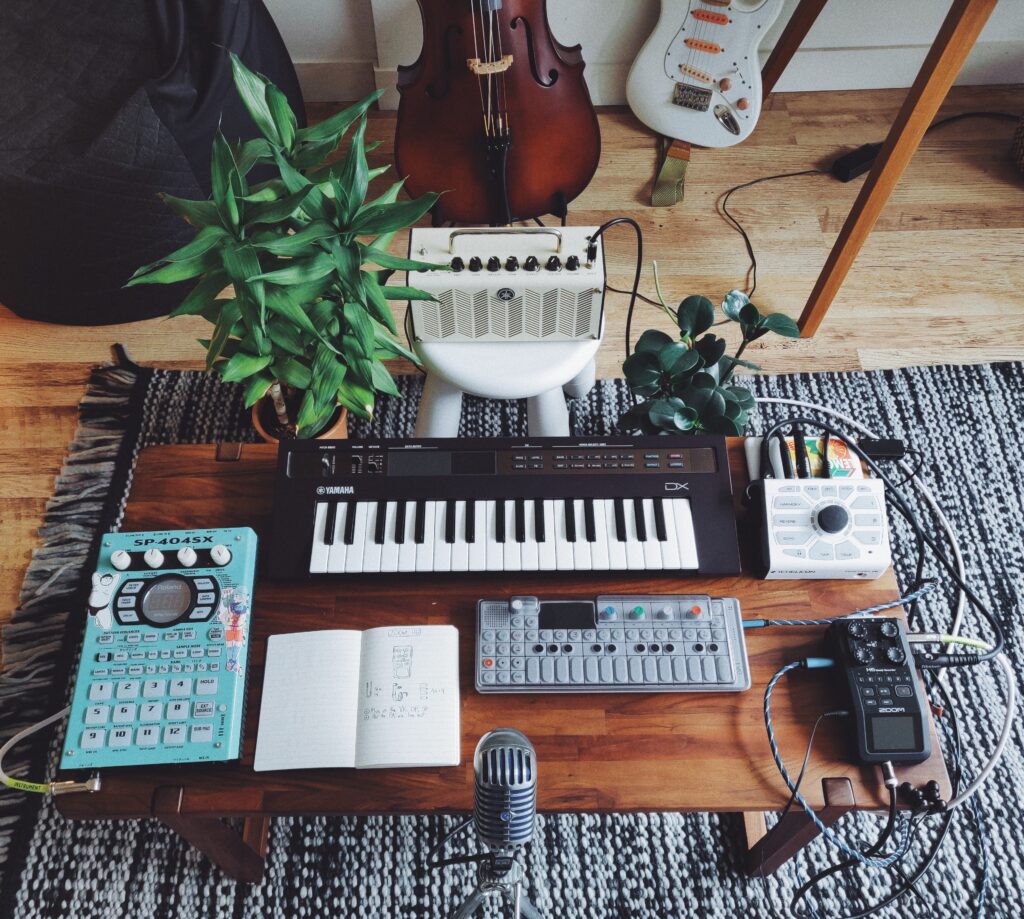
  • Yamaha Reface DX
  • TC- Helicon Perform VK
  • Shure Super 55
  • Zoom H6 as a mixer
Live music setup

I don’t have a commute, but if I did, I’d consider just bringing my OP-Z.

Teenage Engineering OPZ

4. What software do you wish was hardware and vice versa?

Arpeggios are my favorite musical tool. I really wish you could get the superfine arpeggio controls you have in Ableton on a hardware synth. And as a non-drummer, I would love to find a software drum loop maker as intuitive to me as the OP-1’s finger mode.

5. Is there anything you regret selling… or regret buying?

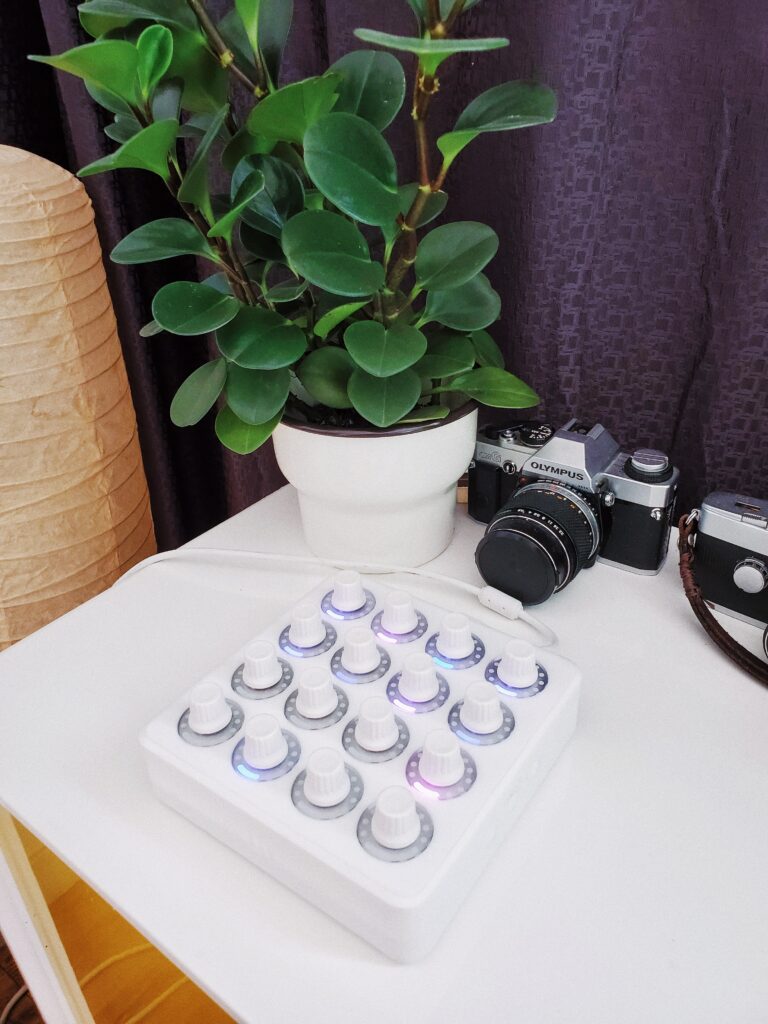
I bought the Midi Fighter Twister in the hopes of using it to make layered live loops with my iPad the way @KelbyKryshak does, which is totally awesome🤘. I soon realized that I don’t like using apps in my workflow – I think it somehow takes me out of the moment. I’m hanging onto it because I haven’t ruled out making a custom setup for it in Ableton, but that might prove to be more of a challenge than I’m willing to take on. Also, I have the Push 2, so I’m not yet sure what function or value the twister would add to that setup.

Midi Fighter Twister and Olympus camera

I’m kind of an aspiring minimalist, so it’s very possible that at some point soon I’ll say goodbye to it.

6. What gear has inspired you to produce the most music?

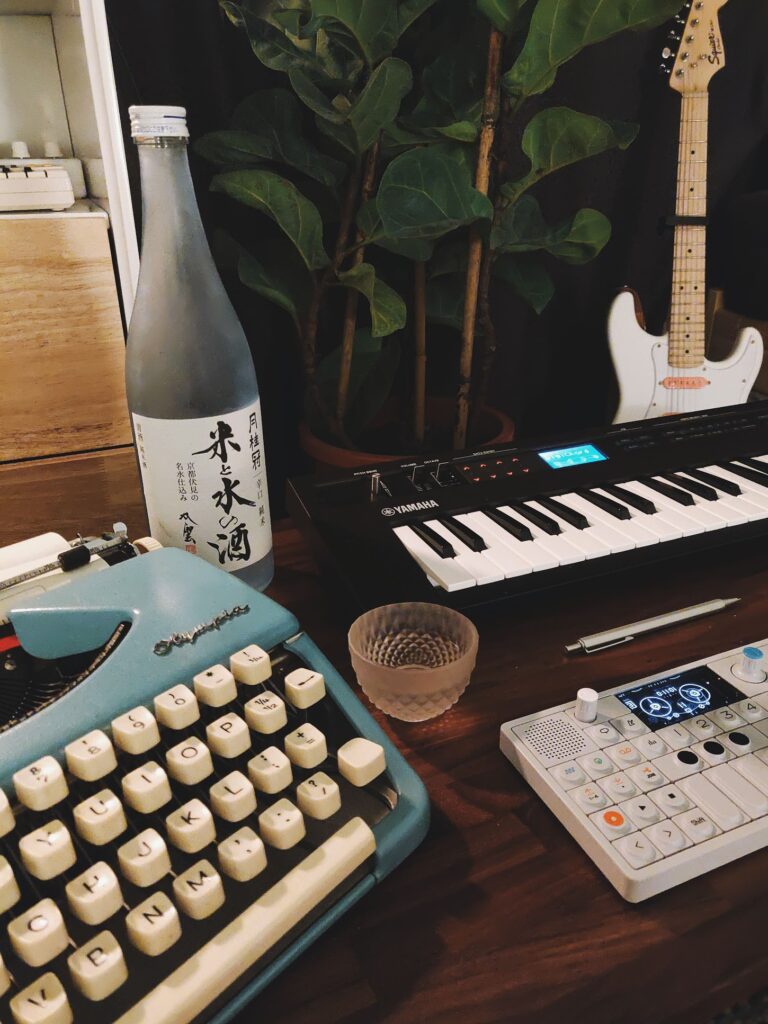
The obvious answer is my OP-1 – it gave me an explosion of creativity around learning basic music production techniques with drums and basslines and everything. However! My Reface DX has been my constant companion and workhorse in songwriting. First of all, it’s a joy to play.  The touch sensitive keys feel great, with smooth action. And as I am working through the hardest parts of identifying and defining melodies and chord progressions,  it is the perfect companion for me because its keyboard is small and manageable, while being big enough to play bass notes and chords at once. And the voices are so evocative and inspiring.

Selsey’s songwriting setup: Reface DX, OP-1, typewriter, and sake

7. If you had to start over, what would you get first?

It’s between the OP-1 and the Reface DX. The OP-1 for its all-in-oneness, and the DX for its beautiful sounds, relative portability, and space-pianoness.

8. What’s the most annoying piece of gear you have, that you just can’t live without?

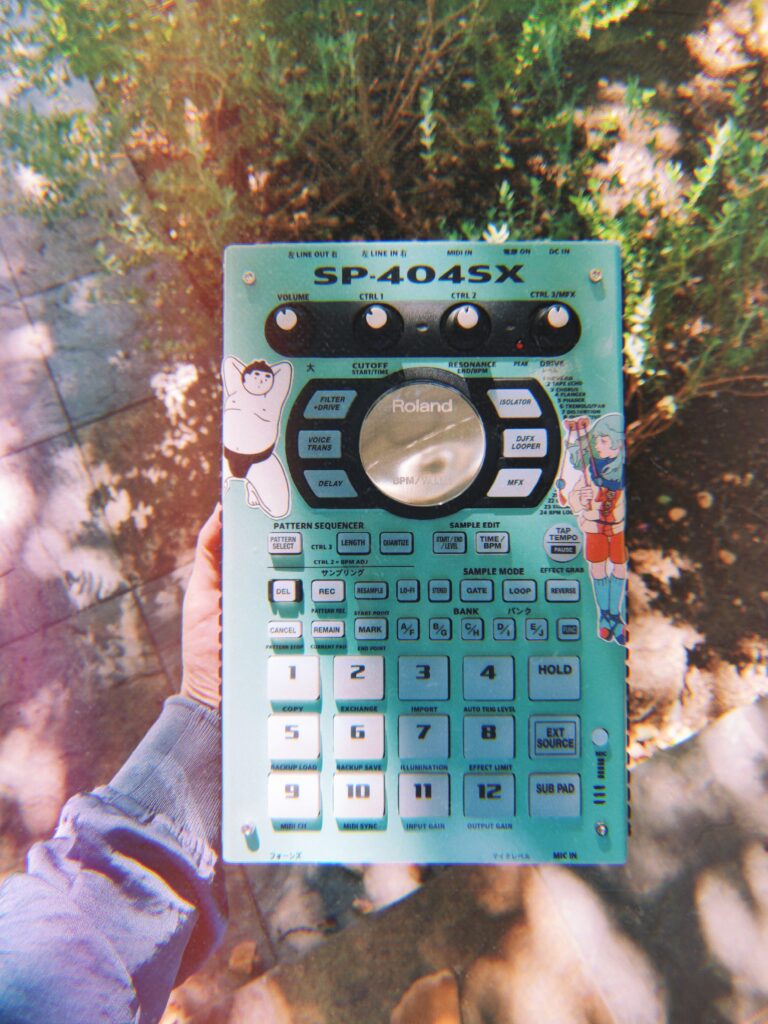
My SP-404. The sticky buttons kill me (the phat pads I want are on backorder!), and sampling loops into it is such a pain. I love it to death, but at some point I wouldn’t rule out upgrading to a more robust modern sampler like the Octatrack.

Rolabnd SP404SX

9. Most surprising tip/trick/technique that you’ve discovered about a bit of kit?

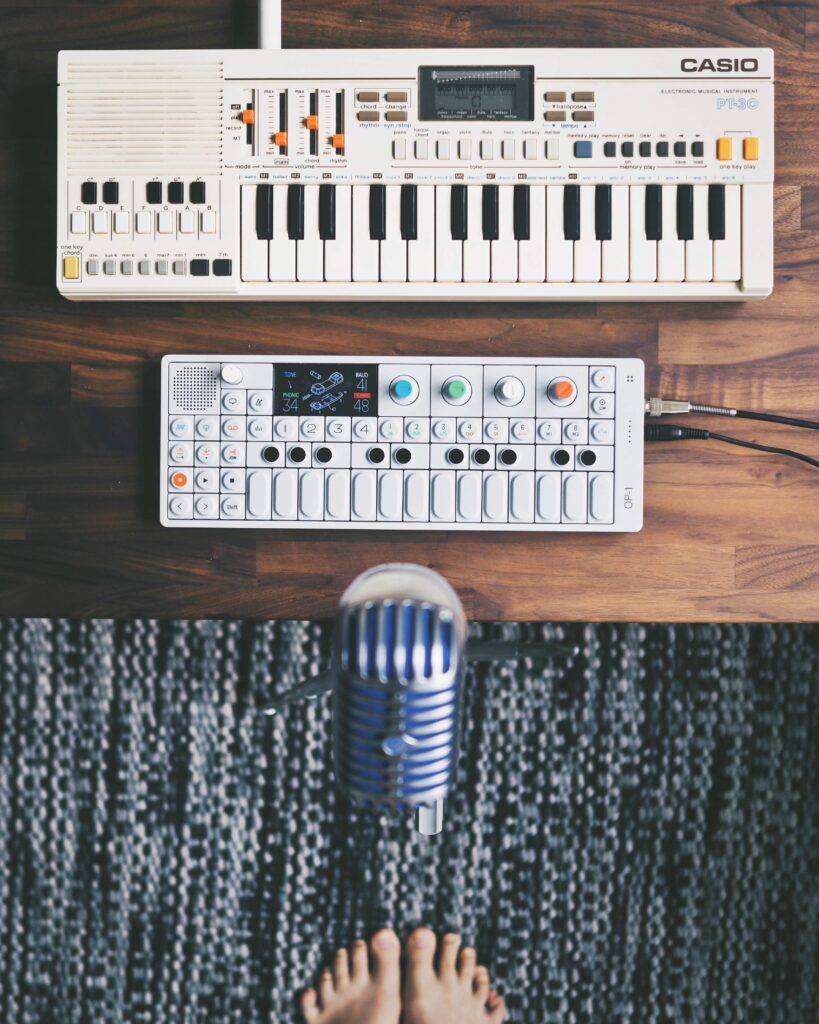
The sequencer on the Casio-PT 30 is amazing. You can program it with a melody, and then push one of two “One Key Play” buttons to activate the notes one by one. So when you play it, it’s like you’re playing a solo, but it’s almost impossible to fuck up. You can see me do this in my cover of White Winter Hymnal by Fleet Foxes, around the 1 minute mark: https://www.instagram.com/tv/Bs3KEAyH3k8/. I wish so hard that the OP-1 could do this.

Casio-PT 30 and OP-1

Artist or Band name?

Selsey

Genre?

Bedroom Synthpop

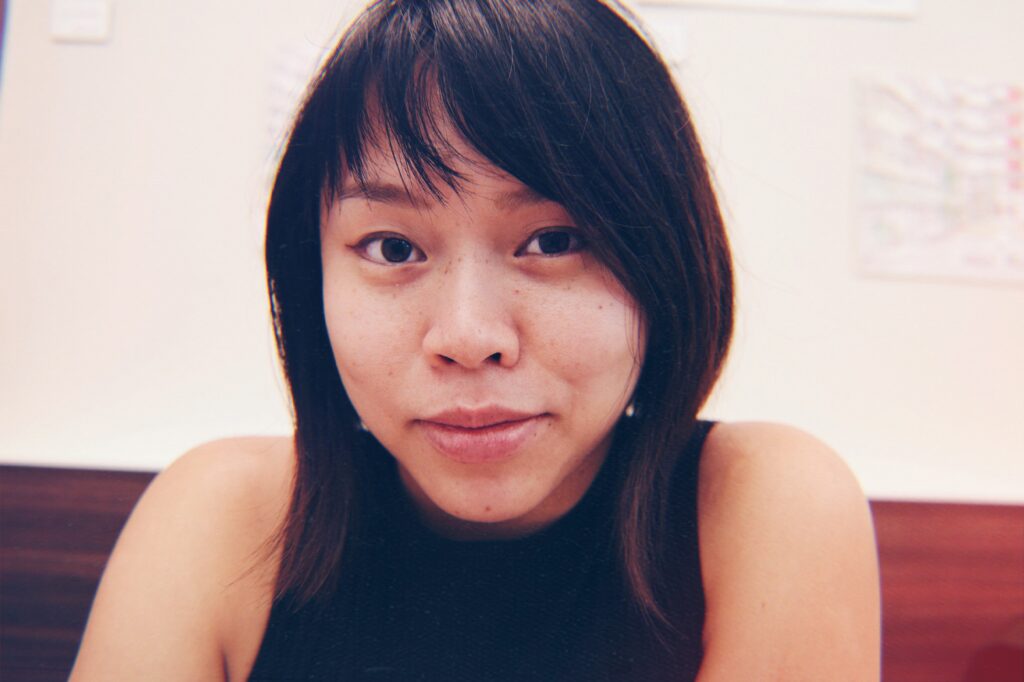
Selfie?

Selsey herself

Where are you from?

Northern California, but I currently live in Hong Kong.

How did you get into music?

Folk singer songwriters in high school got me inspired to pick up a guitar – Iron and Wine, Feist, Regina Spektor, Bright Eyes, Ray Lamontagne, that type of artist. I also learned classical and a bit of jazz piano in high school. Recently, I got really into making dawless synthpop after falling in love with the OP-1 at the MoMA Design Store in New York. I started making videos for Instagram and, well, here I am!

What drives you to make music?

  1. I relish the challenge of learning songwriting and producing music. Sometimes it’s torture but the payoff is addictive.
  2. The community on Instagram has been really warm and kind. People have created a place you really like to hang around.
  3. I just love singing and making music, so I can’t help but want to do it.

How do you most often start a new track?

I am only now learning how to use Ableton (my first DAW), so I’ll talk about my songwriting process instead. I sit down with my Reface DX, my typewriter or a notebook, and my phone to record snippets. I play chords randomly and vocalize until I hear something I like. Record it. Wash, rinse, repeat. Along the way, I try to get a sense of which snippets are more verselike or more chorus-like. Eventually I will have enough snippets to form a song. Then, I write the words, which is the hardest part.

[Editor: Yeah, lyrics are alwyas a huge pain]

How do you know when a track is finished?

When the words don’t make me cringe too hard; when every section feels like it’s part of the whole; and when the transitions between parts are not too awkward.

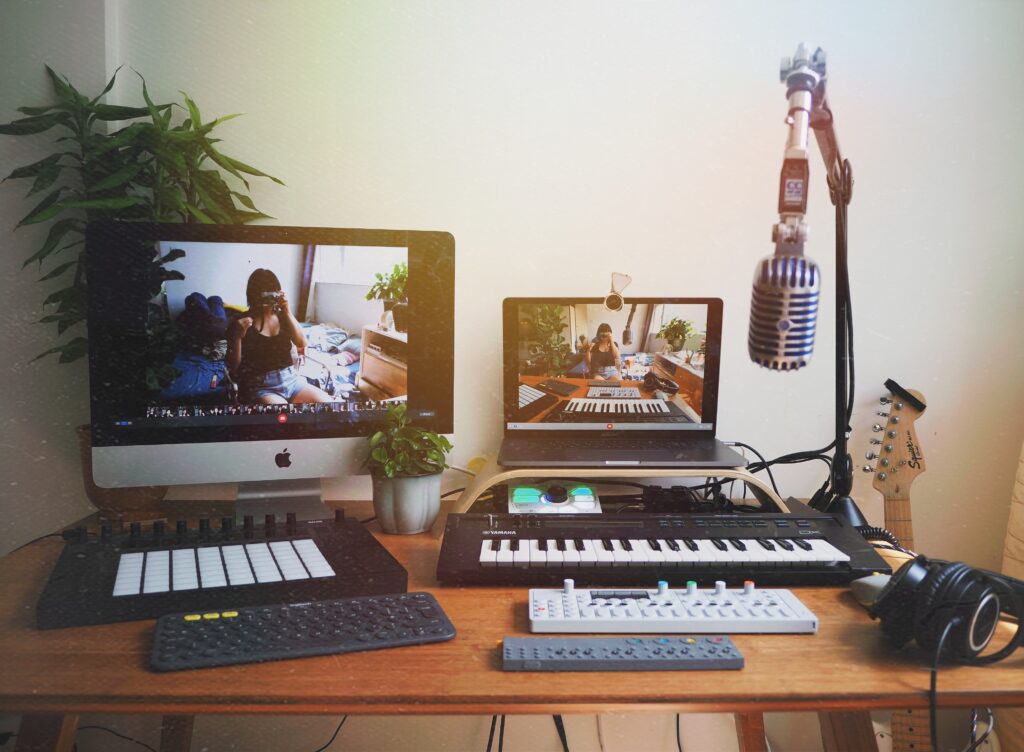
Show us your current studio

Selsey Studio

Best creative advice that you’ve ever heard?

You’ll suck at first. Keep going.

Promote your latest thing… Go ahead, throw us a link.

I have a few things in the works. But for now, head to my Instagram to see some of the stuff I’ve done!

https://www.instagram.com/selsey._/


[Editor: Do you have a favorite tip, trick or way of working with any of the gear from this interview?
Then throw a comment below…
]