1. Favourite knob or fader or switch on a piece of gear and why?
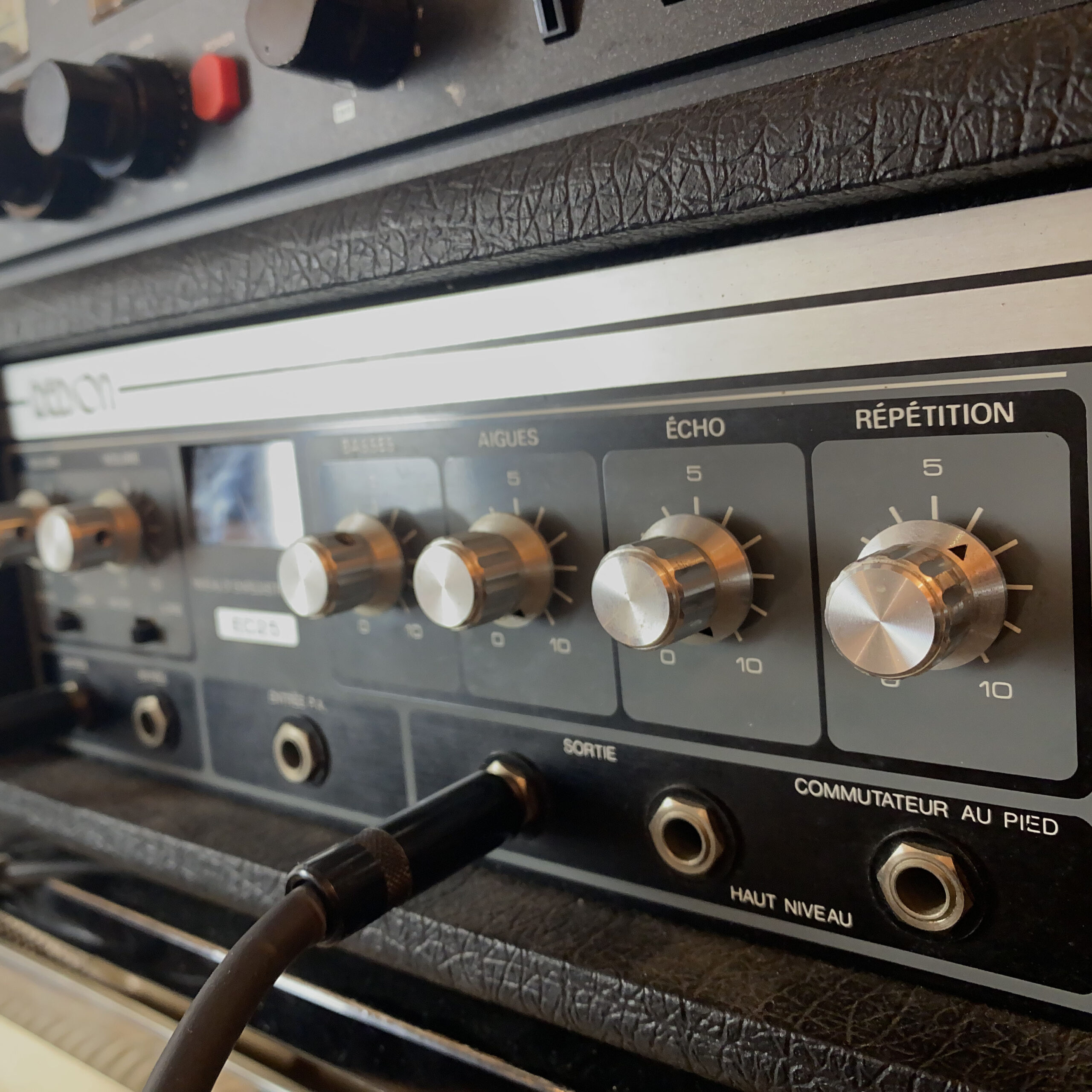
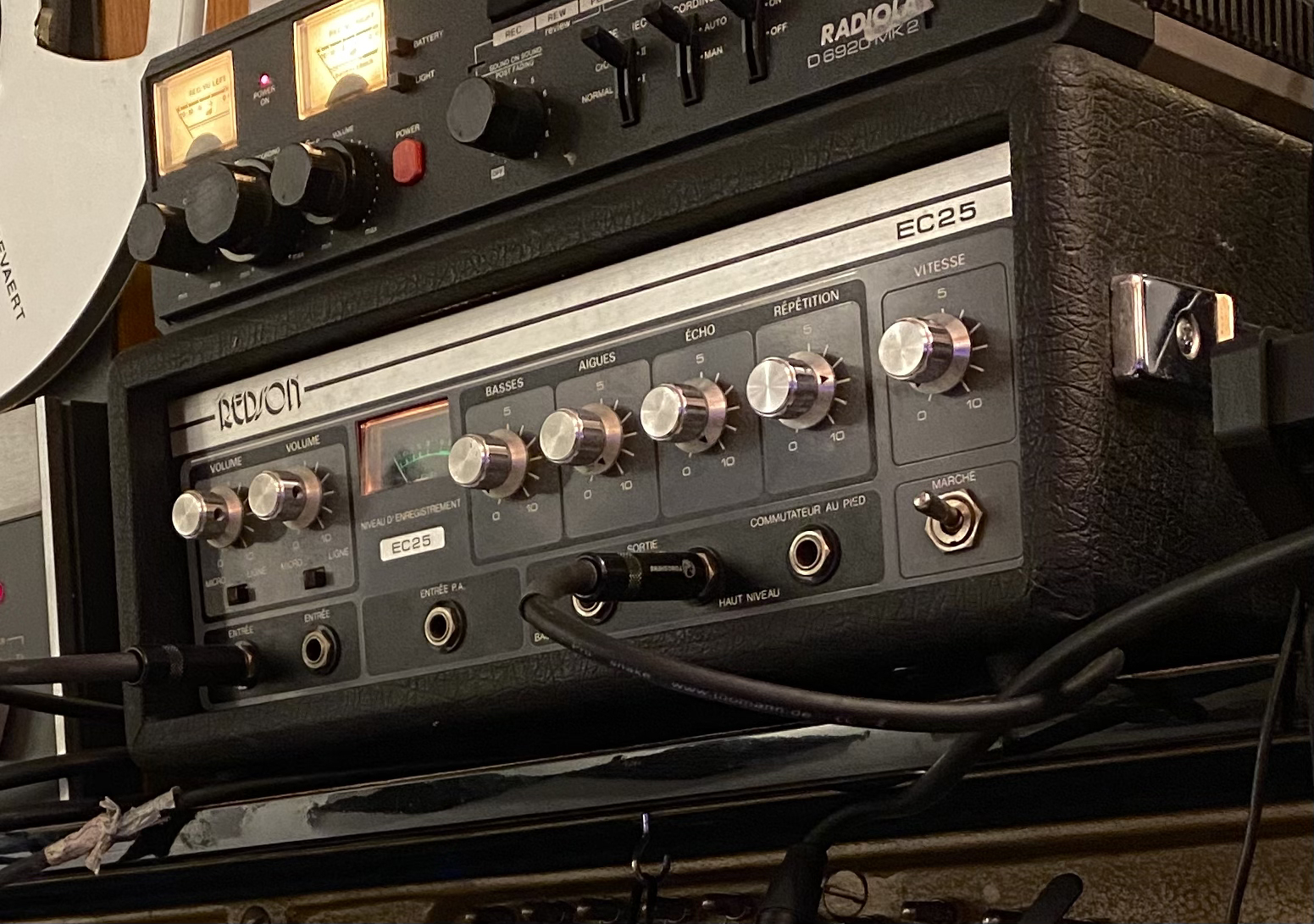
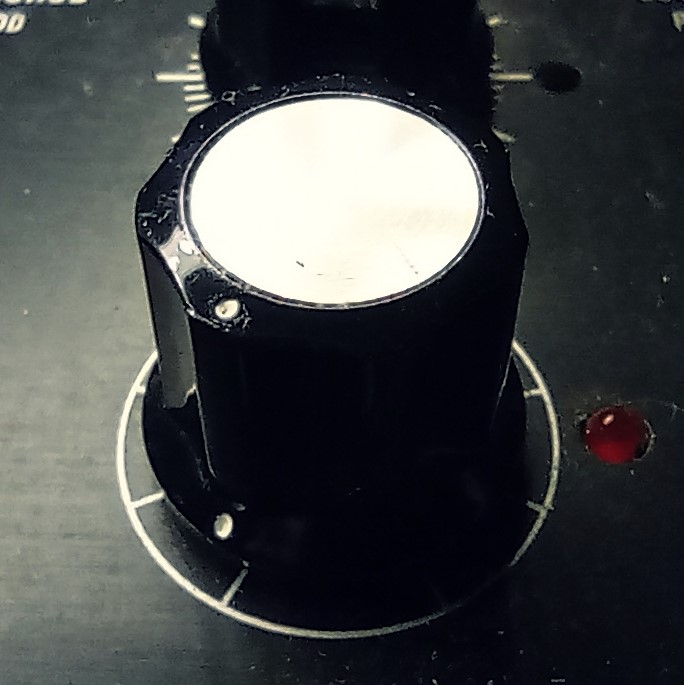
Redson EC25 Repetition knob
I’m in love with the “repetition” knob (in French on the device) of my Redson EC25. It turns most chord progressions into space travel. The result can be extremely soft, with ethereal echoes, or very violent with destructive feedback. I use this (very lofi and cheap by the way) echo chamber as an instrument in its own right.
2. Do you have an ‘almost’ perfect bit of kit? What would you change?
I don’t have ONE perfect kit, I like to navigate between my different devices. I will consider a perfect kit for one week before using another exclusive for the next. That’s what I like and that makes me never get bored.
3. What setup do you bring on holiday or tour or commute etc.
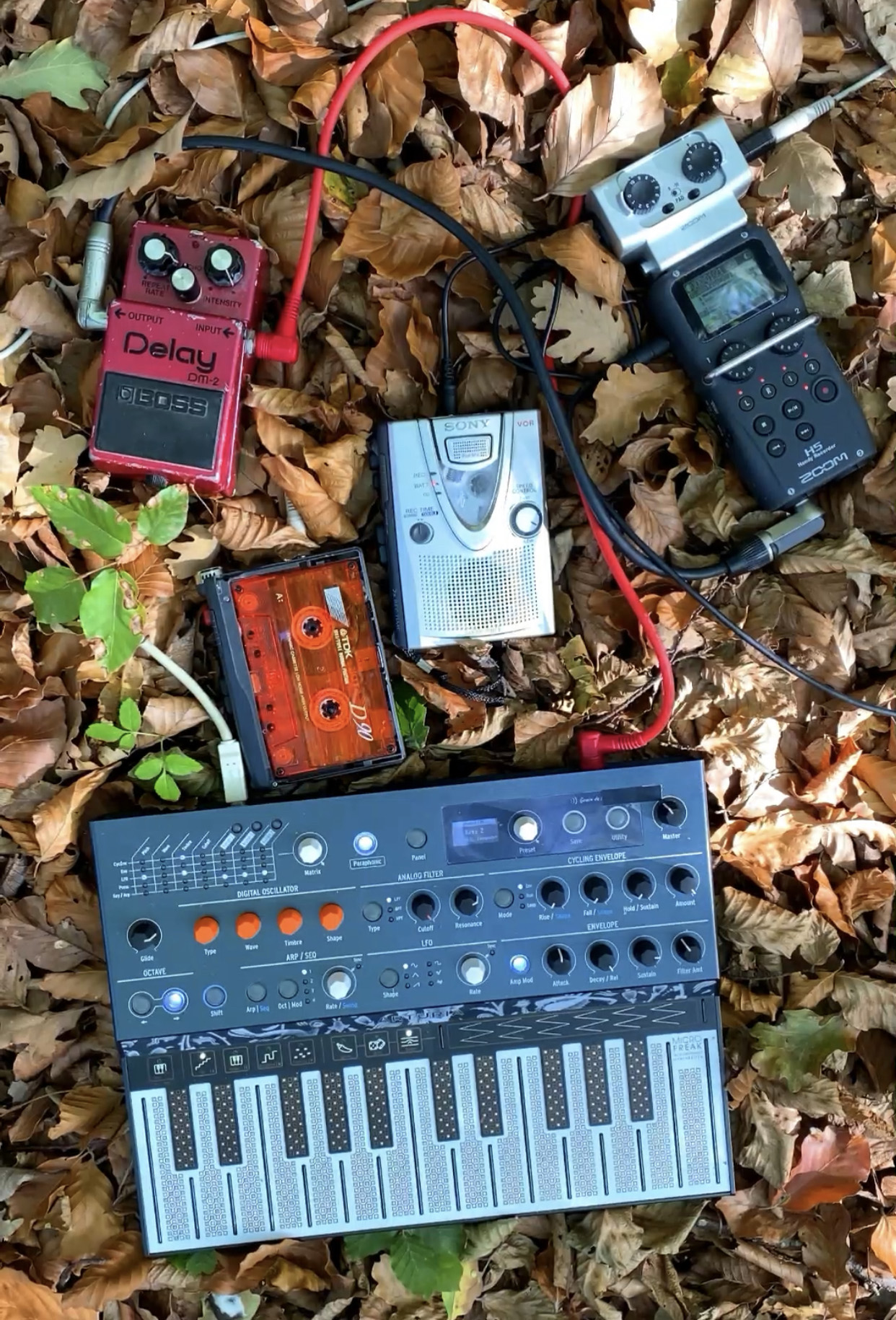
Travel setup
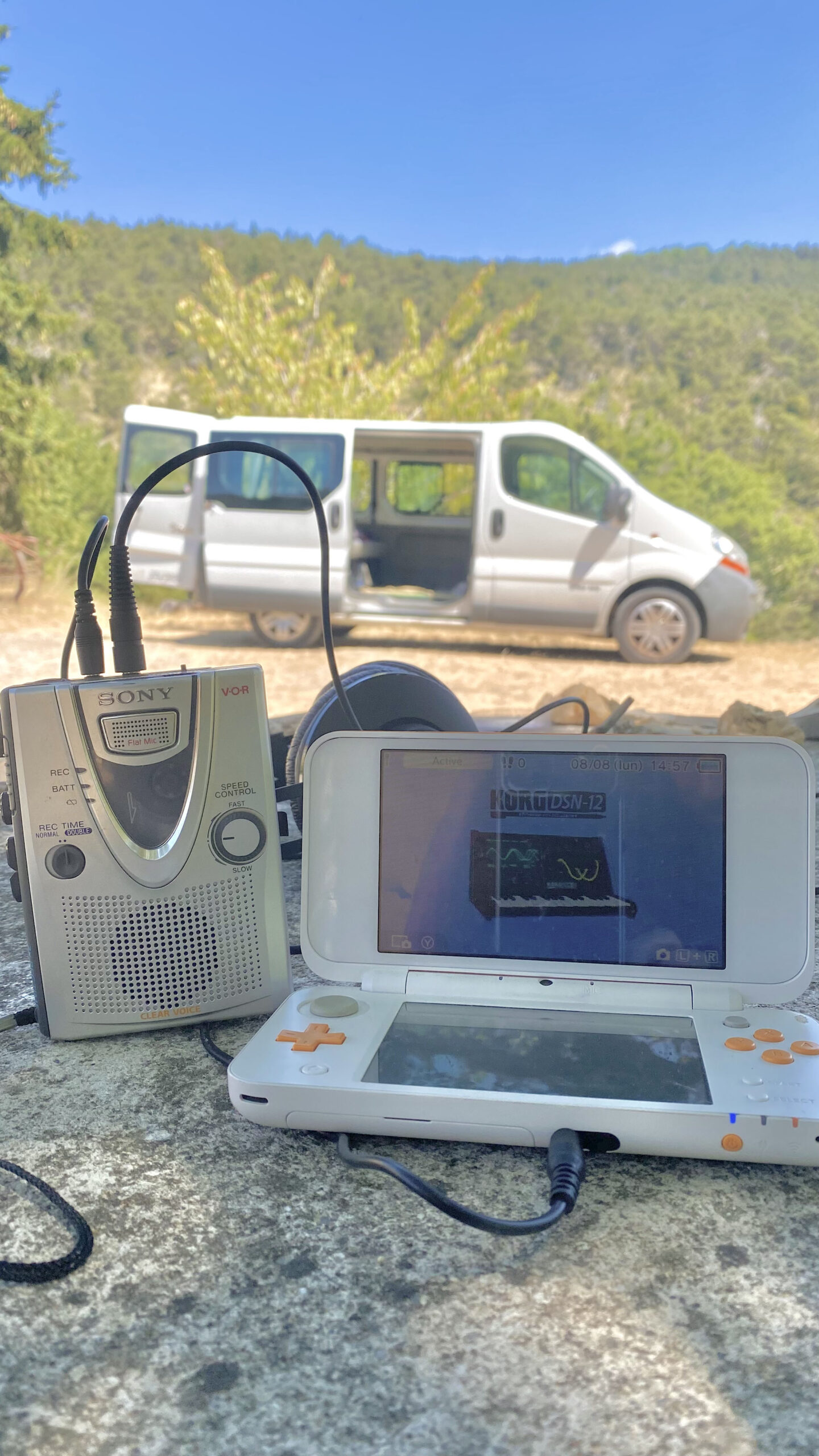
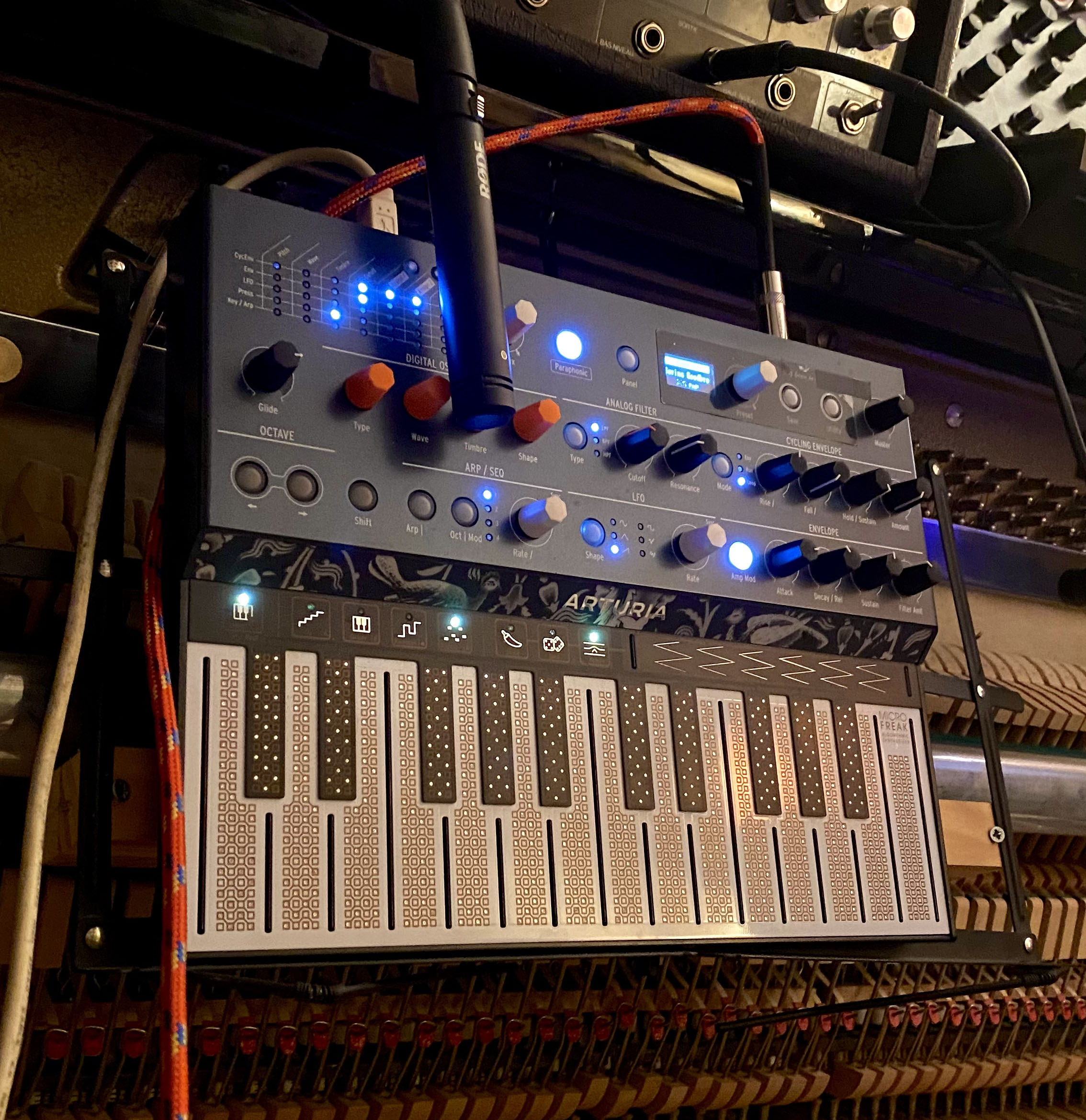
I like to travel with the Arturia Microfreak because it is small, light and runs on usb battery. And when my children give me permission, I use their Nintendo 3DS with the Korg DSN12 program, which is a surprising emulation of the Korg MS10. I also bring a Sony TCM200 tape recorder to play with the different playback speeds. And of course on my Zoom H5 to record.
Nintendo 3DS with the Korg DSN12 program and a Sony TCM200 tape recorder
4. What software do you wish was hardware and vice versa?
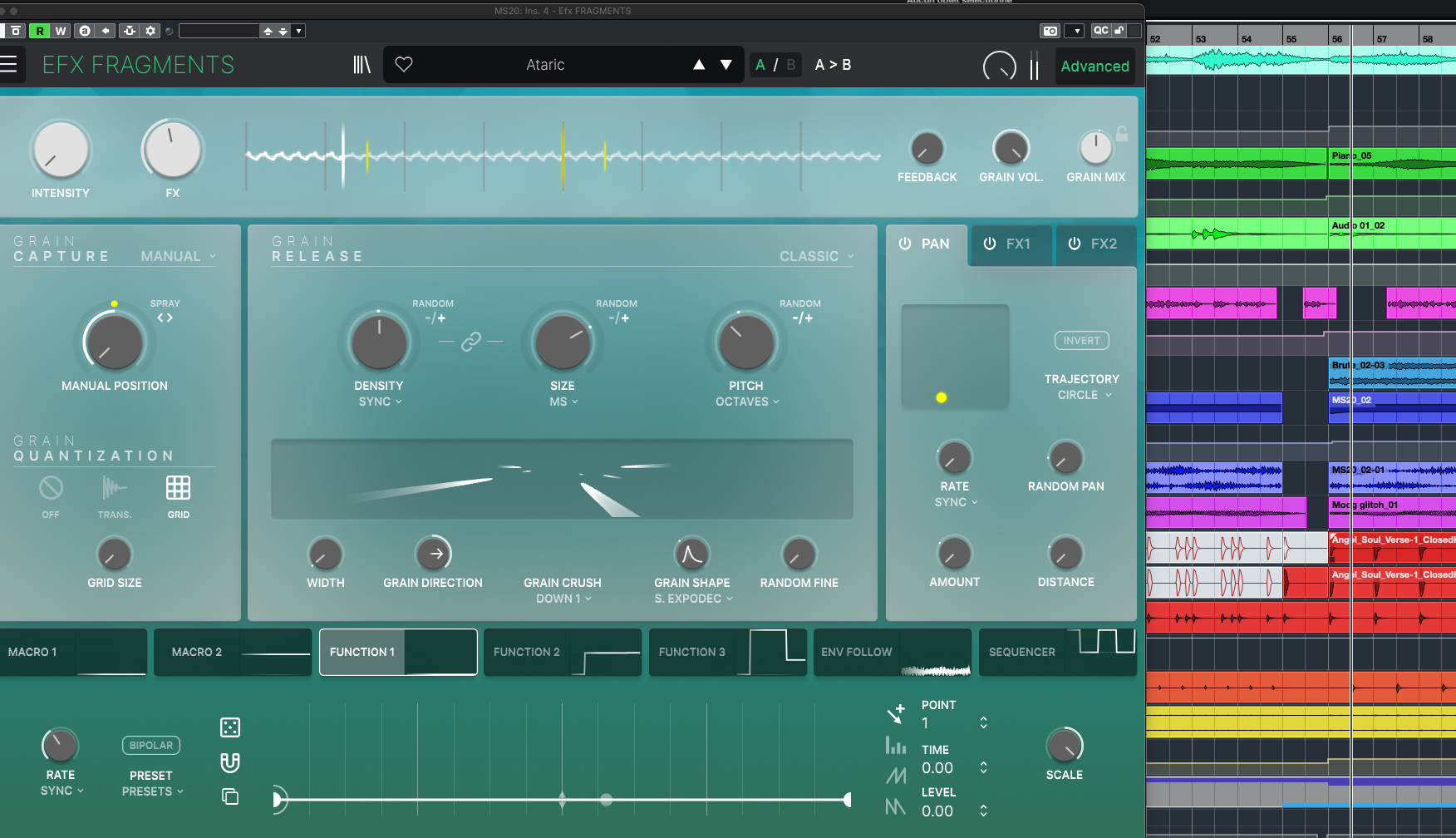
I would love to have the equivalent of Arturia’s “Fragments” plugin in pedal format. It’s a very inspiring granular processor, which can totally change a drum beat or a synth pad. I don’t use it as much as I would like because the computer is almost completely absent from my creative process now.
Arturia’s Fragments vst plugin
On the other hand, I haven’t found an echo plugin as dirty as my Redson EC25, all the space echo emulations that I have tested sound much too clean, even with an old tape simulation. So I would say a cheap tape echo plugin.
Redson EC25 Tape Echo
5. Is there anything you regret selling… or regret buying?
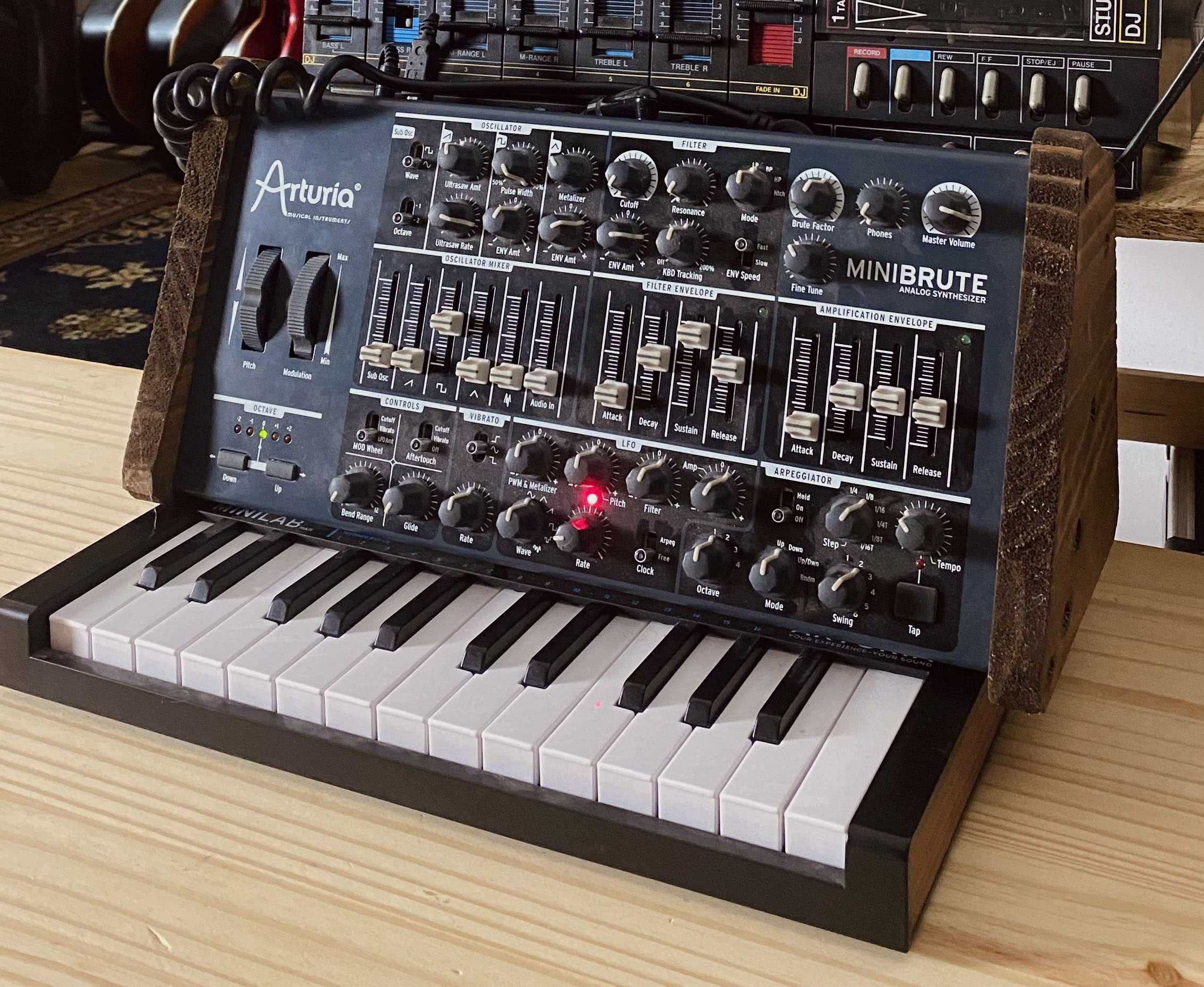
I have a love-hate relationship with the Arturia Minibrute (MKI), which I’ve bought, sold and repurchased several times. So I would say it is perfect to answer the 2 questions haha.
6. What gear has inspired you to produce the most music?
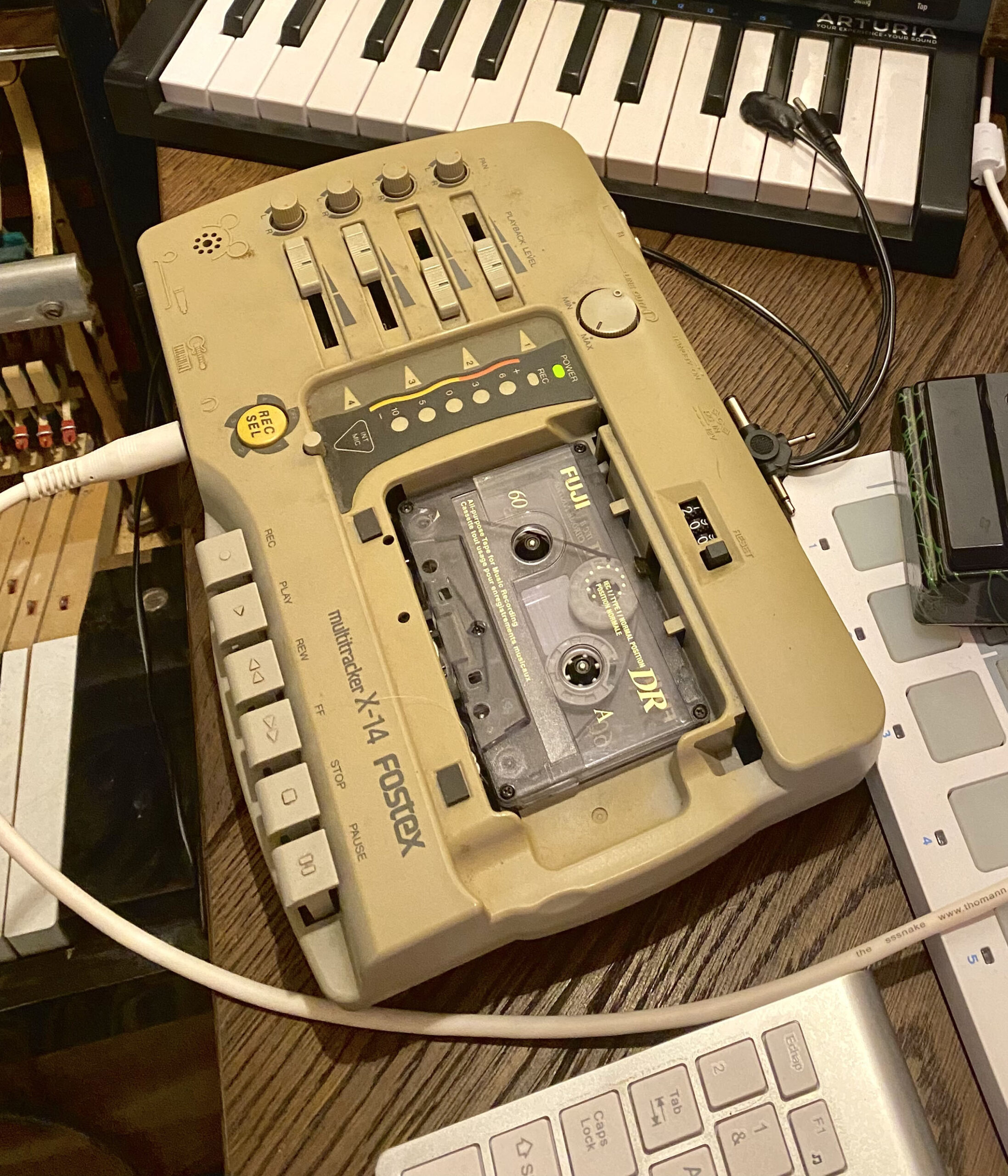
It’s hard to choose between my Fostex X14, which introduced me to the world of tape looping, and between the Arturia microfreak which allows me to compose outdoors, whether in the forest or on the top of a mountain.
Fostex X14
I have the Fostex for 18 years, and the Microfreak for 2 months. This makes me happy because I think there are always new things to discover and explore.
Microfreak
7. If you had to start over, what would you get first?
I think I would take a Mac and a UAD interface directly. I lost too much time with the computer, with my current system I almost forget it.
8. What’s the most annoying piece of gear you have, that you just can’t live without?
Except my computer, nothing bothers me yet !
9. Most surprising tip or trick or technique that you’ve discovered about a bit of kit?
I recently discovered that with a tape multitrack recorder like my Fostex I could play tapes recorded on normal devices in reverse mode. Combined with the different tape speeds, it’s pure happiness !
Artist or Band name?
Stegonaute
Genre?
Euuuh… Lofi, Trip Hop, Ambient ?
Selfie?
Stegonaute
Where are you from?
I live in a small village in the south east of France
How did you get into music?
I started at the age of 12 with the bass, then with the guitar.
What still drives you to make music?
I like exploring new sounds, traveling and letting myself be carried away. It’s my main way of expressing myself.
How do you most often start a new track?
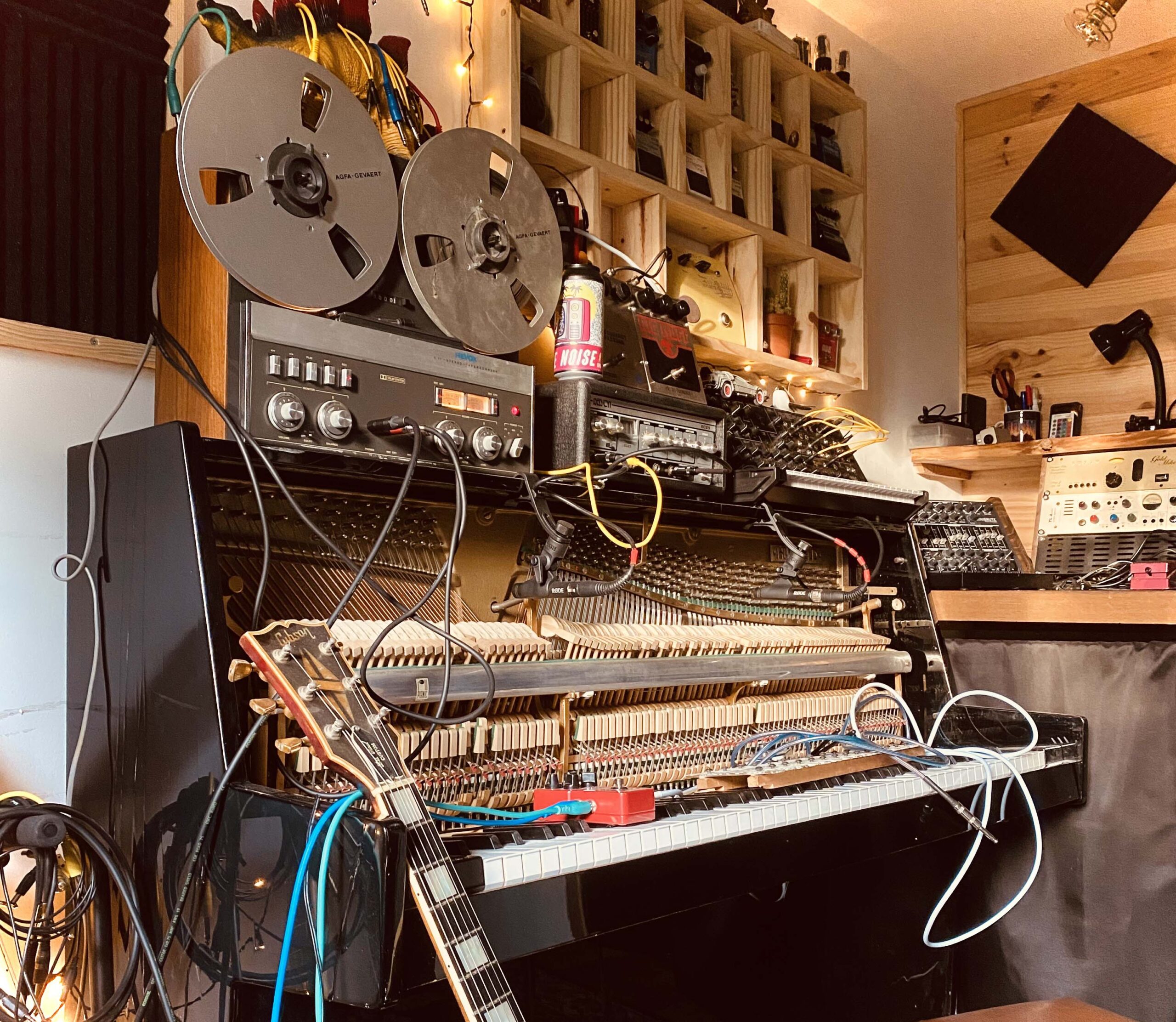
Stegonaute’s piano covered in FX
I start most of the time on my acoustic piano, even if I don’t know how to play it. I like the fact that there’s no need to turn it on, it’s even faster than plug and play!
How do you know when a track is finished?
NEVER ! I stop working on it at some point in order to move on. Releasing EPs on the platforms allows me to say to myself “it’s over, I’m not touching it anymore!”. Otherwise I’ll still be working on it…
Show us your current studio
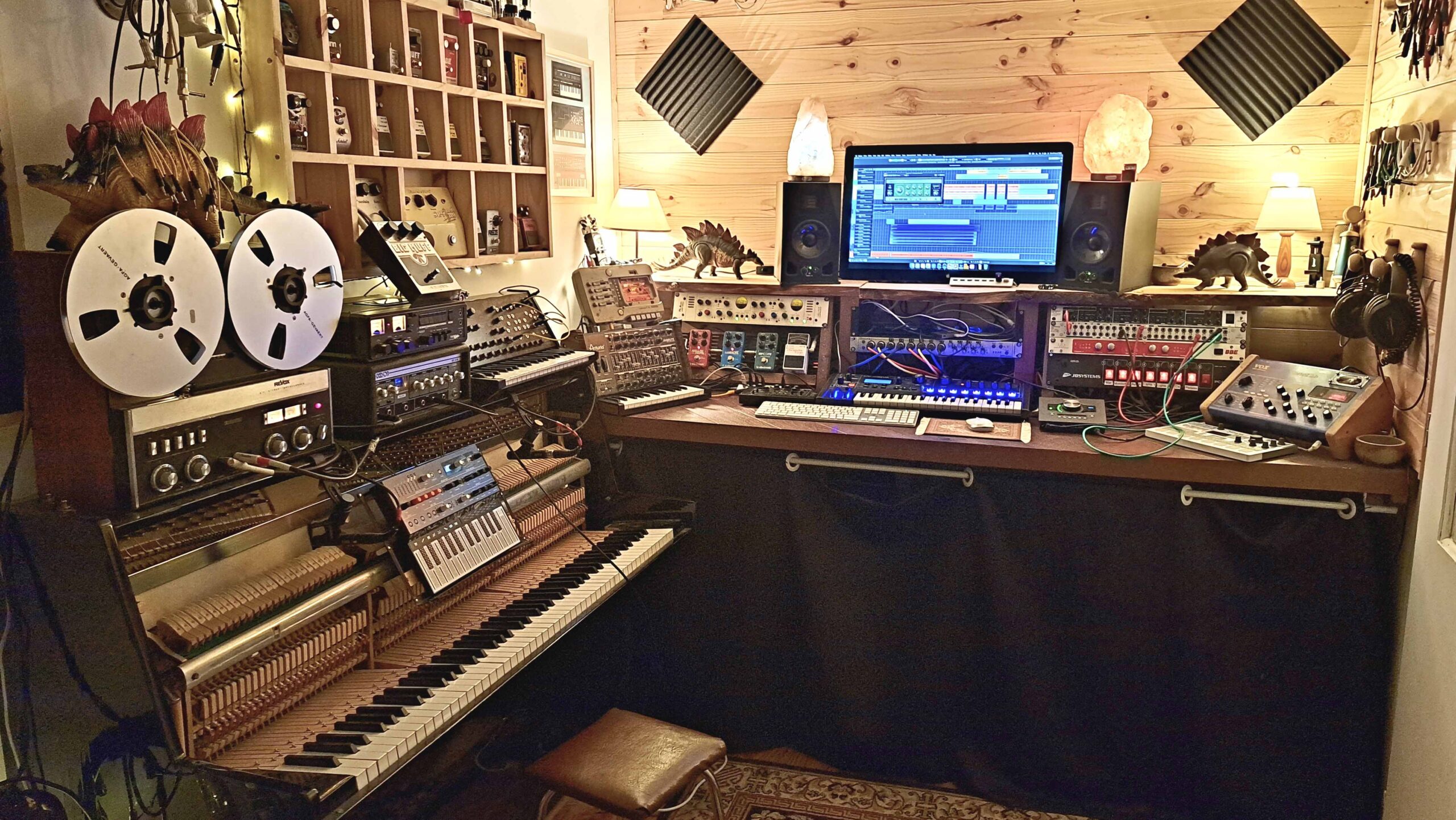
Stegonaute’s studio
Best creative advice that you’ve ever heard?
Put your phone in airplane mode.
Promote your latest thing… Go ahead, throw us a link.
[Editor: There are affiliate links to the relevant gear throughout the articles. It helps to support this blog. In fact, should you be needing some patch cables or guitar strings. Then clicking on one of the above links and buying any product that you prefer, will help the blog… doesn’t even have to be the ones in the link. Thx]
1. Favourite knob or fader or switch on a piece of gear and why ?
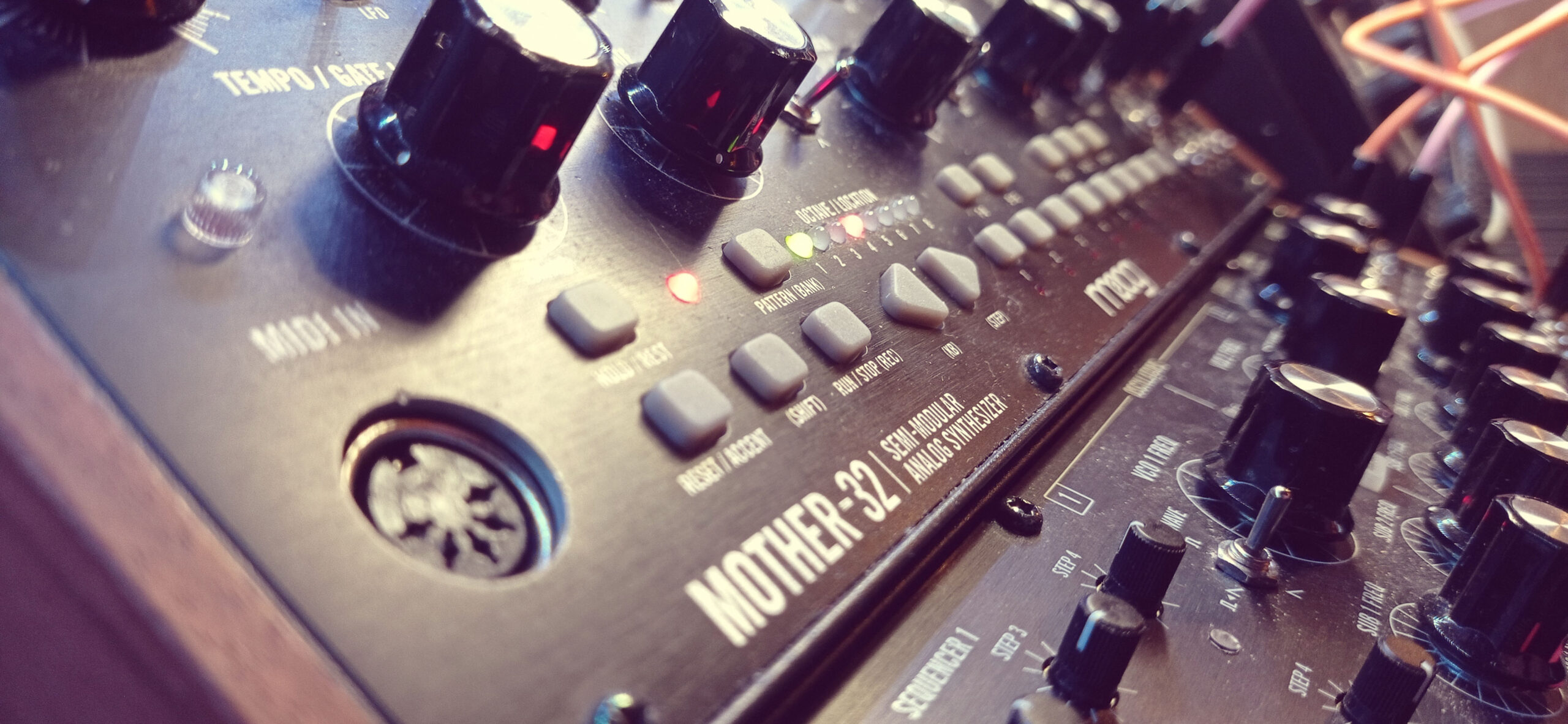
Moog Mother32 knob
As a « DAWless » musician, I necessarily attach great importance to the ergonomics of the hardware, to the user interface. How am I going to use this ? Is it practical ? To these considerations is added a strong fascination for the aesthetics of analog synthesizers, which I find beautiful even when they are switched off. Sometimes I just watch them ! Regardless of the function to which they are attached, the large knobs of my Moogs, which alone embody manufacturing quality and respect for the user, are the elements of my set-up where my fingers naturally want to rest.
2. Do you have an ‘almost’ perfect bit of kit ? What would you change ?
Moog Mother32 and Subharmonicon
Moog Mother32 is almost perfect. And on a weirdest side, Subharmonicon. My current set-up is a mixture of « serious » machines, like the Moogs or the Korg MS20, and synths that are a little more cheap, but have very endearing sounds, Volcas or Stylophones, and also weird and wonderful instruments like the GechoLoopsynth from Phonicbloom or Diddley Bow from Syro Instruments. I’m not necessarily looking to accumulate instruments, although every gear can add something to the sound, but ideally, a string machine, a good drum machine and instruments like the Arp2600 or the VCS3 would fill me with joy…
3. What setup do you bring on holiday or tour or commute etc. ?
Uno Synth Pro
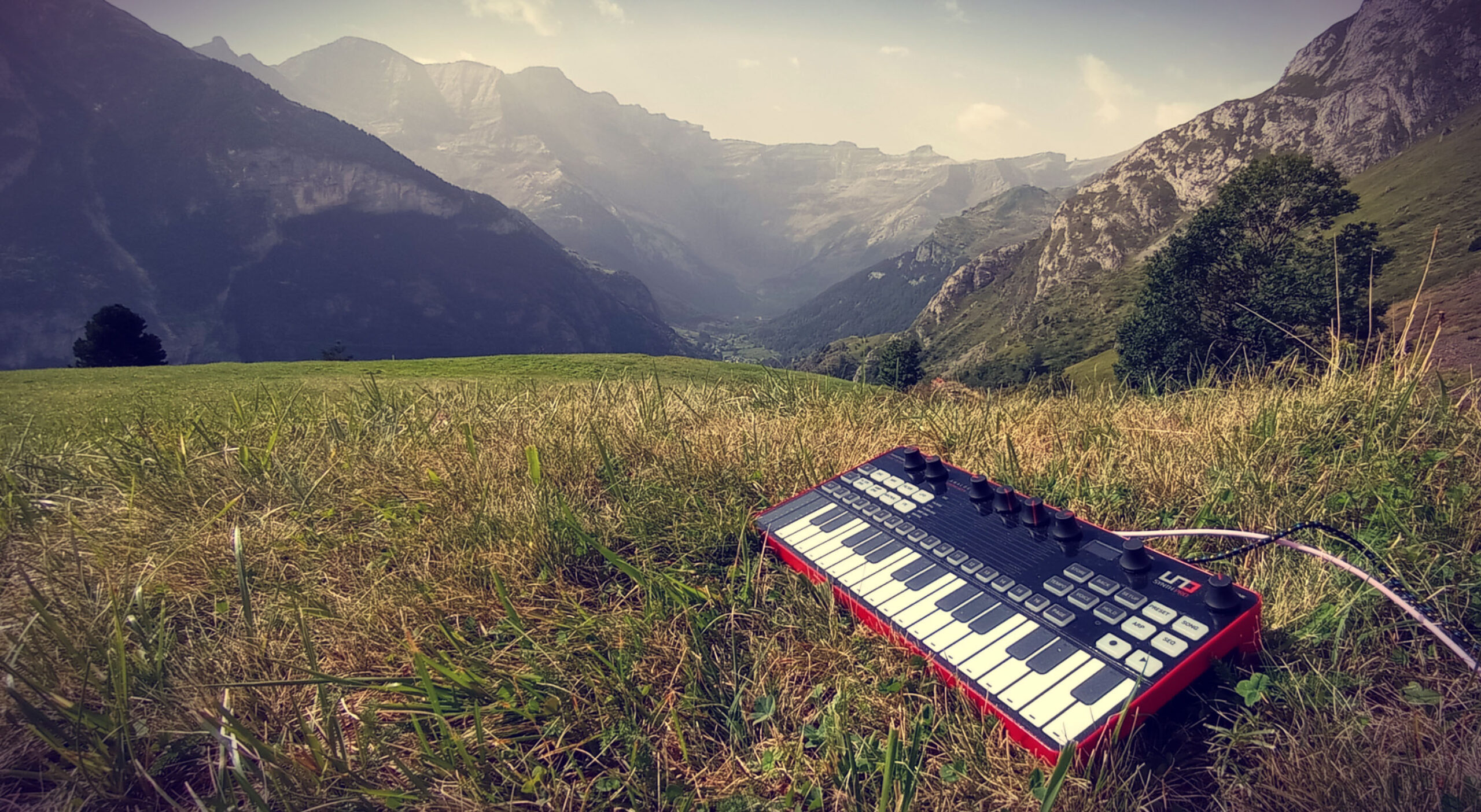
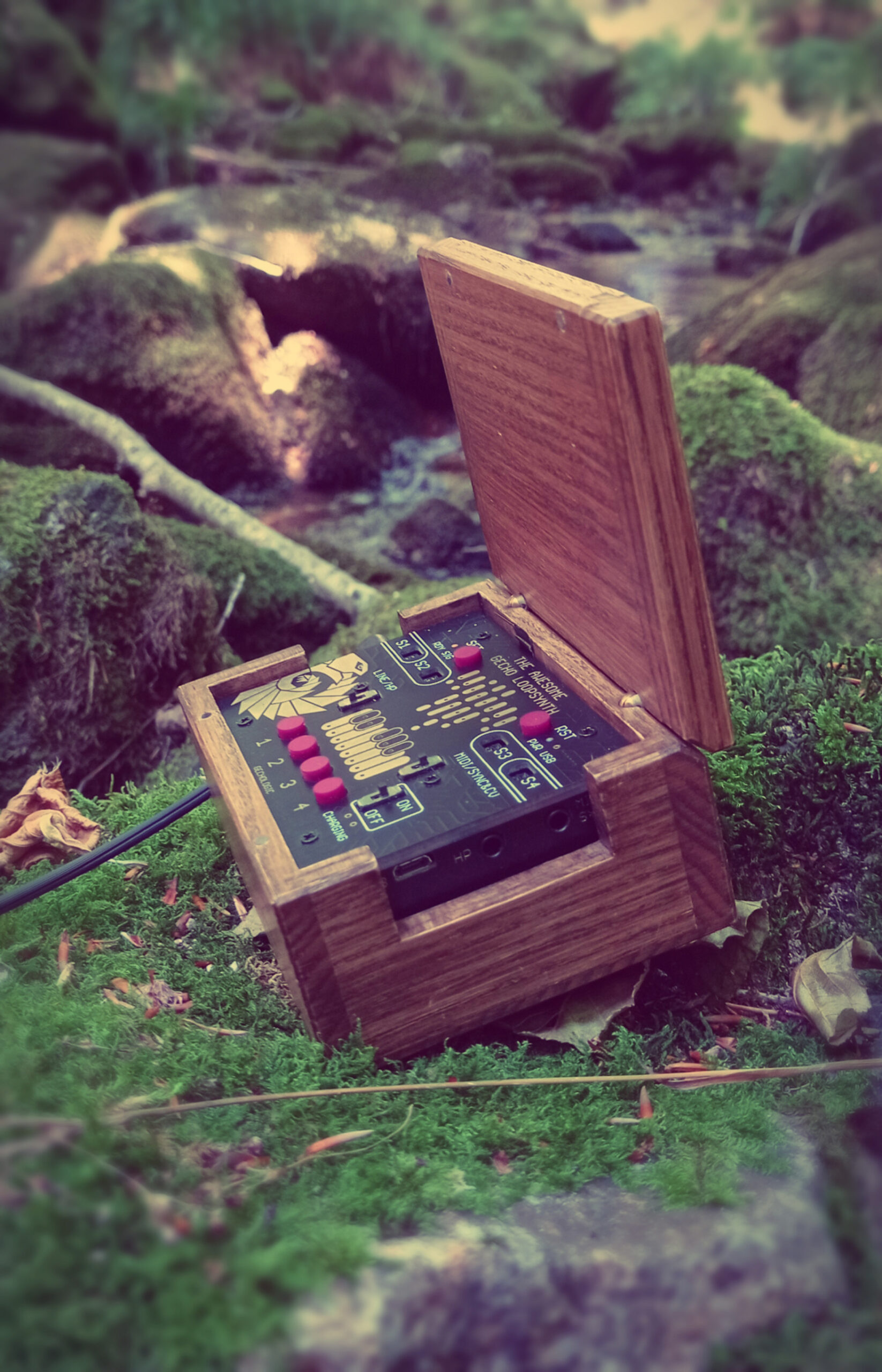
On vacation or when I’m walking in the woods, I always have synthesizers in my backpack. Most often, my Uno Synth Pro, which is an amazing analog synth, small and light, but very powerful, but also Volcas, my little Akaï sampler, and always GechoLoopsynth, which transforms the sounds of the world into enchantment. I must say that the portable aspect is a criterion of choice because I really like playing outdoors. In concert, it depends of course on the set-list, but in general the base is constituted by the Mininova, Mother32 and the MS20.
GechoLoopsynth
4. What software do you wish was hardware and vice versa ?
Well, only using hardware and being resistant to computers, I can’t answer this question… In fact, I tend to think that creativity is often spurred by the hardware limitations of instruments. The only limits I want to push back are those of my imagination.
5. Is there anything you regret selling… or regret buying ?
I remember an old Boss 220E drum machine. The sound was horrible, but she was funny. Even if I don’t use my Electribe much anymore, and although it doesn’t suit my way of working, I hesitate to sell it.
6. What gear has inspired you to produce the most music ?
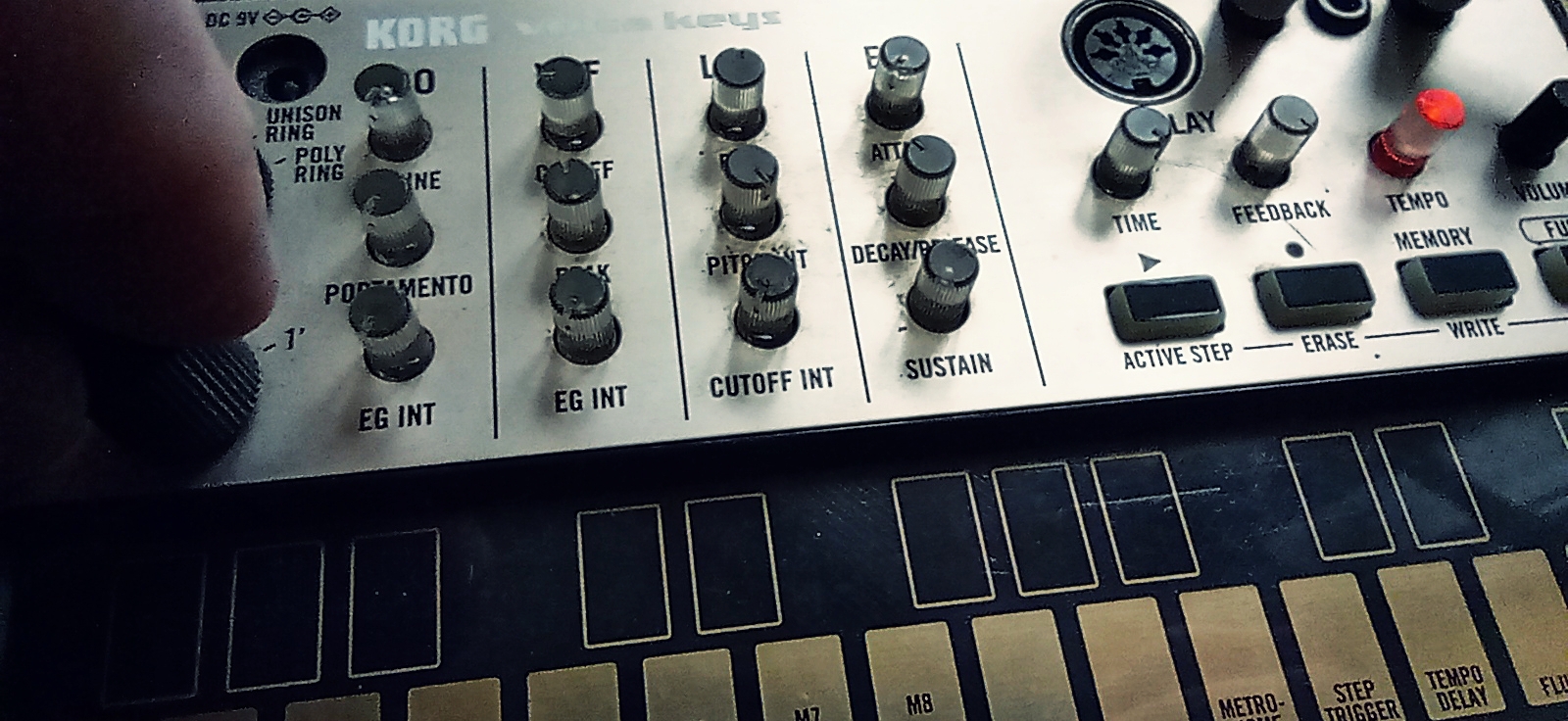
Curiously, the main instrument used for the album « Zur Zeit der Wälder » is Korg’s Volca Keys. I still sometimes find it hard to believe… But in the end, even such a small synthesizer of this price can provide a lot of satisfaction ! Today I only use it for outdoor jamming, but I must admit that it was very important in my journey towards analog synthesis. Currently, when I compose, everything often starts from a loop played on the Moog Mother32.
Korg’s Volca Keys
7. If you had to start over, what would you get first ?
I built my set-up gradually, both adapting it to my needs, but also letting myself be surprised by diverting the instruments from their favorite fields. I’m not unhappy with the way I went about it. If today I had no instrument, I think I would start with a good analog (my Mother32), some effects, and a machine like the Model :cycles from Elektron, which seems to have a very good sequencer.
8. What’s the most annoying piece of gear you have, that you just can’t live without ?
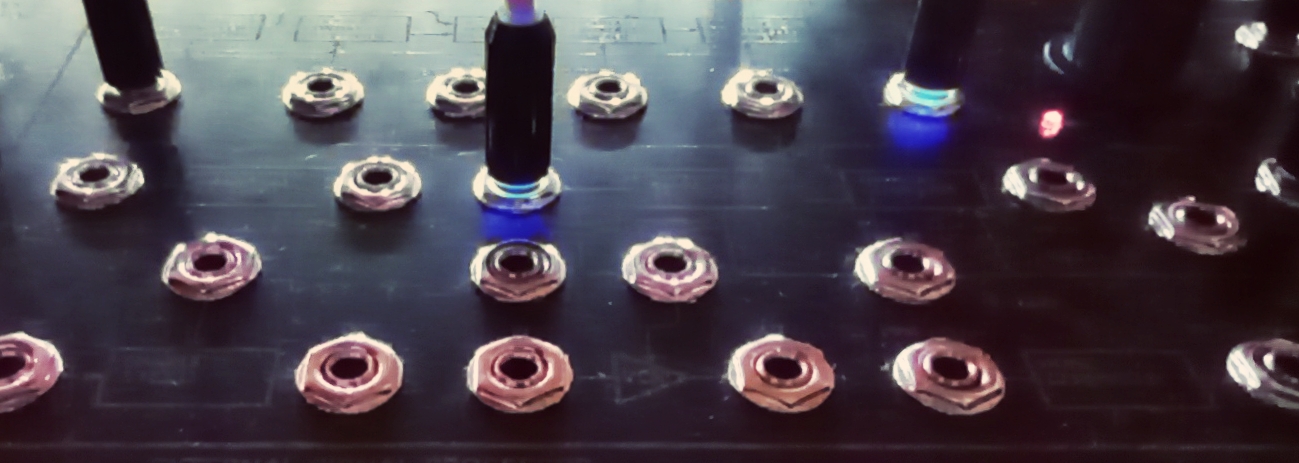
Korg MS-20 patch points
I don’t get bored much with my instruments. I admit I spent a long time around the patch panel of the MS20, quite obscure when compared to the clarity of those of the semi-modular Moogs. By dint of persevering and trying, even making mistakes, I still ended up getting used to it ! What bothers me the most are often technical considerations that unfortunately we can’t do without, everything related to mixing, recording. In the home studio, anything unrelated to instruments most often annoys me, I want it to go fast, even if it means sometimes sacrificing sound quality no doubt (perhaps -this my punk side…) That’s why I go straight to the point, even if a technician would make leaps !
9. Most surprising tip or trick or technique that you’ve discovered about a bit of kit ?
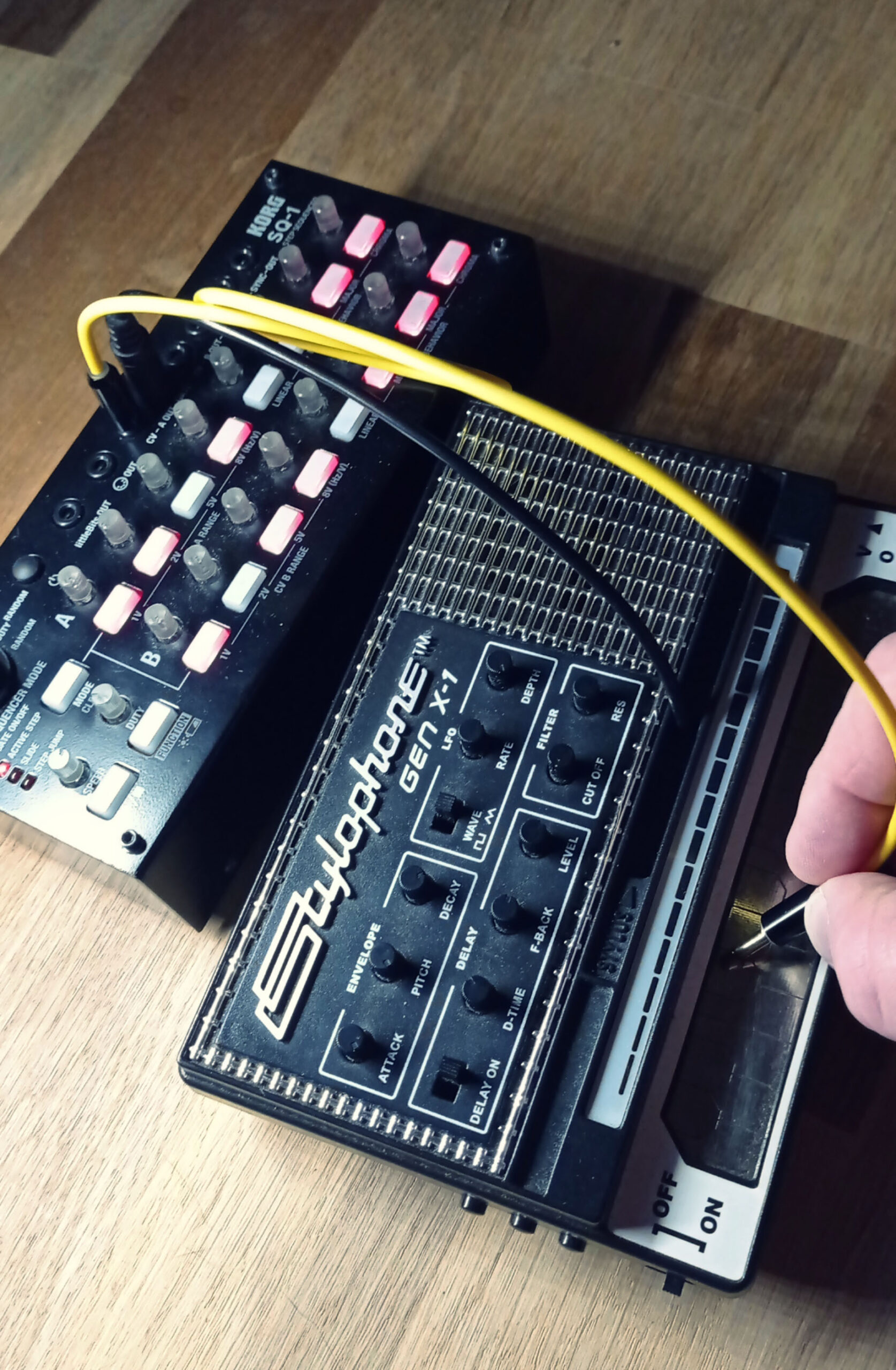
One day, my Stylophone’s silk-thin stylus cable broke. It had to happen eventually. So I opened it up, and I only had a patch cable on hand to repair it, so I cut off one end to solder it in place of the old one. I started playing again with a jack cable instead of the stylus. And then, I looked at my Korg SQ1 sequencer, and I had the crazy idea of connecting the « stylus » cable to the analog output of the sequencer and playing a sequence. Well it works ! The video of this discovery is somewhere on my Instagram…
Stylophone and Korg SQ1 sequencer
Artist or Band name?
Ramirez
Genre?
My musical tastes are very eclectic (from classical music to ambient via post punk new wave and french chanson), the music I produce can possibly find its roots in krautrock and the beginnings of electronic music (Tangerine Dream, Kraftwerk, Jean-Michel Jarre). I have a strong and sensual relationship with my analog synths. As soon as I have the opportunity, I defend the idea that electronic lutherie produces instruments that have a soul, that live.
Selfie?
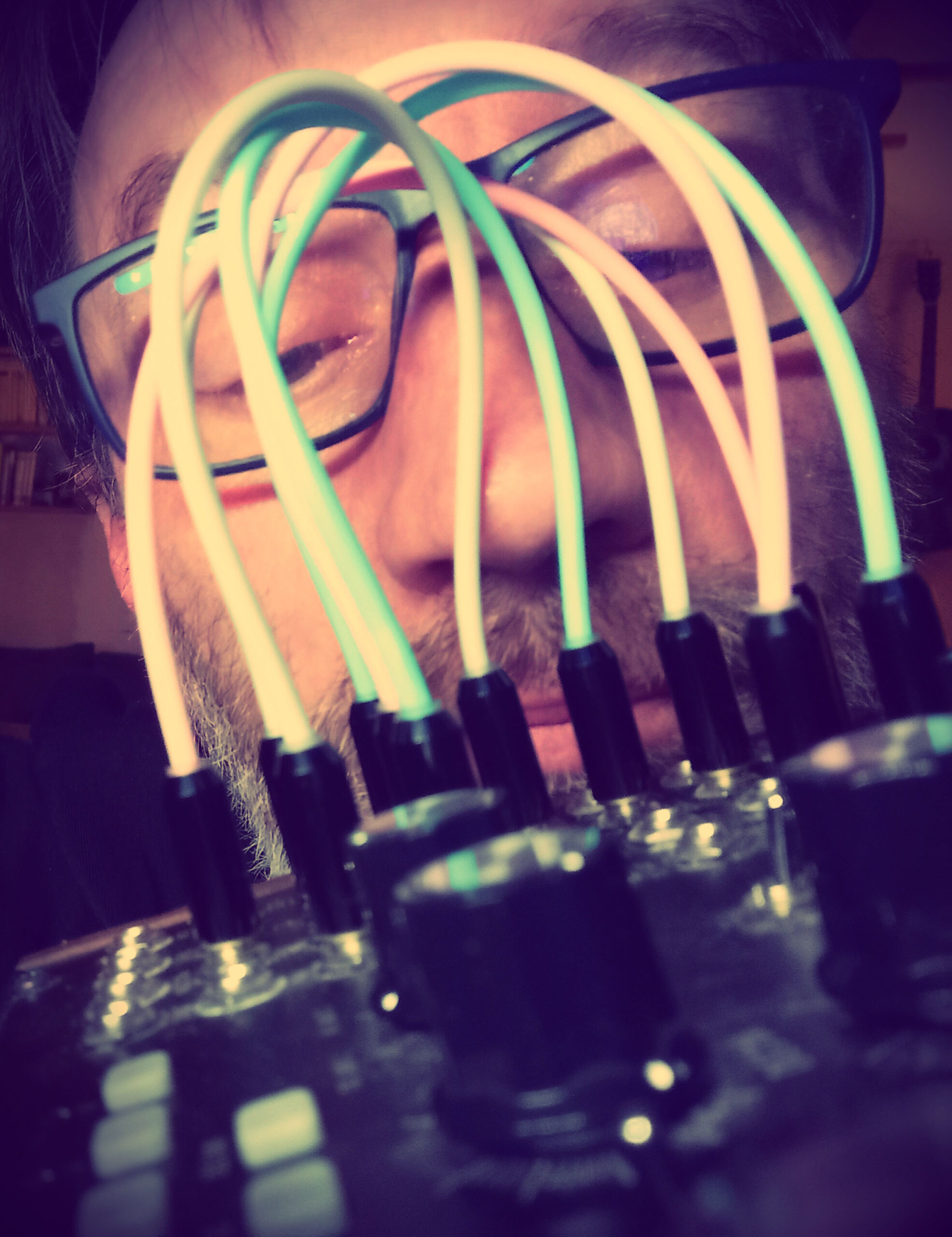
Denis Violet
Where are you from?
I live in Limousin, a somewhat isolated rural region in the center of France. 50 years old, married and father of 4 children.
How did you get into music?
After studying piano and then bass in a music school, I created the group >fjord with Anne-Sophie Michaud at the end of the 90s. With our kind of french trip-hop, we did a few dates with great artists from the French scene such as Jean-Louis Murat, Dominique A, Yann Tiersen.
Ramirez plays tijuana 9-11-2016
Since 2007, I sing, play keyboards, bass and guitar with my friend, the guitarist Toto Deloménie (and for some time Cécile Venot and Yohan Mayet) in our Ramirez project. In 15 years, we have evolved from an acoustic guitar duo to pop/folk/electro songs. Our latest album, « Homme Lige », is entirely instrumental and is inspired by the collection of poems by Laurent Bourdelas, who asked me to accompany him for readings of his work.
In my work with disabled people, I occasionally lead a workshop of expression and creation with electronic music as a medium, in partnership with the Limoges Conservatoire de Musique, and I am very proud to have introduced, for example, the theremine and the Kaoss Pad in this temple of «serious » music.
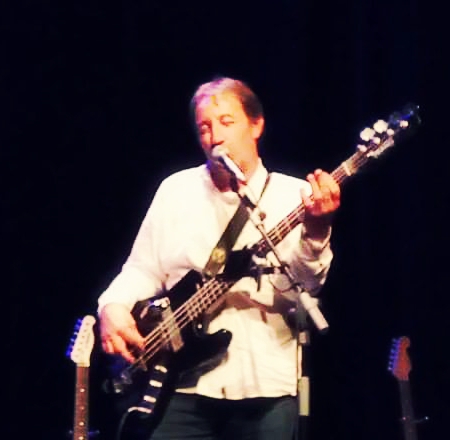
Denis Ramirez performing
Another thing that is important for me. Limousin is a region where nature is everywhere. As I walk a lot in forests or in the fields near my house and I always have a few portable synths on me, I often make music which reflect on the threatened beauty of nature. Even though my music does not necessarily have an intrinsic political message, I would like it testify at least to this fight of our time, to save what can still be saved.
What still drives you to make music ?
Music never ends. Even with a finite number of notes, even with a finite number of sounds, music has no end ! How many years can you spend hunched over the same machine, producing music every day that’s different from the day before ? I don’t think I will ever have the answer to this question.
How do you most often start a new track ?
When I work for Ramirez, I usually start from the text or a fragment of text. What I prefer then is that Toto takes care of composing the music and that I collect it to make the arrangements. In my more personal projects, I often start with a texture, a sound that inspires me, and/or a simple loop with Mother32 or the SQ1. I make it evolve, with some effects (I can’t imagine a track without delay/reverb). I can then spend a lot of time improvising a lead voice, with the MS20 or the Werkstatt, which is a perfect little Moog for that. I then add as little as possible (see the track « Lige » in our latest album « Homme Lige ». There is only an eight-note loop played on the Werkstatt.) ….
How do you know when a track is finished?
[Cont’d from above]… And I know it’s over … when it’s time ! I willingly impose a time constraint on myself, if after a few hours I can’t get anywhere, I’ll start from scratch the next day…
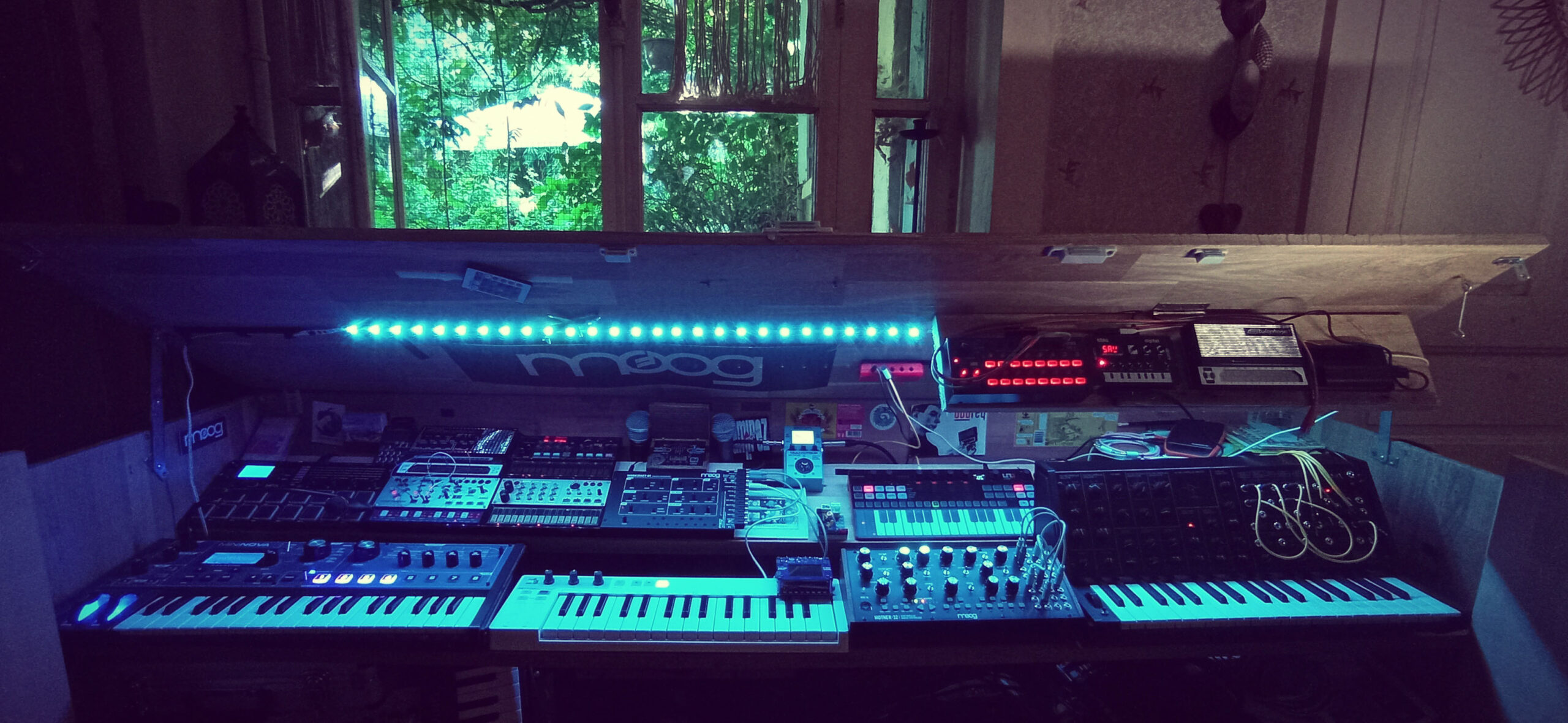
Show us your current studio
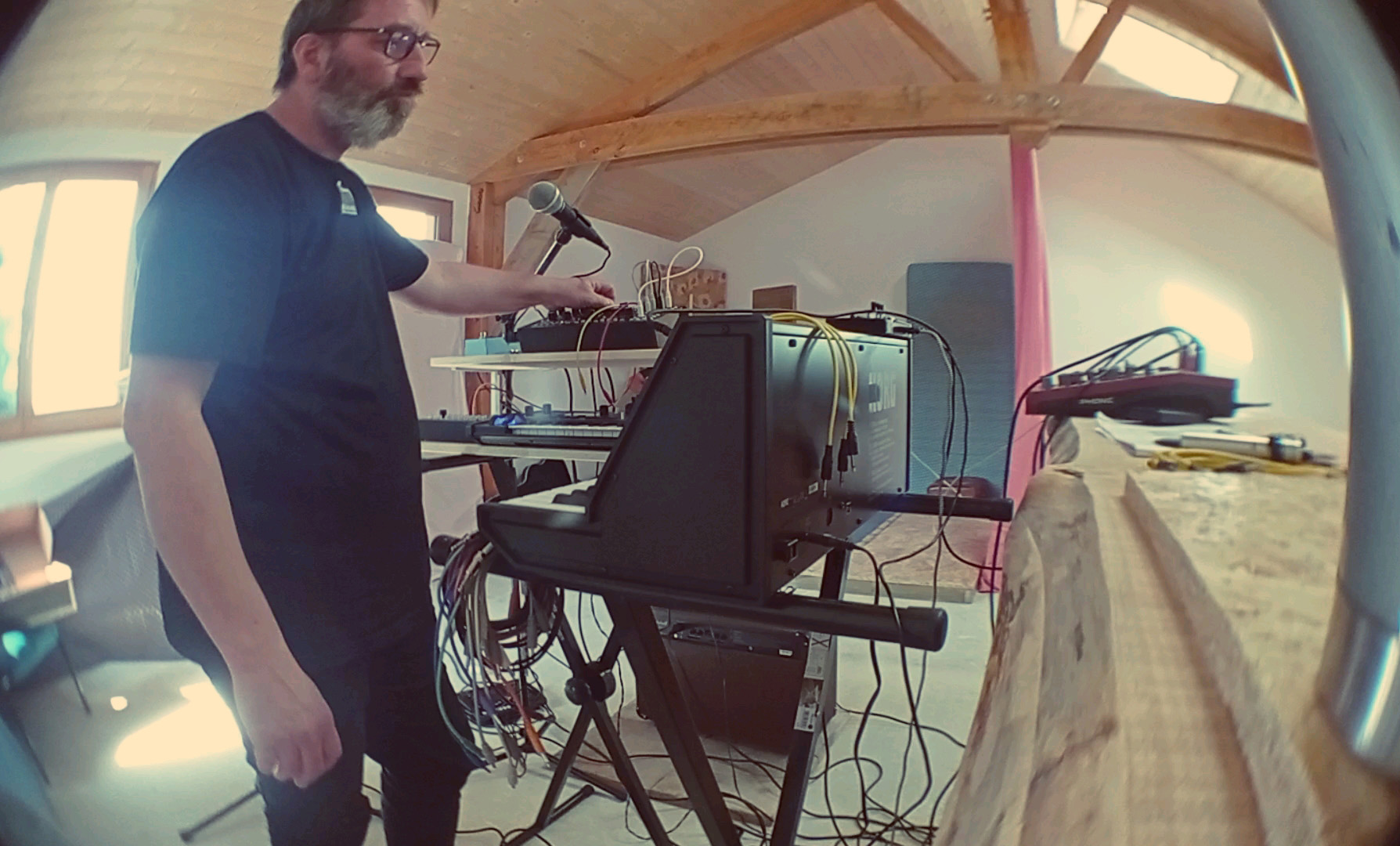
Denis Ramirez’s studio desk
Best creative advice that you’ve ever heard ?
Bernard Summer, from New Order, who said something like this : « There is nothing, and suddenly it’s there, as if a voice were dictating the song to you ». Basically, letting go, not putting up barriers of good taste, genre, or style. Take everything that comes, let it rest, and then sort it out.
Promote your latest thing… Go ahead, throw us a link.
Ramirez appears sporadically, on the other hand I have a frenetic musical activity on my Instagram account, on which I post a minute of old school electronic music daily. You can find it here : @denis_violet
Ramirez’s music, from « L’atelier », which traces the period 2007/2017, to « Homme Lige », produced in 2022, is on the main streaming platforms. Spotify and YouTubeMusic
Ramirez Homme Lige
[Editor: There are affiliate links to the relevant gear throughout the articles. It helps to support this blog. In fact, should you be needing some patch cables or guitar strings. Then clicking on one of the above links and buying any product that you prefer, will help the blog… doesn’t even have to be the ones in the link. Thx]
1. Favourite knob/fader/switch on a piece of gear and why?
NP-Elektroakustik faders
I generally have a thing for long faders on old analog gear, my favorites being a large Neumann stereo fader and the faders on old NP-Elektroakustik gear (used by Danish Broadcasting)… It’s just so satisfying to move (and even just to look at) them.
Neumann stereo faders
However I must admit that these faders do not really get much use at the moment because I have to “solder them up” – I guess this is the curse of DIY’ing stuff… It’s easy to end up with the soldering iron as your main instrument and a pile of unused electronic junk… But it can also lead you to explore new and surprising sounds and techniques.
NP-Elektroakustik analog mixer
For a more “fun” choice I’d choose the “gear lever” found on a lot of old Scandinavian reel to reel tape recorders. These old machines are largely mechanic and so the transport mechanism is all handled mechanically. I find it oddly satisfying to operate these levers controlling the mechanics
Scandinavian reel to reel tape recorders
For a purely synth-oriented (or functional) viewpoint I’d probably choose the rate knob on the Serge Smooth and Stepped Function Generator (SSG) (when used as a sample and hold) – it is possible to go in and out of perodic and (seemingly) nonperiodic patterns just by fine tuning the knob. This is a way of generating “melodic content” that I have used a lot.
2. Do you have an ‘almost’ perfect bit of kit? What would you change?
Ekkoflok’s homebuilt modular
That has to be my homebuilt modular….. which is ever changing… I started building it from scratch back in 2012. At first I planned on building 40(!) modules… That was before I realized the amount of work needed, I guess. I also found that my plans/ needs for the instrument changed all the time is I learned more about synthesis and developed my own techniques.
Today I do most of my performances on a part of my modular system. I have found that it actually helps me to not bring to much modular gear, as I find you can do a lot with just a handful of modules. Sometimes I’ve brought to much gear for a live set and felt like I only scratched the surface of the sonic possibilities. When I bring a smaller setup I force myself to think creatively and push the modular to the limit.
Close up of Ekkoflok’s homebuilt modular
3. What setup do you bring on holiday/tour/commute etc.?
I recently bought my first synth (that is – the first one I didn’t build myself) – a Korg Volca FM. It’s so small that can easily fit in even a small bag pack. I’ve often brought a minimal modular setup, a portable recorder and sometimes just my laptop. Last summer I wanted to get ”away from work” so I only brought my Sound Devices recorder, microphones and headphones. That way I didn’t end up working as if I were still at home (and at the same time it made me long to get home to all the patch cables).
Ekkoflok sampling the sea
4. What software do you wish was hardware and vice versa?
Cecilia5 – a great tool for sound exploration. I would love to have that in a dedicated box or maybe as an app.
VCV-rack aka. the Gateway drug
With the rise of VCV-rack I think it kind of fulfilled a lot of desire for virtual versions of my modular. Still would love to see a software version of the Neutron Sound Orgone Accumulator along with more esoteric synths like Serge and Buchla. However I still think the physicality is one of my hardware modular’s main strengths. I feel that a few modules can take me a long way.
5. Is there anything you regret selling… or regret buying?
I have a couple of boxes filled with half- (or less) populated PCBs (printed circuit boards). Thinking of all those half finished projects makes me a bit sad. I sold two (broken) 4-track recorders during corona…. Still sometimes asking myself whether I should have tried harder to fix them, since they were sold very quickly. However I still have two functioning ones… How many 4-tracks do one need??
Tascam 424 mkii
6. What gear has inspired you to produce the most music?
That must be my homebuilt modular synth. Since 2012 when I devoted myself to that project it has been the pivotal point of my career. It has taught me so much about music and sound. However I rarely approach it with a ”now I’m gonna make a track”, it’s more of an explorative process that often leads me to discover new sounds or form the basis of a new track idea. My album Lydlandskaber (2017) was made entirely with one-takes and the modular as the center piece, whereas my new album Mosaik is made out of many layers of modular sounds, field recordings, prepared instruments and vocal work. Actually it took me a long time to figure out how to use the thousands of recordings on my hard drive. In more recent year I have begun to work more and more with tape, which I also find very inspiring. It feels like it gives me a lot without me doing anything, it sort of has it’s own life. In the digital domain I often find myself wanting to colour things up a bit or a lack of character.
7. If you had to start over, what would you get first?
Well, when I started making music in the 00’s I was using plugins exclusively the first years – it made me dream (and drool) of a synthesizer wall… And back then hardware synthesizers (and especially modular gear) wasn’t very accessible. Since I grew up in a family of artists there wasn’t a lot of money, but lot’s of creativity so it seemed obvious to me that I should build my own synthesizer.
Today there are a LOT of options when it comes to analog synths… So maybe I’d just buy something. However I think it is important to take your time and dedicate yourself to your instrument which might be harder to do if you are constantly hunting for the ”next big thing”. I think a good place to start would be something like a Minibrute, which has all the essentials and then build (or buy) a rack of things to expand on the functionality. And then a 4-track and some tape-loops. I think it is important to try what it feels like to make music without a computer, personally it resulted in me creating an entirely different style of music and it helped me realize how I wanted to use the computer creatively.
PD in dark mode
For example I like working with Pure Data which is kind of modular-modular synthesizer in the sense that it is easy to create your own modules in contrast to VCV-rack which is rather an emulation of a hardware modular. Since I’ve spent so much time with modulars it feels very natural to think in terms of modules and patch cables. I also use Ardour for tracking and mixing but I prefer creating music without being tied to a daw and then use the DAW later in the process for refining and over dubbing.
8. What’s the most annoying piece of gear you have, that you just can’t live without?
Sound Devices MixPre 6
Probably used to be my Zoom H4n which has been upgraded to a Sound Devices MixPre6 – although I love many aspects of it, there are a few annoying things – for example it is so power hungry that I have to use a usb power bank which makes it a bit clumsy.
9. Most surprising tip/trick/technique that you’ve discovered about a bit of kit?
The Serge Dual Universal Slope Generator can double as a clock divider. The Serge DUSG is probably my all time favorite module, it can do so many things, sort of a chameleon module that you can (patch-) program to do (almost) anything. The Make Noise Maths is inspired by this module and is quite similar.
Serge Dual Universal Slope Generator
But back to the question – what I like to do is to have a master clock sending pulses to both sections of the DUSG (used as envelope) using the outputs to control a vca or vcf and then modulating the decay time of the to DUSGs. This can result in some very complex and ever changing rhythms because the envelope doesn’t start over until the cycle is completed. Another favorite of mine is to use the outputs of the DUSG to “ping” resonant filters. That way you can make a percussive sound without needing a dedicated oscillator and vca.
Artist or Band name?
Ekkoflok
Genre?
Experimental/ ambient/ drone/ avant-garde
Selfie?
Valdemar Kristensen- aka. EkkoFlok
Where are you from?
I’m born in Næstved but my father lived in Vesterbro, Copenhagen so I guess I have experienced both the boring suburban life and the (at that time) rough atmosphere of Vesterbro with junkies and sex workers on every corner.
How did you get into music?
I think I was around 12 years old when I opened Cubase (sx3) the first time. I was playing drums at the time (and a bit of guitar). I think I heard about Cubase in some TV-show (Boogielisten???) and then I “borrowed” a copy of it. I clearly remember how overwhelmed I was by the complexity of the software, but at the same time fascinated by all the possibilities. At the time I was playing in a band (and very enthusiastic about it) and I thought the other band members were not dedicated enough. So it was a joyful moment, when I found out I could be my own one-man-band with the help of a computer and a DAW. While my friends where playing World of Warcraft I was jamming out in my basement room.
What still drives you to make music?
The music is free space where I can disappear into another dimension and completely forget about place and time.
How do you most often start a new track?
I probably spend the most time on “sound exploration” – looking for something new or exciting (to me). I then try to record (on my Mixpre or tape) as soon as possible. I have a huge library of sounds from these sessions that I try to combine to form compositions.
How do you know when a track is finished?
It has to feel finished. When I had a more DAW-based workflow it was quite hard to tell when to stop; there is always something to change. Since I changed to working more with one-takes it is much easier I think, and the process feels more immediate
Show us your current studio
I often find myself creating music on the floor. I think it can be very inspiring to build up a new “mini-studio” with a limited amount of tools/ instruments.
Floor based studioEkkoflok’s Home Studio
Best creative advice that you’ve ever heard?
Probably “do it yourself”… I think this was a recurring theme in my childhood – that I could learn how to do things myself, be it playing the drums, drawing or building a synthesizer.
Promote your latest thing… Go ahead, throw us a link.
I released a new album Mosaik at the end of 2022. I describe it as “A sonic mosaic in sustained time”. Avalable as 12” vinyl or download at ekkoflok.bandcamp.com as well as on various streaming platforms.
[Editor: There are affiliate links to the relevant gear throughout the articles. It helps to support this blog. In fact, should you be needing some patch cables or guitar strings. Then clicking on one of the above links and buying any product that you prefer, will help the blog… doesn’t even have to be the ones in the link. Thx]