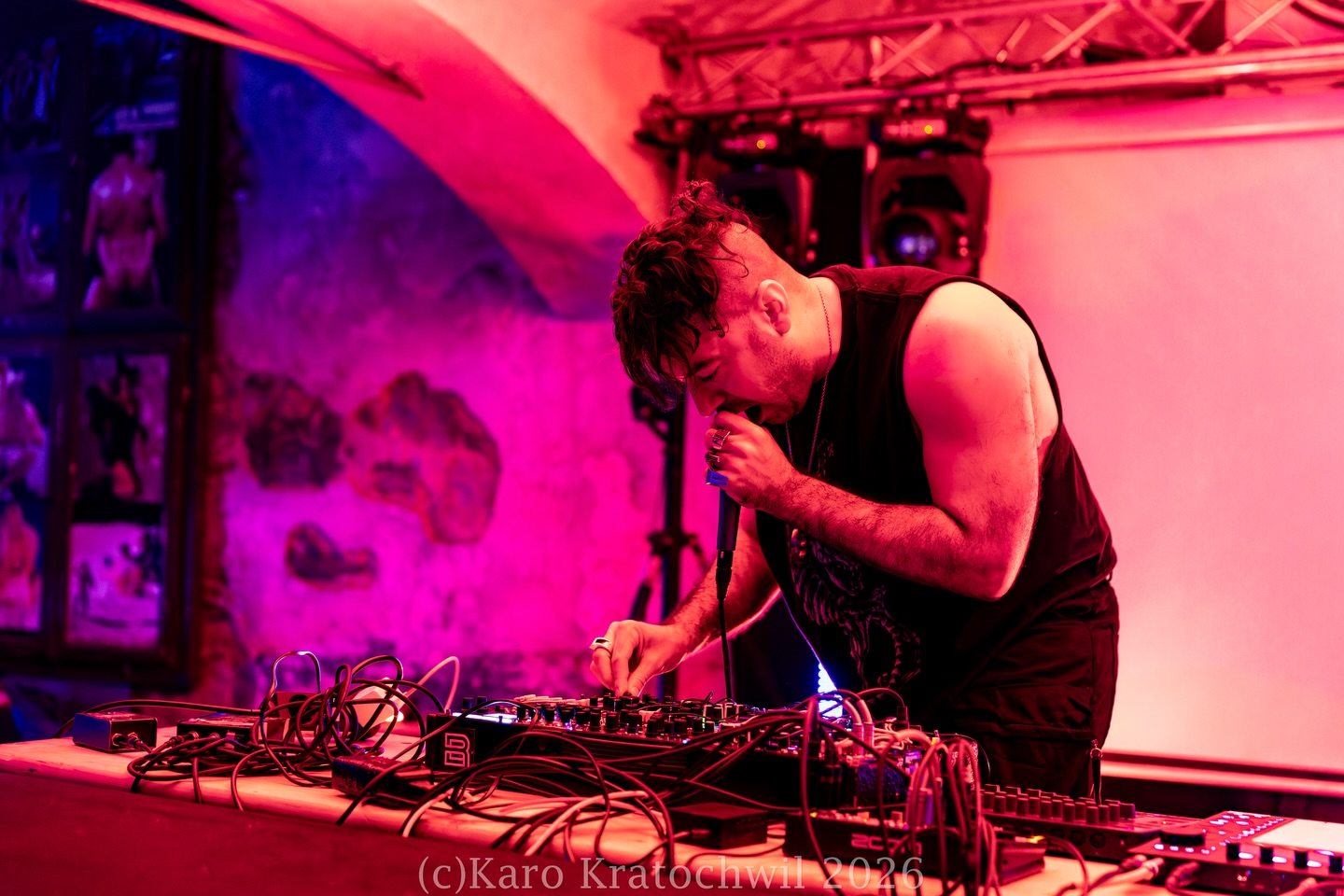
MLEsynth – Snakestyle

1. Favourite knob, fader, switch, on a piece of gear and why?

Doepfer A-103 filter

I have to say the cutoff frequency on the Doepfer A-103 filter. It captures something of the spirit and concept of the Roland TB-303 without being a clone, and within that it has its own character which I like very much.

2. Do you have an ‘almost’ perfect bit of kit? What would you change?

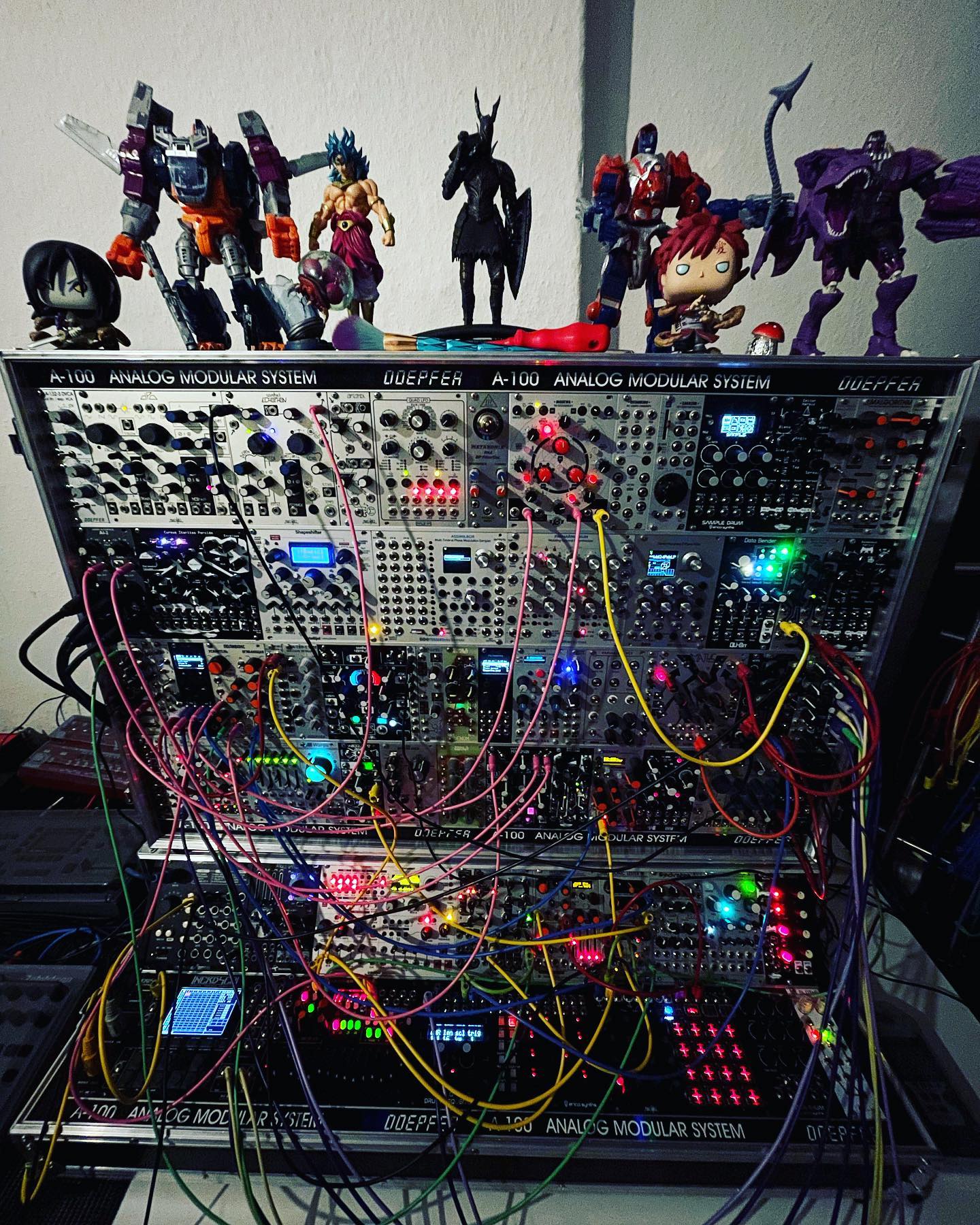
I love my Doepfer A-100. I would say that it’s almost perfect, or as perfect as it can be. It has a clear and practical design which I appreciate. What would I change? There’s always a battle for space in the rack, and I’m always having ideas about how I want to expand it with additional modules, but that goes with the territory. I’m going to have to think about a new case soon.

Doepfer A-100

3. What setup do you bring on holiday or tour or commute, etc.?

If ever I am on any kind of holiday I take my laptop with me, so I can work on composing, arranging, and processing beats. When I’ve played live I’ve kept it simple with a laptop, the Alesis Multimix 8 USB mixer, and a synth for live tweaking, like the Doepfer, or the Roland JP-8080 when I owned one.

Alesis Multimix 8 USB mixer

4. What software do you wish was hardware and vice versa?

It would be amazing to see Reaktor in hardware form, but to be able to zoom in and out like you can in the software, you’d need to be able to bend the laws of physics. I can’t think of any hardware that I’d like to see as software though. The amount of software plugin versions of different classic synths available now is amazing.

Native Instruments Reaktor

5. Is there anything you regret selling… or regret buying?

I borrowed a Roland SH-101 back in 1995, and I briefly owned one in 1997 before having to sell it several months later. It was the first analogue synth that I managed to get my hands on, and I learned so much from using it, putting the theory into practice, etc. I love its clear visual structure. I tend to do a lot of research into equipment before I buy it, so I don’t really have any regrets. That said though, maybe I would not have bought the Roland JP-8000 and waited for the JP-8080 rack version to come out.

Roland SH-101

6. What gear has inspired you to produce the most music?

Getting into analogue modular gear changed the way I approach producing music. I started off with modules that would give me a decent monosynth for synth leads, but as I have expanded, my approach has also widened. Sometimes a single experimental sound you discover can give a new tune its own unique character. You can think more widely about what sort of sound you want to build and test out ideas.

Eurorack modular Behringer

7. If you had to start over, what would you get first?

My first piece of gear was the Roland MC-303. It was a very good starting point. From that I got to familiarise myself with the Roland style of user interface. Sometimes I think I should have started out with a laptop with software for sequencing instead, but then I would not have gained the experience I did with the MC-303.

Roland MC-303

8. What’s the most annoying piece of gear you have, that you just can’t live without?

My laptop can be frustrating at times when it takes longer than expected to start up, especially when I have an idea in my head that I want to get down as quickly as possible.

9. Most surprising tip or trick or technique that you’ve discovered about a bit of kit?

Having four programmable input velocities on the MC-303 made me think about velocity levels, and by extension dynamics. From that I started to think about proportion and balance in everything from velocity and level in the mix to stereo panning, and I began to think of every element as relative to everything else in proportion and balance.

Roland MC-303

Artist or band name?

Snakestyle

Genre?

Electronica, ambient, chillout, downtempo, IDM, psychill, with melodic progressive textures.

Selfie?

Matthew Leigh Embleton aka. Snakestyle

Where are you from?

I’ve lived in and around South East London for most of my life.

How did you get into music?

When I was around 7 years old, I was given my first keyboard, and a vinyl copy of Oxgene by Jean Michel Jarre. It all started from there. I saw additional artwork and photos from the album with Jean Michel Jarre surrounded by all his analogue synthesisers and equipment, and I thought “I want to do that”. Electronic music seemed to offer a world of creative imagination that had not been previously possible, it looked like a world I wanted to be a part of.

First keyboard Yamaha PSS-133

What still drives you to make music?

It’s part of who I am and what I do. I still have things that I want to say with music, atmospheres I want to create, and sounds I want to experiment with, and to develop my sound ever further.

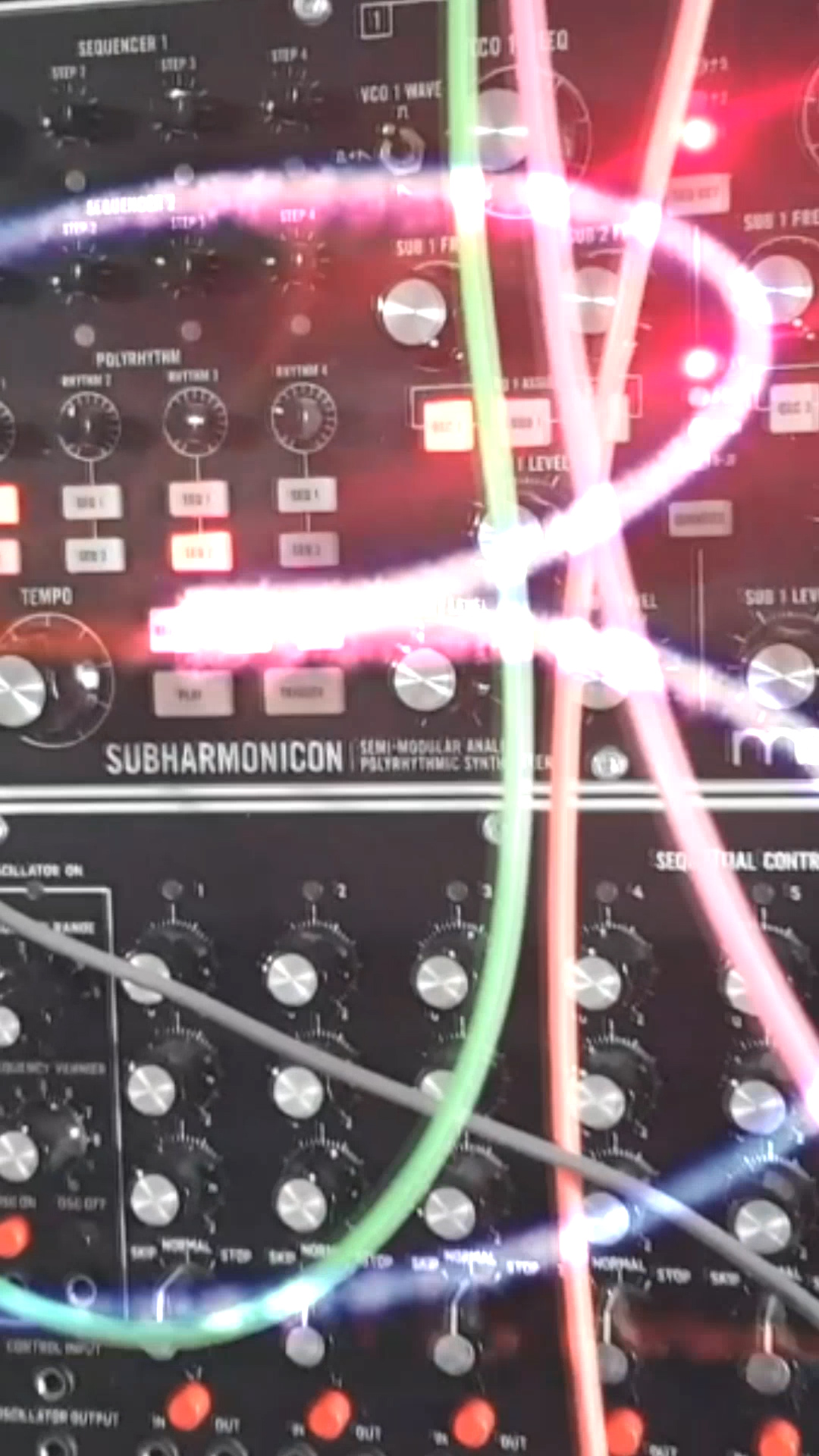
Moog Subharmonicon

How do you most often start a new track?

Most often I tend to build a track from the rhythm up. I get an idea in my head for a groove I want to create and build on. Then I add things, and then take things out until I’m happy. I’m interested in bridging the infinite space of potential with different patterns, schematics, logics, and systems. I create a framework with which to navigate the unknown. Sometimes I’ll pick a series of random BPMs and keys, and see what happens.

How do you know when a track is finished?

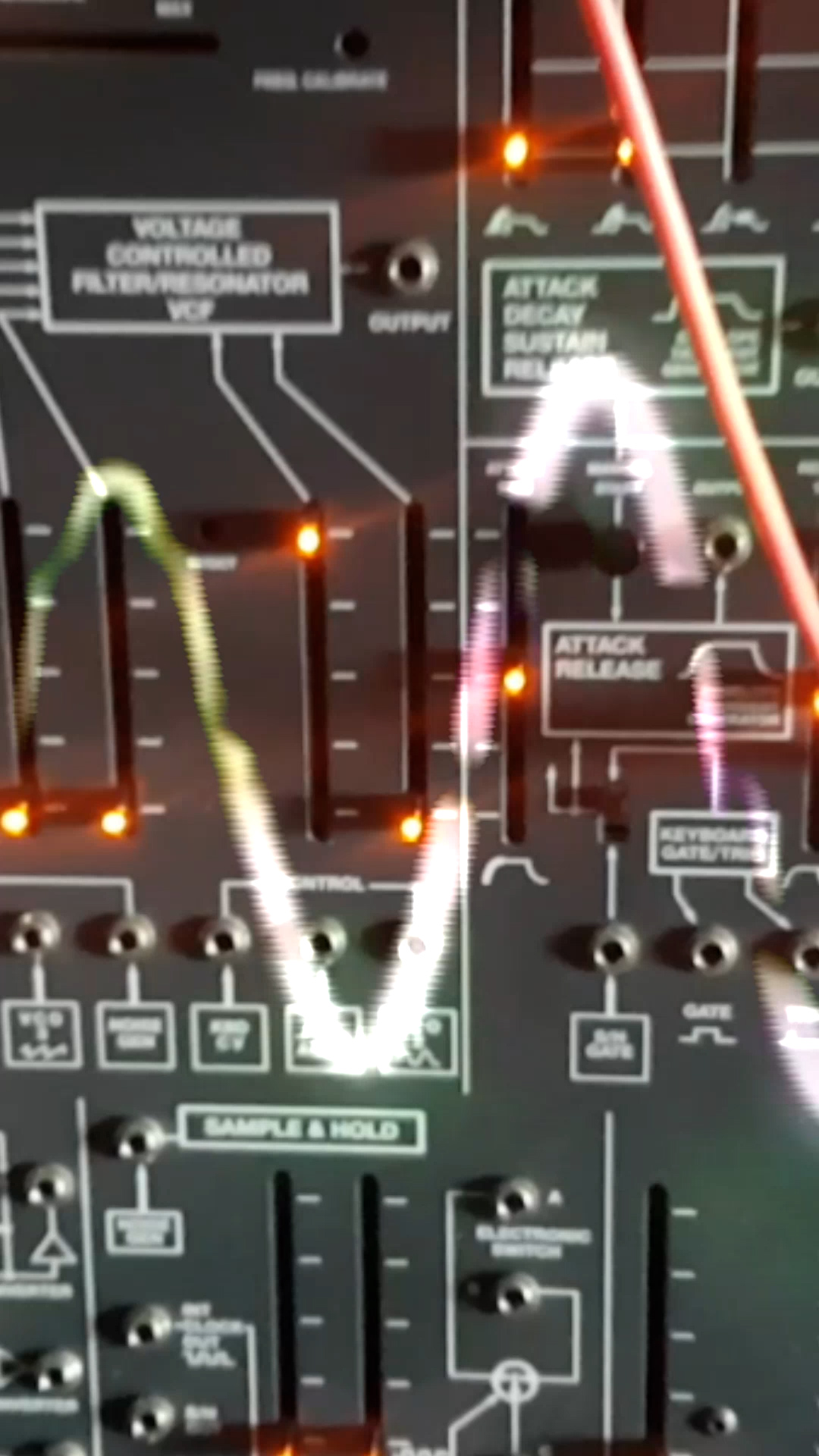
2600

When I am working on a track, I live and breathe it. It’s all I think about all day. I am constantly listening to it over and over again, thinking ‘what needs changing?’, ‘what is it missing?’, ‘what does it need?’.
When I listen all the way through without finding anything that I would add, remove or change, I think ‘yes, that’s done’, or at least that it’s time to take a break from it, and come back to it again with fresh ears 24 hours later.

Show us your current studio

I worry that keeping all my gear set up in a particular way might inadvertantly limit or narrow my approach somehow. I often keep everything packed away until I get a strong idea of what I want to work on, and then I set everything up around that idea, using only what I need and keeping it simple.

Best creative advice that you’ve ever heard?

It’s not the amount of gear you’ve got, but what you actually do with what you’ve got. Try to favour building your own sounds over using presets. Don’t worry too much about sounding like artist X or Y, sound like YOU.

Promote your latest thing, go ahead, throw us a link

My most recent single ‘Deeper Understanding’ is on Alex Tronic Records: https://snakestylemusic.bandcamp.com/album/deeper-understanding

Deeper Understanding by Snakestyle

Website: https://www.matthewleighembleton.co.uk/snakestyle.htm
Bandcamp: https://snakestylemusic.bandcamp.com/
Youtube: https://www.youtube.com/@MLESynth
Facebook: https://www.facebook.com/profile.php?id=61580691853426
Instagram: https://www.instagram.com/mlesynth/
TikTok: https://www.tiktok.com/@mlesynth
X: https://x.com/MLESynth


Lohacker – HiJacker

1. Favourite knob/fader/switch on a piece of gear and why?

Whimsical Raps Mannequins Cold Mac

I have many, aesthetically I love the Whimsical Raps Mannequins lineup especially the Cold Mac SURVEY knob is one of my favourite because it acts as a meta-control over a patch. Modulating it I send correlated signals throughout the patch to discover sweet spots and surprising movements every time.

Chase Bliss Clock knob on MOOD 2

For pedals is the Clock knob on MOOD 2: it shifts pitch, fidelity, and texture simultaneously. It’s the ultimate tool for warping static loops into dynamic, organic, and unpredictable soundscapes.

2. Do you have an ‘almost’ perfect bit of kit? What would you
change?

Intellijel Multigrain

Lately is the Intellijel Multigrain. I’m a granular junkie and this module condenses every essential function with a perfect UI and constantly updated firmware. The morphing fader is the true magic; sliding between two distinct scenes allows you to discover shifting soundscapes during the transition, reminiscent of the interpolation found on the almighty Octatrack (another favourite). There is very little I would change; it is an ideal tool for finding those sounds within sounds.

Elektron Octatrack

3. What setup do you bring on holiday or tour or commute etc.?

Elektron Monomachine

I prefer to work in my studio when I have time; I view the whole room as one big instrument. Back in the past I used to bring with me, my Elektron Monomachine, but now that she’s a retired ‘old lady,’ I’d rather keep her safe and sound at home. If I’m working away from home, my laptop is the one tool I’d take to get some previous recordings organized.

4. What software do you wish was hardware and vice versa?

Fors Opal

It would be fantastic to see Fors Opal as a hardware instrument. It is a highly capable software rhythm machine that integrates FM, modal synthesis, pulsar noise, sampling and effects into a single, cohesive environment. Even if my Eletron Digitakt 2 & Digitone 2 are equally fun and inspiring.

Digitone 2

I’m longing for a software equivalent to the Schlappi Engineering 100 Grit. It is a powerhouse for avant-garde sound design, functioning simultaneously as a filter, distortion unit, and noise generator. By leveraging audio and CV feedback loops, it produces evolving, chaotic textures. The brass touch points allows for the tactile injection of signals into the feedback paths, resulting in unpredictable alien sonic environments.

100 Grit

5. Is there anything you regret selling… or regret buying?

I’m diligent about research before buying gear, so I rarely have regrets. Every instrument is a learning opportunity. I’m not a collector but rarely sell gear. I really miss the Mutable Instruments Elements, which I sold only for space reasons; its ability to use external material as input for the resonator sounded great. Also I still kick myself for selling Korg EMX so cheaply, considering its current market value.

Mutable Instruments Element

6. What gear has inspired you to produce the most music?

eurorack-cases-54hp
Shapeshifter
Orthogonal Devices ER-301

I find inspiration by patching my modular system. I treat it as a living ecosystem, focusing on autonomous patches that evolve independently. It shifts the process from composing to exploration. The modules I use in every single patch are the Intellijel Shapeshifter Dual Complex Morphable Wavetable Oscillator (my favorite oscillator), the 4ms Dual Looping Delay and Qubit Nautilus, various granular processors including Mutable Instruments Clouds, Intellijel Multigrain, Qu-Bit Electronix Mojave, Orthogonal Devices ER-301, and a Make Noise System.

Torso S-4

Recently the Torso S-4 has been a revelation for me. Many ways to manipulate and process samples in this tool. Ironically, I find its lack of a traditional sequencer a positive constraint since it forces me to discover unexplored creative workflows.

7. If you had to start over, what would you get first?

VCVrack

I’d still begin with a laptop, focusing on Max/MSP and virtual modular environments like VCV Rack. While hardware will always be fascinating, modern software is simply too significant to ignore.

8. What’s the most annoying piece of gear you have, that you
just can’t live without?

Westlicht Performer

The Westlicht Performer is in my top 3 eurorack sequencers, though it’s not without its flaws. I’m a huge fan of its workflow and features. It’s a DIY project, so you can’t expect the same build quality as big brands, but the buttons are small and stiff, which really hurts the playability. Even though some of the switches on my unit are starting to go, I just can’t part with it (I will get it fixed soon). My only other wish would be for an additional set of dedicated mod CV outputs beyond just pitch and gate, which would really unlock its modulation potential.

9. Most surprising tip or trick or technique that you’ve
discovered about a bit of kit?

Serge Eurorack
Side Serge

Play with feedback by routing audio or CV back into the patch for recursive modulation. My Random*Source Serge is great for this, but this concept can be applied to any modular system. Building self-influencing systems where sounds and modulations auto- evolve in hypnotic ways and organic chaos.

Make Noise Eurorack

Another fundamental modular technique I employ is decoupling trigger sequences from pitch CV. Unlike MIDI, separating these sequences leads to patterns evolving organically.

Artist or Band name?

I go by Lohacker, a name inherited from my first music-related mail account. It’s served me well in online communities, though I’ve always viewed it more as a functional alias than a final artistic statement.

Genre?

Depends where the patch goes, something between IDM, experimental noise, glitch, dub, ambient.

Selfie?

Lohacker

Where are you from?

Italy

How did you get into music?

Jeskola Buzz

My journey began with electric guitar, though my interest soon shifted to the sonic possibilities of effects. This fascination (especially for delays) evolved into synthesis since early 2000’s with the mythical Jeskola Buzz modular tracker and Ableton 1.0 since its release.

Guitar FX

What still drives you to make music?

Erica synths

It is the meditation of listening to my generative patches. I find that being absorbed by the creative task is the most rewarding part of making music. Even just 15 minutes of musical activity in the morning helps me throughout the day.

How do you most often start a new track?

Joranalogue

My tracks/patches usually begin as a late-night concept or a specific technique I visualize before sleep. Early in the morning, I approach my system with fresh ears to bring that idea to life. I avoid the rush to record and let the patch run for a couple of days. I then develop a secondary sequence on a separate case, and when these two autonomous ecosystems begin to influence each other I commit the performance to record. I make a big use of random gates/probability in sequences/shift registers and switches to build the various parts, then resample some bits apply granular processors and apply modulations to the effects. When playing guitar, I’m more on the ambient side, building layers through several unsynced loopers and delays.

How do you know when a track is finished?

A nest of eurorack

You don’t (or when you finish with patch cables/modulation inputs!)

Show us your current studio

All eurorack
More eurorack
Synthrack
Electrosmith Daisy

Best creative advice that you’ve ever heard?

These four are my fundamentals:

  • Avoid presets to find your sound.
  • Resample and layer sounds to further manipulate them.
  • Stop thinking about writing a song and start thinking about building a machine that generates sound.
  • Try to prioritize ears over the eyes when working with a computer (turn off your monitor).

Promote your latest thing… Go ahead, throw us a link

My Instagram and Youtube where I upload my patches.


Francesco Gennari – Eurorack Études

1. Favourite knob or fader or switch on a piece of gear and why?

Aesthetically, the knobs and selectors on the Nagra III drive me crazy: big, solid, and the selector has a really nice click.
From a functional point of view, I love the Var Shape on the NTO oscillator by Serge/Random Source: I really love that continuous waveform change.
Honourable mention to the frequency knob of the Soundfreak Triple VCO (VCS3 in 4U format).

Nagra III

2. Do you have an ‘almost’ perfect bit of kit? What would you change?

The Fostex X-28 multitracker. I’ve been using it for years, even live; it does everything it needs to do and it does it well, but despite regular maintenance, every now and then (still don’t know why) it decides not to turn on.
It’s not particularly nice when it happens 10 minutes before a live show, but since I decided to use it, I factor in a bit of thrill!

Fostex X-28 multitracker

3. What setup do you bring on holiday or tour or commute etc.?

On holiday, just headphones to listen to other people’s music.
For live shows, lately my setup consists of a Eurorack system, a pedalboard with mixer, Fostex X-28, and Osmose.

Live electronic setup

4. What software do you wish was hardware and vice versa?

Nothing. I’d say there’s enough choice both in software and hardware.

5. Is there anything you regret selling… or regret buying?

Sentimentally speaking, I regret selling the Korg Microkorg, it was my first synth.
Another synth that I always regret selling every time I try it again is the Moog Grandmother: fat sound, nice keyboard, great spring reverb, semi-modular.
Sooner or later it will come back into my studio 🙂

Moog Grandmother

6. What gear has inspired you to produce the most music?

The piano.
It’s the instrument that shaped me, even beyond a purely musical point of view.
The one that has always been with me.

Yamaha Piano

7. If you had to start over, what would you get first?

In general? A piano.
Synth/production-related? PC + audio interface + speakers/headphones.

DAW, RME audio interface and Genelec Speaker

8. What’s the most annoying piece of gear you have, that you just can’t live without?

CASES! Hard cases, soft cases, flight cases, pedalboards. They’re expensive, big, heavy, and when I change setup often you have to modify them, adapt them, or worse, replace them.
But it’s the best way to transport my instruments around, so that’s how it goes.

Gear cases

9. Most surprising tip or trick or technique that you’ve discovered about a bit of kit?

Well, it’s a technique that I really like and use a lot: cross FM modulation.
One oscillator modulates another in frequency, and the latter modulates the first one back.
You end up in definitely wild sonic territories, but I really enjoy being able to tame the modulation by finding various sweet spots that allow me to use it in a melodic way as well.
Two of the modules where I prefer to use this technique are the Piston Honda mk3 by Industrial Music Electronics and the Brenso by Frap Tools.

Piston Honda mk3 by Industrial Music Electronic

Artist or Band name?

Francesco Gennari

Genre?

Electronic.

Selfie?

Francesco Gennari

Where are you from?

Brescia – Italy

How did you get into music?

I started playing the piano as a child, around the age of 5.
One day, a teacher at the kindergarten I attended brought in a digital piano to play, and I was completely enchanted by it. From that moment on, I started taking lessons, and later, around the age of 13/14, I entered the Conservatory to study classical piano, completing the course about 10 years later.
At the same time, I began developing an interest in other instruments: I played guitar and bass in a couple of bands with friends, until I got my first synth around the age of 18.
However, the synth loop started more seriously and intensely a few years later. Curious, I took part in a DIY workshop to build a small synth with three oscillators and a filter.
I then went through Pure Data/Max, continued with DIY, other keyboard synths, and eventually landed in the Eurorack modular world.

What still drives you to make music?

The urge to create something, to express myself, and the curiosity to try and discover something new.

How do you most often start a new track?

Most of the time everything starts at the piano.
The process can begin from a melodic, harmonic, or rhythmic idea. From there, I tend to transcribe my idea into my main sequencer in my modular system, which is Usta by Frap Tools, or bring everything into the DAW.
The development often continues in parallel by creating further interlocks, melodic lines, or interventions on the piano keys, and then moving on to timbral and structural research within the modular system.

How do you know when a track is finished?

In most cases, I realise it when I notice that I’m obsessing over too many details of the track, or when I see that I already have too many different versions of the same piece.
At that point, it means I’m stuck in an endless hyper-perfectionism loop.

Show us your current studio

Studio desktop
Studio synth rack
Yamaha Piano
Eurorack desk

Best creative advice that you’ve ever heard?

Be curious.
Go beyond, explore, experiment, and research.
This helps you understand yourself and allows you to find a way to express yourself creatively.

I remember how my piano teacher at the conservatory used to introduce me to, and push me to investigate, the context of the piece I had to study: discovering the composer and placing that piece in a specific historical moment and in the composer’s own life. This process always changed my reading and interpretation of the piece.

Promote your latest thing… Go ahead, throw us a link.

My latest album: Studi

– Bandcamp: https://francescogennari.bandcamp.com/album/studi

– YouTube: https://www.youtube.com/playlist?list=PLBdrsKXF5H_y91ONIyzsYOt05CMWgL6nM

– Platform: https://tr.ee/WKJTshcvsA

Studi is made up of 8 tracks inspired by the concept of the Étude, where technical exploration and sound research converge.
Each Studio is accompanied, in addition to the album cover, by an artwork created by artist/designer Daniel Hicks, based in San Diego, CA, offering a visual counterpart to the music.

You can also find a performance of each track followed by a track breakdown on the Frap Tools channel: https://www.youtube.com/playlist?list=PLPVhsLeaCG8ouhhsNamWOdhtU07GYkItN