ShoeGazeCity – Head DownTown Sound

1. Favourite knob/fader/switch on a piece of gear and why?

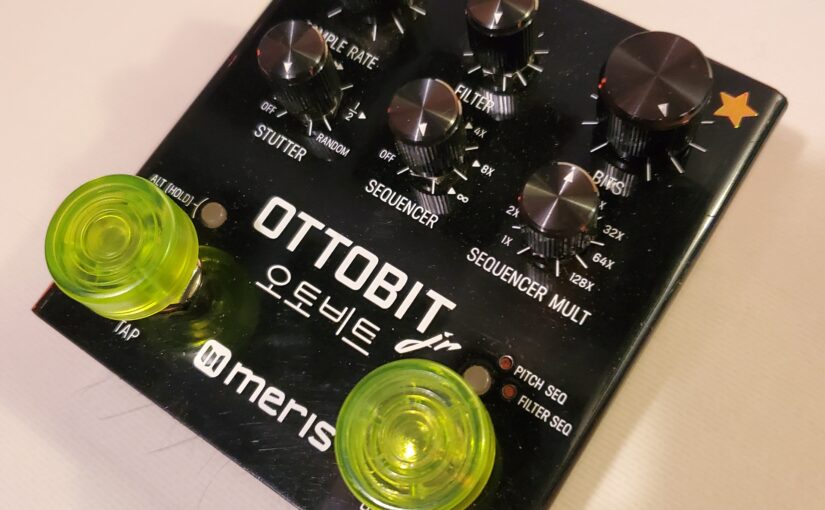
My favorite knob has to be the sequence multiplier knob on my Meris OttoBit Jr. This pedal is a bit-crusher/video game/glitch/stutter machine and it has a full on 6-step sequencer built in (which can be used to sequence multiple things, but pitch is the most obvious and fun one). The sequence multiplier knob speeds up the rate of the sequence being played, so you can get pretty wild on-the-fly video game arpeggios if you manually turn the knob while sustaining a note. (You can also use an expression pedal to do this, but alas, I don’t have room on my board for one at the moment).

Ottobit Jr. by Meris

2. Do you have an ‘almost’ perfect bit of kit? What would you change?

The DigiTech EX-7 Expression Factory pedal comes to mind. This big and heavy expression pedal looking box has a bunch of different sounds packed into it… It has overdrives/distortions, flangers/rotary modulation, a full on whammy pedal, and my favorite: the legendary space station. The idea is to let the user control all of these authentic sounds via the expression pedal (ie: controlling pitch on the whammy setting, or the swell of the space station). However, it kind of sucks that the actual feel of this expression pedal is so hard to use. It’s very “sticky” feeling and doesn’t move a lot, so you have to be very precise on how you use it. It also requires a bit of an extra “push” to turn it on, which involves stepping on the front or back of the pedal, and it always feels awkward. I give it 10/10 for the sounds it makes, but is very difficult to use in a live setting.

DigiTech EX-7 Expression Factory pedal

3. What setup do you bring on holiday/tour/commute etc.?

I play guitar and keyboards in an instrumental progressive-rock band called Tortoise Forest. We all have fairly large pedal boards and try to implement weird electronic sounds into our music whenever possible. So my usual gear that I bring to shows consists of 1 or 2 guitars (90’s Yamaha SGV-300 and/or Squier Super-Sonic), a loaded pedal board (Pedaltrain Novo 24), my amp (a Quilter Tone Block 201 head and a 1×12 cab that I converted from an old broken Fender Stage Master), my keyboard (Nord Electro 3 73SW) and synth (Korg Prologue 8) and sometimes a powered speaker for the keys/synth (JBL EON615).

I’ve gotten pretty good at setting all of this up in a timely manner, although the keys/synths are still pretty new for me in the band. I still play about 70% of the time on guitar and about 30% I switch to pianos, organs, electric pianos or synth leads & pads. I have thought about down-sizing the board and what-not, but I use all of these tools at live shows and I really enjoy improvising with new sounds each night, even if it means cramming extra stuff into my tiny sedan! 

Tortoise Forest live pedalboard setup
Quilter Tone Block 201 head with a 1×12 cab Fender Stage Master
Nord Electro 3-73SW and Korg Prologue 8

4. What software do you wish was hardware and vice versa?

Right away, I gotta say that I wish Serum was available as an actual synth and not just a plug-in. Serum is an extremely versatile synth plug-in that has a very intuitive user interface, even if you’re not a big synth person. I have used a lot of synth VSTs and other plug-ins and I wish a lot of them were available as hardware units, but I love Serum so much and use it to write/improv/record many projects. I went with the Korg Prologue for my live hardware synth because it still does a lot of things well (mono leads, pads, arp stuff, etc.) But to have Serum in an actual hardware synth would be a dream. I understand why it’s not really feasible to do this, as you can add so many voices and so many high-end effects with Serum, but maybe someday…

For hardware available as software, I’m just gonna be that guy and wish that my entire pedal board was available as one easy-to-use plug-in. There are certain products available to record your board into your DAW without an amp or any kind of cab emulation… But it would be rad if in the future, every new pedal you purchase came with a serial-code or something for a free plug-in version. Then you could design a board in your DAW and have it there for recording with actual effects that you’re used to using, instead of having to design reverbs with unfamiliar plug-ins.

Serum VST plugin

5. Is there anything you regret selling… or regret buying?

Well, I have to admit that when I first bought my Meris Enzo (synth pedal), I ended up selling it. I just had a hard time using it live and dialing in levels. Then after about a week of not having it, I missed it SO much and ordered another one. It is one of the most flexible pedals capable of so much other than just gorgeous “real” synth sounds. I especially missed it for it’s dry mode, which lets you use a plethora of effects including pitch shifting, portamento, modulation (with rotary vibes), filters, ring mod, delay.. It is the coolest!).

Meris Enzo

I don’t regret buying too many items, however I do own TWO 1983 Yamaha SBG-200 electric guitars, and I totally don’t need TWO of them. My friend had one when we were younger and I remember it being awesome, so I bought one on Reverb (and it was as awesome as I remember). Then I saw another one pop up, the same exact guitar in the same finish, and I bought that one… My thought process was that these are becoming rare and I want to have a backup, but now I have an extra guitar taking up valuable space in my tiny basement studio and I never play it. Also, it’s for sale if anyone is interested ;).

Yamaha SBG-200

6. What gear has inspired you to produce the most music?

Hmm… A few pedals definitely come to mind. Any delay or reverb pedal with super long decay times are always inspirational. I got my Strymon TimeLine when I was just out of high-school back in 2010. That thing opened up a whole new world for me. It has infinite decay times with a bunch of different sounding delays, modulation, and a built-in looper… Ahh that looper is SO good. I know there are more options for loopers on the market now (I want a Blooper)… But the TimeLine looper can do similar things as the Line 6 DL-4 and being introduced to this when I was younger let me explore different sonic soundscapes that I didn’t know were possible to create.
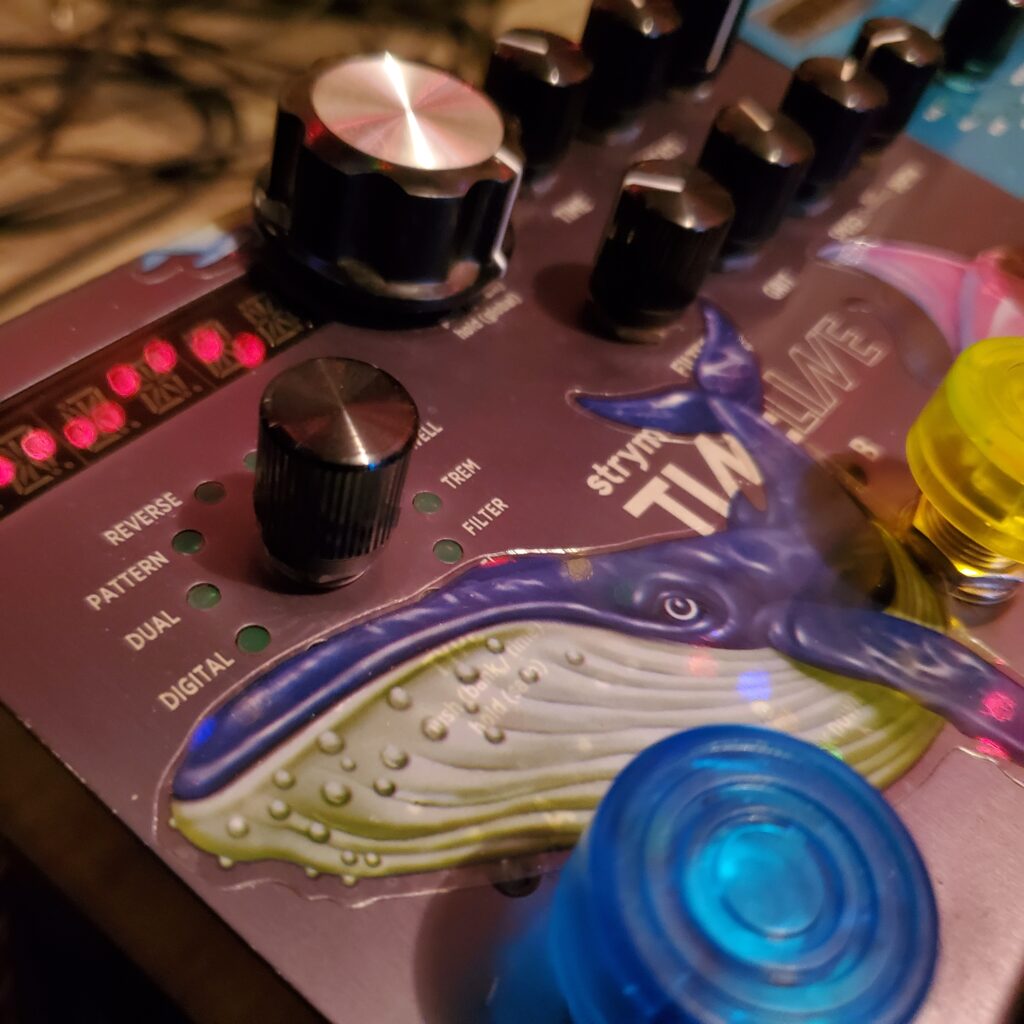
Strymon Timeline

I also have to give it up to Meris again, the Hedra is one of the craziest pedals I have ever used. I bought it the day it was released (because Meris is great at revealing mysterious new pedals) and it’s one of my favorites on my board today. I’m a huge fan of pitch delay and this thing has THREE separate pitch delays that you can dial in at different rhythmic patterns. It can also pitch glide as slow or fast as you want it to, giving every option you would want in the world of pitch shifting.

Meris Hedra

7. What’s the most annoying piece of gear you have, that you just can’t live without?

I mentioned it earlier, but again I have to say the Strymon TimeLine. It still sounds great compared to everything out there today, and I have been using the looper for so long that it’s become so natural to use compared to other loopers. BUT the foot switches are very worn out from a decade of use, (plus it’s annoying to have to click two switches at once to bank up/down). I have sold some gear recently so that I can afford to order a midi controller to control all of my midi pedals. This will allow me to access more presets on each pedal, explore new sonic territories, AND hopefully make it so I don’t have to ever use the footswitches on the TimeLine again (will be using the midi controller as a looper-controller as well). I’m very excited.

Strymon Timeline having a whale of a time

8. Most surprising tip/trick/technique that you’ve discovered about a bit of gear?

Using multiple loopers at once. I have performed solo sets where I will use two looper pedals that are not at all midi-synced or anything, and stacking them is surprisingly good sounding. What I do is loop/record a short melody into the first looper in my signal chain. Then, after auditioning different chord progressions and/or basslines to put under this melody, I will loop/record the new chord progression WITH the first looper also playing the melody INTO the second looper in my chain. I’m sure that some people reading this are like “why don’t you just use a single looper than can already do this?”, which is totally valid. Because that exists. Umm, they are more expensive and I like using cheaper loopers that I already have. Plus this setup usually takes up less space than larger loopers (had the Boss RC-300 and sold it for being so huge). Some of my favorite loopers I use for this are the Line 6 DL4, Hotone Wally, Boss RC-3, Strymon Timeline, and the new Dunlop Clone Looper. Side note: having a looper such as the DL4, Timeline or the Clone Looper with a “play once” function makes it easier to “sync” each stacked loop.

Multiple loopers: Timeline, Line6 DL4, MXR clone, Hotone Wally, Boss Loop Station

Artist or Band name?

Tortoise Forest

Genre?

Instrumental Progressive-Rock

Selfie?

Max Davies aka. ShoeGazeCity

Where are you from?

Buffalo, NY

How did you get into music?

I started taking piano lessons when I was 5, then switched to drums and guitar when I was 13 and played in a bunch of bands. Being able to record myself on different instruments at a young age helped me to grow as a musician (thanks old school Tascam 8 Track :).

What still drives you to make music?

A bunch of things. Friends who post clips on Instagram of new pedal/instrument sounds are always super inspiring and make me want to explore new ideas in my studio. Writing new stuff with the band is always fun because it gives us the opportunity to take time to create something extremely technical/progressive/mathy in a private setting and then allows us to record this and play it live for our friends and fans to hear. Such a good feeling to have people enjoy what you’re creating.

How do you most often start a new track?

It depends on which project I’m working on. Tortoise Forest typically starts with one single melody, chord progression or “riff”. We try to explore every single possibility of different ways of playing that riff, whether it be backwards, faster, slower, in a random time signature, drowned in weird pedal effects, whatever. This makes writing songs in the progressive genre very satisfying. 

I will also record myself on drums, guitar, bass, keys, and vocals from time to time and make solo ambient/math/post/prog rock stuff. Sometimes if I want to just record “something” I will lay down an improvised/on-the-spot drum part without knowing what I want on top of it. Then I grab a guitar and throw whatever comes to mind on it, then record the appropriate bass lines, keys and sometimes vocals. Sometimes it works and sometimes it doesn’t even come close, but it still lets me practice improvising and I think it’s important to create new music every single day.

How do you know when a track is finished?

You don’t! I mean, there have been songs where we just didn’t have any more parts to add on and we deemed it as being finished. On the other hand, we still have songs that have been in the writing phase for a while that feel like they need more of… “something”. I guess regardless of the traditional “verse/chorus/bridge” writing styles, if our songs have a beginning, a middle chunk and an ending that sounds like an ending, we are generally pretty happy. 

Show us your current studio

ShoeGazeCity Studio
ShoeGazeCity Pedals and Guitars
ShoeGazeCity DAW setup with Ableton Live

Best creative advice that you’ve ever heard?

Everyone has a different standard for what is considered good music. You can create whatever you want, just create something.

Promote your latest thing… Go ahead, throw us a link.

I post pedal sounds and loops on my Instagram almost daily → @shoegazecity


[Editor: Do you have a favorite tip, trick or way of working with any of the gear from this interview?
Then throw a comment below…
]


Hey Zack – Bringing Back Whack

1. Favorite knob/fader/switch on a piece of gear and why?

PAE Lock-in Amplifier

First of all, I LOVE this first question. I think I’d have to go with the “Signal Channel” knob on my PAE Lock-in Amplifier. It’s huge, it’s clicky, it’s satisfying….and most of all it’s a gain knob on a distortion. If you’re unaware: Lock-in amps are basically an overdriven filter used in Engineering labs for finding voltage inconsistencies in the 1960’s on, and are a WONDERFUL choice, if you’re looking for an over-powered distortion with a ton of sweet-spots (somewhat reminiscent of a Sherman Filterbank). If you’re interested in learning more, Hainbach covers the musical use of these in much more detail on his Youtube channel here.

2. Do you have an ‘almost’ perfect bit of kit? What would you change?

Yamaha RY30

I feel I have a somewhat surprising answer for this question: The Yamaha RY30 drum machine. A boring-looking, cheesy, 90s sample-based ROM synth. It’s truly a simple box: you layer two sounds, pitch them, filter them, put them through a pitch EG, and then play them on velocity-sensitive pads while pitching them with a wheel. I think I feel so connected to the RY30 because the workflow is so streamlined, yet it gives me such unique percussion that I would’ve never made in a DAW… it just feels FUN ! These limitations are inspiring, but if I could change anything about it, I’d love to load my own samples in and would appreciate a reverb no matter how crappy. With this in mind, I’m trying to learn my Korg M3R in combination with a Wavrex Samplecard to make that dream a reality. Both the M3R and the RY30 are layer-based ROM synths a-la Roland R8 or AI / LA synthesis found in the Roland D50 and Korg M1. So in theory, I should be able to surpass RY30-esque sounds with the more robust design of the Korg M-series (as long as I can wrap my head around it).

3. What setup do you bring on holiday/tour/commute etc.?

Zoom ST-224 sampler

I often bring my Laptop, Zoom H6 field recorder, and Zoom ST-224 sampler (known online as the poor-musician’s SP-1200) around with me in my bag. The ST-224 is such a surprisingly inspiring sampler, mostly due to its extremely musical array of effects (and gorgeous sample rate), so it’s perfect for quick explorations to record out of the main outs and revisit later. If I’ll be gone a while, though, it’s hard for me to leave my Intellijel Rainmaker at home ! It’s by far one of my favorite pieces of kit as it’s basically a strange-sounding infinite loop-maker machine. I have countless recordings that I’ve cut up into sample / loop packs and use extremely often… it’s truly a gold-mine for new sounds and inspiring ideas if you’re willing to tame it.

4. What software do you wish was hardware and vice versa?

As far as software to hardware I’ve wanted an Ableton Operator clone for YEARS, as well as Ableton’s Drum Buss and the Max Convolver (but really any hardware convolution reverb would be wonderful to have). If it wasn’t clear by now, I’m a huge Ableton lover haha ! For hardware to software I’d love to have a Rainmaker VST, as well as some Lab Equipment-inspired effects to get that raw electric sound.
[Editor: Hainbach is working on a VST Lab-Equipment Plugin with SonicLab]

5. Is there anything you regret selling… or regret buying?

Lexicon Vortex

This is actually very relevant to me, as recently as last month I bought a Lexicon Vortex for the 2nd time after missing it so dearly !!! But as of now I’d say that I miss my combo of the Eurorack modules: Ornament & Crime, Clouds, and Plonk. The three of them could cover so much range of mutating and captivating sound design. I’m still going through recordings I have of them from years ago and repurposing them in Ableton projects.

6. What gear has inspired you to produce the most music?

Over the course of the last year I’ve been growing into more of a hybrid music setup where I use my hardware as strictly sound creation tools and Ableton for sequencing and chopping up samples / loops from them. It took me years to find that I simply don’t write fully-realized songs when I use my hardware setup alone. I’ve owned the MPC 1000, OP-1, Octatrack, Squarp Pyramid, and TR8s, over the years, but none of their workflows really clicked with me. It could be that I don’t have enough sound sources or that I don’t have a big enough mixer or that my gear just isn’t hands-on enough…. but I believe that it’s more that my production style revolves around sound exploration first and song realization as a reaction to it. With my current setup I feel that almost every piece of gear is catered to my workflow of improvisation and recording to create a pool of content to pull from. The pieces I use the most, though, are: The Intellijel Rainmaker, Zoom ST-224, Lexicon Vortex, Yamaha RY30, Ucreate, and my Lock-in Amp.

[Editor: I gotta say, it took me years to figure out a similar workflow to what Zack describes above. Creation first. Editing afterwards]

7. If you had to start over, what would you get first?

Although I’ve mostly moved away from Eurorack I’d definitely start with the Rainmaker and grow into a modest 84HP setup from there. Without the constant yearning to make fully-fledged songs like in my past, I feel that I’d get so many more ideas down than I did originally.

8. What’s the most annoying piece of gear you have, that you just can’t live without?

Definitely the Korg M3R as mentioned earlier. The workflow is still completely over my head at the moment so I usually edit presets. Luckily I recently got the Korg RE-1 controller for it and hope to put some time into learning the combo more fully, hopefully to turn it into the most capable synth that I own. A close second would be the Zoom MS100BT multi-effect pedal that you can make virtual pedalboards with BUT there are no expression or MIDI inputs, so it’s very hard to integrate into any setup, except very static ones or perhaps mixing.

9. Most surprising tip/trick/technique that you’ve discovered about a bit of kit?

A simple trick that BLEW me away recently was using internal feedback with the Lexicon Vortex. The otherworldly aggressive sounds you get from patching it into itself gives it a completely different character, than when you use it to process outside audio. This technique can also be implemented so easily into setups with matrix mixers, mixer sends, filters, and effects to create an endless inspirational output to explore.


Artist or Band name?

Zack Alkek / Zack.website / 2nd Place / Quirimps Swaramps / Milk Puzzle.

Genre?

Experimental Electronic / Experimental Pop / VGM / Soundtrack.

Selfie?

Hey Zack

Where are you from?

San Francisco, CA.

How did you get into music?

Piano lessons from when I was 7-11, Trombone from 12-16, Guitar from 13-18, Music production from 18-now.

What still drives you to make music?

Collaboration and the excitement of new projects.

How do you most often start a new track?

Messing around in Ableton, cutting up recordings, or recording voice memos with riff ideas.

How do you know when a track is finished?

When it feels right and it makes me happy.

Show us your current studio

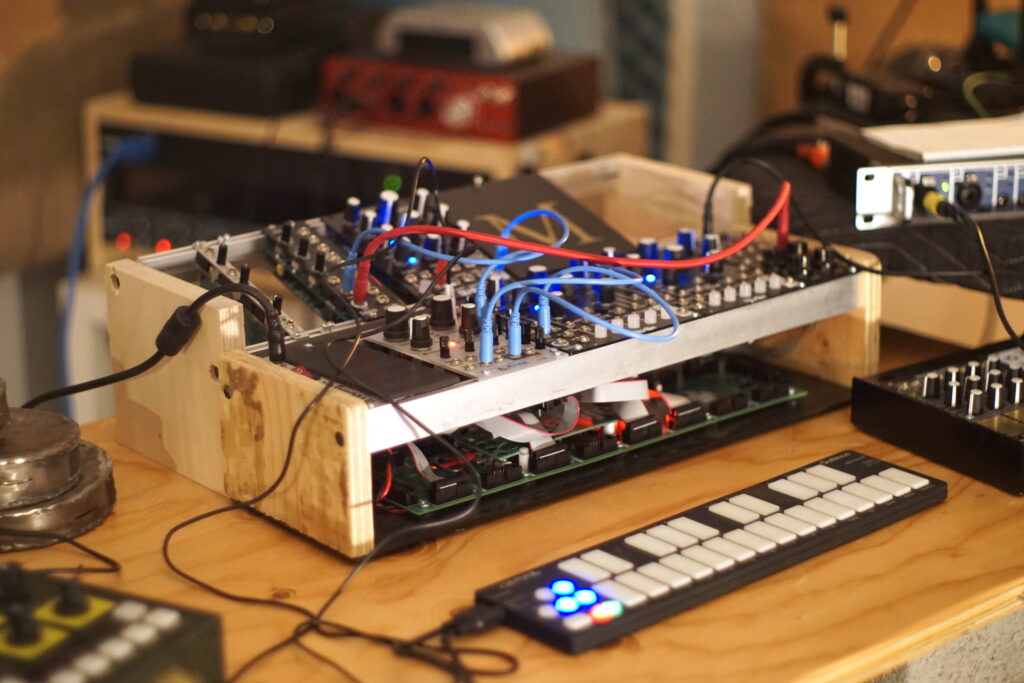
Sure! It’s a MESS because I’m always moving things around, but it’s MY mess. (:

Best creative advice that you’ve ever heard?

“Many ideas grow better when transplanted into another mind, than the one where they sprang up.” COLLABORATE !

Promote your latest thing… Go ahead, throw us a link

Right now, I’m part of a team called Five Side Studios and we’re creating a computer game called Memorial ! Playable demo should be out soon, but follow our twitter in the meantime ! http://fivesidestudios.com/memorial


[Editor: Do you have a favorite tip, trick or way of working with any of the gear from this interview?
Then throw a comment below…
]


Maysun – Drummer Of Synths

1. Favourite knob/fader/switch on a piece of gear and why?

The Mighty Power Switch

My #1 favorite switch is the one from the power supply to my rack mount gear. It is hard to reach, it makes a loud click sound and it is the first thing I turn on before
starting a recording session. It is my preferred one, because activating it means I’m about to create something. (I also like my modular synth power supply switch, my camera’s on/off swivel switch, my cassette player’s stop switch, my dictaphone’s stop/eject switch and my lego wheel OP1 knobs.)

2. Do you have an ‘almost’ perfect bit of kit? What would you change?

A lot of my gear is broken / acts weird / only works sometimes, and I like them just like that. I enjoy the thought that the machines have moods and maybe don’t want to cooperate sometimes, or that they want to influence the artistic direction. I try to accept the glitches and use it to a musical advantage. I would not change anything about them.

3. What setup do you bring on holiday/tour/commute etc.?

Sony A6000 Camera + OP1 + Zoom H6 + iLok, Laptop and Headphones (ATH M50x).

Sony A6000 Camera + OP1 + Zoom H6 + iLok, Laptop and Headphones (ATH M50x)

4. What software do you wish was hardware and vice versa?

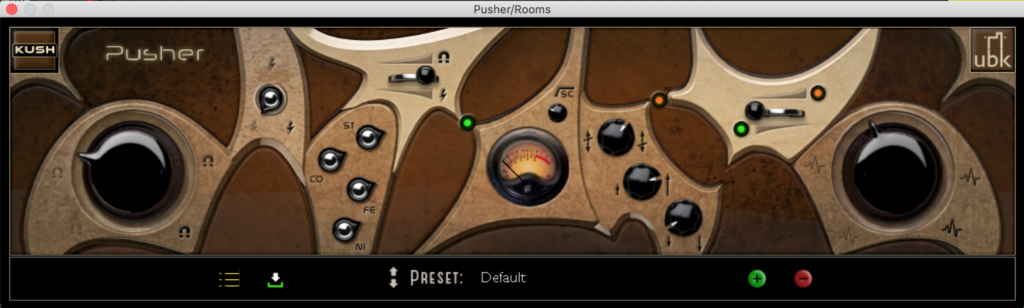
I wish I had a hardware version of the Pusher plugin from Kush Audio. I use it to add dirt, grit and noise to any track that needs a bit more personality, be it synths, bass,
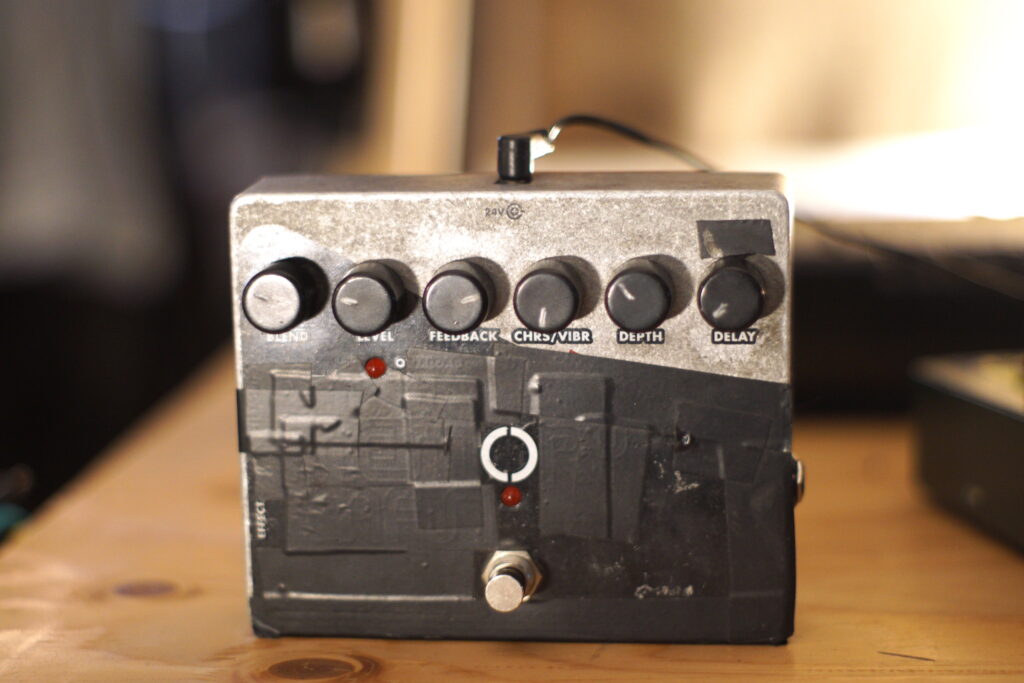
drums, etc. It works on everything. I have a EHX memory man deluxe delay pedal that I use as a kind of dirty preamp / chorus / overdrive. I haven’t been able to find a
plugin that sounds like it.

5. Is there anything you regret selling… or regret buying?

I regret selling my Strymon DECO pedal. It had a very good tape emulation sound and was stereo. I used it for live shows at the end of my signal chain. I sold it
because I needed to money to buy a sampler. (I also regret selling my Korg Poly800, it was a really nice synth.)
I don’t think I regret anything I bought, but a piece of gear that I sold after only a few days of having it was the KMI Boppad. It just wasn’t for me.

6. What gear has inspired you to produce the most music?

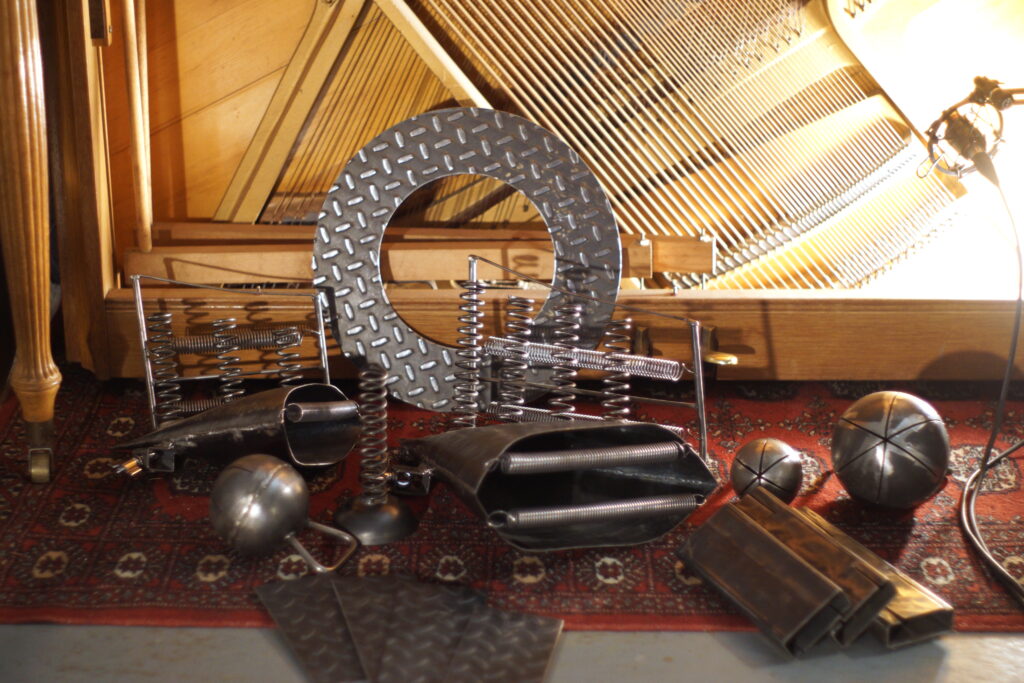
MorfBeats

Any instrument by Morfbeats. When i’m running out of ideas, I’ll pick any piece and throw it on the drums to add rattle and new sound possibilities, or i’ll use the melodic instruments like the gamelan strips to create an ambiant loop. They also work well with a contact mic and effect pedals.

7. If you had to start over, what would you get first?

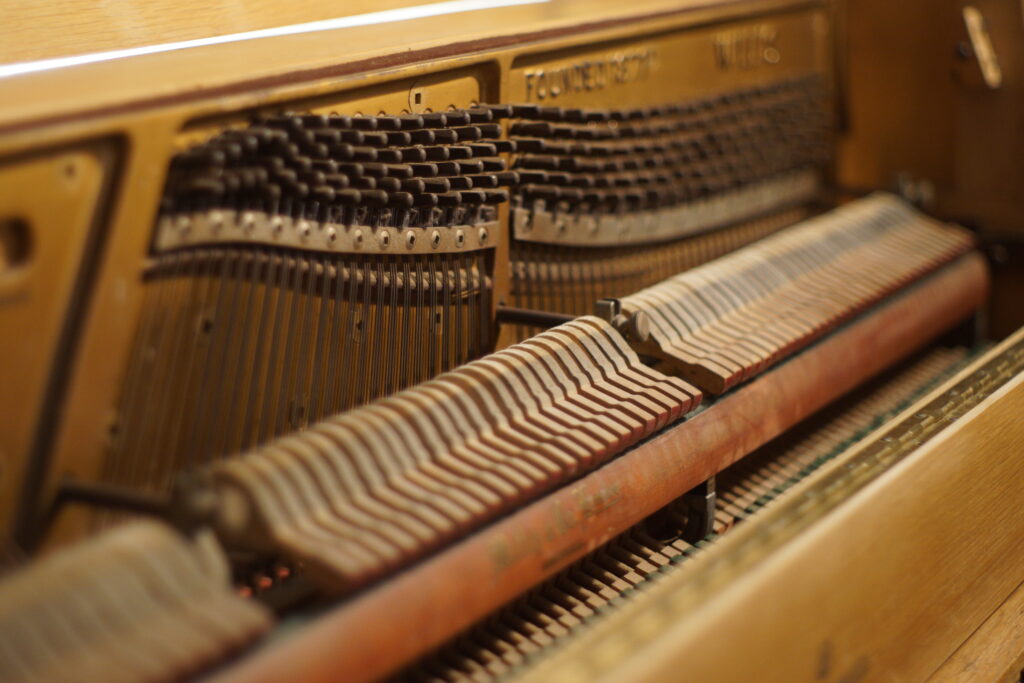
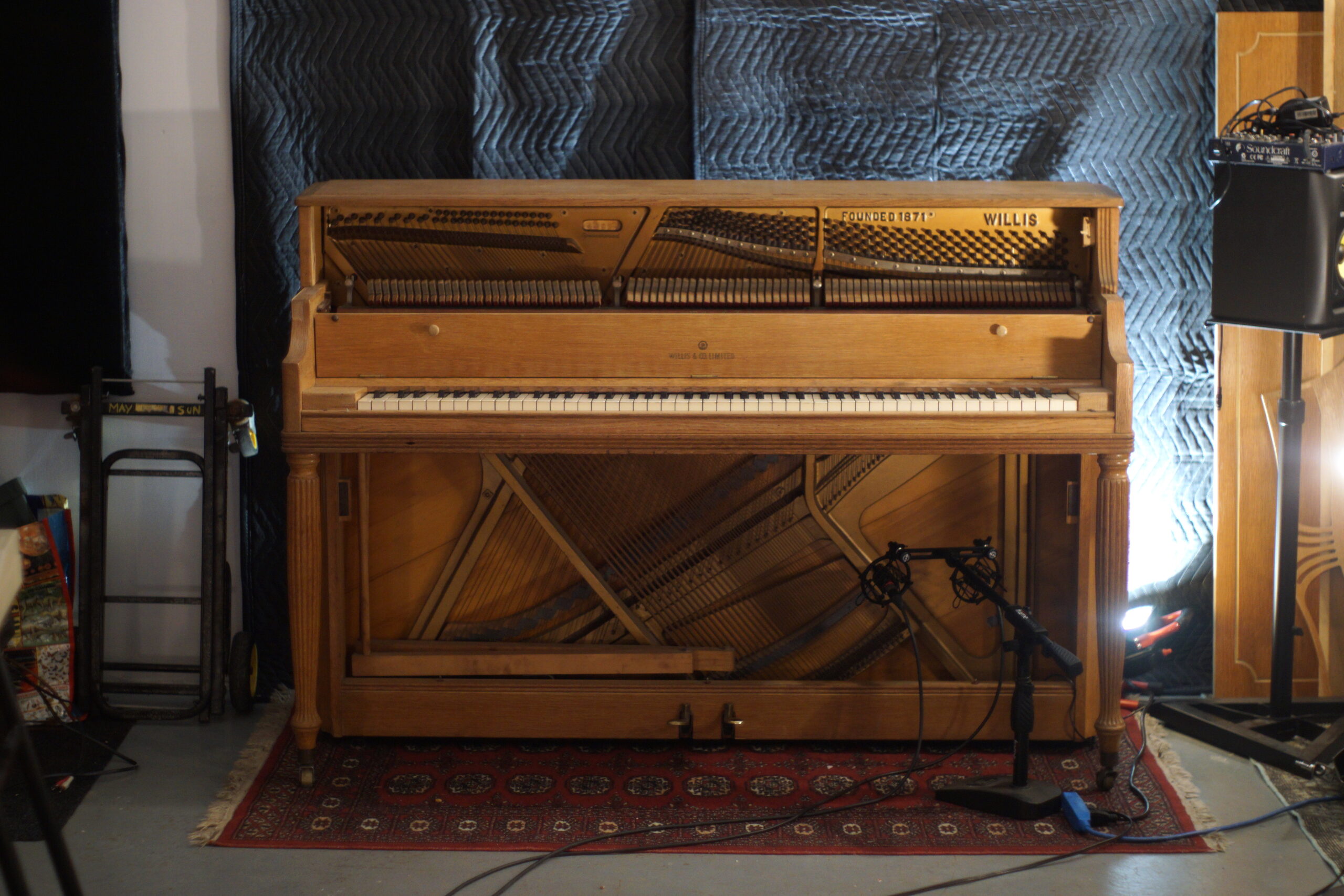
An acoustic piano. I’ve wanted one for years and recently was given one that I have slowly been integrating into my music. I find that composing is much easier on a real piano than on synths and if I were to start over, I would get that first.

Upright Piano

8. What’s the most annoying piece of gear you have, that you just can’t live without?

My zoom H6, I like it and I hate it because it’s really finicky on SD cards, but I always have it with me for sampling, or as a portable sound card to my computer.

9. Most surprising tip/trick/technique that you’ve discovered about a bit of kit?

Bells and Rattles

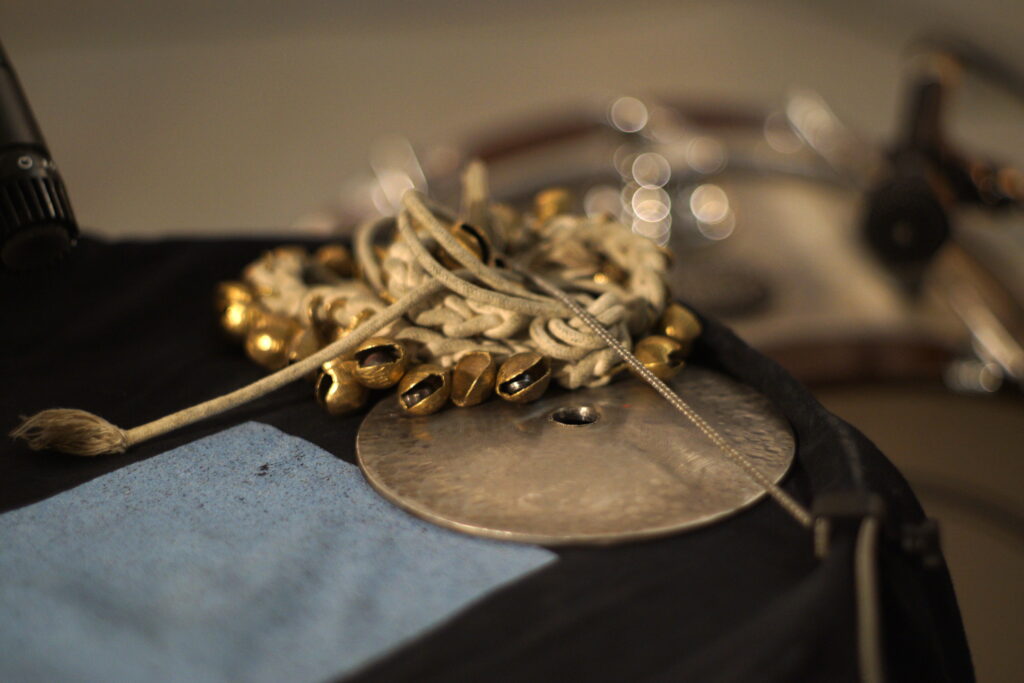
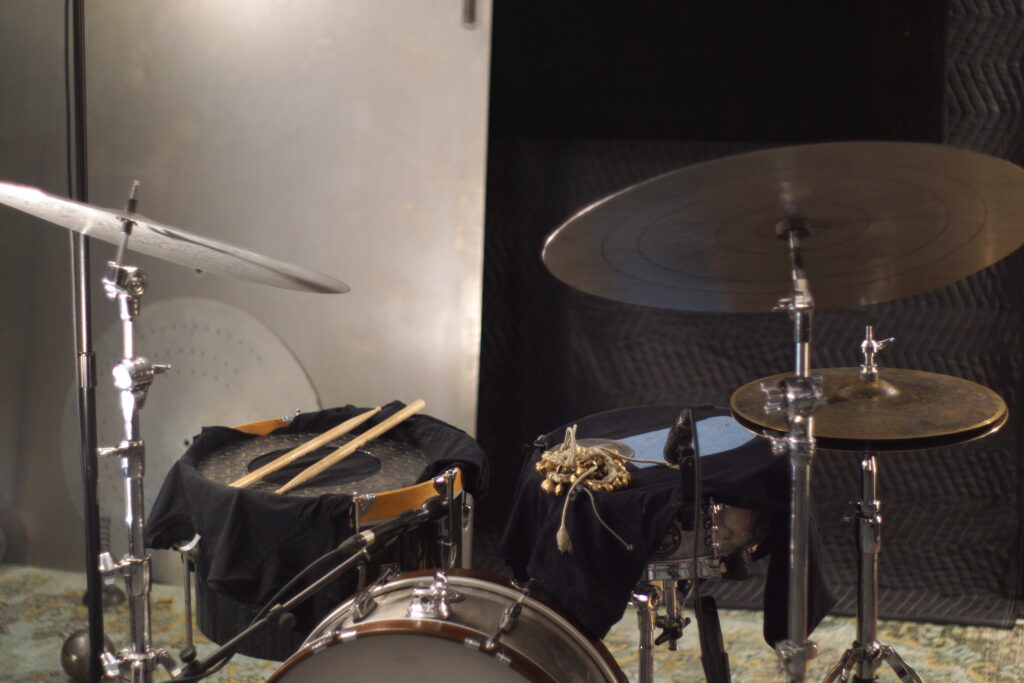
If a snare drum counts as a bit of kit, what I like to do, is tune it low, and add a t-shirt and object on top, like bells or heavier metal. It makes it sound really deep, controlled and punchy, but you have random rattles from the bells that will add nice texture once you compress a bit.


Artist or Band name

Maysun

Genre?

Instrumental, cinematic.

Selfie?

Maysun

Where are you from?

Montreal, QC, Canada.

How did you get into music?

I always wanted to play drums, I don’t know why. Maybe because my father is a bass player. After years of asking, my parents got me a snare, hihat and a cardboard box with a pedal attached to it. From there, I went to high school in a music program, took private lessons, completed a music degree in college, did a small part of a Jazz Performance degree in university, that I quit after a year. From that point I was in an apartment where I could not play drums, so I started getting into synths and recording, which turned me onto modular synths, which led to sound design, which brings me to where I am now.

What still drives you to make music?

I like sound, I enjoy completing pieces of music and I like the whole process of sculpting music through playing, recording and mixing.

How do you most often start a new track?

Recently, for my daily videos the process has been about recording a short drum performance and adding synths to it afterward. I do this as quickly as possible and try to not censor any idea while doing it, allowing the piece to go into any direction, even one I don’t like. It helps me practice new ideas and test out recording techniques, plugins, instruments, etc.
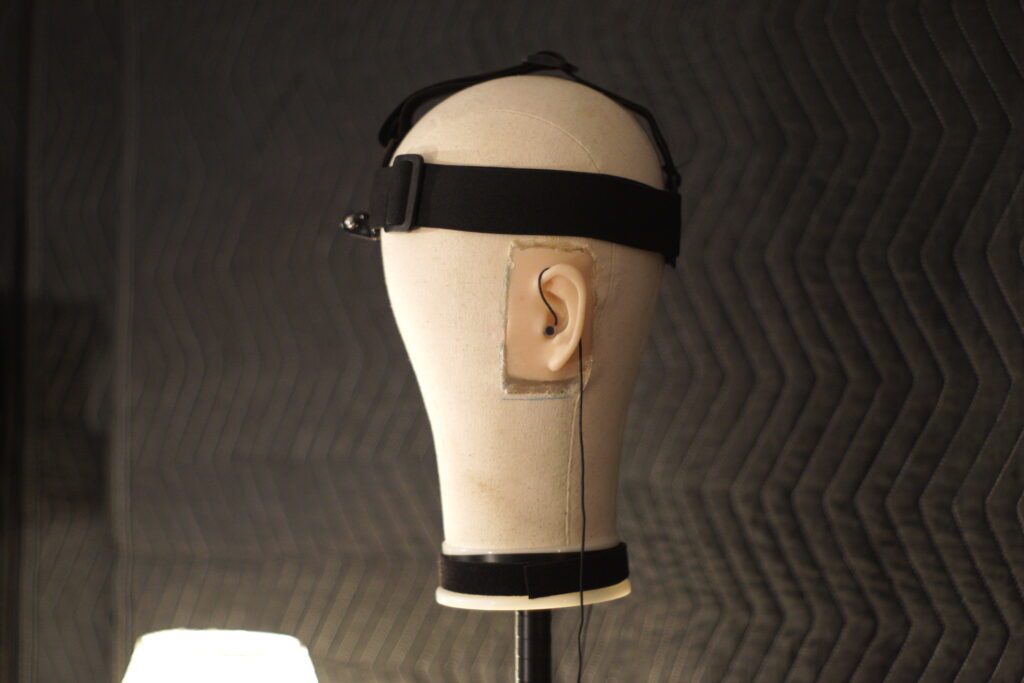
For EPs, I usually start with a strong story line in my head that I transfer to sound. The drums usually represent me, and the other instruments are my life events. I create different sound scenarios and then add transitions between them. I mess with physical movement of sound through 4 speakers recorded through a binaural mic to create ambiances and add synth textures and drums after that.

How do you know when a track is finished?

For my daily videos, they are done once I run out of time.
For EPs, it is more difficult. The last EP I recorded (should be out fall 2020), I had trouble letting go and finishing it. I think it was because I had been used to doing daily compositions, where you can always do better the next day. For an EP, I felt like it was more permanent.
And so, when I thought I had gone to the maximums of my capacities, I asked for help from another sound engineer, and together we finished it. I think it helped a lot to get a second opinion.

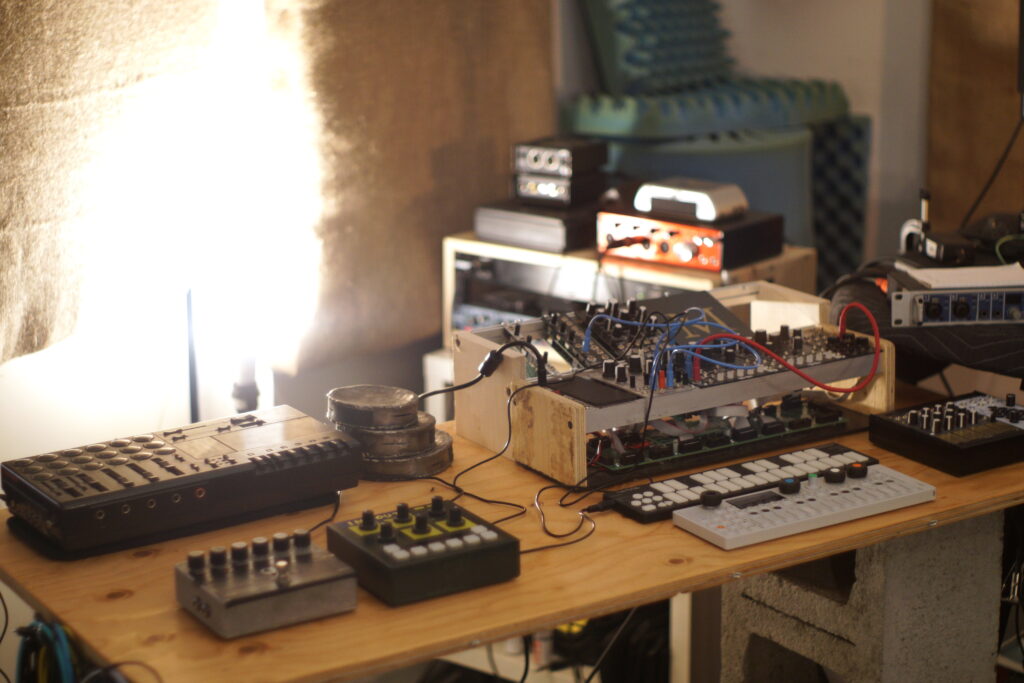
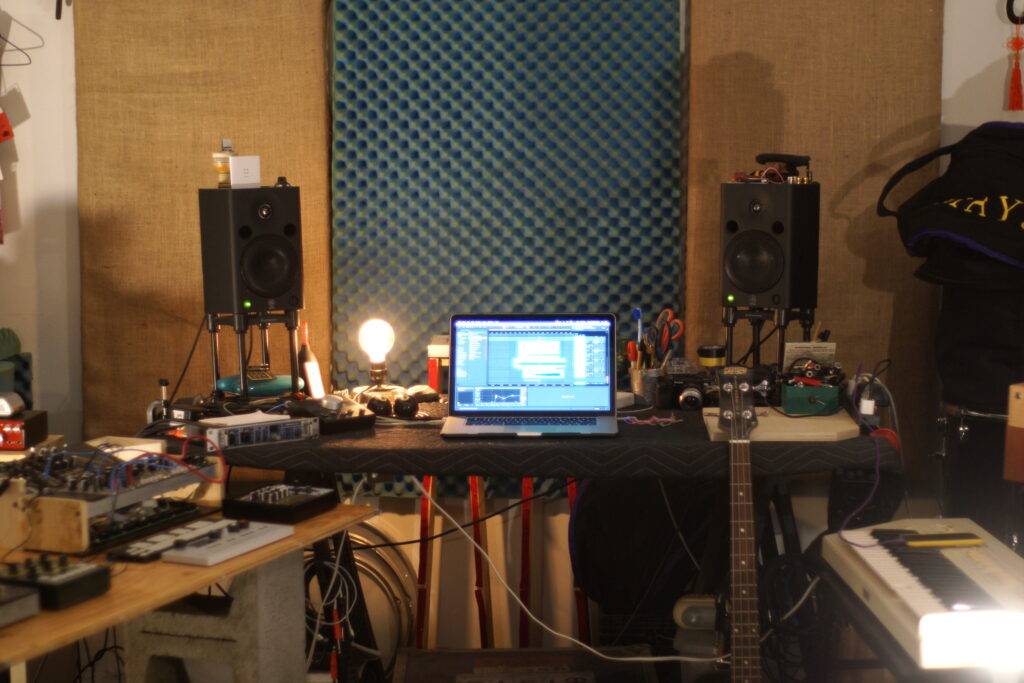
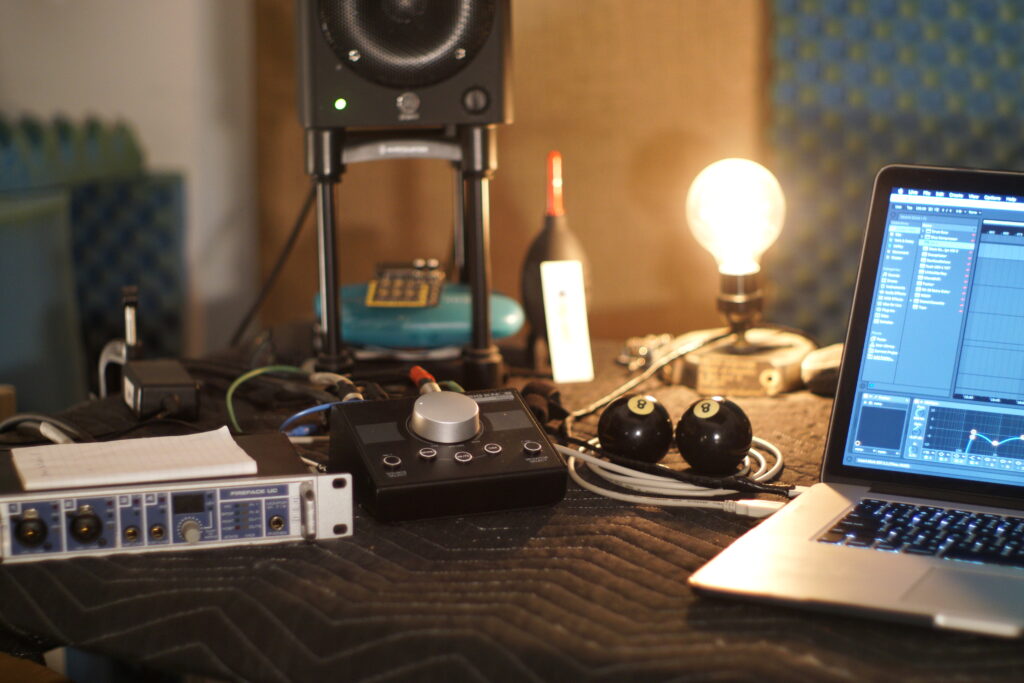
Show us your current studio

Best creative advice that you’ve ever heard?

Once, I took a skype lesson with a guitar player, and I was asking questions on what exercises to practice to be able to do a certain rhythmic thing. He told me to just do it until I hear it. No secret exercise or shortcuts for learning this.
That was 10 years ago and it really changed my approach to music.
I feel like many musicians, especially online, are looking to find that perfect video, piece of gear or secret exercise that will make you play better / create better music / find your identity.
But in my opinion, I think that there are no shortcuts to building your sound and that your musical identity is not only about going directly to what you like about someone else’s performance or music, but forged through personal experiences and experimentation. It takes time, effort and patience.
In short, his advice was to simply do it, until you figure out on your own, how to make it work for you, and not procrastinate by waiting around for the answers to pop up by themselves.

Promote your latest thing… Go ahead, throw us a link

New music almost everyday here: https://www.instagram.com/maysun.music/
A new EP out after the COVID situation here: https://maysunmusic.bandcamp.com/
Free samples for everyone on my bandcamp.

[Editor: It seems like Maysun really enjoys acoustically prepared instruments: drums, piano and percussion. Do you have a favorite method for modding acoustic instruments? Leave a comment]