Kaspar Kaae – Cody-licious

[Editor: Okay… this interview is with someone who has got to have one of the greatest collections of vintage guitars (and music gear) in Denmark. The fact that this person is also a busy film composer and the main songwriter/singer in a very influential danish indie folk band is just perfect! Enjoy!]

1. Favourite knob or fader or switch on a piece of gear and why?
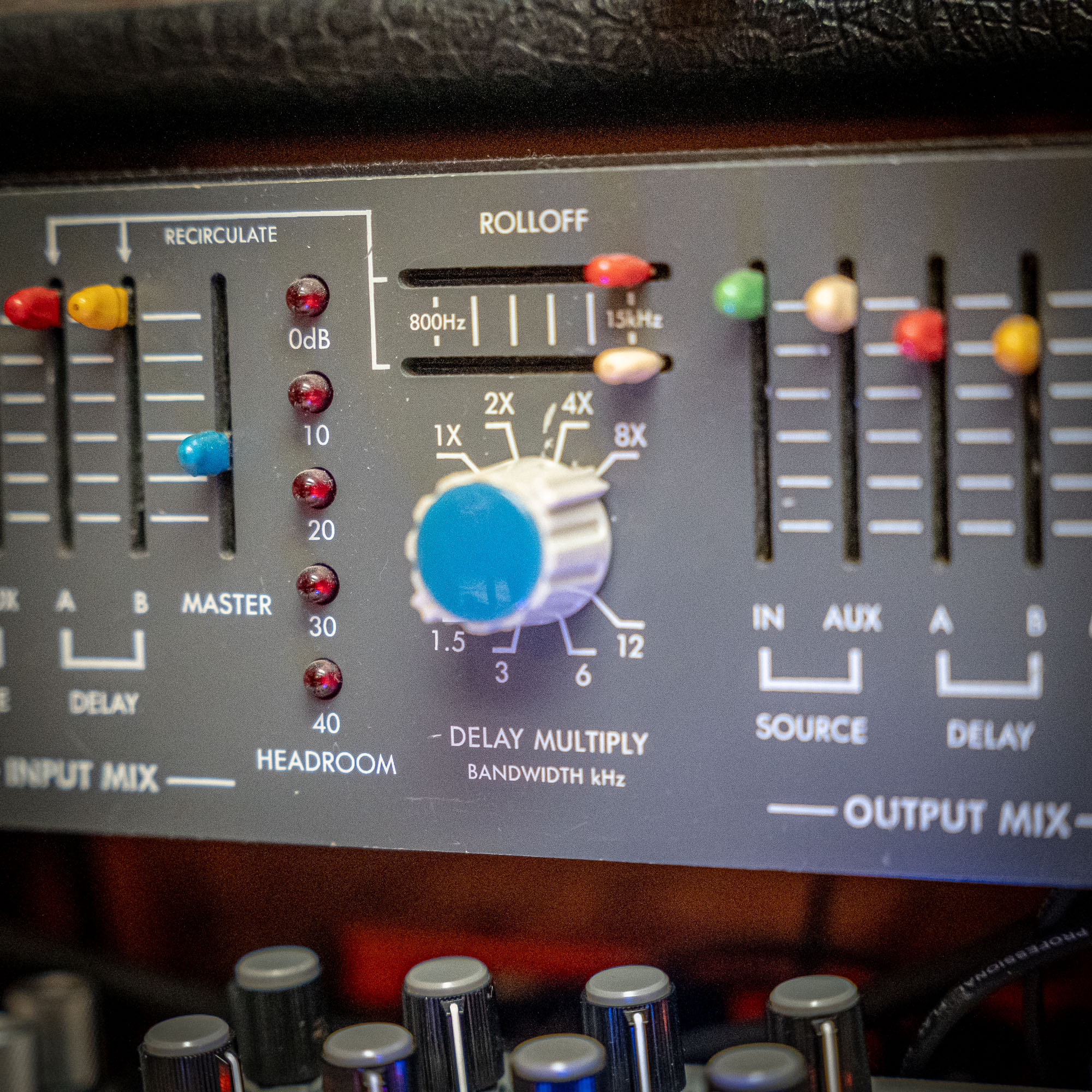
Lexicon Primetime Delay Multiply knob

The Delay Multiply knob on the Lexicon Primetime. There’s something tactile about it that just draws me in—it’s not just a control; it feels like a direct line to shaping the space of a sound. On the Primetime, every tweak transforms the ambience in a way that feels alive. It’s not about perfection; it’s about responding in real time to what the track needs. The character it adds, even in subtle doses, inspires me to experiment, sometimes in directions I wouldn’t have imagined. I spend hours just playing with it, seeing what weird reverbs or delays I can coax out.
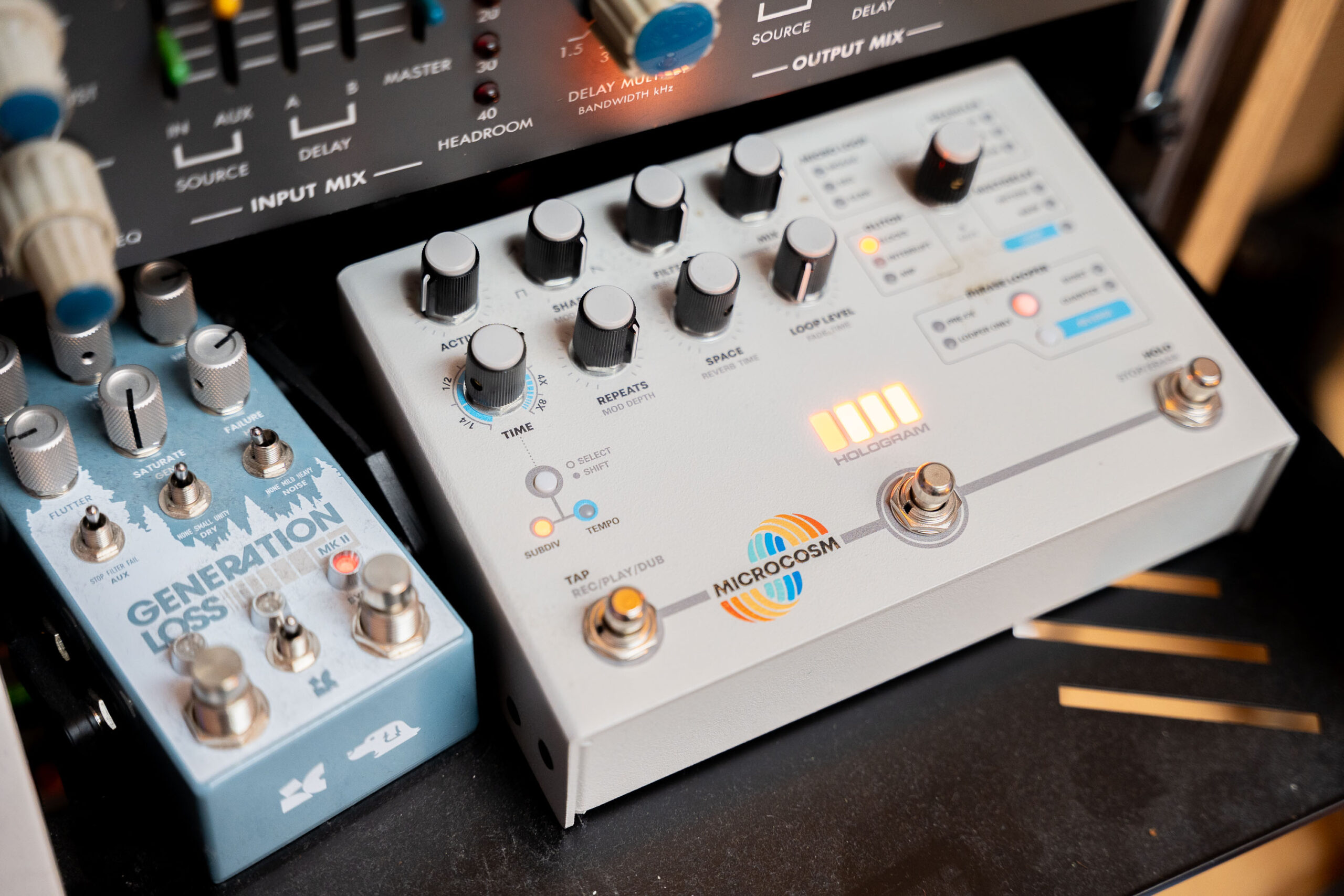
Chase Bliss Gen-Loss and Hologram Electronics Microcosm

It’s a lot like the Hologram Electronics Microcosm, in that I can put nearly any type of sound into it, and it just spits music out.

2. Do you have an ‘almost’ perfect bit of kit? What would you change?

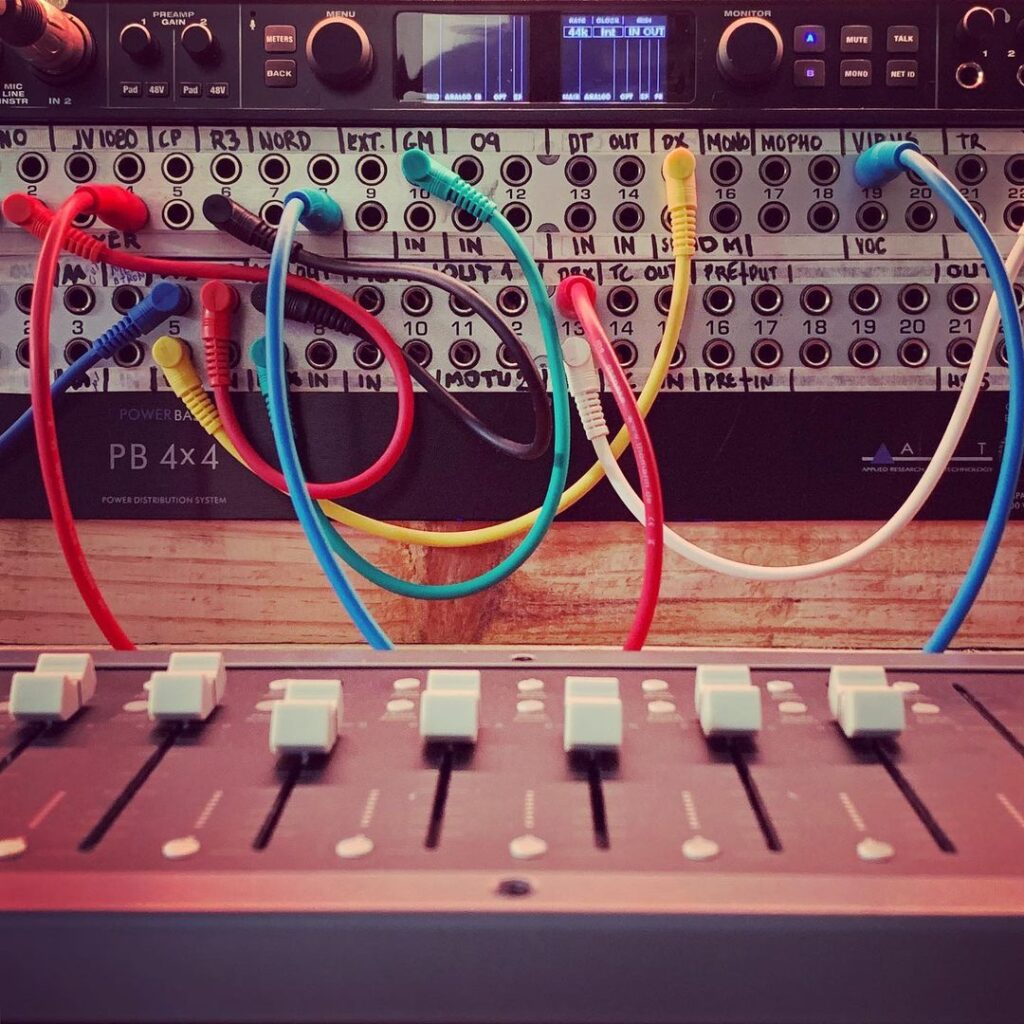
My Flock Audio patchbay, digitally controlled analog routing, it’s incredibly practical.
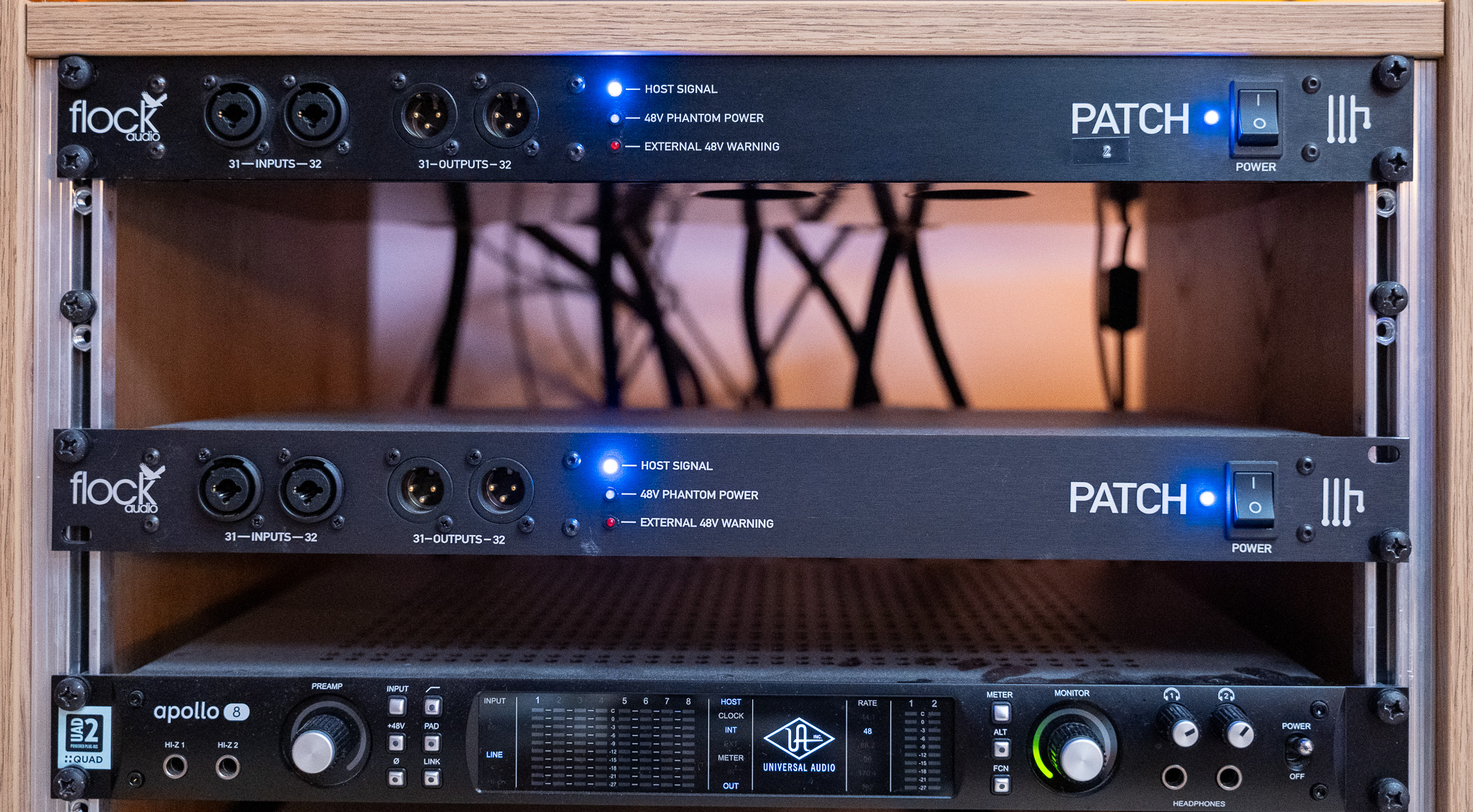
Flock Audio digital patchbay and UAD Apollo soundcard

The 2 units were expensive, but they quite literally tie the whole studio together. It’s one of those bits of gear that costs a lot, but when you finally invest in it, you wonder why on earth you haven’t done so earlier!

3. What setup do you bring on holiday, tour, or commute?

I usually take a small pedalboard with an Apollo X4 interface, a UAD DSP core and a Shure Beta 58 mic. With a MacBook, it’s compact but allows me to capture ideas quickly anywhere. The Apollo lets me keep recording quality high, while still being portable, and the Beta 58 is rugged, reliable, and works with pretty much everything.
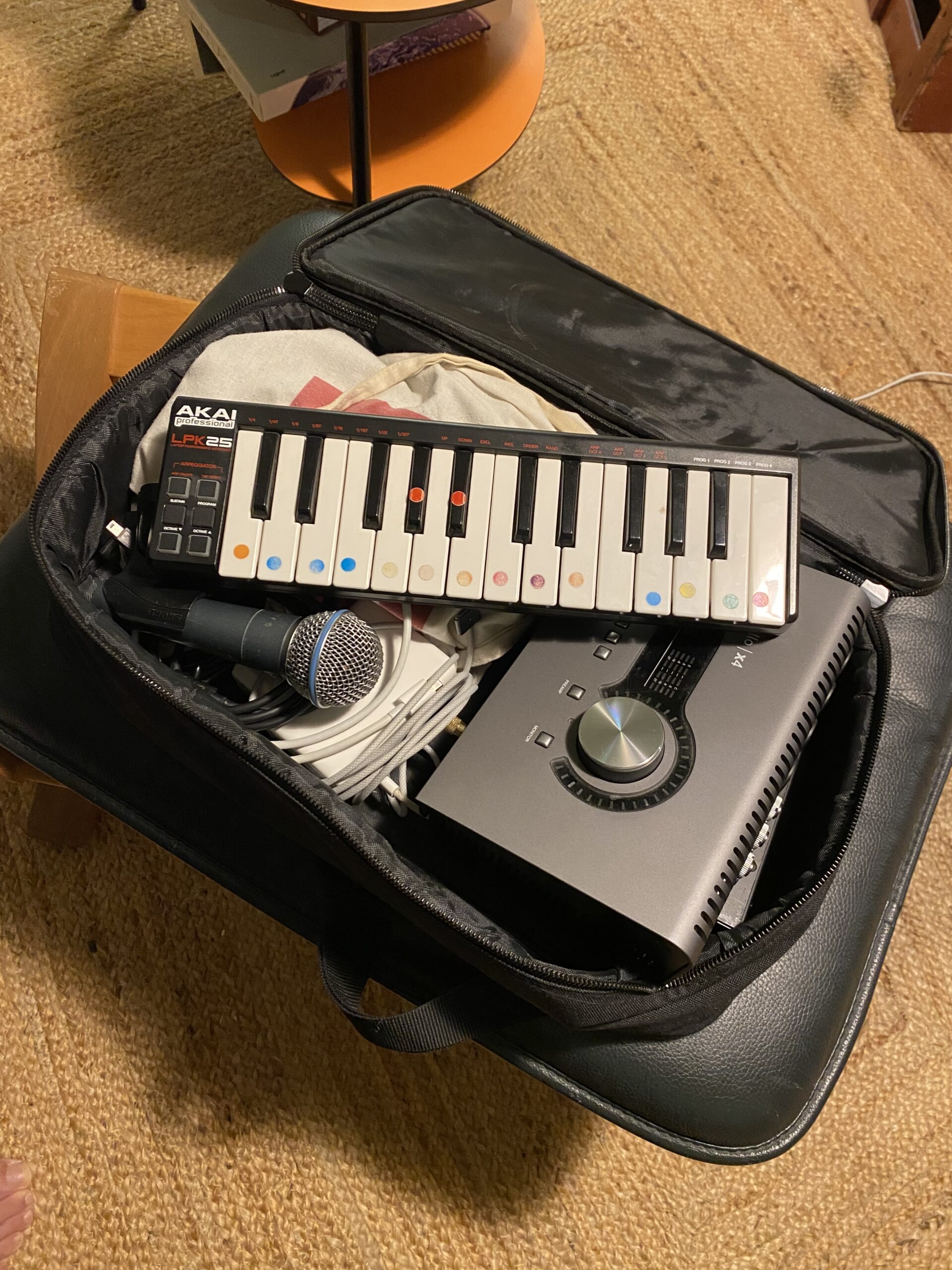
Travel setup

When working abroad I travel light, because I want to be able to experiment without being tied down by too much gear. It’s about having enough to inspire creativity, but not being weighed down too much.

4. What software do you wish was hardware and vice versa?

Honestly, I’ve tried to build a setup where I have all hardware duplicates of favorite software. I like having the tactile, hands-on experience of hardware while also keeping the flexibility of software. For me, the ideal is not to wish one was the other—it’s to blur the lines, so that I can get the best of both worlds.
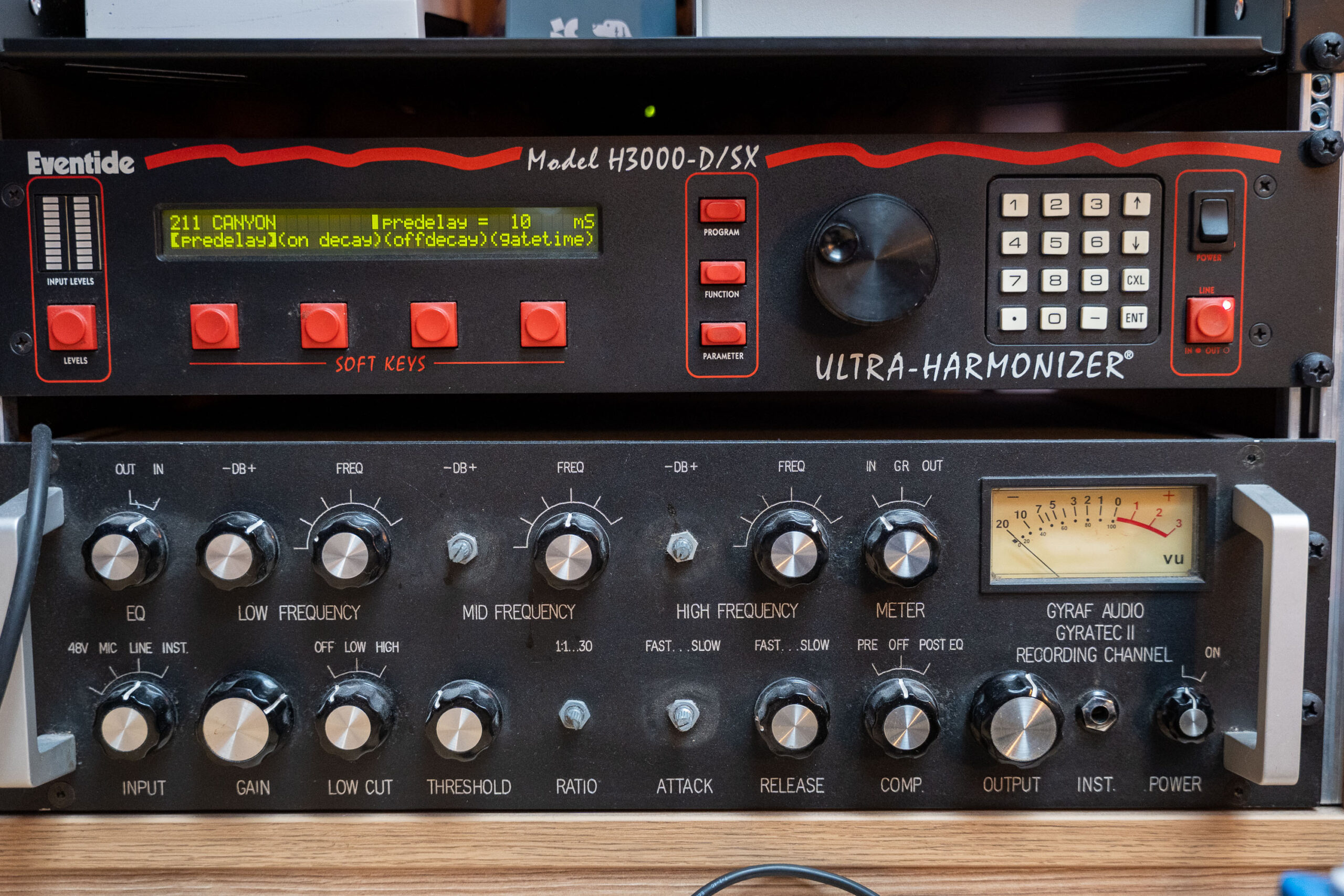
Eventide H3000 and Gyraf Audio Gyratec II

I also really learn a lot from having something in both hardware and software form. Like the PrimeTime is also emulated by SoundToys PrimalTap, and when I got the hardware it helped me understand the VST even better.
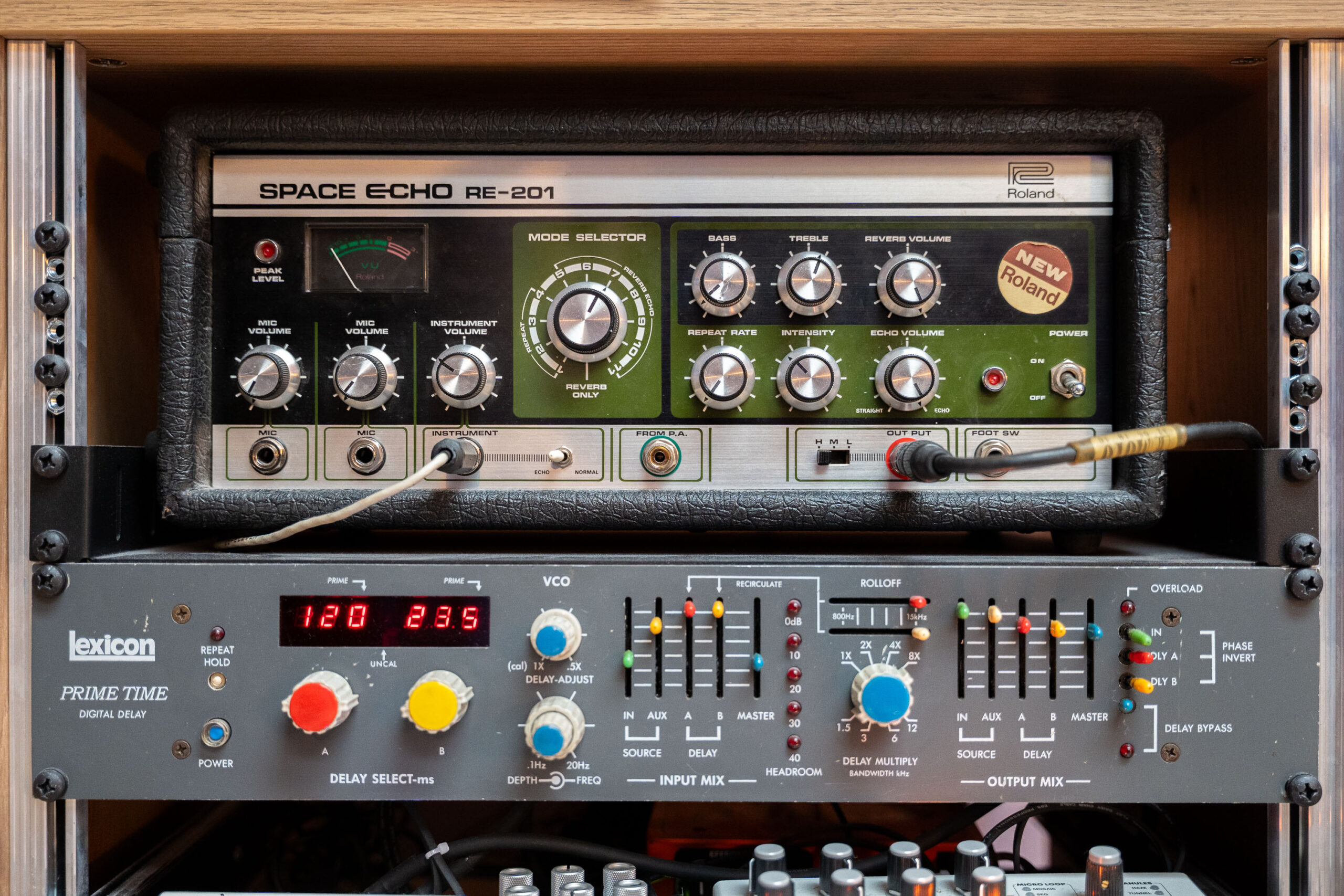
Roland Space Echo RE-201 and Lexicon Prime Time

5. Is there anything you regret selling… or regret buying?
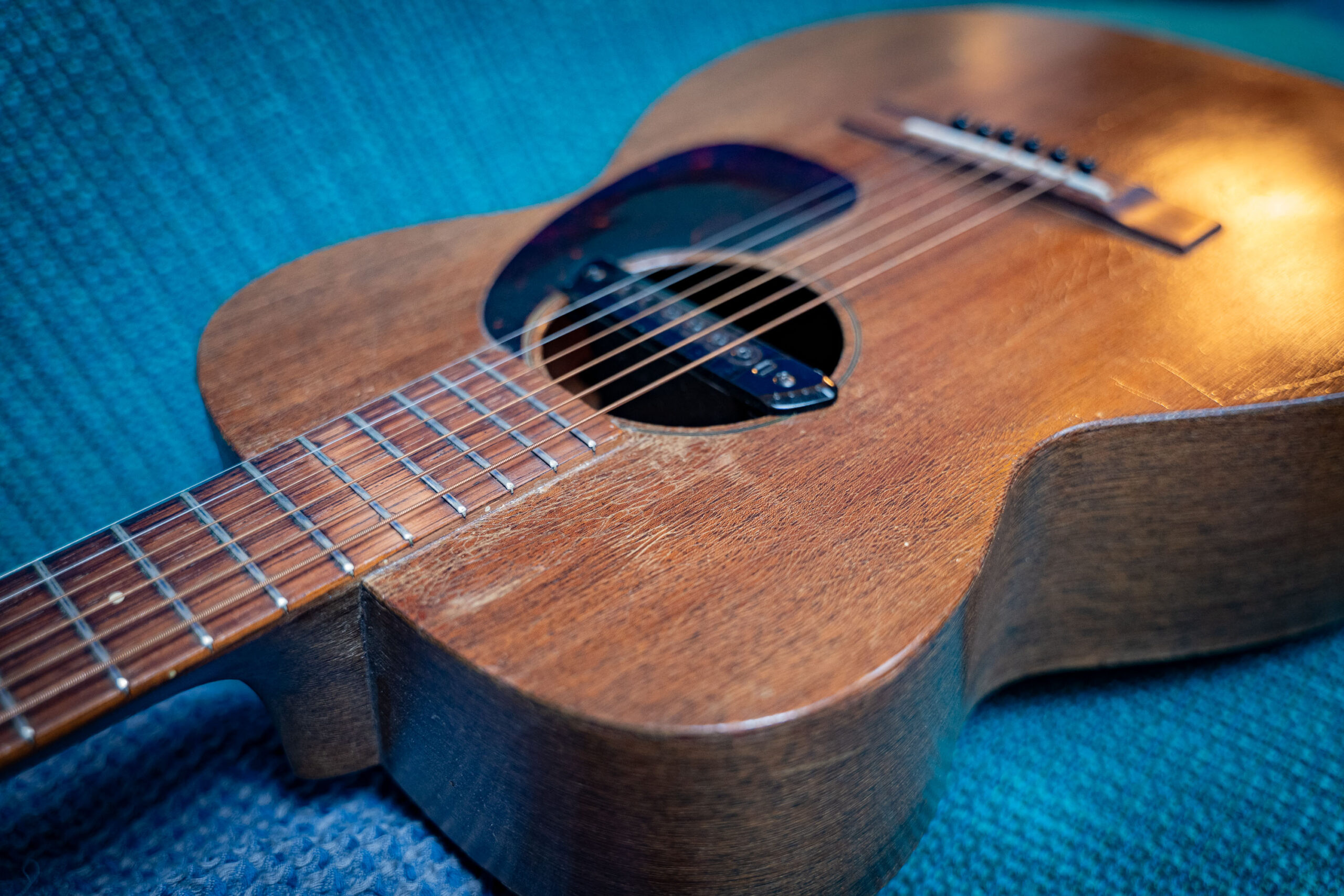
1953 Martin O-15 acoustic guitar

I regret selling my mahogany 1953 Martin O-15 acoustic. I bought it in New Orleans when I first toured in the USA in 2008. It had a tone that was intimate, warm, and unique—it was almost like it had its own personality. I sold it in 2011, and then in the winter of 2024, I was out with a friend who wanted to check out a vintage Gibson for sale from a private collector. And I found that exact guitar again! But the guy didn’t want to sell it.
After quite a bit of wrangling, and showing him my photos of me playing the guitar on stage back in 2009, he eventually agreed to sell it to me again … at quite a good price … for him!
But I just had to have it again… over the 13 years that I didn’t own it, I often thought about it. And I took it as a sign from fate, that I was meant to play it again because of the sheer coincidence of stumbling across it again.
I wrote and recorded all the songs on my debut album on this guitar, and it’s a part of my history.
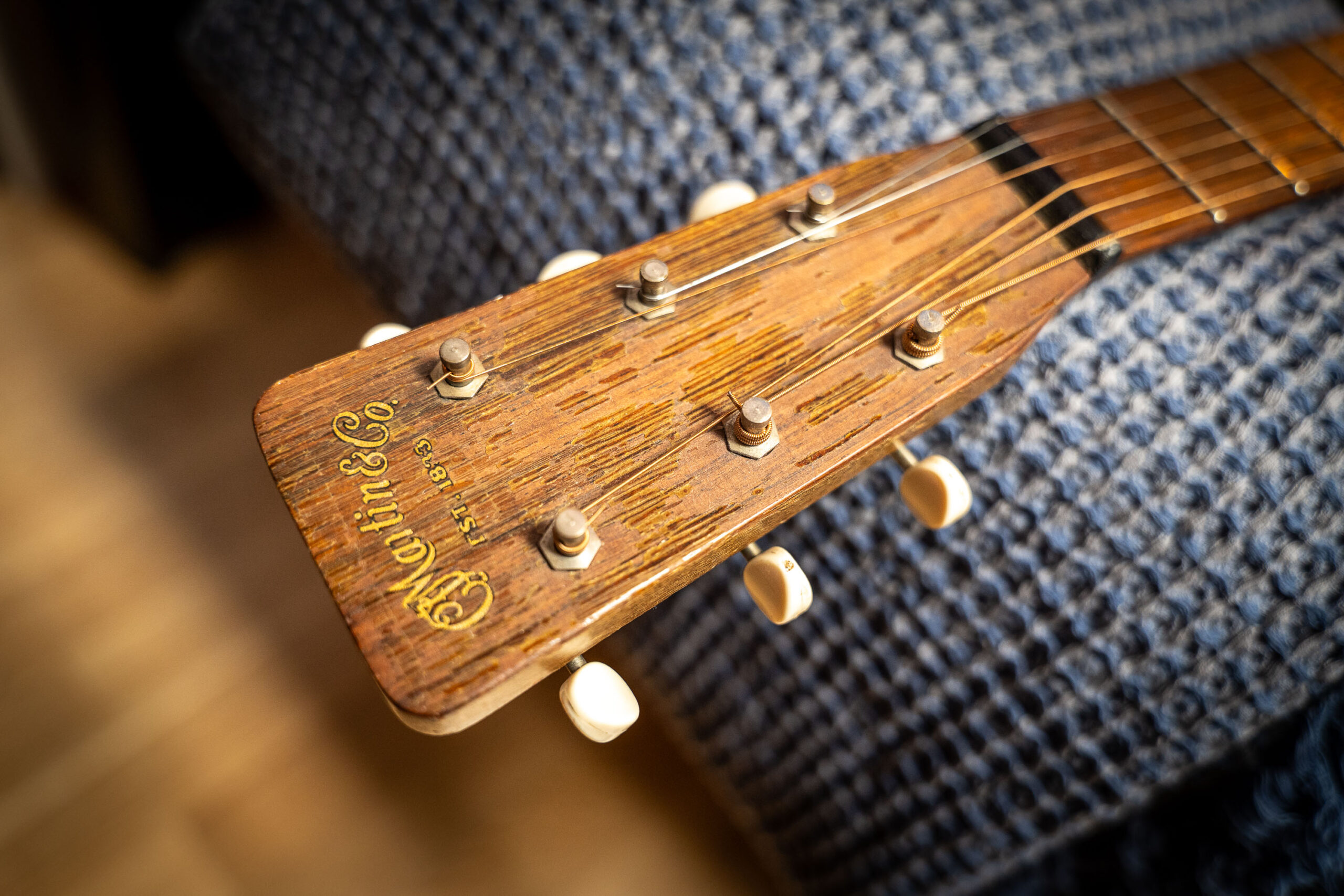
1953 Martin O-15 acoustic guitar

No regrets buying anything, though. Every purchase I’ve made has either shaped my sound or taught me something about what I want. Even when a piece of gear doesn’t end up being central, it informs my decisions in the future.
Like these small portable plastic keyboards, the CasioTone and the Yamaha VSS-200. They have a unique and crunchy sound, that works well in a few situations.
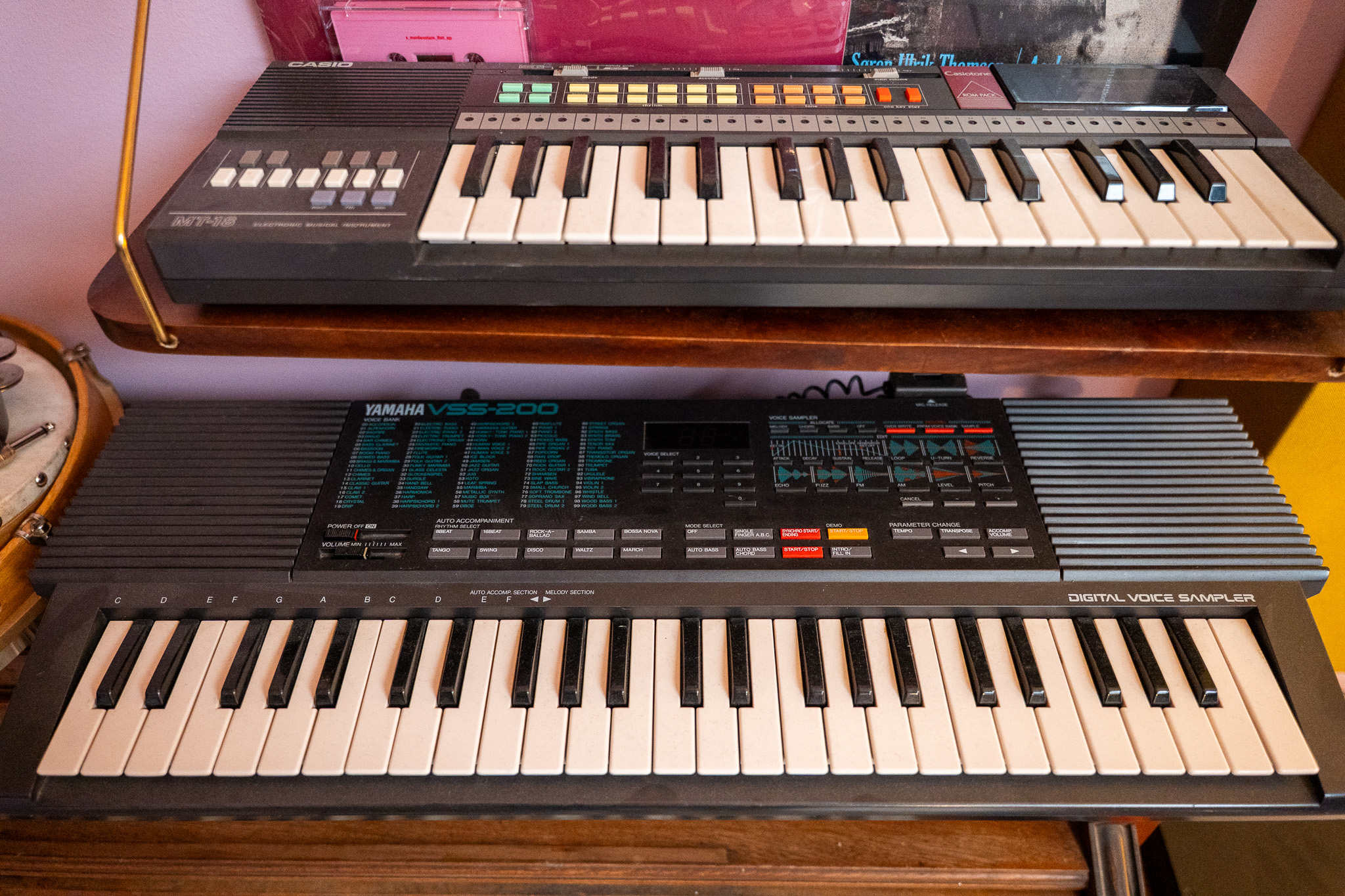
Yamaha vss200 and Casiotone

6. What gear has inspired you to produce the most music?
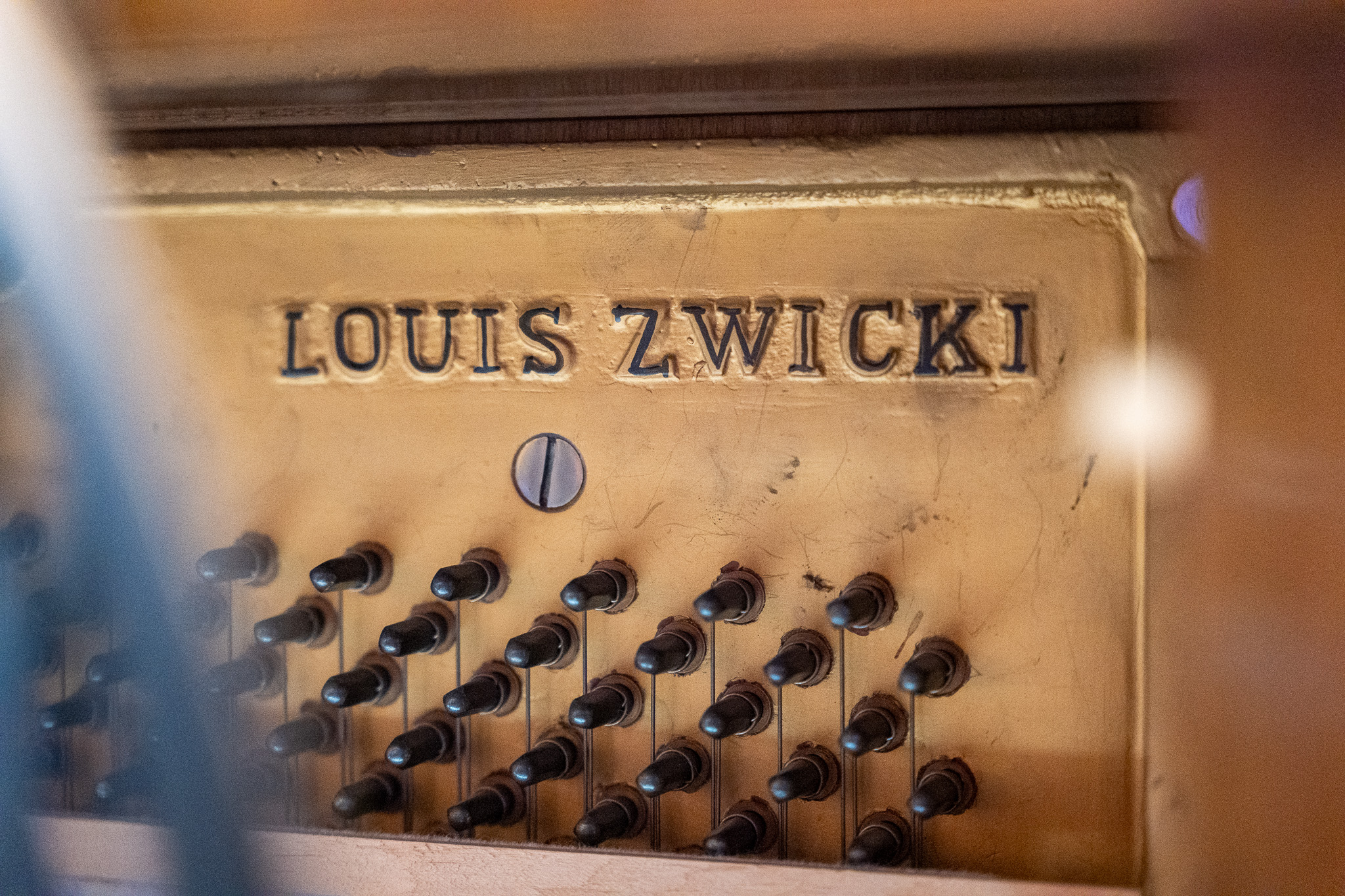
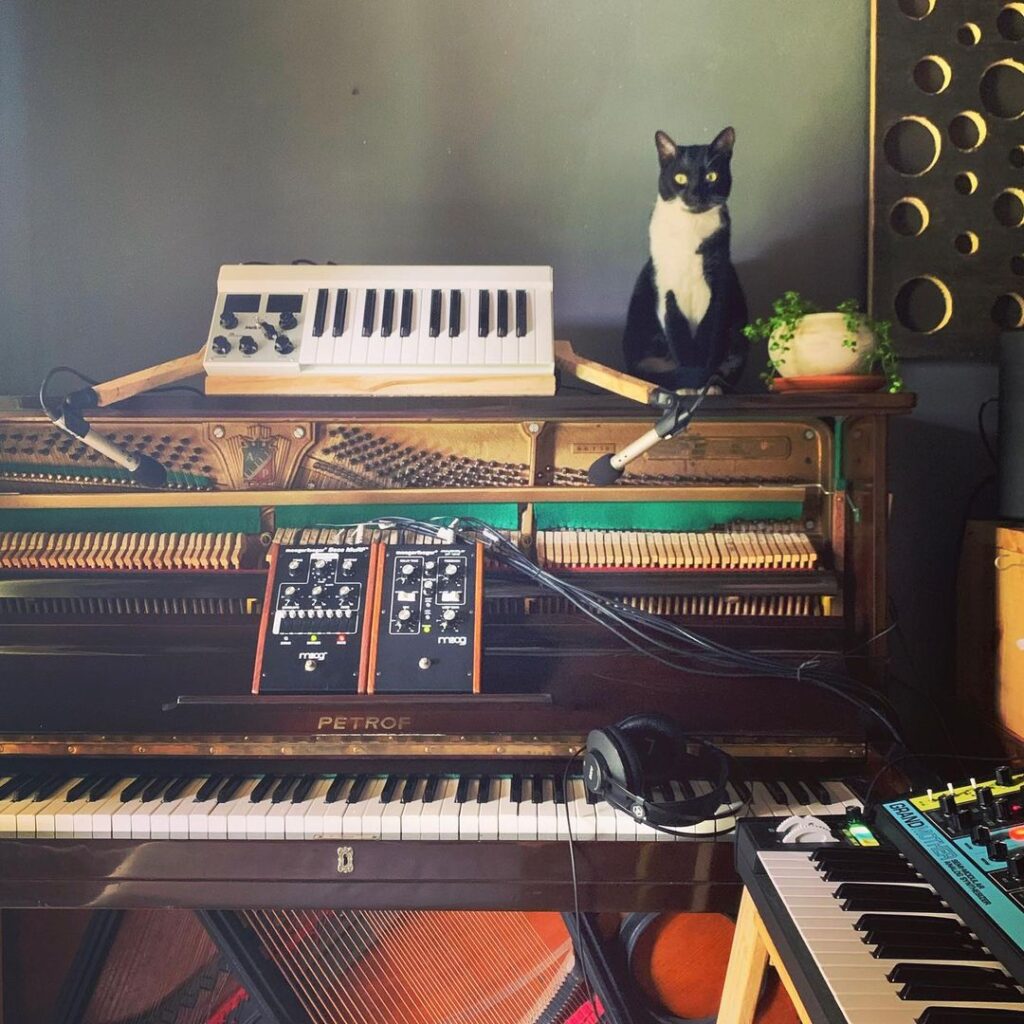
Definitely my Louis Zwicki upright piano, Roland Juno-60, Telefunken Neumann U47, and Fender Jaguar. The piano is the foundation of everything; it’s the place where melodies and harmonies emerge…. But again – all my instruments do that. This is just my immediate answer to a rather big and unfair question, cause tomorrow it might be something else 😉
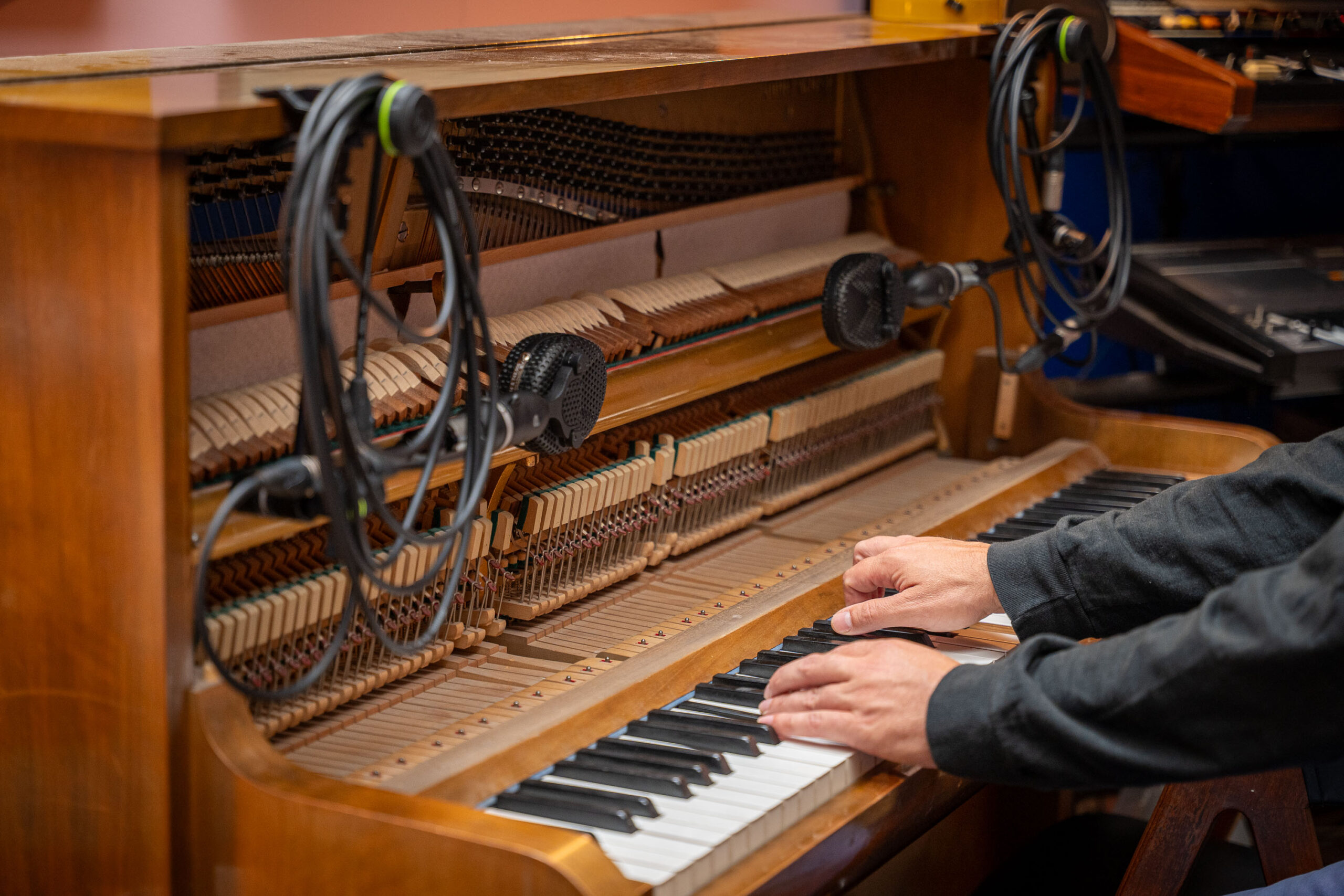
Playing the upright Louis Zwicki
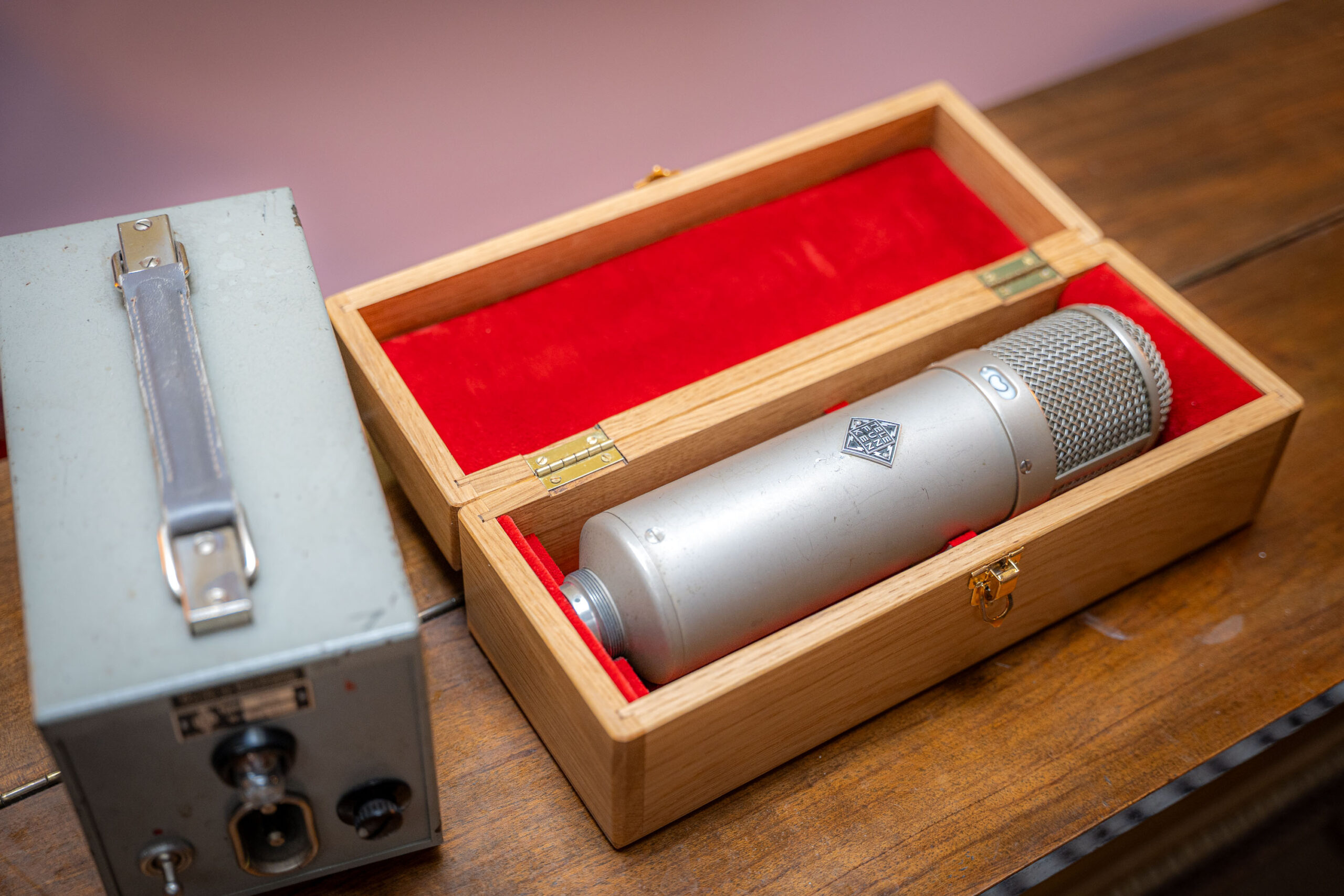
1953 Telefunken Neumann U47

The Telefunken Neumann U47 captures emotions in a way that is almost human—it’s not just recording sound; it’s recording presence. A cellist I work with said to me, that this particular U47 makes her cello sound better on recording than it does it real life.
The Juno-60 gives me warmth and unpredictability that I can’t get elsewhere, and also I’ve used the Juno so much that I feel very much at home with it. So much so that I gotta admit that I actually have 2 units, one in Copenhagen and one in Berlin!
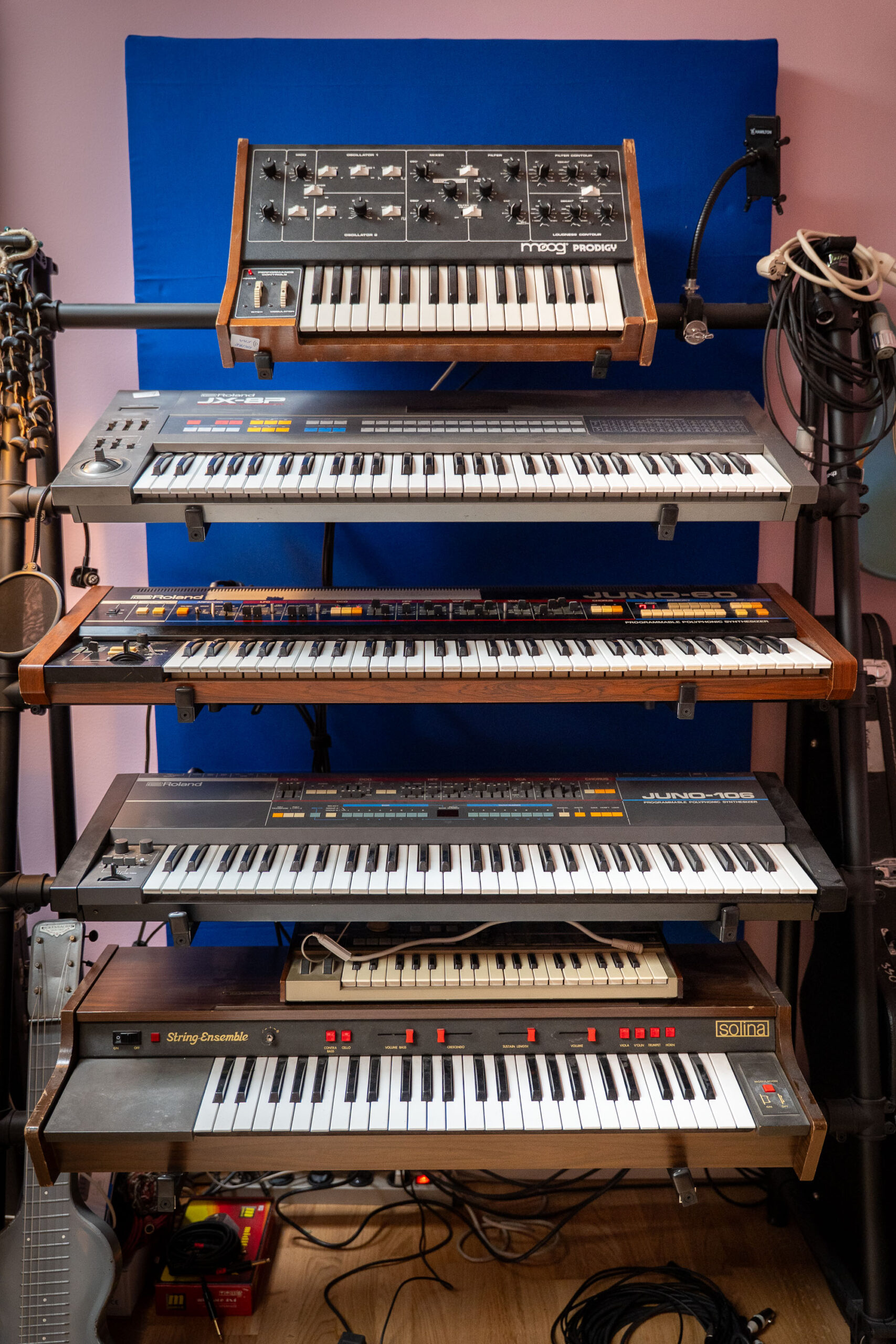
Rack of vintage synths – Roland Juno-60

The Fender 1964 Jazzmaster allows me to explore textures and tonalities that are immediately inspiring. Together with my pedalboards and stompbox fx, these instruments aren’t just tools anymore – they are like a part of me, since I’ve been playing Jazzmasters for more that 20 years. It’s the guitar I’ve played the most.
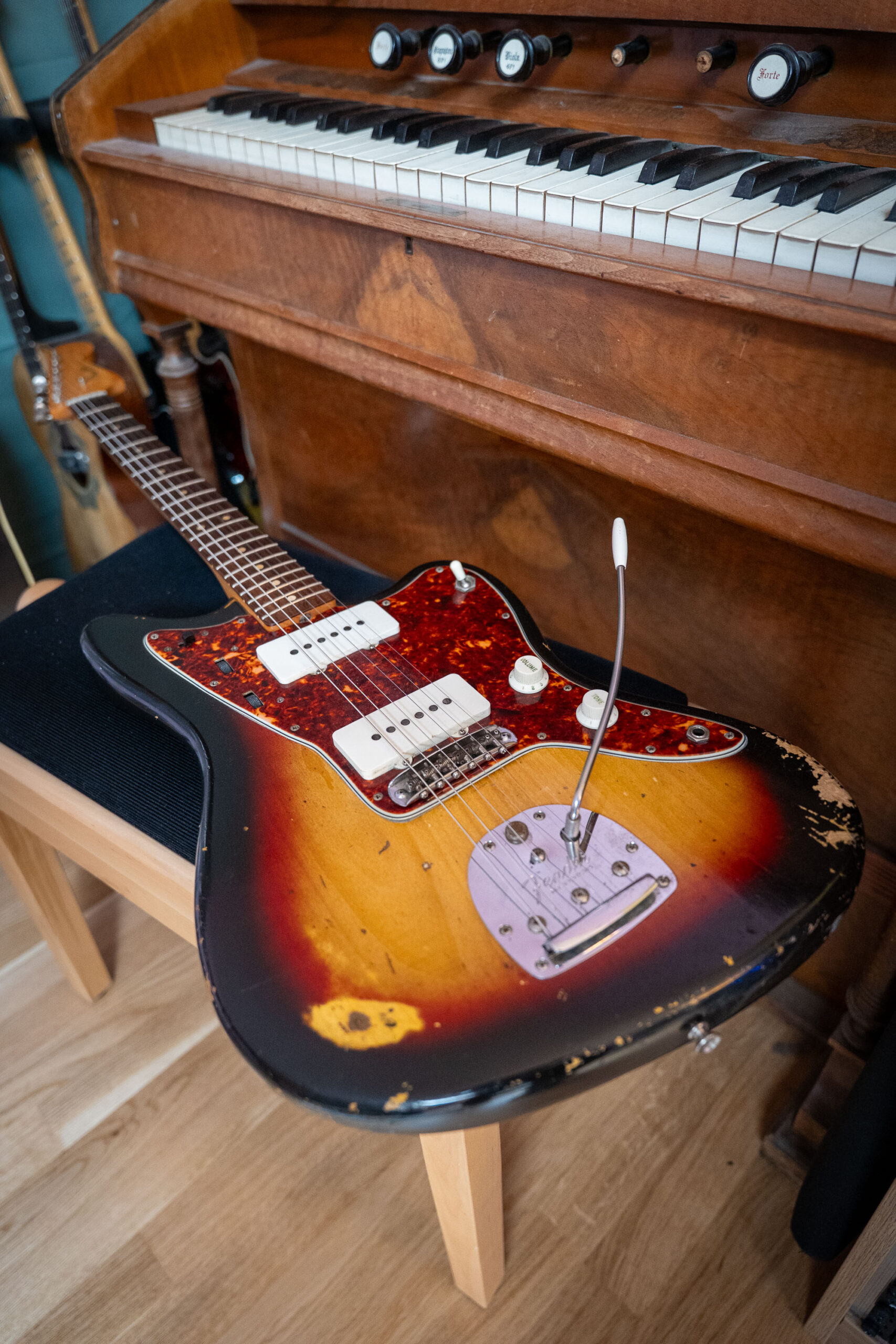
1964 Jazzmaster and pump organ

7. If you had to start over, what would you get first?

I would start simple, probably with my holiday travel board. Something portable that still allows you to explore sounds and ideas. I’d probably get bored of that simple setup and then I’d slowly bring back the vintage gear, piece by piece, layering textures and capabilities. The temptation is always to chase the “perfect setup” but I think starting small encourages creativity—you’re forced to solve problems and think musically rather than technically.
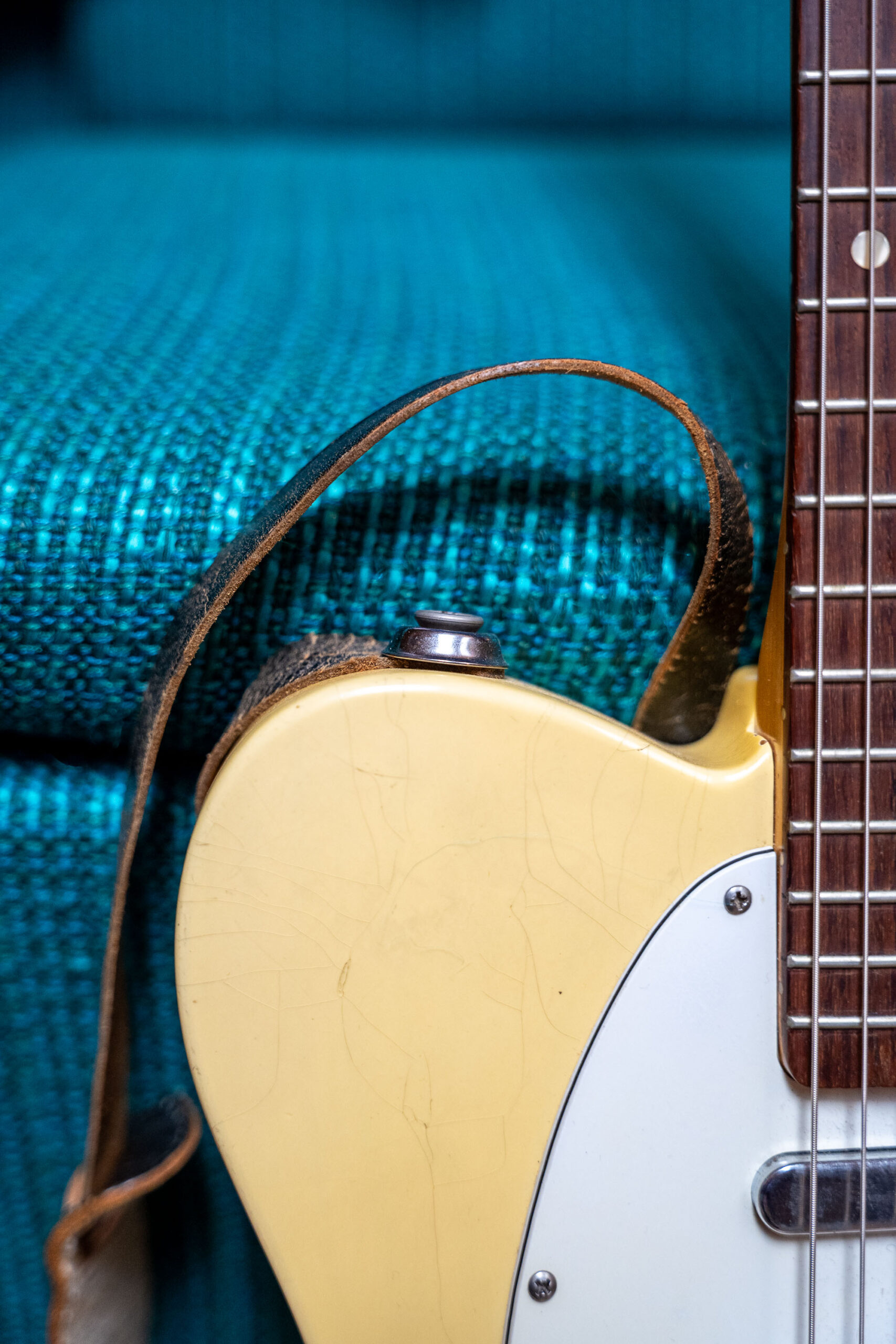
Fender 1966 Telecaster

All the stuff in my studio is kind of a lifetimes worth of collecting. It’s a bit painful to imagine it all gone.
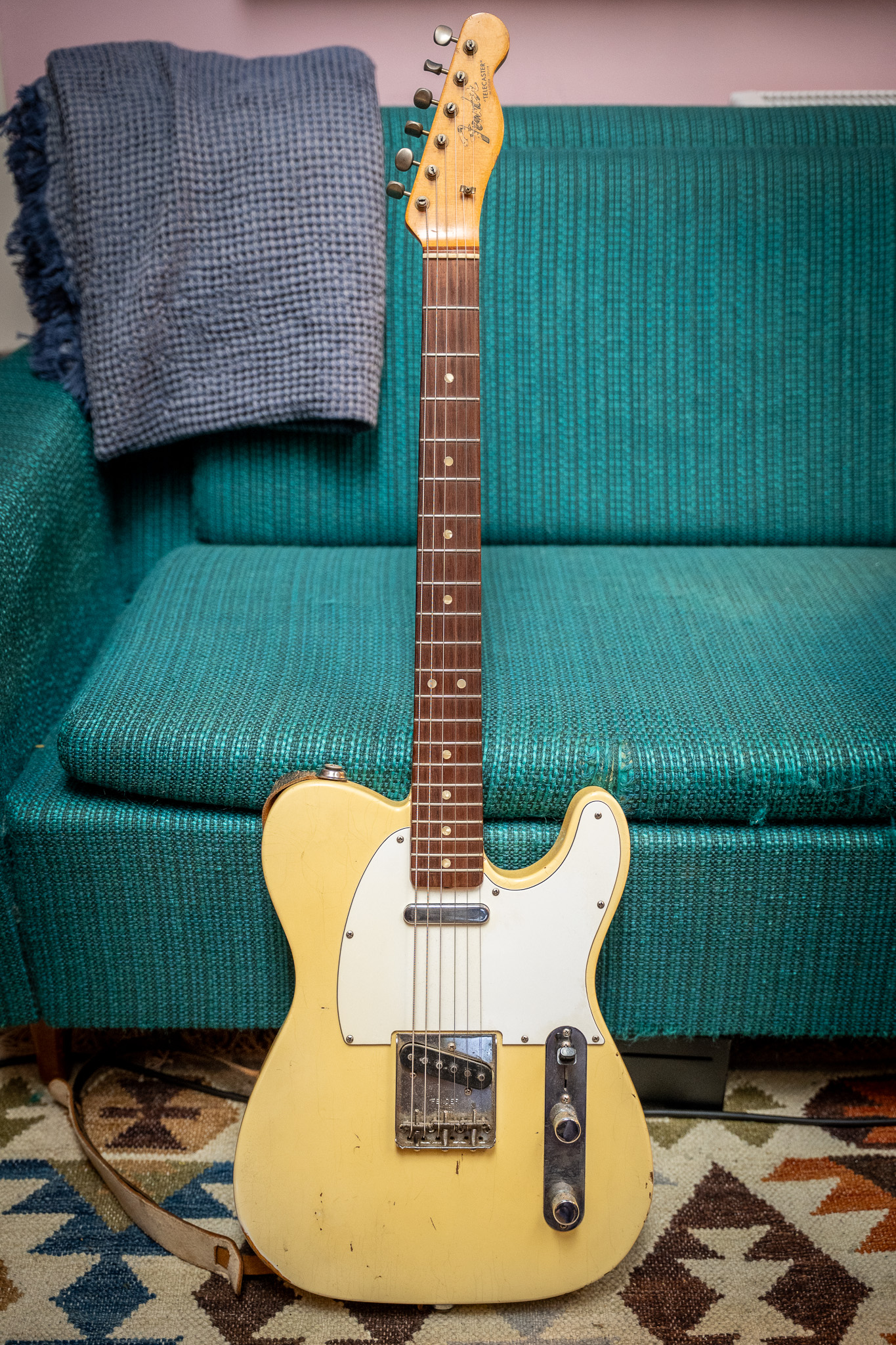
Fender 1966 Telecaster
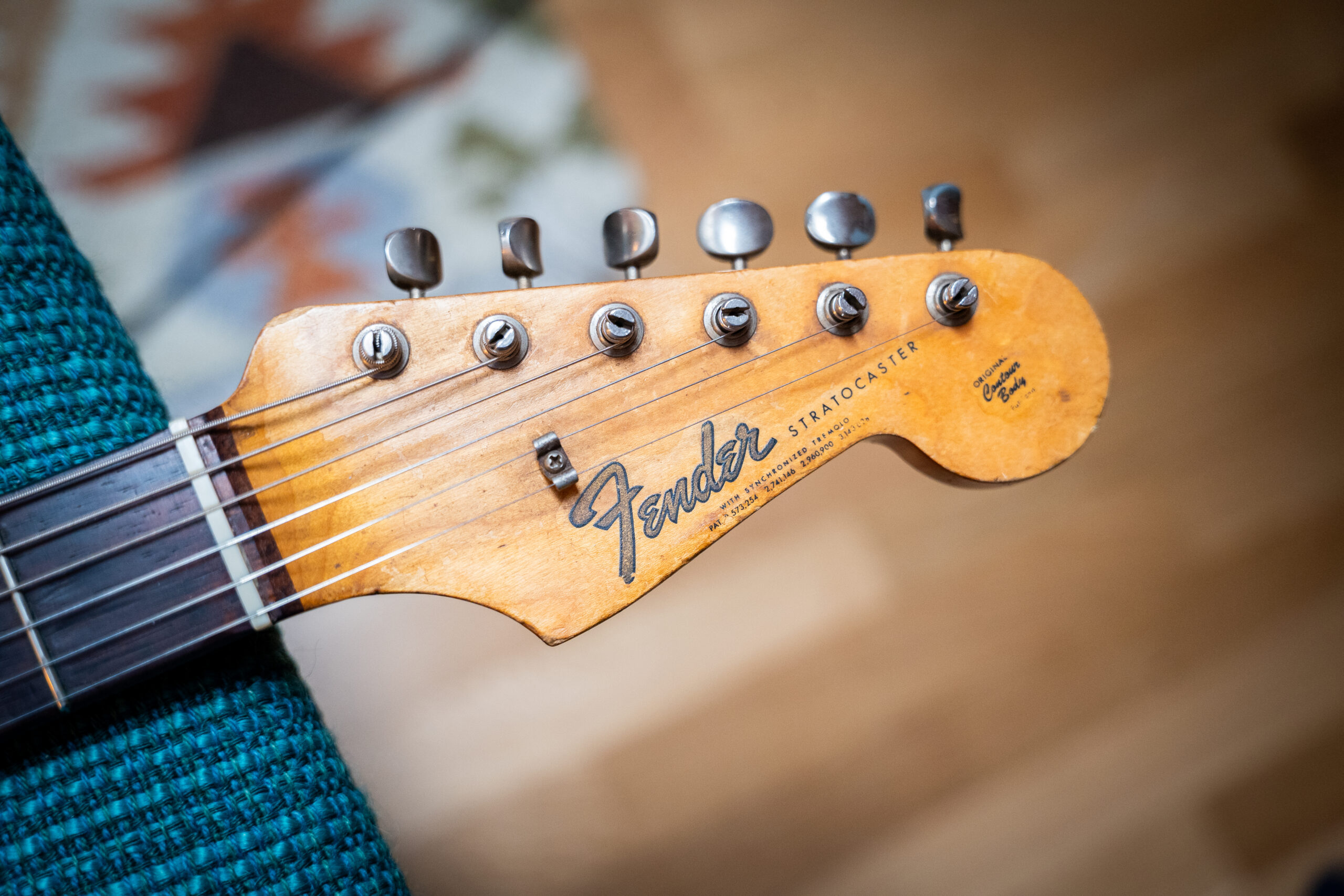
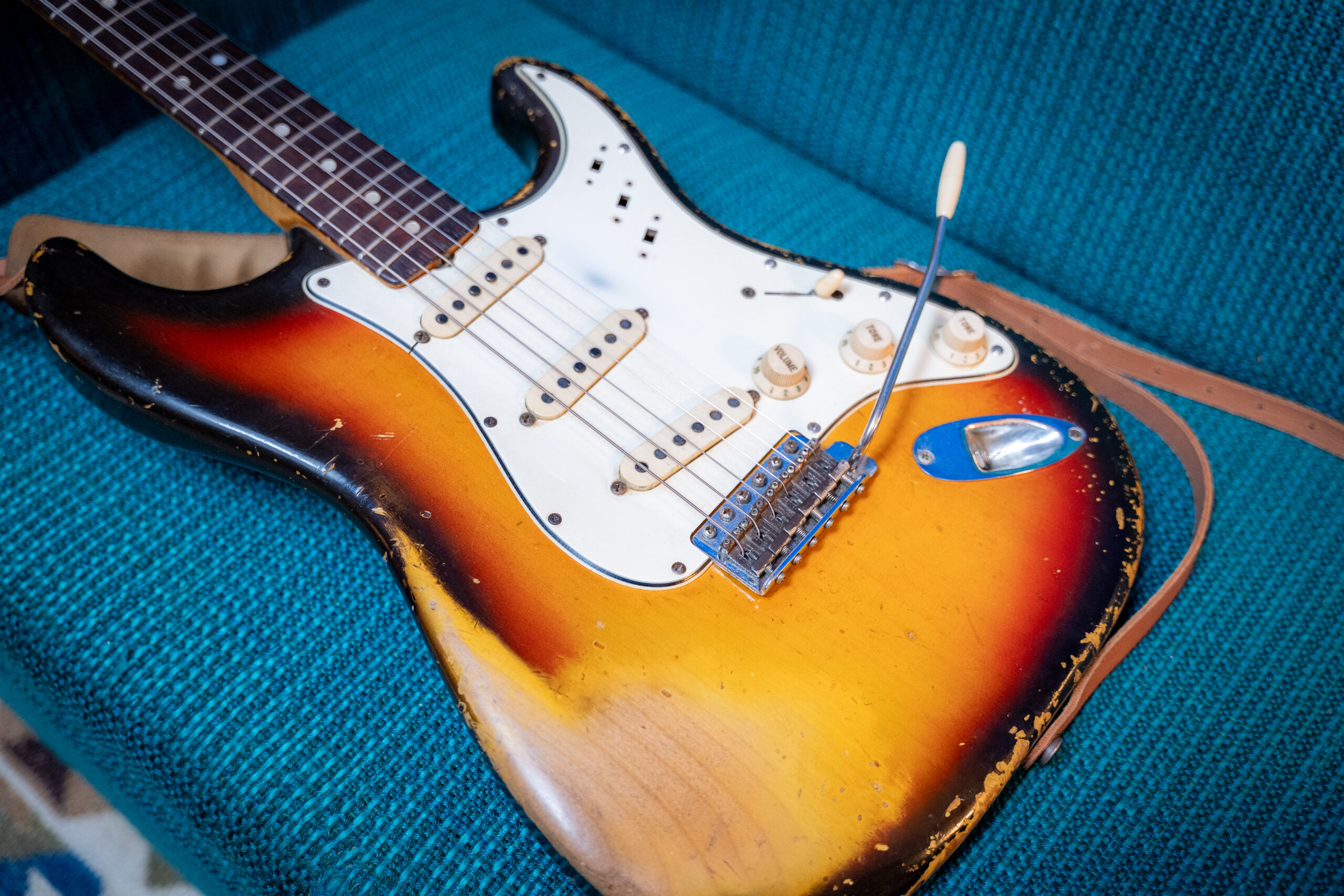
Fender 1964 Stratocaster

8. What’s the most annoying piece of gear you have, that you just can’t live without?
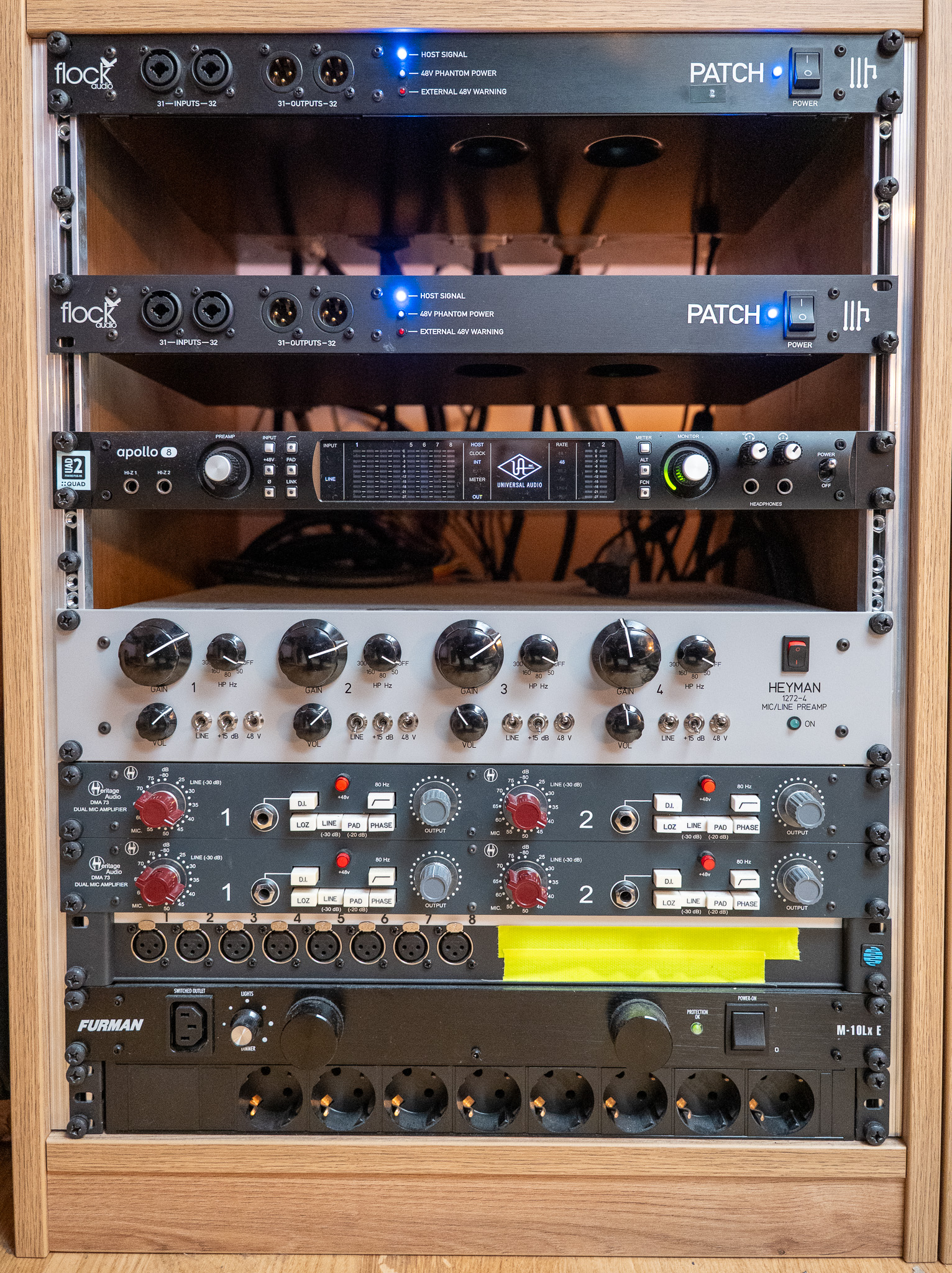
Rack Flock Audio, UAD Soundcard, Heyman and Heritage Preamps

I’d have to say the Flock digital patchbay. It’s annoying because it was manufactured with a low quality threading for the d-sub connectors on the back, so now it is broken and the connection is glitchy. But it’s so essential to my working process that I don’t have time to un-patch it, send it to repair and re-patch the whole studio.

I also have a 1965 Gibson Firebird that has a glued in neck. It’s got 3 P90 pickups and a fantastically dry sound. However it just doesn’t hold tuning and the intonation is terrible. You basically can’t play a whole song all the way through. But it records really well.
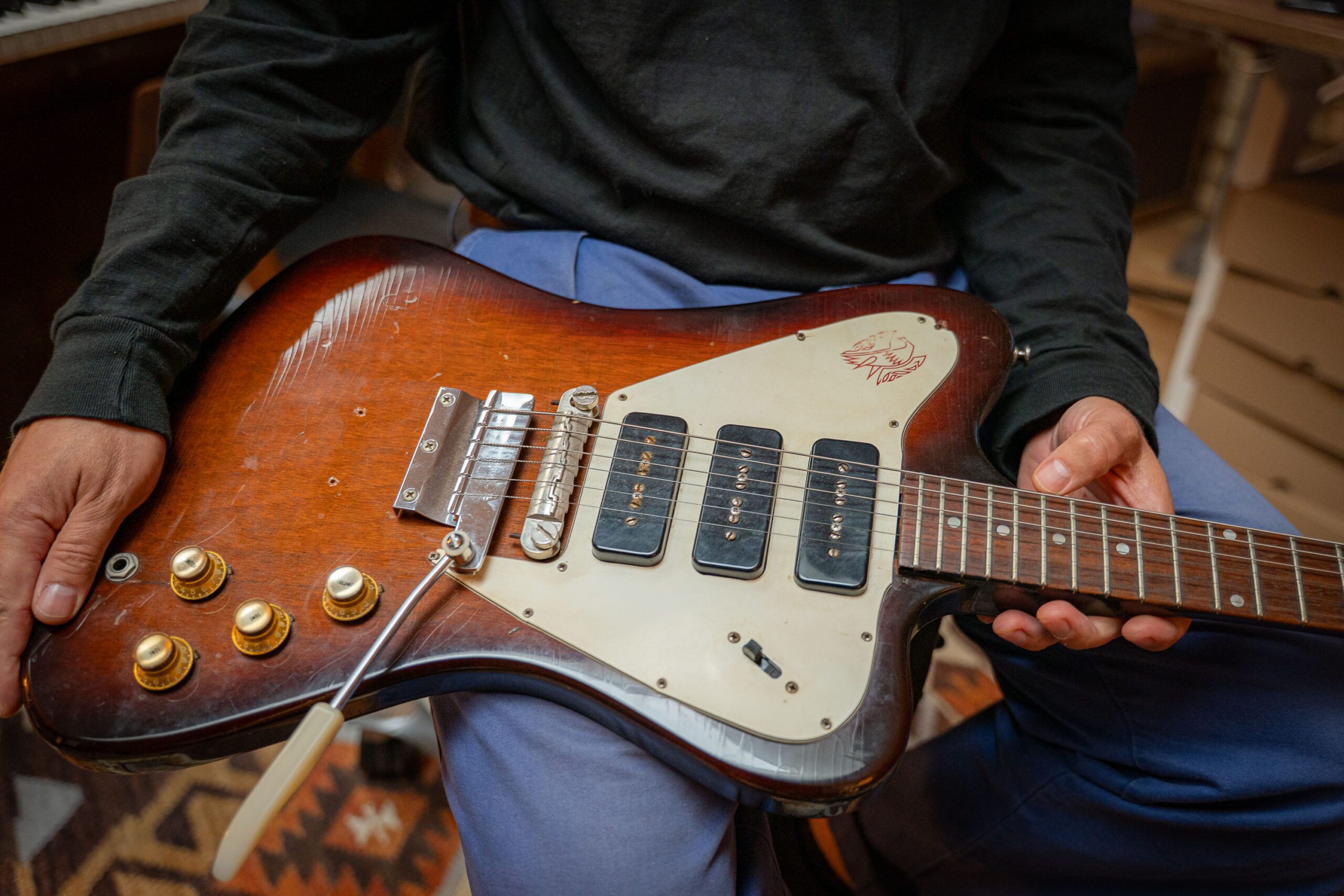
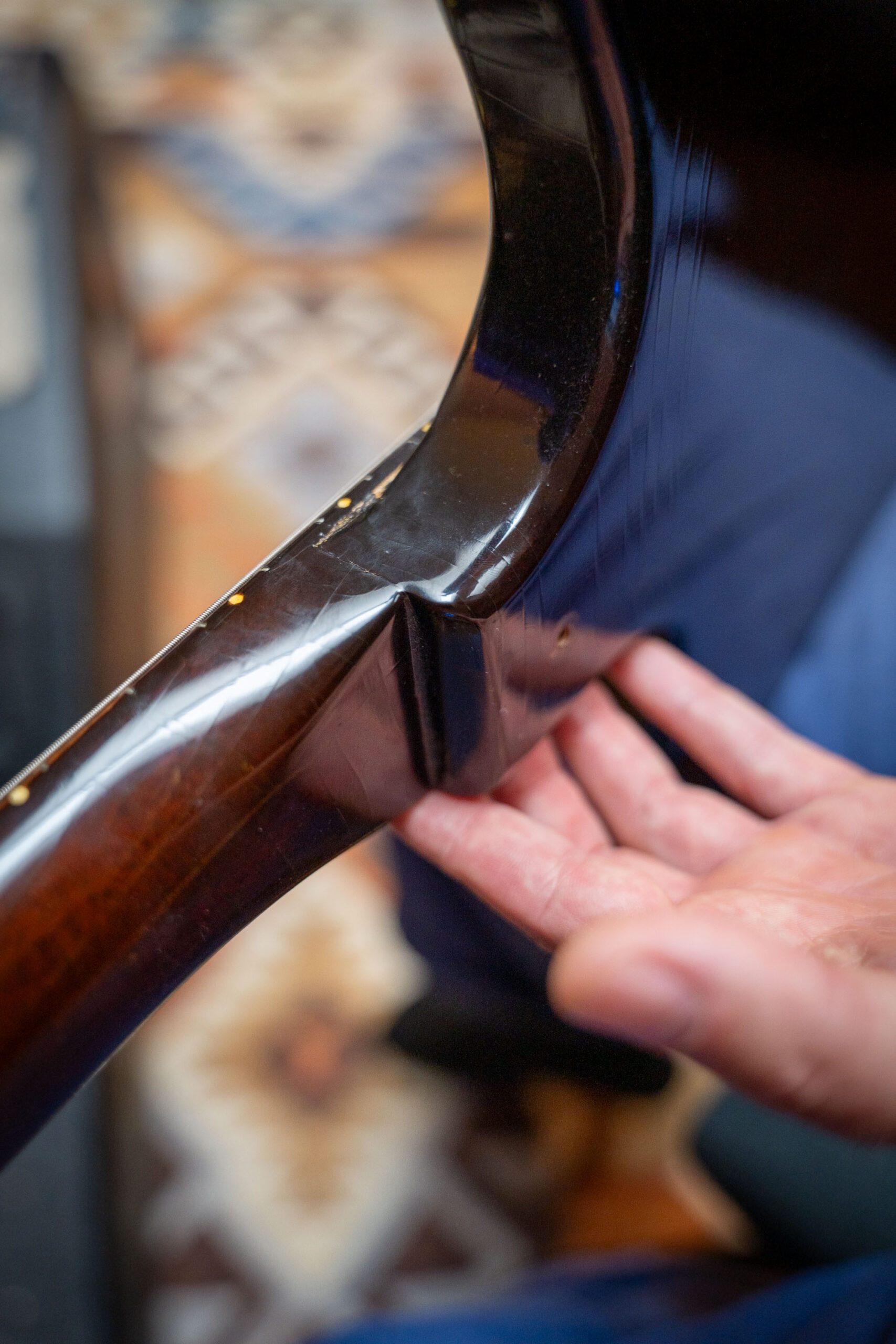
1965 Gibson Firebird

9. Most surprising tip, trick, or technique that you’ve discovered about a bit of kit?

Enjoy the parts of the sounds that are ‘faults’. This is something I’ve realized over years of experimentation. Imperfections—whether it’s a synth that drifts out of tune, a reverb that rings out in unexpected ways, or tape hiss—can be incredibly inspiring. Instead of fighting them, I embrace them. They add character, unpredictability, and a human element to recordings that otherwise might feel sterile… or worse ordinary.
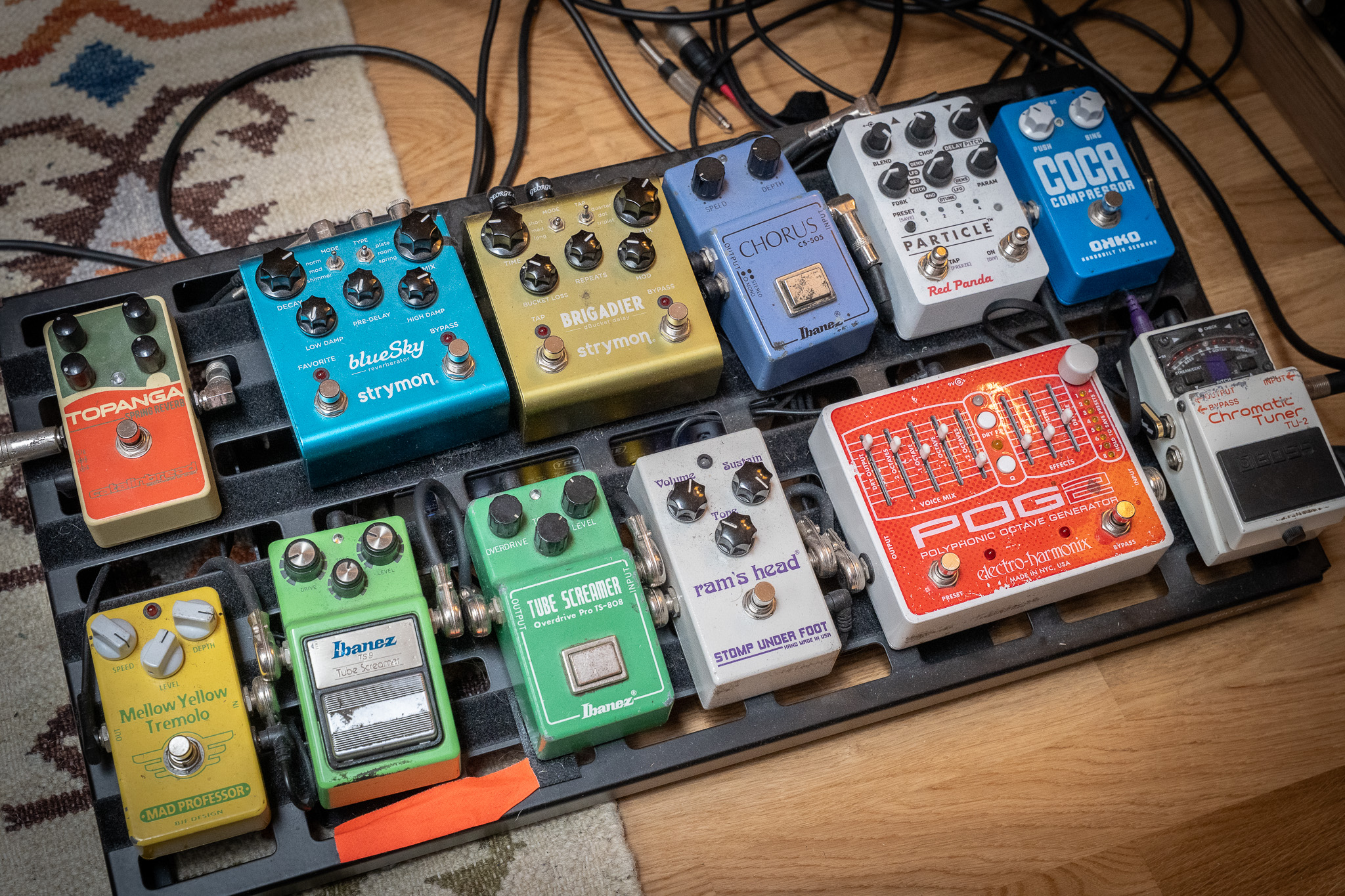
Pedal board

Artist or Band name?

Kaspar Kaae

Genre?

Cinematic indie folk.

Selfie
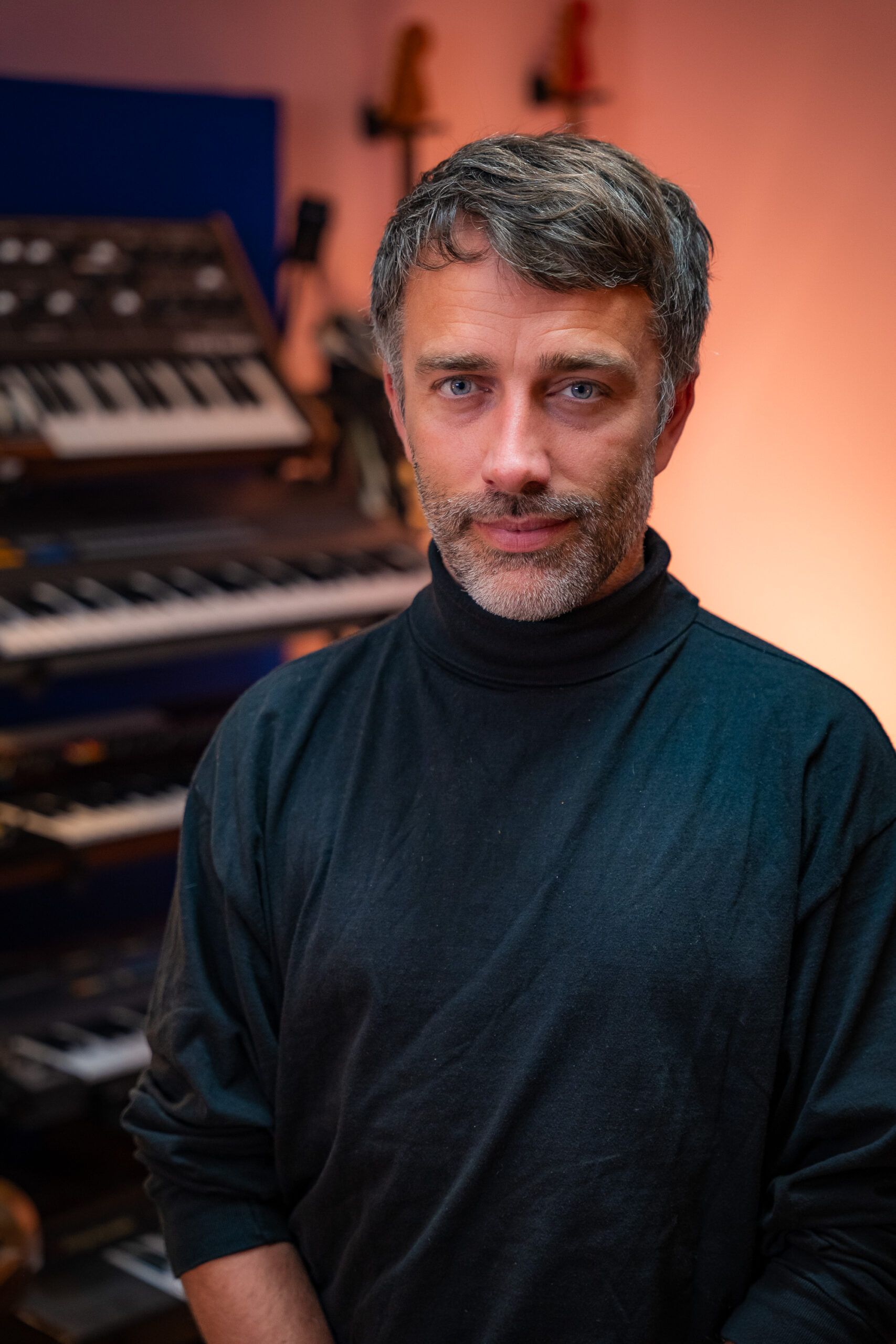
Kaspar Kaae

Where are you from?

Bornholm, Denmark. It’s an island in the Baltic sea and it’s quite far from the mainland of Denmark. Moved to Copenhagen when I was 19.

How did you get into music?

When I was around 10 years old, a school friend named Rolf at school started to play on the pianette (small upright piano) that we had in our classroom, and I was fascinated by it. So of course I had to start playing myself.
He then started to play acoustic guitar and we learned together for a while. He showed my Am, C, D and F. So I immediatly put those together and said to my parents “Hey, I wrote a song!”
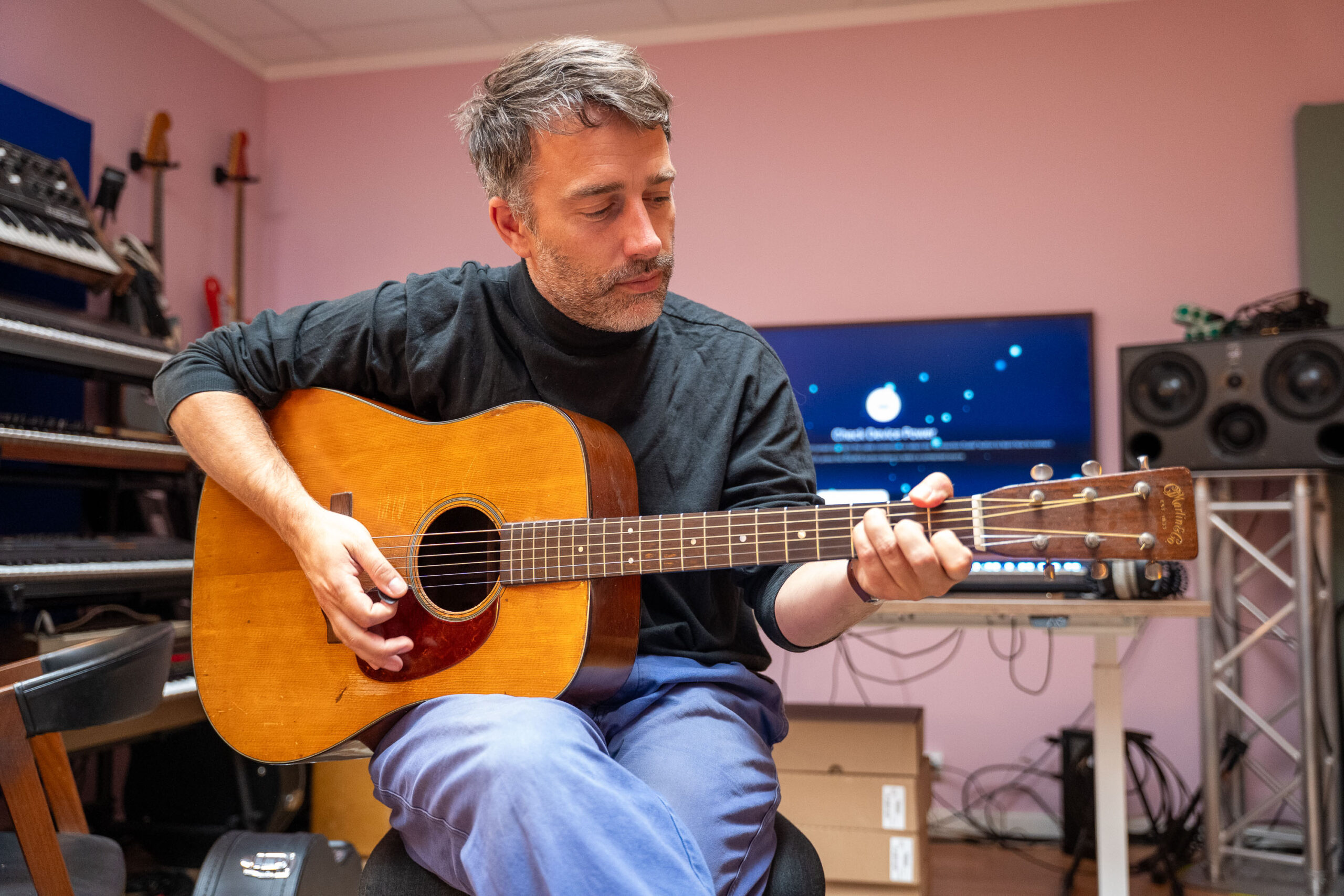
Kaspar Kaae with his vintage 1948 Martin D-18 acoustic

Couple of years later, I was allowed to trade my mom’s acoustic for an electric guitar … and since then, it’s just been music, music, music.

What still drives you to make music?

Curiosity and not knowing the answers. Every track starts as the question: “What happens if I try this?” That uncertainty is still exciting. It’s not about finishing a product—it’s about discovering, exploring, and reacting to sounds as they evolve.

How do you most often start a new track?

Blank template in Logic. I rarely begin with a pre-conceived idea. Starting empty forces me to listen, respond, and experiment. I’ve tried making a template with a bunch of sample libraries, but it makes the whole process a bit more boring for me. Doesn’t feel creatively exciting.
I have ‘workshop’ days with my musical collaborators, where we spend a day just trying out a lot of different ideas and crazy experiments. Most don’t work, but maybe 1 out of 10 become a composition that is an idea that you would never find any other way.
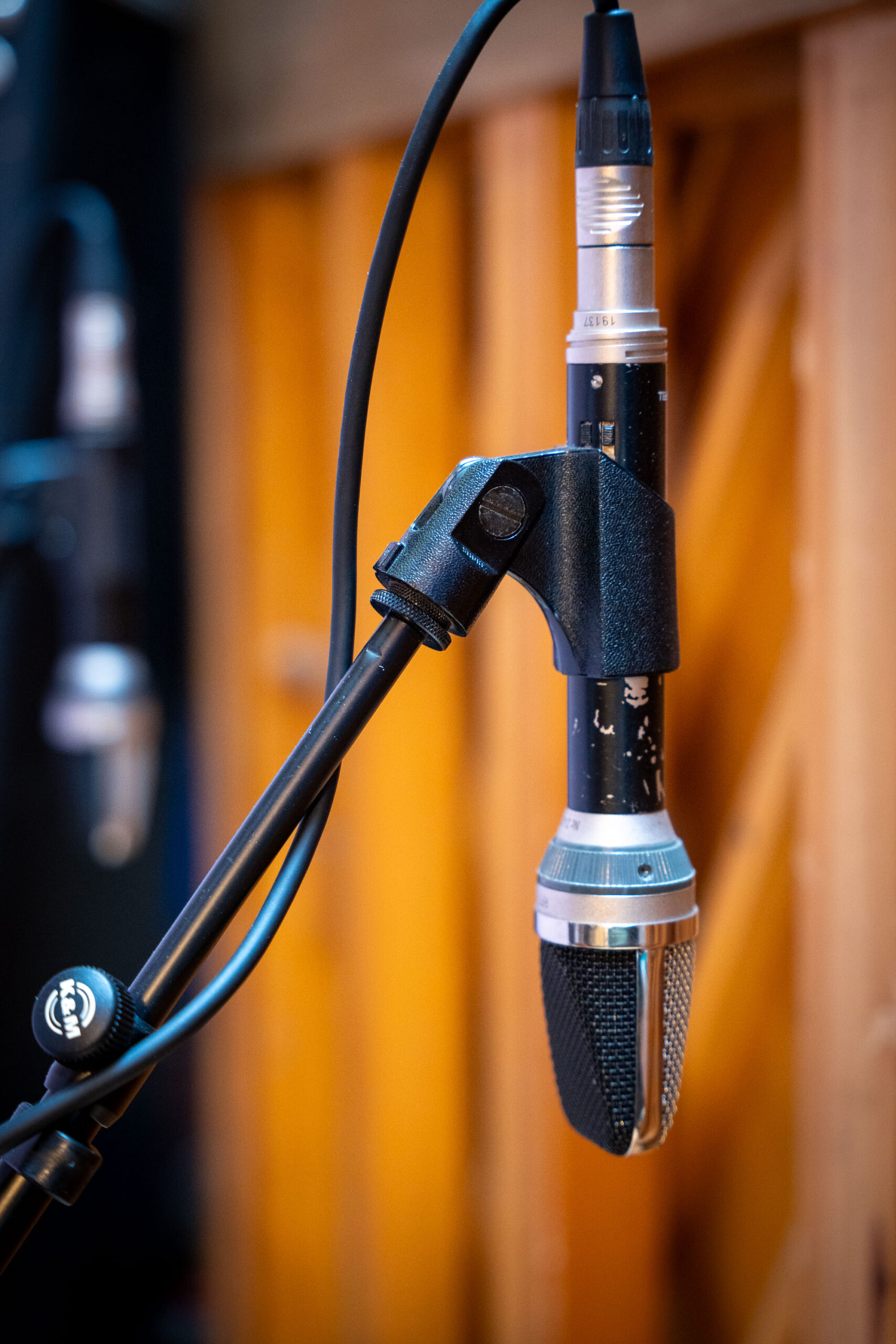
1970’s Gefell M-71 mic behind the piano

How do you know when a track is finished?

I really don’t. It’s hard to be objective about your own work. I rely heavily on collaborators like directors, producers or editors —they can tell me when something feels emotionally or conceptually complete. Often, a track evolves far beyond my initial idea, and outside feedback helps me recognize when it’s “done enough” to either be useful for a film scene or as an independent musical release.
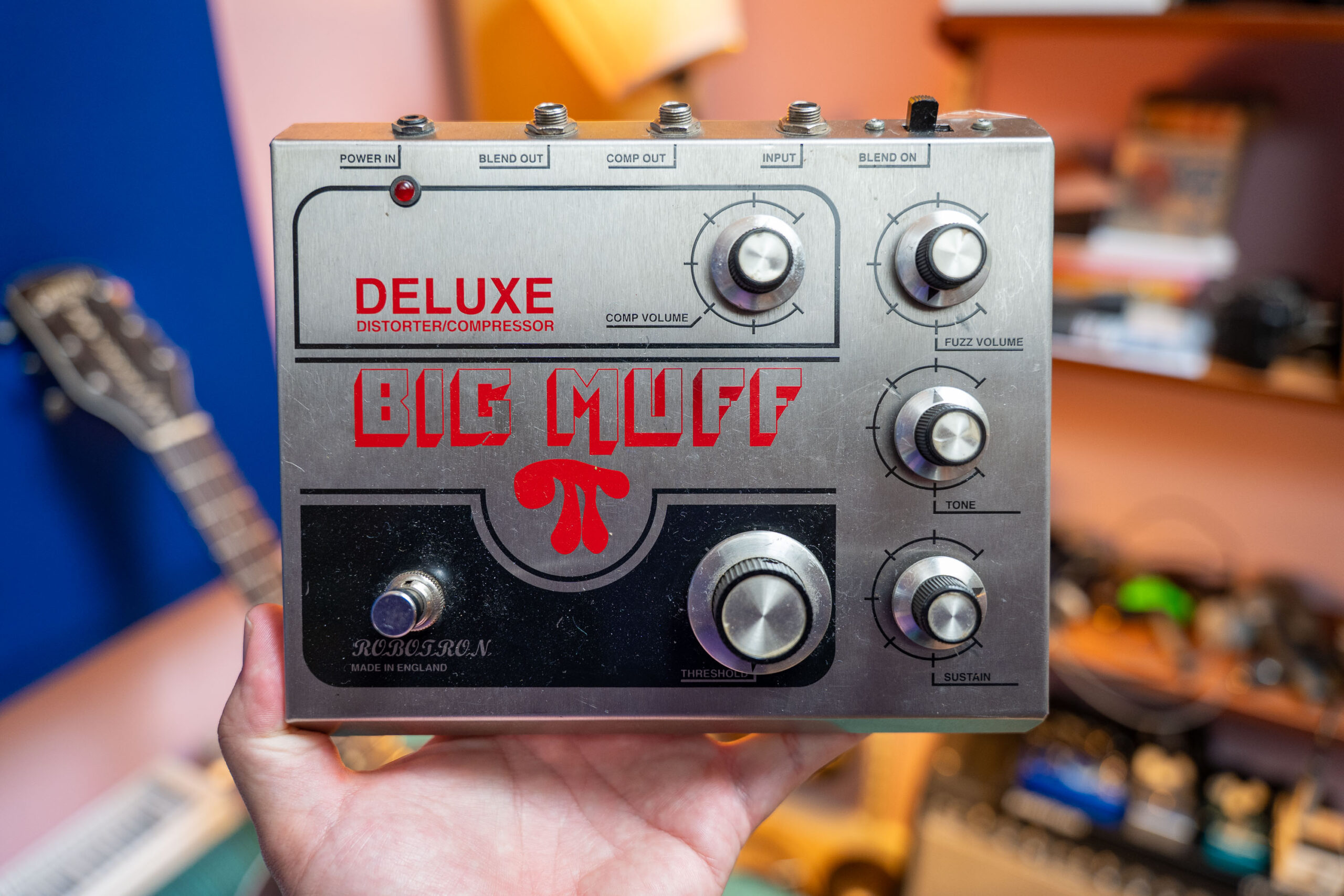
Robotron ‘70 Deluxe Distortion/Compressor Big Muff

Show us your current studio

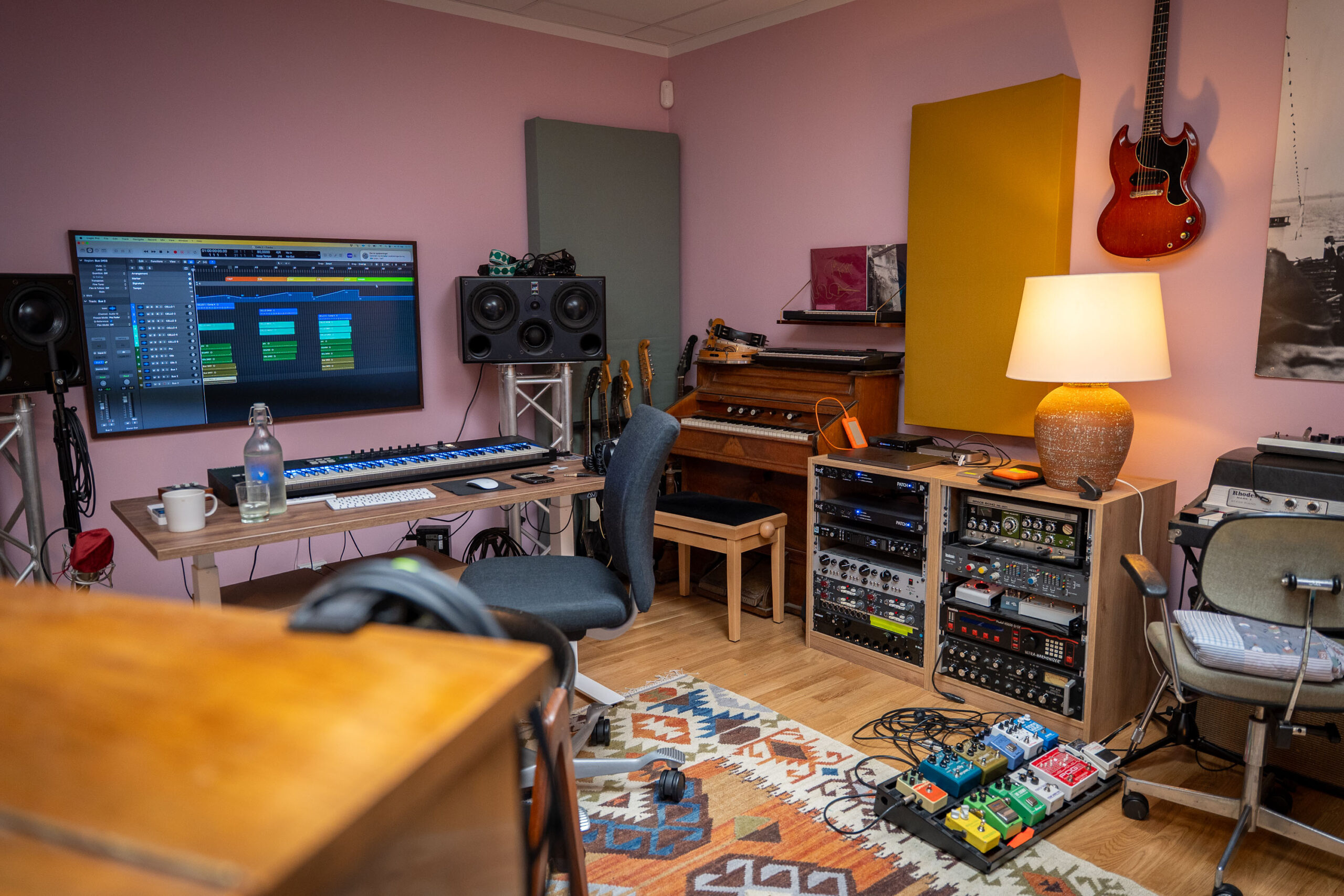
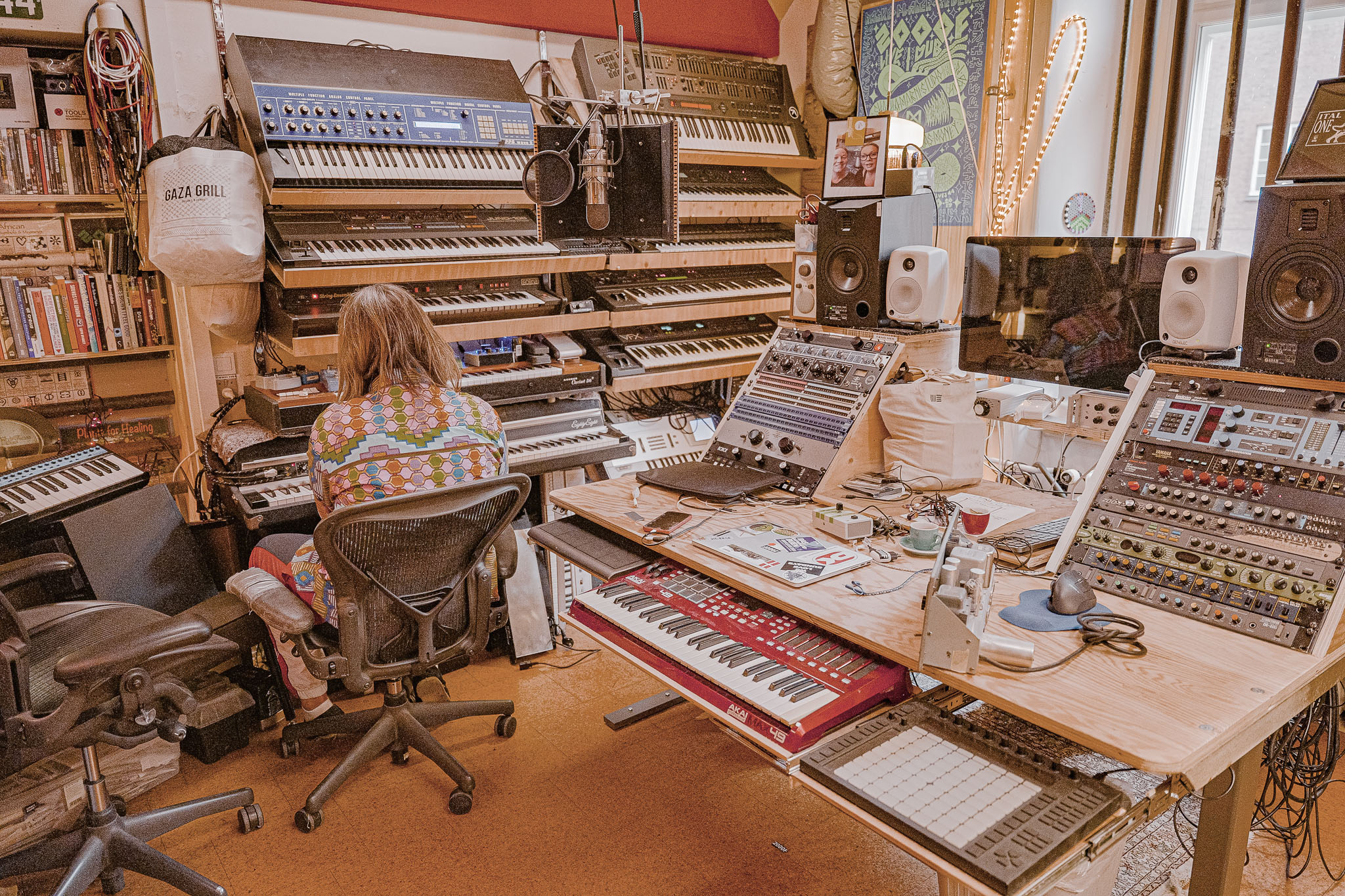
It’s a hybrid of vintage but still practical. The Flock Audio patchbay, Lexicon Primetime, Juno-60, piano, 1953 Telefunken Neumann U47, Fender 1964 Jazzmaster—all of it is central to my workflow. The space isn’t flashy, but it’s alive. Every cable, knob, and surface has a purpose. It encourages experimentation and allows me to move quickly between ideas. It’s not just a studio—it’s a creative ecosystem.
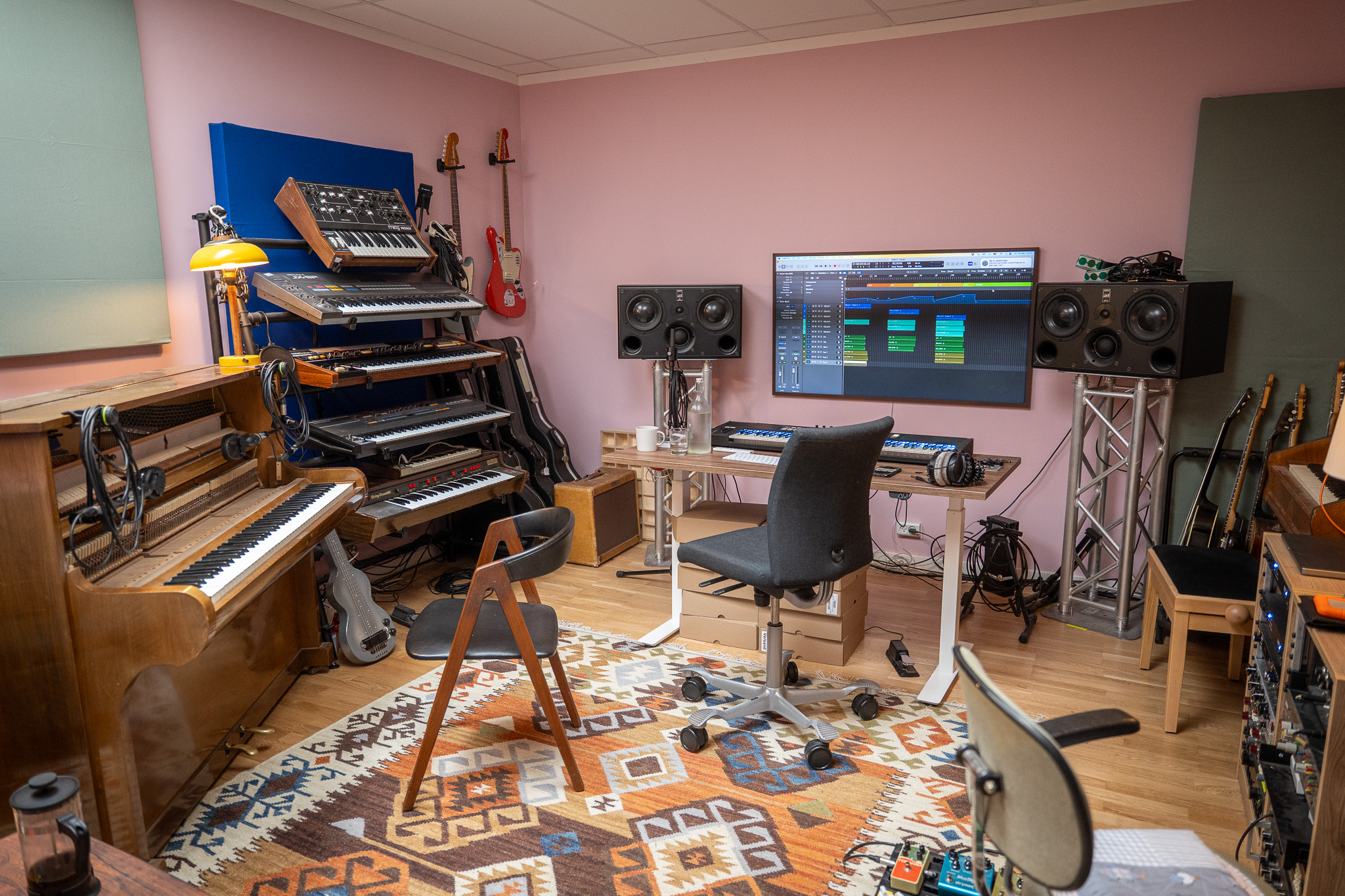
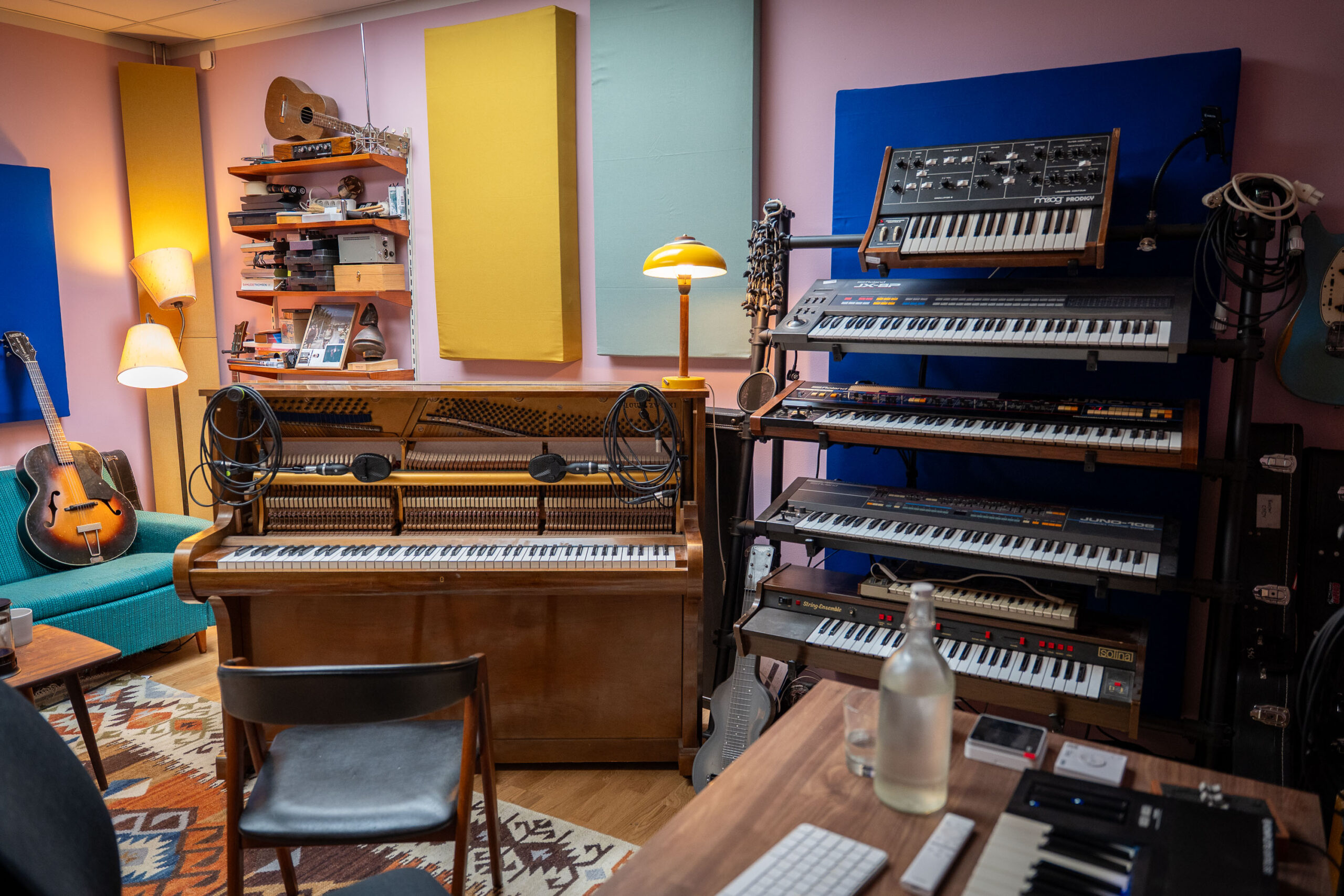
Kaspar Kaae – Studio
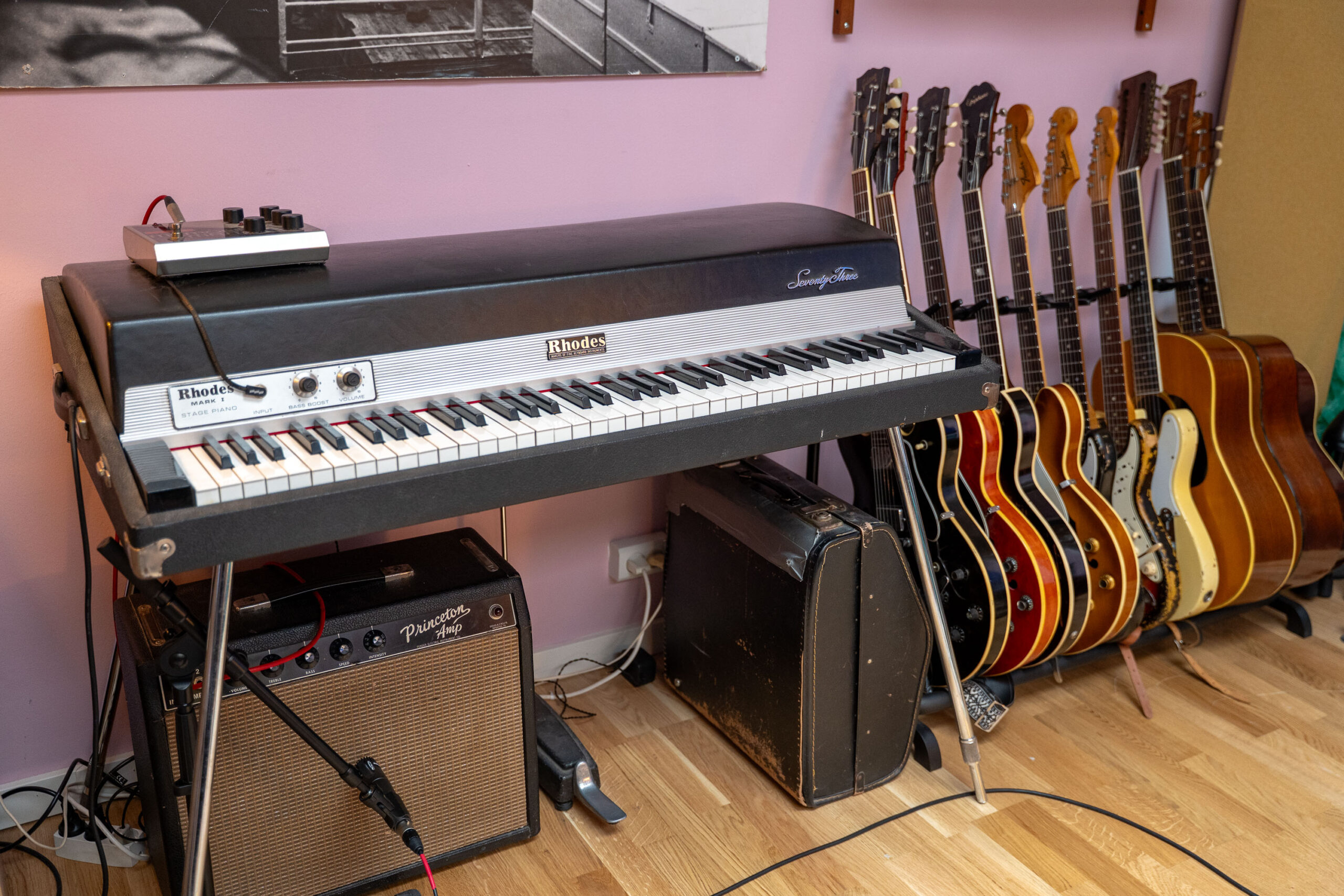
Rhodes and Guitar rack
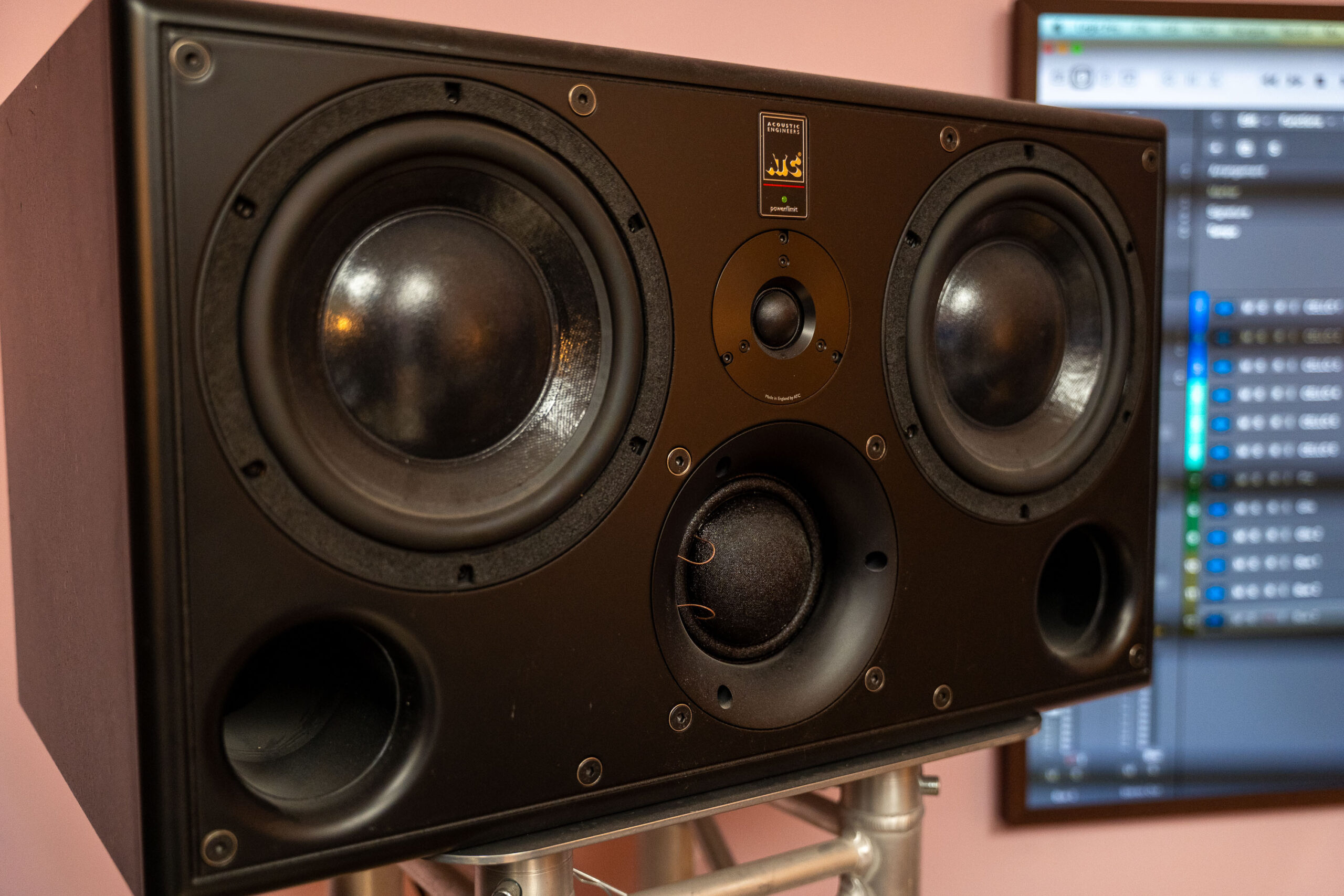
Studio ATC monitors

Best creative advice that you’ve ever heard?

“Have an idea, but be open to new things.” It’s deceptively simple. An initial idea is just a starting point; the magic happens in letting the work transform itself during the process. Tracks often end up somewhere completely different from the original concept, and the best work comes from embracing that evolution rather than trying to control it.
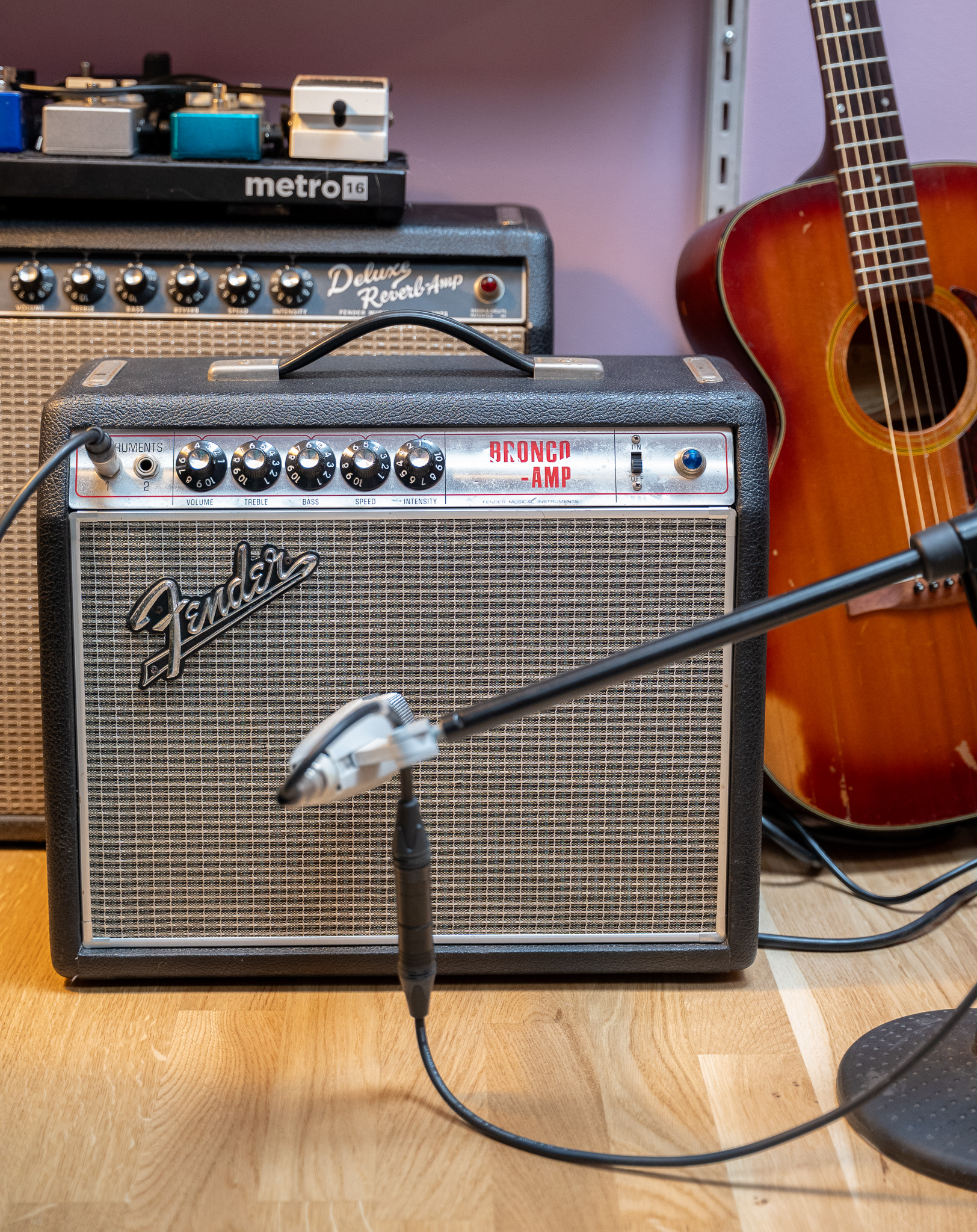
Fender Bronco amp

Promote your latest thing…

My latest release is with my band Cody. Our new album is called Everything Falls Apart.
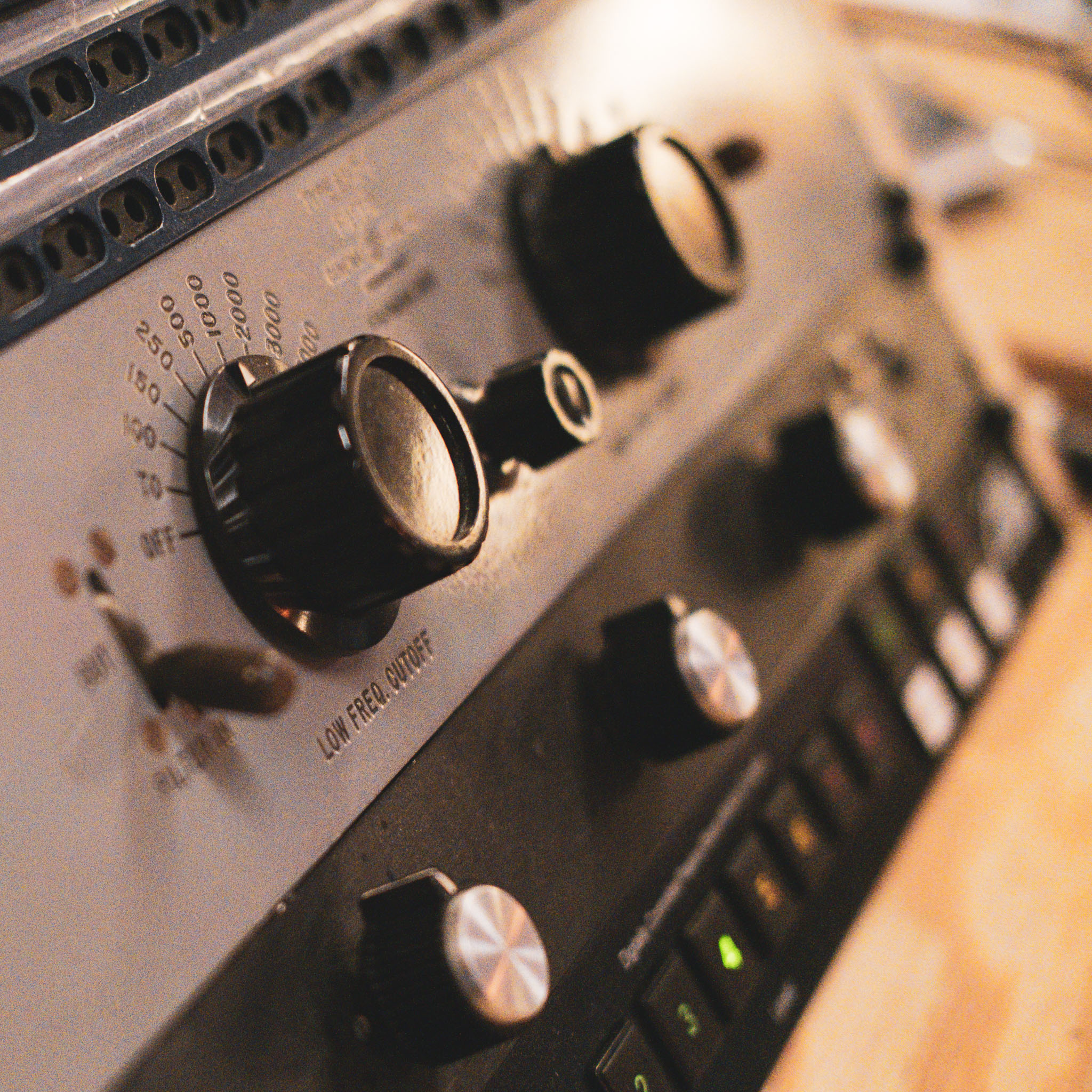

2000F – Strøm Førende

[Editor: There are gear geeks, and there are gear freaks…. AND THEN there is the artist 2000F aka. Frederik Birket-Smith, who has got to have one of the most extraordinary collection of vintage synths, drum machines and outboard gear in all of Denmark… and this is just one of several locations where he has his gear. He is also the CEO of Strøm Festival – which is pretty much the biggest yearly electronic music festival in Denmark. So enjoy!
Also, if you’re wondering about the title, it’s danish for… ‘electric conductor’
]

1. Favourite knob or fader or switch on a piece of gear and why?

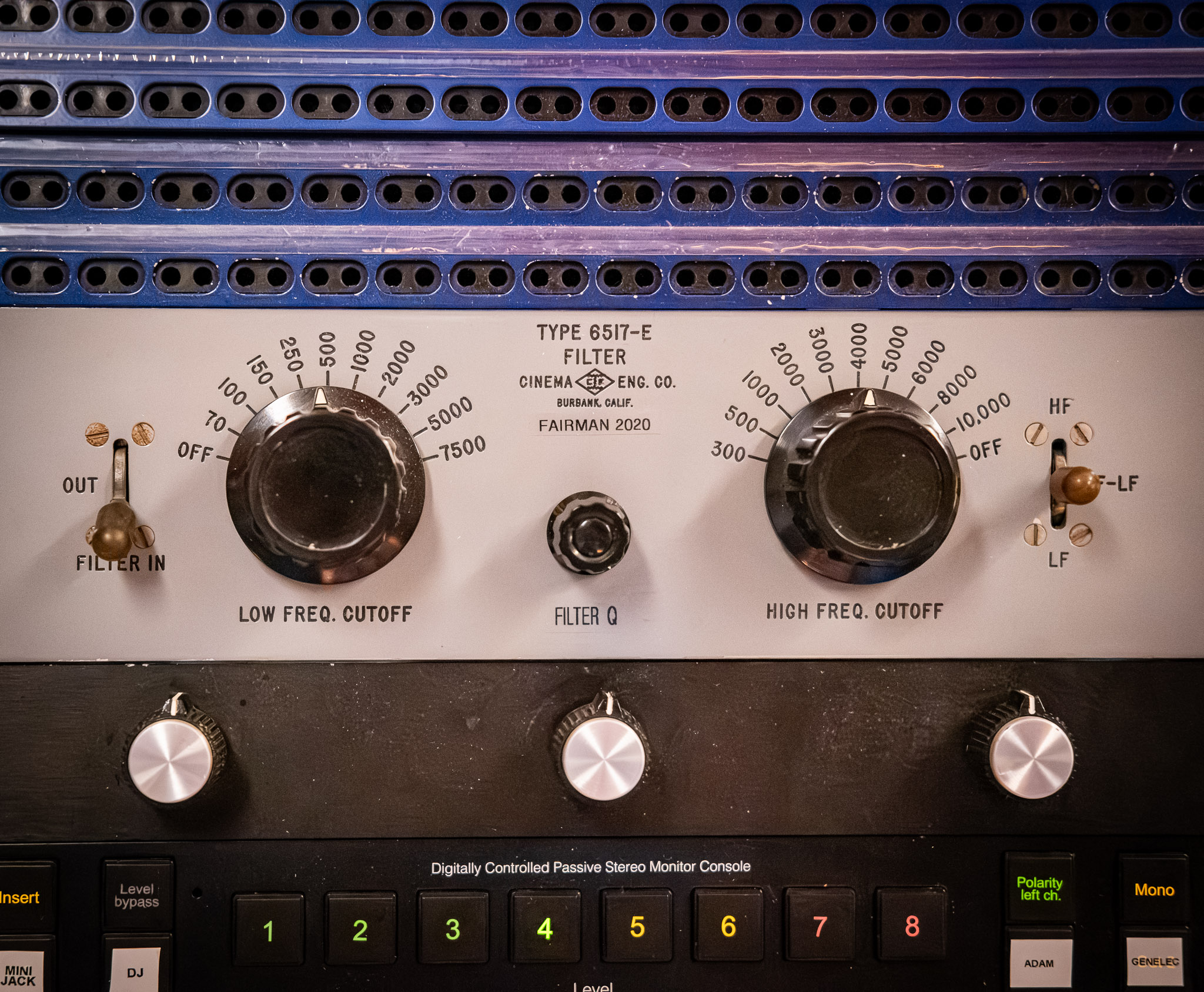
My fave has got to be the Cinema Engineering Corporation Model 6517/e.

Cinema Engineering Corporation Model 6517/e

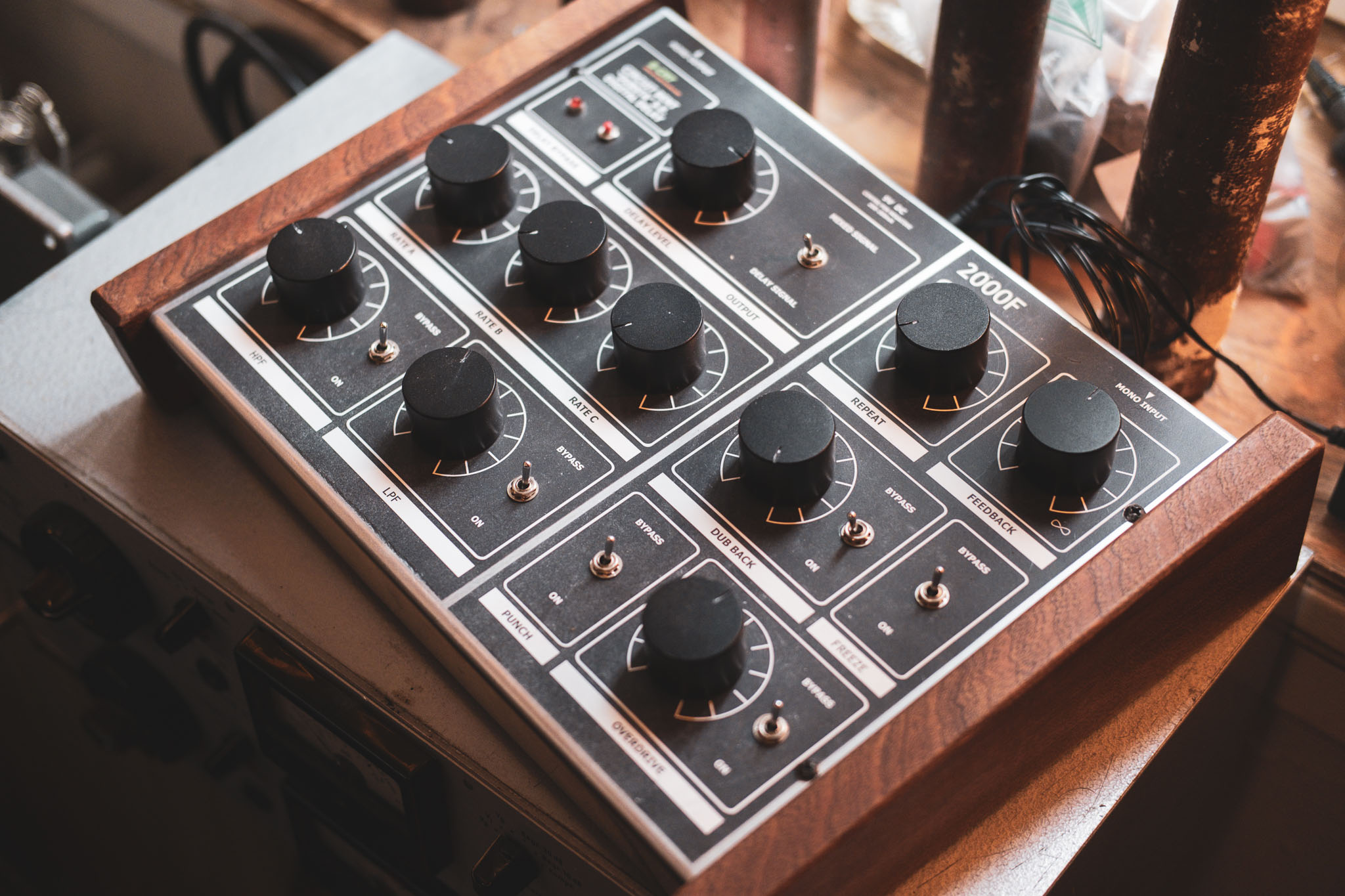
This is a low and high cut filter from Burbank, California, made in the 50’s, early 60’s. Originally made for, what you would call the telephone effect for film. It’s quite an extreme low and high cut and this unit in particular, has been modified by a local danish tech called Fairman, with a resonance control filter Q knob.

Cinema Engineering Corporation Model 6517/e front panel

So you can make it very aggressive and brittle sounding, and I use it for dub music, to get those extreme cuts. Most filter units of this type only have a low cut. Which is nice, but this one has high cut as well.

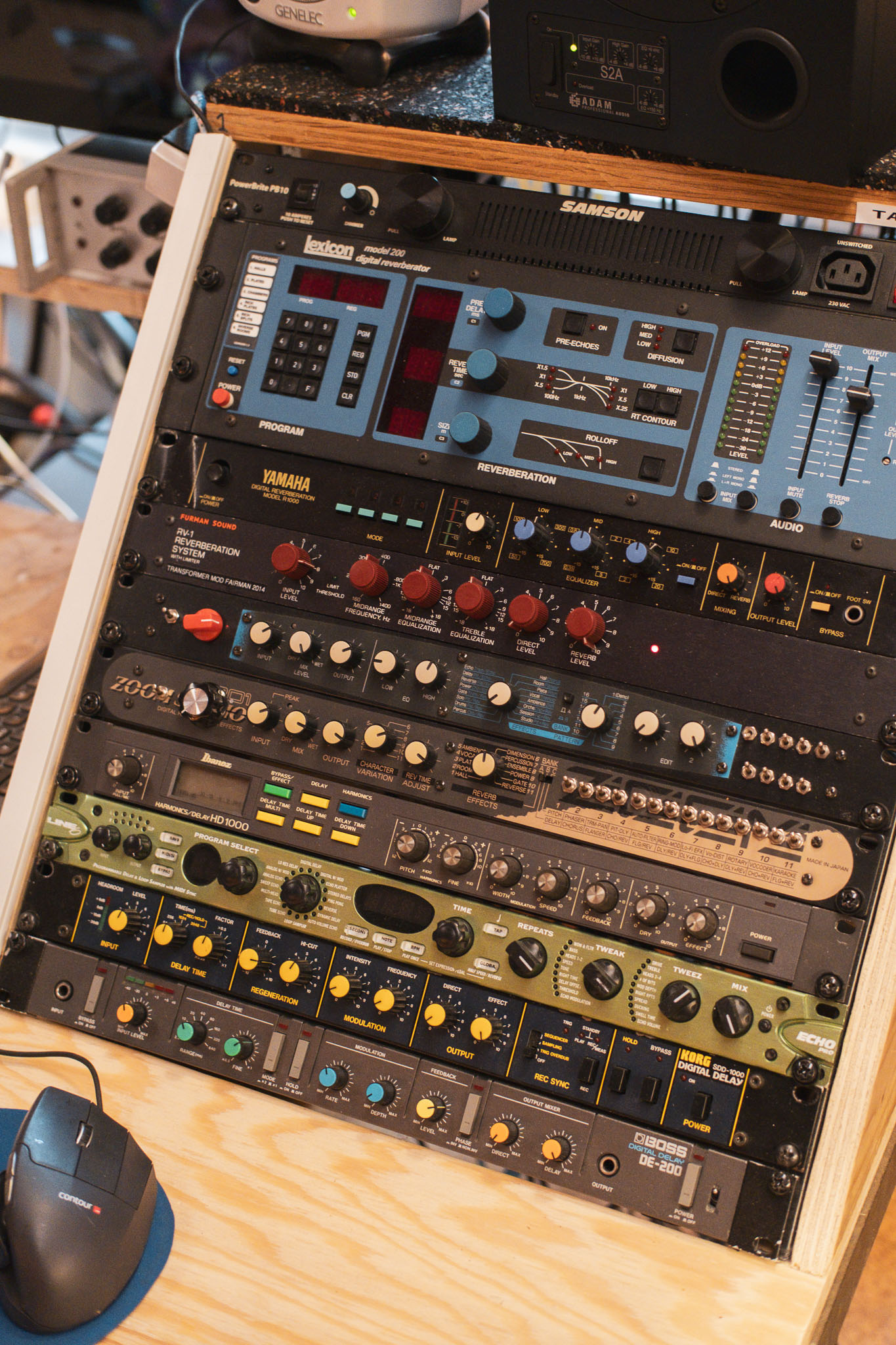
Lots of delay and reverb outboard

2. Do you have an ‘almost’ perfect bit of kit? What would you change?

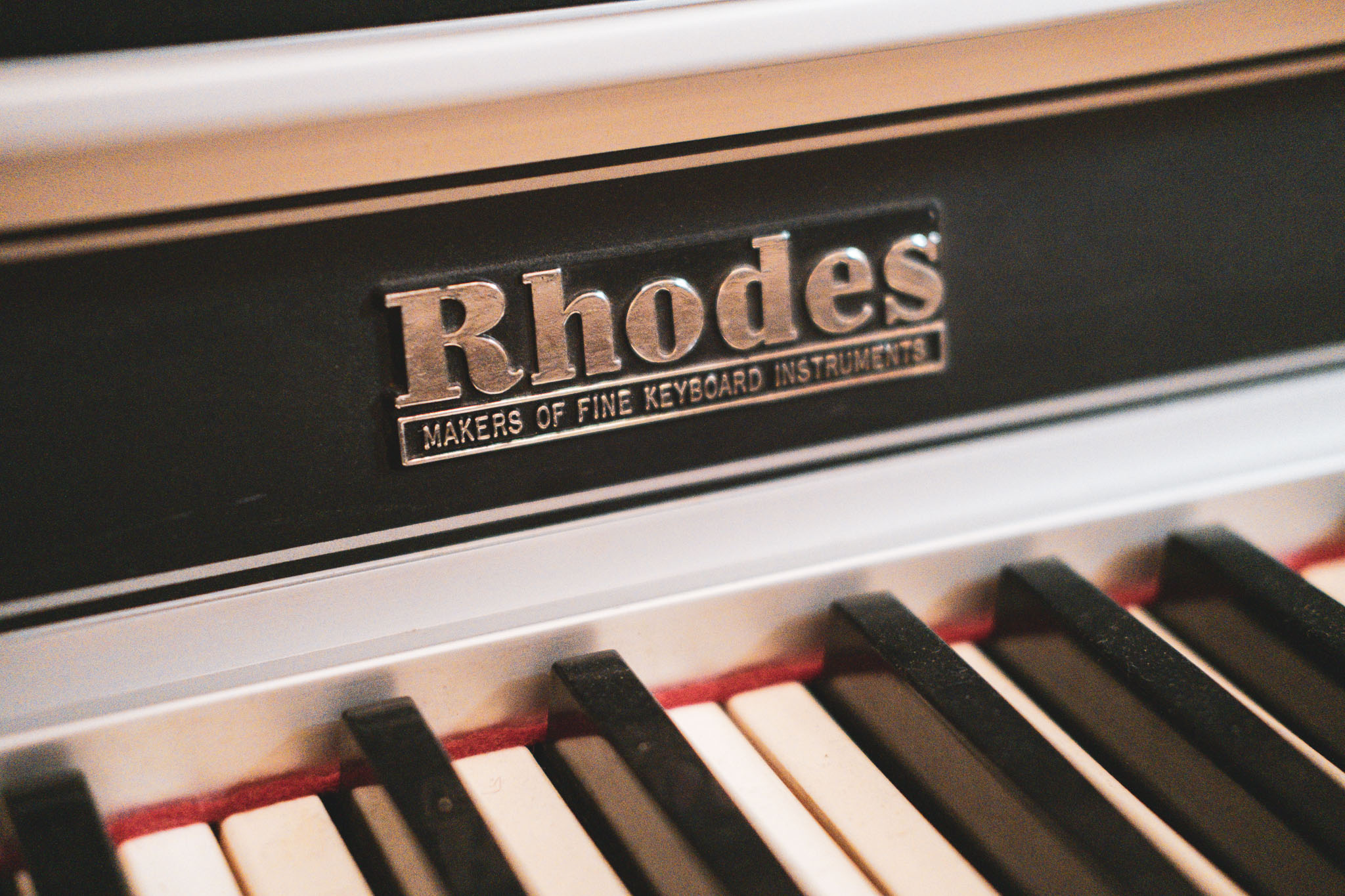
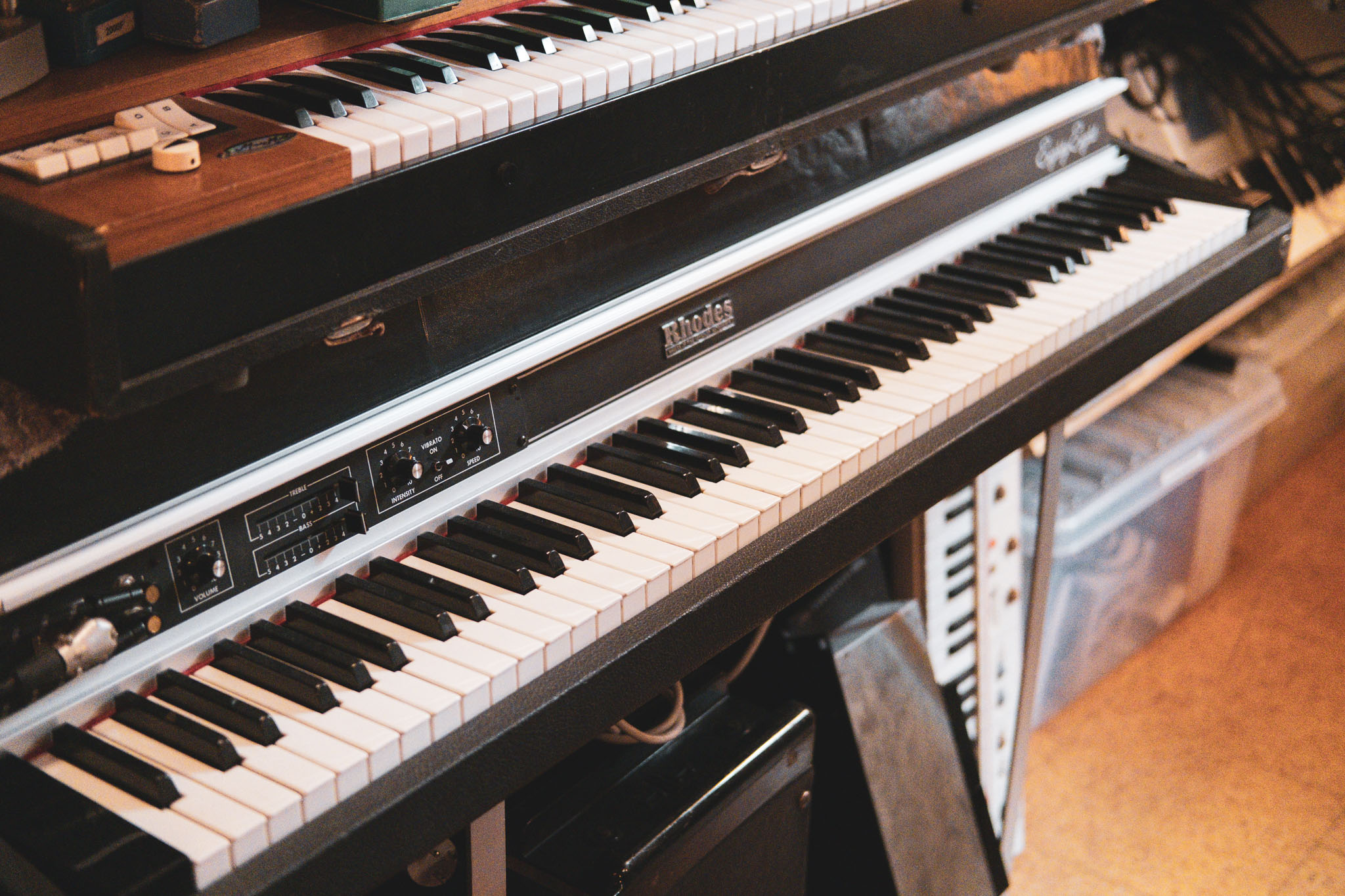
The Fender Rhodes 88 suitcase. Gotta be the suitcase version, not the stage. Has to be the one with the speakers. And I wouldn’t change anything about it.

Fender Rhodes 88

I have one from 1980 here in this studio and another one at home, from 1976. At one point I had both together in the living room, the kids and the wife were a little bit “Okay we need two?”. But my wife is really big fan of Herbie Hancock and Chick Corea as well, so she loved it. Still… it takes up a lot of room.

’80s Fender Rhodes 88 suitcase

But the interesting part of having two was that, while the sound of the one I have here is really good, the other ’76 Rhodes, the body and the weight is much deeper compared to this one. The ’76 almost feels like a proper grand piano. It’s really nice.

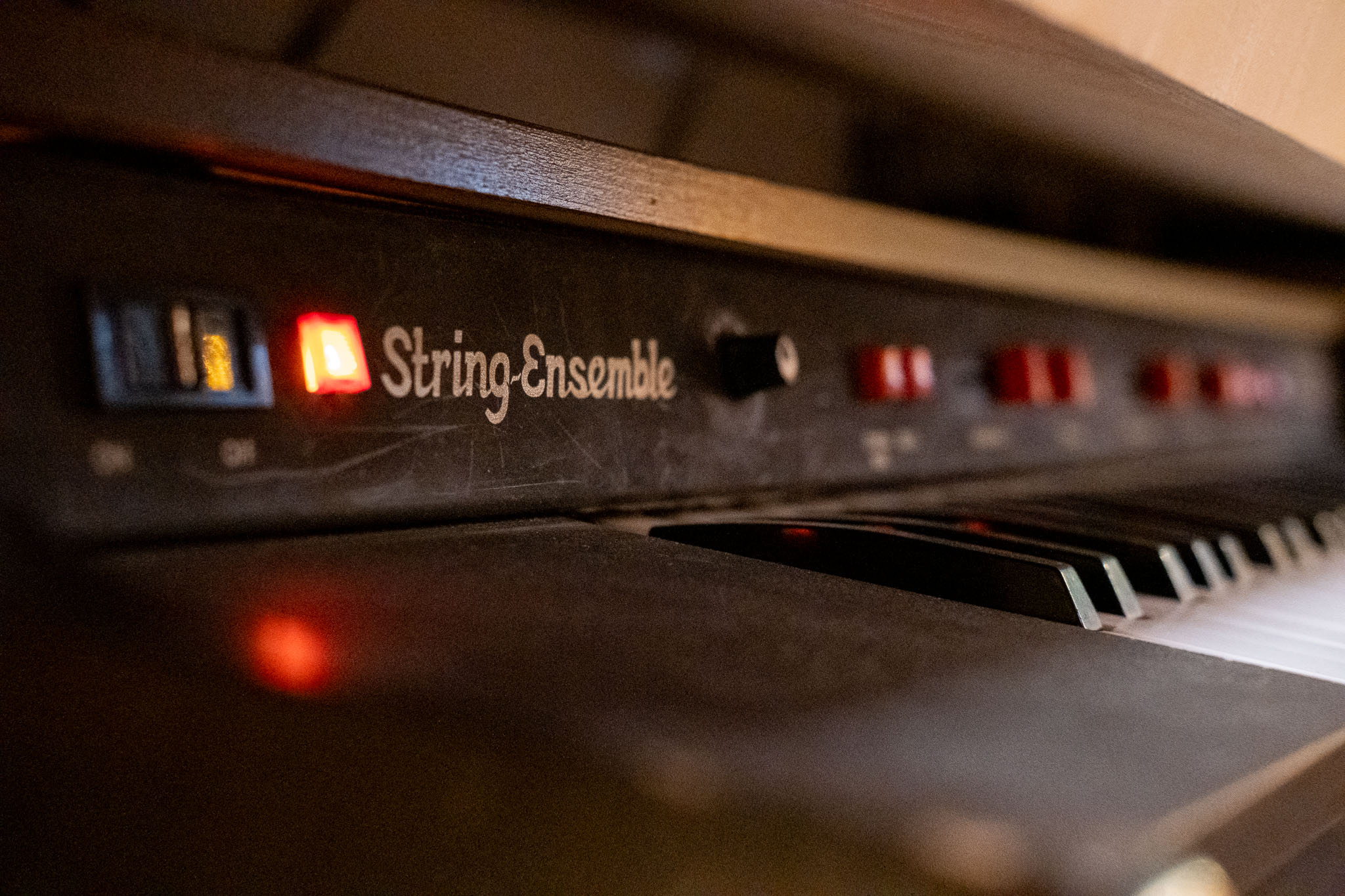
Solina String Ensemble

3. What setup do you bring on holiday or tour or commute etc.?

Smartphone… one with Koala Sampler.

And then just the built-in Memo app on the phone, that’s the only things I would bring.

I especially like the Memo app. Actually I just use it to record stuff… Sometimes it’s ideas and melodies or basslines or rhythms. Sometimes it’s just something I need to explain to myself, like an idea that I need to remember. Sometimes it is sampling something.

Quite recently I recorded a sound while they were rebuilding Fisketovet [Editor: a shopping mall in Copenhagen]. And there was this crazy huge drilling machine that was so loud. I’ve never heard anything like it, but I had to record it. It was just banging a huge pile-driver into the ground. The reverb tail was intense.

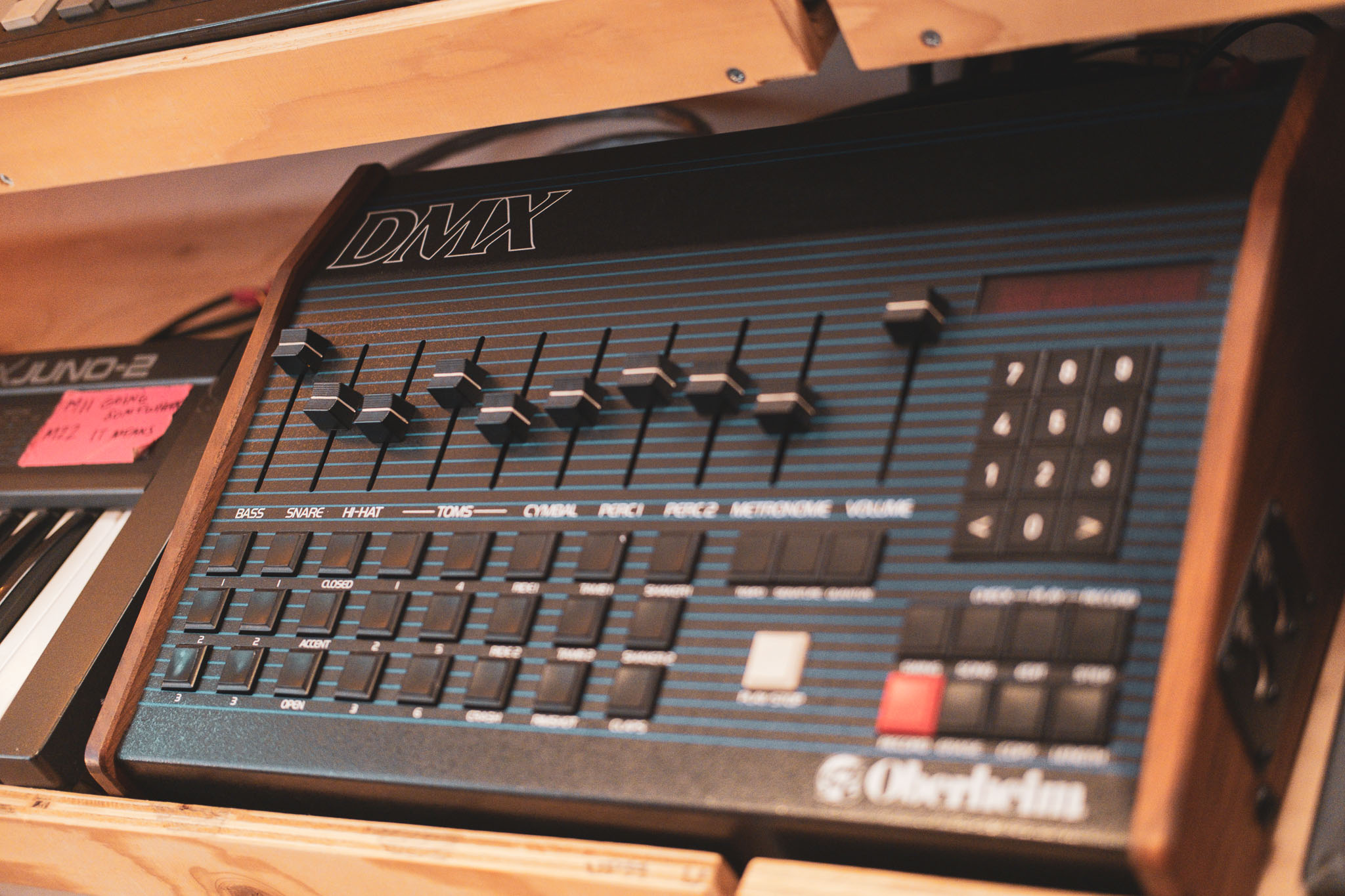
Oberheim DMX

4. What software do you wish was hardware and vice versa?

I’m not sure I can answer that, to be honest. Because I like both worlds. If I HAD to say something that could be an answer, I think it would be, that in the last couple of years, the integration between outboard hardware and the digital audio workstation is getting pretty good. Life is getting so much easier with the new analog patch bays that can be digitally controlled.

I mean, it’s so easy to intermix it now. And I actually like both analog and digital because they’re both very different, so it is great that they can now be integrated.

They’re merging and I think that’s really interesting. I come from an old school hardware kind of workflow, but the funny thing is, a few years ago, I tried to force myself to use only stock Ableton plugins, just to to see what I can do… and boy, it sounded pretty, I still prefer hardware and all that, but I did two 12-inch releases that way.

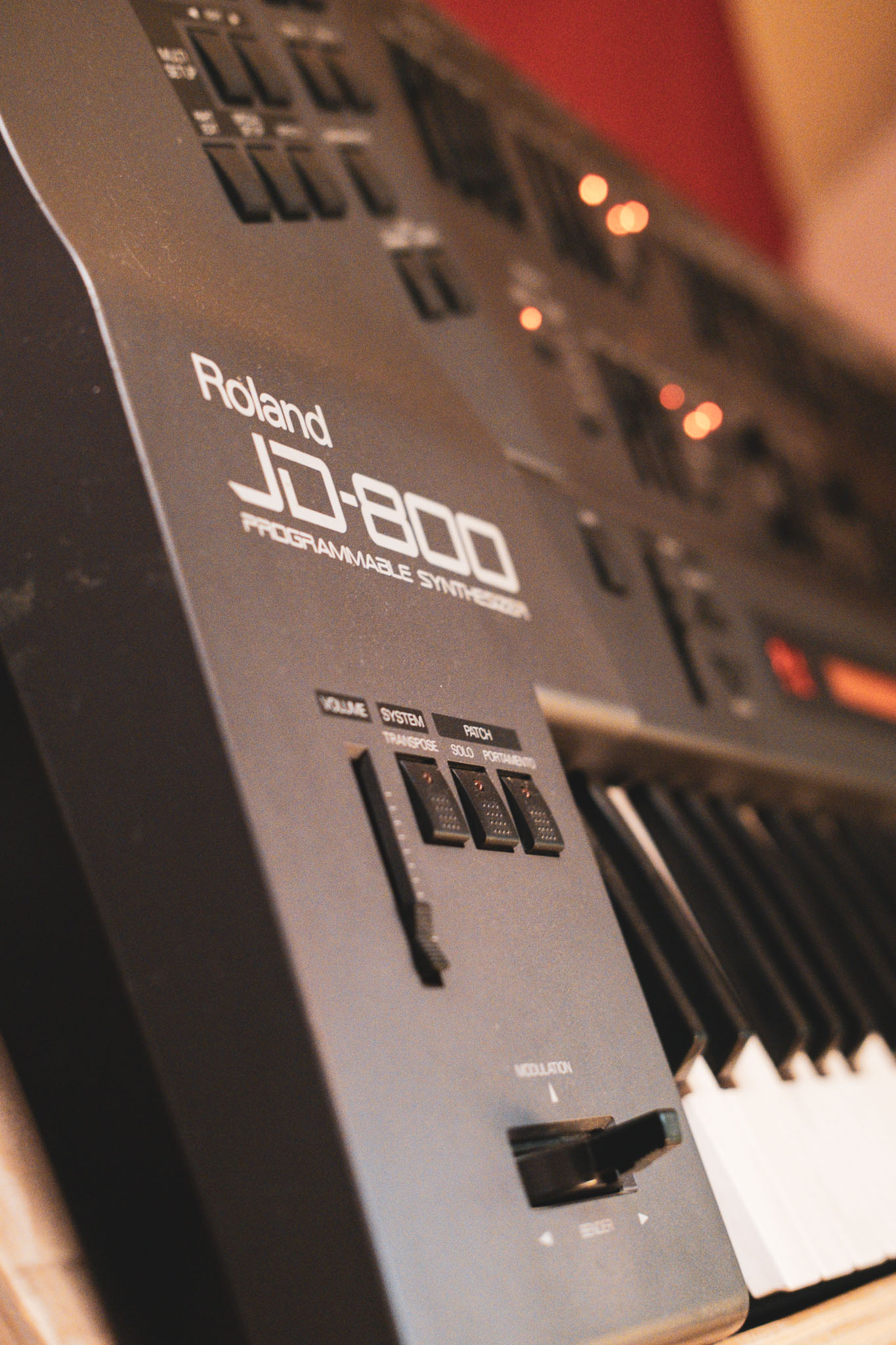
Roland JD800

5. Is there anything you regret selling… or regret buying?

Regrets selling? Nah… but there’s some stuff I regret NOT buying.

There was an Arp 2600 that was for sale in a shop near where I used to live. I think the shop was called ELSound. It was just in the display winder. Still haunts me that I couldn’t buy it at the time.

I’ve had quite a lot of gear, as you can tell, so I haven’t sold that much, actually. I’ve sold a Jupiter-4 and a Polysix and I don’t miss them. I also had the very, very big Yamaha SK50D. Which is the huge poly synth they made, just a big as the CS-80 and just about as heavy, but a cheaper version. Even though it certainly wasn’t cheap. But I don’t miss that either.

6. What gear has inspired you to produce the most music?

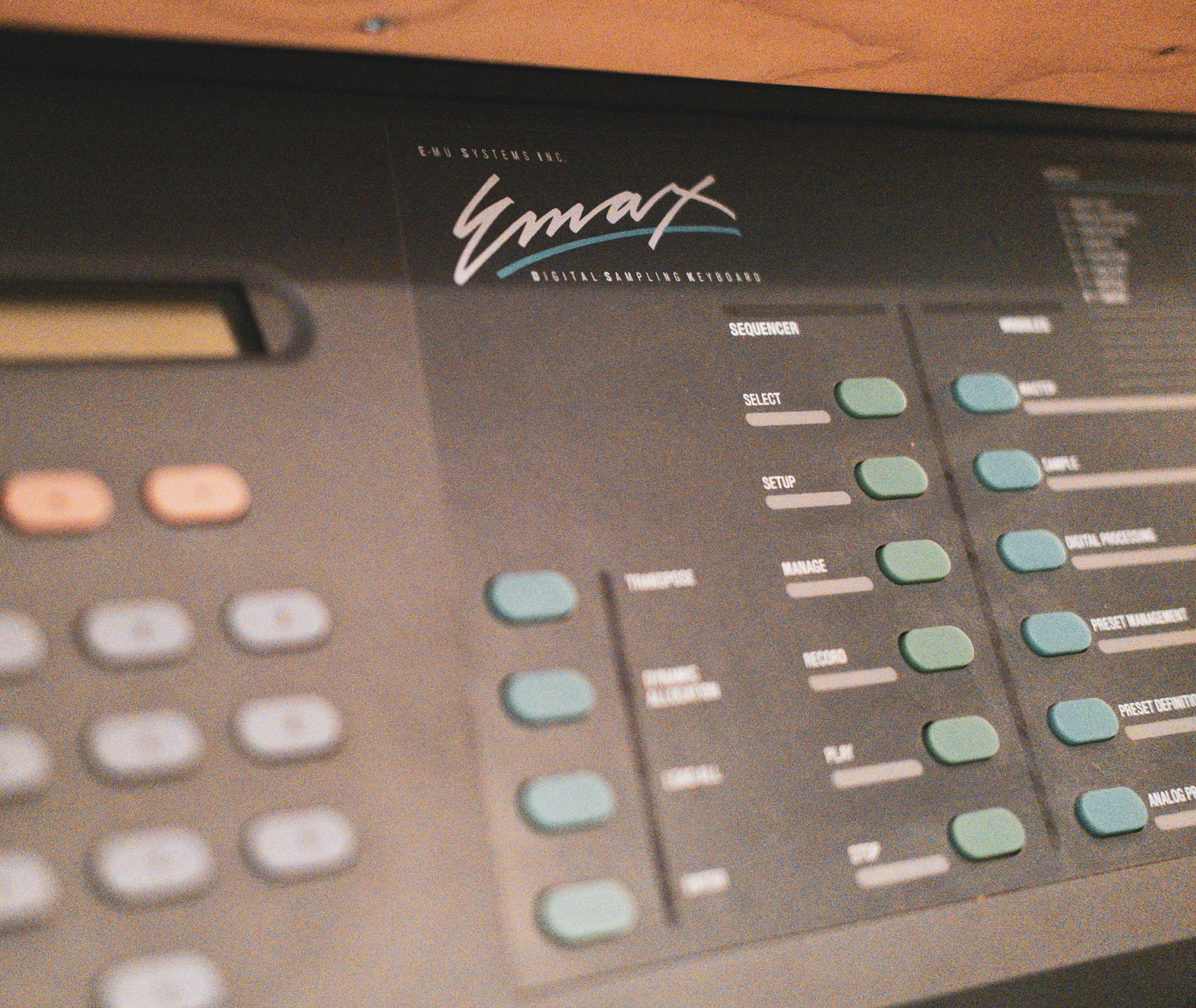
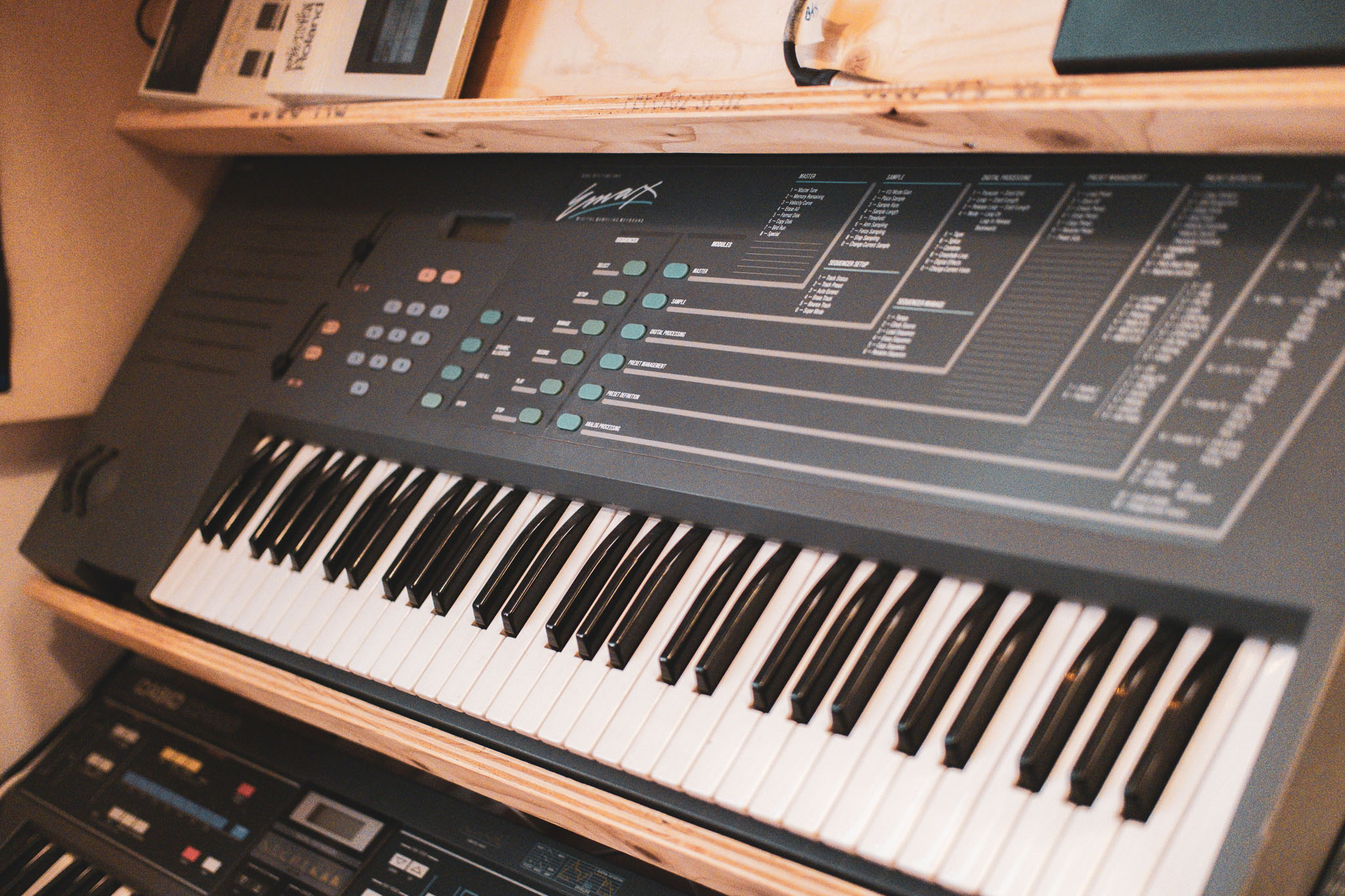
Samplers. And the Emu Emax.

Emu Emax

That’s the one I grew up with. It opened up the world of music production for me. Actually, I can tell you a funny story. Particularly that unit over there, which my father bought in ’86. I remember so clearly, because when I was young, my mom used to be a DJ and my dad collected records and all that studio stuff. So I listened to a lot of music.

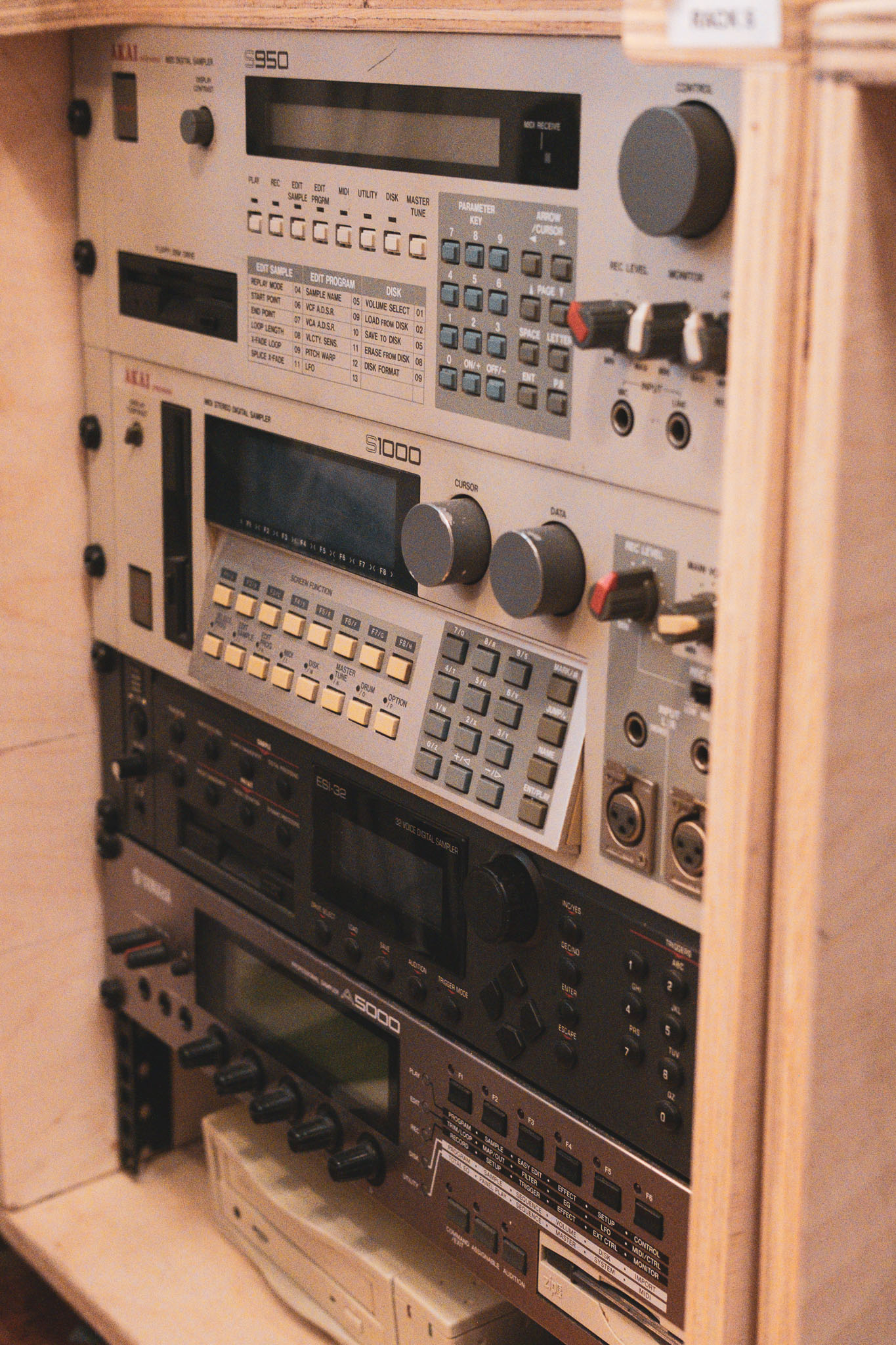
Akai S950 and S1000

I listened to stuff like Kraftwerk and especially Art Of Noise. Early Kate Bush and Peter Gabriel… you know, with all those Synclavier sounds. But I never really understood how they did it. I understood the music and I loved it, but especially the Music Nonstop album, Electric Cafe album from Kraftwerk, where they used samples heavily, people don’t rate it. But I loved it because it was so digital.

When my father bought home the Emax. I can tell you where exactly in the living room I was standing and where my mom stood, when my dad used it for the first time. He set it up and plugged in a microphone, and my mom came into the living room and said, “Dinner’s ready!”.
And it was recorded. When my Dad started to mess with that sample… Then suddenly I was like, ‘That’s how they do it!’ … My whole mind was just blown away.

Emu Emax

So I was like… ‘Gimme that!’ and I borrowed an Atari ST2 computer, the Emax and Pro-One and the PPG and made lot of music. From then on I started buying stuff, so since I was 14 years old, I was just hooked. Spent all my money, I bought my 303 and right after that the 909 and all that.

But the sampler, that was the start.
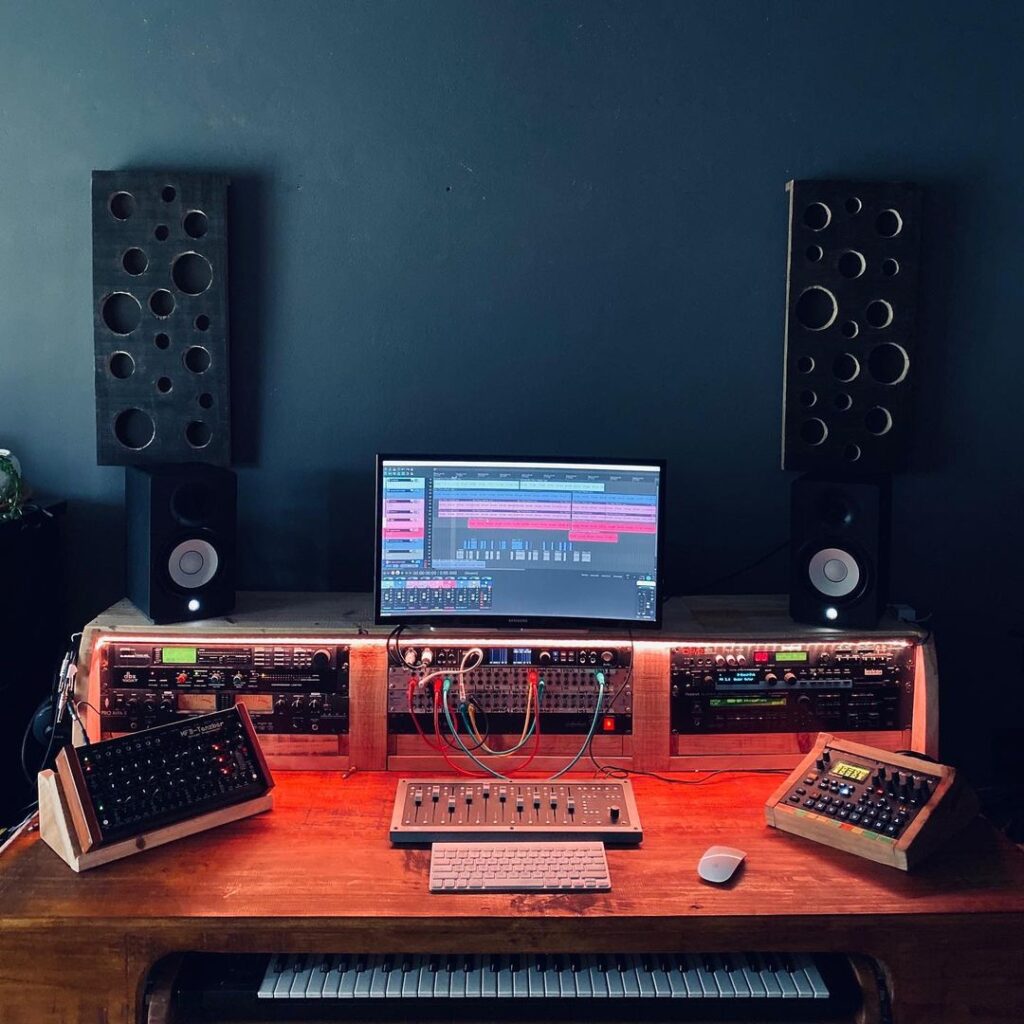
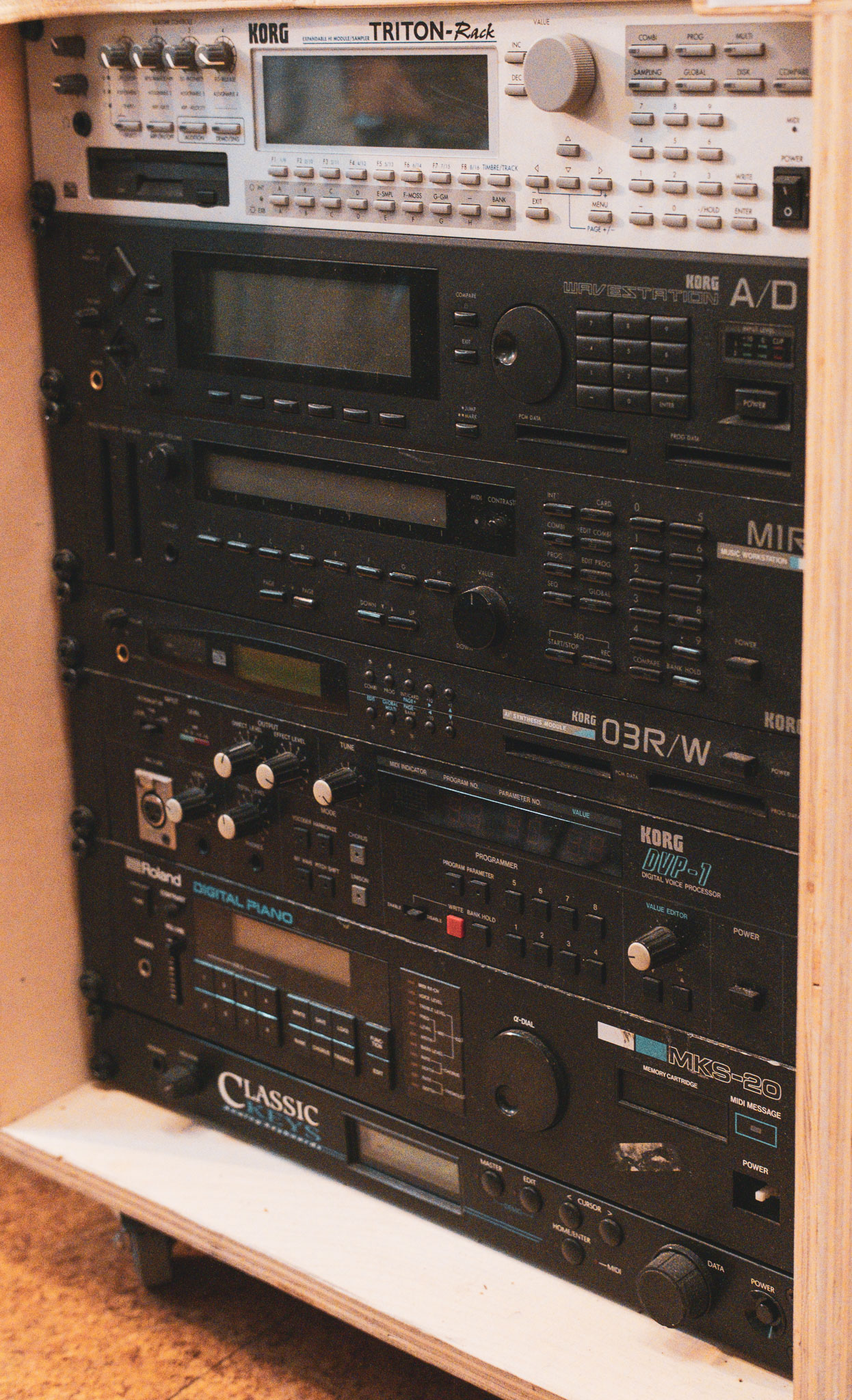
Classic Korg Rack synths

7. If you had to start over, what would you get first?

The computer.

The thing is that nowadays you’ll be able to go online and find answers to absolutely everything. And at that time around ’86 you couldn’t find any answers to anything except if you knew somebody. So a computer would, whether it was an ’86 or 2023, open your world in any direction you wanted to go.

So then I think inspiration comes from other stuff. I mean, gear can inspire me and anybody else, but I’m not sure that’s the main thing, to be honest. I think the computer will just be the door that opens the world.
8. What’s the most annoying piece of gear you have, that you just can’t live without?

Oh, that’s everything. Everything! Just keeping and maintaining a synth mausoleum like this one. That’s grief…. and a lot of money. I would say being a collector, it’s just a major headache.

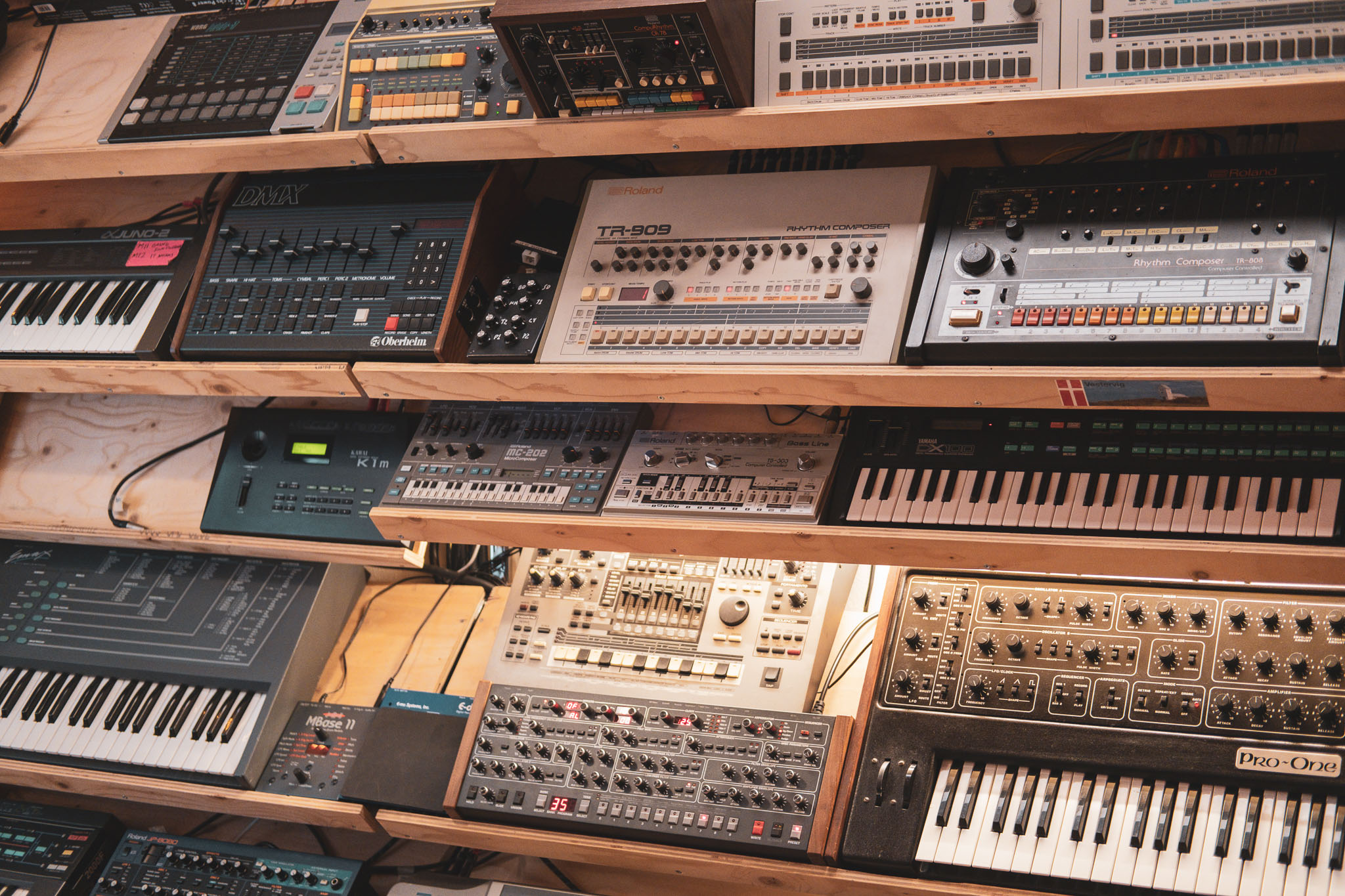
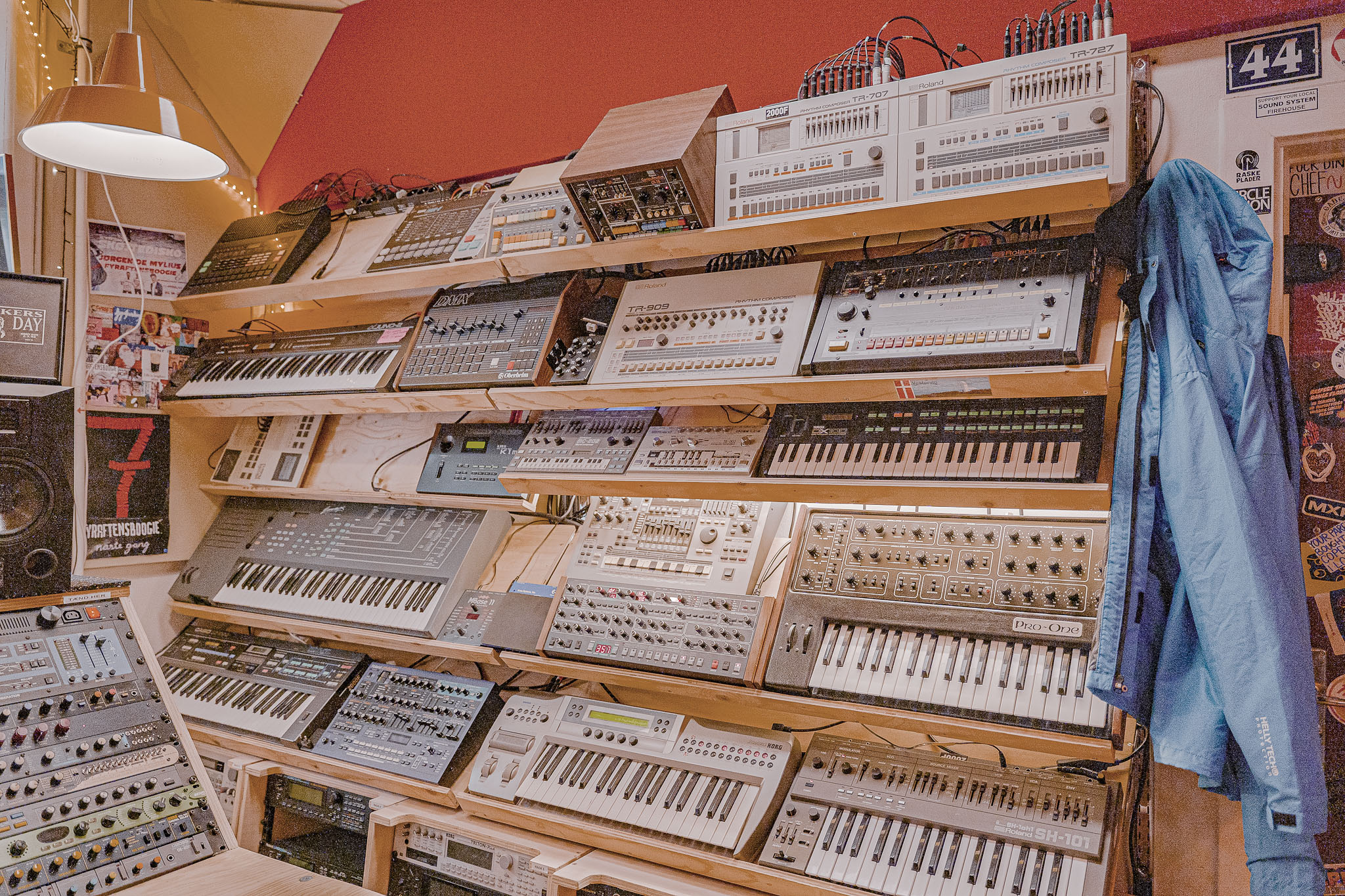
Classic Drum Machines and Synths

Cabling and setting up wires is a huge headache, but refurbishments and service on this stuff, that’s just a downwards spiral of agony and pain. And money out the window.

The most expensive restoration I have, which is still ongoing, is the EMT-250 reverb, which is at a repair workshop in Germany right now, and has been for the past five years. Kinda crazy.

The EMT250 is the only thing my father never got to hear or see working, before he passed away. He was an avid gear collector and once even managed to find a Fairchild 670 on Den Blå Avis [danish version of Craigslist], but the 250 we found at Sweet Silence Studios, and it’s super rare. Gotta be less than 200 in the world.

It even came in the original flight crate from Germany. So this wooden box came through Kastrup Airport, and then through the distributor up in the north of Copenhagen, then finally to Sweet Silence Studio, where we discovered that it had some water damage.
So it was sent to the US to repair at Studio Electronics and they said “we can’t fix it”. It had some humidity things that happened to it.

But eventually I found this guy Stefan Hübner in Hamburg. Who I was recommended by an old PPG factory tech. Who said, I have this young apprentice called Stefan, who is willing to take a look at repairing your EMT.

But the problem with the EMT was that, they never and still haven’t ever released any schematics or diagrams for it. At the time of production, they were so afraid that the Japanese would copy it, so they even sandblasted the tops of all the chips. So it doesn’t say anything on them.
There’s no traces, or anything. It’s all point-to-point soldered in the back. It’s just one huge board of chips, which no one knows what is. So Stefan has two EMT250’s on his workshop table, and he is trying to trace and test the electronics, and build up his own diagrams to figure out what happens inside of it and what each component is.

It’s just a never ending story.

So that’s the longest and possibly the most expensive restoration that I’ve ever attempted. I have never even heard it working. I just bought it and shipped it around.

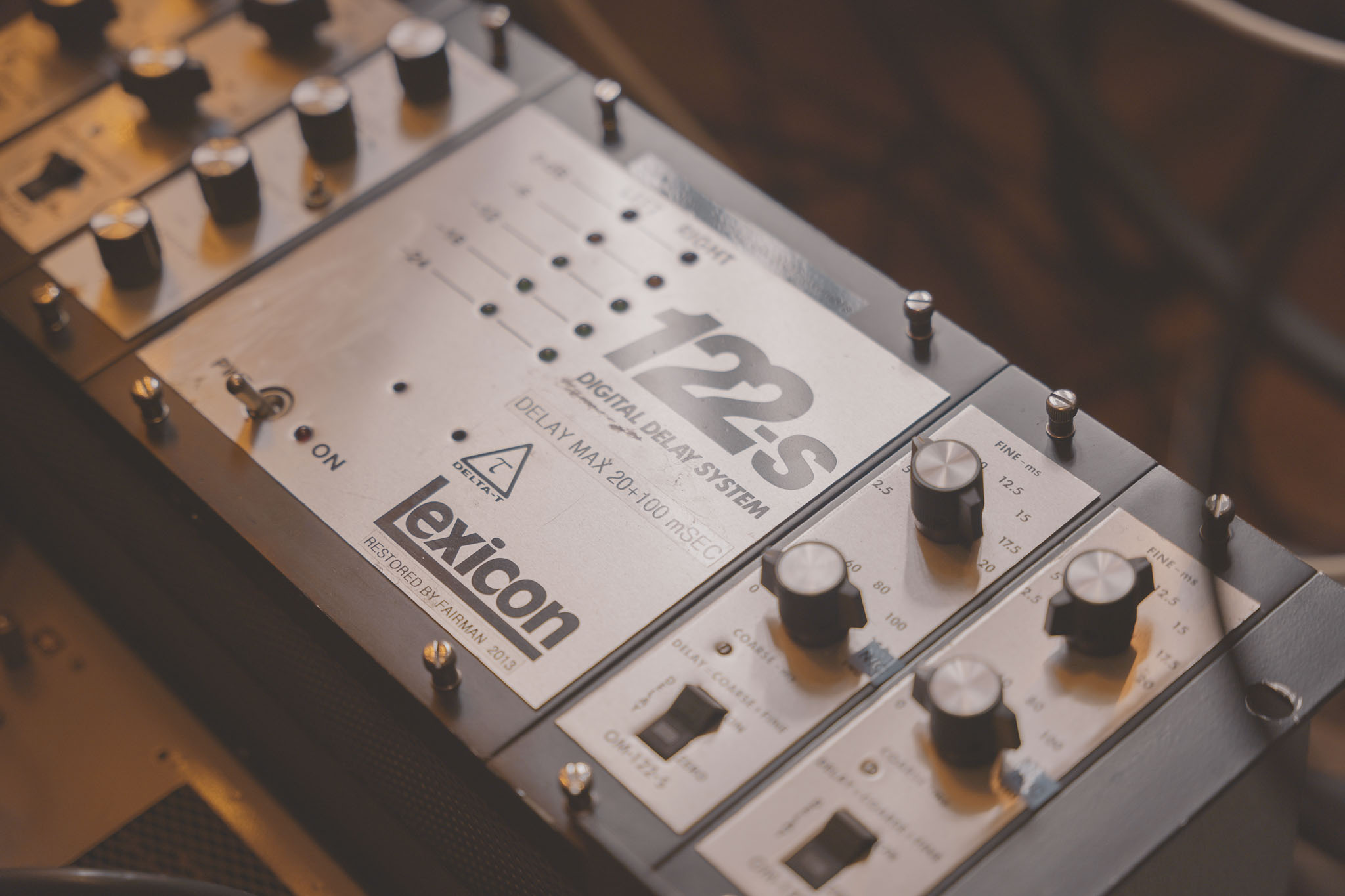
Lexicon 122-s
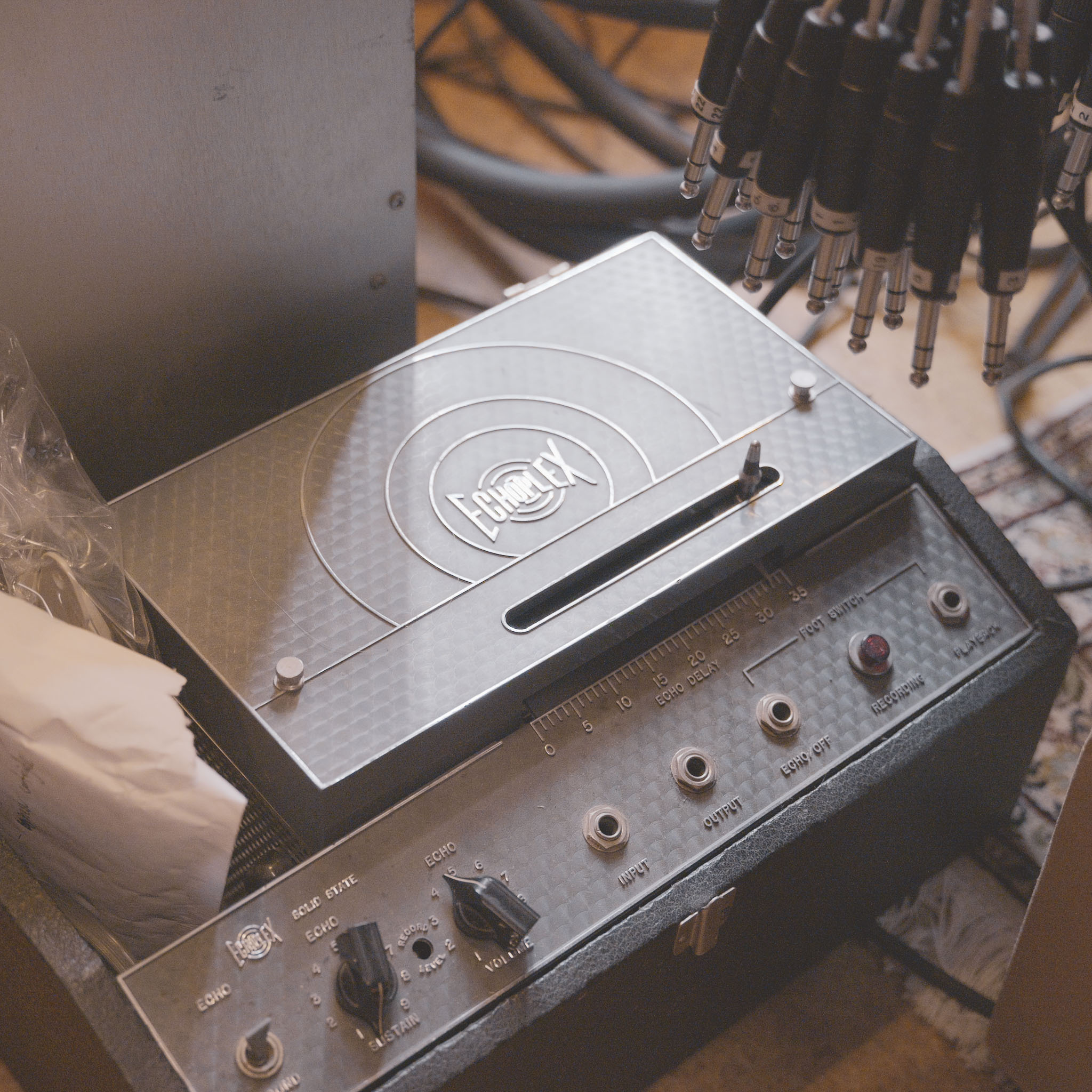
Echoplex Tape Delay

9. Most surprising tip or trick or technique that you’ve discovered about a bit of kit?

I spent a lot of time listening to and trying to figure out all the old mysteries of dub music. I like Prince Jammy and King Tubby, but I especially like The Scientist, who was the apprentice of King Tubby.

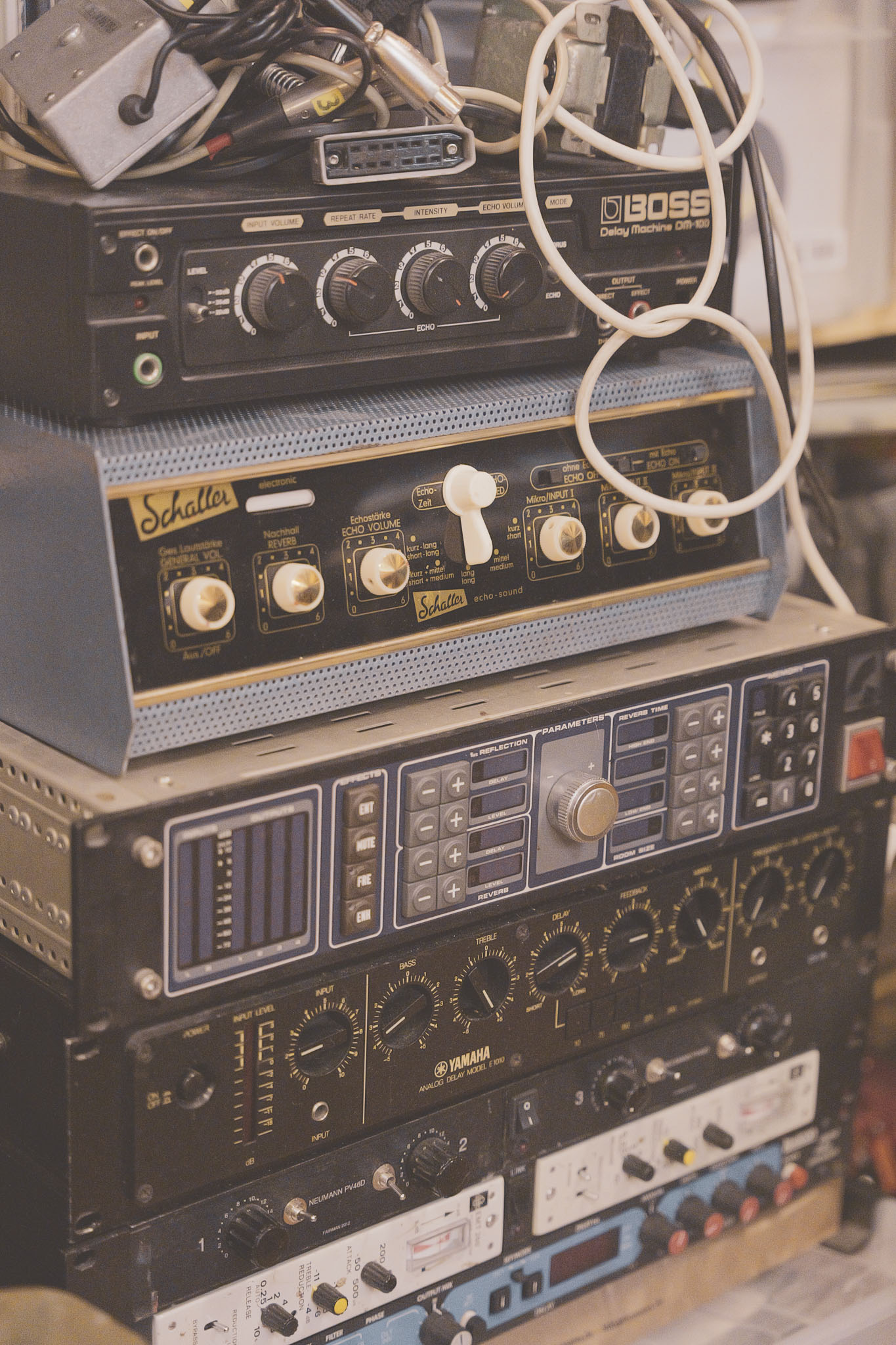
Stack of delays

I loved his way of mixing dub and I always liked that sharp filter cuts he had. And that was the knob that King Tubby built from a unit like the one I told you about before. [Editor: Cinema Engineering Corporation Model 6517/e]

Those filters, I mean, you don’t find them. You have to build them… And I’m sure that King Tubby’s version was also modified, because he just needed it to be more aggressive.

Unknown Dub Machine

Artist or Band name?

2000F

Genre?

Bass music

Selfie?

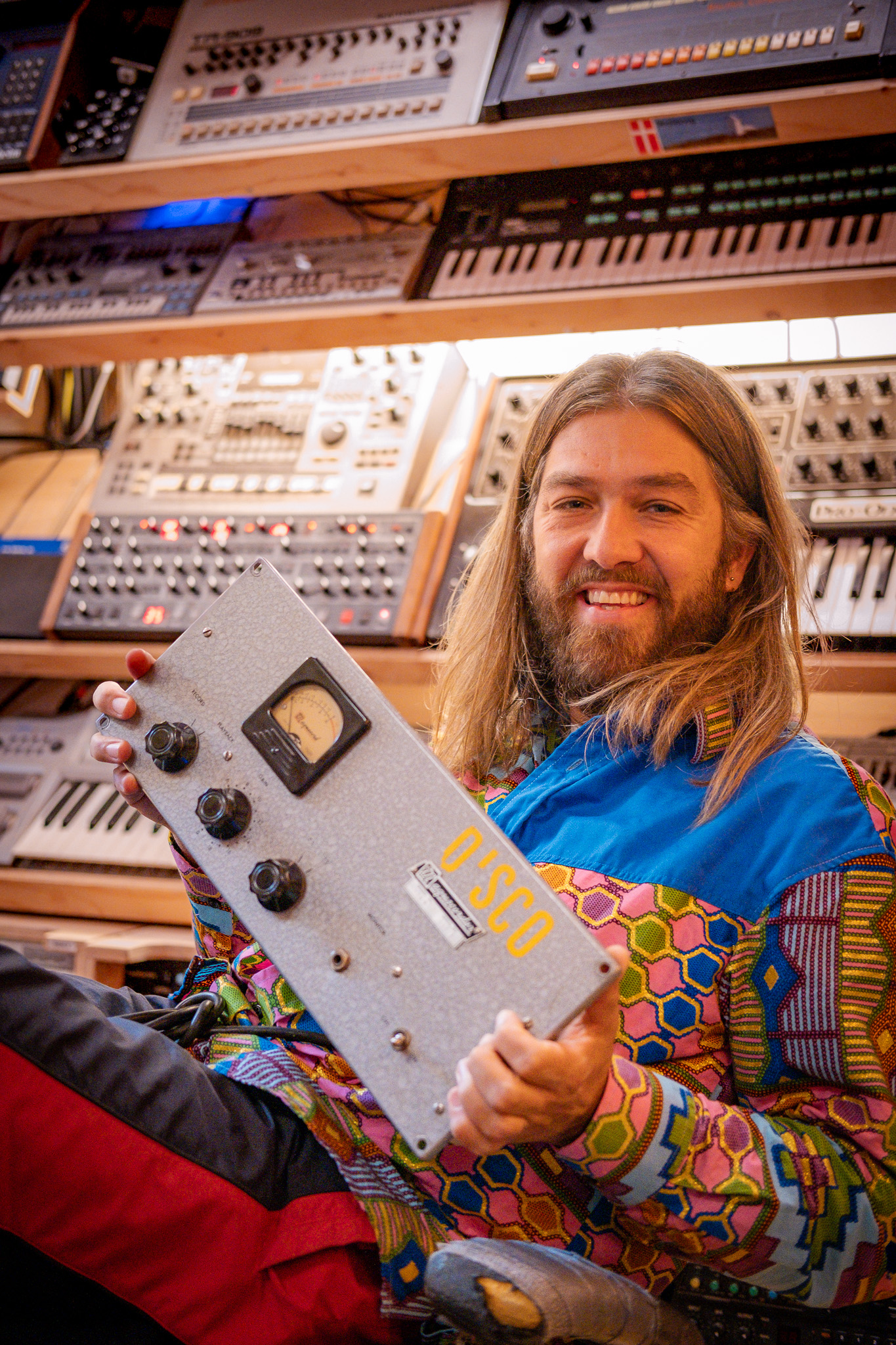
2000F aka. Frederik Birket-Smith

Where are you from?

Frederiksberg, Copenhagen, Denmark.

How did you get into music?

Mom was a DJ. Father was musician and studio owner. Guess it’s in the blood.

What still drives you to make music?

Exploration of bass and sounds, I think.

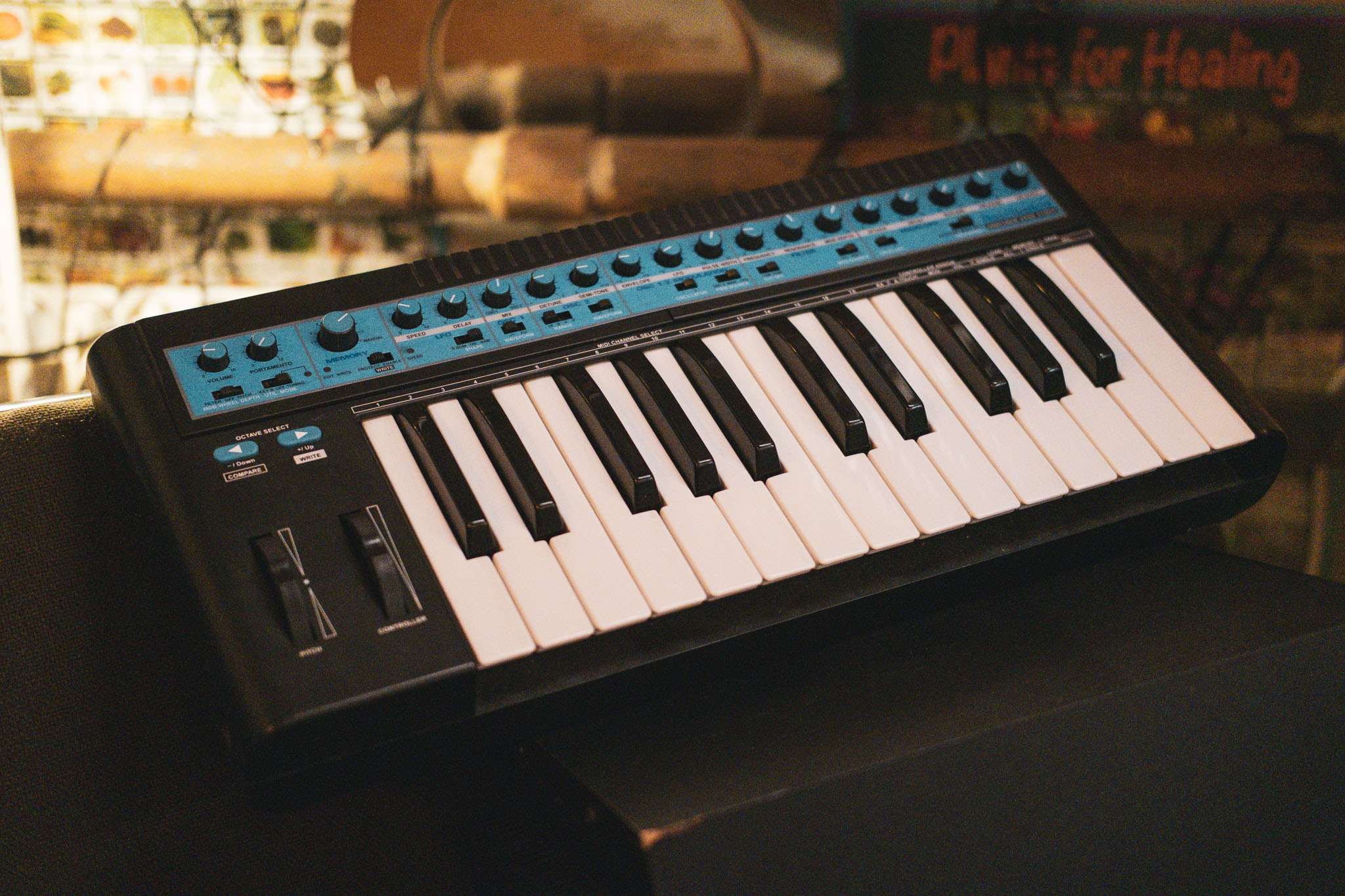
Novation Bass Station mk1 keyboard
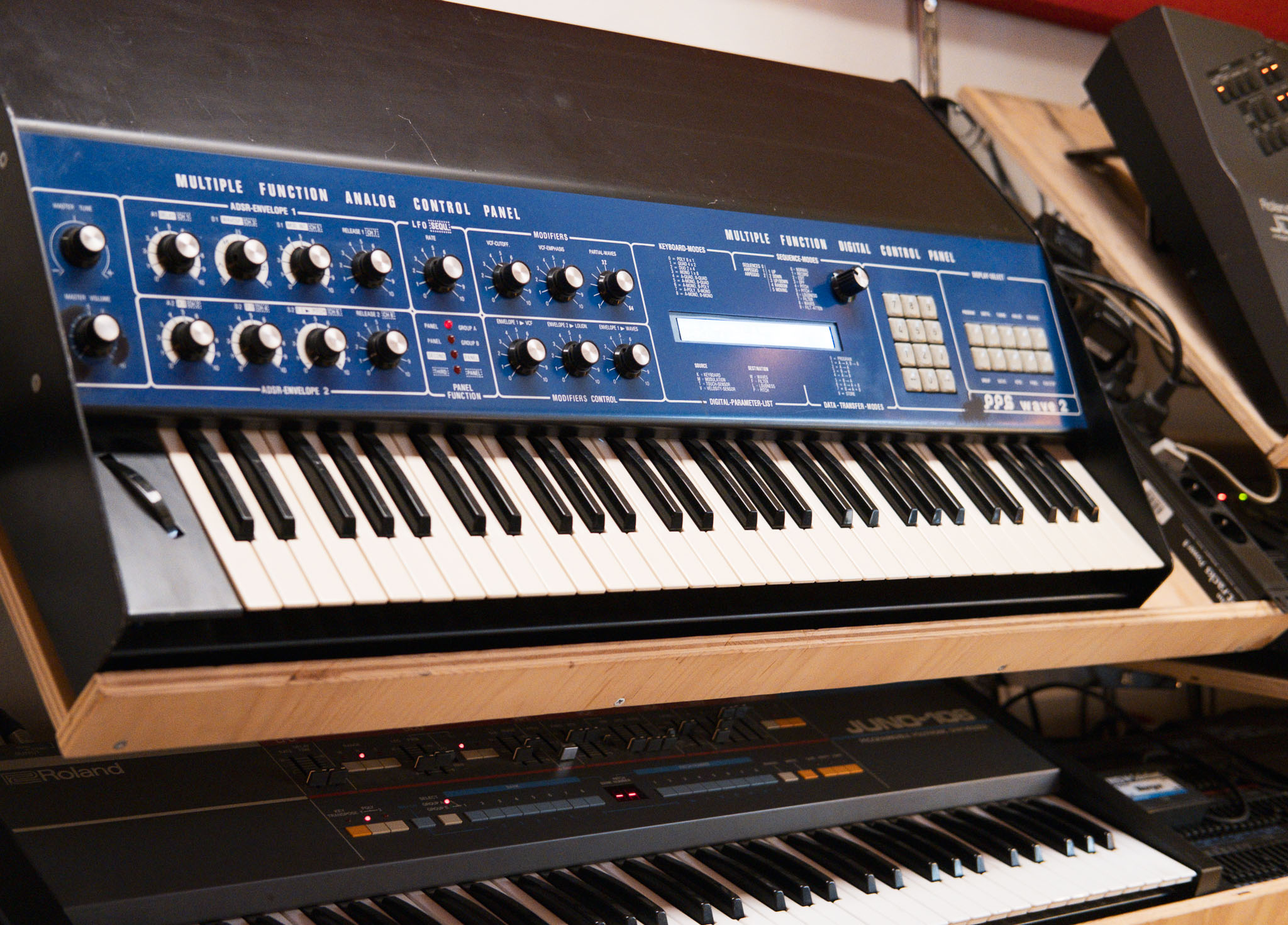
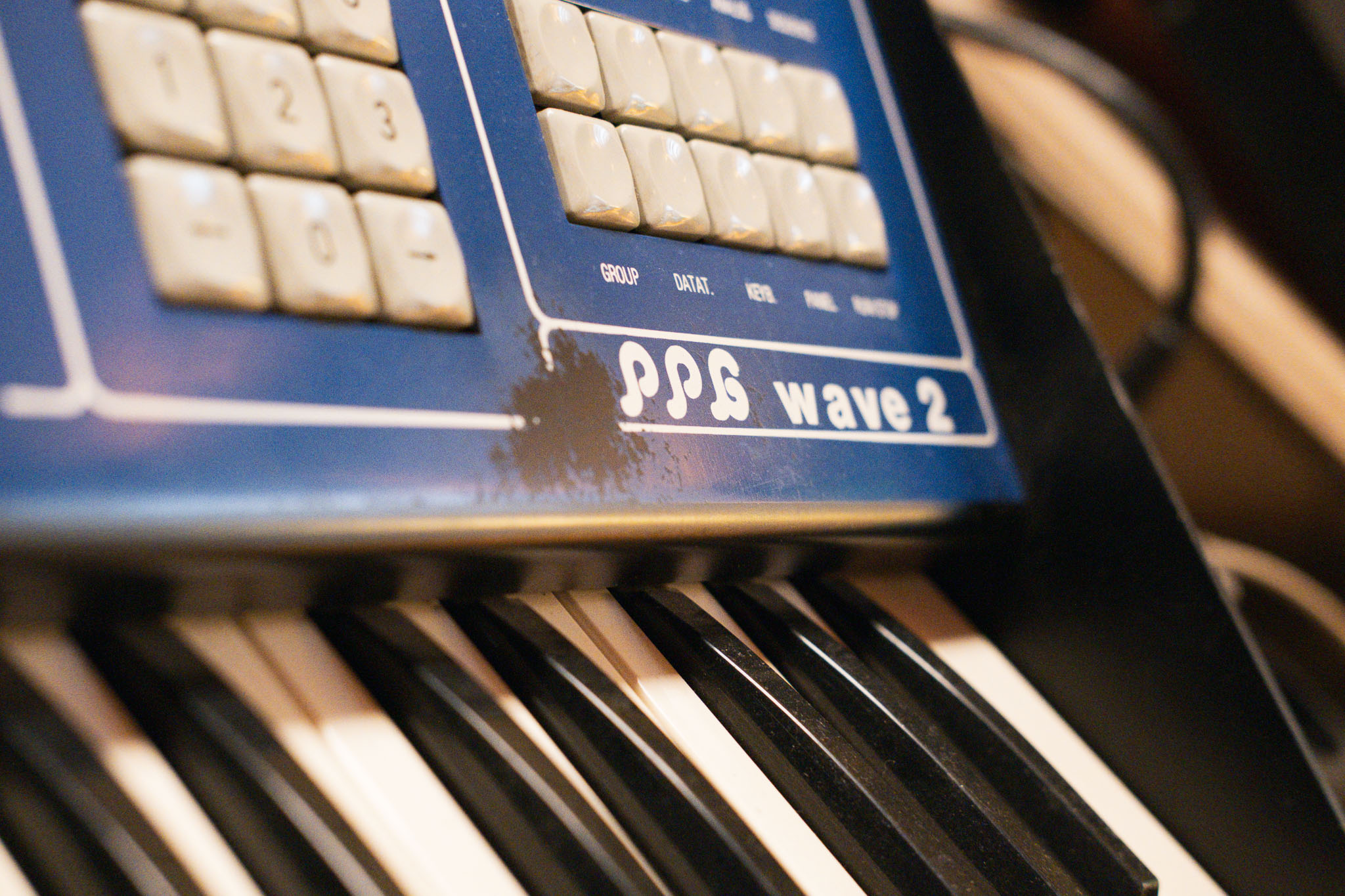
PPG Wave 2
PPG Wave 2 Close up

How do you most often start a new track?

A beat or some sort of rhythm.

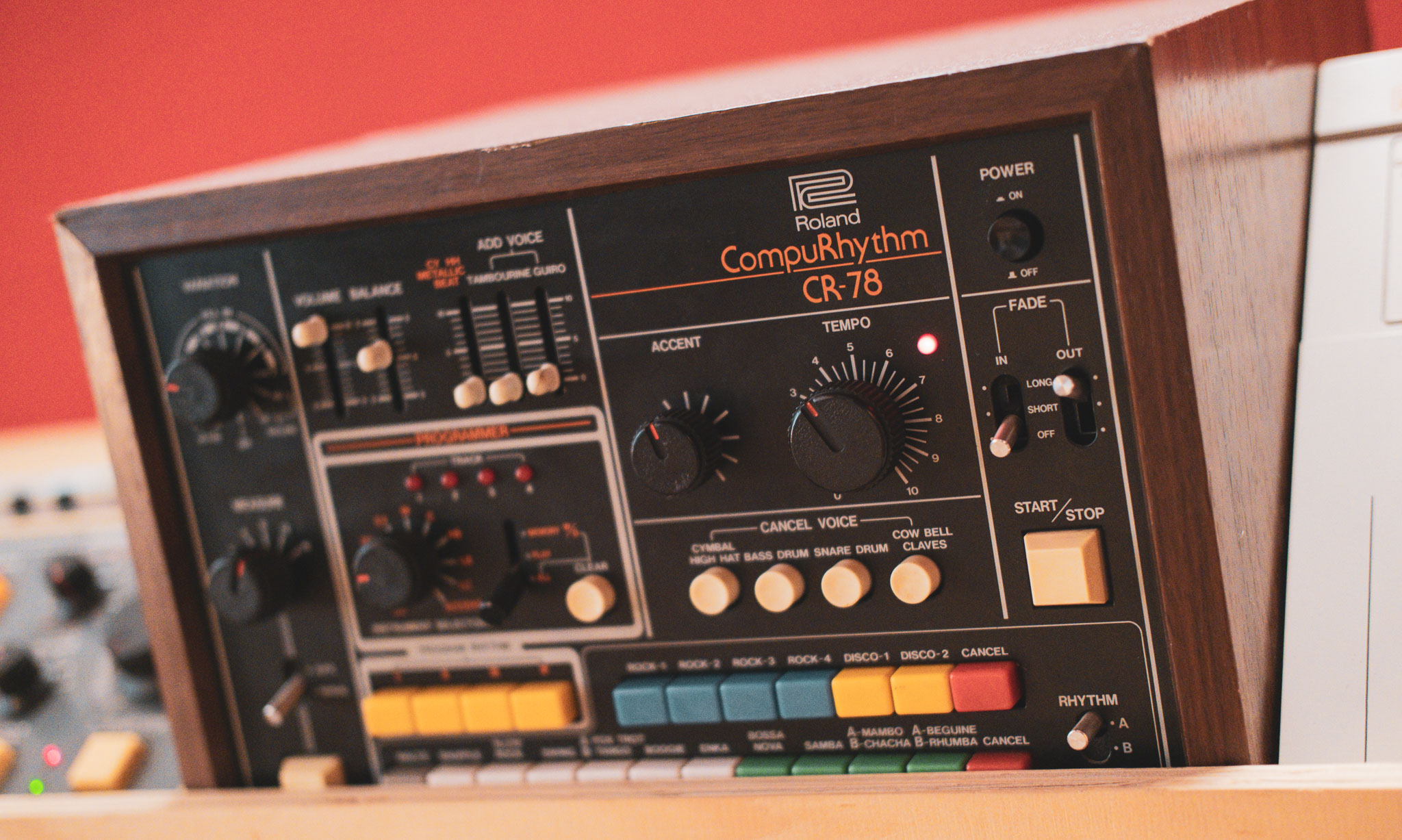
Roland CR-78

I’m not sure I’ve got a methodology or something. I least I can’t explain it. I don’t think about it really, but I just bang it out real fast. The rhythm.
I think the rhythm shows for me where the track goes. Also, I build a lot of my songs as a DJ. Which is a bit like putting music together like how I would build with Lego bricks. And I actually like it when it’s almost mechanically switching from one part to the other.

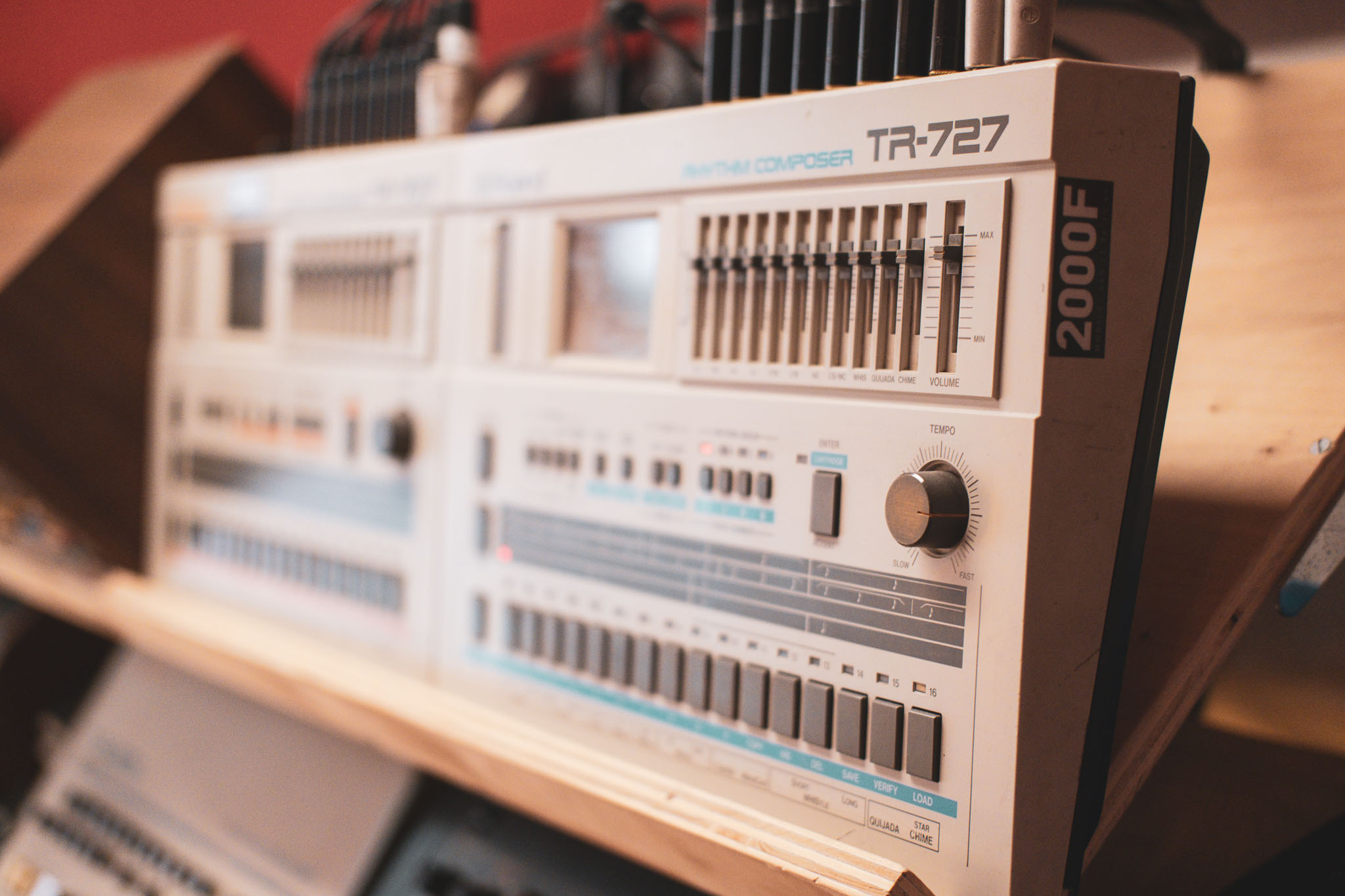
Roland TR727

Even though I mix dub stuff, I grew up listening to a lot of jungle drum-and-bass, especially grime music from the UK, and most of that is so cheaply made and is so swiftly made, that you get, a part A and a part B, and they just switch. Just so rough and so simple.

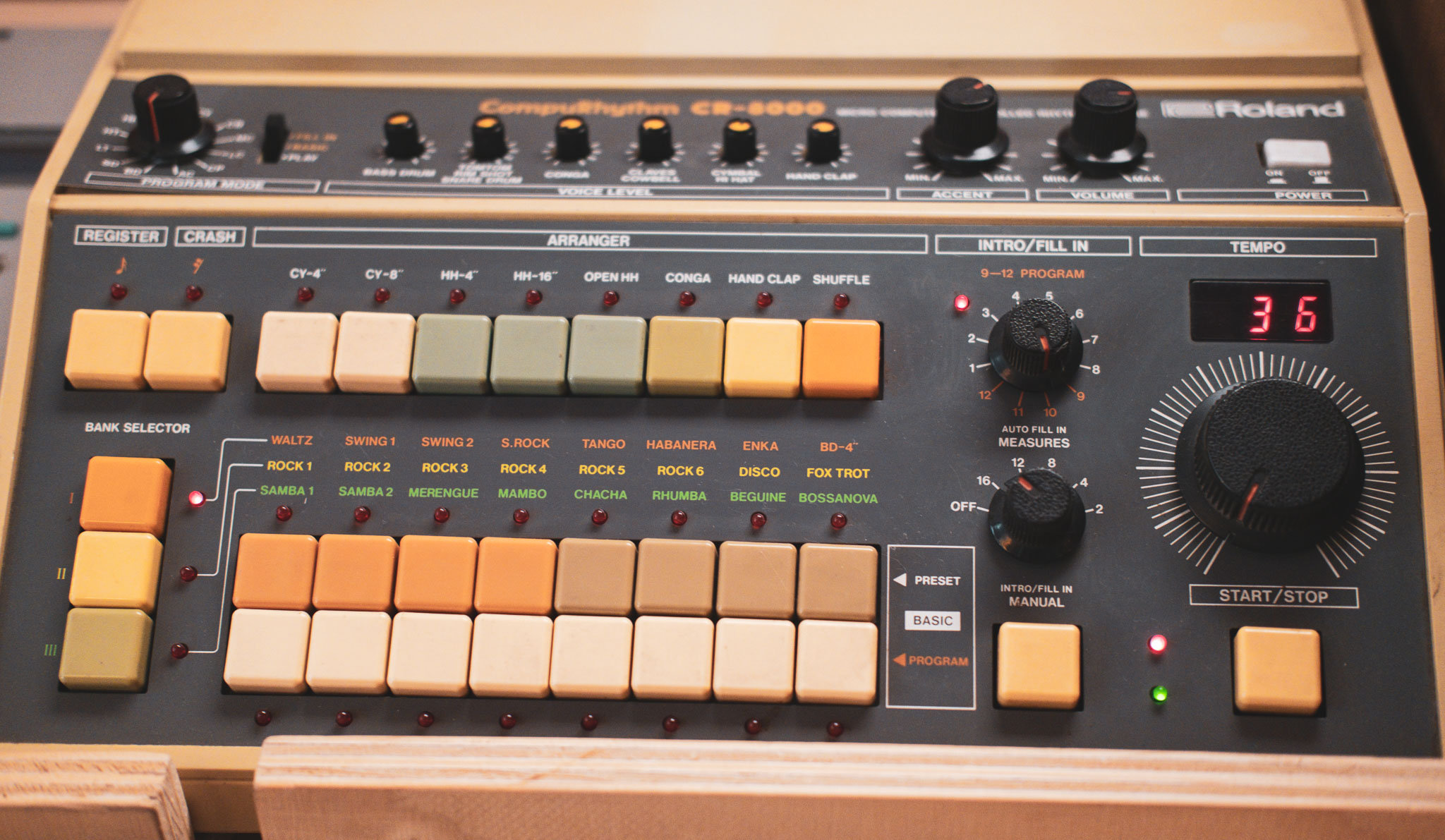
Roland CR8000

Before grime was called grime, it was called 8-bar, because the rappers just had 8 bars to rap on top of, before the song just switched sound, and I love that very, very simple almost mechanical way of building music. So I always tend to think of this as a DJ.

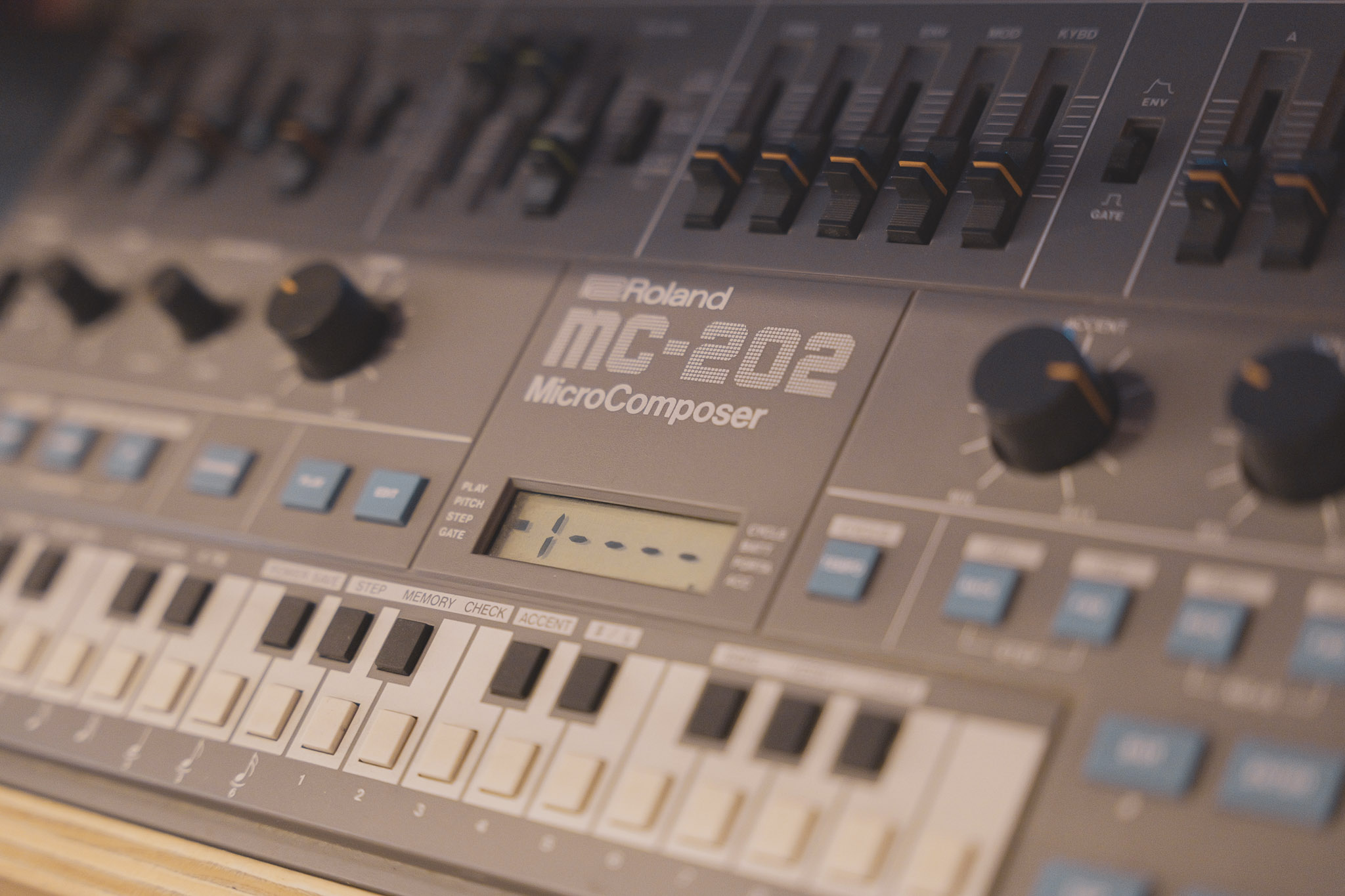
Roland MC-202
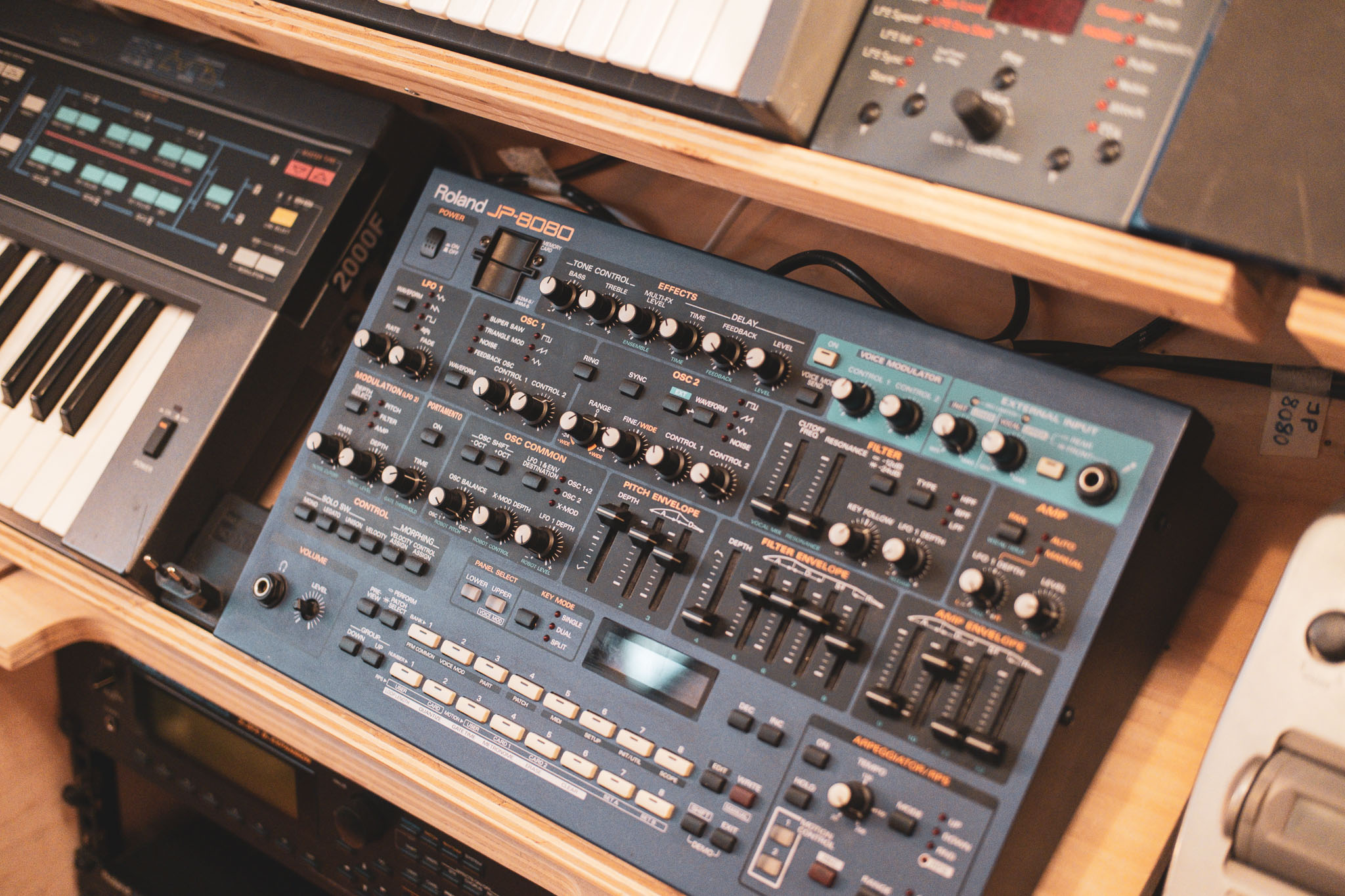
Roland JP8080

How do you know when a track is finished?

I test it out quite a lot… DJ’ing. I feel that it’s essential.

In bass music, people make dub plates. I used to cut a lot of plates. But I test tracks and I play them out a lot of times and then I listen. I’m listening to gauge audience reaction.

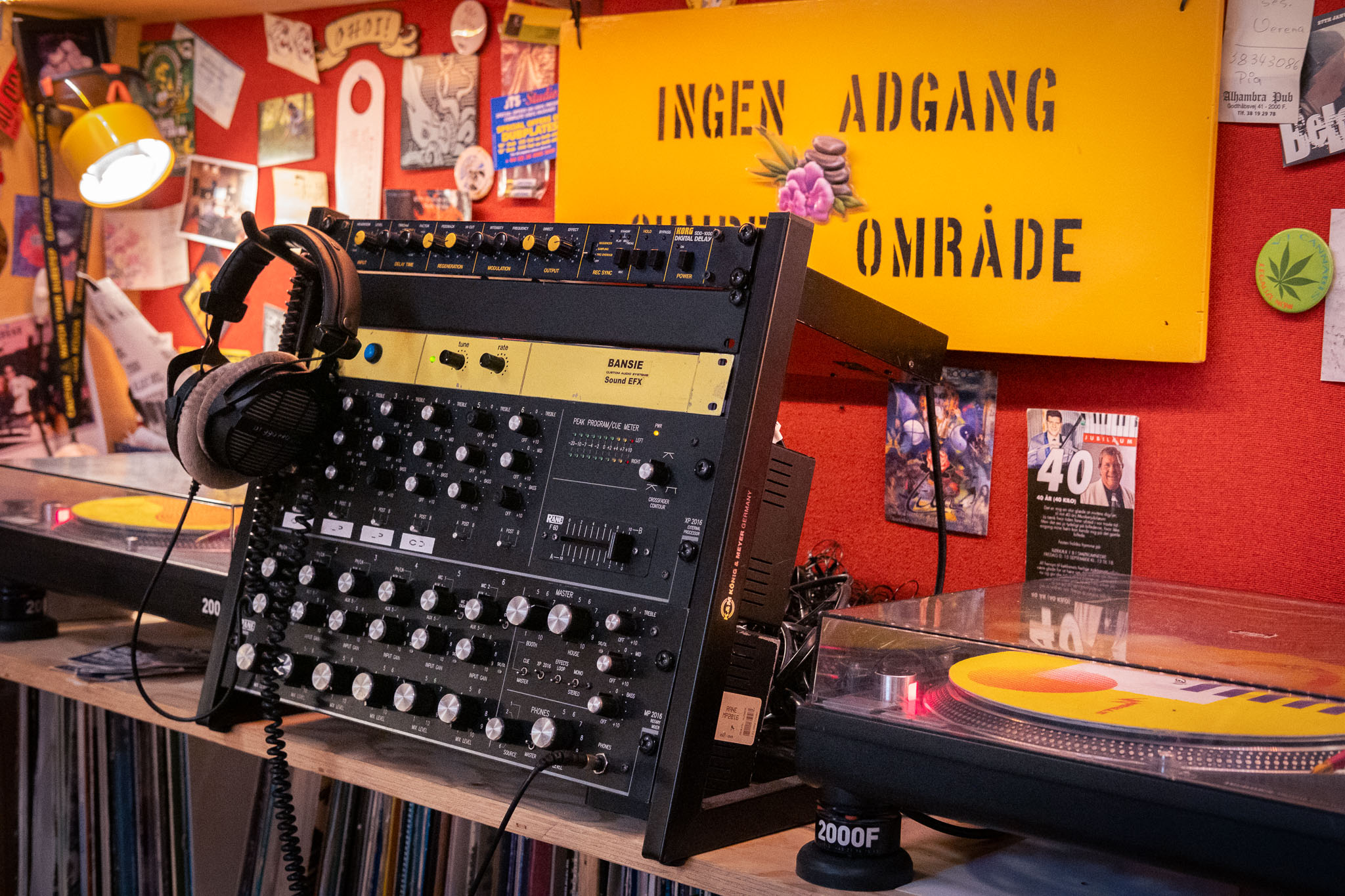
DJ decks and rack mixer

It’s actually mainly the response of people, if they appreciate or not. And what I do is even though it’s bass music, and it’s really aggressive, really dark. I like to make people almost implode.

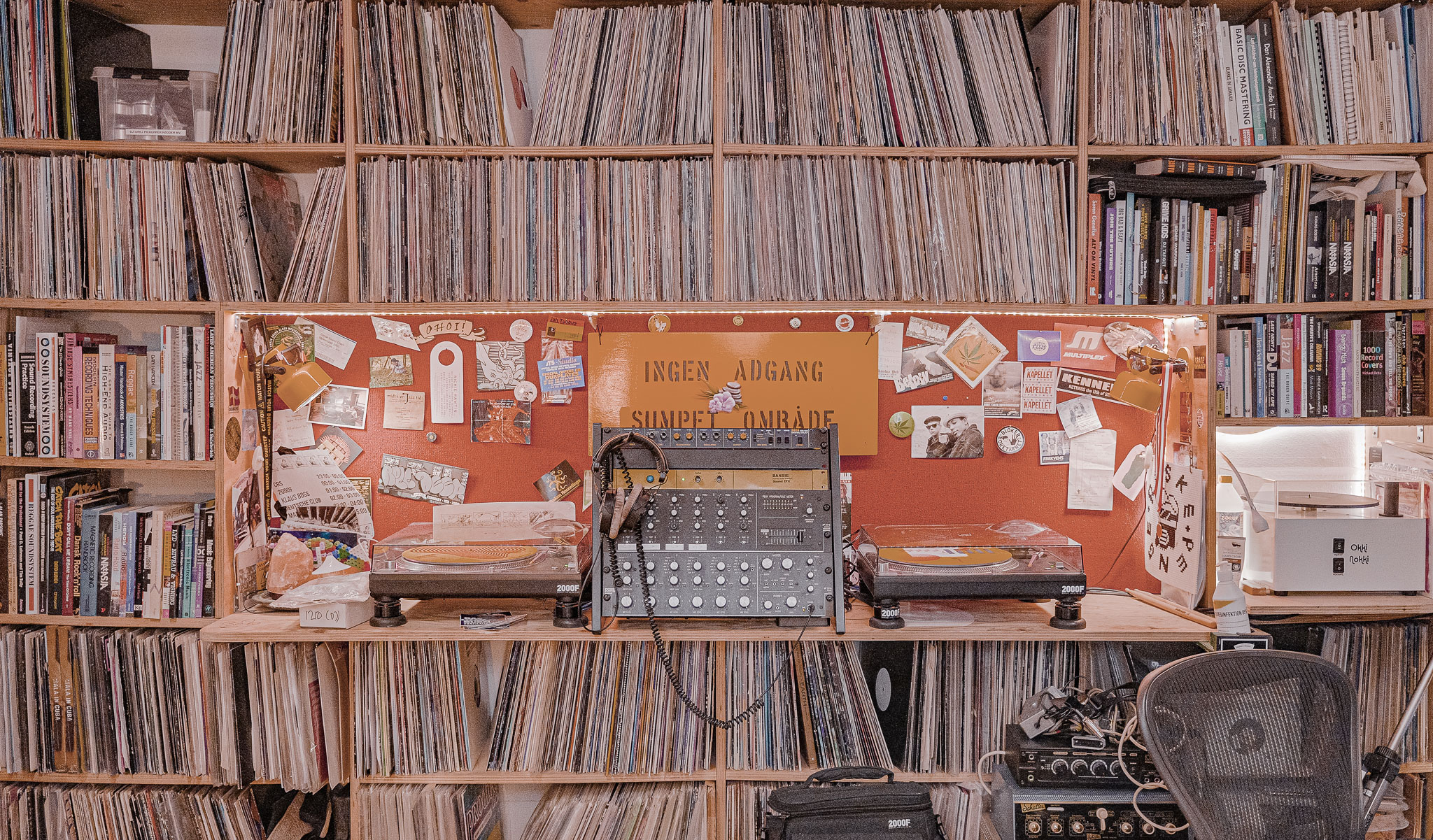
2000F vinyl collection and decks on the back wall

I do BassUnderBuen, which is huge rave with 10,000 people here in Copenhagen under a motorway. I’ll play two or three new tracks and I can just tell… ‘okay, this track really works, this one needs work’.

I gotta test it out on a proper dance club sound system. And then I come back to the studio and rework it a little bit.

Show us your current studio

2000F Studio left side wall
2000F Studio right side wall
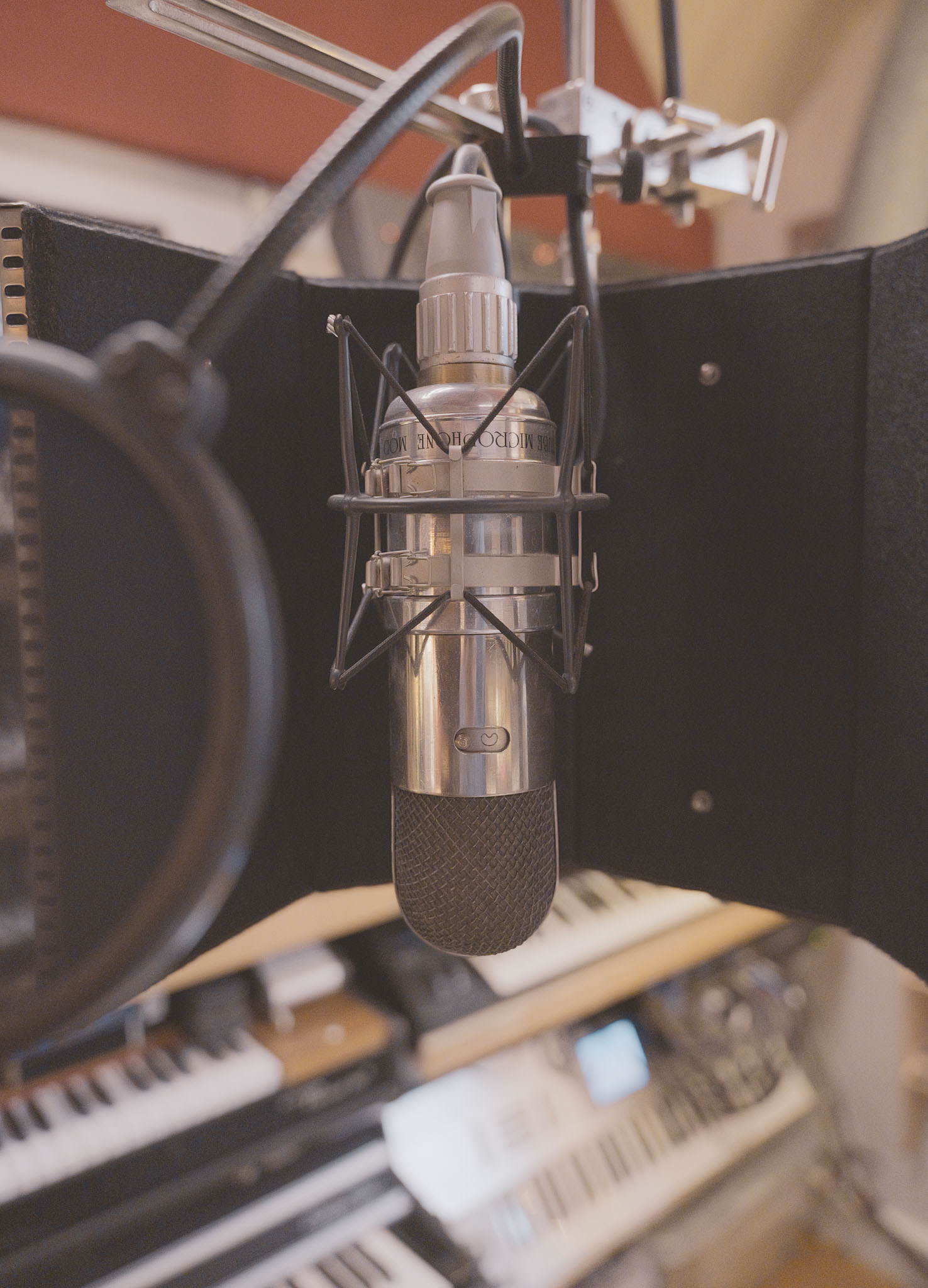
Unknown Prototype Valve Microphone from the ’50s
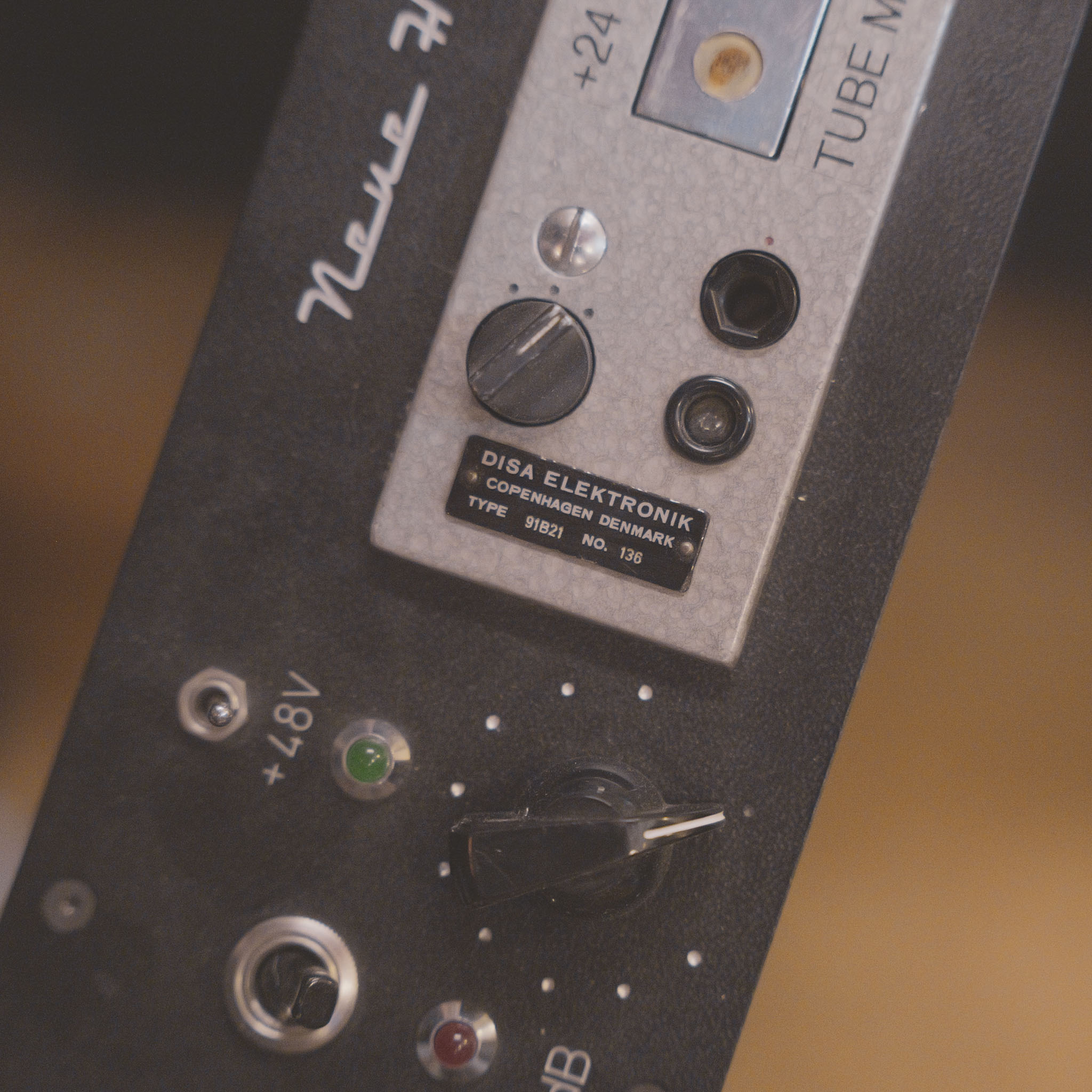
Danish DISA tube mic pre

Best creative advice that you’ve ever heard?

This is for producers working specifically on computers, try to close your eyes as often as possible. You’ll listen differently.

Like when I have my analog mixer setup here in front of me, after I have built up the basic structure, all the stems, patterns, parts of the rhythm and the bass and so on…
Then I switch off the screen. Because I came to realize when I was in the studios, that the more I look while I mix, the more I know what is going to drop and what is going to happen. So I don’t listen as a person on the dance floor would.

The other thing I haven’t quite learned yet, but I’m trying to tell me myself all the time… is that if you’re doing edits or changes during the song structure that people need to notice in a club or in a rave situation.
It has to be very, very particular. I mean, keep it simple and obvious.

Another thing, don’t do social media. Do music.

Promote your latest thing… Go ahead, throw us a link.

2000F on Spotify


Navin Kala – Pastoral Electronics

1. Favourite knob/fader/switch on a piece of gear and why?

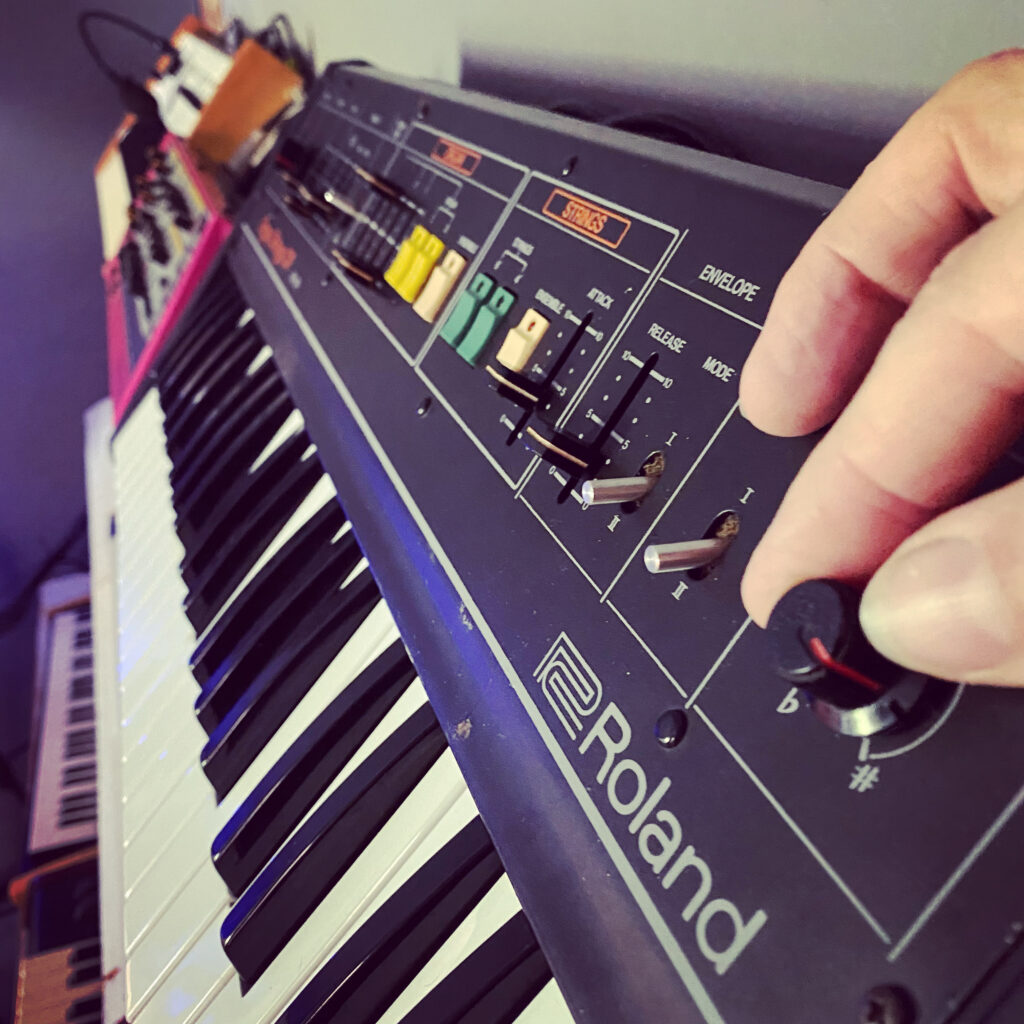
Roland RS-09

Right now, the RS09 Tuning knob. I like the little struggle that happens inside our brain when a note is slowly approaching the “tuned” area.
Five months ago, was the Grandmother cutoff filter, it’s addictive, I guess they know it and that’s why they made it so big.

2. Do you have an ‘almost’ perfect bit of kit? What would you change?

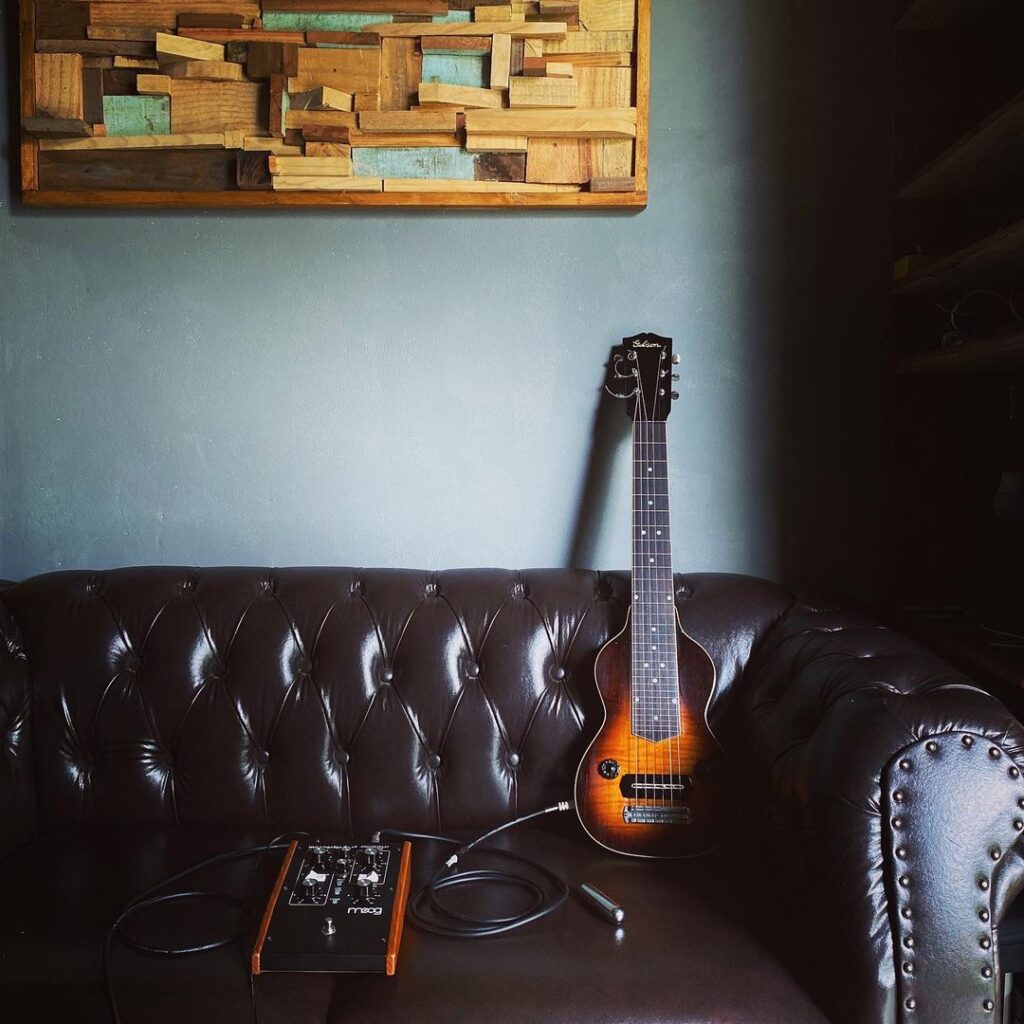
Gibson EH150 lap steel

My Gibson EH150 lap steel, from 1937. It’s 84 years old and sounds like it has always been here and always will. I feel inspired just by looking at her. And I’m not a guitar player myself, just an aficionado. It makes me wonder how my Digitakt is going to look in 84, by the year 2104.

3. What setup do you bring on holiday/tour/commute etc.?

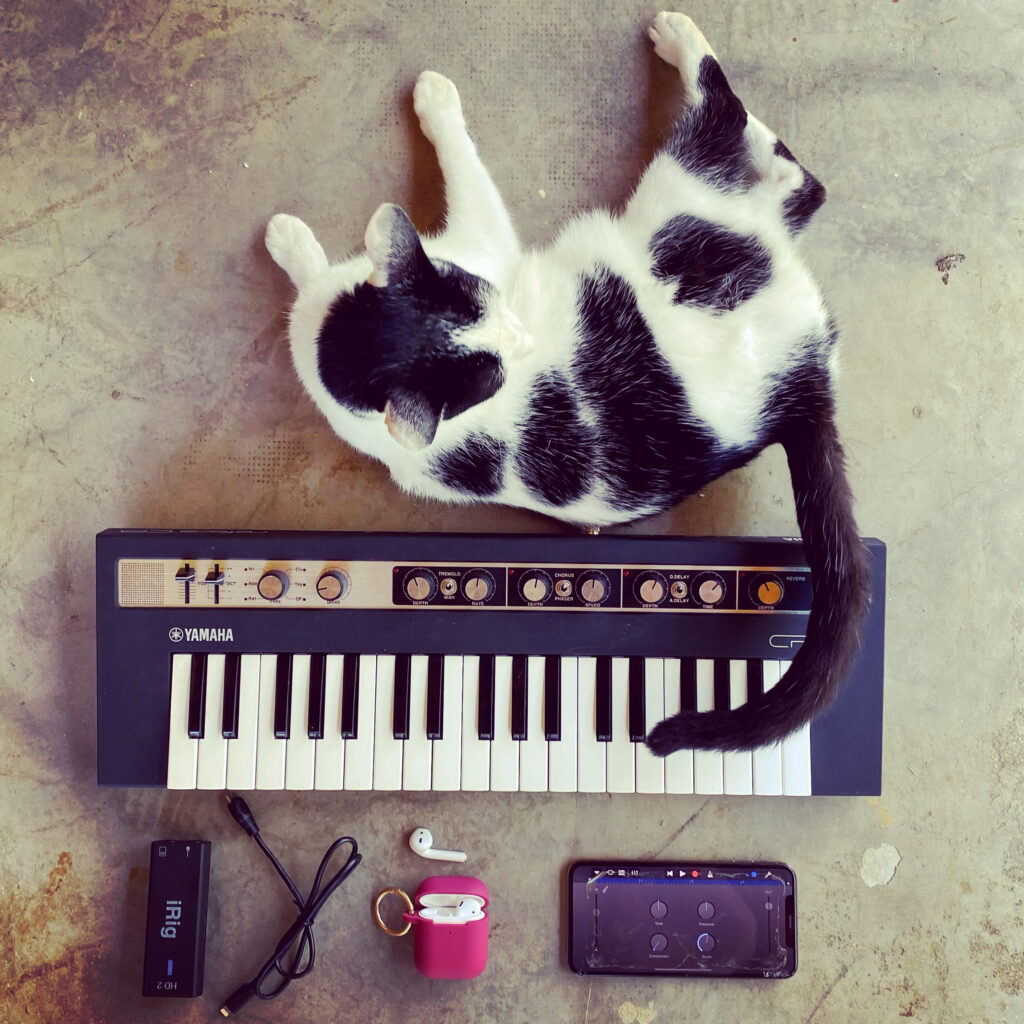
If I have to leave home, I’ll take the iRig2, the reface CP, and the garage band on my phone. It’s a frustrating experience though, it reminds me how little is needed to make music technically acceptable nowadays.

iRig, Yamaha Reface and cat

4. What software do you wish was hardware and vice versa?

Studio desk and racks

I don’t use software. Two months ago, I bought Reaper, but I’m using it strictly as a multitrack recorder. Paired with the Softube Fader, so I can have a more tactile experience.
Don’t get me wrong, plugins and VST are as good, and many times better than the real thing. But when I see my studio with all the gadgets, I feel inspired to play. If instead, I see a computer screen, I don’t feel the call at all.
It’s like masturbating versus having sex, you’ll reach the same level of satisfaction. But you’ll miss the joy of the process. Although it will be less tiring, that’s true.

[Editor: Literally I laughed out loud at this comparison…. it’s so true]

5. Is there anything you regret selling… or regret buying?

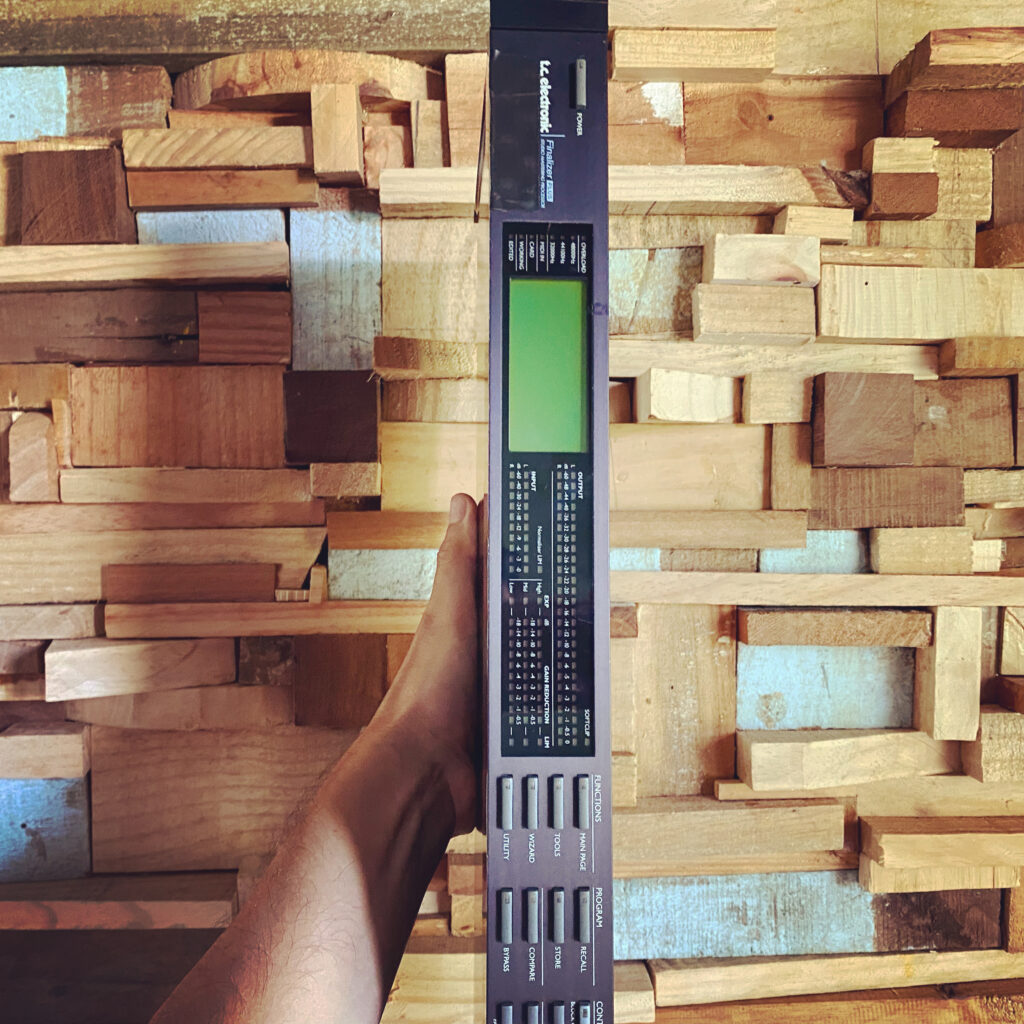
TC Electronic Finalizer

Due to logistics, I can’t sell anything. The post office is 100 km away and parcel companies are few, and they never find our house. If I was living in a city, I would definitely be selling stuff.
I do regret buying several things, one of them the TC finalizer, I still don’t know what it does. But there’s a small revelation in buying the wrong gear, you slowly find what is adequate for yourself, by elimination.

[Editor: I totally agree, this kinda process is also an essential part of learning and growing. The only thing, is that people get so bummed out by their regrets. Enjoy your regrets! You’ve learned something and it means you’re willing to take creative risk, so it’s all good (I actually just picked up a Finalizer too 🙂 haha)]

6. What gear has inspired you to produce the most music?

Piano and pussy

Just like others already answered on your blog, the piano. I sit in front of this massive primitive device, and there’s an instant communion. It’s like the whole mechanism is holding plenty of new songs, waiting for someone to take them out. It is an utter physical experience. And this is something I exclusively feel with the piano.

[Editor: Yup, I got that with the acoustic guitar]

7. If you had to start over, what would you get first?

I started years ago with Cakewalk and a Dx7, I don’t wish this on anybody. I suffered so much with the membrane buttons, and the menu written in extraterrestrial code. That was a huge technological wall between electronic music and me. And actually, that’s why I completely stopped making music in my first reincarnation. And also why choosing the right tools, for oneself, is pivotal in the engagement with music.
Today, I would buy the Korg Minilogue, functional, intuitive, and with a great sound. I don’t have one though.

8. What’s the most annoying piece of gear you have, that you just can’t live without?

Cables and patchbays

The Patchbay, but not the front side, the backside of course. It was a pain to set all the cables, but once it’s done, it makes everything much easier. Until you need to change some routing.

9. Most surprising tip/trick/technique that you’ve discovered about a bit of kit?

Korg Monologue

I like to use the Korg Monologue as an analog drum machine. I started diving into this thanks to Oscillator Sink’s rhythm collection on Korg’s site.


Artist or Band name?

Navin Kala

Genre?

I’m still experimenting and trying to find a comfortable place. Right now, this place must be somewhere between electronica with ambient and a bit of experimental.

Selfie?

Navin Kala

Where are you from?

Brazil, with mixed blood.

How did you get into music?

I began piano lessons as a child, it was either that or karate.
But it is extremely frustrating, learning with music you don’t like or feel. Stuff like “What Mozart composed when he was 5”. And I was 10, so it was like saying, you are retarded.

What still drives you to make music?

It makes me feel good, I know that without music I don’t feel fulfilled. Creativity, of any sort, sublimates our existence. This and the fact that I have a 70% of hearing loss, since a child, and at some point, I might lose it completely. I want to play as much music as I can before my only working ear falls under a functional threshold. Funny fact, Stereo does not exist in my universe.

[Editor: Damn good reason!]

How do you most often start a new track?

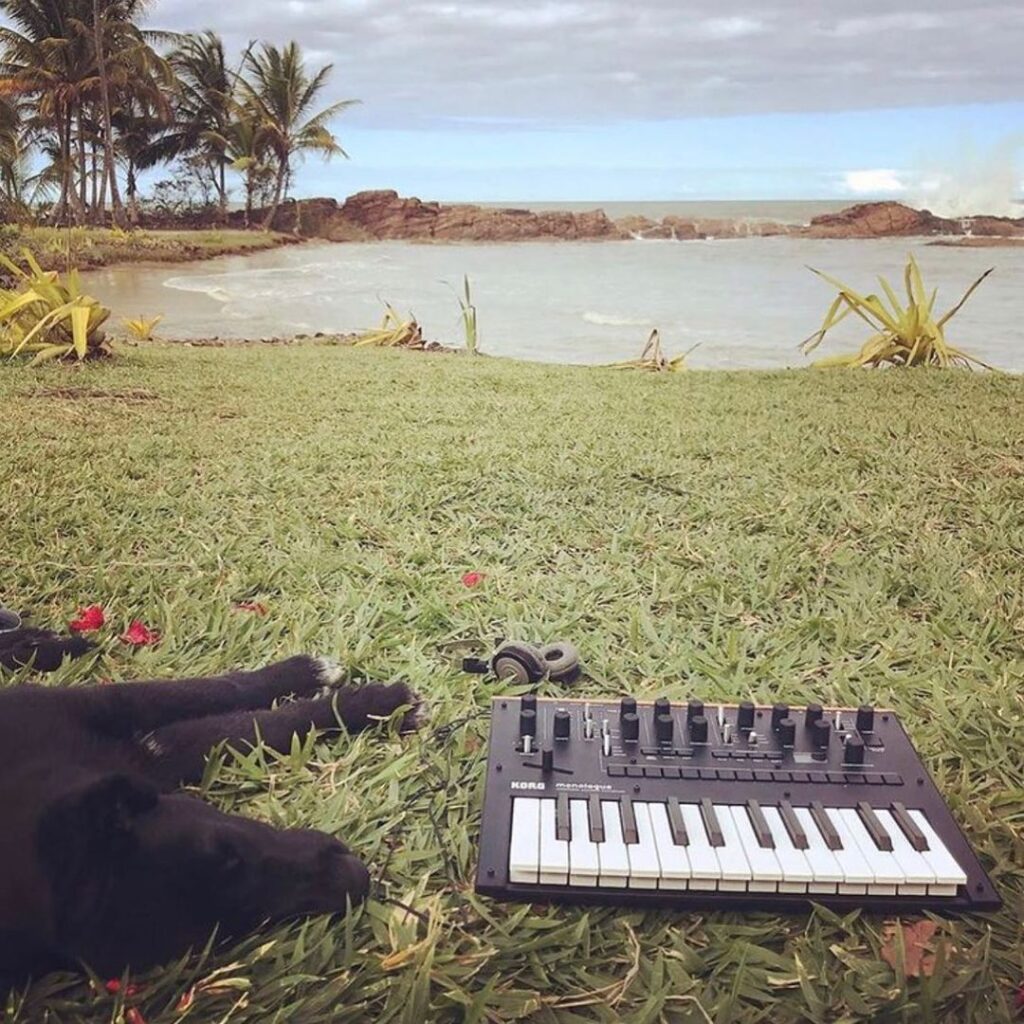
With Instagram, I force myself to make a post, like an exercise, a few every week. Each time with a different instrument. Something comes up. I see people’s reaction, and from there I decide if I keep working on the idea. Is like a focus group.
This first idea narrows down how the next instrument will interact, and so on. Limiting each time your options. I call it the Funnel Paradox. You begin with a universe of options, and as you add layers, these options decrease.

How do you know when a track is finished?

I don’t have a rational answer to this. I have a big folder with tracks I’ve started. Some go a few years back. And I certainly know that they are not finished. But I don’t know what it takes for them to be completed. Paradoxically, when they are finished, I know they are. I suppose is easier when you work with a client, let’s say making a soundtrack. The deadlines will tell you when something is finished.

Show us your current studio

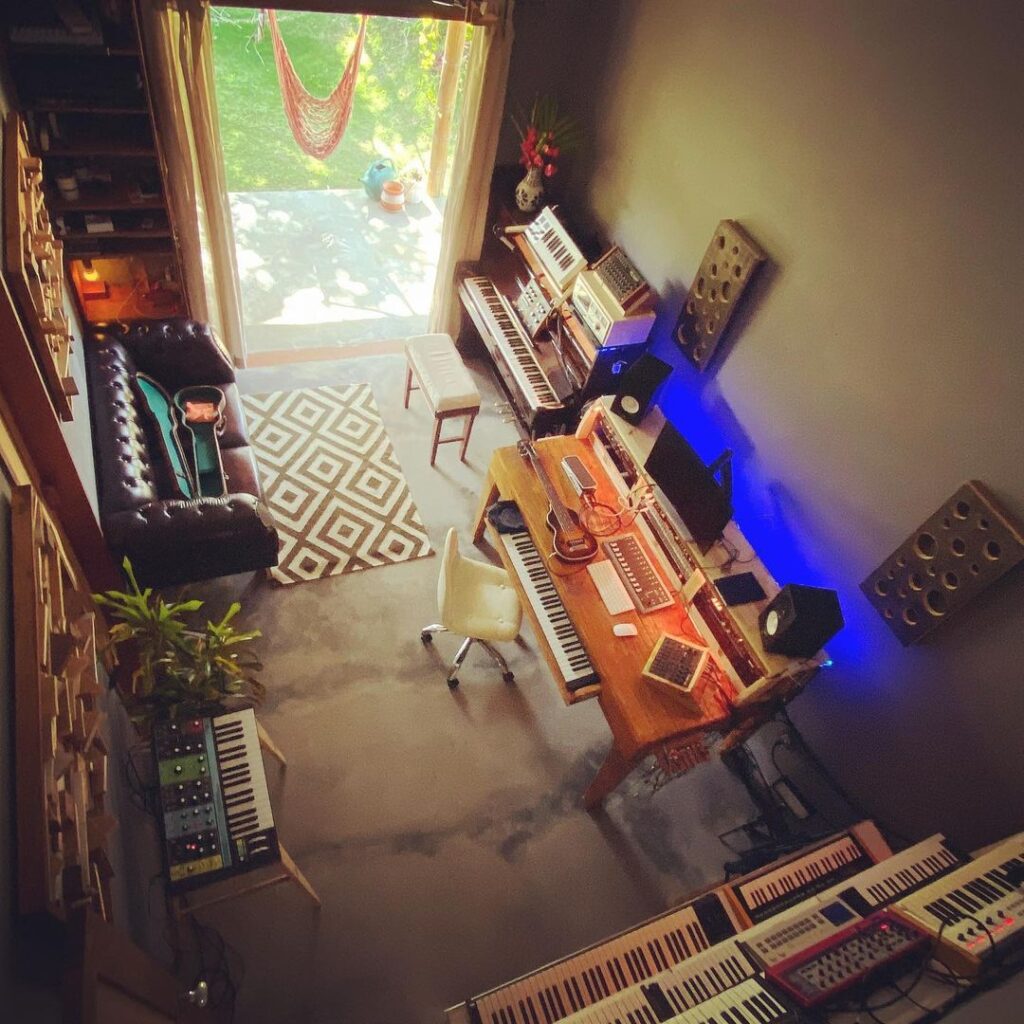
Navins Studio with a couch, patio doors and a hammock!

Best creative advice that you’ve ever heard?

I was thirteen years old, my piano teacher was pissed with me, again, because I wasn’t able to prepare the lessons before the class. Instead, I was procrastinating playing popular music (the concept of procrastination didn’t exist back then). He asked me eventually; “When you wake up every day, do you feel a compelling need to play the piano?” I said “Nope”.
And he replied; “Then you must find, quickly, something that you feel like doing daily. You’ll be a realized person.”
I quit piano lessons the next day. He was relieved.

Promote your latest thing… Go ahead, throw us a link

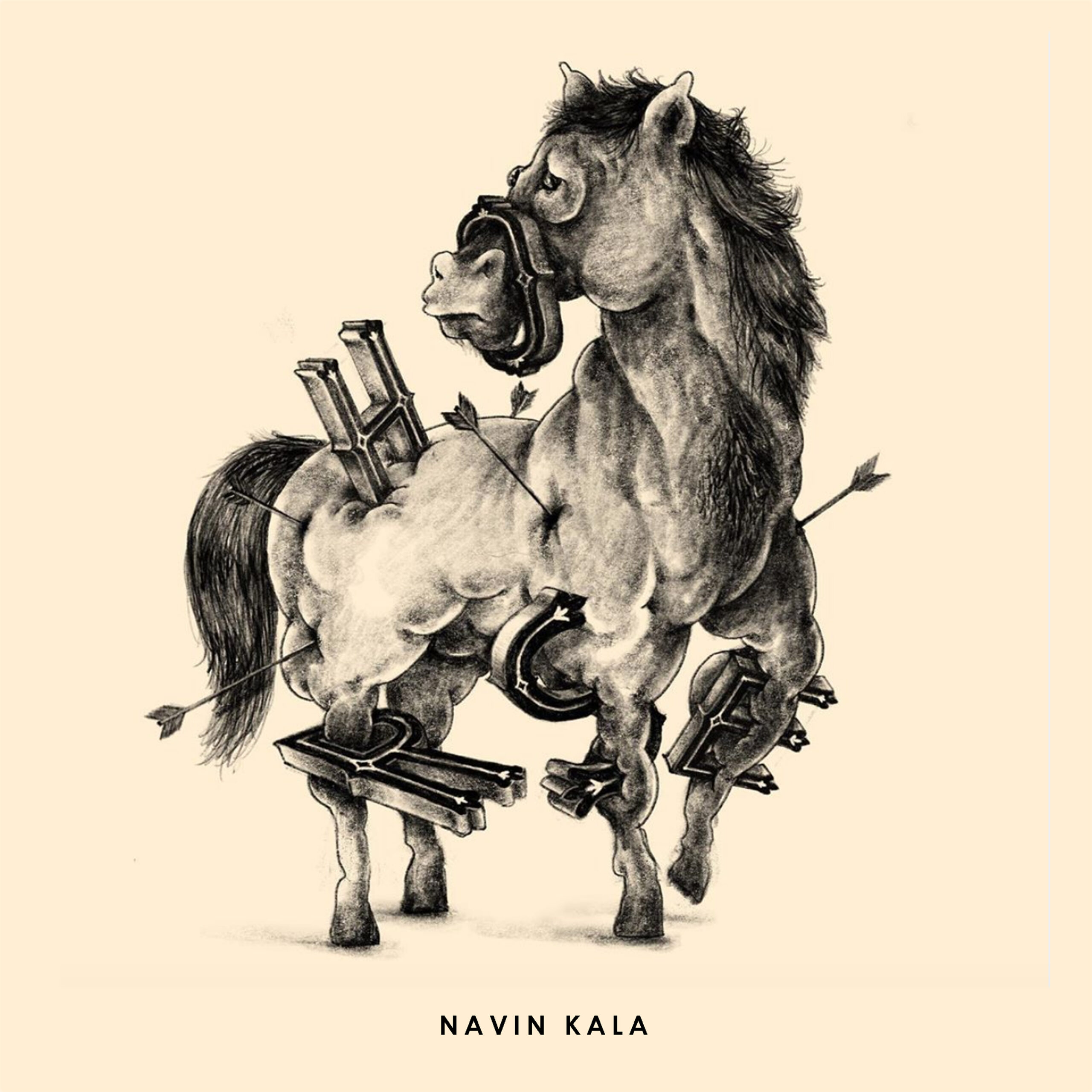
My second album, Horse. Few months old. I hope you like it.

Navin Kala – Horse album

[Editor: Also check out Navins IG… it’s lovely. C’mon join the funnel paradox]