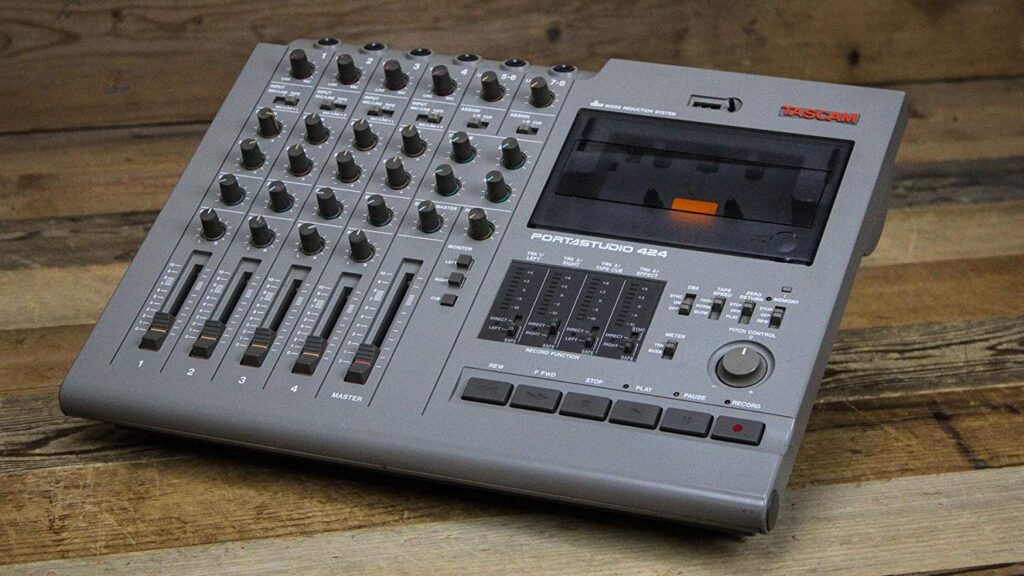
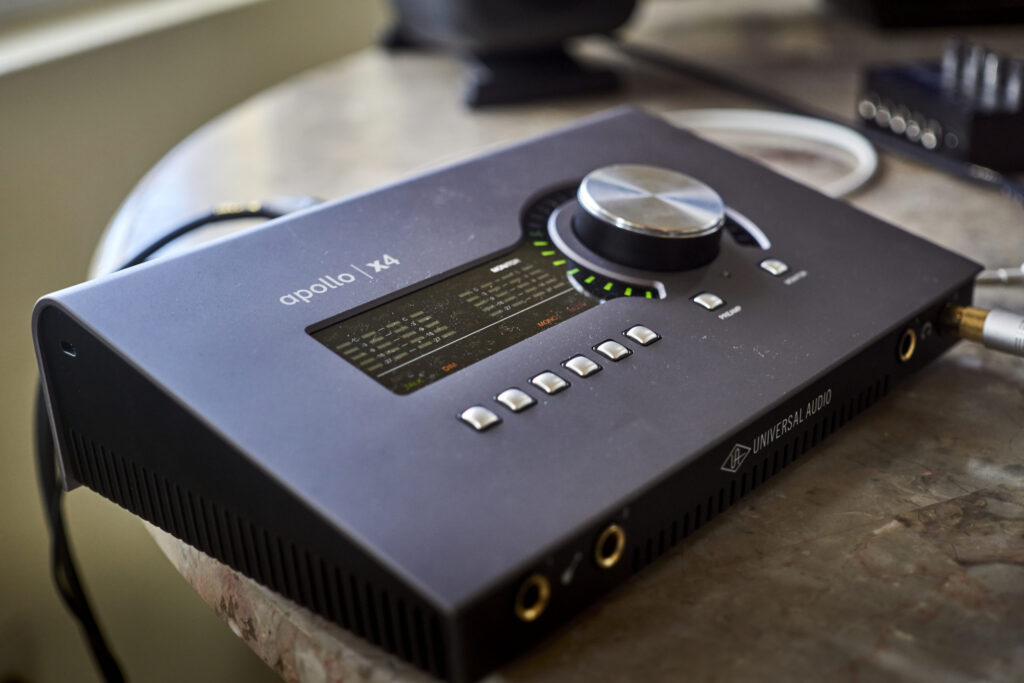
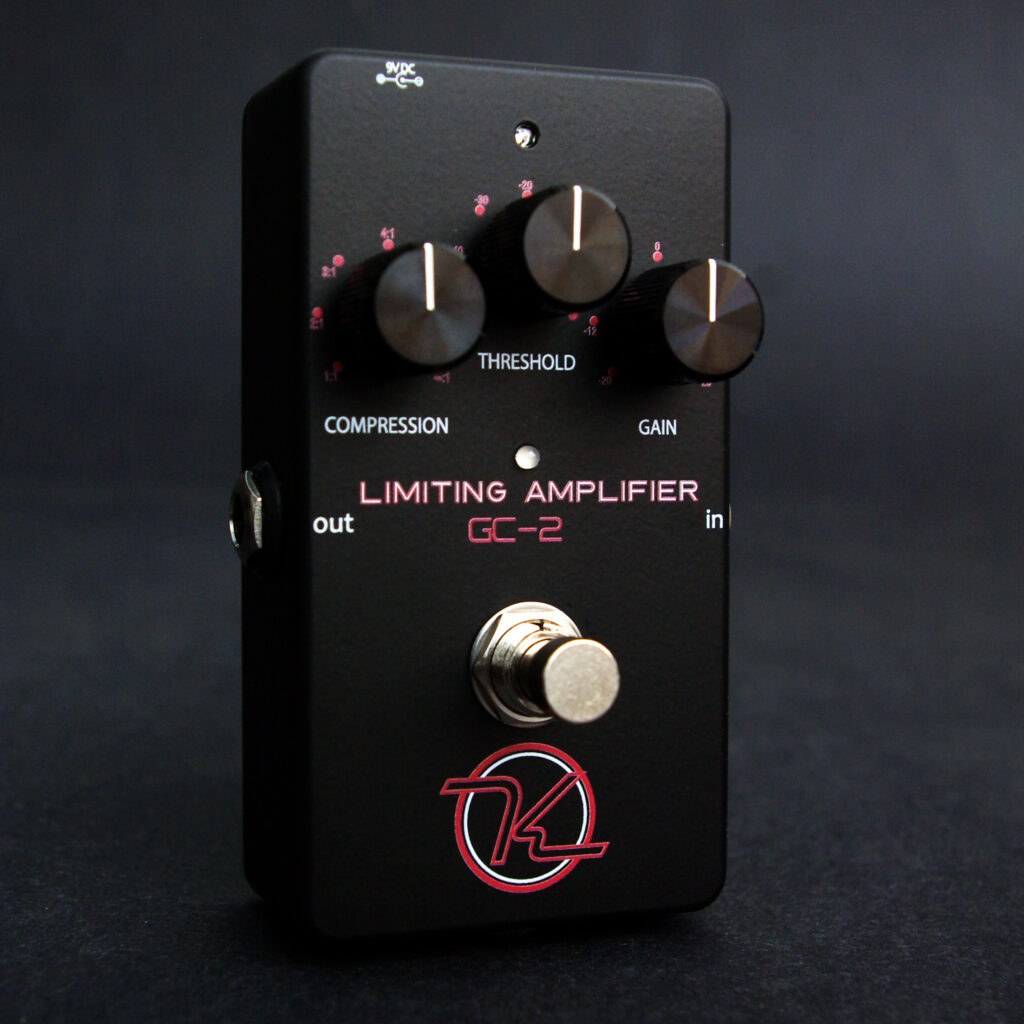
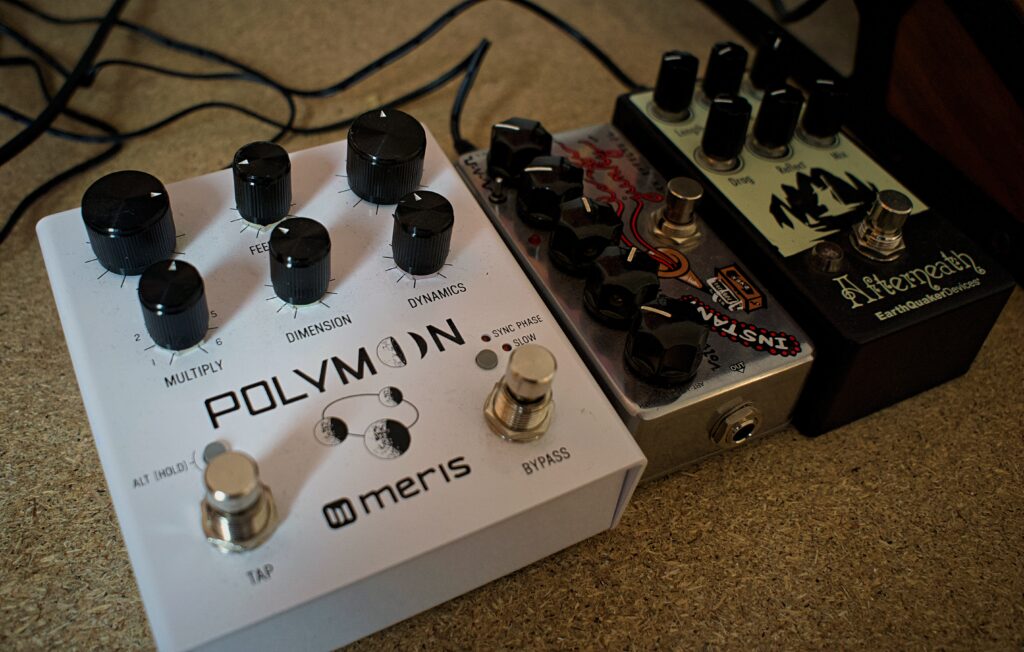
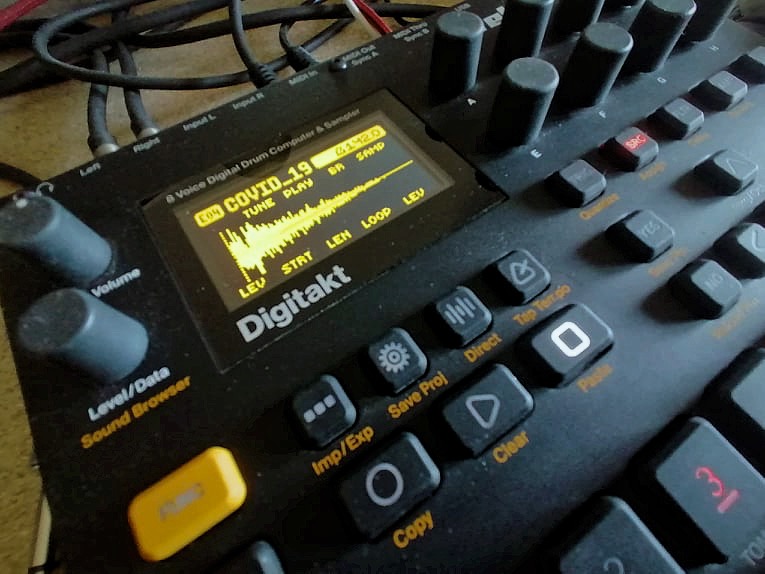
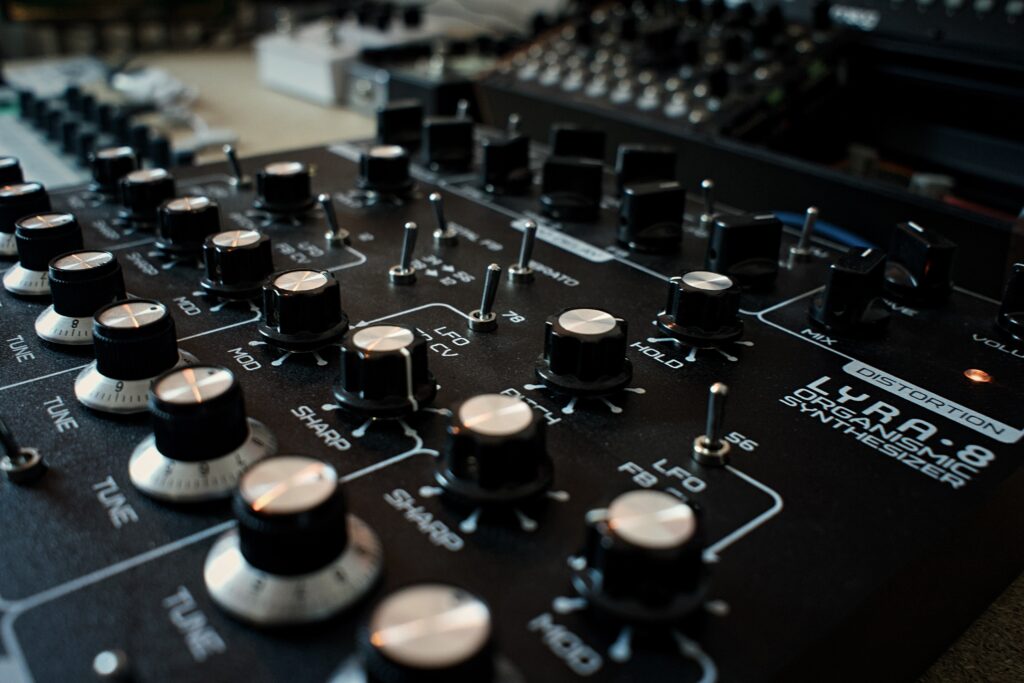
1. Favourite knob/fader/switch on a piece of gear and why?
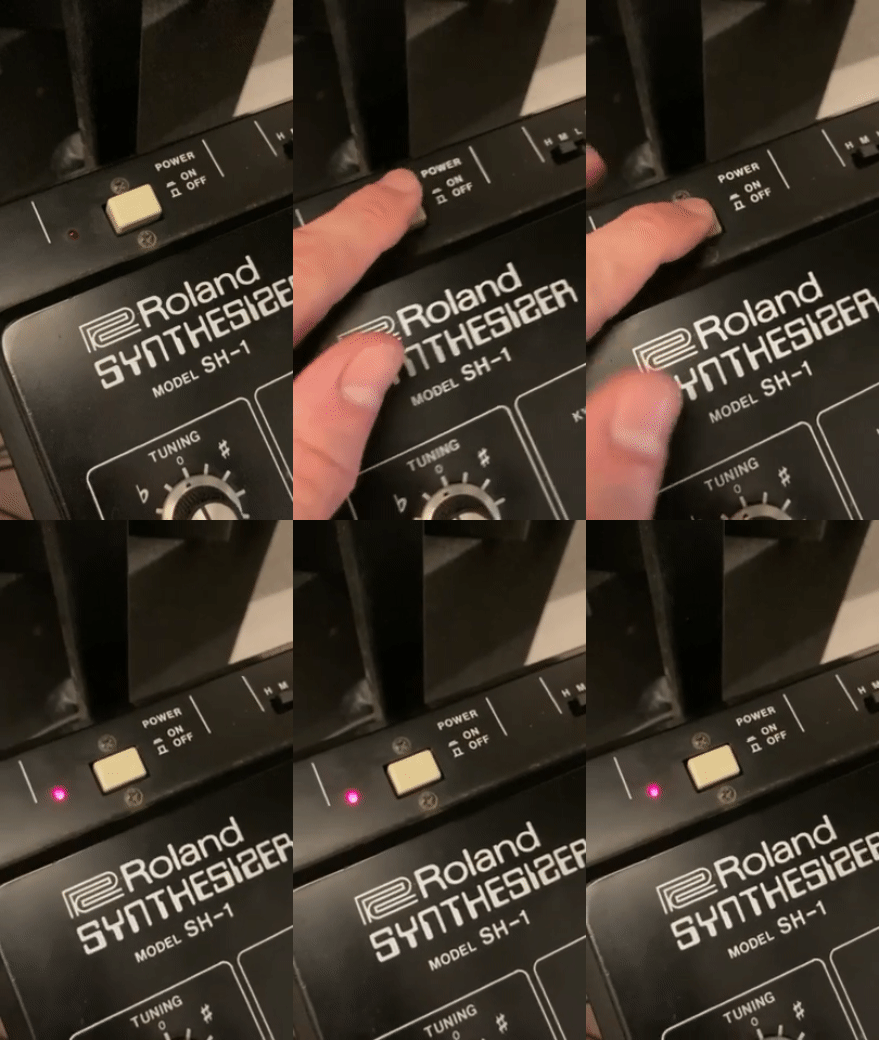
The power switch on the Roland SH-1. It’s an old synth, and the button has a distinct mechanical quality to it. The way it feels, the way it sounds, and the way the power LED lights up immediately – it just feels like getting it on! The SH-1 does that really swell PWM (pulse width modulation) that I enjoy immensely, and simple as it is, it invokes an atmosphere of a simpler time, with a lot of nostalgia to it.
2. Do you have an ‘almost’ perfect bit of kit? What would you change?
My Roland Juno-106 is close to perfect for it’s purpose. Countless 80’s and 80’s emulating tracks have been born using it, and it’s built in a way that grants plenty of sweetspots, and not so many dead ends. Some people prefer non-DCOs, and have plenty to say about the 106 being a budget synth, but mine’s fresh back from service, and it makes me happy.
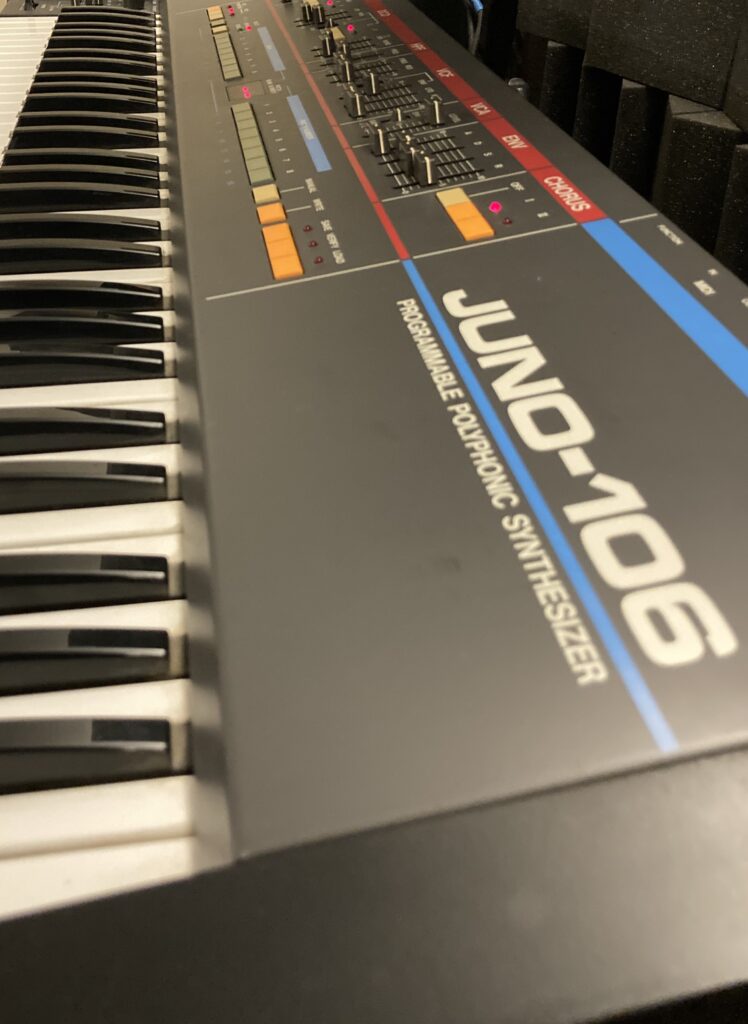
I sometimes wish it had another oscillator with an easy option for detuning, to get a wider sound from it, but there is a lot to be said about limitations to foster creativity.
… Also, I am not particularly fond of the way the resonance sounds when it’s cranked way up. It’s glassy instead of being juicy – and rarely that’s a good thing. On the other hand, I don’t have any other things that sounds like that, so it’s probably best to leave that unchanged.
3. What setup do you bring on holiday/tour/commute etc.?
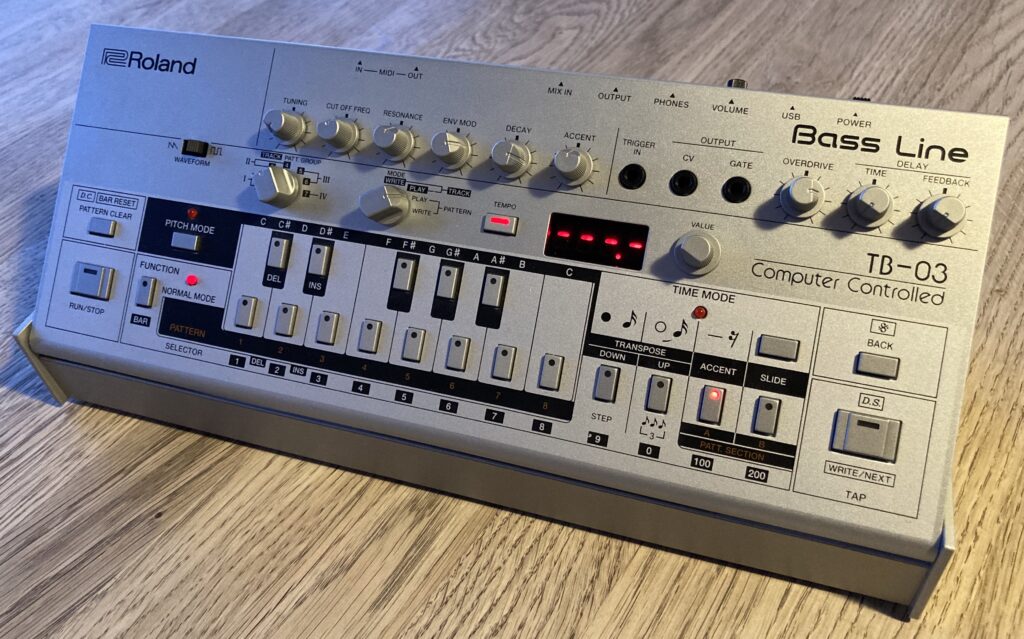
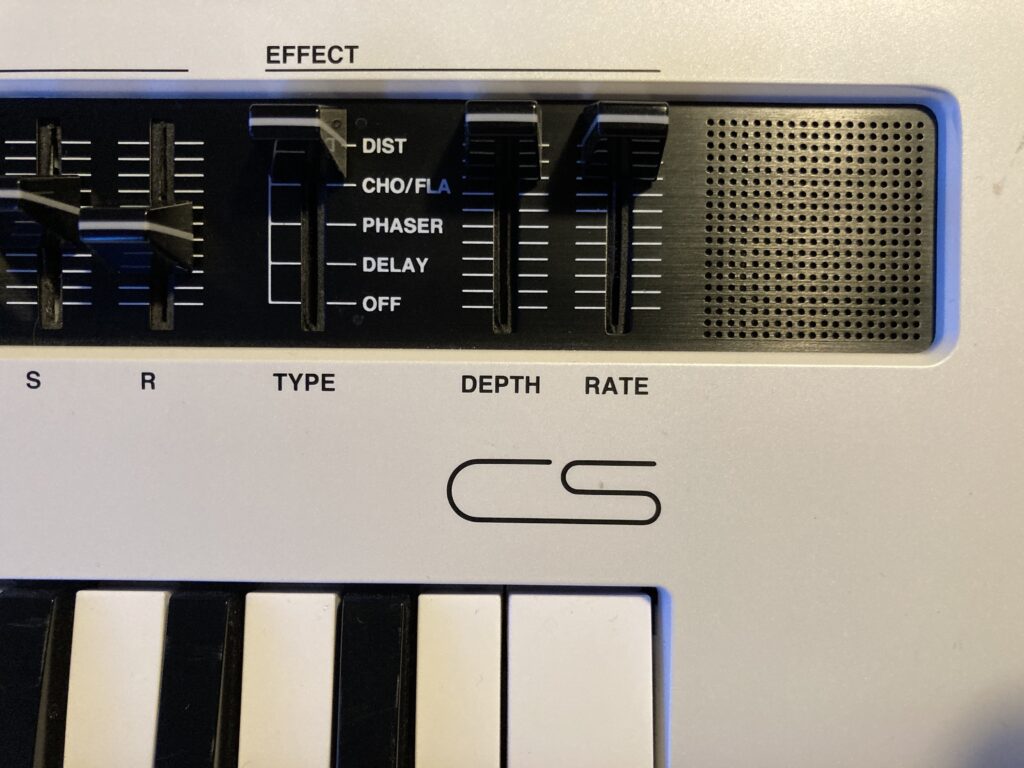
Laptop, almost certainly. I am no where near anything dawless, and don’t have anything that I could arrange anything with, besides a computer. If I weren’t writing, but merely playing around, I would bring my Roland TB-03, or Yamaha Reface CS – built-in speakers and battery operated, they are 1. 2. go!
4) What software do you wish was hardware and vice versa?
Absynth, Brain, Modular.
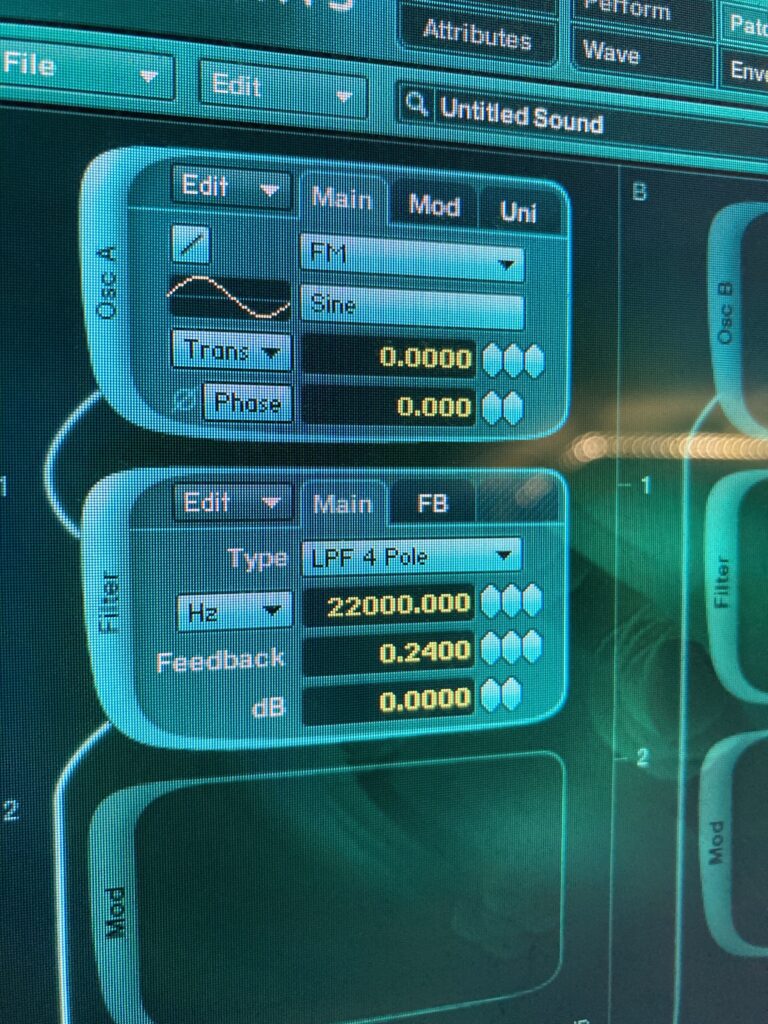
Software -> Hardware: I think Native Instruments Absynth. I have had that since forever, and still use it heavily. Also, I would like to see the physical shape/color/layout of such a thing!
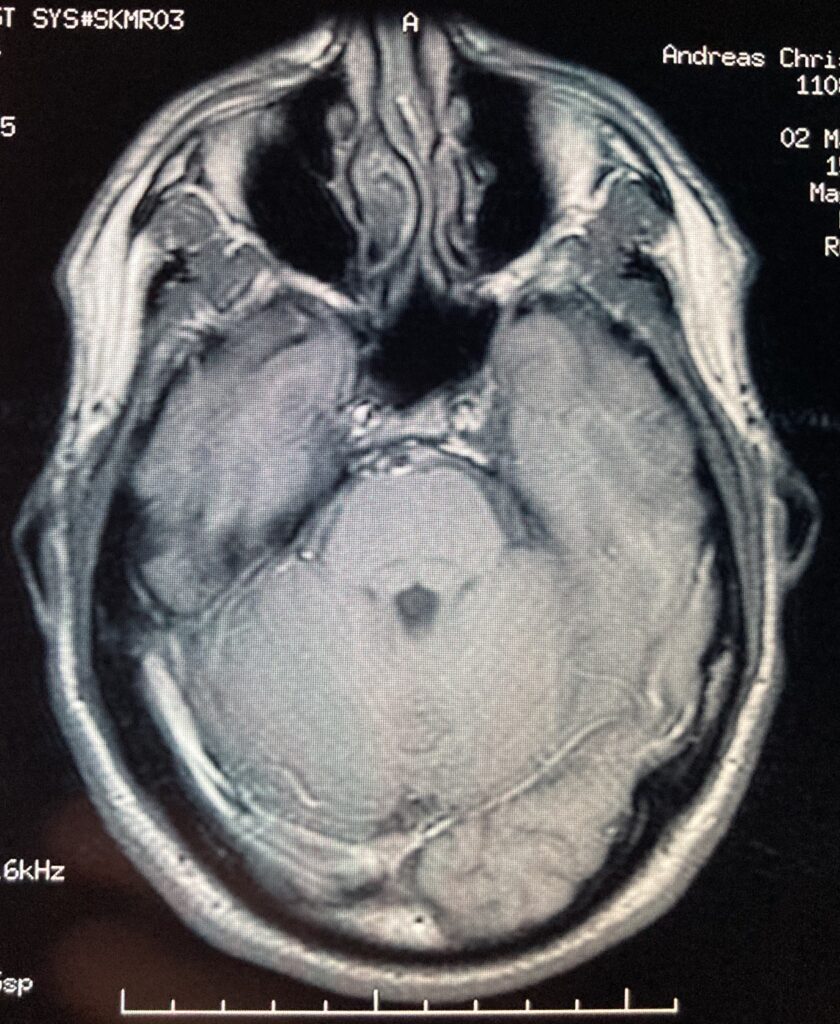
Hardware -> Software: My brain. Although it feels soft at times, I consider it hardware. It certainly interfaces like 40+ years old hardware (poorly that is), it is sometimes difficult to control when hot or cold, and it’s almost never in tune. Also – patch memory is severely limited. If I could instantly recall patches, production tricks, channel-settings and export/bounce the tunes and sounds directly, like with a lot of software, then… Well, it might take out the fun at times.
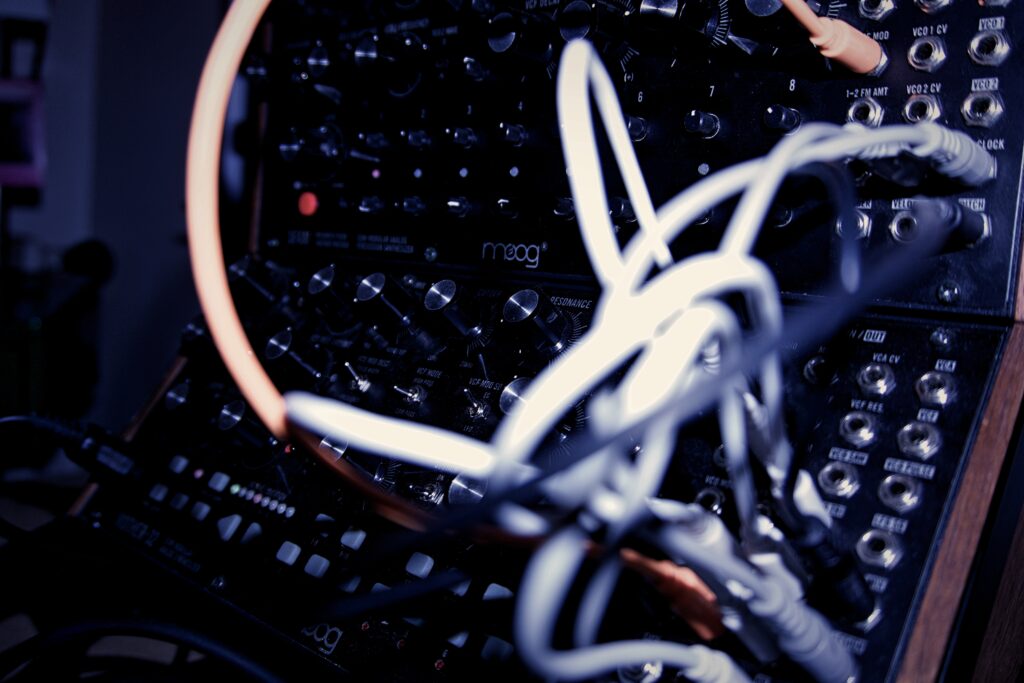
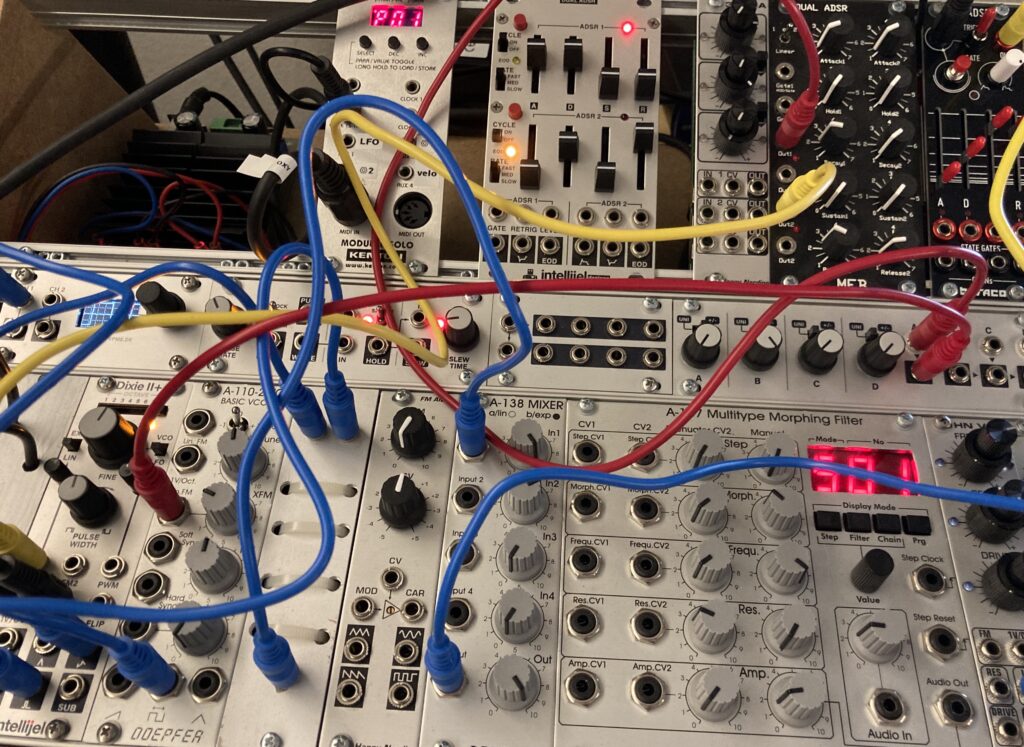
To be serious: My modular setup would be nice as software – mainly for patch recall.
5. Is there anything you regret selling… or regret buying?
I never sold anything ever, so that doesn’t apply. And therefore I never regret selling anything either!
I once bought a portable recorder, thinking I could get a lot of good sample material that way. I only did once, but it never made it into a track I finished. I have fond memories of getting up early to catch a few big trucks on big roads going by, though… So, no regrets I guess…
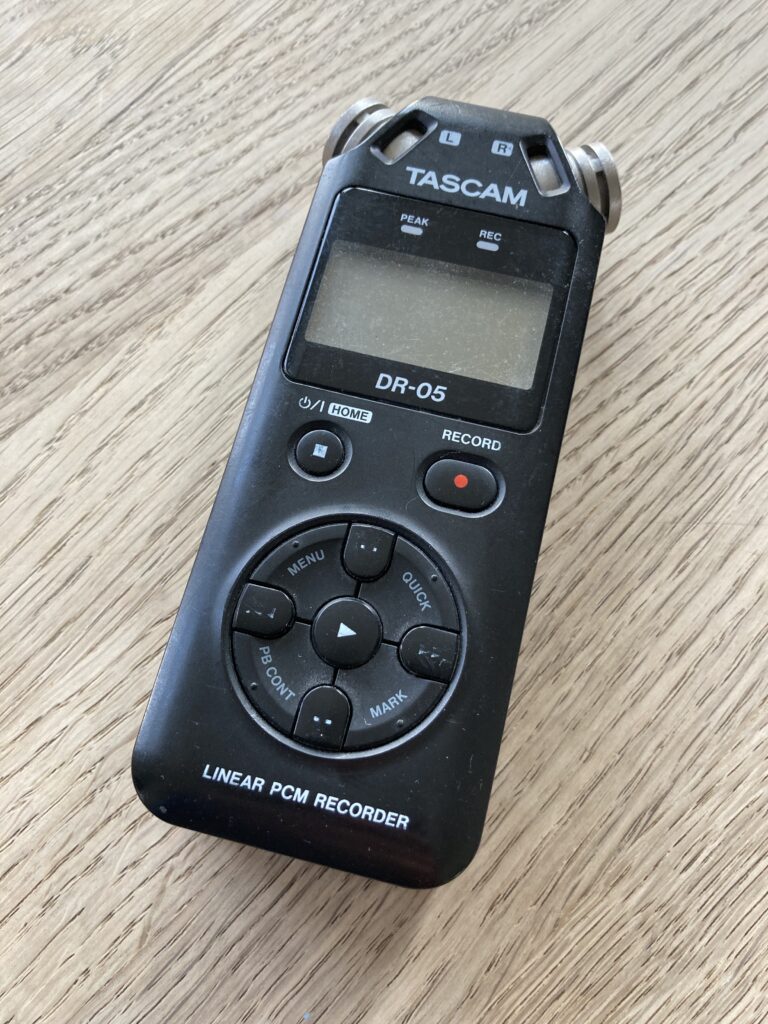
I bought an Ensoniq SQ-R module, because it features Transwave synthesis. Never used that, but it had a nice belltree sound that I used once or twice. It’s probably the thing I’ve bought that comes the most close to being a regret.
6. What gear has inspired you to produce the most music?
My trusty iPod classic 80 GB. That’s a lot of late 90’s goatrance… Listening to that is what inspired me most over the years. It had a growing line of dead pixels over the course of a year, and when the line was fully dead, the pixels started working again from the beginning of the line! A year after, the whole display was good again. That is probably my strangest experience with any electronic gadget ever.
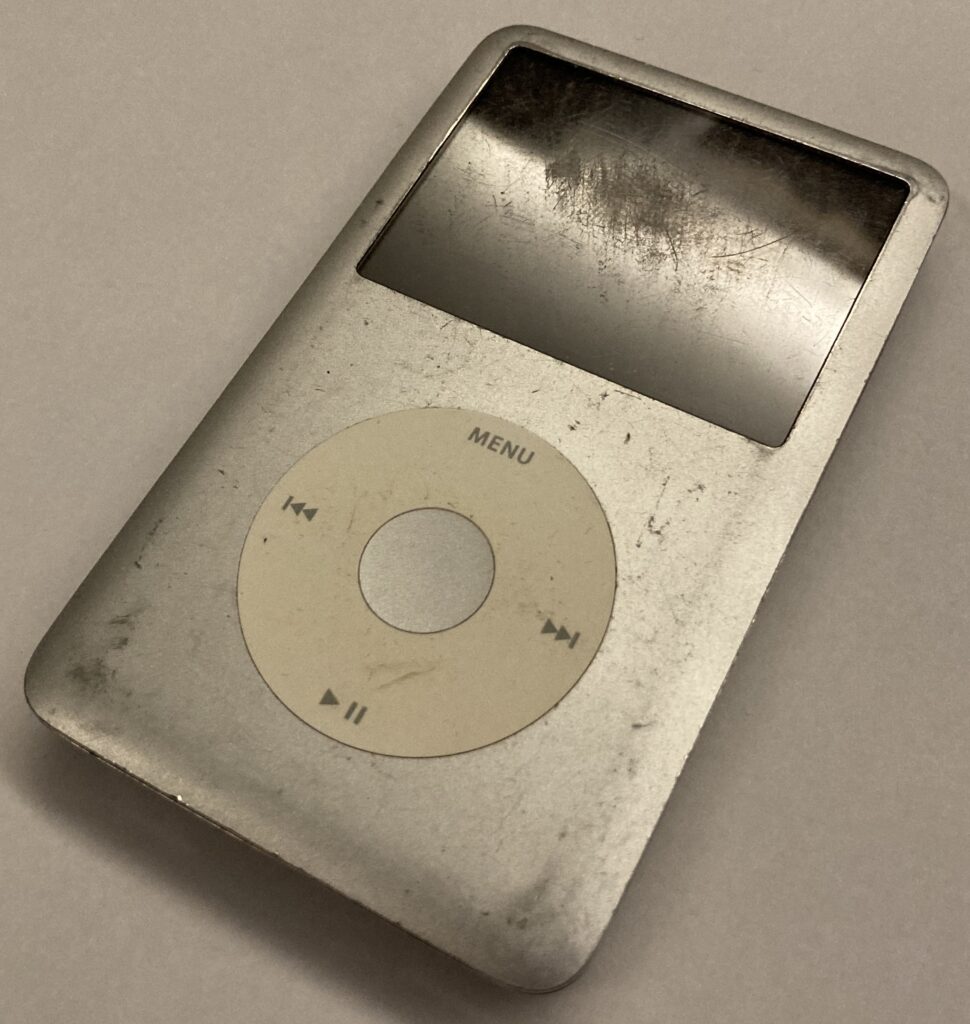
If I should channel this to some sort of an inspirational tale, it would something like how the small and weak Hobbits defeated the mighty Sauron – it might appear to be failing, and an unlikely source of victory, but give it some time, and it will surprise you.
That is also why I have never sold anything. You never know.
7. If you had to start over, what would you get first?
A decent room for working in. Go all crazy thinking about getting the ‘right’ monitors, nice preamps, the perfect cables (ugh!)… But if your room is horrible, none of that matters. I have sunk a fair bit of time into acoustic treatment, and it has made a world of difference.
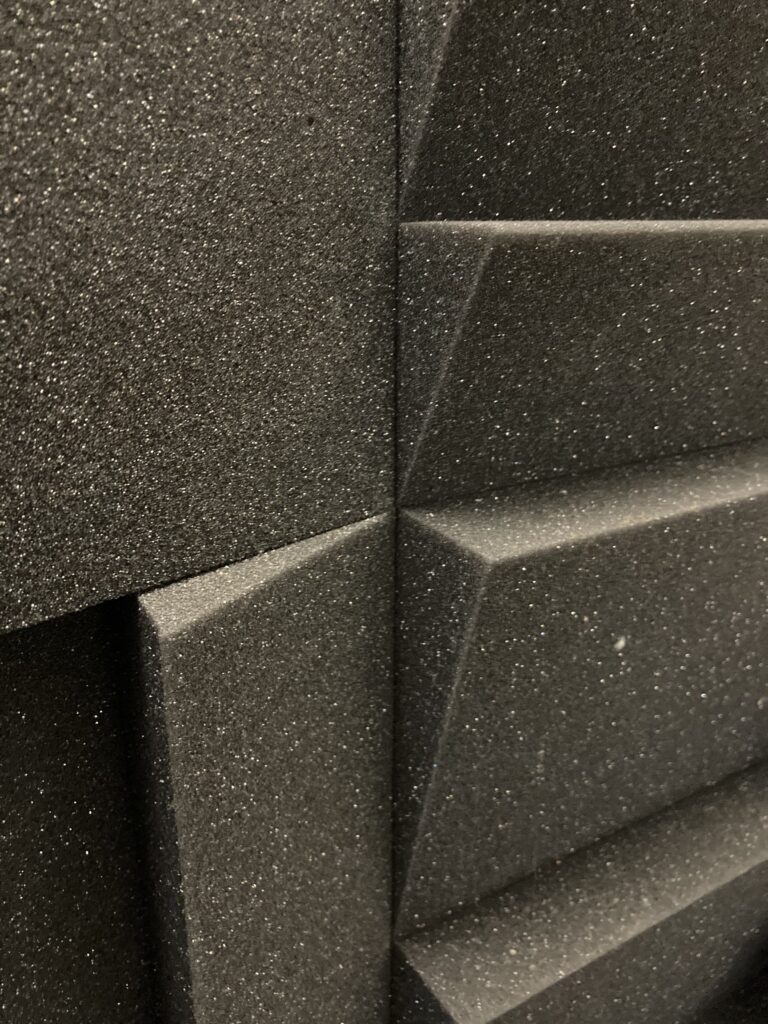
Also: time. So that’s it. Time and space – that’s all I want. At first…. Then a Mac.
8. What’s the most annoying piece of gear you have, that you just can’t live without?
Laptop
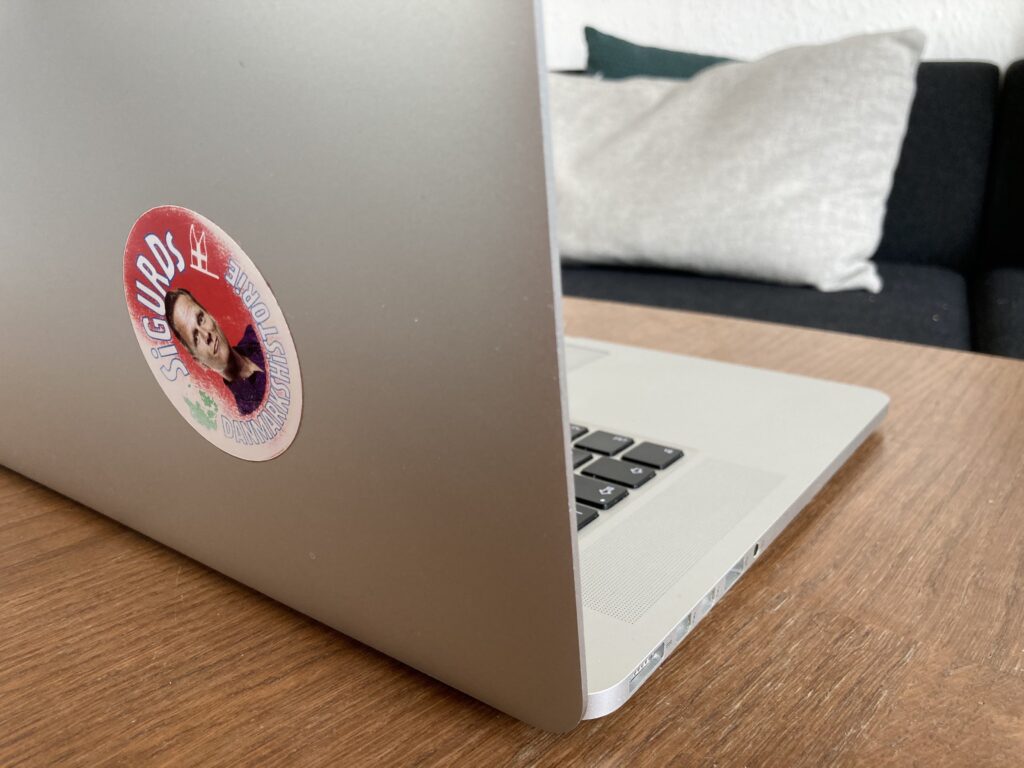
Again, my computer. Ill timed software updates, one too few CPU cycles in stacked projects, failing disks… The woes are many, but I wouldn’t have written a bar of music without it.
9. Most surprising tip/trick/technique that you’ve discovered about a bit of kit?
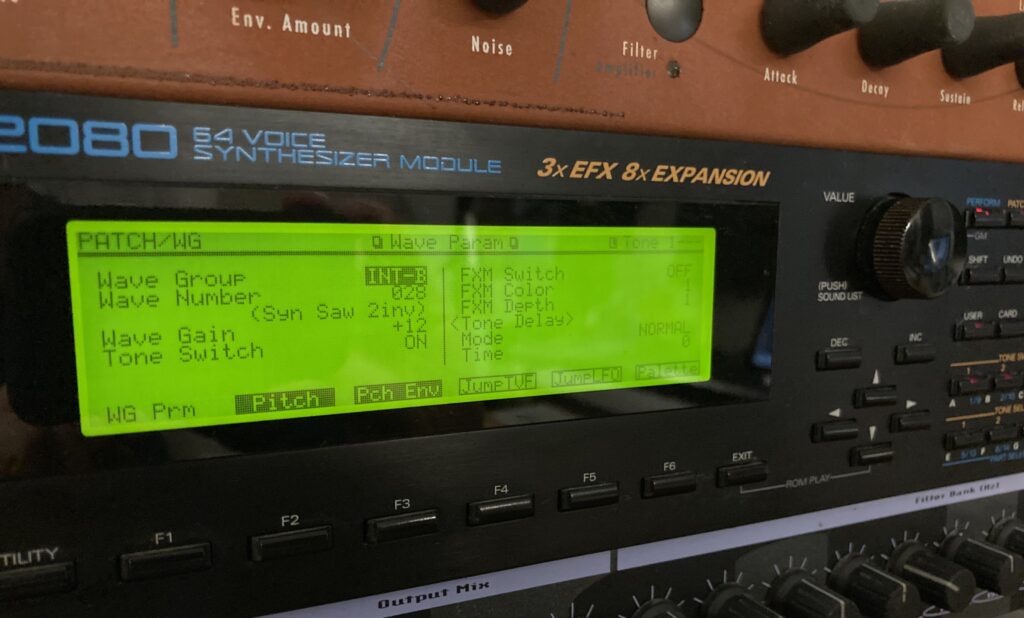
About 20 years after I got my Roland JV-2080, I realized it was capable of faux PWM. If I set a regular sawtooth wave on one osc, and an inverted sawtooth on the other, and modulate pitch slowly and independently, then it happens. I wish I had known that 20 years earlier, but that would probably mean I wouldn’t have bought my SH-1 (with the fab power button) – so it’s all good!
Artist or Band name?
I have mainly been producing under the moniker “Amygdala”. Goa and psychedelic trance in the old (old!) sense of the word.
Lately, I have been making some drops in the already over saturated ocean of synthwave music. I enjoy that very much, and as a child of the 80s, it takes me back to a simpler time – worries forgotten. The moniker for this activity is “Prior Use”.
Genre?
Many kinds of trance music: Goa, psychedelic, melodic, uplifiting, minimal, tech-, progressive.
Besides that, a bit of synthwave, and the odd “psy-bient” piece.
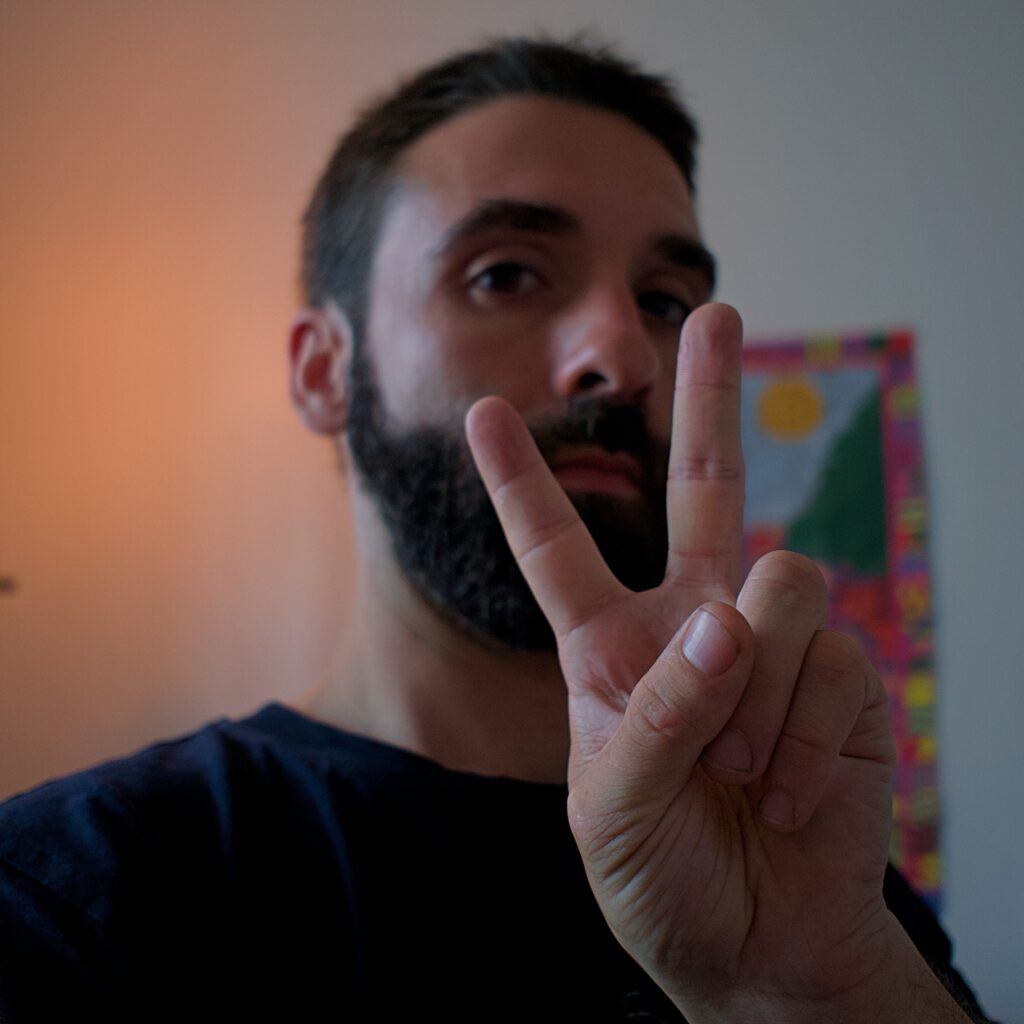
Selfie?
Where are you from?
I am from Denmark – just a tad north of Copenhagen, but most of my music has been produced in Århus. You can really tell what a big difference those 170 km makes!
How did you get into music?
My parents and brother. Music was omnipresent at home when I grew up. My parents encouraged me to take up playing violin when I was 6, and I have had some great experiences with that. When music production became reasonably available to the regular consumer with computer interest, I was hooooked! At first, it was just another thing I could do with the computer, but rather quickly it was pretty much all I ever did with it.
What still drives you to make music?
The two biggest drivers are probably the “flows” and “highs”.
Flow when I can be completely engrossed in production, enjoying the situation, and getting something done which I like and feel as an accomplishment. Time flying as I ignore my body’s attempts to drag me to the loo, trough or bed.
Highs when I hit something that (in the moment) is spectacular – a catchy tune, a sweet timbre, or a really dope fill or transition. It can still make me laugh after all these years, and the surge of energy and motivation I get from that is unparalleled.
How do you most often start a new track?
Sometimes I start with a very simple idea like a tune, a chord progression or a synthesizer patch concept. Then Drums. Then bass. That’s the most usual case, although sometimes I skip directly to the drums. Lately, I have been thinking that it’s not the best way to go, as I am finishing fewer and fewer tracks. I often end up with a pretty decent groove, but lacking the centerpiece idea that makes the track stand out. I polish the rhythmic section and transitions, until there is not space left in the spectrum (frequency and/or mental) for anything else.
So, from now on, I am trying to start off a new track with an idea, and then build drums and bass around that. We’ll see how that goes.
How do you know when a track is finished?
When a track has all the arrangement elements (intro, good stuff, breakdown, great stuff, climax, outro – or some other configuration), I bounce it and listen away from the studio. I make a lot of notes I want to change, enhance, remove, whatever. When that list feels complete, I do those changes. Hopefully I am happy with the result, because at that point I am usually fed up with the piece. I am not one for endlessly tweaking everything, and I have a tendency to detail focus early – which means I “decide” that this bit is perfect, and then unconsciously prohibit myself from editing it (too much 🙈).
I know there is some degree of contradiction in the above, but I’ll just hide behind “you can’t argue art”.
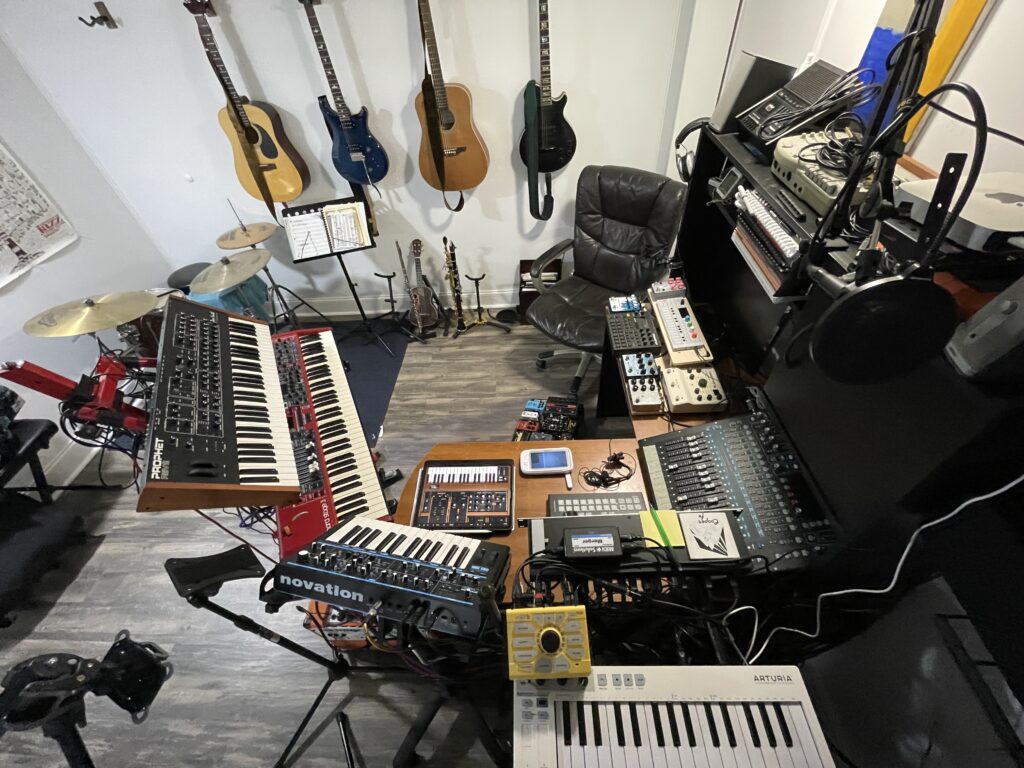
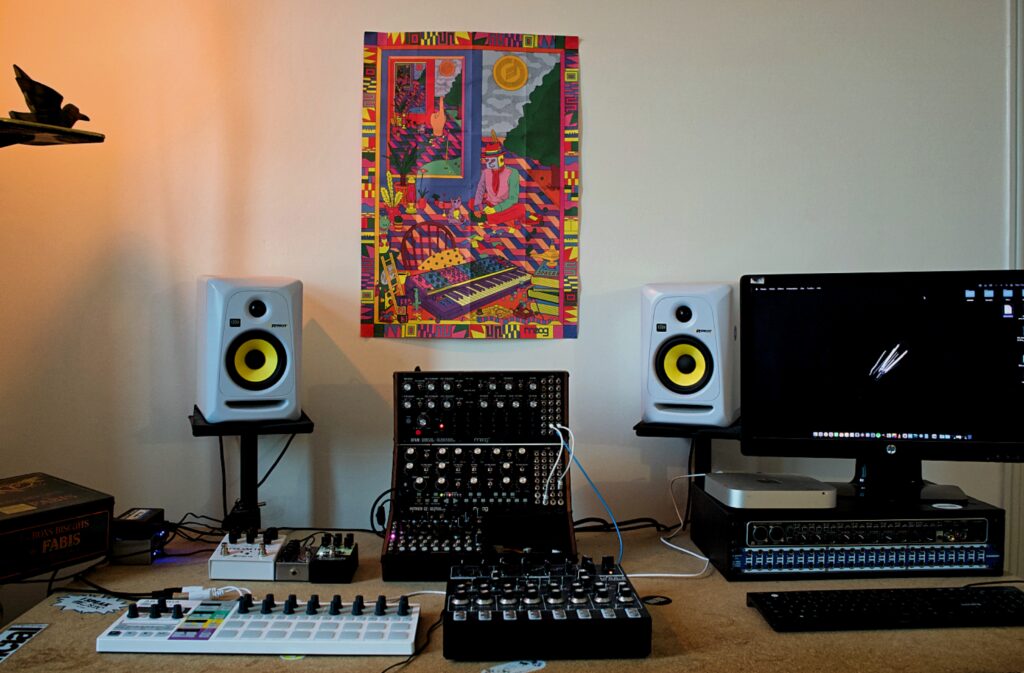
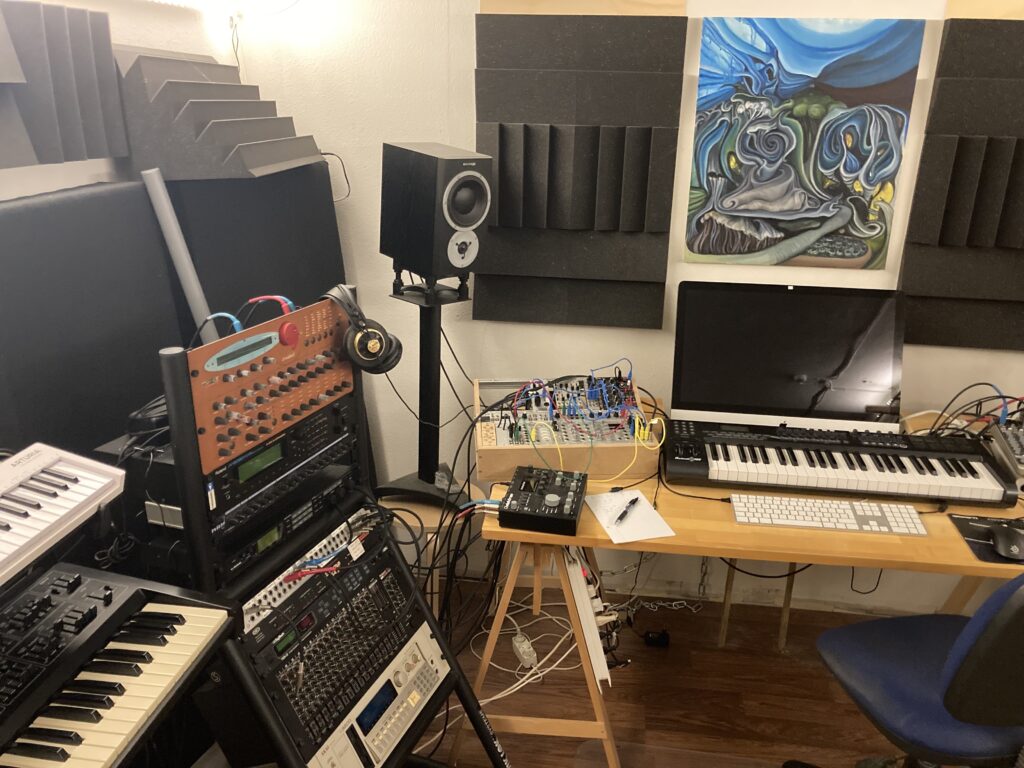
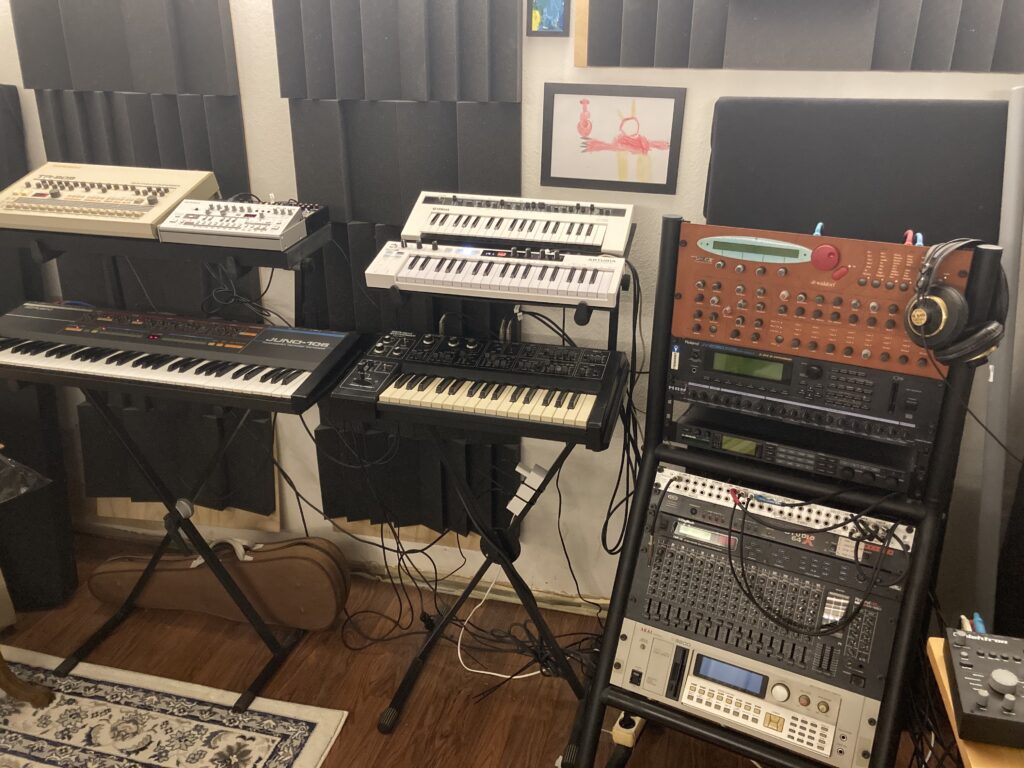
Show us your current studio
Best creative advice that you’ve ever heard?
I bought a CD from Eat Static sideproject Dendron (Merv Pepler). I think he burned the disc himself and mailed it. Included in the package was a makeshift invoice with the words “always experiment” on it. I think that’s pretty good advice. It’s hard, because as time grows scarce I tend to stick to the beaten path, but even though it feels like it’s safer and more productive that way, I get less enjoyment from it.
Promote your latest thing… Go ahead, throw us a link.
As mentioned above, I dabble in synthwave. Swing by https://soundcloud.com/prioruse and tell you friends.
[Editor: if you want to check out Andreas psy-trance stuff it’s here: https://ektoplazm.com/profiles/amygdala]